Day 87, Thursday November 30, 2017
We bought tickets online for the Vatican in order to avoid the long line-ups we have read about. Arriving at 10:00 we are able to enter right away, but so is everyone else. There are no lineups anywhere.
The map provided by the museum isn’t the best but between it, a Rick Steve’s travel app, and Bob’s navigational skills we manage to find our way around. If you walk through all the galleries, it’s 7.5 km, or 4.5 miles long and yes we walked through all the galleries!
Be warned, this is a long post, so you might want to get a cup of something hot before you visit the Vatican Museums with us!
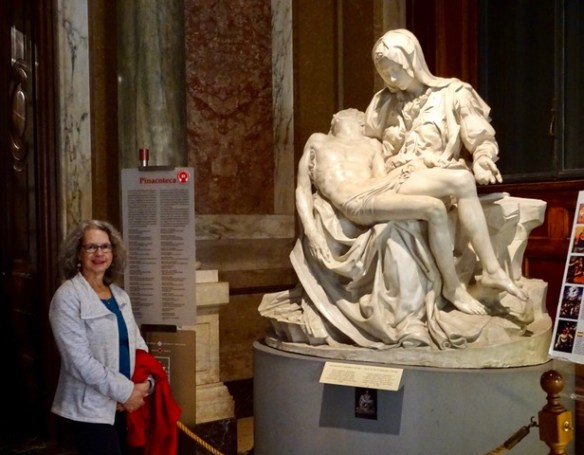
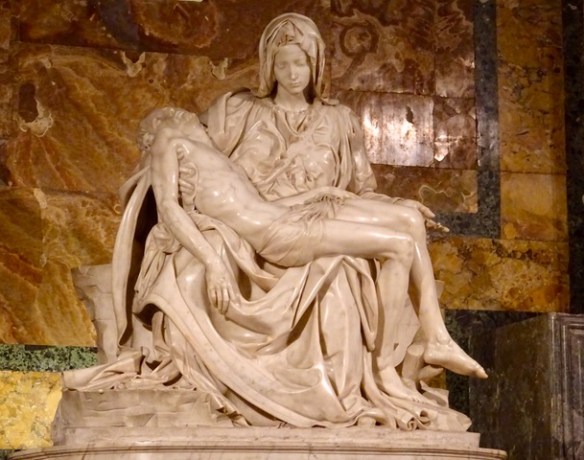
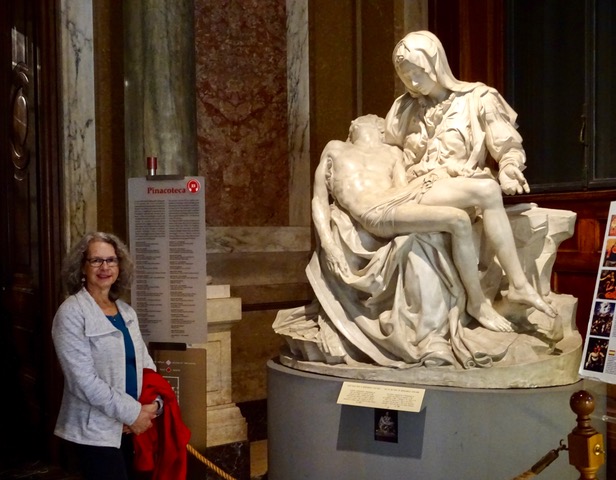
One of the first sculptures we see is this copy of Michelangelo’s Pieta. the original is now behind glass because it was badly damaged by a deranged man 45 years ago. I think this is the closest I will get to taking my photo with this incredibly beautiful statue.
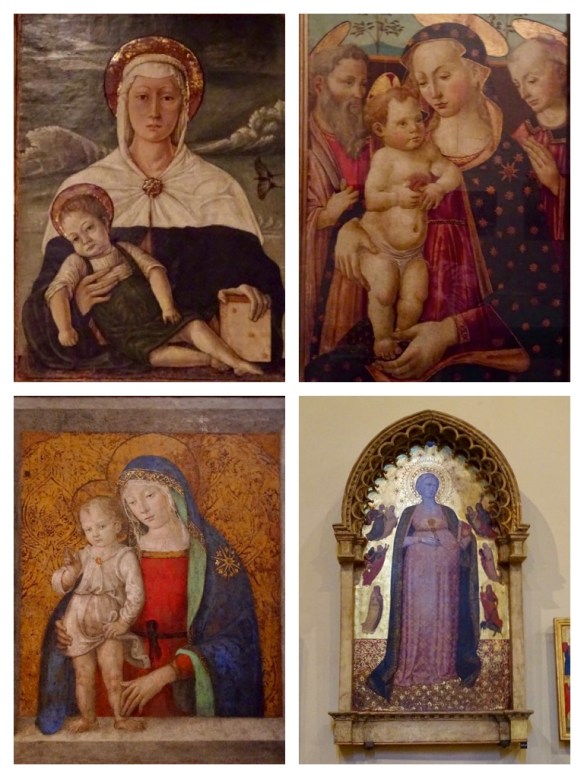
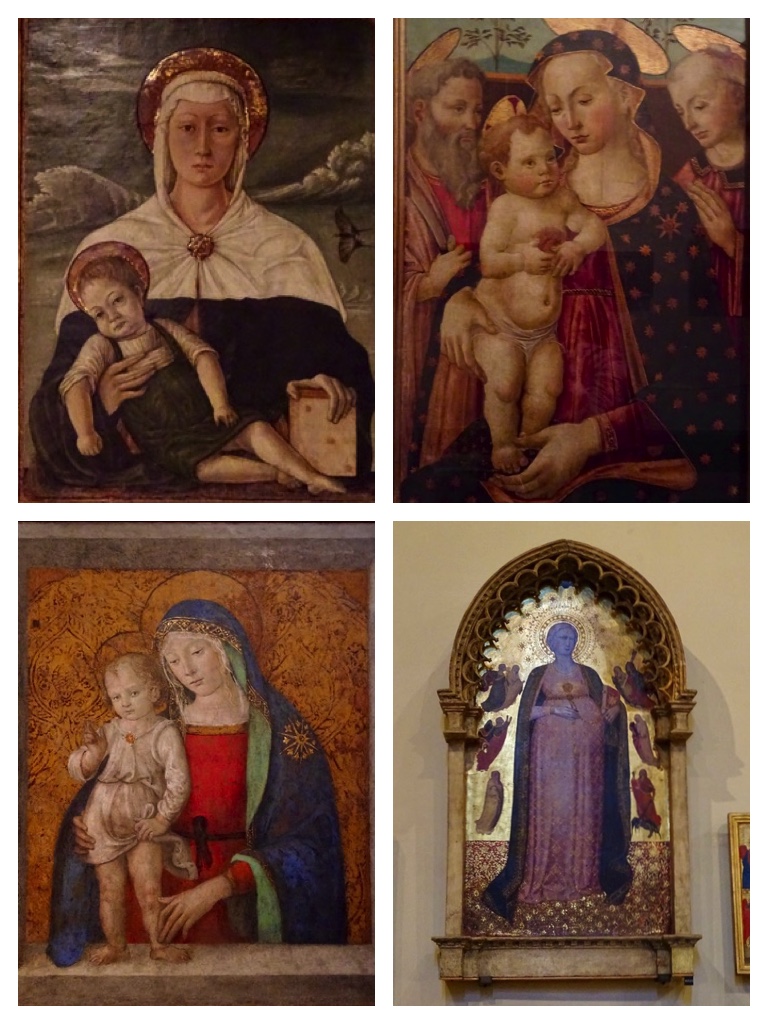
 We see many examples of Early Christian and Medieval art. Before this trip I didn’t have a lot of interest in this genre but I discovered that I am rather fascinated by depictions of the Madonna. We even saw a pregnant Madonna, the only one I have ever seen.
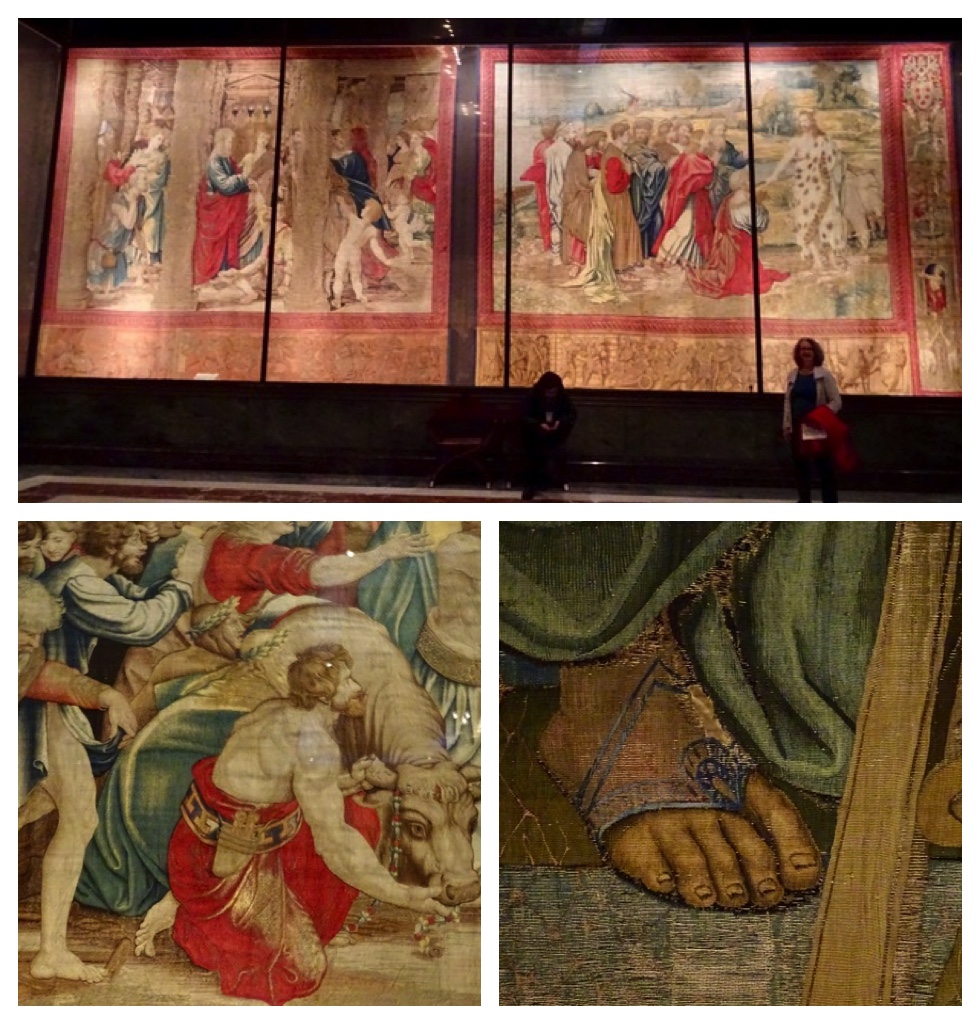
 Next stop was a huge room with several very large tapestries. They were so finely woven that they almost looked like paintings.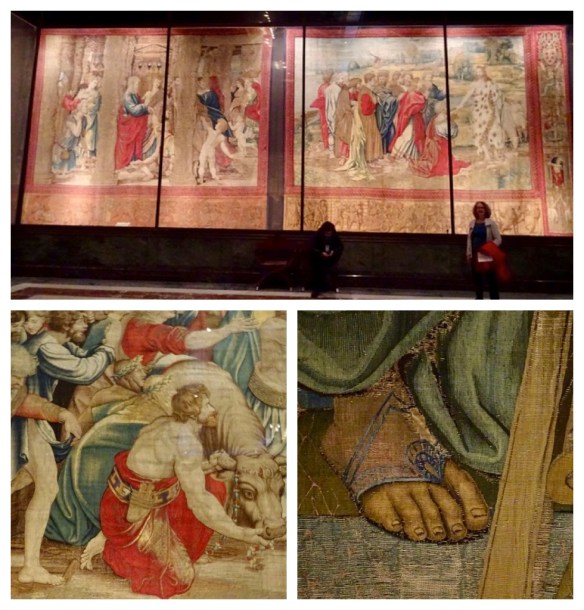
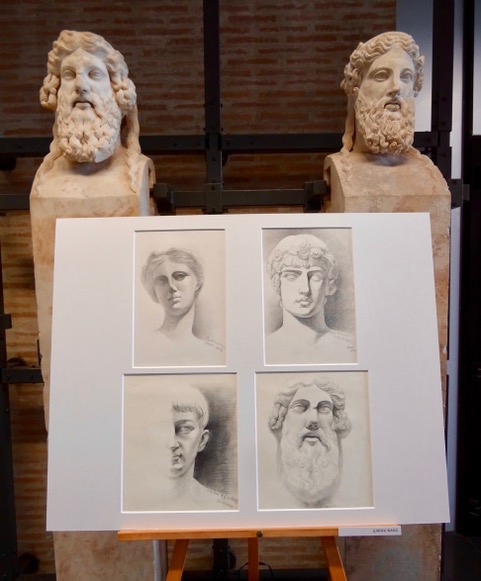
This very large angel from1666 was one of four preparatory straw and clay models for bronze castings by Bernini.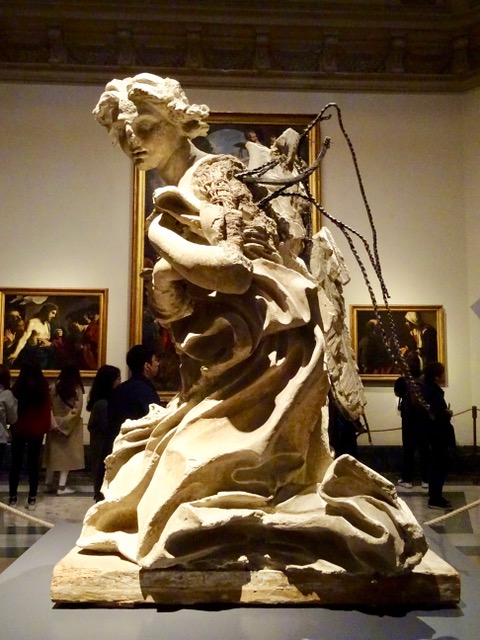 A enormous collection of ancient sculptures, sarcophaguses, reliefs and building parts was next. There was also a display of drawings, which I found interesting. I speculate that there must have been a drawing workshop.
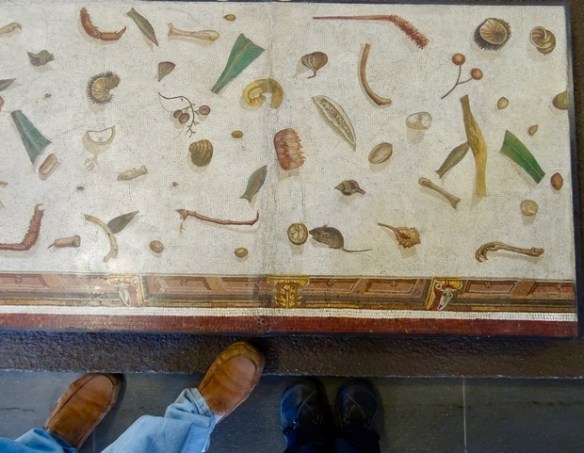
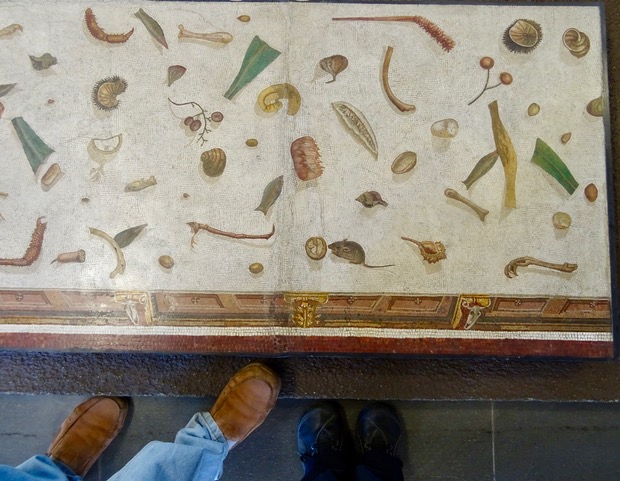
 This is a floor mosaic that I remember seeing in books. I always liked the little mouse. The tiles are very small.
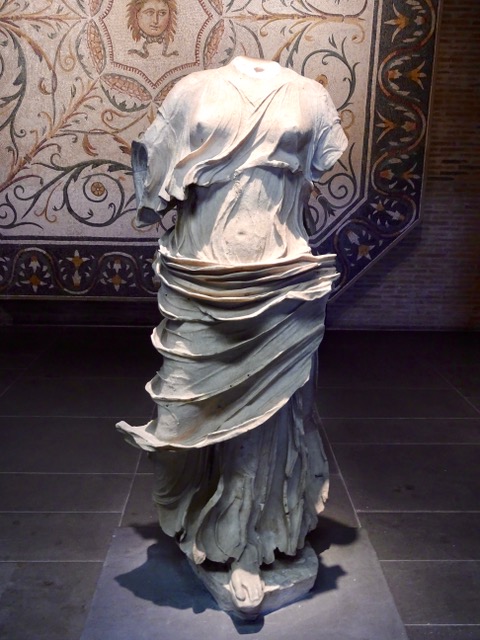
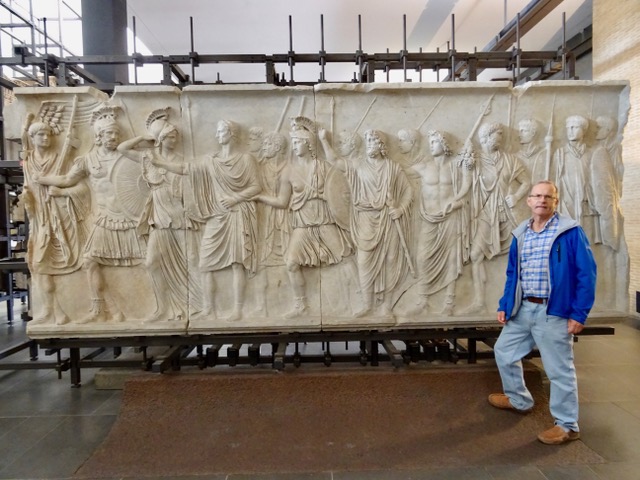
  I can almost feel the wind blowing these garments about.
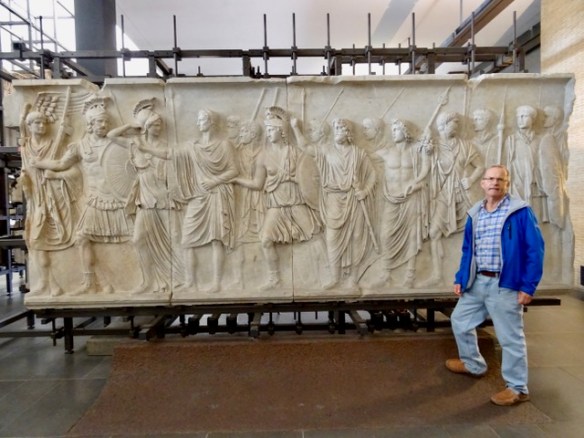
 One of the reliefs on display.
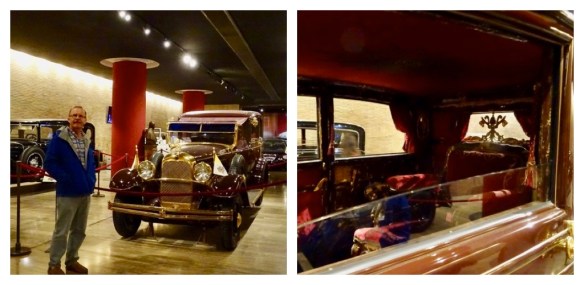
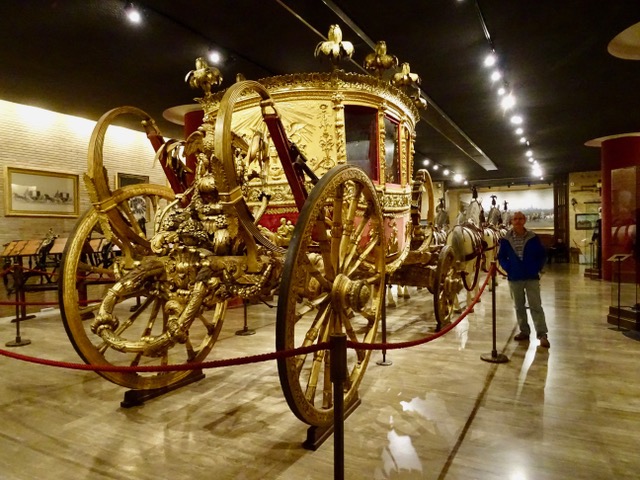
 There is a large collection of vehicles used by Popes over the centuries.
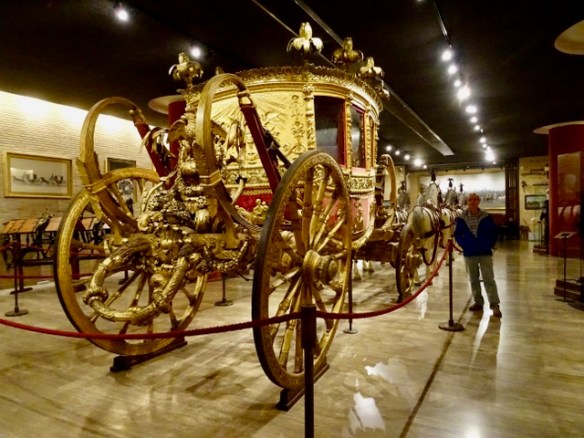 We didn’t know that all papal vehicles come equipped with a throne!
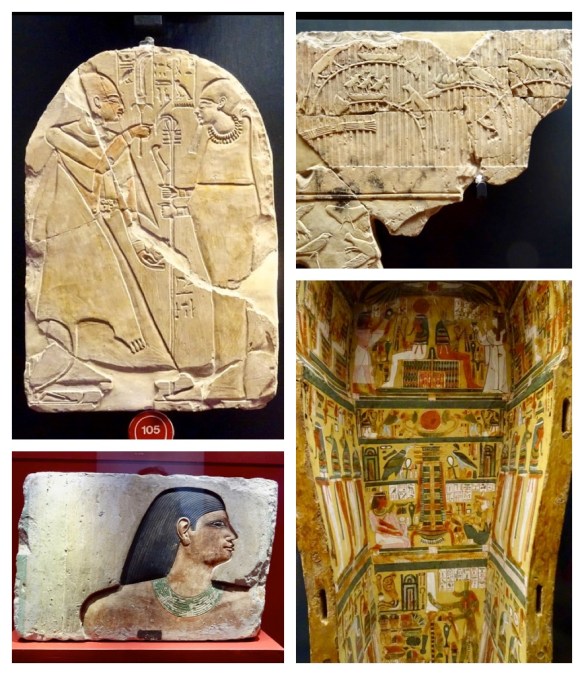
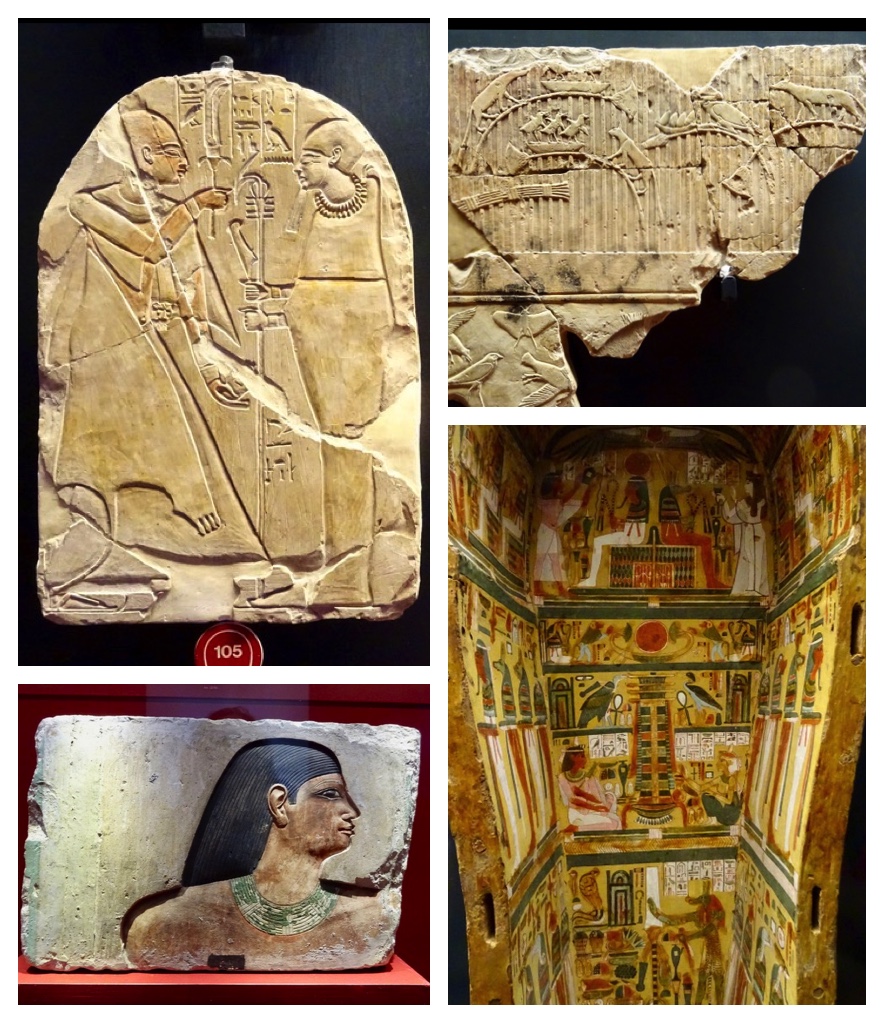
 The Vatican has an extensive collection of Egyptian artifacts many of which are superior to the ones we saw in museums in Egypt! It is easy to forget that all these hieroglyphs were at one time bright painted like the inside of the coffin.The painted bas-relief fragment is from 2400 B.C.
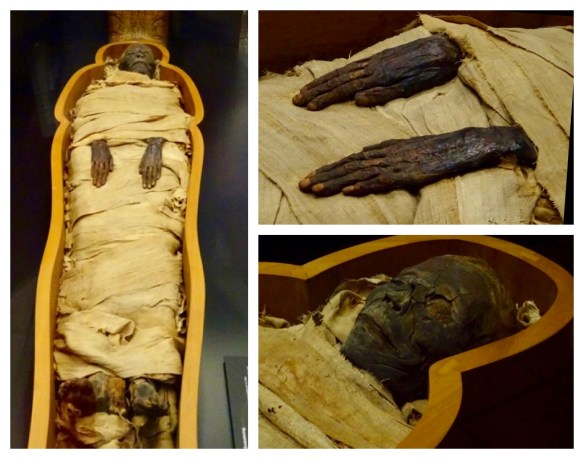
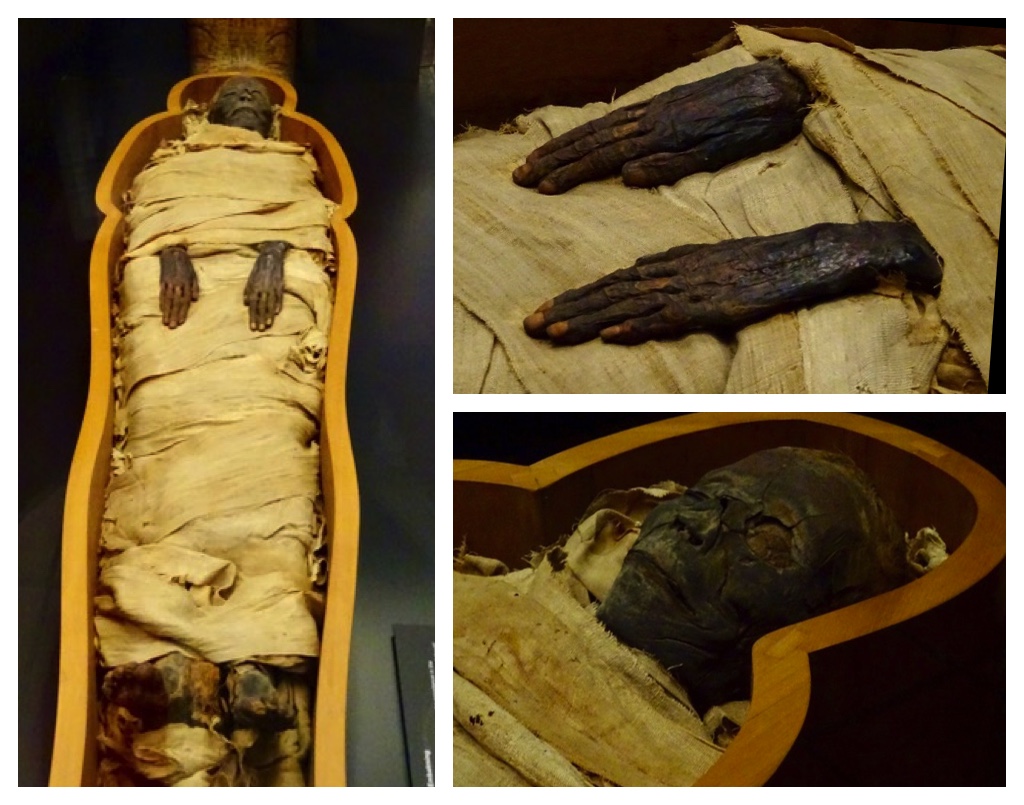
 The Mummy of Taymen is from 750-525 B.C. We never saw anything like this in Egypt. It was fascinating, but I know this person never intended to be on display in a museum!
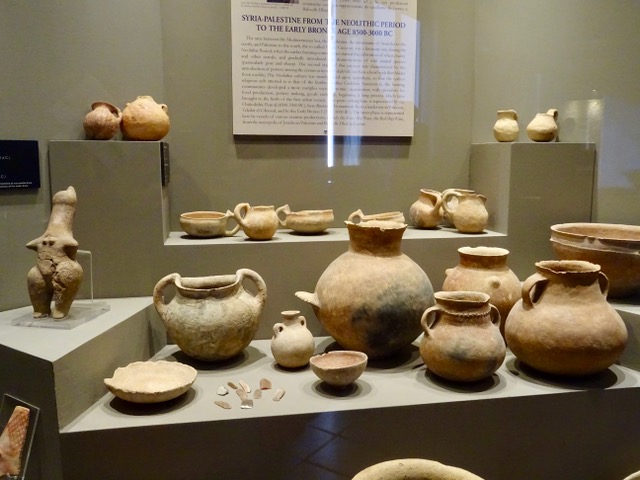
 There are many galleries of Greek, Etruscan and Roman artifacts and these which are from Syria-Palestine during the Neolithic period 8500-3000 B.C.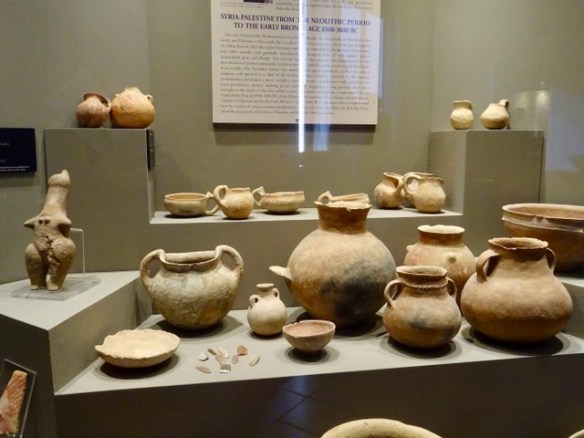
We descended this staircase to emerge …
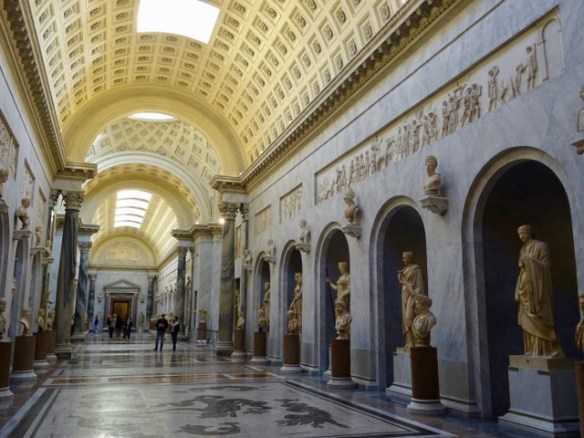
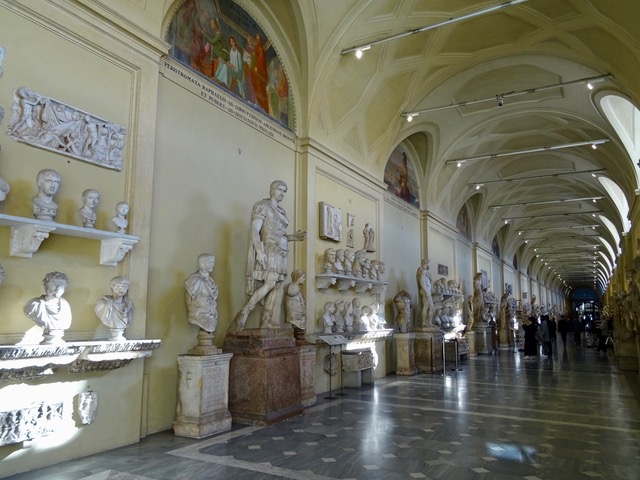
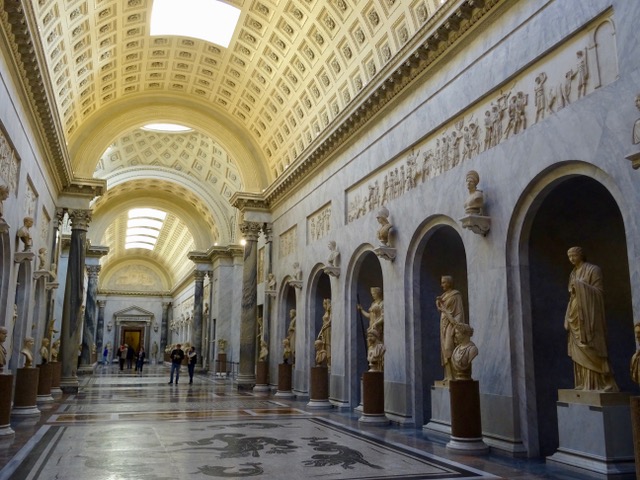
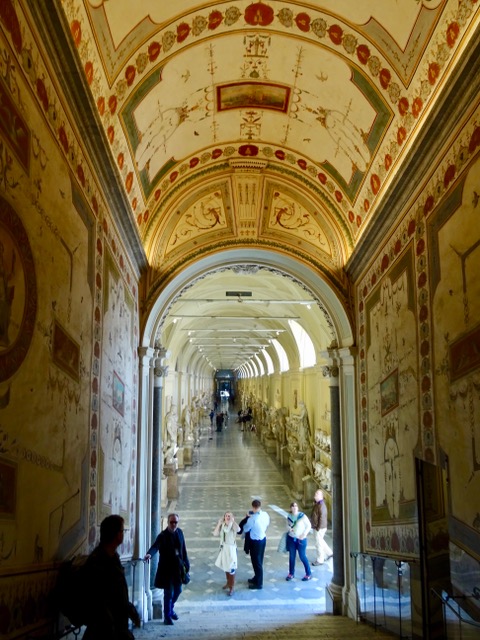 in a very long hallway lined with over a thousand sculptures!
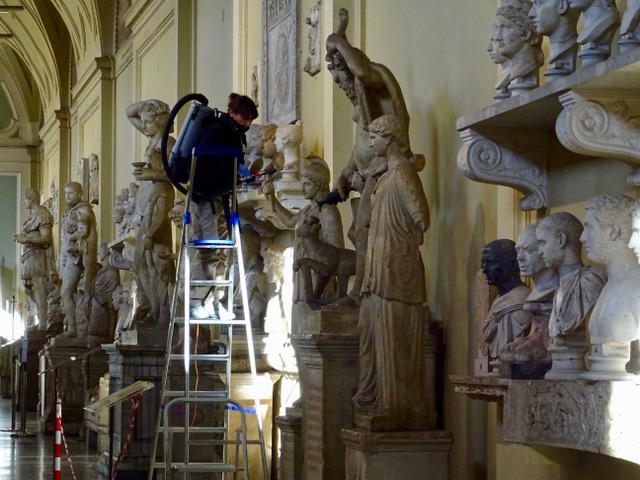
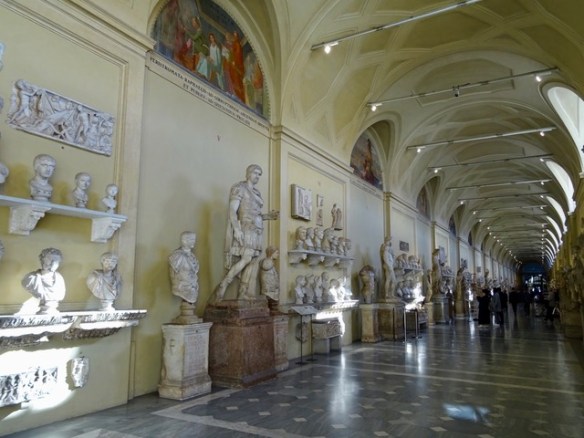 There were several museum workers busy dusting and cleaning. I imagine that by the time they finish it must be time to start again.
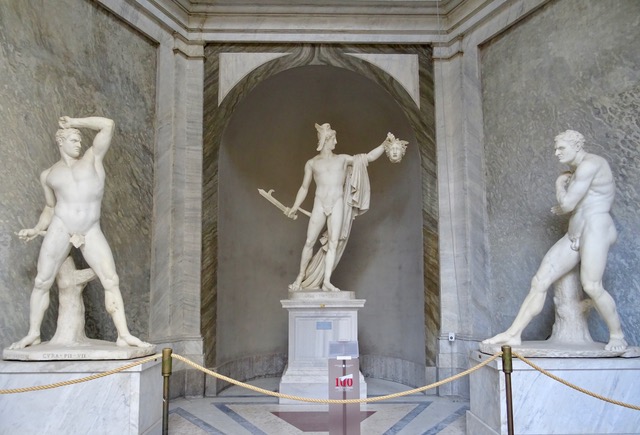
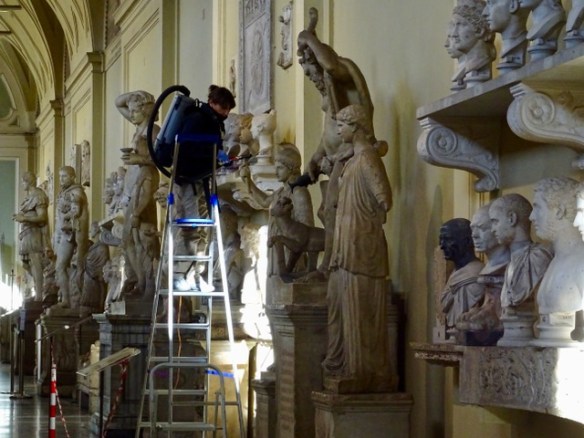 The gallery above opened into this one, lined with even more monumental statues. It simply takes my breath away.
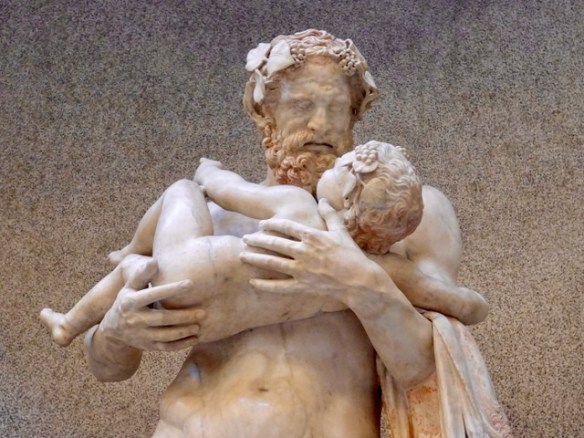
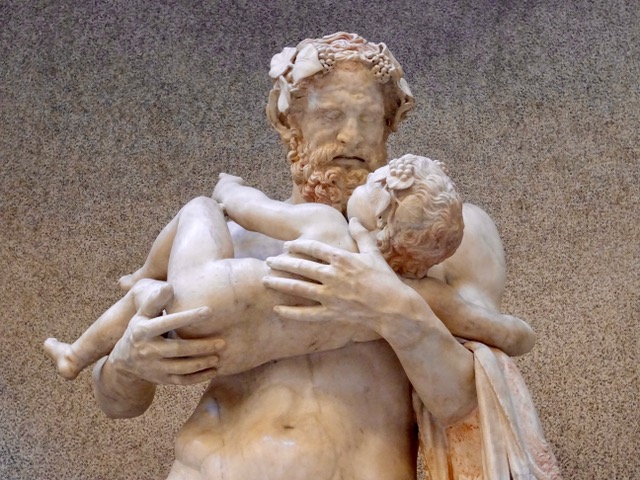
 A Roman copy of a Greek original dating from the 2nd century A.D. The affection for the child is evident in the way he is held and regarded. I can’t imagine that something so life-like can be carved in stone.
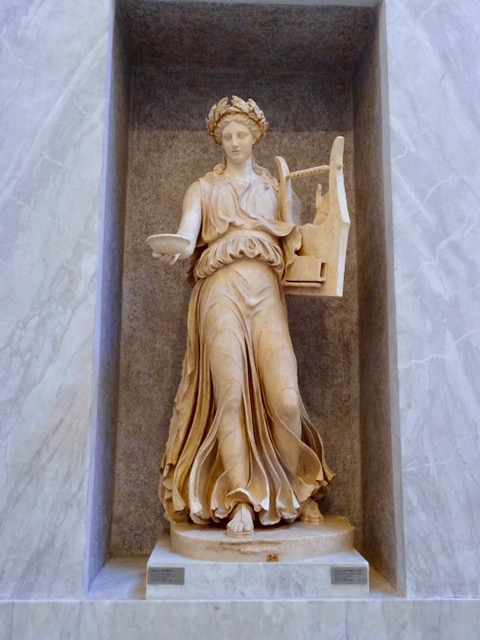
 I am fascinated with the carved flowing robes. I have a hard time even drawing folds never mind chiseling them from stone.
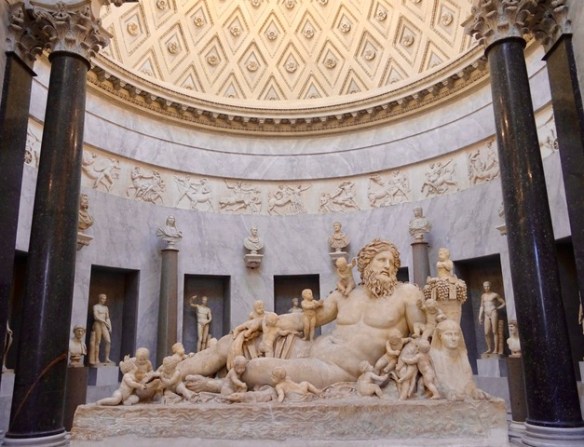
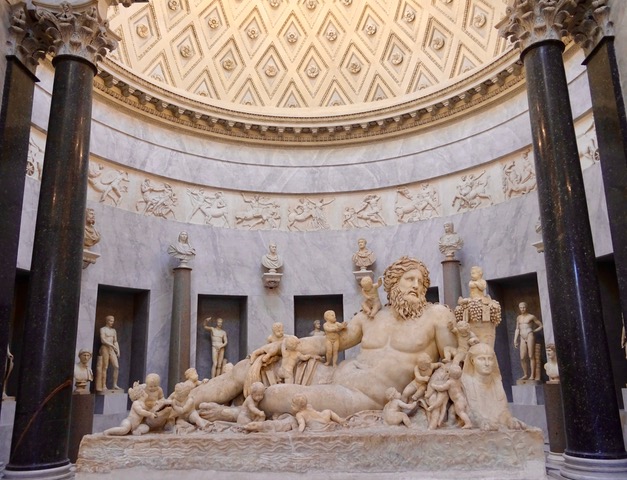
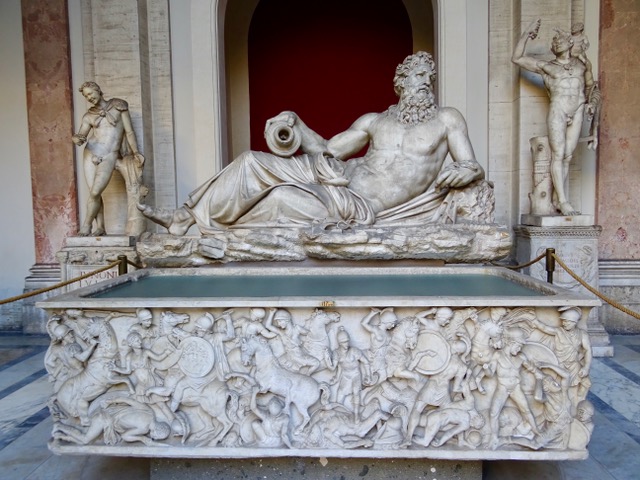
 This is the Nile River God with another sculpture filled niche behind.
There is an outside courtyard with a covered display area all around the exterior walls. There we see the biggest toe. Can you imagine the size of the statue this once belonged to? That is my foot beside it.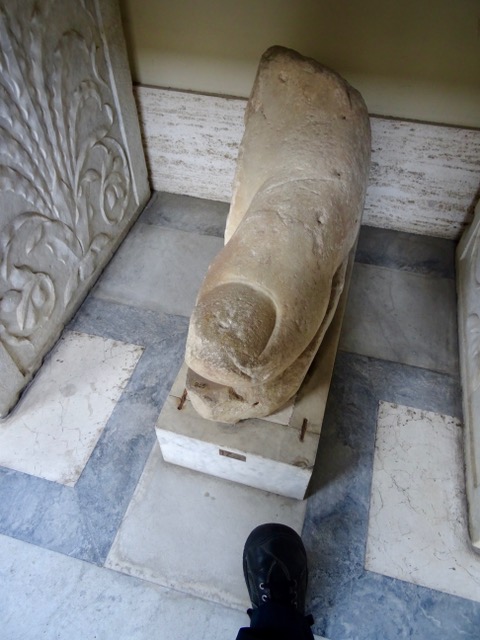
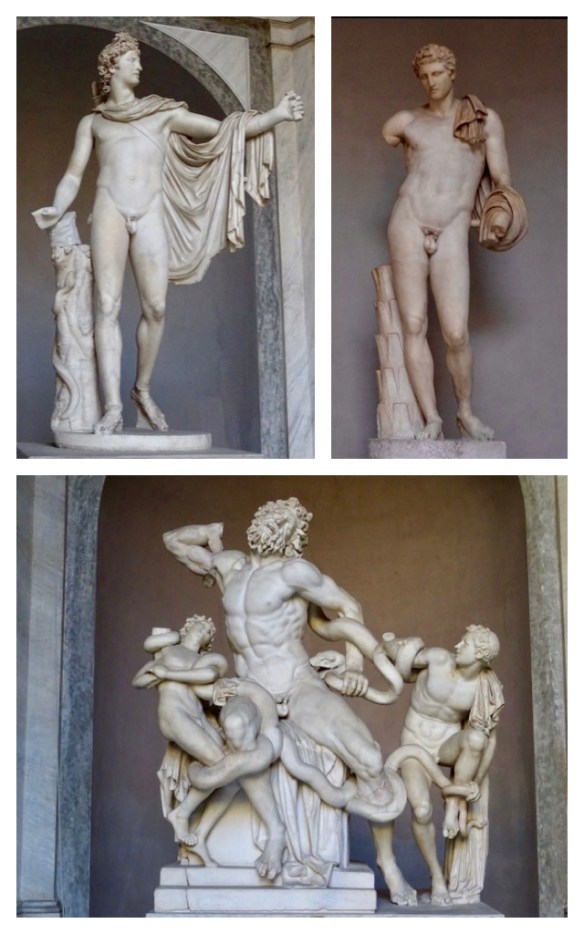
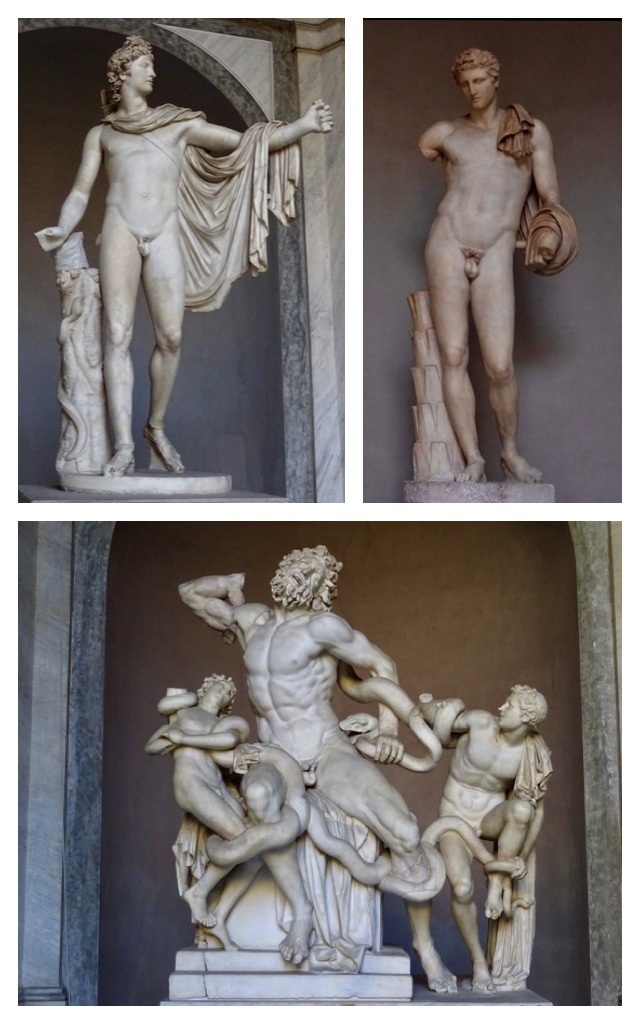
There are many incredible statues on display… 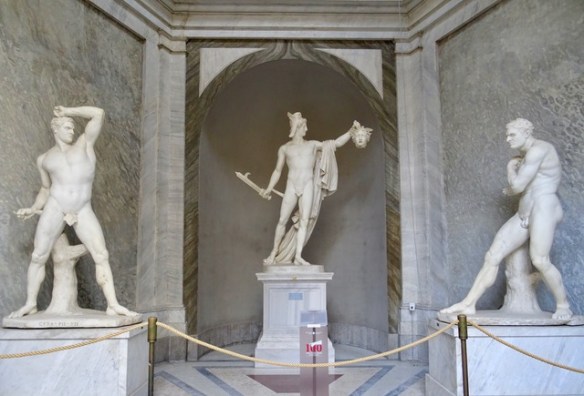 but I am particularly drawn to these three. The Belvedere Apollo, the Belvedere Hermes, and the Laocoön. The Laocoön was unearthed during Michelangelo’s time and it had a great influence on his work.
This sculpture of the River God Arno was the inspiration for Michelangelo’s David in the Sistine Chapel.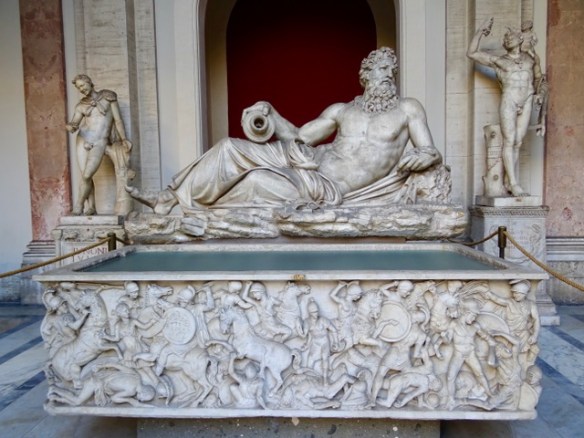
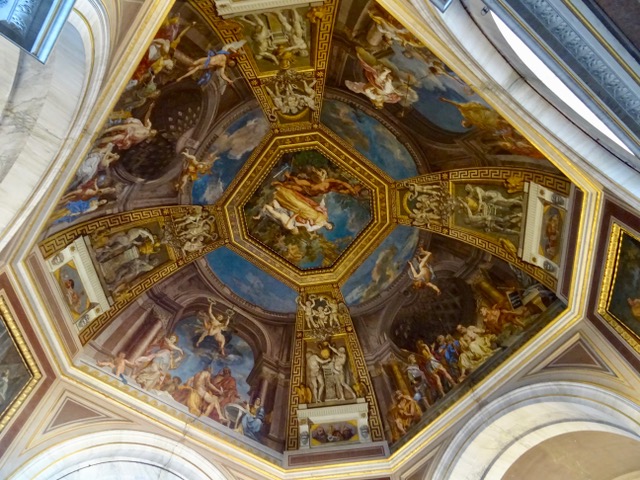
The Belvedere Torso was also the inspiration for Michelangelo’s God in the Last Judgement in the Sistine Chapel.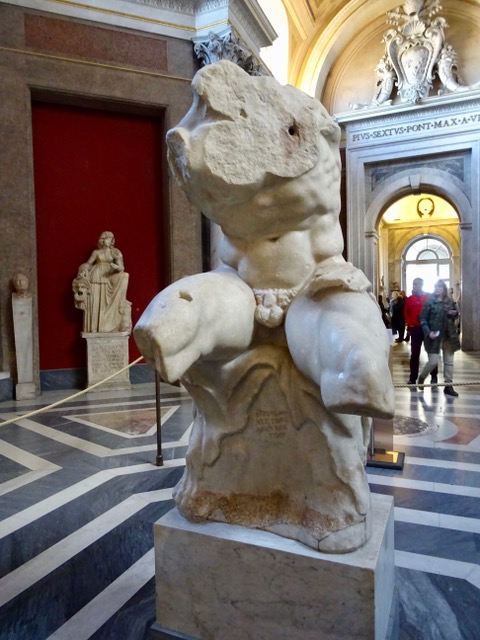 We need to remember to look up. The ceilings in these galleries are as incredible as the art work below them.
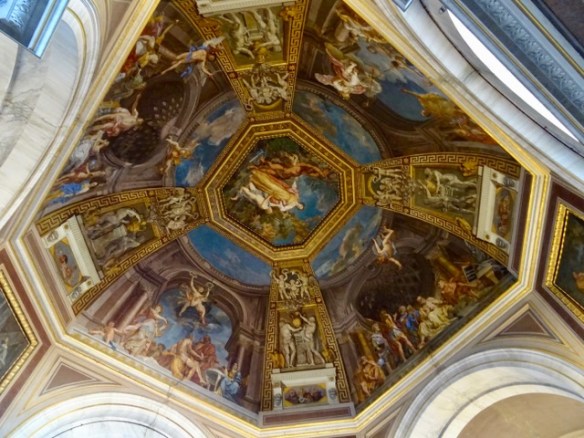 The Hall of Muses with its magnificent dome, mosaic floor, statues of the nine muses from the 2nd century A.D. and the largest carved stone basin in the world.
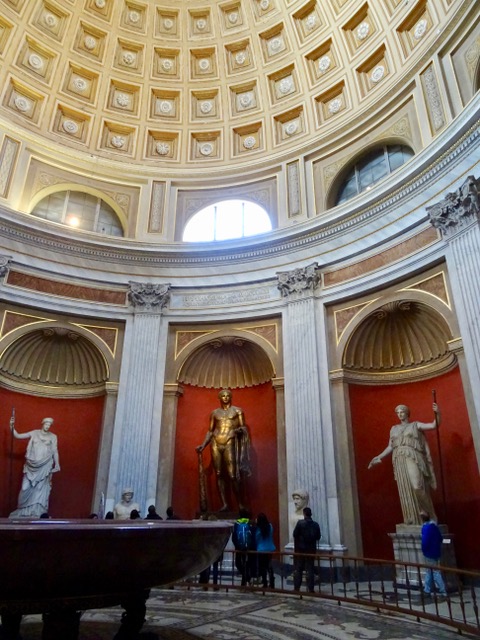 These statues are monumental! Oh, and we are walking on the beautiful old mosaic floor here too.
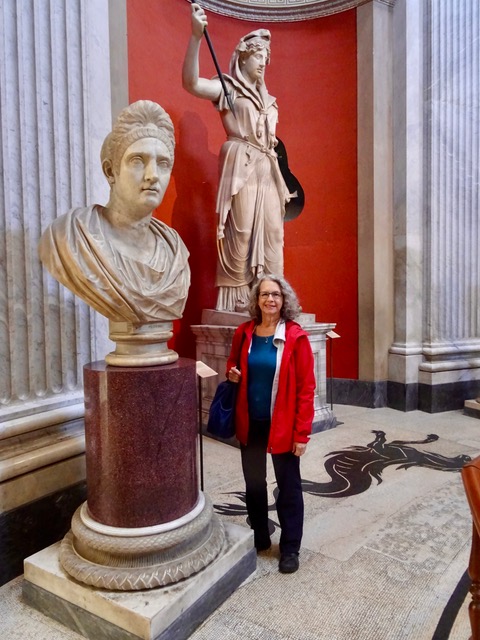 It looked like the statue was trying to give this rather bored looking guard something.
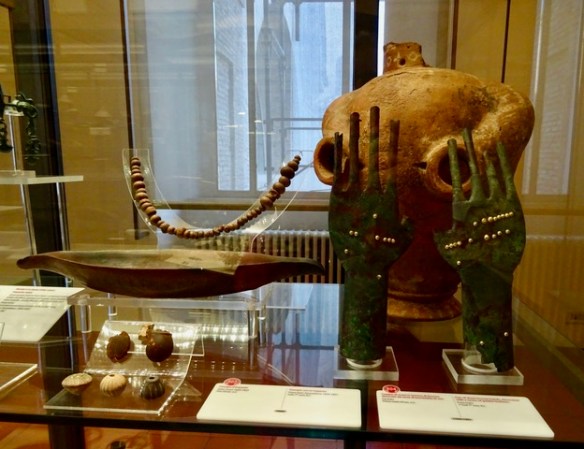
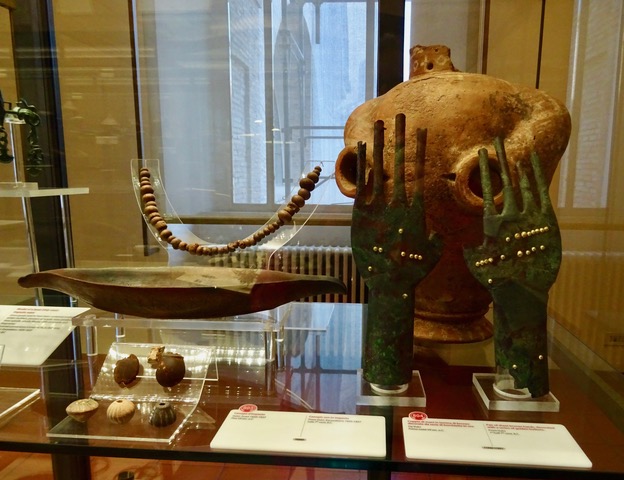
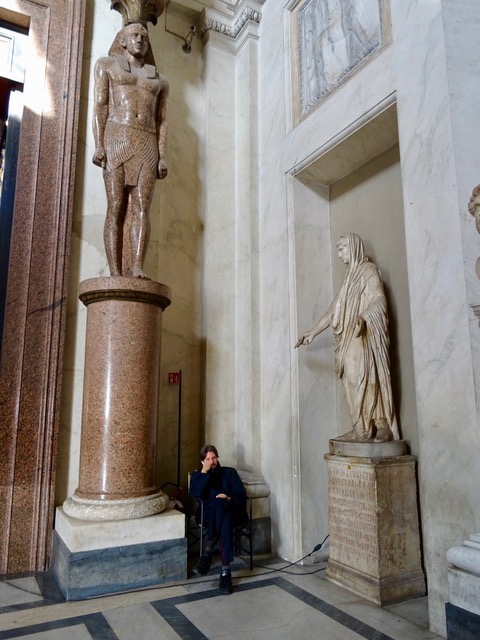 These bronze hands decorated with gold buttons are from the 1st half of the 7th century B.C. I thought they looked like a modern work of art.
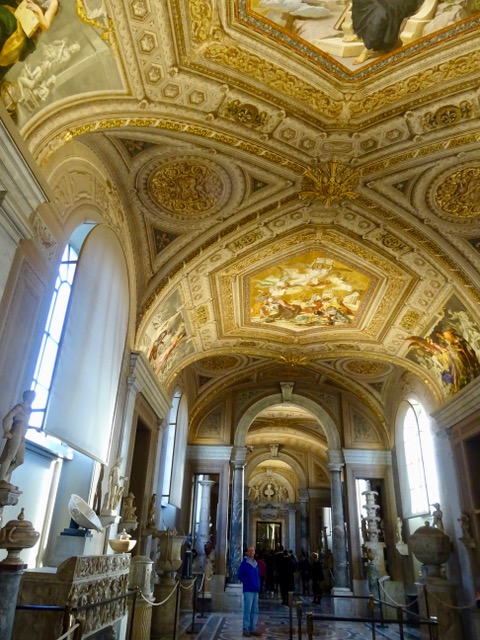
 More display rooms with ornate ceilings…
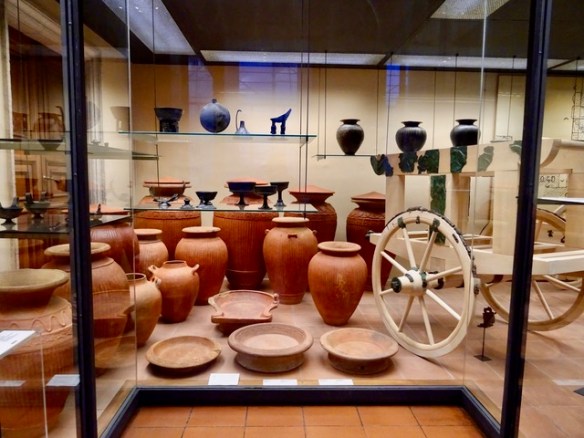
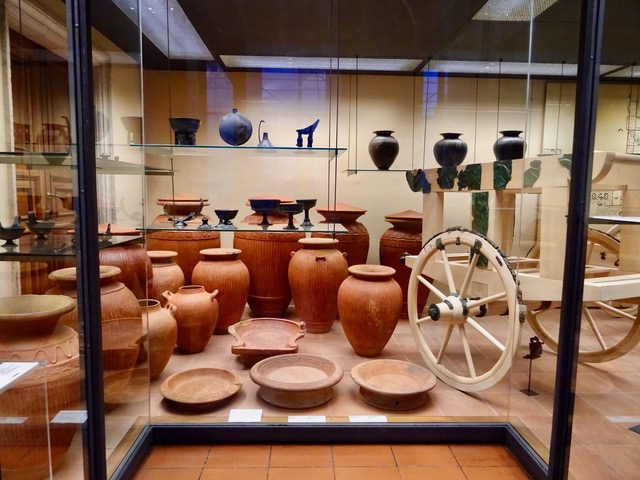
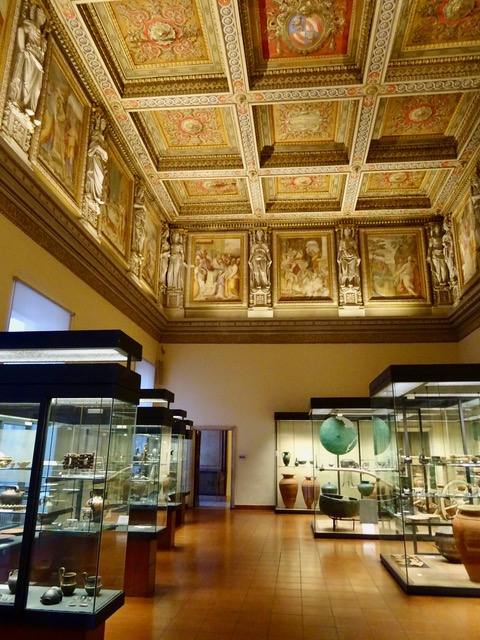 and lots more pots and other artifacts. In fact there were many rooms like this. We walked through all of them but I have admit that after a while we didn’t even try to look at all the items.
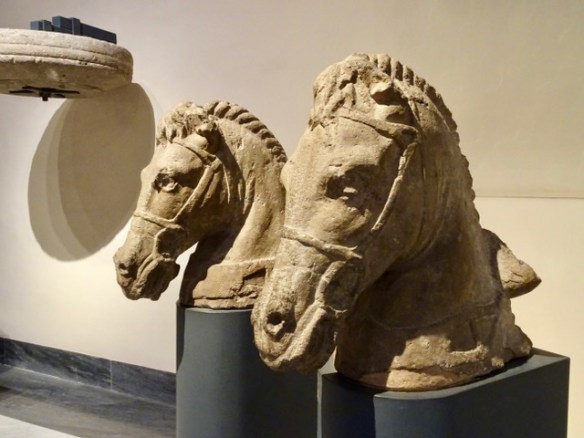
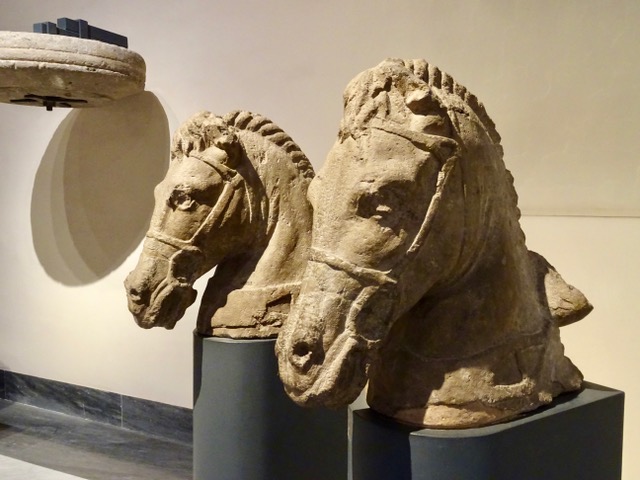
 I did love these two horse heads…
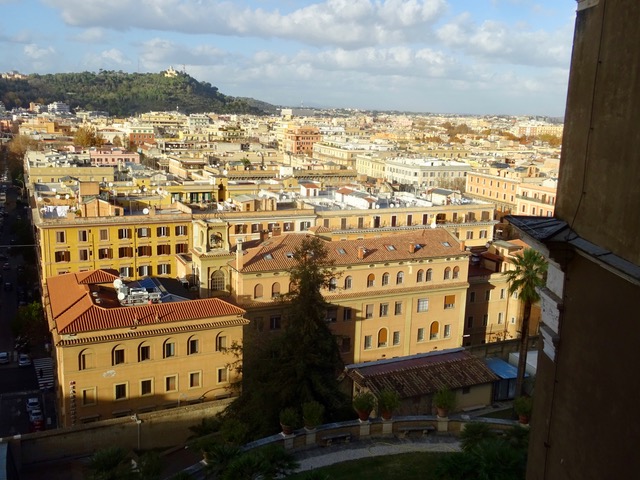
 and there were some great views of Rome from the Gallery windows.
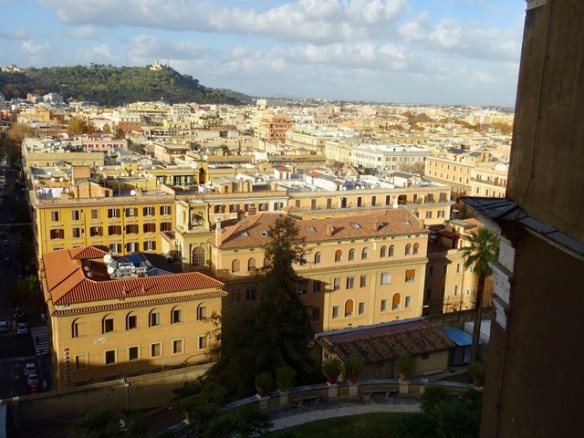 Bob is trying to figure out where we go next.
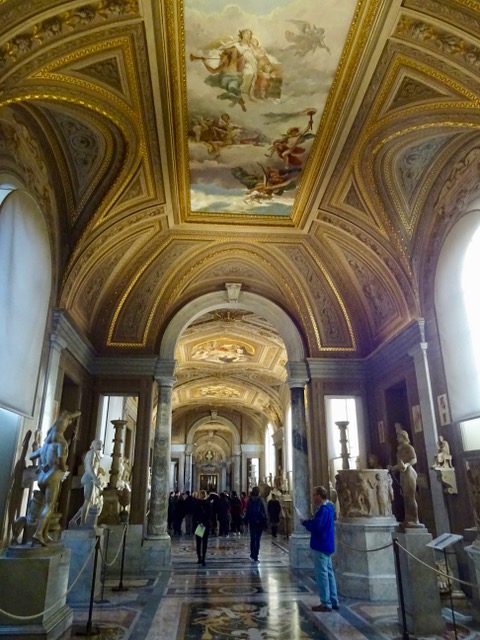 Turns out it is this room, with even more sculptures and carved stone artifacts, and yet another incredible ceiling.
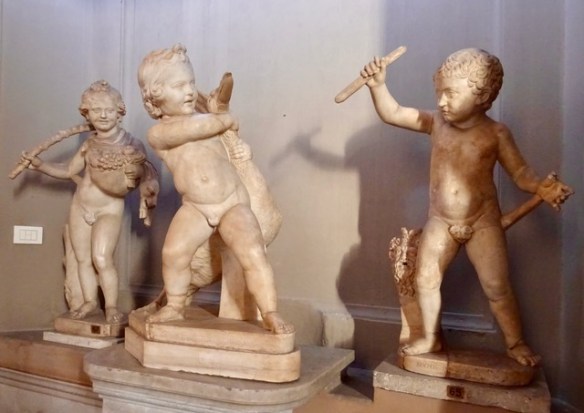
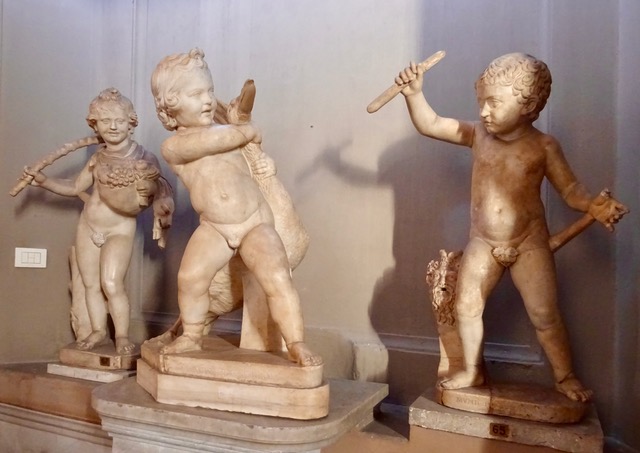
 We both remember seeing a copy of this little boy with his goose in the Louvre many years ago. Interesting that we see it here in Rome too.
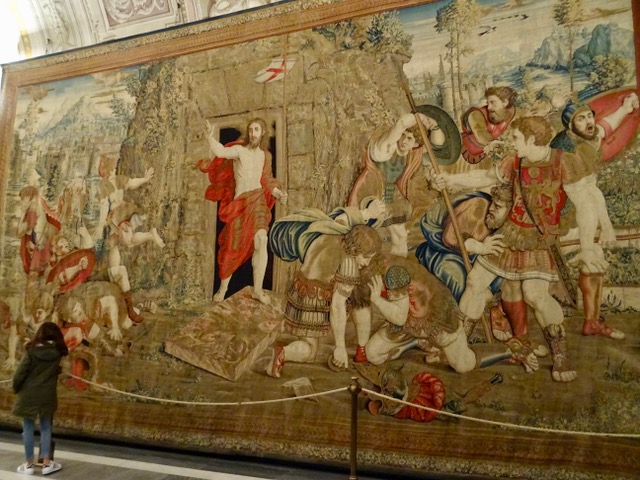
 The Arazzi Gallery is a long hall with more tapestries on both sides.
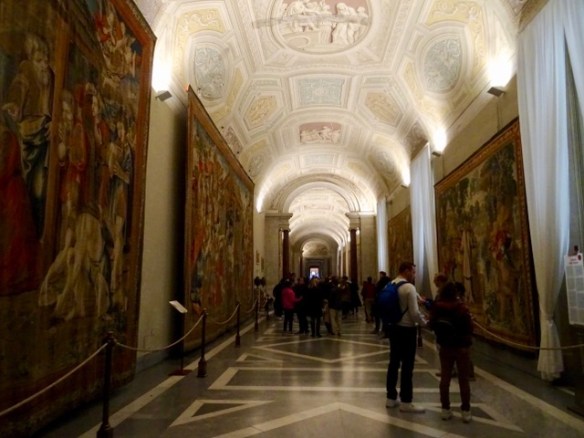 This tapestry has an optical illusion. As we walk by it appears as if Jesus’s eyes are following us and he even seems to move through the doorway. It is very strange.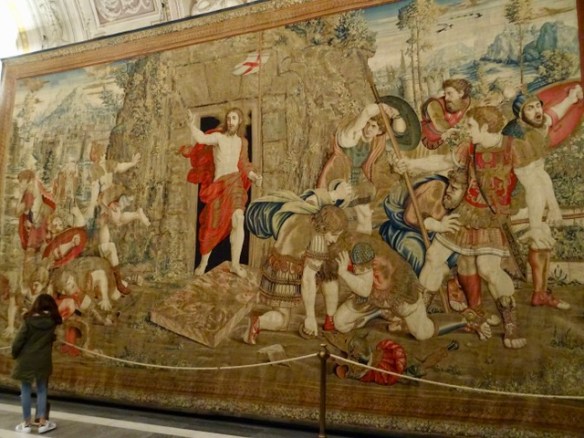
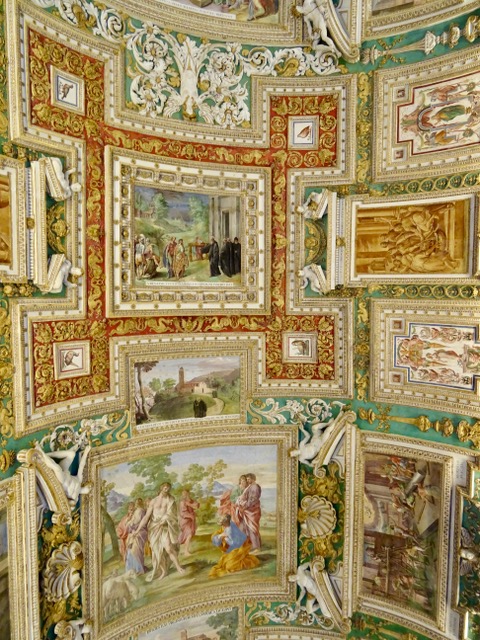
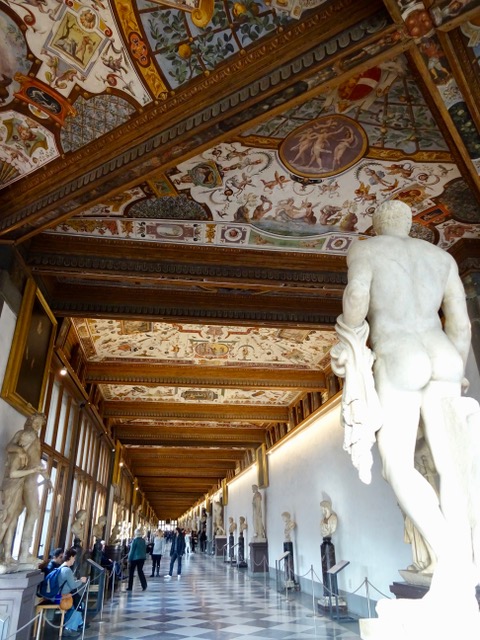
The Gallery of Maps is astounding. It seems to go on forever. The walls are lined with huge maps of all of Italy but it is the ceiling that grabs our attention. It is covered with paintings and sculptures and ornate frames.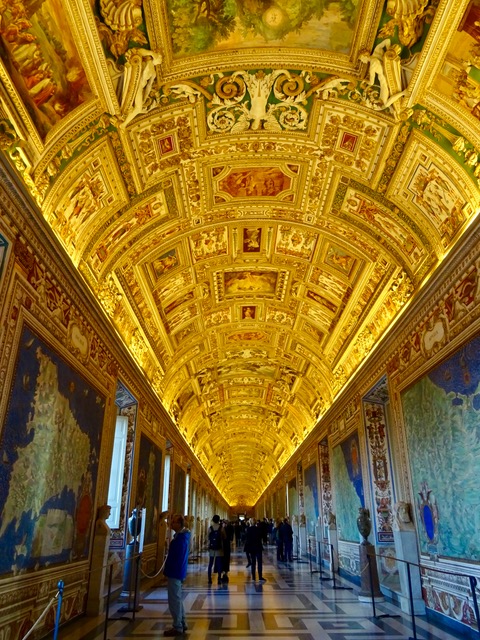 The lighting makes the ceiling look golden in the photo above but this photo shows its true colours. I just don’t know what to say. Words are simple inadequate to describe this very, very long ceiling. It is almost unbelievable.
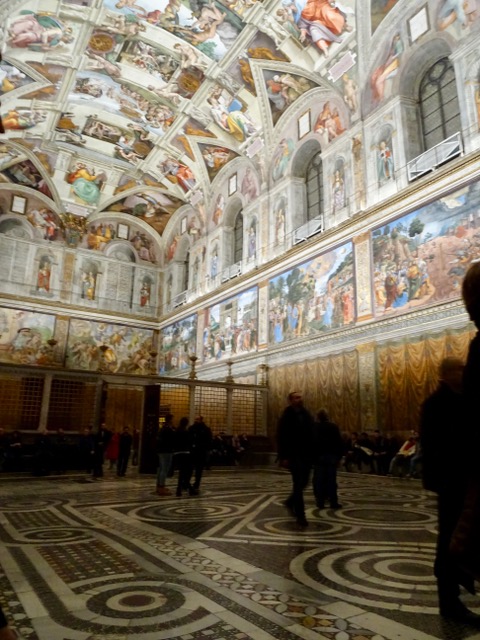
 There are more galleries but we are getting very tired. We decided several hours ago that we need to come finish seeing everything another day. We make our way to the Sistine Chapel. We are so lucky, because it is late in the day there are not many people in the chapel. We find a seat along the wall and look up. There is so much to see. I think it is amazing that we are sitting here, in the Sistine Chapel looking at this masterpiece. We probably spend almost an hour here but it is time to go as we still need to visit St .Peters and see the Pieta.
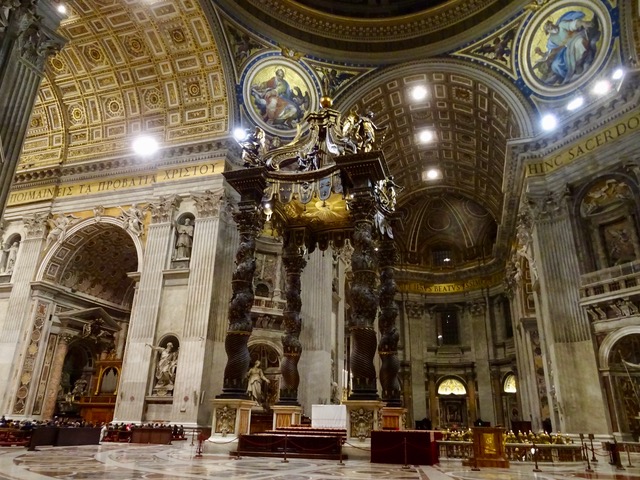
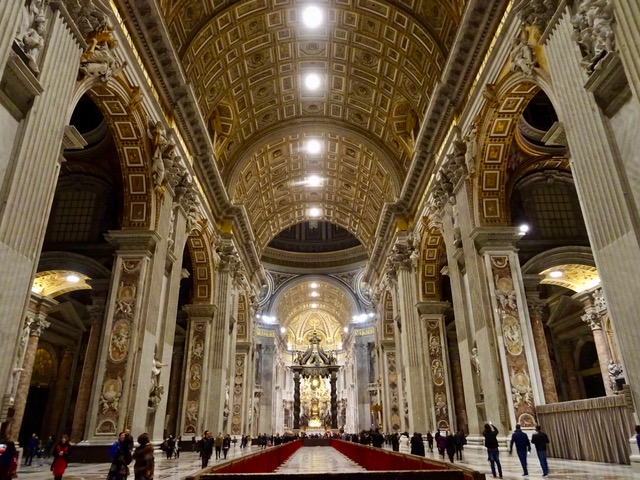
 It is night when we leave the Vatican Museums. We go through the ‘secret passage’ that allows us to enter the basilica without having to line up and go through security again.
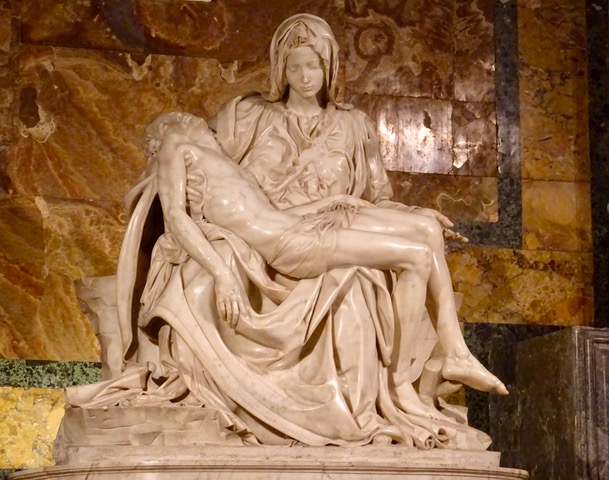
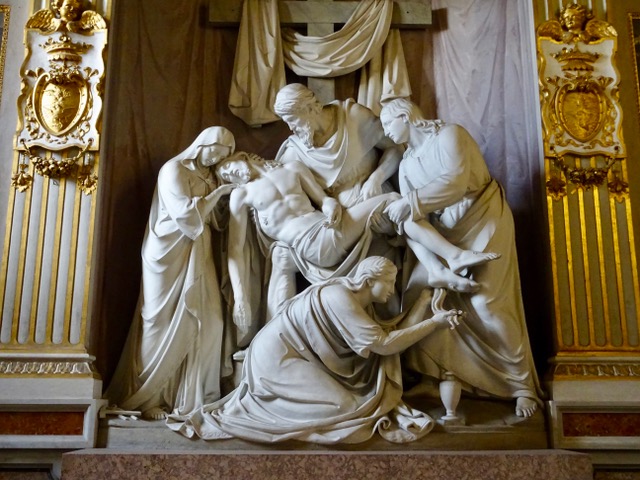
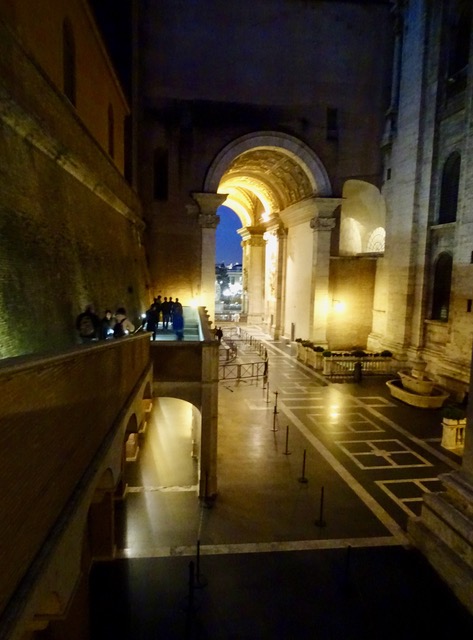 There she is. The Pieta, in all her glory.
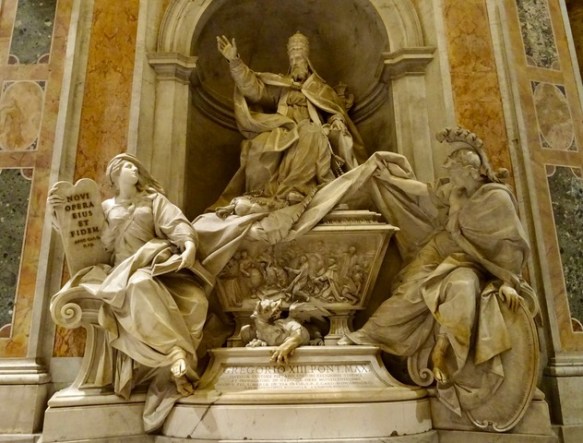
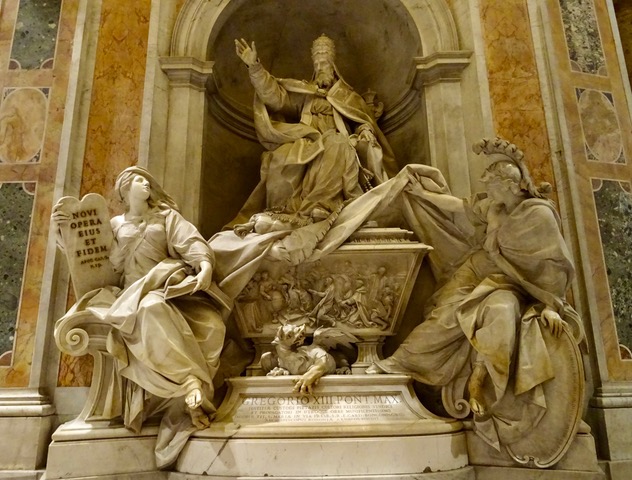
  After spending some time with the Pieta, we walk around the basilica. We wanted to visit the grotto beneath the church but it is already closed. I like the little dragon between the bottom two figures in the sculpture.
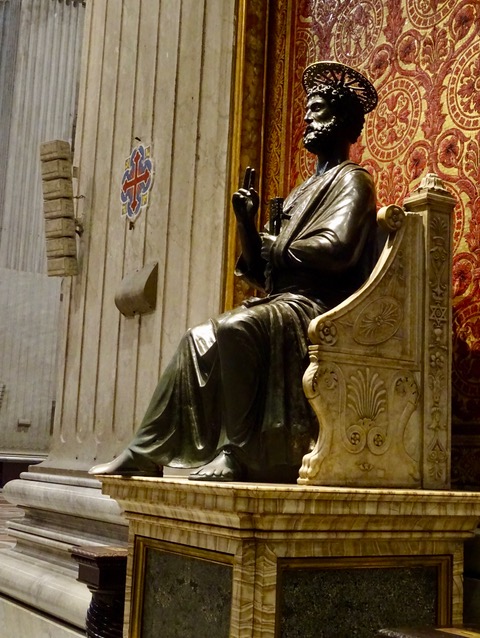
 St. Peter’s right foot has been rubbed almost away by the touch of thousands of pilgrims over the centuries.
 There is a mass taking place so we listen to the organ music and singing for bit before we finally head home.
 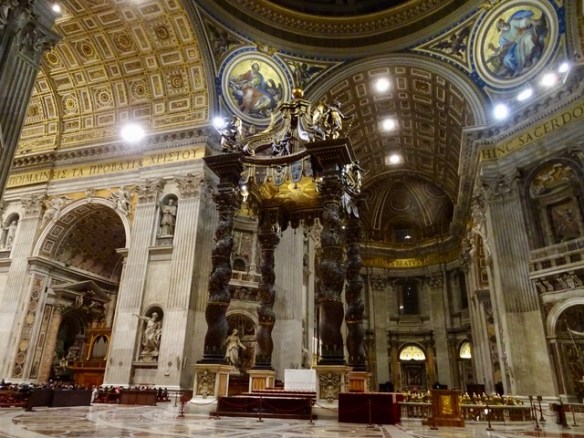 It has been long day. We spent 8 wonderful hours in the Vatican Museums but we are both very tired.
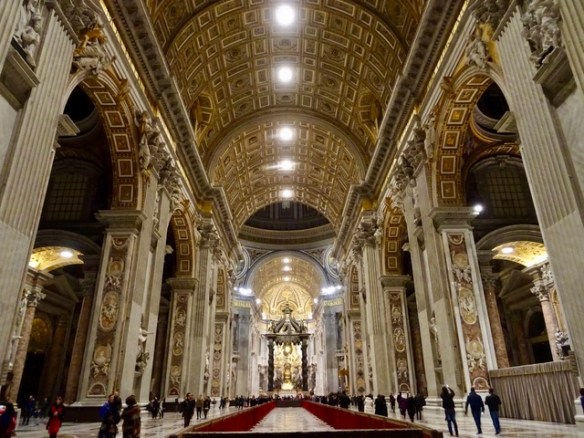 .
.
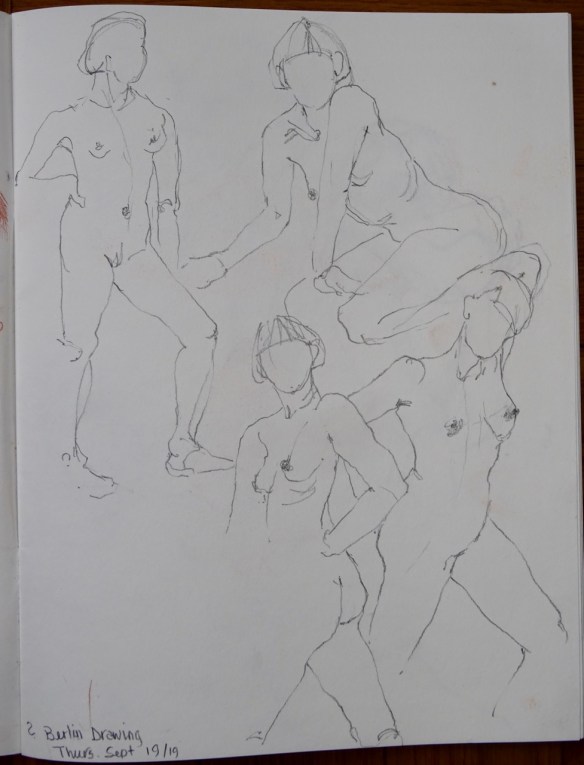
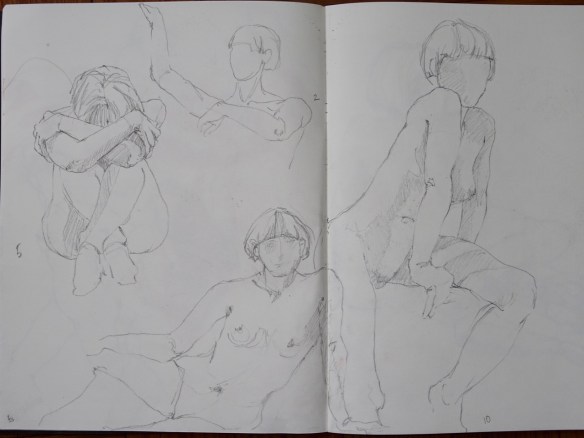
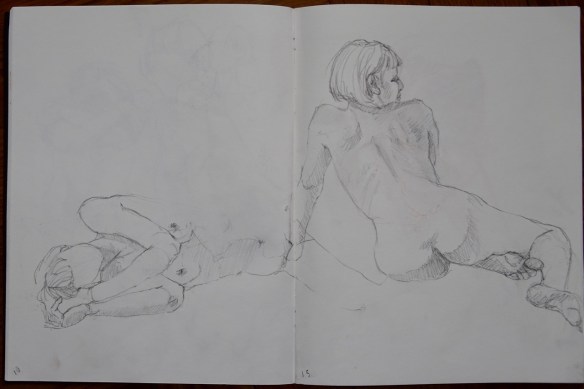
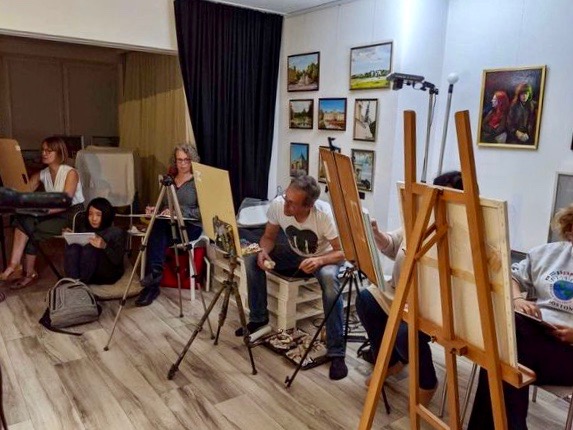 Here is our model, Bettina, she is very pregnant. How wonderful! It has been ages since I have had the chance to draw a pregnant model so this was an unexpected bonus.
 The drawing on the left is mine.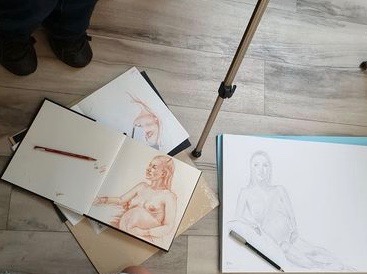
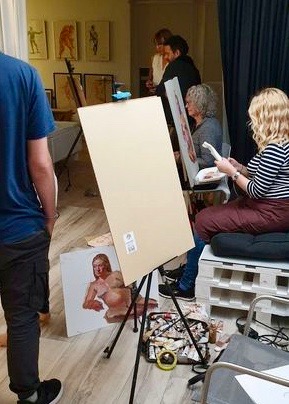 I did a couple sketches to warm up.
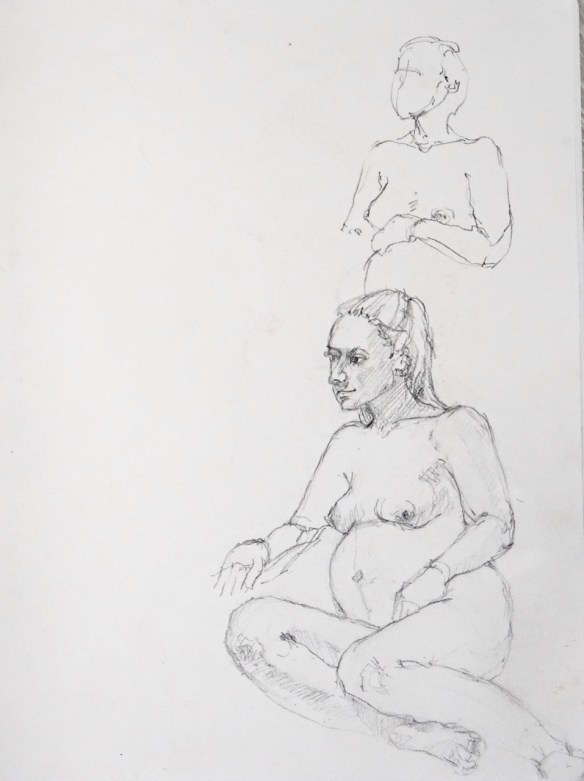 Then spent about two hours working on this drawing.
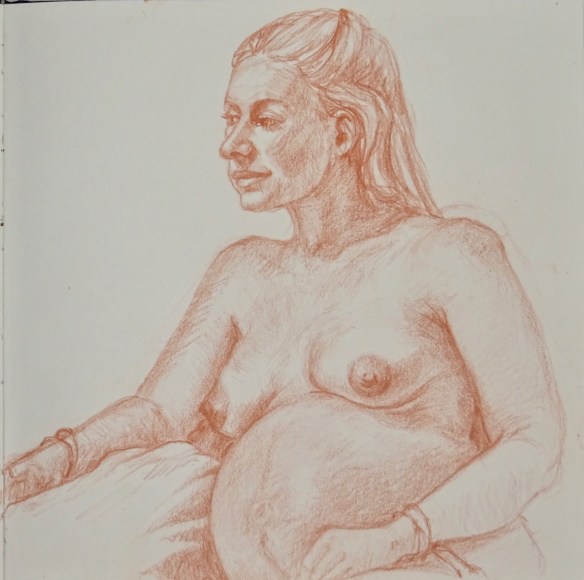 Bob came to pick me up after the session and on the metro ride home I did a bit more sketching.
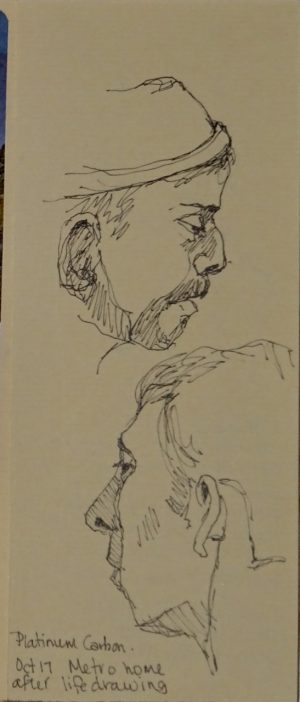 This was interesting, the older man with the facial hair was sitting right across the aisle from me and he was only on the metro for one stop so I sketched quickly hoped he didn’t notice that I was sneaking peeks at him. The young man with glasses did notice I was drawing him and he smiled at me, I smiled back and he tried not to smile as I continued sketching. As he got up to leave I showed him the sketch and he said something in German, then he smiled and said ciao, so I think he liked it.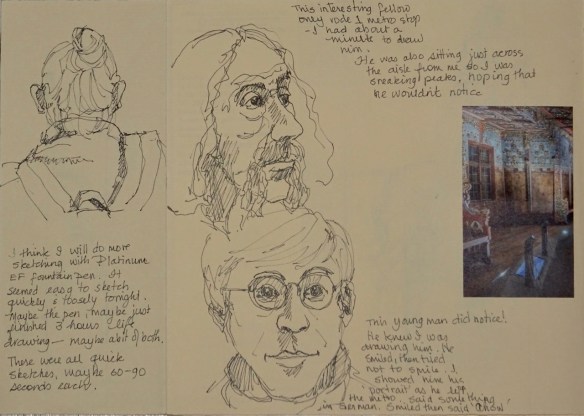
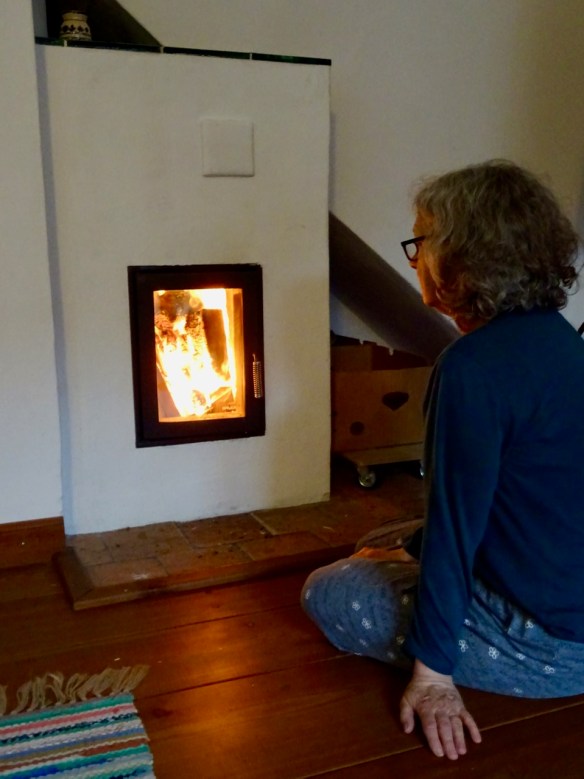 On our way in to Linz we see this ‘green’ apartment. Lots of gardeners must live here.
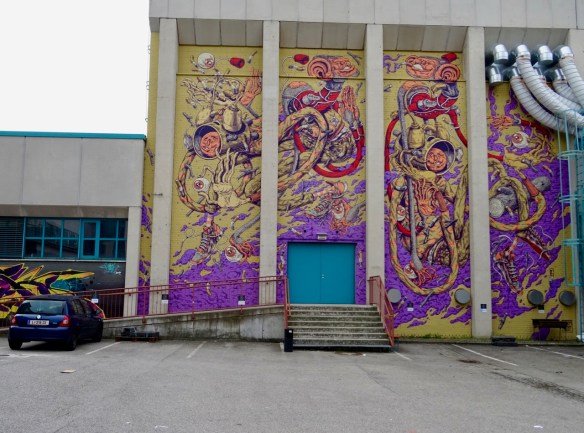
 It took some time to find the bike rental company. They weren’t easy to locate. We pass this big mural during our search.
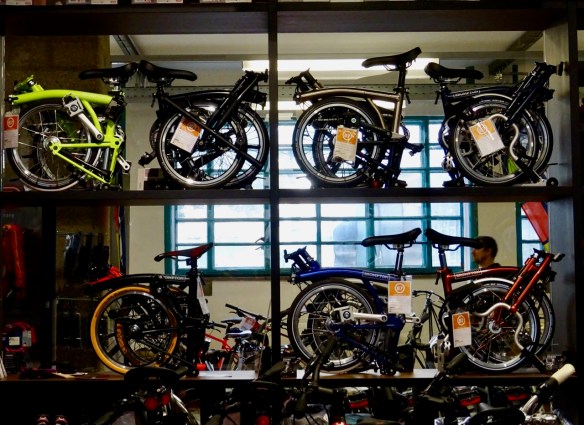
 I thought these bikes were quite interesting. They fold up compactly.
 We start out on our bike trip along the Danube. Bob wants dot take my photo while I was still in one piece!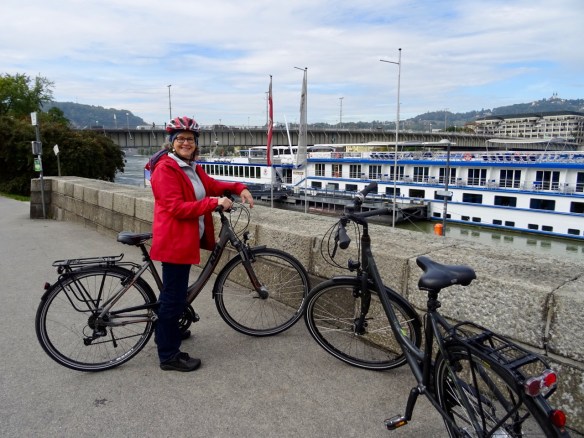
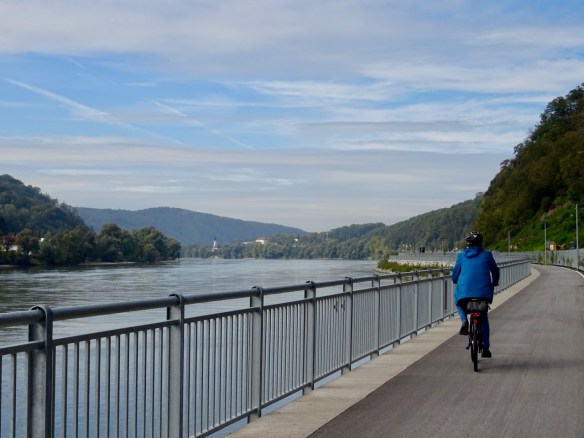 There are some great views along the way…
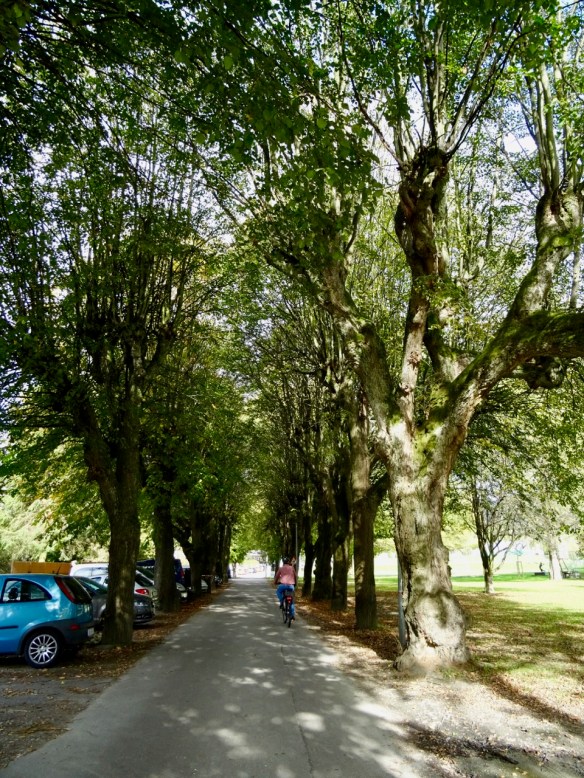
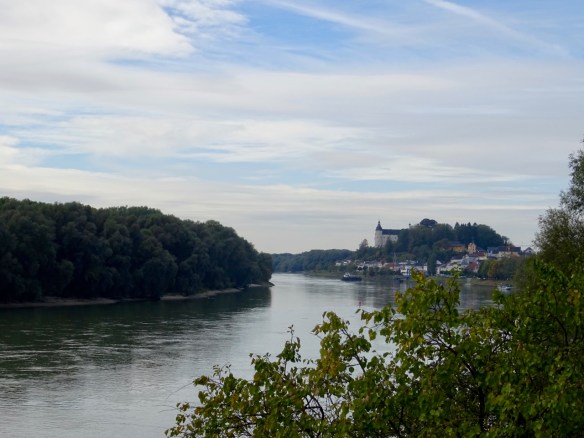 and some wooded trails. I did quite well until the killer hedge tried to get me…and then there was the vortex railing! If I got too close it tried to suck me in!
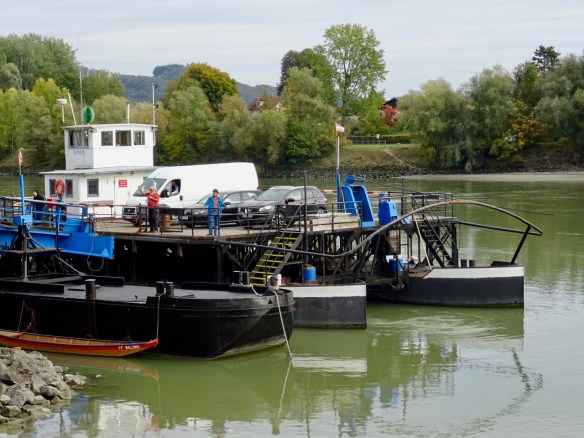
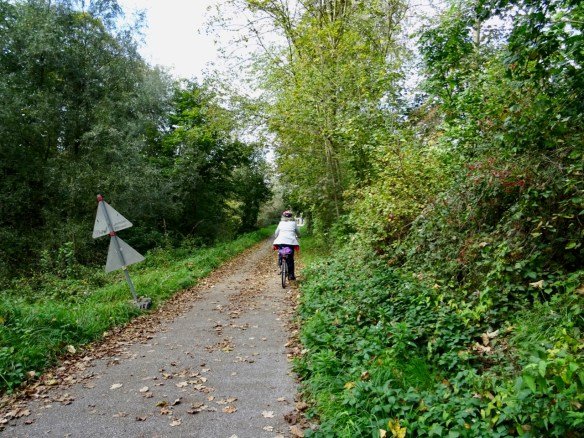 Bob left me at a coffee shop to rest and sketch and he went a bit further down the river, crossed a bridge, and then returned on this strange looking ferry.
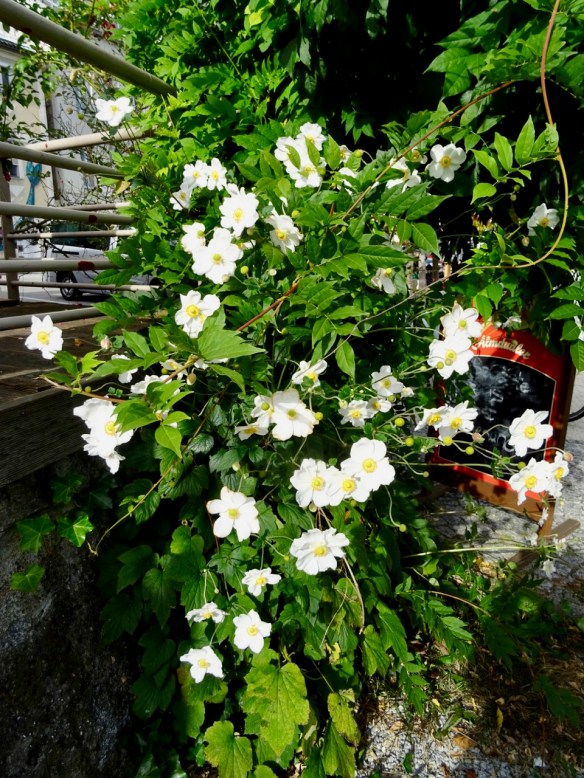
  These flowers are much like the anenomes we grow at home only much larger.
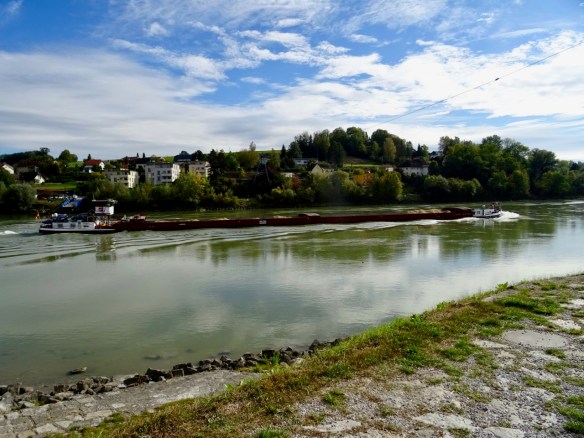
 We see the long barge steaming down the river.
 This curious mural is on a building near the café where I waited for Bob.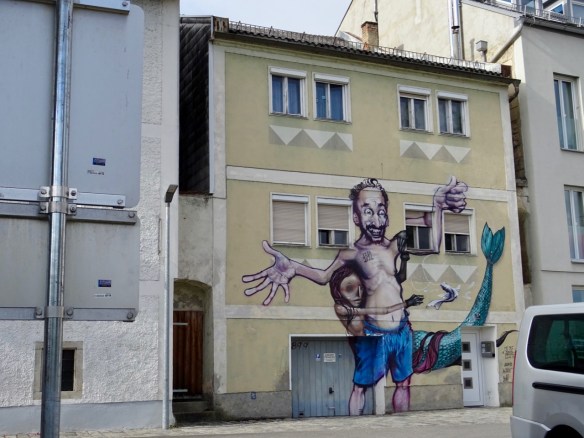
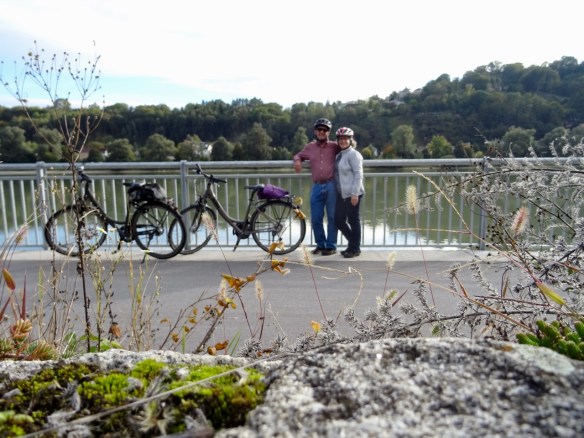
 Our selfie along the Danube.
 I need a few breaks on the ride home, so a photo is a good excuse for little rest 😉
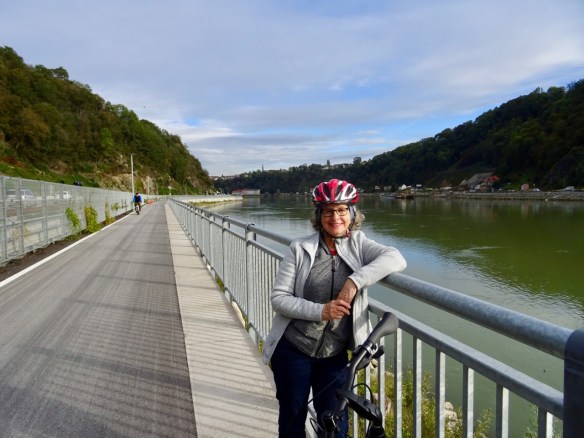 These river cruise boats remind us of our cruise on the Nile, where the cruise ships were lined up 6 or 7 deep along the shore. Passengers had to walk through all the ships, sometimes walking across the water on a narrow board between the ships, to get to shore.
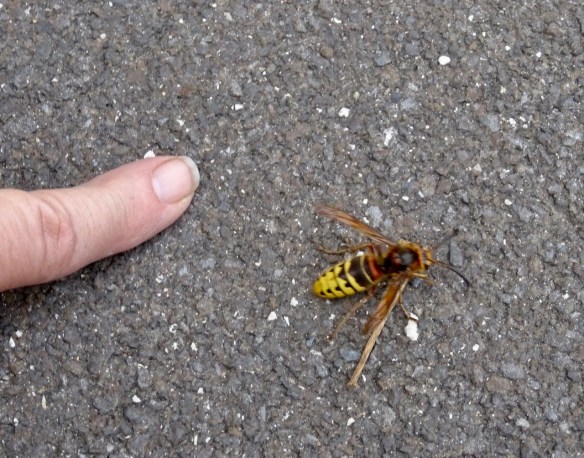
 This wasp was really big!
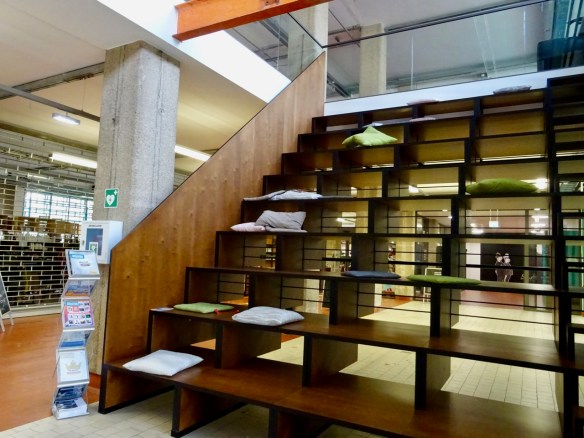
 We take our bikes back. They are in a building which is an incubation centre for start-ups. Looks like these steps are a place to relax, or even snooze.
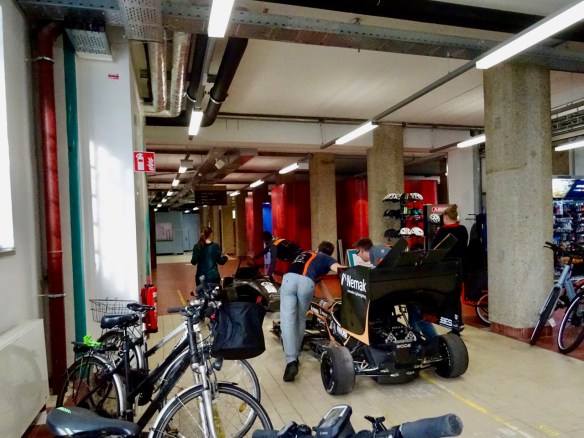
  We see two souped up go-carts being wheeled into the building.
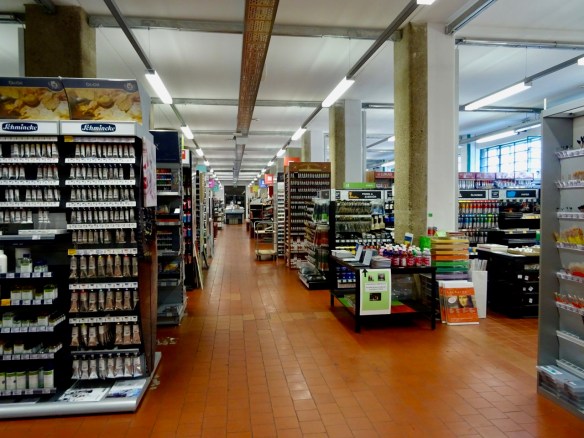
 I am happily surprised to discover Gerstäcker, a huge art store, in this building. After our ride I spend at least an hour exploring and find some new drawing pencils, and two really nice hardcover Hahnemühle Sketchbooks, a 10″ square and a 8.5″ x 12″ rectangular one. They were really reasonably priced too! I couldn’t resist even though my suitcase will be a lot heavier.
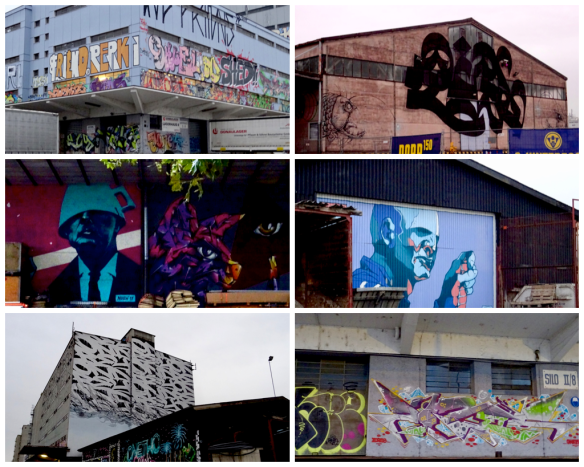
 Nearby is an industrial area called Mural Harbor. Artists from over 25 nations created more than 100 works of art on warehouse buildings.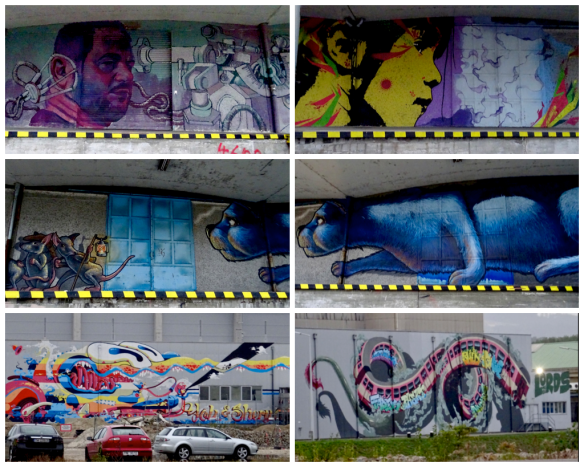
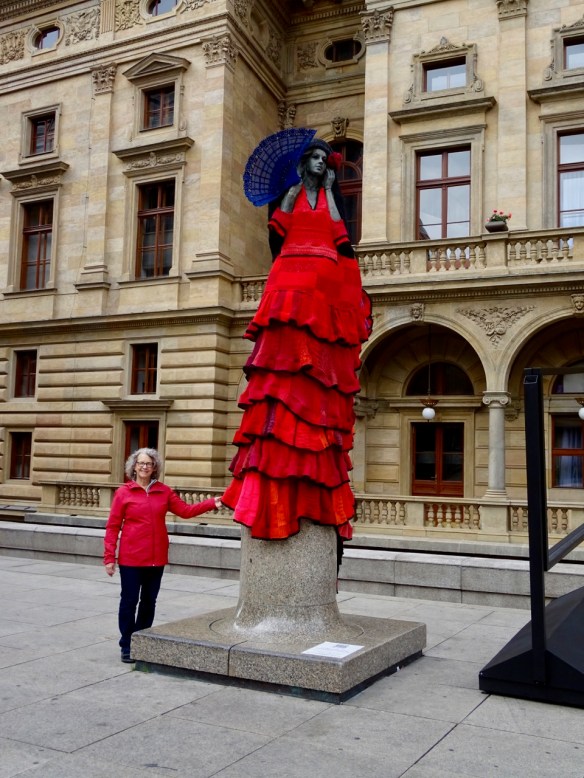
 This knitted sculpture ‘Carmen’ is the creation of Eva Blahová, an artist and scenic designer living in Prague. 33 knitters from all over the Czech Republic were involved in this project and they knit over 50 meters of red ruffles to dress an existing sculpture. It is pretty impressive.
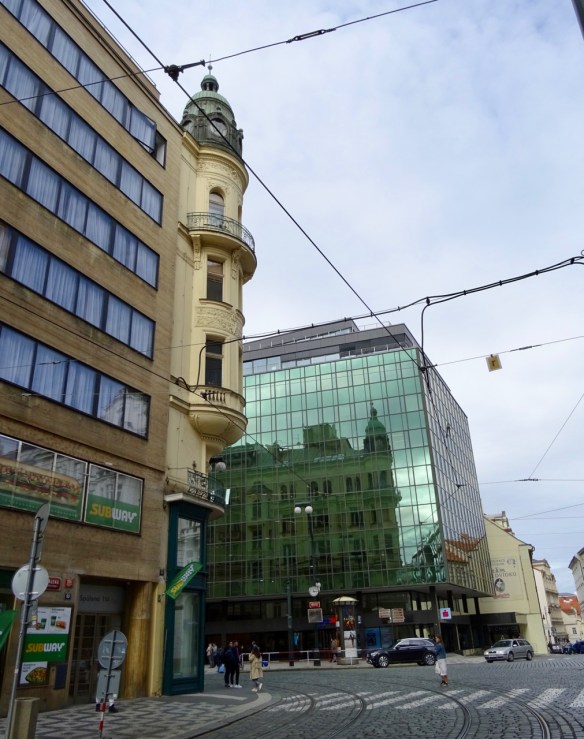
 Walking towards the “Dancing House’ we pass beautiful Art Nouveau buildings with very grand entrances.
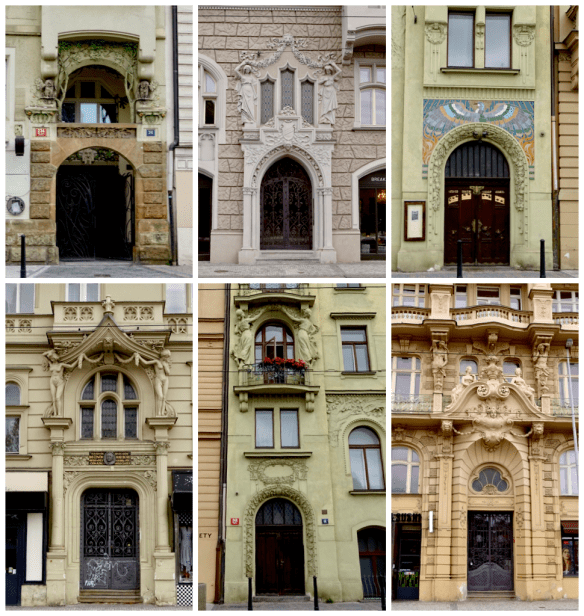 These entrances are on this block of buildings. Although Prague was bombed in World War II it did not suffer the catastrophic damages of Berlin and Dresden. There are so many beautiful buildings with lots of carved decorations here.
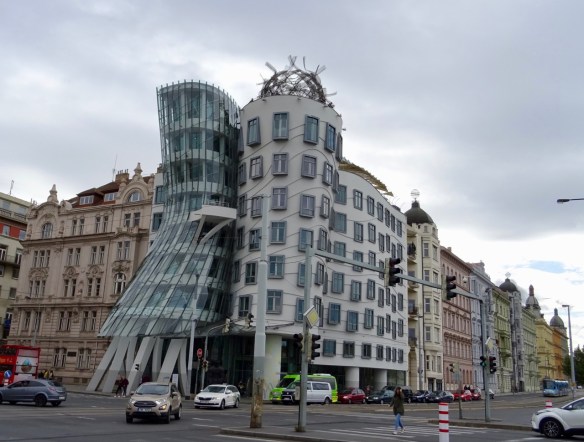
 The Dancing House, or Fred and Ginger, as it is nicknamed, was built in place of a building that was destroyed during the war. We think we know which is Fred and which is Ginger. What do you think?
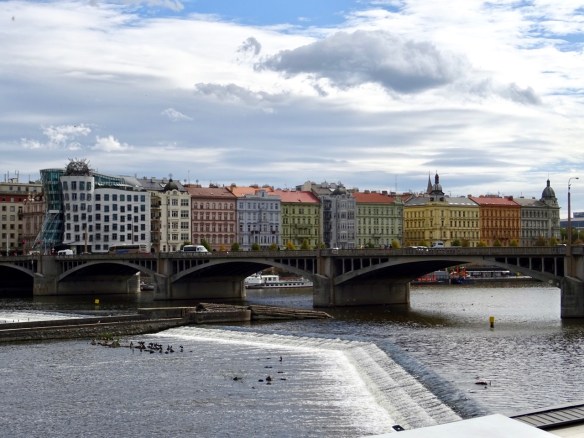
 We crossed this bridge and had our picnic lunch in a little park with this view. Prague has lots of trees and parks.
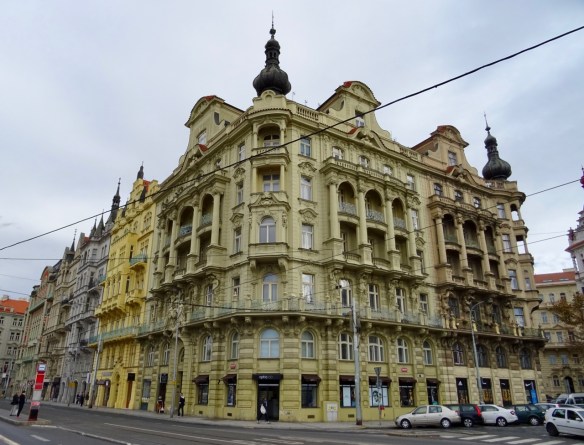
 Here ae some more pastel coloured buildings we see on our walk along the river.
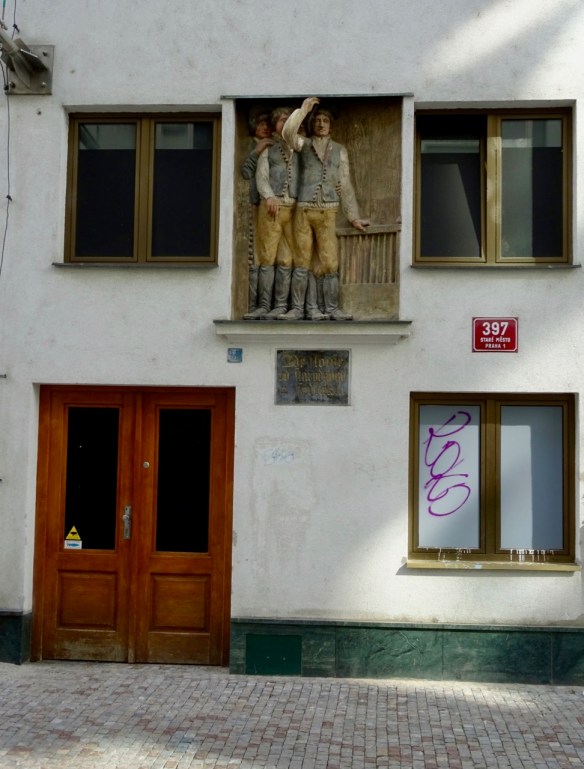
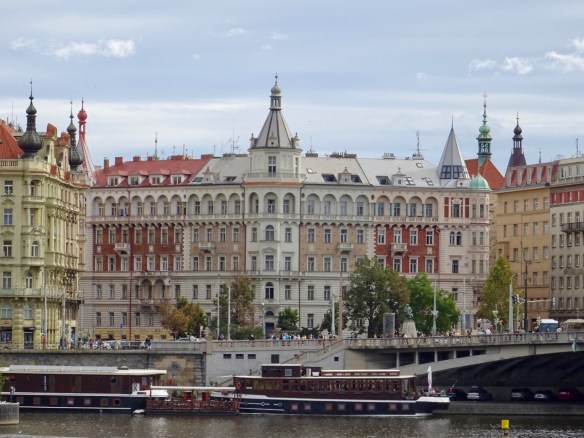 These statues holding up a balcony are quite wonderful.
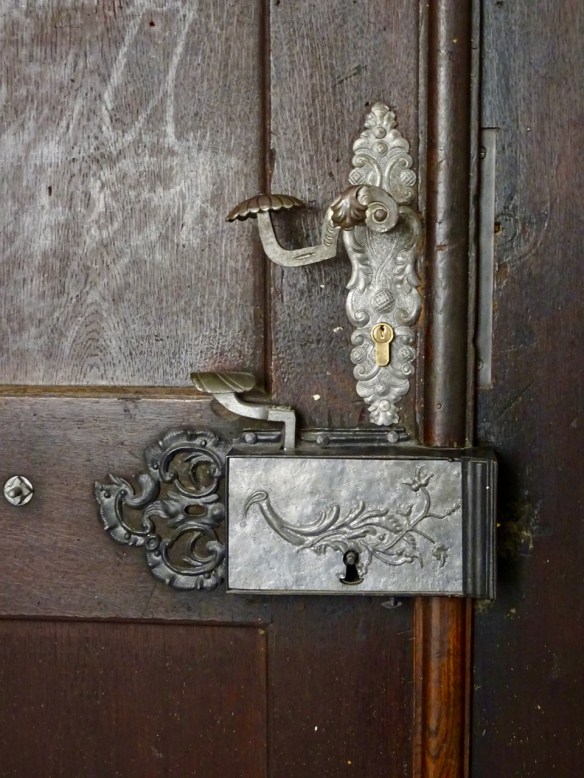
  I think Bob might have been a locksmith in another life. He is always noticing interesting locks.
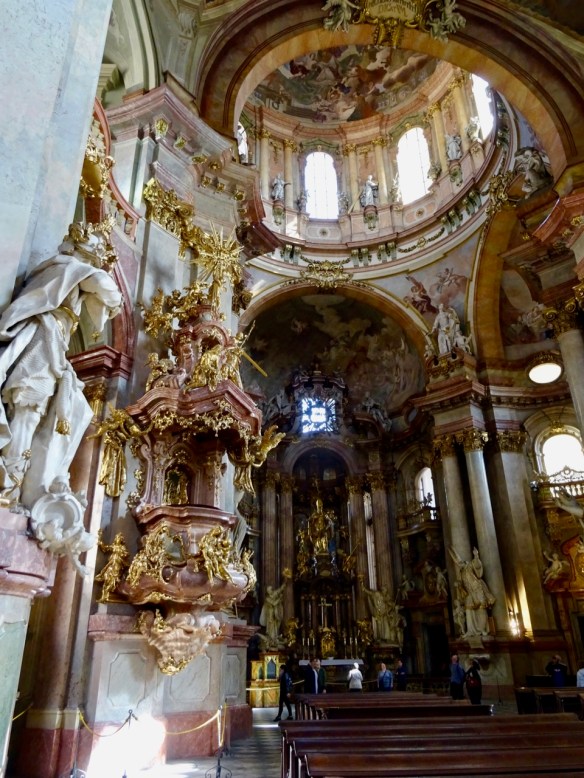
 We arrive at the most famous Baroque church in Prague, St. Nicholas Church, at Old Town Square. The dome has a diameter of 20 m, with a height of over 49 m, making it the highest interior in Prague. The church was completed in 1735, replacing a parish church dating back to 1273. There is so much history everywhere we visit. Canada is such a young country in comparison.
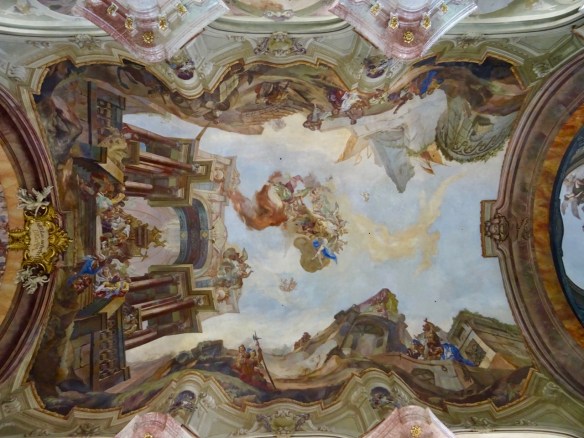
 The ceiling fresco is over 1500 square metres in size and is one of the largest in Europe.
  We climb to the second floor balcony for some great views of the church.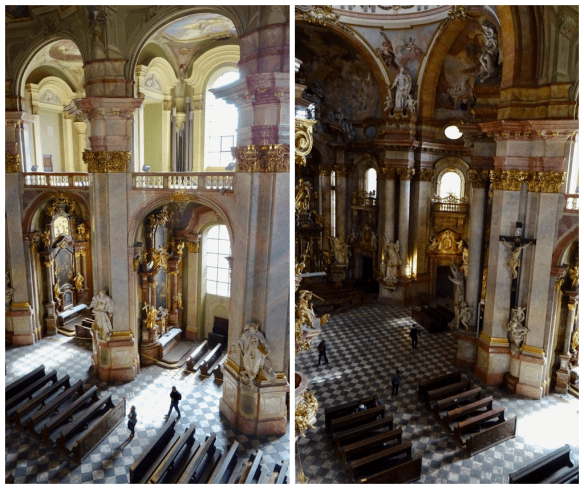
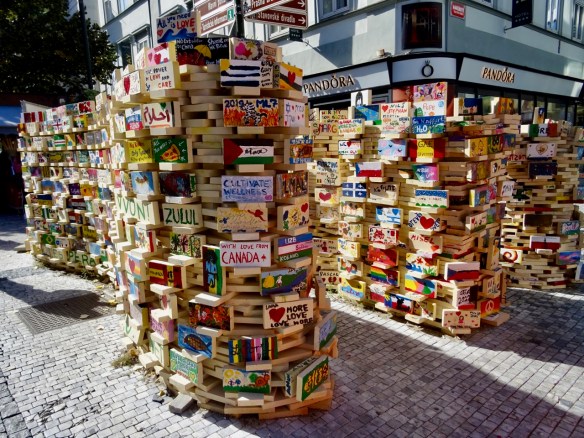
 These painted blocks are a fundraising project for disabled people. You pay for a brick and then get to paint it. We didn’t have time today but I see that someone from Canada contributed a brick.
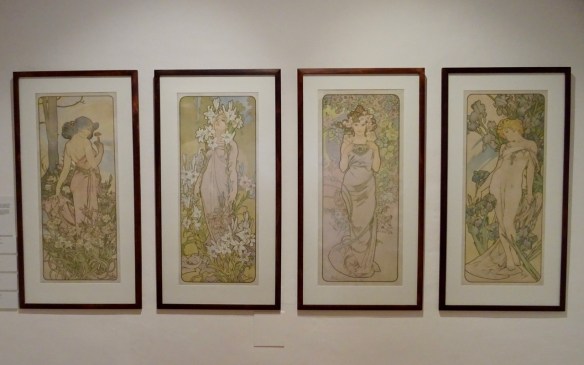
 At the Mucha Museum I learn the Alphonse Mucha’s name is pronounced mooka, not moosha as I thought. We see many of his lithograph works that I am familiar with. The Four Flowers..
 Evening Reverie…
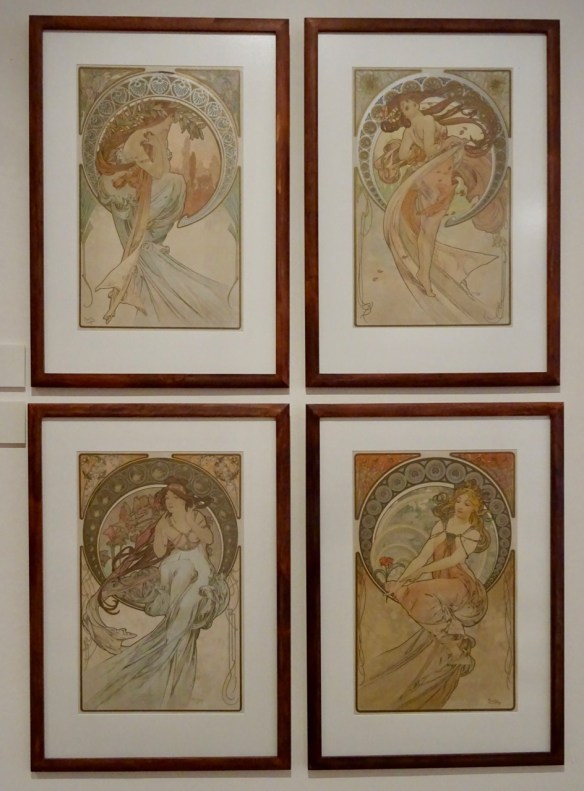
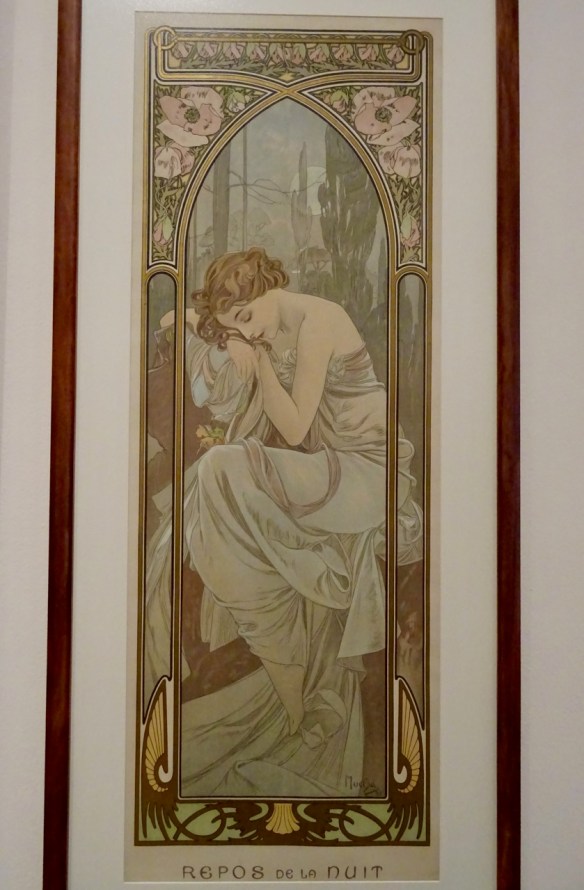 and the Four Arts, which celebrate Dance, Painting, Poetry and Music.
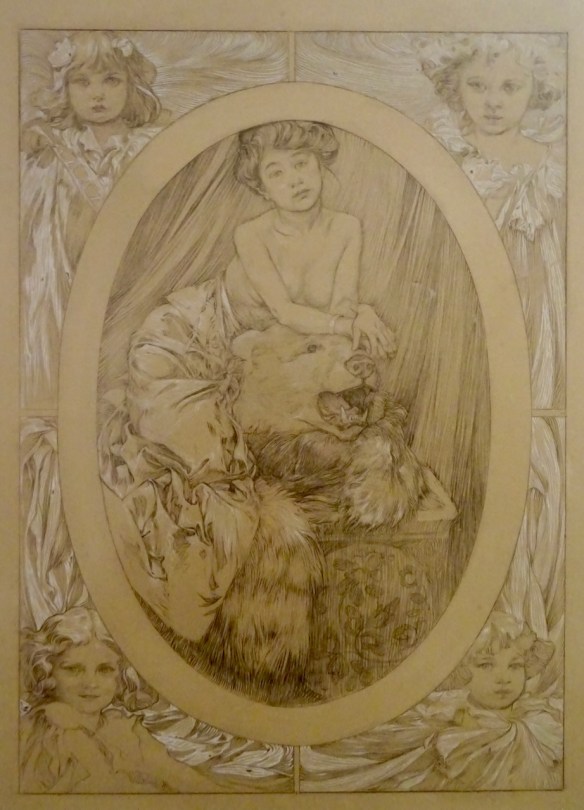
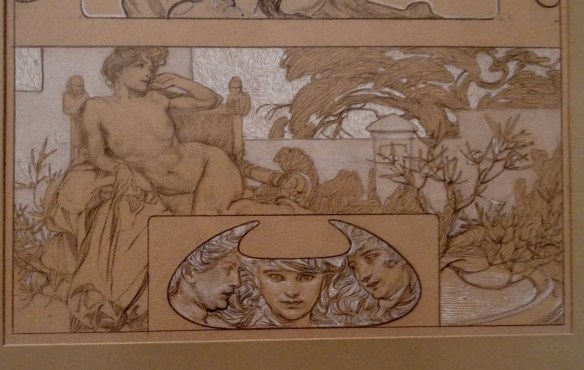
 I particularly loved being able to get close up to some of Mucha’s drawings. Woman on a Bear Skin is drawn with a pencil and a white crayon on a brown ground. It is amazing. A photo does not even begin to do it justice. It was also behind non-glare glass which does not photograph the best.
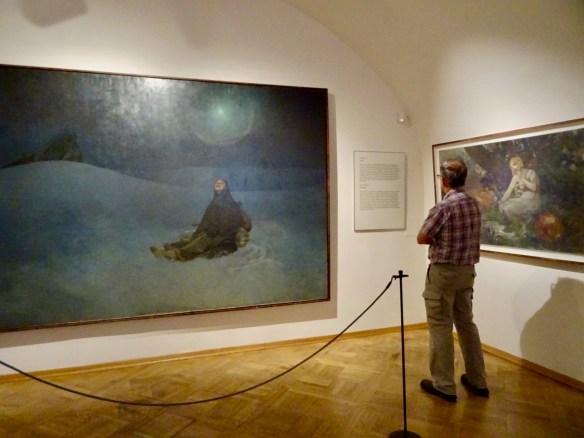
 Winter Night, or Siberia, may have been Mucha’s response to the terrible suffering of the Russian people after the Bolshevik Revolution. There was a famine that killed millions of people. It is difficult to see, but in the upper left of the painting there is a pack of wolves. The peasant woman seems to have resigned herself to her fate. I was not aware of Mucha’s large oil paintings. He completed a series of very large canvases called the Slav Epic, a series of 20 enormous canvases that show the ethnic roots of the Czech people. Unfortunately we weren’t able to visit the Czech National Gallery of Modern Art to see these paintings as it was under renovation.
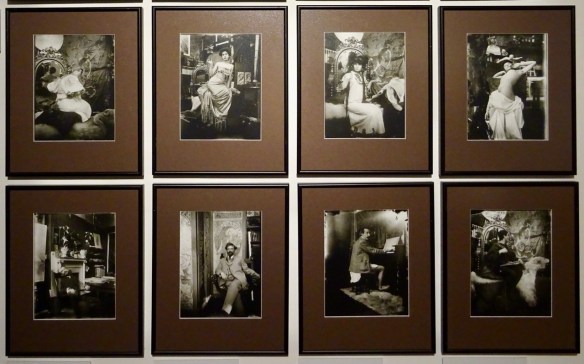
  This collection of photographs was interesting. It showed some of Mucha’s models, and the bottom two middle photos are Mucha in his studio and Gaugin playing the piano…without any trousers!
 Pages of his sketchbooks are on display. I love seeing artist’s sketchbooks. It is a way of understanding how they think about their art.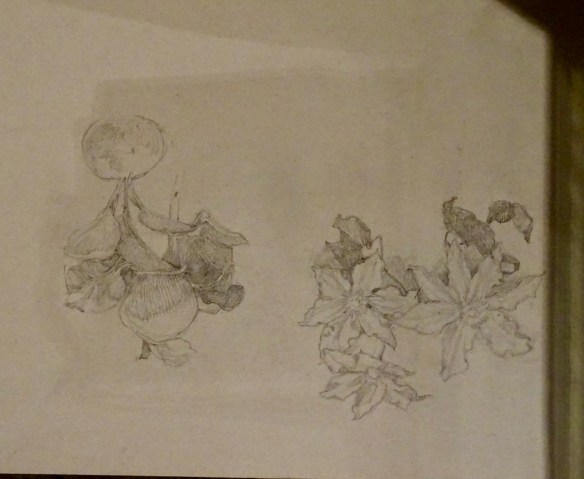
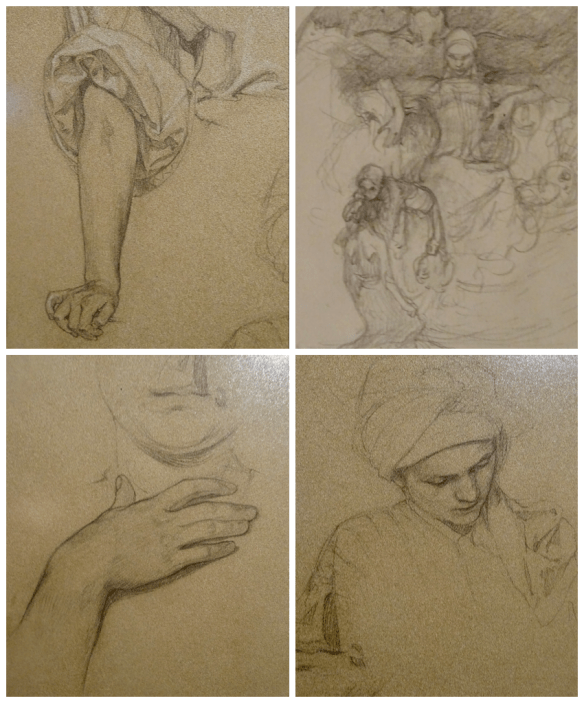 Not all the sketches are detailed drawings. There are some quick gestural studies as well.
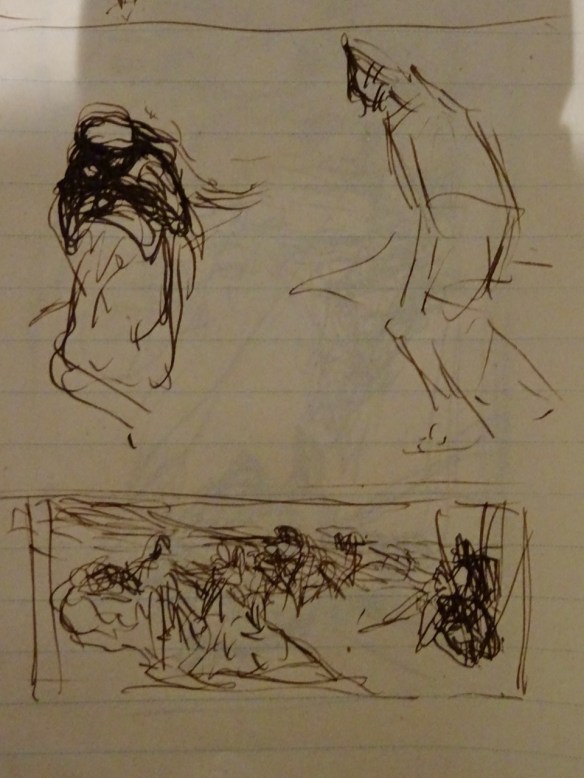 Another study using pencil and white crayon on brown paper. Just gorgeous!
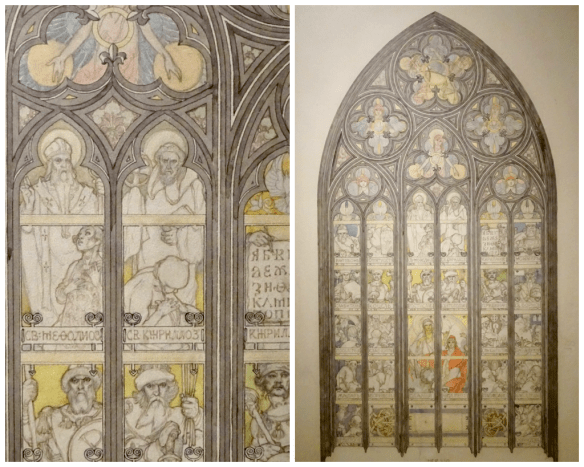
 This is a study for the stained glass window in St. Vitus Cathedral. Mucha was skilled in many areas of artistic expression.
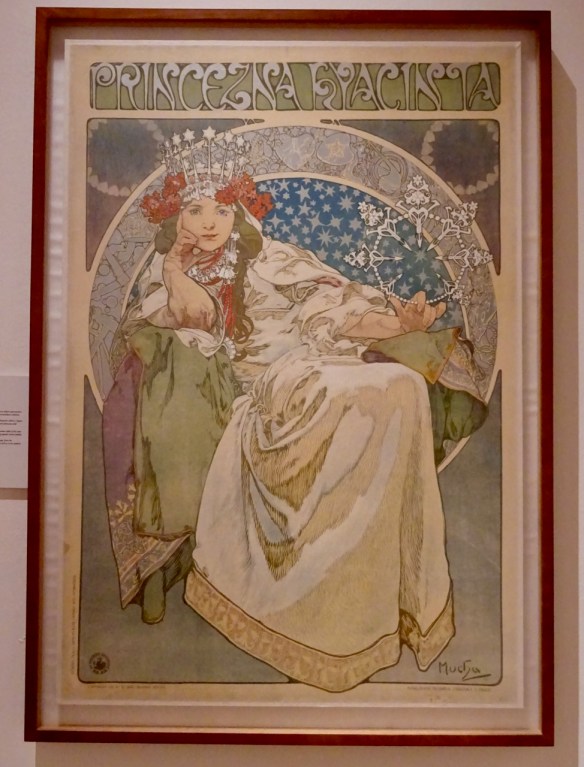
 Mucha created this famous poster for the ballet named Princess Hyacinth. I was happily snapping photos when near the end of our visit a docent told me that photos were not allowed. I was surprised as we have been able to take photos, without a flash, every where else we have been. I am very happy she didn’t see me until near the end of our visit!
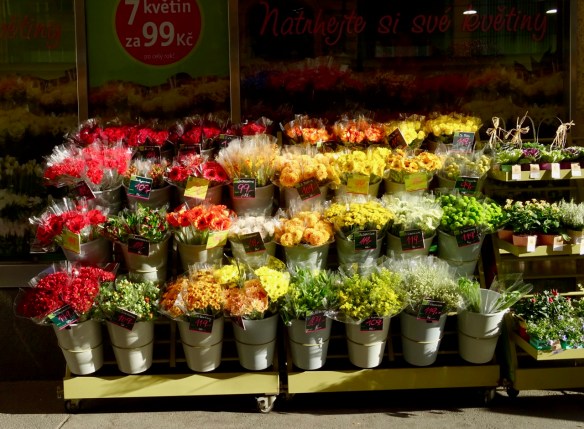
 One of many flower stands in the city. I often see both men and women carrying bouquets of flowers.
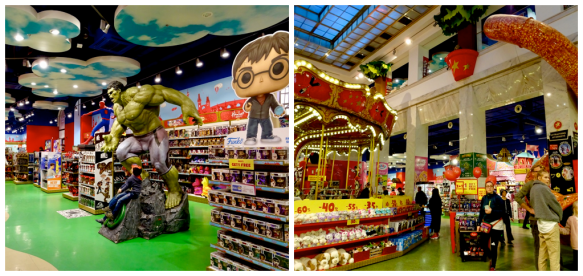
 We saw a toy store so took a peek inside. OMG! it was huge, very noisy and had a full size carousel!
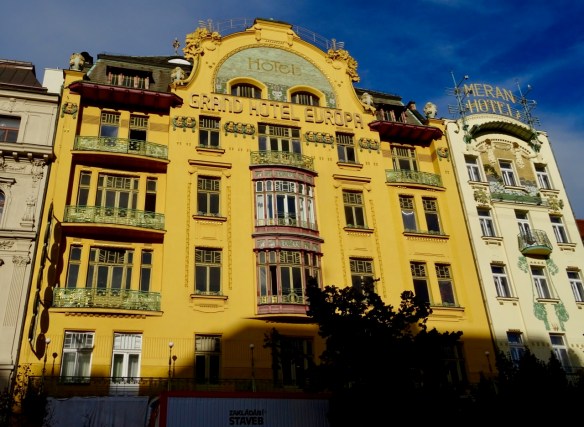
  This made us think of the Hotel Europa we stayed at in Egypt a few years ago. It certainly was not grand and it wasn’t a pleasant experience at all!
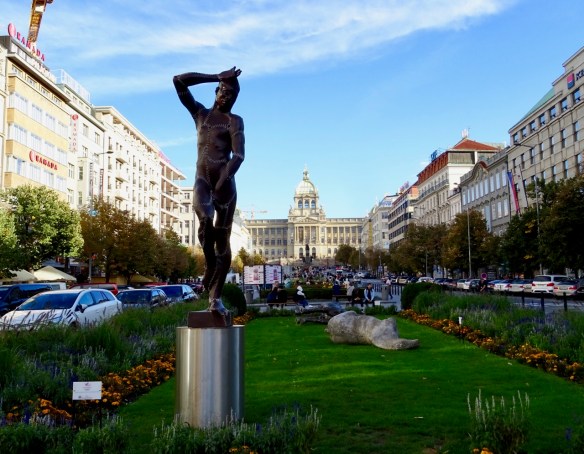
 Walking back along Wenceslas Square I notice that someone has knocked over the horse sculptures we saw earlier. I like this statue, all covered in sewn leather, with his hands sewn to his head and groin. Not sure what it is supposed to represent but it does make viewers pause and contemplate.
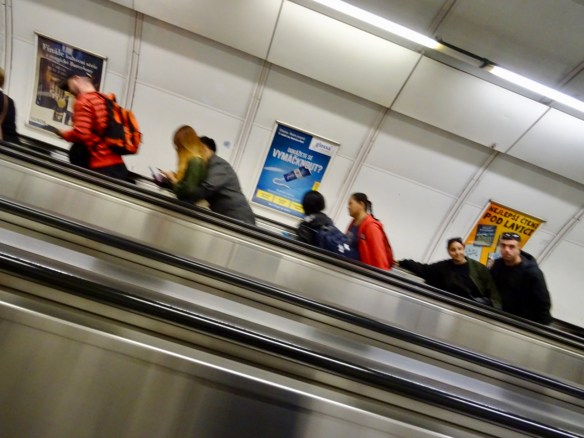
 I keep trying to get a photo that shows how strange people look on these long metro escalators. There is an optical illusion that happens and everyone appears to be either leaning forward or backwards, depending they are going up or down the escalators. Somehow it just doesn’t show that well in a photo. The camera doesn’t see things the same way as our brain does. It is very curious and I comment every time we ride these crazy, long, steep fast escalators.
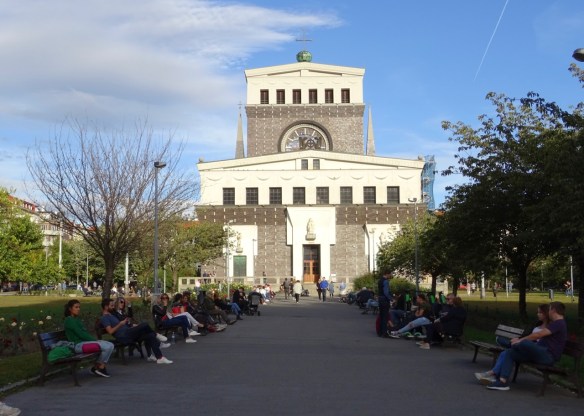
 This church is in the park right beside the metro stop near our apartment. We were curious to see inside but it is under renovation and the doors are locked. We sat and had tea in this park the day after our flight into Prague over a month ago.
 I wanted to get a photo or two showing how people drink alcohol walking down the street, in the parks, and even on the metro (although they aren’t really supposed to drink on public transit). We see that in Prague and it was especially prevalent in Berlin. People walked around with their bottle of beer everywhere. Not what we are used to seeing at home.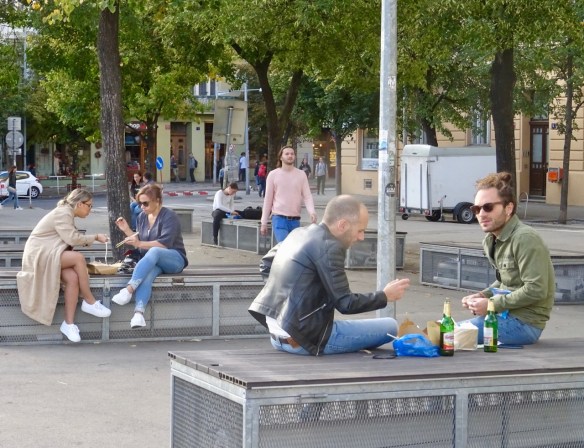
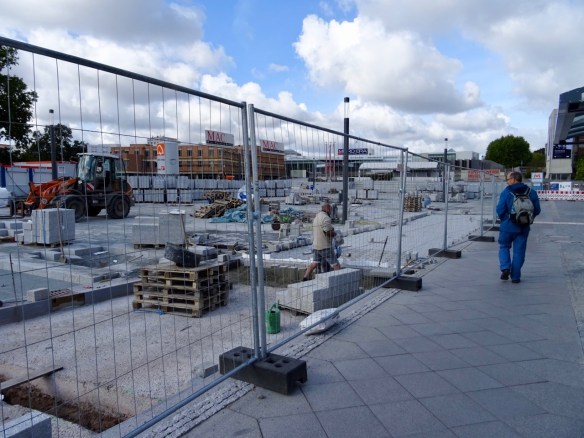
 These workers are laying paving bricks for a huge plaza. We have not seen poured cement sidewalks or plazas here, they are all made with paving stones. It seems very labour intensive.
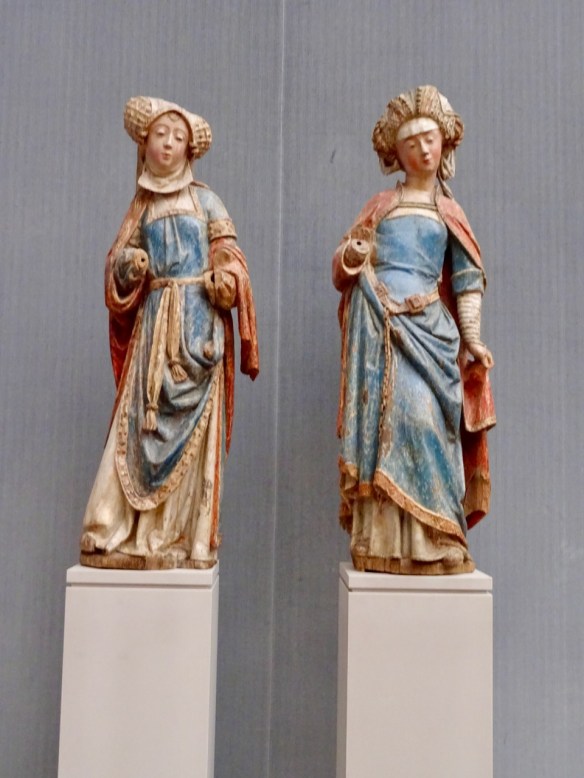
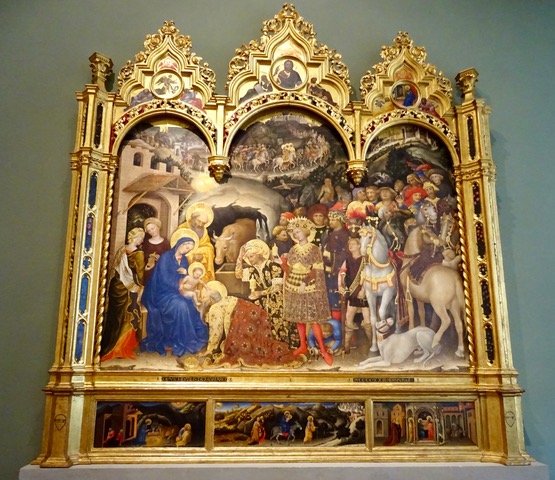
 The Gemäldegalerie is our first stop today. This museum is near the Berlin Zoo and has one of the world’s leading collections of European paintings from the 13th to the 18th century. The quality of the artwork here is amazing. This is the first painting we see, part of an altar from 1437 telling the story of Jesus on the left, and Mary on the right. The white ‘baseboard’ in the photo comes almost mid-thigh on me, to give you an idea of the scale of the works.
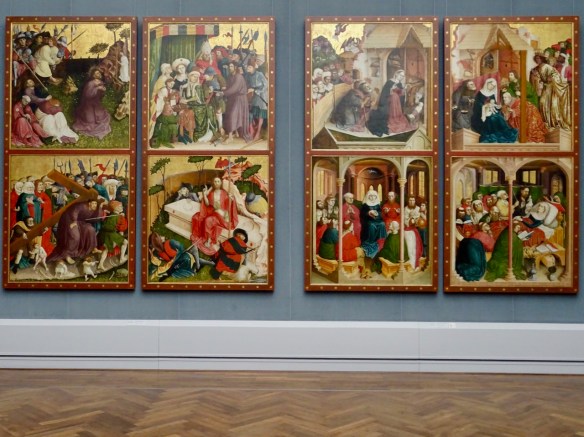 The corner of one painting from 1444 shows two pregnant women, notice the babies depicted on their stomachs. I had never seen this symbolism before.
 We both liked the Fountain of Youth by Lucas Cranach, 1546. This is not the style of his work that I am familiar with…
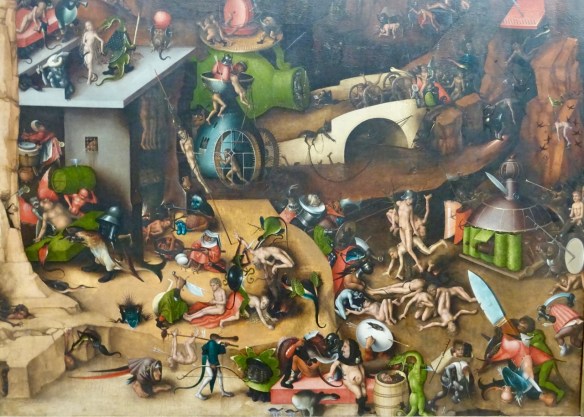
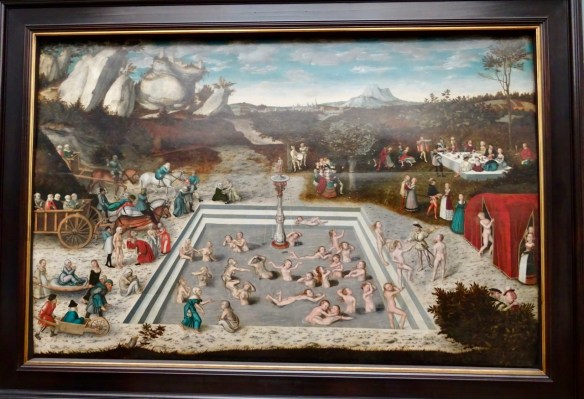 this is! I have always wondered at this artist’s creativity.
 Wow!! This painting by Rogier van Der Weyen from 1440 is my absolute favourite of everything we have seen so far this trip. I absolutely love it and wish that the photo was able to convey the impact it has in person. I would have bought a print but it was almost $100 and I worried about getting it home safely. This is a painting I could live with forever.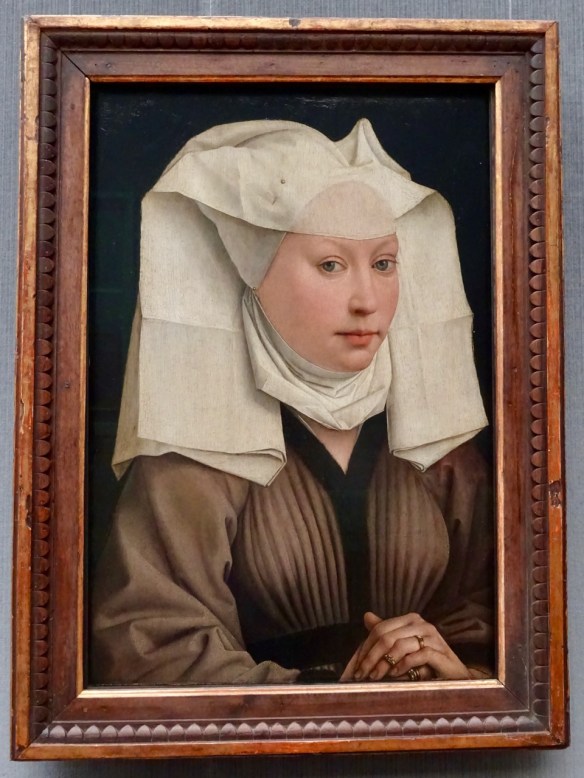

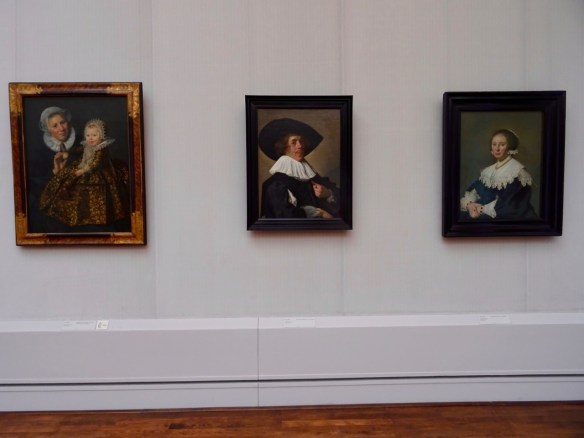
 I am fond of Frans Hals portraits and there was a whole room of them.
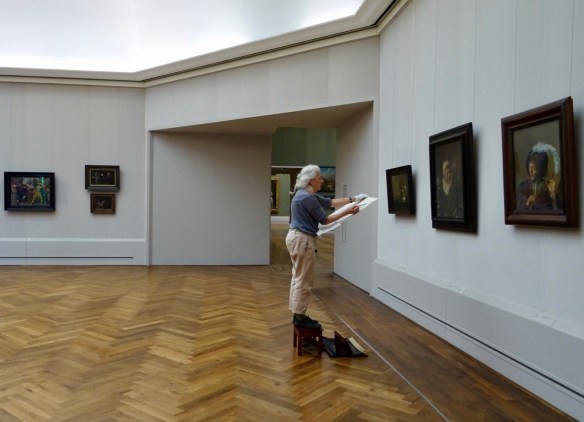
 This artist must like them too. What a tough way to work though, on a little stool, holding such a large drawing board. I assume the museum does not allow easels.
 I am excited to see this Vermeer from across the room, but then..
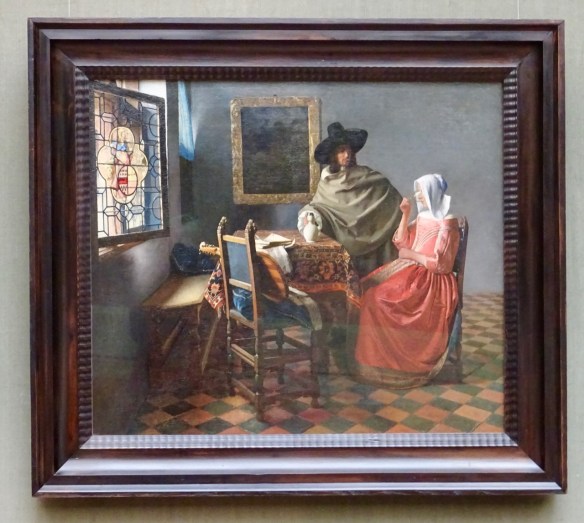 I notice The Girl with the Pearl Earring. I had no idea the this painting was in this museum. What a lovely surprise.
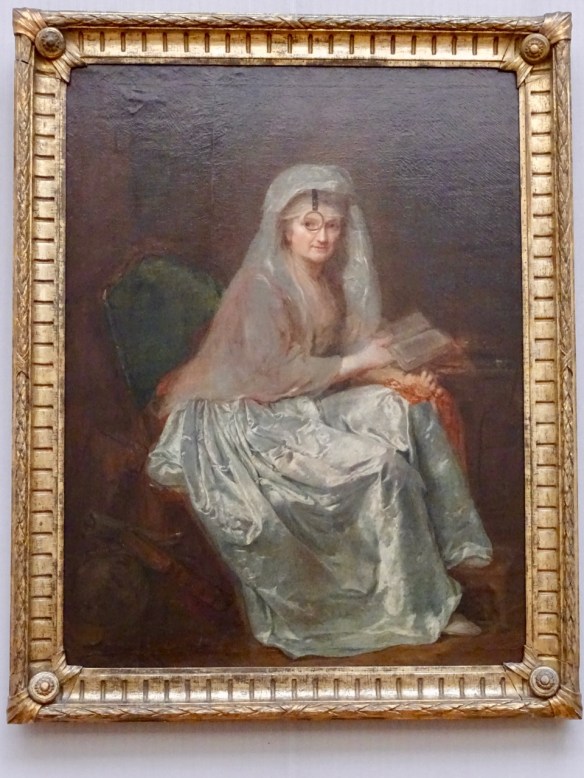
 Anna Dorothea Therbusch, 1721-1782, is one of the few women artists who actually made a living as an artist. This is a self portrait.
 There are Caravaggio’s here…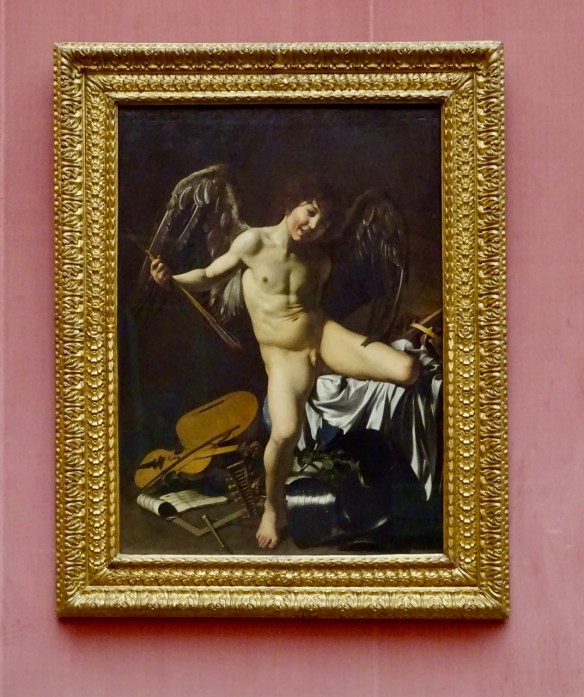
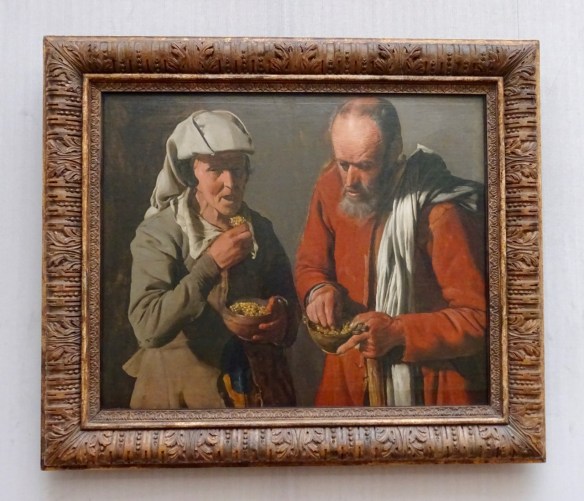
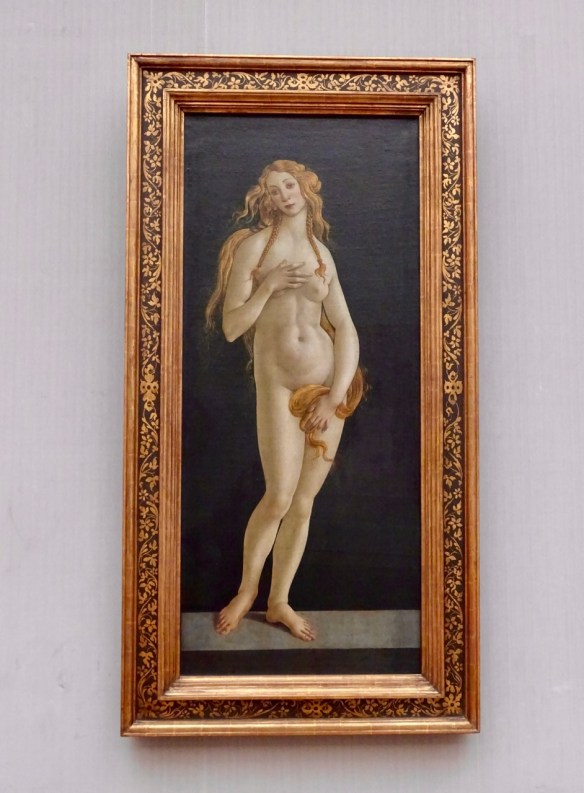
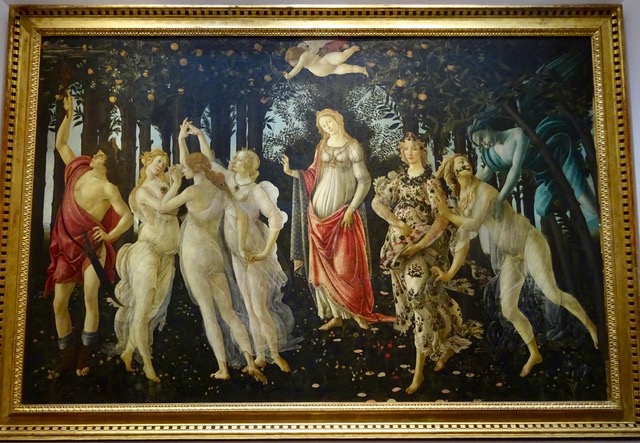
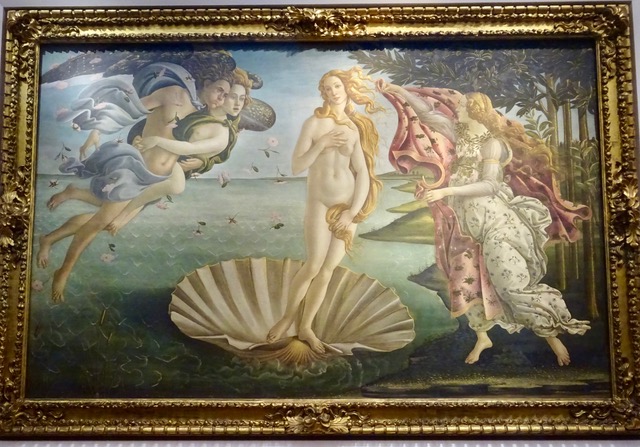
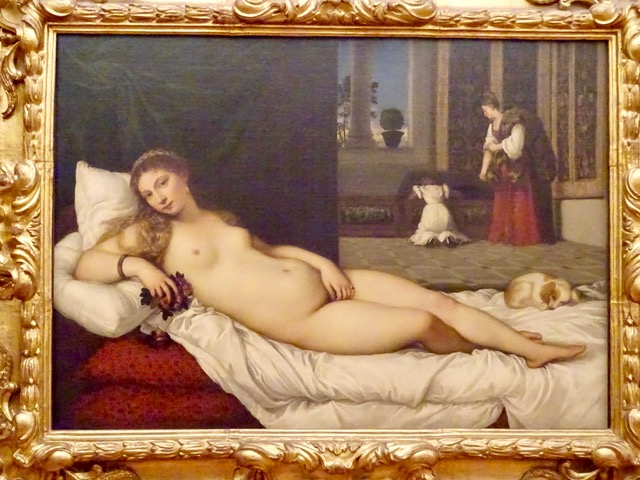
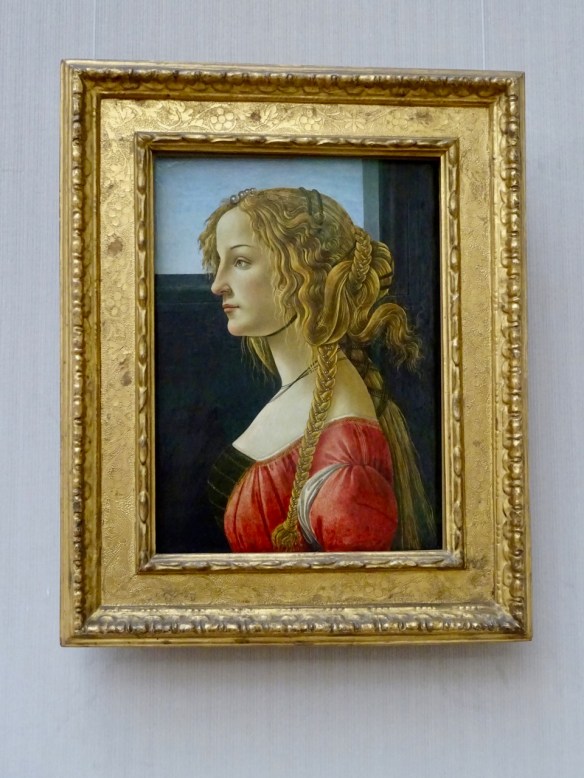 including this Botticellis Venus.
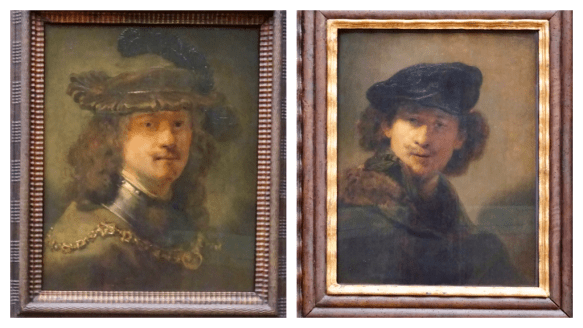
 And there are Rembrandts, including these two famous self portraits.
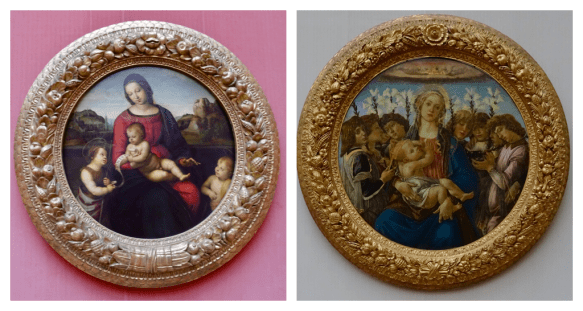
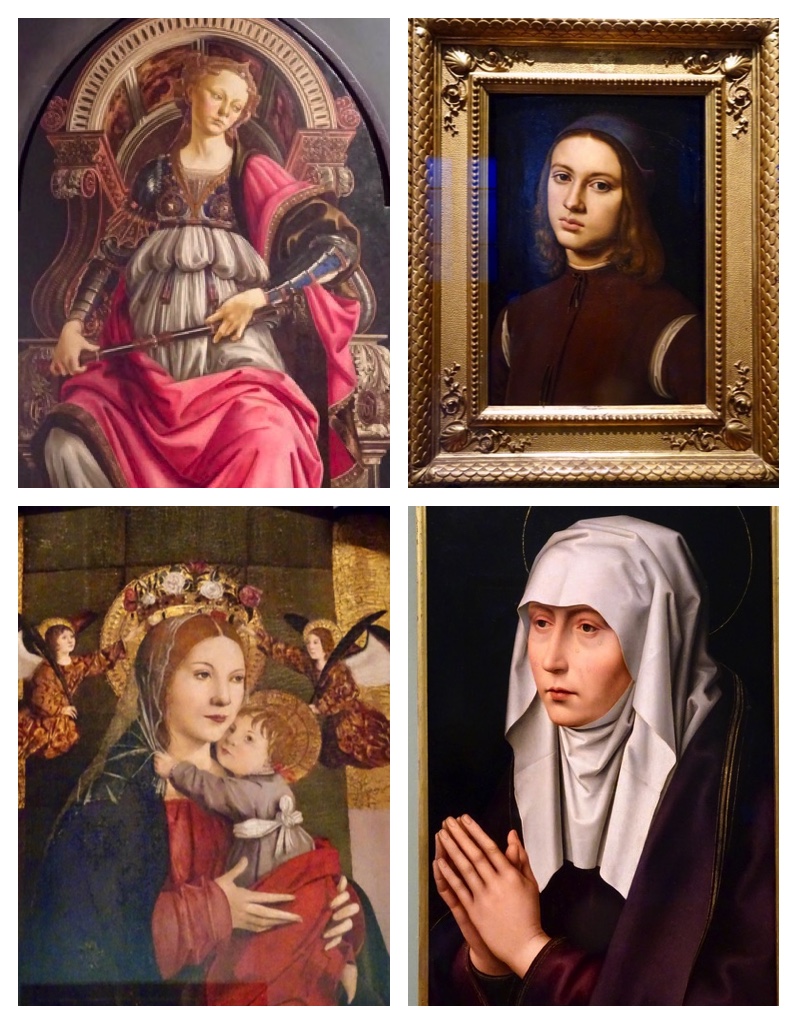
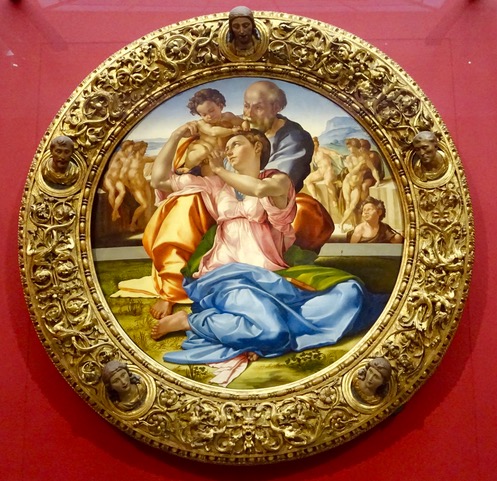
 I finally get to see these two tondos in person, the one on the left by Raffael (34″ diameter) and the one on the right by Botticelli (54″ diameter). I particularly like the Botticelli, his Madonnas are always so beautiful.
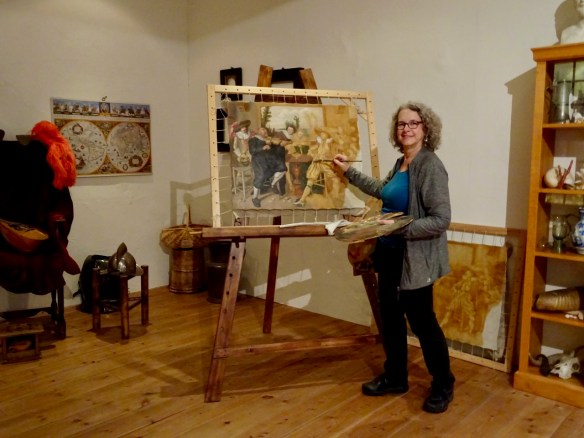
 This was fun! I am so glad we visited the Gemäldegalerie, it was quite amazing.
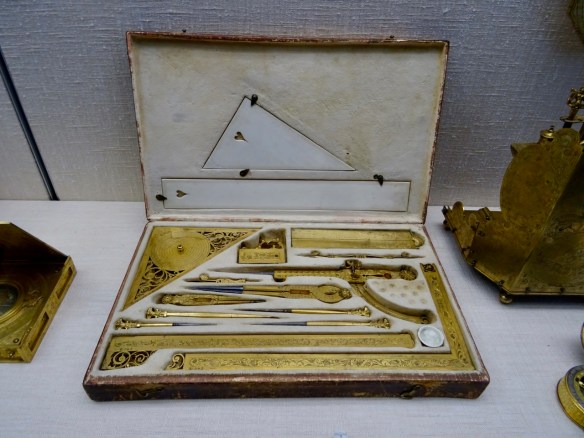
 After a picnic lunch we check out the Kunstgwerbe Museum nearby. I would love to have this beautiful geometry set from the 16th century.
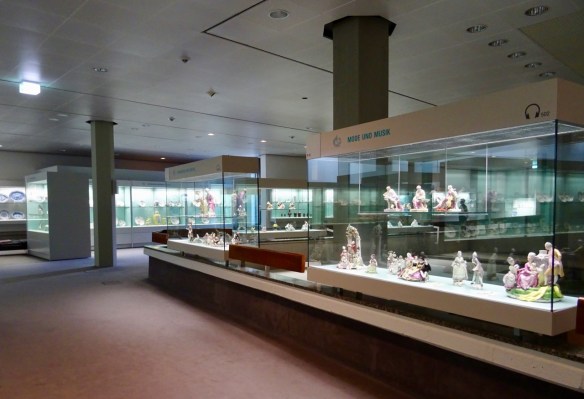
 This museum has lots of porcelain, furniture and church treasures, but we walk by all these. It is just too much to absorb.
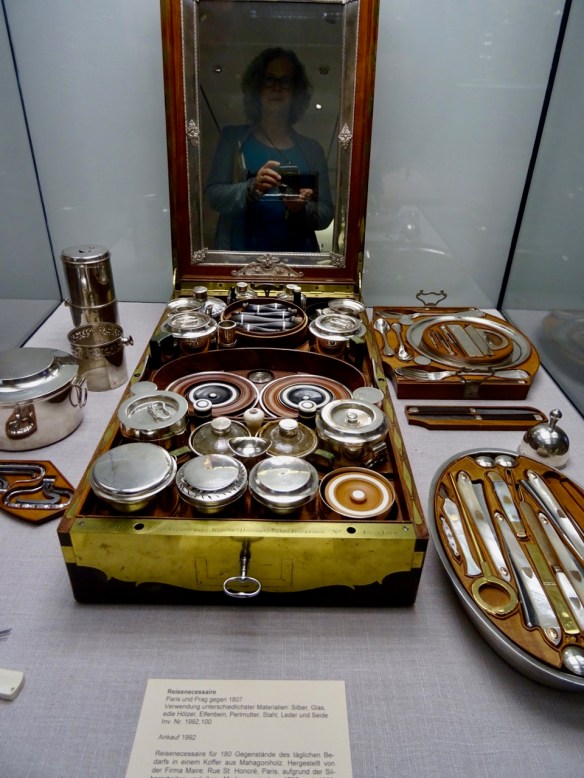
 A few items did catch our eye though. This is an elaborate portable kitchen from 1807, maybe used for camping? All the info is in German, so not sure.
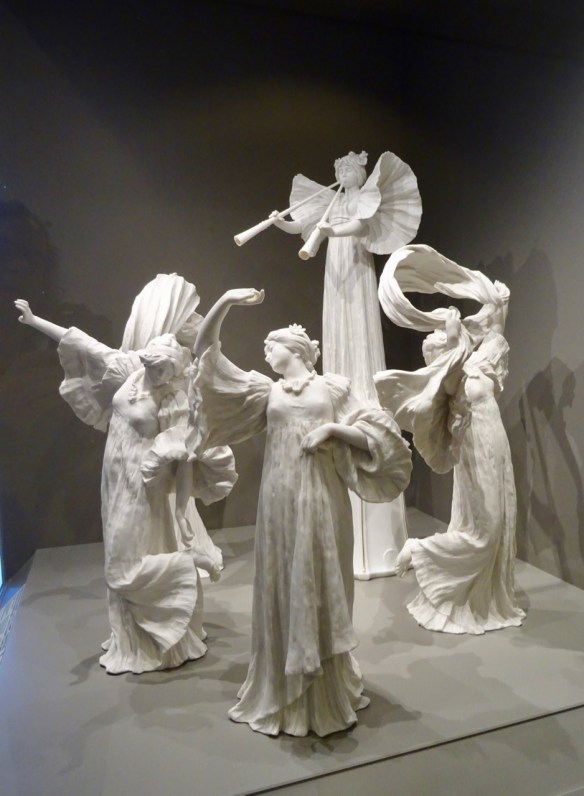
 These glazed porcelain figurines were part of a group of 15 that were awarded a gold medal at the 1900 International Exhibition in Paris.
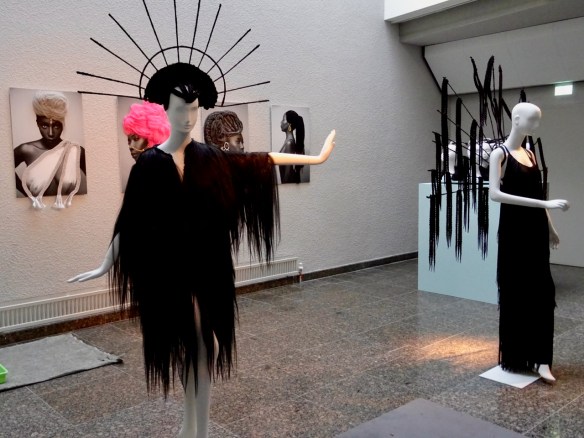
  There was also an exhibit on Afro Hair, with some very different displays.
 And finally, an interesting walk through women fashions through the ages.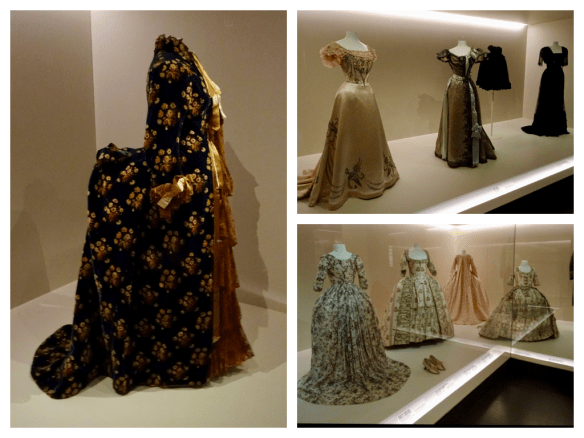
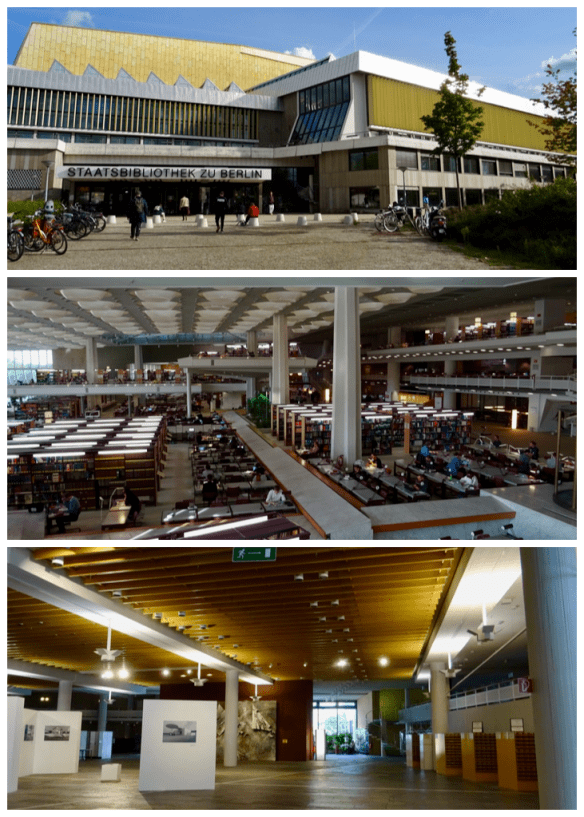 Whew! and we aren’t finished yet. We catch a bus back across town to visit the oldest church in Berlin but the interior has been updated so much. It wasn’t what we were expecting, but still interesting. For some reason there was a rooster crowing inside the church? No idea what that was about.
 We split up, Bob heads to the Bode Museum and I catch the metro to go life drawing. I pass this post with just a few posters wrapped around it on my way to drawing.

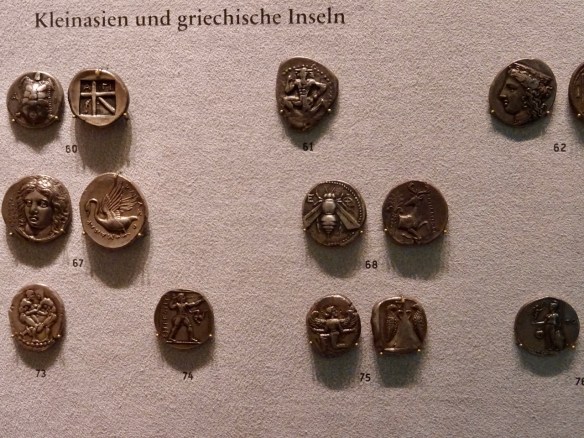
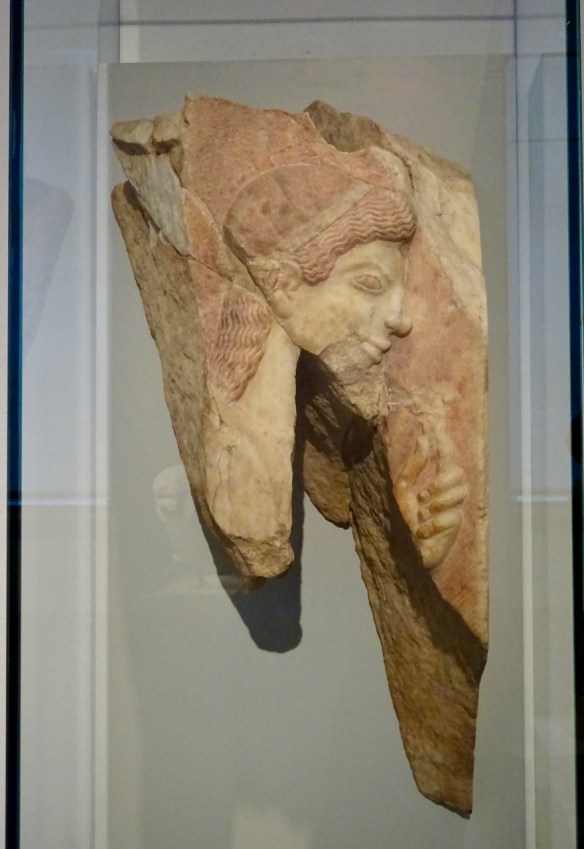 We were surprised at the detail of some of the1,300 ancient coins on display. The museum has more than 150,000 coins in its collection!
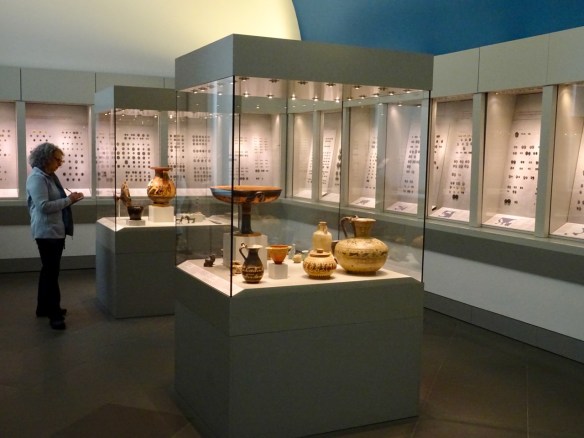
 Bob snaps a photo of me sketching…
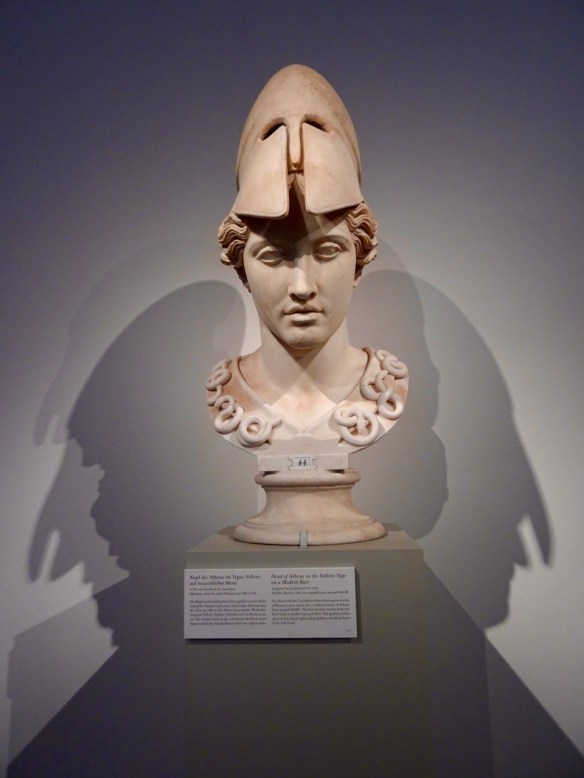
 and then notices the shadows behind this bust. He is getting very ‘artsy’!
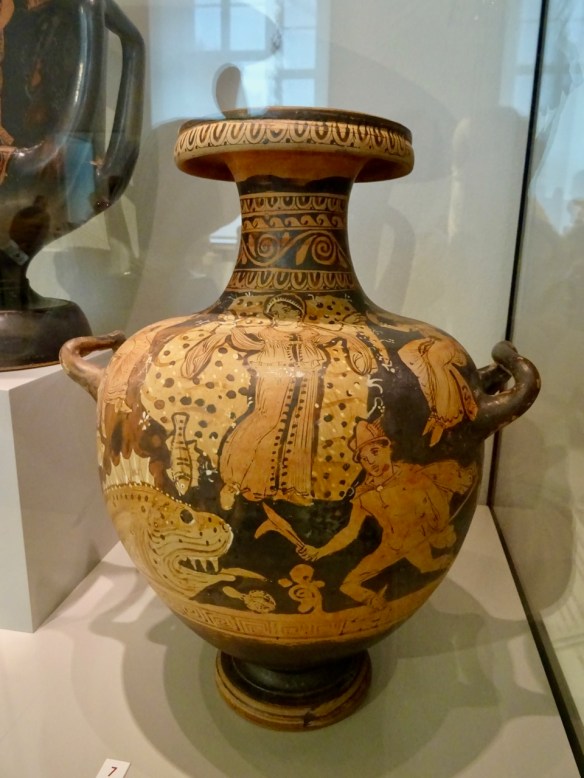
 This Greek vase from 350 BC showing Perseus slaying a sea monster with a sickle is quite different in design than most of the vases we have seen.
 The rotunda has a huge dome with a round skylight and has an incredible collection of sculptures on both levels.
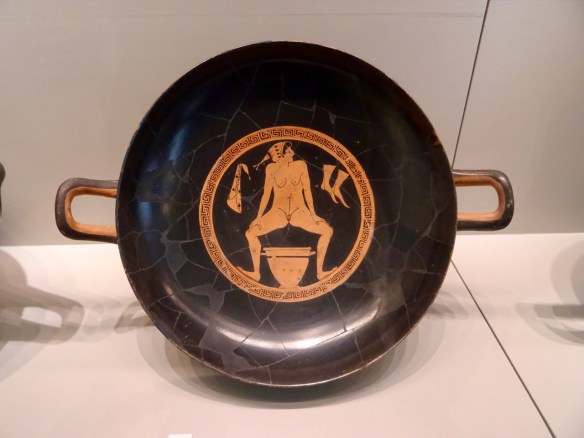
 In the next room this rather unusual drinking cup, is titled Hetaera Above the Chamber Pot!
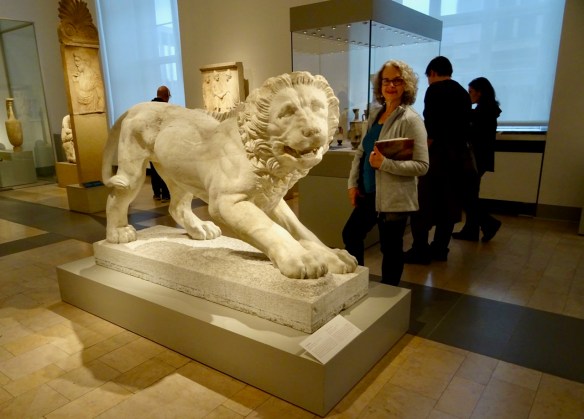
 This Funerary Lion just makes me smile…
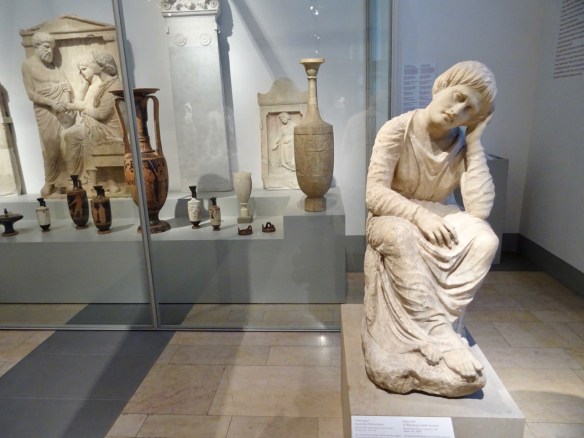
 and I love this statue of a mourning female servant from 330 B.C.
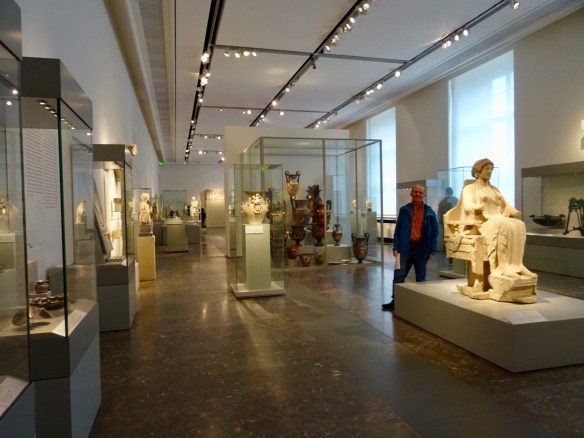
 There is so much to see here, room after room filled with beautiful art.
 The Torso of an Old Fisherman, from 200 B.C. is an example of Hellenistic sculpture representing ordinary people.
 This statue of Aphrodite, 2nd Century B.C., is thought to be one of the most beautiful ancient terracottas in existence.
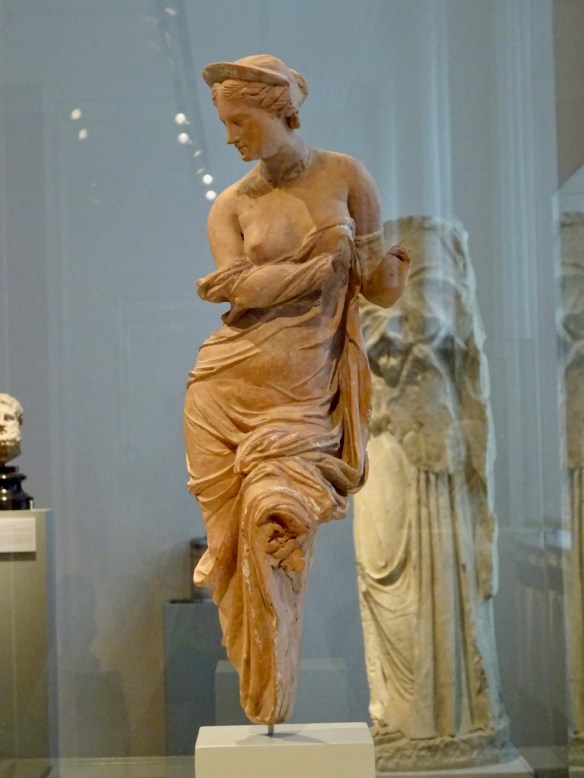 I think this collection of Middle Class Women from 325-150 B.C. is amazing. They were about 8 ” tall and are so detailed.
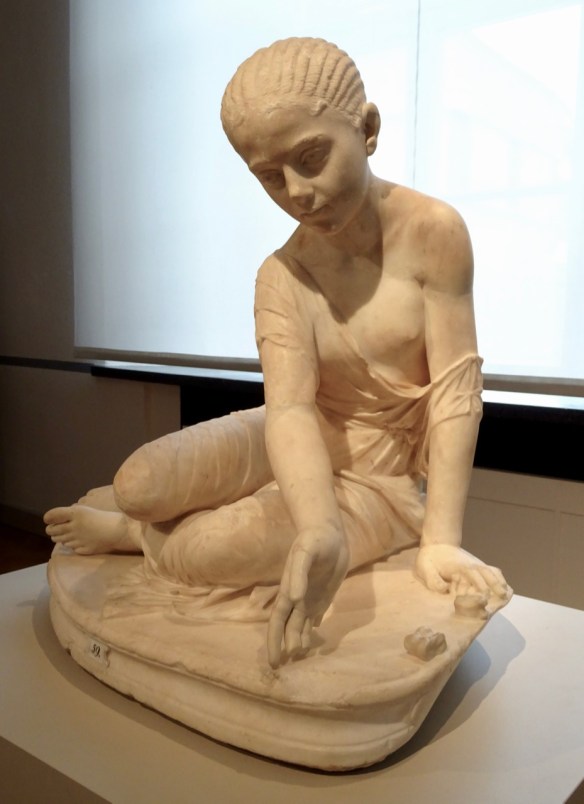
 The Girl Playing Astragal, or knucklebone, is likely a funerary sculpture.
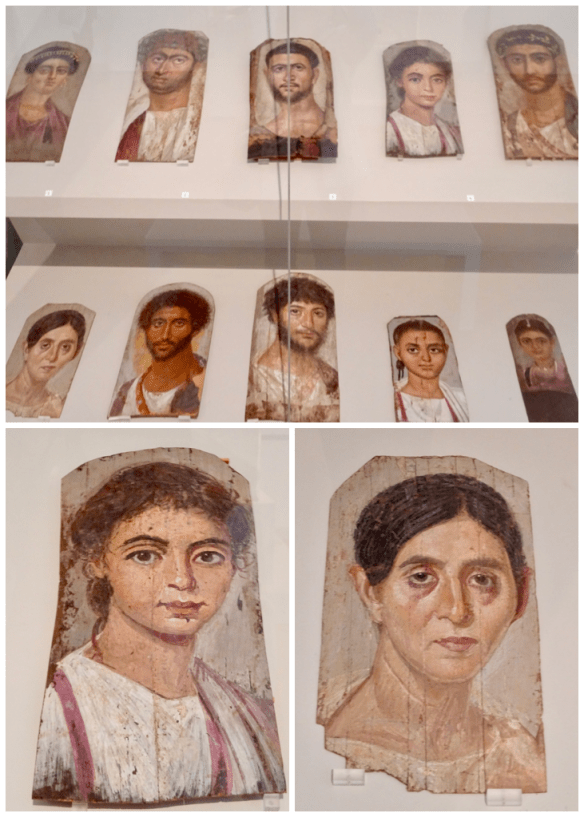
 These 3rd Century A.D.mummy portraits from Roman tombs in Egypt were a surprise. We had never seen anything like them. They were painted with wax and tempera.
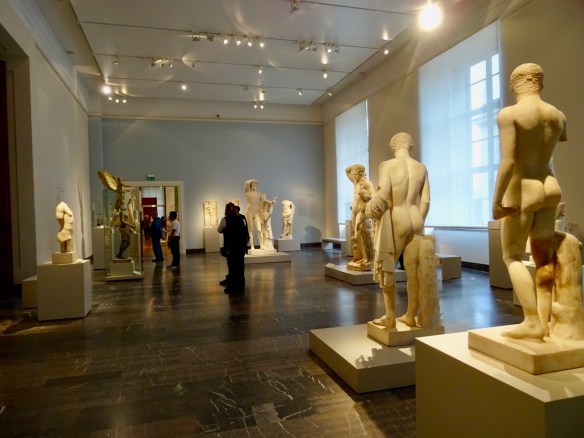
 Another sculpture filled room.
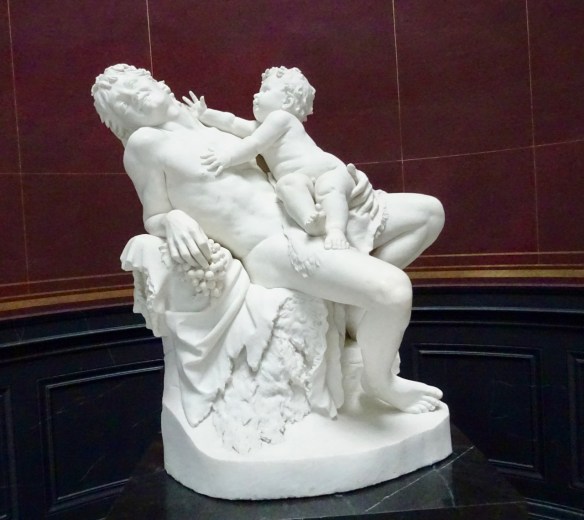
 We have seen Boy with a Thorn, or Spinario, several times in our travels…at the Uffizi Gallery in Florence, in Rome and in Paris. In Rome we saw the original bronze sculpture that inspired the marble copies, It is a favourite of mine.
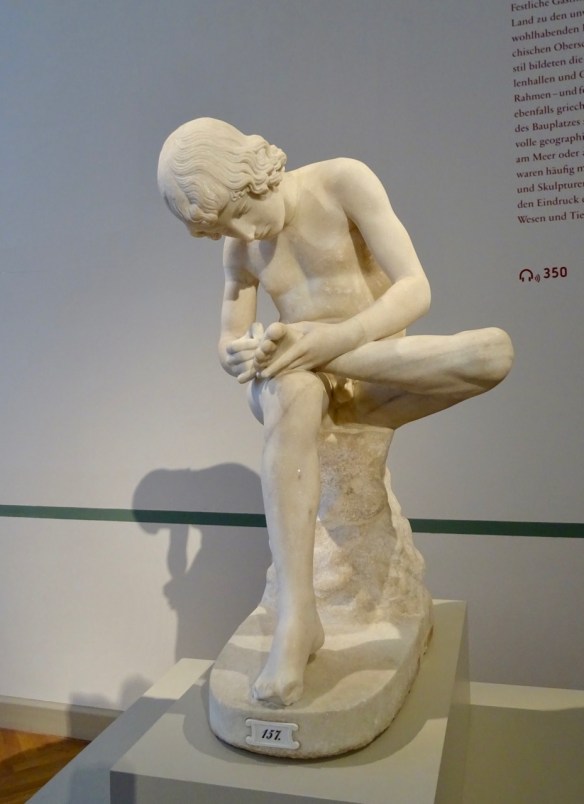 This looks like a painting,
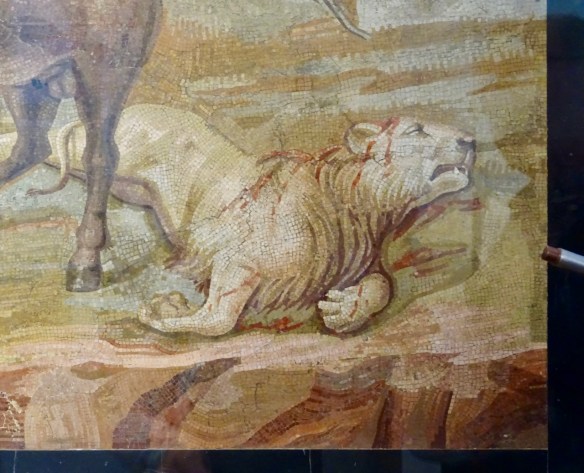
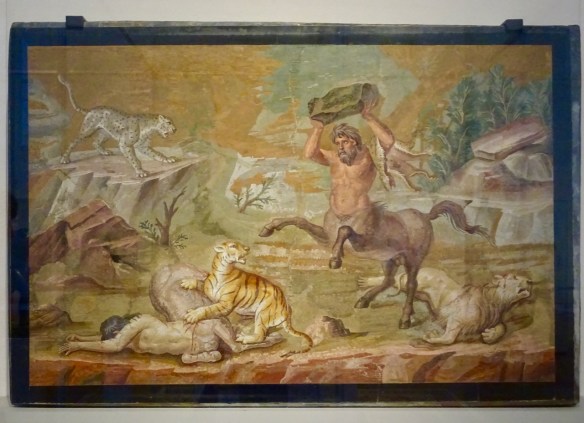 but it is actually a mosaic! I held up a pen in the corner for scale so you can see how tiny the mosaics pieces are.
 This sad little boy was likely on a tomb for a child.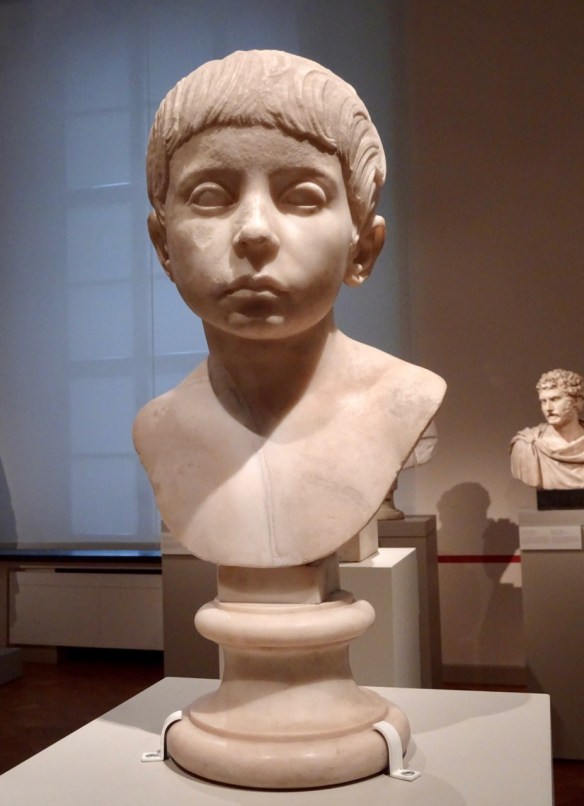
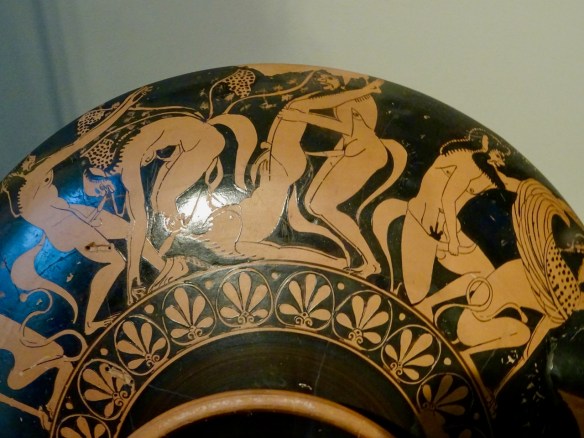 On a long covered walkway to the next museum we see a wedding photo shoot.
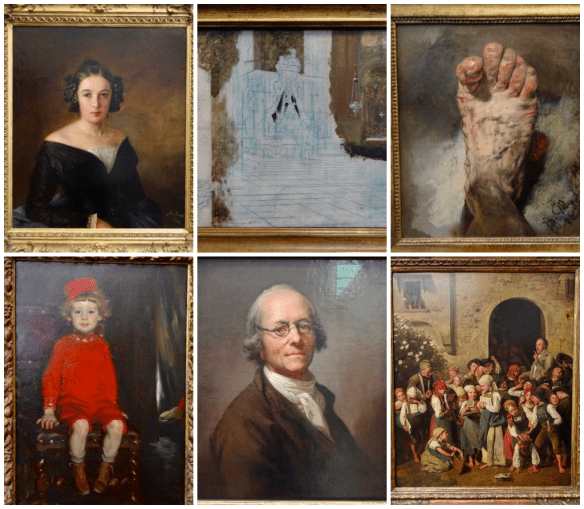
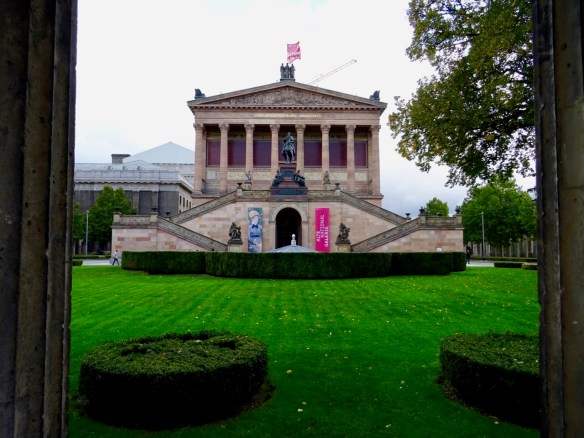
 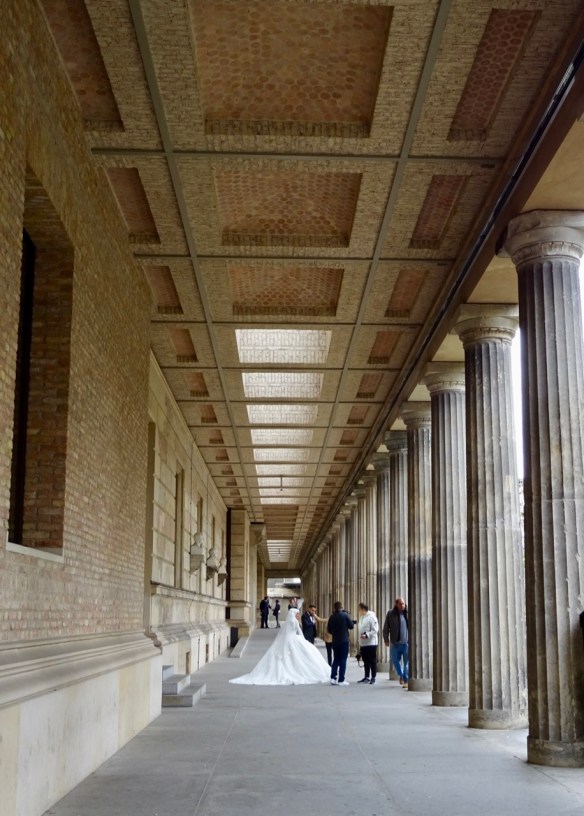 The Alte National Museum in Berlin features Nineteenth Century art with works by famous painters and sculptors. These are a few paintings that caught my eye, all by German painters that I am not familiar with. There were several paintings that are only partly finished. I found these very interesting, as it is possible to see how the artists approach the painting process.
 There were some Renoirs, Pissaro’s and Carravagios, as well as Rodin’s The Thinker.
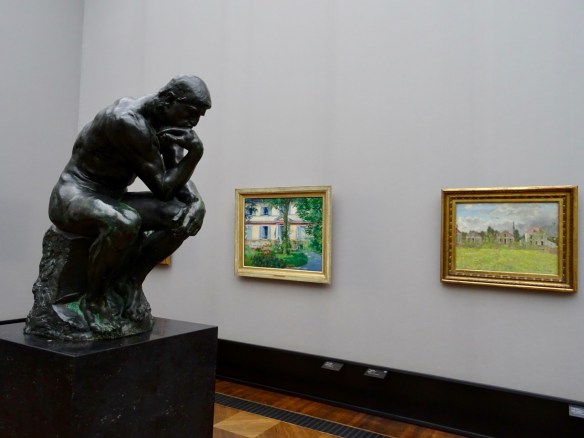 This sculpture was so lifelike and the pose was so natural. There is so much to see, and we have been at these two museums for over five hours!
 This is the Alte National Museum, seen from the covered walkway.
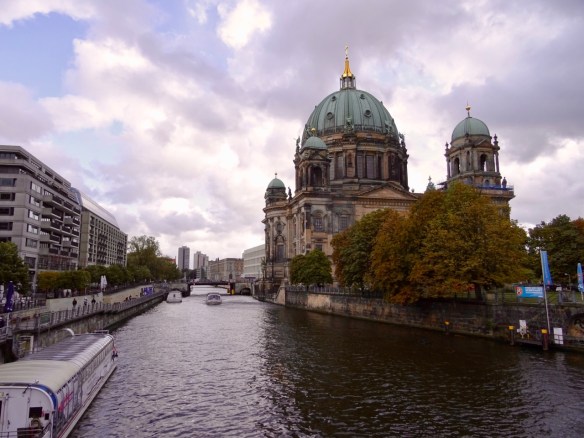
 As we walk to the bus we pass the Berliner Dom, the largest church in Berlin. This photo somehow makes me think of Notre Dame in Paris.
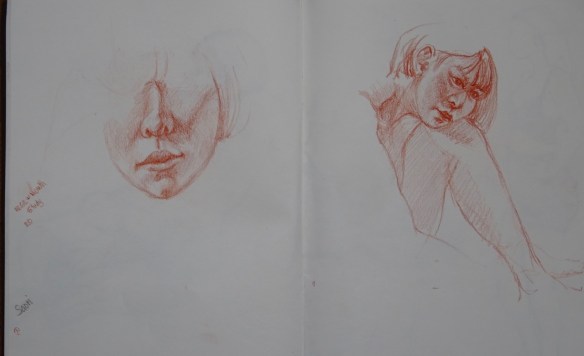
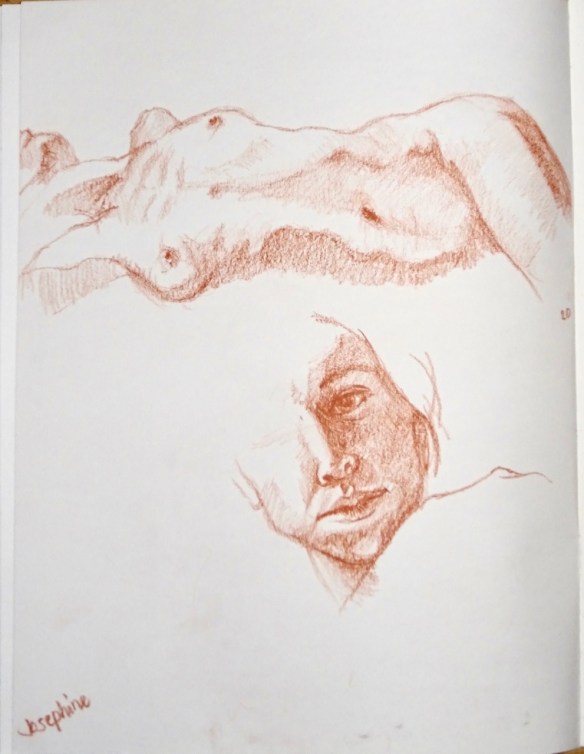
  I am went drawing tonight at a Meet Up Life Drawing session. Our model, Josephine, was very tall and thin which was challenging to draw. These are two minute poses.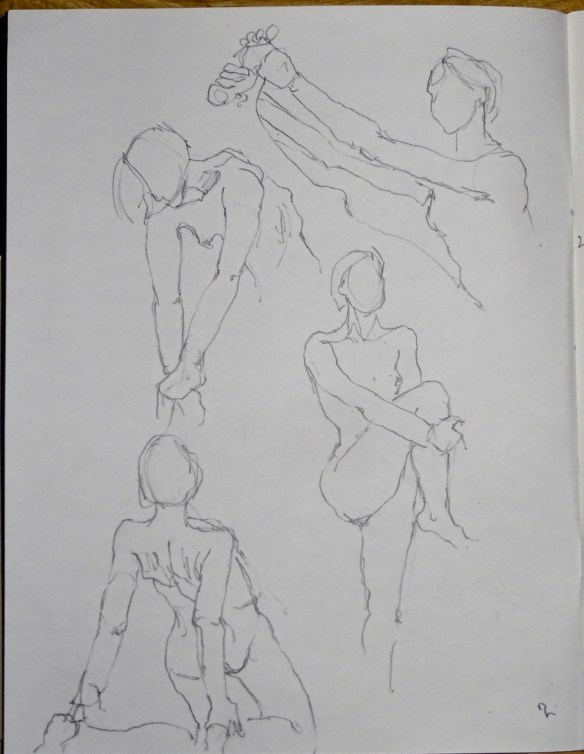
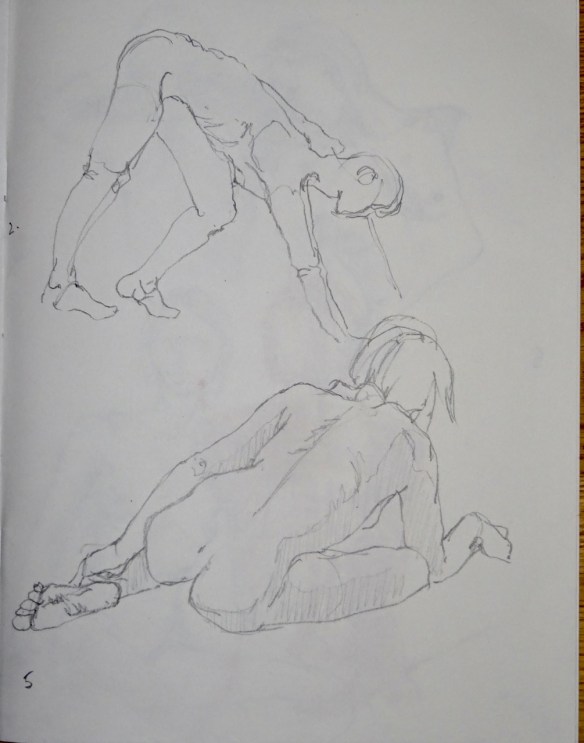
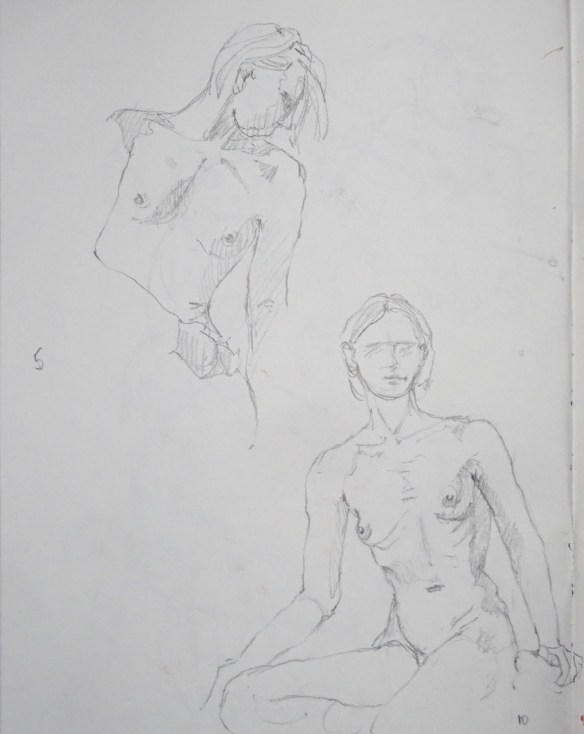
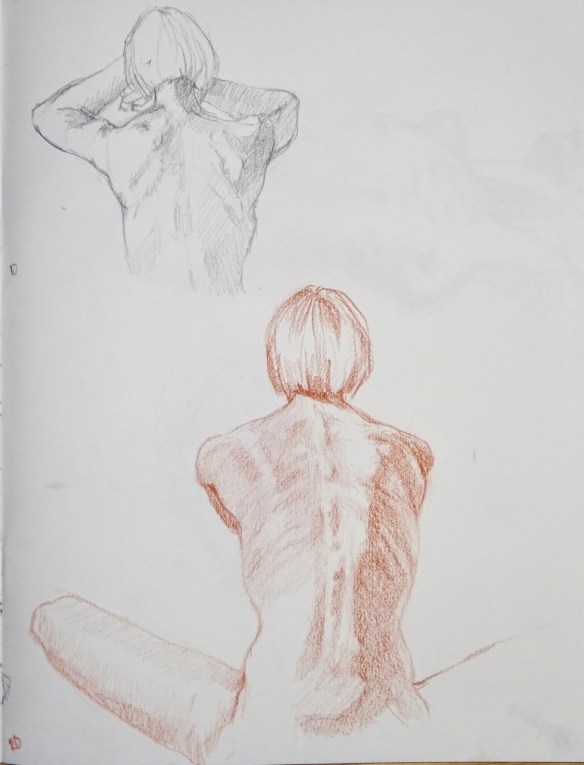
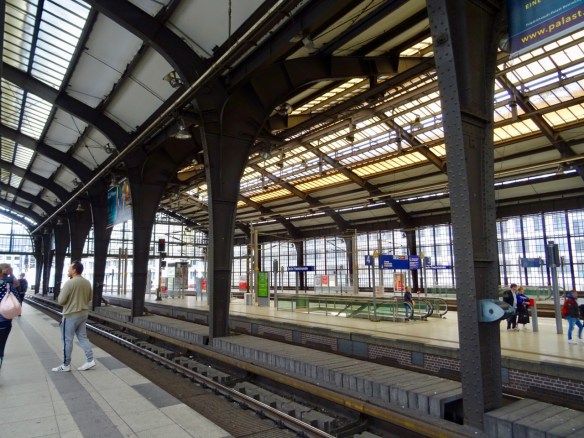
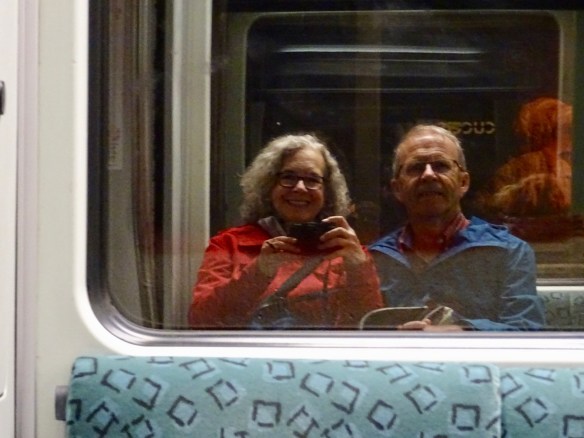 This is something we don’t see at home…taking your IKEA purchase on public transportation! It has been a long busy day and we are both a bit tired.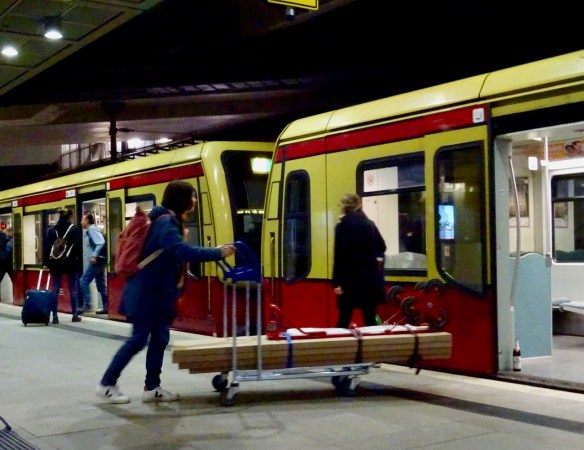
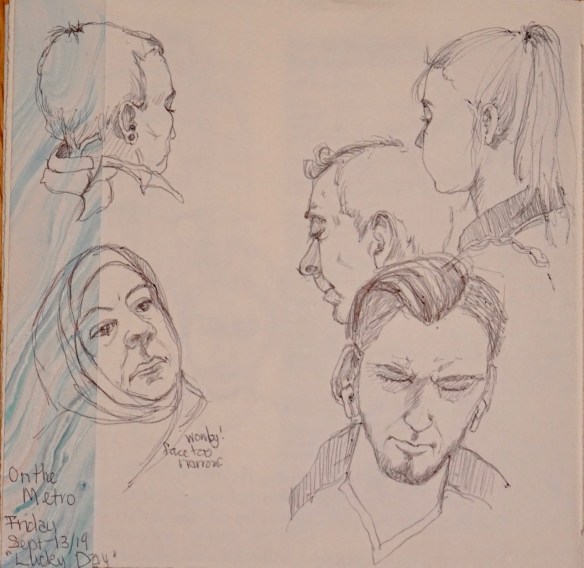 I like to use a Bic Fine Ballpoint pen for these subway drawings. A pen forces me to commit to what I put down, no erasing makes it challenging.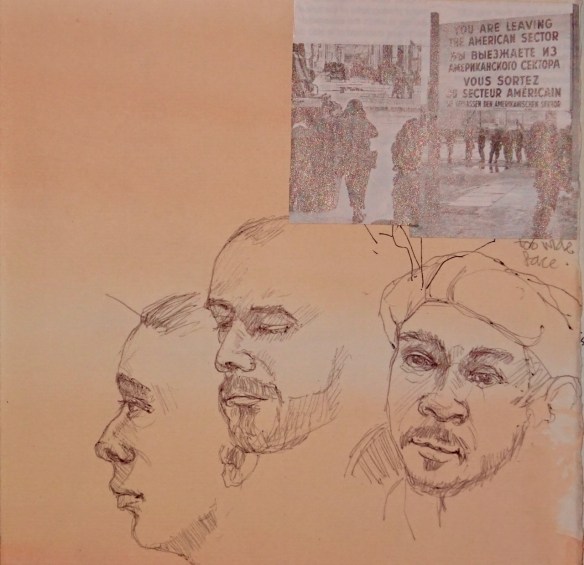
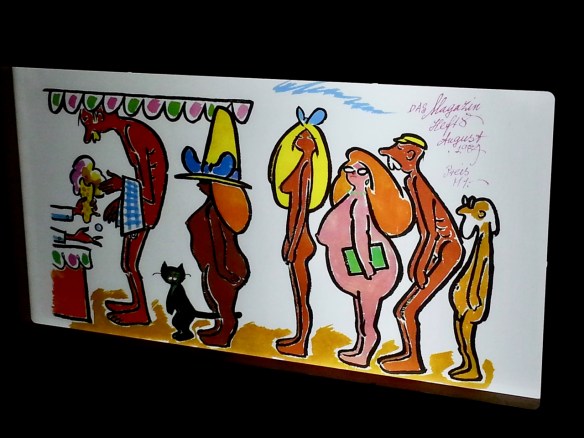
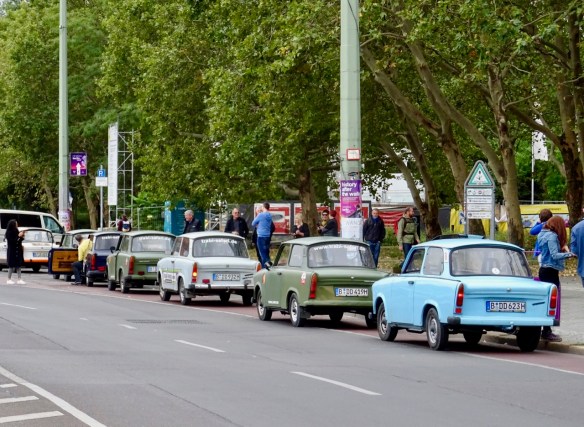
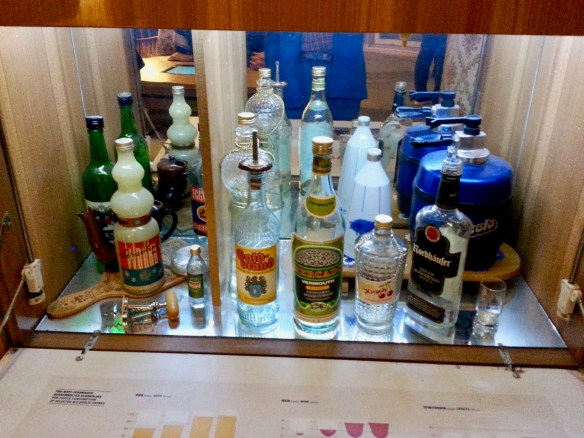 We saw these Trabants on the way to the DDR museum. While there Bob discovered that the cars’ bodies were made from a material called Duroplast. This was a composite material made from cotton fleece and granulated phenol, which was heated under pressure and formed into a rigid component for use on the exteriors of the cars.
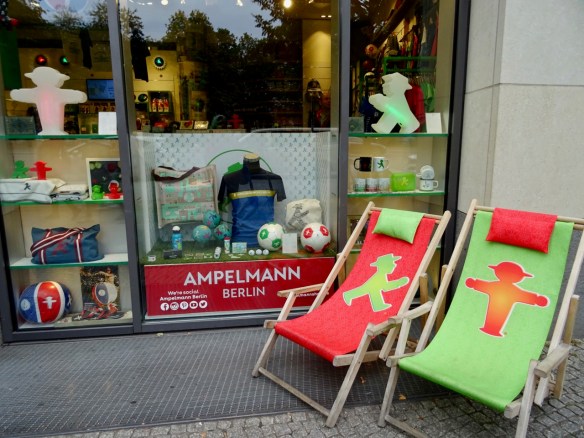
 While walking to a nearby park to draw I passed this store dedicated to the Ampelmann, the little character that lets pedestrians know when it is safe to walk.
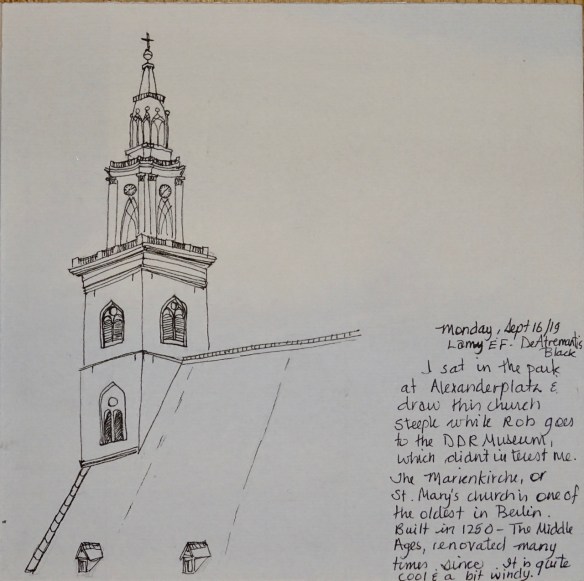
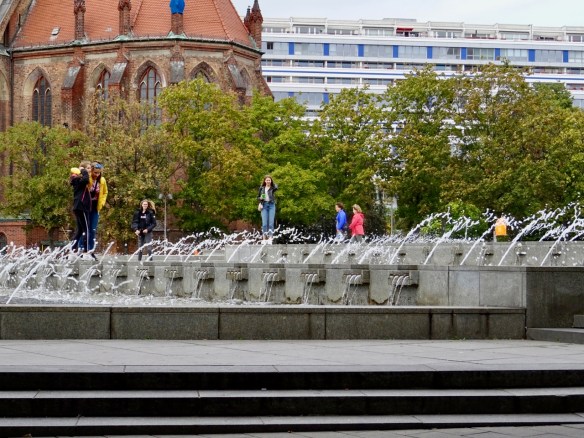
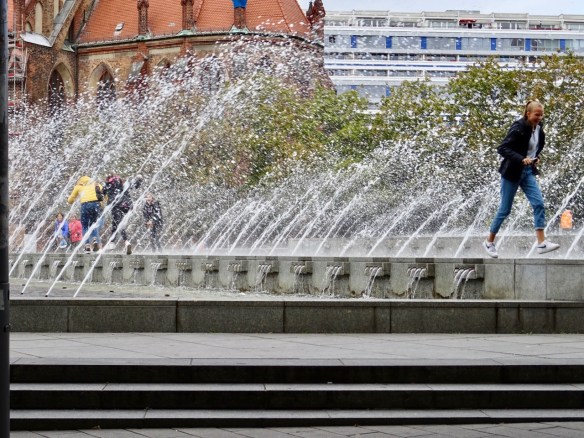
 While I sat drawing the church I watched these young ladies walk out onto the nearby fountain for some photos. I quickly got my camera out because I knew what was going to happen next.
 Surprise!! I laughed so hard, as did all their friends!
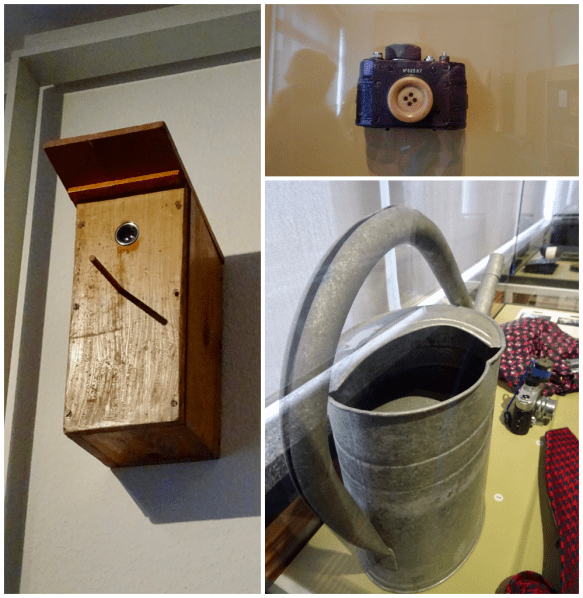
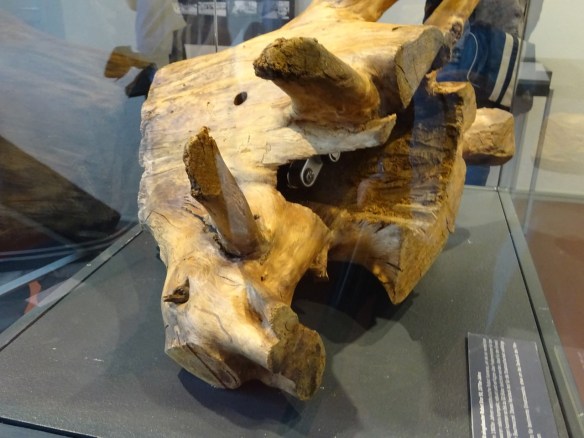
 We had a picnic lunch and then headed to the Stasi Museum. This museum is located on the former grounds of the headquarters of the GDR State Security. We had a two hour tour that talked about how the lives of the East Germans were controlled, manipulated and repressed by the political police system of the former East Germany. Seems like everyone was spying and informing on everyone else, and almost every aspect of people’s lives was controlled by the state. It must have been impossible to trust anyone. Most of the exhibits were like this office room below, not very interesting I thought, but our guide’s talk was very interesting. He told us anecdotes about his life as well as his parents and grandparents lives during this time.
 I hung out at the back of our tour group and did some sketching of people in the tour while I listened.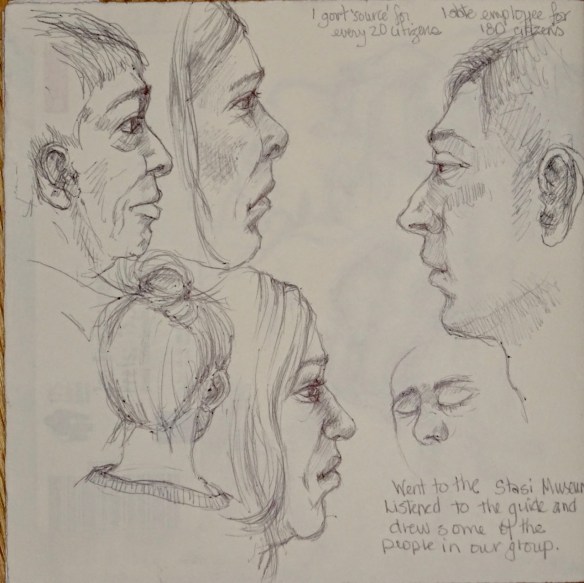
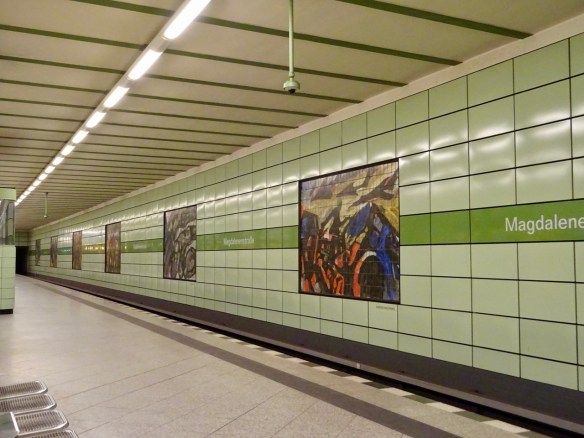
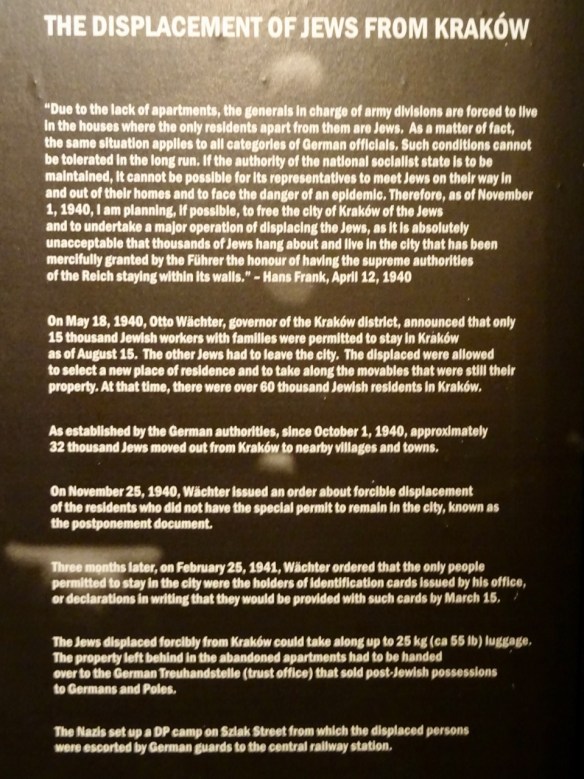 Jewish people were hung along the train tracks for all to see.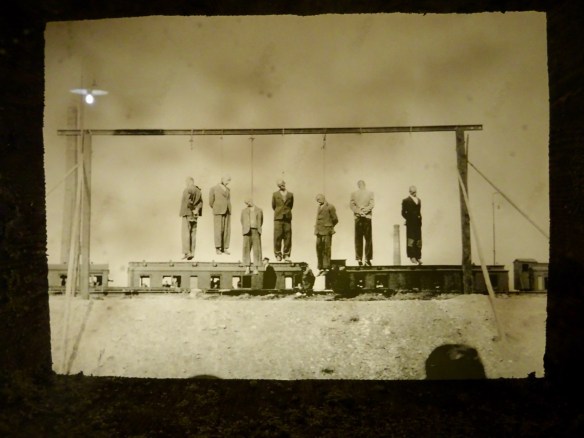
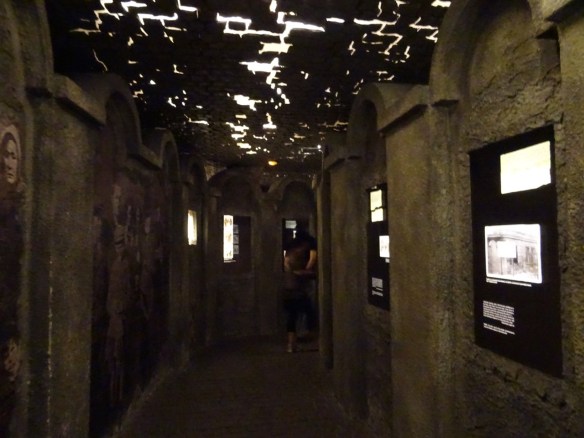
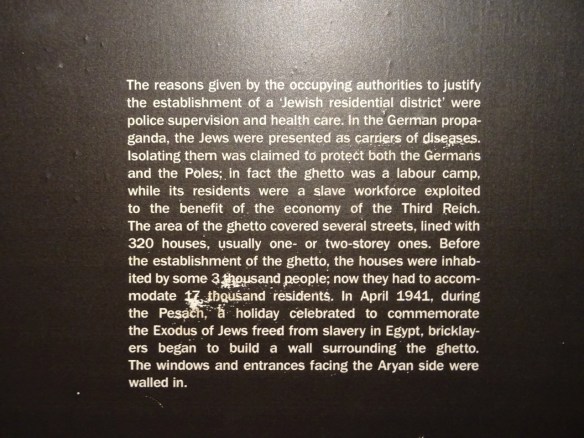 Walking through this dark exhibit about the wall around the ghetto.
 It was thought that starving the Jewish people was an effective way to weaken and destroy the morale of the Jewish population, especially the young people.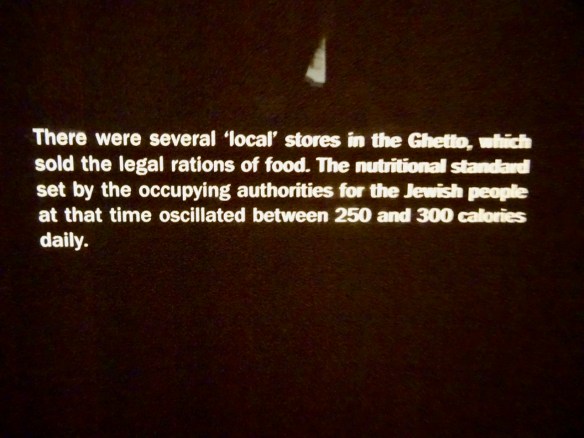
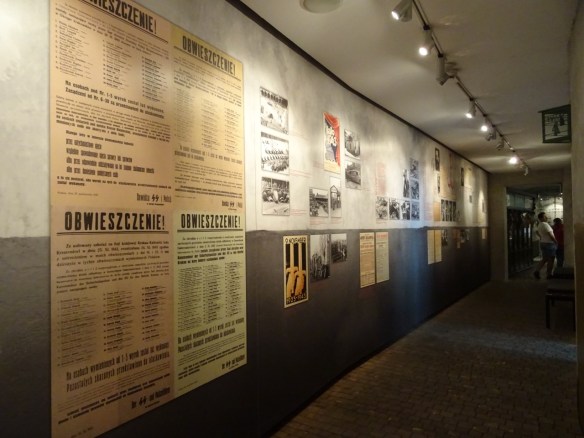
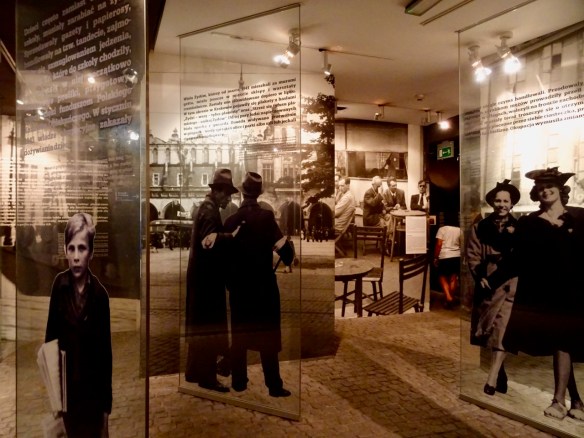
 The corridors are covered in articles and photographs. There is so much to see and read.
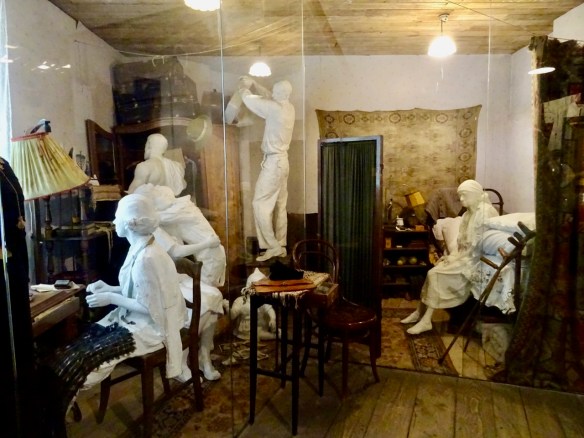
 More exhibits, this one of everyday life in Nazi occupied Krakow. …notice the armband that Jewish people had to wear so they could be identified as Jews.
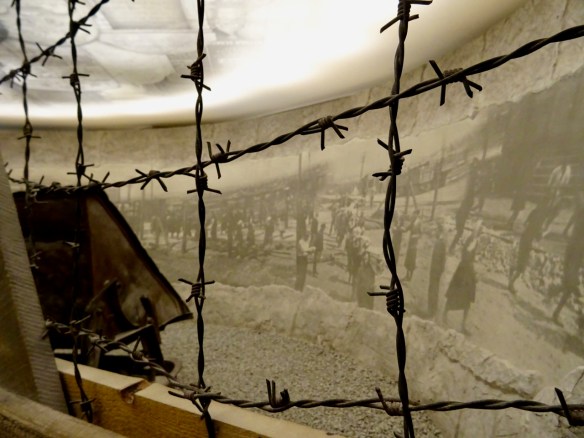
 One of the camps.
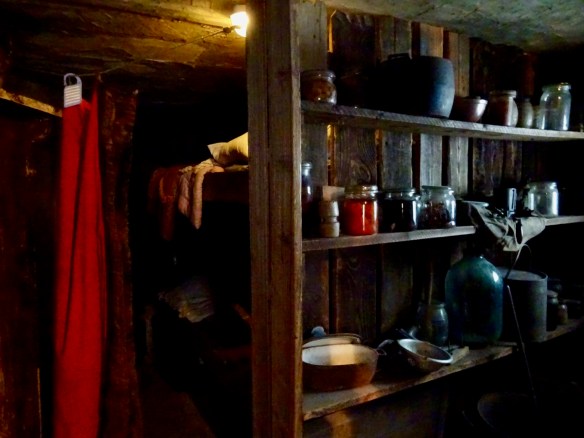
 A hiding place in the cellar of a house in Krakow. Even though it meant death for anyone found helping a Jew, by hiding them or even offering food or assistance of any kind. many of the Polish people did exactly that.
  Oskar Schindler was one of these people. He really wasn’t a man of great character, he lied, cheated and stole what he could, but he was instrumental in saving the lives of 1200 Jews. He also treated the Jews working at his factory better than in any other factory or work camp. There are videos of survivors talking about their experiences during this time.
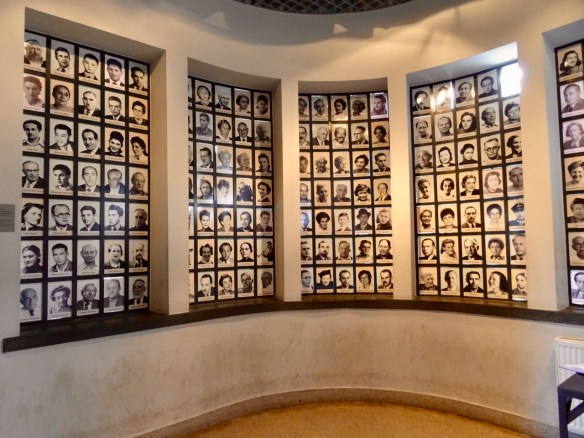
  Some of the people that were saved by Oskar Schindler. Two of the survivors became doctors and one became a Supreme Court judge. Everything in this museum is difficult to watch and listen to, but we need to know and remember what happened. I have heard it said that we need to do this so history will never be repeated, but I wonder. There is so much hatred and racism in the world today that I can no longer believe that something like this will never happen again. It is frightening wondering what the future will bring.
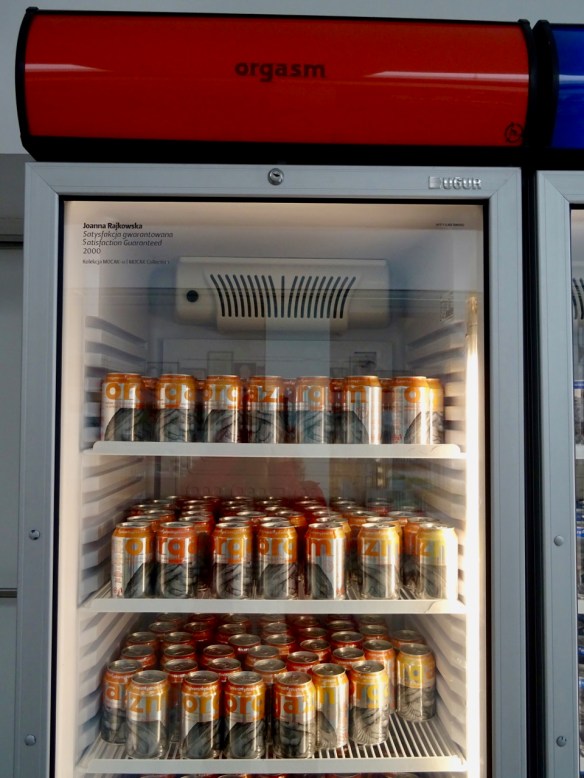
 We stop for tea at the Modern Art Museum cafe. It gives us a chance to recover form the heavy content of the Schindler Museum. On the way out I notice this vending machine. Notice the name of the drink it dispenses.
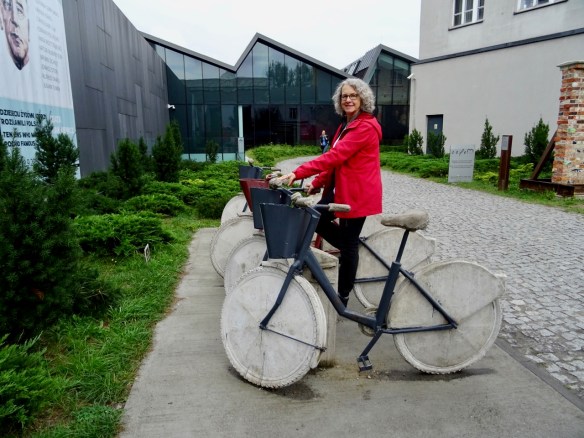
  I try out the cement bicycles…
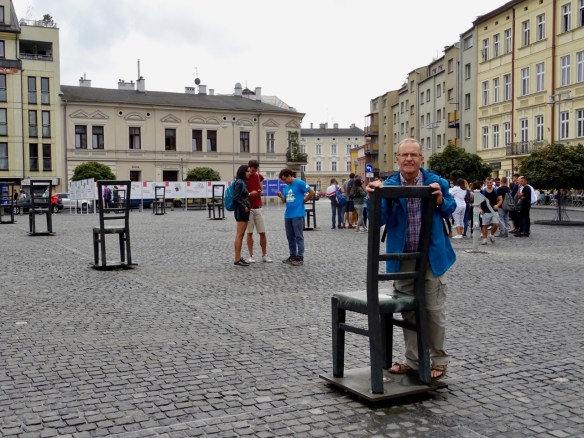
 and Bob checks out an installation in a town square.
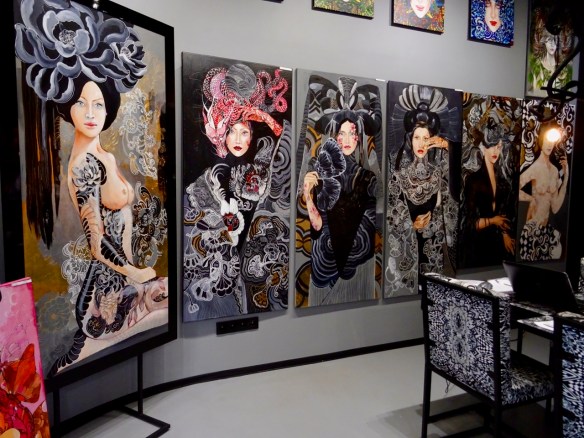
  Interesting artwork in one of the shops we pass.
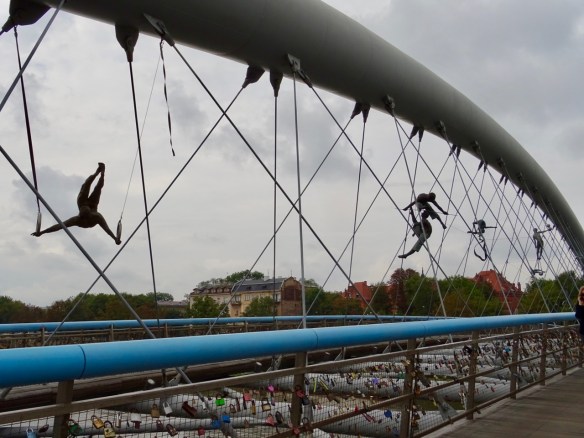
 We cross this pedestrian bridge over the river and we cannot decide how these sculpture stay right upright. They appear to be balancing on cables with no support wires yet somehow manage to stay right side up. We just can’t figure it out.
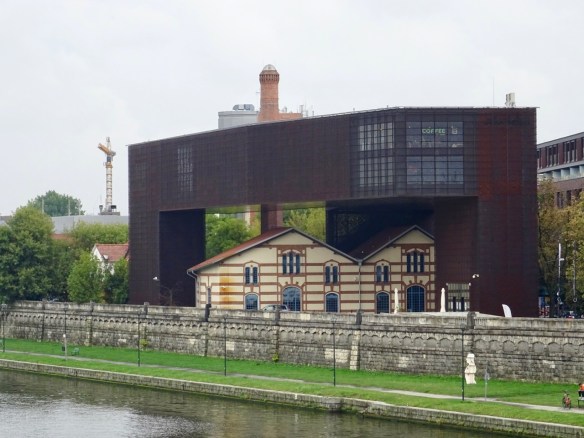
 Here is an interesting way to keep an old building while erecting a new modern one!
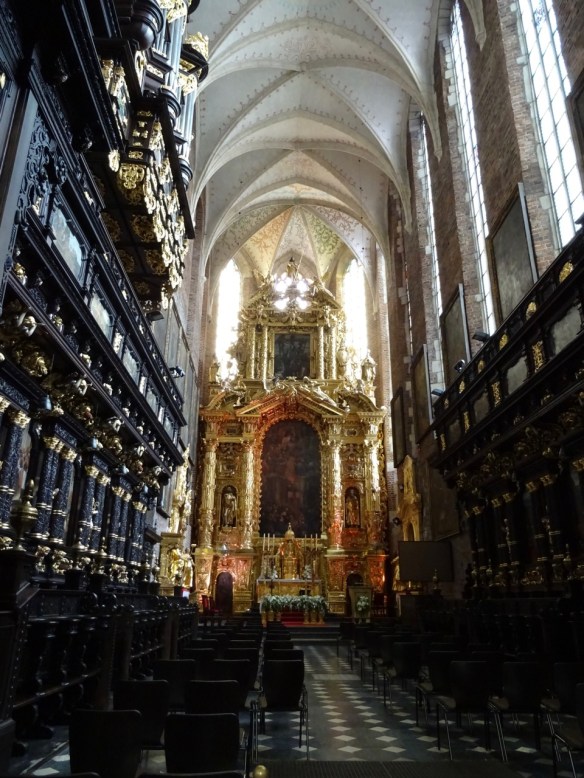
  We stop in at a basilica near the old town which has a very impressive altar. I wonder if it is real gold on all these altars? OK, just did a bit of research and it appears that real gold foil is used.
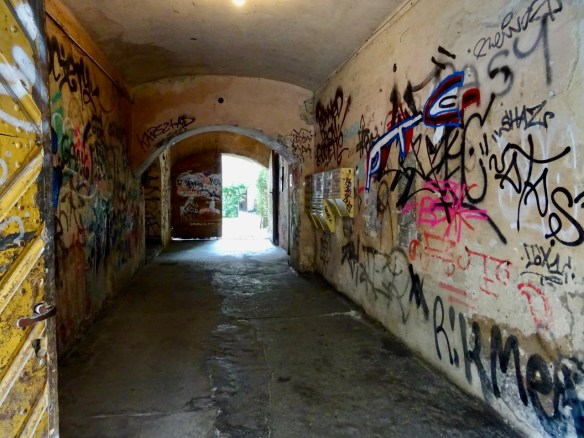
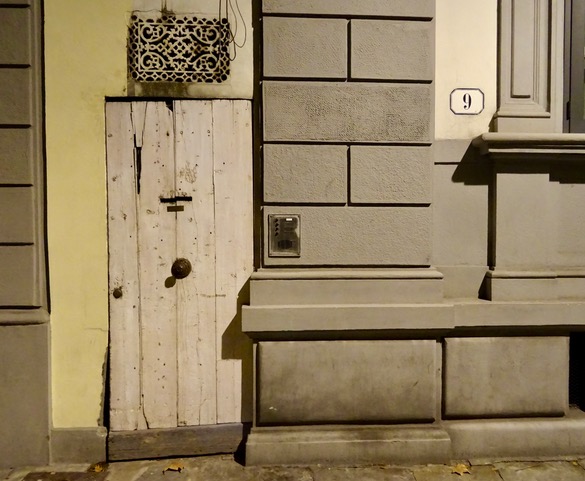
 I always peak into open doorways. They are often not very attractive doors but they sometimes open on beautiful interior courtyards and gardens.
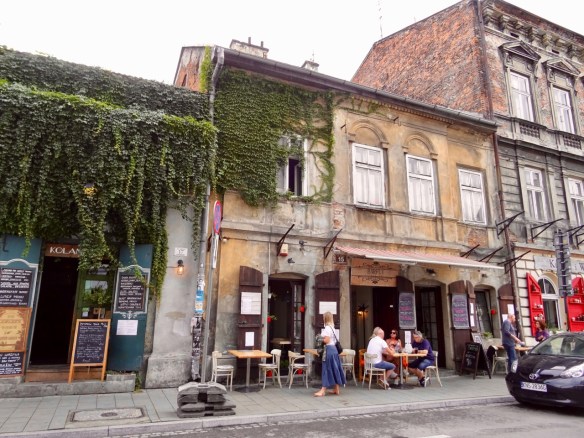
 A typical street side restaurant on our walk back to our apartment.
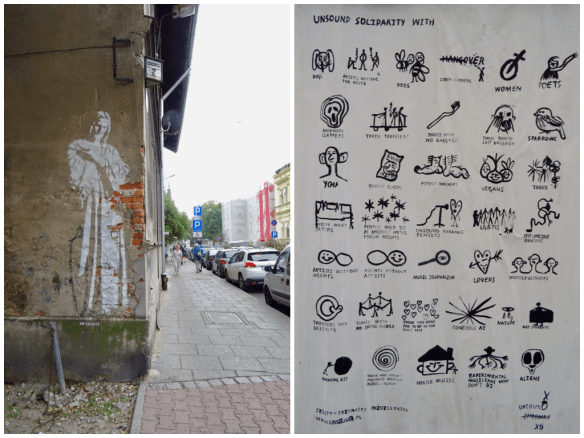
 More street art on the way home.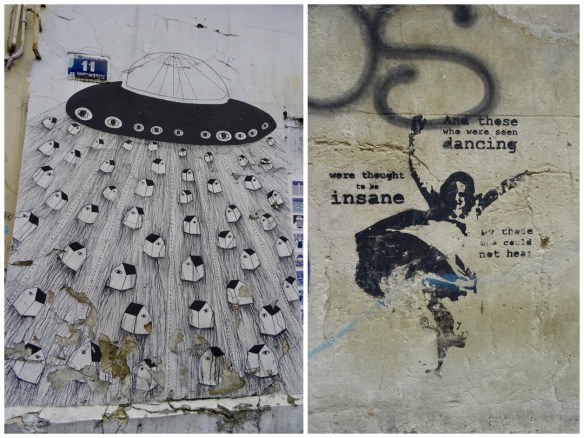
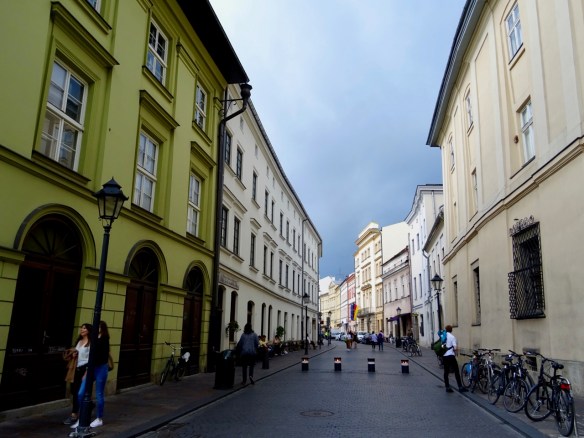 This church has one of the most impressive altars in all of Poland but there is a service happening so we are not allowed in.
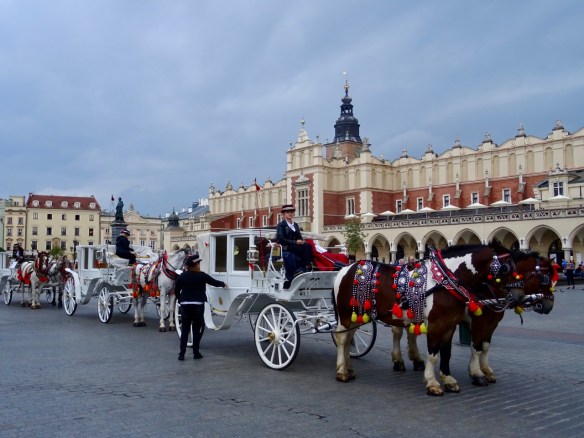
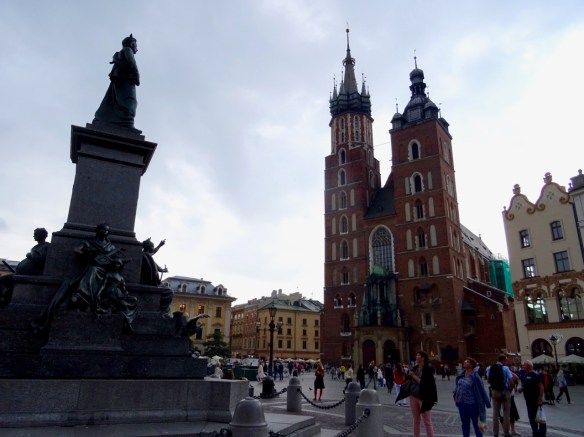 There are lots of horse drawn carriages for hire. I was tempted but it really felt like the rain was coming.
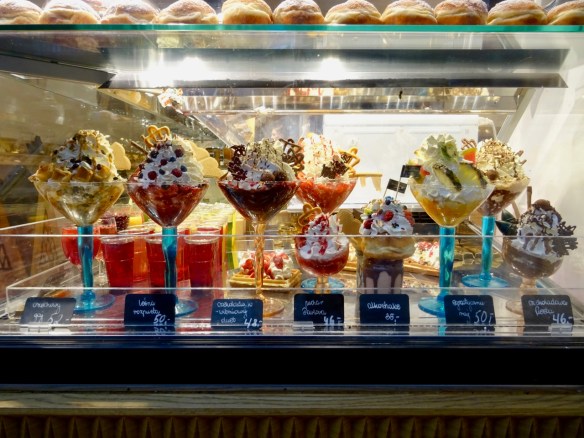
 These are enormous, about a foot high and cost between $14 and $20 each!
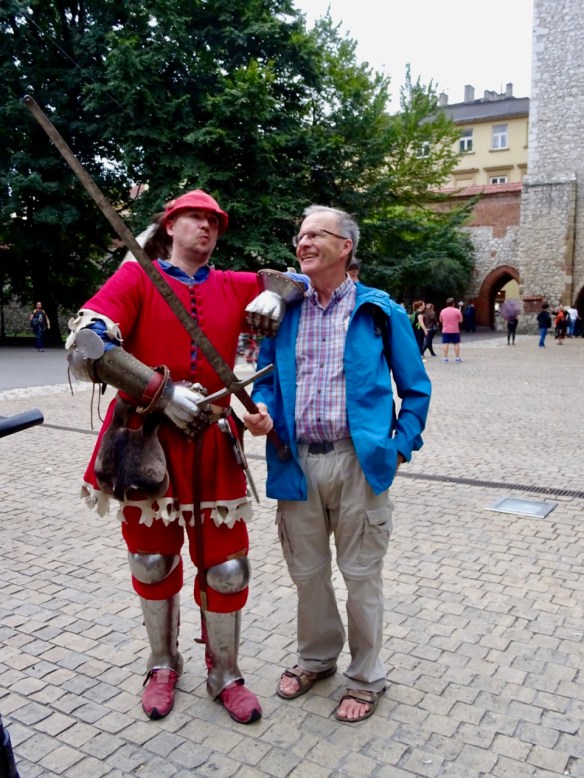
 This guy tried to challenge Bob to a fight, but no luck, so…
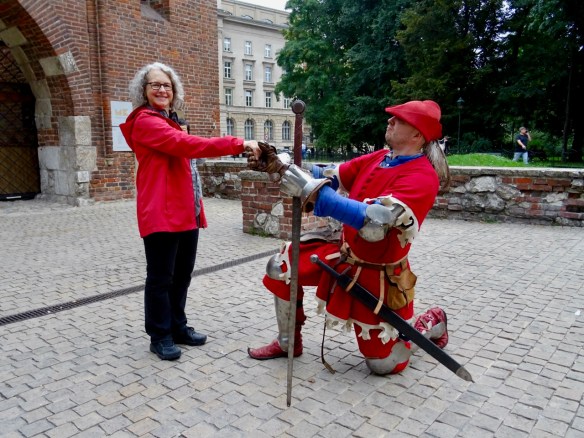
 He tried to win me over!
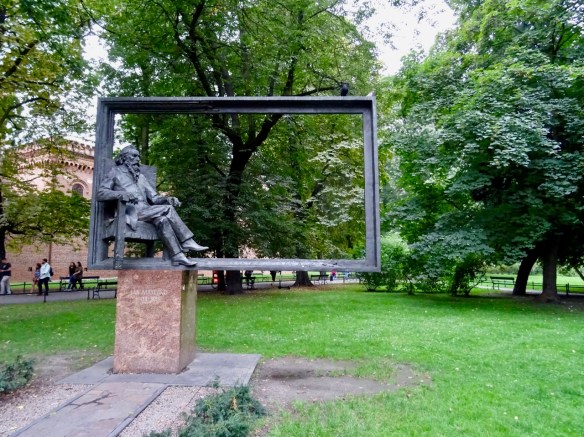
  An interesting sculpture of Jan Matejko who was a 19th-century painter native to Kraków. He is renowned for his large oil-on-canvas paintings of historical events in Poland.
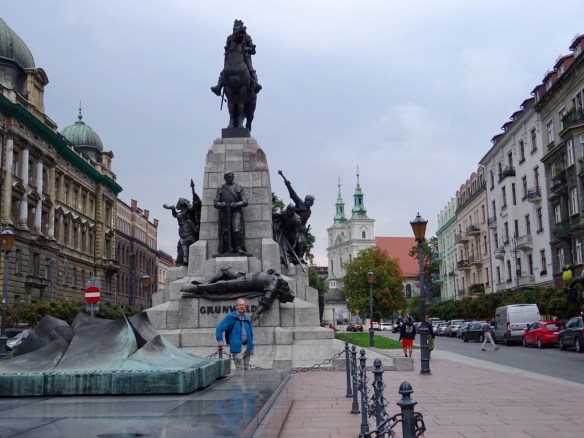
  This street leads towards the train station with its huge attached shopping mall.
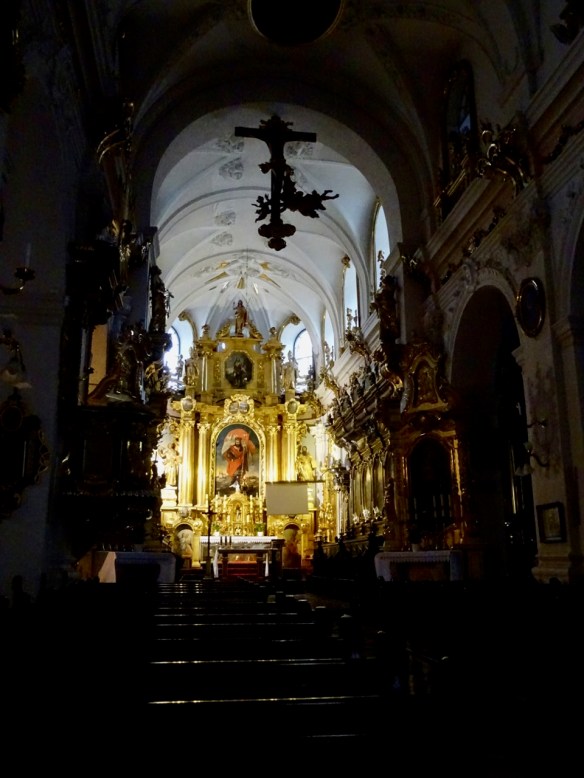
 One more church on the street just before the train station. It was dark inside except for the light shining on the altar.
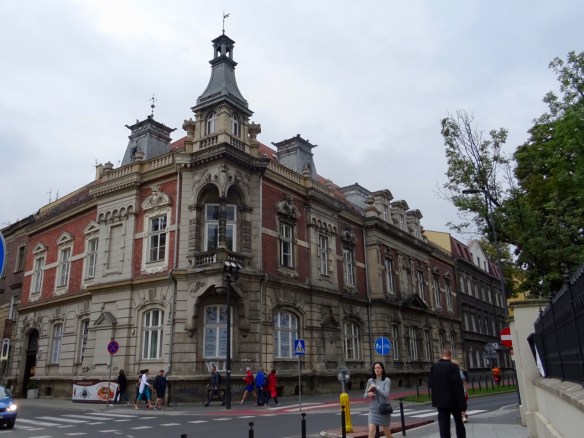
 A typical building in Krakow old town…
 Juxtaposed with the interior of the train station shopping areas. It is huge, three floors with hundreds of very modern shops.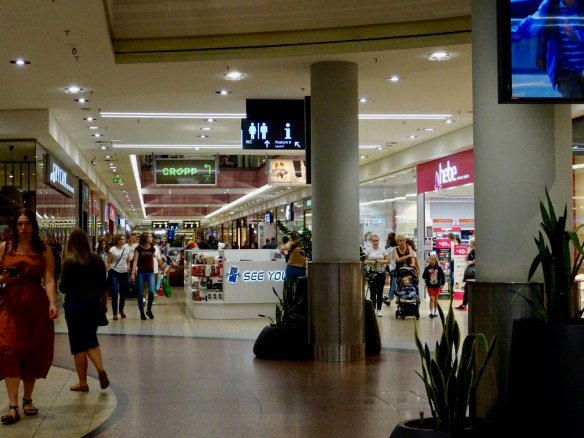






 .
.



 trudymason.com