Schindler’s Factory Museum, Krakow, Poland

Day 8, Monday, September 2, 2019

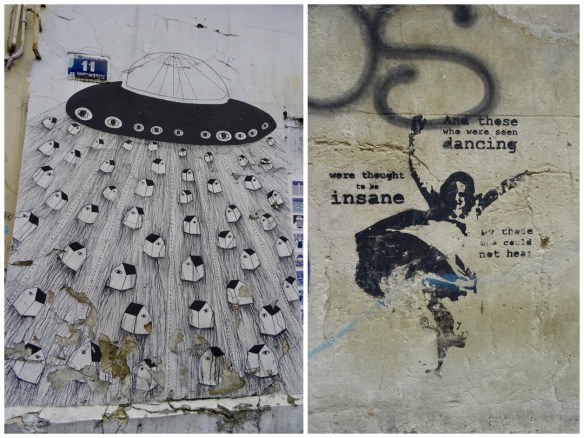
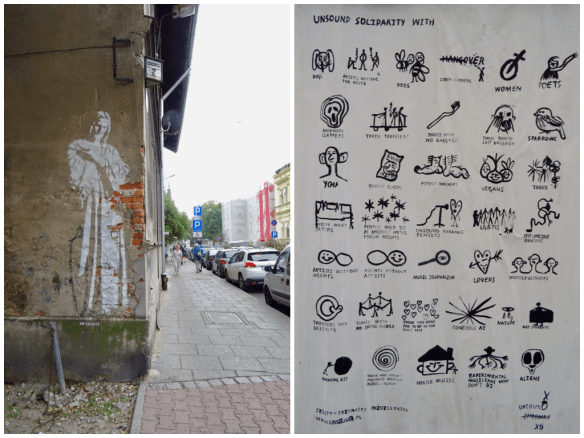
We should have pre-booked tickets for Schindler’s Factory Museum today and for Auschwitz tomorrow. There is a chance of getting last minute tickets at both of these sites so we are up early for our 45 minute walk to Schindler’s Factory today.  We arrive shortly after it opens at 8:30 and we are relieved to get tickets. It’s an interesting walk. Here is some street art we see on the way.
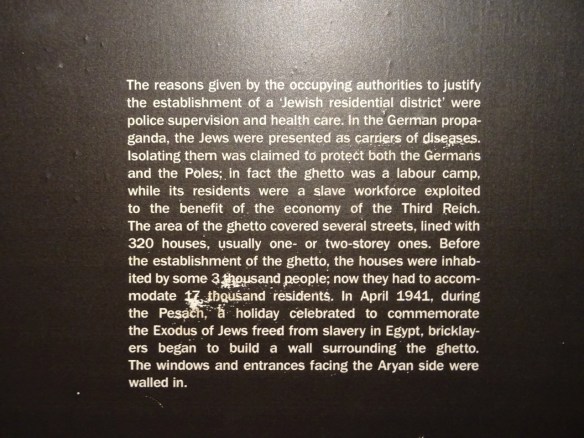
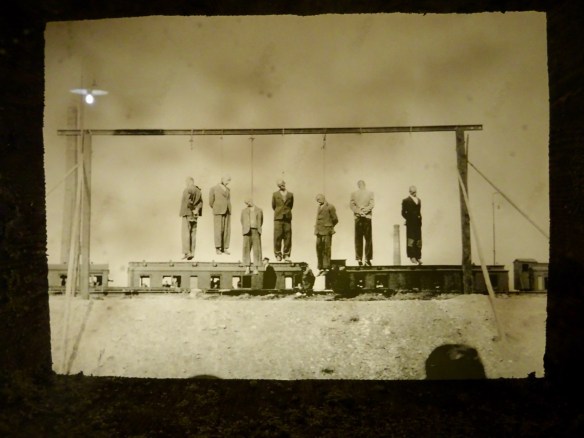
I never watched the movie ‘Schindler’s List’ because movies about terrible factual events  haunt me. We visited Dachau years ago when we travelled to Europe one summer with our young daughter. I still remember that day and I know that today and tomorrow will be difficult, but it is something that is important to do. This is one of the signs we read after entering the museum. Jewish people were hung along the train tracks for all to see.
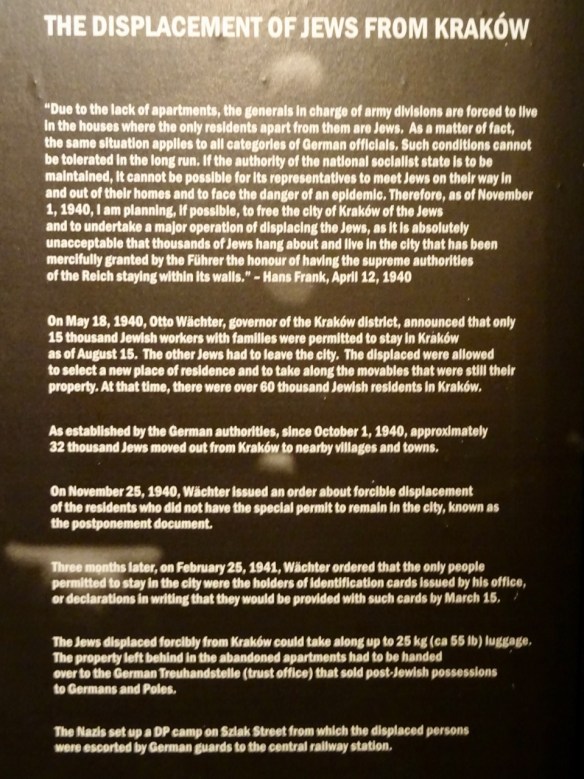
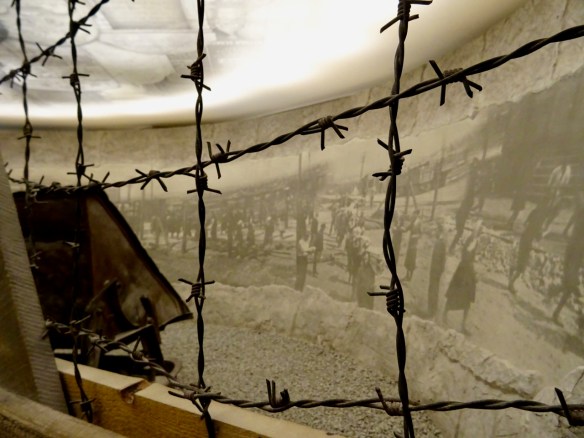
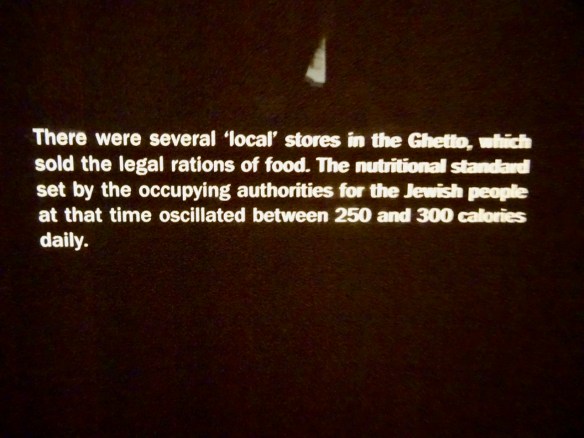
Walking through this dark exhibit about the wall around the ghetto. It was thought that starving the Jewish people was an effective way to weaken and destroy the morale of the Jewish population, especially the young people.
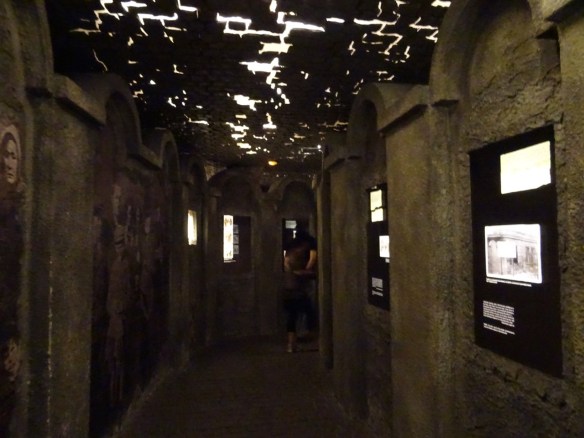
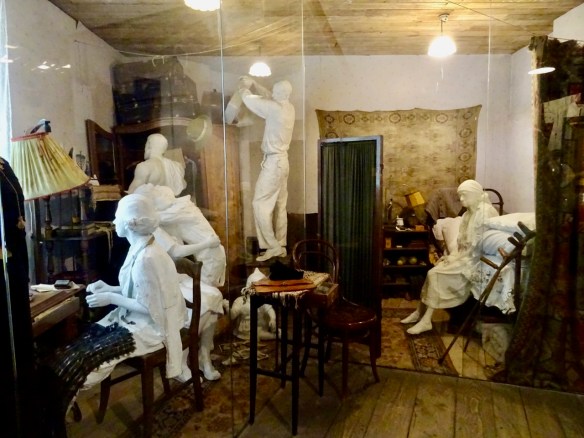
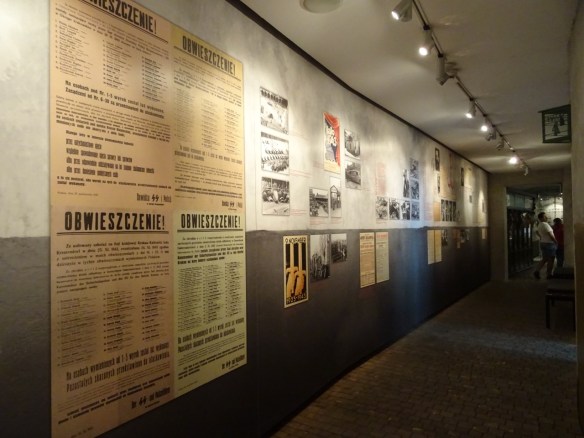
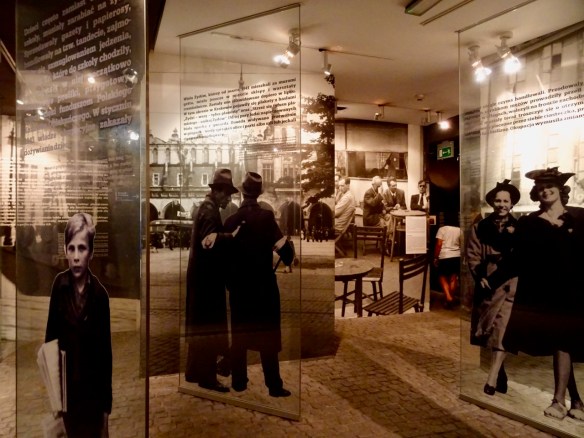
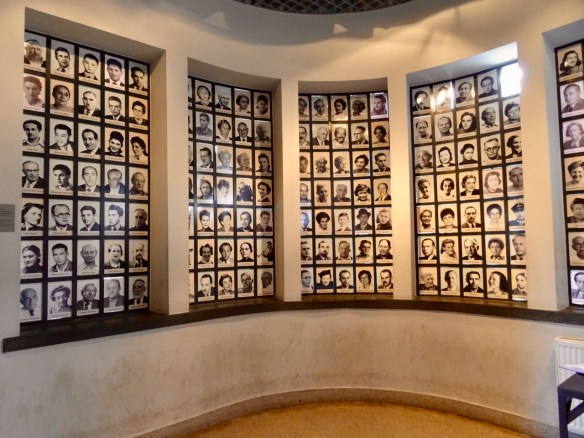
Some of the exhibits as we walk through the museum. This shows the crowded conditions inside a home in the ghetto. The corridors are covered in articles and photographs. There is so much to see and read. More exhibits, this one of everyday life in Nazi occupied Krakow. …notice the armband that Jewish people had to wear so they could be identified as Jews. One of the camps.
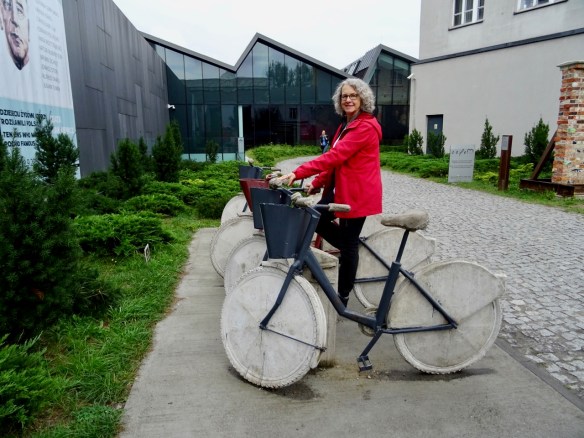
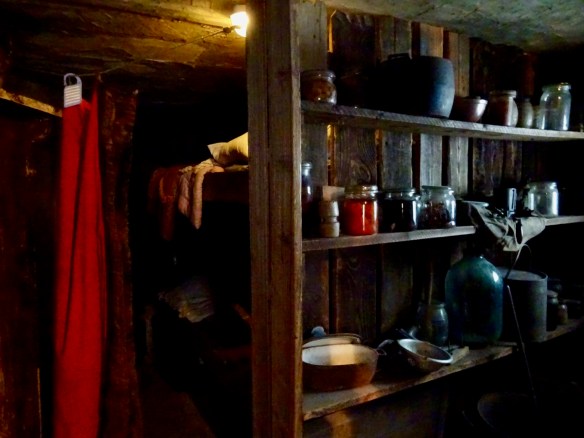
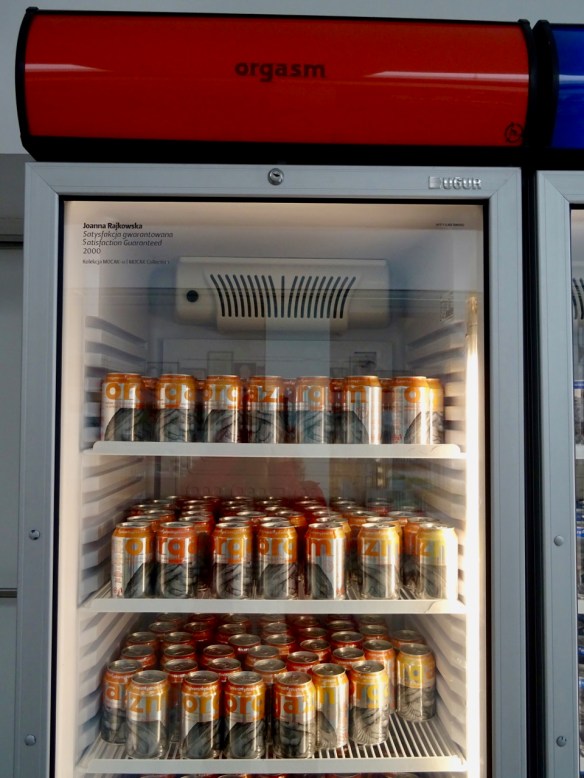
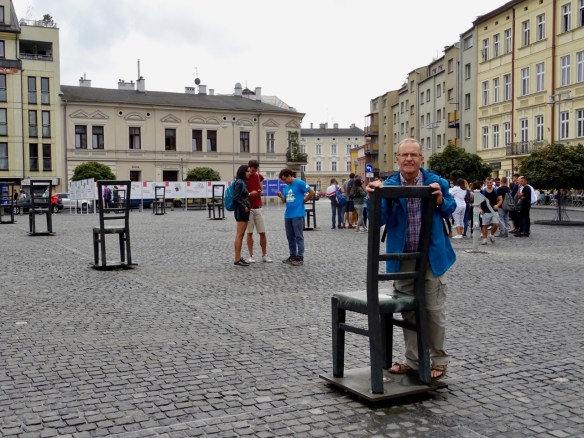
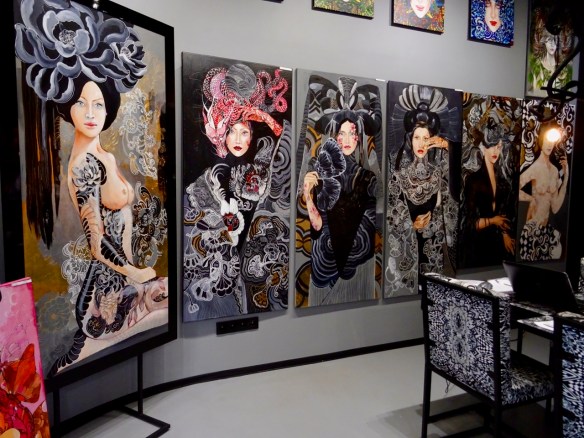
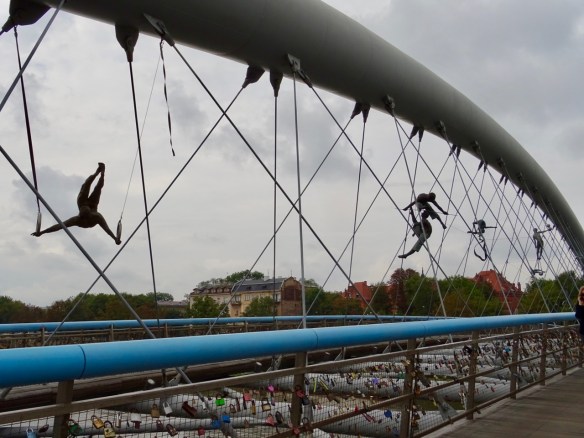
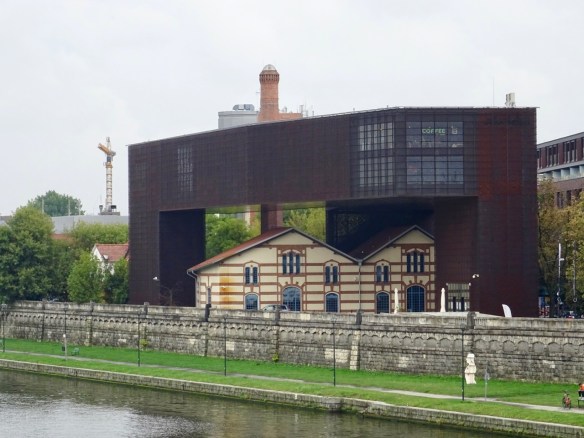
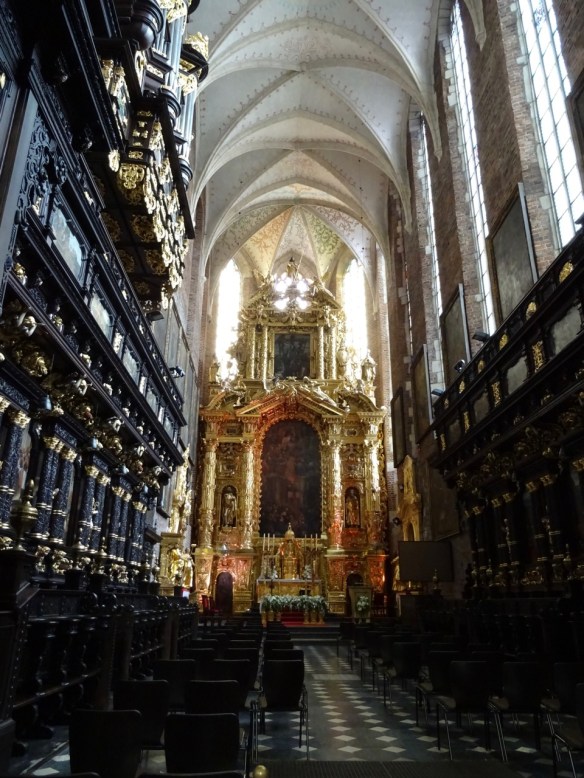
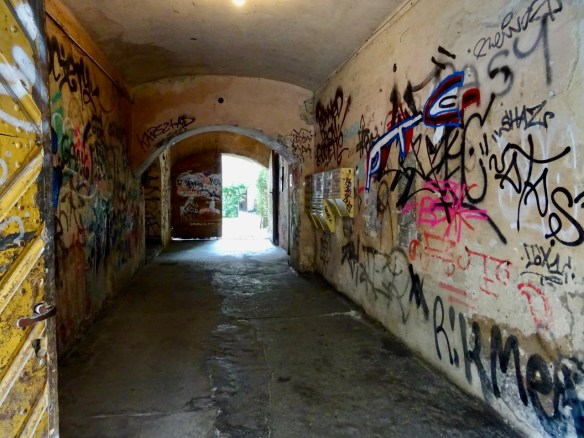
A hiding place in the cellar of a house in Krakow. Even though it meant death for anyone found helping a Jew, by hiding them or even offering food or assistance of any kind. many of the Polish people did exactly that.  Oskar Schindler was one of these people. He really wasn’t a man of great character, he lied, cheated and stole what he could, but he was instrumental in saving the lives of 1200 Jews. He also treated the Jews working at his factory better than in any other factory or work camp. There are videos of survivors talking about their experiences during this time.  Some of the people that were saved by Oskar Schindler. Two of the survivors became doctors and one became a Supreme Court judge. Everything in this museum is difficult to watch and listen to, but we need to know and remember what happened. I have heard it said that we need to do this so history will never be repeated, but I wonder. There is so much hatred and racism in the world today that I can no longer believe that something like this will never happen again. It is frightening wondering what the future will bring. We stop for tea at the Modern Art Museum cafe. It gives us a chance to recover form the heavy content of the Schindler Museum.  On the way out I notice this vending machine. Notice the name of the drink it dispenses. I try out the cement bicycles… and Bob checks out an installation in a town square.  Interesting artwork in one of the shops we pass. We cross this pedestrian bridge over the river and we cannot decide how these sculpture stay right upright. They appear to be balancing on cables with no support wires yet somehow manage to stay right side up. We just can’t figure it out. Here is an interesting way to keep an old building while erecting a new modern one!  We stop in at a basilica near the old town which has a very impressive altar. I wonder if it is real gold on all these altars? OK, just did a bit of research and it appears that real gold foil is used. I always peak into open doorways. They are often not very attractive doors but they sometimes open on beautiful interior courtyards and gardens. A typical street side restaurant on our walk back to our apartment. More street art on the way home.
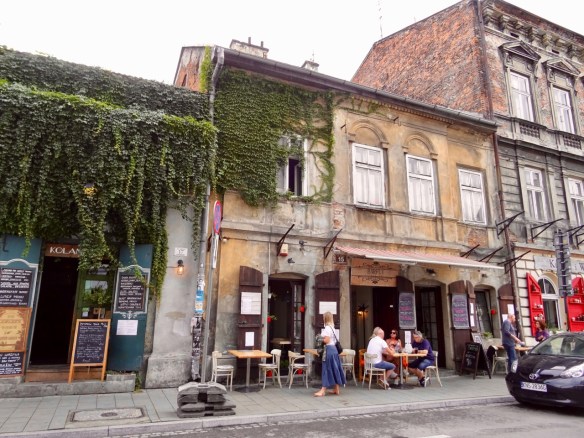
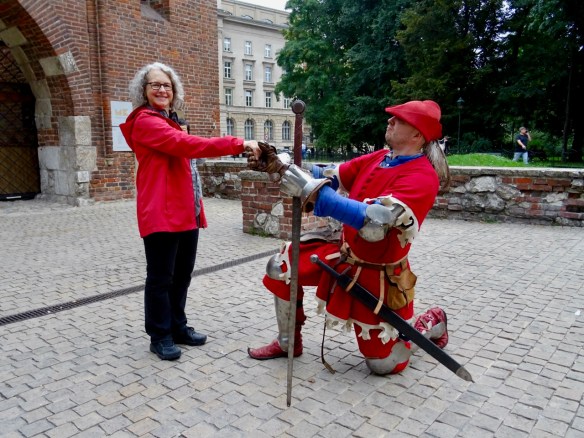
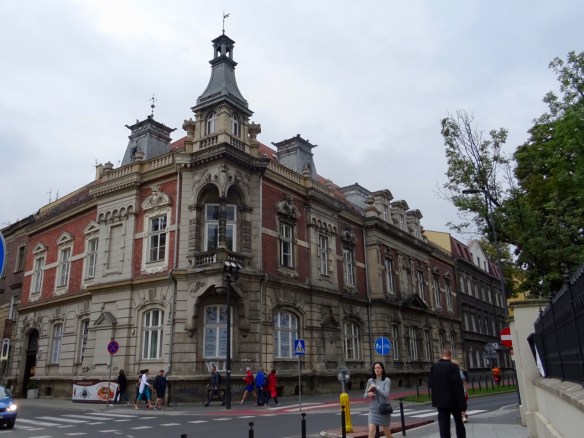
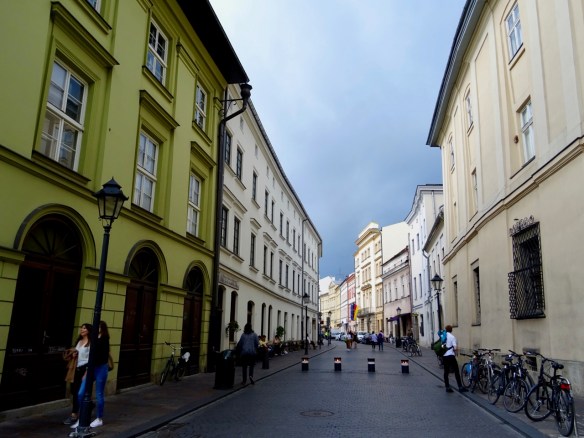
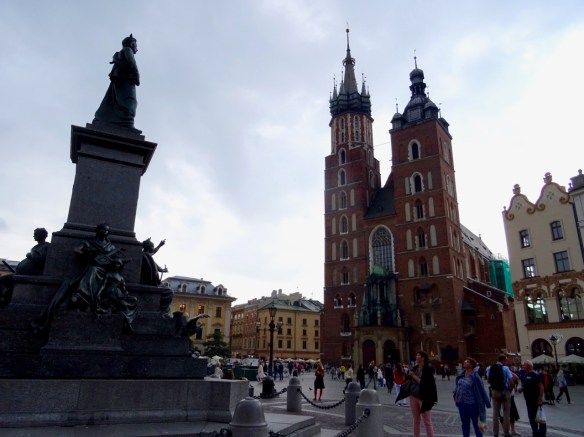
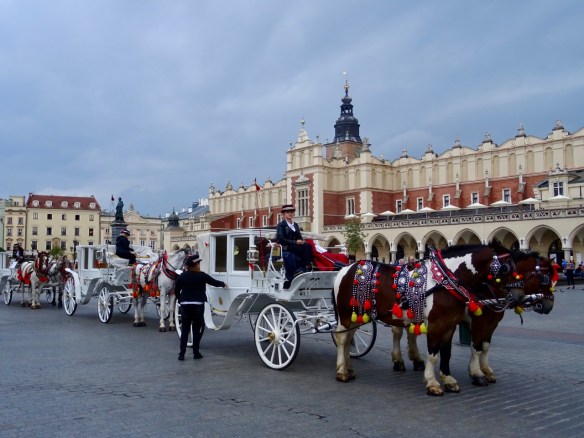
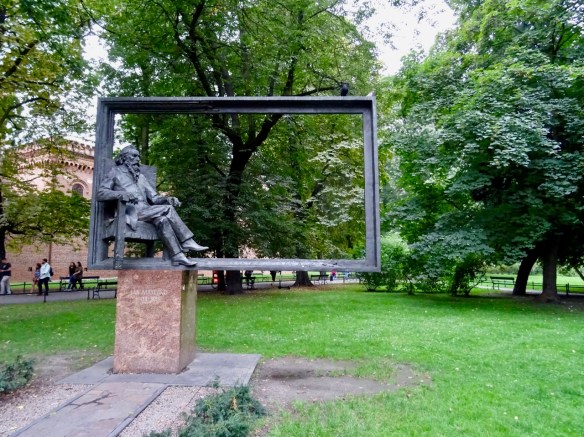
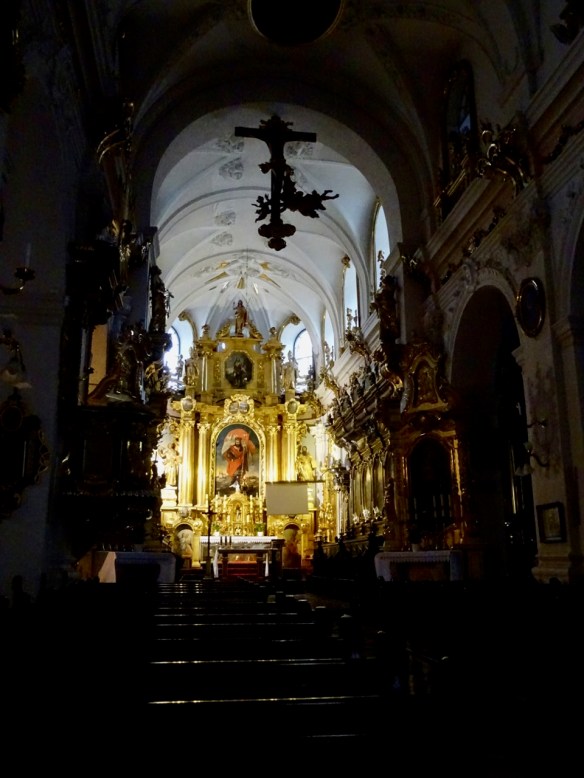
The sky is getting darker just as we enter the main old town square. This church has one of the most impressive altars in all of Poland but there is a service happening so we are not allowed in. There are lots of horse drawn carriages for hire. I was tempted but it really felt like the rain was coming. These are enormous, about a foot high and cost between $14 and $20 each! This guy tried to challenge Bob to a fight, but no luck, so… He tried to win me over!  An interesting sculpture of Jan Matejko who was a 19th-century painter native to Kraków.  He is renowned for his large oil-on-canvas paintings of historical events in Poland.  This street leads towards the train station with its huge attached shopping mall. One more church on the street just before the train station. It was dark inside except for the light shining on the altar. A typical building in Krakow old town… Juxtaposed with the interior of the train station shopping areas. It is huge, three floors with hundreds of very modern shops.
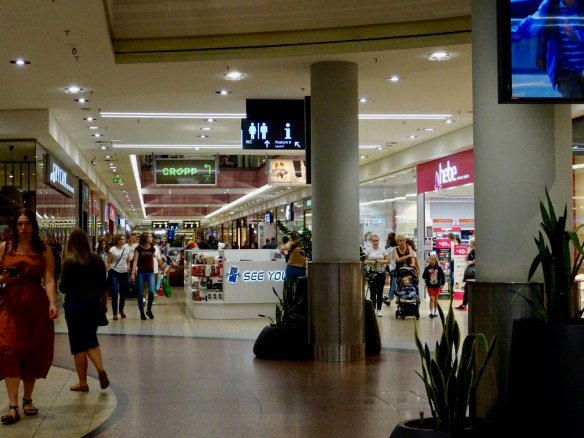
We pick up a few groceries for supper and head home, in the rain. It has been a long day, We walked 21,262 steps!  No wonder we are both tired.
Olomouc, Czech Republic on the way to Krakow, Poland

Day 5, Friday, August 30, 2019

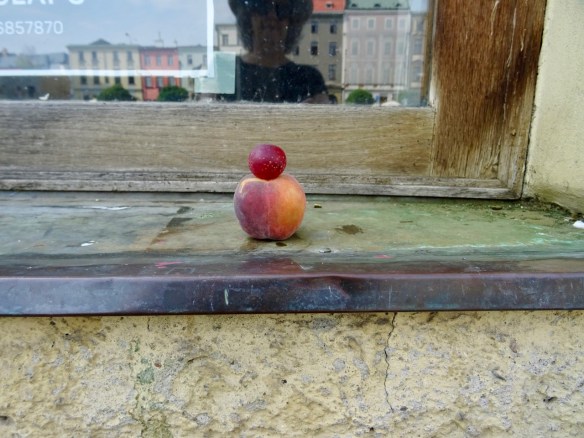
We are driving to Krakow today and stop to visit Olomouc on the way. We find parking easily, which is always nice, and walk to the town square. One of the first buildings we pass has this charming little still life on a window sill. I wonder who put it there and how many people passing by notice and appreciate the effort?

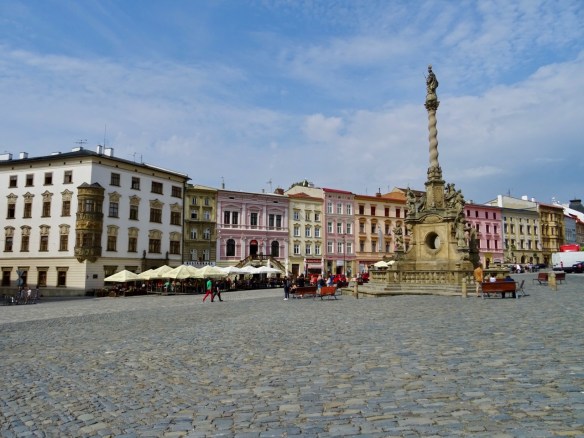
We are amazed at how huge the town square is. There aren’t very many people around but we imagine that in the peak tourist months it is probably much busierBob gets a couple pastries at the first bakery and we sit on a bench to eat them and watch the people walking by. It is hot again today, 29°.  I have heard that European flours are often tolerated by people with gluten sensitivities, so I have a couple bites. 
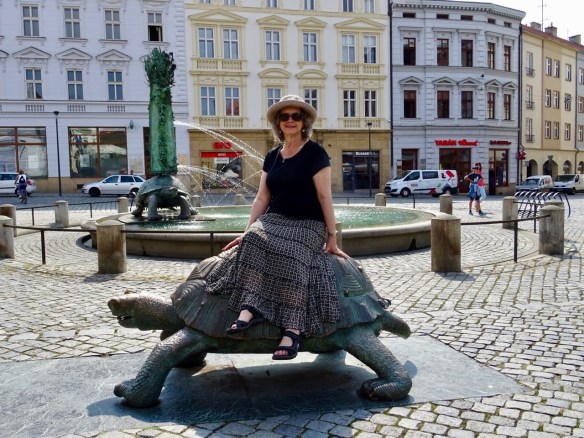
Doesn’t everyone want to ride on a turtle? I almost went right over backwards when I climbed on!
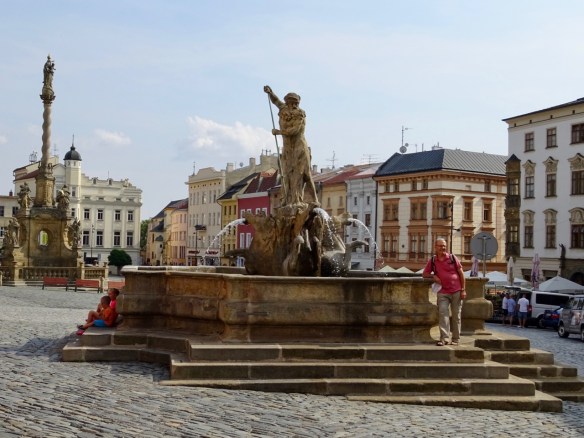
The Holy Trinity Column dominates the town square. “The column is dominated by gilded copper sculptures of the Holy Trinity accompanied by the archangel Gabriel on the top and the assumption of the Virgin beneath it. The base of the column, in three levels, is surrounded by 18 more stone sculptures of saints and 14 reliefs.” ~wikipedia. It even has a small chapel in the base. 
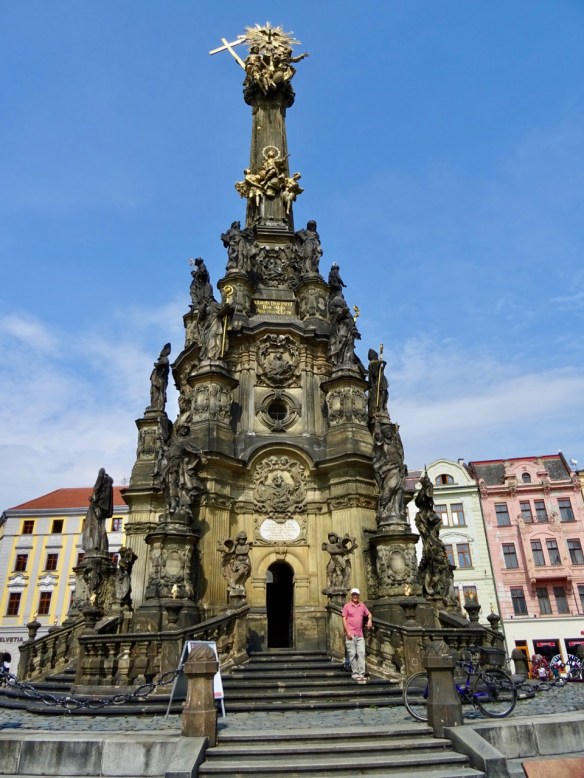
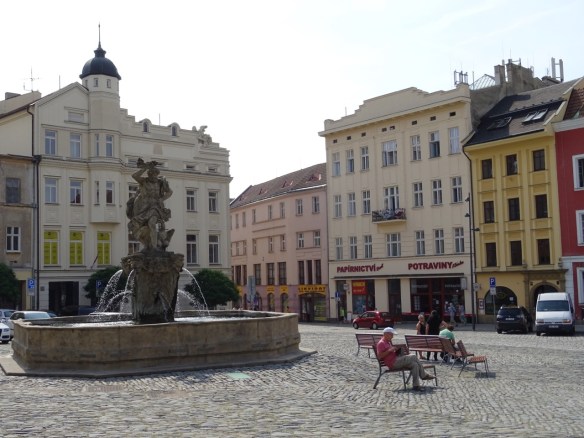
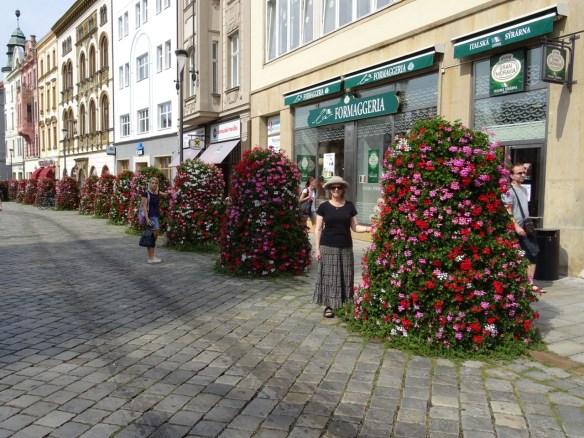
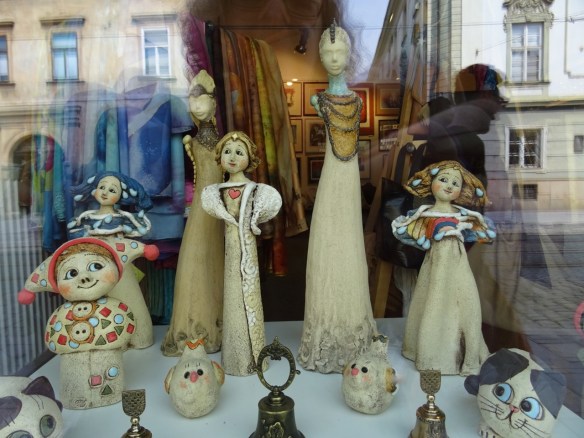
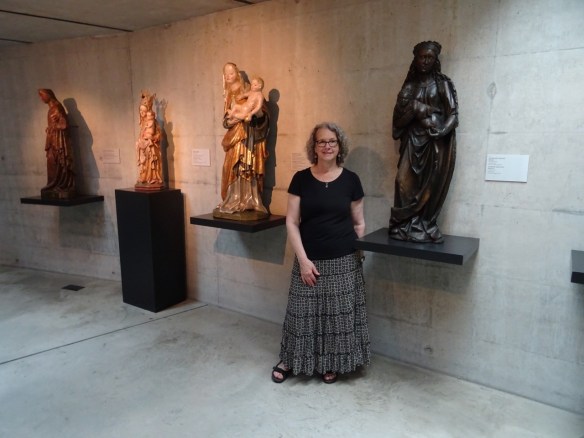
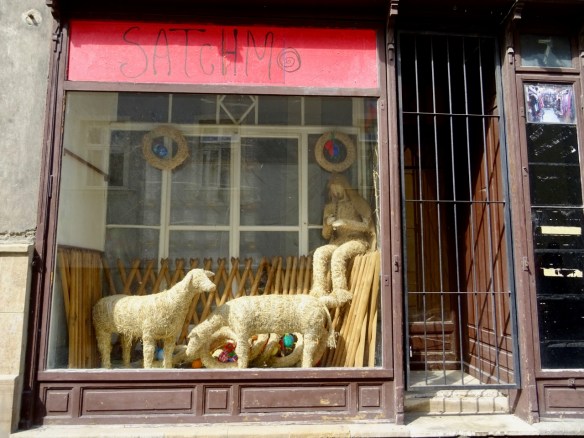
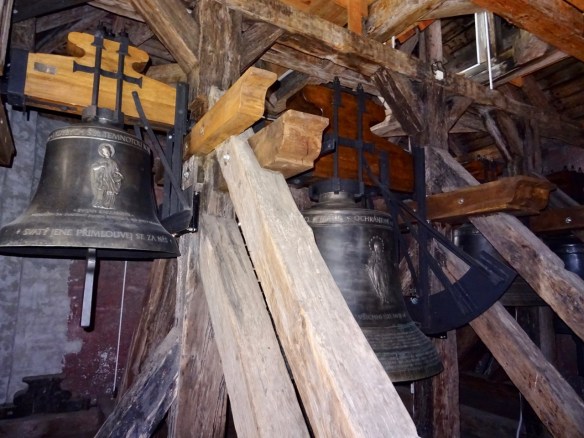
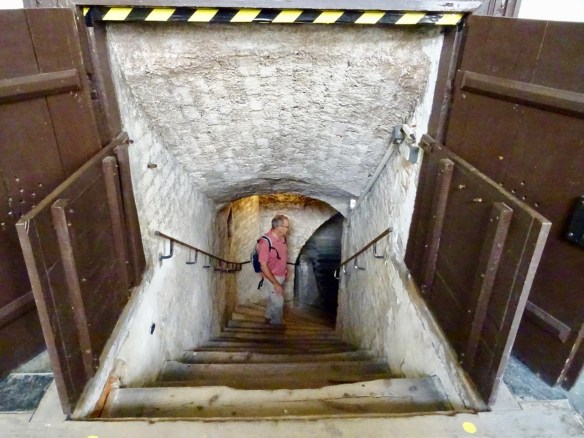
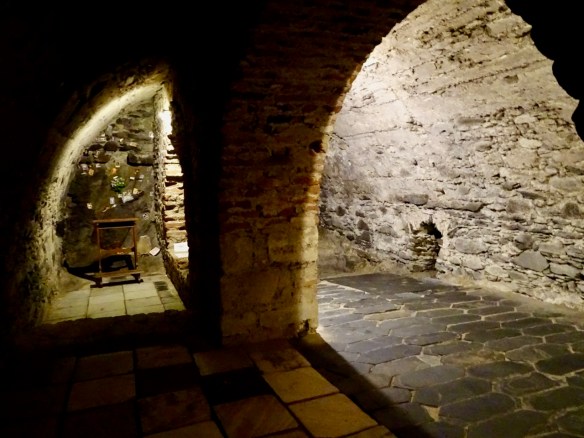
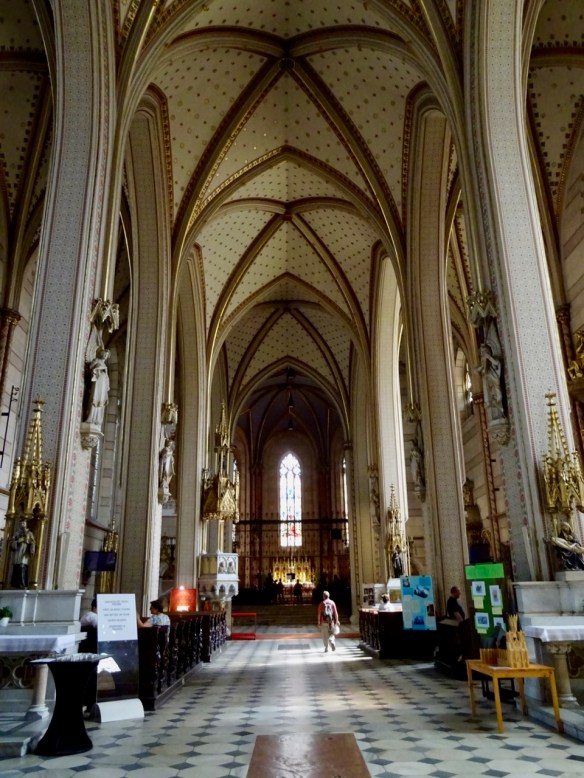
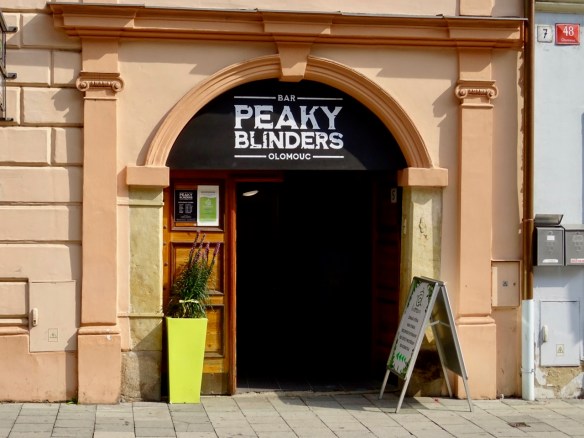
I said I want a flower column like this in my yard! We wonder what this shop sells? These figures were made out of straw. It was closed so we couldn’t go in to find out. We climb another bell tower in the Church of St. Michael just off the square. There wasn’t any place to see outside and get a view over the city, which was too bad. The same church had steps to a crypt so we went to explore,.. and we found this little shrine and a small pool of water. These ladies caught my eye.  St. Wenceslas Cathedral was originally built in 1131 and was rebuilt in the second half of the 13th century. The facade was renovated in 1999-2008. It is very impressive. Of course the interior is just as impressive. We visit Archdiocese Museum which is much more interesting than I had anticipated. It is only $3 Cad each and we probably spent a couple hours exploring. Each room was closed off by a door which was opened by an ‘older’ woman who then made sure that we saw every exhibit that was discussed on our audio guides. They opened and closed doors behind us, which was actually very helpful as it wasn’t easy to figure out which doors we were supposed to go through. I love the statues and paintings of the Virgin Mary. There is something very appealing about the way the artists depicted their faces. More fountains in the town square as we make our way back to our car. This bar catches my eye. I am sure I know this name and look it up. Sure enough, it is the name of a show on Netflix about a gang in England in the early 1900’s.When we cross the border into Poland we are surprised that there is no indication that we were leaving one country and entering another.  One of the interesting things about travelling is how different things are from home. Sometimes the differences are challenging and sometimes the differences make me smile. This is what I saw in the first bathroom I entered in Poland.
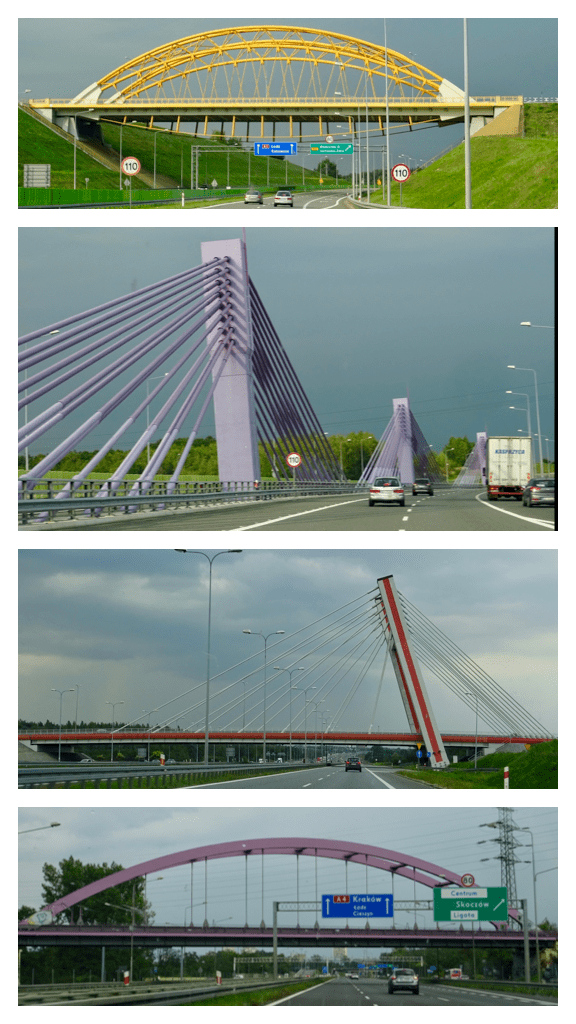
Bridges on the highway into Poland are certainly different.We were frustrated when our SIM card stops working once we cross the border. We were told it would work in all the countries we were visiting. We finally find a MacDonalds so we can contact our bnb host, who is waiting to hear from us. It is late when we finally make it to our new apartment, which wasn’t very easy to find in the dark, but we are here, and tomorrow will be a rest day for us.
Museo Nationale Romano and the Capuchin Crypts

Day 89, Saturday December 2, 2017

Saturday was a quiet rainy day. I worked on catching up on my blog and Bob went for groceries, several times! It isn’t easy to find what we need in one store so shopping sometimes requires several attempts to find everything on our list. I don’t know how Romans manage. Even something as simple as spinach is often not available.

Day 90, Sunday December 3, 2017

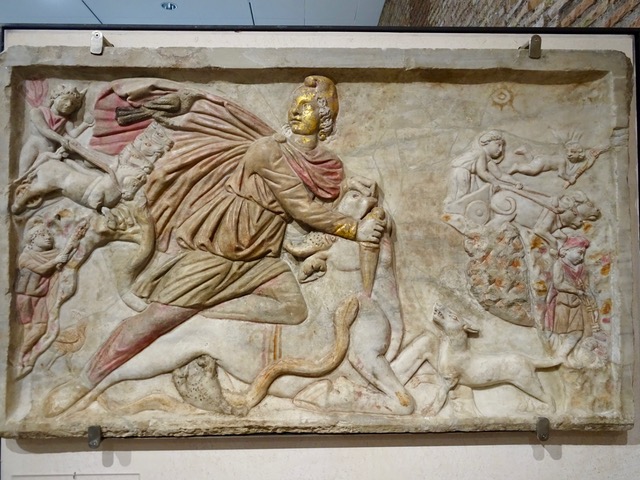
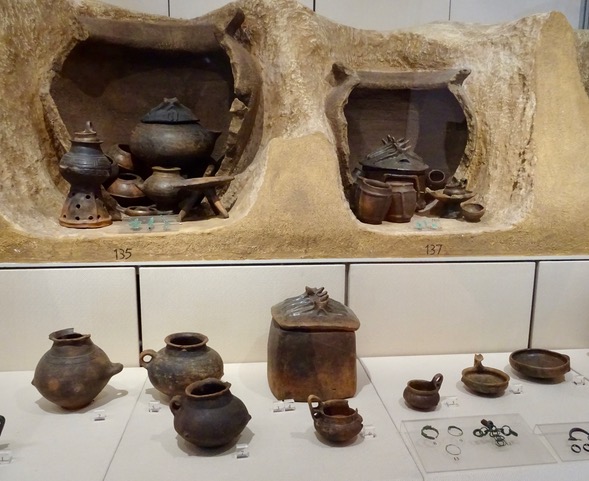
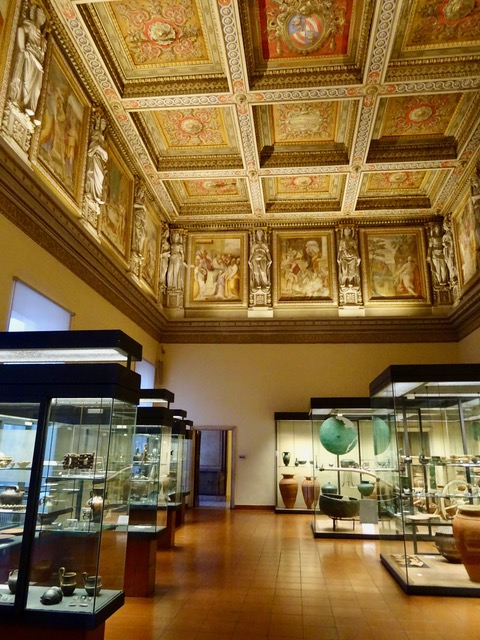
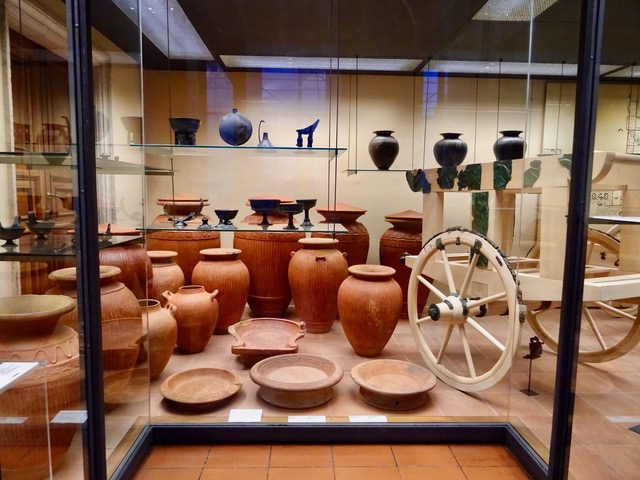
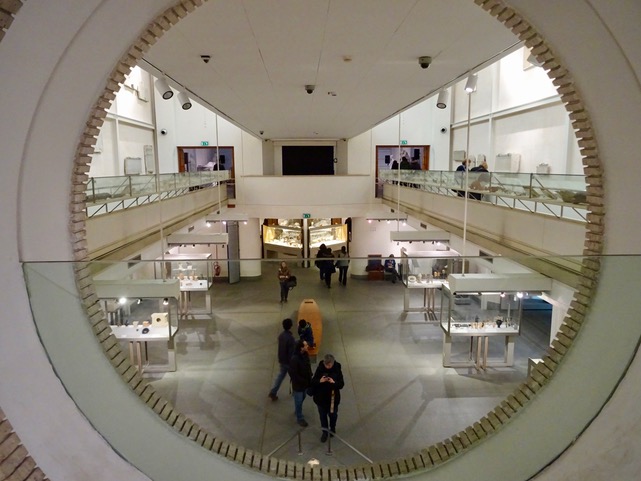
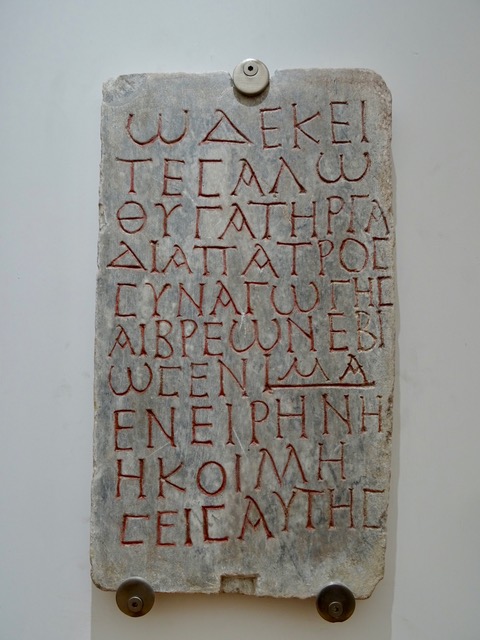
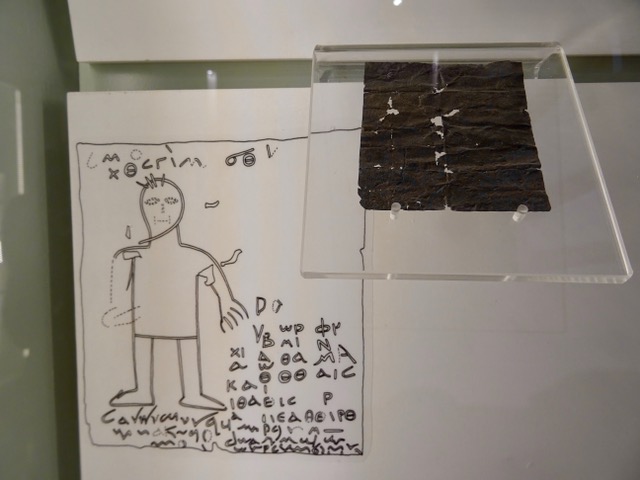
We thought today would be a bit quieter, just a little walk about but we ended up doing quite a bit. Bob found out that the four Museo Nationale Romano museums were free today so we thought we would visit the one near the train station. It was much bigger than we thought and we spent several hours there. This museum had lots of information on the history of writing and…lots of examples of writing on stone. What made it interesting was that all the pieces on exhibit had Italian and English translations. There were lots of informative videos and other kinds of information but it would have taken more than a day to do all that. There was a very interesting exhibit about the Fountain of Anna Perenna. Anna was an ancient nymph and the fountain was a place of magic. It was discovered in 1999 when work began on an underground parking facility. Many ‘magical’ objects were found in the well including several curses. This one is for a man called Cassianus who was cursed because he hired some women to rob the author of the curse. It shows a demon flanked with magical symbols. There were many curses on display as well as directions for casting spells.We tend to forget that ancient statues and reliefs were painted in bright colours. There was lots of pottery from settlements from the 9th to the 7th century B.C. The large pots held cremated remains.

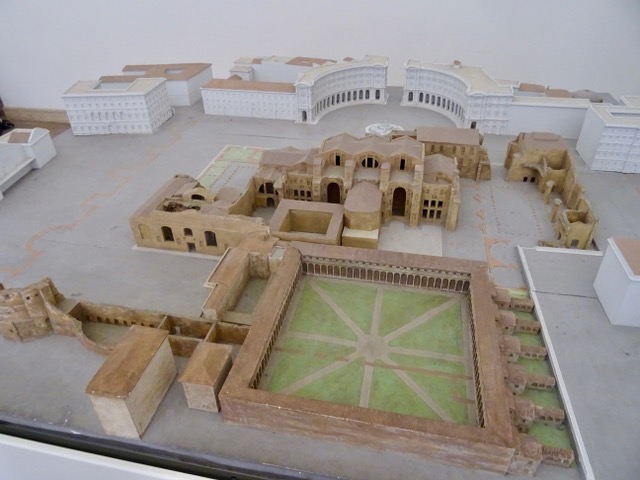
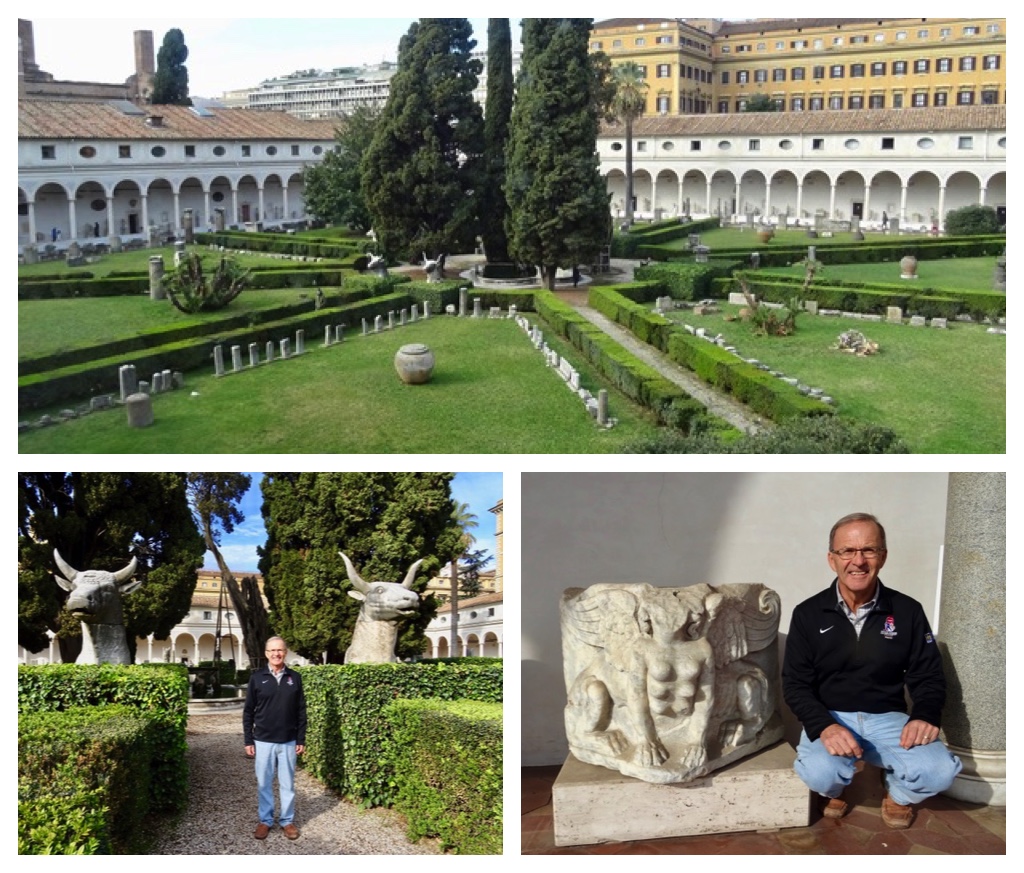
This is a model of the Museum. The large green square…is this courtyard  and the buildings around it house the museum. This was built in the 15th century. Bob found a few interesting statues here. The large animal heads are located around the fountain in the centre of the courtyard. There were also horse heads, a ram, a camel, an elephant and a rhinoceros!
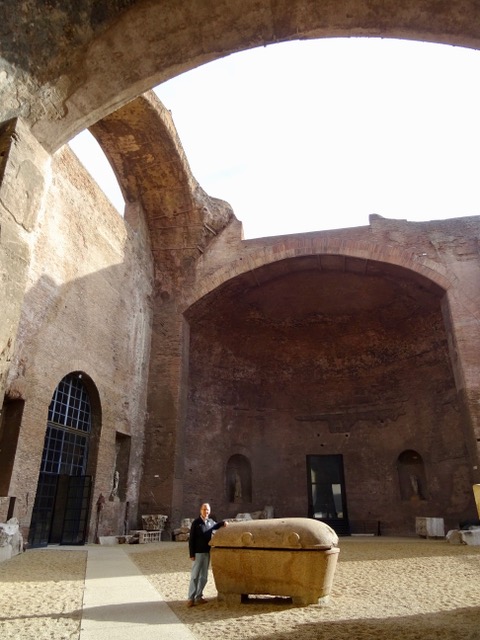
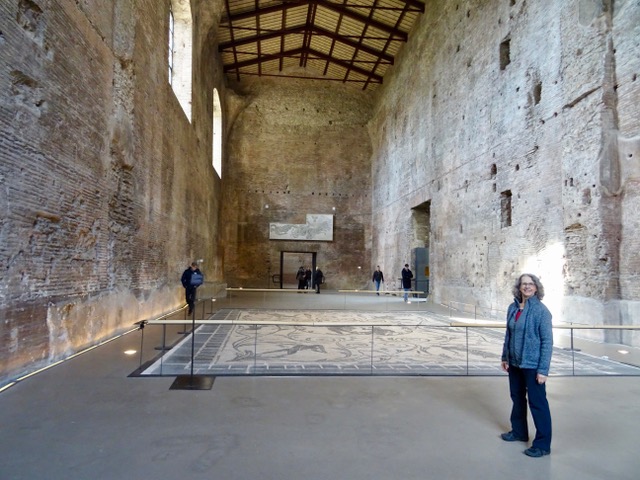
The complex behind the courtyard is the Baths of Diocletian which were built in 300 A.D. They held 3,000 people! It was hard trying to take pictures as the baths are so enormous.
This room was somehow used as a water reservoir. 
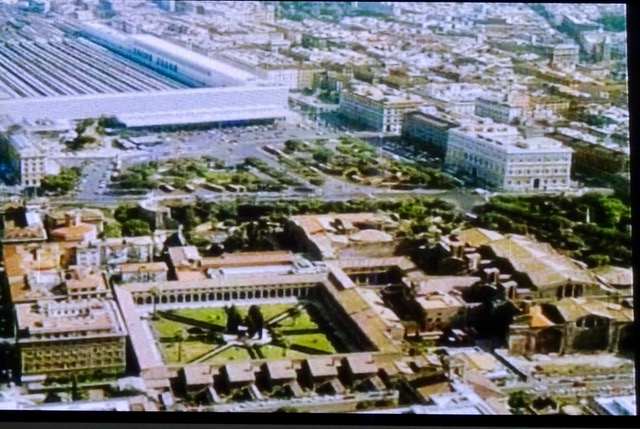
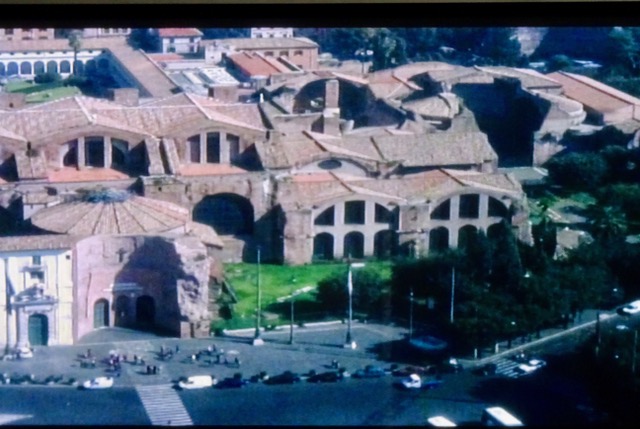
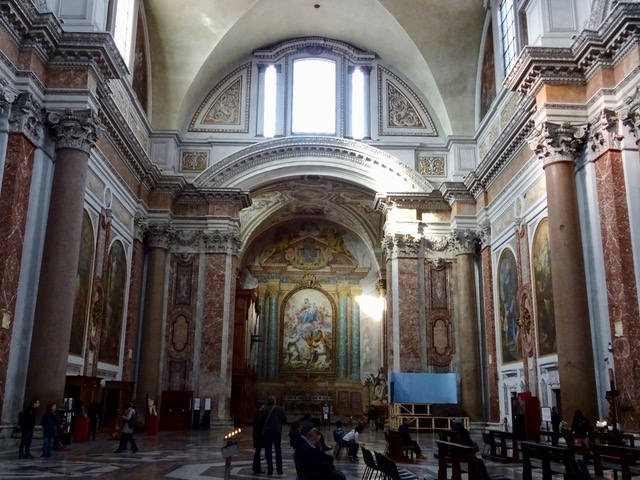
Here is an aerial view taken from a film about the baths showing their location in modern day Rome. The big white building in the corner is the Termini train station.Here is a close up of the baths. The building with the cross in the lower left is the best preserved section of the baths. The tepiderium was restored and converted into a basilica using Michelangelo’s architectural designs in the 16th century. It is now the Basilica of Santa Maria degli Angeli e dei Martiria. This sculpture is on the door to the Basilica.The basilica interior gives us a good idea what the interior of the baths would have looked like with all their decorated walls and ceilings.

The basilica is a place of worship, art and science. I liked this enormous head on display. It is about three feet long.

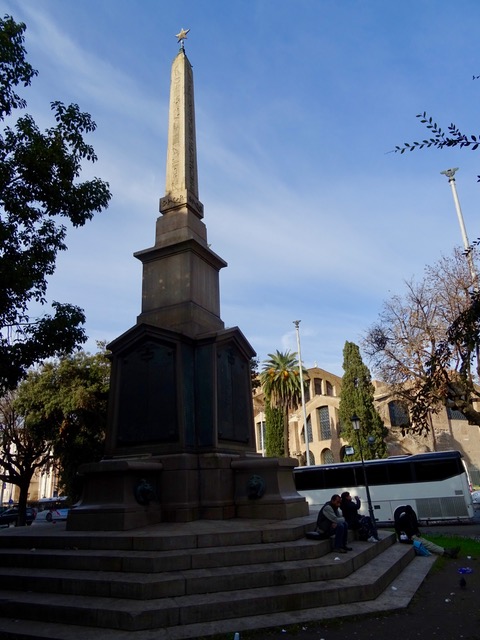
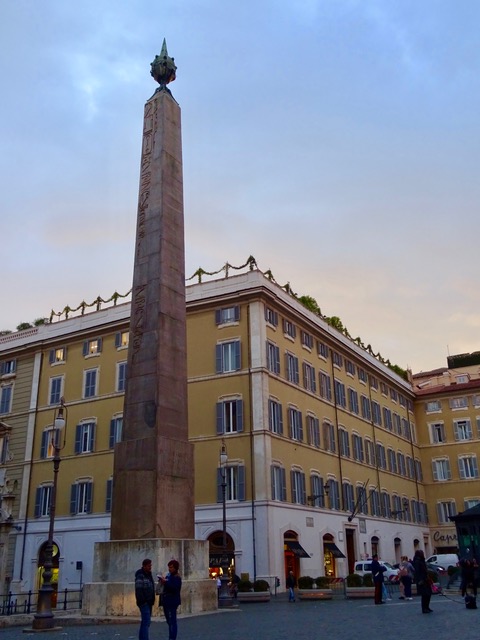
We find one more obelisk!Republic Piazza is beside the baths.  Many of Rome’s streets are cobbled and it has made for some very rough bus rides.

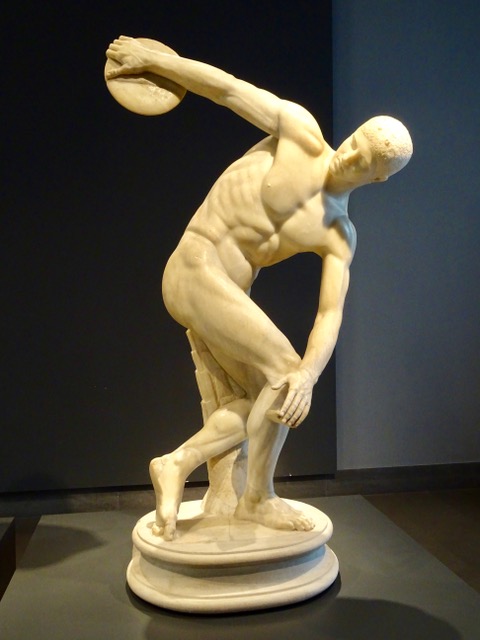
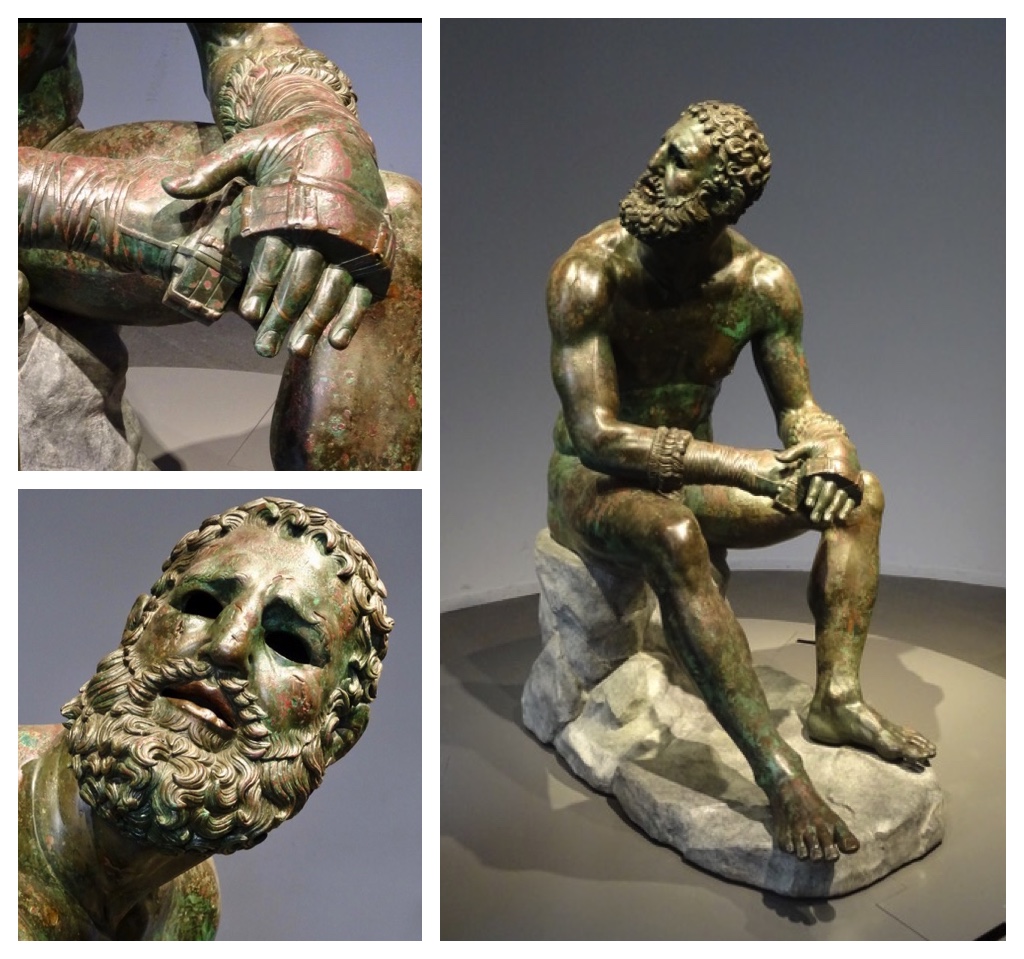
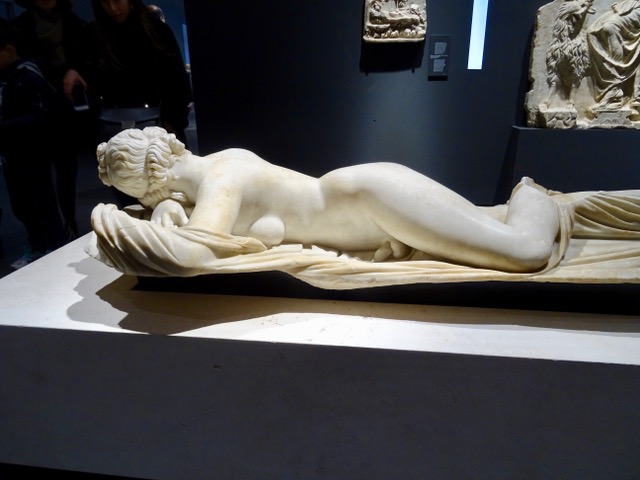
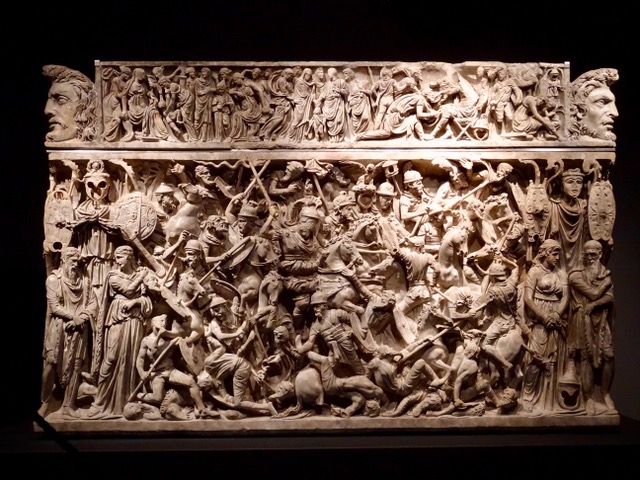
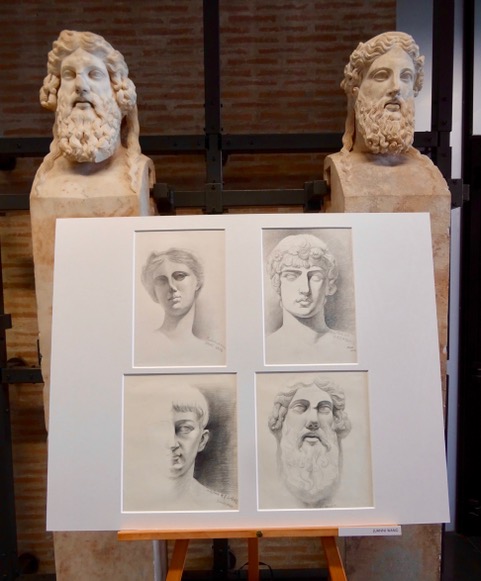
Another branch of Rome’s National Museums, the Palazzo Massimo is right beside the Republic Piazza so we decide to visit it as well. There are some wonderful works inside.  The Discus Thrower and…the Boxer at Rest are amazing and..this sculpture of a hermaphrodite is interesting.The massive Portonaccio Sarcophagus from 172 AD is unbelievable. It is five feet tall, and most of the complex intertwined carvings are still intact.
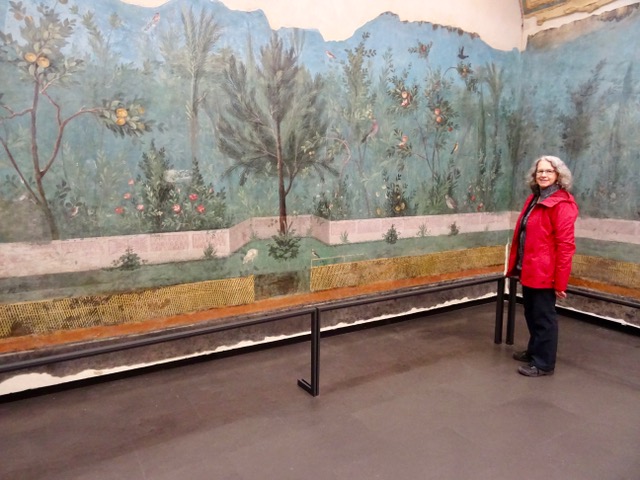
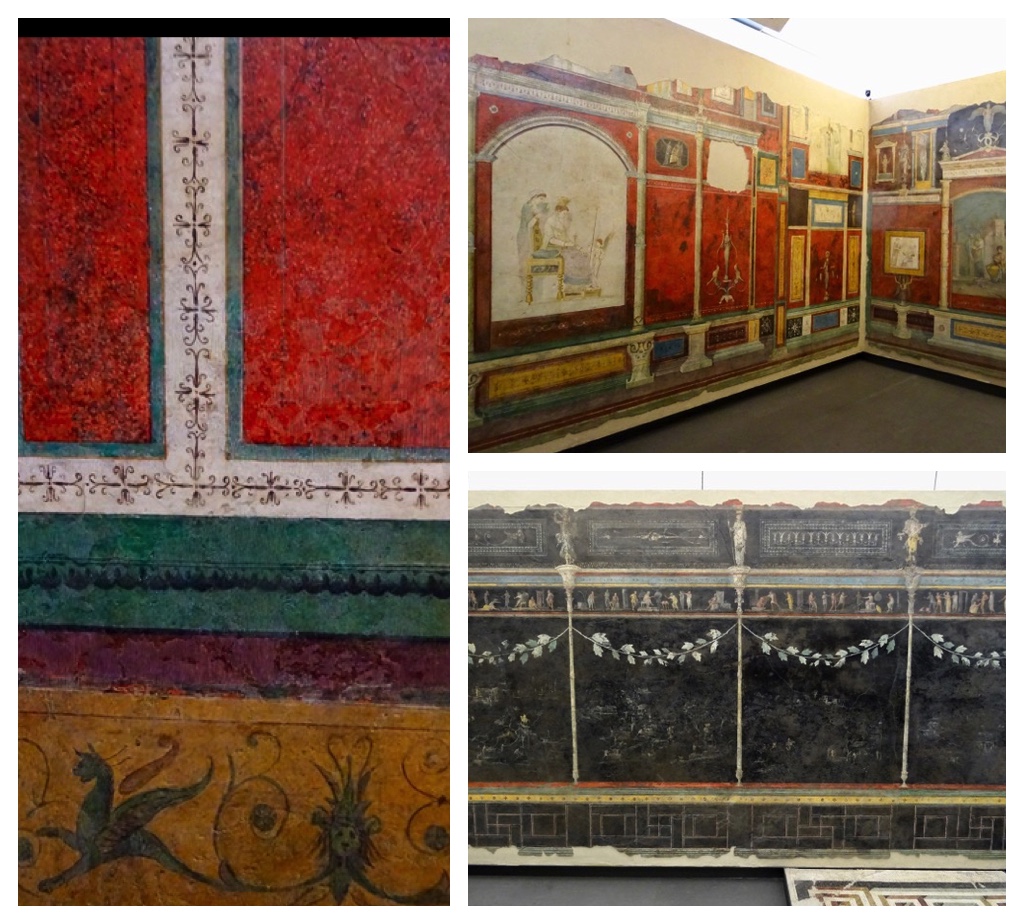
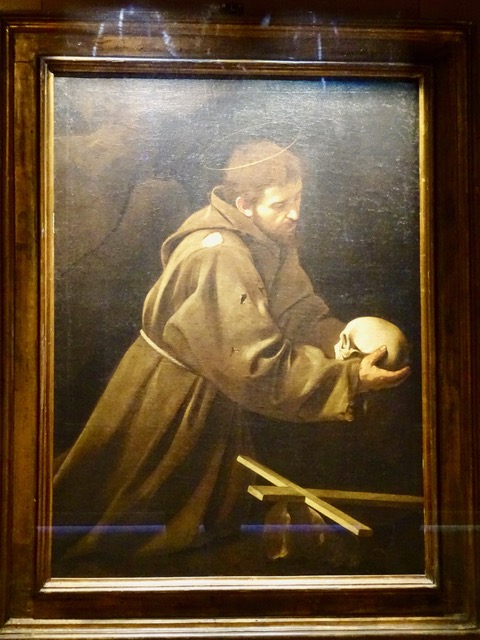
This room with garden frescoes was discovered in 1863. The frescoes were moved to the museum in 1951 as they were in danger of being damaged from water seepage. There are more well preserved frescoes from an Imperial Villa on the banks of the Tiber River.We still want to visit the Capuchin Crypts which are a short walk from the museum. Everywhere we walk in this city there are interesting buildings and piazzas.The sun is setting but there isn’t much traffic even though it is 5:30. I find that rather curious.There is a famous Caravaggio painting, St. Francis in Meditation, in the Capuchin museum. We visit the Capuchin Crypt but there is a strict no photo policy and I restrained myself and didn’t take a single photo. So, do check out this link for a trip through the crypt. It was certainly different. I liked it but Bob didn’t.

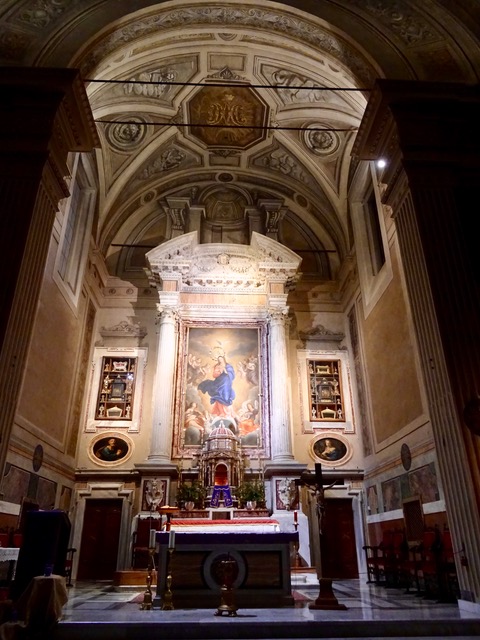
The church ‘Our Lady of the Conception’ is above the crypt and after a quick visit we are more than ready to go home. Our short day out turned into a bit of a marathon!


The Vatican, Rome

Day 87, Thursday November 30, 2017

We bought tickets online for the Vatican in order to avoid the long line-ups we have read about. Arriving at 10:00 we are able to enter right away, but so is everyone else. There are no lineups anywhere.

The map provided by the museum isn’t the best but between it, a Rick Steve’s travel app, and Bob’s navigational skills we manage to find our way around.  If you walk through all the galleries, it’s 7.5 km, or 4.5 miles long and yes we walked through all the galleries!

Be warned, this is a long post, so you might want to get a cup of something hot before you visit the Vatican Museums with us!

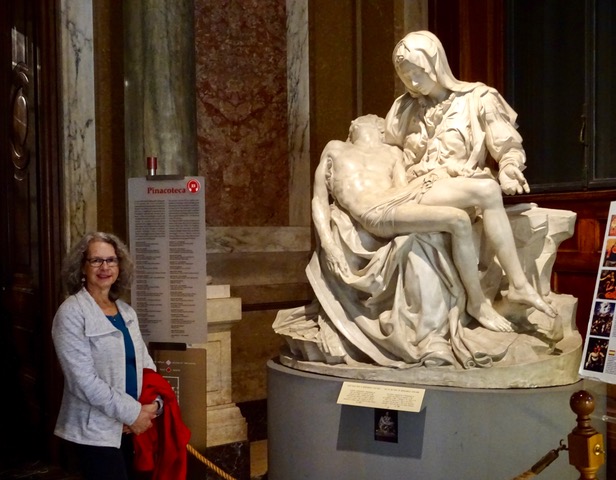
One of the first sculptures we see is this copy of Michelangelo’s Pieta. the original is now behind glass because it was badly damaged by a deranged man 45 years ago. I think this is the closest I will get to taking my photo with this incredibly beautiful statue.
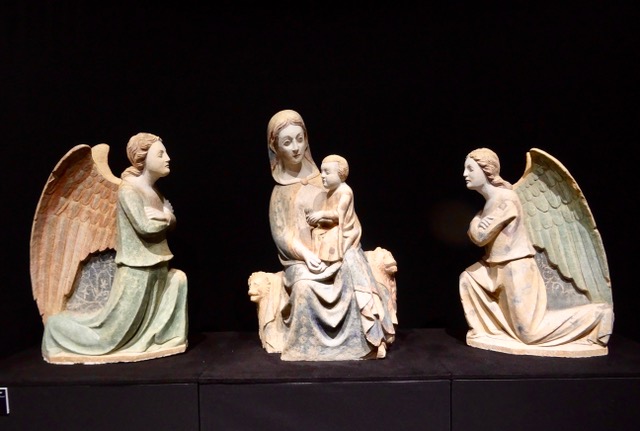
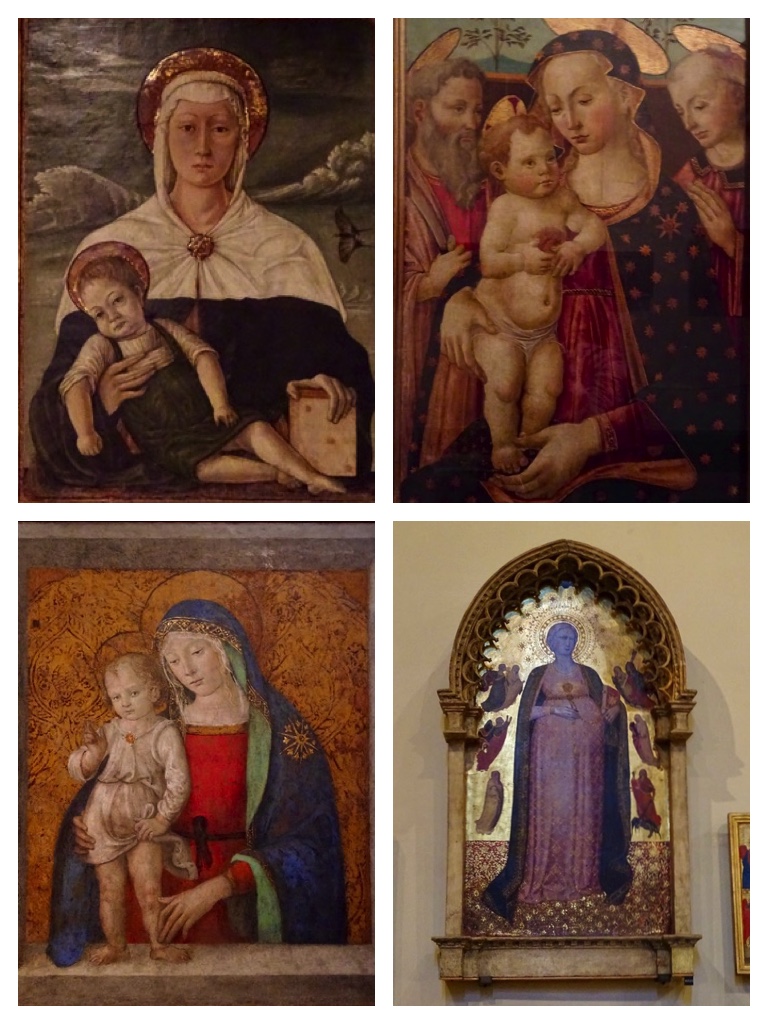
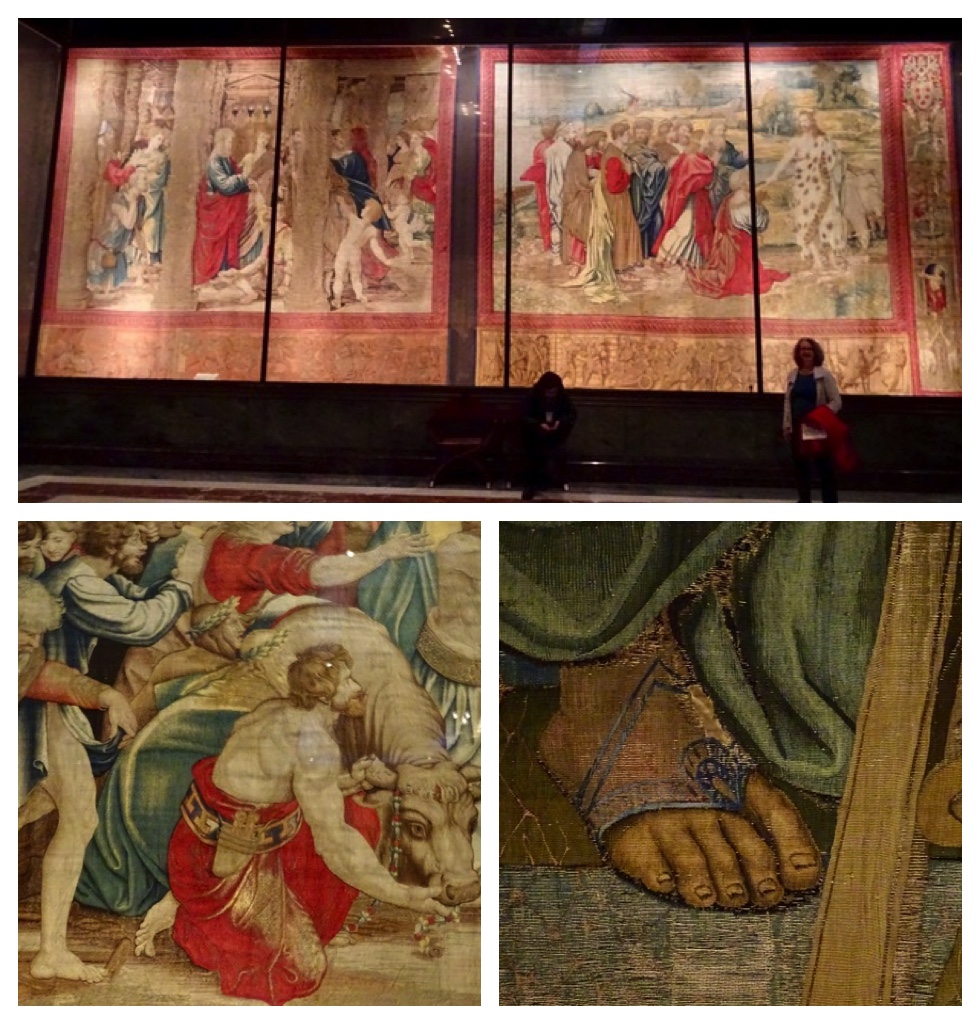
We see many examples of Early Christian and Medieval art. Before this trip I didn’t have a lot of interest in this genre but I discovered that I am rather fascinated by depictions of the Madonna. We even saw a pregnant Madonna, the only one I have ever seen.Next stop was a huge room with several very large tapestries. They were so finely woven that they almost looked like paintings.

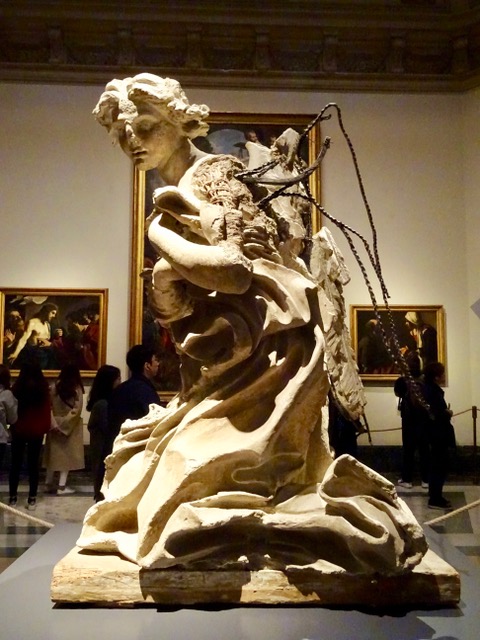
This very large angel from1666 was one of four preparatory straw and clay models for bronze castings by Bernini.A enormous collection of ancient sculptures, sarcophaguses, reliefs and  building parts was next. There was also a display of drawings, which I found interesting.  I speculate that there must have been a drawing workshop.
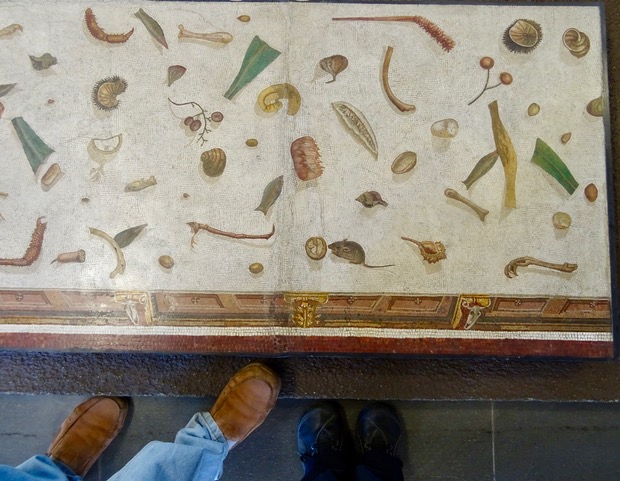
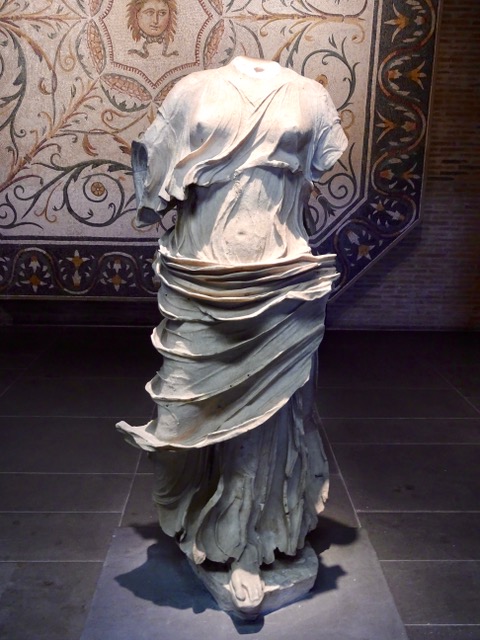
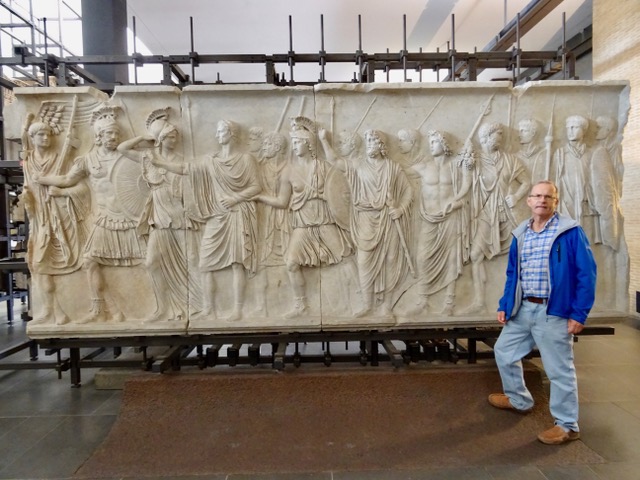
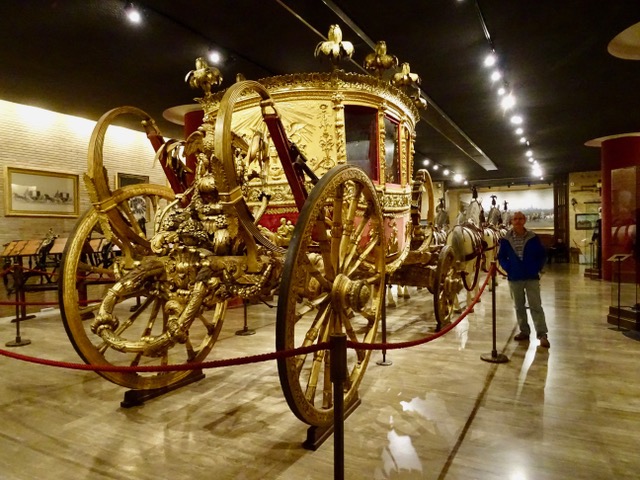
This is a floor mosaic that I remember seeing in books. I always liked the little mouse. The tiles are very small. I can almost feel the wind blowing these garments about.One of the reliefs on display.There is a large collection of vehicles used by Popes over the centuries.
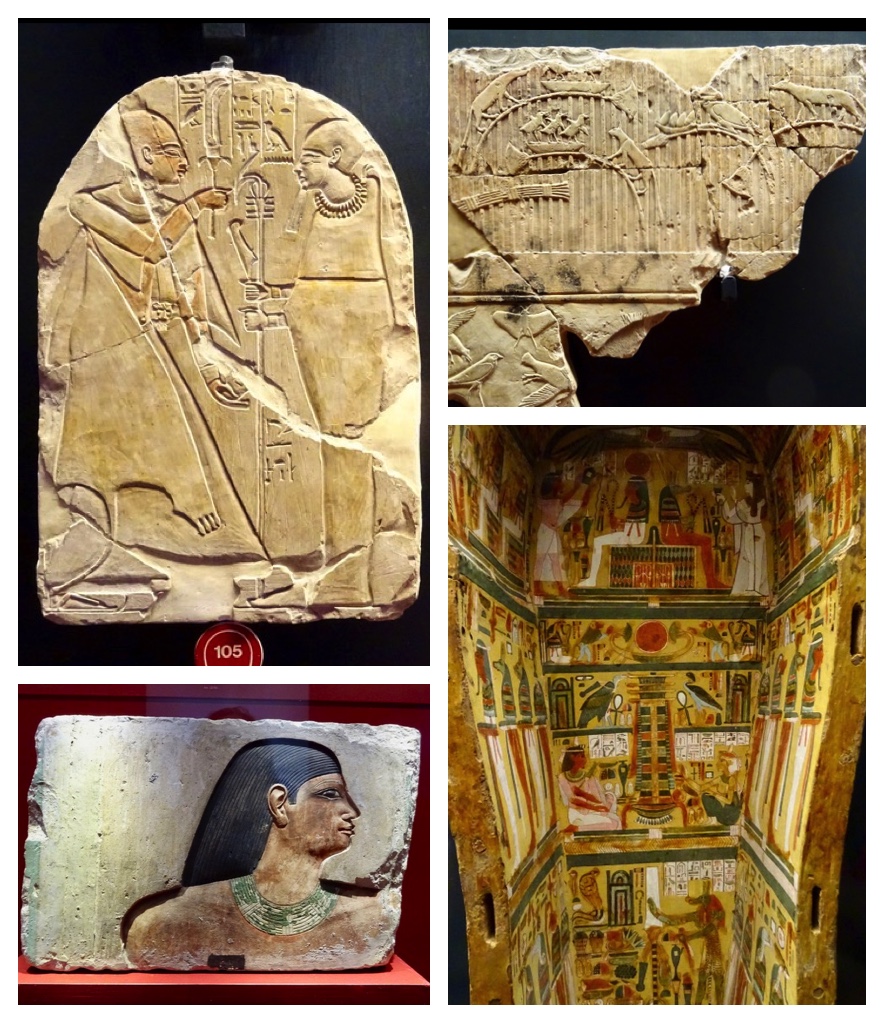
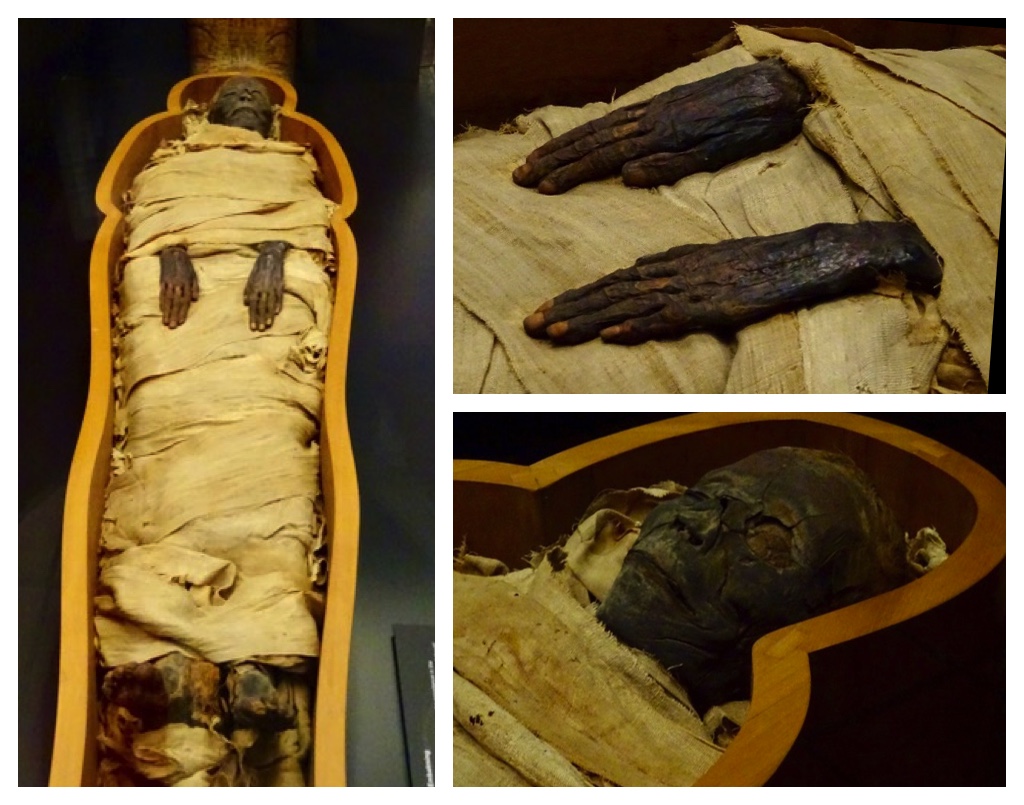
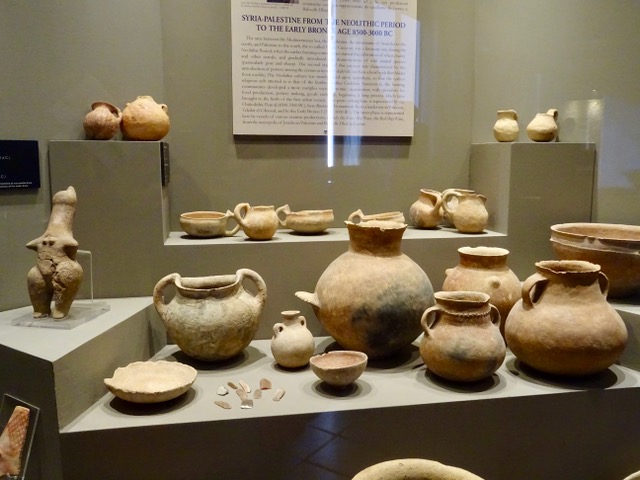
We didn’t know that all papal vehicles come equipped with a throne!The Vatican has an extensive collection of Egyptian artifacts many of which are superior to the ones we saw in museums in Egypt! It is easy to forget that all these hieroglyphs were at one time bright painted like the inside of the coffin.The painted bas-relief fragment is from 2400 B.C.The Mummy of Taymen is from 750-525 B.C. We never saw anything like this in Egypt. It was fascinating, but I know this person never intended to be on display in a museum!There are many galleries of Greek, Etruscan and Roman artifacts and these which are from Syria-Palestine during the Neolithic period 8500-3000 B.C.

We descended this staircase to emerge …

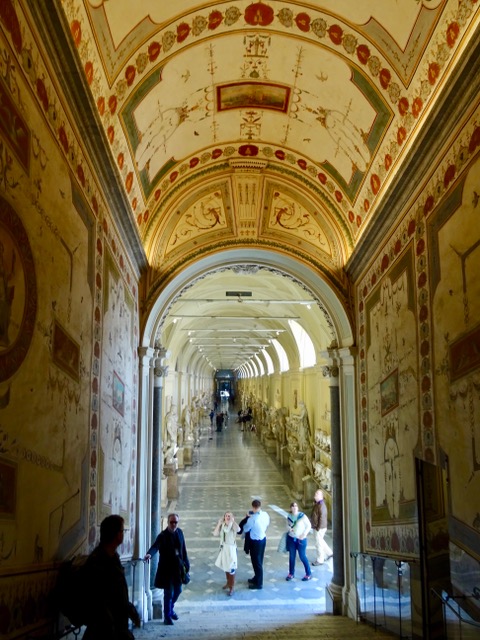
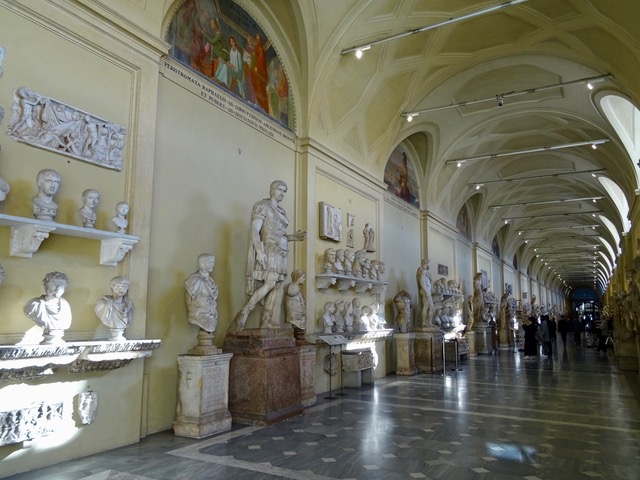
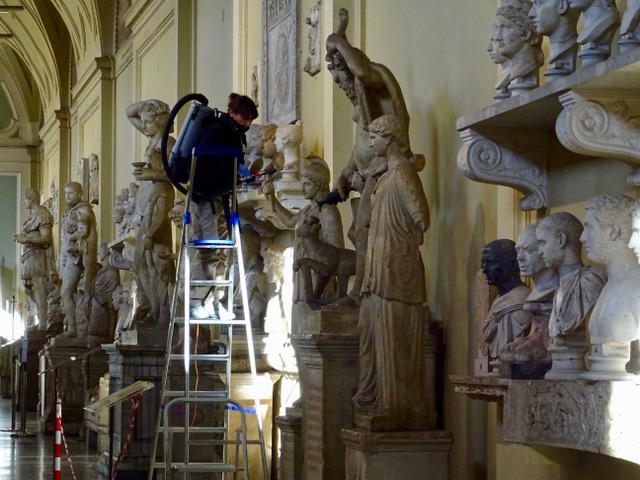
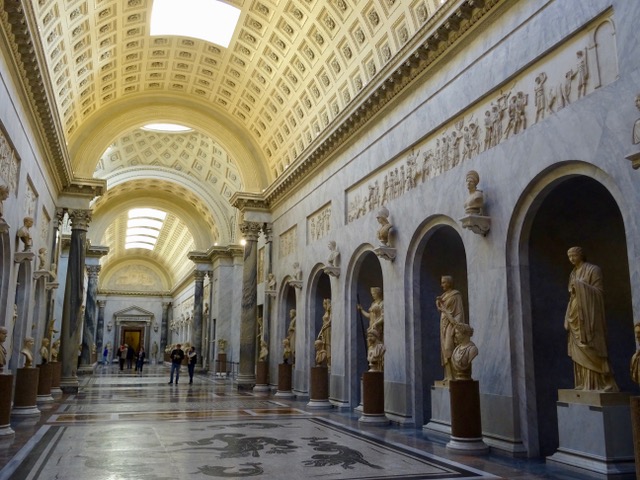
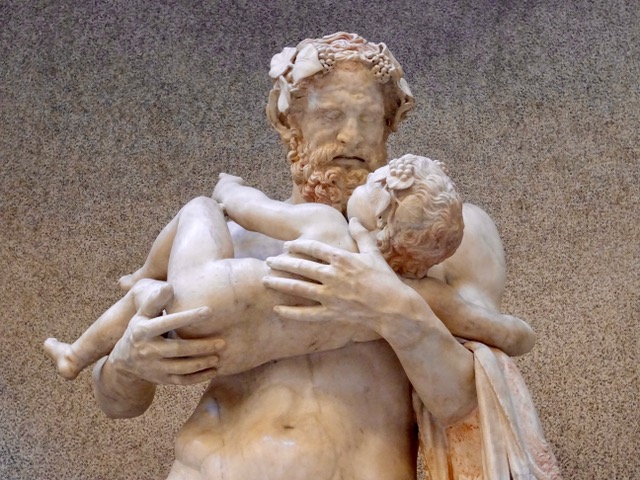
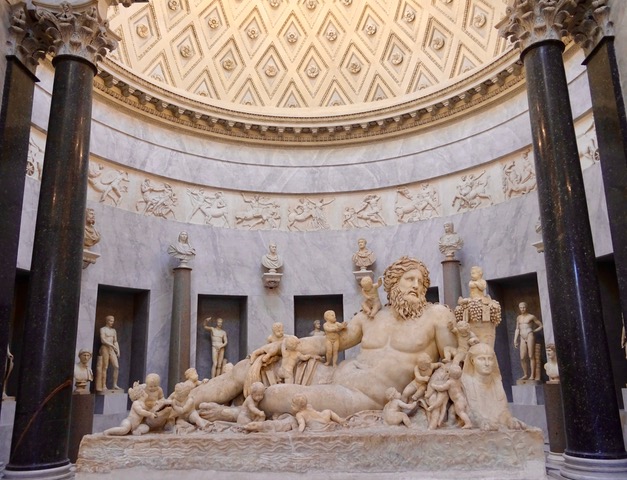
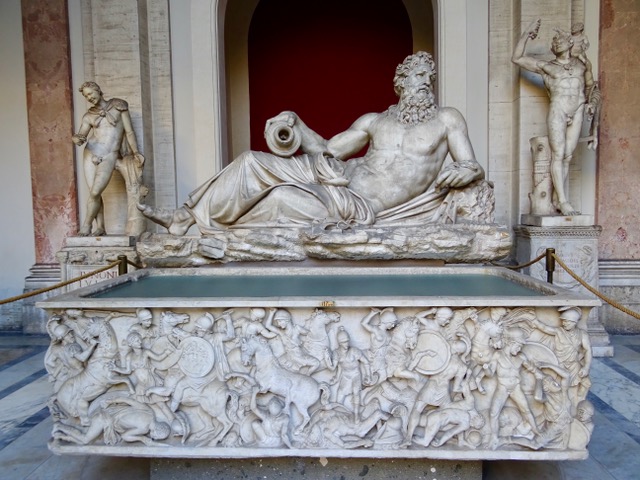
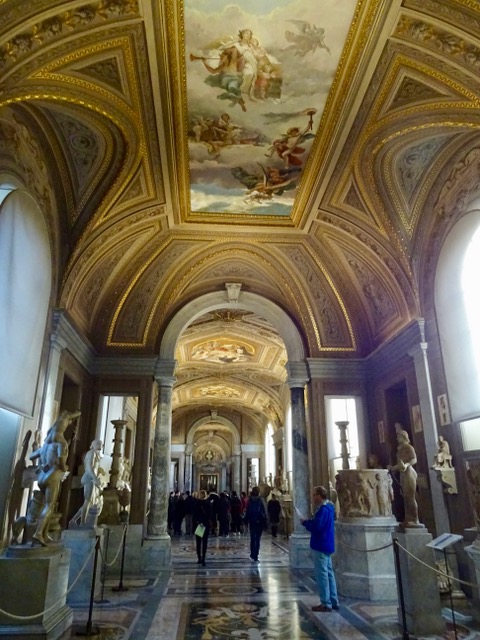
in a very long hallway lined with over a thousand sculptures!There were several museum workers busy dusting and cleaning. I imagine that by the time they finish it must be time to start again.The gallery above opened into this one, lined with even more monumental statues. It simply takes my breath away.A Roman copy of a Greek original dating from the 2nd century A.D. The affection for the child is evident in the way he is held and regarded. I can’t imagine that something so life-like can be carved in stone.I am fascinated with the carved flowing robes. I have a hard time even drawing folds never mind chiseling them from stone.This is the Nile River God with another sculpture filled niche behind.

There is an outside courtyard with a covered display area all around the exterior walls. There we see the biggest toe. Can you imagine the size of the statue this once belonged to? That is my foot beside it.

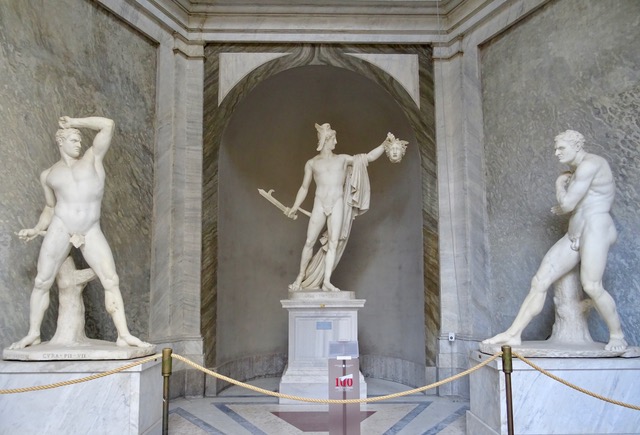
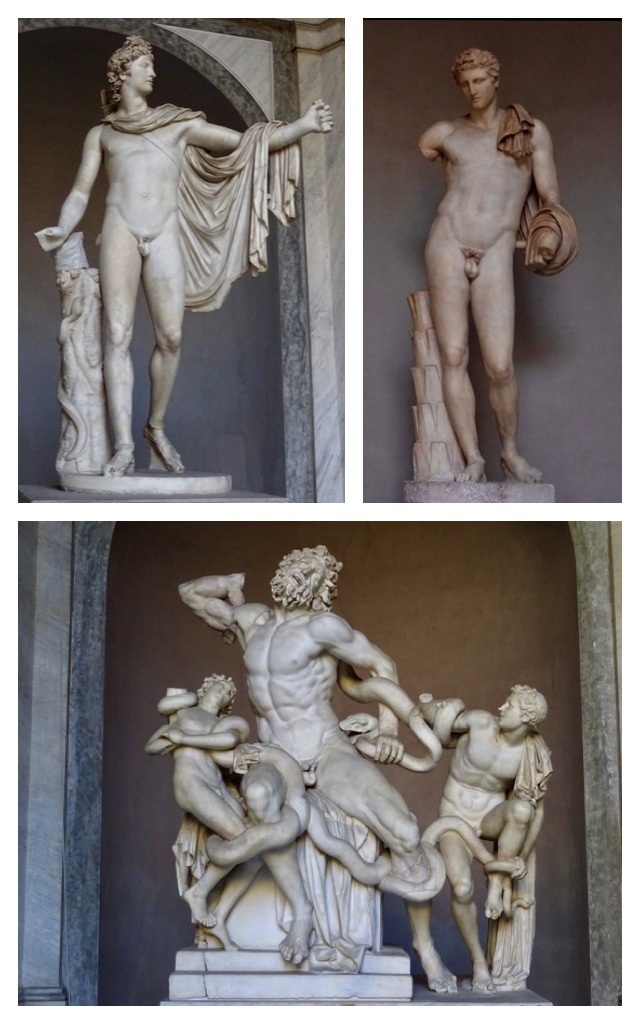
There are many incredible statues on display…  but I am particularly drawn to these three. The Belvedere Apollo, the Belvedere Hermes, and the Laocoön. The Laocoön was unearthed during  Michelangelo’s time and it had a great influence on his work. 

This sculpture of the River God Arno was the inspiration for Michelangelo’s David in the Sistine Chapel.

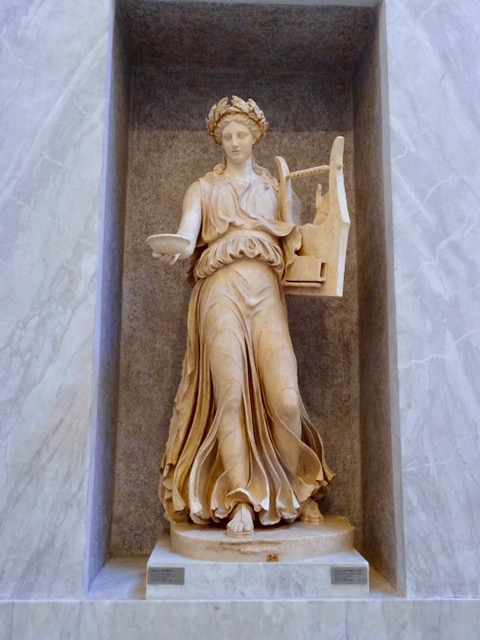
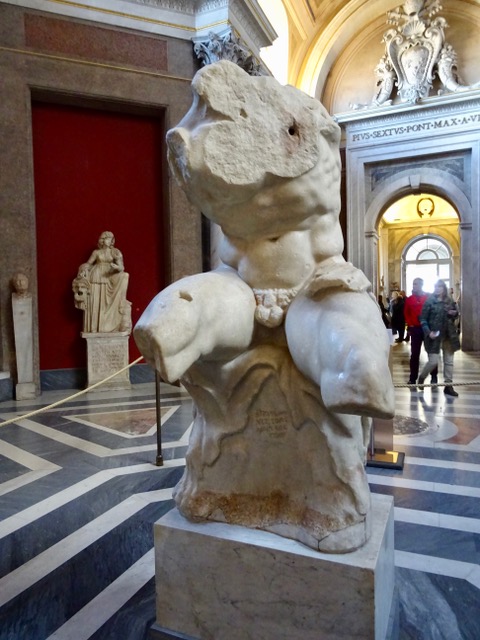
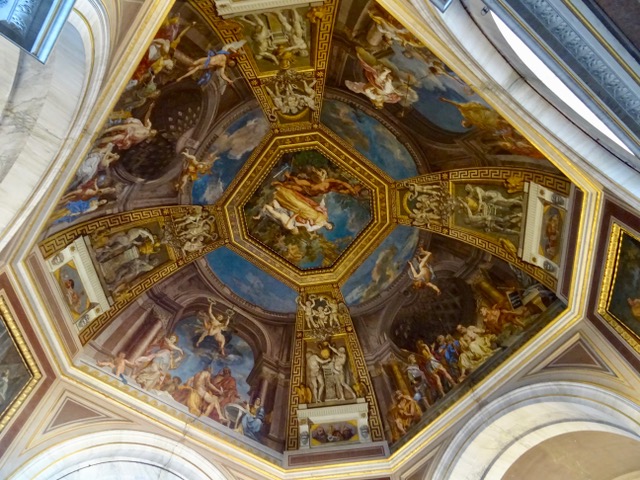
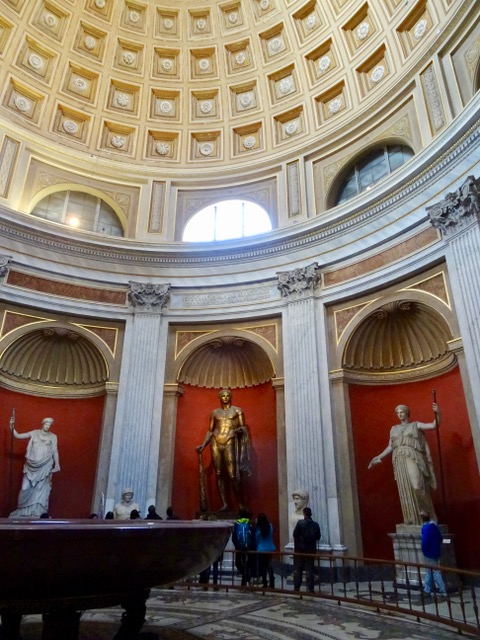
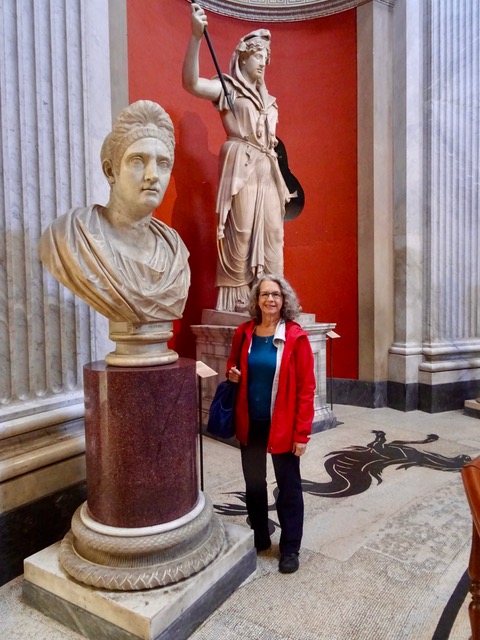
The Belvedere Torso was also the inspiration for Michelangelo’s God in the Last Judgement in the Sistine Chapel.We need to remember to look up. The ceilings in these galleries are as incredible as the art work below them.The Hall of Muses with its magnificent dome, mosaic floor, statues of the nine muses from the 2nd century A.D. and the largest carved stone basin in the world.These statues are monumental! Oh, and we are walking on the beautiful old mosaic floor here too.
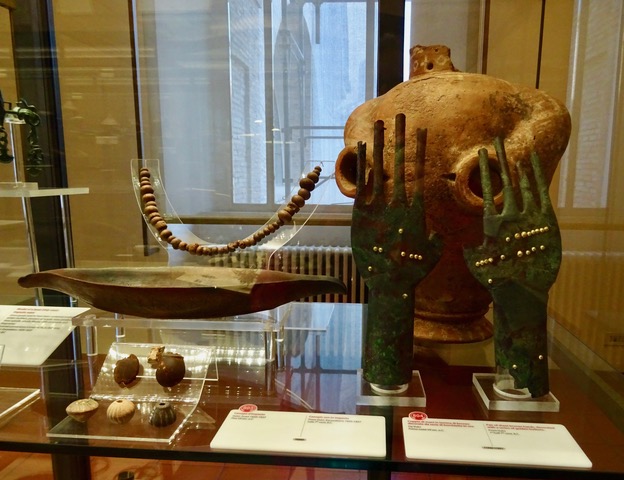
It looked like the statue was trying to give this rather bored looking guard something.These bronze hands decorated with gold buttons are from the 1st half of the 7th century B.C. I thought they looked like a modern work of art.More display rooms with ornate ceilings…and lots more pots and other artifacts. In fact there were many rooms like this. We walked through all of them but I have admit that after a while we didn’t even try to look at all the items.
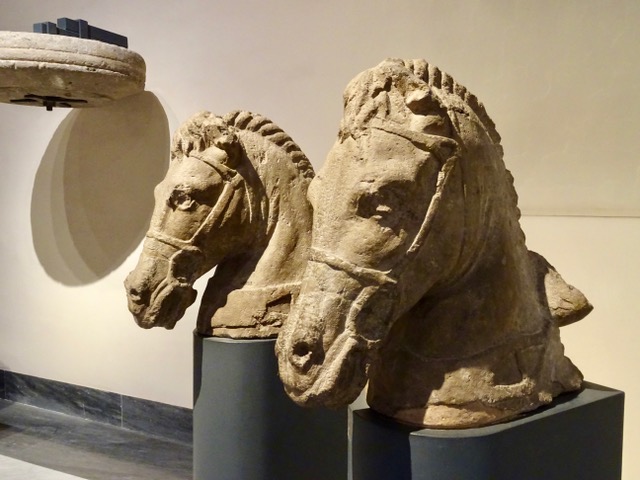
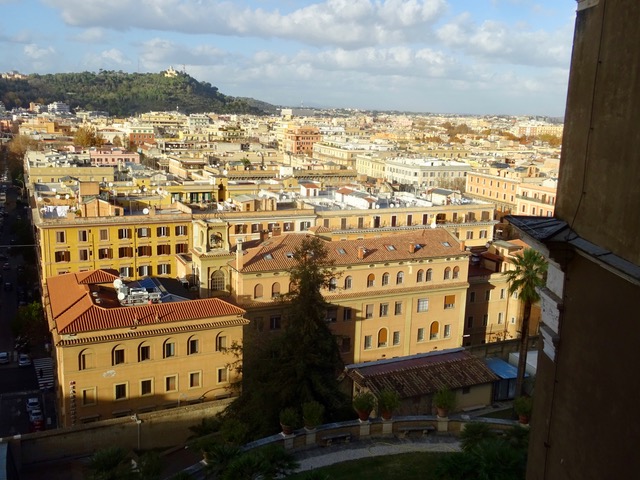
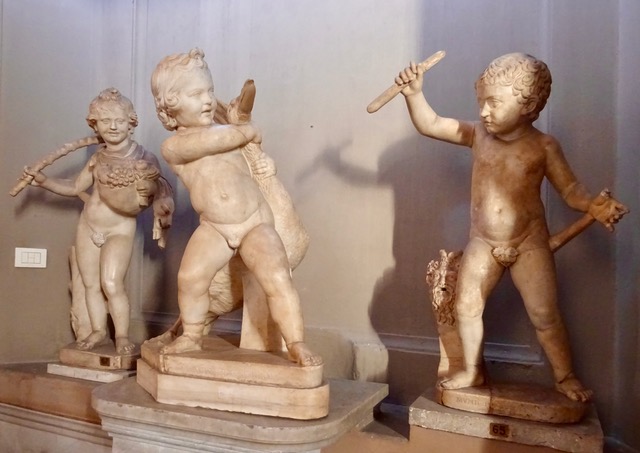
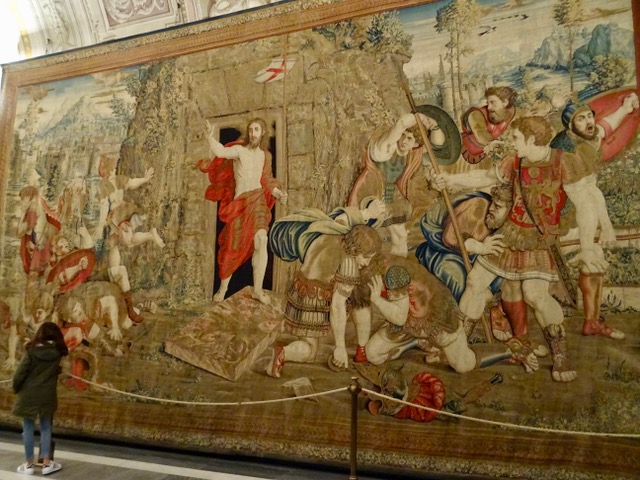
I did love these two horse heads…and there were some great views of Rome from the Gallery windows.Bob is trying to figure out where we go next.Turns out it is this room, with even more sculptures and carved stone artifacts, and yet another incredible ceiling.We both remember seeing a copy of this little boy with his goose in the Louvre many years ago. Interesting that we see it here in Rome too.The Arazzi Gallery is a long hall with more tapestries on both sides.This tapestry has an optical illusion. As we walk by it appears as if Jesus’s eyes are following us and he even seems to move through the doorway. It is very strange.

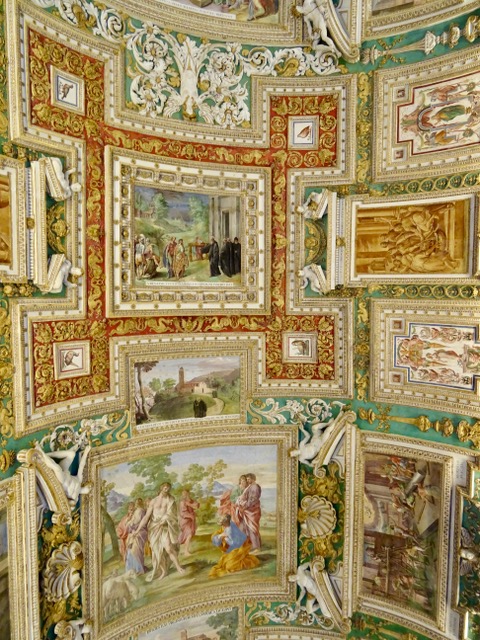
The Gallery of Maps is astounding. It seems to go on forever. The walls are lined with huge maps of all of Italy but it is the ceiling that grabs our attention. It is covered with paintings and sculptures and ornate frames.The lighting makes the ceiling look golden in the photo above but this photo shows its true colours. I just don’t know what to say. Words are simple inadequate to describe this very, very long ceiling. It is almost unbelievable.
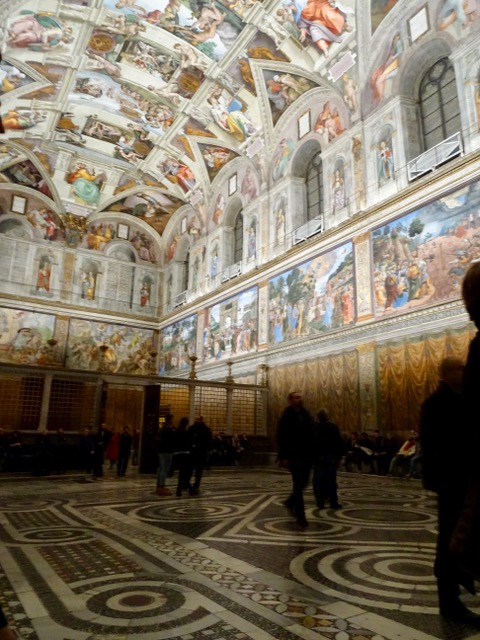
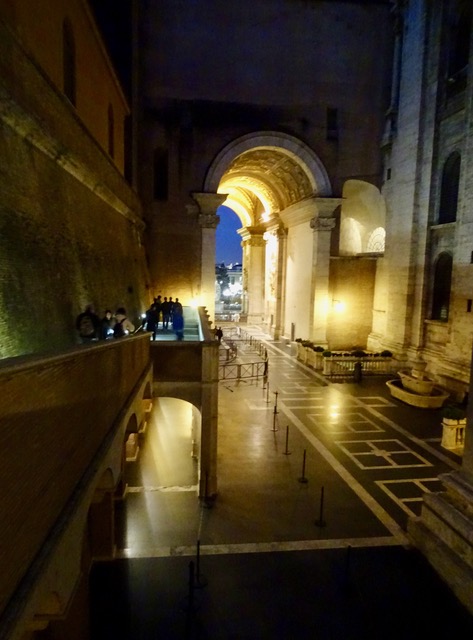
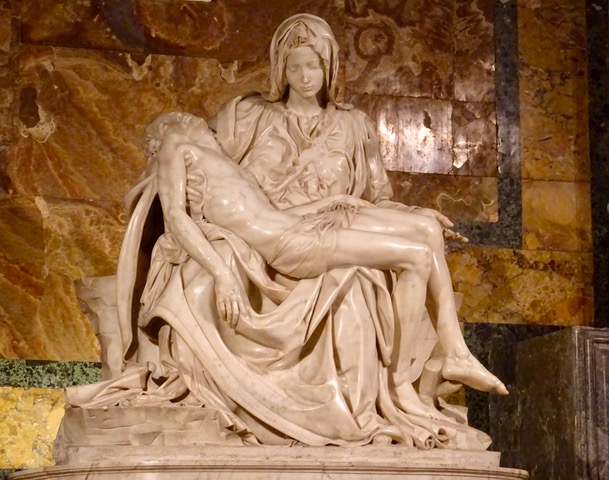
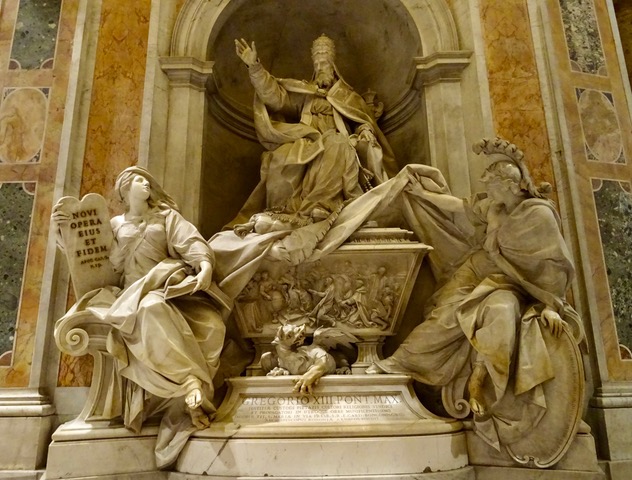
There are more galleries but we are getting very tired. We decided several hours ago that we need to come finish seeing everything another day. We make our way to the Sistine Chapel. We are so lucky, because it is late in the day there are not many people in the chapel. We find a seat along the wall and look up. There is so much to see. I think it is amazing that we are sitting here, in the Sistine Chapel looking at this masterpiece. We probably spend almost an hour here but it is time to go as we still need to visit St .Peters and see the Pieta.It is night when we leave the Vatican Museums. We go through the ‘secret passage’ that allows us to enter the basilica without having to line up and go through security again.There she is. The Pieta, in all her glory. After spending some time with the Pieta, we walk around the basilica. We wanted to visit the grotto beneath the church but it is already closed. I like the little dragon between the bottom two figures in the sculpture.
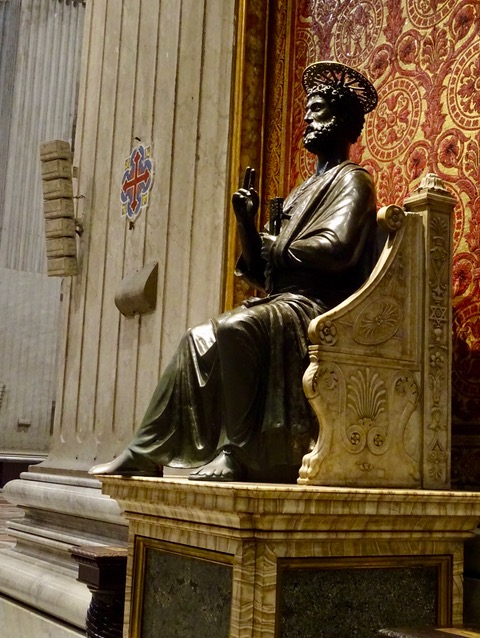
St. Peter’s right foot has been rubbed almost away by the touch of thousands of pilgrims over the centuries.
There is a mass taking place so we listen to the organ music and singing for bit before we finally head home. It has been long day. We spent 8 wonderful hours in the Vatican Museums but we are both very tired..

The Pope’s Angelus Blessing, Rome

Day 83, Sunday November 26, 2017

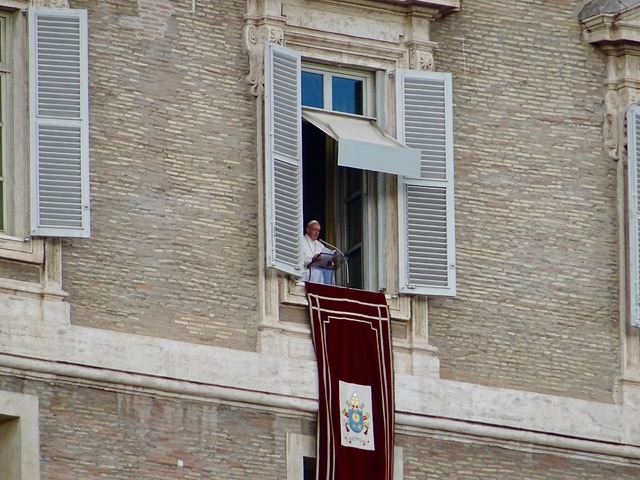
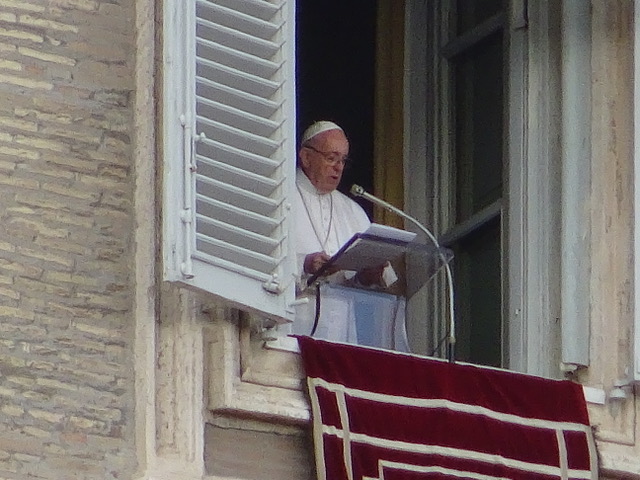
Every Sunday at noon is the Angelus Prayer, when Pope Francis speaks to those gathered in St. Peter’s Square. Today we are among the many who are here to see and hear the Pope. We thought we had a great spot right in front of St. Peter’s Basilica with a clear view of the central balcony…then Bob spotted something in the far away window of the building across the square. Oops, this is where the Pope appears, and we are quite far away.
At noon the Pope appears and with a friendly wave and a welcoming “Buongiorno”, to which the crowd replies “Buonjourno”, he begins the Angelus Prayer. 

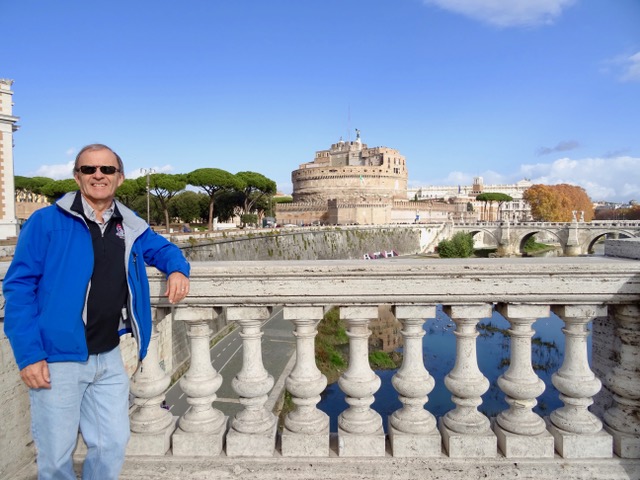
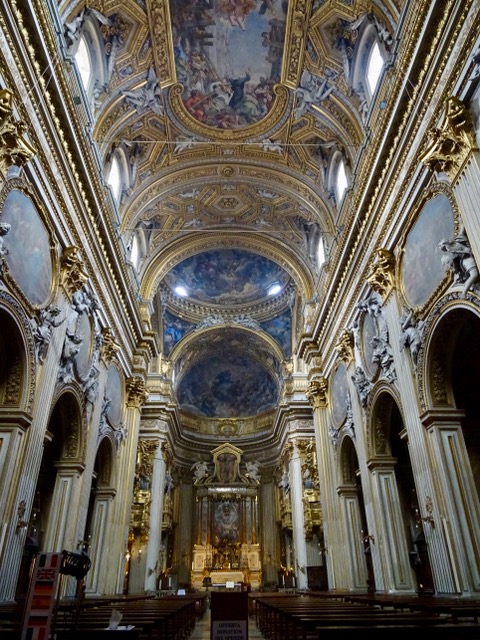
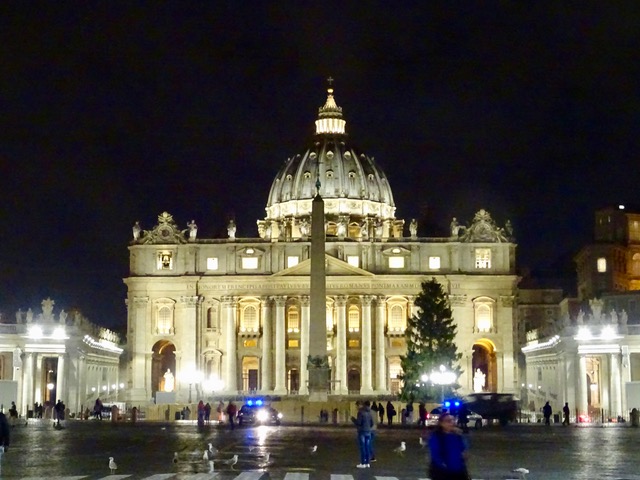
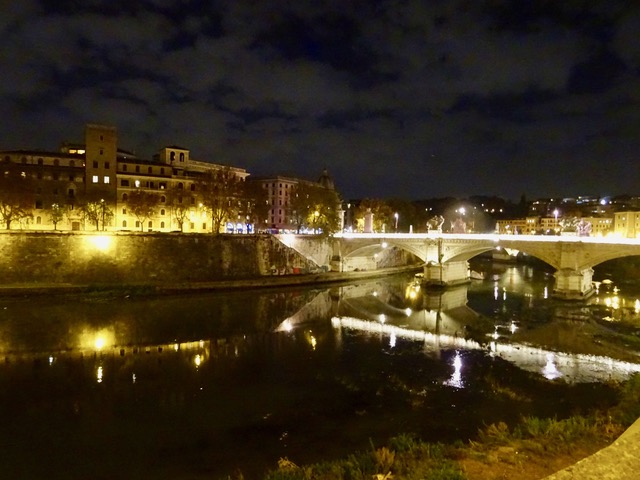
Good thing I have a telephoto zoom on my camera! The Angelus ends with a blessing for everyone in the square and the blessing includes any religious objects that people have brought with them. The bells of St. Peter’s chime as the crowds begin to disperse. We have seen the Pope!Although the clouds were dark and threatening while we were waiting to see the Pope, by the time the Angelus is finished the sun is peeking through the clouds so we decide to stroll about. We head down the Via della Concillazione, the wide road that leads to St. Peter’s Square…and across the Ponte Sant’Angelo with a good view of the Castle Sant’ Angelo and the Tiber River. By the way, Romans pronounce it ‘teeber’ not ‘tiber.’One of the things I love about Rome, eye candy everywhere!We take a minute to pop into the Church of Santa Maria in Vallicella, known as the Chiesa Nuova, or New Church. A friendly lady comes to chat and gives us an audio guide tour.

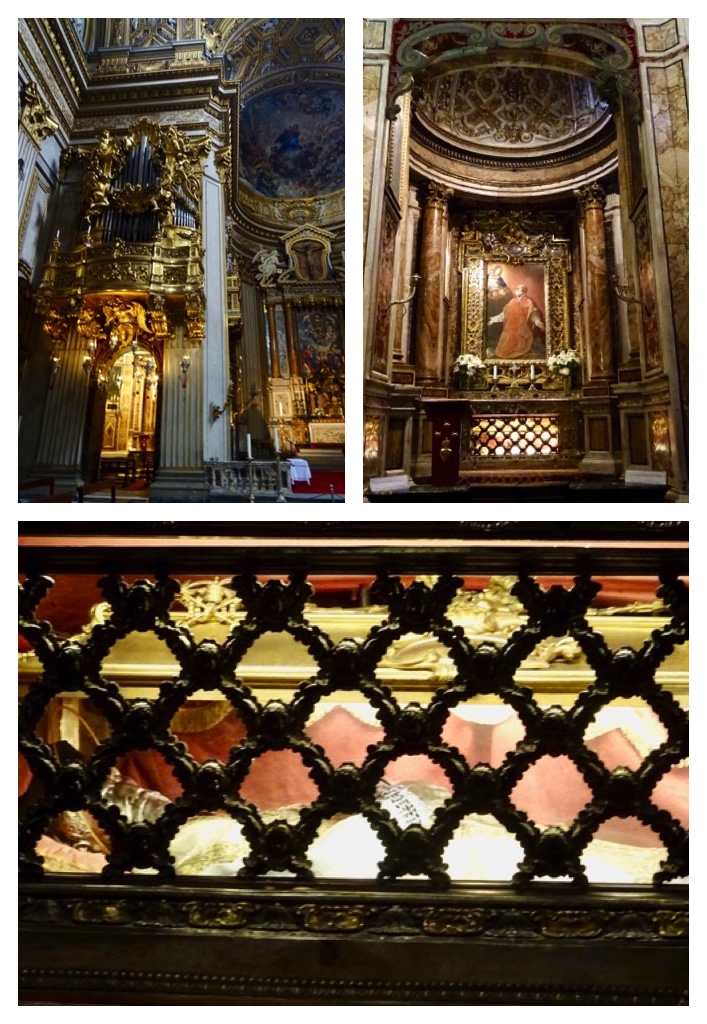
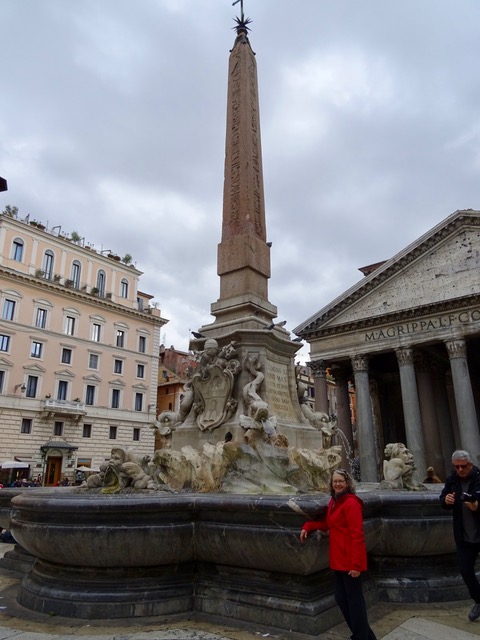
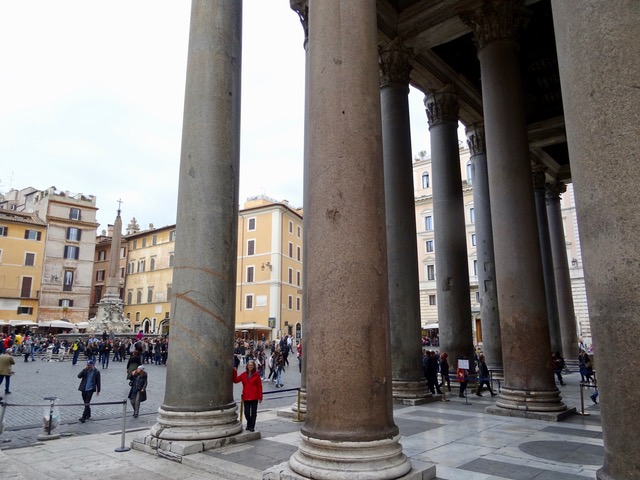
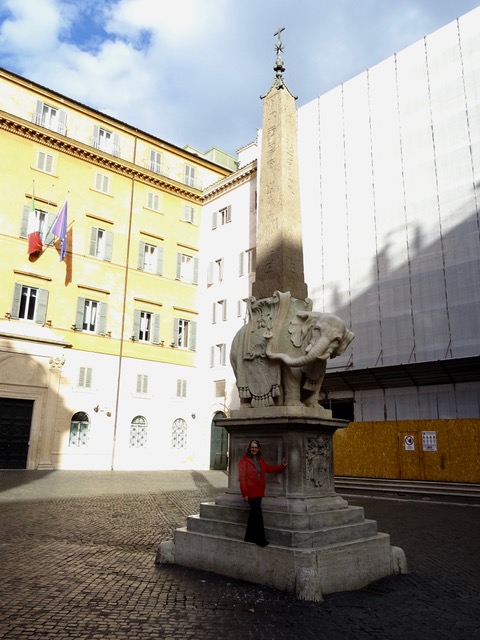
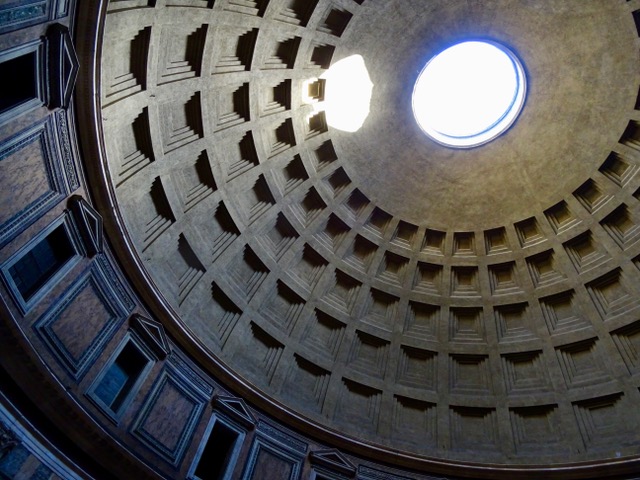
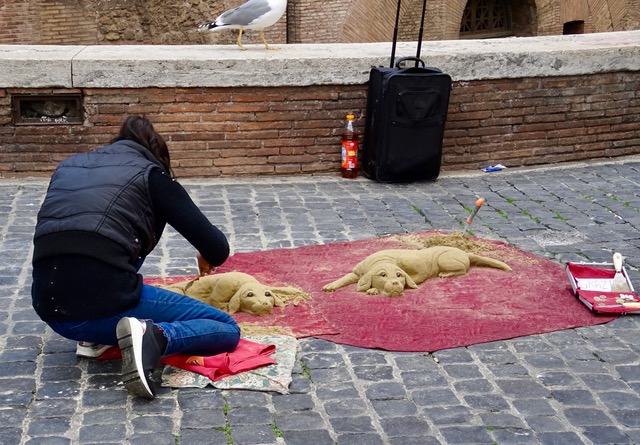
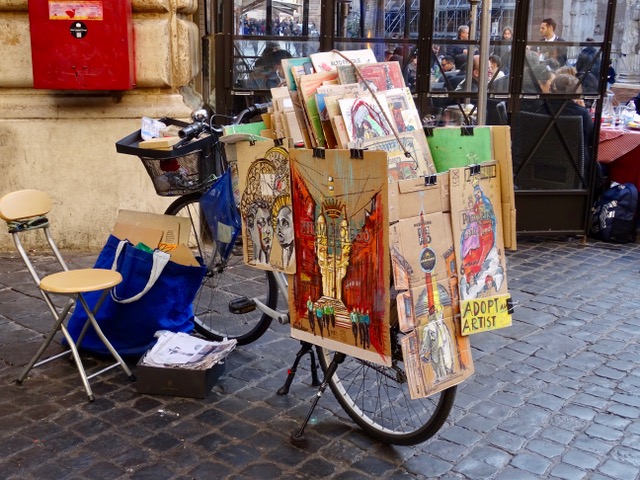
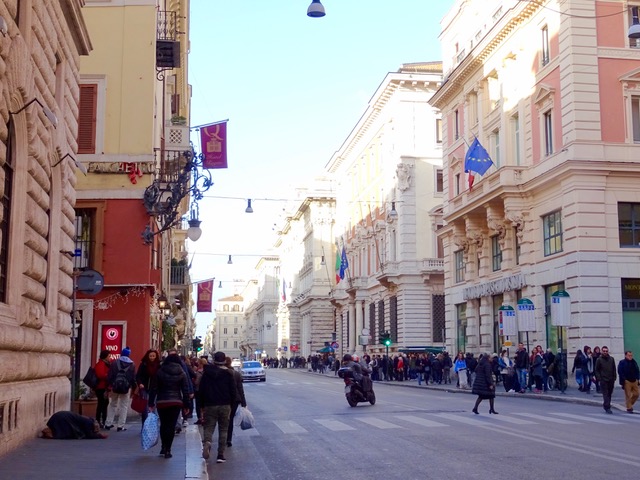
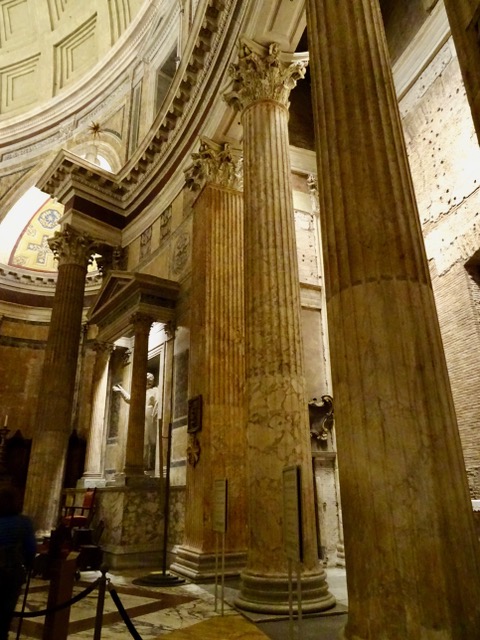
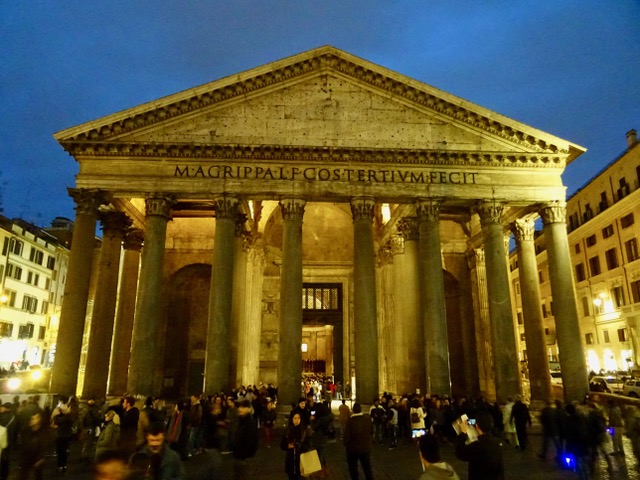
The church celebrates the life and legacy of Saint Philip Neri, and this little side chapel is dedicated to him. He is also entombed there in a glass coffin. It is a bit strange to see so many bodies on display in churches here, it is not something we see at home. We wander back towards the Pantheon for photo of the obelisk in the centre of the fountain. I think we are getting close to seeing all the Egyptian obelisks in Rome. I will have to check, but I do know there is one more near by.I wanted a photo to show just how enormous the columns at the Pantheon are.Around the corner behind the Pantheon we find one more obelisk. Bernini designed the base for this one after it was discovered in excavations nearby in 1667.Back to the front of the Pantheon where the long line up has disappeared so we go in to see what it looks like in the daytime. The sun is shining through the oculus, but other than that the lighting isn’t much different than during the evening. We take another quick look around and we are on our way. People try to earn money in all sorts of ways in Rome. This young woman was sculpting sand puppies…and an artist asks to be adopted, but he was nowhere in sight when we walked by.Christmas decorations are making an appearance, and many stores use live evergreens in their decorations. I am curious and a closer look reveals that they are using Oasis, or floral foam, to keep the greens fresh. These displays smell so Christmassy when we walk by.A view down one of the main streets where we wait for our bus. Notice that there aren’t many cars at all. Also notice the gypsy lady prostrated on the sidewalk, begging. I can’t imagine this is an easy way to make money.

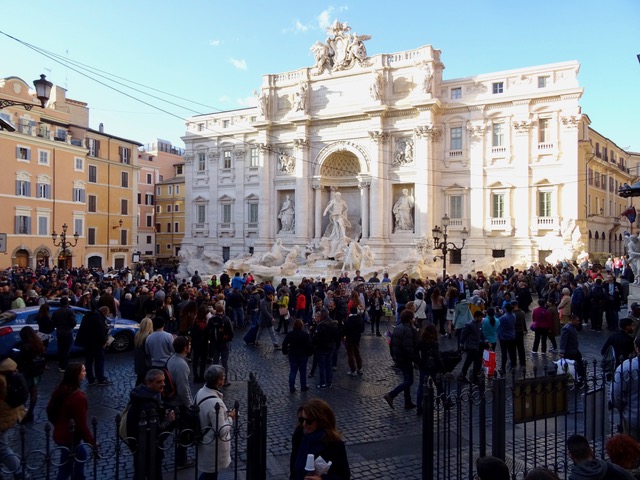
We pass Trevi Fountain with its hordes of people and decide it is time to head home.As you already know, I love looking down side streets and into courtyards.  I didn’t even notice the ‘street art’ on the do not enter sign until today when I was posting this.

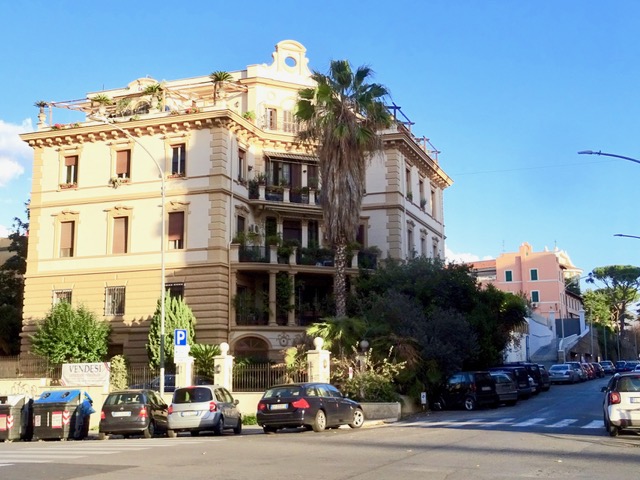
This lovely apartment building with its garden balconies is on the corner near our own apartment.

St. Peter’s Basilica and the Pope

Day 80, Thursday November 23, 2017

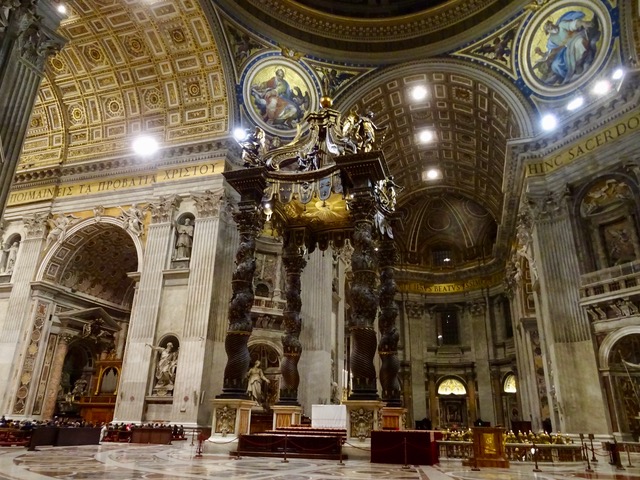
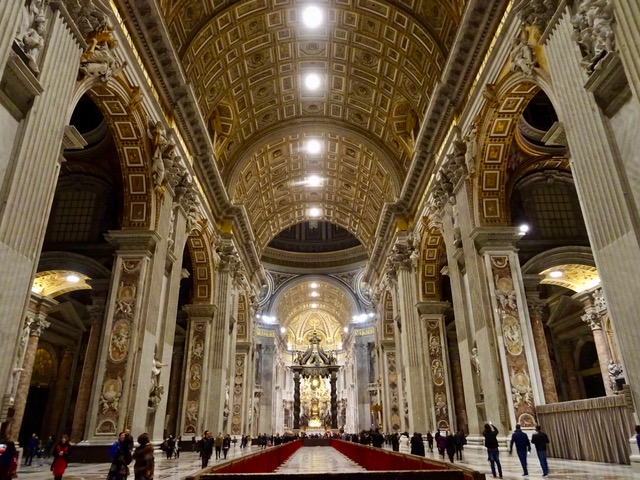
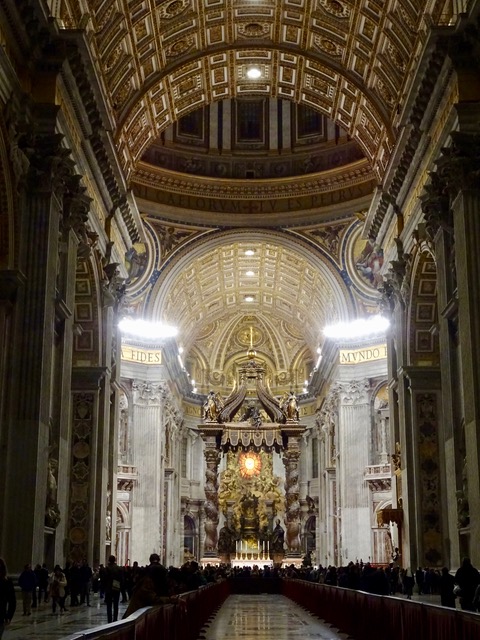
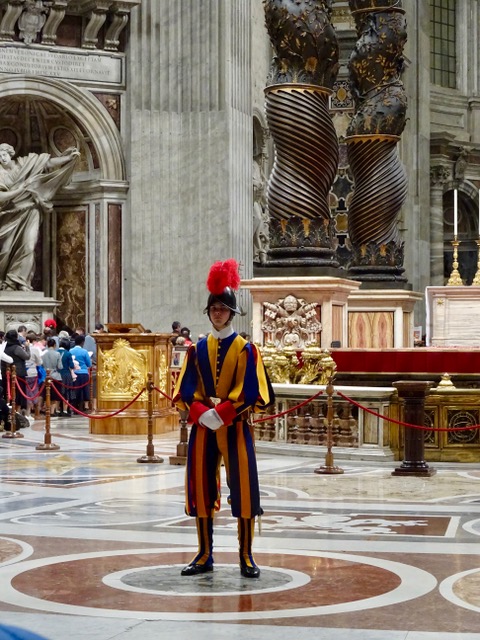
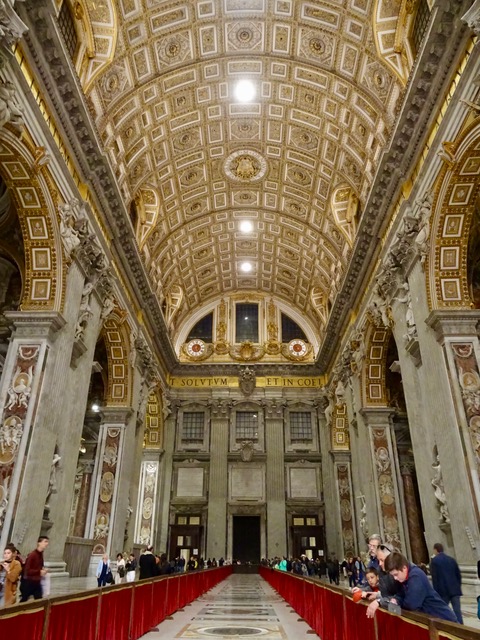
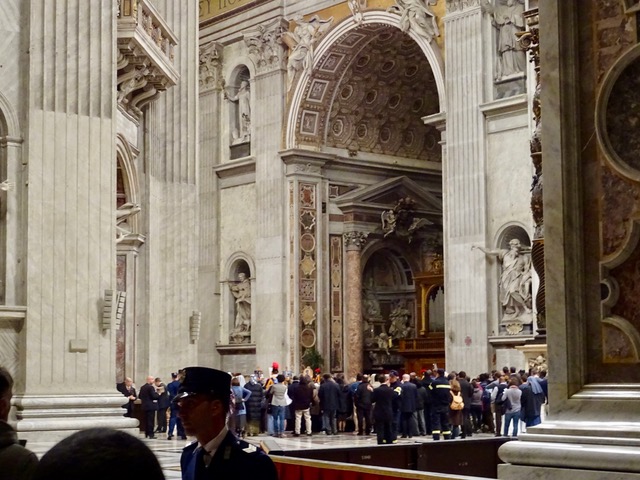
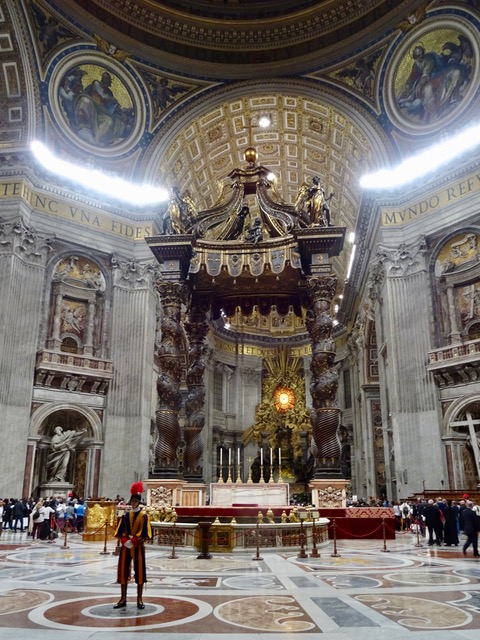
Bob read that the Pope was doing a special mass for peace in South Sudan and the Democratic Republic of Congo at 5:30. We decided we would go to St. Peter’s and see if we could get in. There wasn’t much of a line up to get through security and soon we are in the Basilica. We make our way to the front of the crowd and take some photos of the altar, and the Swiss Guards who are responsible for the safety of the Pope.We had a little look around while waiting for something to happen at 5:30. This is looking towards the front doors of the Basilica, with a view of yet another magnificent ceiling.
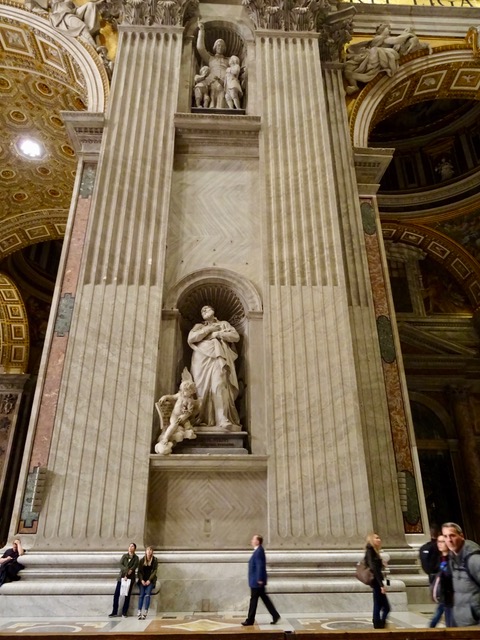
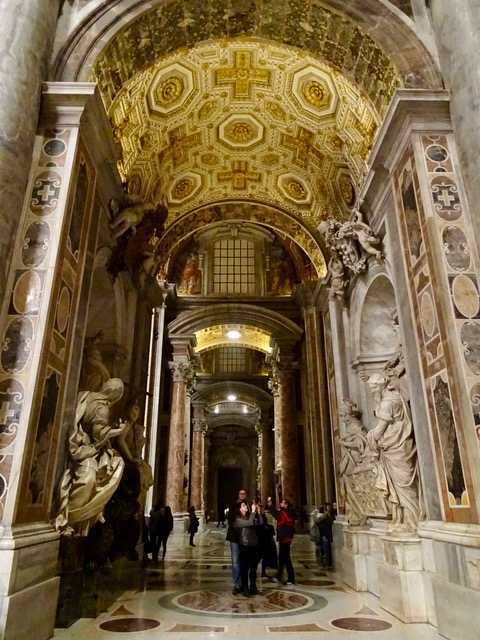
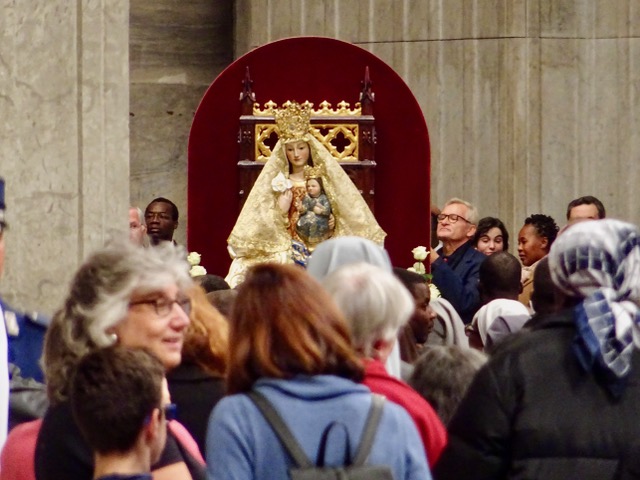
We feel very small in this enormous cathedral .Everywhere we look there are statues and ornate gilded decorations.At 5:30 the mass starts but it is far from us, behind the main altar. There are guards keeping people back behind barriers, while only allowing a select few to enter.  When I zoom way in we see a statue of the Madonna which is part of this special mass. Bob thought he saw someone in white below the statue. Take a look at the link above. He is sure he saw the Pope.This photo shows the many rows of chairs that line the piazza in front of St. Peter’s for the Papal Audience that is held on Wednesdays.
As we walk further away we are able to see the dome on top of the cathedral.It is a bit of a walk to the metro but it is a nice night and there is lots to see along the way.

Basilica di San Giovanni in Laterno

Day 75, Saturday November18, 2017

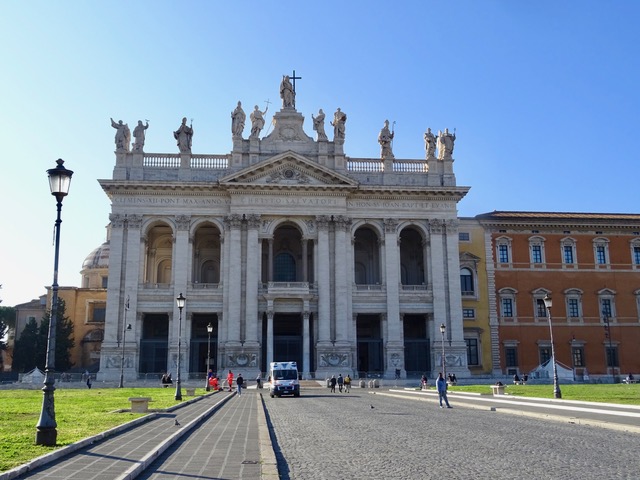
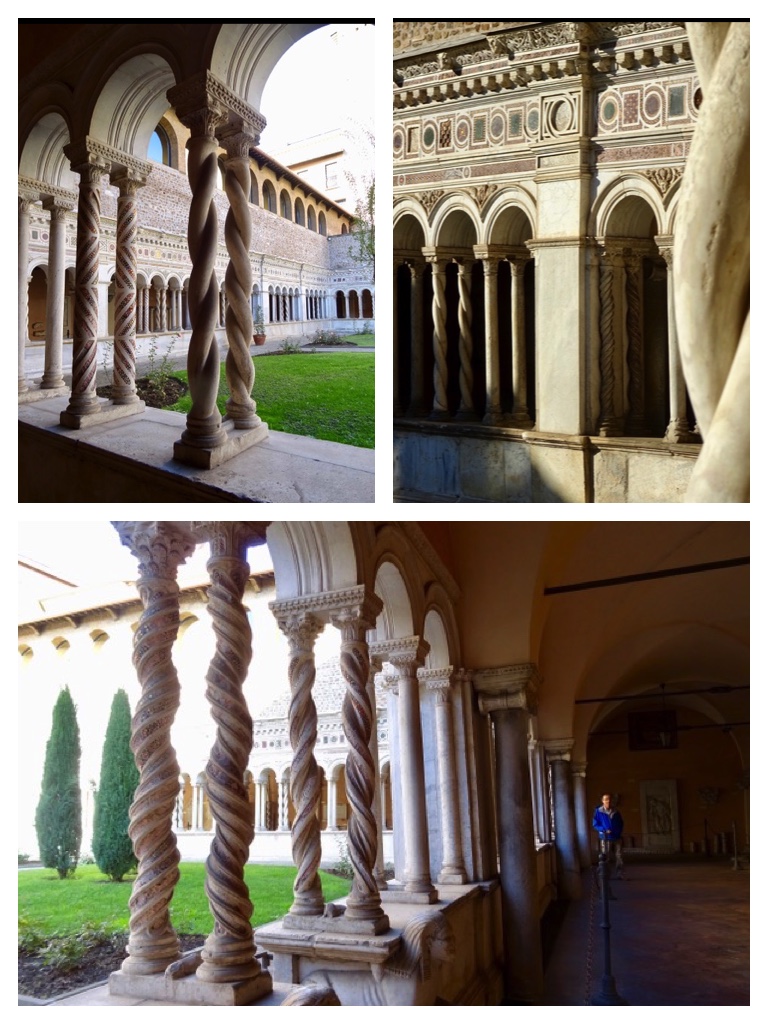
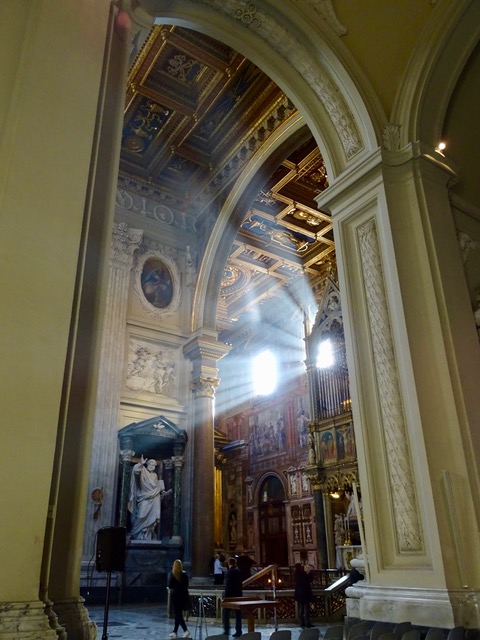
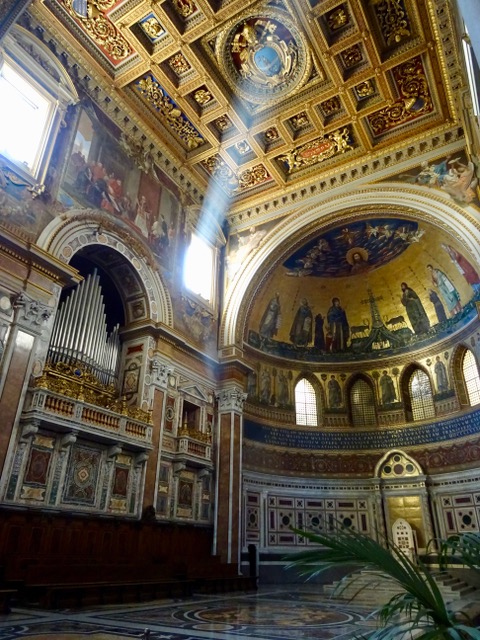
The Basilica di San Giovanni in Laterno, or the Basilica of St. John Lateran was built by Constantine the Great in the 4th Century and it has been rebuilt several times. The present structure dates from 1589. Until the 14th Century it was the Pope’s main place of worship and it is still Rome’s official Cathedral and the Pope’s seat as the Bishop of Rome. Yes, it is a magnificent Basilica.We visit the 13th Century cloister first. It is renowned for its twisted columns and mosaic panels above the columns which surround the central garden.
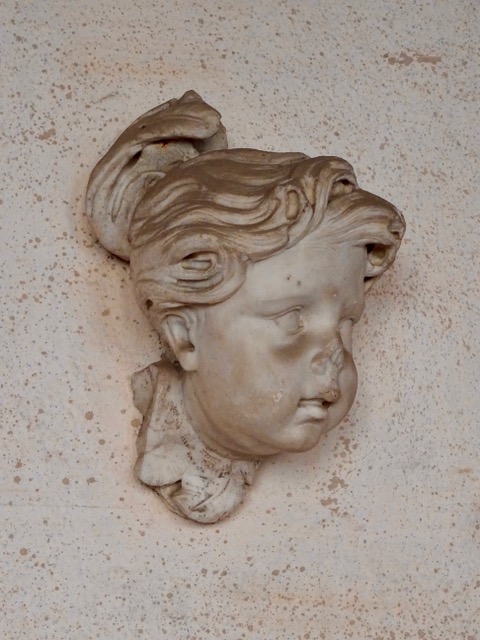
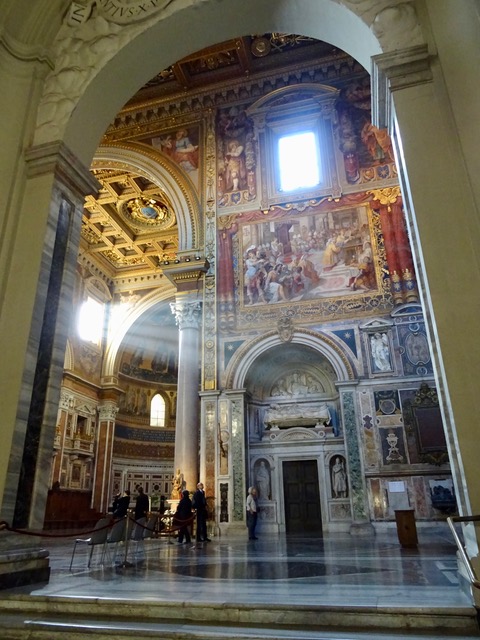
There are sculptures, tomb covers, columns and other assorted relics lining the walkway around the cloister.This small head of a young girl reminded me of my granddaughter.Back inside the Basilica the sun is lower in the sky and spills through the high windows. I thought it strange that this sunbeam goes up rather than down and illuminated the crest in the centre of the ceiling.

The side naves are graceful, filled with light and have angels everywhere, in all the corners and on the ceiling arches between the columns.

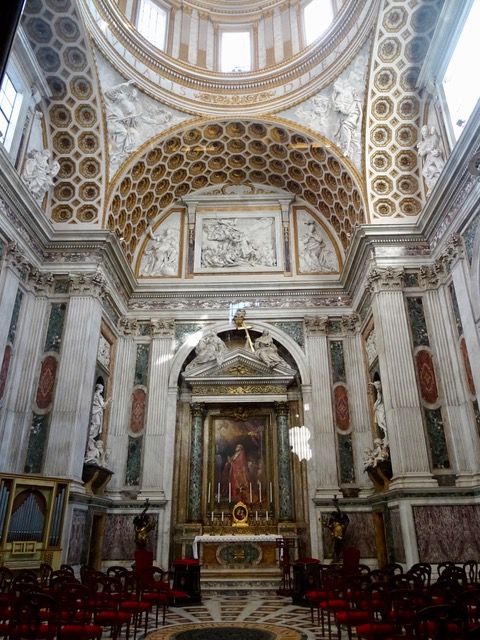
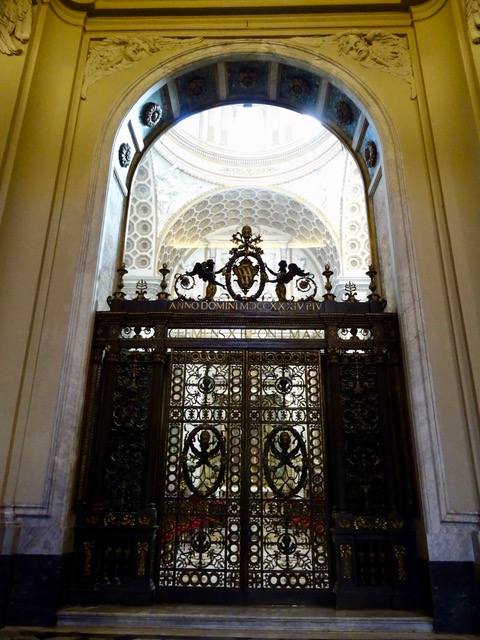
The side chapels are magnificent.This one had an intricate gate…
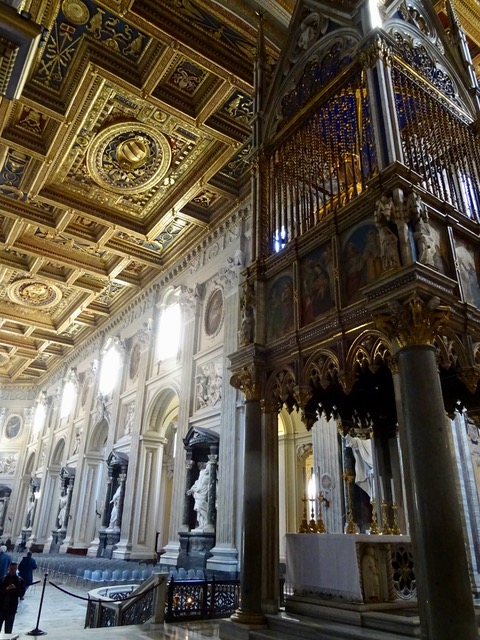
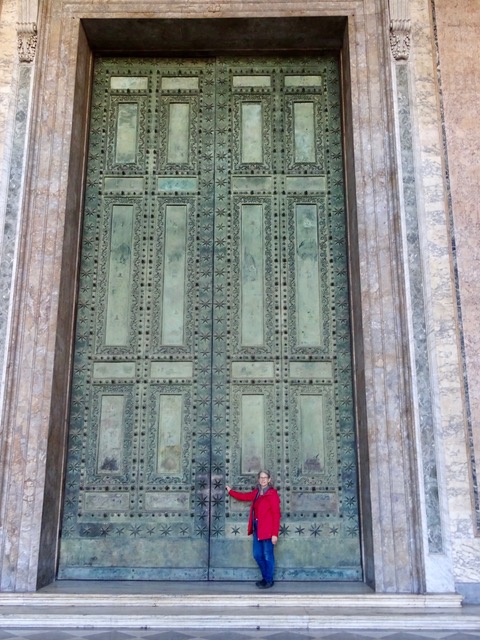
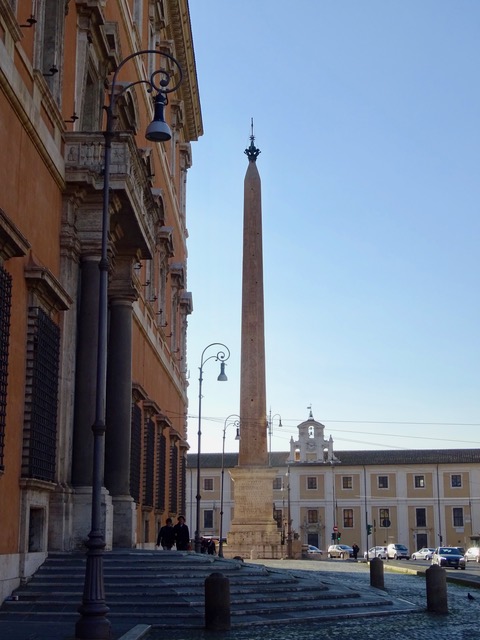
protecting this. It is hard to believe that these are ‘little’ chapels. Many were decorated, if that is the right word, by the individuals who were granted permission to have chapels inside the church.The main altar is said to hold part of the table that was used at the Last Supper. We think it must be in the upper level behind all the bars in this photo. You can also see some of the massive sculptures of the Apostles that line both sides of the main nave. It is quite difficult to take photos that capture even bit of what we see partly because of the size of these churches and other monuments. How can I capture all that in a small 4″ x 6″ photo ?Just before we leave, I notice the sunshine again, which manages to shine in three separate directions at once! I have no idea how that works. The ceilings here are highly decorated and gilded. In Italy I aways have to remember to look up. I am seldom disappointed, although I do often end up with a sore neck by the end go the day!These central bronze doors are Roman originals from the Curia, or Senate House in the Imperial Forum. Many Roman buildings were ‘looted’ to build churches and other buildings.Around the back of the Basilica we find another Egyptian Obelisk while we are looking for the Baptistery.
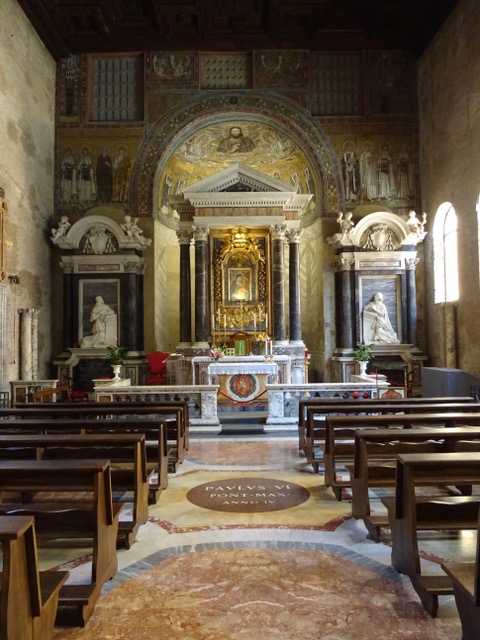
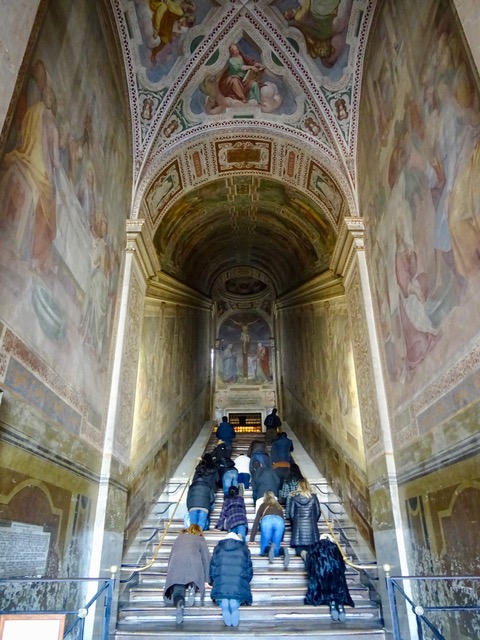
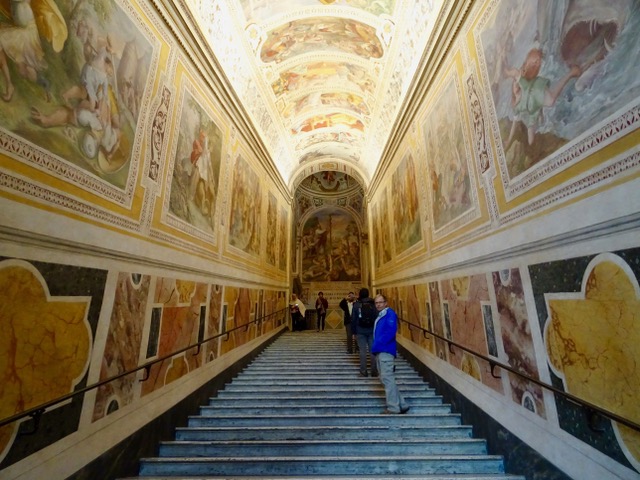
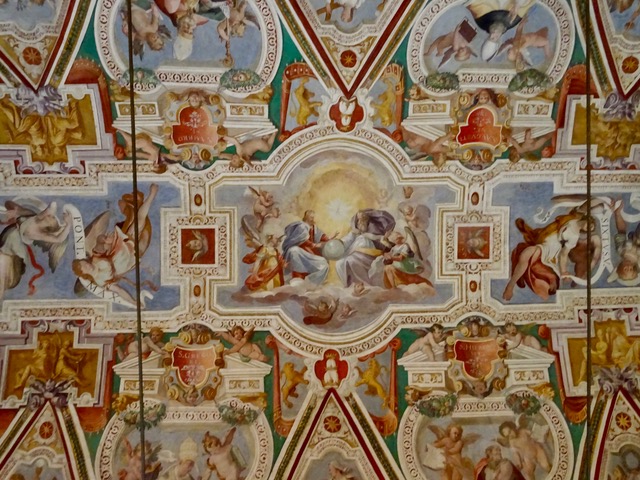
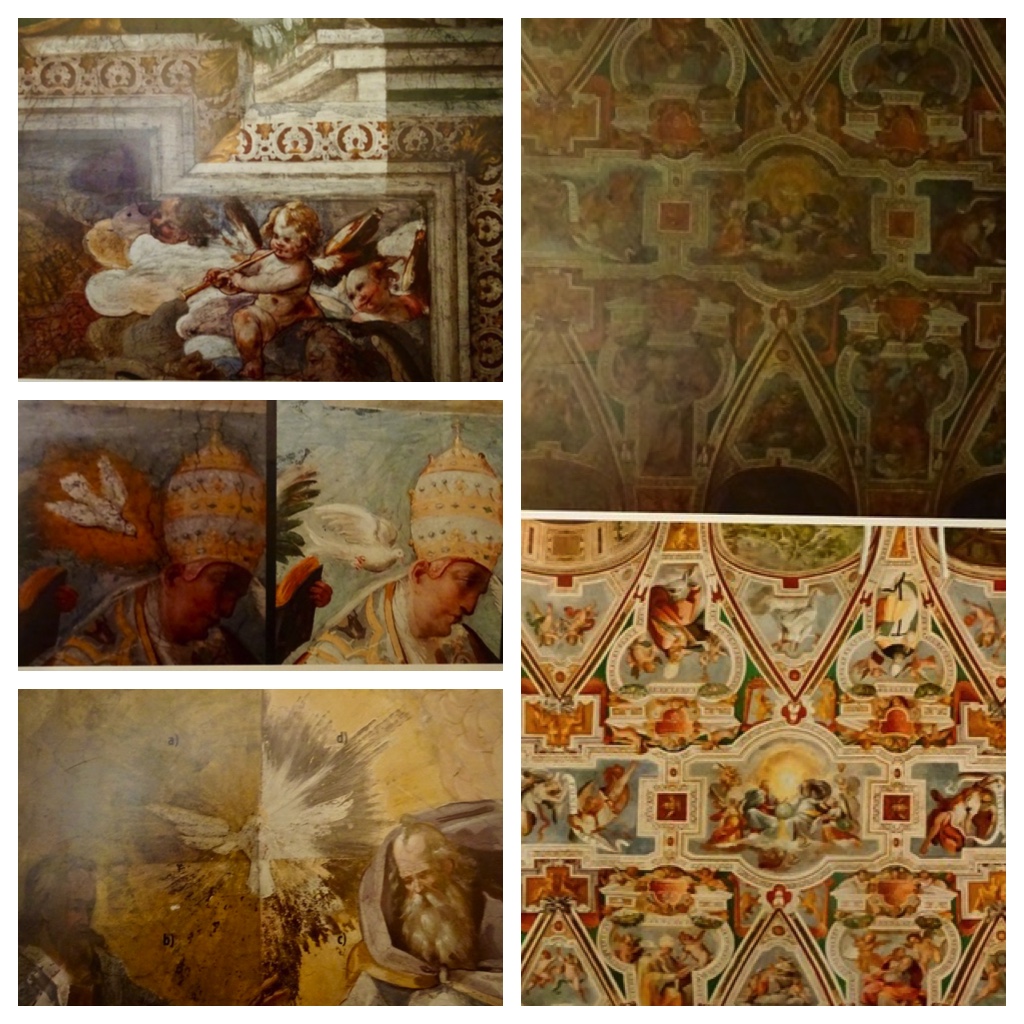
The Baptistry is a separate building where people were baptized. It has a full immersion baptismal font and of course, another beautiful ceiling.There is also a little chapel inside as well. We are the only people visiting and there are no guards, custodians, or other people around. I wonder why there isn’t a problem with vandalism or theft in these rather isolated locations, but it doesn’t appear to be a problem.We find the Scala Sancta, with a bit of help from Google maps. These steps are supposed to be where Jesus walked on his way to his trial with Pontius Pilot. The steps were brought to Rome in the 4th Century by St. Helena, who was the mother of Constantine. Only the devout are allowed to climb tis staircase and then only on their knees. We climb the side staircase…and see this beautiful recently restored ceiling.These pictures show images before and after restoration. Entrance fees are used to help pay for the maintenance and restoration of paintings, sculptures and the buildings the house these treasures.
Back outside and the setting sun lights up the buildings across from the Basilica. Rome is a very beautiful city with wide streets and lots trees…and lots and lots of apartments.

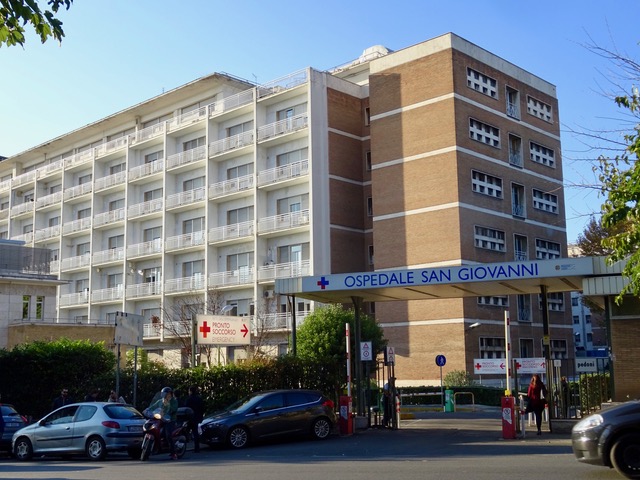
We pass this hospital and wonder about all the balconies. It sure doesn’t look like a hospital!

Santa Maria Maggiori, Rome

Day 74, Friday November 17, 2017

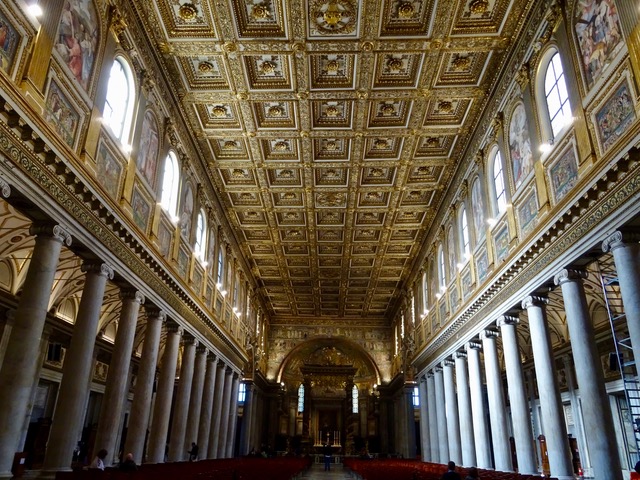
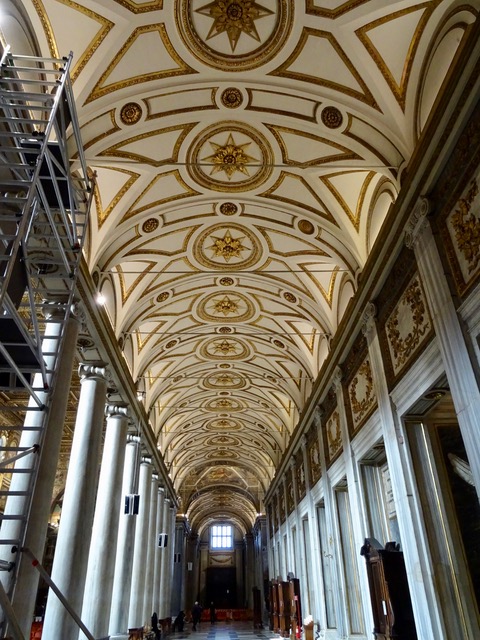
Santa Maria Maggiori was founded in 420 AD.

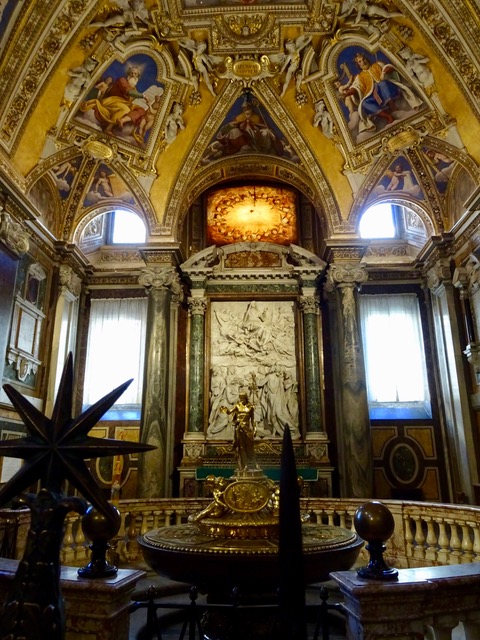
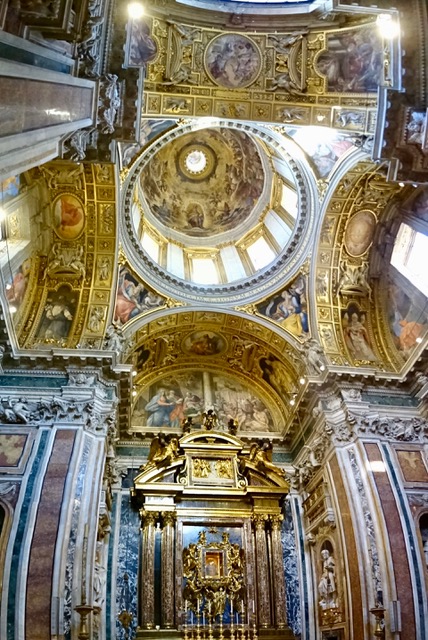
It still has the original colonnaded triple nave, lined with panels of rare 5th Century mosaics. The ceiling is thought to be gilded with the first gold brought back from the New World, which Isabella and Ferdinand of Spain offered to Alexander VI of Italy. It is a definitely a magnificent ceiling!

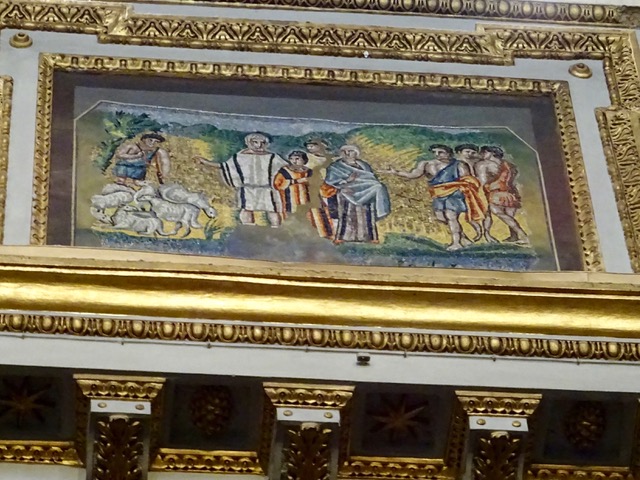
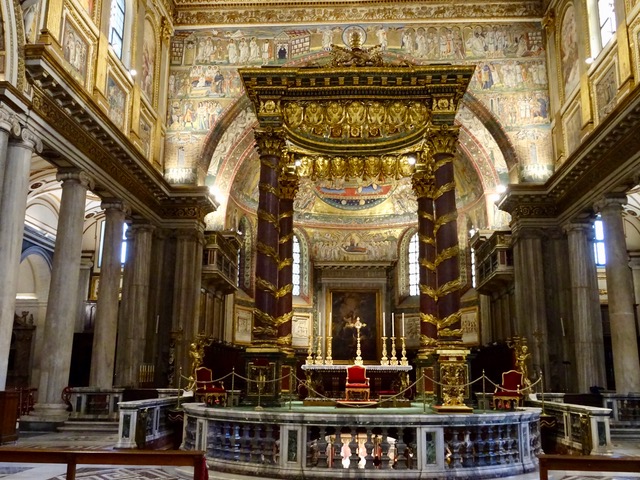
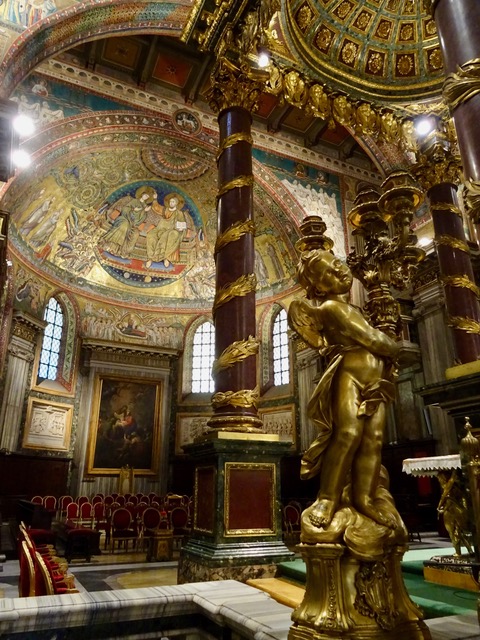
This is one of the 5th Century mosaics which line both sides of the main nave above the pillars and below the windows.. One of the side naves. The altar and apse which is covered in mosaics from the 13th Century.Just in front of the altar there are stairs leading down to a crypt. They are on either side of the marble railing in the photo above. In the crypt is a massive statue of Pope Pius IX kneeling before a reliquary shaped like a crib, which contains ancient wooden pieces of the manger where Baby Jesus was laid.

I saw a family bring their newborn baby to this crypt. The whole family prayed, lit candles and made a video of the occasion. The view up into the church is amazing, but then pretty much anywhere I look here is amazing.

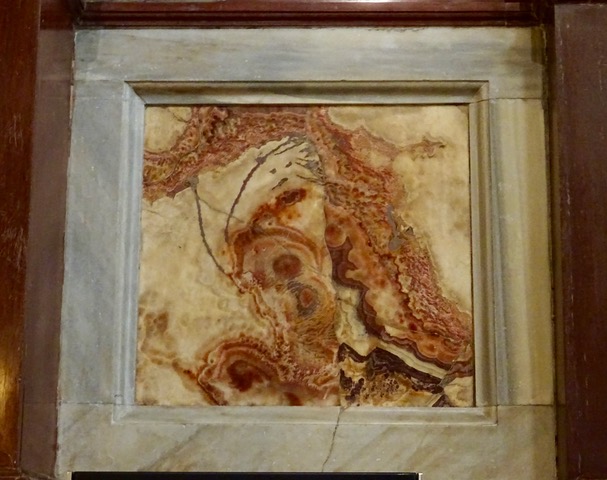
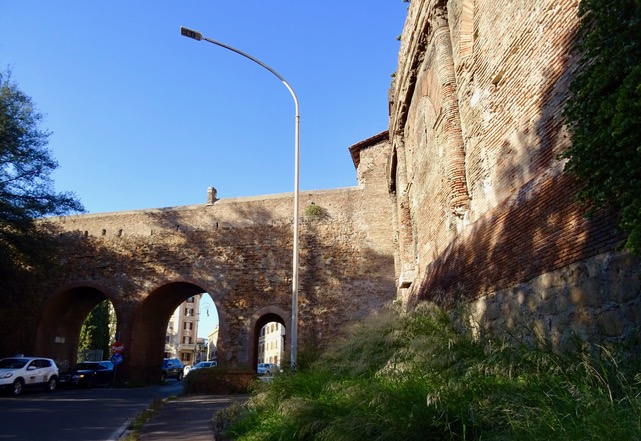
Another view of the mosaics behind the altar.This little section of framed marble looked like a strange face when I first saw it.One of the many side chapels.This is another side chapel. I tried taking a panoramic shot that shows the chapel back wall and the dome above.Rome is fascinating. We never know where we will see another ancient building or ruin. We walked under this part of what I think is the old City wall on our way home.It is also a very densely populated city with a population of almost 3 million people in the city proper. The city has a density of 2,232 people per square kilometre! Compare this to Edmonton, with its population of one million and a density of 123 people per square kilometer.

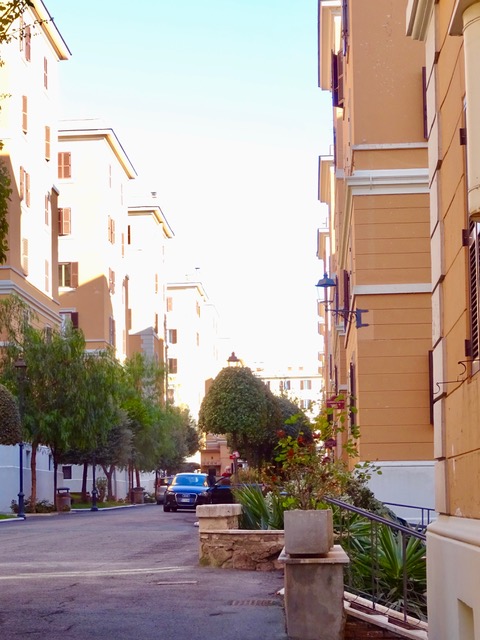
Pretty much everyone in the city lives in apartments. These seven story apartments are near our bnb. There are sixteen apartment buildings just in this one complex! No wonder there is no parking anywhere.

The Spanish Steps, Trevi Fountain and The Pantheon in Rome

Day 73, Thursday November 16, 2017

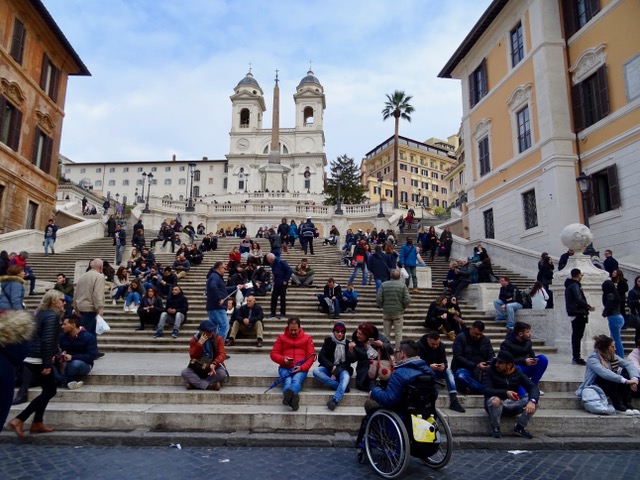
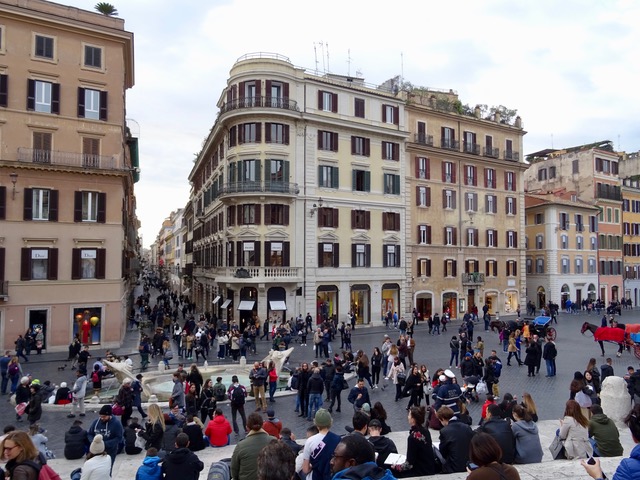
The Spanish Steps are first on the agenda today.  They were built in 1723 for King Louis XV and they are a favourite spot for tourists and locals.
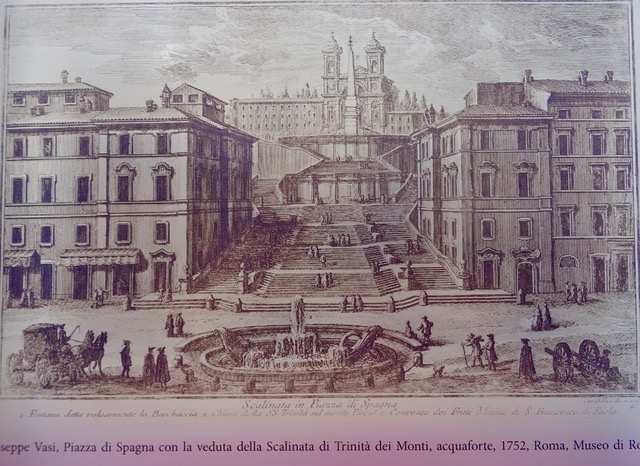
This is an image from 1752. The same buildings are still on either side of the steps. The one on the right is the Keats-Shelley Memorial House, where the poet Keats died in 1821.
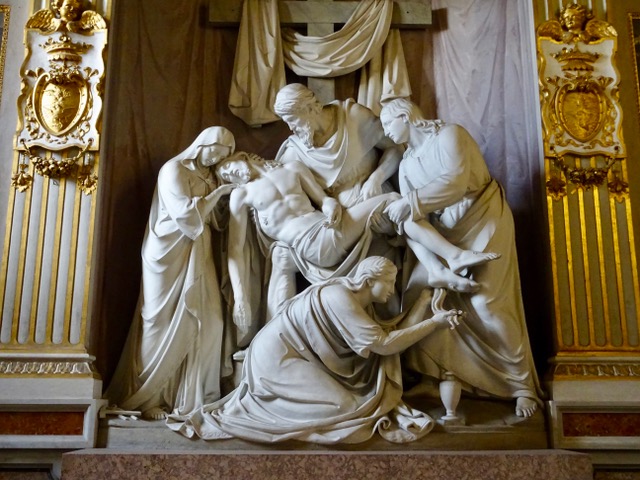
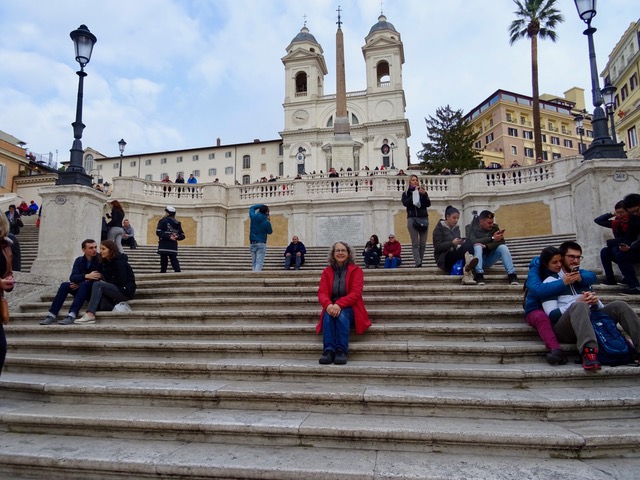
We climb the steps all the way to the Trinità Dei Monti Church where we find this beautiful statue inside and an Egyptian Obleisk outside. The city of Rome has the most obelisks in the world. There are eight ancient Egyptian and five ancient Roman obelisks in Rome, together with a number of more modern obelisks;

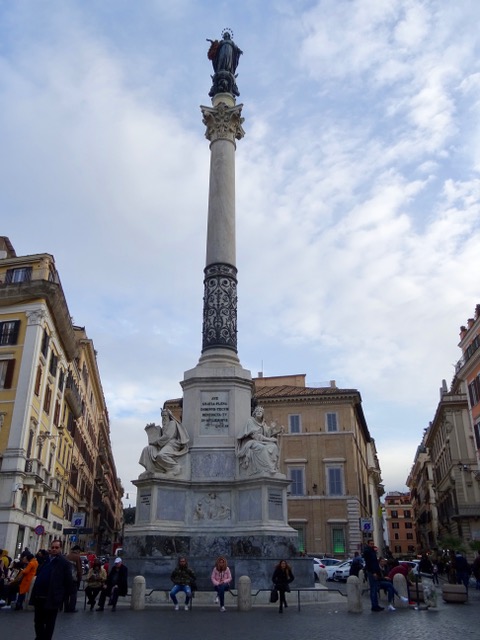
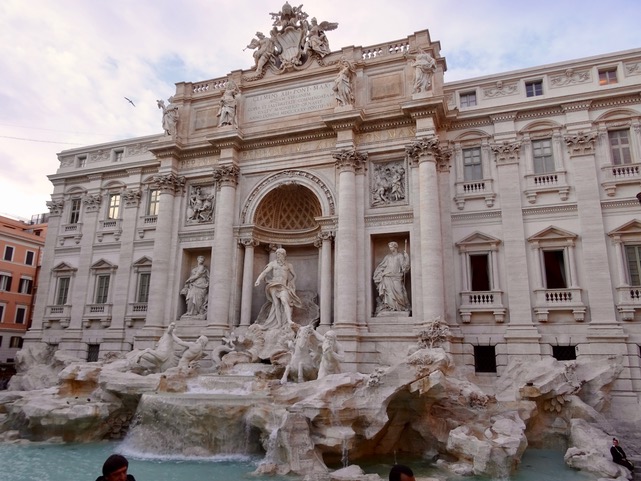
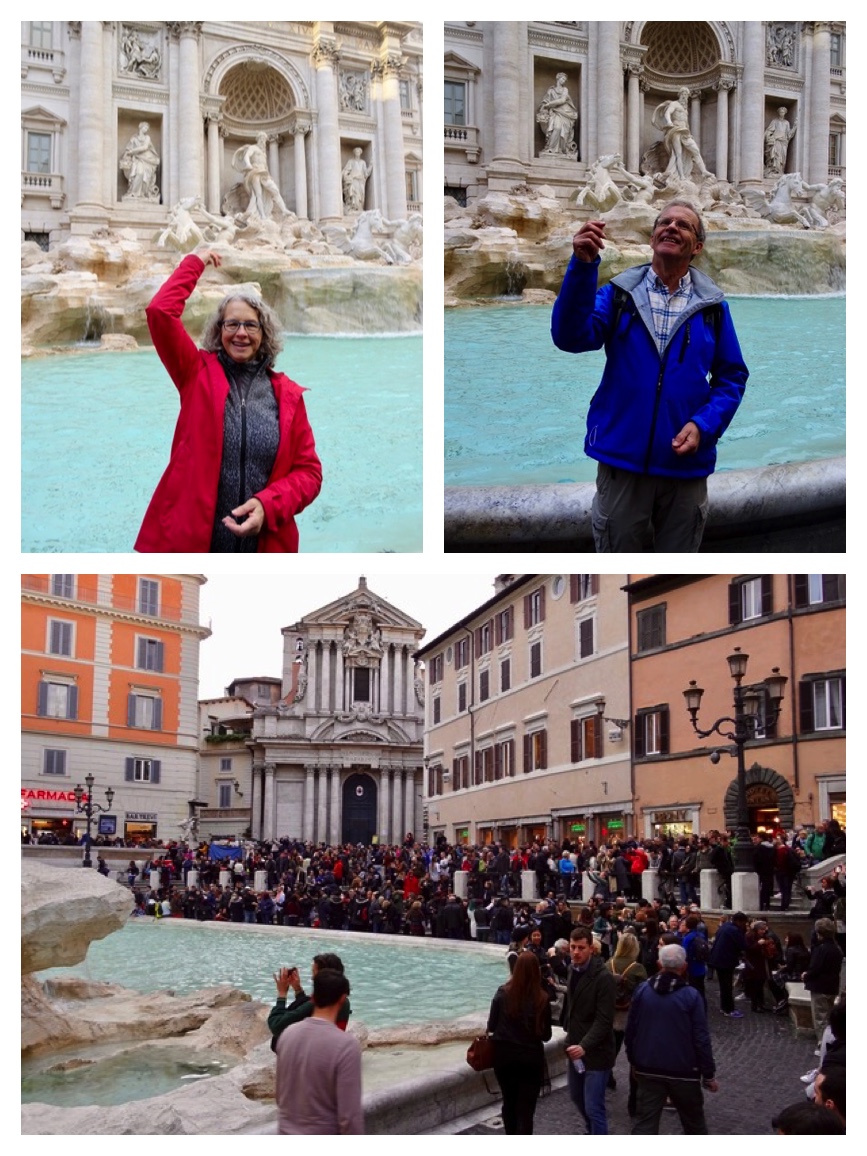
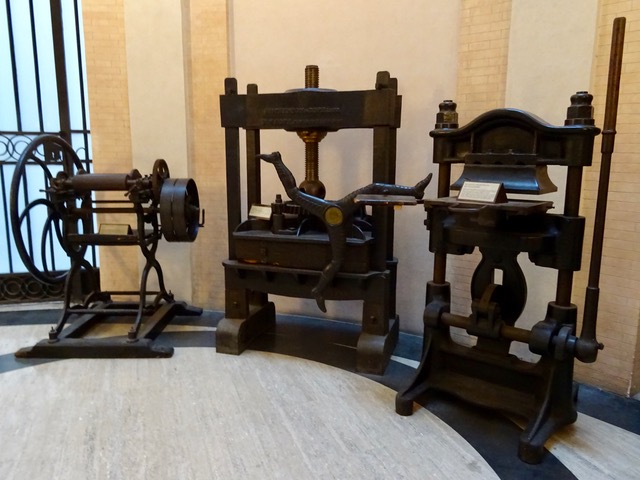
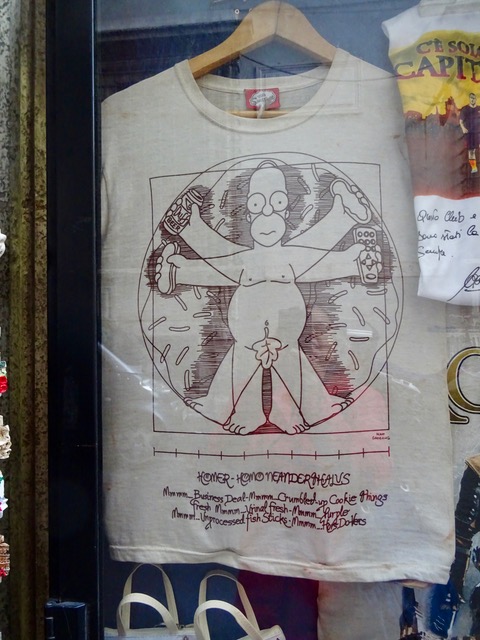
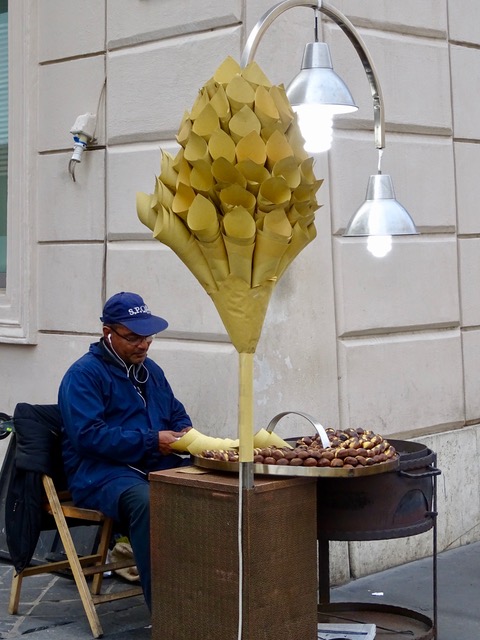
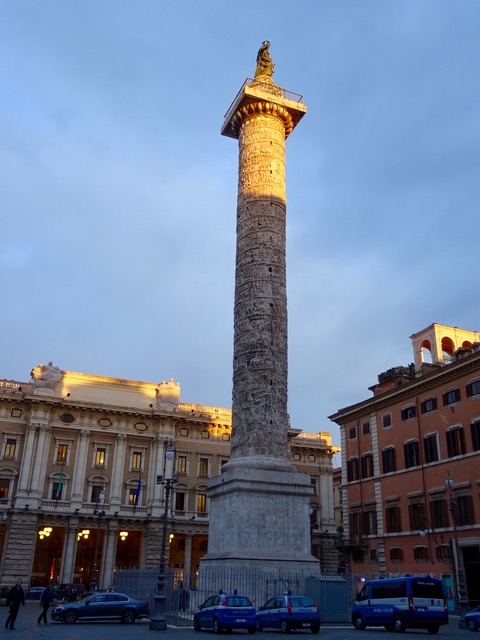
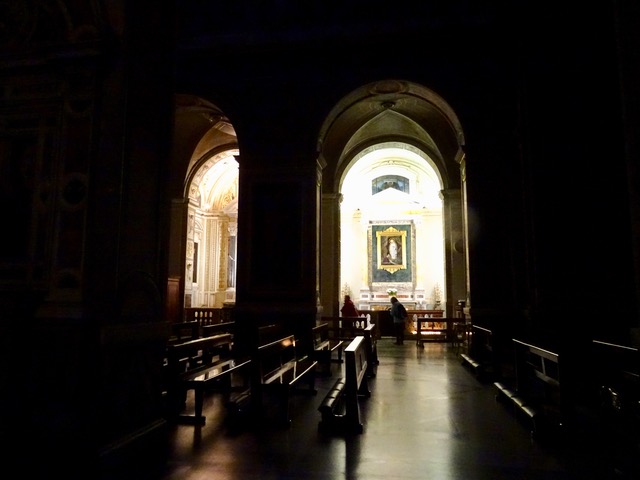
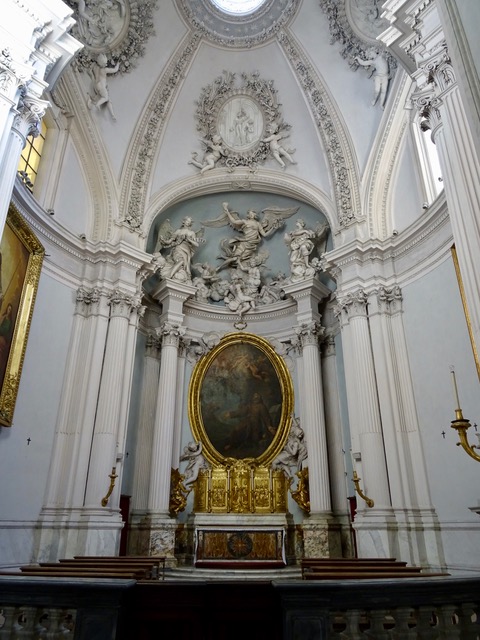
Of course I need my photo on the steps…  but I am not quite as acrobatic as this guy. He stayed in this pose for almost two minutes while his wife fiddled with the camera!This is the view of the street below the steps with the fountain of a sinking ship.The Colonna dell’Immacolata is near the Spanish Steps. Ever since 1854, the firefighters of Rome place a wreath of flowers on the Virgin every December 8th.  We can see the old wreath on her arm but we won’t be in Rome on the 8th to see it being replaced.Next stop, Trevi Fountain.We made our wishes and tossed coins into the fountain over our shoulders, to ensure that we will return to Rome for another visit. This fountain is one of the most familiar sights of Rome, and is often seen in movies. It is also very crowded.While walking  along the streets I peek into a foyer and see these old printing presses. Check out the ‘legs’ that are used to move the press bed.Rome isn’t all beautiful buildings and fountains. It has its share of tacky too.There are lots of stands selling roasted chestnuts. We tried roasting them one Christmas and they weren’t very good. Maybe we should try these to see if they are any better? The Galleria Alberto Sordi is an Art Deco building with incredible stained glass ceilings and lots of shops. In front of the Galleria is the Column of Marcus Aurelius. It is 42 meter high with reliefs  wrapped around it. The bronze statue of Marcus Aurelius was replaced in 1589, with a bronze Statue of St. Paul. The column is hollow with stairs that wind up to the top but it is not open to the public.Just around the corner from this column is another Egyptian Obelisk in front of the Parliament Buildings. I wonder if we will see all the obelisks in Rome during our visit? Maybe we will have to see if we can find them all.We stop at another church on our way to the Pantheon, but the inside is so dark that we can barely see anything.

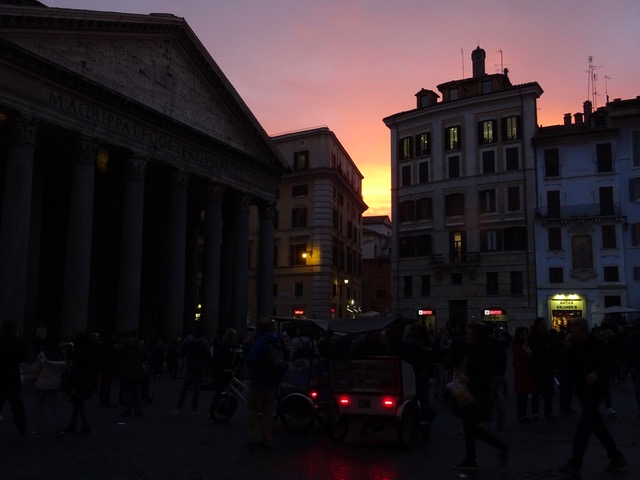
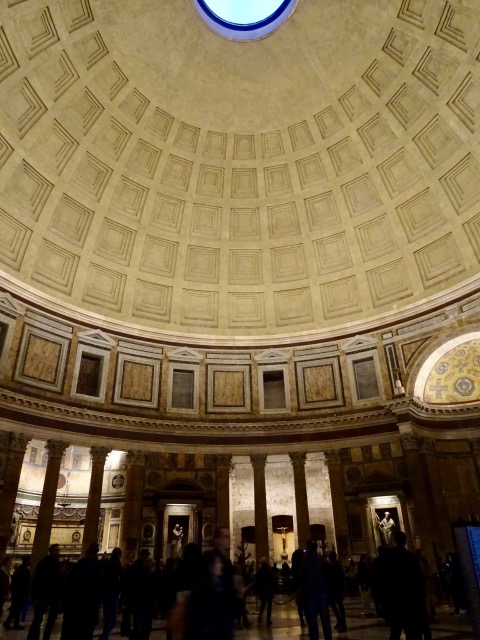
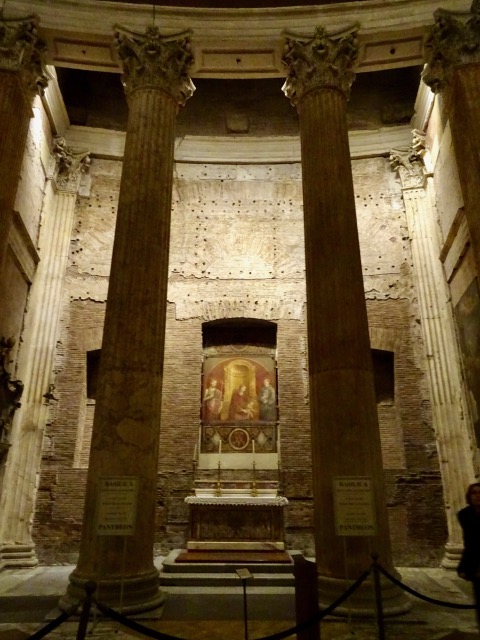
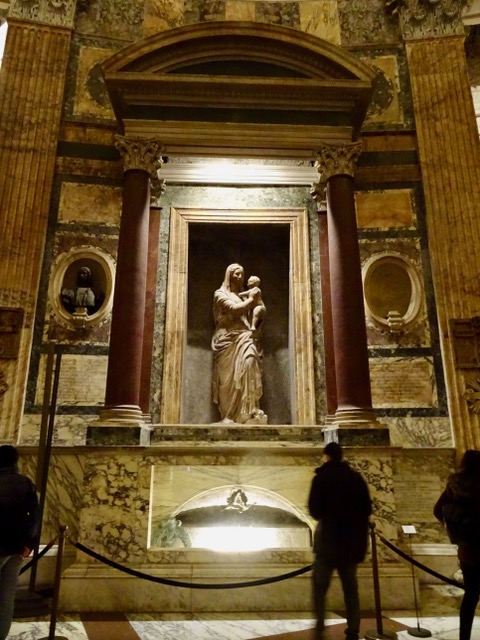
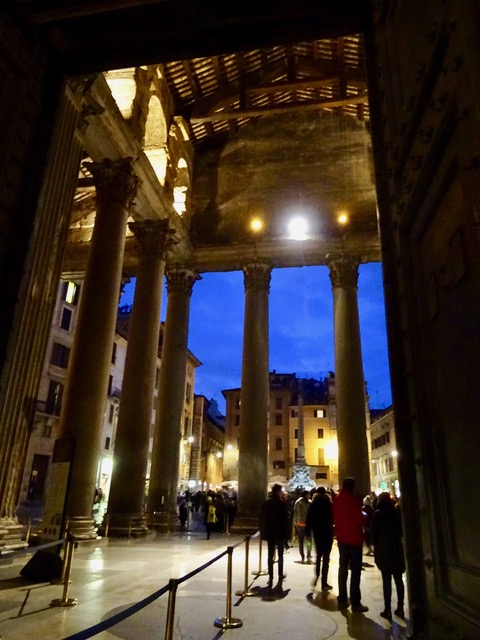
The sun is setting as we approach the Pantheon and we are treated to this beautiful sunset. The Pantheon used to be a pagan temple, but it became a Christian church in 608 AD.It is very difficult to take a photo to show how huge the Pantheon’s dome is. It is a very impressive building. The dome is the widest masonry dome in Europe and it is exactly as wide as it is high, 43.3 meters (142 feet). The oculus in the centre is 27 foot hole that provides light and the tension around the ring helps support the weight of the dome.The walls are 20 feet thick and the tombs of two of Italy’s kings are inside this Church…and this is the tomb of the artist Raphael.The view from the entrance of the Pantheon, showing the Portico with its16 enormous pink and grey granite columns.The Ramses II Egyptian Obelisk is on the centre of a fountain facing the Pantheon. We sat on the fountain steps and had tea and cookies, people watching and listening to a violinist who was playing In the square. Just before we left he played Leonard Cohen’s Hallelujah, which I found very moving.

As we wandered towards the metro several blocks away, I looked up and saw this lovely little dragon.

Siena, and the Museo della Carta e della Filigrana, Fabriano, Italy

Day 69, Sunday November 12, 2017

I really wanted to visit Fabriano and the Museo della Carta e della Filigrana, (Museum of Paper and Watermarks.) Fabriano is known internationally for its quality paper.The only day we could fit it in was Sunday afternoon so today we drove from Florence to Perugia with a short stop in Siena, and then on to Fabriano.

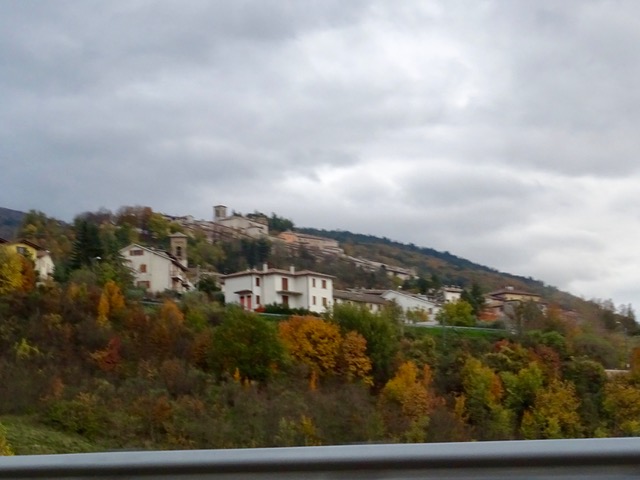
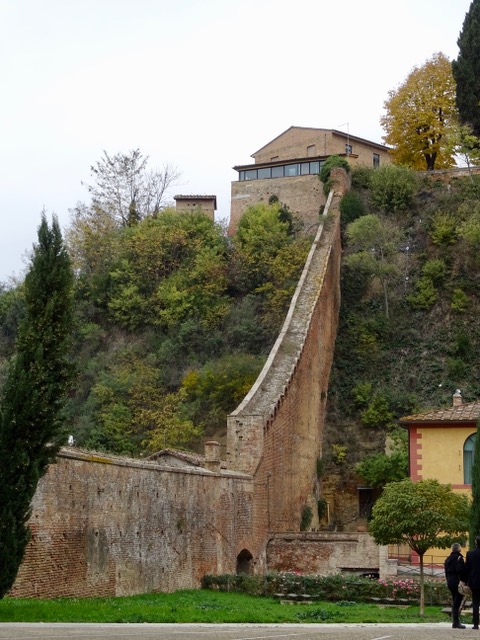
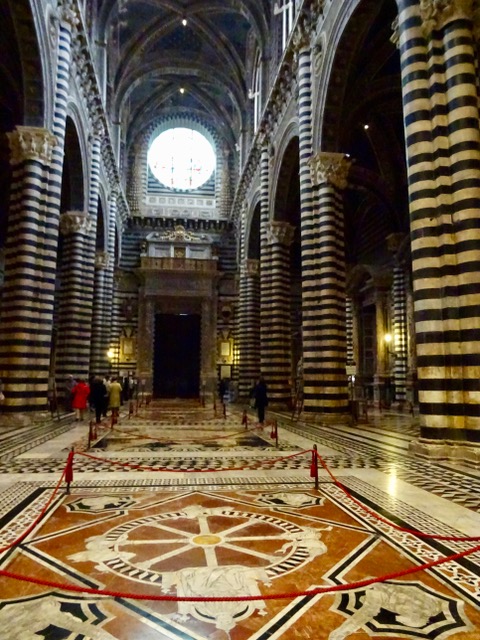
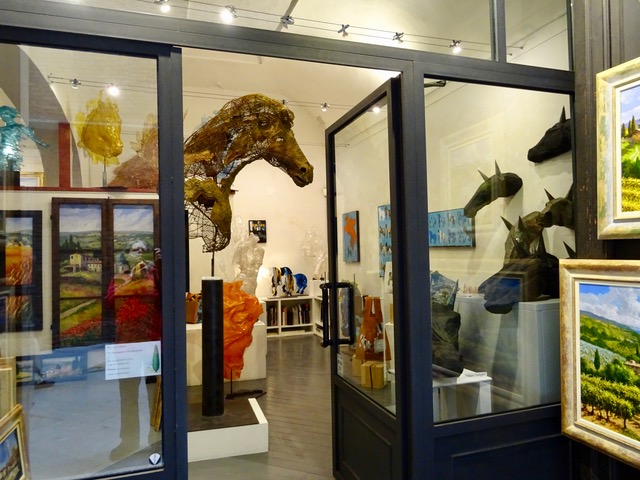
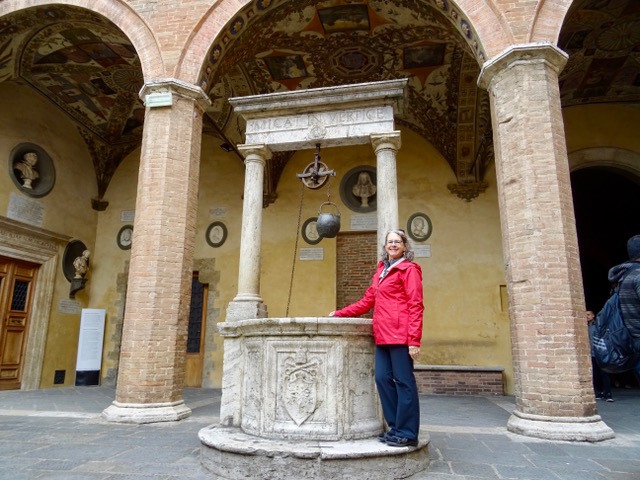
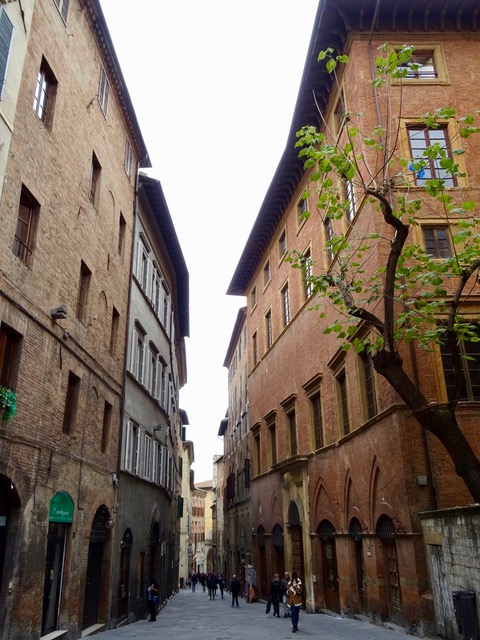
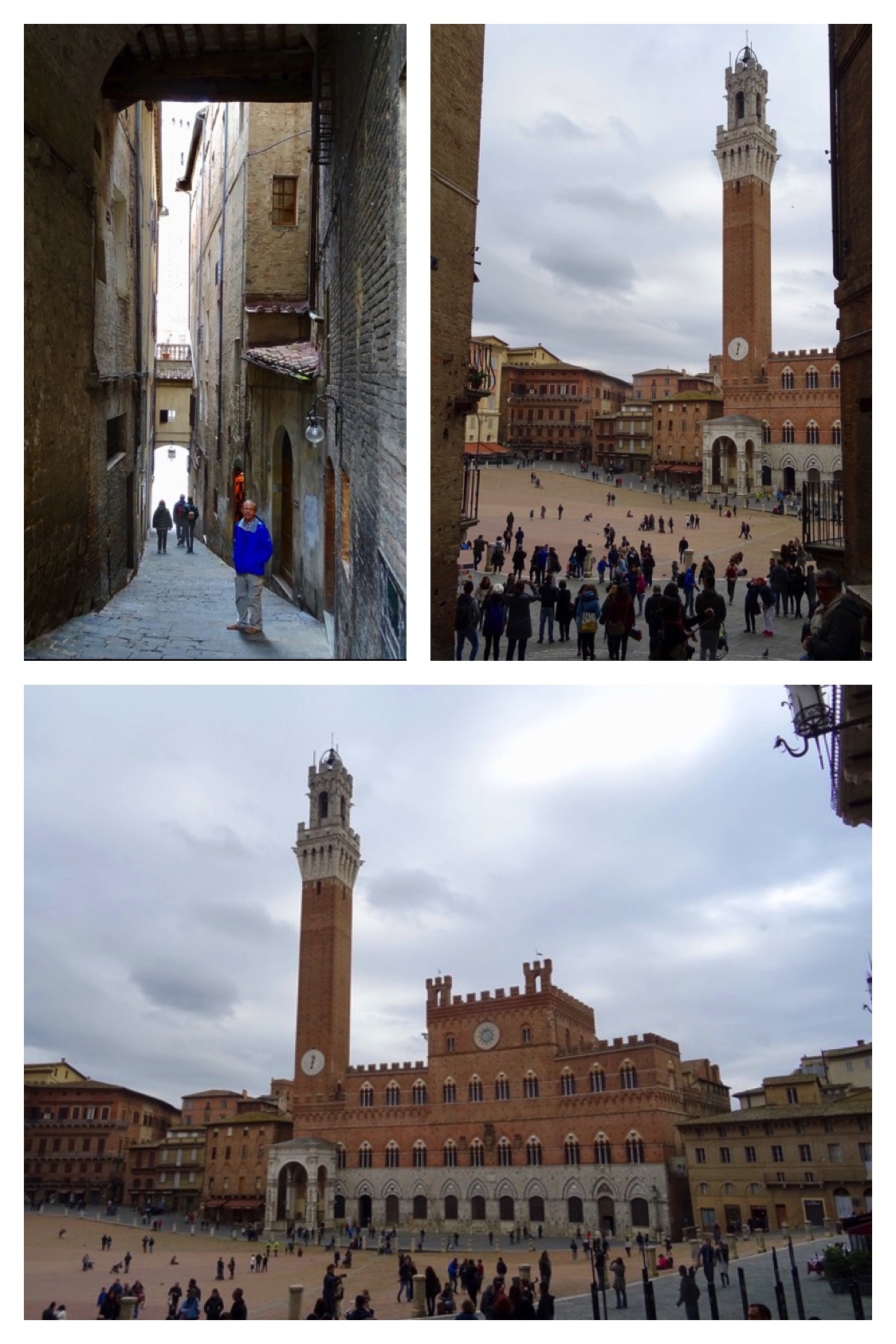
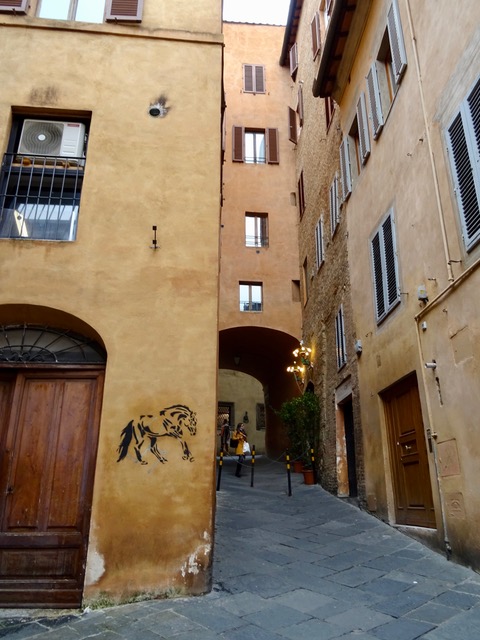
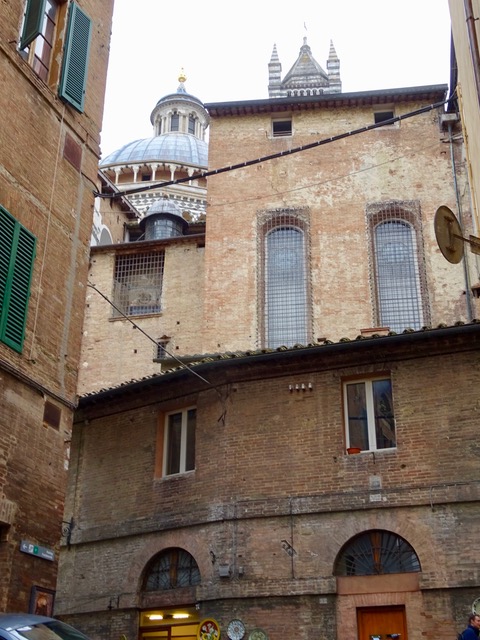
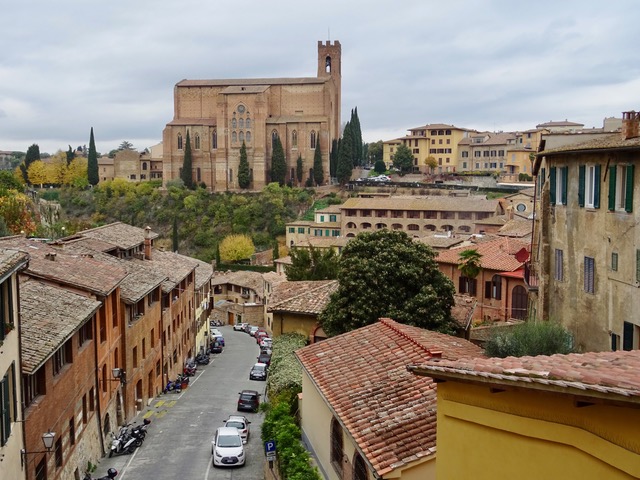
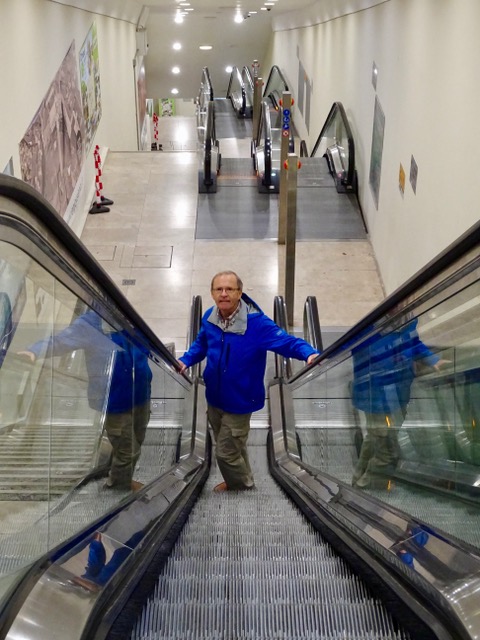
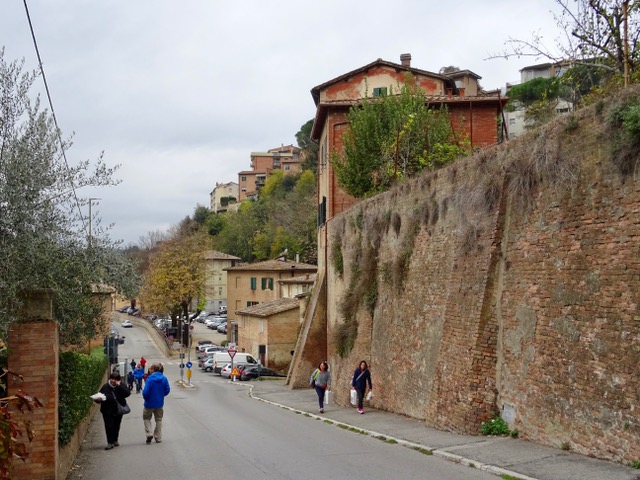
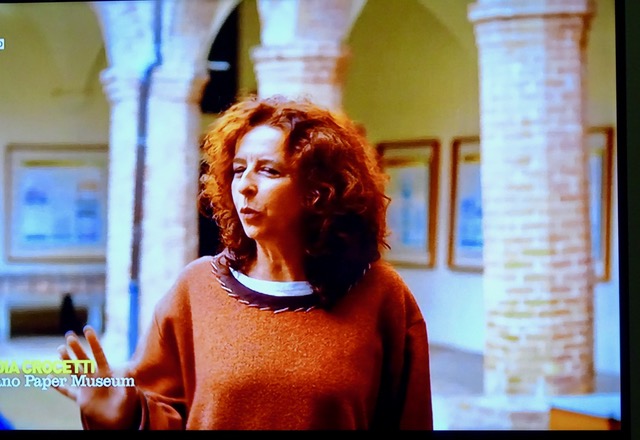
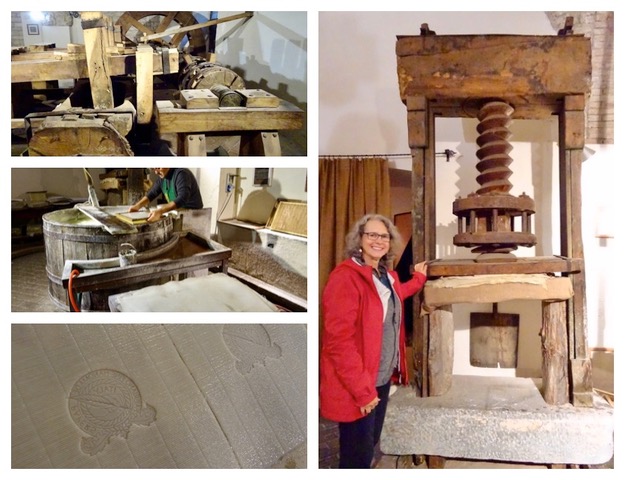
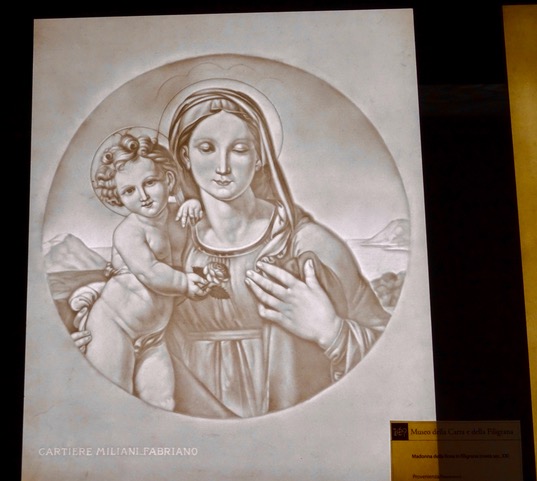
The drive from Florence to Siena was beautiful. Lots of rolling hills with little towns perched high on the hilltops. It is definitely autumn and the trees are turning colour, but as Bob said, it is like our September autumn, and it is November here.We enter Siena by walking though a gate in this wall. You can just see the arch of the top of the gate.We wanted to visit the Sienna Duomo but it is closed to tourists until 1:30. I ask the guard if we can visit for a quiet time to think about Baba and she lets us enter. There is a mass taking place so we sit and have some reflective time, listening to beautiful singing and the Italian sermon. This is the inside of the Duomo with its black and white striped marble pillars and incredible inlaid marble floors.We wander the  streets and pass this little gallery with all the horses. Quite appropriate for Siena as the Palio is held here twice a year. This is a bareback horse race that is held in the Piazza Del Campo. Check out the link for some great photos of this event. I toss a coin and make a wish in this ancient well, and admire the paintings on the ceiling which are outside and exposed to the elements.The streets are narrow with tall buildings on either side…with wonderful sights tucked away in courtyards and…at the end of this long sloping road we enter a large open square. It is the famous Piazza Del Campo where the Palio is takes place.We didn’t have a lot of time here as we need to be in Fabriano this afternoon so all too soon we head back towards our car, which is parked outside the old city. The buildings here are all beautiful shades of sienna and ochre. Loved the horse.There are great views.These six very long very steep escalators were a great help getting us up to and down from the old town. I was feeling a bit weary today and quite happy I didn’t have to climb all those hundreds of steps.  Here we are, leaving Siena, there are no flat roads here!We have time to check into our Airbnb and then drive to Fabriano, almost an hour away. Our tour of the paper mill was at 4:30. We arrived at 4:00, just in time to watch an English video about paper making as the tour was only in Italian!  I didn’t think to check that when I reserved way back in August, however, after our video a very nice woman gave us a tour in English! I think the fellow at the ticket office got her especially for us. She was great, very knowledgeable and very pleasant. This is a photo of her from a show that National Geographic made about the Fabriano Paper mills and paper making. I can’t remember her name, but she was very knowledgeable and spent quite a bit of time with us.We got to see the old hammer mills in operation and a master papermaker came and pulled some sheets of paper with watermarks to demonstrate the process. I just loved the old wooden press. It is just a bit bigger than the one I use at home when pressing my handmade paper. The museum has a fantastic collection of very old papers and papers with watermarks. Their Fabriano Mill makes watermarked paper for bank notes for several countries, but I most fascinated with their with chiaroscuro watermarks .
For those unfamiliar with watermarks, take a quick look at the link above which simply explains what they are and how they are made. For a more detailed explanation take a look at this link from the Museo della Carta e della Filigrana
I get myself a souvenir from our visit to Fabriano, a piece of paper with a watermark of two angels called Il Primo Bacio (The first Kiss) by William Bouguereau. I just need to decide how to display it, as the watermark only shows when it is held up to the light.
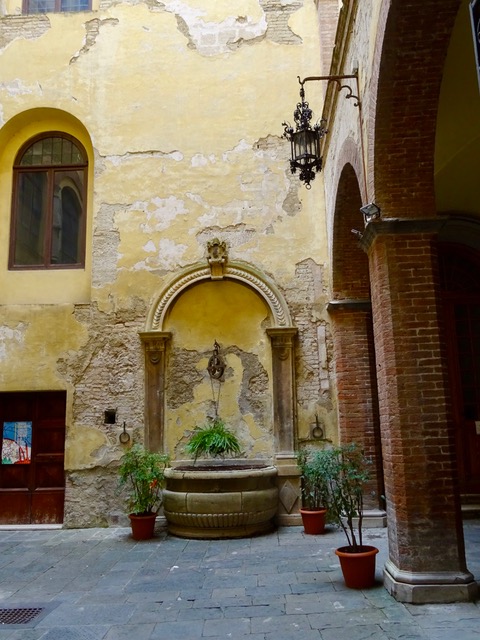
Image result for il primo bacio painting
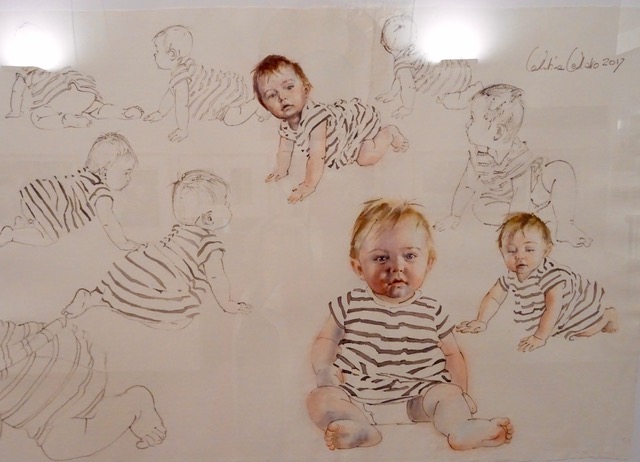
There are a couple art shows in the hallways of the museum and I absolutely adored the work of Valentina Verlato.   This link takes you to her Italian website but if you type her name into Google you will have the option of translating the website into English. Of course, the photos on internet just don’t compare to the actual paintings.
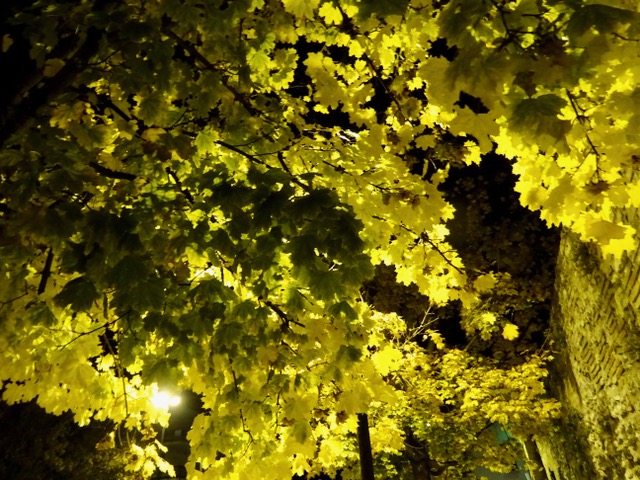
As we left the museum the street lamps lit up the leaves above us.Day 70,  Monday November 13, 2017

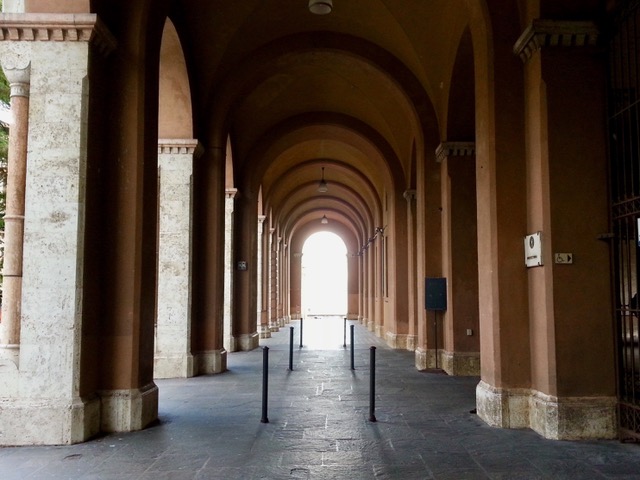
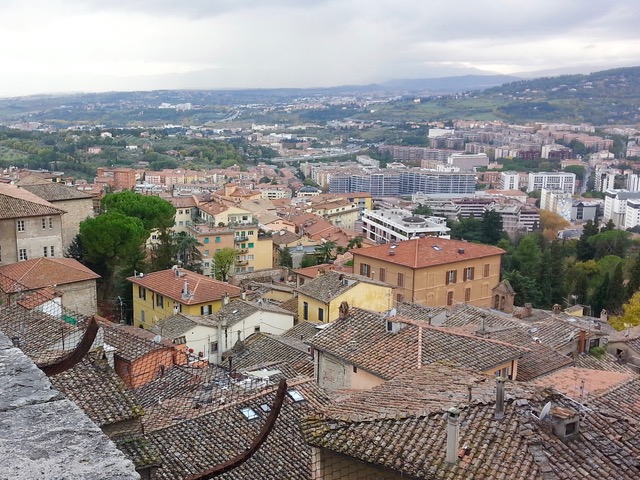
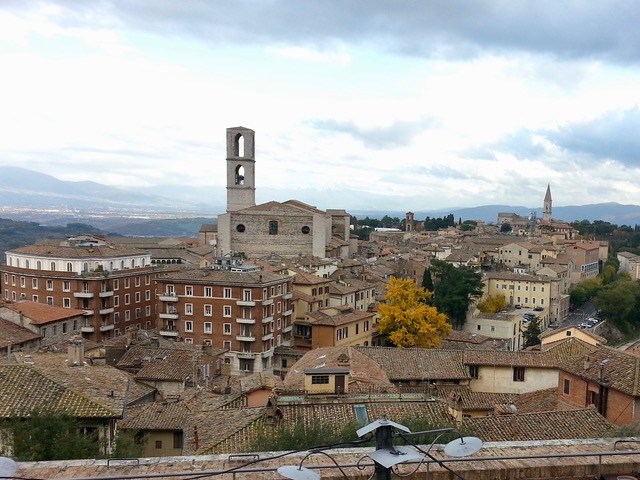
We spend a quiet day at home. We have been travelling for ten weeks and I am just a bit tired. Bob did go out exploring the town of Perugia but most of the sites were closed today so he came home early.He did get some great views of Perugia which he said is ‘lots of steps!”

Tomorrow we are on our way to Rome!

Day 71, Tuesday November 14, 2017

Our drive to Rome went well and we arrived at our Airbnb early afternoon. We were very relieved that it is not a ‘smoking allowed’ apartment as that is what showed up when we checked our booking a couple of days ago. I was so worried that it would smell awful and that we would have to find another place at the last minute. It seems that the Airbnb site ‘updated’ and incorrectly listed the apartment as ‘Smoking Allowed.” This was also a surprise to our host who assured us that it was indeed a non smoking apartment. It is a lovely place and I think we are going to be very happy here for the next two weeks.

Day 72, Wednesday November 15, 2017

We spent a quiet day at home today, resting, organizing and planning what we will see and do in Rome.