Day 22, Monday, September 16, 2019
Some of the subway stations in Berlin are quite grand, with their vaulted steel and glass ceilings, like the one we were at this morning.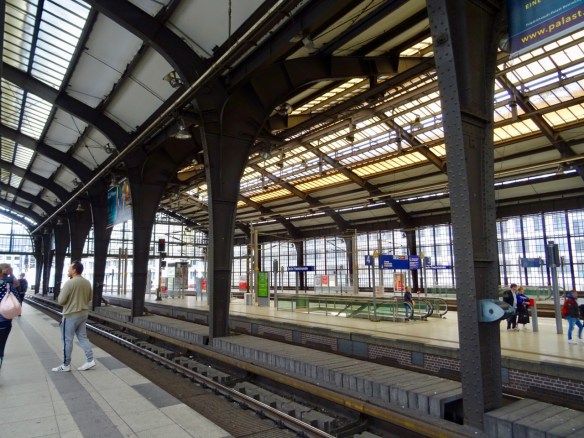
I have finally begun drawing people on the subway. It is often difficult to find a subject who won’t notice me drawing them.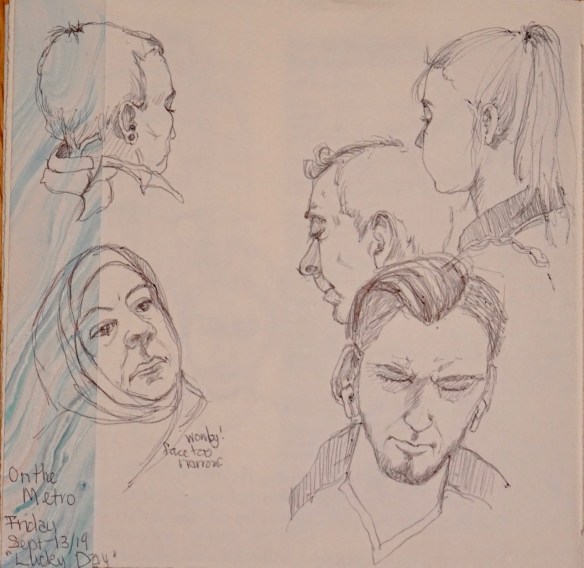 I like to use a Bic Fine Ballpoint pen for these subway drawings. A pen forces me to commit to what I put down, no erasing makes it challenging.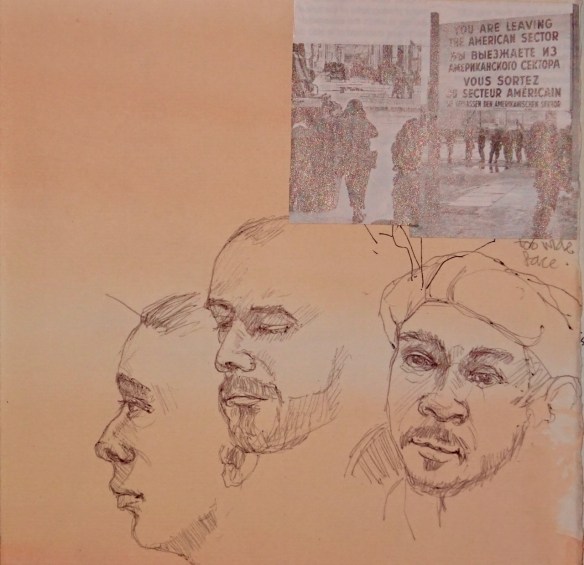
We are on our way to the DDR Museum, which is a museum about what life was like in East Berlin before the Wall fell. I wasn’t interested in going so Bob went to the museum and I found a place to sit and draw St. Mary’s Church.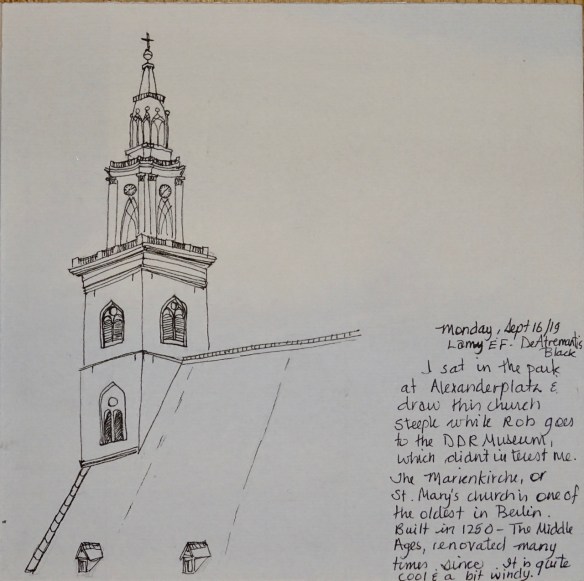
Bob discovered a few interesting facts. The most surprising is that East Berliners were ardent nudists! Four out of five East Germans regularly went sunbathing in the nude, as illustrated in this poster in the museum.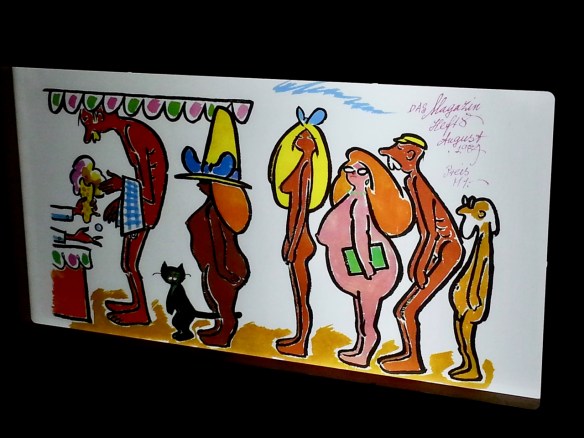
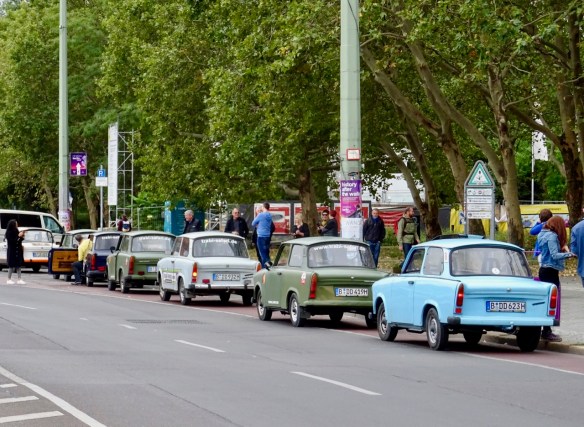
It isn’t such a surprise that the East Germans were hard drinkers. Per capita consumption was the equivalent to 286 bottles of beer and 23 bottles of spirits. The men and women of East Germany could drink all-comers under the table! This was a typical living room bar cabinet.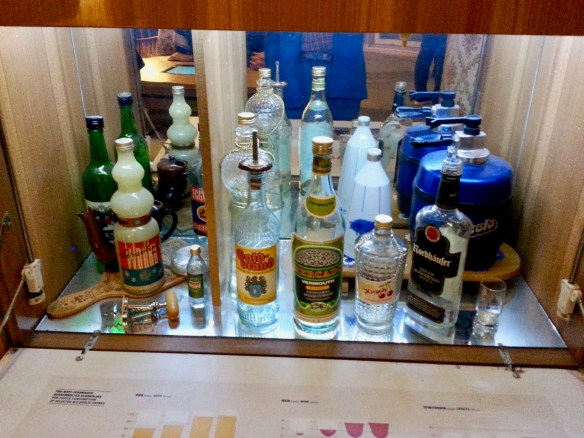 We saw these Trabants on the way to the DDR museum. While there Bob discovered that the cars’ bodies were made from a material called Duroplast. This was a composite material made from cotton fleece and granulated phenol, which was heated under pressure and formed into a rigid component for use on the exteriors of the cars.
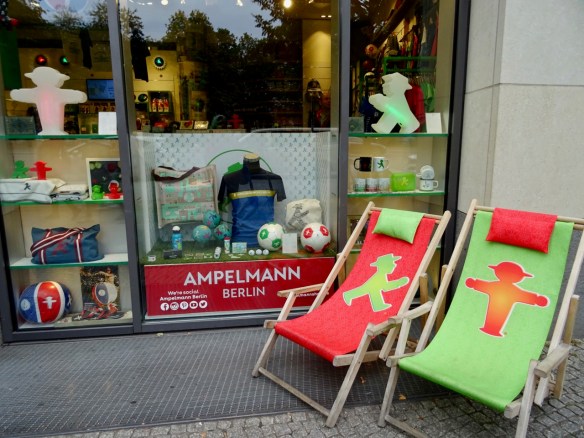
 While walking to a nearby park to draw I passed this store dedicated to the Ampelmann, the little character that lets pedestrians know when it is safe to walk.
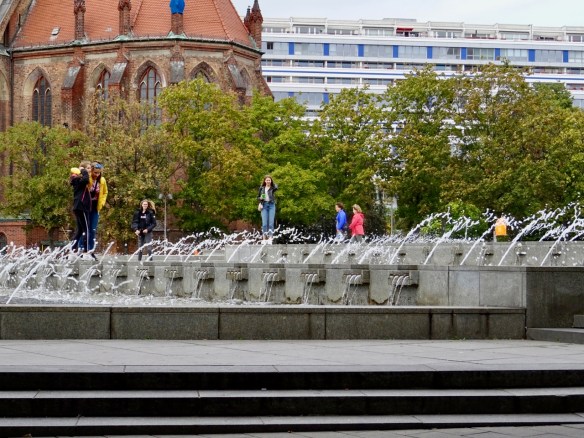
 While I sat drawing the church I watched these young ladies walk out onto the nearby fountain for some photos. I quickly got my camera out because I knew what was going to happen next.
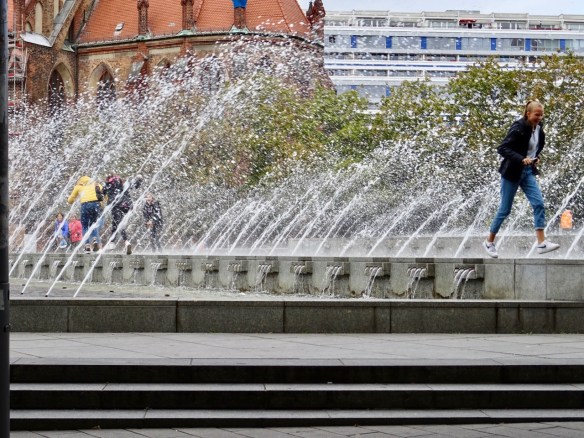
 Surprise!! I laughed so hard, as did all their friends!
 We had a picnic lunch and then headed to the Stasi Museum. This museum is located on the former grounds of the headquarters of the GDR State Security. We had a two hour tour that talked about how the lives of the East Germans were controlled, manipulated and repressed by the political police system of the former East Germany. Seems like everyone was spying and informing on everyone else, and almost every aspect of people’s lives was controlled by the state. It must have been impossible to trust anyone. Most of the exhibits were like this office room below, not very interesting I thought, but our guide’s talk was very interesting. He told us anecdotes about his life as well as his parents and grandparents lives during this time.
  I hung out at the back of our tour group and did some sketching of people in the tour while I listened.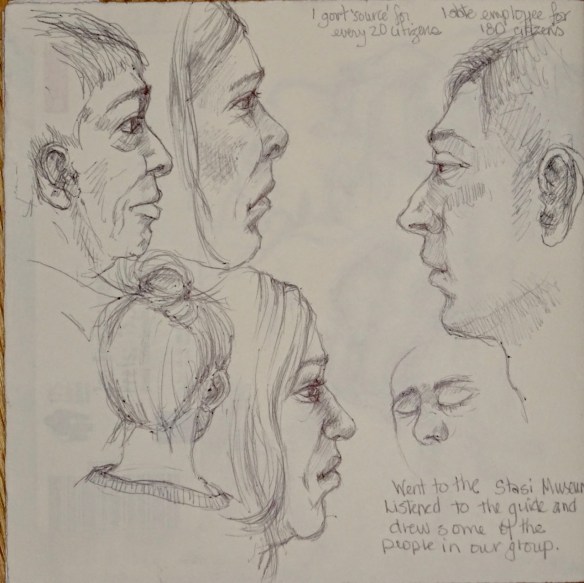
There were hidden cameras everywhere in East Germany, documenting what people did, who they talked with and where they went. Here are some hidden cameras in a bird house, behind a button, and in a watering can with a false bottom.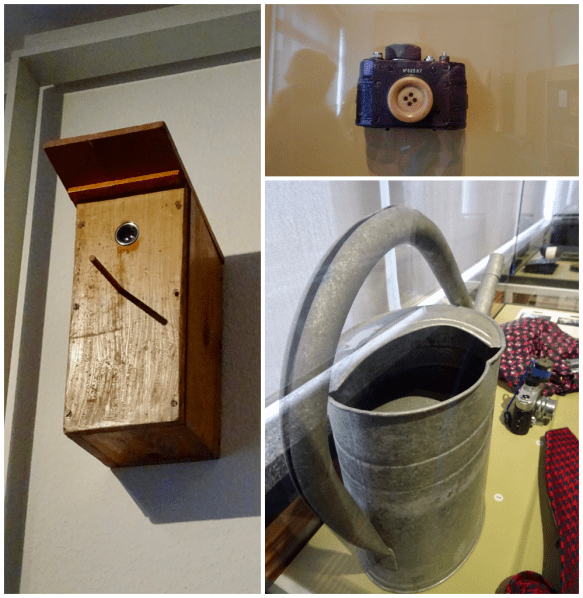
There were even hidden cameras in tree trunks to spy on people if they took walks in the forest! The really sad and scary thing is that there are people today that think that a dictatorship government would be better than the democracy they now have. They think that they would just need better leaders and they would be better off. It is hard to imagine that anyone could think going back to anything like this could be beneficial!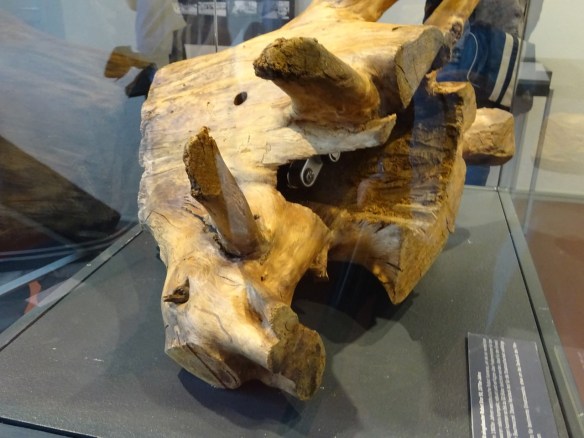
In the Magdalenenstrasse subway station on our way home we see a series of 20 large scale paintings done in a neo-expressionist style: angular, grim with bits of bright colour. They images, competed in 1986, portray the history of the workers movement in East Berlin. Our guide at the Stasi Museum pointed out a painting in the museum by Wolfgang Frankenstein, who was one of the artists who made these murals,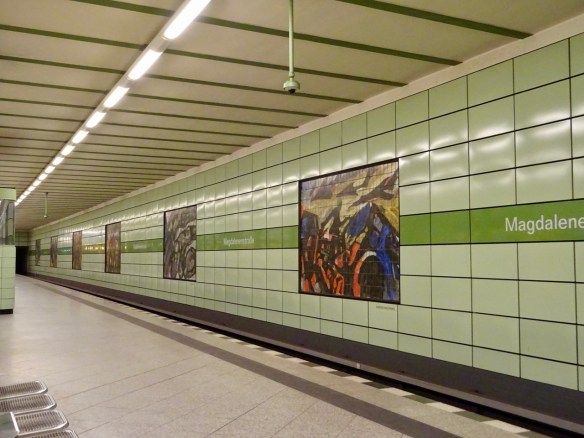
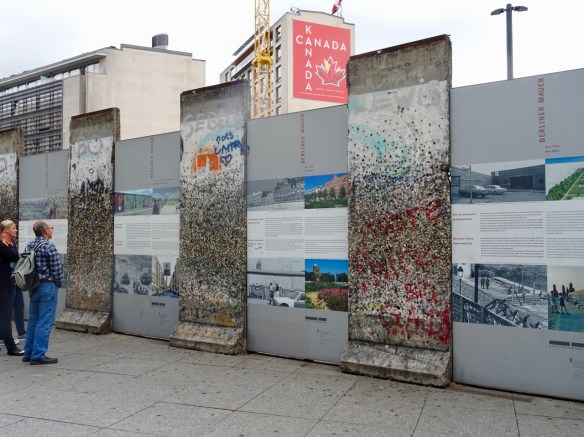
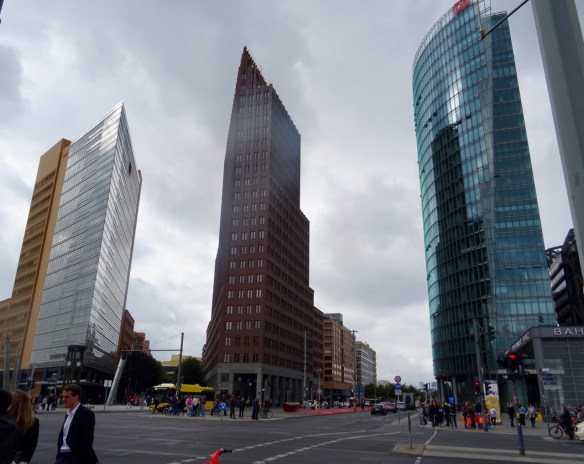 There are some pieces of the Berlin Wall here and for some strange reason they are plastered with wads of chewing gum left by visitors. Notice behind the wall is the Canadian Embassy.
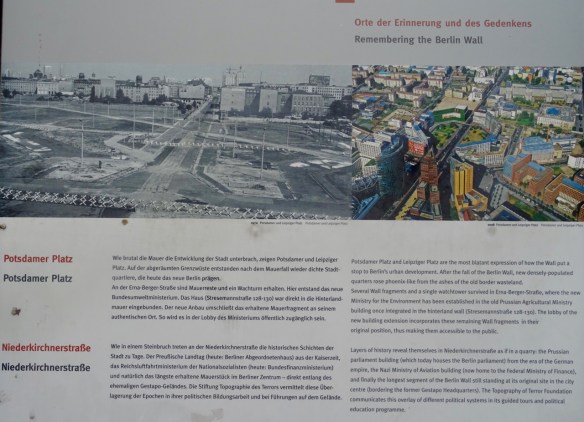
 The display was very informative. Bob knows a lot more about the history of Berlin than I do so I found these panels quite interesting. This one shows the Dead Zone, which was the unoccupied area around the Berlin Wall, and the developed area now.
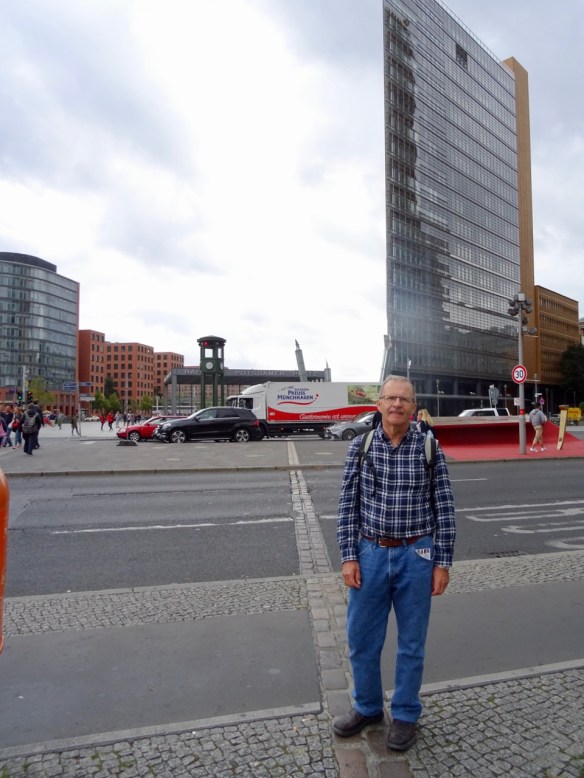
 The cobbled line Bob is standing on is where the Berlin Wall used to be located.
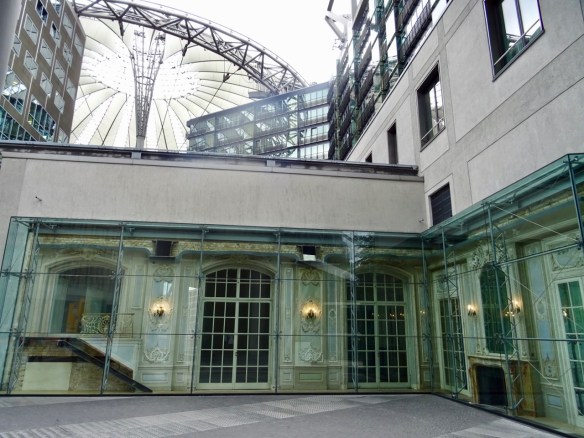
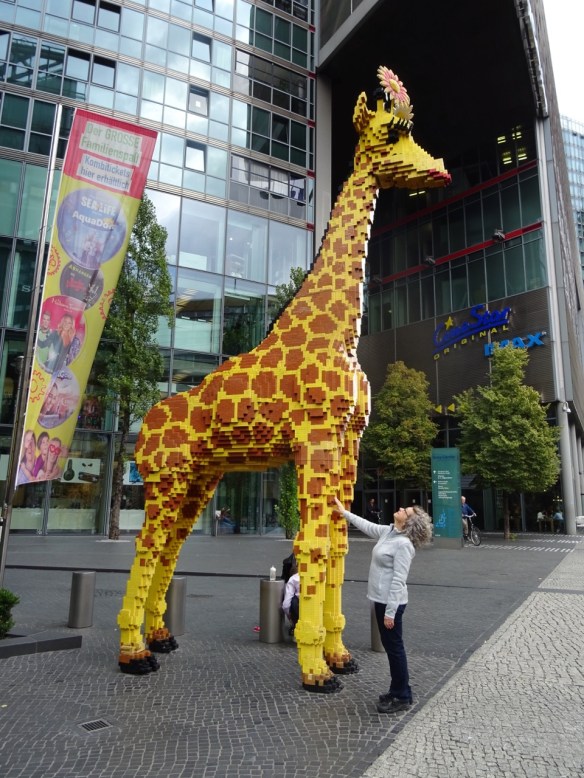
 We walk to the Sony centre and find this interesting building that has part of an old hotel interior enclosed in glass as part of its exterior wall.
  Wow! This LEGO giraffe is the biggest giraffe I have ever seen…
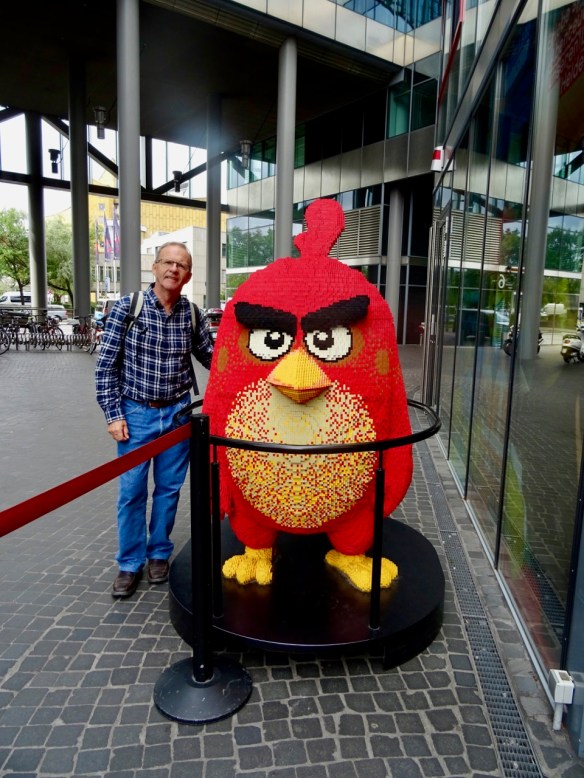
 and Bob found a pretty huge Angry Bird!
 We make our own Hop-On Hop-Off tour by catching the #100 bus. First stop is the Kaiser Wilhelm Memorial Church. It was destroyed by the bombing in WWII and is now an anti-war memorial to peace and reconciliation.
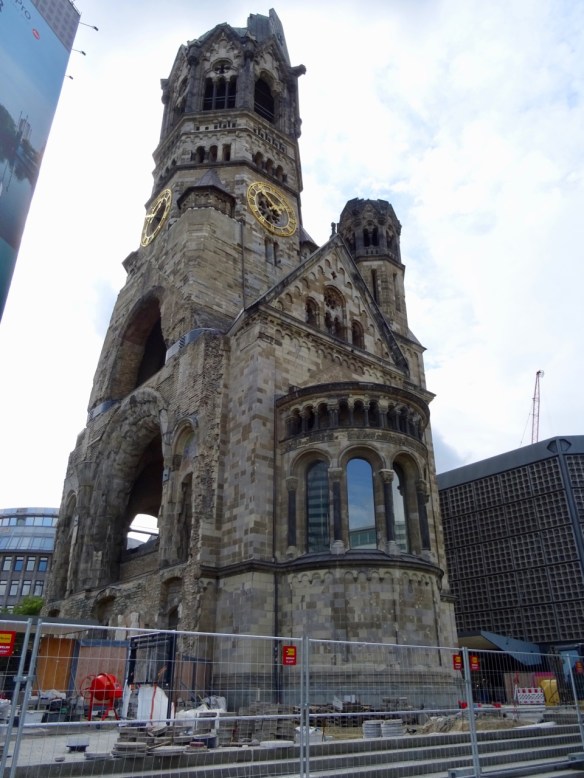 This is what the church used to look like.
 The little bit of the interior that remains is covered in beautiful mosaics…
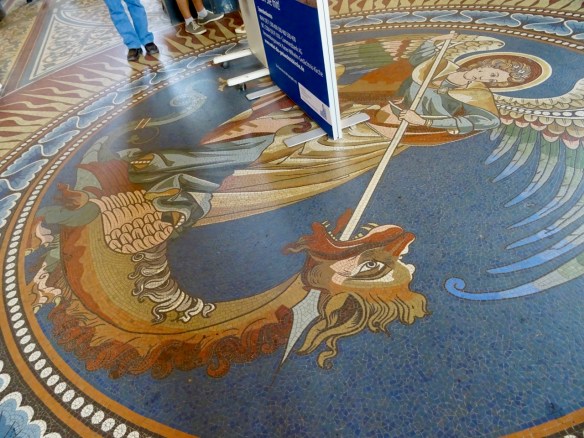
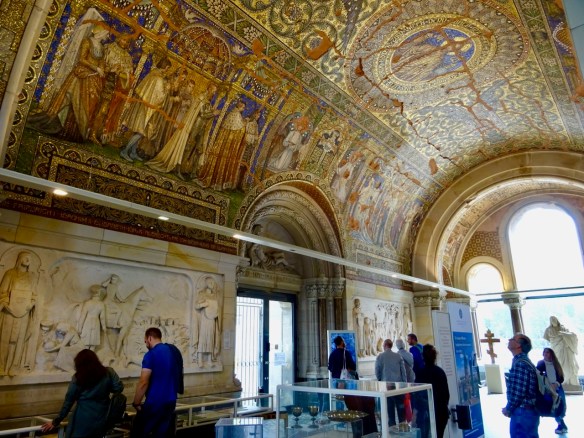 even the floor is completely decorated with mosaic tiles. It must have been an incredibly beautiful church.
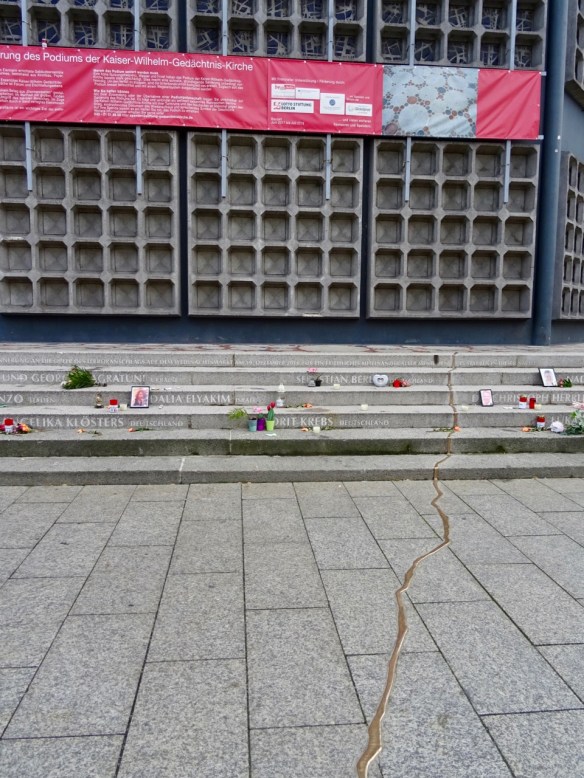
 Outside we see this memorial for the victims of a terrorist attack on December 19, 2016 on the steps of the Memorial Church, A stolen truck was driven into the crowd at the Christmas Market and twelve people were killed and seventy were seriously injured. The names of the deceased are engraved on the steps and the bronze crack represents the fracture the attack inflicted on society. It is like a scar and shows that healing and everyday life are possible, but we should not ignore or forget the scars we bear and what caused them.
  We walk inside the Memorial Church and I am quite overcome. Something about this space moved me to tears. It is unlike anything I have seen before.
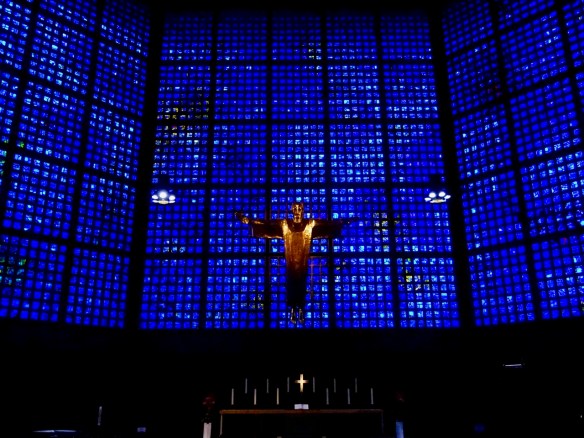 This Christ figure was beautiful.
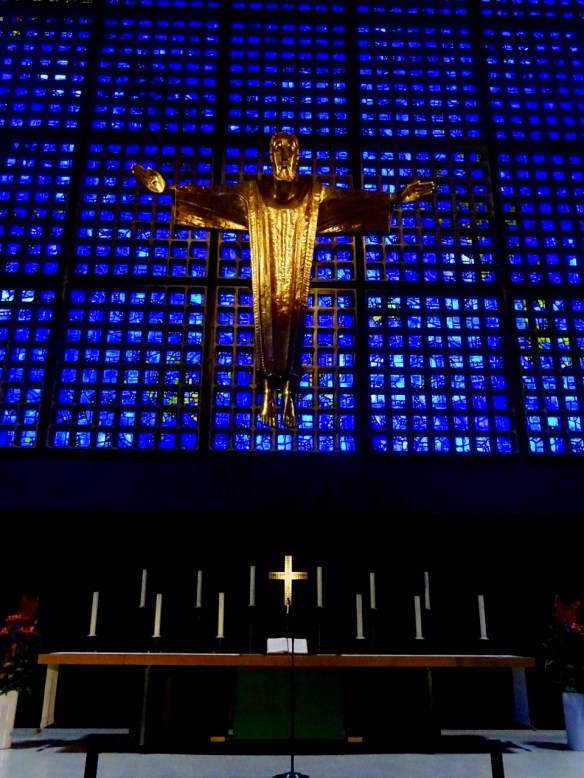 There is a concert here tonight and we sit for a while listening to the two organists practicing for tonight’s performance. You can see them in this photo. To listen to the organ music
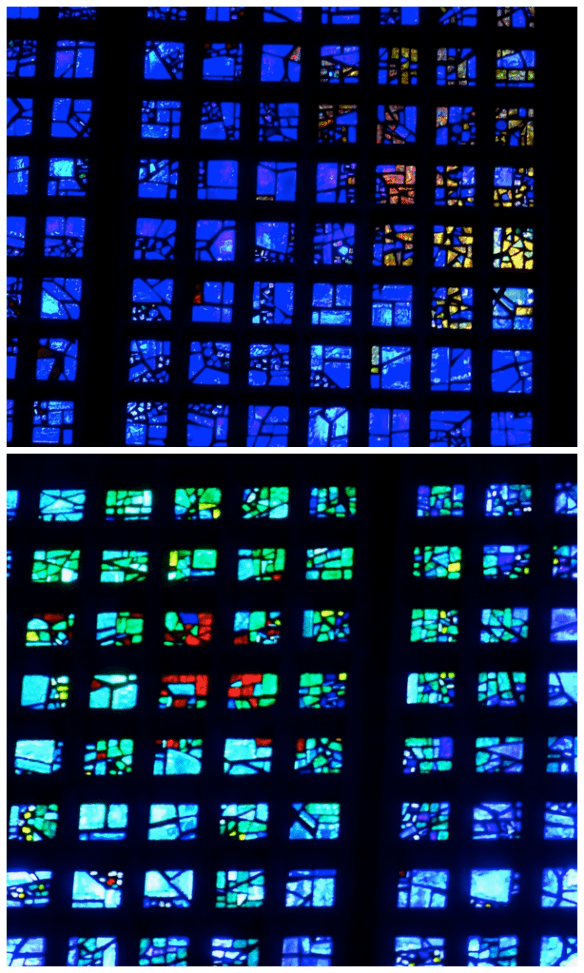
 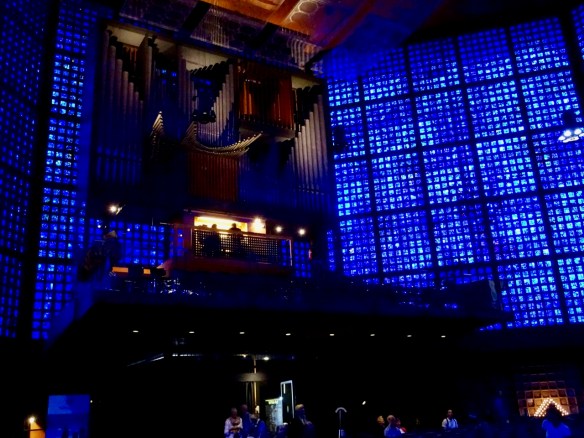 The walls are made of 22,200 panes of stained glass and each pane is made of many individual glass pieces.
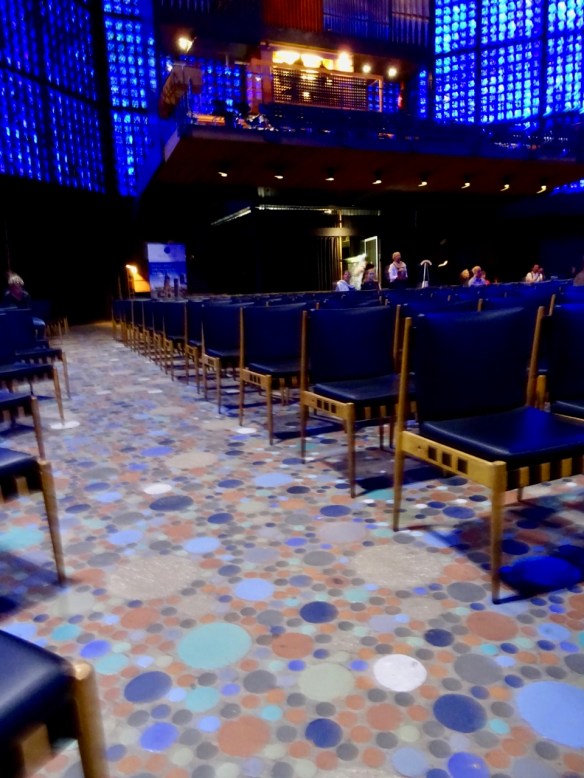
  The floor is covered in circles of many colours and sizes. It made me think that all those little pieces of glass and all the circles on the floor could represent people who have died and are memorialized in this church.
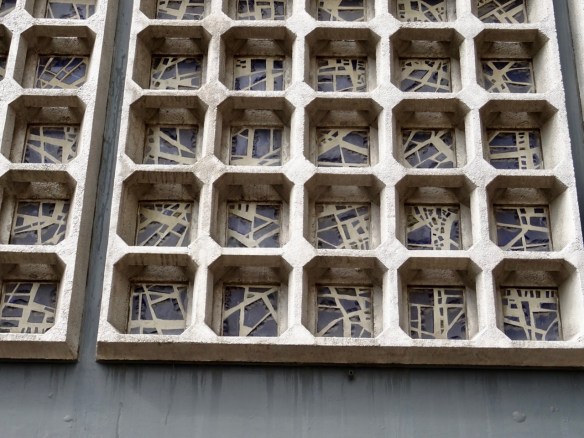
 The outside walls show how each piece of glass is embedded in mortar within each individual pane. The outside of this church gives no hint of the vibrant colours inside.
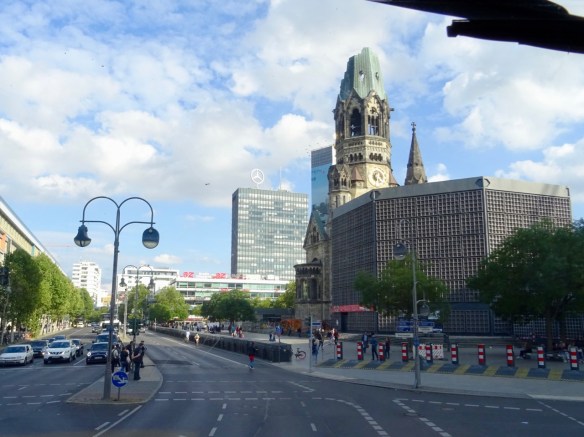
 We walk down the broad boulevard between the lanes of traffic. Here is a view looking back towards the bombed church.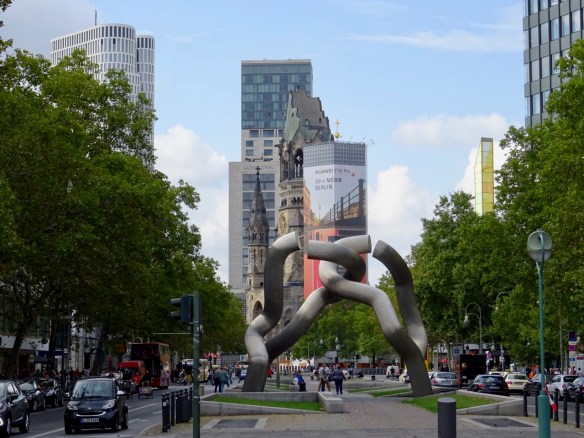
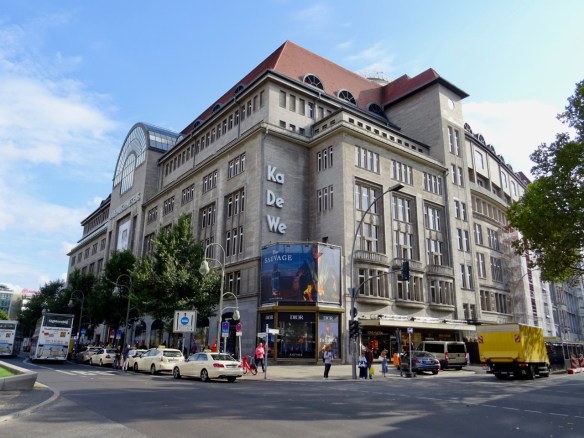 We make our way up to the sixth floor and find a whole floor of yummy things to eat. Too bad there are no gluten, dairy and egg free options for me.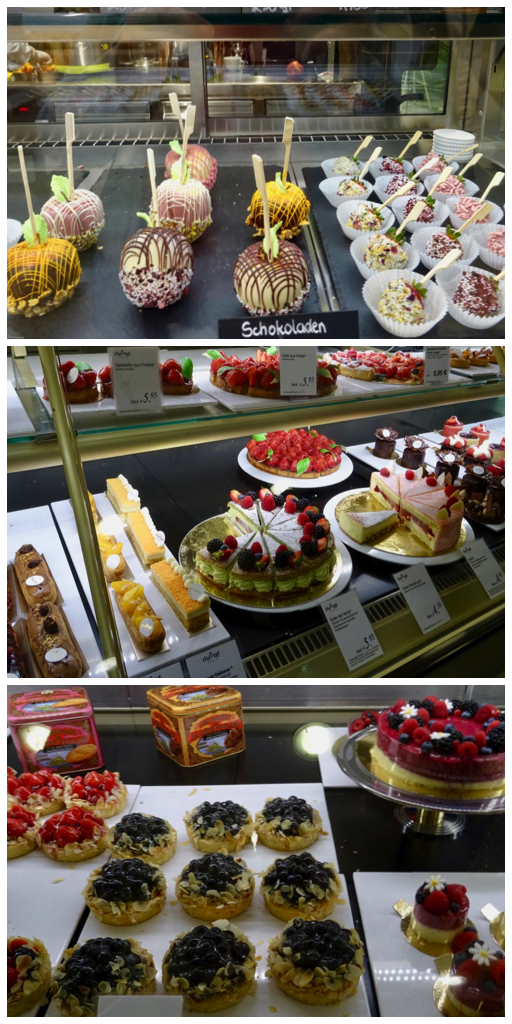
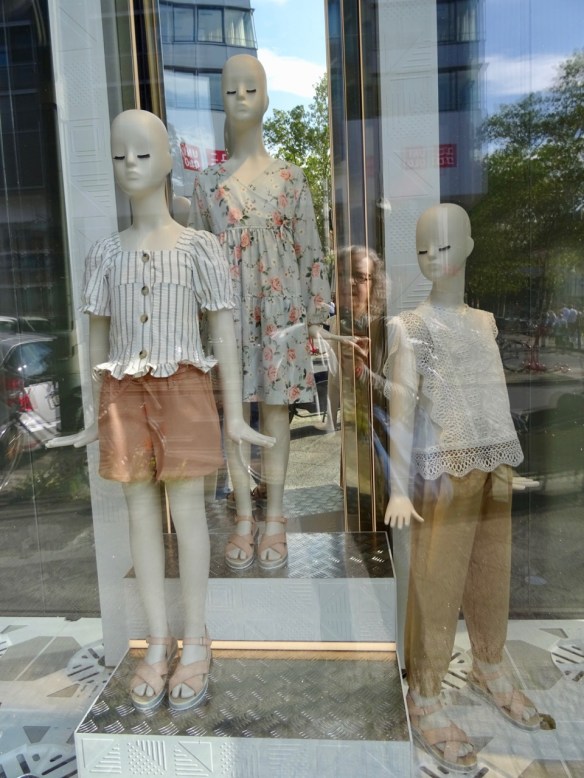
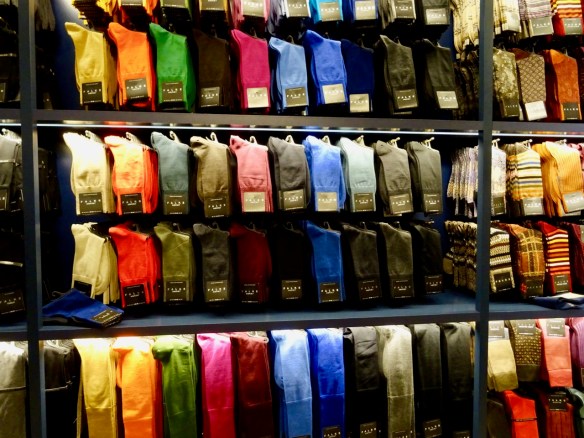 Here is what fashionable girls are wearing in Berlin.
  We continue our tour on a double decker bus. This is the first time we have sat up front on the top of one of these busses. !t does give a different viewpoint.
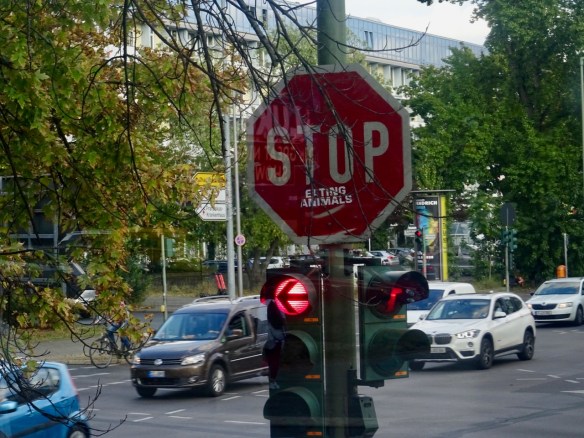
 Bob notices something strange about this stop sign.
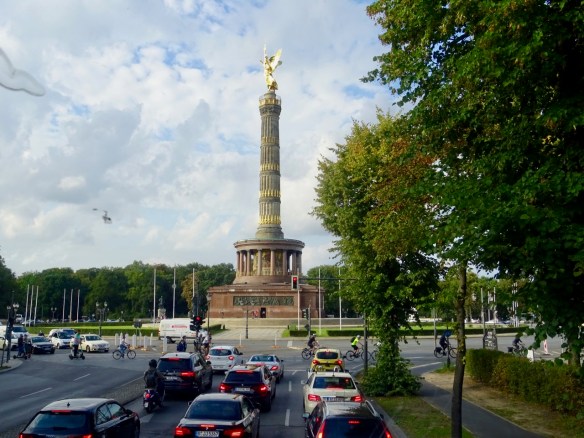
 We drive through the centre of a huge park and around this monument. The Victory Column with Victoria, the Goddess of Victory in the centre of the Tiergarten park is one of Berlin’s most famous landmarks.
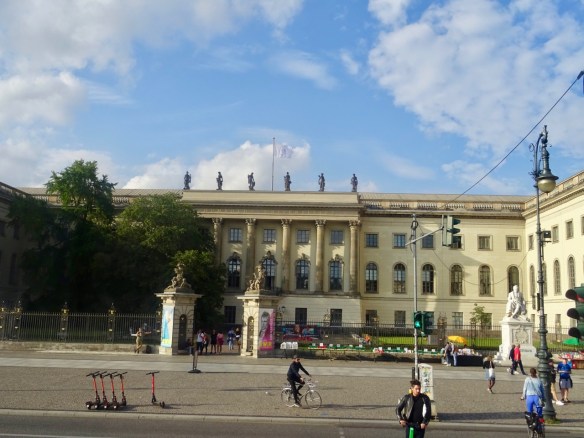
 We drive past the spot where the old book market was yesterday. Bob did a bit of research and discovered that this is the University where Eisnstein and the Brothers Grimm taught and where Karl Marx and Friedrich Engles studied . It was also the site of the burning of thousands of books by the Nazis in 1933.
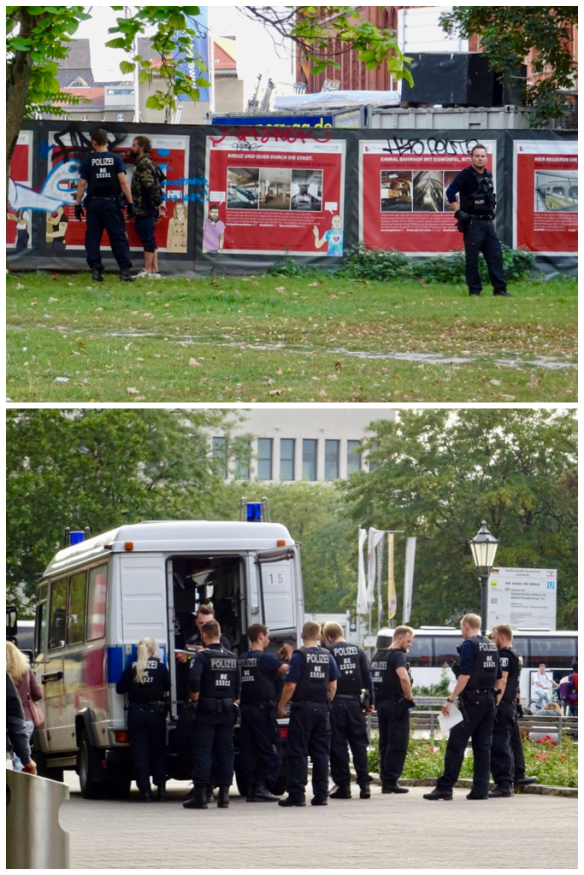
 Next stop is Alexanderplatz, a large public square and popular gathering place in Berlin. We find a bench for a tea break and witness a little drama unfolding behind us. It took eleven police officers over half an hour to move this fellow in handcuffs from beside the fence to the police wagon. There was lots of interviewing of bystanders and note taking but we don’t have a clue what it is all about.
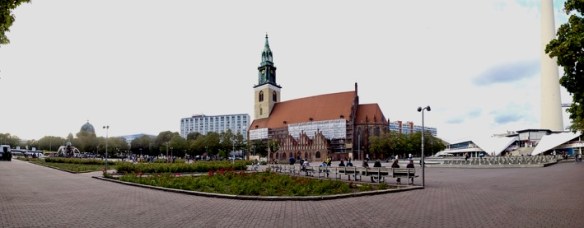
 This is the view in front of us.
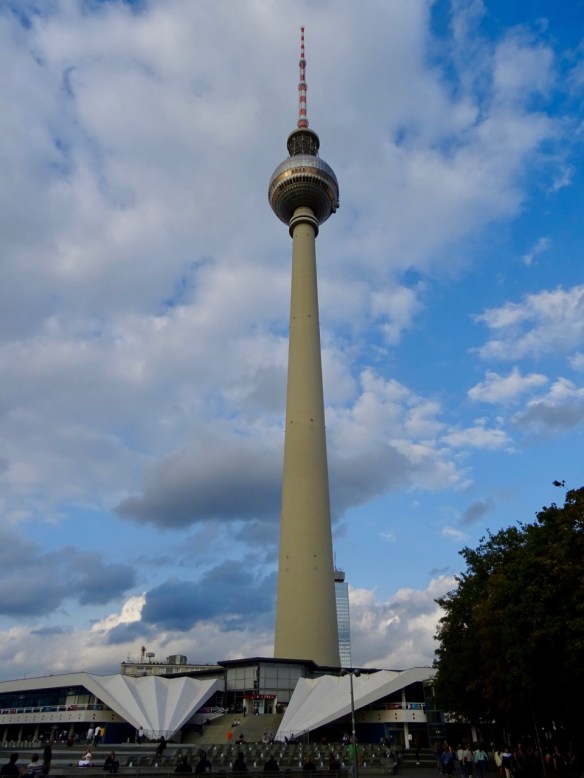
 I wanted to go to the top of the Berlin TV Tower but it cost €16 which is almost $24 each. That seemed a bit too much.
 The Neptune Fountain is is very ornate.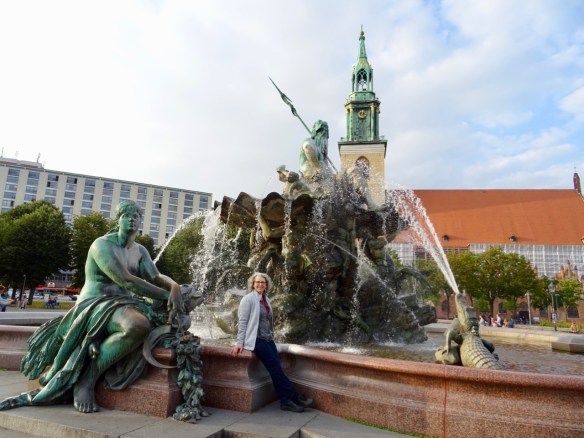
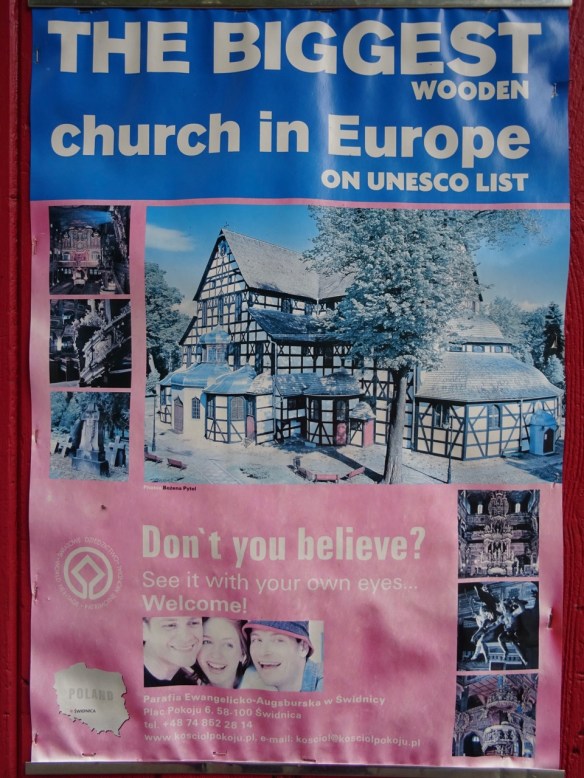
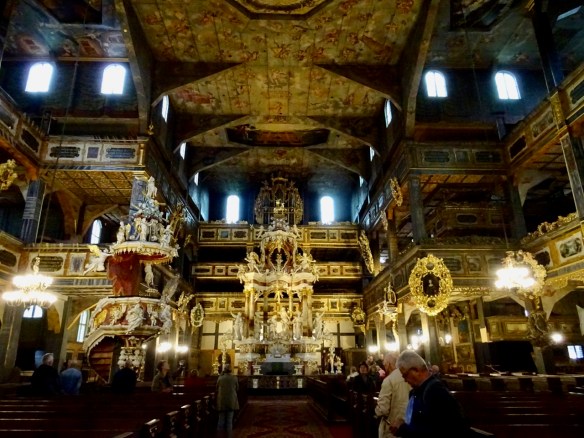
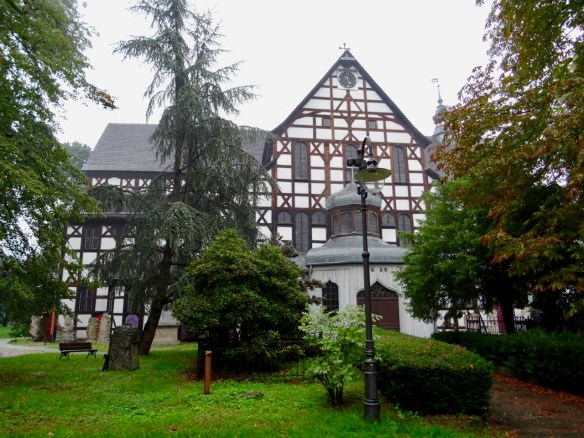 We walked into this church and we were amazed at the size and ornateness of the interior. This photo is looking towards the altar. The walls and ceilings are decorated with painted panels added after the construction of the church was completed in 1657.
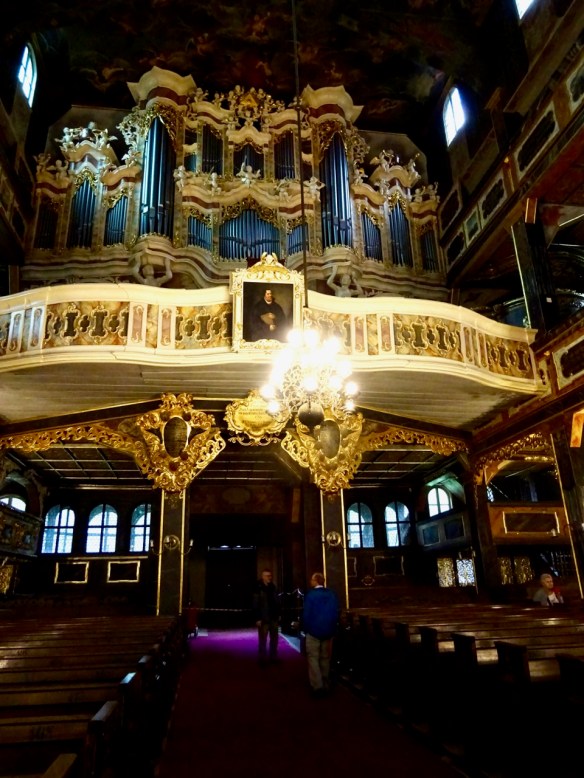
 The back wall with the organ.
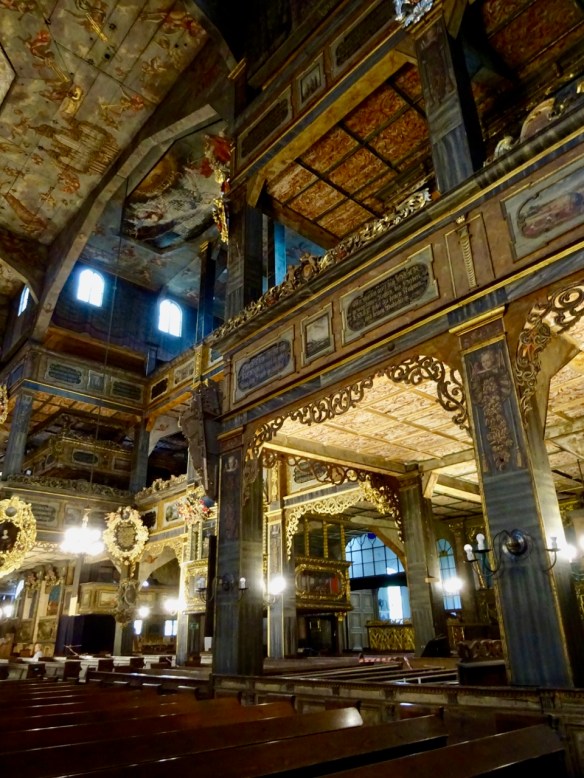
 A view of one of the sides of the church with it’s two tiers of balconies. The spaces between the wall timbers were filled with clay and wattle.
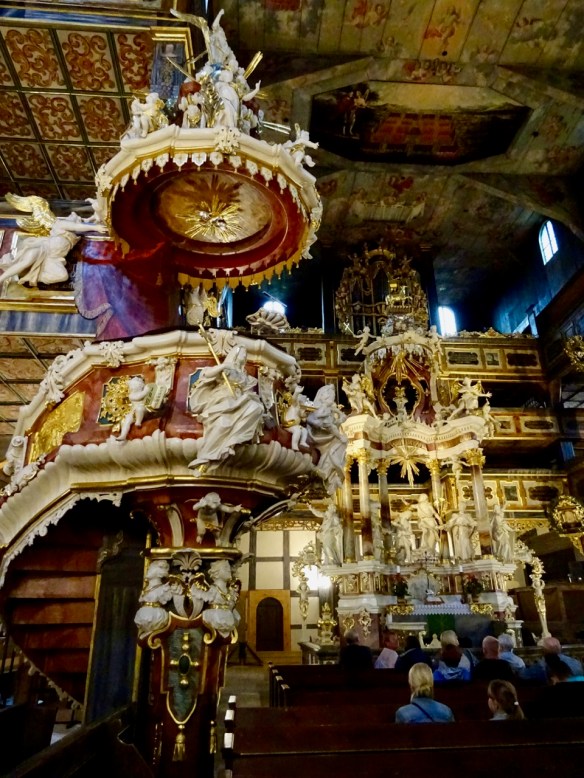
 The pulpit is extremely ornate.
 A view of part of the painted ceiling.
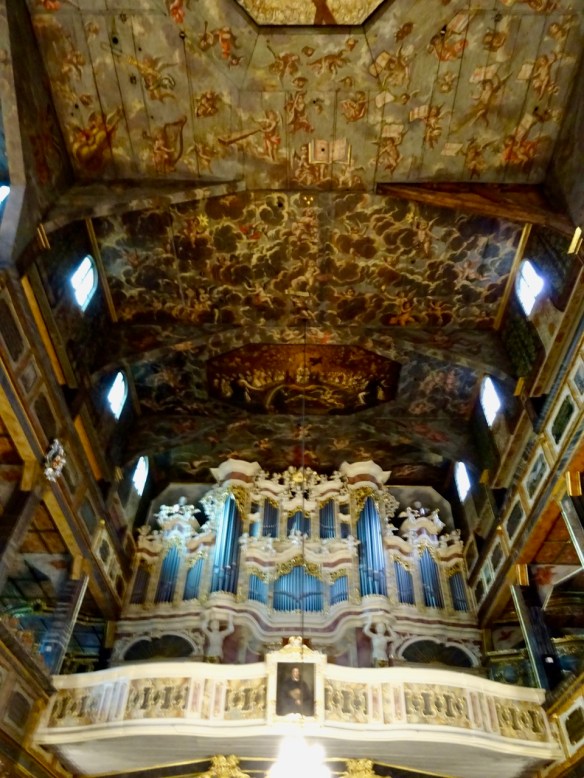 I loved the old pews with their carved backs and worn seats.
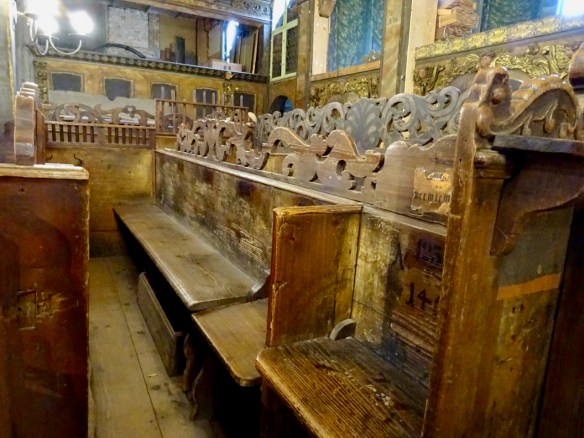 There is a cemetery surrounding the church.
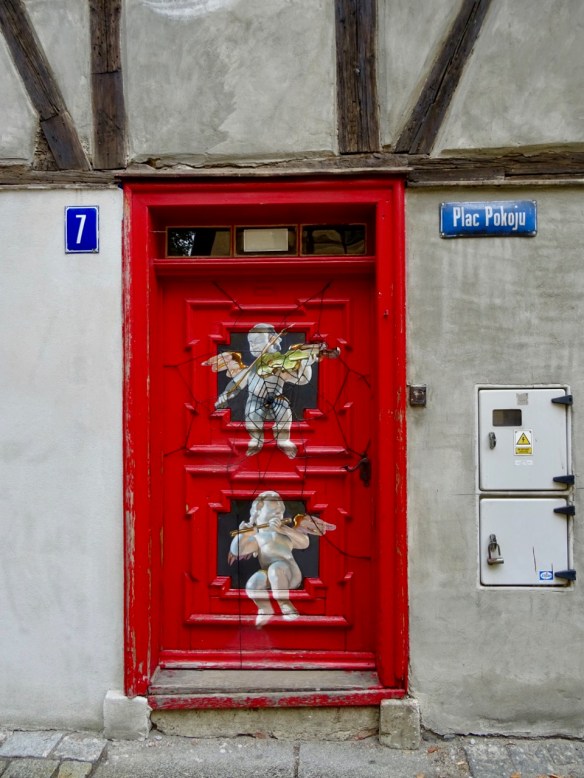
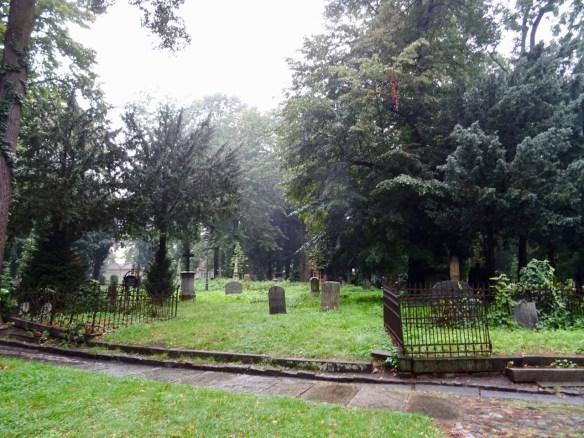 As we walked back to our car we passed this interesting door. Makes me curious about who lives here.
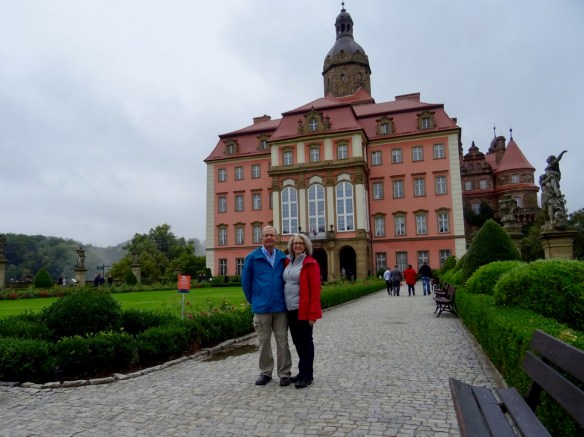
 Next stop on our day trip is the Książ Castle, the third largest castle in Poland which dates from the 13th century.
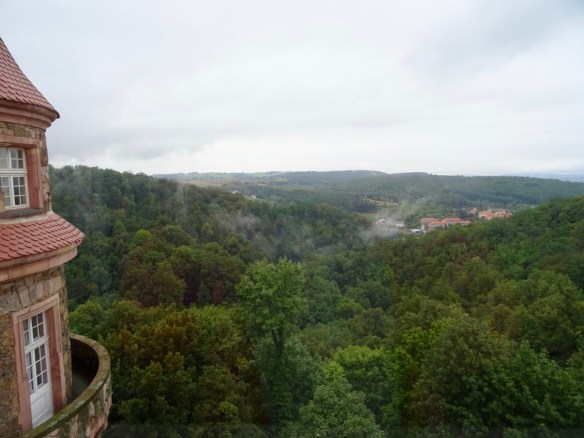
  One of the the views from inside the castle.
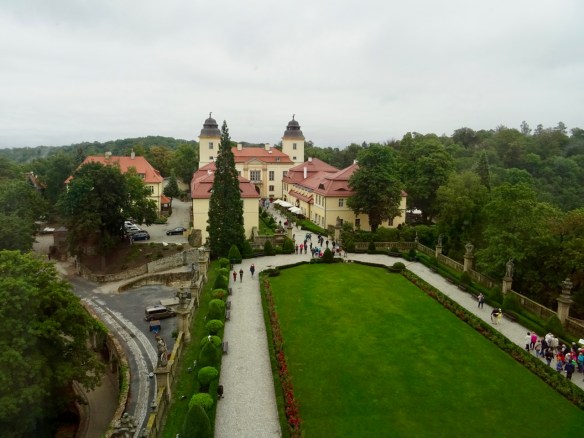
  The entrance buildings and front grounds of the castle.
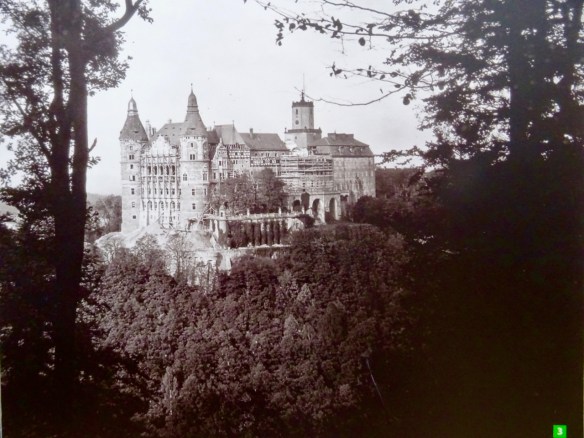
 An old photo showing the castle atop an impressive rock cliff. It has been destroyed and rebuilt and expanded various times and in different styles (from Gothic to Baroque and neo-Classical). The latest family to reside there, was the Hochberg family, one of the richest and most influential families in Prussia. In the 14th century they transformed the original defensive castle into one of the most beautiful residences in this part of Europe. The Hochbergs lived there for many generations, until 1941, when it was confiscated by the Nazis.
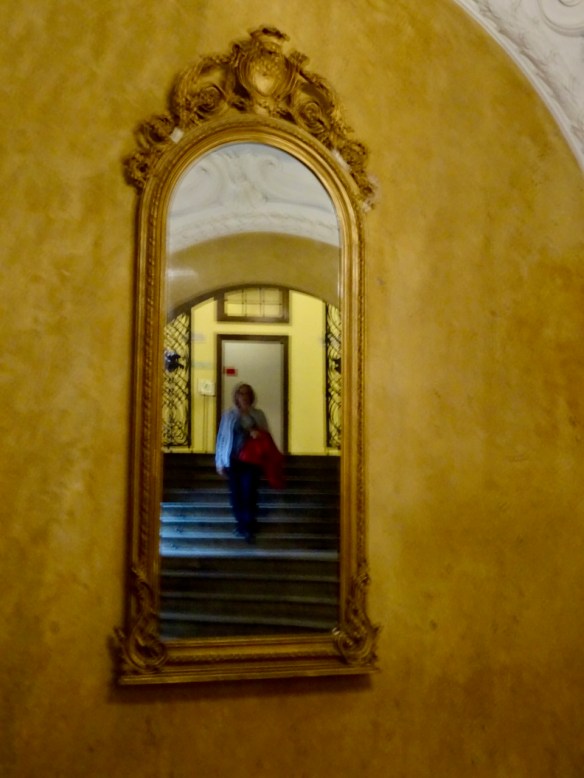
 Bob caught my reflection in this old mirror.
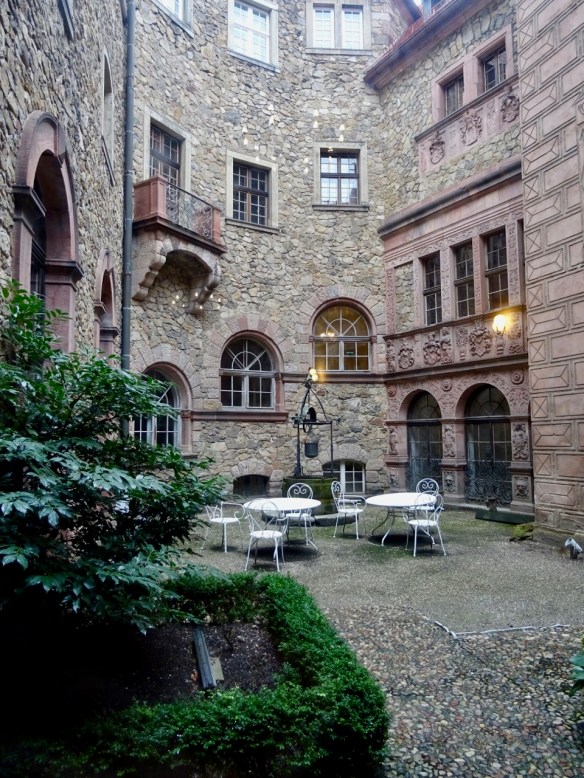
 The Black Courtyard is decorated with the coats of arms of the castles many owners.
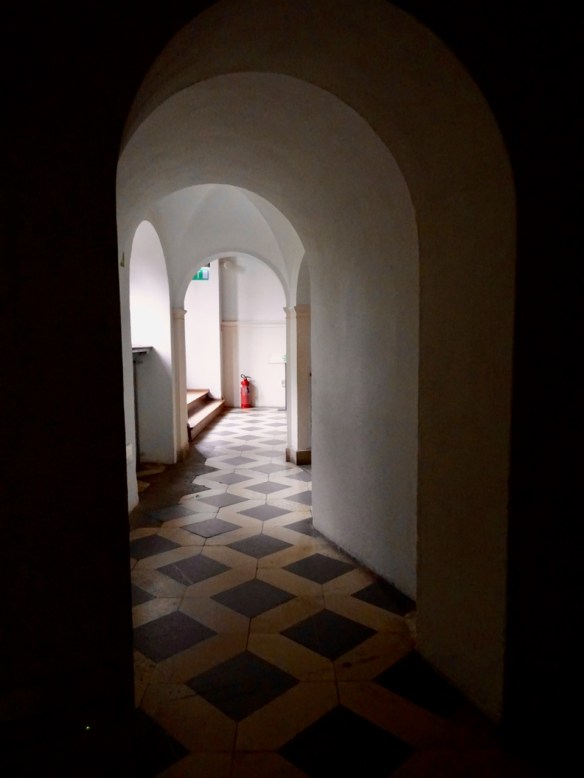
 We walked through many halls, some simple…
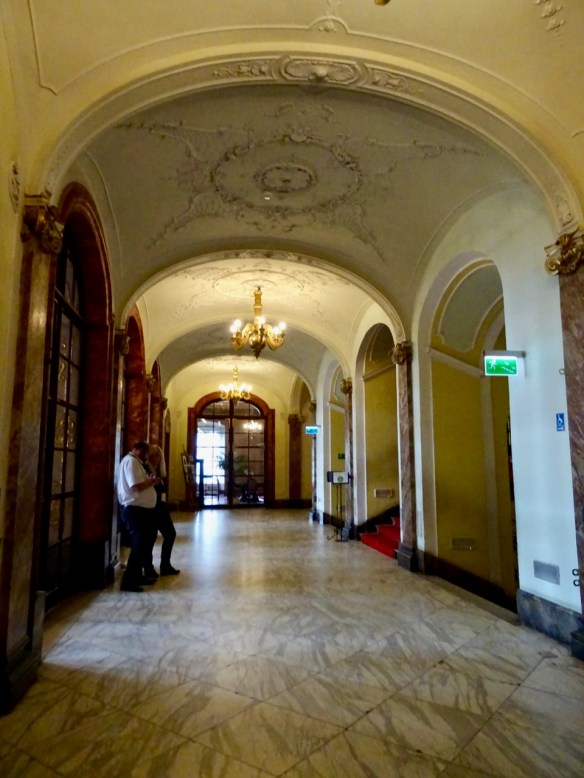
 and some very ornate. I suppose a castle with over 400 rooms needs lots of hallways and stairs, and we did climb lots of stairs.
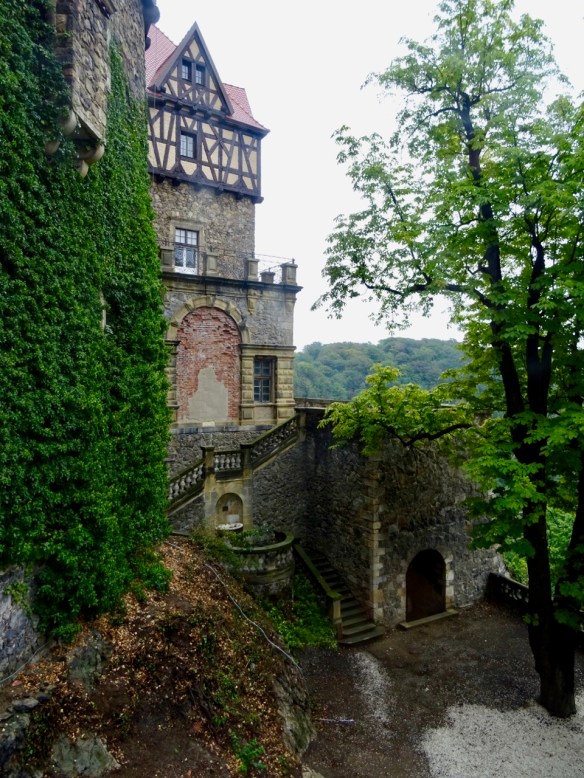
 Another view out one of the castle windows of the Chestnut Terrace with four large chestnut trees.
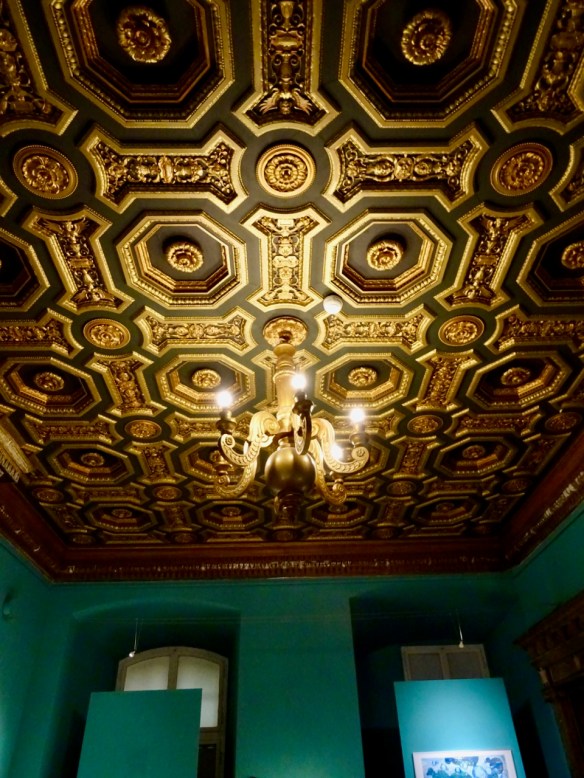
 As always, we must remember to look up. So many of the ceilings are ornately decorated.
 There was an exhibit of blown glass in some of the rooms and another view down one of the many hallways.
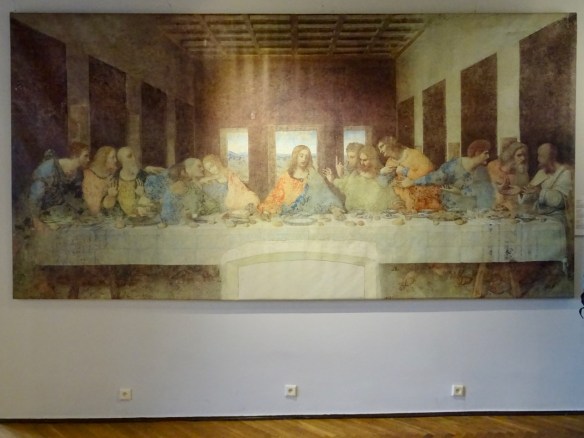
 We weren’t able to see the Last Supper when we were in Italy two years ago (we didn’t know you had to buy tickets far in advance) but there is a Da Vinci exhibit here in the castle with a replica. Not as good as the real thing but interesting none the less.
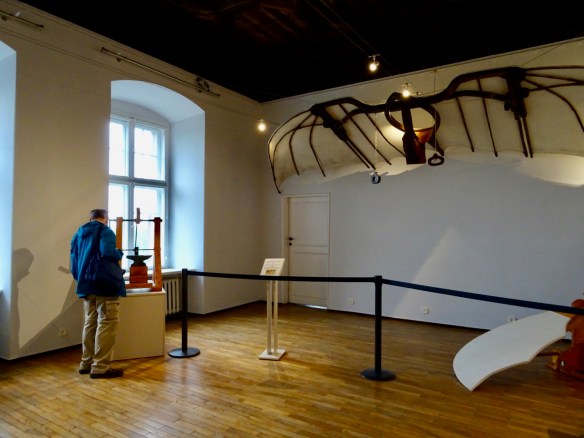
 There were replicas of many of Da Vinci’s paintings, including the Mona Lisa, and models of some of his inventions.
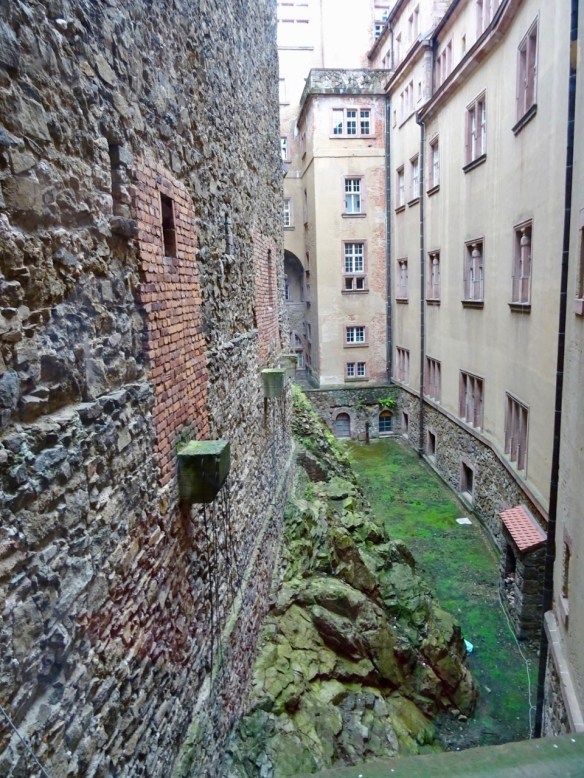
 Looking out one of the windows we get an idea of some of the renovations and reconstruction that has taken place over the centuries. It is quite a convoluted building.
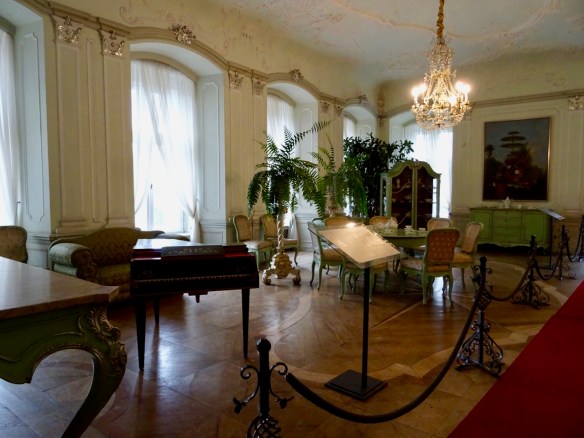
 One of the restored and decorated rooms. The Nazis stripped the castle of its furnishings and paintings and it is just now being restored.
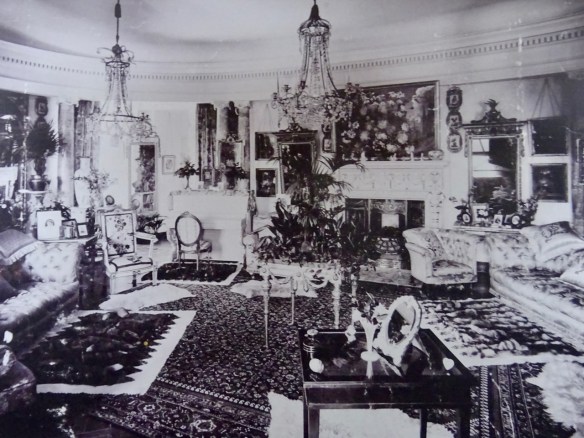
 A photo showing a much more elaborately decorated room than we see today.
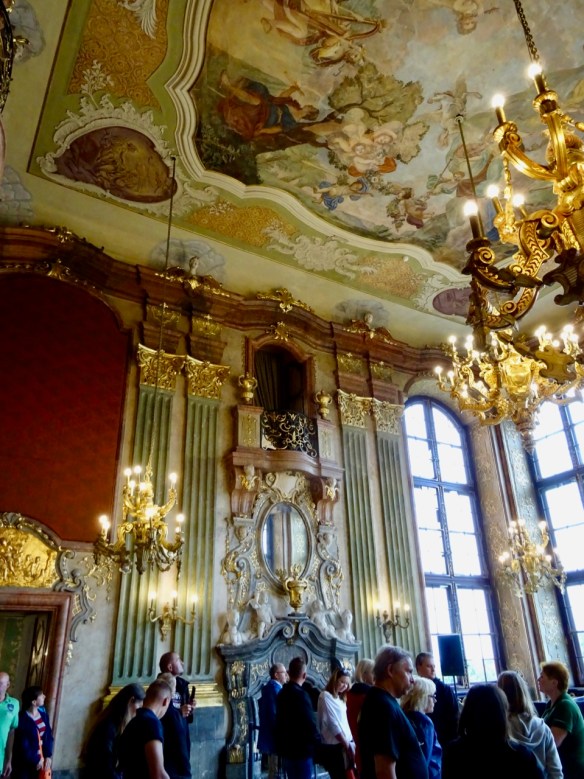
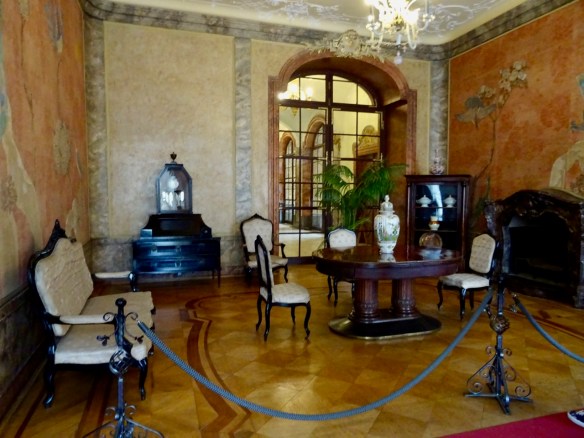
 The Maximilian Room has been restored to its former glory. There is a balcony on either side, one for the prince’s apartments and one for the princess’s apartments, that overlook this elegant room.
 And what castle would be complete without a Japanese influenced room. They were very popular.
 “The castle became an important part of the
  As we finish the tour of the castle, we are led out to the gardens and terraces surrounding the castle.
 The grounds are beautifully maintained.
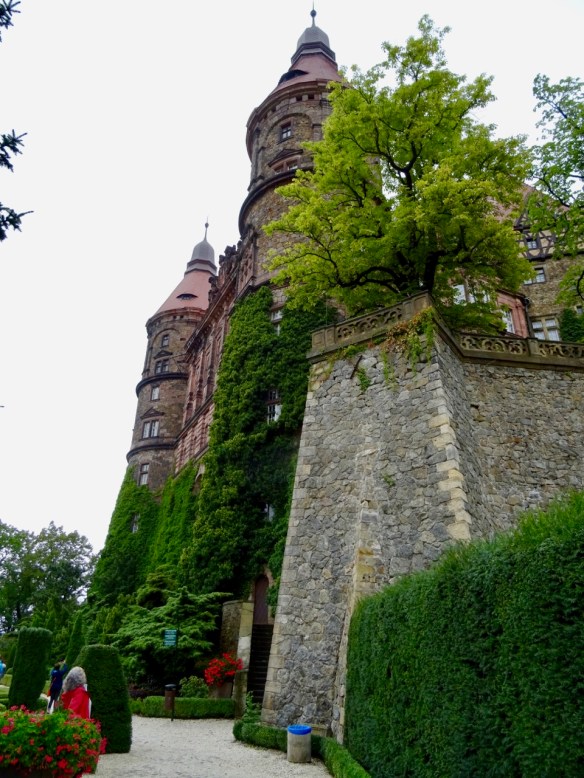
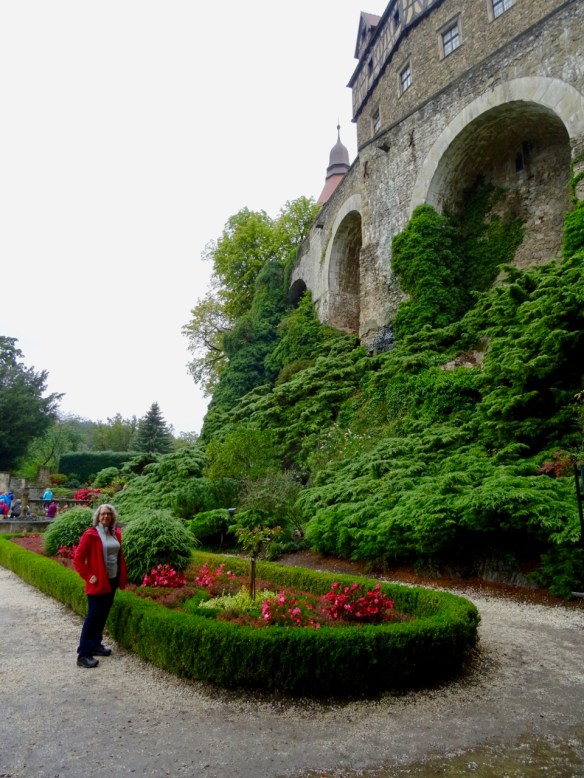 An interesting view of the castle.
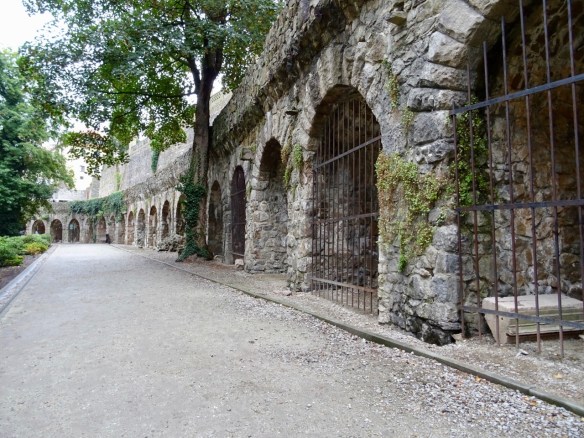
 We have no idea what all these small arched nooks with their iron grates are.
 As we walk back to our car we pass a pond with blooming water lilies.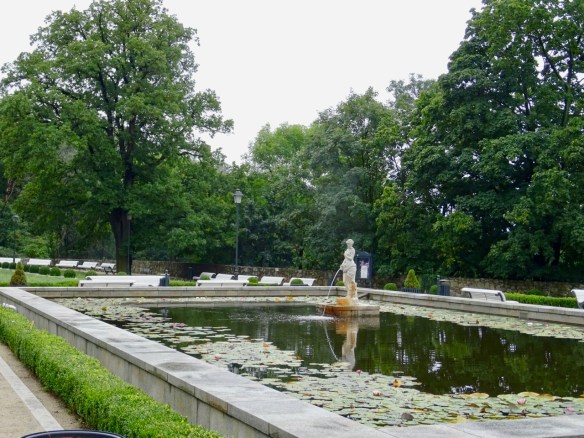
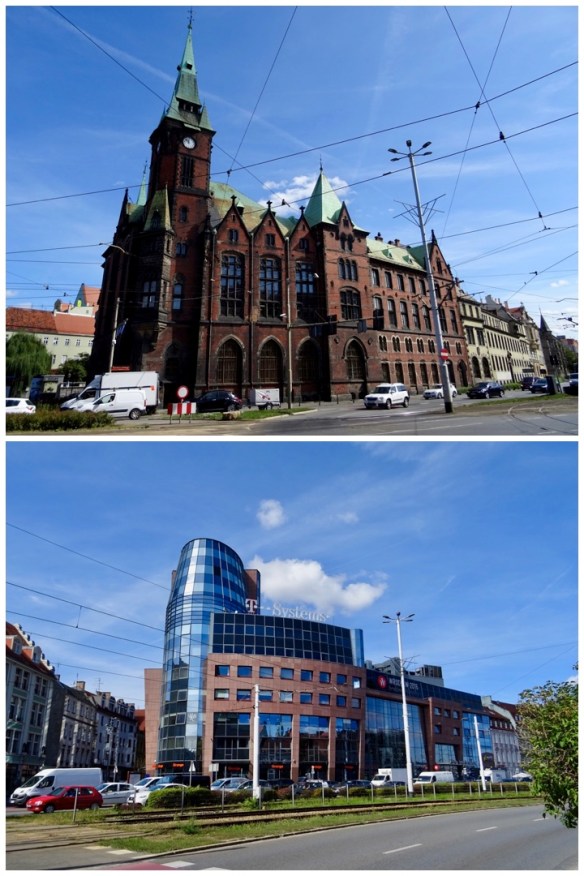 Here’s how big items get delivered!
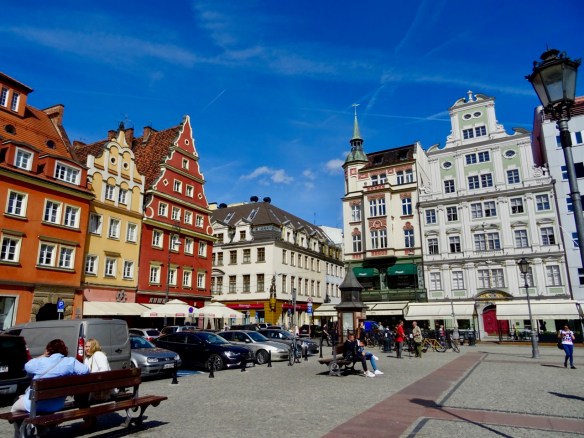
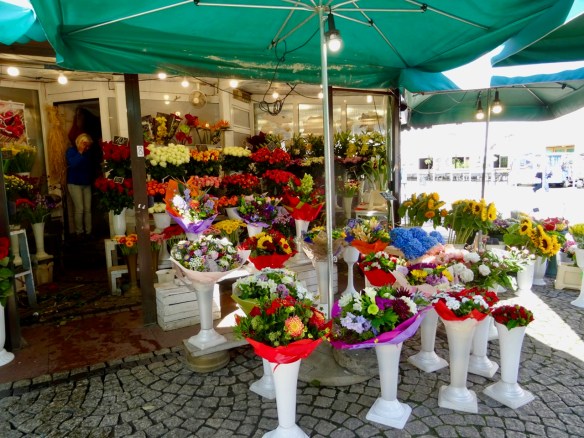 Wroclaw has an ever growing populations of gnomes. In fact, our guidebook states “the little buggers are currently rumoured to be running rampant to the score of over 300 making it literally impossible for us to try to keep track of them!” I think they are delightful and I am happy to make their acquaintance .
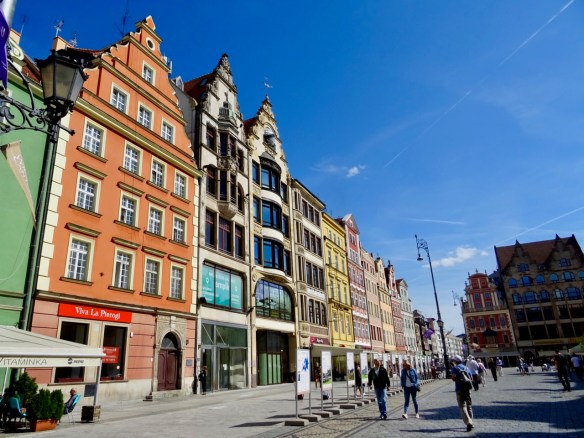
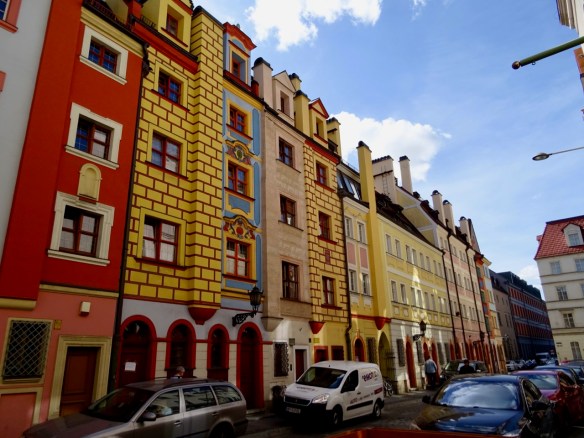
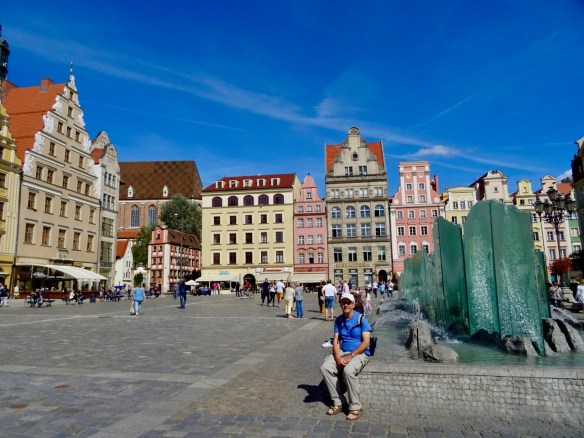 and more tenement houses in the town square.
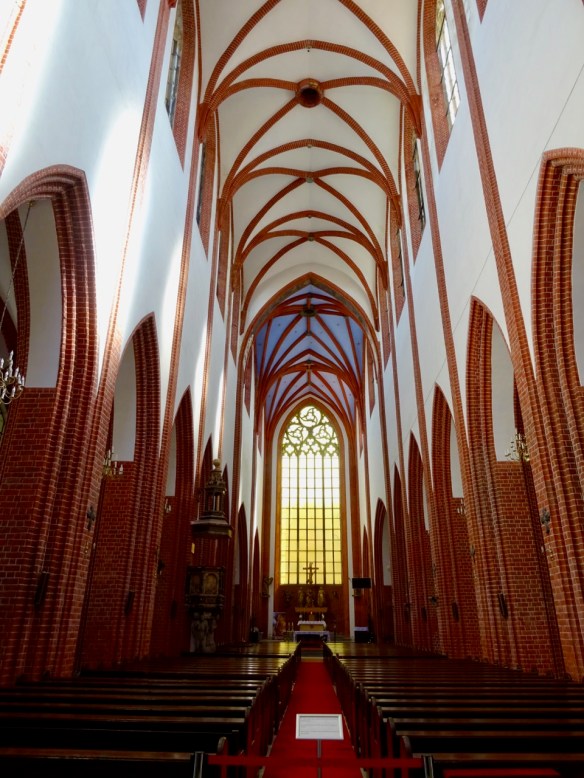
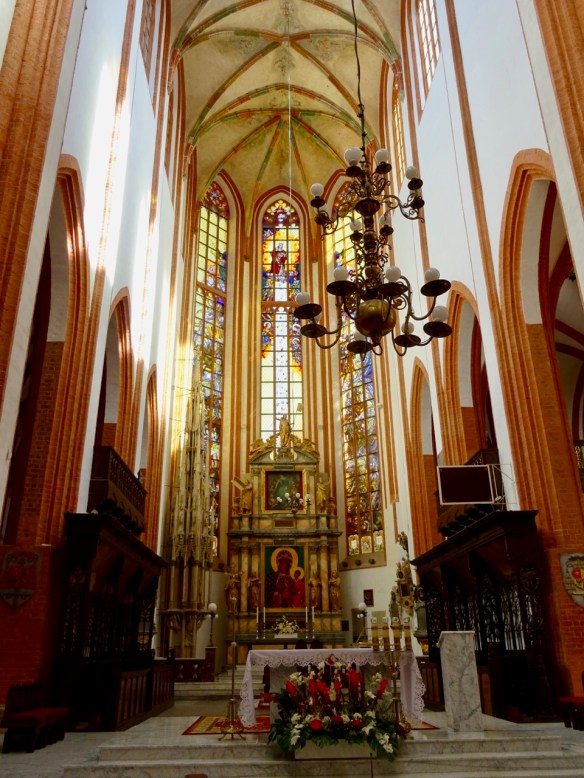
 The interior of St. Mary Magdalene’s Church which dates from 1330.
 We climb 147 steps up to the walkway between the two towers. In times past women suspected of being witches were forced to cross this walkway (there were no railings then) and if they made it across safely they were branded as a witch. If they fell to their death, then they were innocent of the crime of being a witch! You certainly didn’t want to be accused of witchcraft! I am very glad there are railings now and I meet another couple of gnomes.
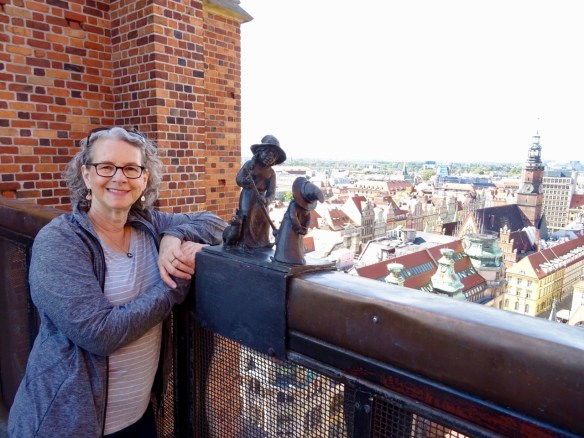 We have great views of the city from up here.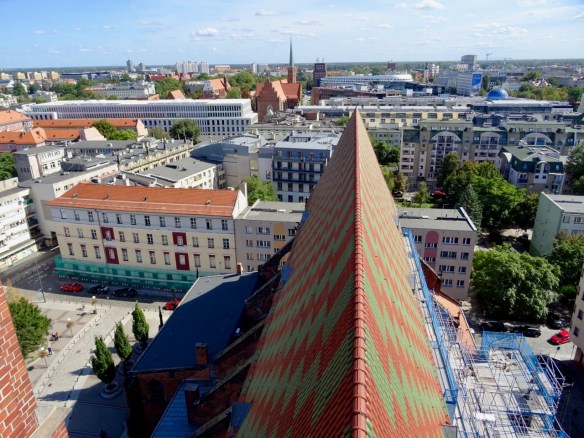
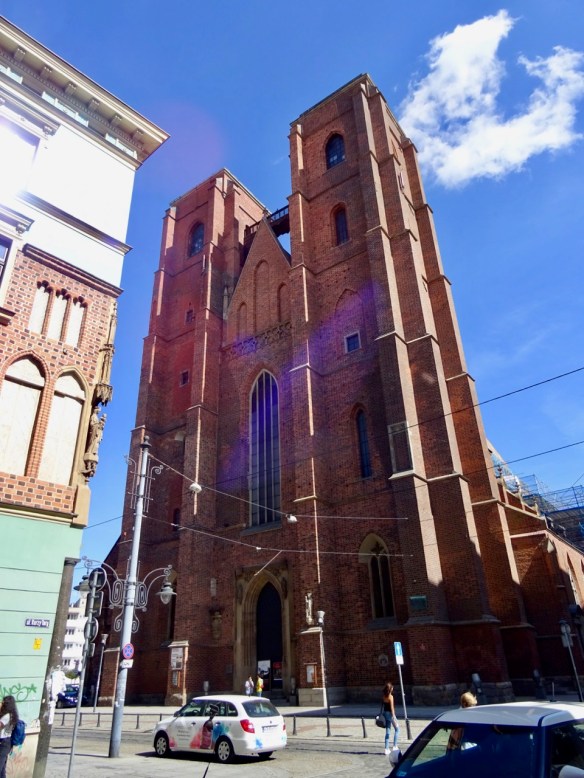
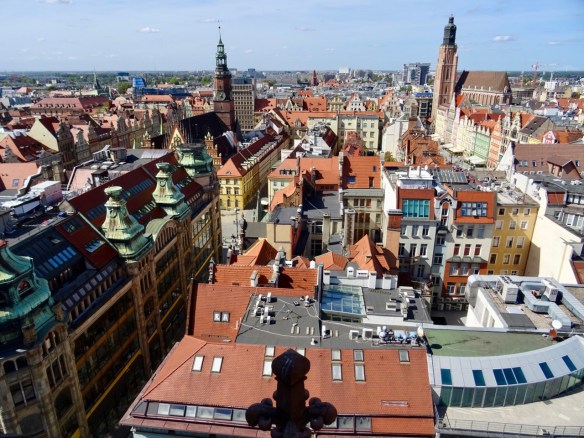 Here is a view of the walkway, way up there between the two towers.There were steeples on these at one time, not sure if they were destroyed during the war?
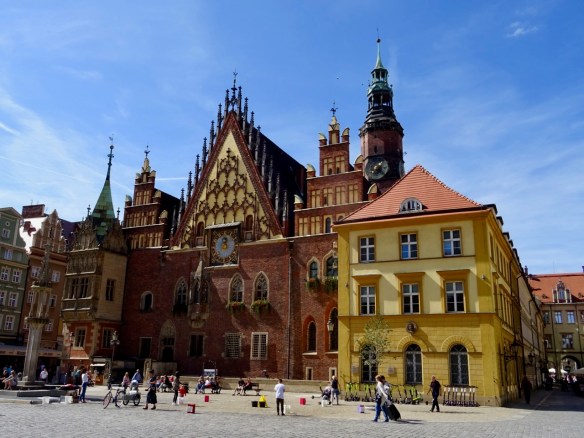
 More ornate colourful buildings.
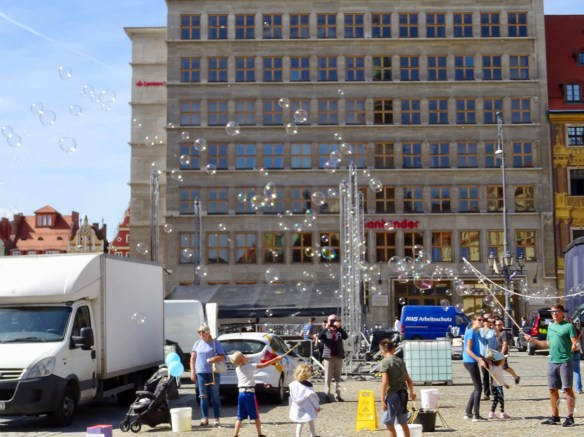
 I wish I knew the recipe for the bubble mixture this guy was using! He made hundreds of bubbles at a time with his string between two sticks. Kids had such fun chasing all the bubbles.
 We found quite a few more of these little fellows, on doorsteps, or tucked into corners.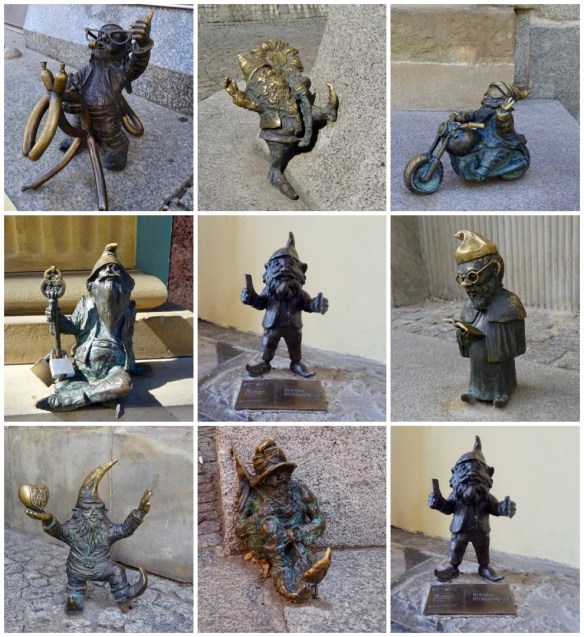
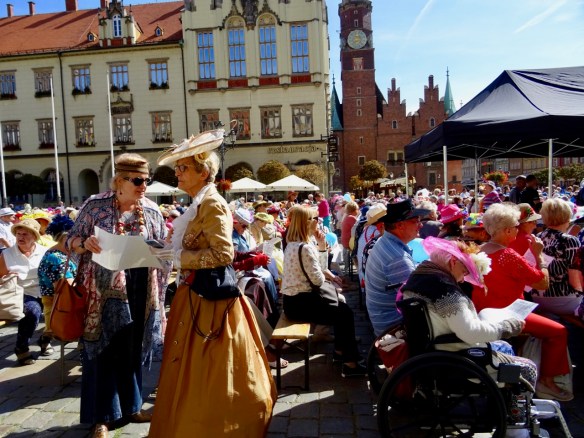
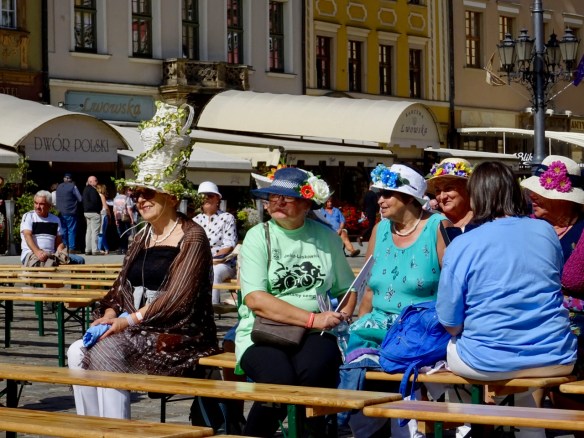 The two little houses in the corner called Hansel and Gretel are the only two houses left of streets that used to surround a cemetery. The cemetery closed in 1773. I wonder where the graves went?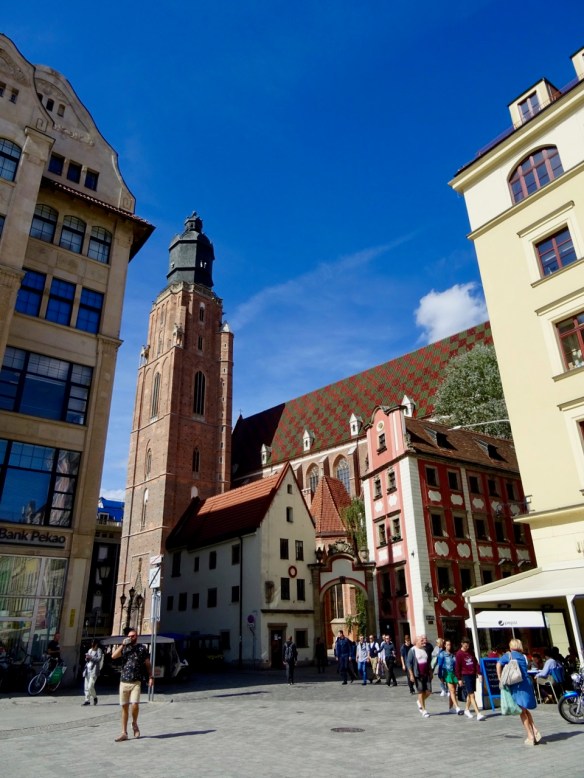
 and more busy gnomes.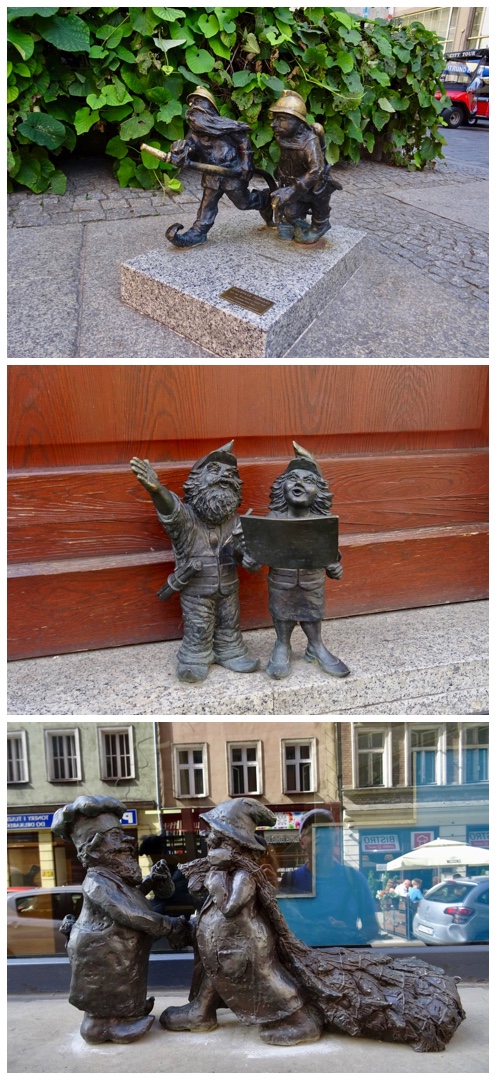
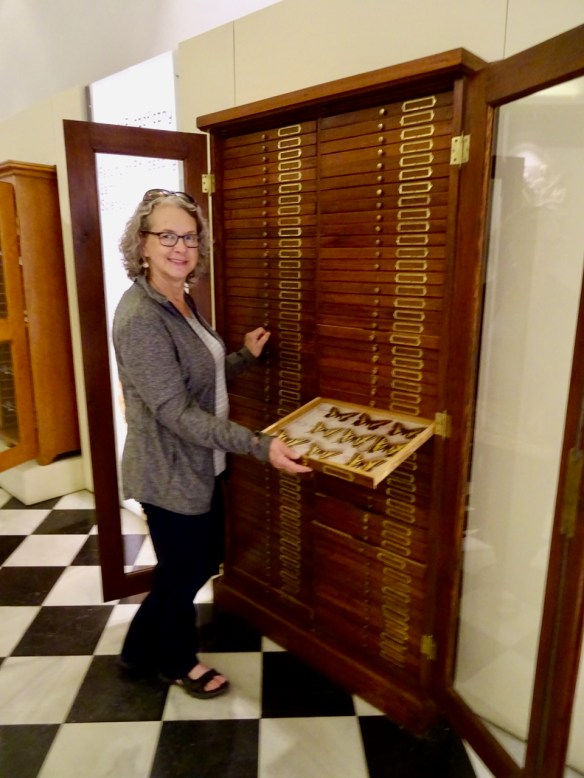
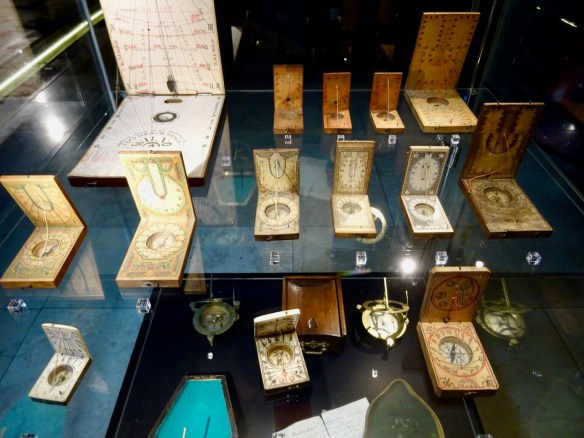
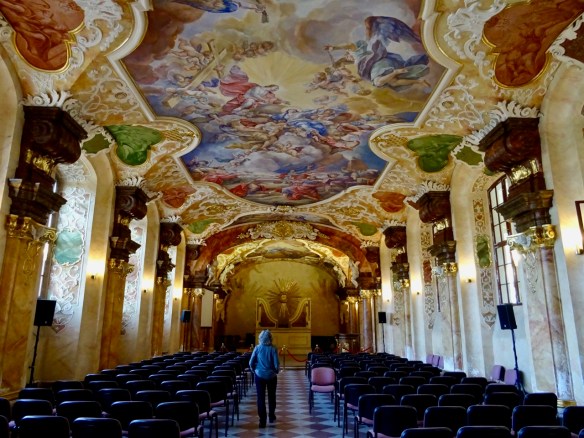 and an interesting collection of artifacts. This is a chart for determining eye colour.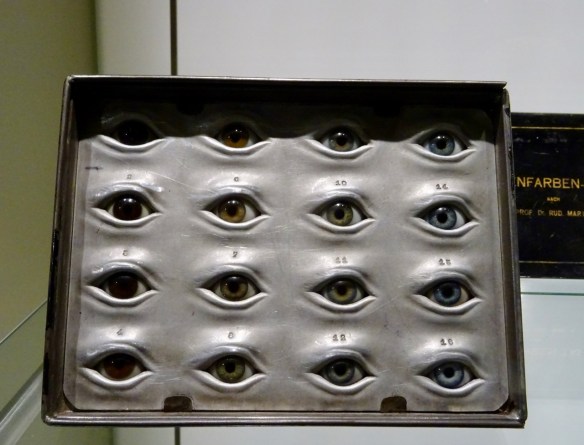
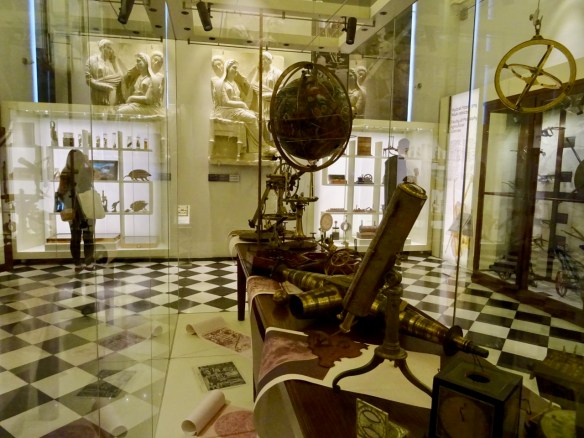
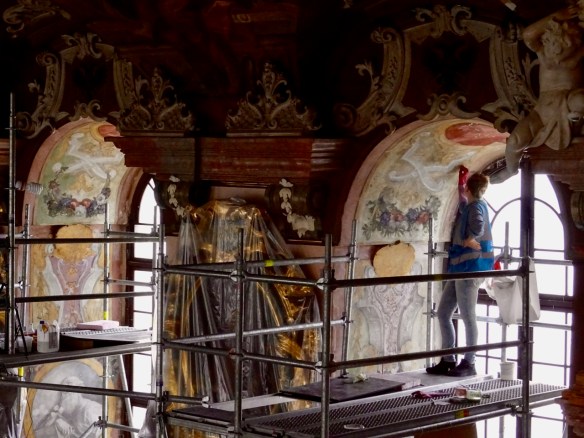
 The Music Hall is under restoration but we are allowed a peak inside.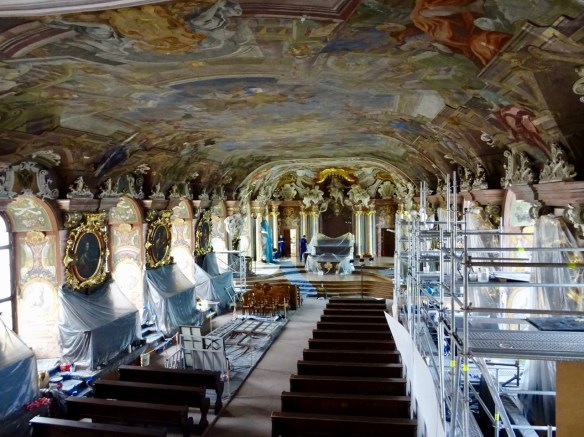
 We. climb another 203 steps up the Math tower, which has displays along the way.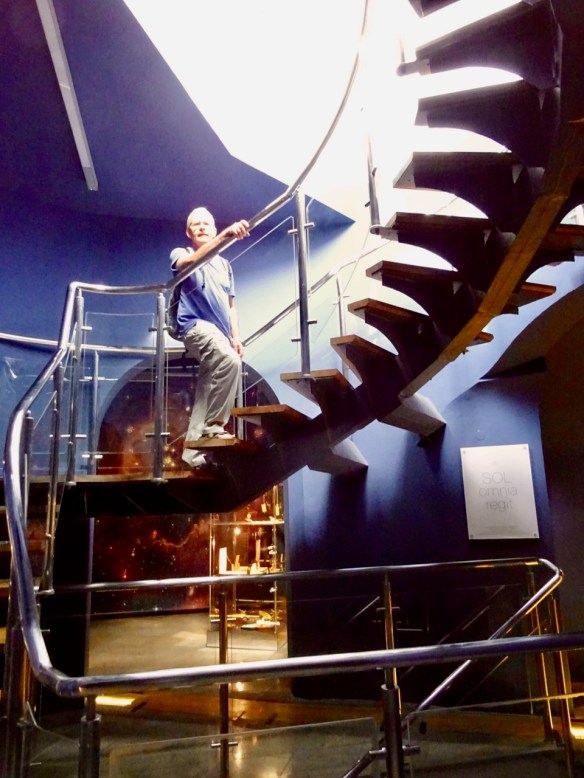
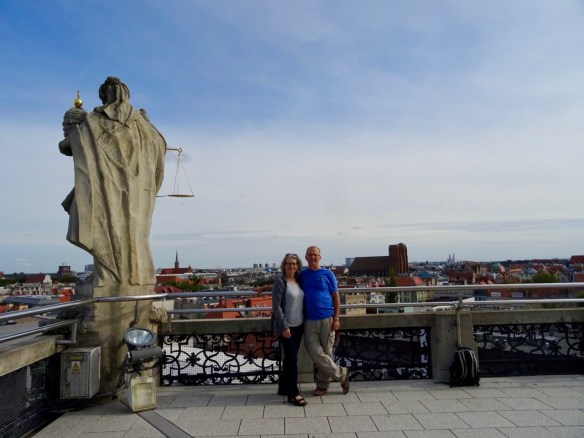 and the views. Notice the very modern looking tower among the old.
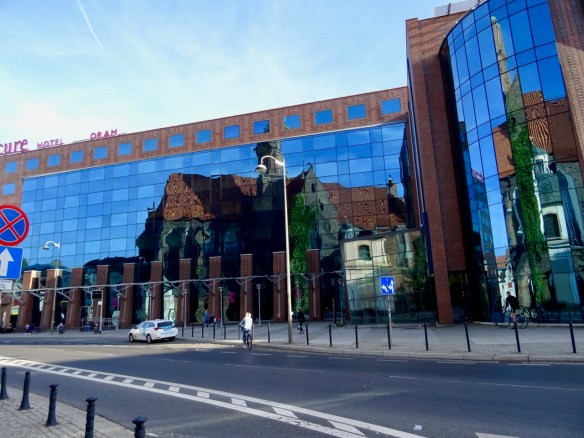
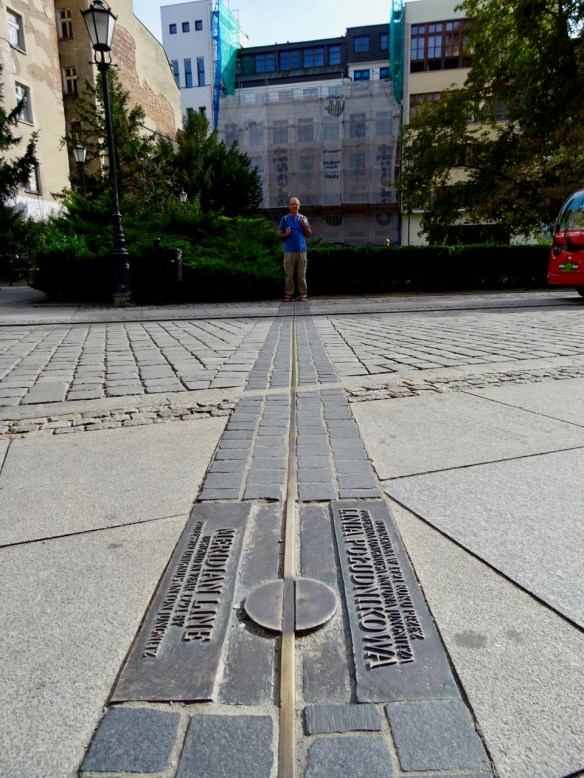 I just love all the reflections of the old buildings in the glass walls of the modern new buildings!
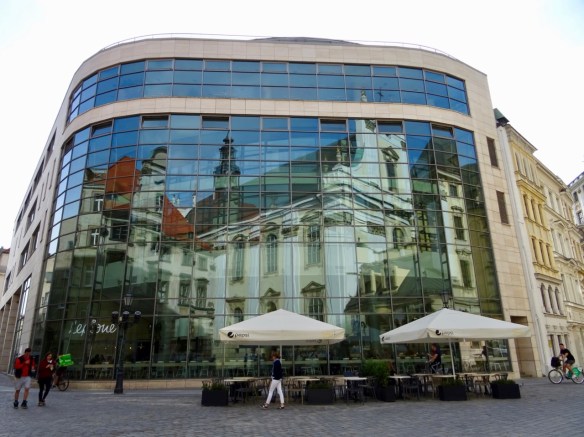 Churches here are either very ornate…
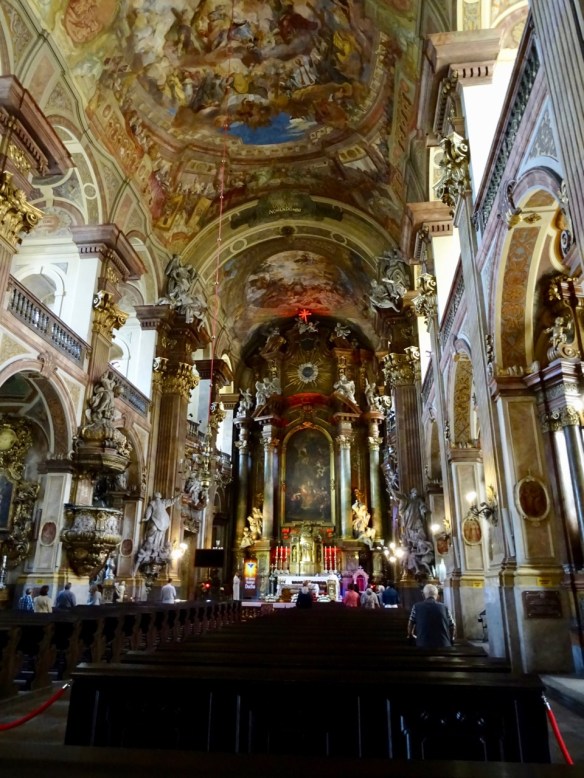 or look like this. The late afternoon sun was shining through the windows casting everything in a lovely olden glow.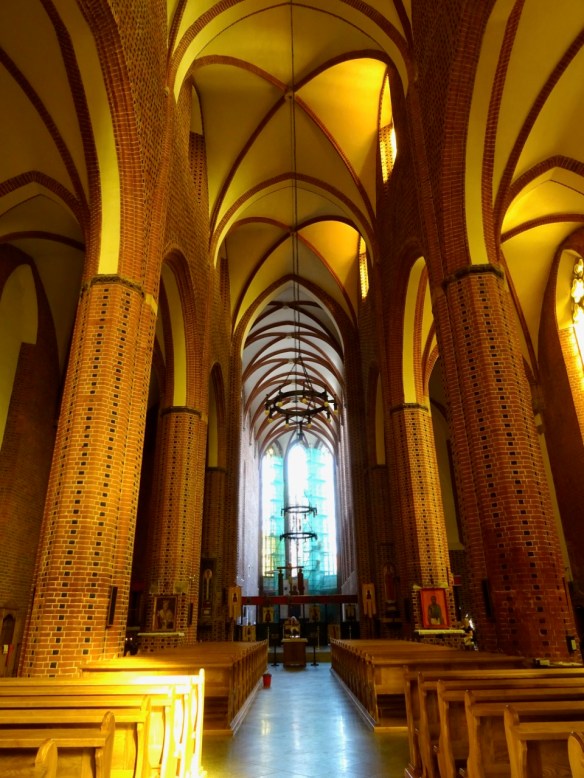
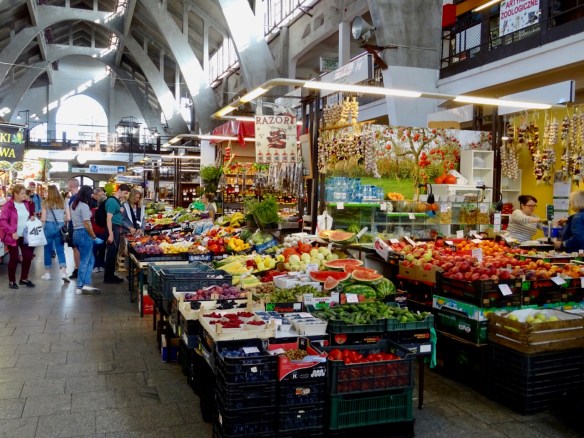
 Then we visit the market and buy some fruit. Food prices are very reasonable here.
 More reflections.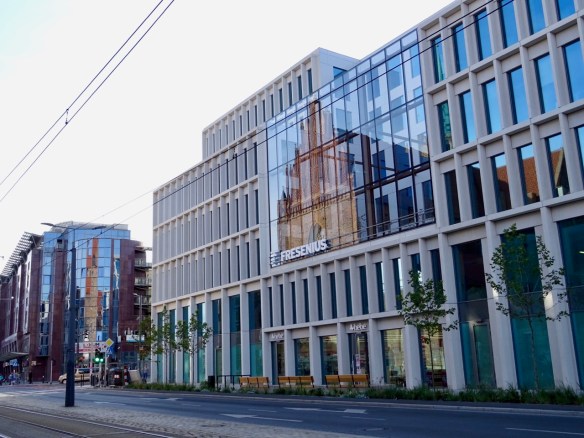
 We catch a trolley bus home. We haven’t seem many paved streets or sidewalks here. Most of the streets and sidewalks here are cobbled in one fashion or another. All the uneven footing is hard on the feet and ankles. We walked 16,700 steps today and climbed the equivalent of 31 floors!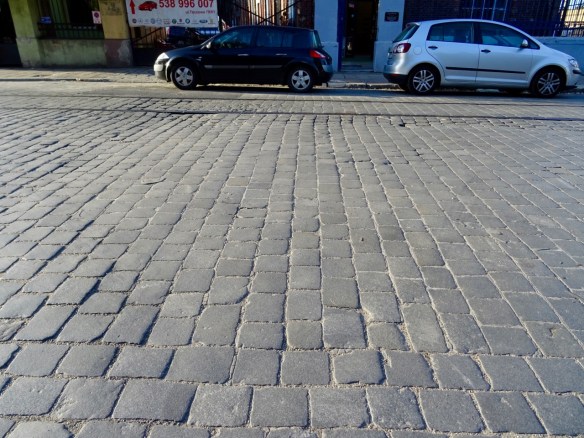
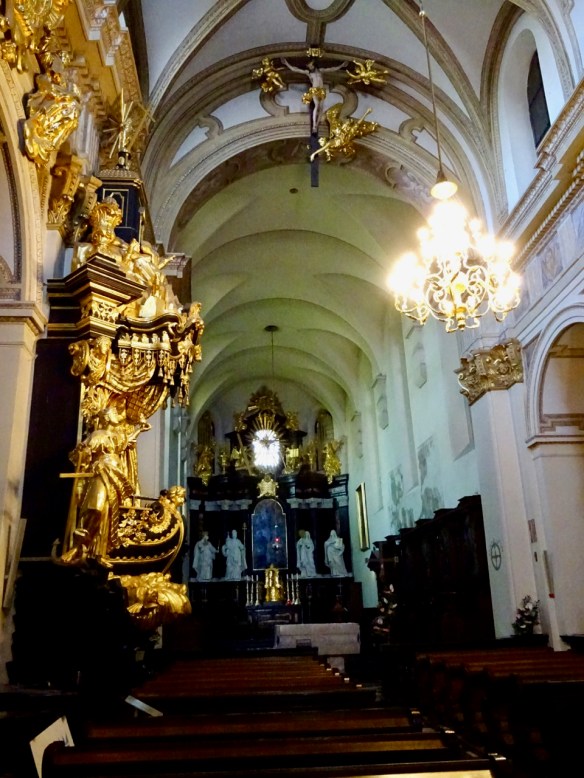
 The interior of the church shines with gilded statues and ornamentation. Notice the pulpit is in the shape of a boat.
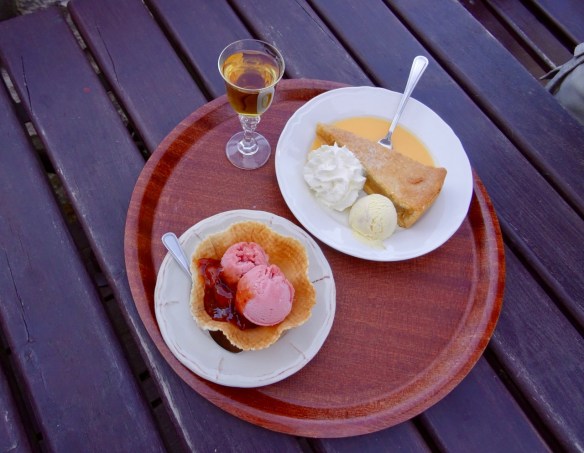
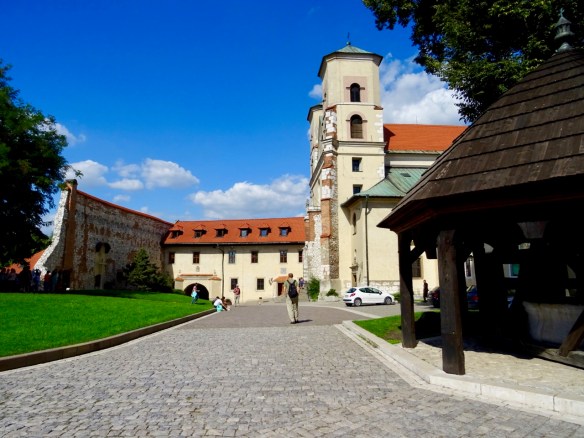
  We stop for dessert at a little outdoor cafe on the abbey grounds, some homemade pie, sherbet and Benedictine Brandy for Bob.
 This was our view. We enjoyed relaxing in this peaceful spot for a while, and the dessert was yummy.
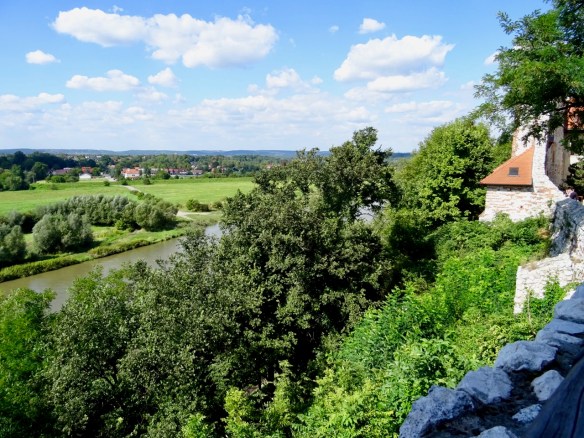 I think the structure on the right is a well but Bob thinks it is a wine press. We never did find out who was right.
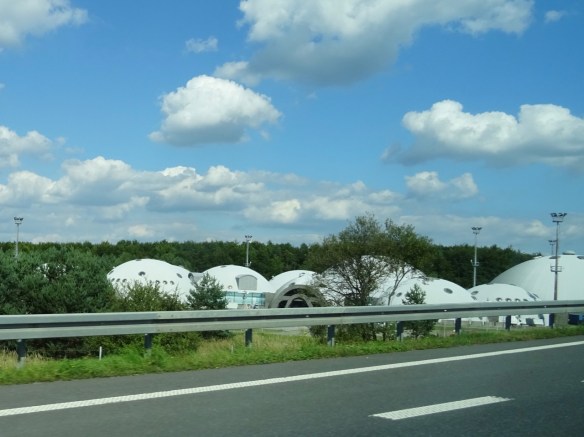
 Back on the highway on our way to Wroclaw. We passed these domes before on our way to Krakow. They are connected by glass tunnels. No idea what it is, but it certainly looks interesting.
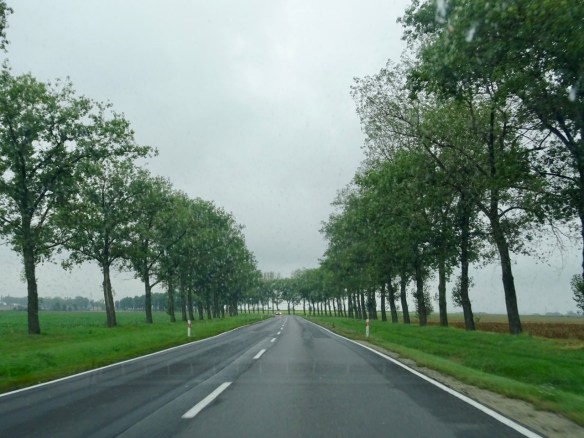
 Fields here are often bordered by a row of trees. I love their silhouettes against the sky. I snapped this as we drove by. We finally arrive at our apartment just as it gets dark and we are happy that it has a designated parking spot as there is absolutely no parking anywhere on the street.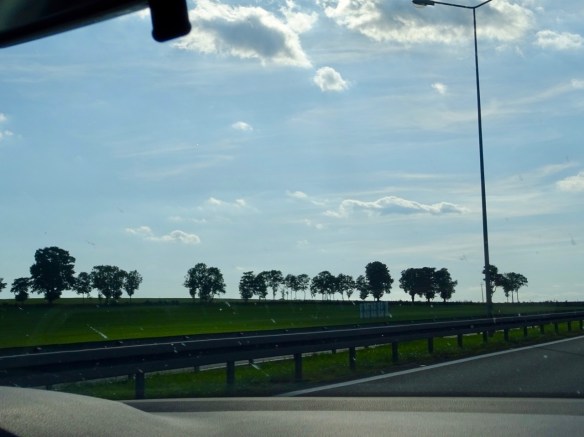
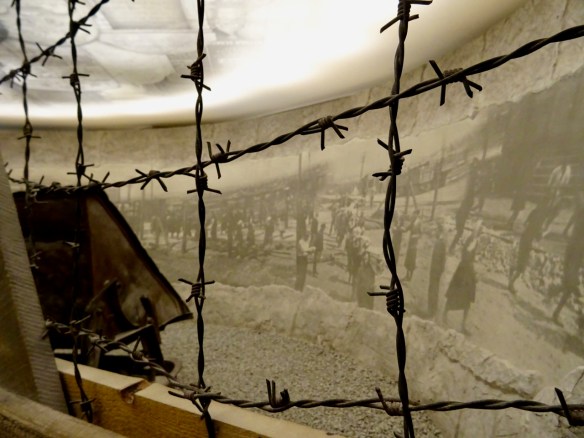
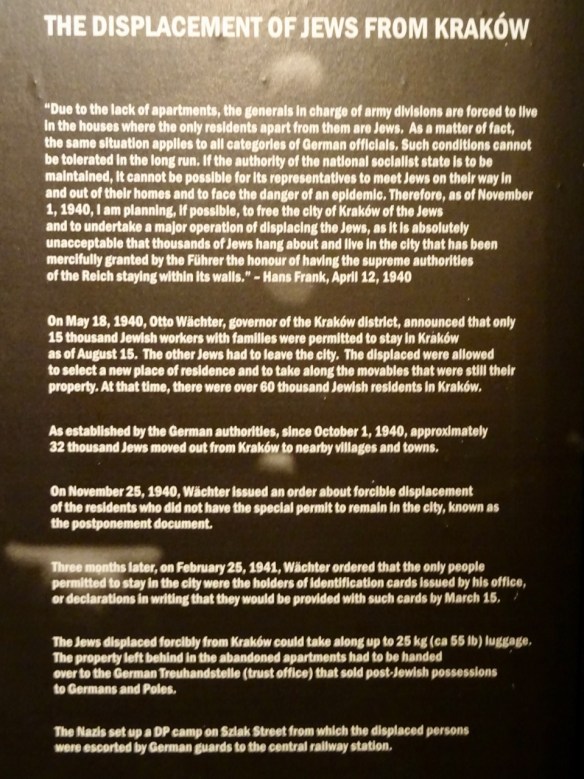 Jewish people were hung along the train tracks for all to see.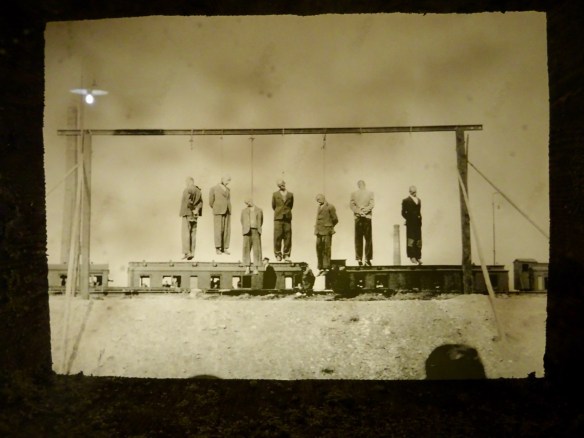
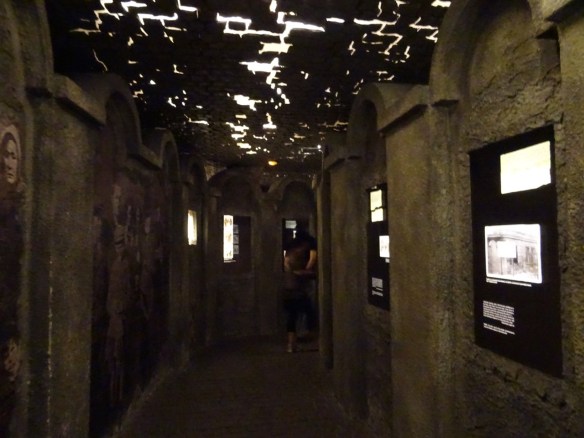
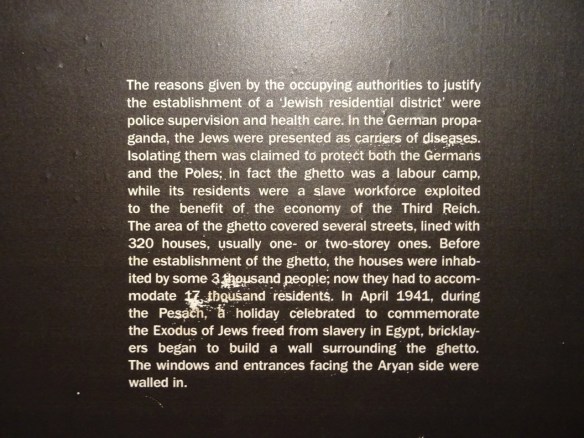 Walking through this dark exhibit about the wall around the ghetto.
 It was thought that starving the Jewish people was an effective way to weaken and destroy the morale of the Jewish population, especially the young people.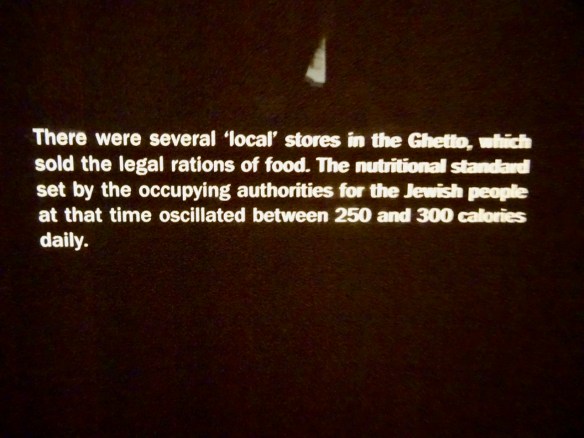
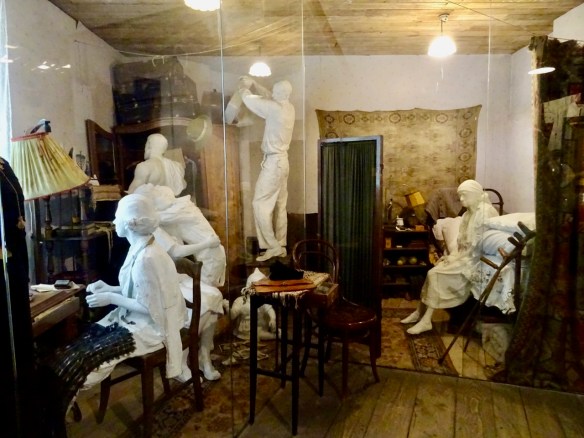 The corridors are covered in articles and photographs. There is so much to see and read.
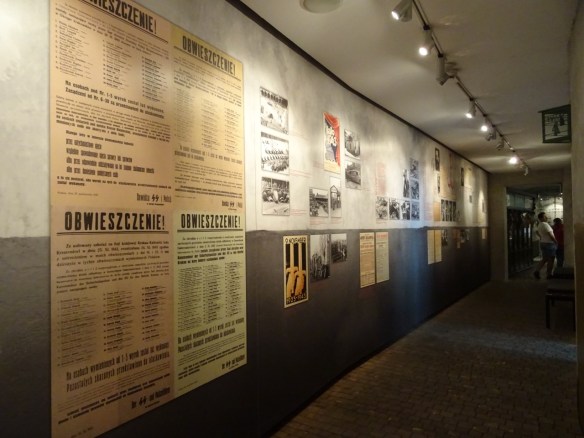 More exhibits, this one of everyday life in Nazi occupied Krakow. …notice the armband that Jewish people had to wear so they could be identified as Jews.
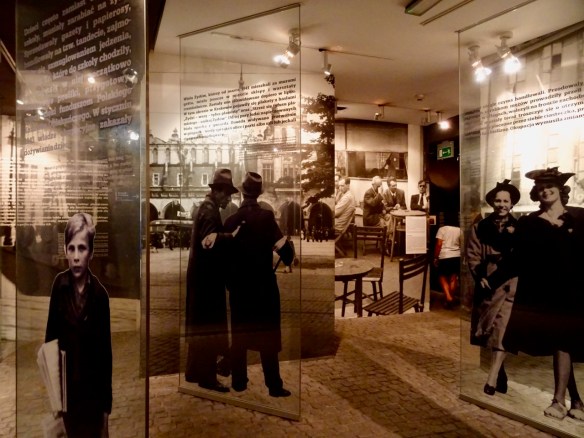 One of the camps.
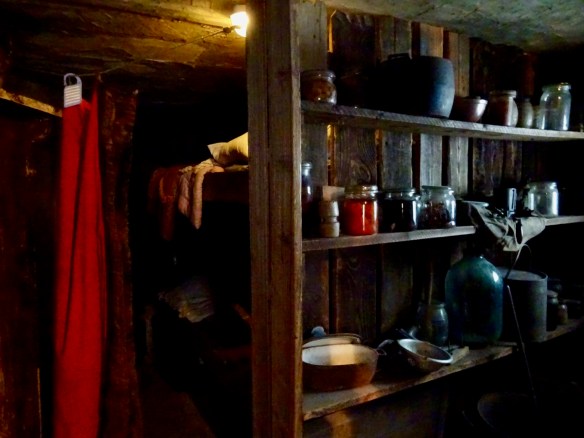
 A hiding place in the cellar of a house in Krakow. Even though it meant death for anyone found helping a Jew, by hiding them or even offering food or assistance of any kind. many of the Polish people did exactly that.
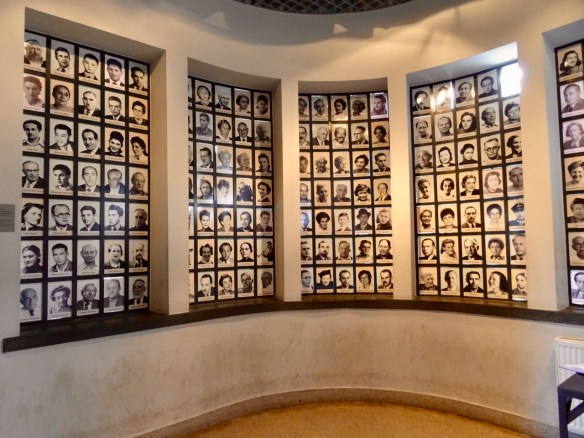
  Oskar Schindler was one of these people. He really wasn’t a man of great character, he lied, cheated and stole what he could, but he was instrumental in saving the lives of 1200 Jews. He also treated the Jews working at his factory better than in any other factory or work camp. There are videos of survivors talking about their experiences during this time.
  Some of the people that were saved by Oskar Schindler. Two of the survivors became doctors and one became a Supreme Court judge. Everything in this museum is difficult to watch and listen to, but we need to know and remember what happened. I have heard it said that we need to do this so history will never be repeated, but I wonder. There is so much hatred and racism in the world today that I can no longer believe that something like this will never happen again. It is frightening wondering what the future will bring.
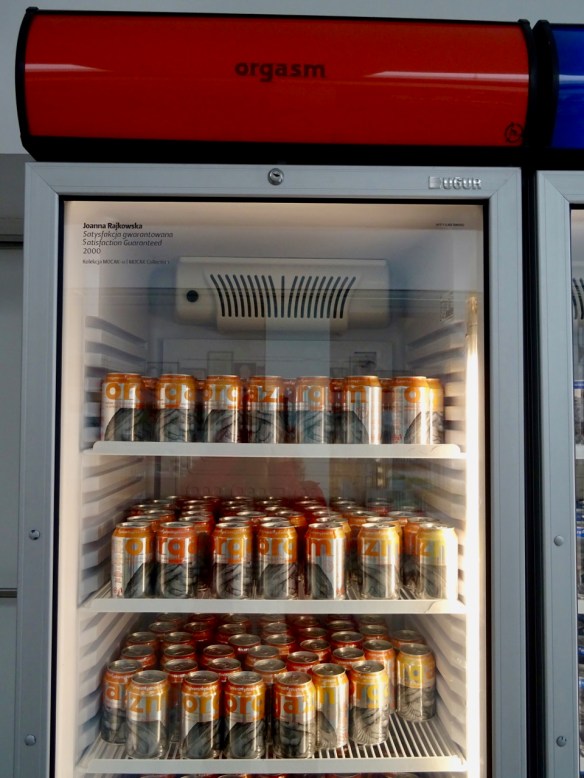
 We stop for tea at the Modern Art Museum cafe. It gives us a chance to recover form the heavy content of the Schindler Museum. On the way out I notice this vending machine. Notice the name of the drink it dispenses.
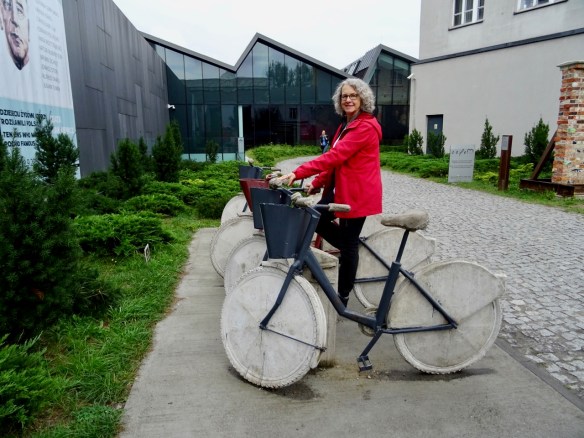
  I try out the cement bicycles…
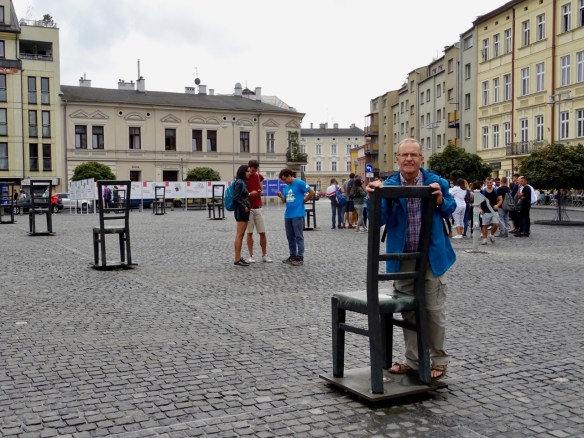
 and Bob checks out an installation in a town square.
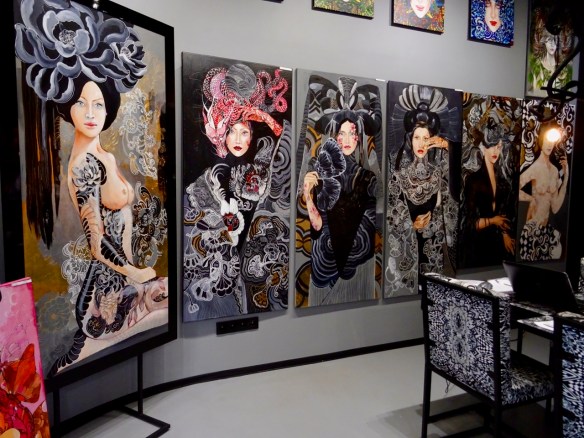
  Interesting artwork in one of the shops we pass.
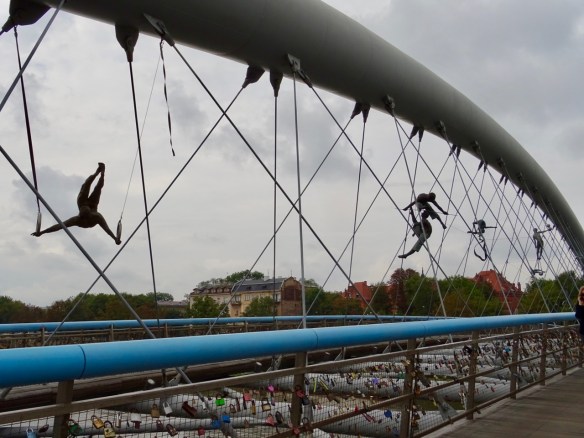
 We cross this pedestrian bridge over the river and we cannot decide how these sculpture stay right upright. They appear to be balancing on cables with no support wires yet somehow manage to stay right side up. We just can’t figure it out.
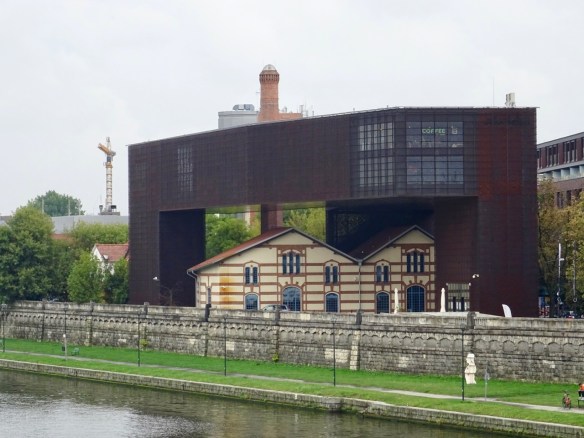
 Here is an interesting way to keep an old building while erecting a new modern one!
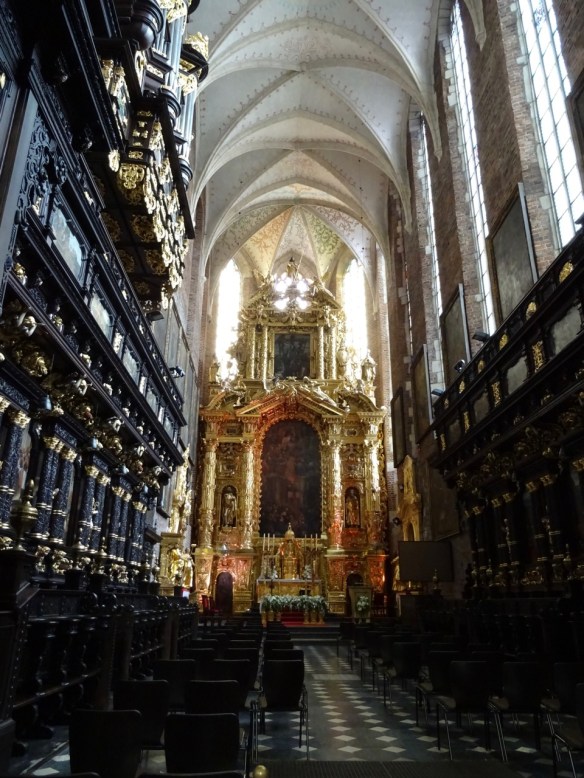
  We stop in at a basilica near the old town which has a very impressive altar. I wonder if it is real gold on all these altars? OK, just did a bit of research and it appears that real gold foil is used.
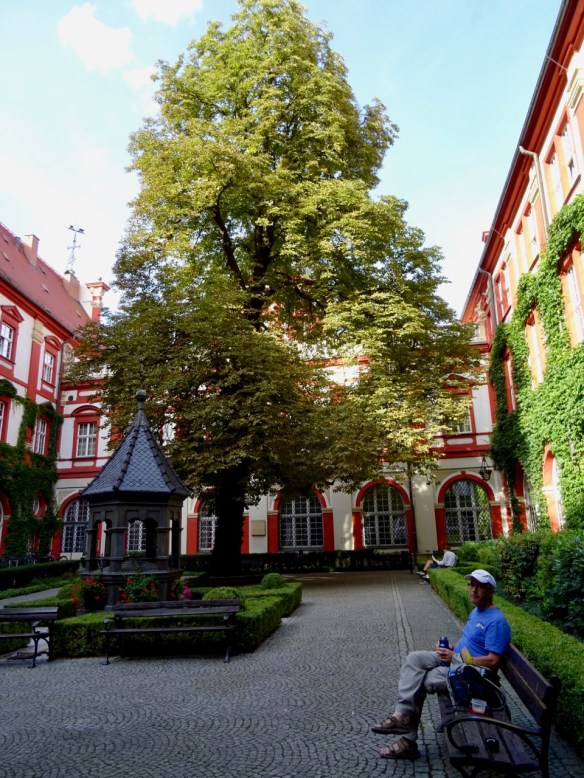
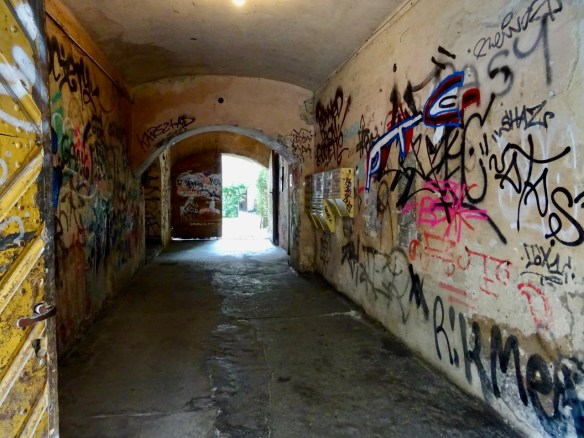
 I always peak into open doorways. They are often not very attractive doors but they sometimes open on beautiful interior courtyards and gardens.
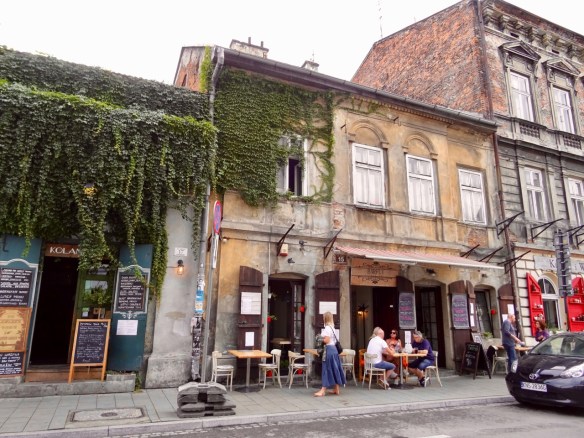
 A typical street side restaurant on our walk back to our apartment.
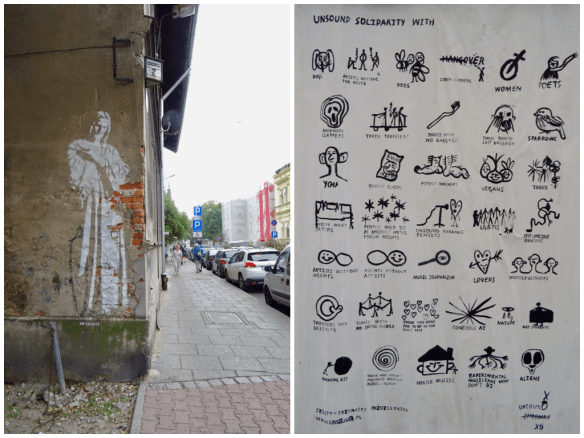
 More street art on the way home.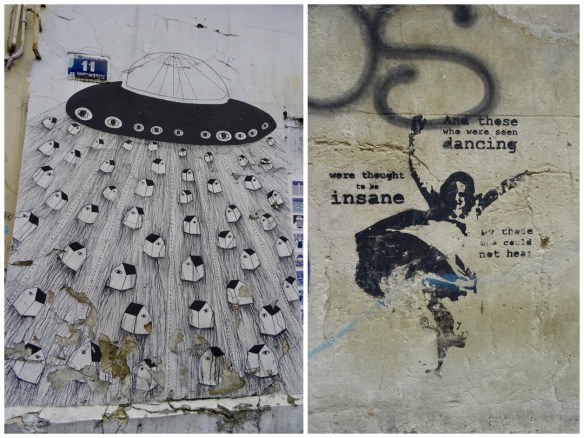
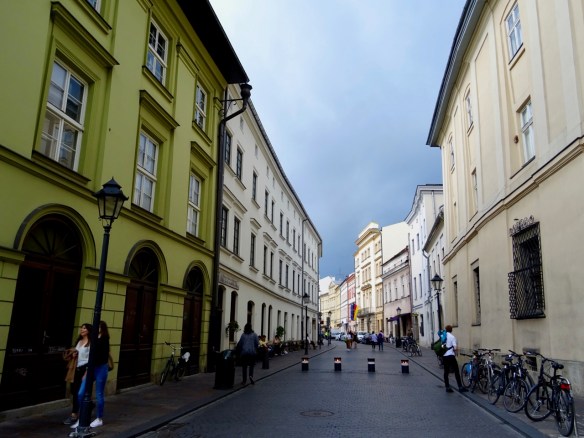 This church has one of the most impressive altars in all of Poland but there is a service happening so we are not allowed in.
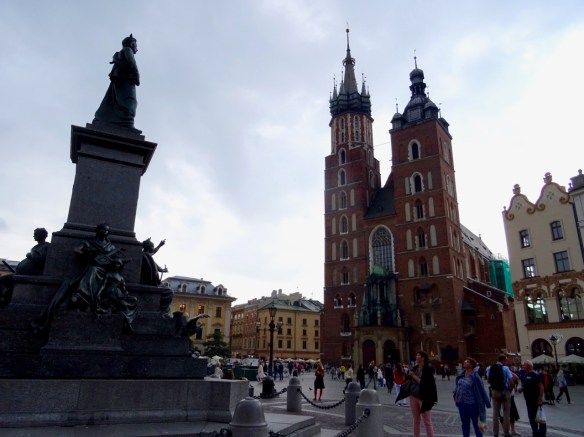 There are lots of horse drawn carriages for hire. I was tempted but it really felt like the rain was coming.
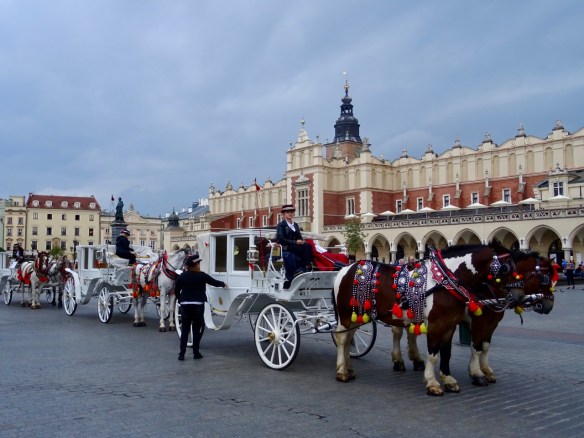 These are enormous, about a foot high and cost between $14 and $20 each!
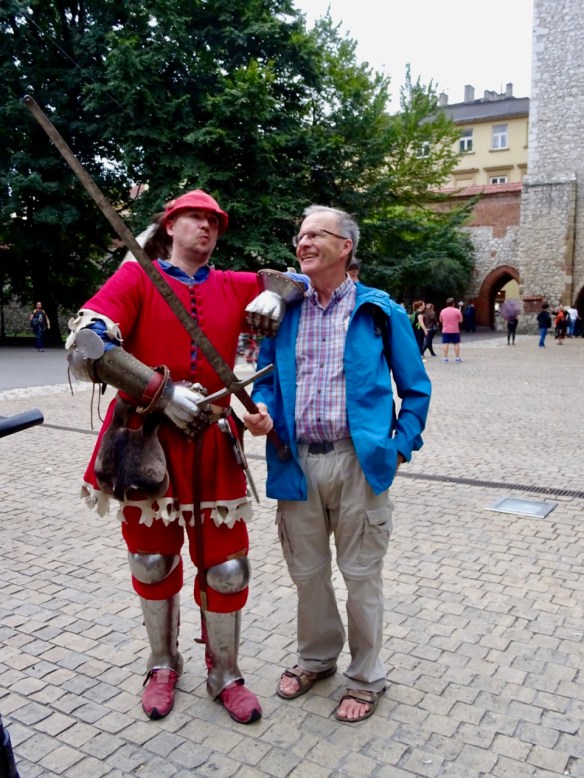
 This guy tried to challenge Bob to a fight, but no luck, so…
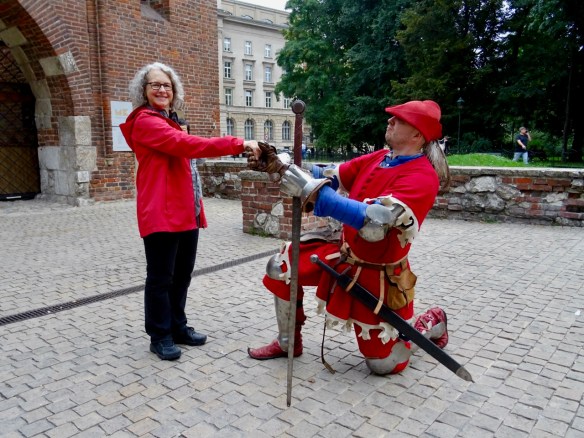
 He tried to win me over!
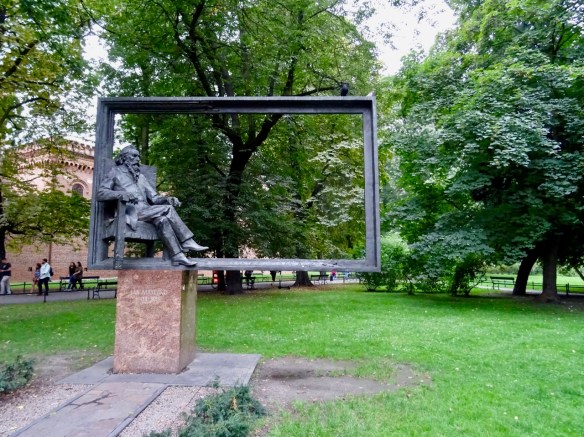
  An interesting sculpture of Jan Matejko who was a 19th-century painter native to Kraków. He is renowned for his large oil-on-canvas paintings of historical events in Poland.
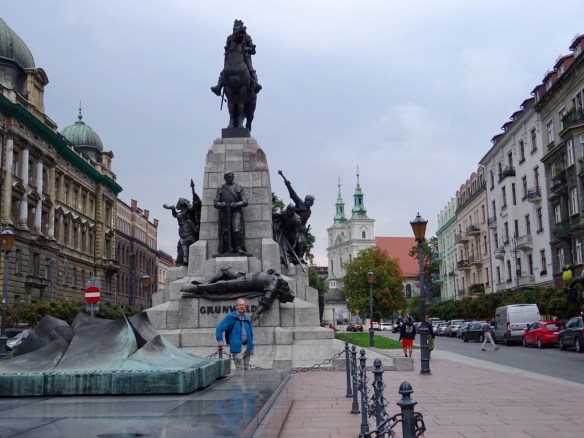
  This street leads towards the train station with its huge attached shopping mall.
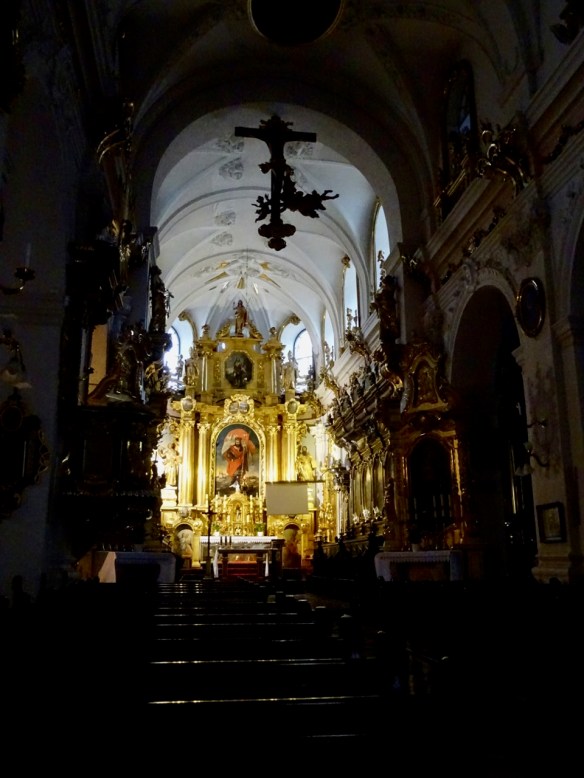
 One more church on the street just before the train station. It was dark inside except for the light shining on the altar.
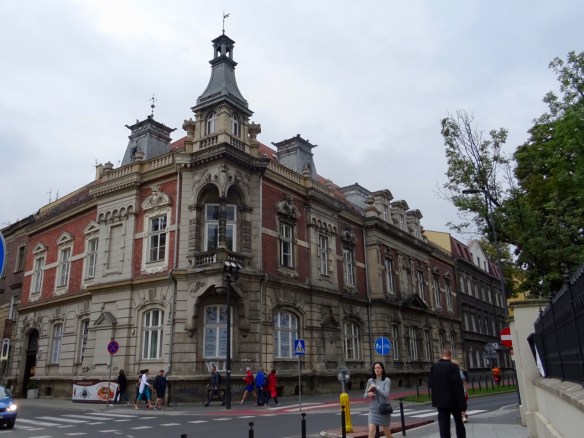
 A typical building in Krakow old town…
 Juxtaposed with the interior of the train station shopping areas. It is huge, three floors with hundreds of very modern shops.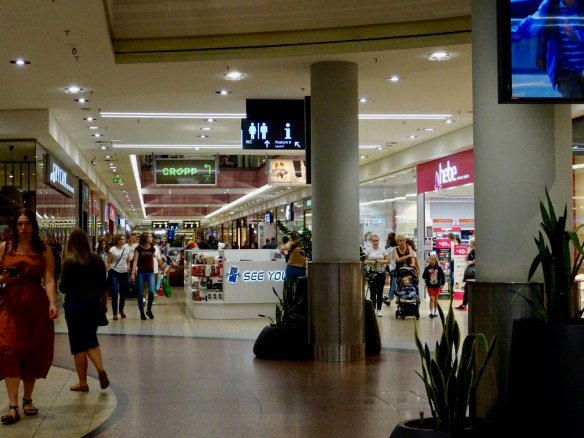
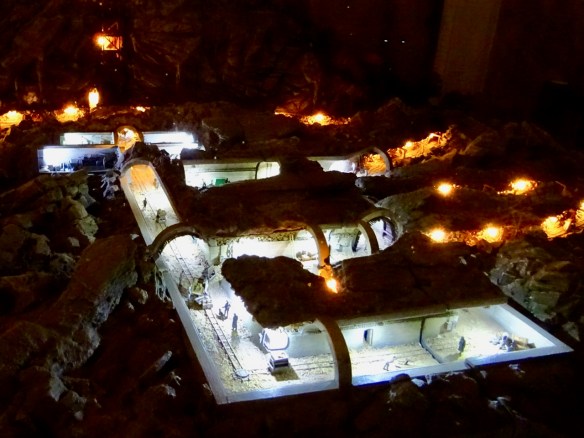
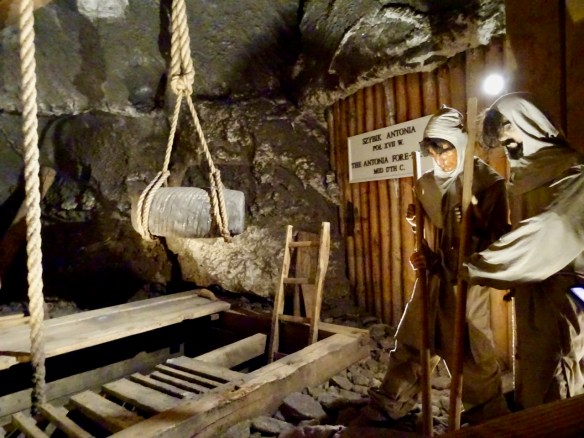
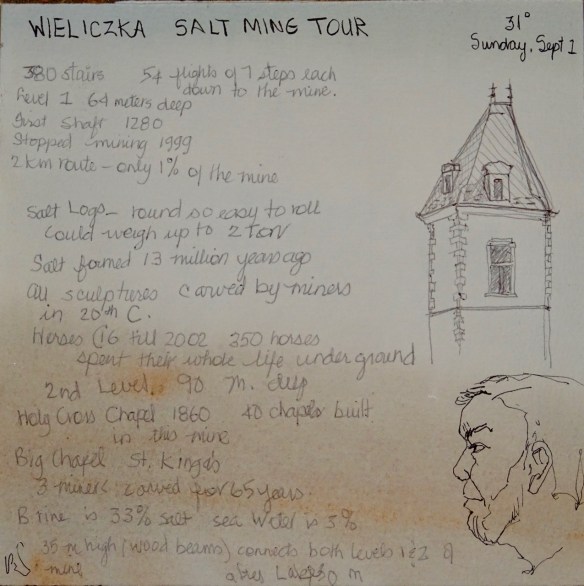
 There are dioramas showing some of the old mining techniques and machinery. These men are lifting ‘salt logs’ which weighed between 200 kg and 2 tonnes. The first shaft was sunk in 1280 and salt is still mined here today. The salt was formed 13 million years ago by an inland sea.
 The salt preserves the logs that are used for reinforcement. These are newer ones but we see others that are hundreds of years old.
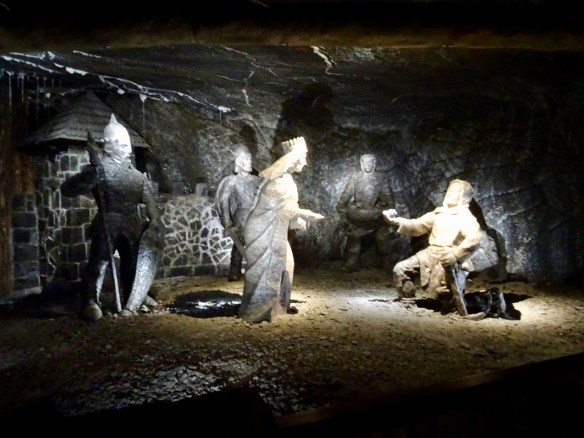
 These sculptures are carved out of salt by the miners in the 20th century. These figures illustrate the legend of how the salt mines were discovered in Poland.
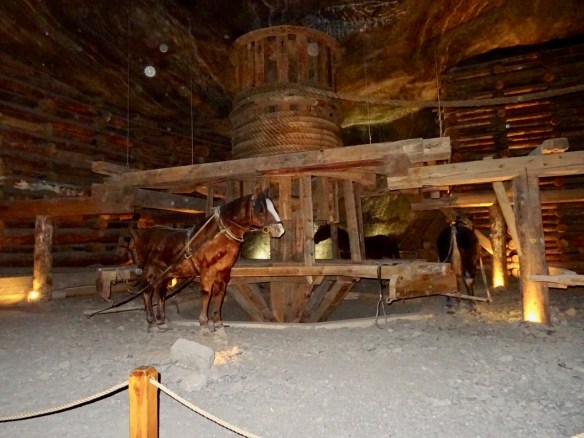
 Horses were used in the mines from the 16th century until 2002. Up to 350 horses worked and spent their whole lives underground. Interestingly, they did not go blind being in the darkness most of their lives.
 These horses operated a machine that moved the salt logs from one level to another. There are nine levels and 2 km of shafts and tunnels but we only visit about 1% of the mine.
 There are white seams of almost pure salt in some places. Most of the salt mined was between 80-90% pure.
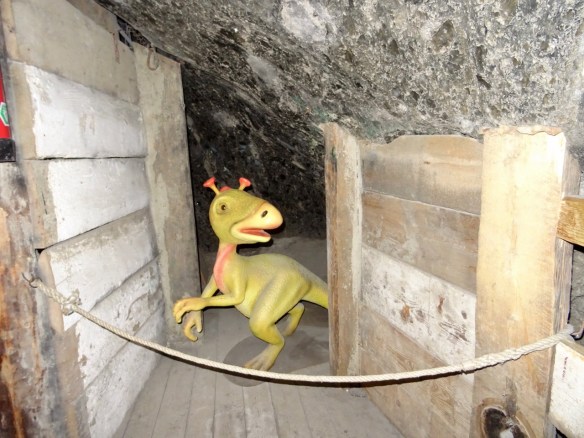
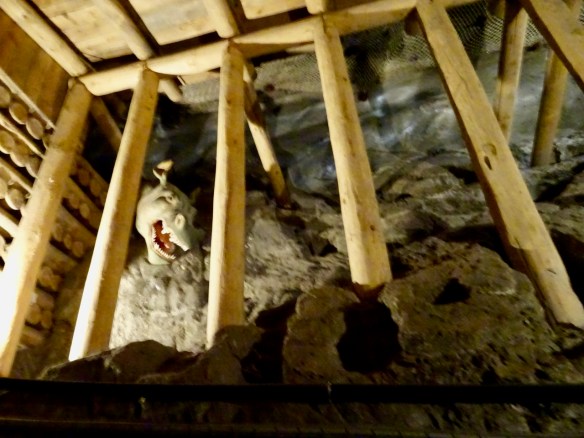
 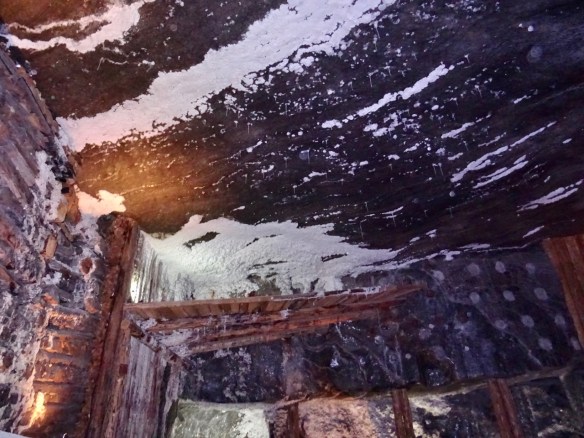 There are some strange creatures living in this mine.
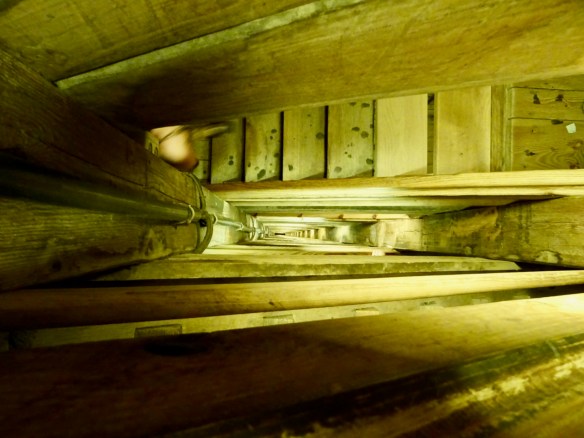
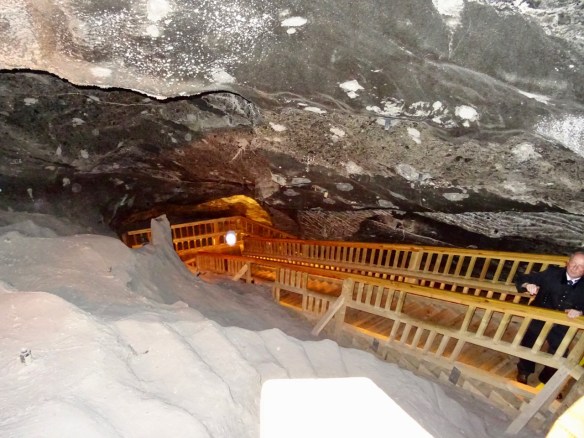
 Stairs go down and down and down…there are 800 steps that we descend in all!
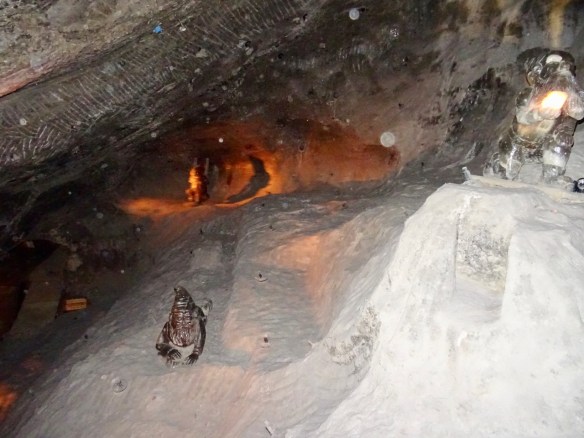
 Apparently gnomes make good miners!
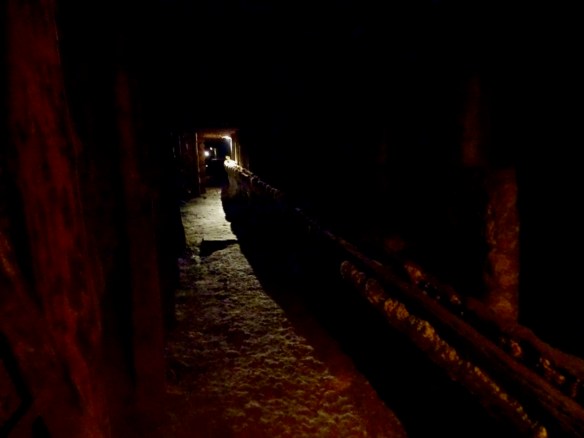
 Looking down one of the long tunnels that we are not allowed to enter.
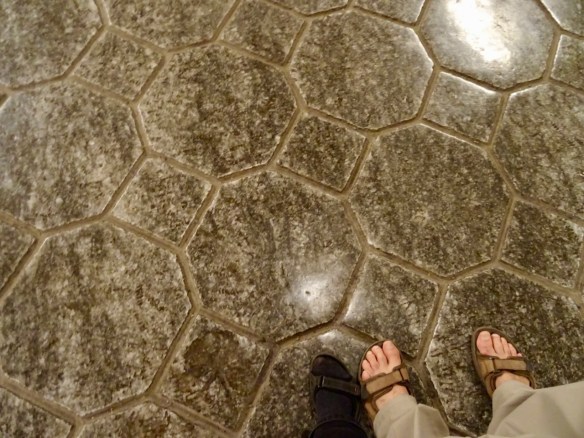
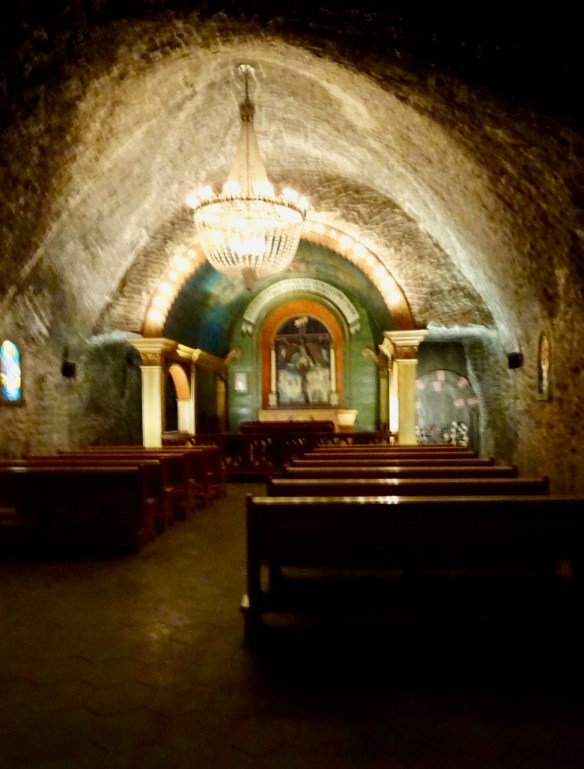
 Wow! This is St. Kinga’s Chapel. It is entirely constructed from the salt in the mine. Most of the stairs on our route are made of wood, but these two staircases we walk down are made of salt.
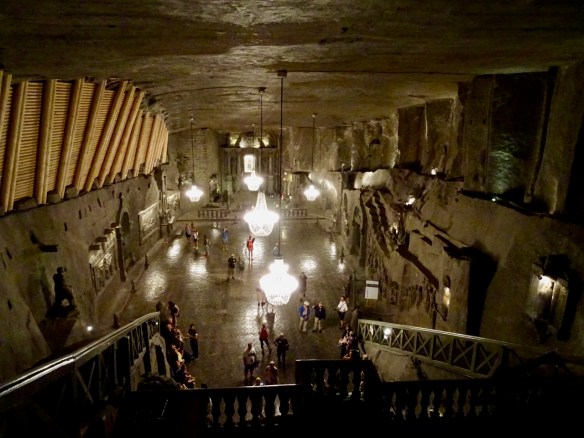 The miners built over
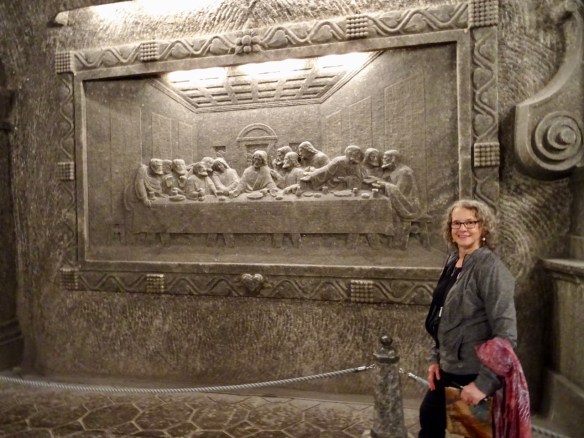 all the sculptures…
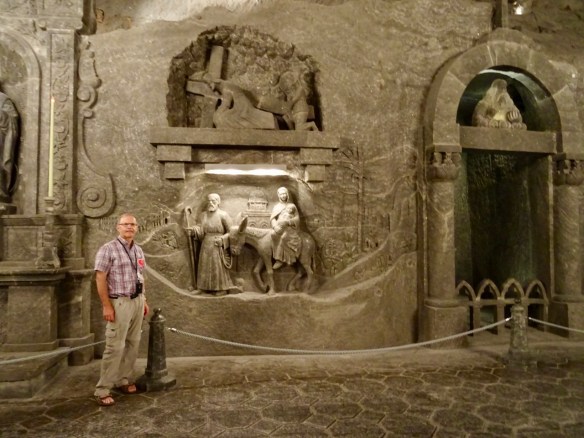 the main altar. Even the chandeliers are made of salt crystals!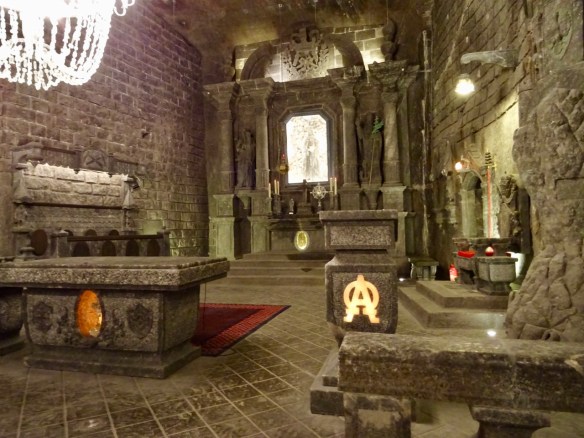
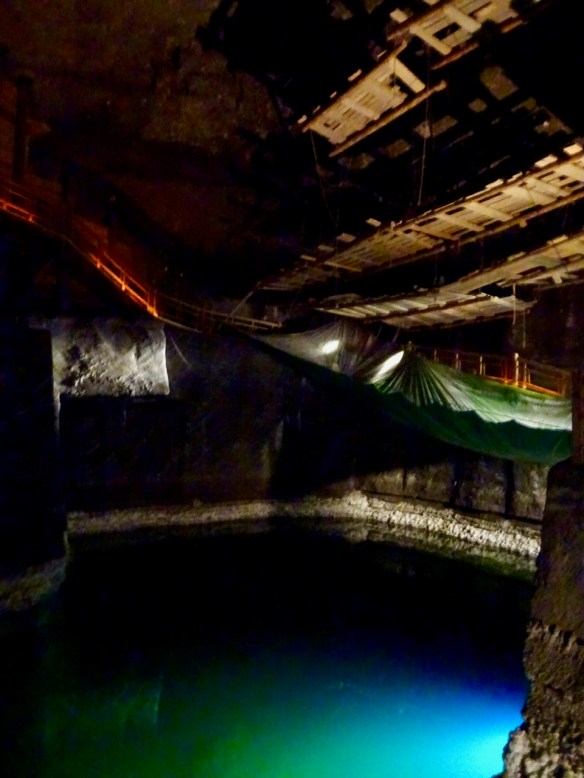
 This chamber connects the two levels of the mine and is 35 m. high. Because the roof is so high it needed to be strongly reinforced with all these high timbers.
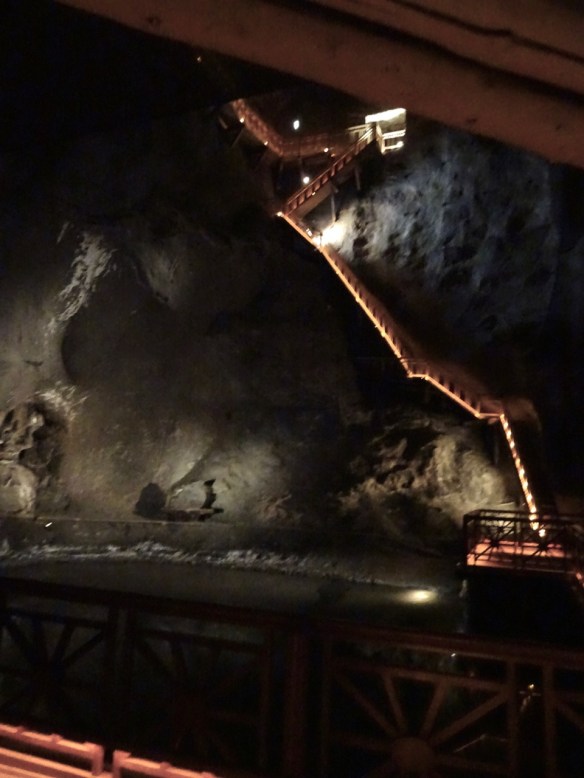
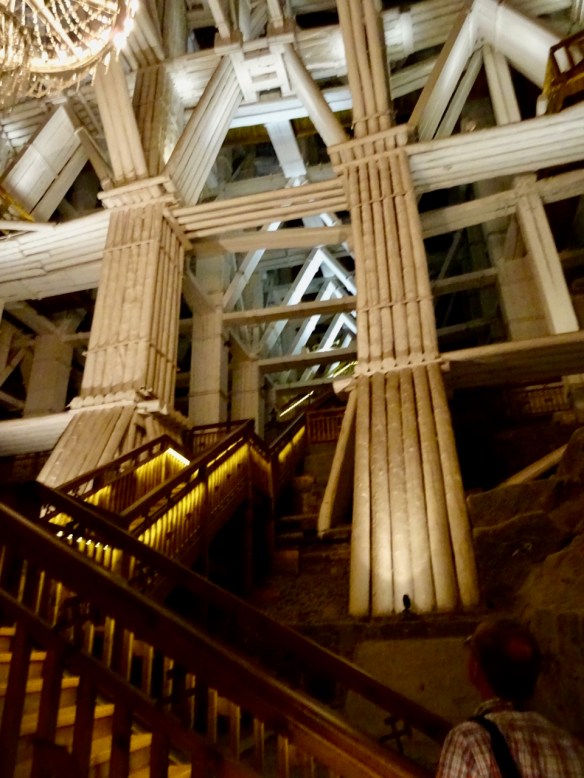 Another underground brine lake. The water in these lakes is 33% salt. Ocean water is only 3% salt. Luckily we do not climb this set of stairs! They disappear in to the darkness at the top of this chamber.
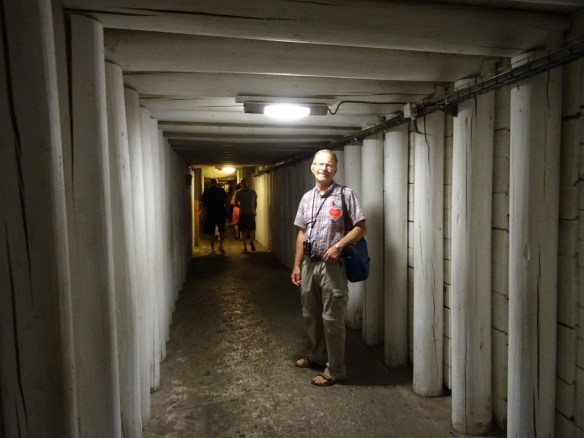
 One of the many long tunnels we walk through.
 At one time visitors rode boats through this part of the mine and were treated to a fireworks display 90 meters underground! Today the mine has over 1.5 million visitors a year so it is impossible to still offer this experience.
 There is an underground banquet hall and restaurant.
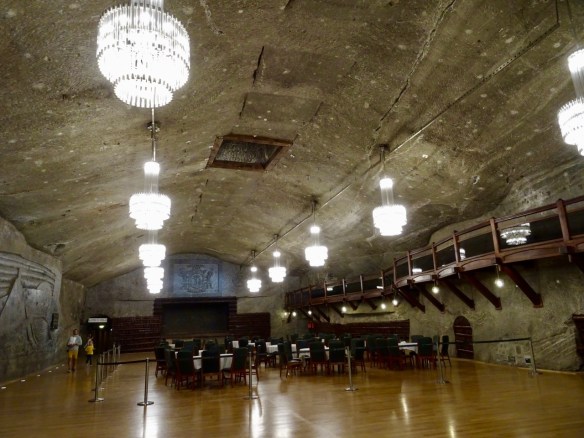 Another of the chapels we visited.
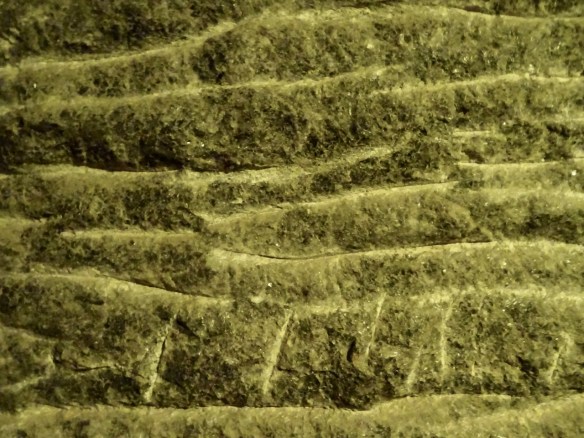
 A close up of the mine walls. We were invited to lick the walls, and taste the salt. We only licked our fingers and then touched the wall so we could taste the salt. I didn’t relish the thought of actually licking the walls!
 This enormous chamber is 135 meters below ground on the third of nine levels. The entire mine occupies about a 5 km x 5 km area. The ceiling here is 36 meters high and a Guinness World record was set here for an underground hot air balloon flight!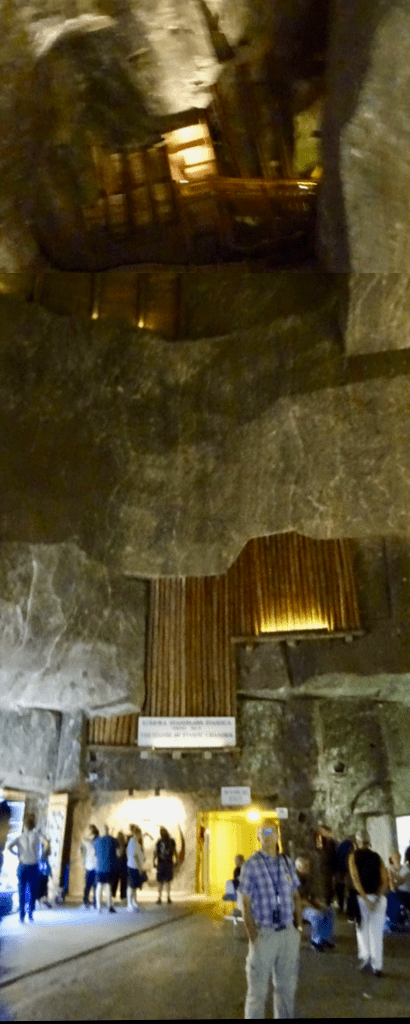
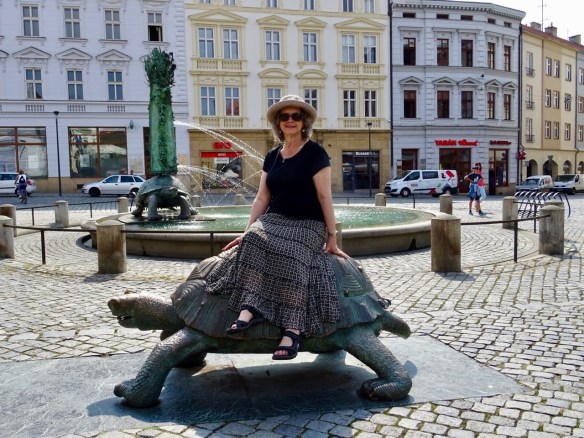
 Doesn’t everyone want to ride on a turtle? I almost went right over backwards when I climbed on!
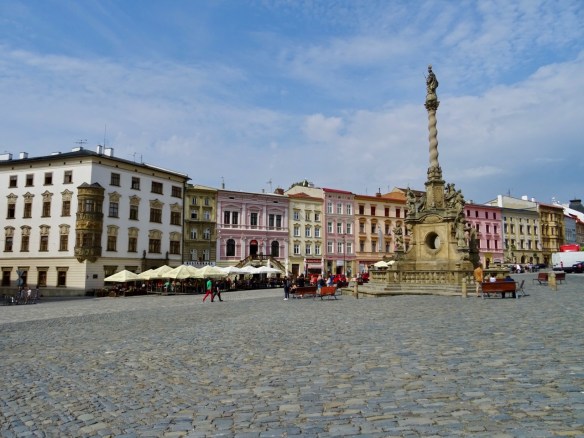
 The Holy Trinity Column dominates the town square. “The column is dominated by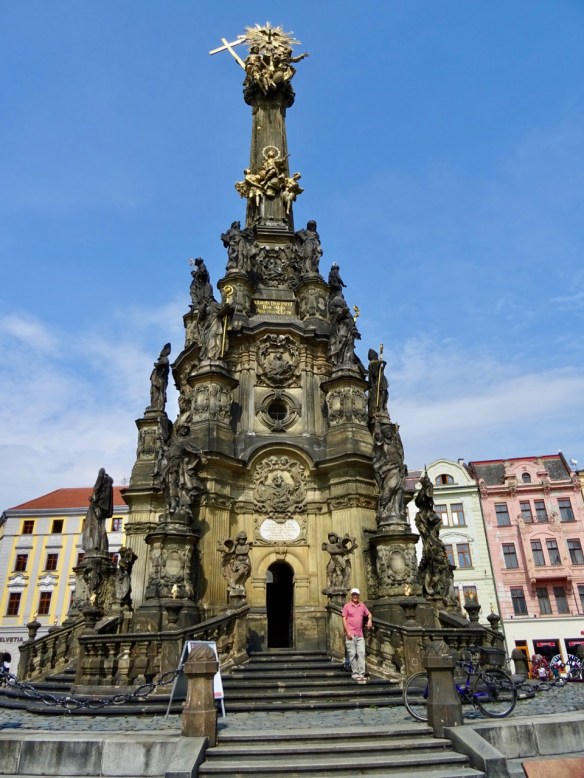
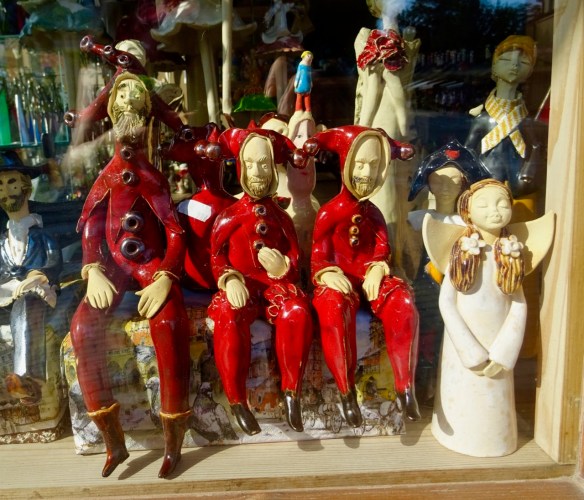
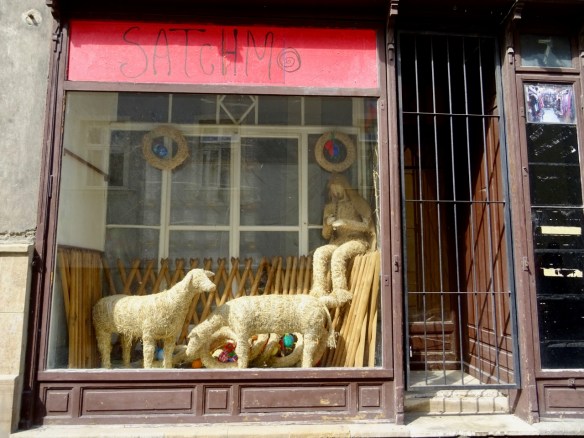
 We wonder what this shop sells? These figures were made out of straw. It was closed so we couldn’t go in to find out.
 We climb another bell tower in the Church of St. Michael just off the square. There wasn’t any place to see outside and get a view over the city, which was too bad.
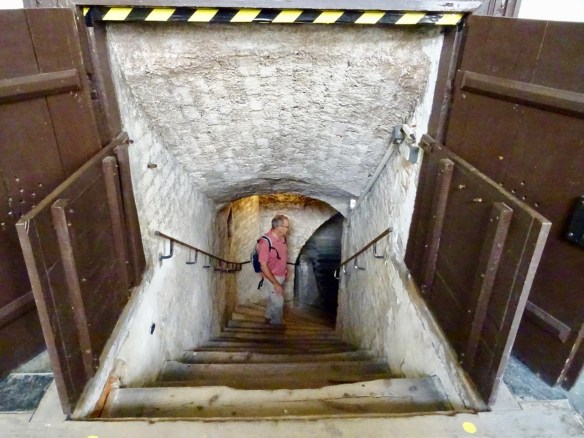
 The same church had steps to a crypt so we went to explore,..
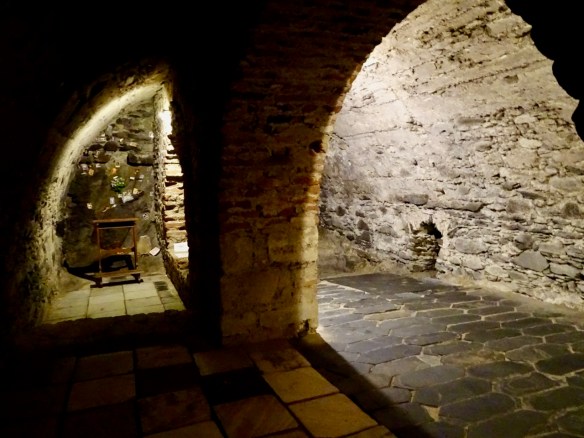
 and we found this little shrine and a small pool of water.
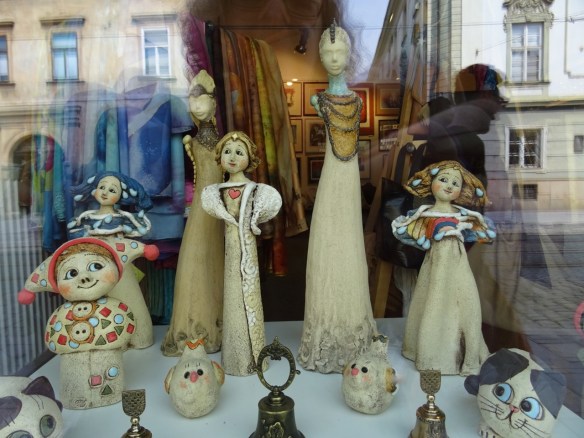
 These ladies caught my eye.
  St. Wenceslas Cathedral was originally built in 1131 and was rebuilt in the second half of the 13th century. The facade was renovated in 1999-2008. It is very impressive.
 Of course the interior is just as impressive.
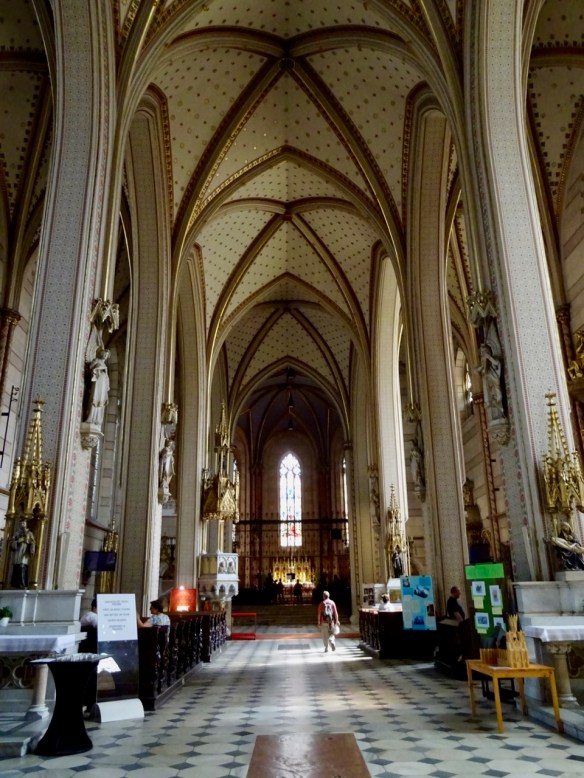 We visit
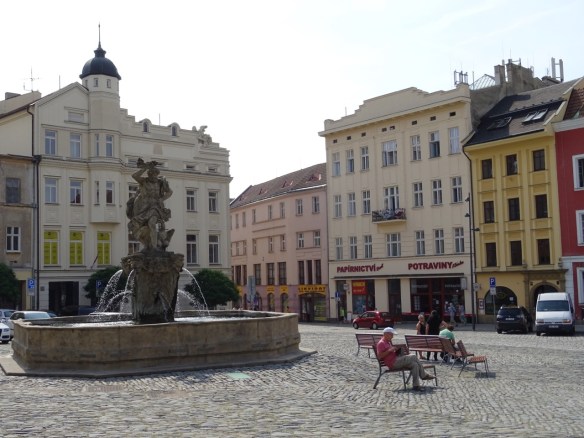
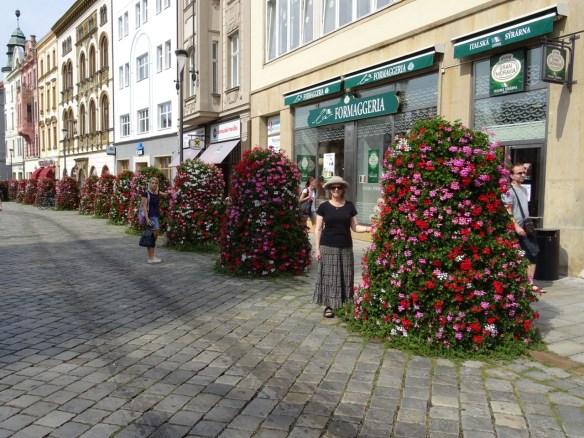
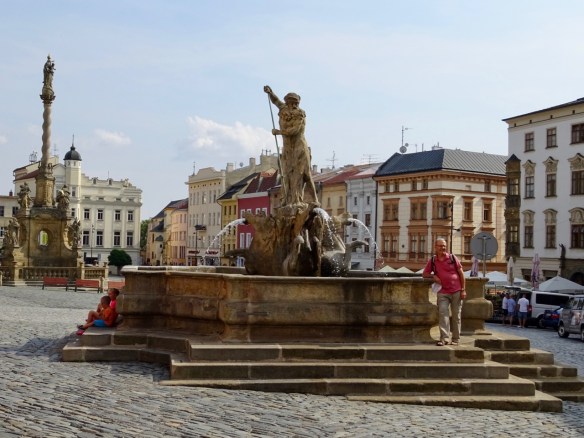
  More fountains in the town square as we make our way back to our car.
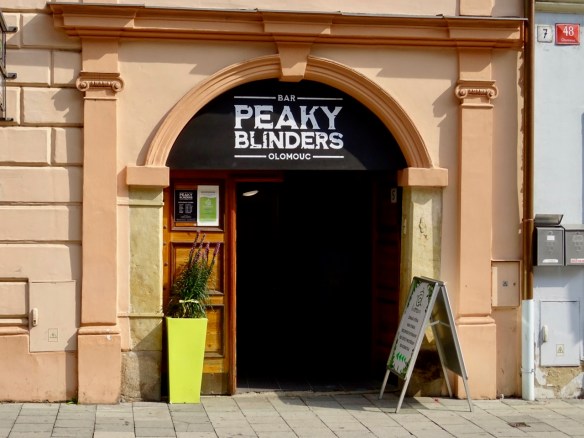
 This bar catches my eye. I am sure I know this name and look it up. Sure enough, it is the name of a show on Netflix about a gang in England in the early 1900’s.
 When we cross the border into Poland we are surprised that there is no indication that we were leaving one country and entering another. One of the interesting things about travelling is how different things are from home. Sometimes the differences are challenging and sometimes the differences make me smile. This is what I saw in the first bathroom I entered in Poland.
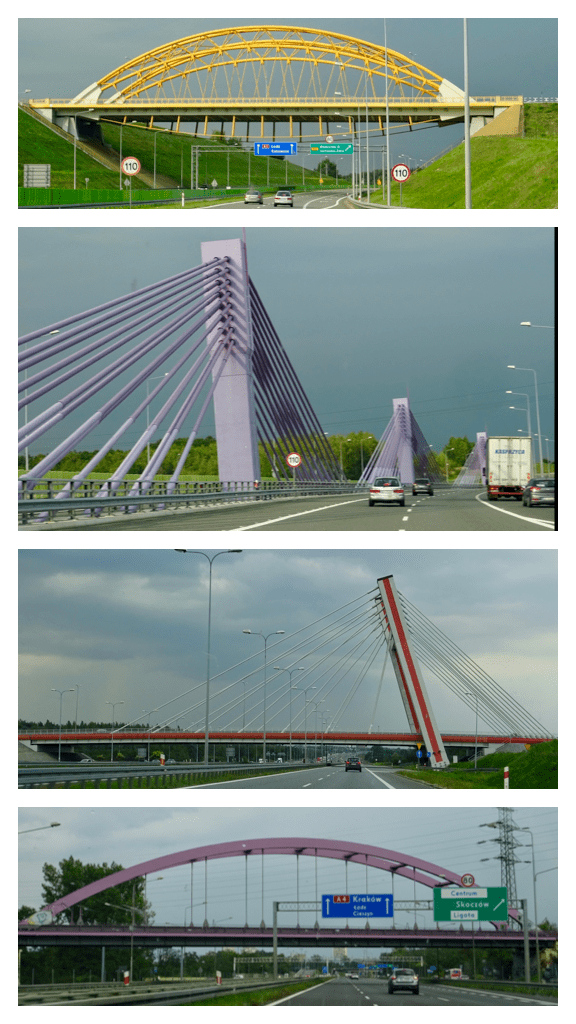 We were frustrated when our SIM card stops working once we cross the border. We were told it would work in all the countries we were visiting. We finally find a MacDonalds so we can contact our bnb host, who is waiting to hear from us. It is late when we finally make it to our new apartment, which wasn’t very easy to find in the dark, but we are here, and tomorrow will be a rest day for us.
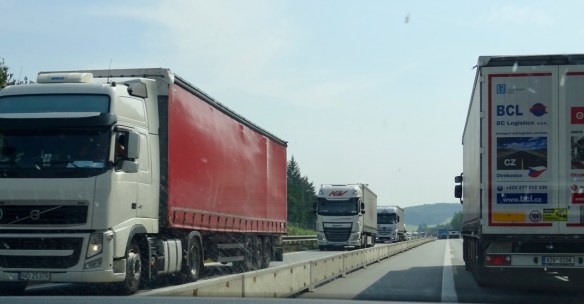 One of the many small towns we pass on the road to Telč.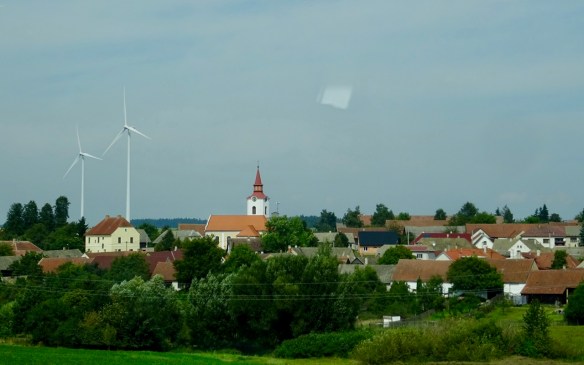
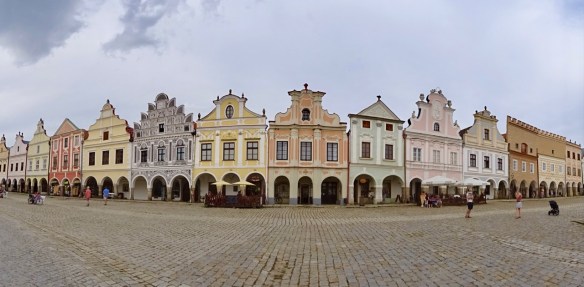
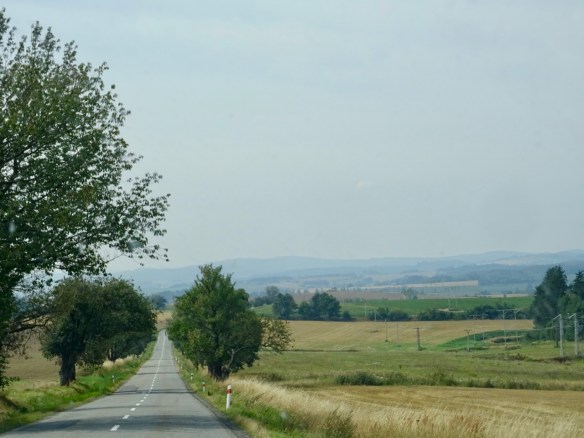 The town square at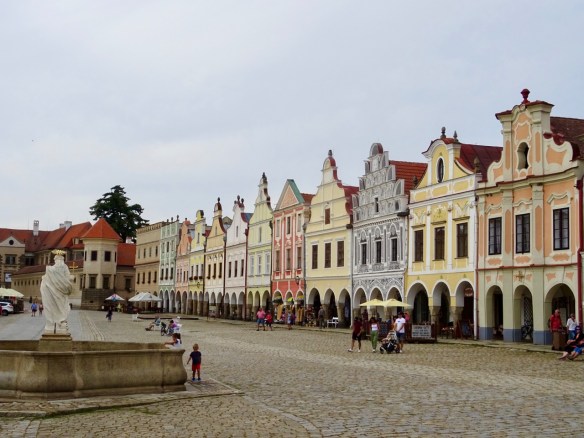
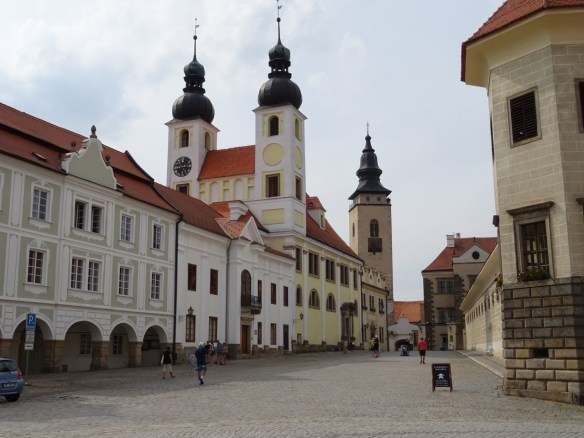
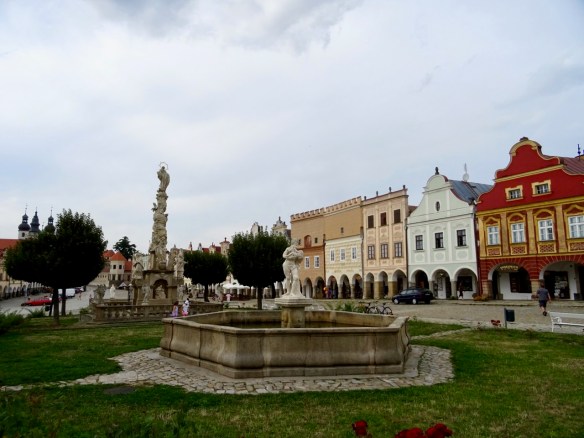 At the far end of the square we see the bell tower so of course we go see if is possible to climb to the top for a view of the town.
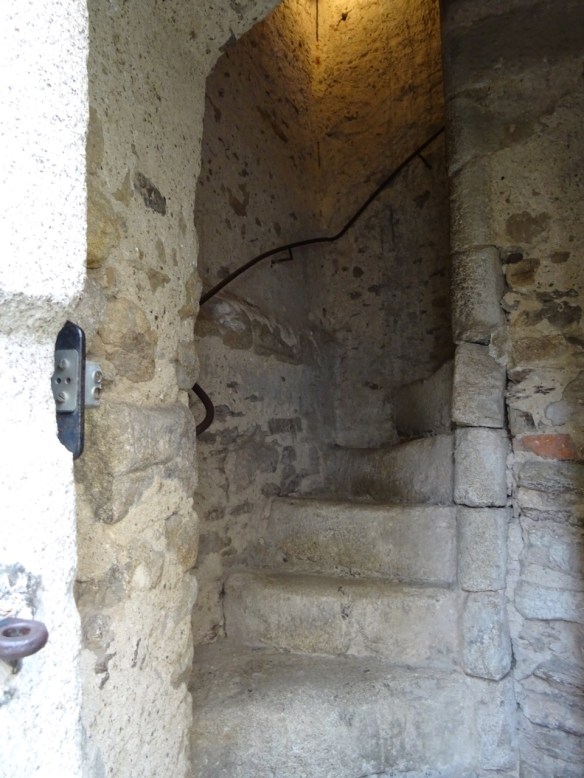
 The first 50 stone stairs are very narrow…
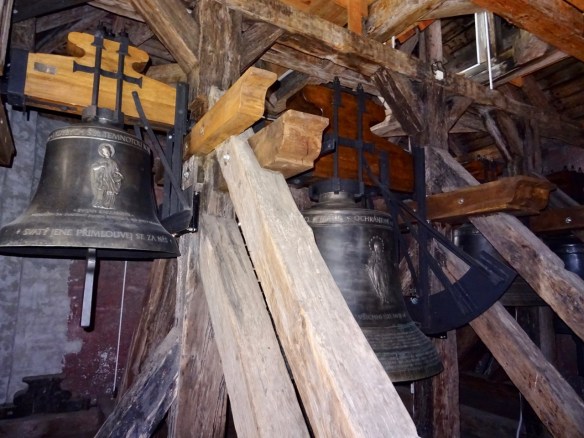
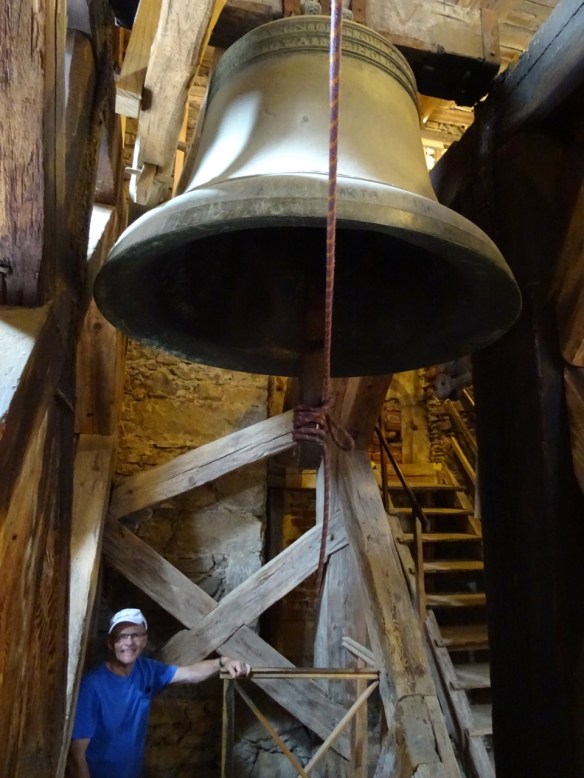
 but soon we are climbing another 100 steps on old wooden timber steps up to the bells. This bell is named Marie and she was cast in 1550 and weighs 950 kg!
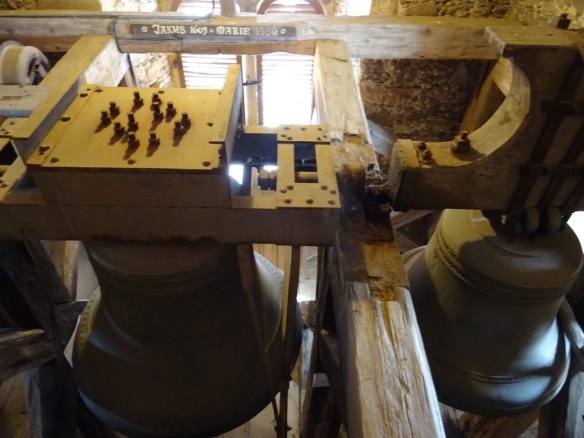
 A bit more climbing and we are looking down on the two bells, Jacub and Marie, before climbing to the viewing platform at the top.
 The view from the top was wonderful. Telč is a very pretty town.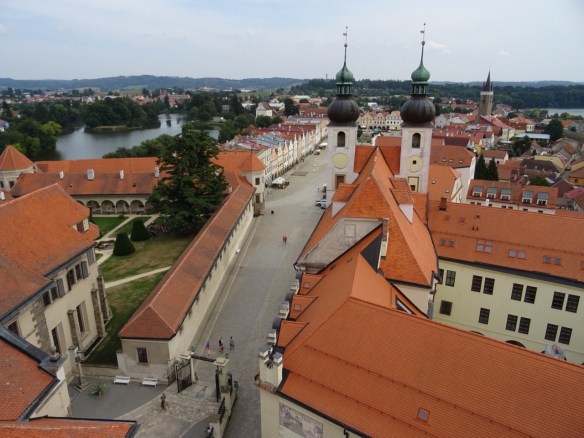
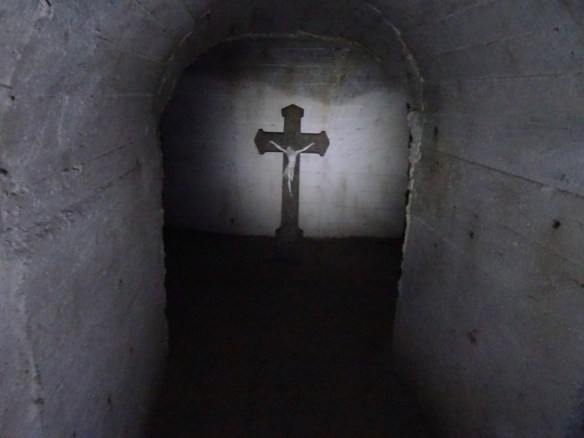
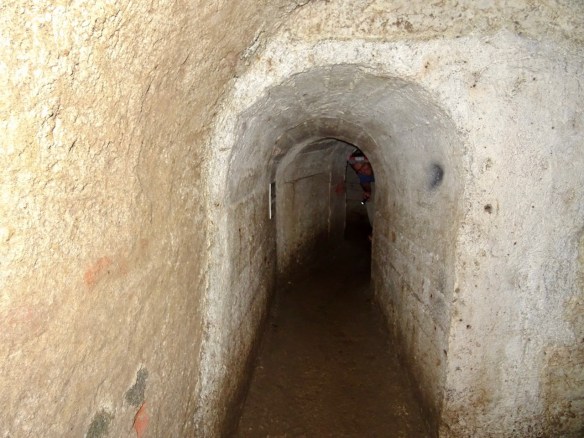 This crucifix was at the end of one dark tunnel . We were the only people on the tour who actually went and explored all the tunnels. Everyone else stayed in the larger rooms that were used for some displays and a short video about Telč.
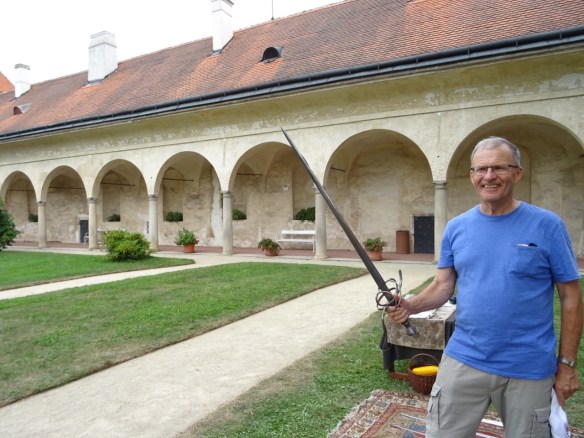
 Back above ground we walked through the grounds of the palace. We didn’t have time to take a tour of the inside, but Bob got a chance to try wielding a sword. They are very heavy!
 We also met some interesting creatures. This ten year old python and…
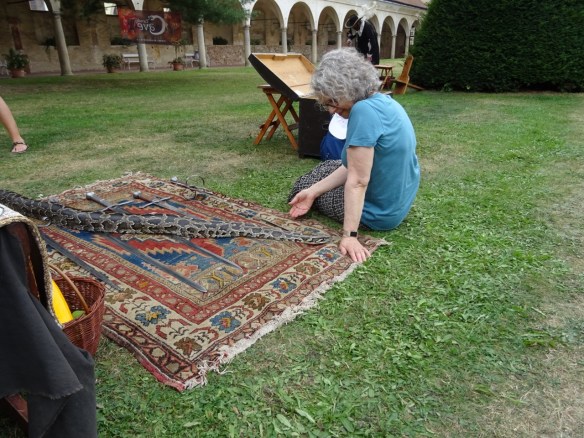 his 4 year old albino friend.
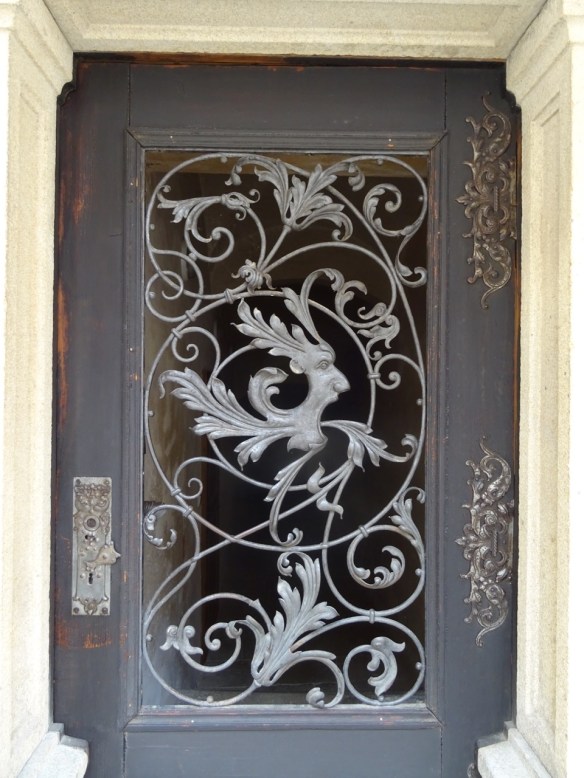
 This beautiful ironwork was on one of the doors of the palace.
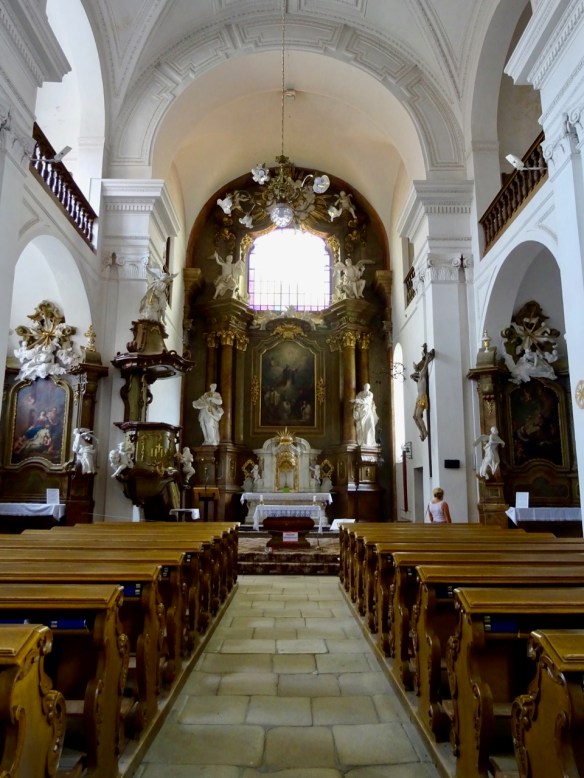
 We visited our first (and certainly not our last) church, the Church of St. James the Greater which dates from 1273, but has been rebuilt many times since then.
 This panorama gives an idea of just how many houses line just one side of the square. They are all in a row, not in a curve as they appear in the photo.
 These houses continue on from the right side of the photo above. It is hot, 28° and we finally feel like it is summer. It was a cool wet summer at home so this is a nice change.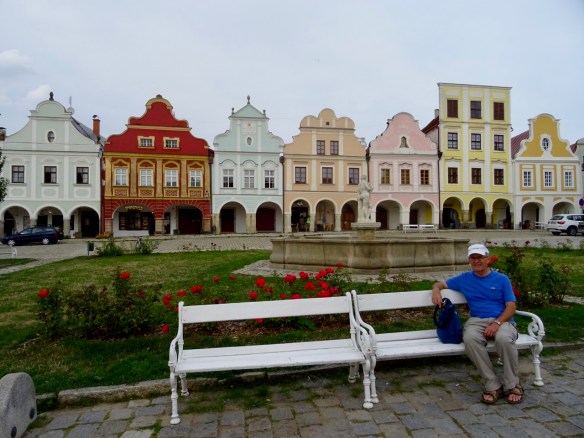
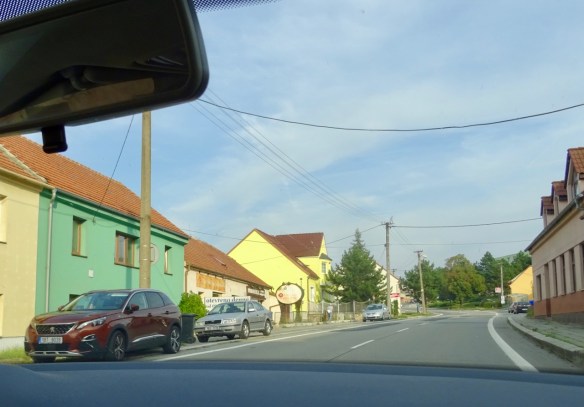 I have no idea what this is supposed to be but it is certainly unusual. I wonder if someone lives here?
  We finally arrive in Brno, find our apartment but can’t figure out how to get into the building! Finally we message our host who comes down to meet us. It is a beautiful



 trudymason.com