Day 93, Wednesday December 6, 2017
We are up early to take the train to Herculaneum, which is another ancient town that was destroyed by the eruption of mount Vesuvius in 79 A.D.
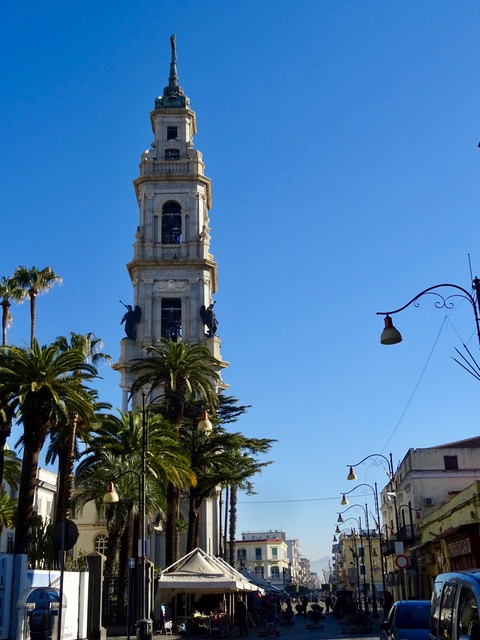
We are a bit early for our train so we visit the church in Pompeii. Yes, another church! I should be tired of them but it seems that each one we visit is so different for the others that there is always something new and amazing to see.
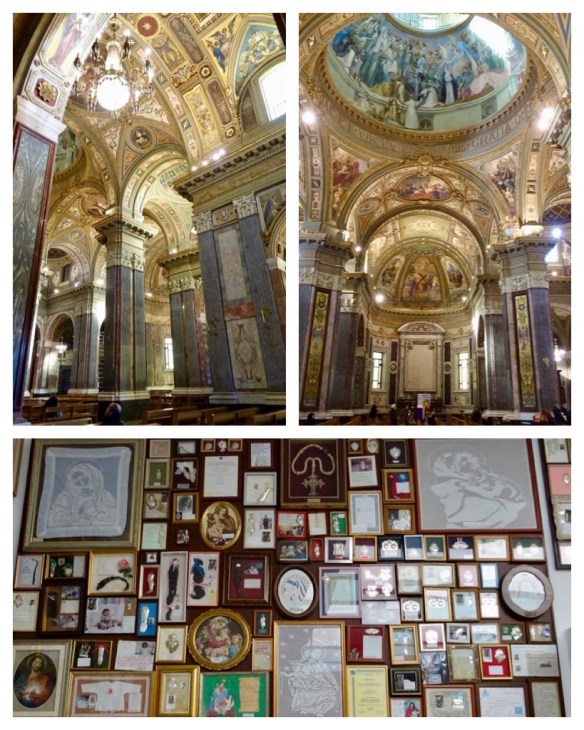
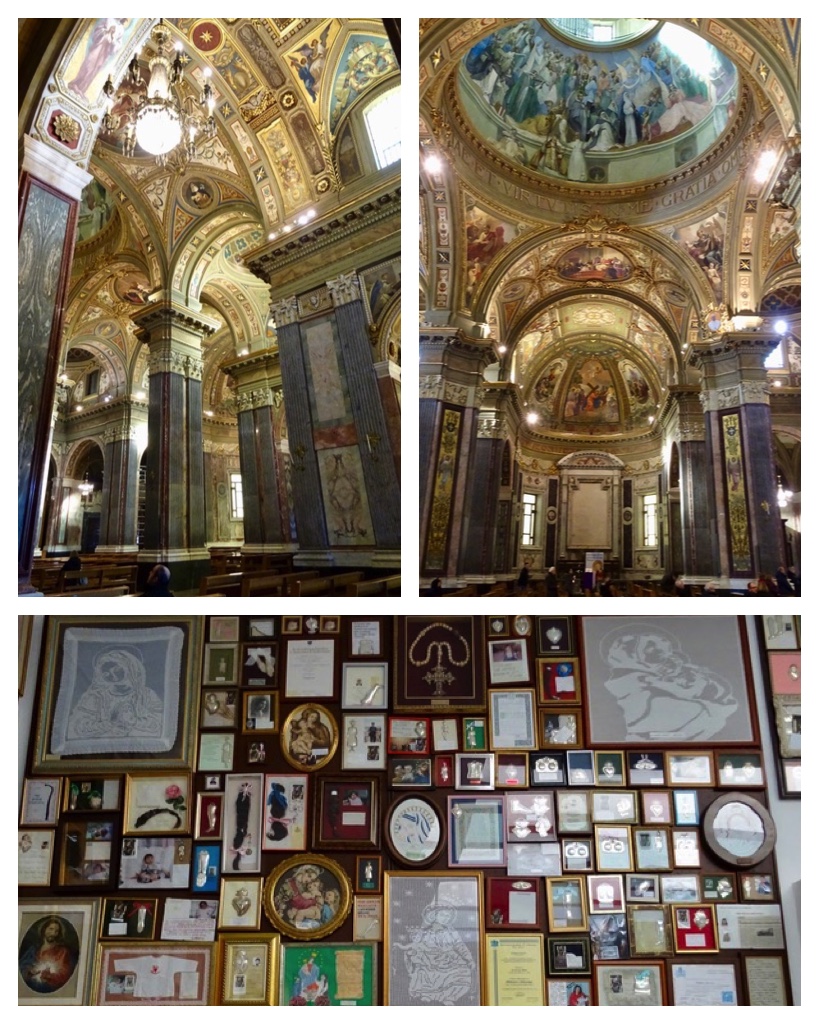
The Shrine of the Blessed Virgin of the Holy Rosary is an international place of pilgrimage. It is considered the most important shrine consecrated to Mary in Italy. 4 million pilgrims from all over the world visit here every year.
 The church has many hallways and rooms covered in thousands of ex-votos. These devotional images were created in thanks for the fulfillment of vows by those who survived an illness or disaster because they prayed to the Virgin Mary.
  I keep seeing images in the marble. What do you see here?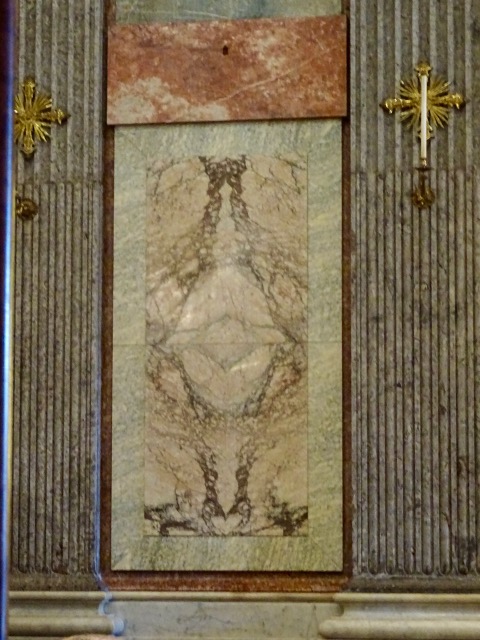
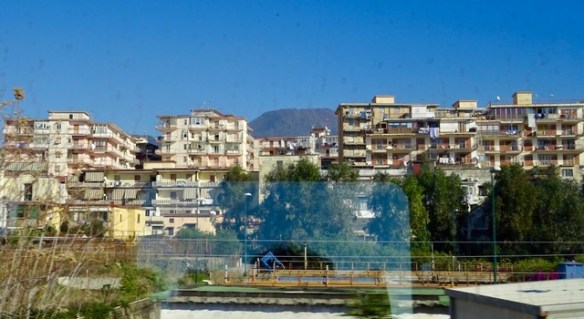
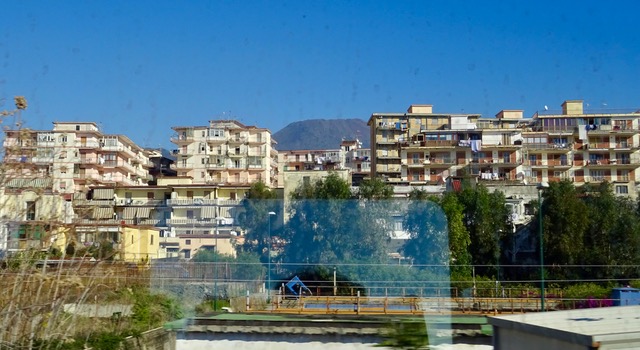
Every town we pass on the way to Herculaneum is crowded with apartments. I think just about everyone in Italy who lives in urban areas must live in apartments.
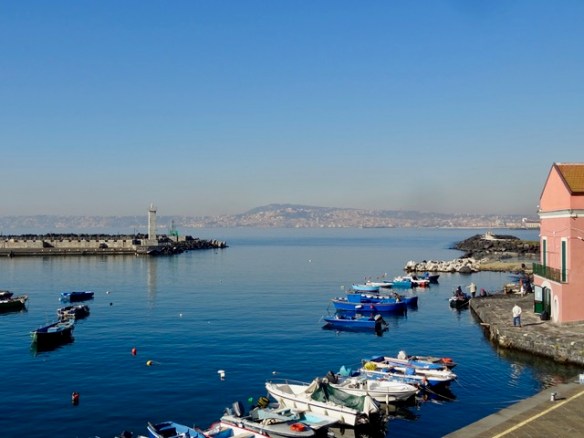
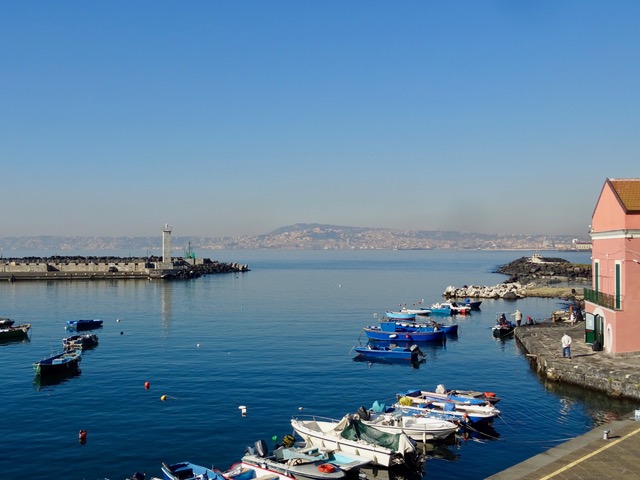
 We can see the smog over Naples. There seems to be more smog here than in Rome.
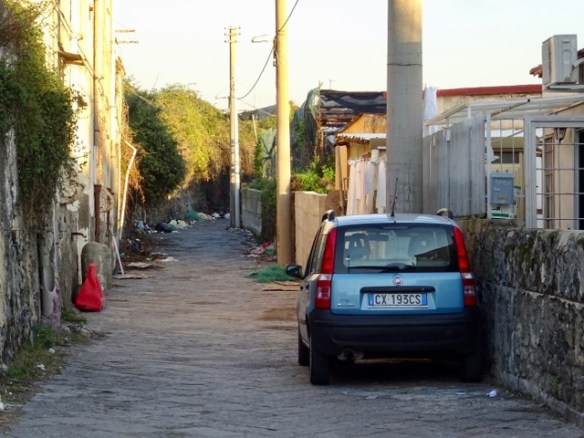
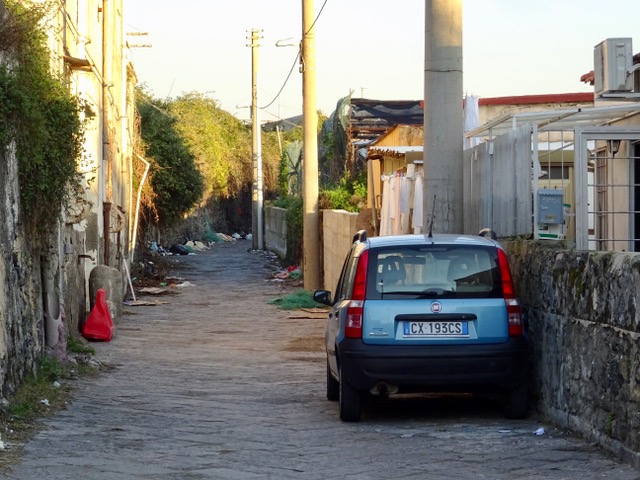
 Believe it or not, this is the ‘street’ that Google maps tells us to walk down to get to the archeological site. It was long, narrow, dirty and full of garbage!
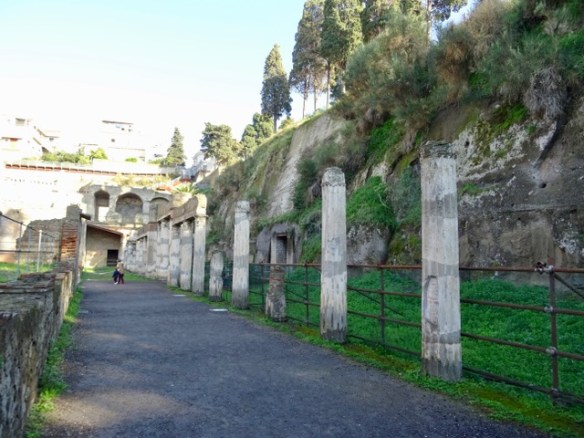
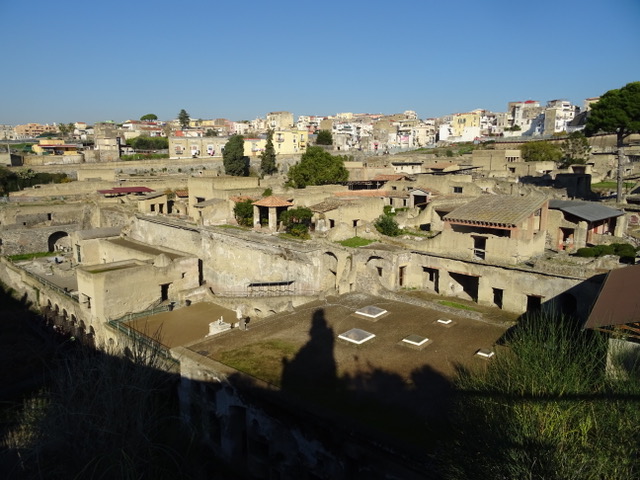
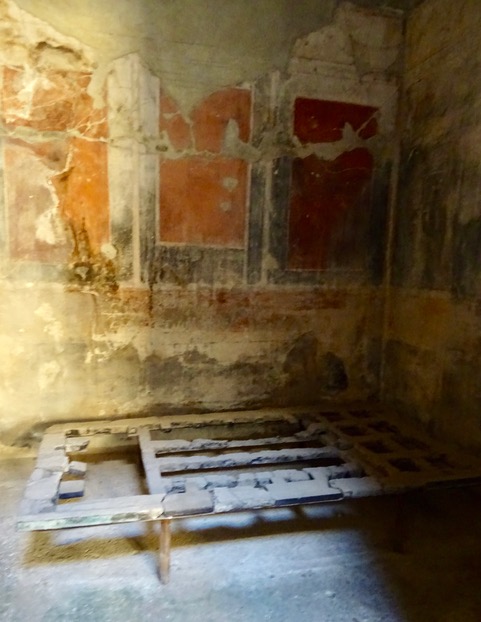
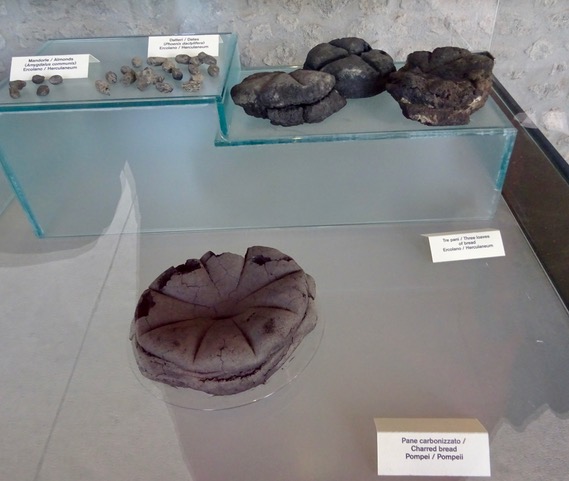
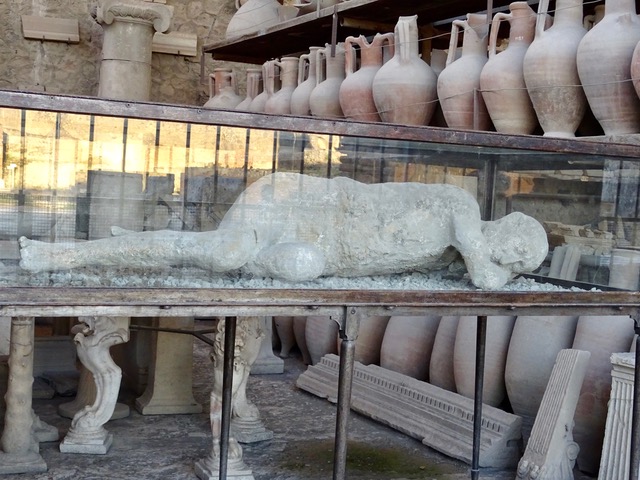
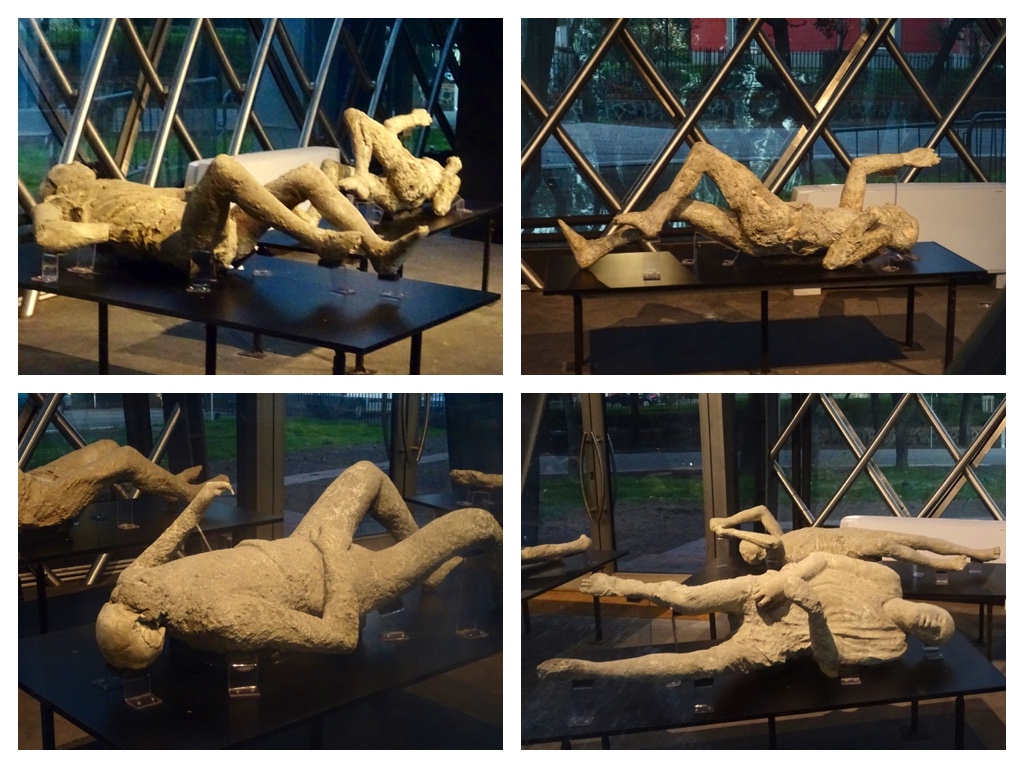
 This is our first view of Herculaneum. Unlike Pompeii, which was covered by about 4 meters of ash, Herculaneum was buried under more than 20 meters of mud, ash, and other pyroclastic material. This thick layer preserved wooden and other organic-based objects such as roofs, beds, doors, food and even skeletons.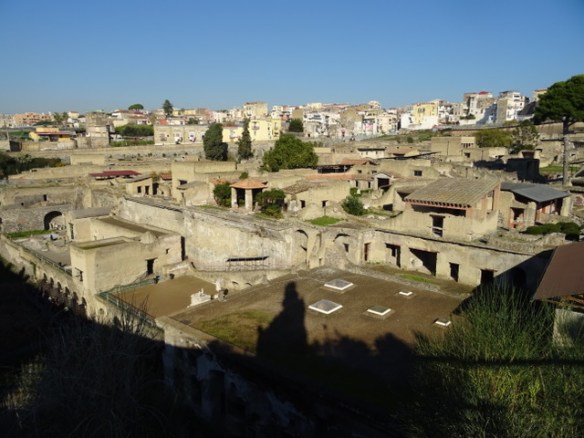
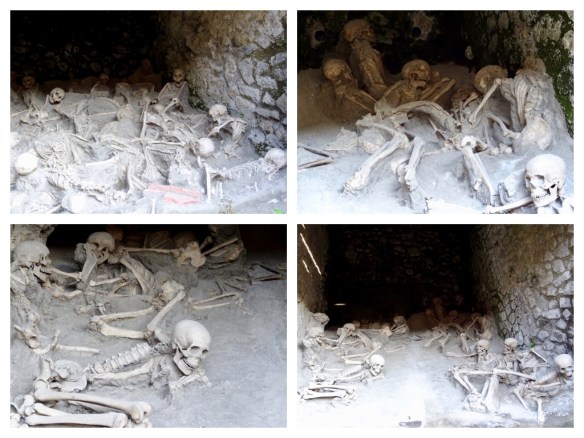
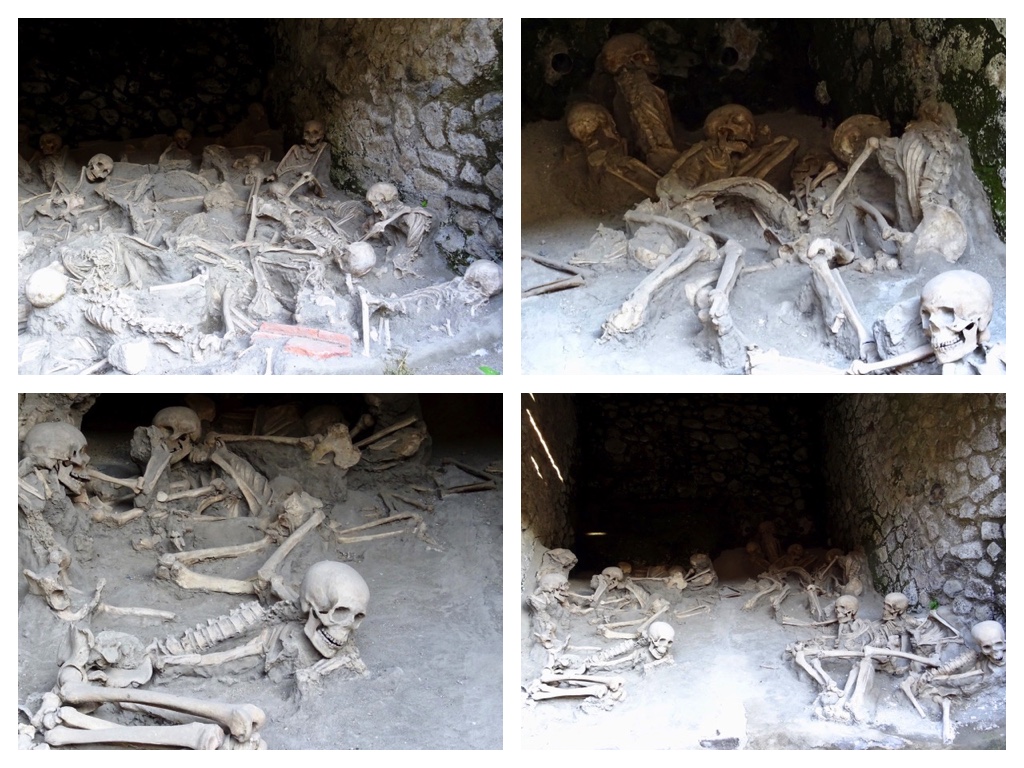
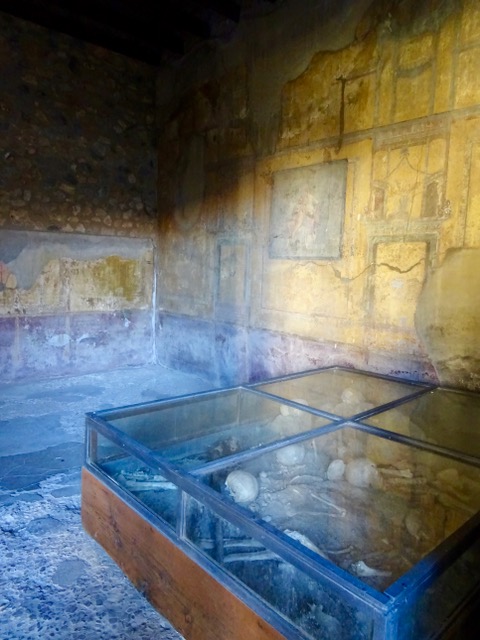
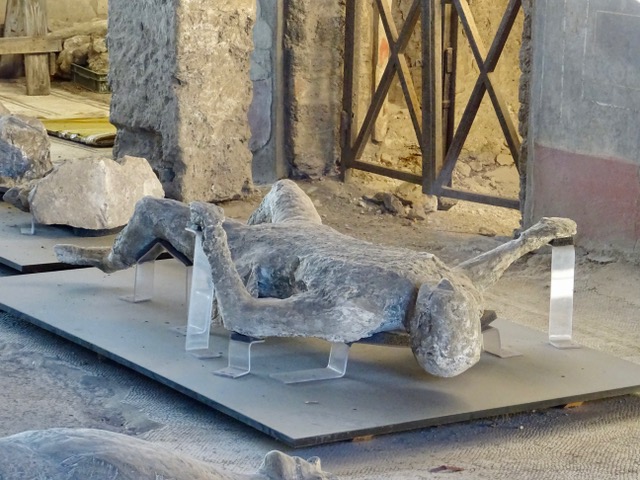
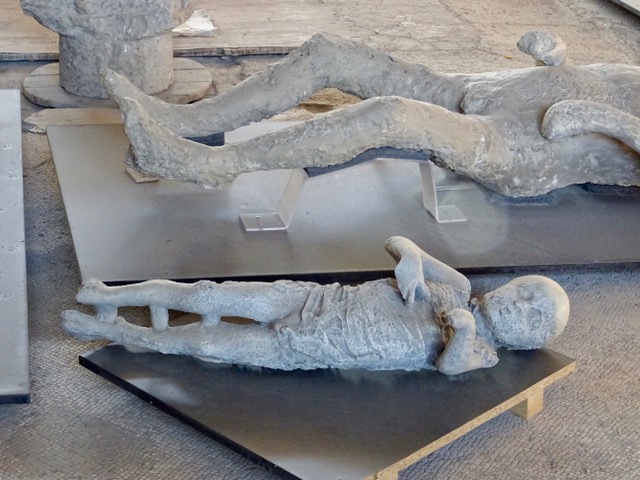
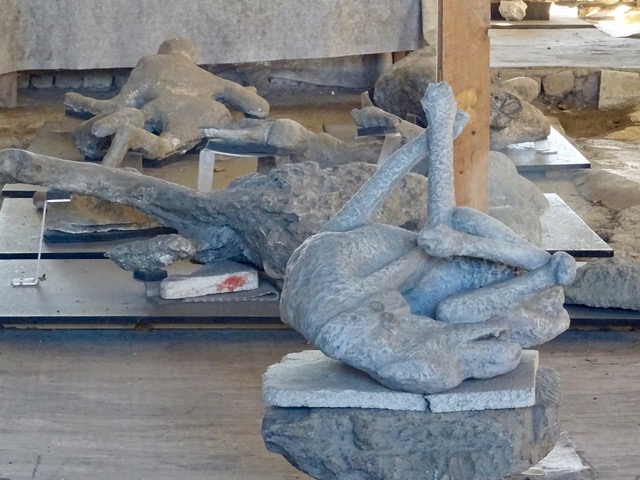
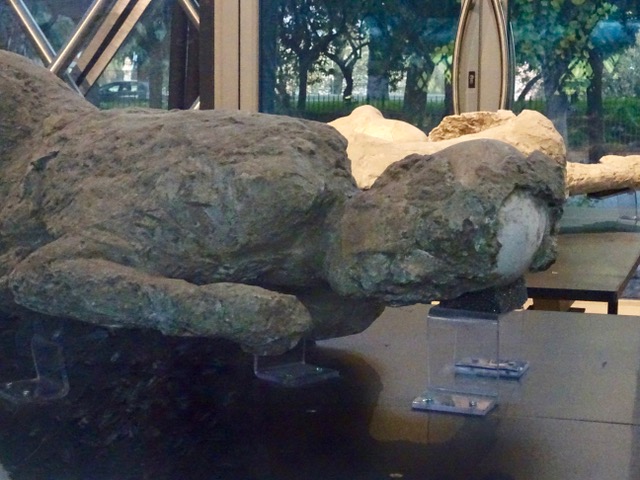
Until these skeletons were discovered inside boat sheds near the shore of ancient Herculaneum it was thought that most of the residents escaped the town. However excavation of the boat sheds in 1981 revealed over 300 skeletons. It is thought that they were waiting for boats to take them to safety but they died before this could happen. Please take a look at this excellent five minute video from the Smithsonian which explains all about these skeletons.
I understand that the skeletons on display are replicas of the originals but they still make a powerful impact.
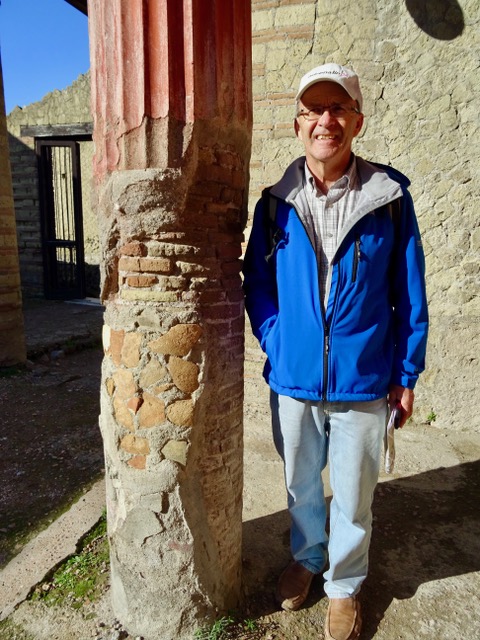
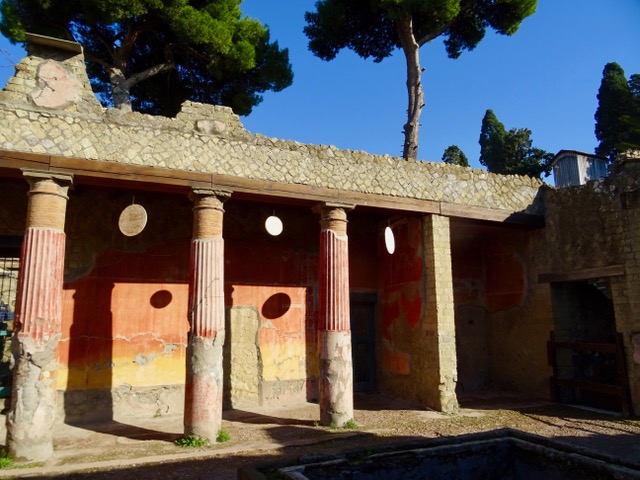
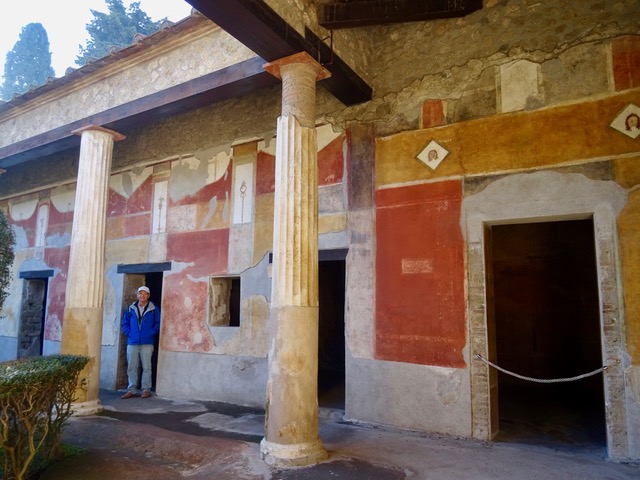
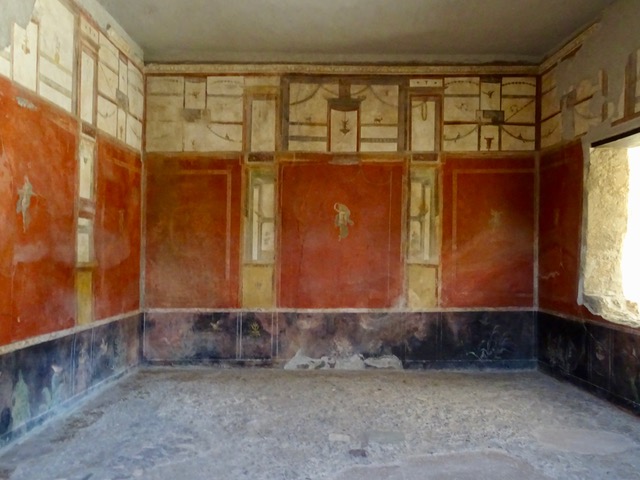
 These walls were painted from dark orange-red changing to light yellow…
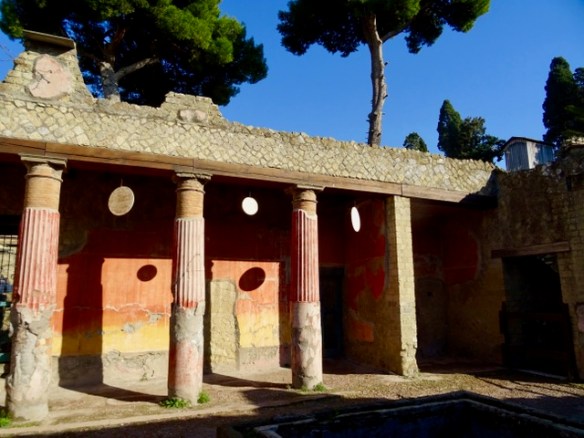 and the column’s construction was interesting.
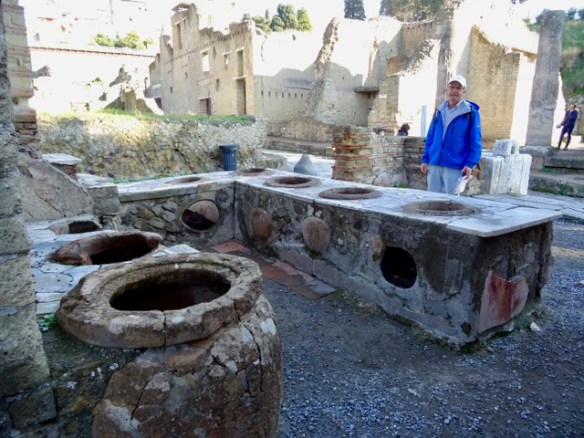
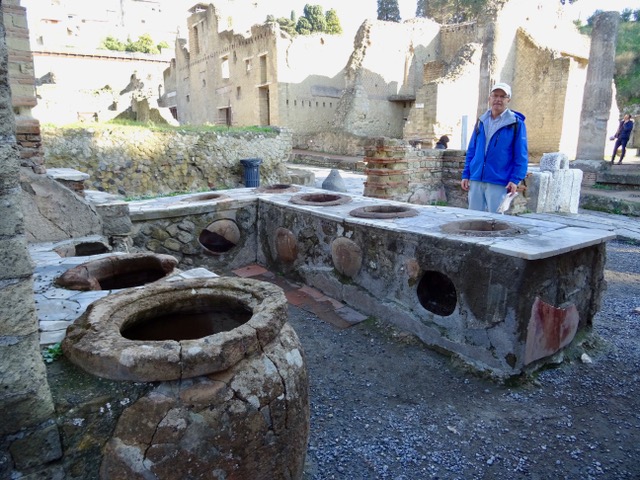
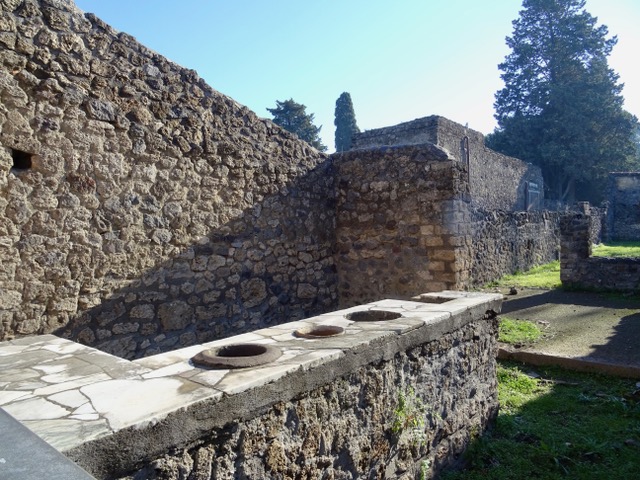
 There were more places for buying prepared food…
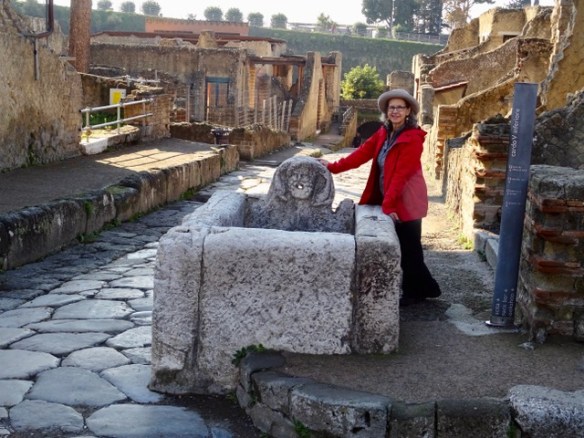
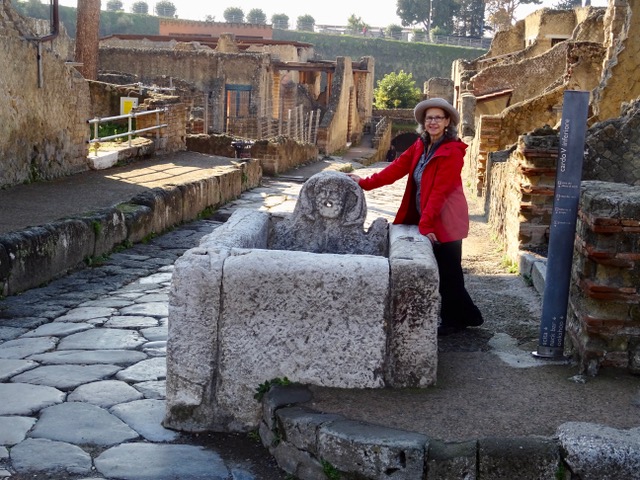
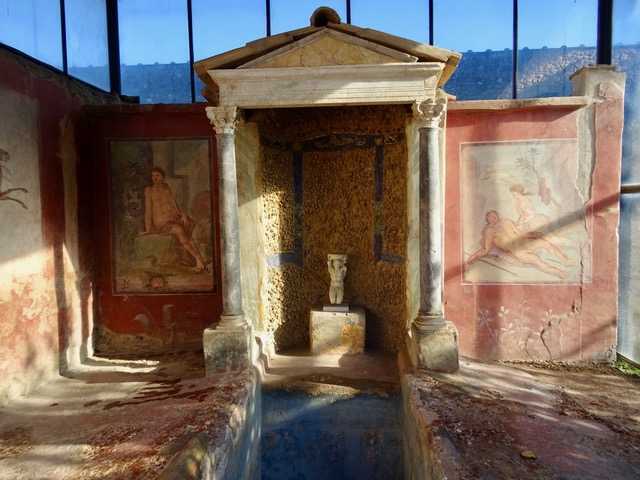
 and this is one of the many water fountains we saw both here and in Pompeii.
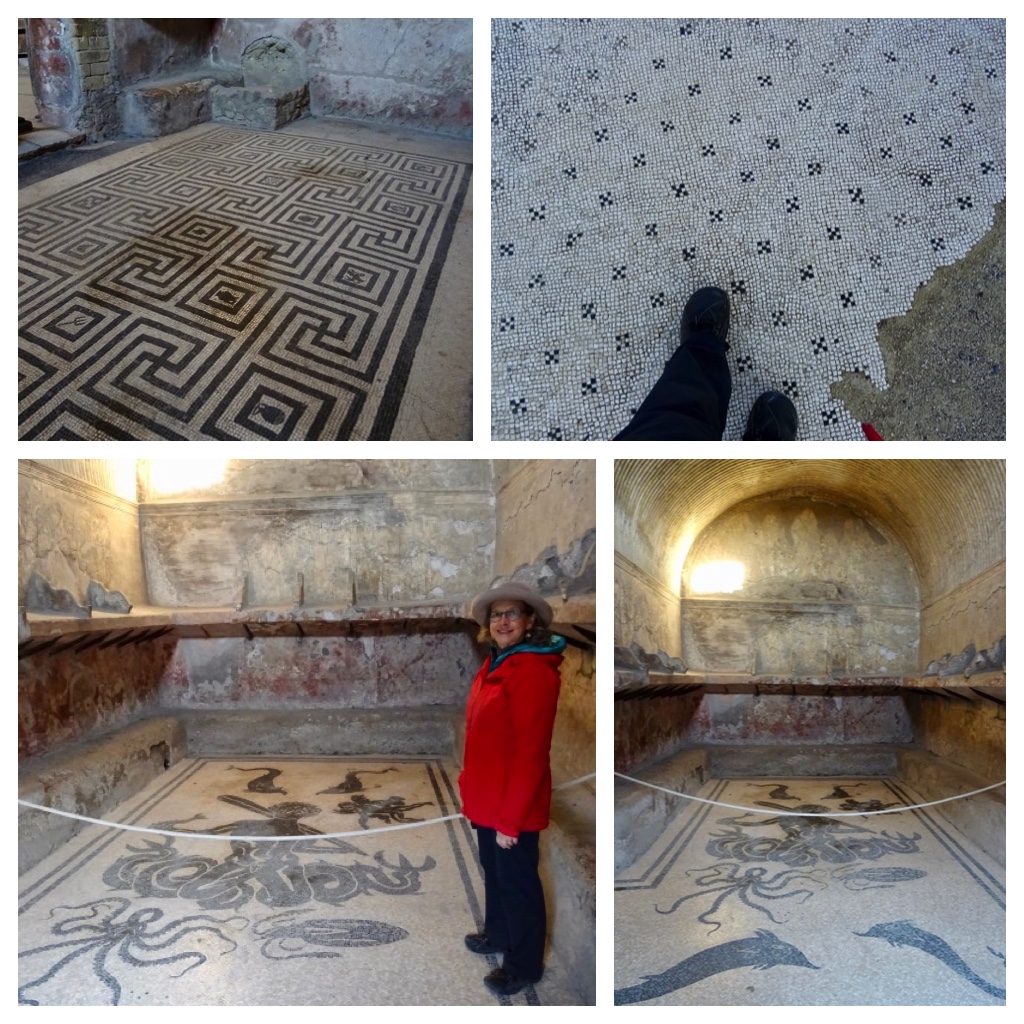
 Many beautiful mosaic floors were well preserved because they were covered with the hot mud that flowed down from Vesuvius.
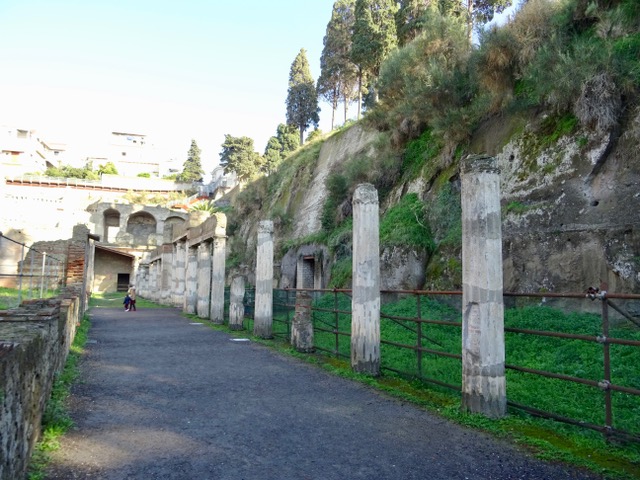
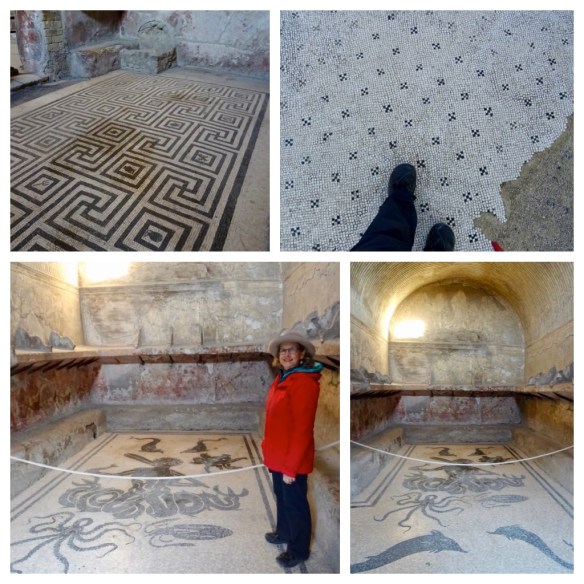 This is part of a huge sport centre here which had a pool and areas for other types of recreation.
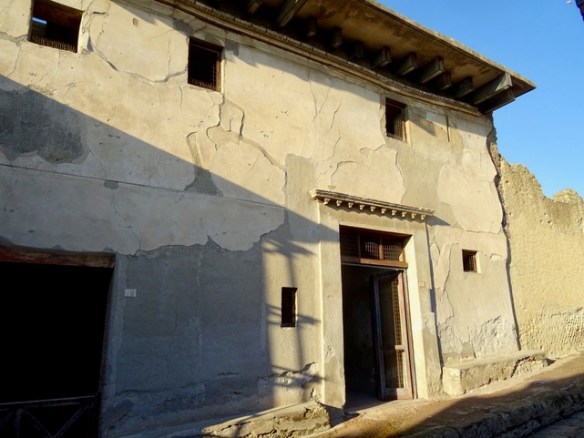
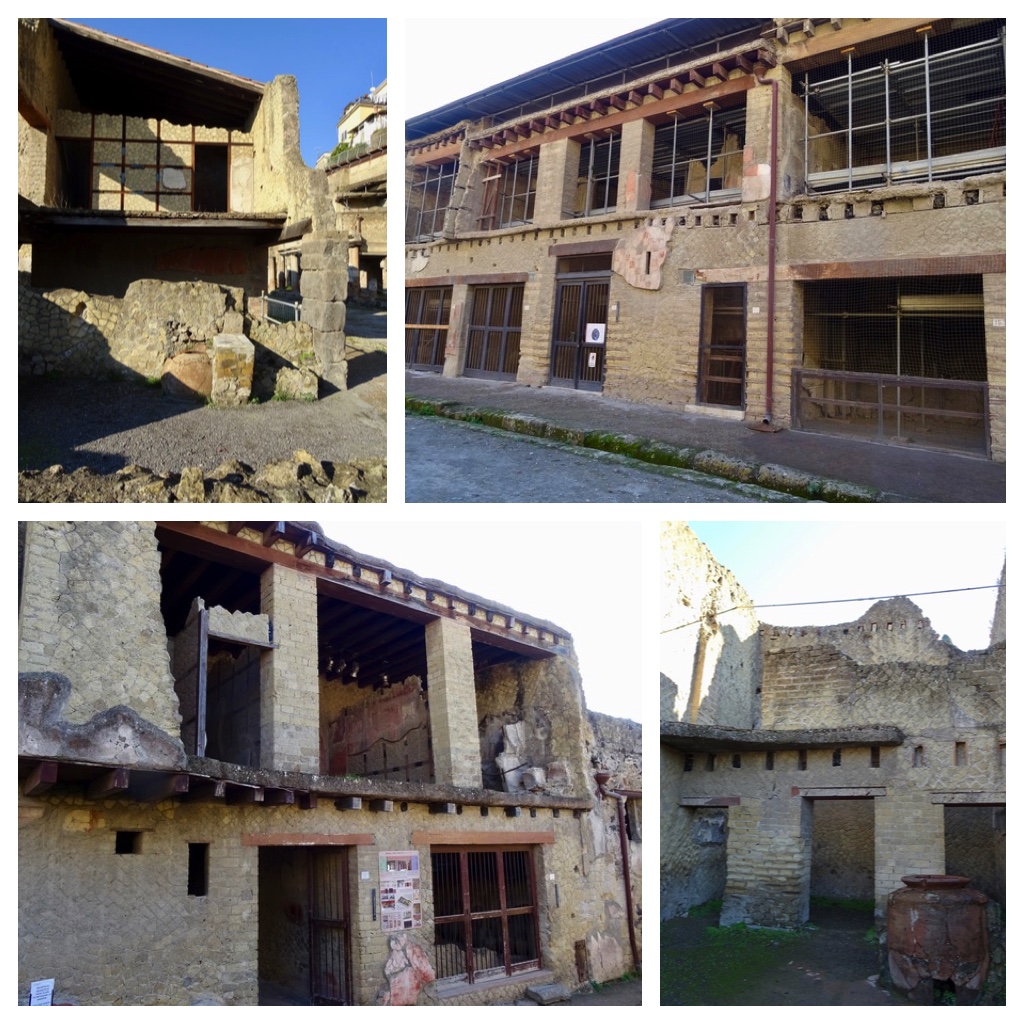
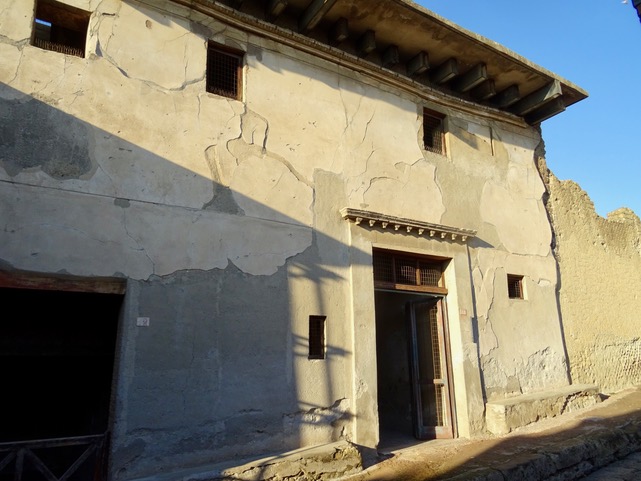
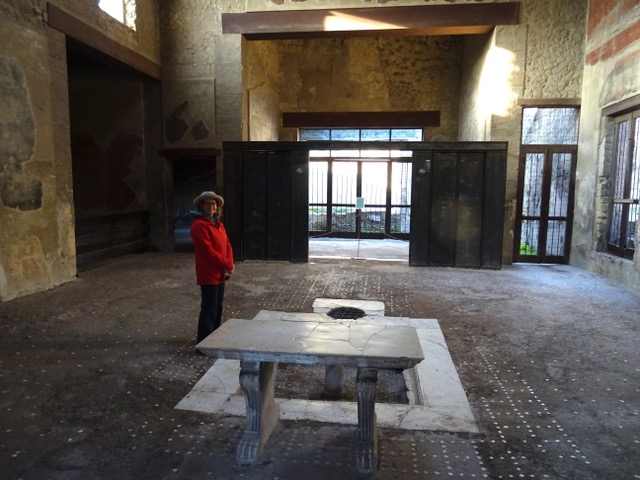
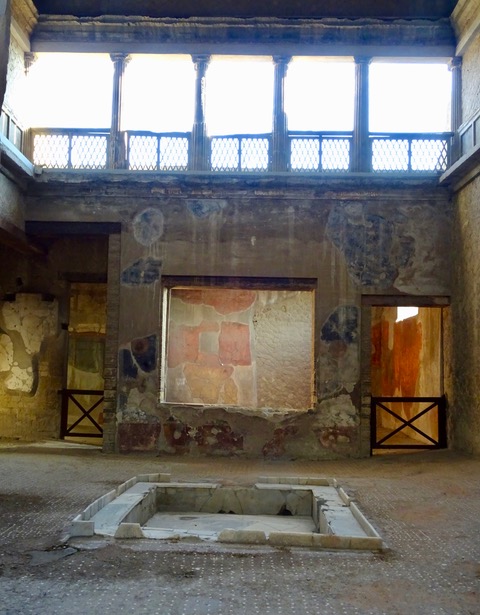
 Herculaneum is especially known for having well-preserved buildings with upper floors.
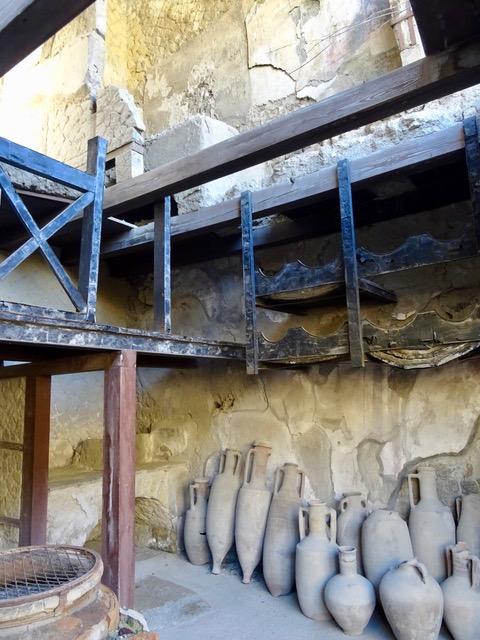
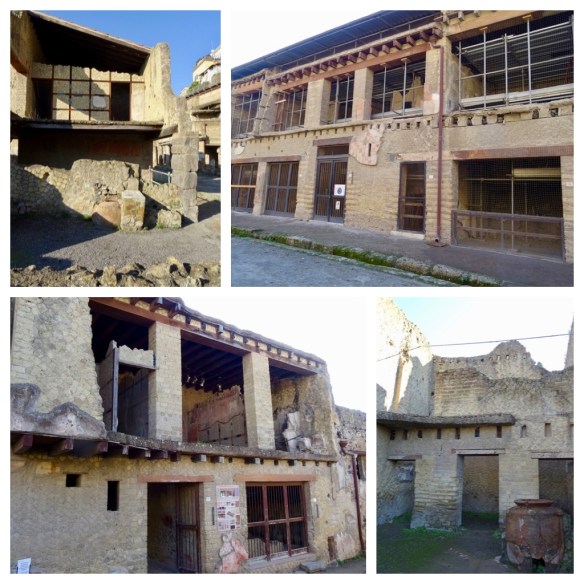 It is possible to see carbonized charred wooden beams. doors and shutters…
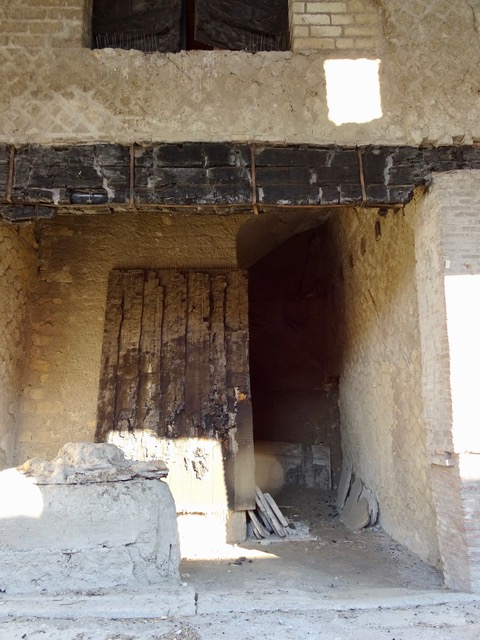 as well as railings and shelves inside the buildings.
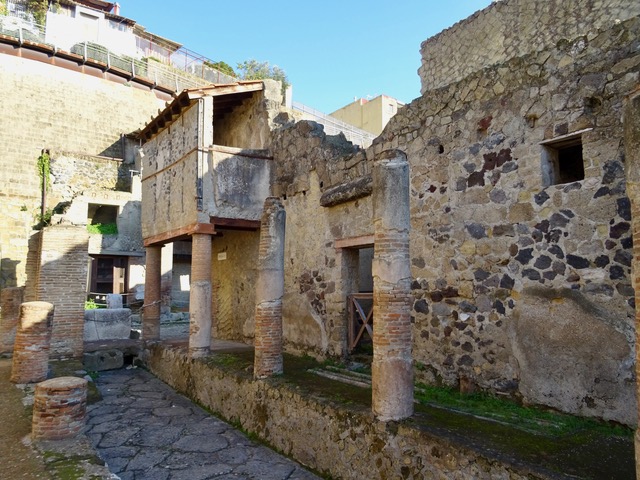
 There are several of these ‘balconies’ along the streets.
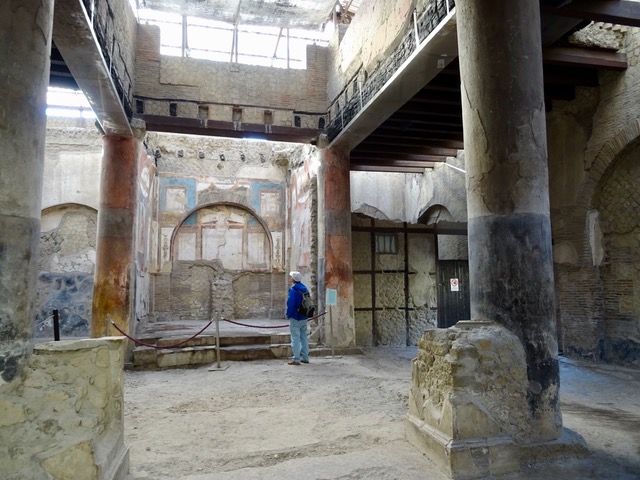
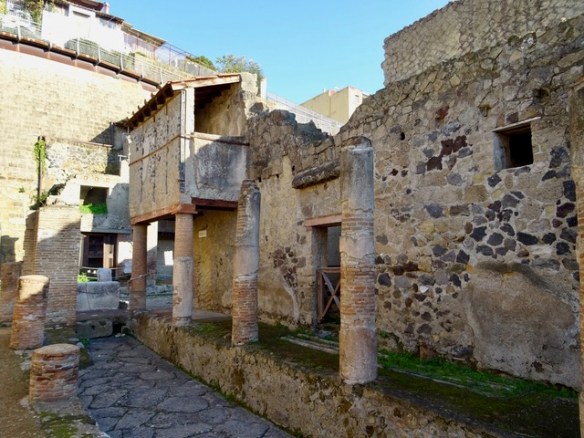 The College of the Augustales was an order of freemen dedicated to the Imperial Rulers of Rome. The big carbonized beams that supported the upper floor are still in place.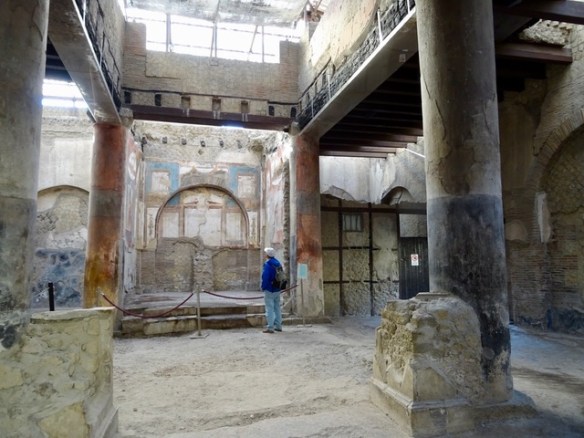
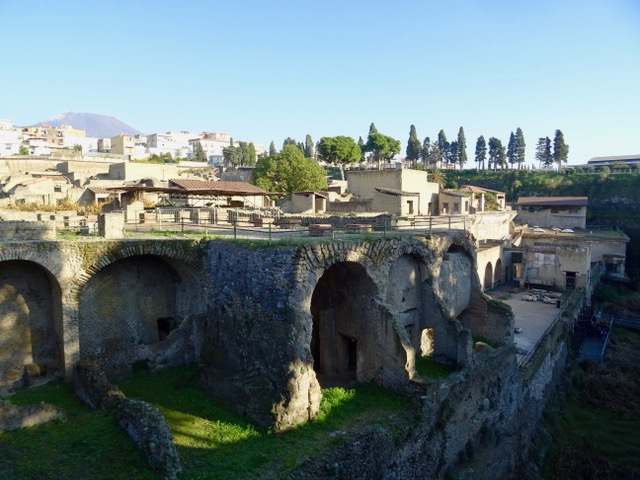
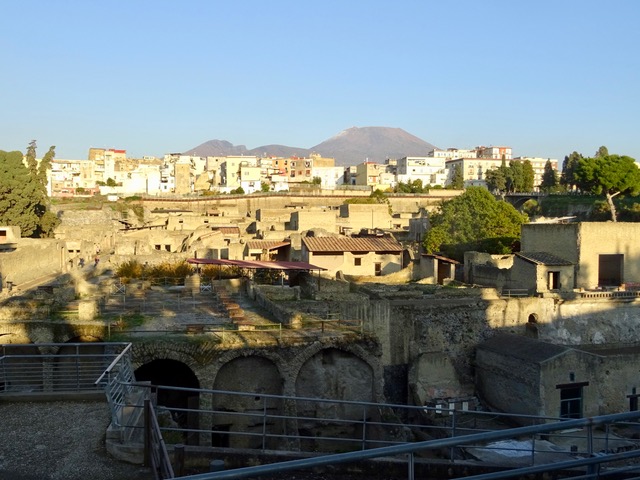
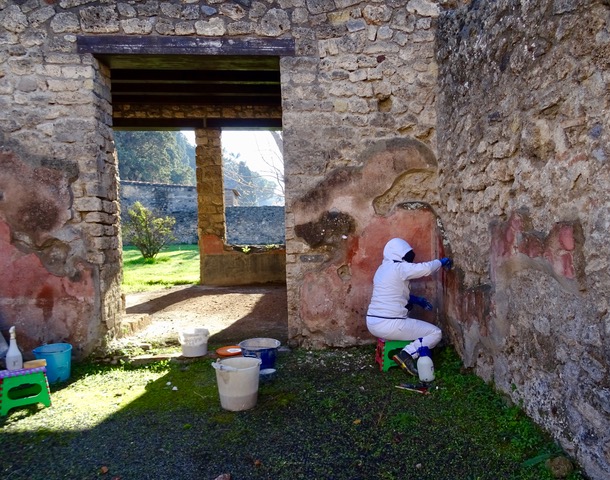
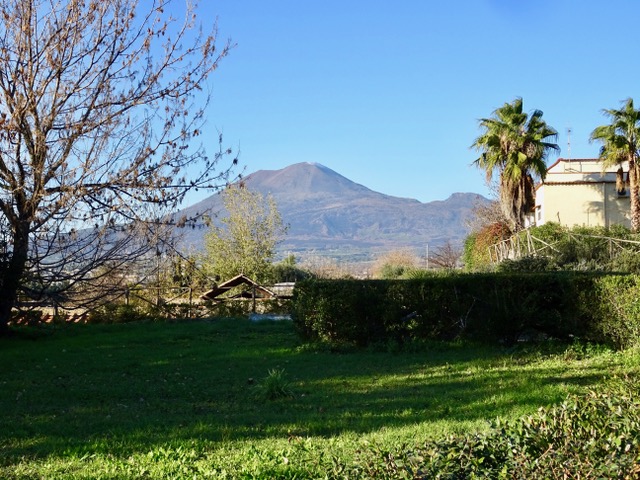
It is possible to see how the modern town of Ercolano was built on the buried remains of Herculaneum, and there is Mount Vesuvius in the background.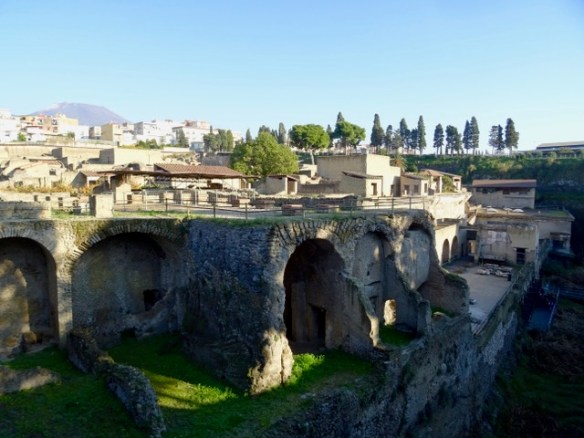 More preserved areas. Unfortunately many of the largest and best preserved villas were closed to visitors today. It was disappointing but not much we can do about it. We read a sign that said that it was not possible to properly look after the site for many years, and that by the year 2000 two-thirds of the site was closed to visitors due to safety concerns. With the support of the Packard Humanities Institute, work is now ongoing to restore this site and reopen areas to visitors
 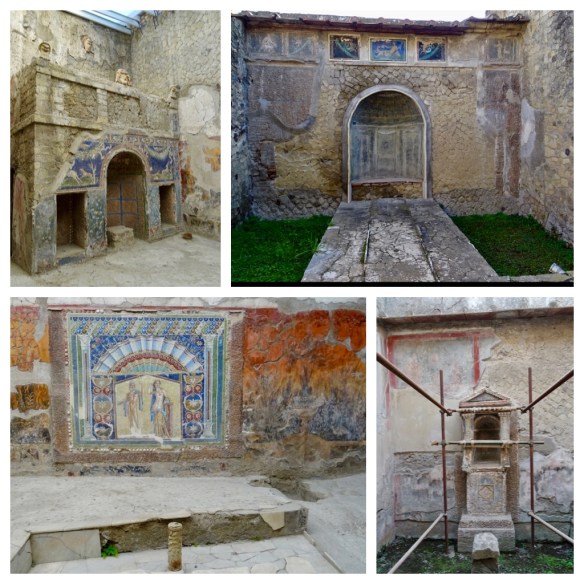 This building is particularly well-preserved…
 and has a carbonized bed inside.
 The doors in the back of this photo are the original wooden doors that were carbonized, which really just means to be changed to carbon by burning.
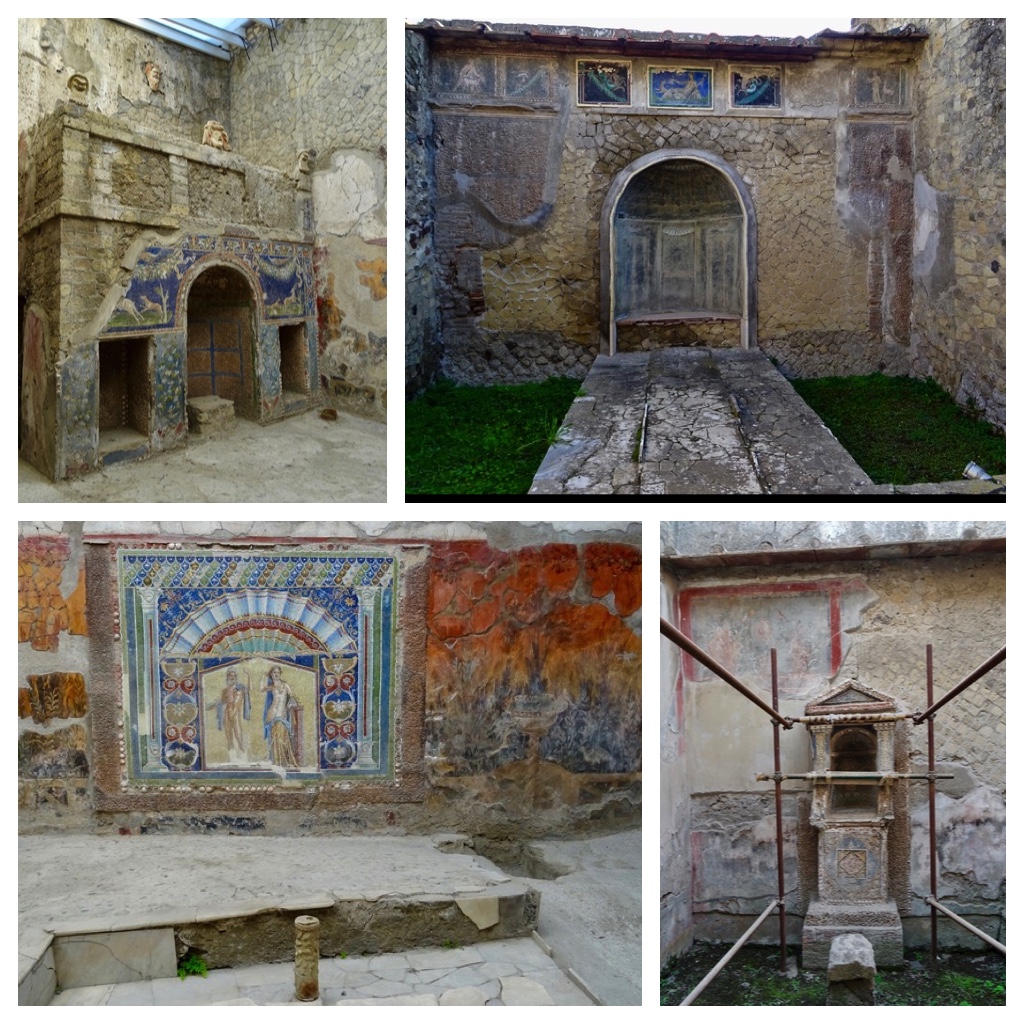
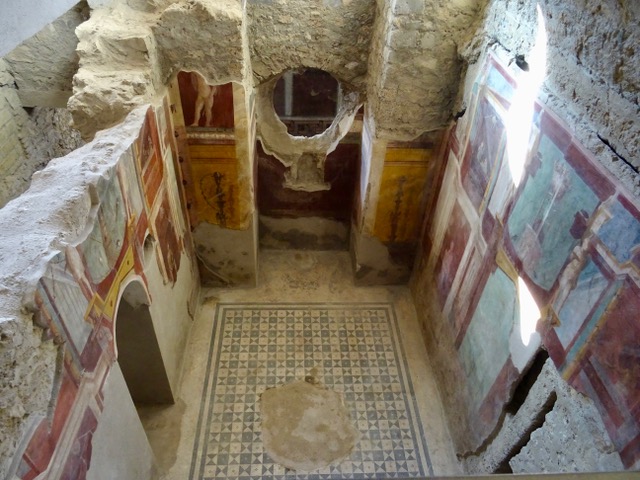
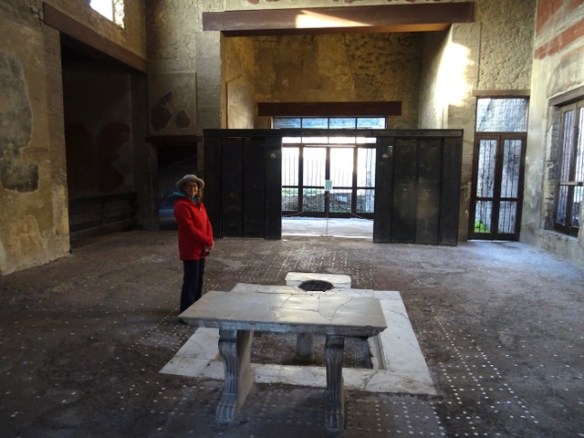 Some of the villas were very grand and must have been incredibly beautiful homes.
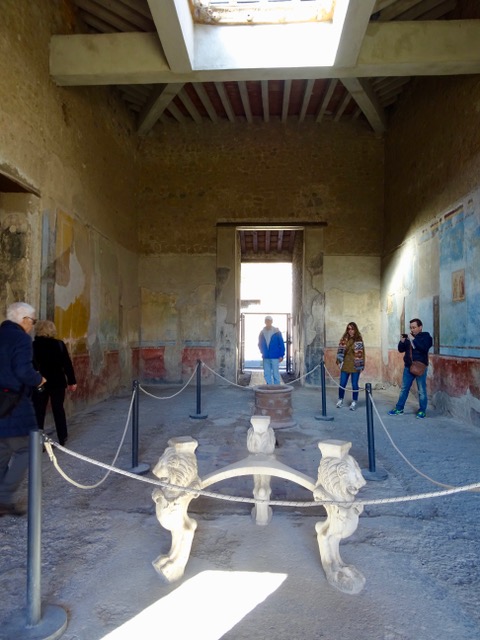
We were able to peek into the entrances of the closed sites.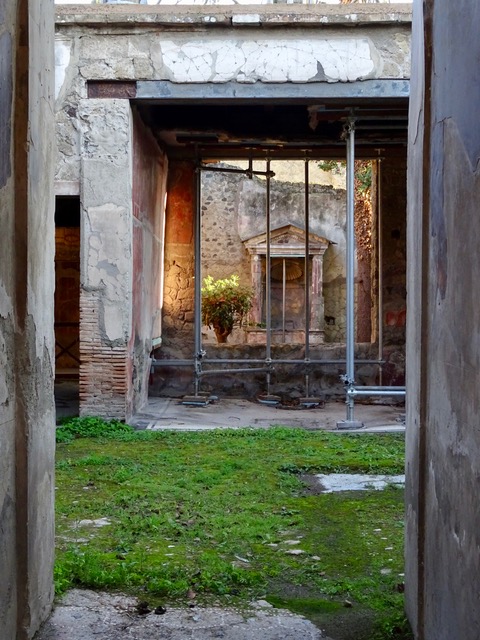
As we leave we look down on this ancient town one last time. The arched rooms in the bottom of the photo are the boathouses where the skeletons were found.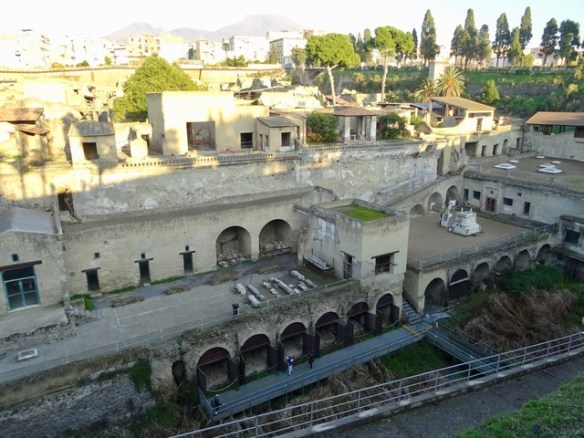 I read that the peak of Vesuvius has been reforming and there is danger of another eruption sometime in the future. The volcano is closely monitored and the hope is that there would be enough warning to evacuate nearby residents if this happens. I wonder about that.
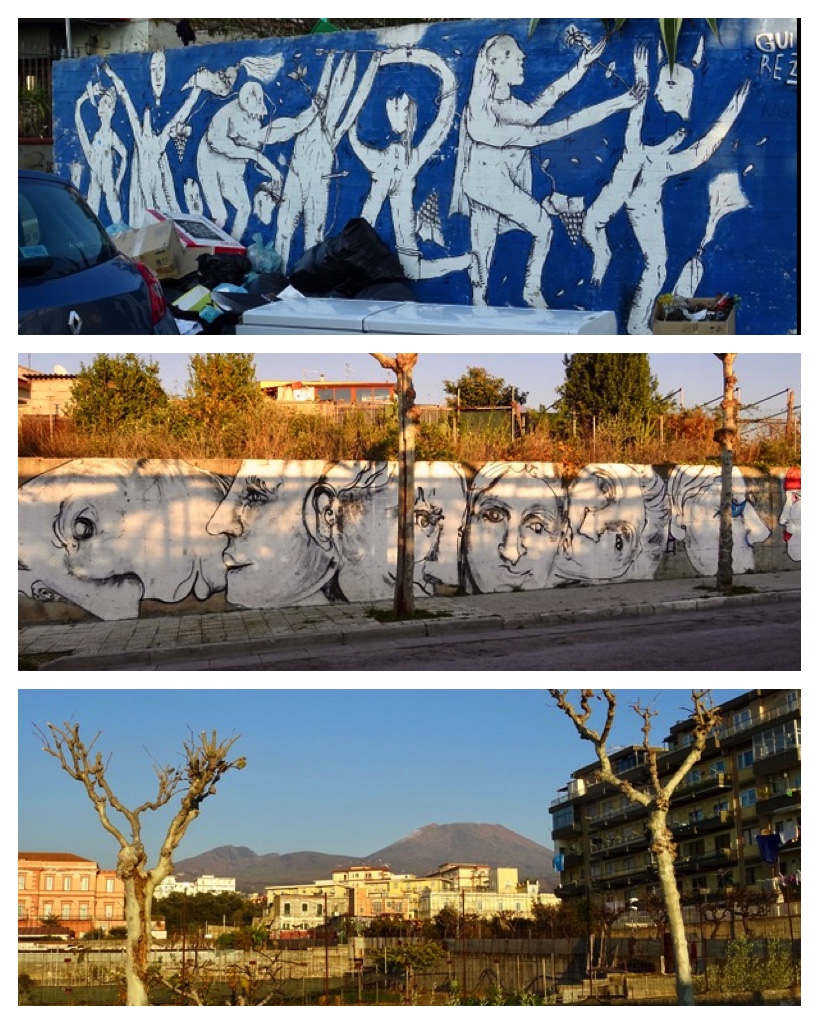
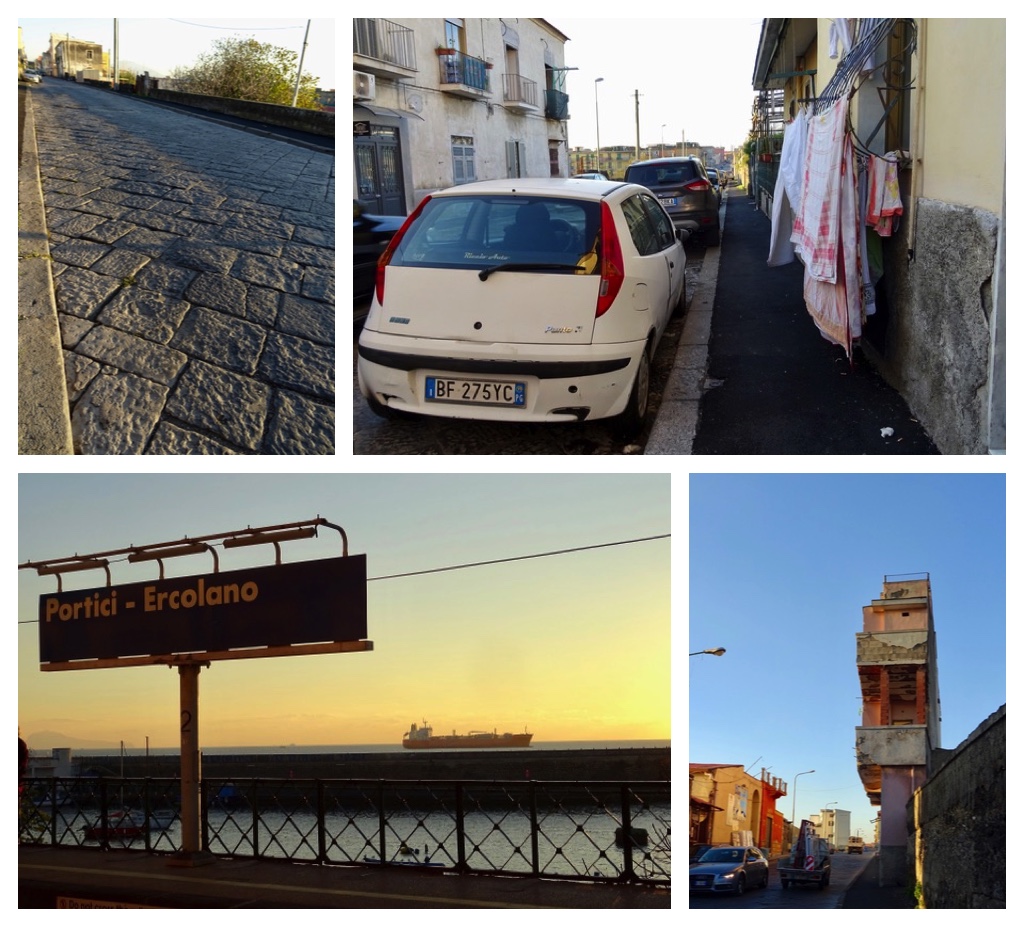
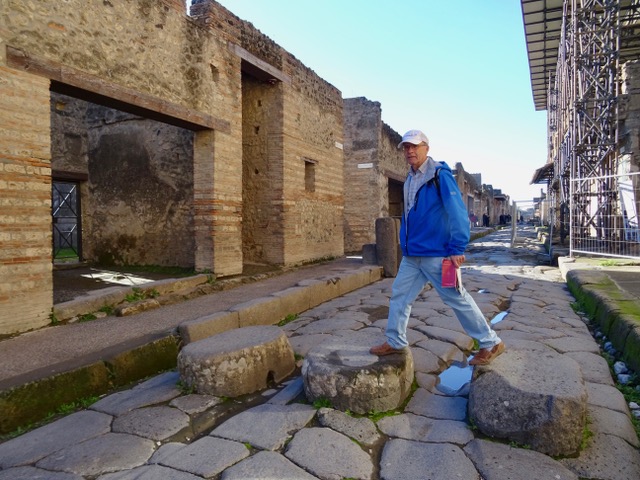
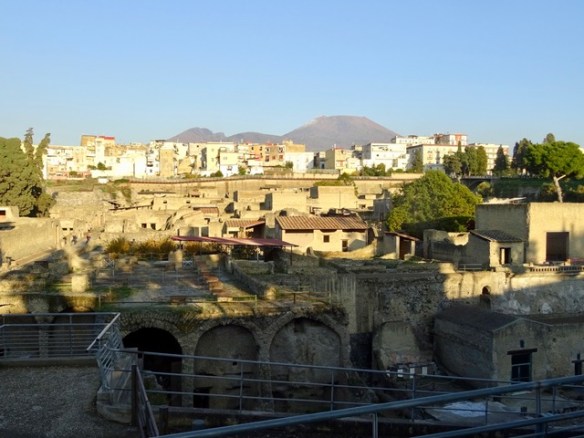 We did find a longer but more appealing route back to the train station. We see some interesting graffiti along the way…
 and roads paved with large square stones, laundry hanging right on the sidewalk and streets, some interesting buildings, and finally we are at the train station just as the sun is setting.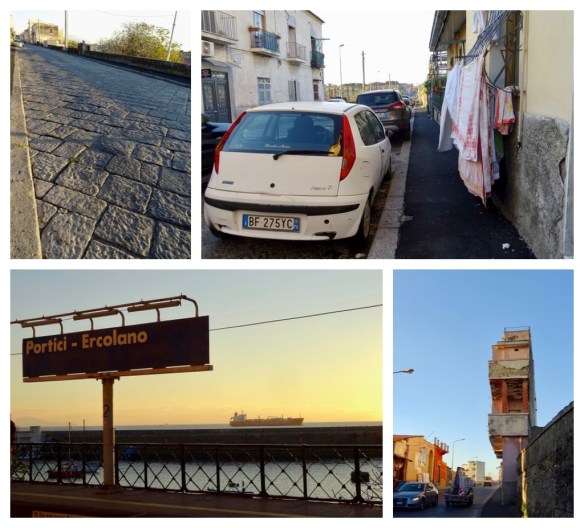
So, to answer the question of what I saw in the marble, it was a cartoonish horse figure, standing up on its back legs looking straight out at me.
I forgot to post this video titled A Day In Pompeii yesterday. It is a reconstruction of what likely happened in Pompeii during the eruption. I found it helpful in trying to make sense of what we see now in Pompeii. Take a look if you are interested.
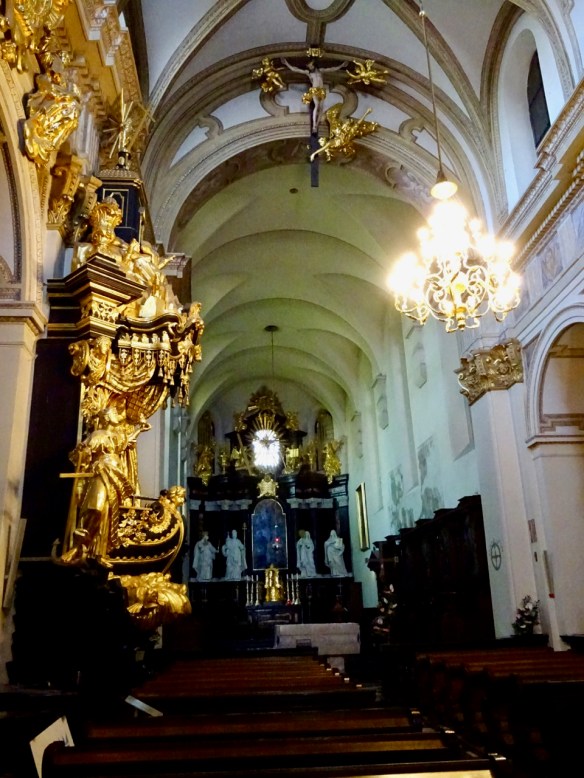
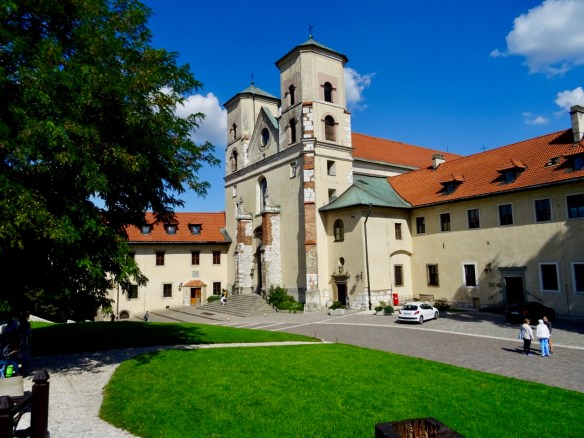 The interior of the church shines with gilded statues and ornamentation. Notice the pulpit is in the shape of a boat.
  We stop for dessert at a little outdoor cafe on the abbey grounds, some homemade pie, sherbet and Benedictine Brandy for Bob.
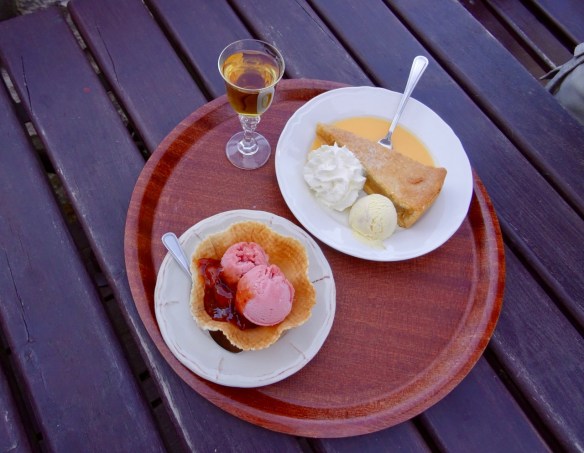 This was our view. We enjoyed relaxing in this peaceful spot for a while, and the dessert was yummy.
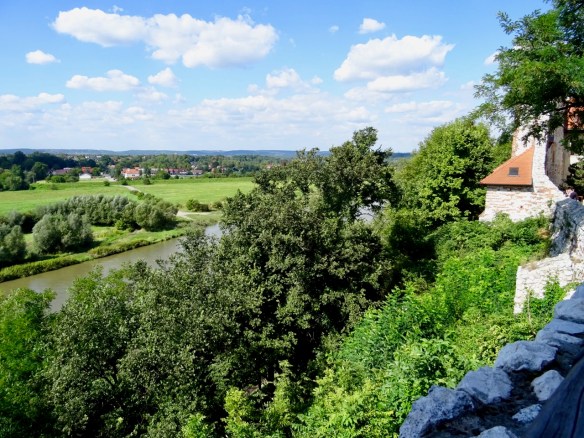 I think the structure on the right is a well but Bob thinks it is a wine press. We never did find out who was right.
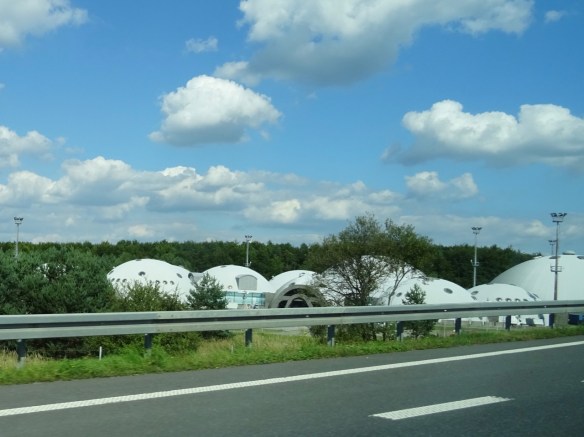
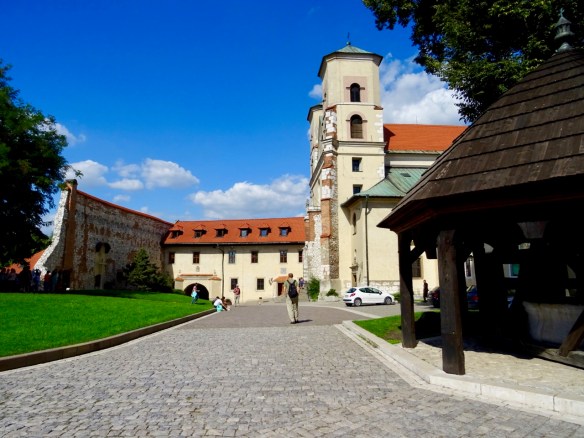 Back on the highway on our way to Wroclaw. We passed these domes before on our way to Krakow. They are connected by glass tunnels. No idea what it is, but it certainly looks interesting.
 Fields here are often bordered by a row of trees. I love their silhouettes against the sky. I snapped this as we drove by. We finally arrive at our apartment just as it gets dark and we are happy that it has a designated parking spot as there is absolutely no parking anywhere on the street.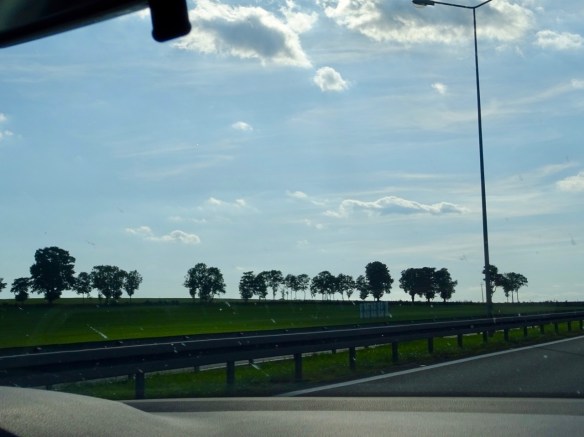
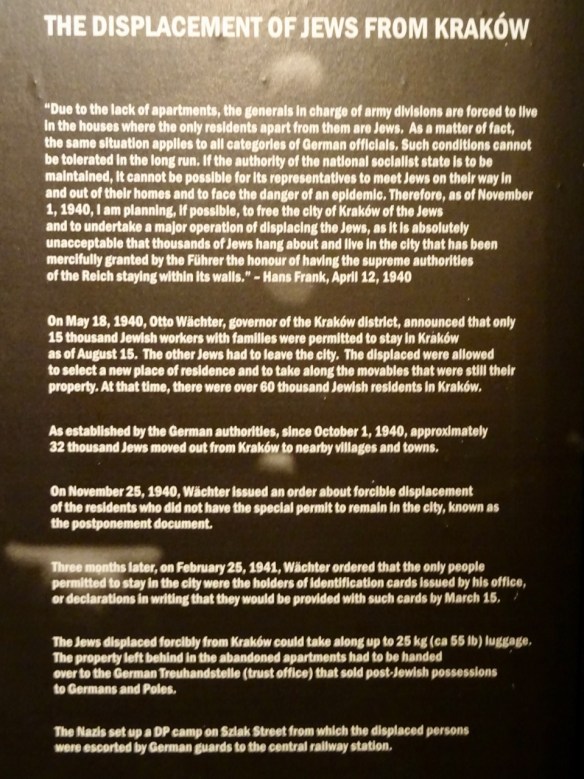 Jewish people were hung along the train tracks for all to see.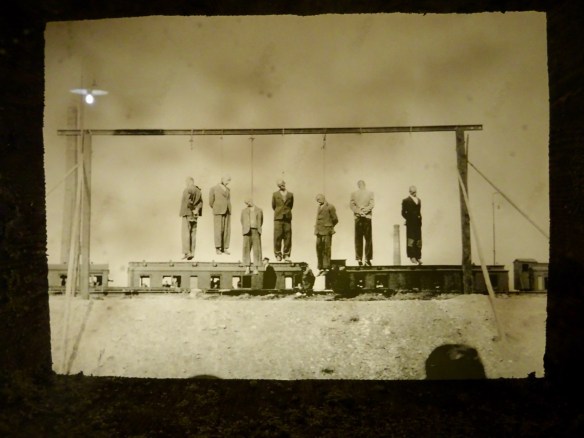
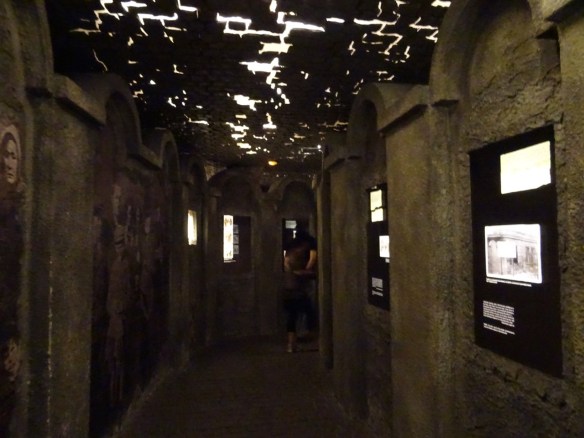
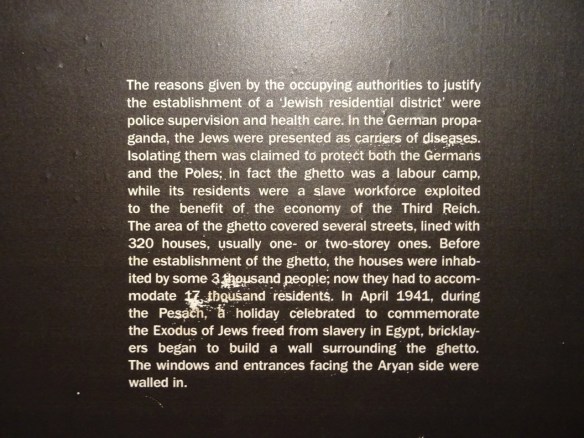 Walking through this dark exhibit about the wall around the ghetto.
 It was thought that starving the Jewish people was an effective way to weaken and destroy the morale of the Jewish population, especially the young people.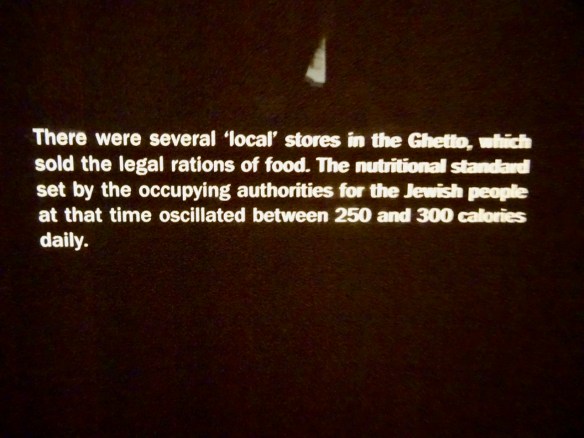
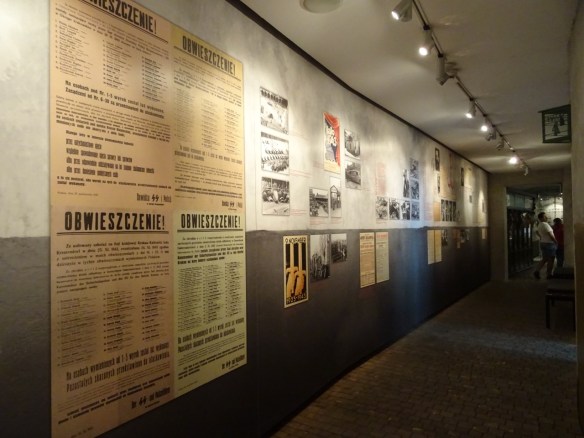
 The corridors are covered in articles and photographs. There is so much to see and read.
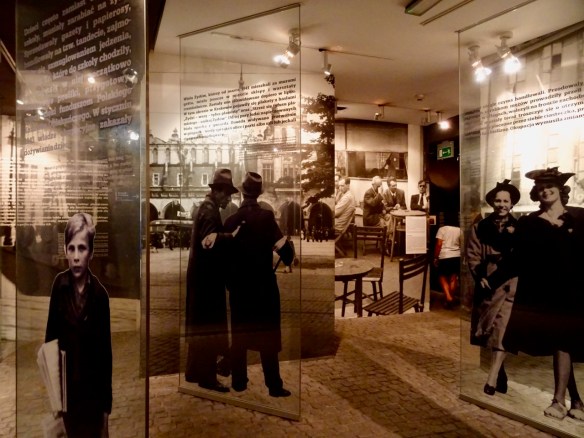
 More exhibits, this one of everyday life in Nazi occupied Krakow. …notice the armband that Jewish people had to wear so they could be identified as Jews.
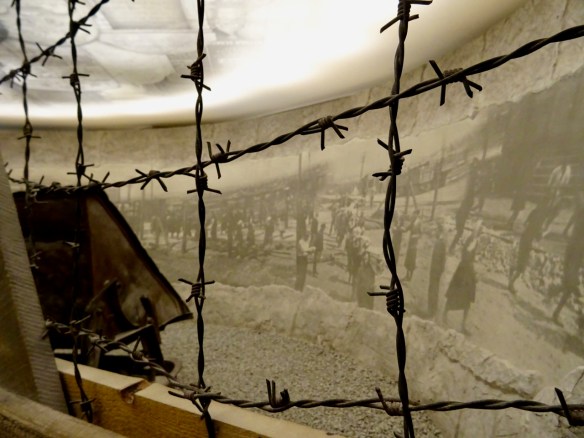
 One of the camps.
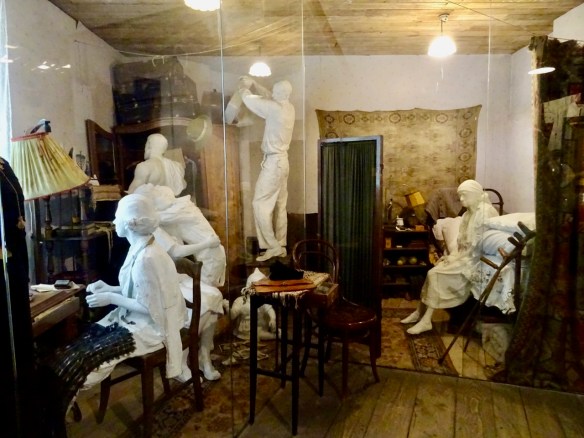
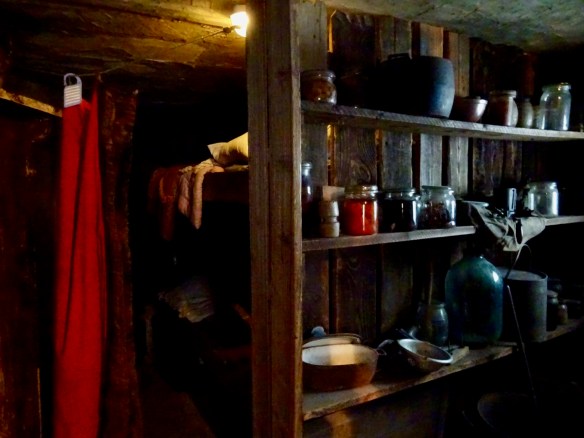
 A hiding place in the cellar of a house in Krakow. Even though it meant death for anyone found helping a Jew, by hiding them or even offering food or assistance of any kind. many of the Polish people did exactly that.
  Oskar Schindler was one of these people. He really wasn’t a man of great character, he lied, cheated and stole what he could, but he was instrumental in saving the lives of 1200 Jews. He also treated the Jews working at his factory better than in any other factory or work camp. There are videos of survivors talking about their experiences during this time.
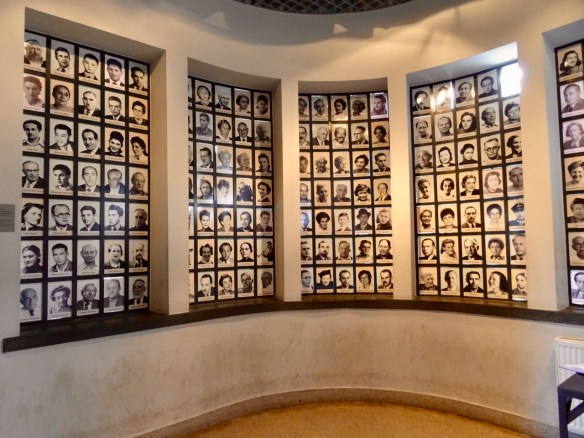
  Some of the people that were saved by Oskar Schindler. Two of the survivors became doctors and one became a Supreme Court judge. Everything in this museum is difficult to watch and listen to, but we need to know and remember what happened. I have heard it said that we need to do this so history will never be repeated, but I wonder. There is so much hatred and racism in the world today that I can no longer believe that something like this will never happen again. It is frightening wondering what the future will bring.
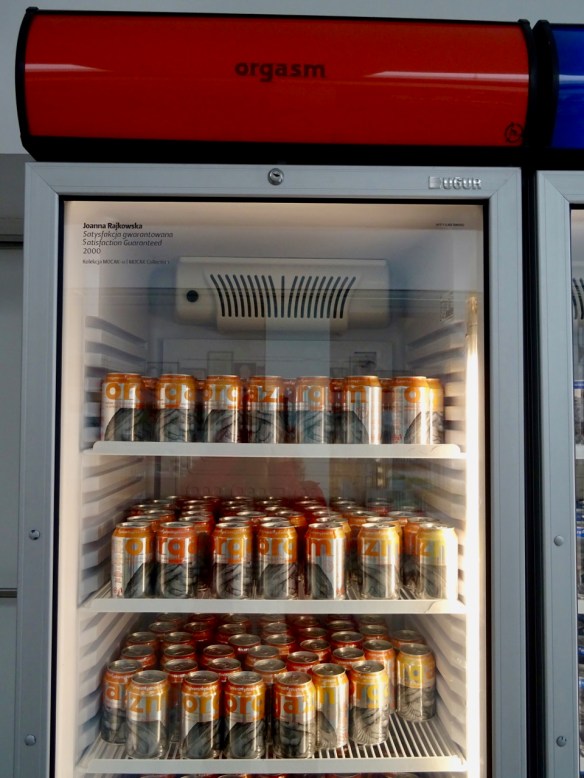
 We stop for tea at the Modern Art Museum cafe. It gives us a chance to recover form the heavy content of the Schindler Museum. On the way out I notice this vending machine. Notice the name of the drink it dispenses.
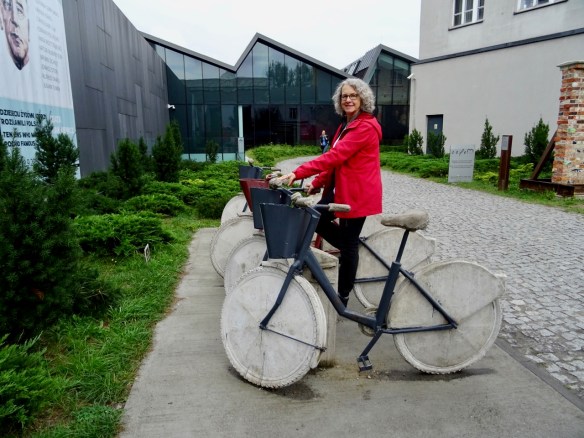
  I try out the cement bicycles…
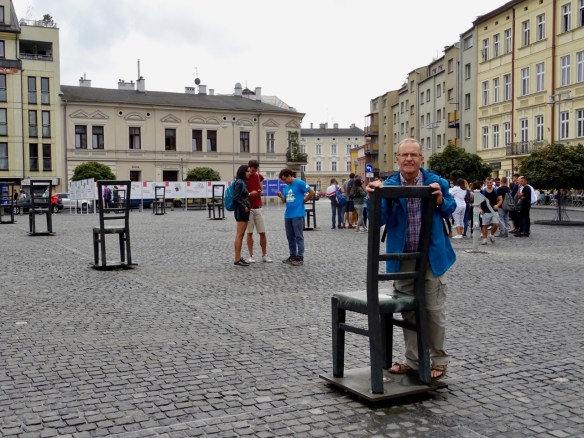
 and Bob checks out an installation in a town square.
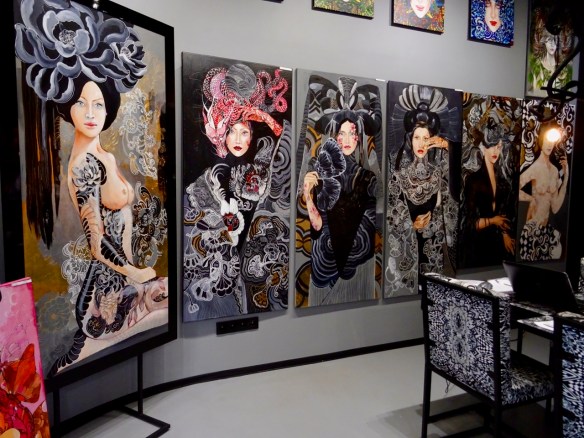
  Interesting artwork in one of the shops we pass.
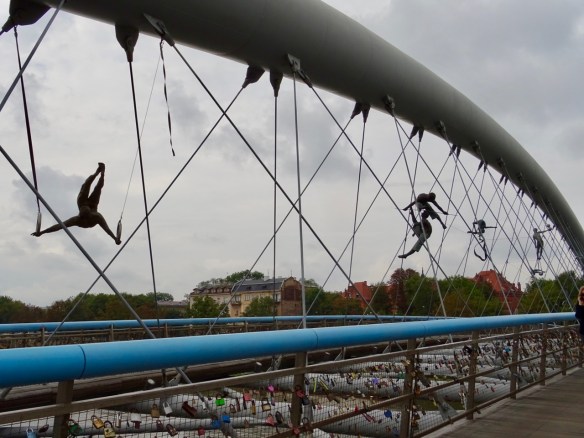
 We cross this pedestrian bridge over the river and we cannot decide how these sculpture stay right upright. They appear to be balancing on cables with no support wires yet somehow manage to stay right side up. We just can’t figure it out.
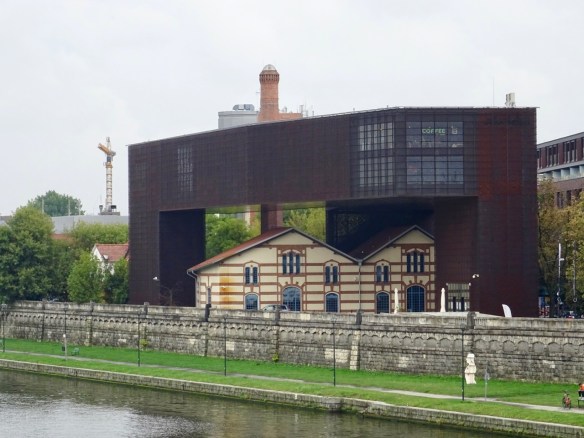
 Here is an interesting way to keep an old building while erecting a new modern one!
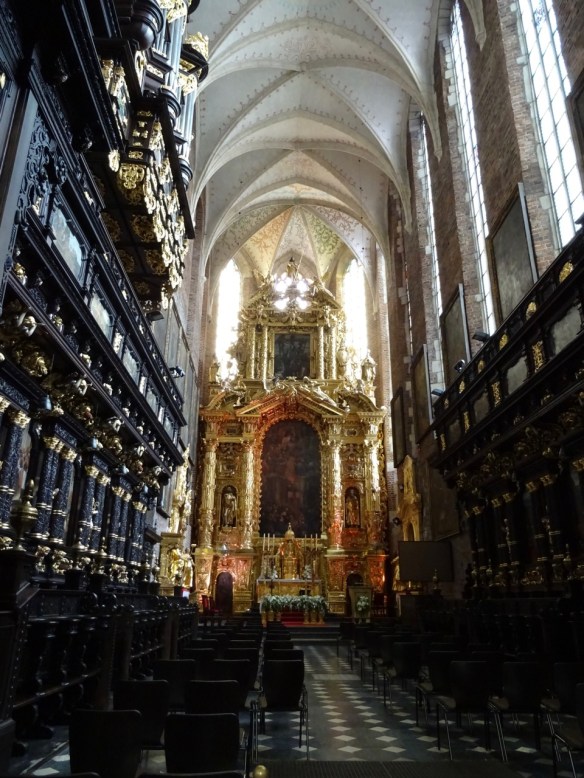
  We stop in at a basilica near the old town which has a very impressive altar. I wonder if it is real gold on all these altars? OK, just did a bit of research and it appears that real gold foil is used.
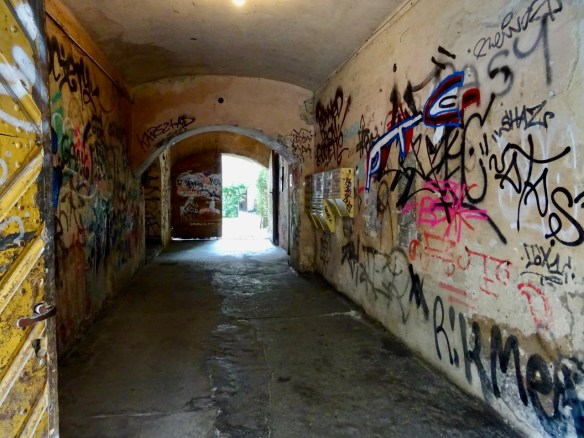
 I always peak into open doorways. They are often not very attractive doors but they sometimes open on beautiful interior courtyards and gardens.
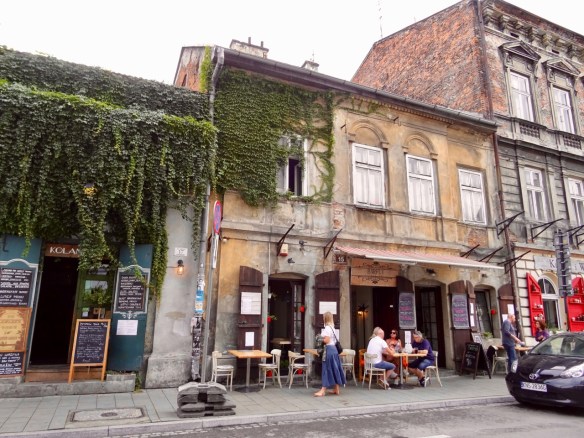
 A typical street side restaurant on our walk back to our apartment.
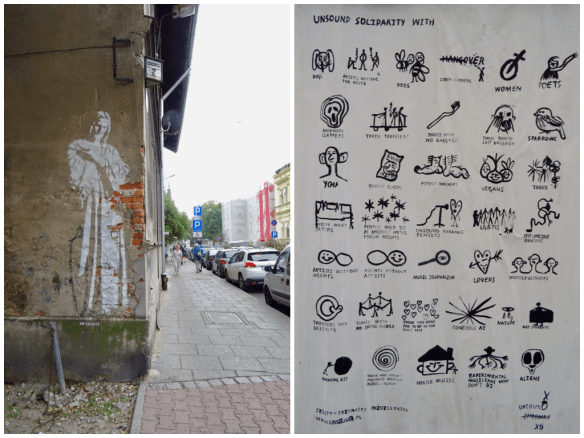
 More street art on the way home.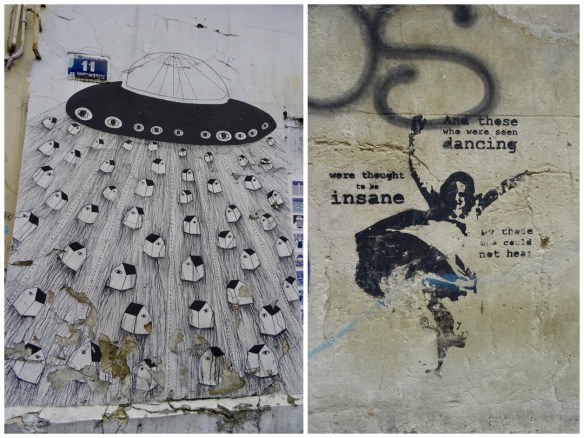
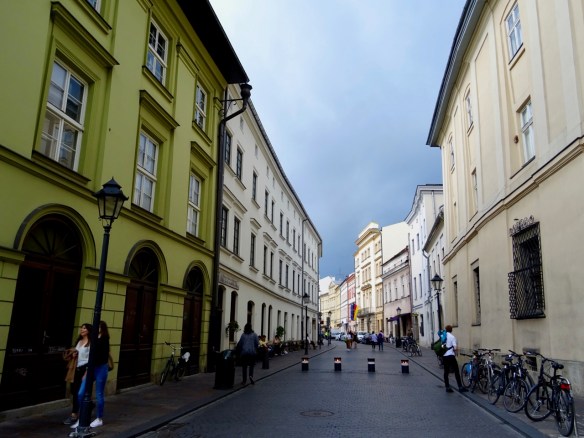 This church has one of the most impressive altars in all of Poland but there is a service happening so we are not allowed in.
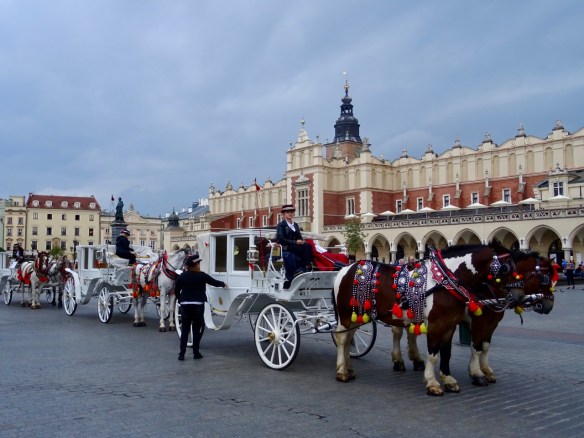
 There are lots of horse drawn carriages for hire. I was tempted but it really felt like the rain was coming.
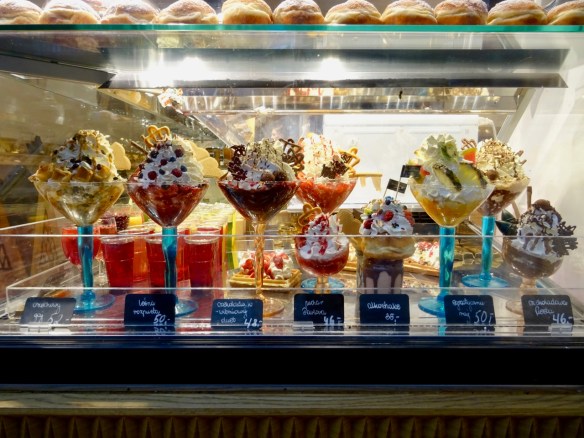
 These are enormous, about a foot high and cost between $14 and $20 each!
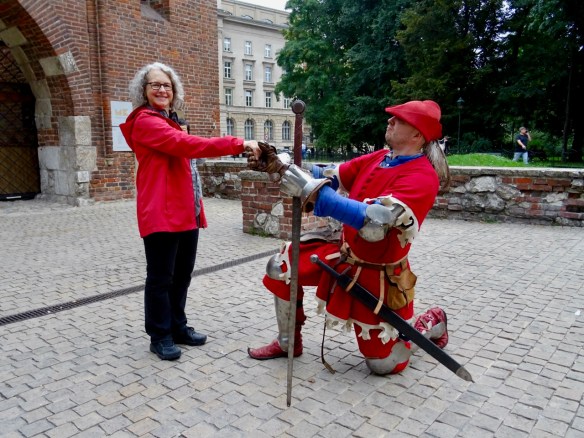
 This guy tried to challenge Bob to a fight, but no luck, so…
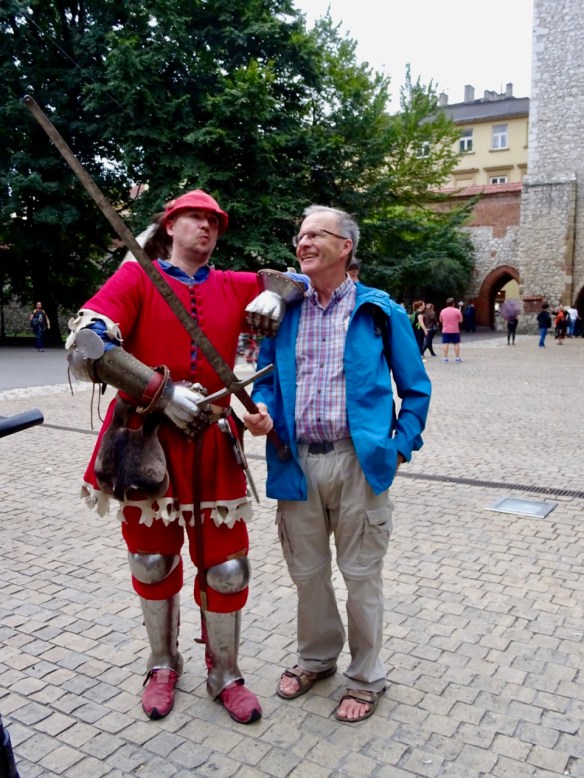 He tried to win me over!
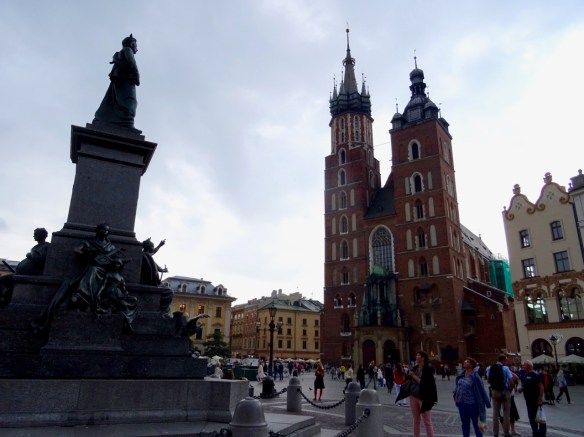
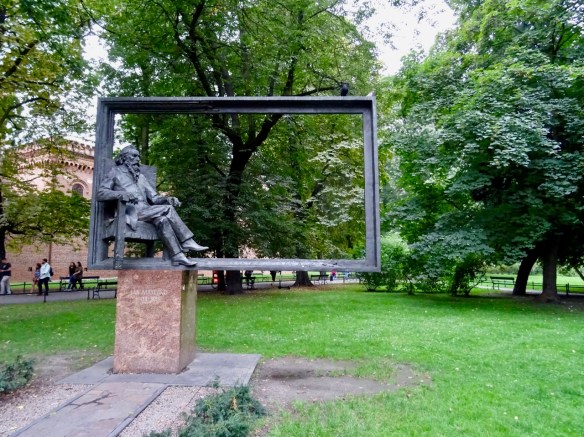
  An interesting sculpture of Jan Matejko who was a 19th-century painter native to Kraków. He is renowned for his large oil-on-canvas paintings of historical events in Poland.
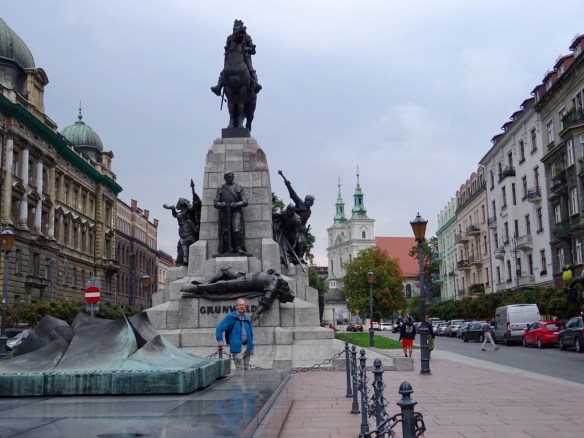
  This street leads towards the train station with its huge attached shopping mall.
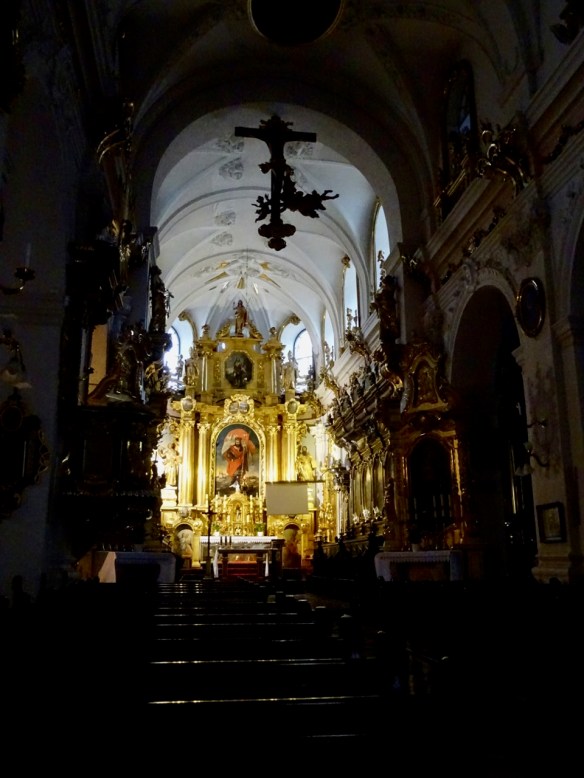
 One more church on the street just before the train station. It was dark inside except for the light shining on the altar.
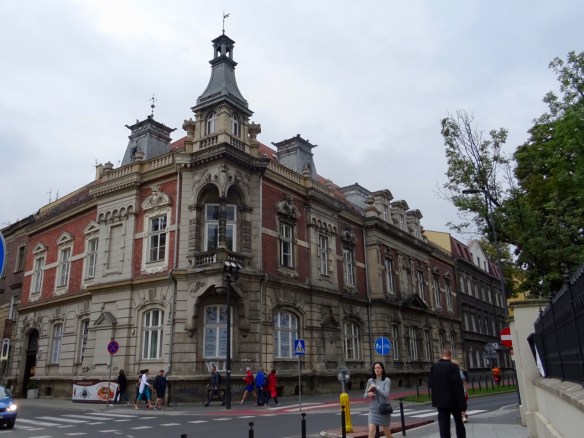
 A typical building in Krakow old town…
 Juxtaposed with the interior of the train station shopping areas. It is huge, three floors with hundreds of very modern shops.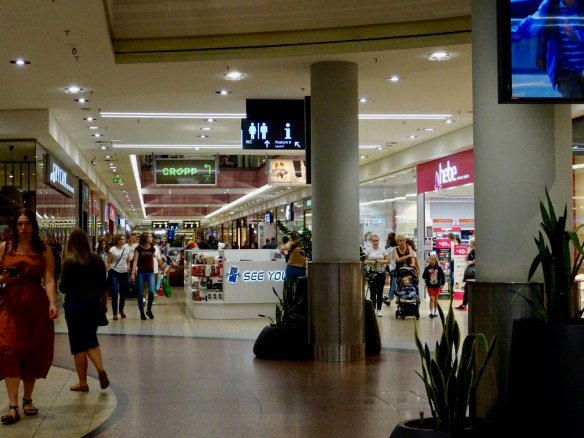
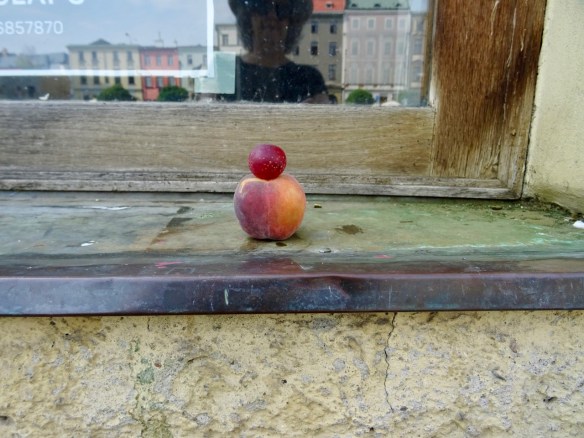
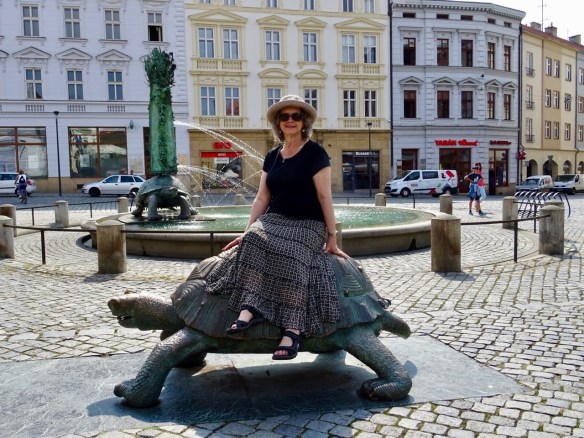
 Doesn’t everyone want to ride on a turtle? I almost went right over backwards when I climbed on!
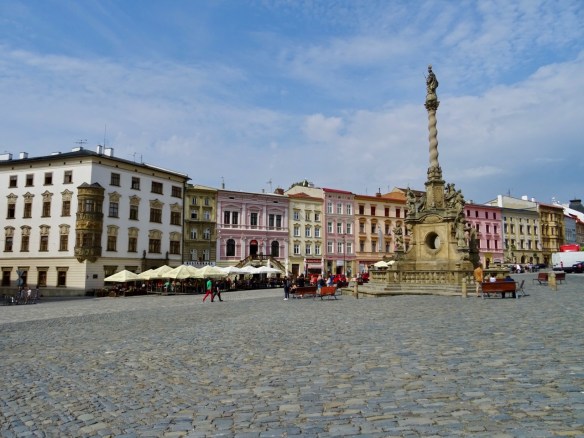
 The Holy Trinity Column dominates the town square. “The column is dominated by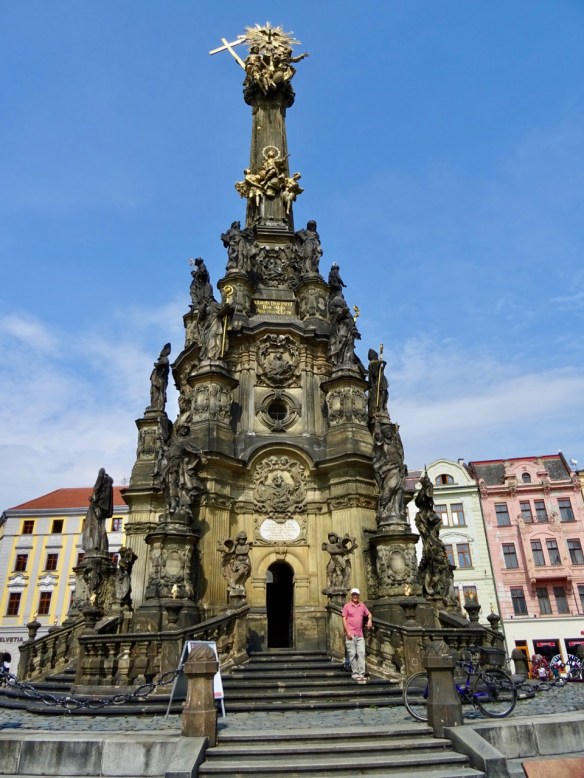
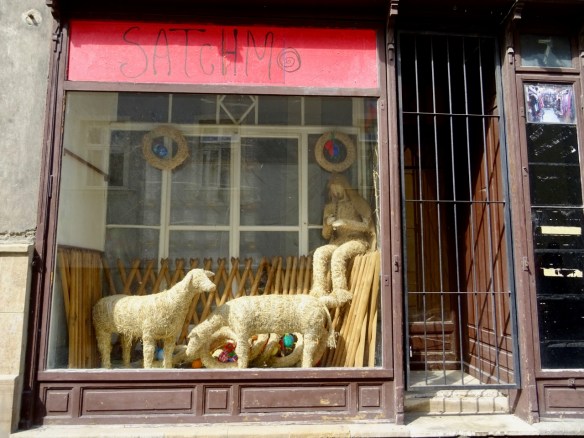
 We wonder what this shop sells? These figures were made out of straw. It was closed so we couldn’t go in to find out.
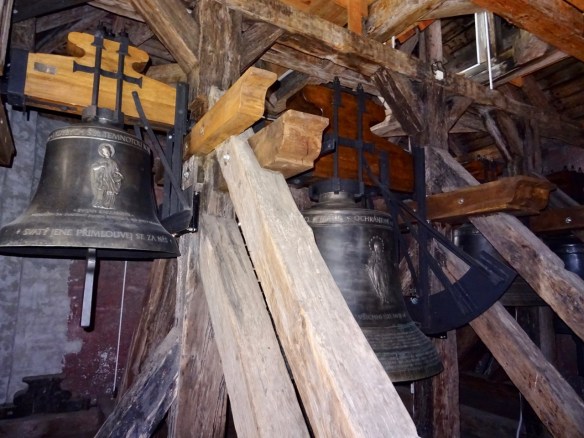
 We climb another bell tower in the Church of St. Michael just off the square. There wasn’t any place to see outside and get a view over the city, which was too bad.
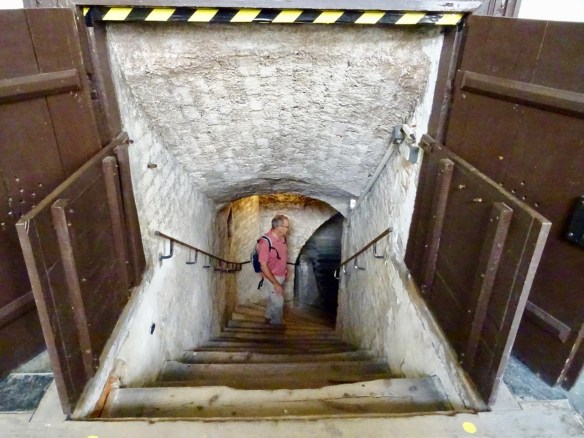
 The same church had steps to a crypt so we went to explore,..
 and we found this little shrine and a small pool of water.
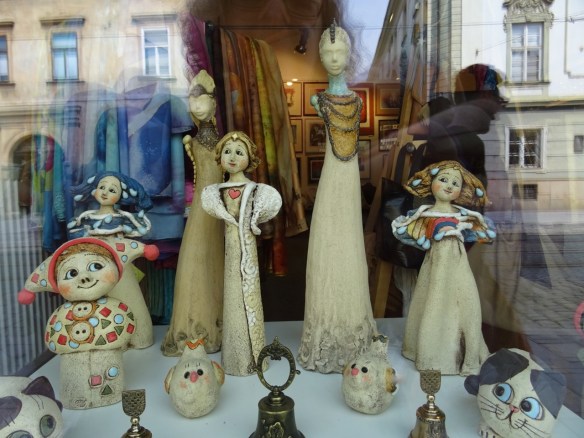
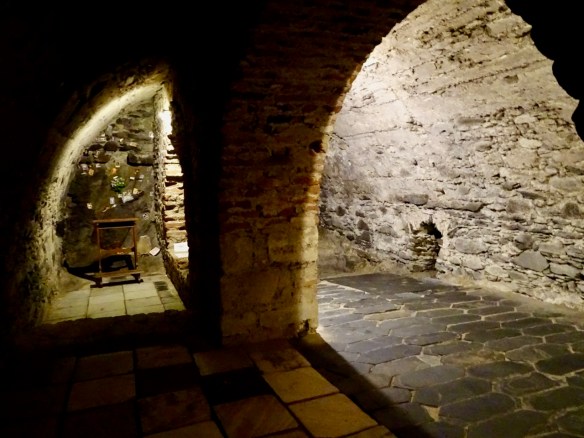 These ladies caught my eye.
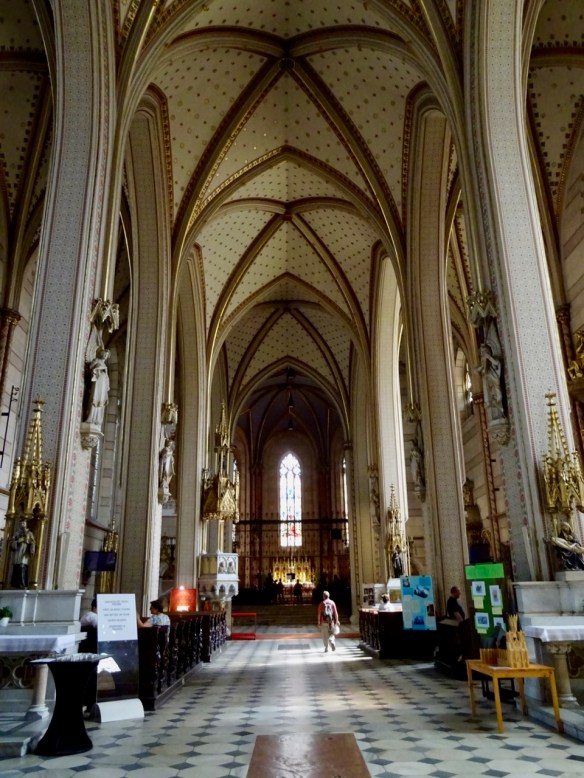
  St. Wenceslas Cathedral was originally built in 1131 and was rebuilt in the second half of the 13th century. The facade was renovated in 1999-2008. It is very impressive.
 Of course the interior is just as impressive.
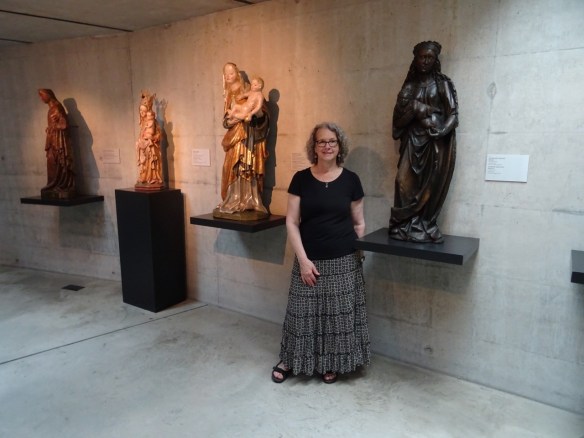
 We visit
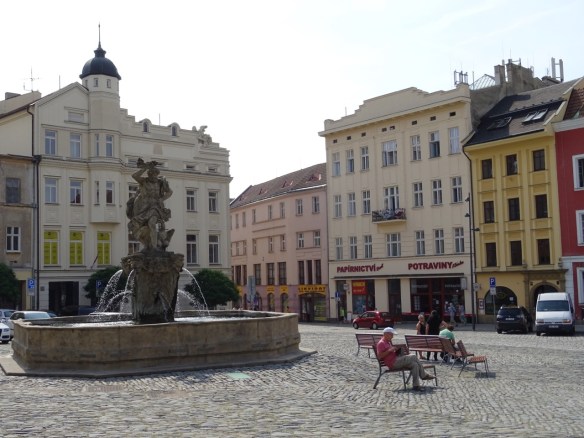
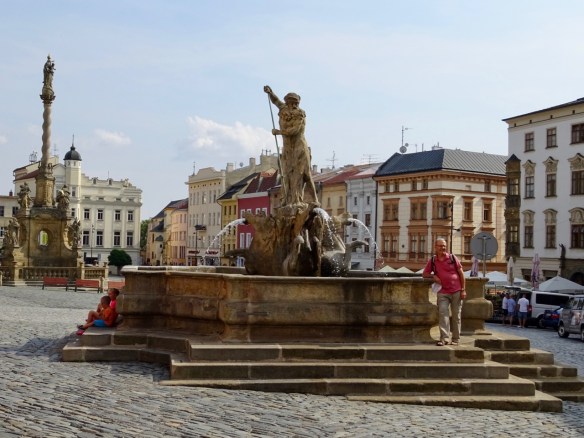
  More fountains in the town square as we make our way back to our car.
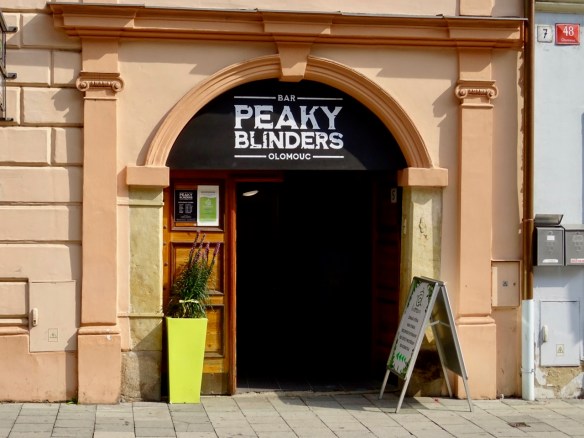
 This bar catches my eye. I am sure I know this name and look it up. Sure enough, it is the name of a show on Netflix about a gang in England in the early 1900’s.
 When we cross the border into Poland we are surprised that there is no indication that we were leaving one country and entering another. One of the interesting things about travelling is how different things are from home. Sometimes the differences are challenging and sometimes the differences make me smile. This is what I saw in the first bathroom I entered in Poland.
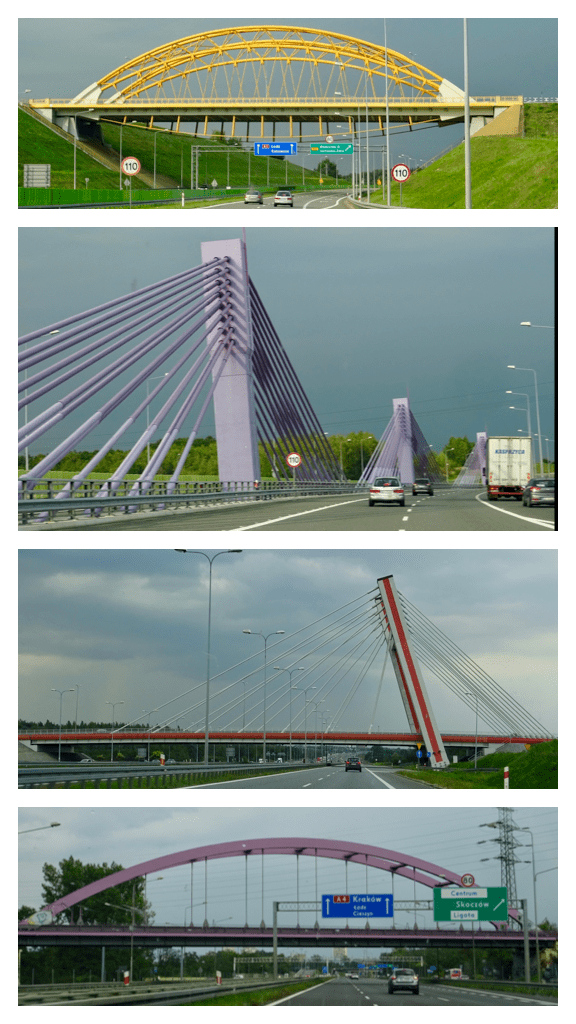 We were frustrated when our SIM card stops working once we cross the border. We were told it would work in all the countries we were visiting. We finally find a MacDonalds so we can contact our bnb host, who is waiting to hear from us. It is late when we finally make it to our new apartment, which wasn’t very easy to find in the dark, but we are here, and tomorrow will be a rest day for us.
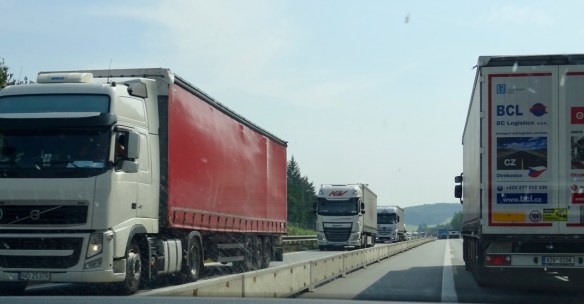 One of the many small towns we pass on the road to Telč.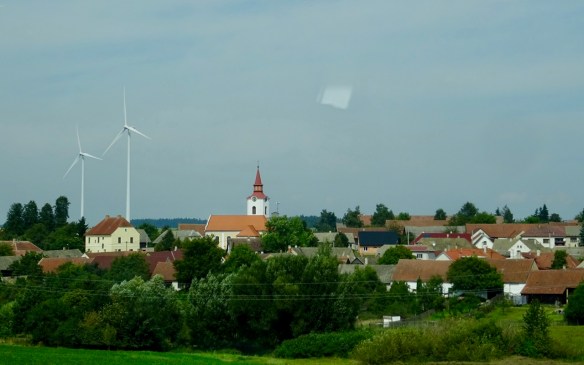
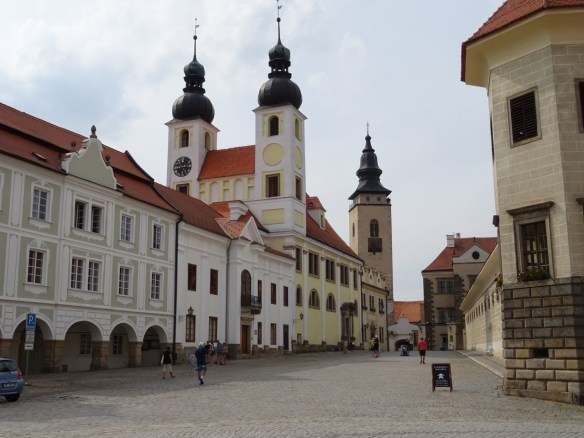
 The town square at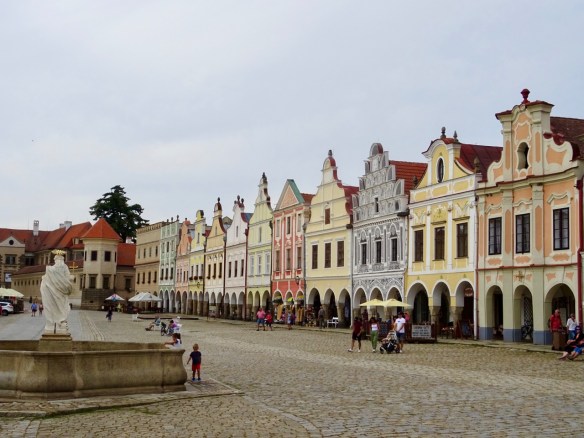
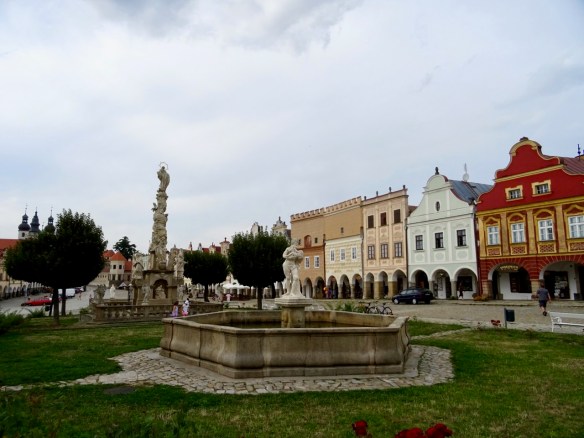 At the far end of the square we see the bell tower so of course we go see if is possible to climb to the top for a view of the town.
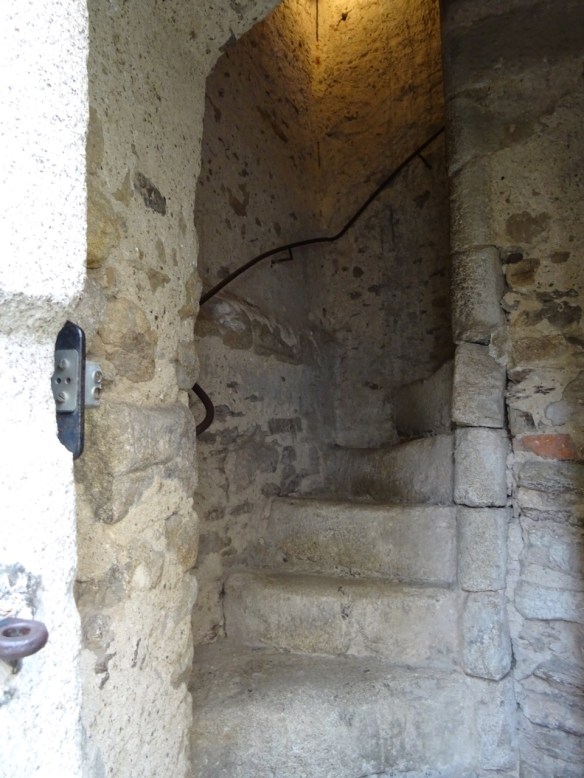
 The first 50 stone stairs are very narrow…
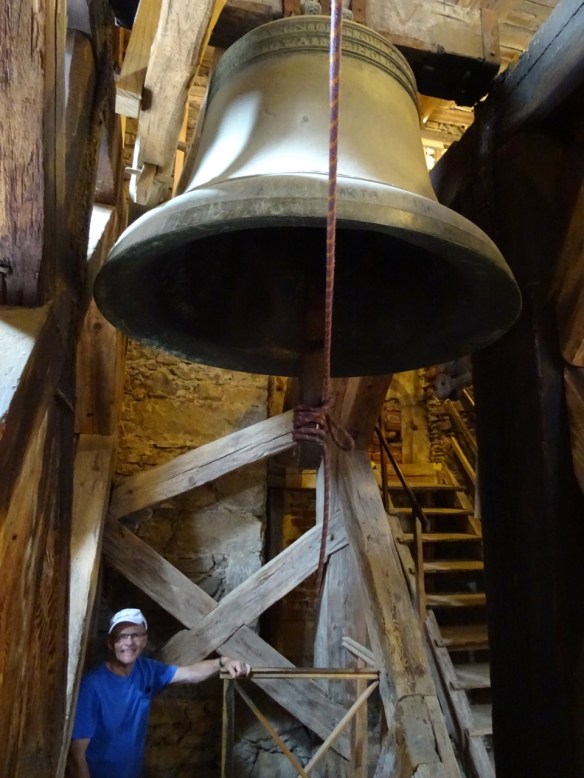
 but soon we are climbing another 100 steps on old wooden timber steps up to the bells. This bell is named Marie and she was cast in 1550 and weighs 950 kg!
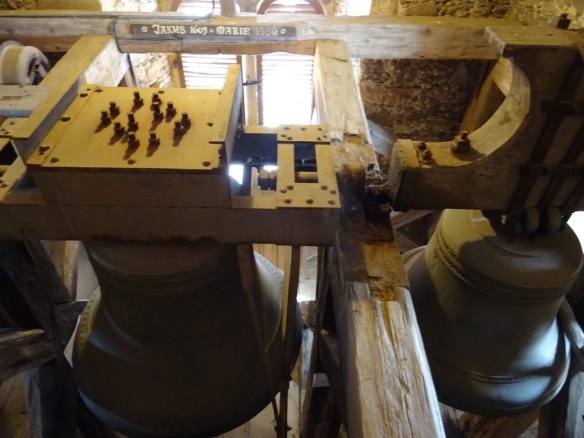
 A bit more climbing and we are looking down on the two bells, Jacub and Marie, before climbing to the viewing platform at the top.
 The view from the top was wonderful. Telč is a very pretty town.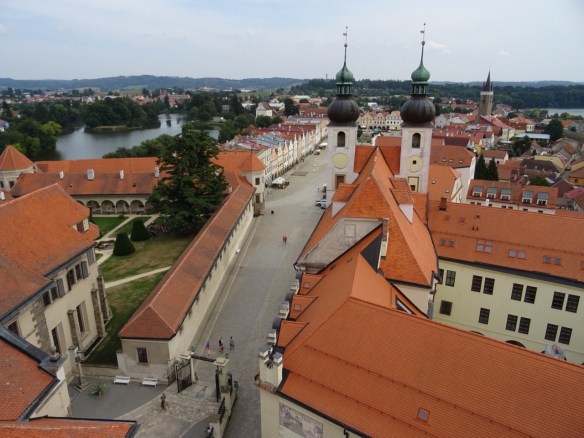
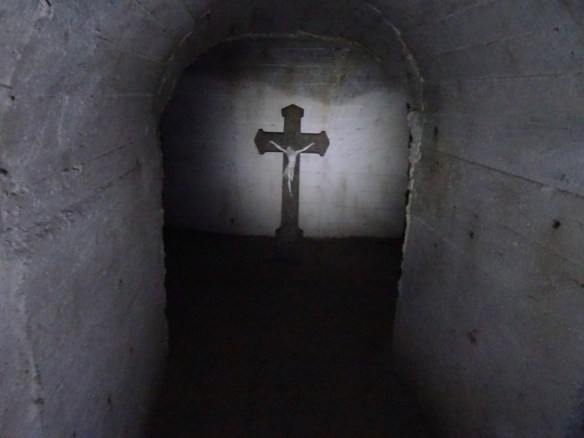
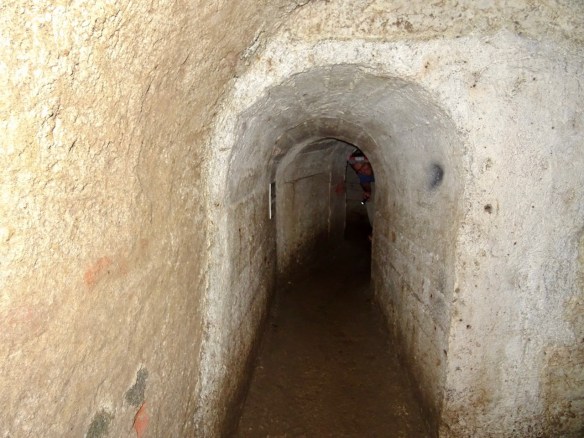 This crucifix was at the end of one dark tunnel . We were the only people on the tour who actually went and explored all the tunnels. Everyone else stayed in the larger rooms that were used for some displays and a short video about Telč.
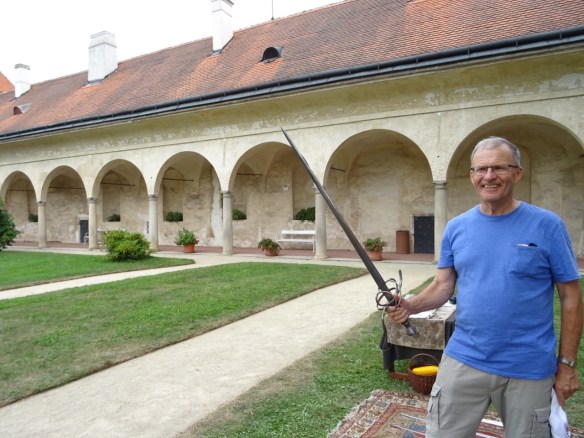
 Back above ground we walked through the grounds of the palace. We didn’t have time to take a tour of the inside, but Bob got a chance to try wielding a sword. They are very heavy!
 We also met some interesting creatures. This ten year old python and…
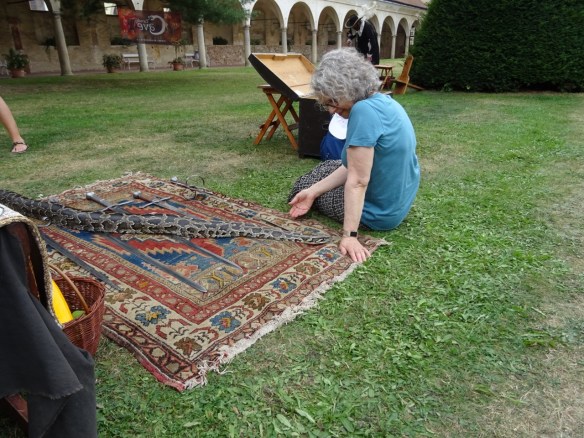 his 4 year old albino friend.
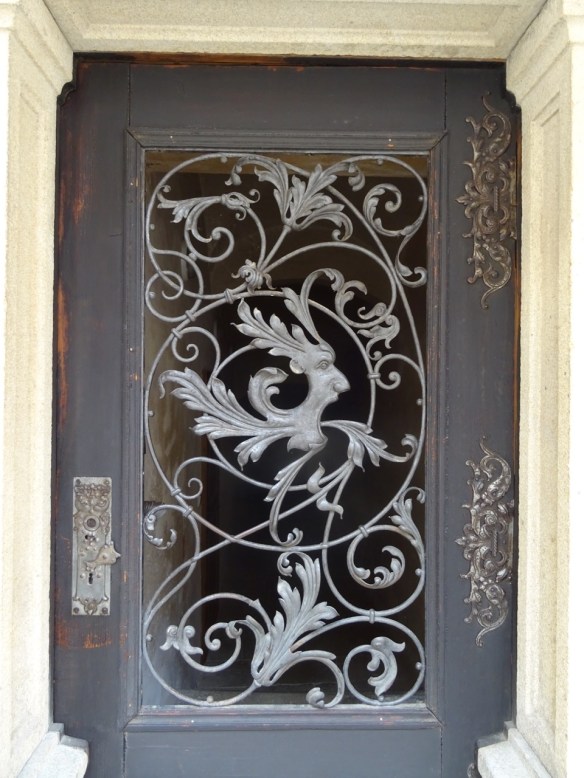
 This beautiful ironwork was on one of the doors of the palace.
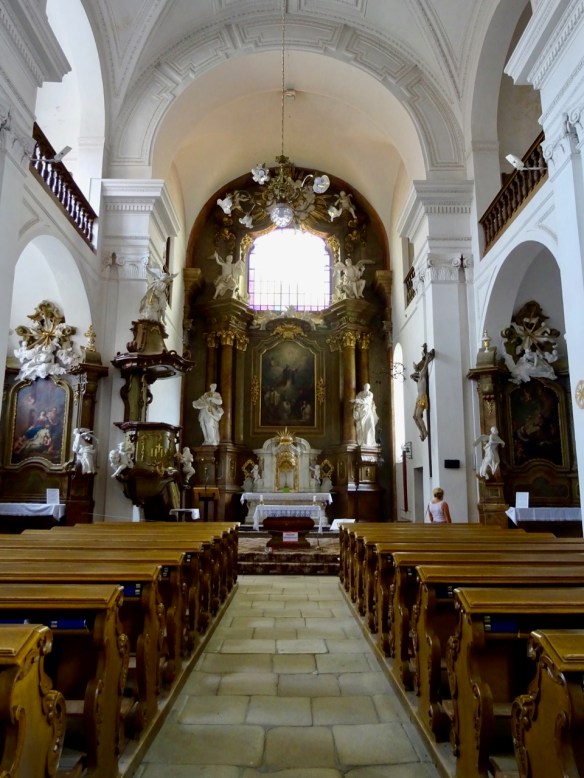
 We visited our first (and certainly not our last) church, the Church of St. James the Greater which dates from 1273, but has been rebuilt many times since then.
 This panorama gives an idea of just how many houses line just one side of the square. They are all in a row, not in a curve as they appear in the photo.
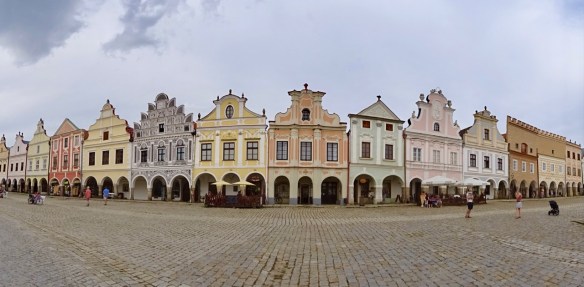 These houses continue on from the right side of the photo above. It is hot, 28° and we finally feel like it is summer. It was a cool wet summer at home so this is a nice change.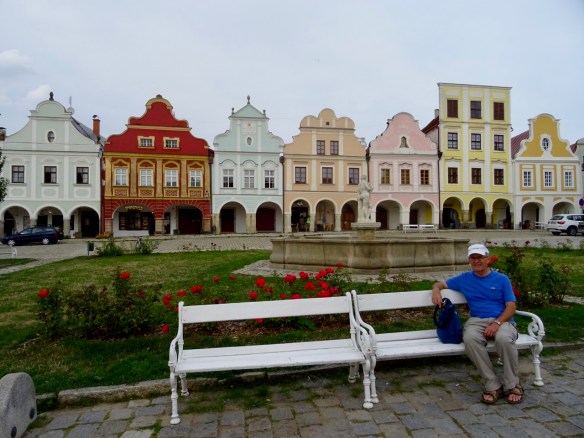
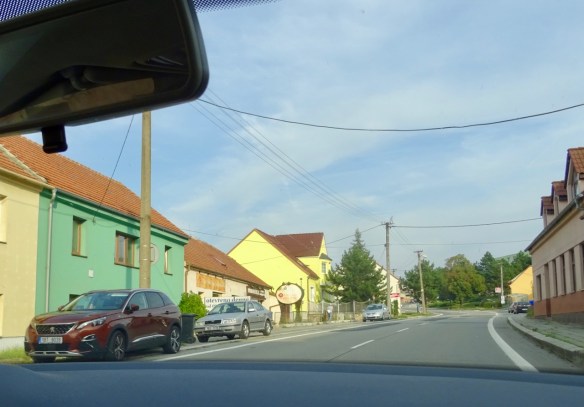 I have no idea what this is supposed to be but it is certainly unusual. I wonder if someone lives here?
  We finally arrive in Brno, find our apartment but can’t figure out how to get into the building! Finally we message our host who comes down to meet us. It is a beautiful
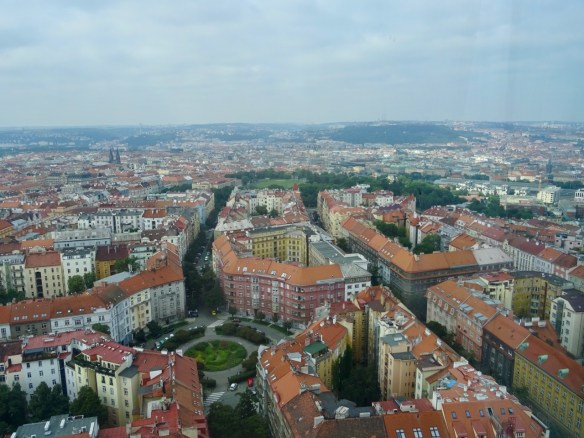
 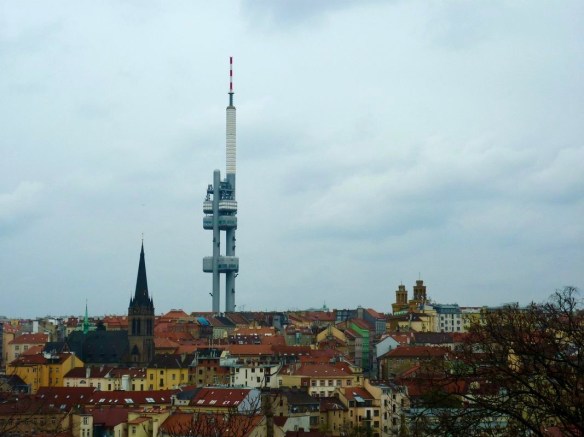 If you look down in the lower right corner you can just make out some of the headstones of the old Jewish Cemetery which located beneath all the trees in the bottom of this photo.
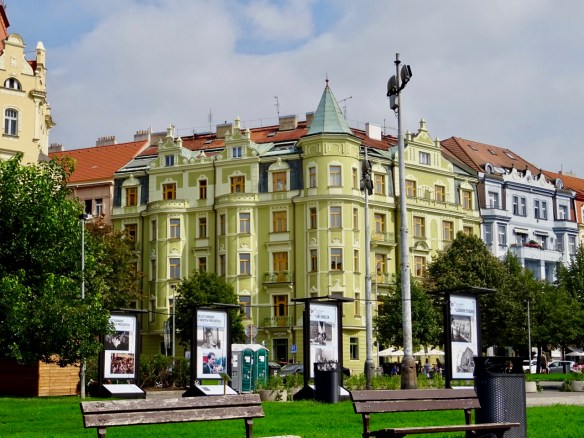
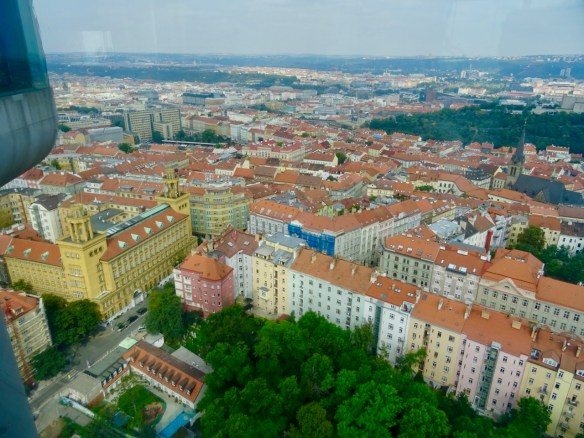 Prague is a pretty city with lots of parks and green spaces.
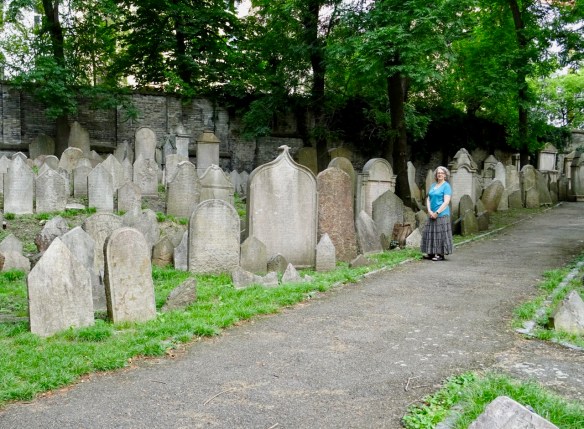
 The old
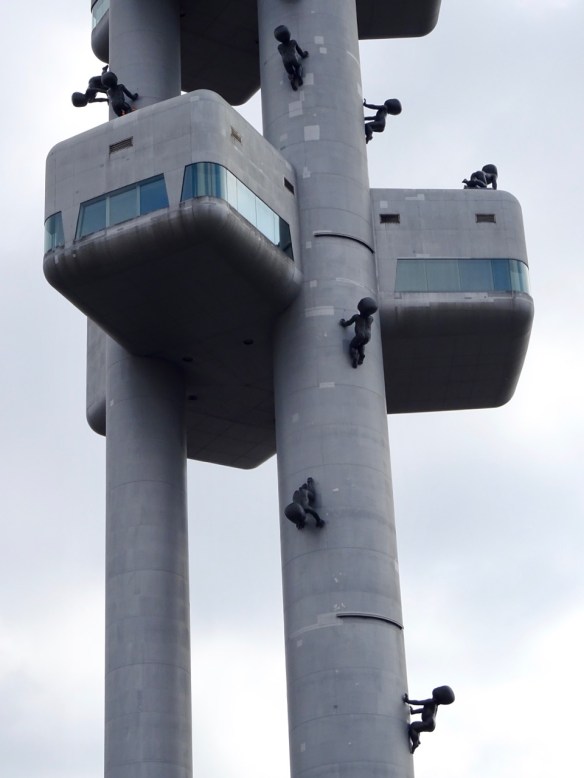
  There are ten six foot tall babies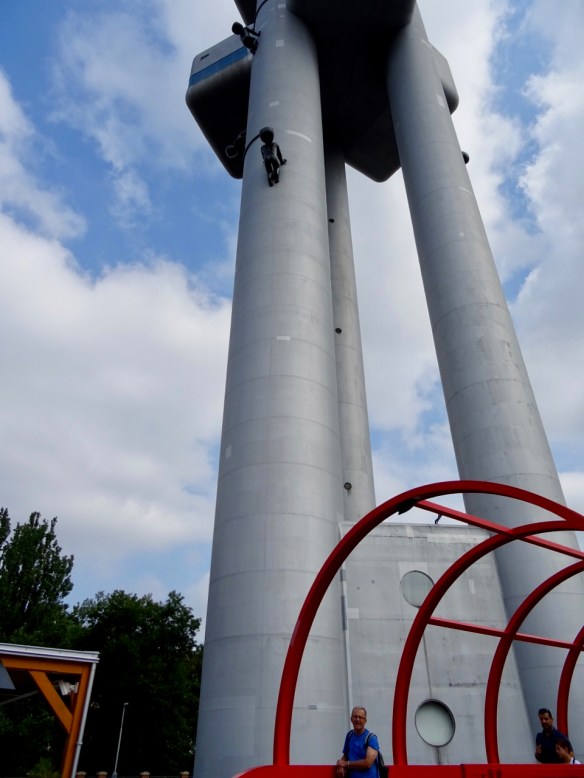
 We go home to pack for the beginning of our road trip tomorrow through the Czech Republic, Poland and Germany, .
















 trudymason.com