Day 11 Friday, September 8, 2023
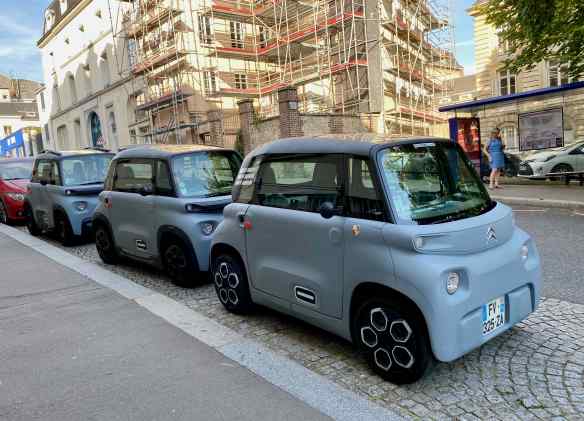
After a sleep in and a bit of a quiet time we walk to downtown Rouen. On the way I find the cutest little car!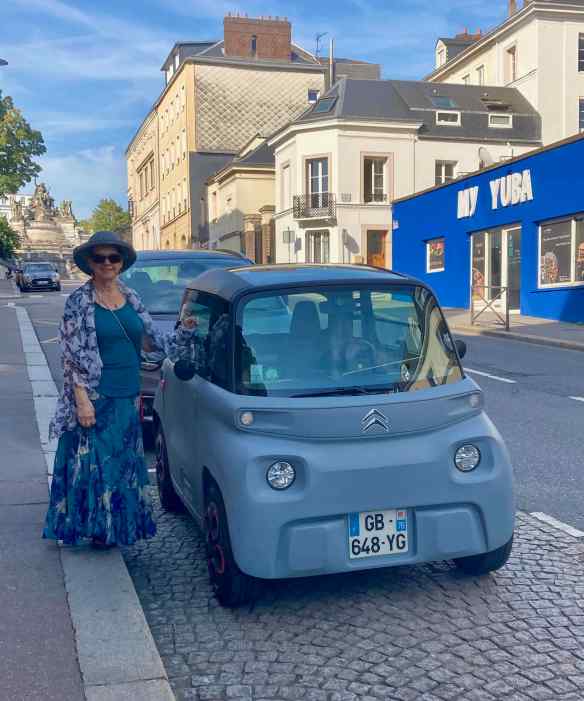 Then just two blocks later we see three of its siblings! These are the perfect cars for parking in France’s cities.
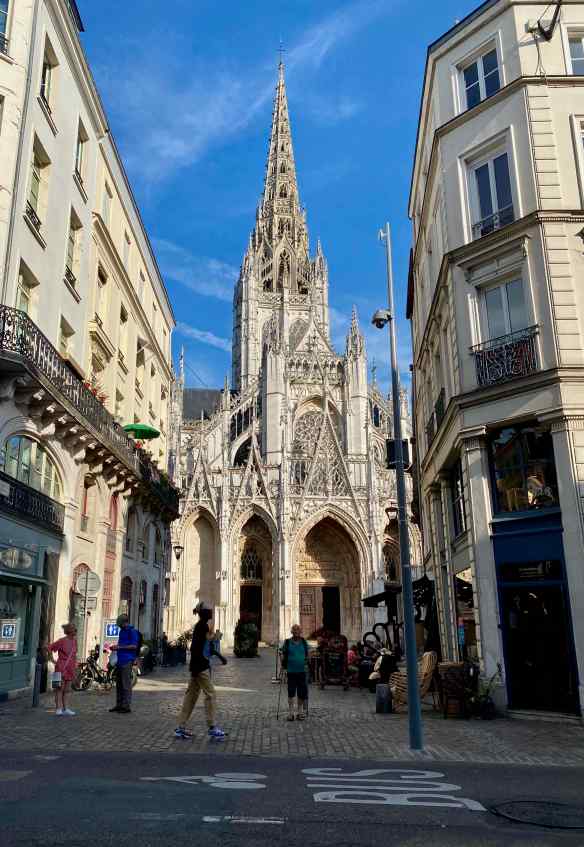
 There is so much to see in Rouen. I thought this was the Notre Dame cathedral but it is the much smaller St. Maclou Catholic Church. There are 35 churches, abbeys, monasteries, and ruins in and around Rouen and most of them are from the Middle Ages.
 Rouen’s Notre Dame Cathedral was the tallest building in the world (151 m) in 1876, and still keeps the record of being the tallest cathedral of France. Photo courtesy Wikipedia.
 The inside is awe-inspiring.
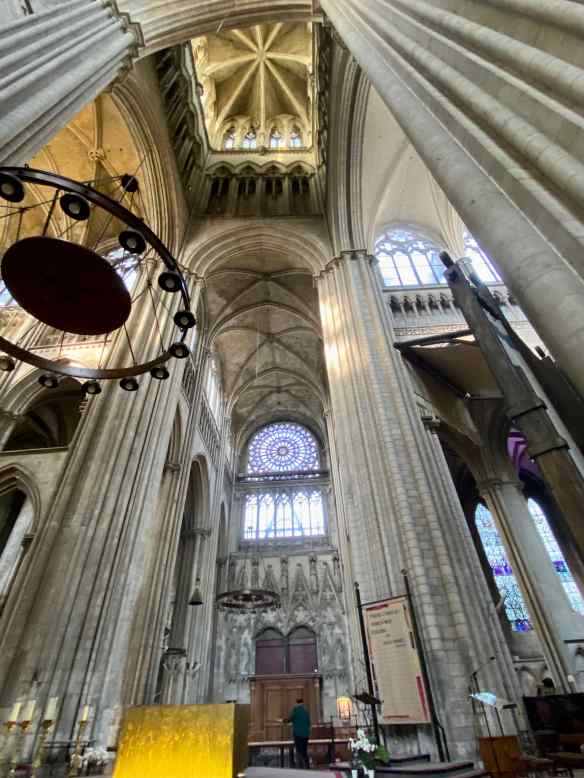 This is just one small section of Rouen’s Notre Dame cathedral. It is enormous!
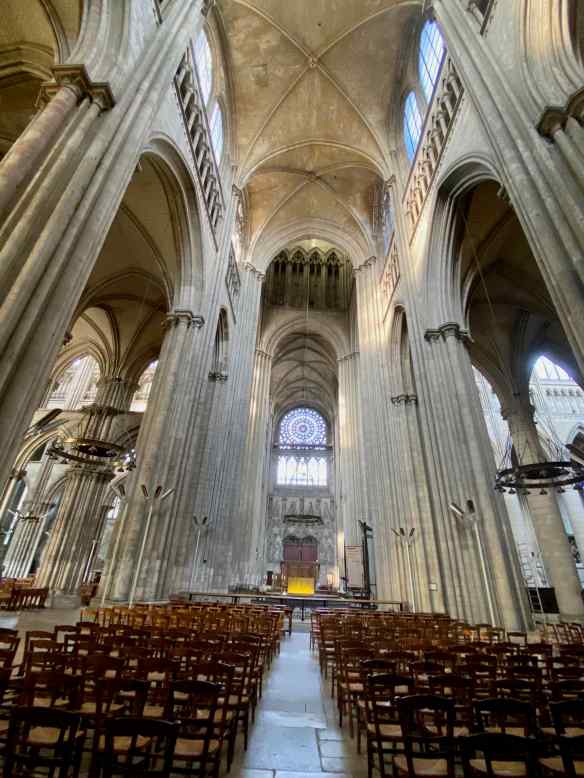 As is their pipe organ, but there was no organ music today.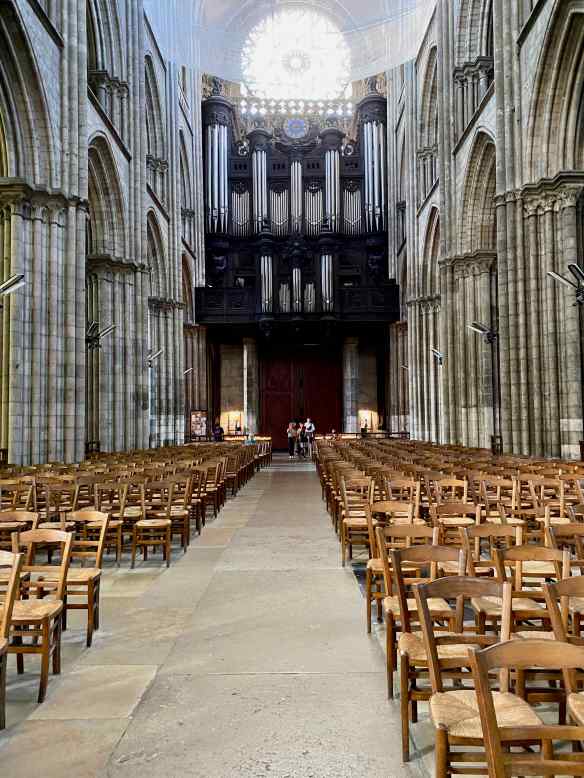
This stunning staircase leads to a library, unfortunately with no public access.
Much of the cathedral was damaged during the WWII and we wonder if these are shrapnel fragments?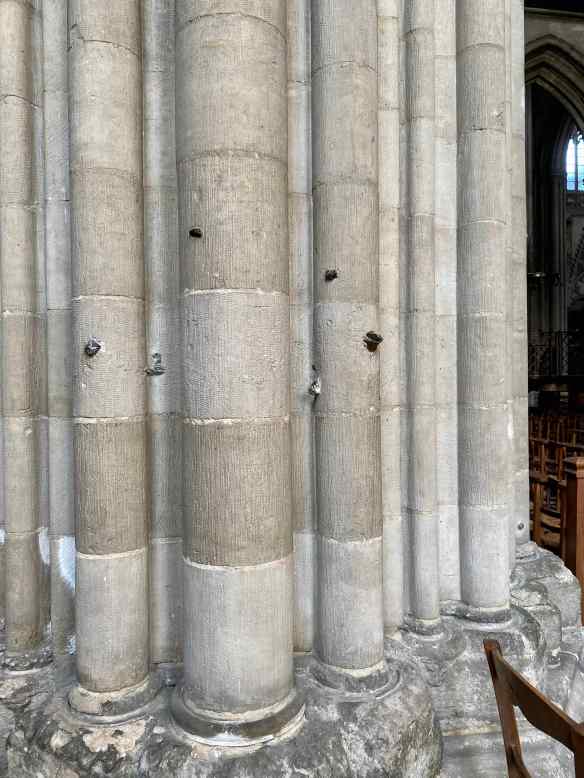
I love this statue of the Madonna and baby Jesus and the light that falls on it.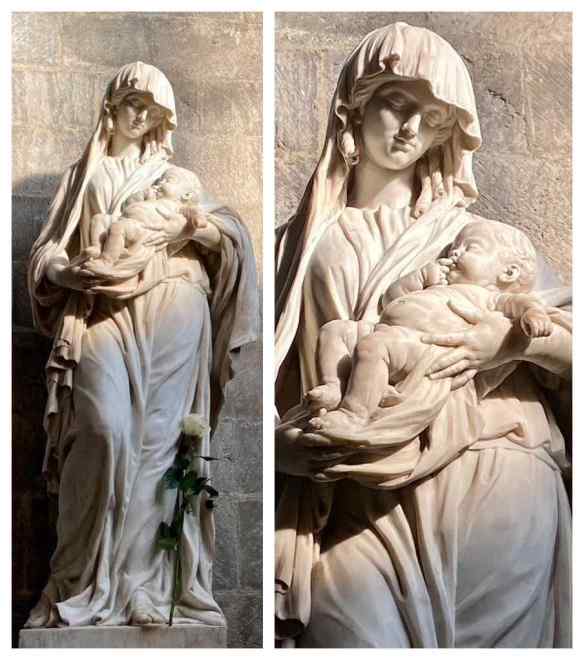
The statues from the outside of the cathedral have been moved inside to protect them from further damage and the photos below show the process of making replicas which are now on the face of the Cathedral.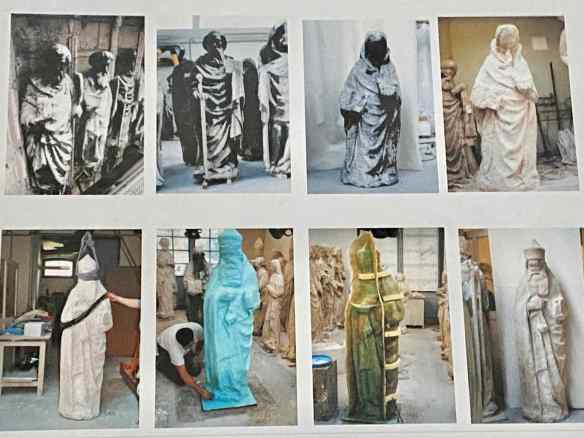
Here are some of the originals…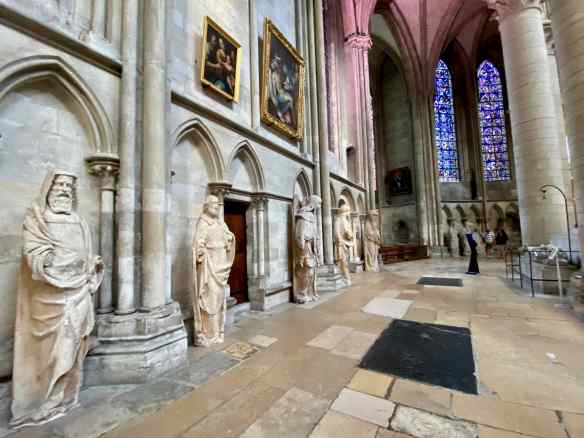
and the replicas. You can see the replica of the first one beside the main door outside.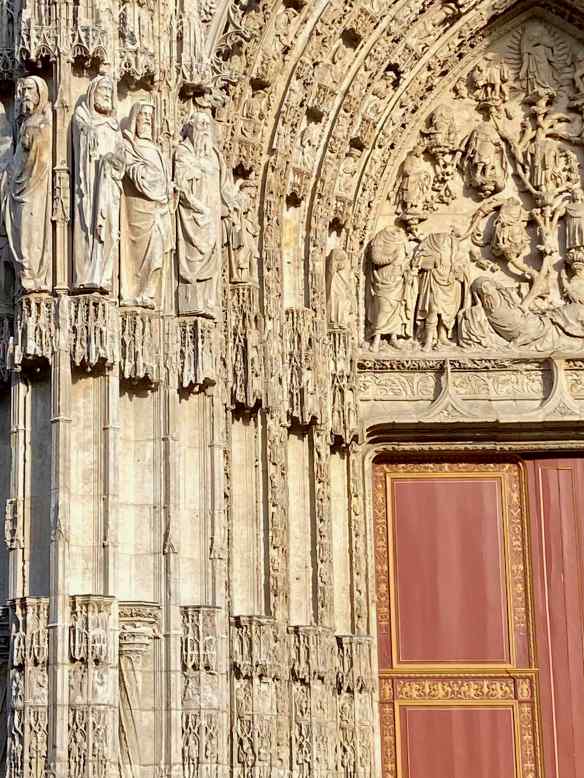
We are staying for the light show at the cathedral when it gets dark, so we have time to visit the Joan of Arc Church. The cross marks the spot where she was burned at the stake in 1431, and the church is supposed to represent a boat.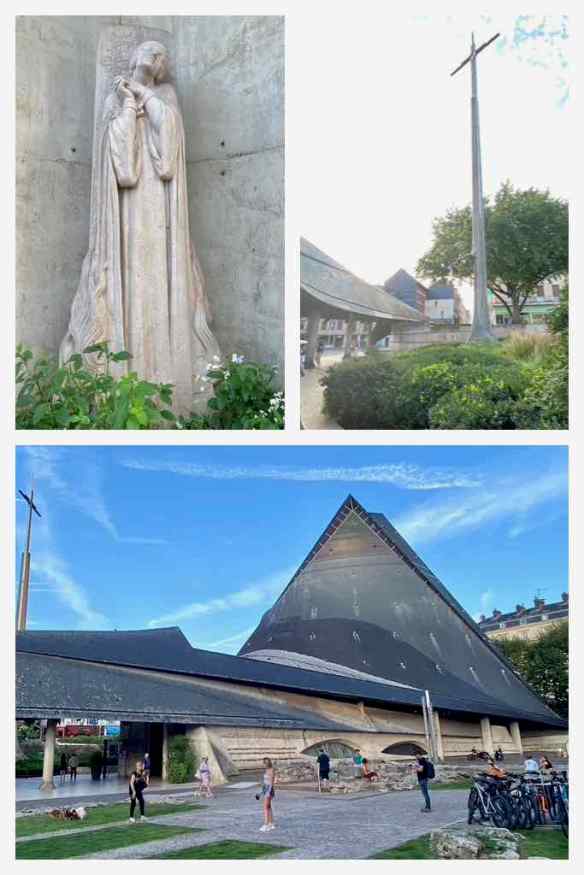
And here is the interior.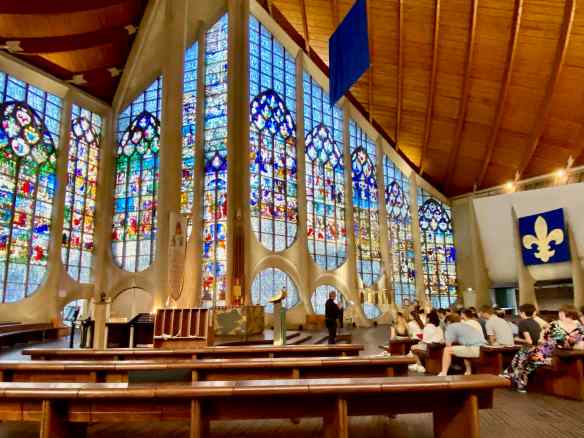
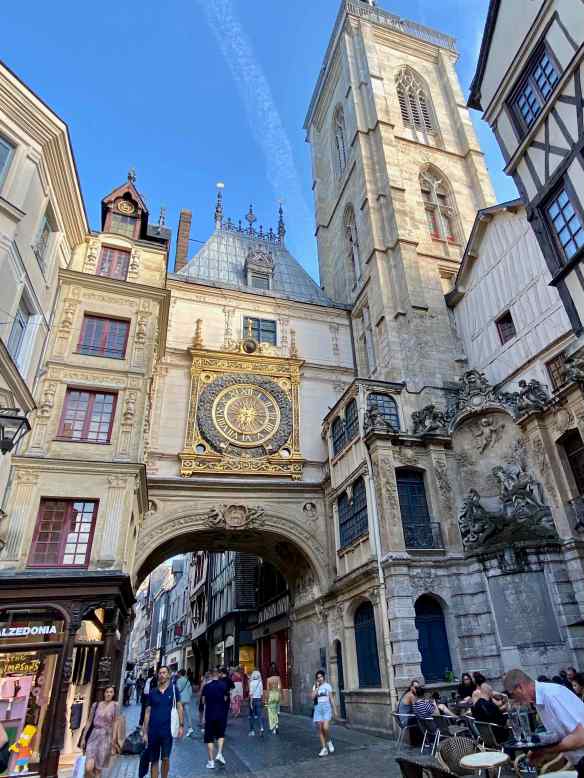
I love gargoyles and spot these on a smaller church we walk by near the cross for Joan of Arc.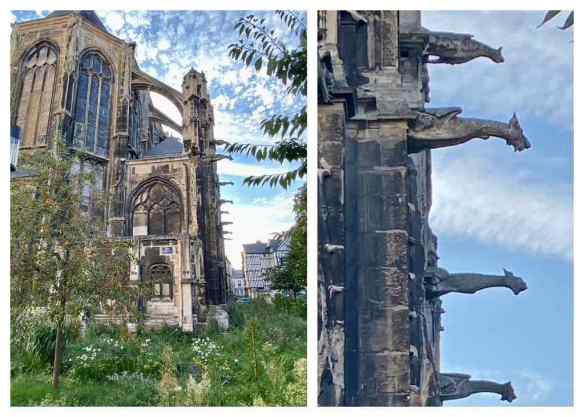 The Gros Horloge (the Great clock) is one of the oldest clocks in France, the movement was made in 1389.
 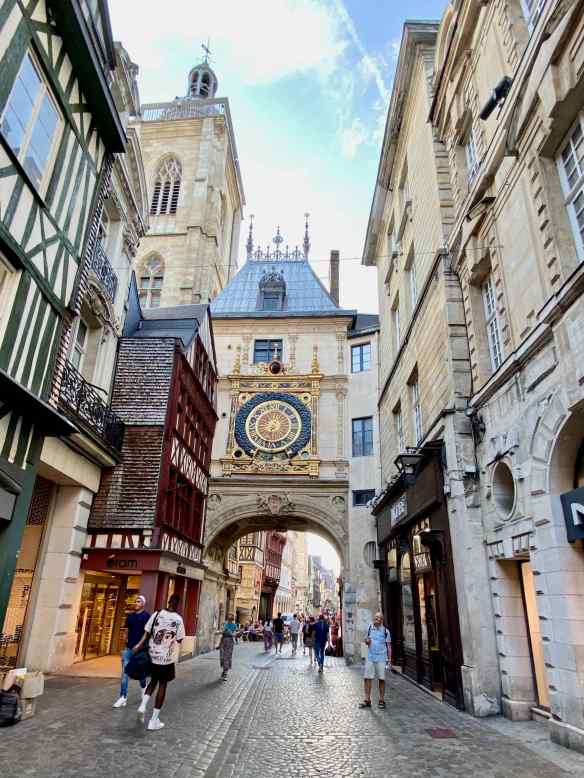 It has a different face on either side and it rings on the hour, the half hour and the quarter hour.
 This fellow spends his time on the street busking for money…only he plays the same song over and over and over. No variety at all to his performance.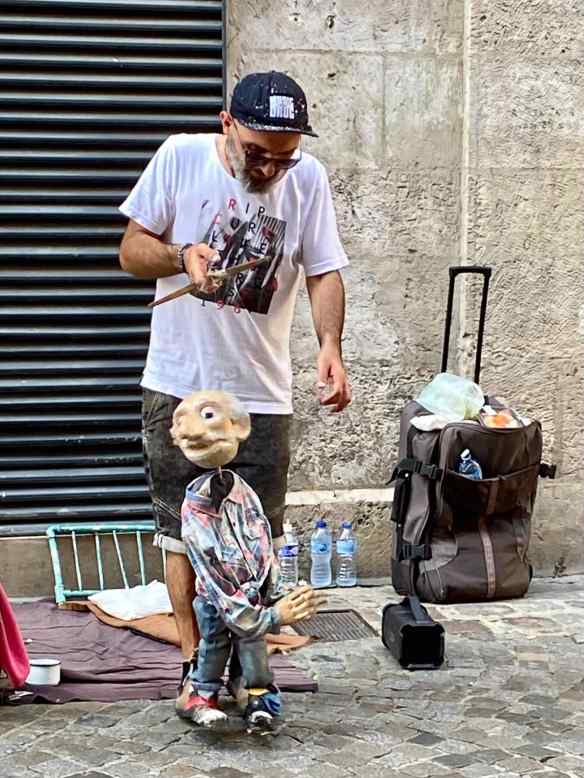
While we waited for the light show at the cathedral I drew the people sitting and walking by. I decided to draw directly in pen, which is a bit more challenging but I am quite happy with several of the drawings.

While I think of it, here are my first metro drawings from Paris. I forgot to post these earlier. I was particularly pleased with the top right hand lady, I really captured her well. I draw with a Bic ballpoint pen when doing my metro sketching. I love how I can get a variety of lines and that the drawing almost looks like graphite.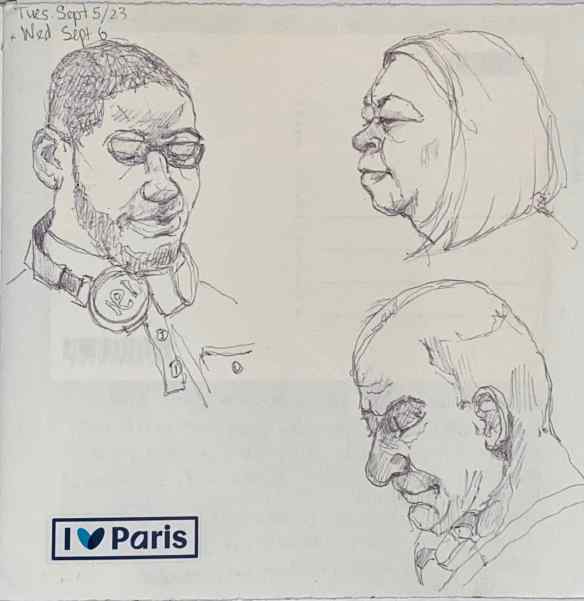
It is getting dark and people are gathering for the light show in front of Notre Dame.
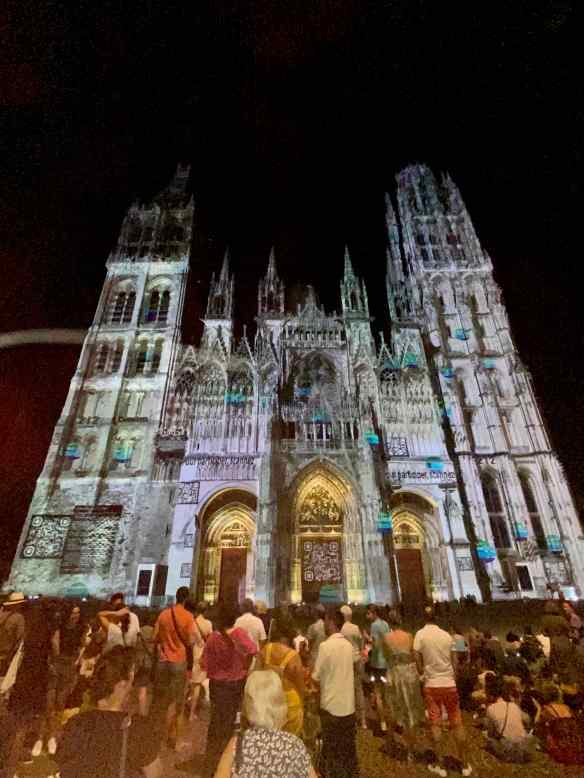
The show begins and it is spectacular.
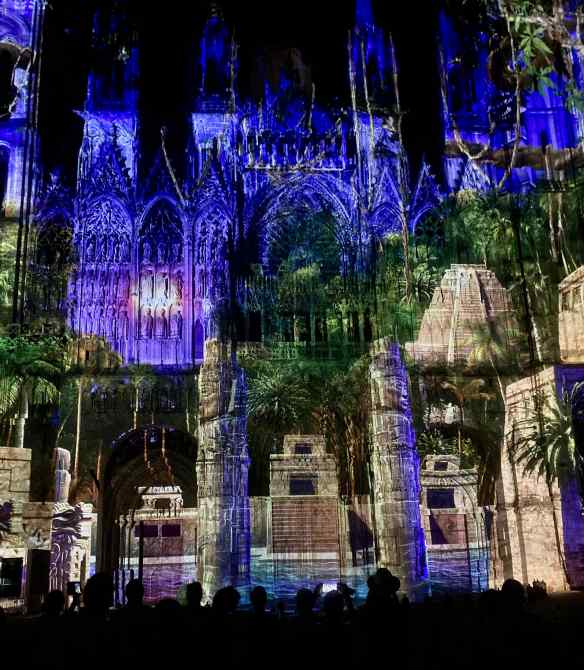
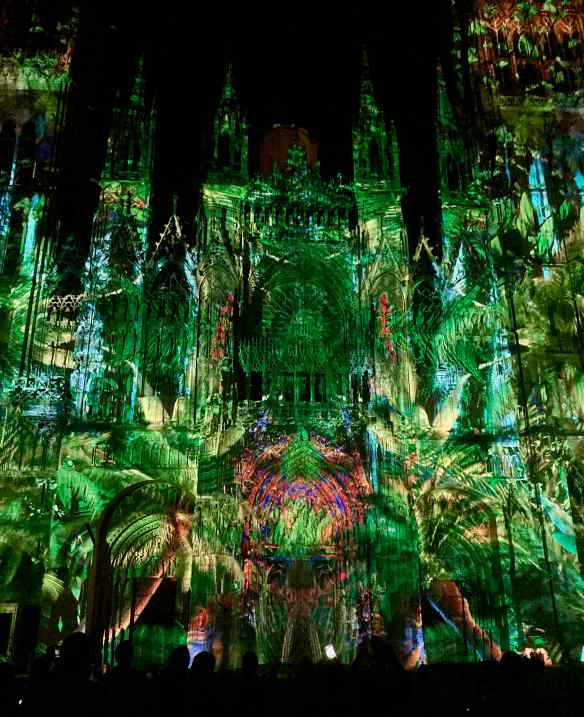 Here is a little video that gives a better of idea of what we saw. https://youtu.be/r_KhQMqvhIk?si=NFokSZYjIwopCI93
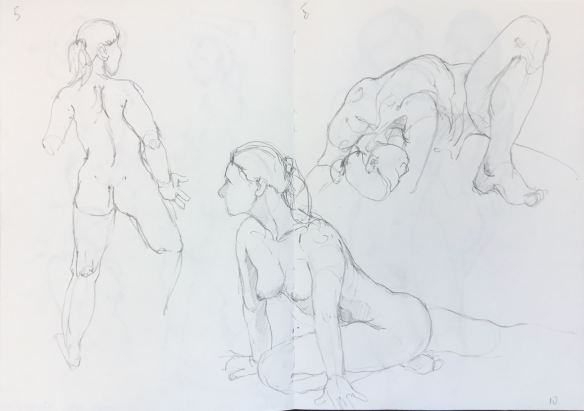
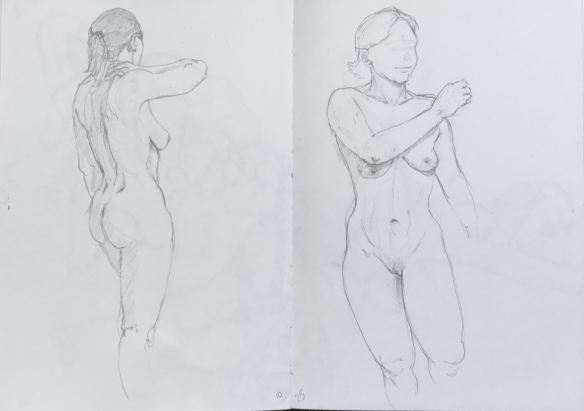
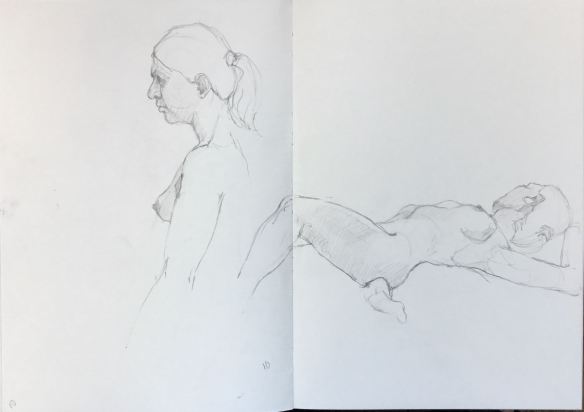
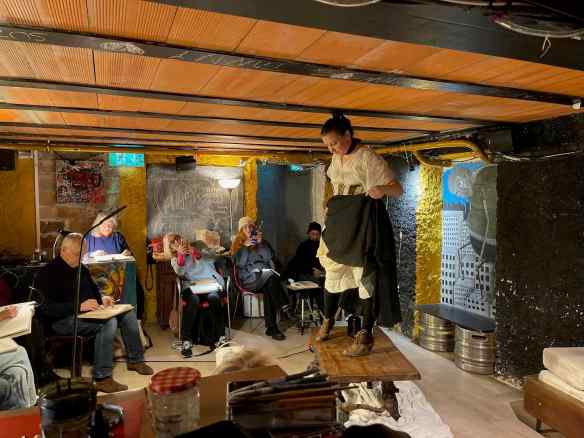 My drawing goes better today and we share our work upstairs in the bar afterwards. I met some lovely people from Australia, Korea, Montreal, England and Italy. The times for each pose are written on the pages.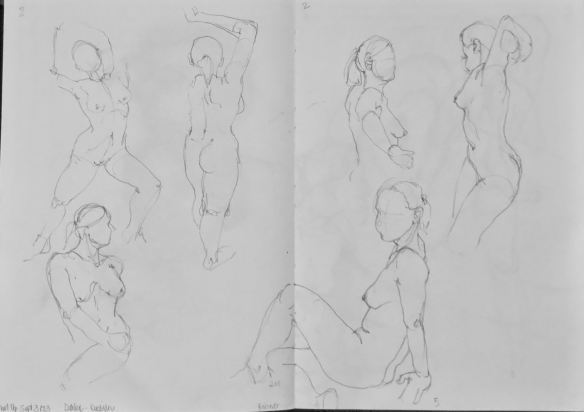
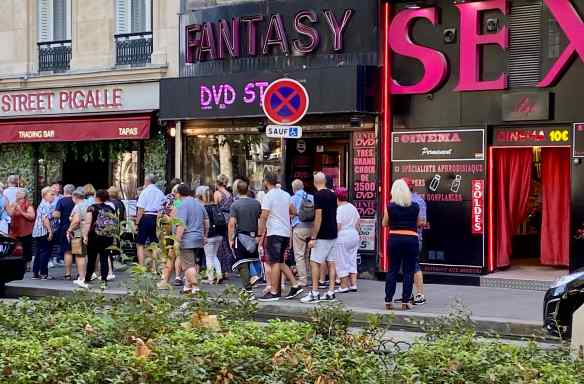
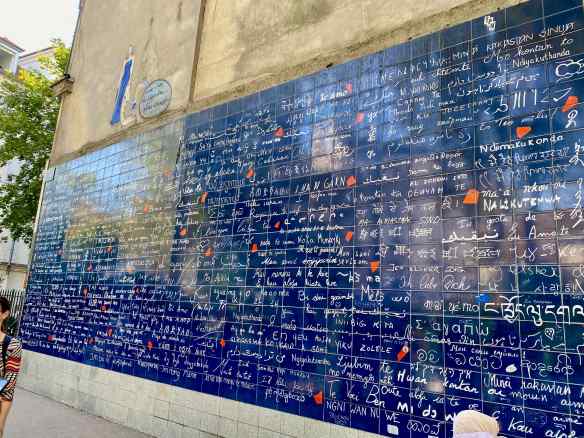
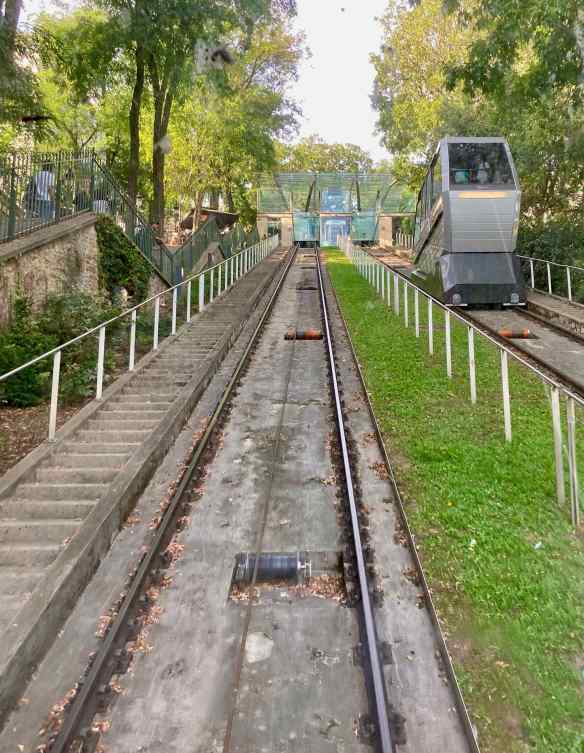
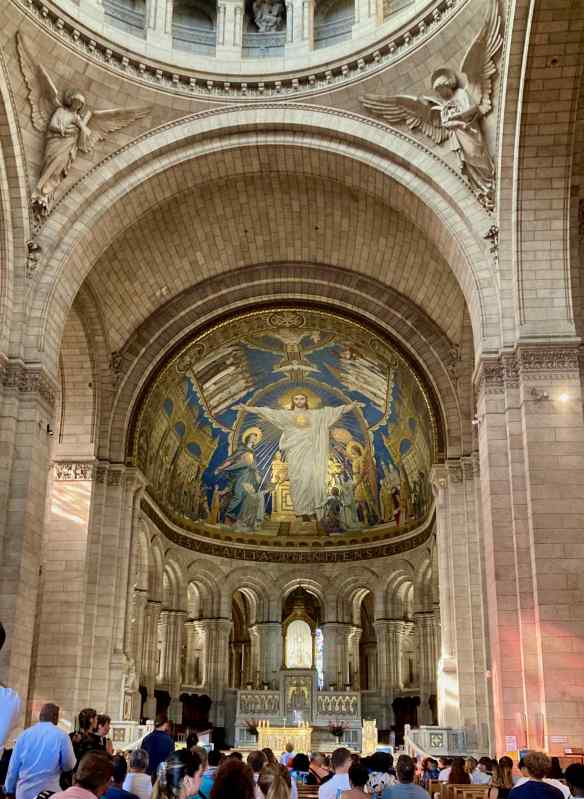
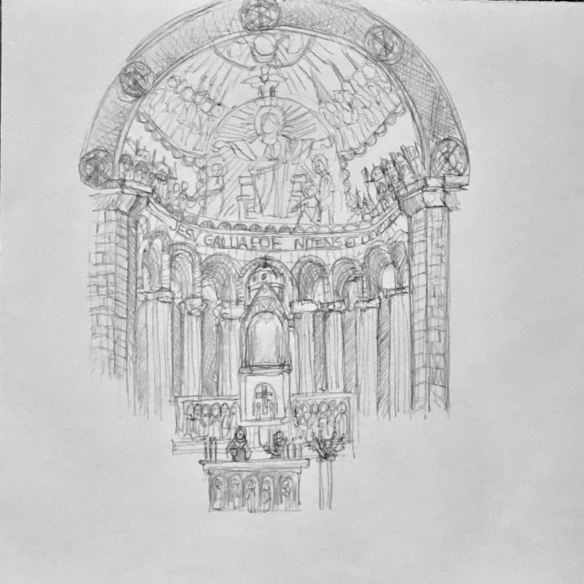 The organ is right above our heads. I think I am sitting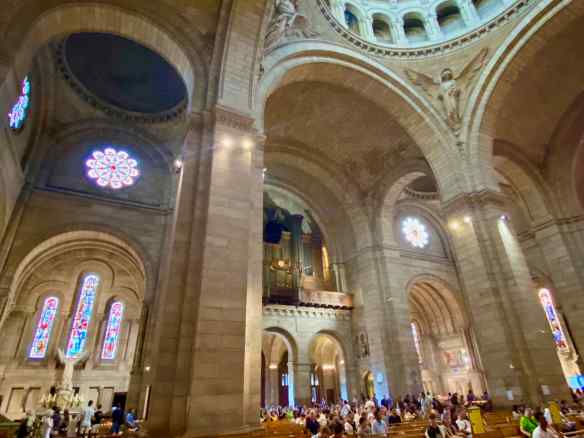
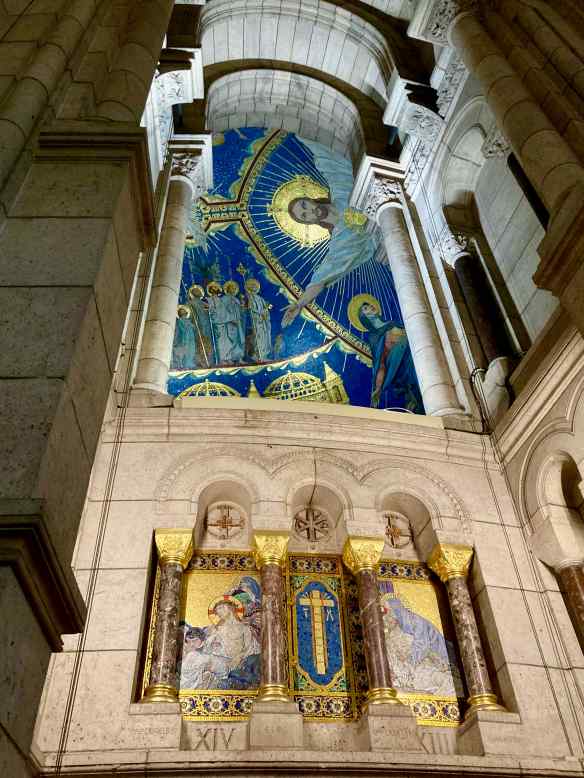 Where is Waldo? No…where is Bob? Here he is in the first photo.
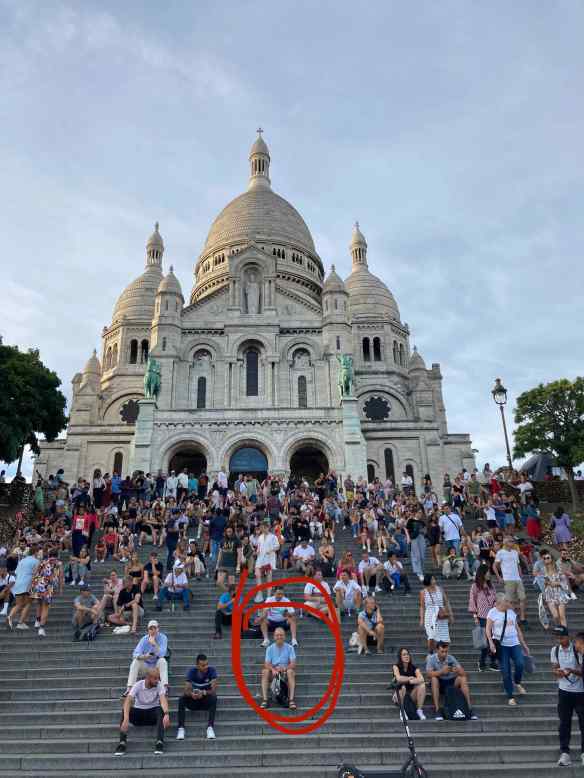 Can you find him in the photo below? There are always so many tourists sitting on the steps to enjoy the view.
 There are still hordes of tourists in Paris. Us included!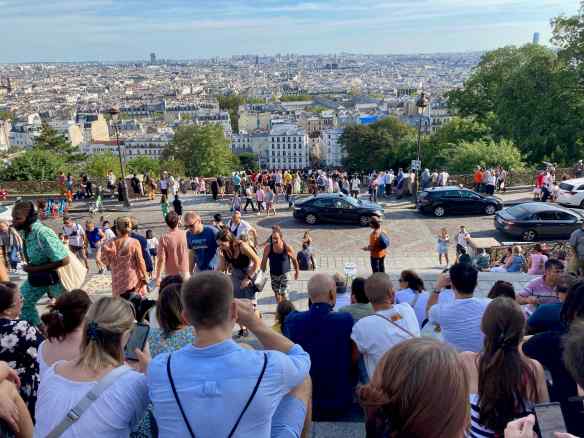
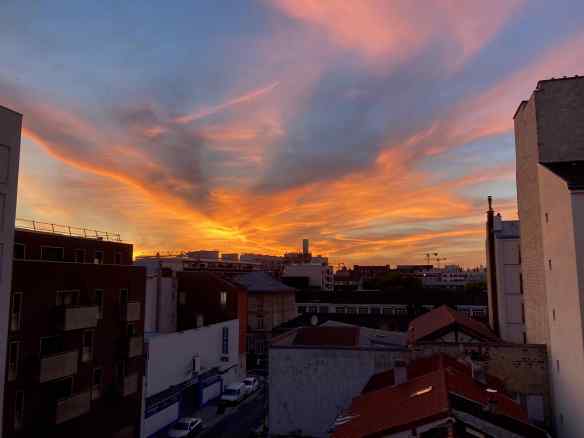
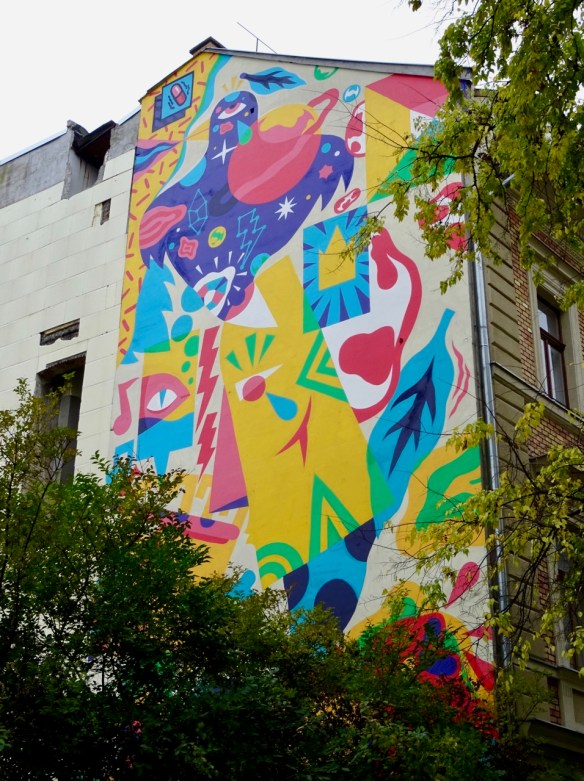
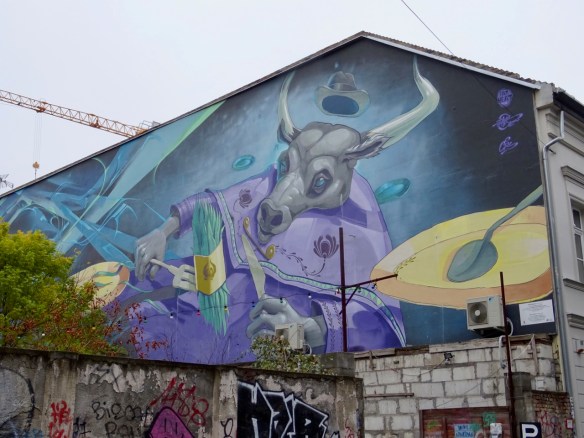 Many of the buildings in this neighbourhood are old and in need of repair but the murals do brighten up the neighbourhood.
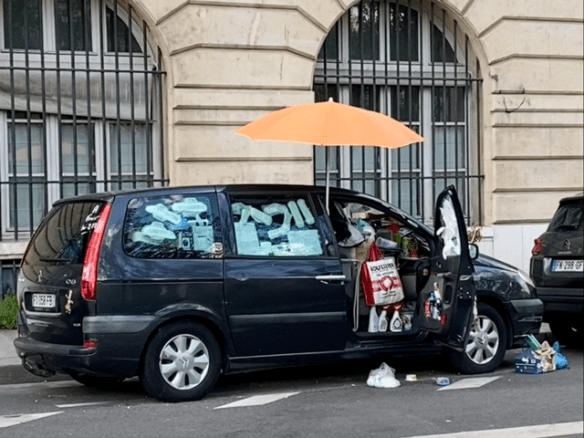
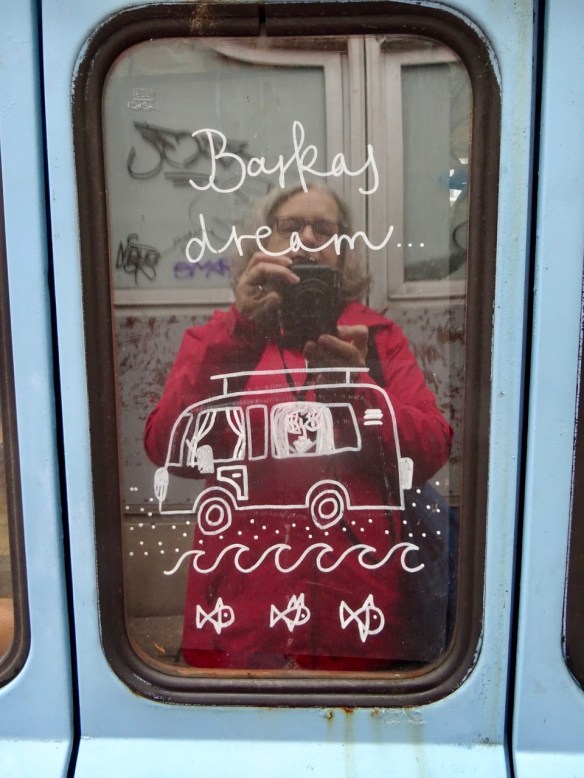
 Bob tells me to look inside this little blue van…
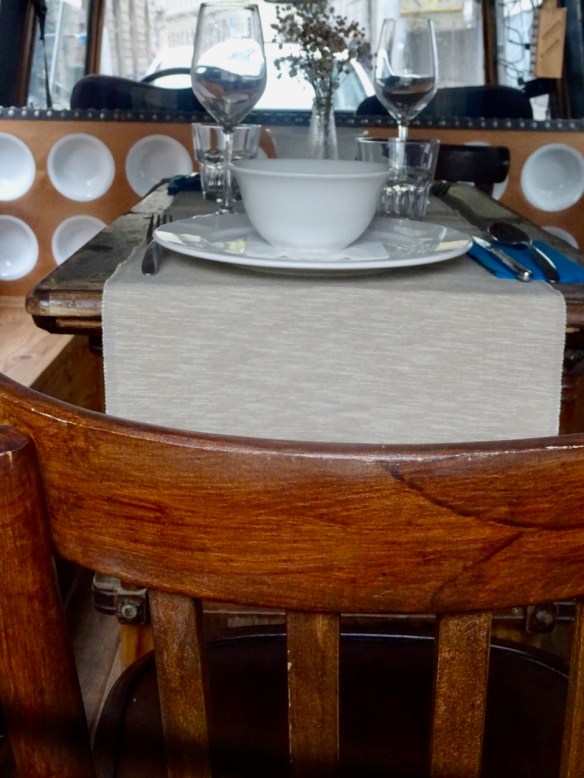
 It is set up as a little dining room! It is kind of cute, except I look in the front seat and it is dirty and cluttered with junk. Not very appetizing,
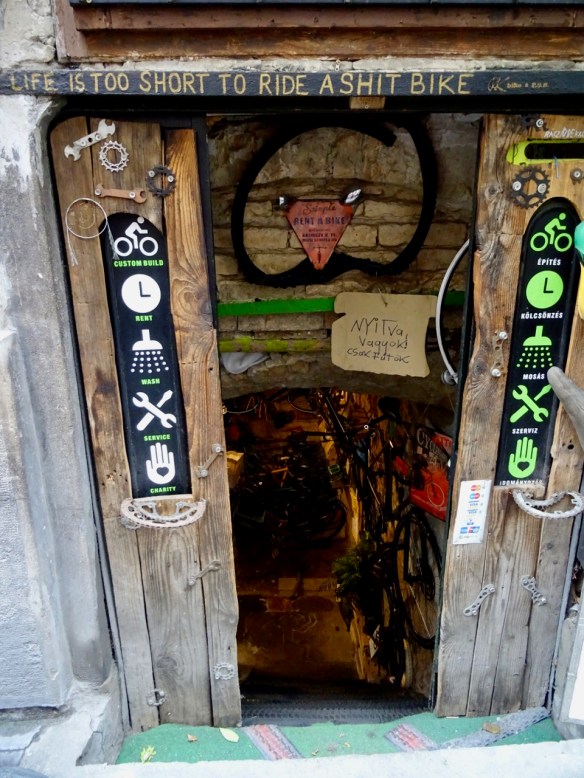
  There are many shops and workshops tucked into the buildings on narrow streets, sometimes even in the basements, like this bike shop. I think my bike riding daughter will appreciate the sentiment of the sign above this door.
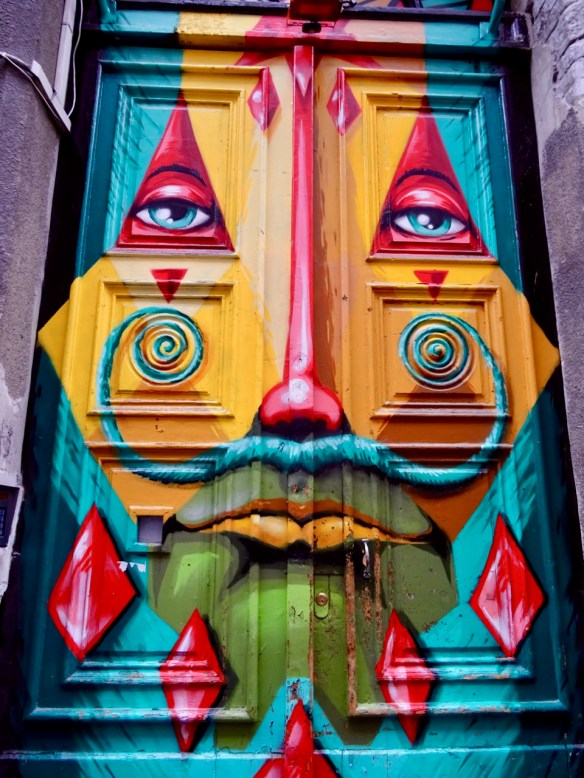
 This is probably one of the most colourful doors I have ever seen.
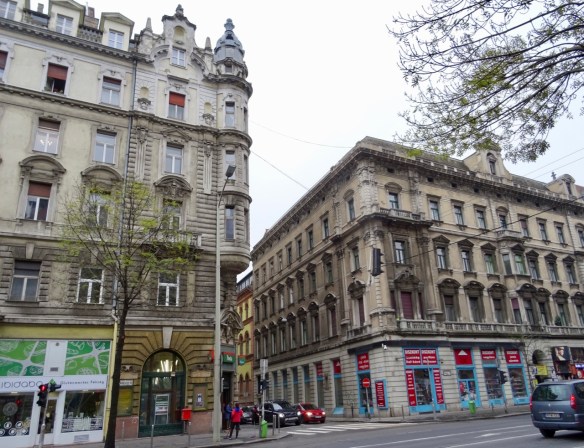
 The buildings here have very interesting architectural details.
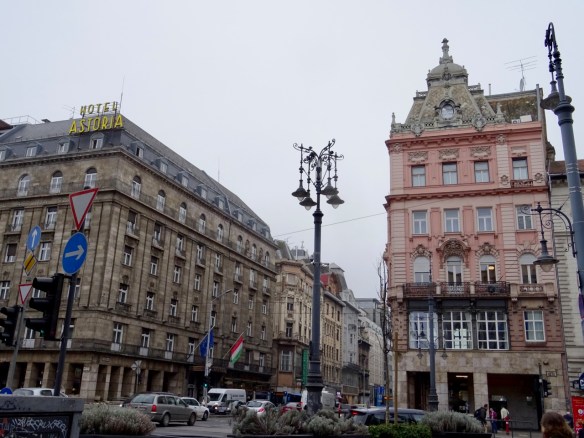
 Seems every city we have ever been in has an Astoria Hotel!
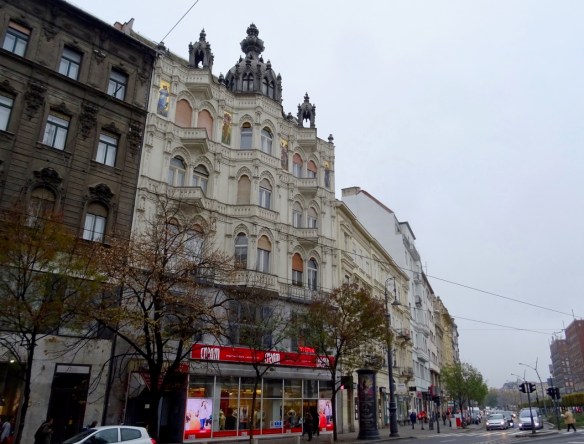
 Loved the room at the top of this white building. Imagine living there.
 The Holocaust Tree of Life Memorial was funded by the late American actor Tony Curtis in memory of his Hungarian-born father. The names of 30,000 Holocaust victims are engraved on the leaves of the metal tree. The tree resembles an upside down menorah and is located on top of the mass graves of thousands of murdered Jews.
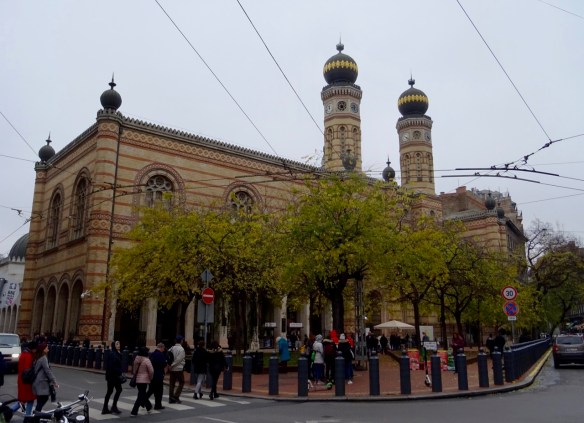
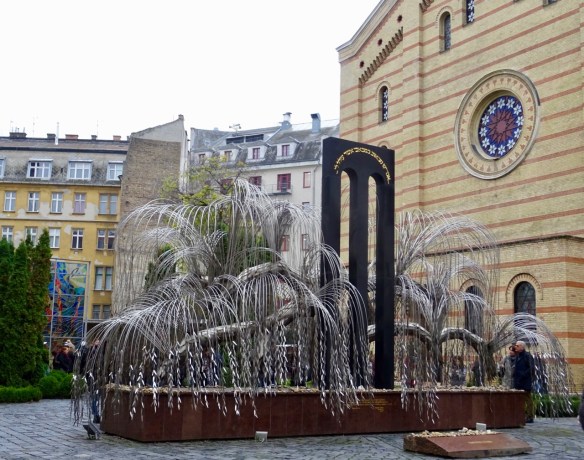 The tree is located behind The Dohány Street Synagogue which is also known as the Great Synagogue. It seats 3,000 people and is the largest synagogue in Europe and the third largest in the world. We didn’t have time to go inside because we want to go to a thermal bath today.
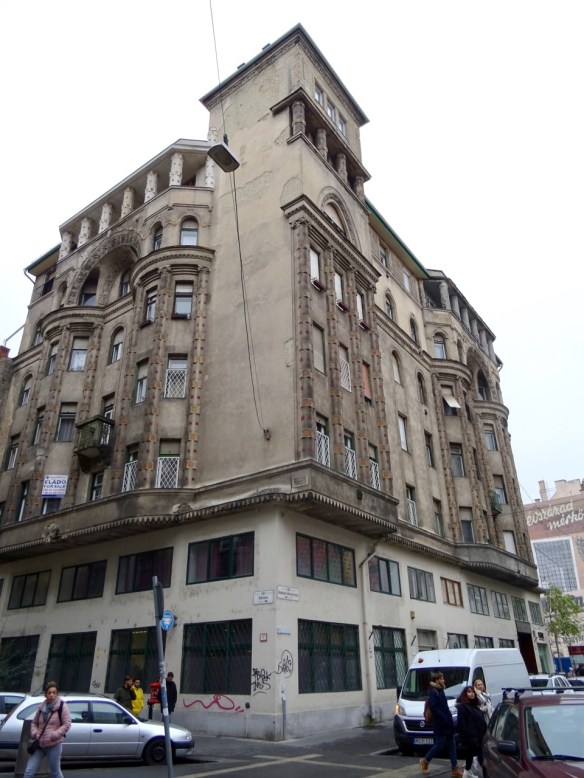
 One more interesting building on our way back to our apartment. The top doesn’t seem to belong to the bottom.
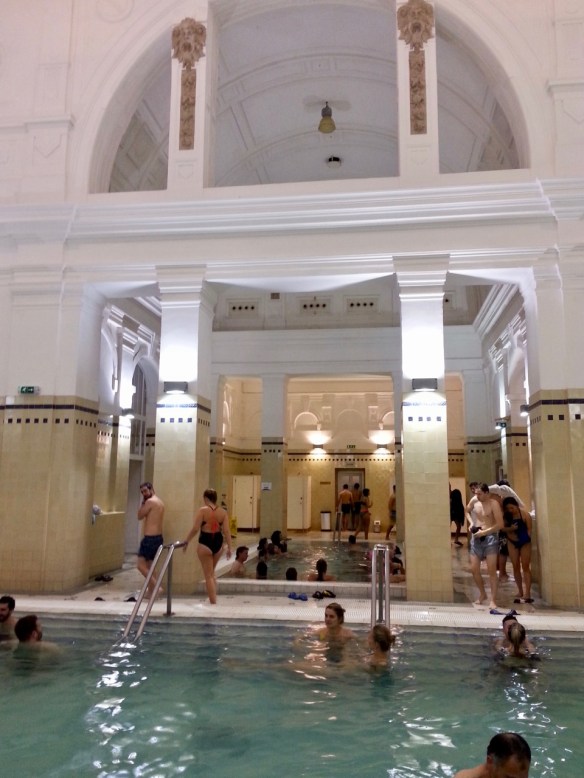
 The Széchenyi Spa Bath in Budapest
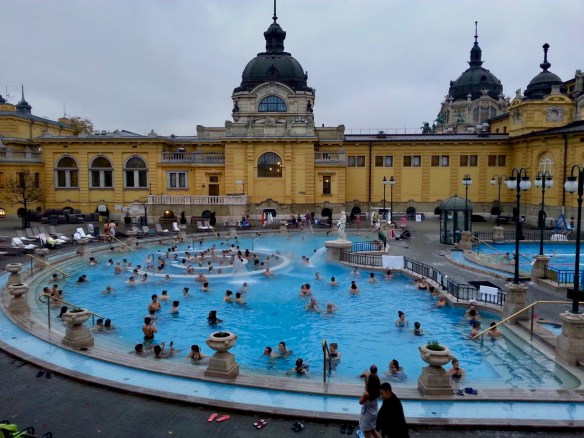 This pools for lane swimming, not for us today.
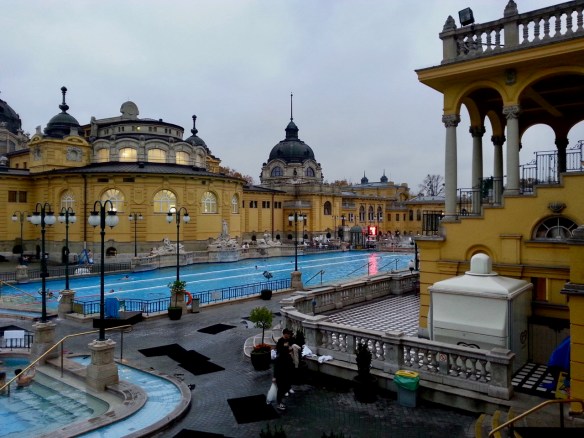 We like this pool as it is warmer than the first one.
  Inside there are fifteen more pools. This is one of the warmer ones and the only one that has comfy lounge chairs, so we stay here for a while. I sit beside Bob, in the corner and do some drawings of the bathers. Budapest didn’t have any life drawing classes, or at least none that I could find, so this will do instead.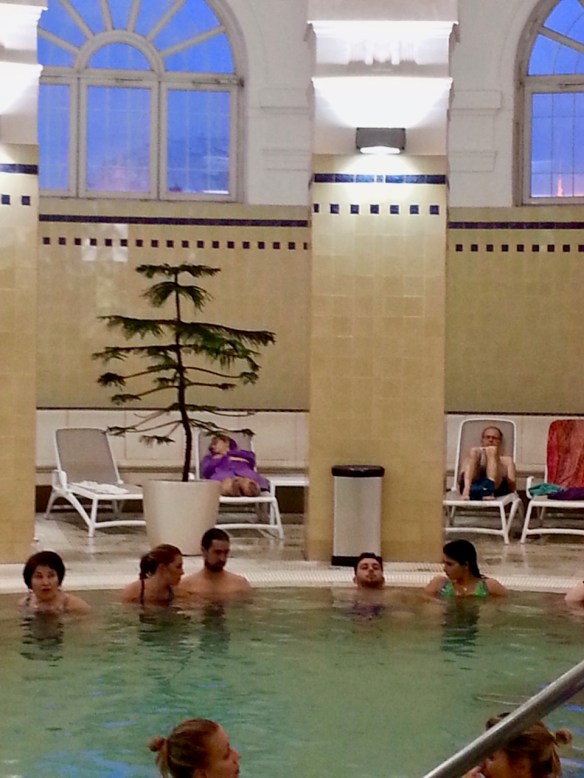
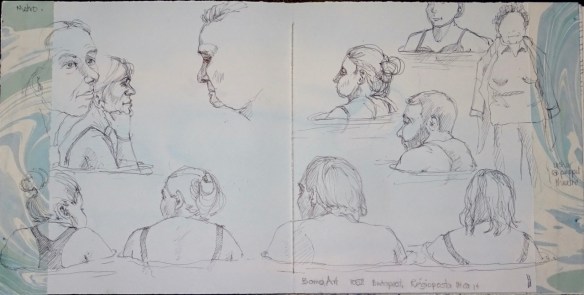
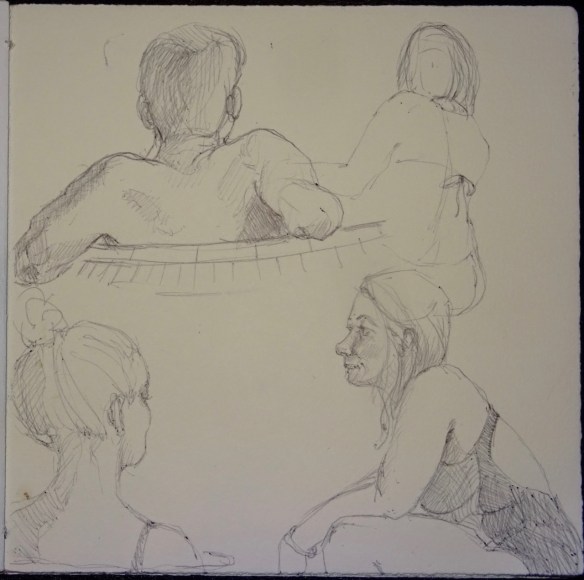 The building is magnificent but it is starting to show its age here and there. I think it might need a renovation before too long. This is a great place for people watching, and we do come in all shapes and sizes!
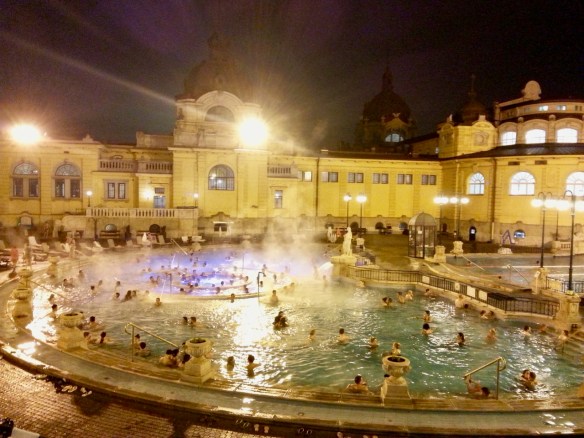
 By the time we go back outside it is dark, and the steam is rising from the pools. We were thinking of taking a boat ride on the Danube tonight but we decide to stay and enjoy more time here.
 There are more people now than when we first arrived, and most of them are much younger than us. We see a few other grey-haired ‘oldies’ but we are few and far between. We spent more than five hours enjoying the baths, and we both feel nice and relaxed.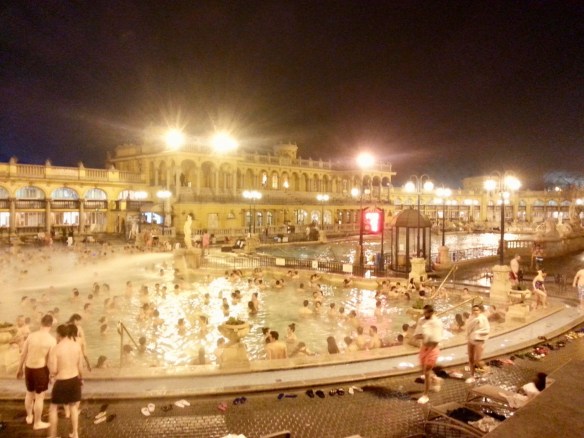

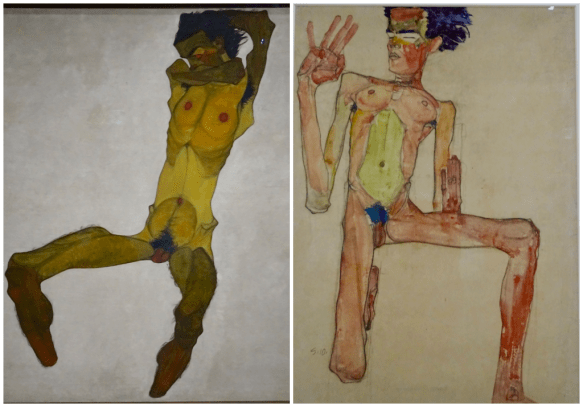
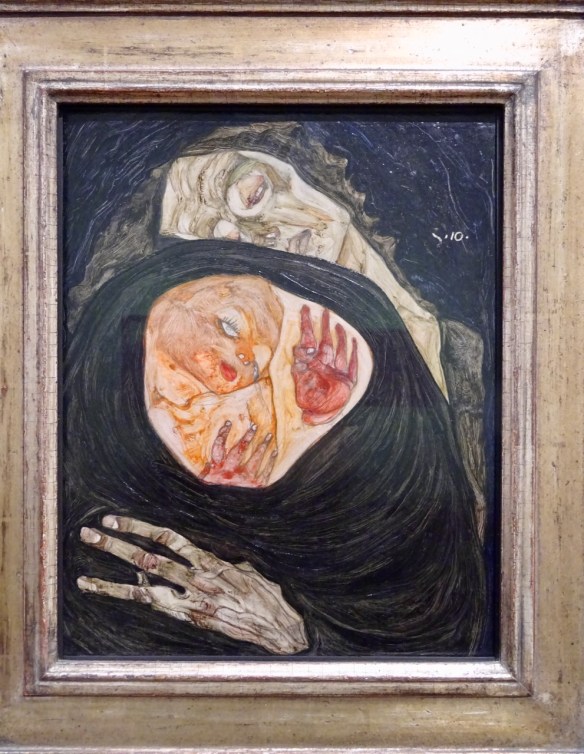
 ‘Mother and Child’ is a well known painting. I do love how expressive Schiele’s hands are.
 Schiele’s 1912 ‘Self Portrait with Chinese Lanterns’ was painted as a companion piece for the ‘Portrait of Wally Neuzil’ who was his muse and partner from 1911 to 1915. Both these paintings have a gentleness and sensitivity not found in all his work. I like these very much.
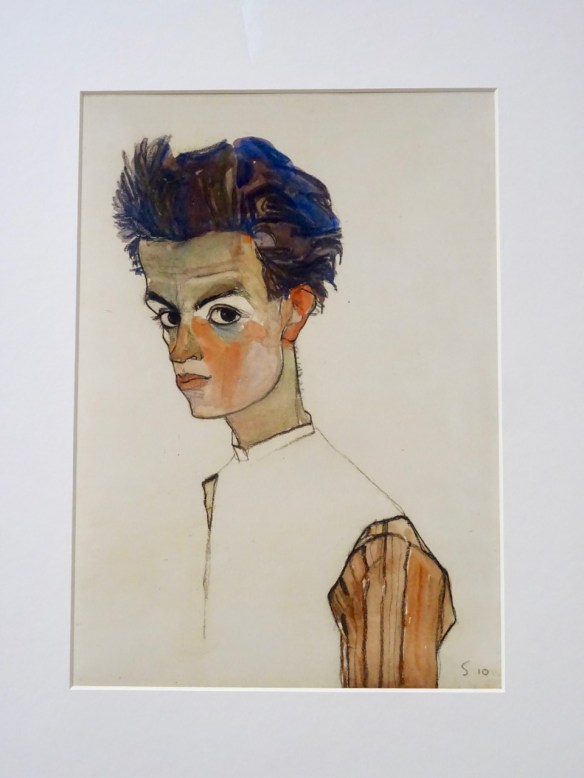
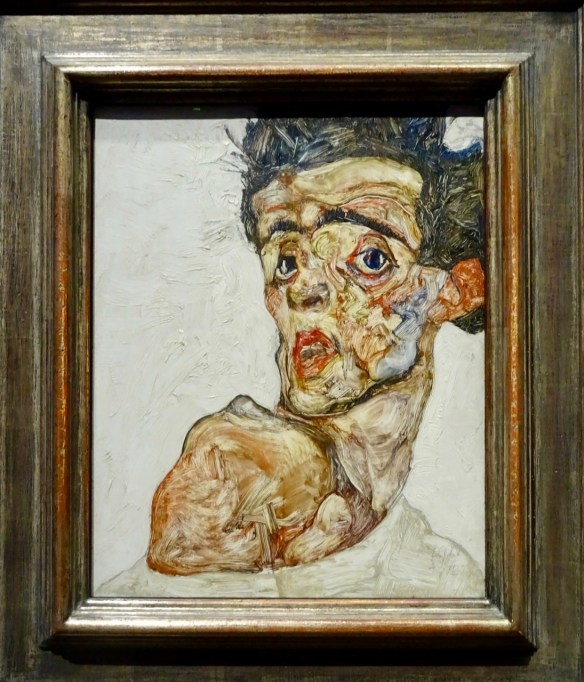
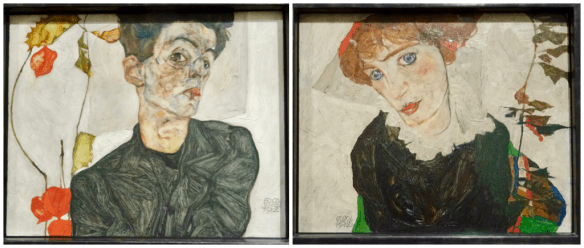 Quite different from this self portrait completed the same year. Schiele was born in 1890 and died in 1918. He was only 28 years old when he died, yet he created over 3,000 works on paper and around 300 paintings! I wonder what he would have accomplished if he had lived longer. He died during the Spanish Flu Epidemic, just three days after his six month pregnant wife Edith.
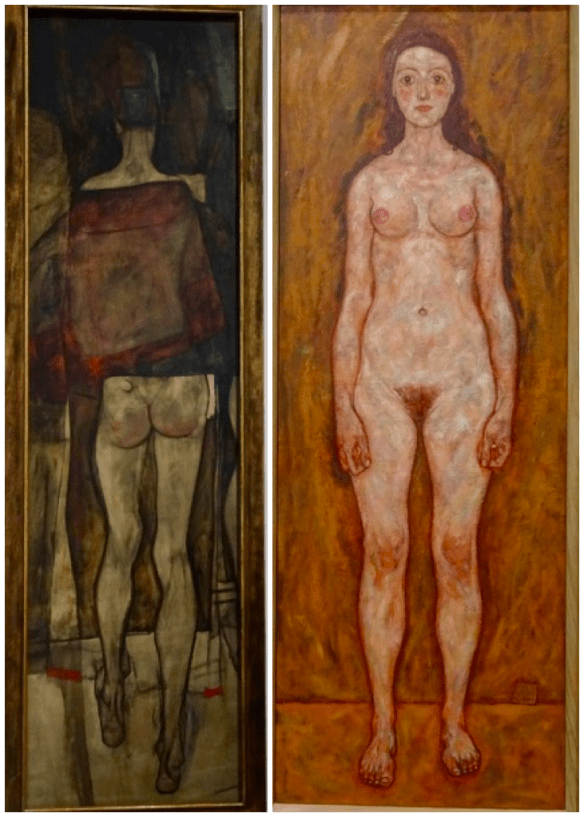
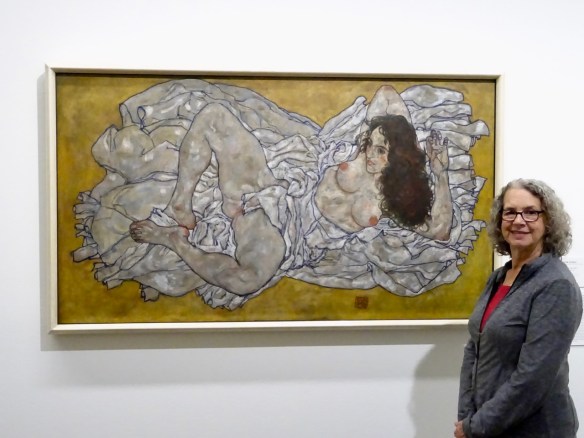
 ‘Reclining Woman’ was bigger than I expected. Originally the woman’s genitals were exposed but Schiele added the white cloth covering in order to be able to show the work at an exhibition in Vienna in 1918.
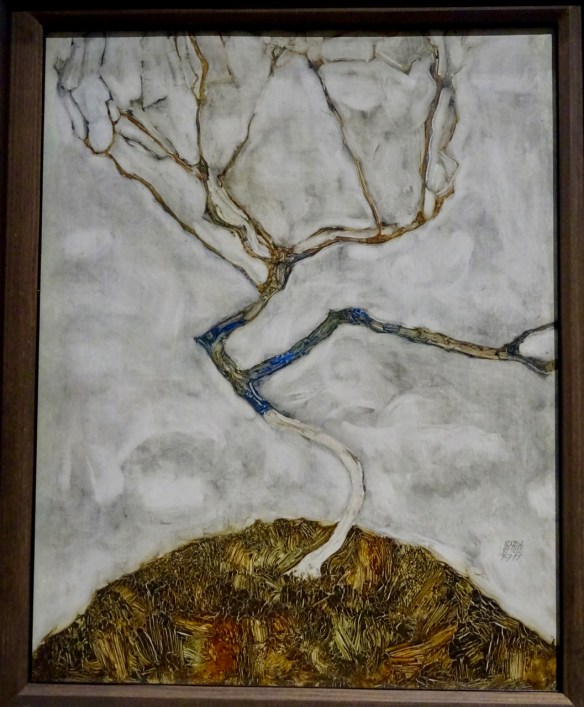
 There are several landscapes, and most of them are quite large.
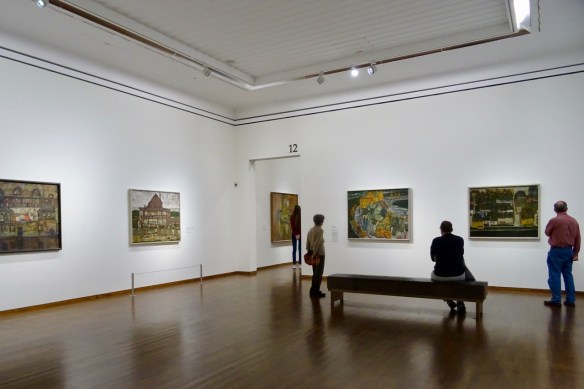 ‘The Small Town IV’…
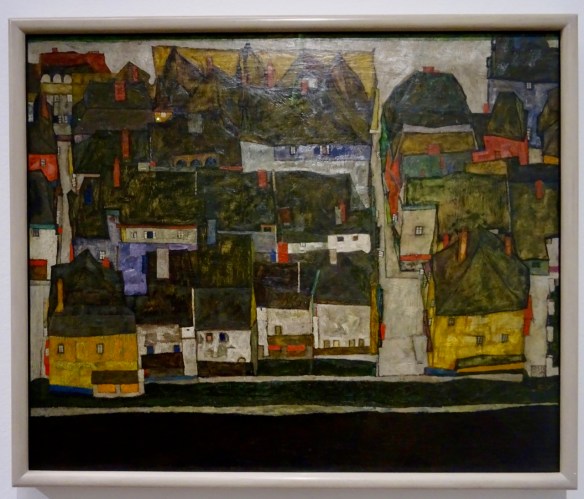 and ‘House With Shingled Roof’ were two that I particularly liked. Although Schiele only painted for such a short time, his work laid the foundations for the Viennese Expressionist movement as well as inspiring other future movements, such as Abstract Impressionism.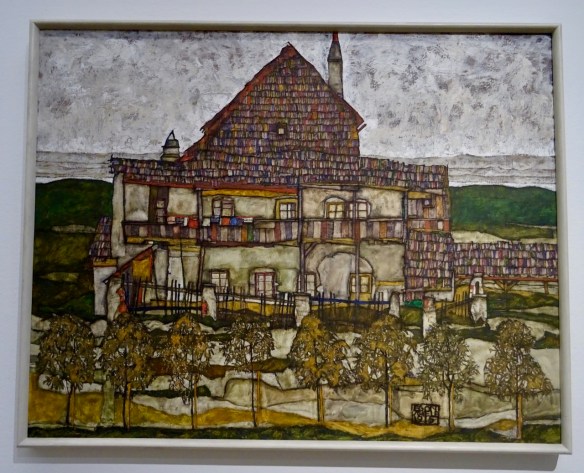
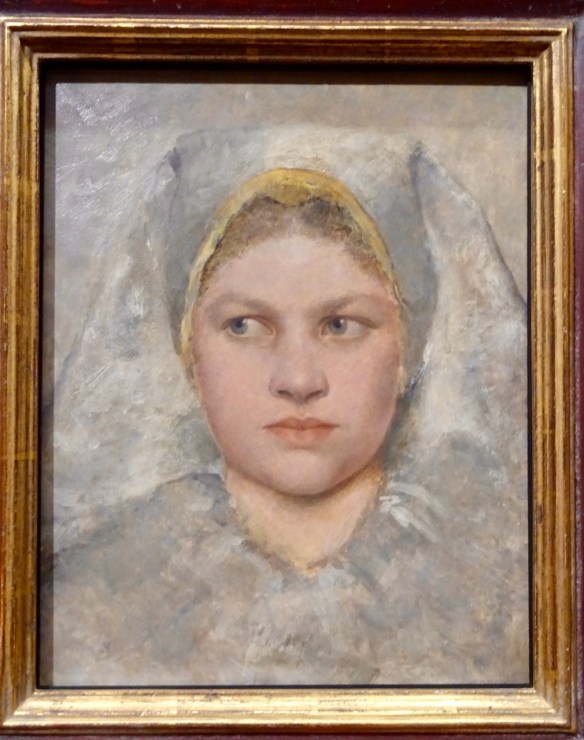 ‘The Blind Man’ was first exhibited in 1898.
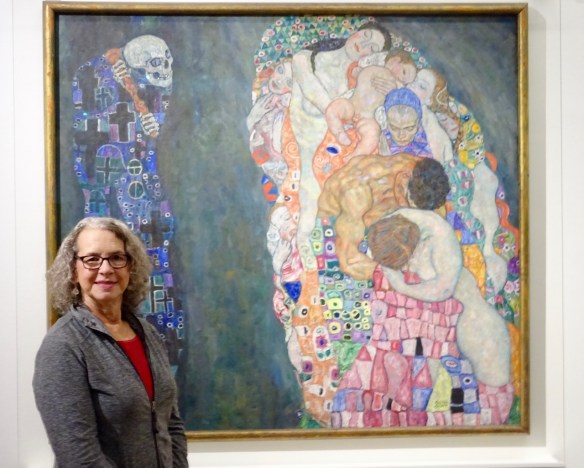
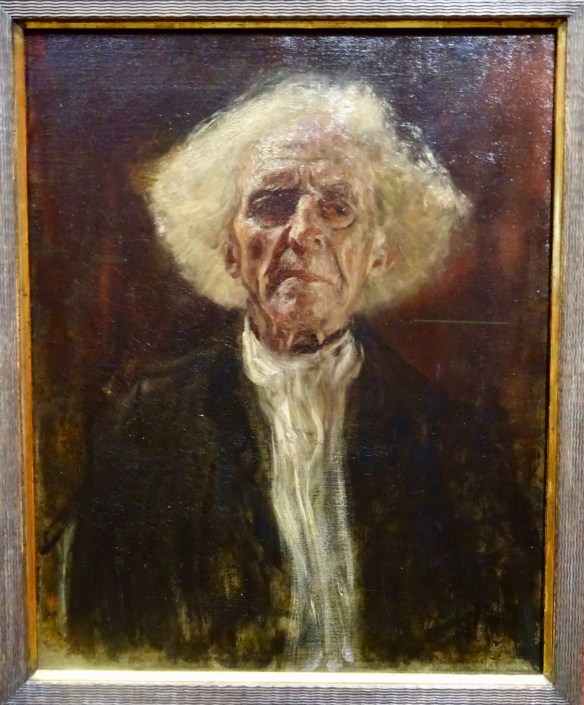 ‘Death and Life’ won the Gold Medal at the 1911 International Art Exhibition in Rome. This painting and ‘The Kiss’, that I saw at the Belvedere, are two of Klimt’s most well known paintings. I feel very fortunate to have seen both of them in person, as well as all the other amazing works of art I have seen on this trip.
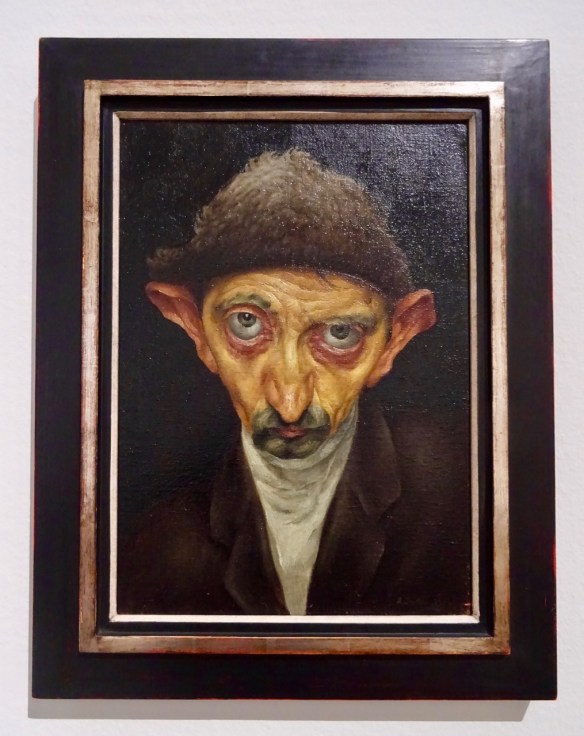
 As we are leaving the Leopold I notice this painting, which makes both of us laugh! It is by Albert Birkle and is titled ‘Man with Fur Cap’, or ‘My Brother the Animal’!
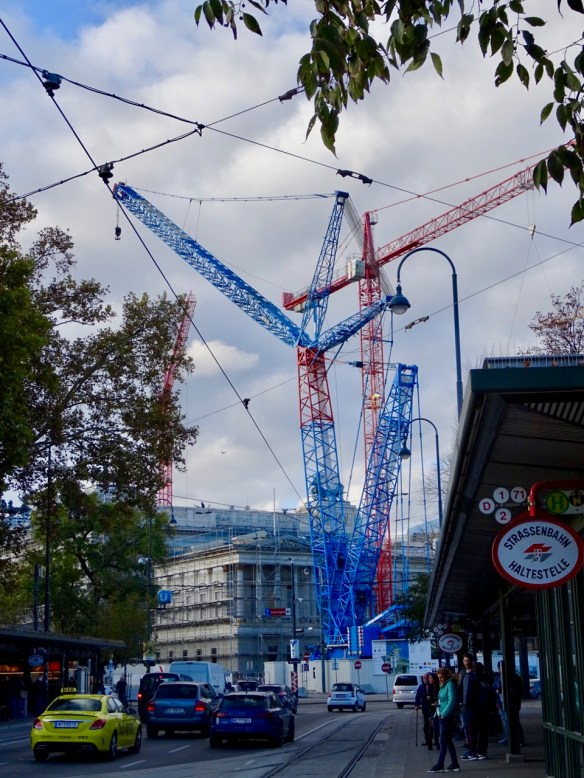
 Near the metro station Bob notices this crane which has just been erected. Neither of us have seen one with so many arms before.
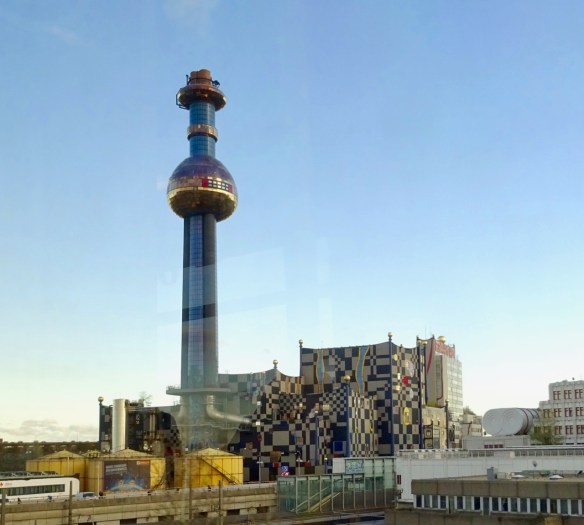
 When I saw this building our first day in Vienna I thought it was the Hundertwasser House but it wasn’t. Turns out that it was designed by Friedensreich Hundertwasser! It is the Spittelau Incinerator which is used to handle Vienna’s garbage. The environmentally friendly plant produces enough energy to heat more than 60,000 households in Vienna in a year.
 I have one more life drawing session tonight at Kaffeebar Quentin. I have attended many life drawing sessions in bars or pubs and the model is always at least partially clothed, so I was quite surprised when our model is completely nude. We are in the back of the bar, but the model is still in full view of all the other patrons as well as anyone who happens to look in the windows. Wish I had a scanner, as it would improve the quality of these photos, but I don’t think I can haul one around on holidays! These are all 5 minute poses.
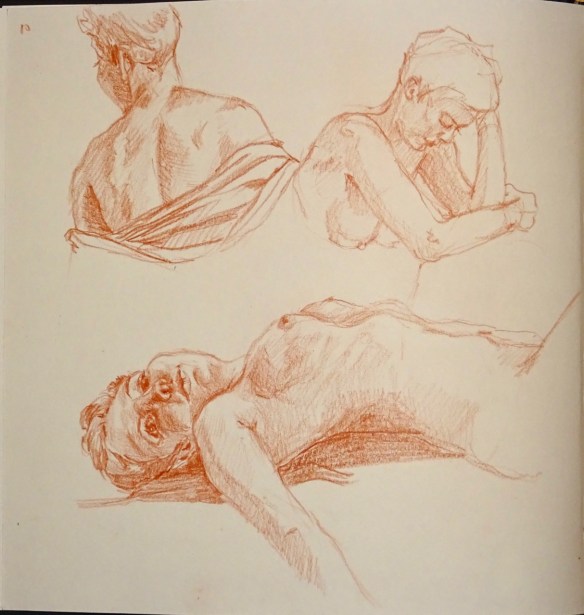
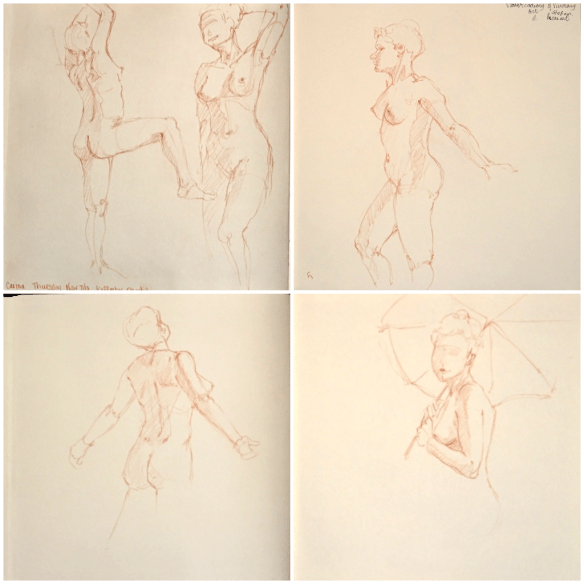 Two ten minute and one twenty minute drawing…
 and we finished the evening with a twenty-five minute pose. The people at this session were very friendly and I had met some of them at the other two sessions this week. I will miss Vienna, they have so many life drawing opportunities. There is a session almost every day of the week, and lots of them have interesting themes.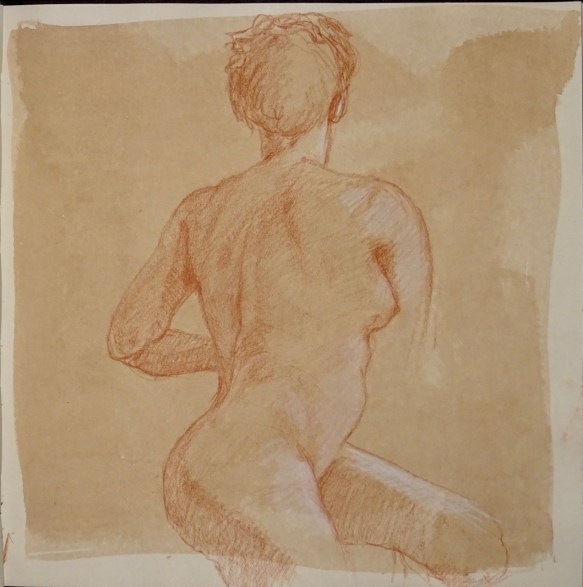
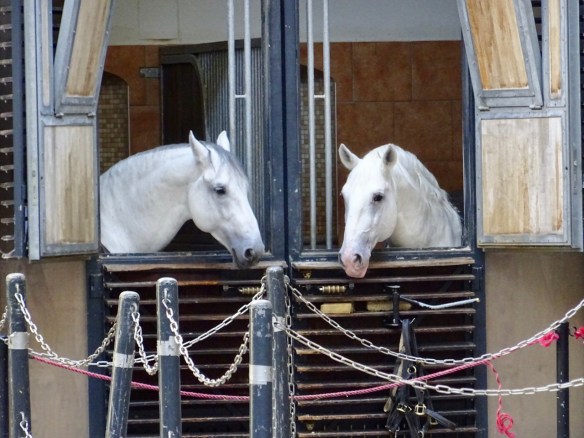
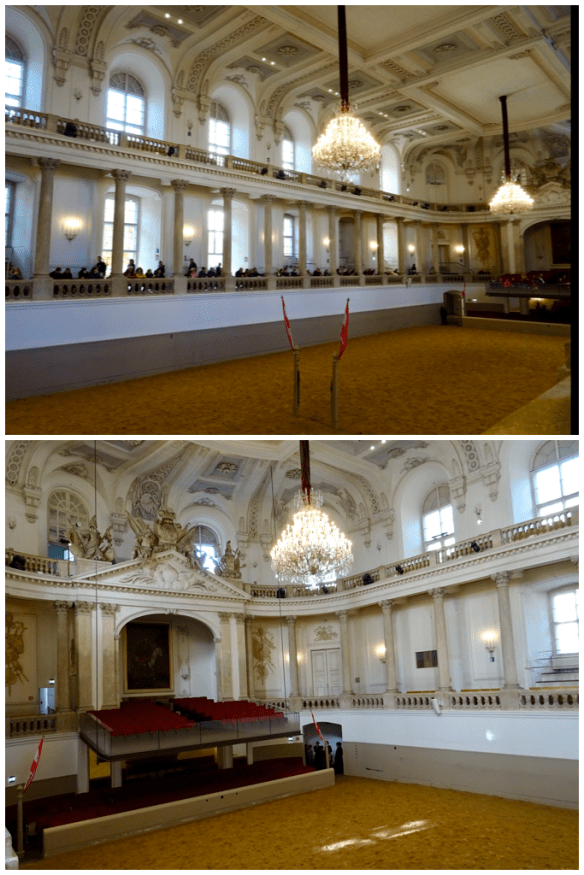 No photos are allowed and I was very good and didn’t try to sneak any! It would have been so nice to have a few photos though. These two photos were taken from posters advertising the performances. The stallions are gorgeous!
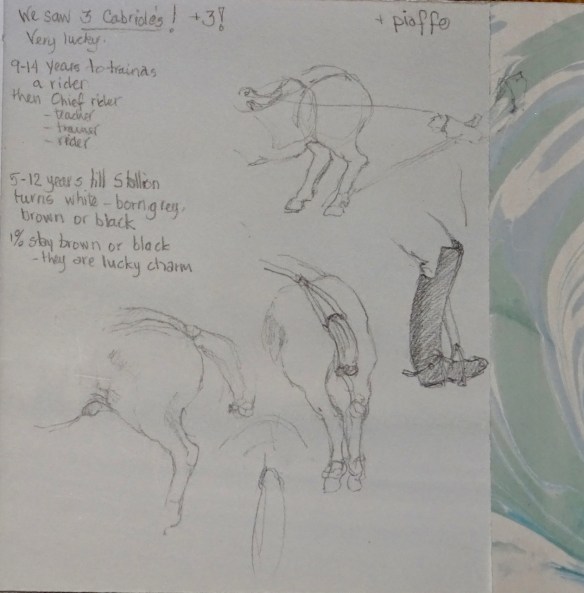
 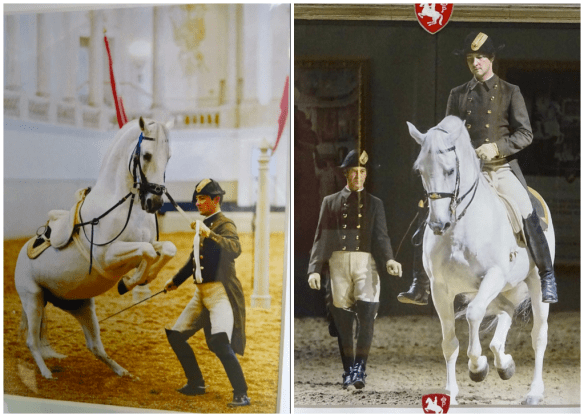 I did a bit of sketching during the training and that was OK but it was hard to draw and watch what was going on a the same time. After a bit I decided to just enjoy watching the training session and forget about drawing.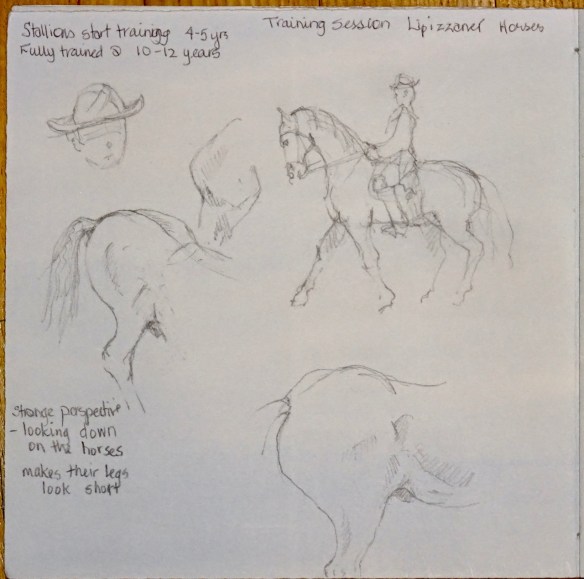
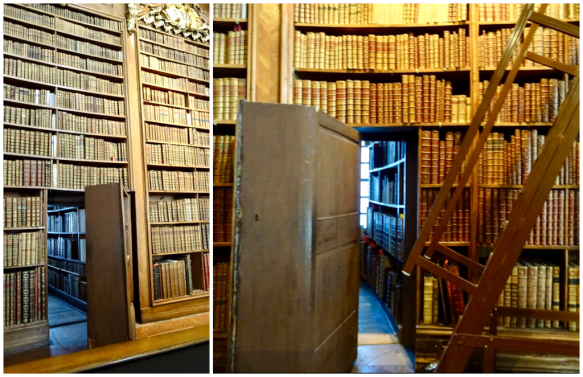
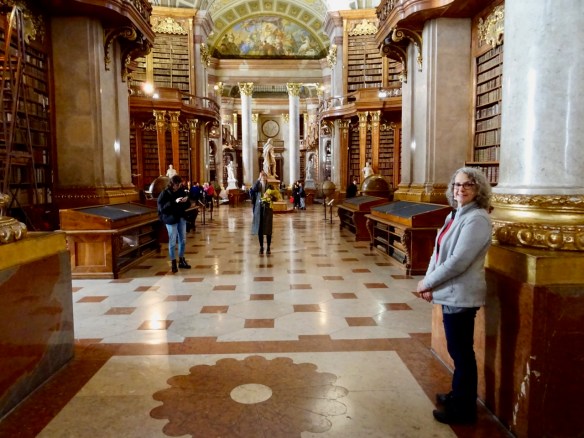
 Next stop is the State Hall of the National Library. It is so amazing! It is hard to describe such a magnificent place. The pictures probably do a better job, so here they are. This is our view when we enter the library. We both just stop and stare! This library is nearly 60 metres long and 20 metres high and contains over 200,000 books!
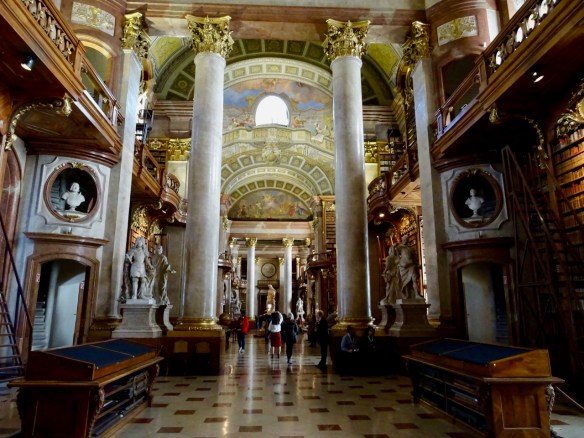 One of the first things we see are these ‘secret’ doors the open into rooms with even more books.
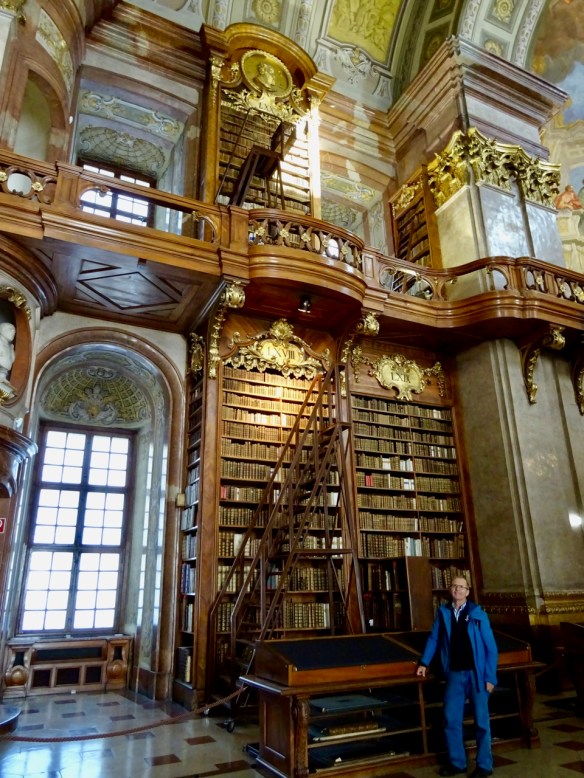
 The cases Bob is standing by held illuminated manuscripts. I would have loved to be able to climb one of these ladders and pull a book or two off the shelves.
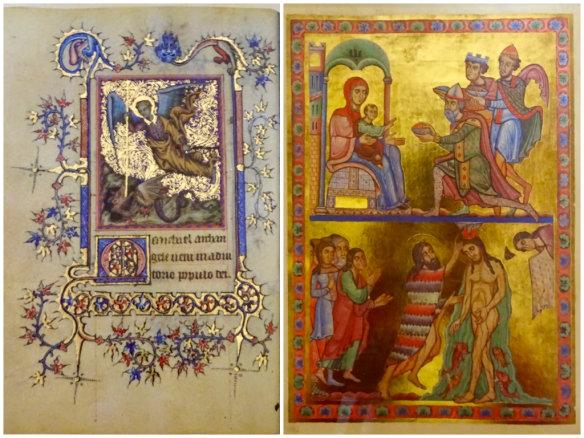
 These are from 1400 and 1260!
 The globes have been in this spot since the mid 1700’s.
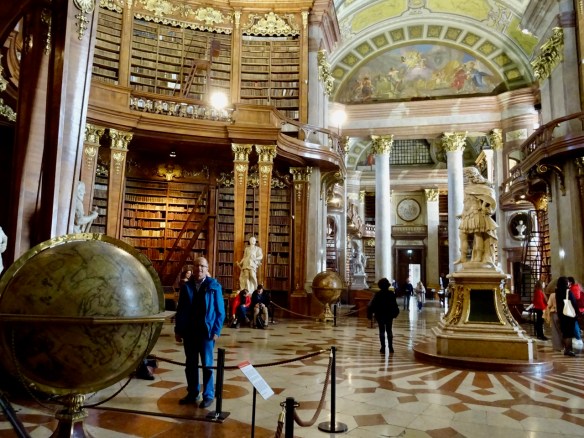 This statue is in the central oval of the library beneath a painted domed ceiling.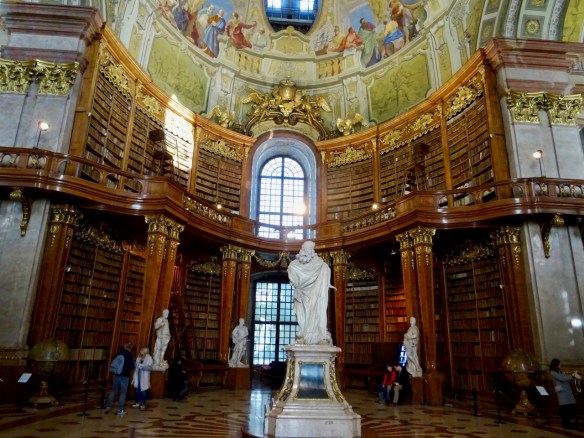
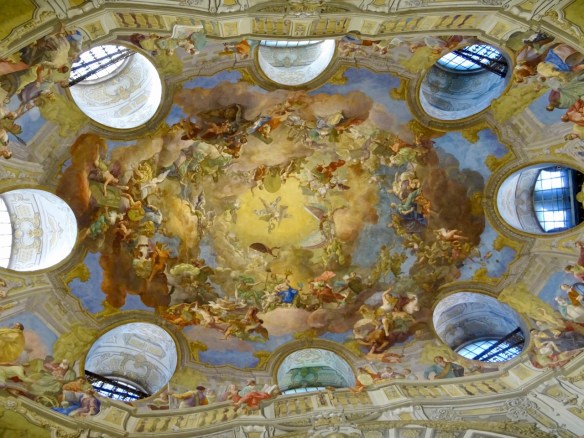
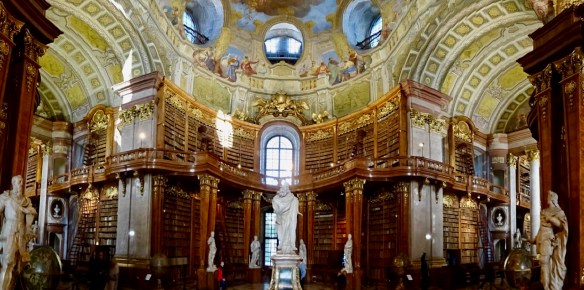 We sit for a while just absorbing the atmosphere.
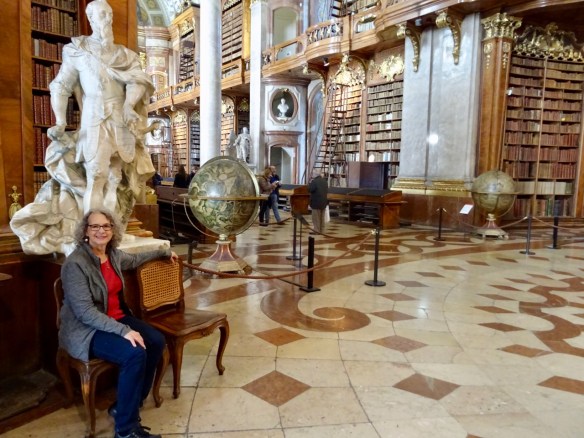 Looking towards the entrance from where I was sitting…
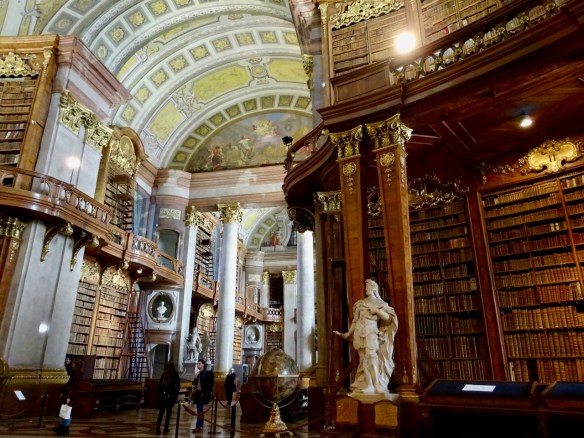 and towards the back of the library.
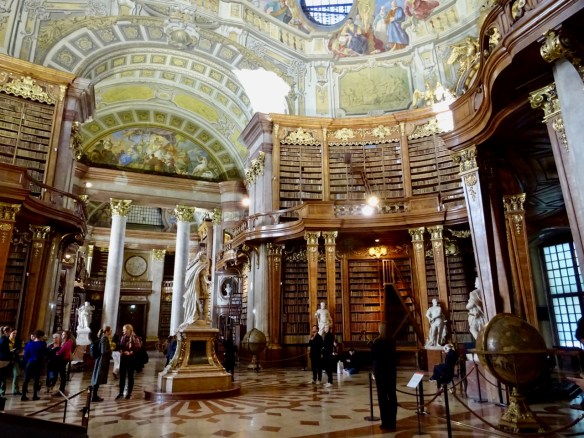 The second level is just as ornately decorated as the first. I wish we could have gone there as well, but it was not to be.
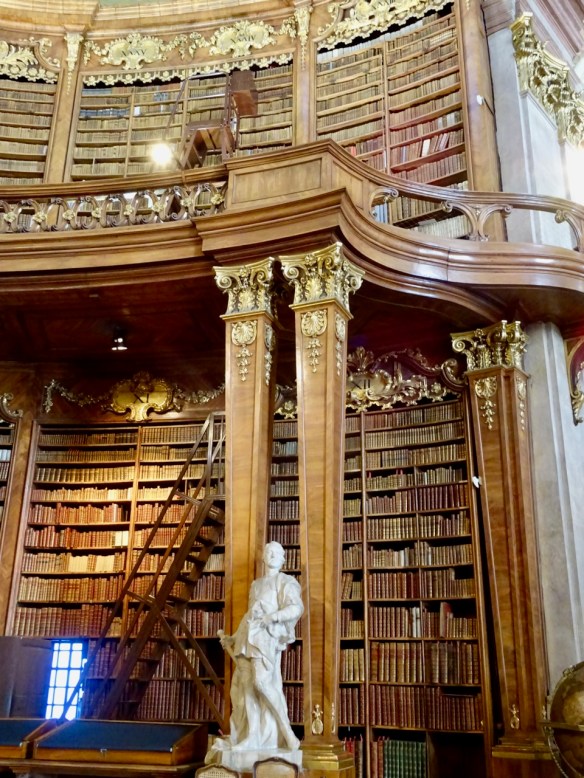 One last photo before we leave. Here is
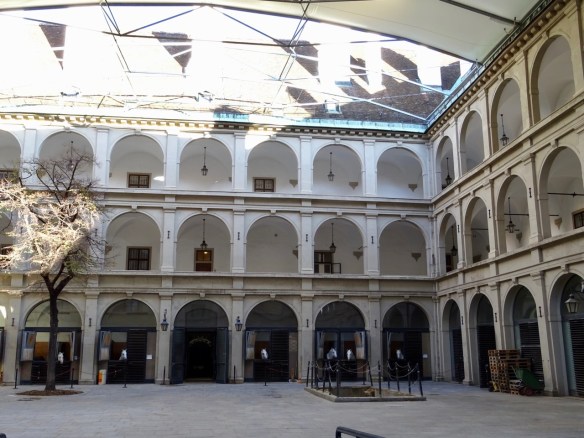
  When we leave the library we pass the Lipizzaner stables.
 I zoom in on these two beauties.
 We stop at the Minoritenkirche because Bob says it has a mosaic life size replica of The Last Supper.
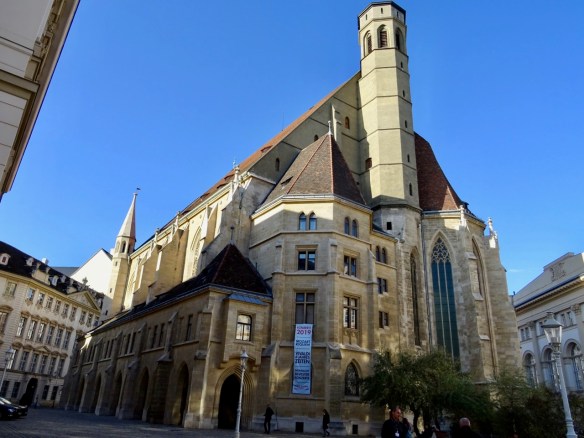 It appears to be painted on tiled panels rather than being a mosaic made with many small tiles.
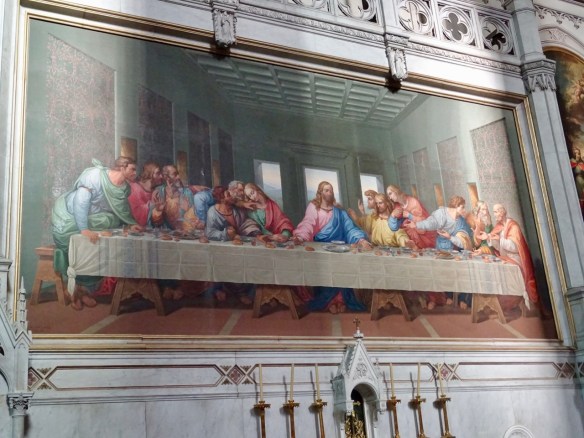 We didn’t get to see The Last Supper when we were in Italy. We didn’t know we had to get tickets far in advance, so I guess this is the next best thing.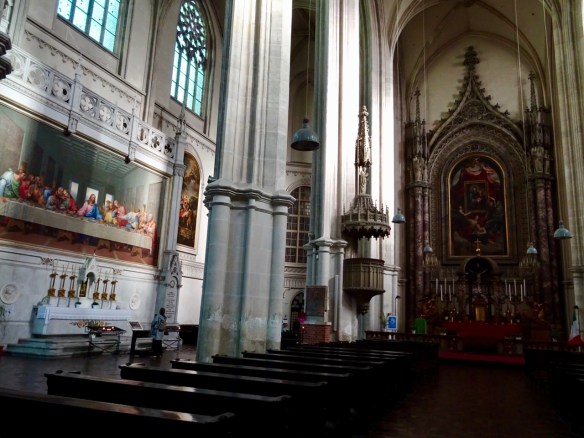
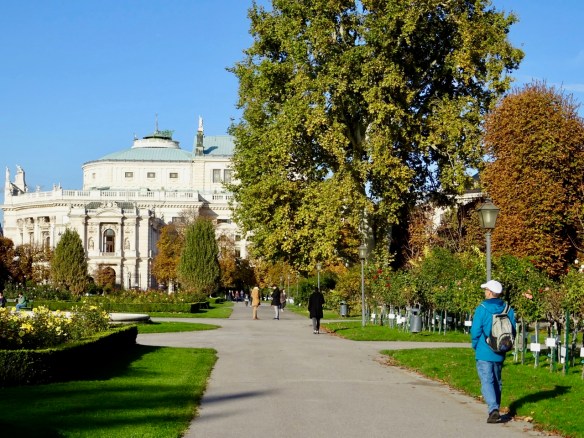
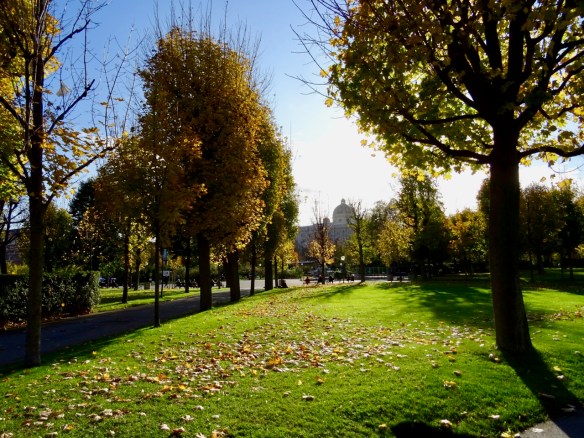 where there are lots of people sitting enjoying the sunshine.
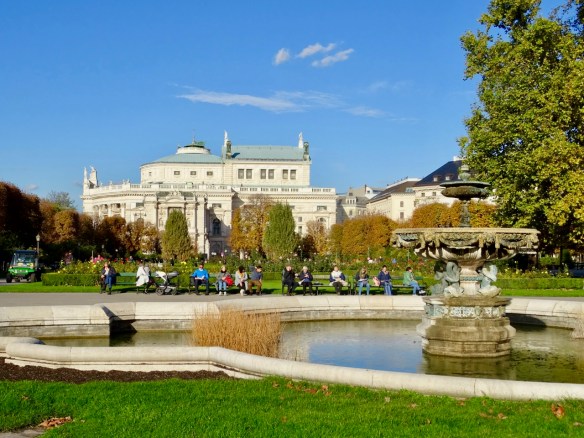 I was surprised there were so many yellow roses in bloom so late in the year. Do you notice all the little white signs in the background? This is a memorial garden and each rose is planted in memory of a person who has passed away.
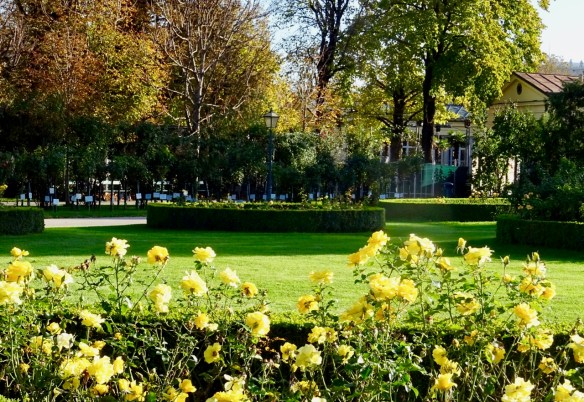 It is a beautiful sunny afternoon. Warm for November, but we still need our coats.
 We stop at the Naschmarkt for something to eat. This roast pig is for sale by the piece, starting at the back end. Interesting but we decide on something a bit less exotic.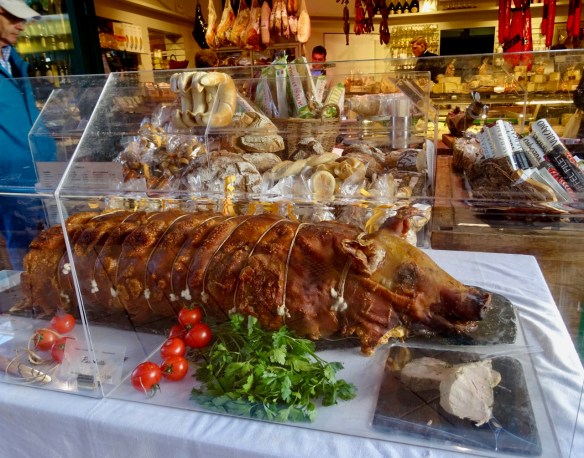
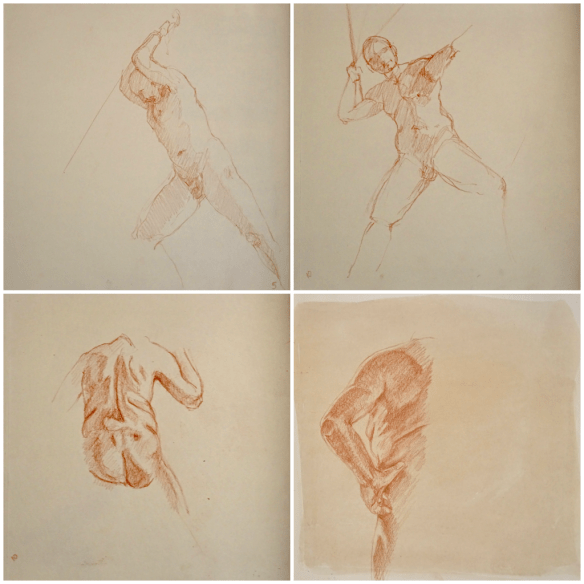 A ten and twenty minute pose.
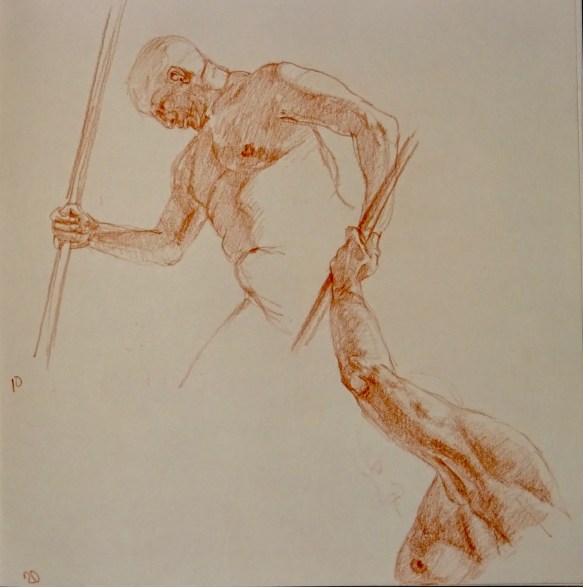 I think I liked these two 5 minute drawings the best. It was a good night.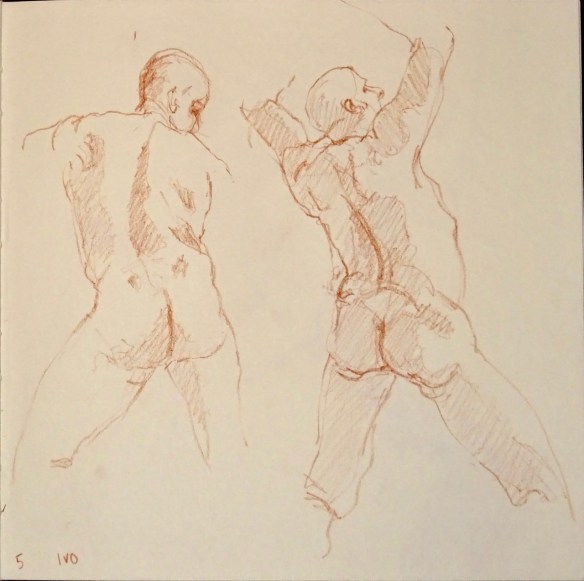
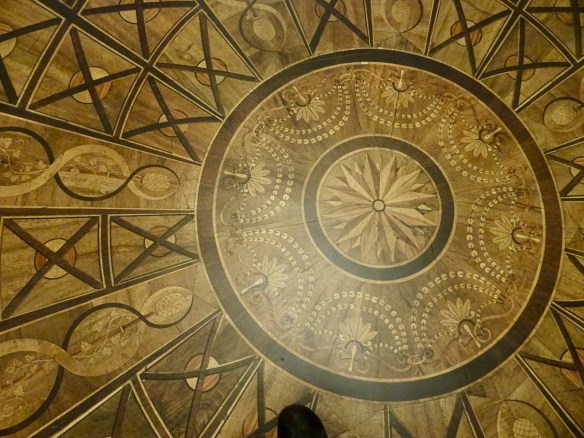
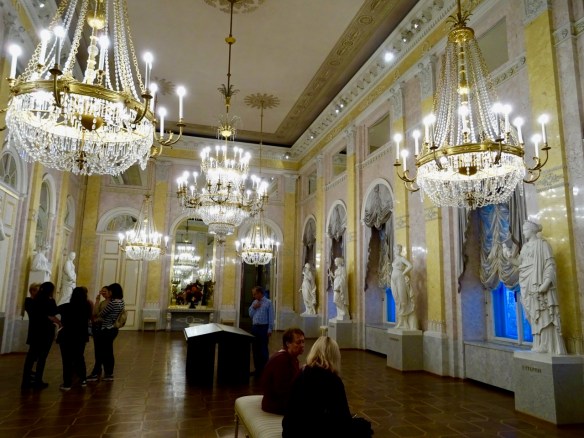
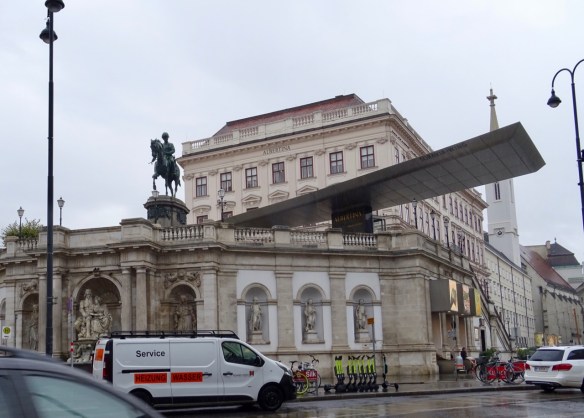 Before we see the Dürer exhibit we visit the other parts of the museum. There are 20 decorated and restored Habsburg State Rooms with precious wall coverings, chandeliers, fireplaces and stoves, inlaid floors,
  The chandeliers in this room were very beautiful.
 The most interesting thing in these rooms was the art exhibit on the walls. We have a print of this Hieronymus Bosch drawing at home. Unfortunately the drawings and prints are facsimiles. Very good ones, but facsimiles non-the-less. This is necessary as works on paper are fragile and can not be displayed for long periods of time.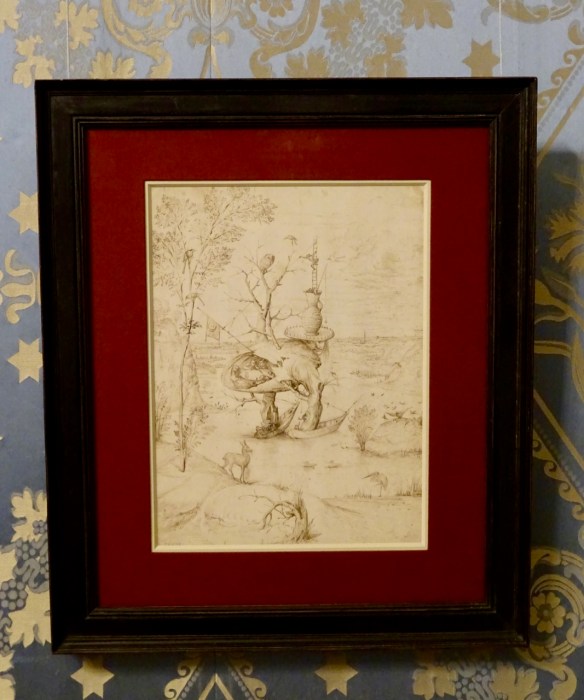
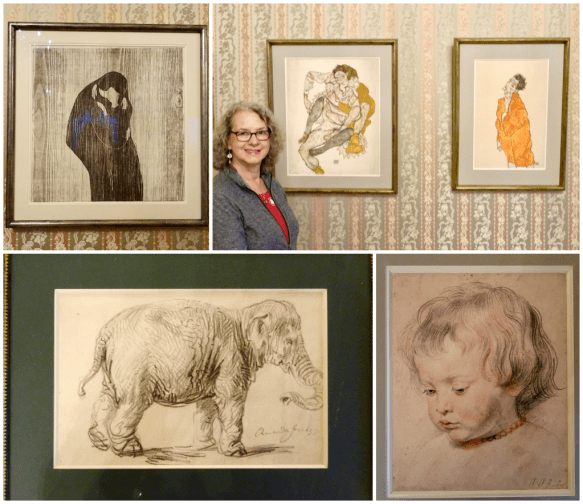 Now on to the main event!
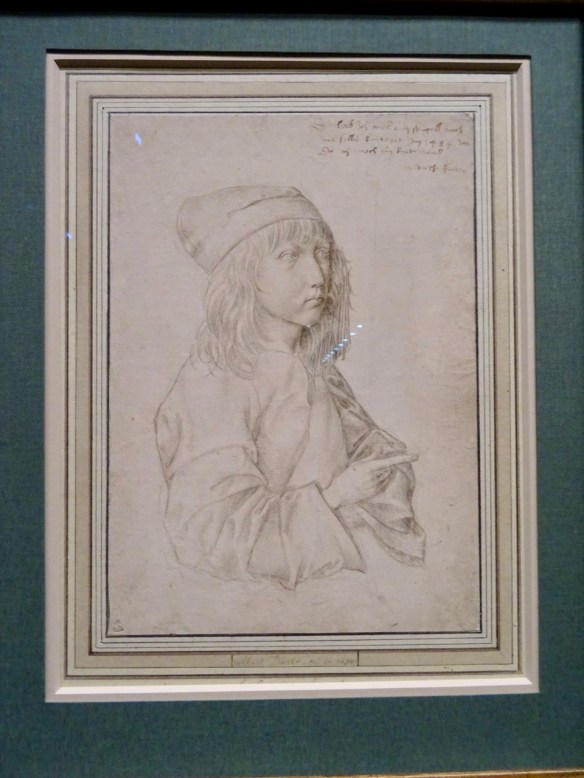 I took so many photos but have chosen just a few of my favourite ones for today’s post. Here is ‘Three Studies of Dürer’s Left Hand’ 1493/94. I like drawing hands and feet and there is much to learn from Dürer.
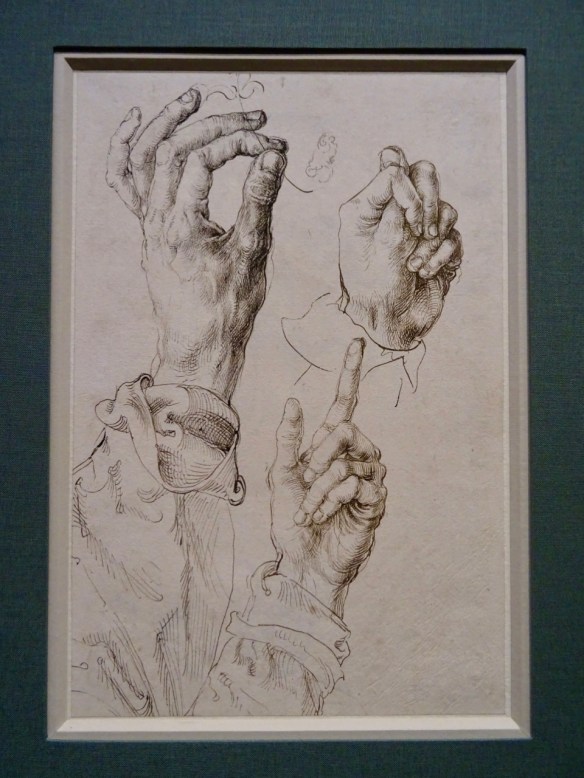 This page of studies was so interesting.
 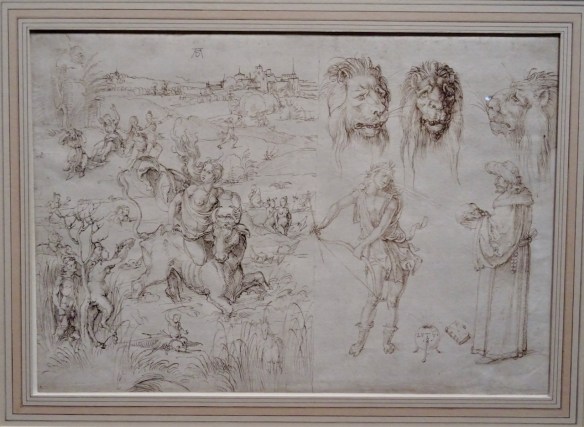 Here is another drawing I have seen so often in books.
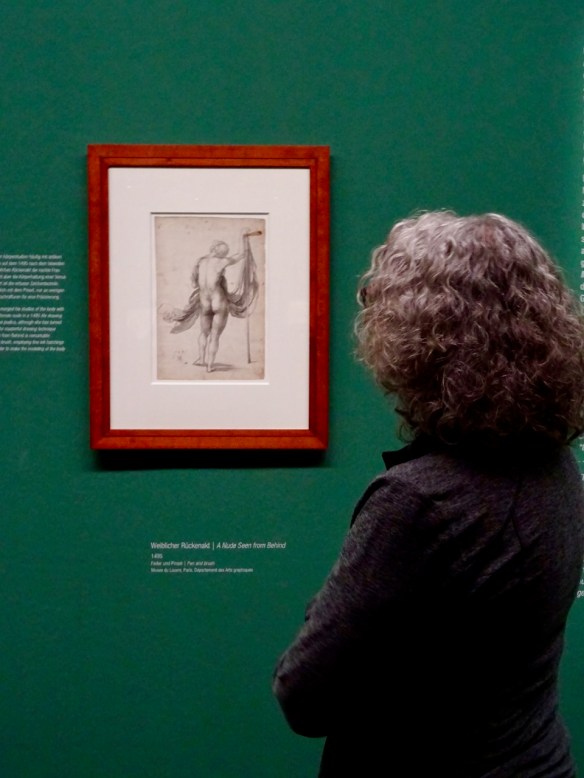 ‘The Woman’s Bath’ is a pen and ink drawing…
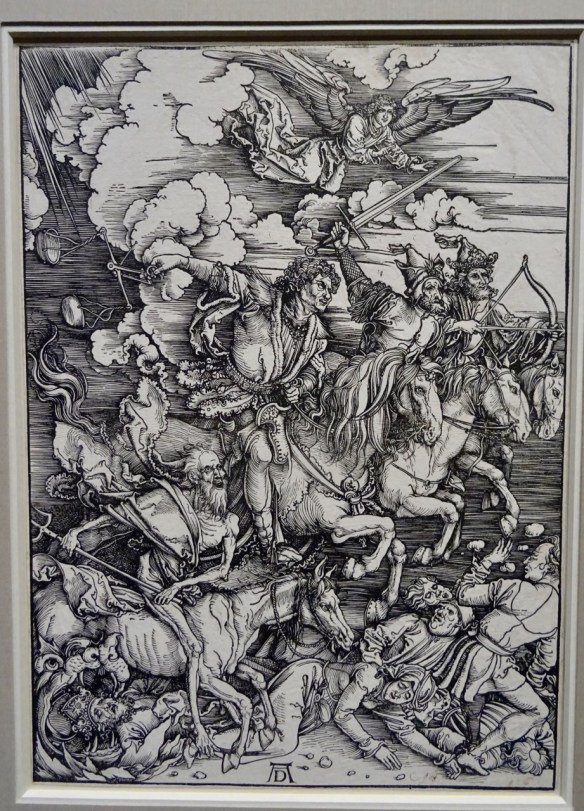
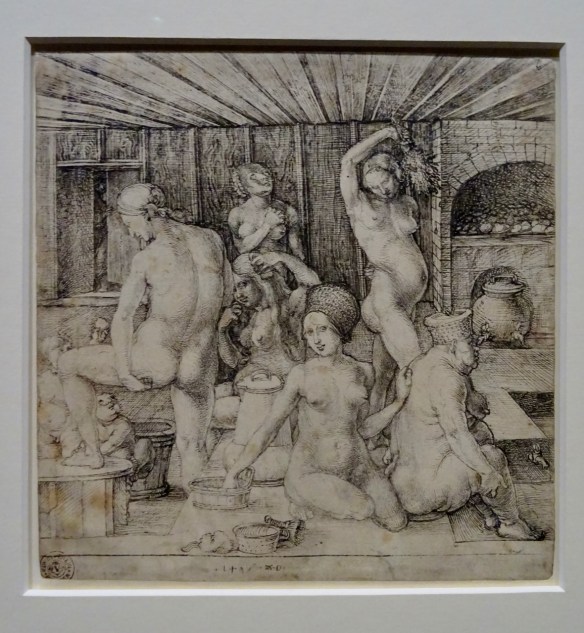 and this ‘Illustration for the Apocalypse’ is a woodcut. Dürer was a master of all mediums.
 Dürer’s watercolours are exquisite. This painting is simply titled ‘Iris’.
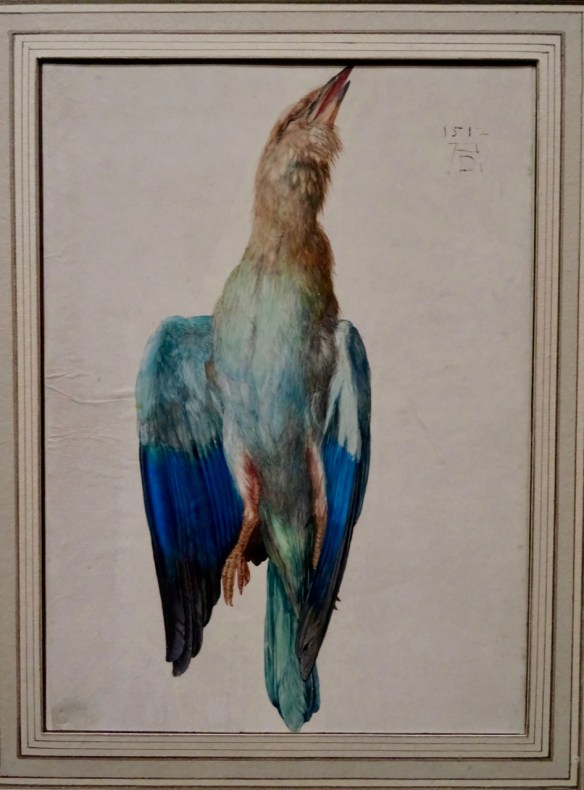
 A watercolour study of a ‘Blue Rolle’r from 1500.
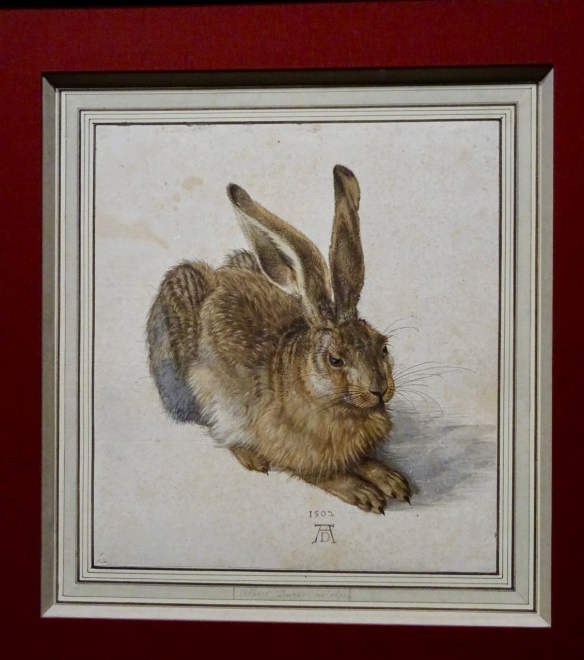
 We enter another room and there on the far wall are three famous works. Dürer’s ‘Young Hare’ is only exhibited once every five years for a period of no more than three months. It is just luck that it is on exhibit while we are here. This is another print that we have at home. Bob wishes it was the original!!
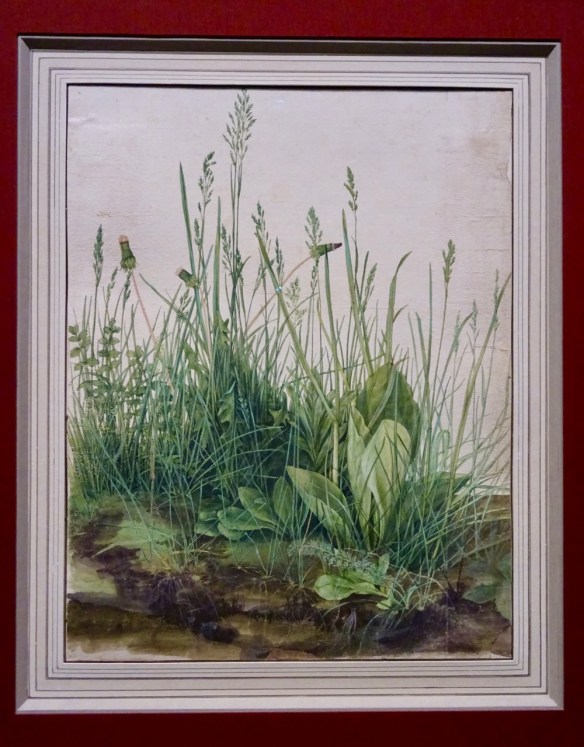
 ‘The Great Piece of Turf’ was painted on the largest piece of paper available at the time to portray the plants life sized.
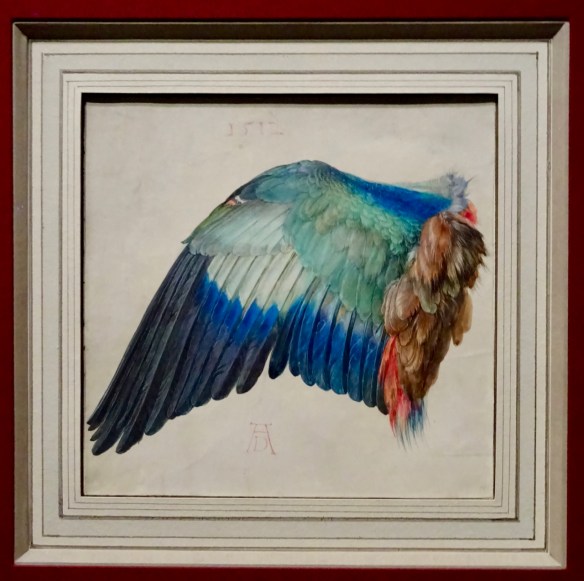
 ‘The Wing of a Blue Roller’ is quite amazing. This work is watercolour and body colour on parchment with fine gold lines on the breast plumage to enhance the iridescence of the feathers. There is no one telling visitors to keep a certain distance from the works, so my nose gets up very close!
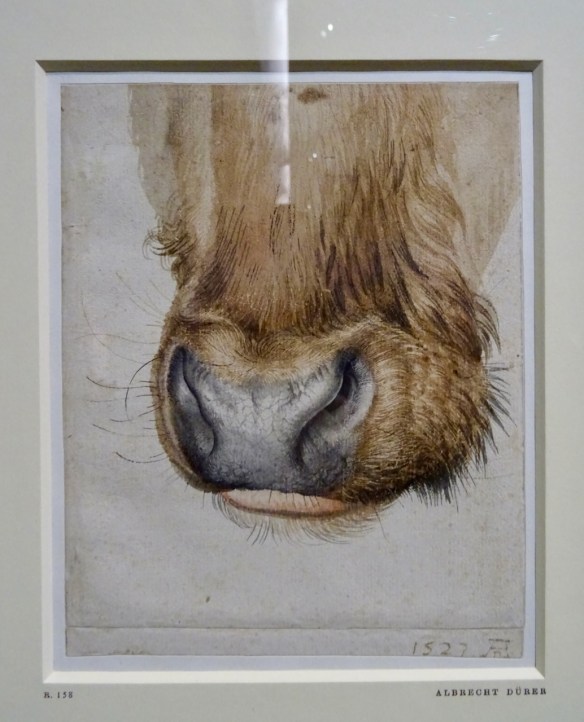
 I liked the study of a bull’s nose too…
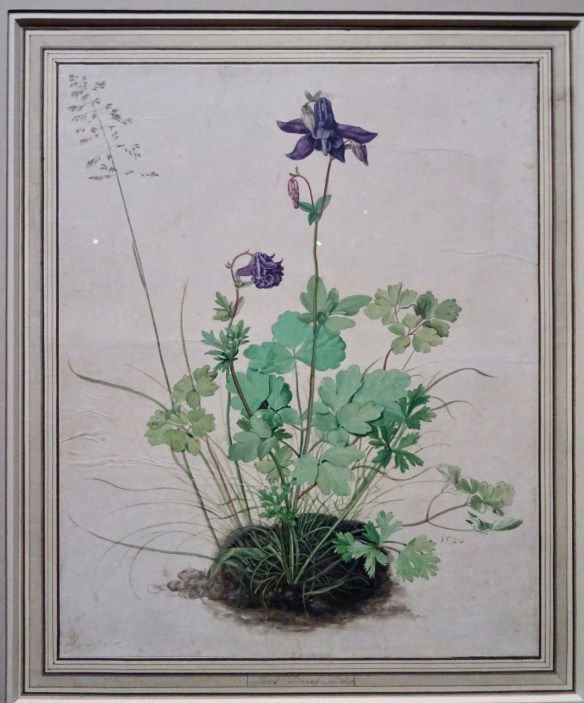
 and this ‘Columbine”…
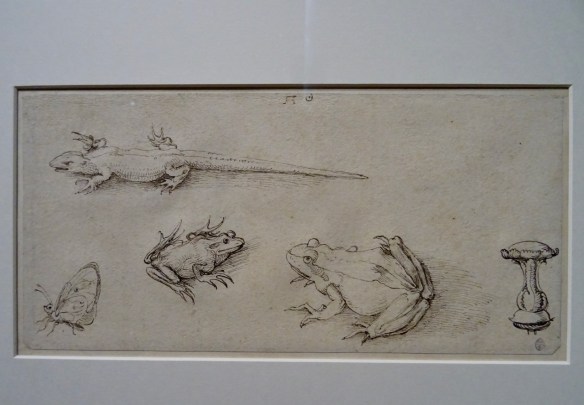
 and this page of studies.
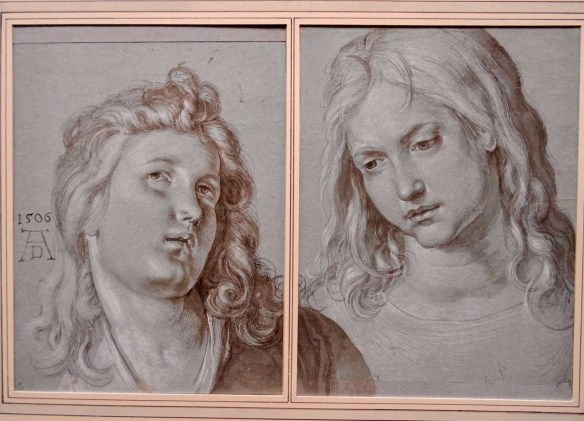
  OK. I love pretty much everything I see here! This head of an angel and head of twelve year old Jesus are studies for a larger painting …
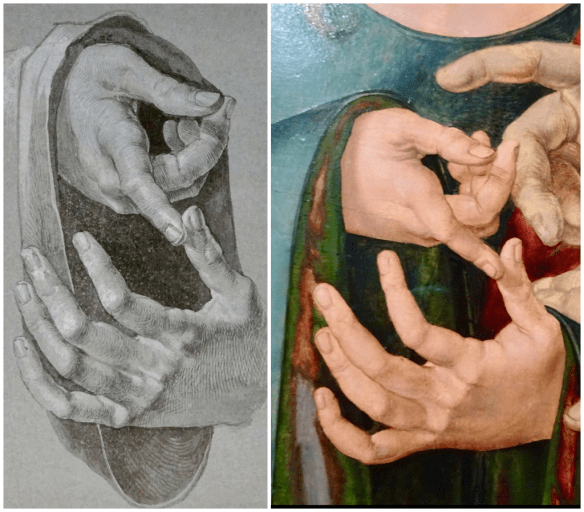
 as is this hand study. It is fascinating to see the studies and then the finished painting.
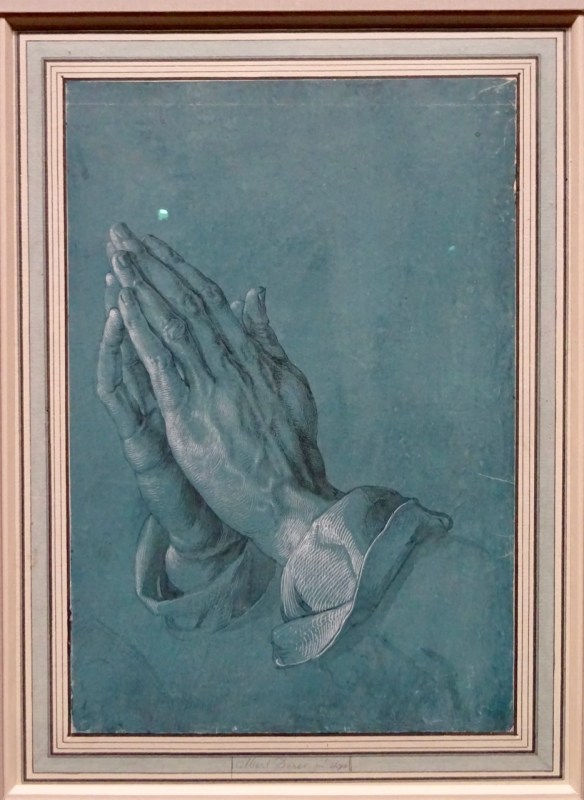
 ‘The Praying Hands’ is a well known Dürer image.
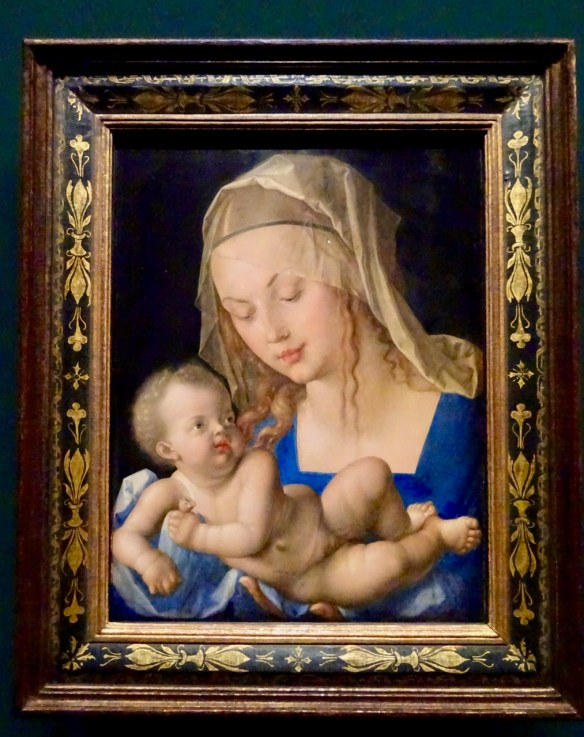
 I really didn’t know much about Dürer’s oil paintings. I particularly loved this one. The Madonna’s face is so beautiful.
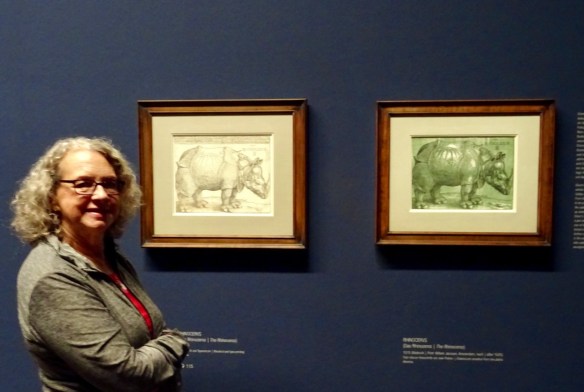
 Dürer drawing and woodcut of a rhino were made without his ever having seen a rhinoceros! He drew from a written description of the animal and his imagination.
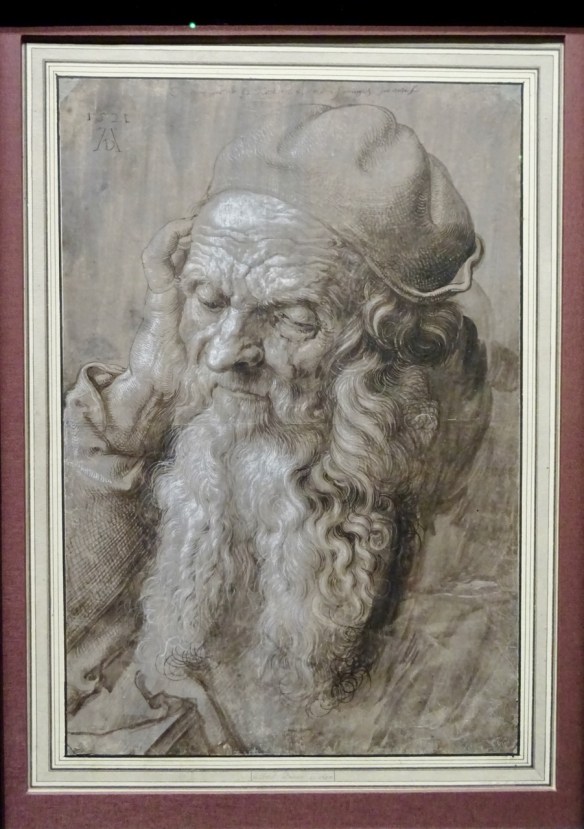
 I have always loved this ‘Portrait of a 93 Year Old Man’. I didn’t know it was done with a brush!
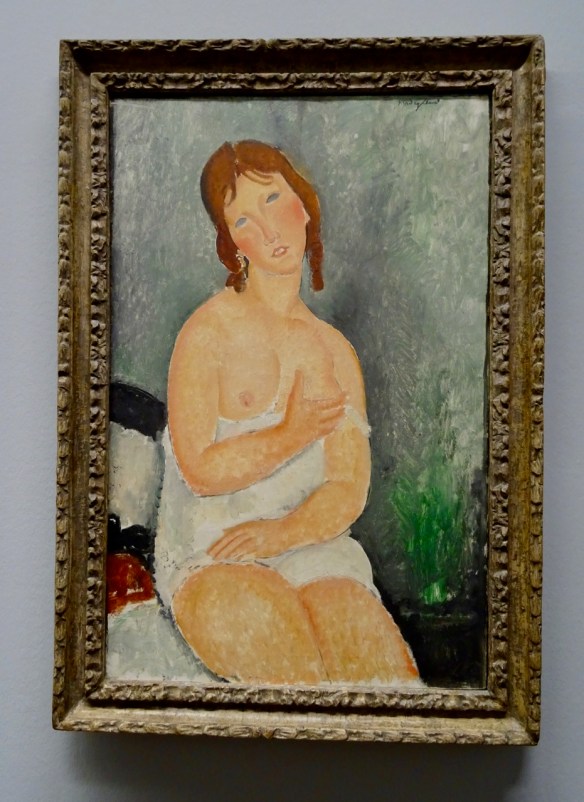
  As we are leaving the museum I see this Modigliani painting ‘Prostitute’. I have always liked Modigliani’s work but haven’t really see very many in person.
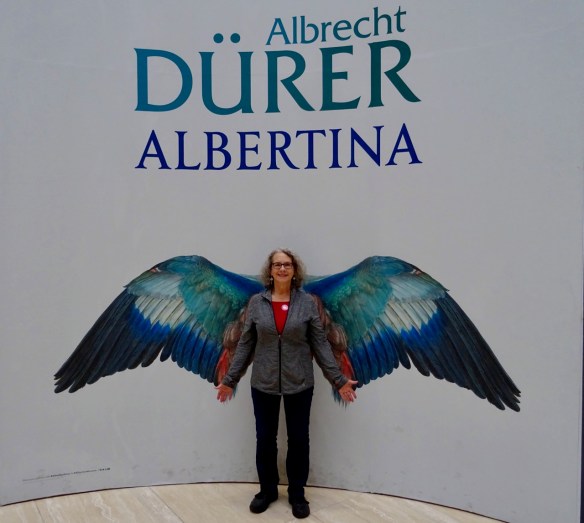
  One last photo at the Albertina. Seems I want to sprout wings this trip!
 We spent four hours here today and I could easily have spent much more time here but this will have to do. I bought the catalogue for the exhibit. It is huge, and weighs 6.6 pounds! Good thing we are near the end of our trip!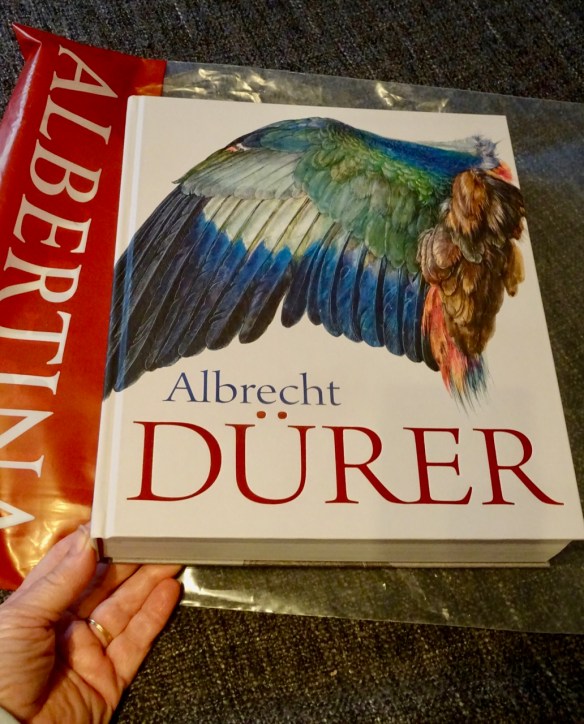
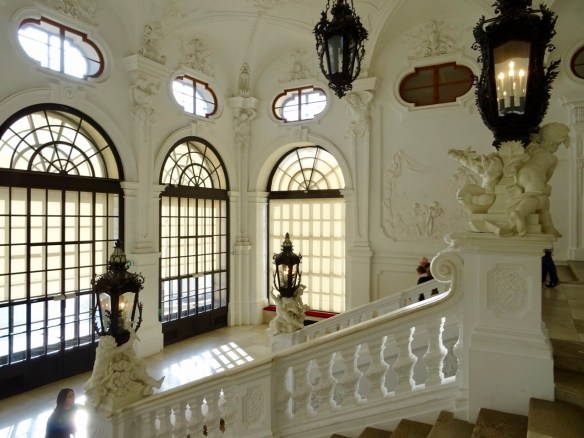 and the beautiful Marble Hall.
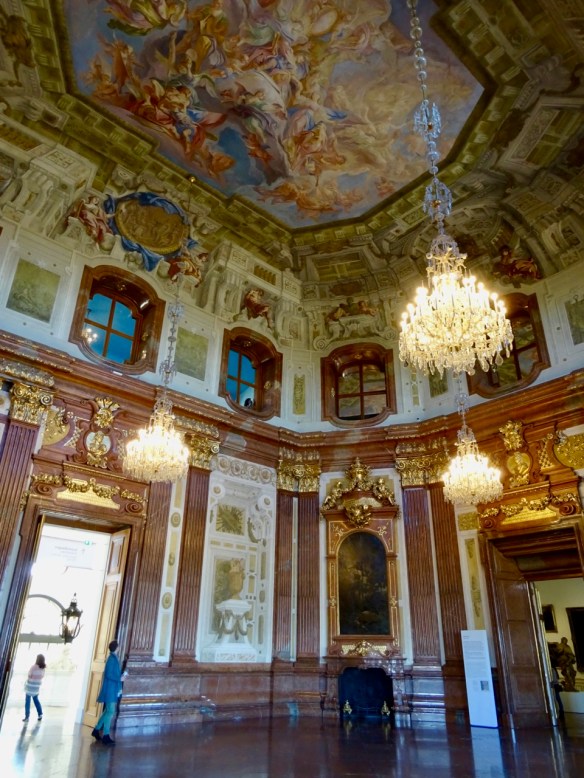 I particularly wanted to see Gustav Klimt’s The Kiss, but was pleased to find his Judith painting here as well.
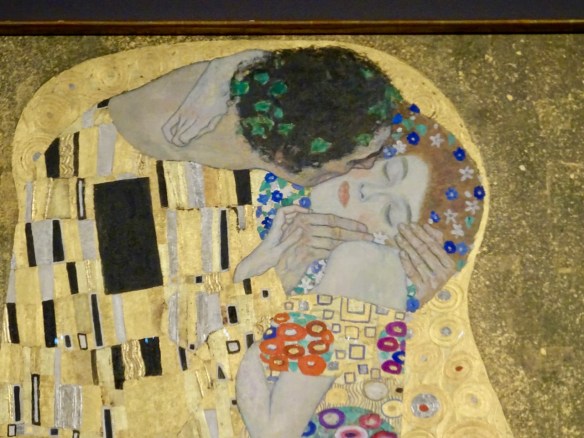
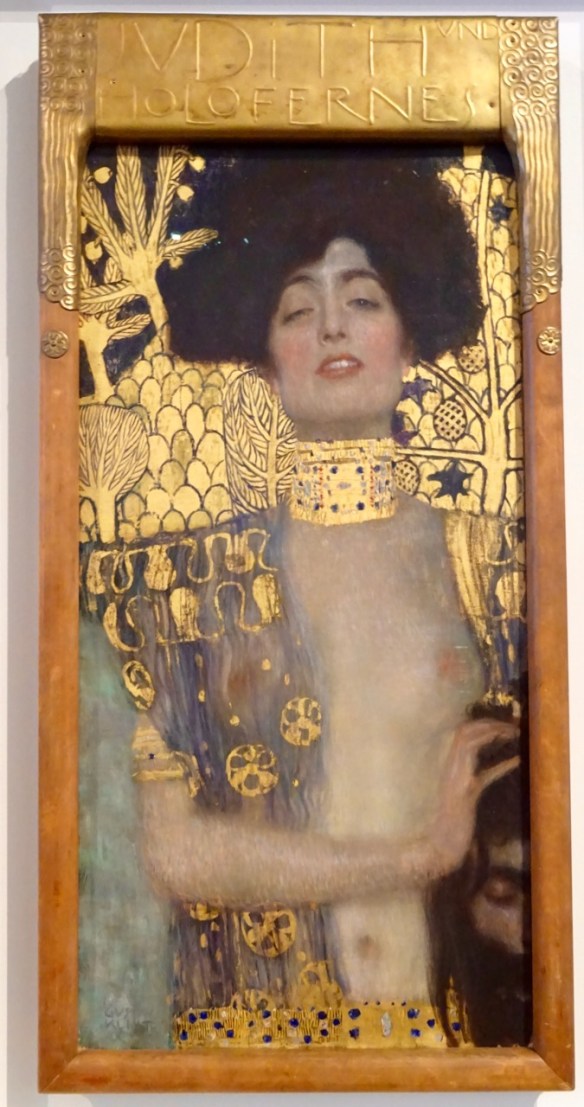 The Kiss is one of Klimt’s most well known paintings. It is a large painting, 183 x183 cm.
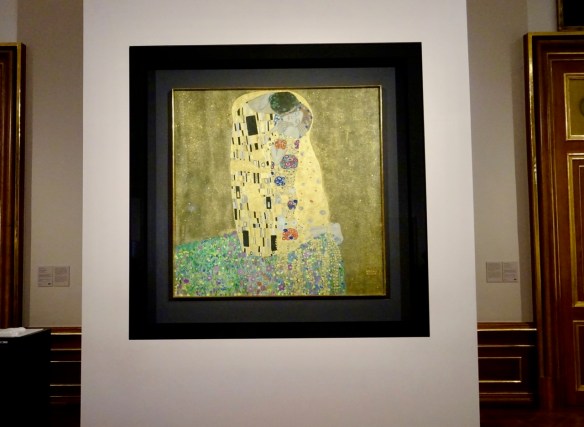 It is nice to be able to see the painting details up close.
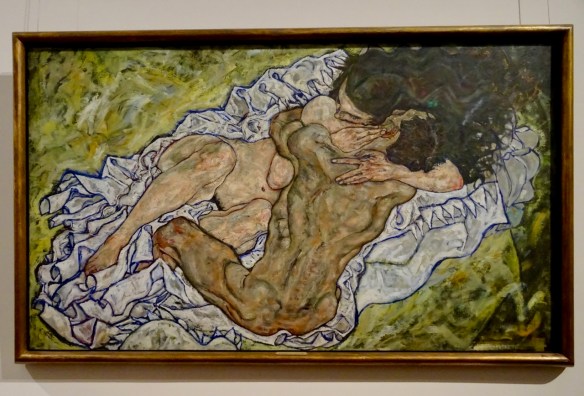
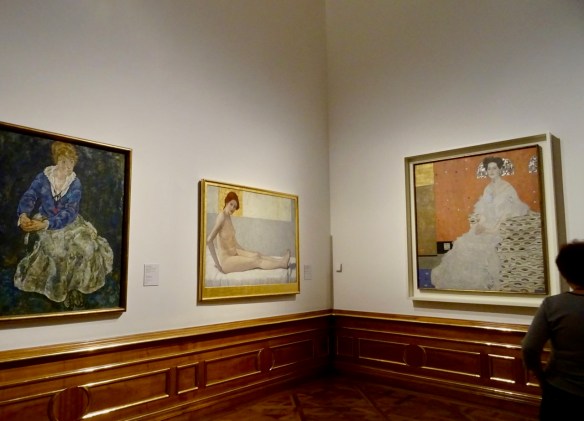
 I am also surprised by how many Egon Schiele paintings are on display. It is quite special to be able to see the original paintings of some of my favourite works by these two painters. I didn’t realize that these paintings were so large. Looking at reproductions in books can be deceiving. The Embrace and….
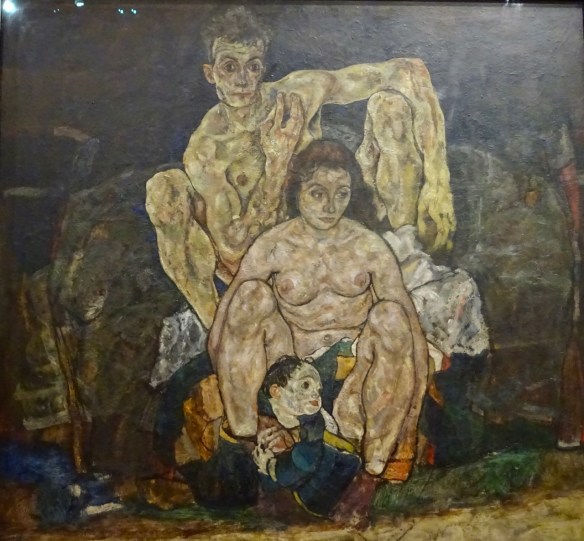
  the Family are both much bigger than I imagined…
 as are these paintings.
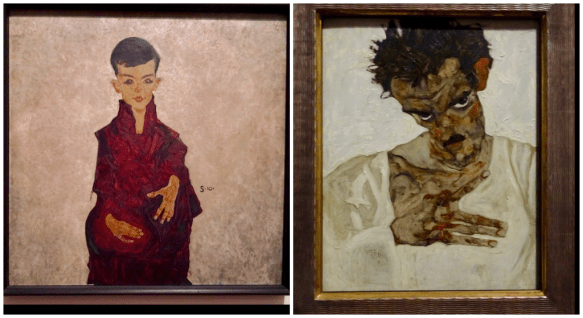
 Schiele’s Self Portrait is the smallest painting, about 41 x 33 cm.
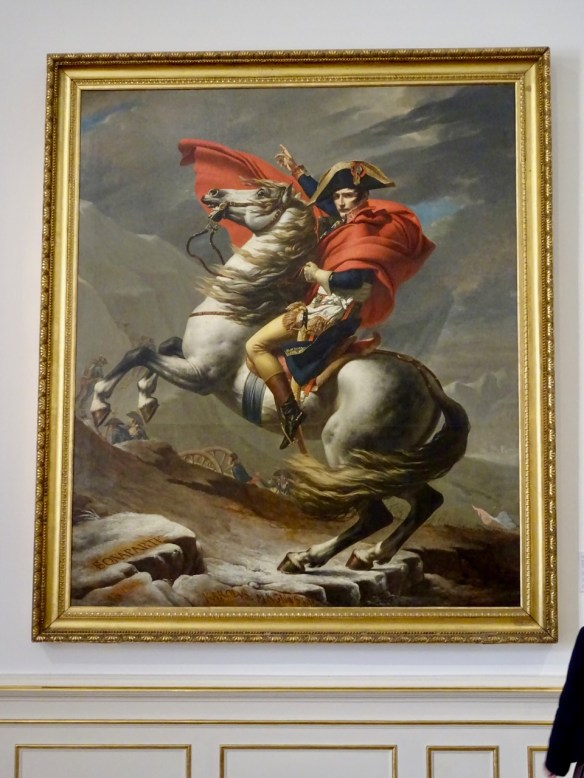
 I didn’t know Jacques-Louis David’s painting of Napoleon was here either. I am so glad I was able to visit this museum. This painting is enormous, 272 × 232 cm!
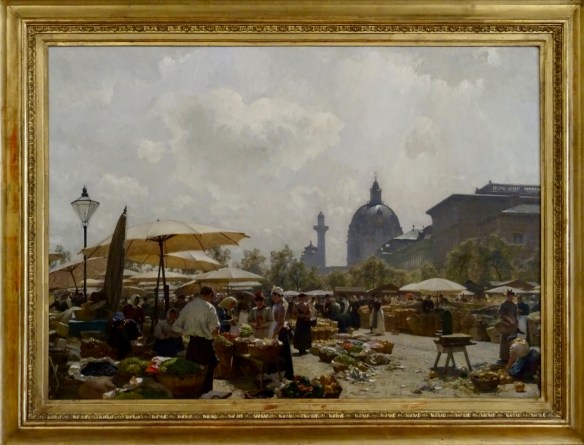
 This painting shows the Vienna Naschmarkt in 1894. It has changed a bit over the years!
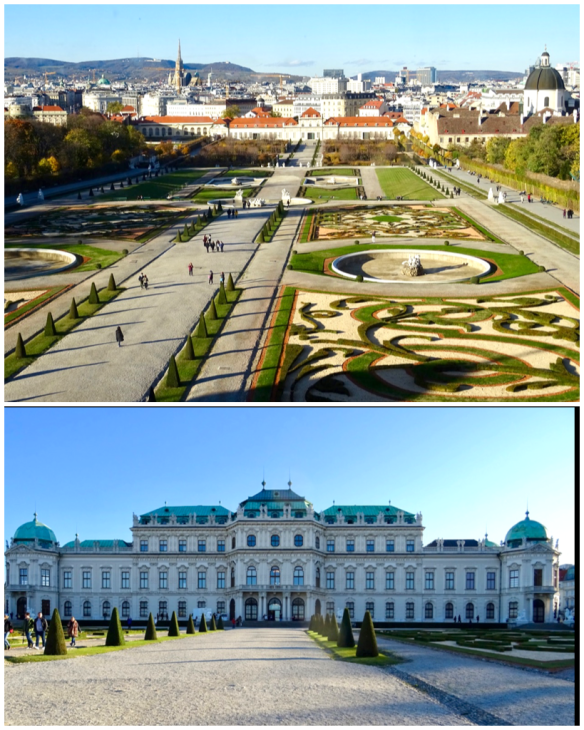
 We meet up in the gardens outside the Belvedere and then walk towards St. Charles Church.
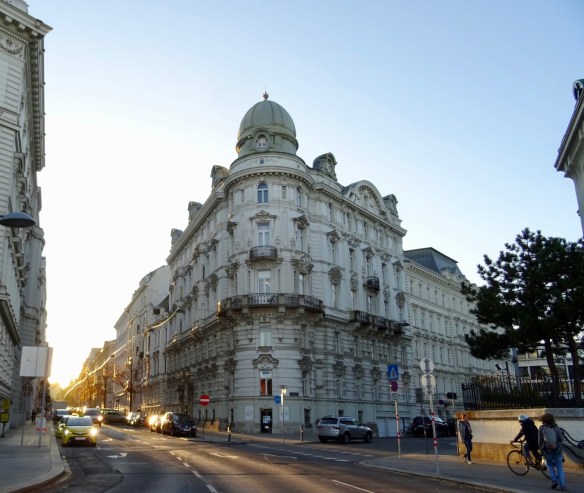
  There are so many interesting buildings along the way.
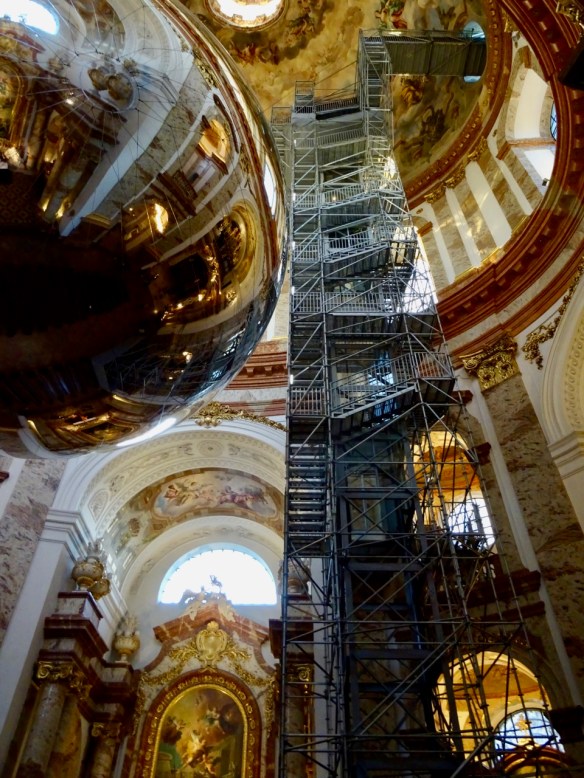
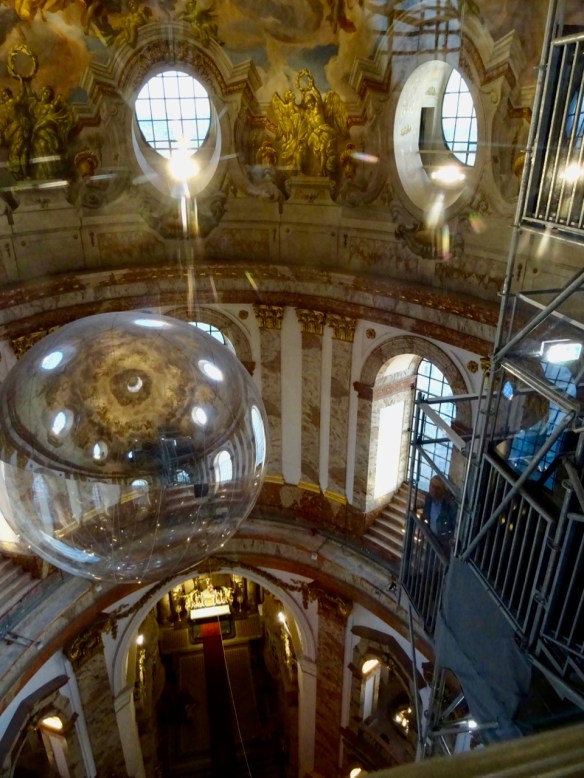
 We had a huge surprise when we entered St. Charles Church. Two enormous floating mirrored balls that reflected the church…
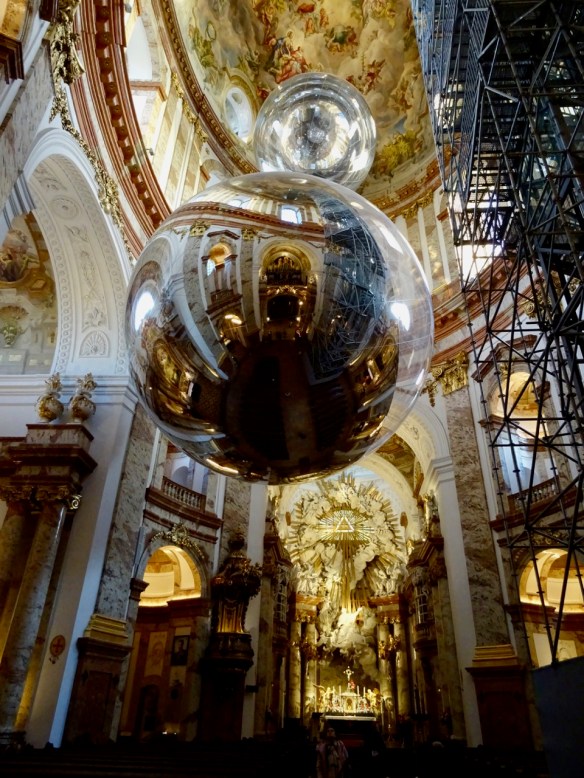 and us. We are almost in the centre of the reflection but we are very tiny. “Aerocene” is a contemporary art installation by Tomas Saraceno, an Argentinian artist who lives and works in Berlin. The floating reflective balls are 10 and 7 metres in diameter.
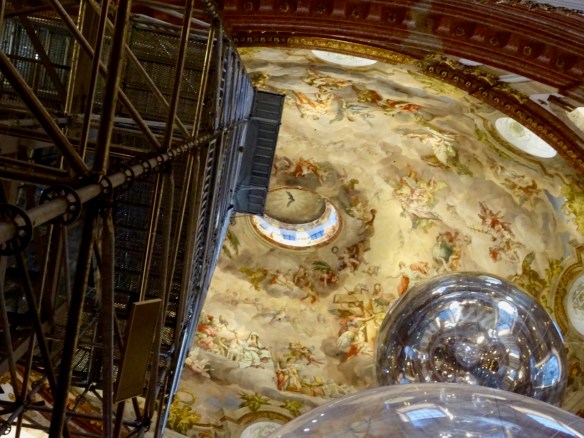
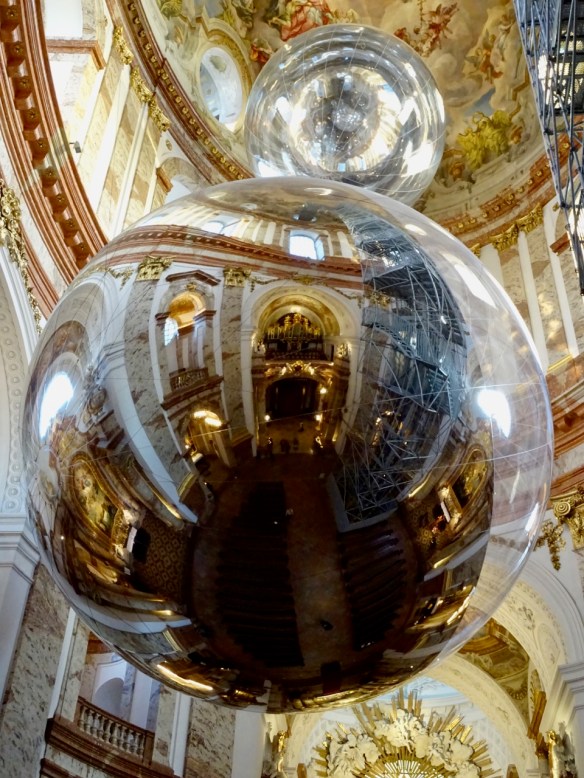 Then we notice the scaffolding that goes high up into the dome, and that is where we are going to go! We thought the elevator ride we got a ticket for would be inside a bell tower. Nope! We ride to the top of this scaffolding and then climb a bit further, onto that platform you see leading into one of the round windows in the dome!
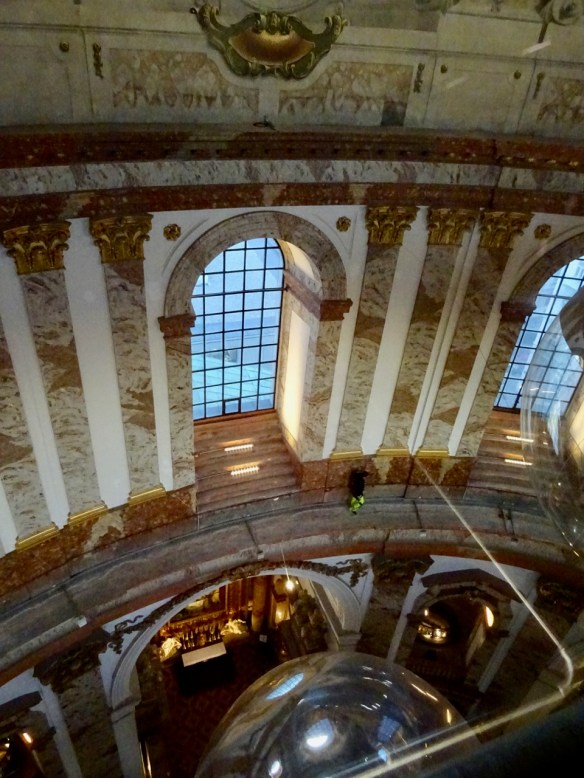
 Looking down from the top of this ‘elevator’ we notice a workman adjusting lights high up in the dome, yet still far below us!
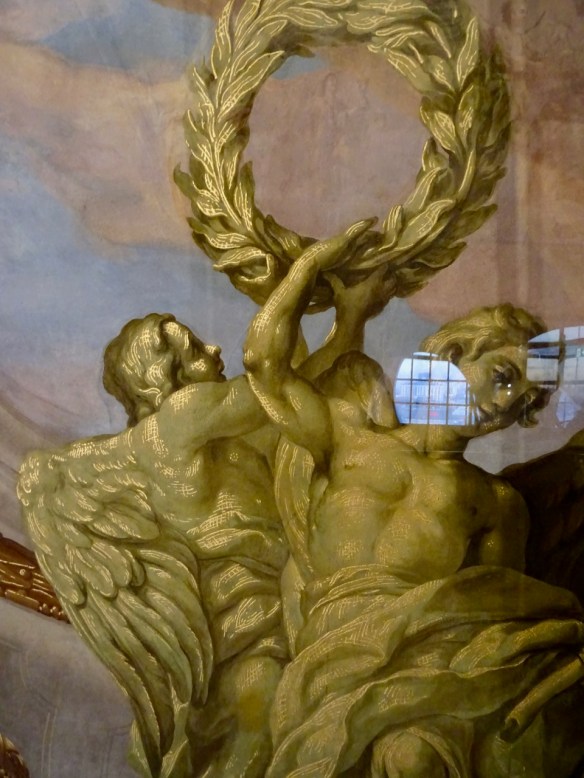
 We have a great view of the dome paintings. It is interesting the way the gold highlights look up this close…
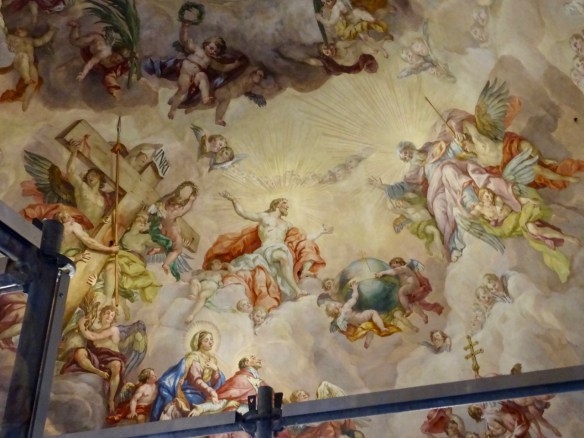
 and we have a great view of the other dome paintings. We are crazy high up!
 Bob walks back down to this viewing platform so I can get a photo. Notice how he is suspended…nothing below him!
 This photo shows the platform that Bob was standing on in the last photo.
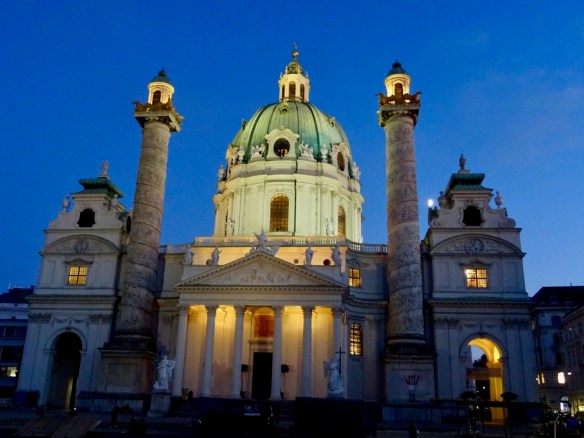
 We spent quite a lot of time way up there in the dome, and it is getting dark when we get outside. If you look closely you can see some people standing in the round window on the dome. That is the window we were standing in! What an amazing experience. There was restoration work carried out in the dome and the elevator is being kept for a while. The fee to ride up into the dome is a way to make more money for further restorations.
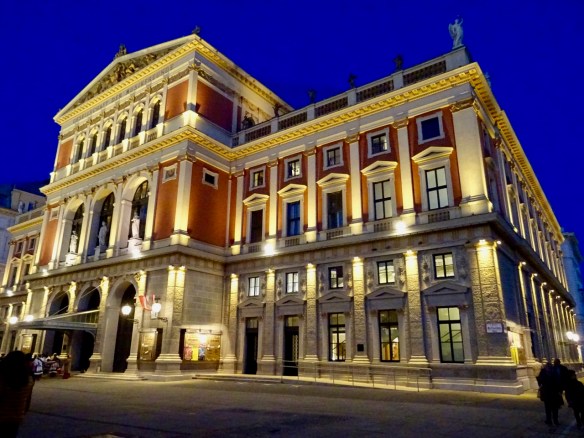
 Walking back towards the metro we pass the Opera House…
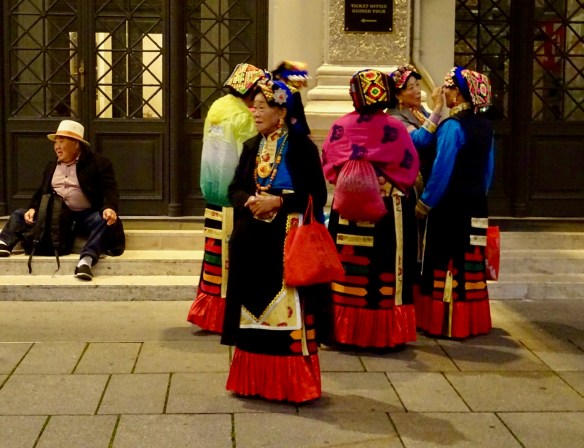
 and take photos of these performers from Tibet. They have a performance later tonight and were taking publicity photos outside the Opera House.
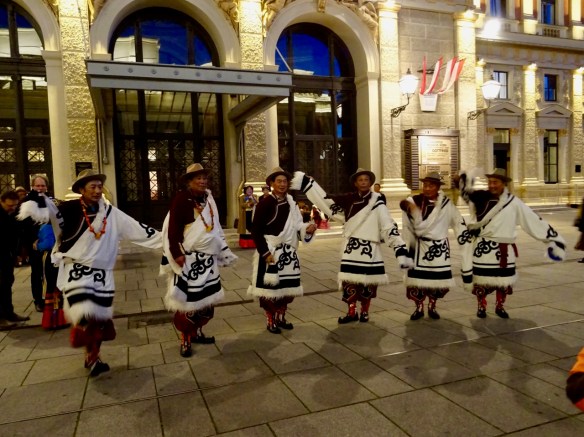 While the men posed, some of the women were busy applying their makeup.
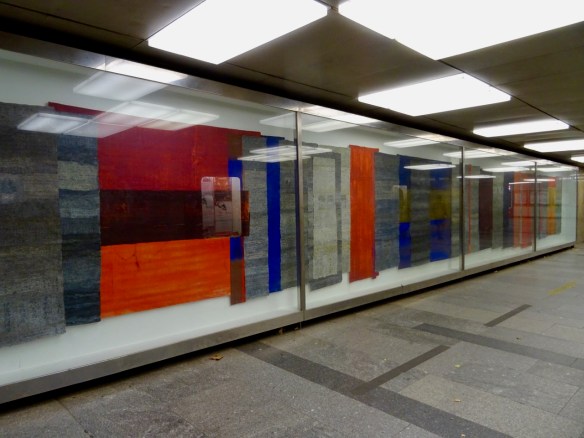
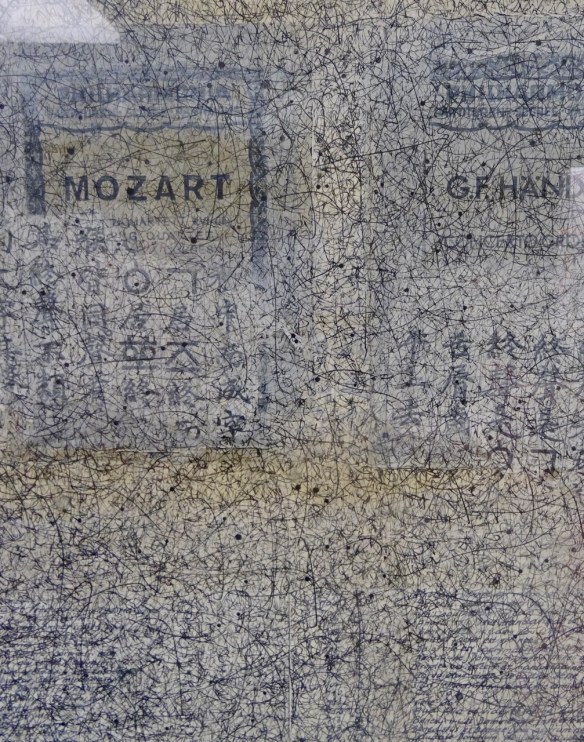
  This is a a huge paper art installation we pass in a walkway near the metro.
 A close-up shows lots and lots of writing, musical notations and random marks.
 We get home, have dinner, then I head off to a drop-in drawing session with a Meetup group at a pub called Monami.
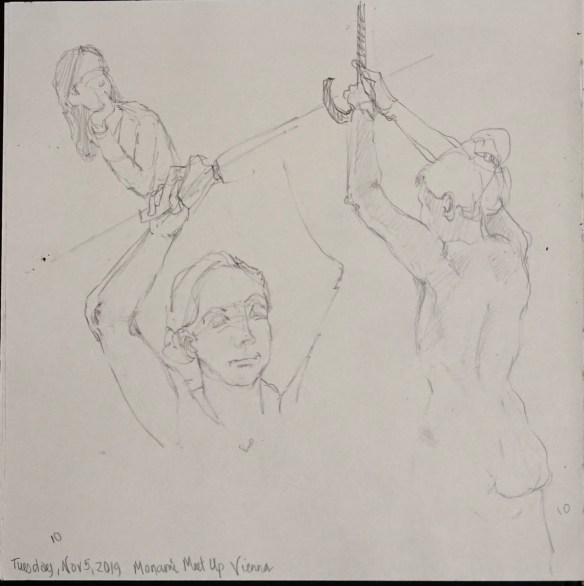 I had coloured some of the pages in my sketchbook at home before the session. Interesting to draw on but they don’t photograph very well.
 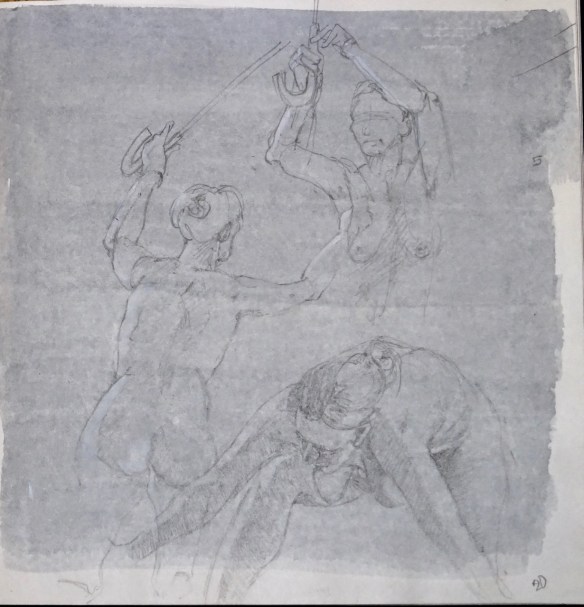 We were pretty much rubbing elbows as we drew and my views weren’t always great but it was lots of fun.
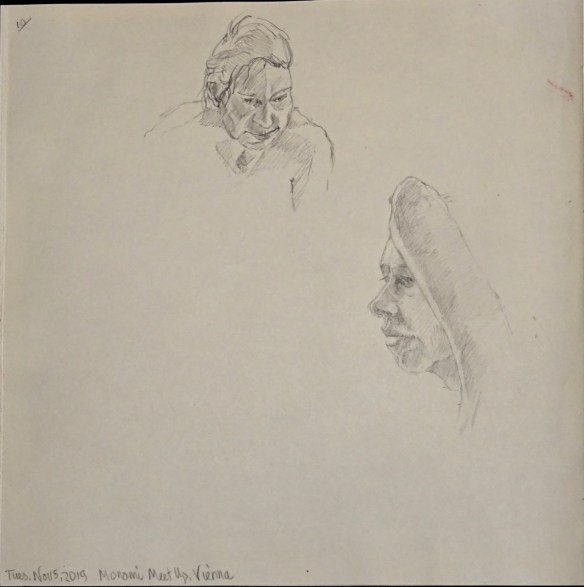 I finished the session with a 20 minute leg study. I felt quite comfortable going out in the evening by myself. The metro is easy to navigate and there were lots of people about.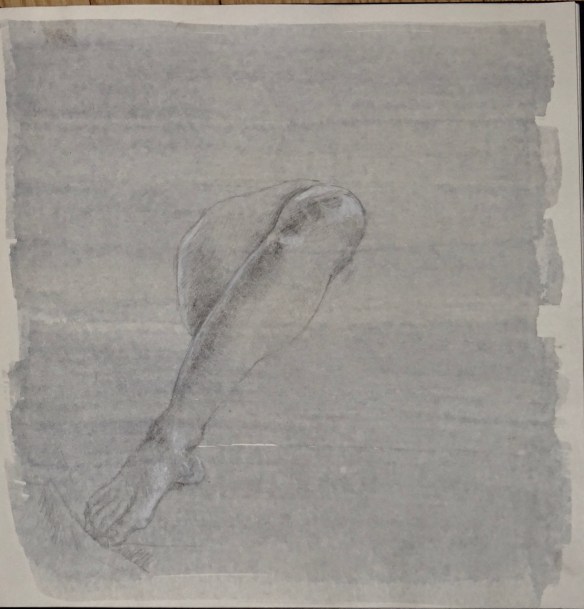
 This central four-storey building was the beginning of the palace and was built in 1644. Over the years numerous additions were built until it reached its present configuration in 1776.
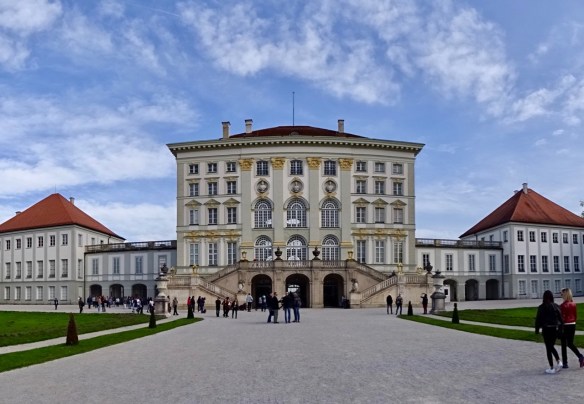 The Nymphenburg Palace was originally a summer residence for the Bavarian rulers. This is the Great Hall. Musicians would entertain guests from the gallery.
 One of the many rooms with original furnishings.
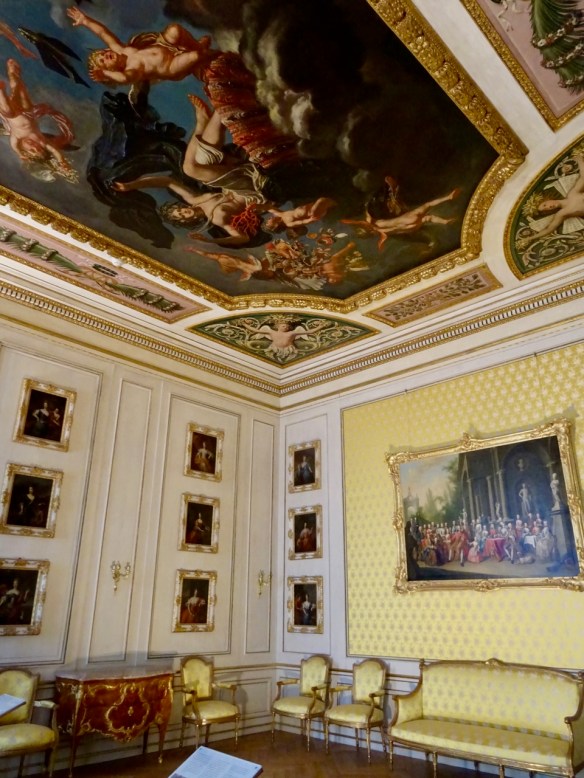 Many of the rooms are not that big and seem to serve as connecting passages to other larger rooms.
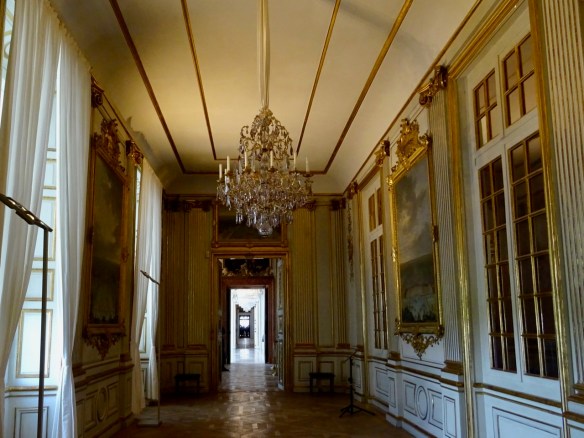 The south apartment bedroom of the Electress, who was the consort of the king.
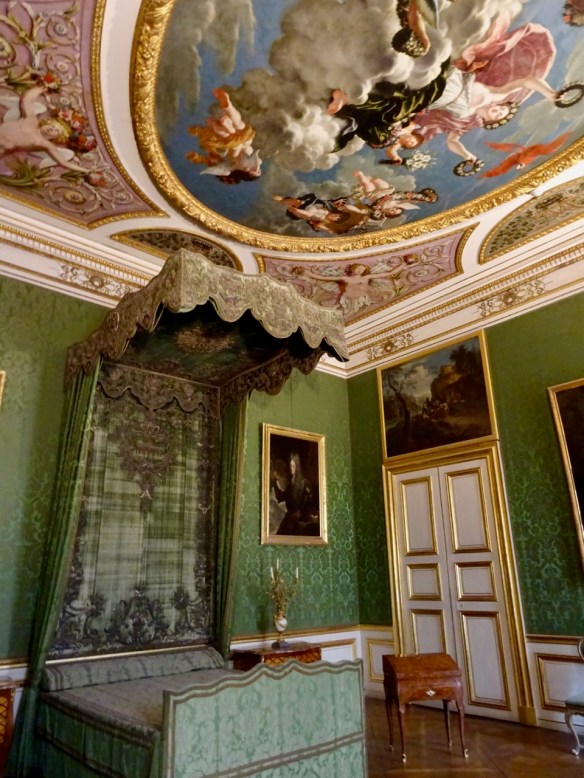 Our reflection in the bedroom mirror.
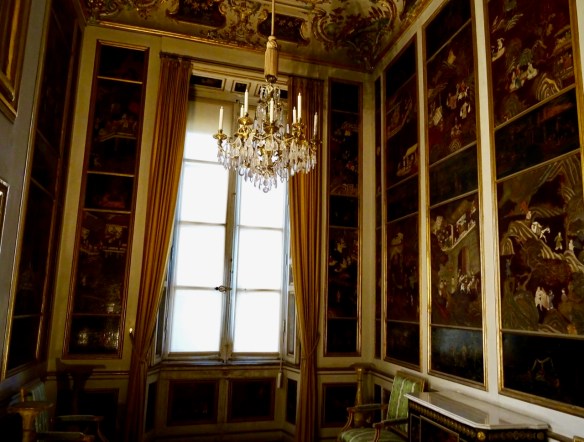
 Every palace has to have a Chinese inspired room.
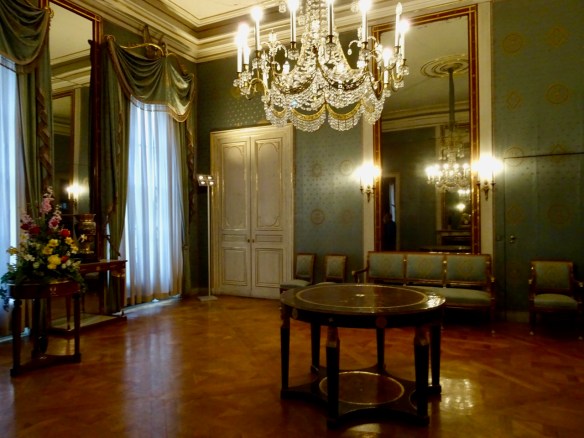
 The audience room of Queen Caroline…
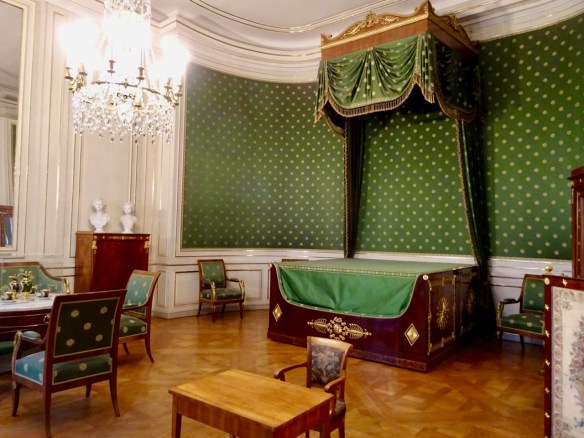
 and her bedroom have their original furnishings. This room is where King Ludwig II was born in 1845. The bed is hidden by a cover on a high frame which was spread over the bed during the daytime.
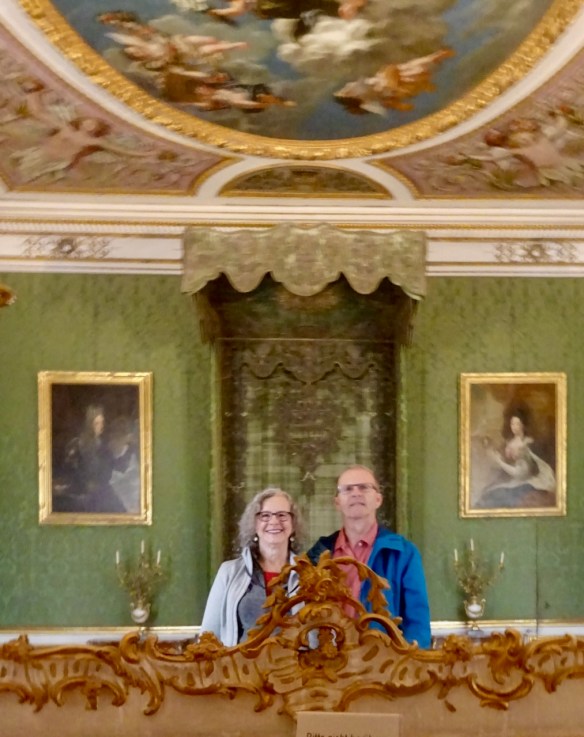
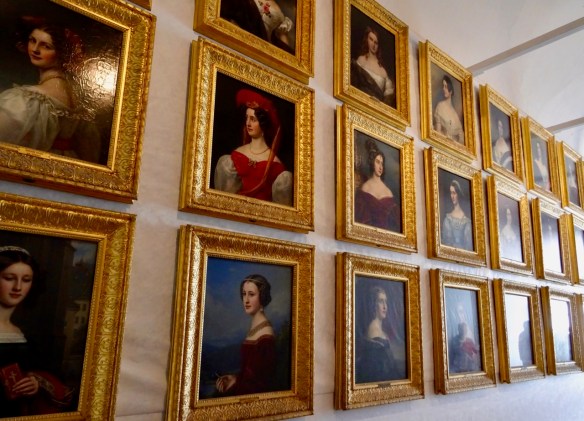
 The official Hall of Beauties is under restoration but the paintings are on display in a corridor. From 1826 to 1850 King Ludwig I had a series of 36 portraits painted of what he considered to be the most beautiful women. Beauty was considered to be an outward sign of moral perfection!
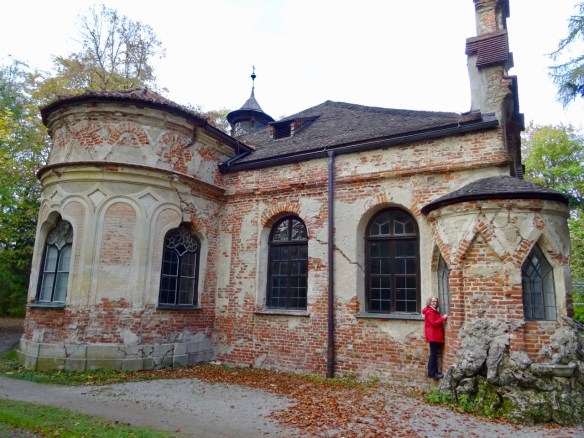
 We finish our tour of the palace rooms, and go explore the grounds. Unfortunately we realize that the park pavilions closed for the season a week ago. I do manage a peek inside the Magdalene Hermitage, which was a pavilion used for contemplation.
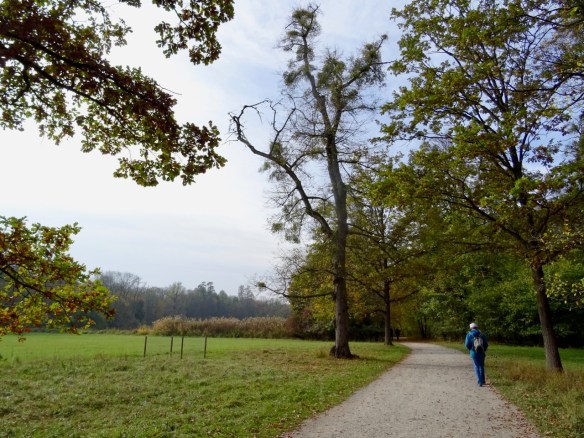
 Much of the grounds are in the style of an English park, with paths…
 and little bridges over water features.
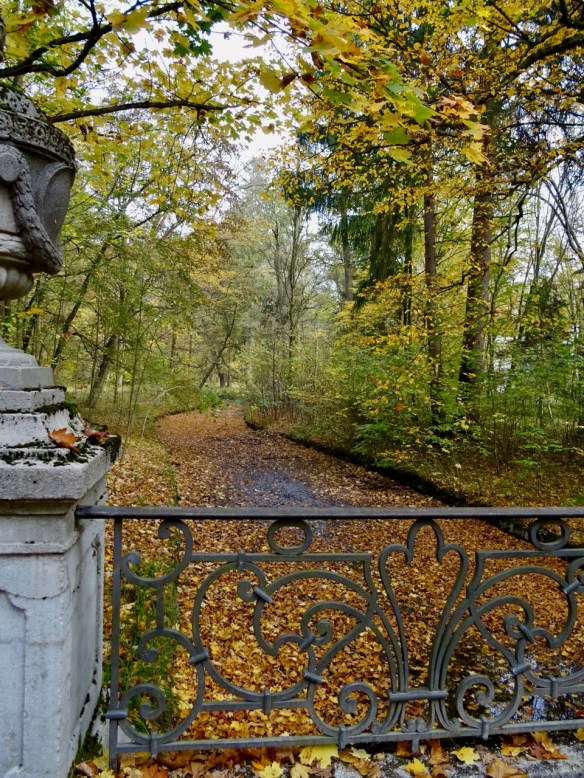
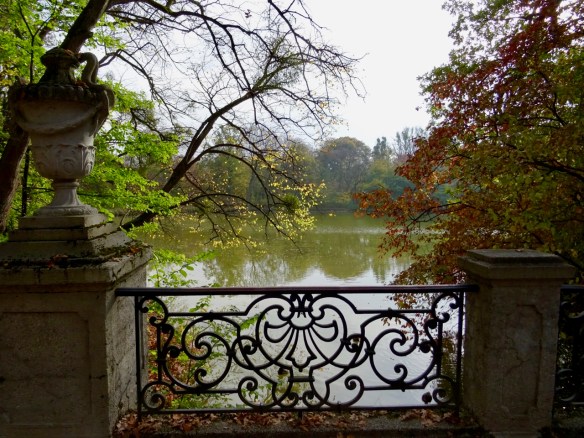 This creek was so covered with fallen leaves that the water was barely visible.
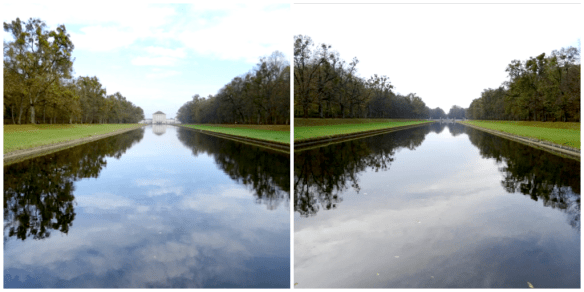
 This shows just how long the canal water feature is…looking towards and away from the palace on a bridge that crosses the canal. At one time gondolas sailedd these waters. Neat reflections too.
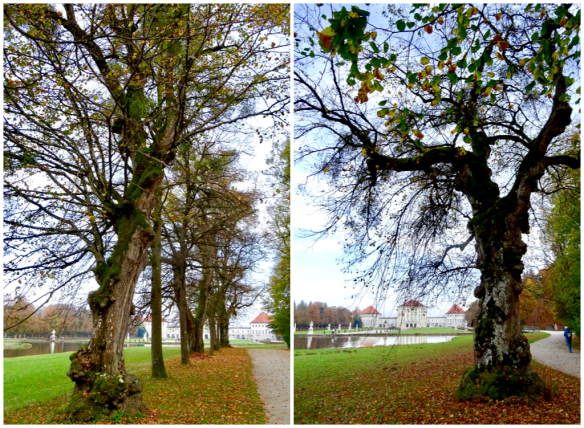
 Walking back towards the palace along a tree lined path.
 I liked the reflection of the palace in the water.
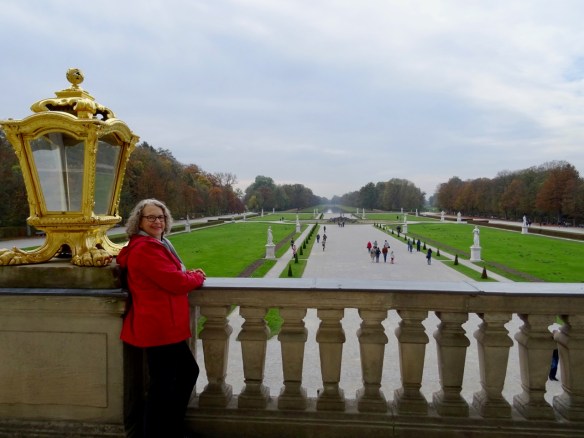
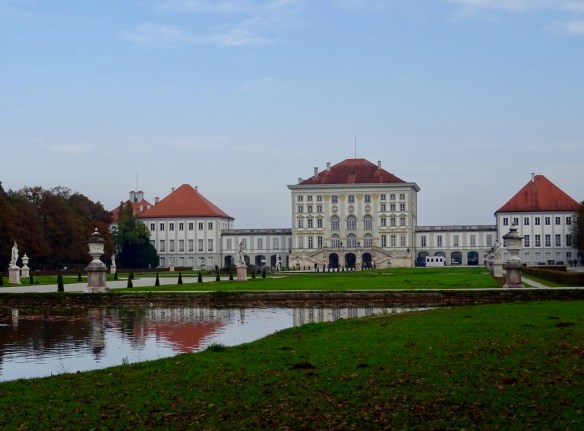 Looking out towards the garden from the Palace steps.
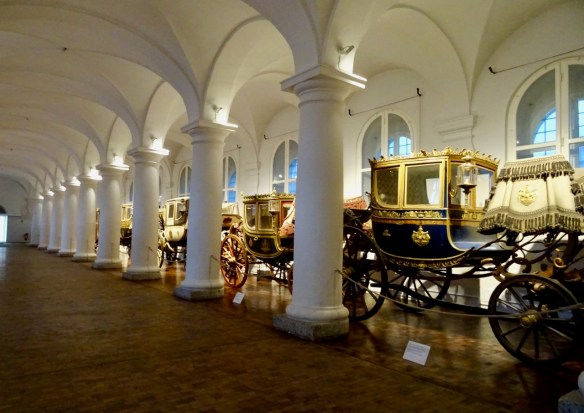
 It is almost closing time, but we manage a quick peek inside the Carriage museum, which is one of the most important museums of court carriages, travel and equestrian culture in the world. The Coronation coach of Emperor Karl VII is here…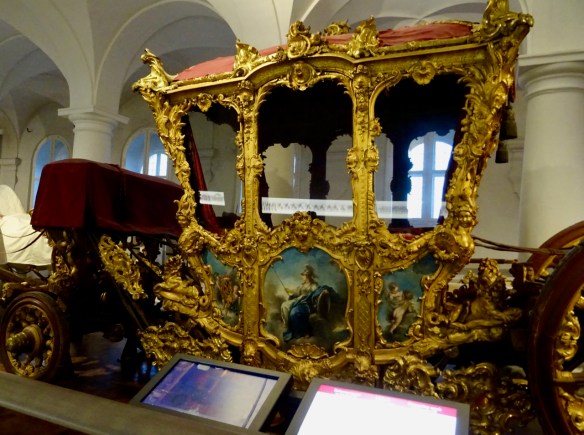
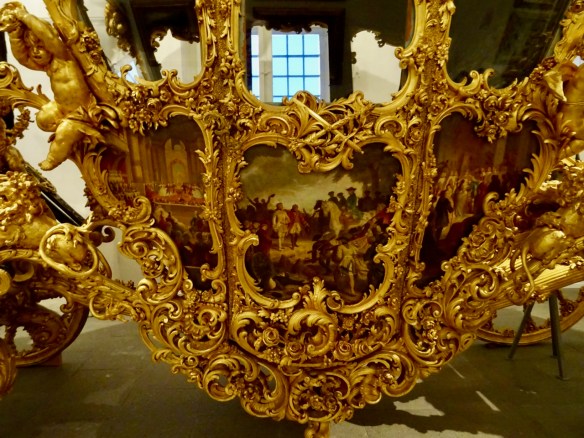 We can only begin to imagine how much these coaches cost!
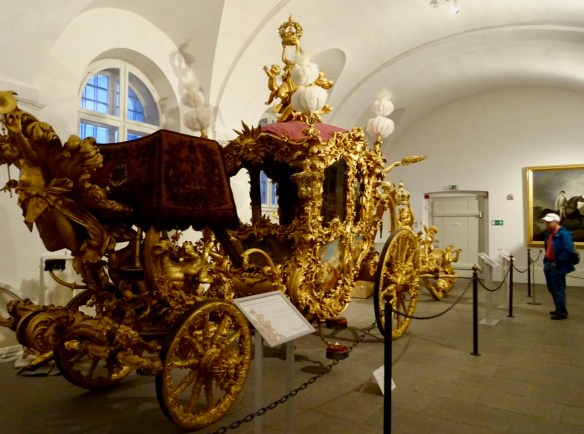 Besides dozens of coaches there are numerous sleighs on display.
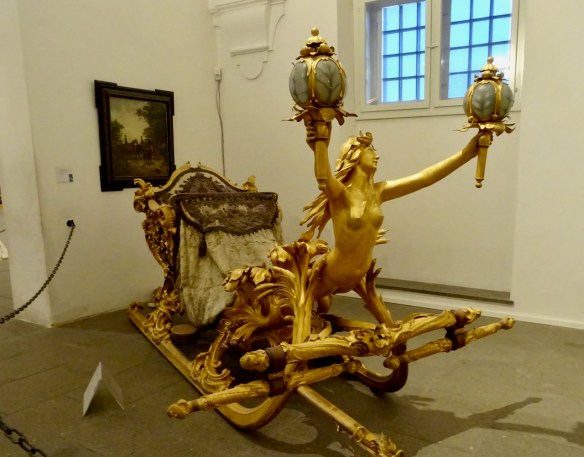 Parades and competitive games with these carousel sleighs were a popular winter amusement at court. Women would sit in front of a male driver and try to hit rings or paper maché figures with a lance or sword. Notice the rear view of the sleigh in the mirror.
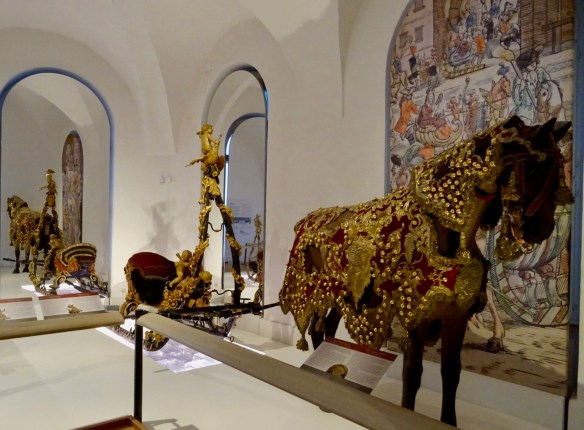 Just a few of the many coaches on display in one of the halls.
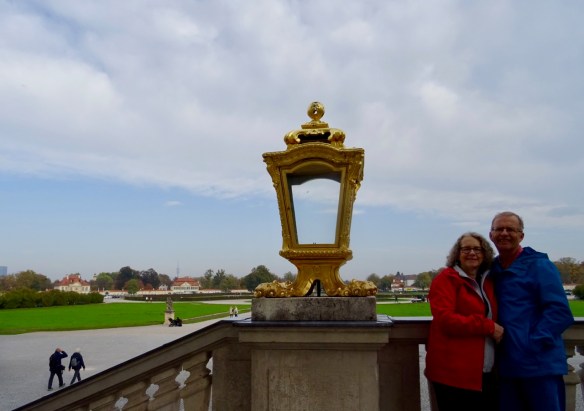
 One last selfie before we leave.
 and one last look back towards the front of the Palace…
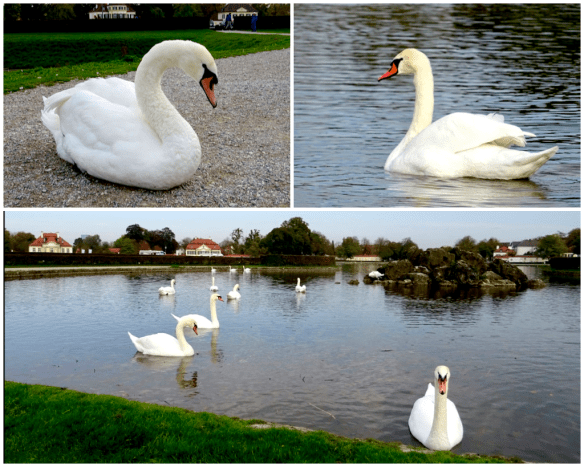
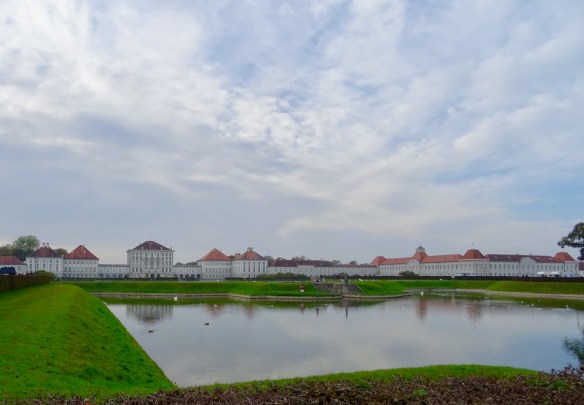 with a photo stop at the swans.
 I have life drawing tonight, so we head toward the metro and after checking out my route, Bob heads for home and I head towards my drawing session. I have a bit of time so I sit at the Sheraton Hotel having a cup of tea and doing a bit of sketching.
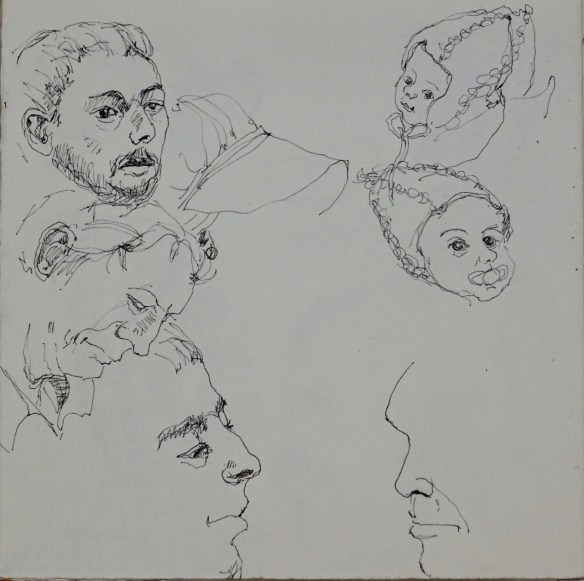 These were a bit better.
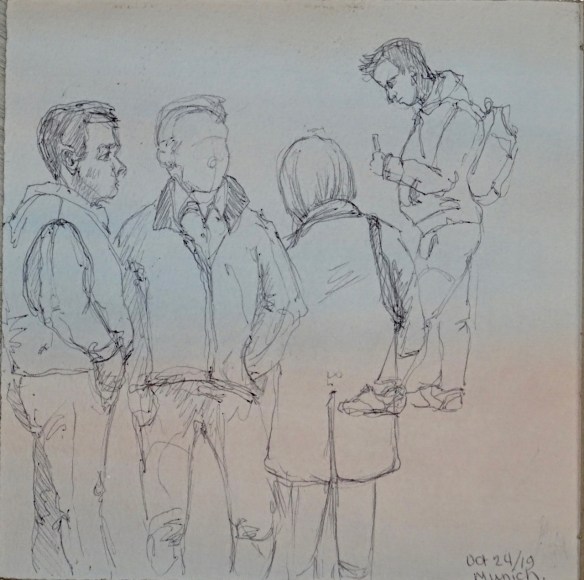 Sketches from the Sheraton Hotel.
 My first drawing at the Meetup session. Still having some issues with proportions and the head placement in relation to the body.
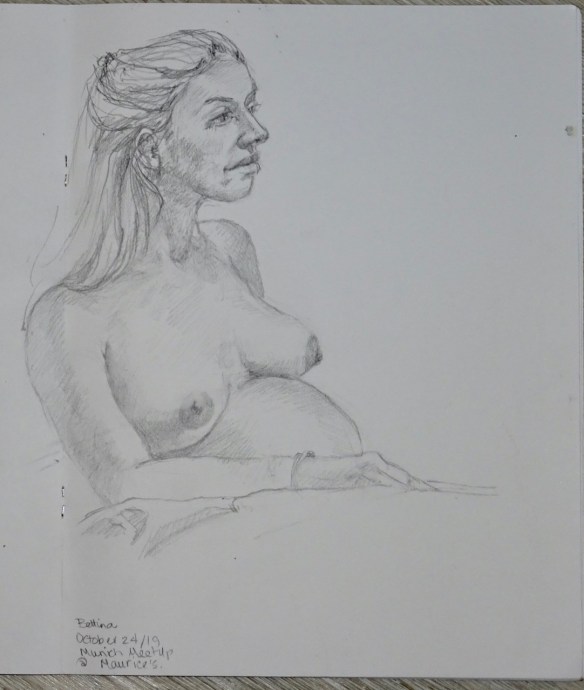 I started again after our break and did this portrait which was better. Bettina, our model, really liked it and said that it looked like her.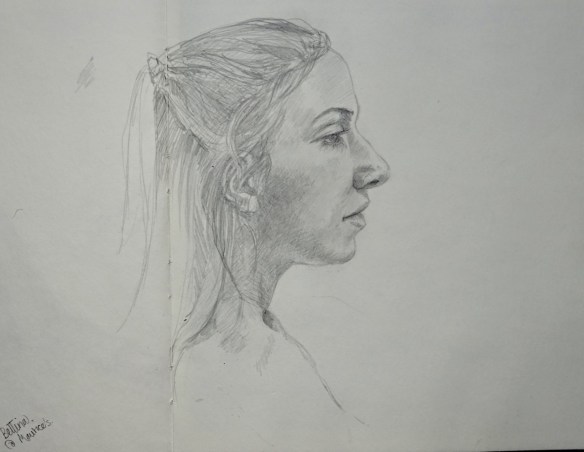
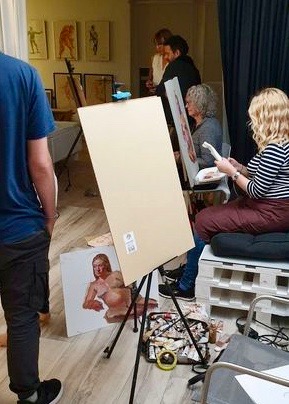
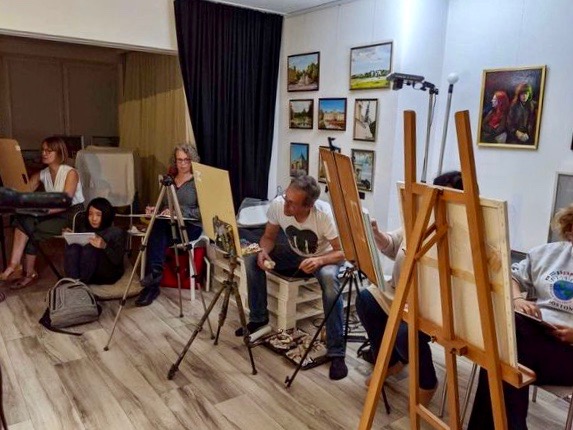 Here is our model, Bettina, she is very pregnant. How wonderful! It has been ages since I have had the chance to draw a pregnant model so this was an unexpected bonus.
 The drawing on the left is mine.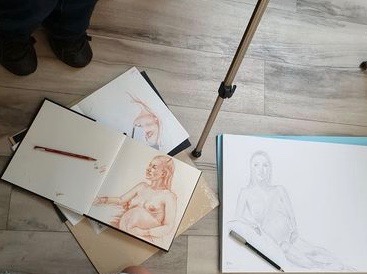
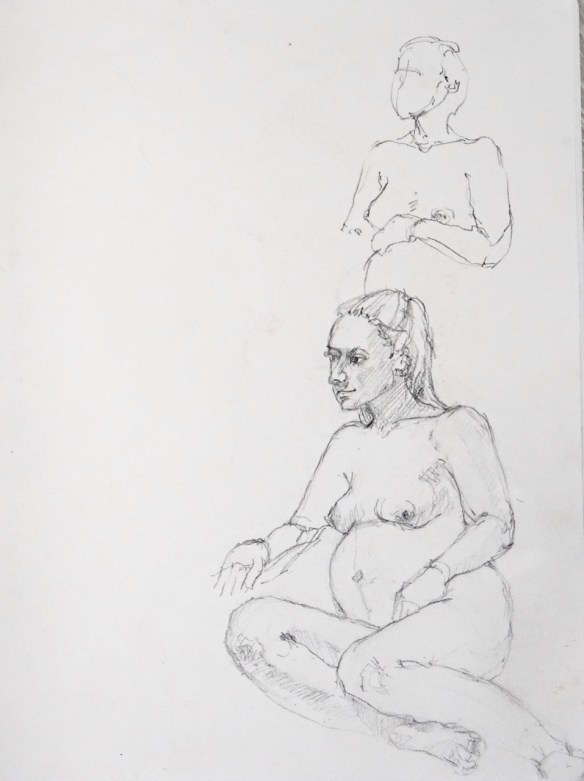
 I did a couple sketches to warm up.
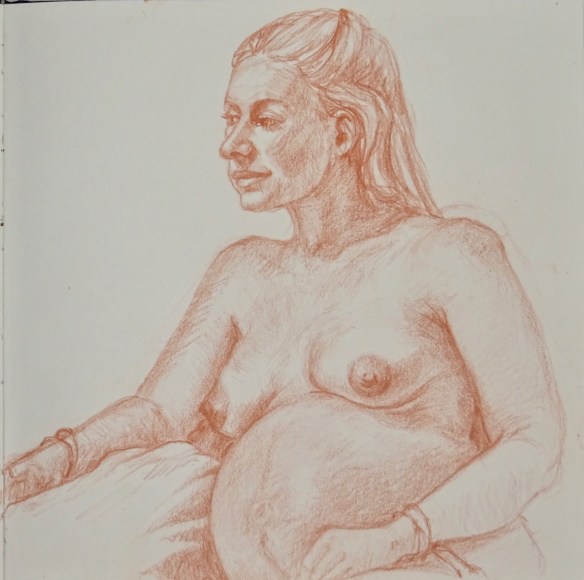
 Then spent about two hours working on this drawing.
 Bob came to pick me up after the session and on the metro ride home I did a bit more sketching.
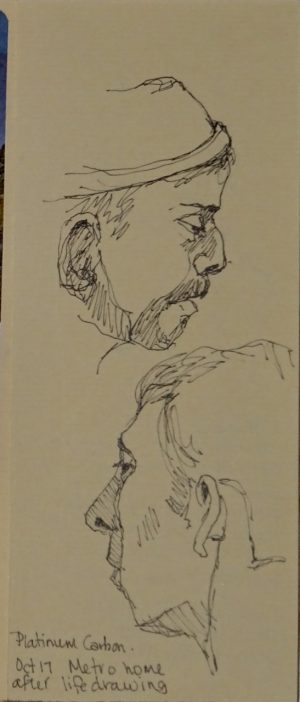 This was interesting, the older man with the facial hair was sitting right across the aisle from me and he was only on the metro for one stop so I sketched quickly hoped he didn’t notice that I was sneaking peeks at him. The young man with glasses did notice I was drawing him and he smiled at me, I smiled back and he tried not to smile as I continued sketching. As he got up to leave I showed him the sketch and he said something in German, then he smiled and said ciao, so I think he liked it.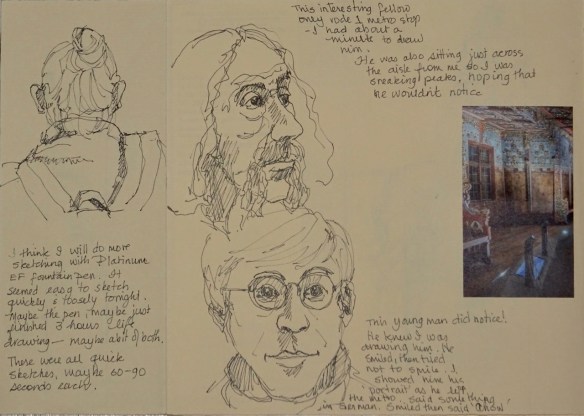
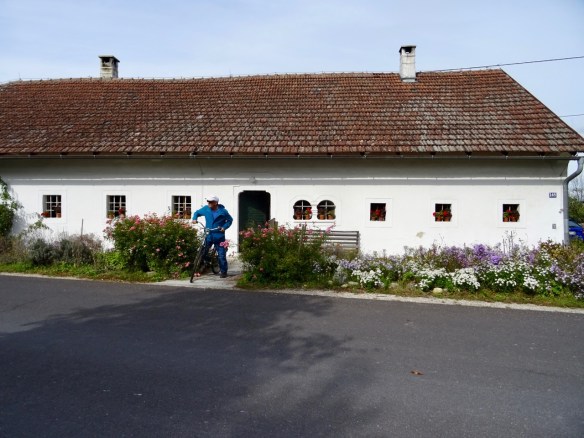
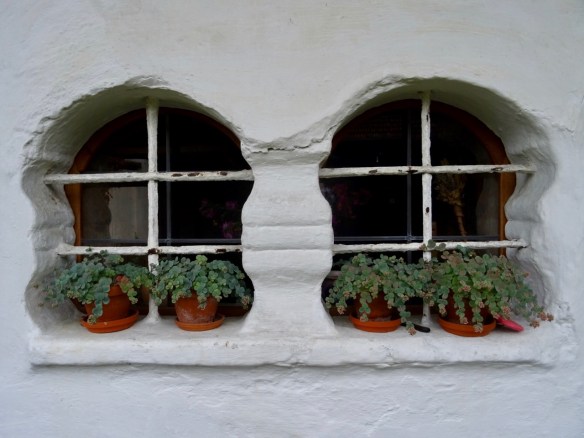
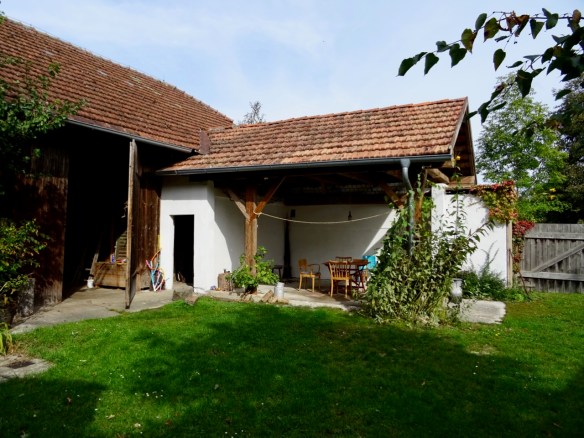
 Our bnb has a lovely wild flower garden out front and there was a little bouquet of the pink roses on our table inside. The green door leads into an entry area, and the three smaller windows are in our apartment.
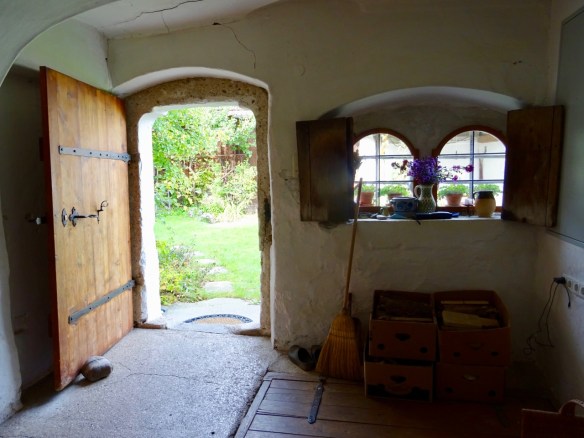
  The inside view of the two windows by the green door. I think the shutters must be original. The building is 400 years old and our apartment was originally a stable.
 This is the door opposite the green door, looking out to the back yard.
 The two big windows of our apartment from the back yard.
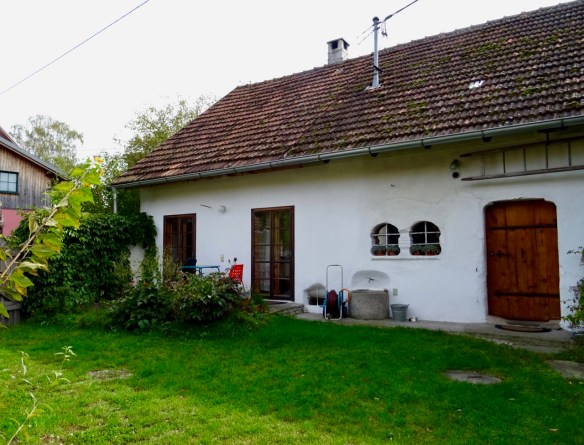 The farm buildings are connected to the house. The buildings form a square with the interior yard area you see here. There is a short fence with a wide gate on one side of this yard.
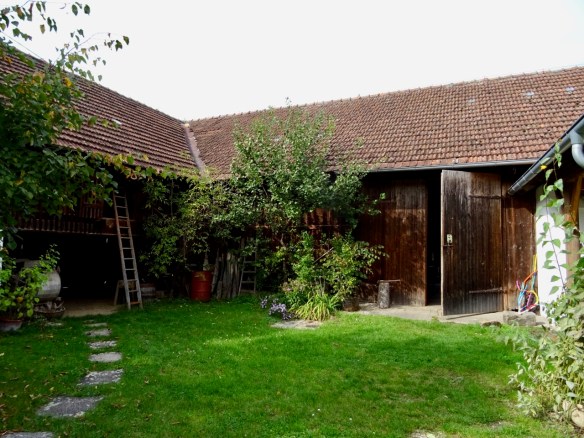 Everywhere I look there is something interesting.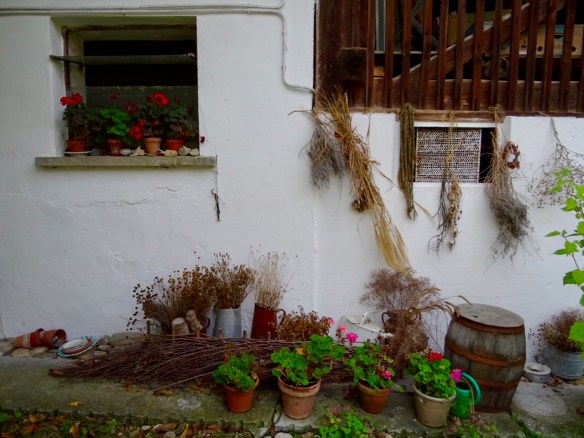
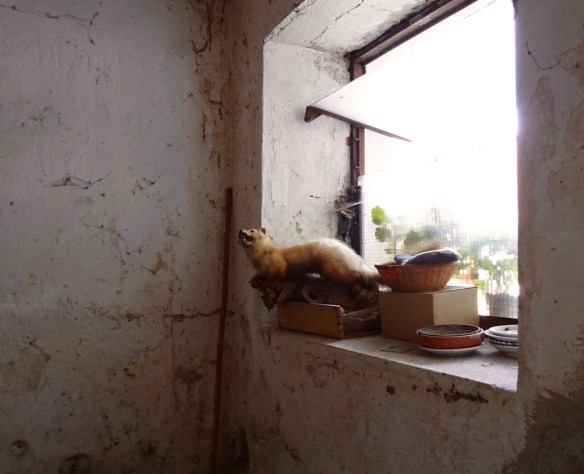
 I did get a bit of a shock meeting this fellow in one of the barns.
 There is a little sitting area if it gets warm enough for us to enjoy it.
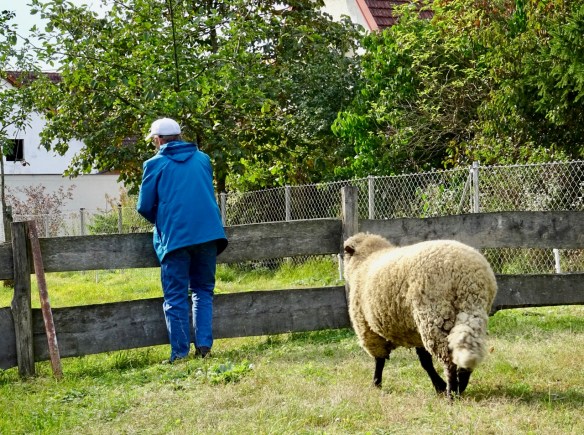
 I spent the afternoon with my three new friends. It took a while for them to get used to me, but they love bread! A few slices helped convince them that I was pretty harmless.
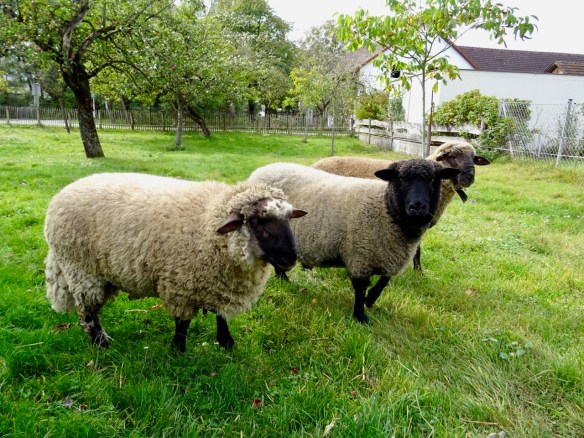 I spent a couple hours observing, drawing and taking lots of reference pictures. These sheep do not have wool that is useful for spinning. The fibres are too short, so they are raised for their meat. I had never seen sheep with undocked tails before. I had no ideas their tails were so long. At times they looked quite dog like. They are also very fidgety models!
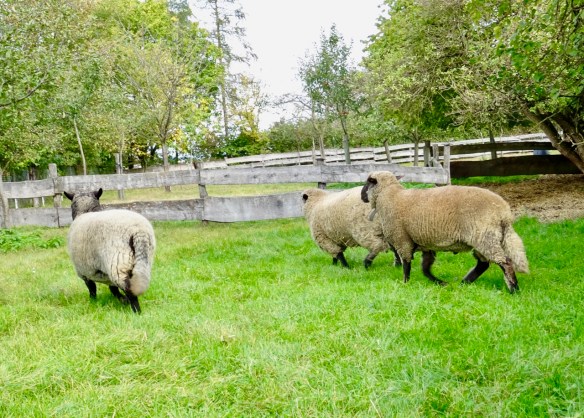 When Bob gets back from his ride he makes friends with this fellow but the other two want nothing to do with him. This sheep is nine months old and the poor guy doesn’t realize he will be butchered soon.
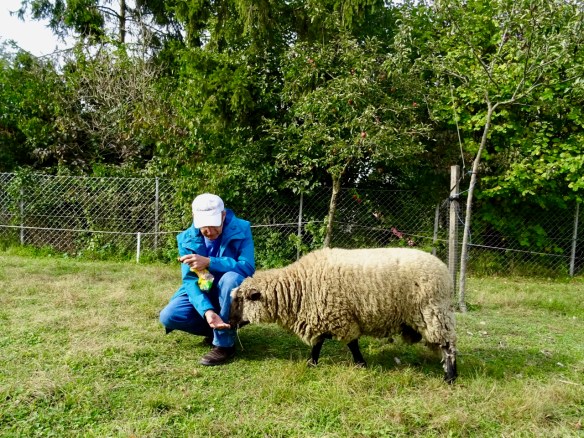 His new buddy follows Bob, hoping for just a bit more bread.
 Years ago I found an old copy of Henry Moore’s Sheep Sketchbook and I have wanted to draw sheep ever since. I just had no idea how difficult they would be to sketch. Seems like my idea of what a sheep should look like just isn’t what these sheep actually look like!
 trudymason.com