Day 35, Sunday, September 29, 2019
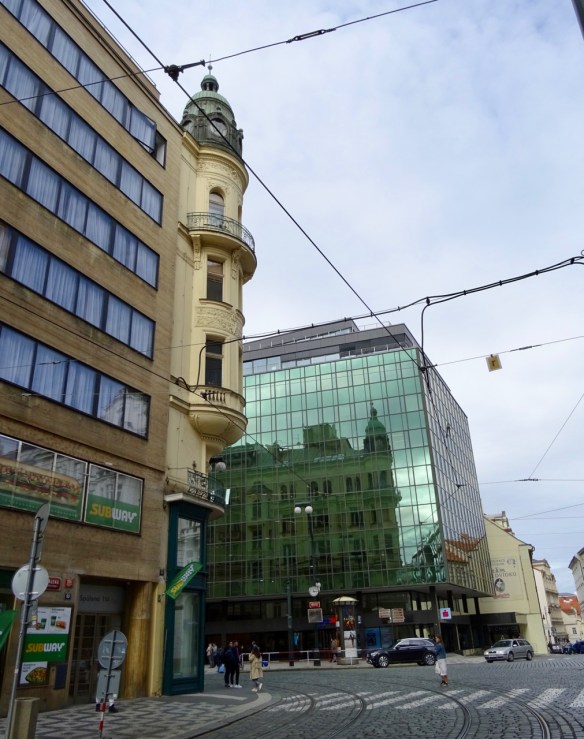
Prague’s combination of old and new buildings is interesting. Sometimes the new buildings offer great reflections of the older buildings.
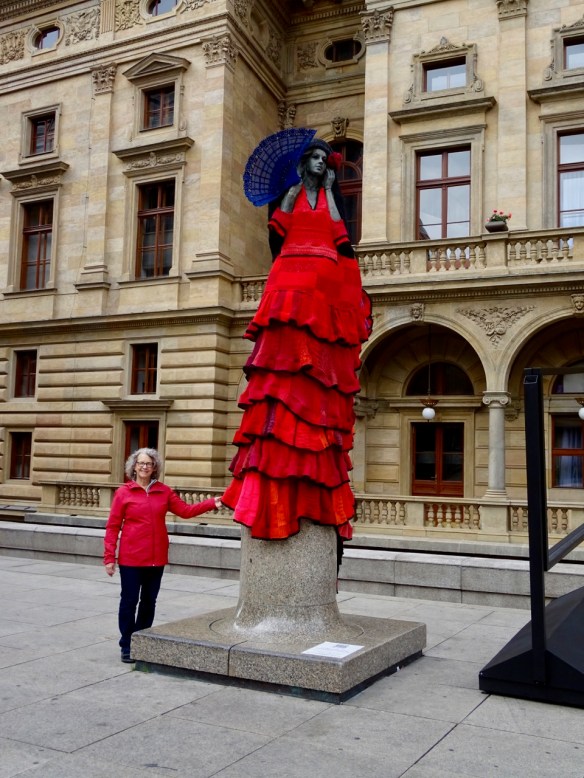
 This knitted sculpture ‘Carmen’ is the creation of Eva Blahová, an artist and scenic designer living in Prague. 33 knitters from all over the Czech Republic were involved in this project and they knit over 50 meters of red ruffles to dress an existing sculpture. It is pretty impressive.
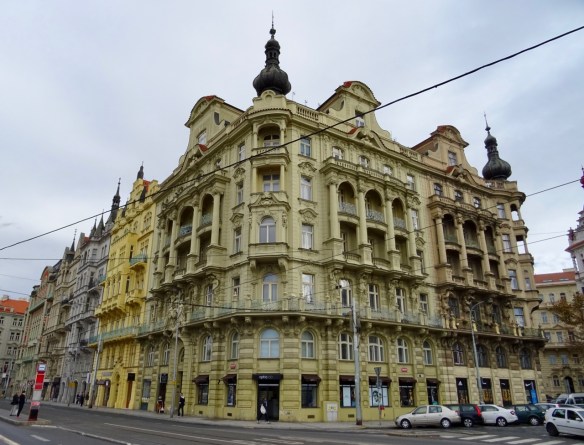
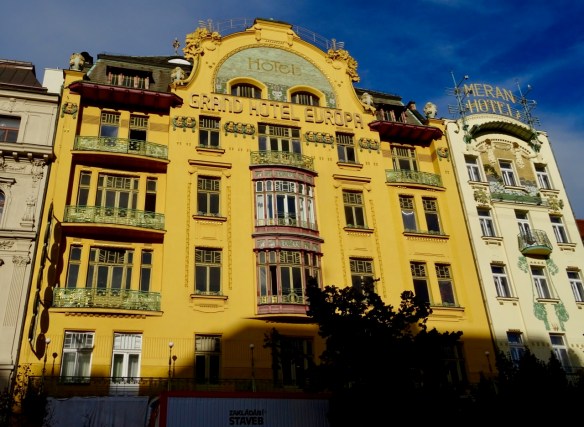
 Walking towards the “Dancing House’ we pass beautiful Art Nouveau buildings with very grand entrances.
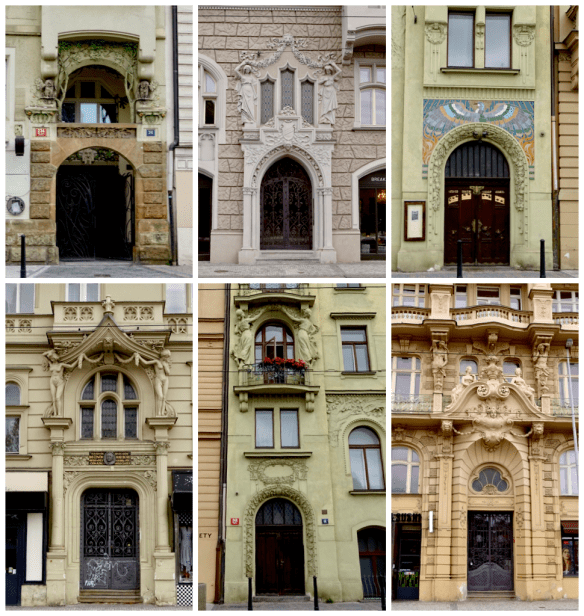 These entrances are on this block of buildings. Although Prague was bombed in World War II it did not suffer the catastrophic damages of Berlin and Dresden. There are so many beautiful buildings with lots of carved decorations here.
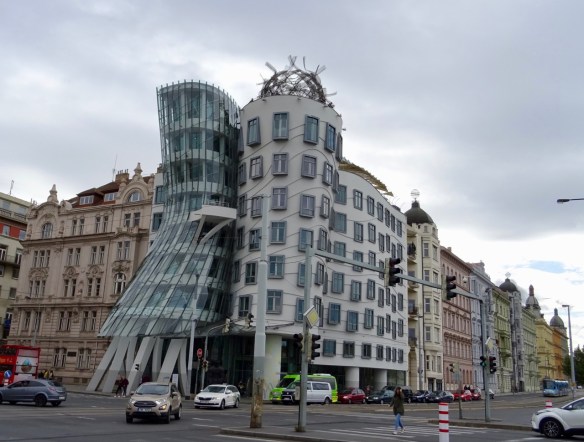
 The Dancing House, or Fred and Ginger, as it is nicknamed, was built in place of a building that was destroyed during the war. We think we know which is Fred and which is Ginger. What do you think?
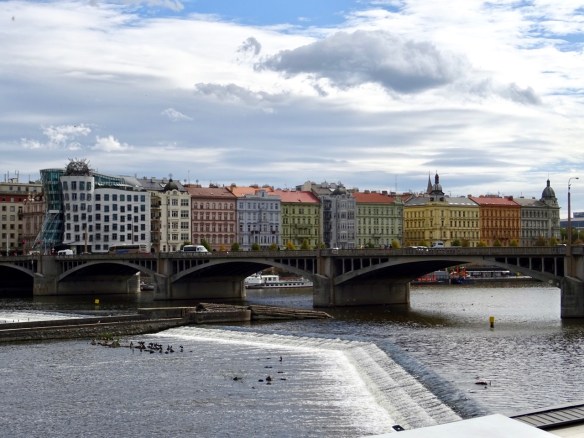
 We crossed this bridge and had our picnic lunch in a little park with this view. Prague has lots of trees and parks.
 Here ae some more pastel coloured buildings we see on our walk along the river.
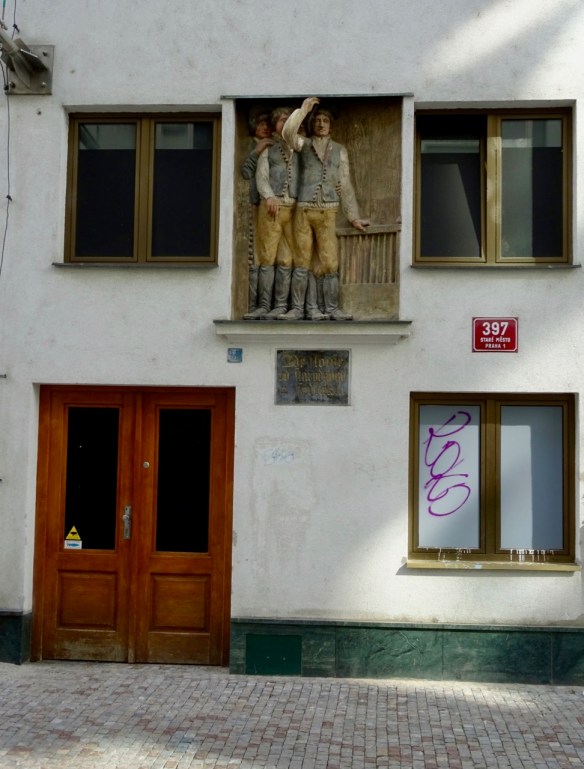
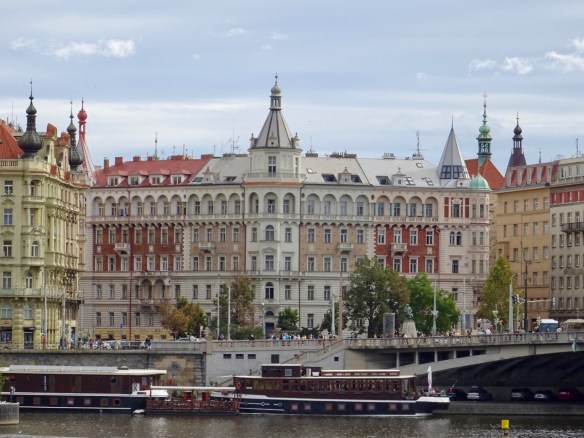 These statues holding up a balcony are quite wonderful.
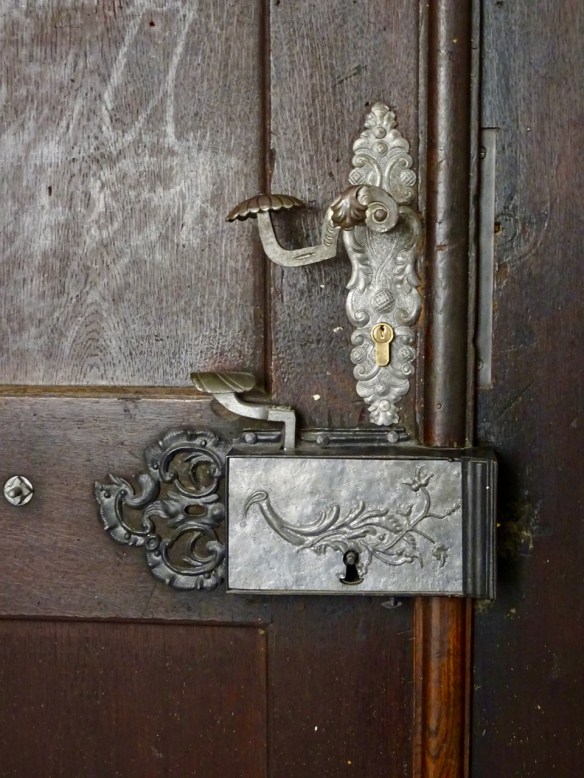
  I think Bob might have been a locksmith in another life. He is always noticing interesting locks.
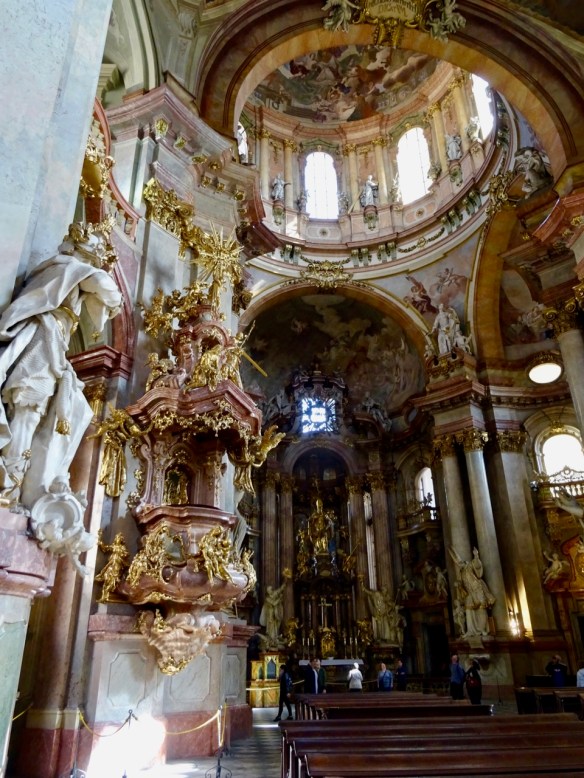
 We arrive at the most famous Baroque church in Prague, St. Nicholas Church, at Old Town Square. The dome has a diameter of 20 m, with a height of over 49 m, making it the highest interior in Prague. The church was completed in 1735, replacing a parish church dating back to 1273. There is so much history everywhere we visit. Canada is such a young country in comparison.
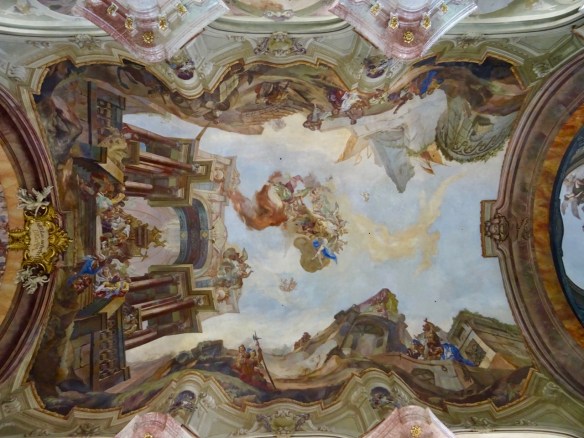
 The ceiling fresco is over 1500 square metres in size and is one of the largest in Europe.
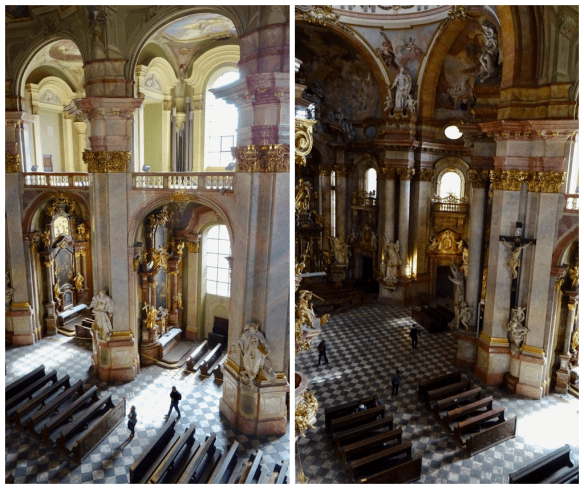
  We climb to the second floor balcony for some great views of the church.
 There are interesting things to see everywhere if you keep your eyes open, especially down the side streets.
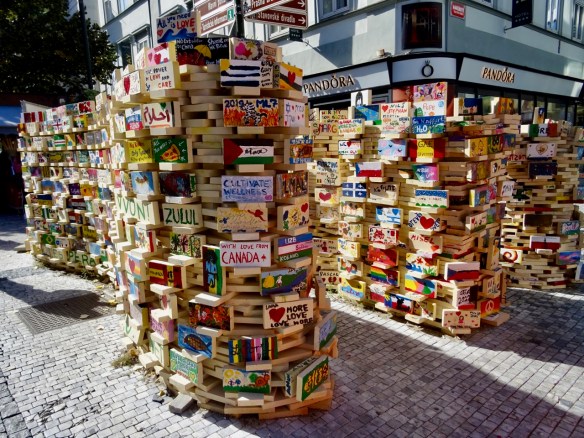
 These painted blocks are a fundraising project for disabled people. You pay for a brick and then get to paint it. We didn’t have time today but I see that someone from Canada contributed a brick.
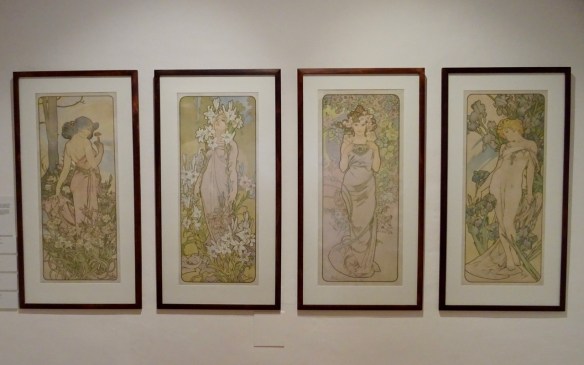
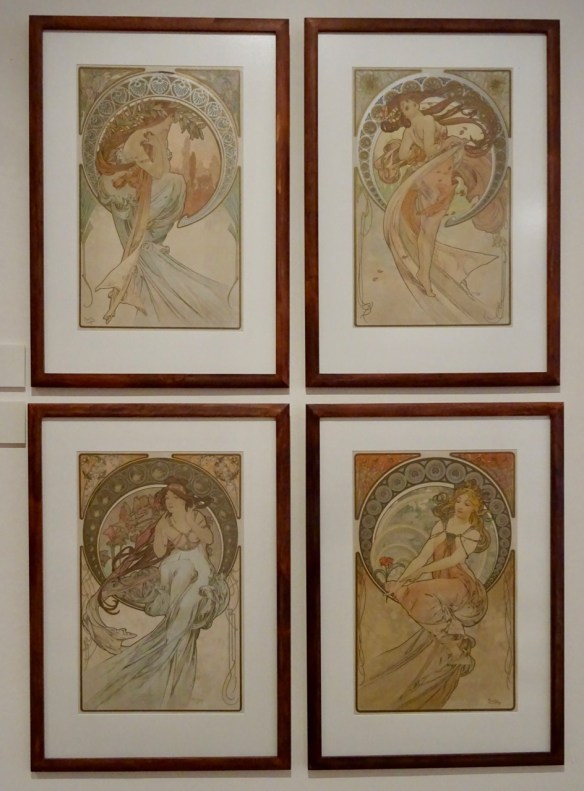
 At the Mucha Museum I learn the Alphonse Mucha’s name is pronounced mooka, not moosha as I thought. We see many of his lithograph works that I am familiar with. The Four Flowers..
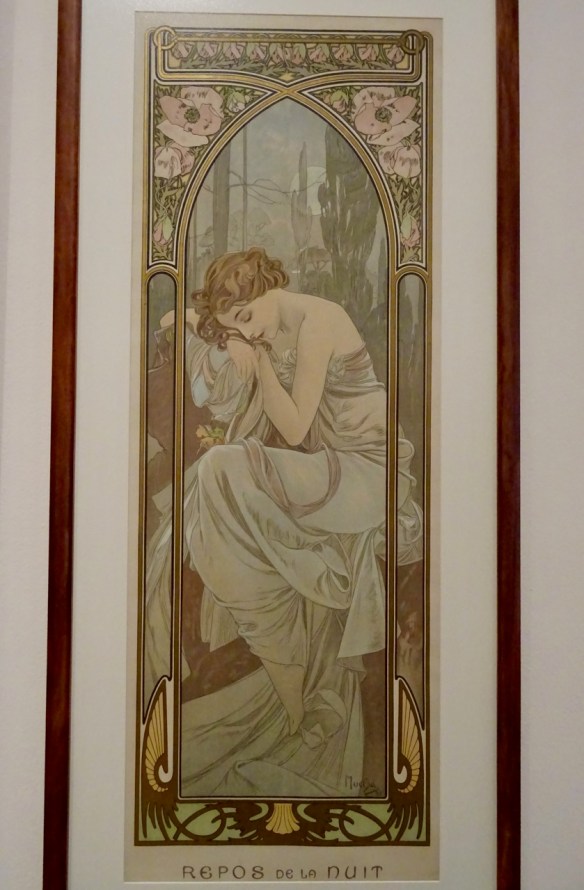
 Evening Reverie…
 and the Four Arts, which celebrate Dance, Painting, Poetry and Music.
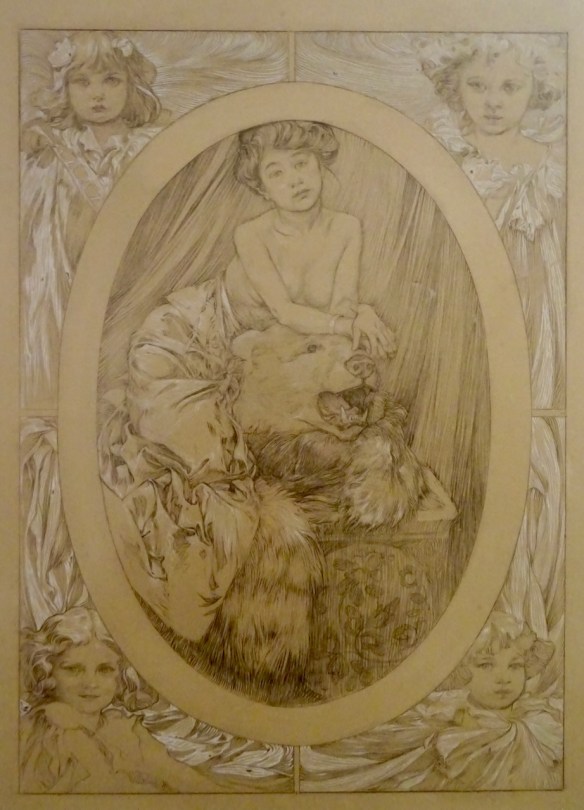
 I particularly loved being able to get close up to some of Mucha’s drawings. Woman on a Bear Skin is drawn with a pencil and a white crayon on a brown ground. It is amazing. A photo does not even begin to do it justice. It was also behind non-glare glass which does not photograph the best.
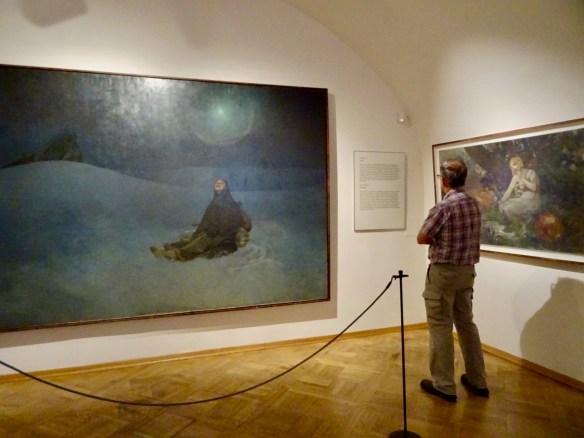
 Winter Night, or Siberia, may have been Mucha’s response to the terrible suffering of the Russian people after the Bolshevik Revolution. There was a famine that killed millions of people. It is difficult to see, but in the upper left of the painting there is a pack of wolves. The peasant woman seems to have resigned herself to her fate. I was not aware of Mucha’s large oil paintings. He completed a series of very large canvases called the Slav Epic, a series of 20 enormous canvases that show the ethnic roots of the Czech people. Unfortunately we weren’t able to visit the Czech National Gallery of Modern Art to see these paintings as it was under renovation. This short video shows the Mucha Museum and the Slav Epic.
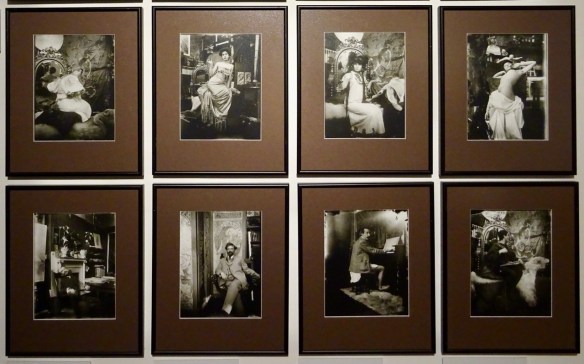
 This collection of photographs was interesting. It showed some of Mucha’s models, and the bottom two middle photos are Mucha in his studio and Gaugin playing the piano…without any trousers!
 Pages of his sketchbooks are on display. I love seeing artist’s sketchbooks. It is a way of understanding how they think about their art.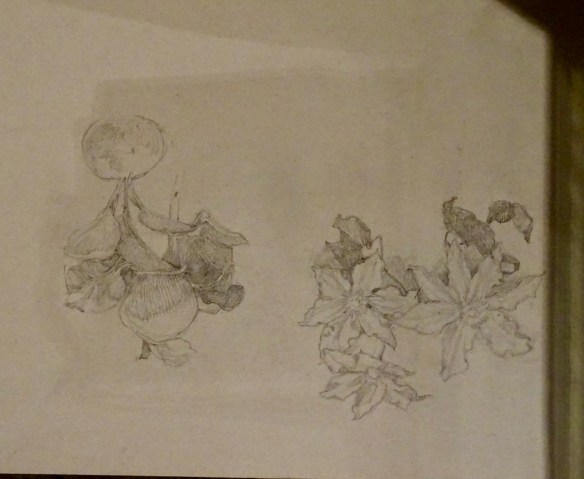
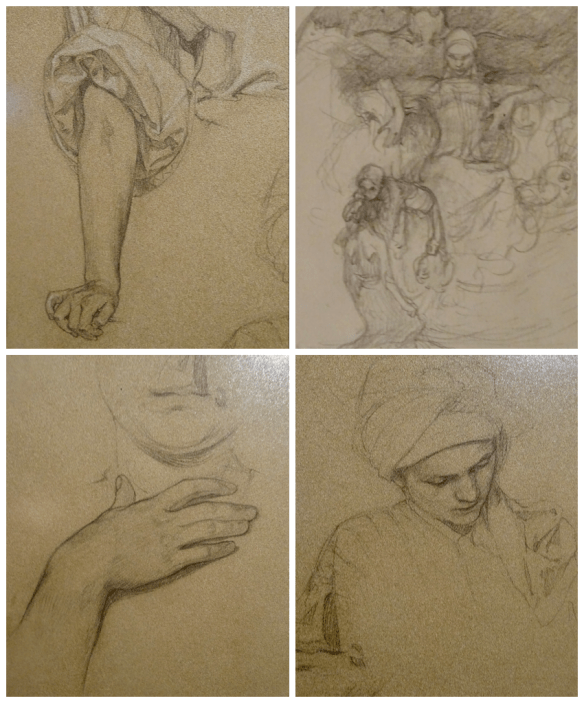 Not all the sketches are detailed drawings. There are some quick gestural studies as well.
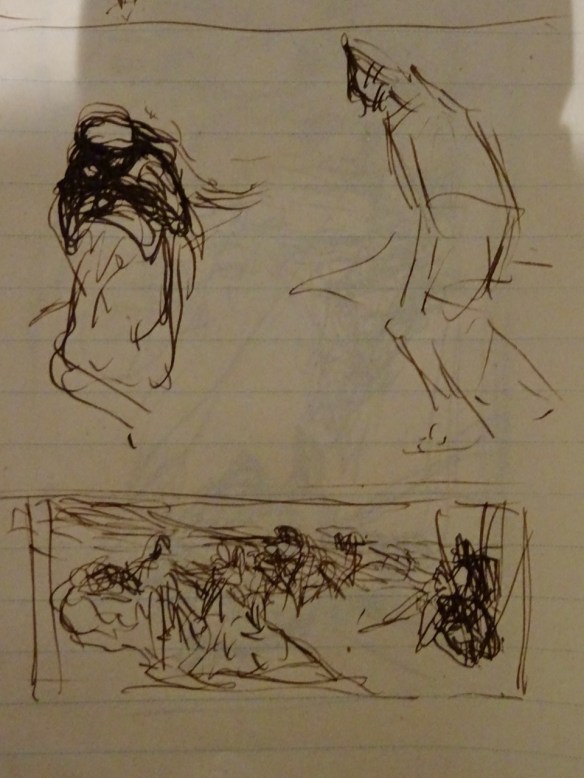 Another study using pencil and white crayon on brown paper. Just gorgeous!
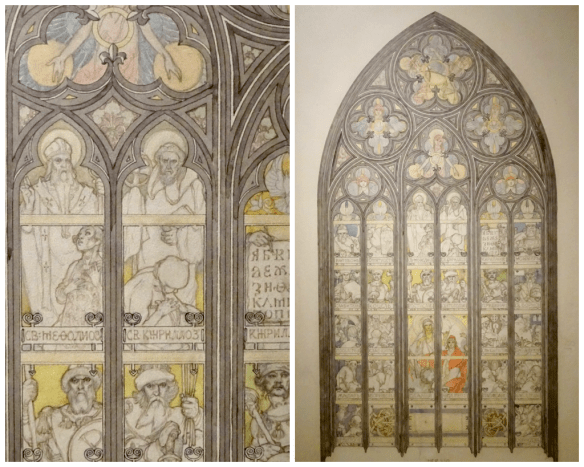
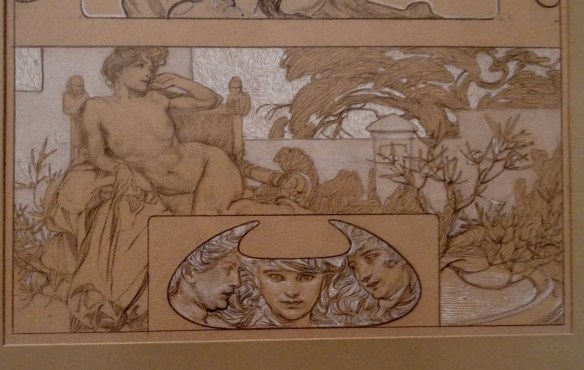 This is a study for the stained glass window in St. Vitus Cathedral. Mucha was skilled in many areas of artistic expression.
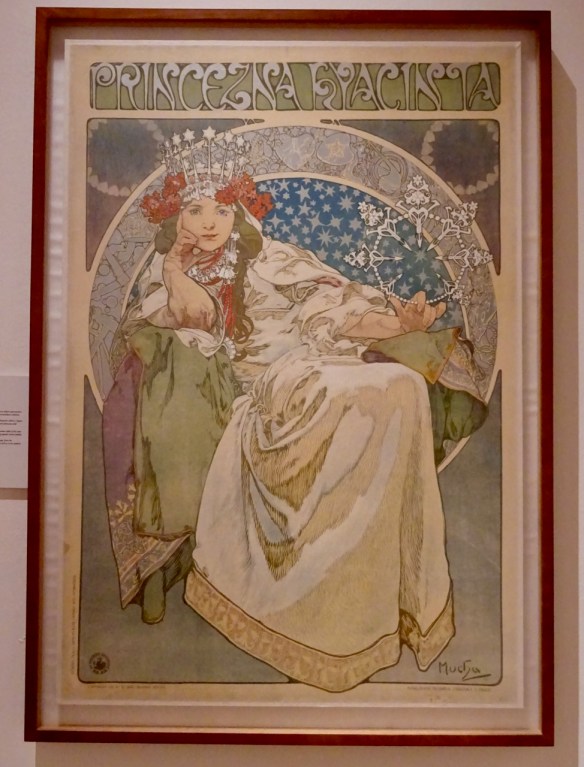
 Mucha created this famous poster for the ballet named Princess Hyacinth. I was happily snapping photos when near the end of our visit a docent told me that photos were not allowed. I was surprised as we have been able to take photos, without a flash, every where else we have been. I am very happy she didn’t see me until near the end of our visit!
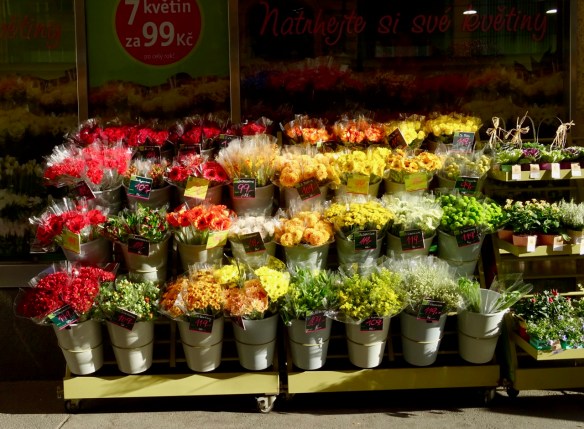
 One of many flower stands in the city. I often see both men and women carrying bouquets of flowers.
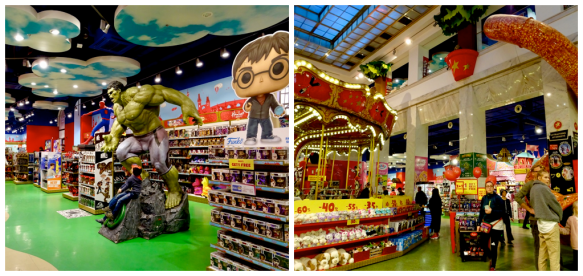
 We saw a toy store so took a peek inside. OMG! it was huge, very noisy and had a full size carousel!
  This made us think of the Hotel Europa we stayed at in Egypt a few years ago. It certainly was not grand and it wasn’t a pleasant experience at all!
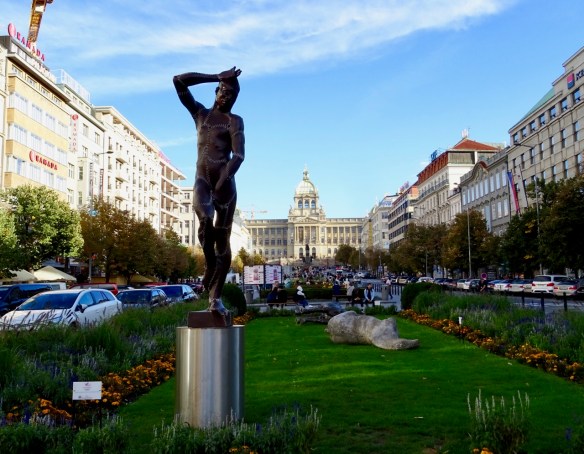
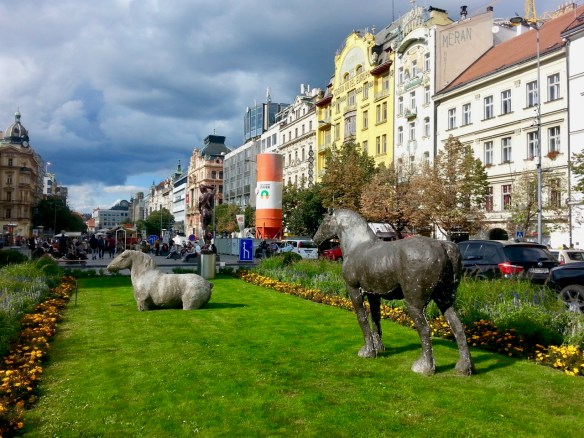
 Walking back along Wenceslas Square I notice that someone has knocked over the horse sculptures we saw earlier. I like this statue, all covered in sewn leather, with his hands sewn to his head and groin. Not sure what it is supposed to represent but it does make viewers pause and contemplate.
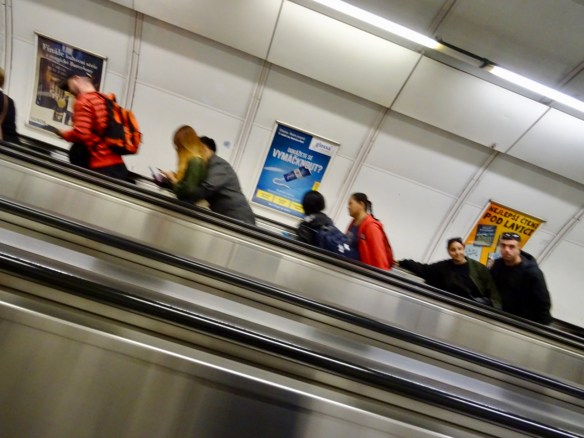
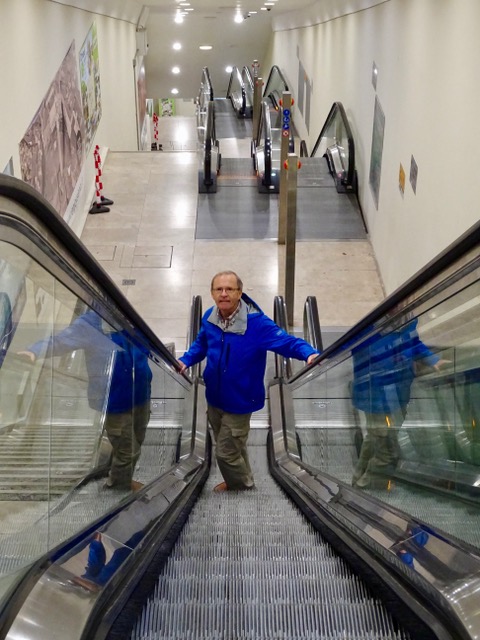
 I keep trying to get a photo that shows how strange people look on these long metro escalators. There is an optical illusion that happens and everyone appears to be either leaning forward or backwards, depending they are going up or down the escalators. Somehow it just doesn’t show that well in a photo. The camera doesn’t see things the same way as our brain does. It is very curious and I comment every time we ride these crazy, long, steep fast escalators.
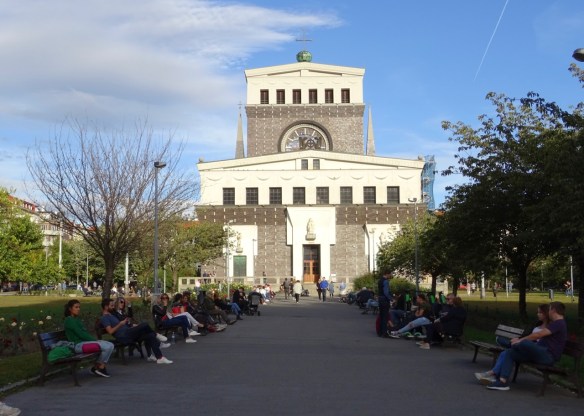
 This church is in the park right beside the metro stop near our apartment. We were curious to see inside but it is under renovation and the doors are locked. We sat and had tea in this park the day after our flight into Prague over a month ago.
 I wanted to get a photo or two showing how people drink alcohol walking down the street, in the parks, and even on the metro (although they aren’t really supposed to drink on public transit). We see that in Prague and it was especially prevalent in Berlin. People walked around with their bottle of beer everywhere. Not what we are used to seeing at home.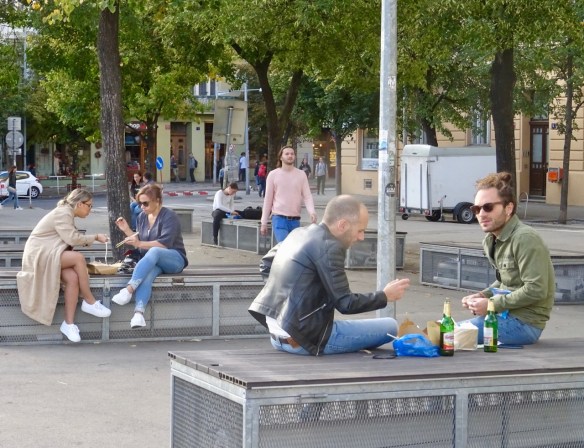
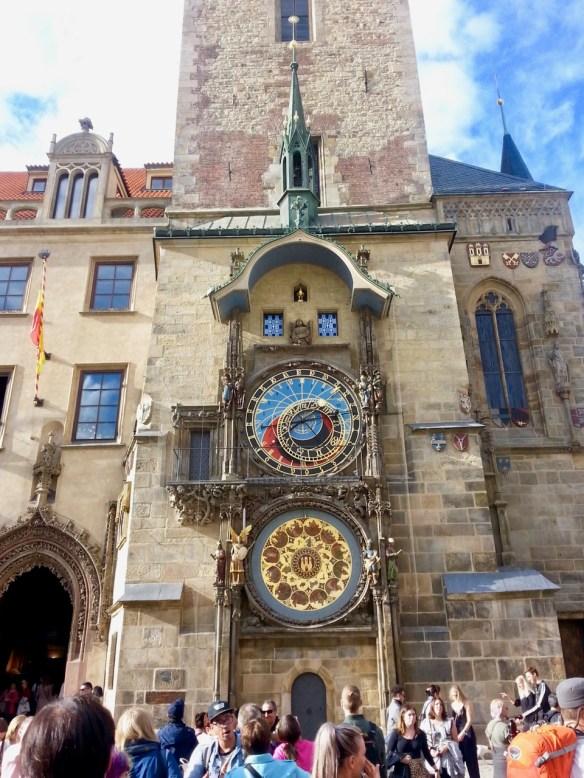
 The Prague Astronomical Clock, or Prague Orloj, is a medieval astronomical clock. The clock was first installed in 1410, making it the third-oldest astronomical clock in the world and the oldest clock still operating. Crowds gather here to watch it strike the hour.
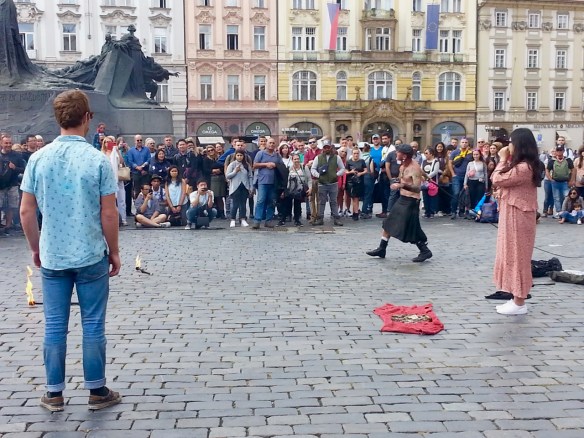
 We enjoy this street performer and the poor lady volunteer who is terrified by pretty much everything he does, including pouring lighter fluid in a circle on the ground around her! He never does light it but her reactions made the crowd laugh.
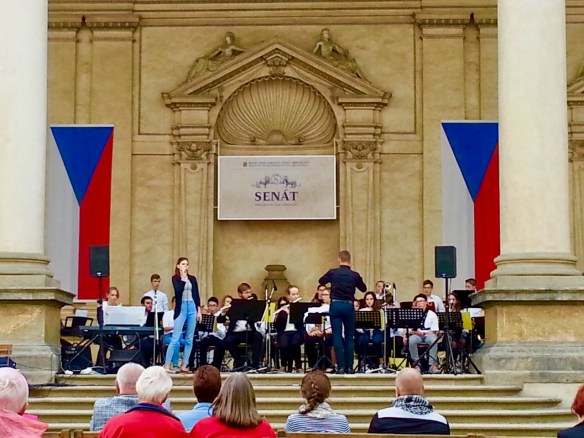
 We find the Senat, where there is a free concert. We were expecting classical music but a group of students perform and sing more modern songs, including Hey Jude, These Boots are Made For Walking, Can’t Buy Me Love and Cabaret. Some of the songs are in Czech and some are sung in English, with a heavy Czech accent! It started to rain during the performance but we had brought our umbrella so we stayed dry.
 I tried to draw but didn’t manage much.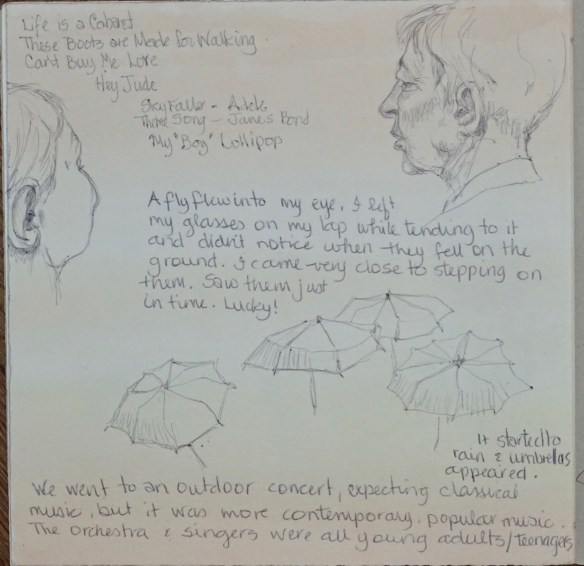
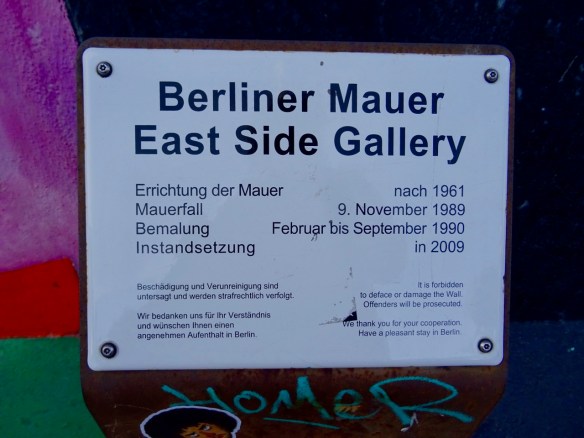


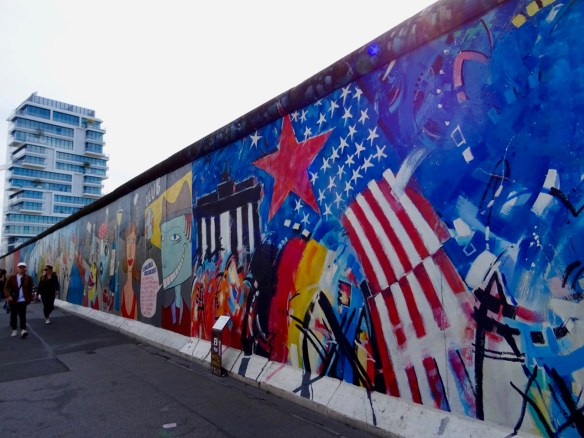
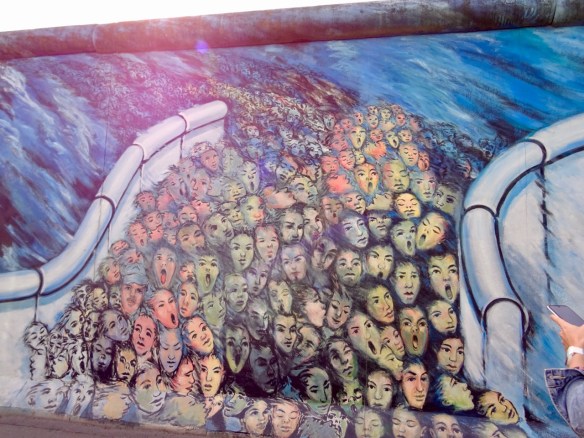
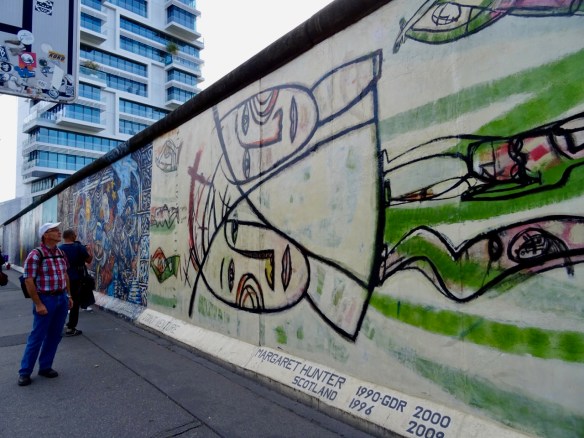
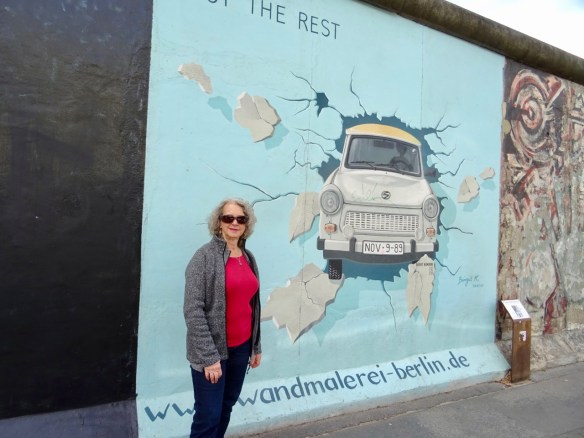 We see a white Trabant soon after seeing this.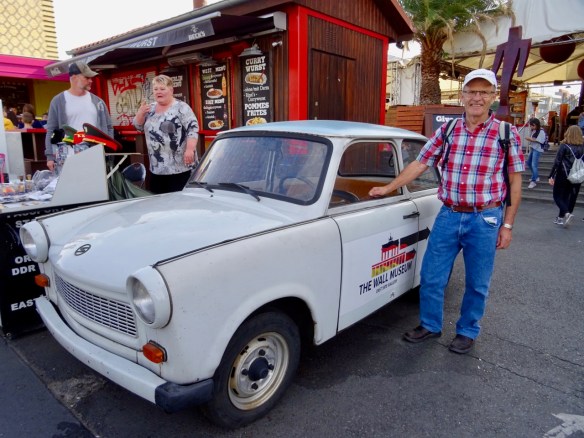
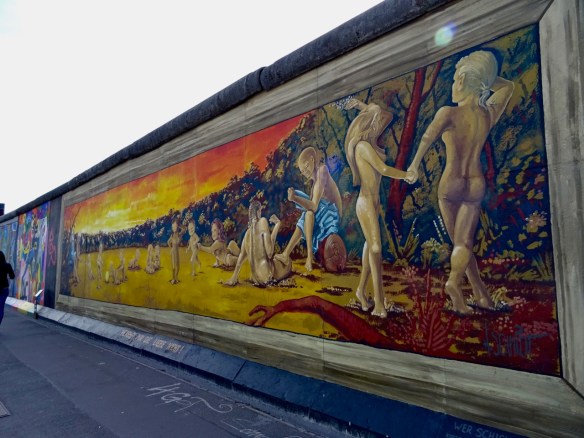
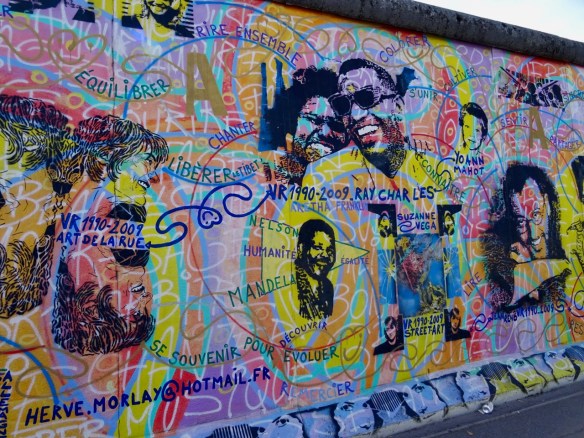
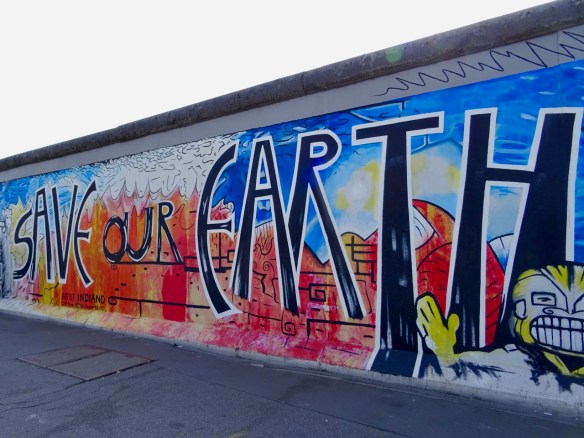
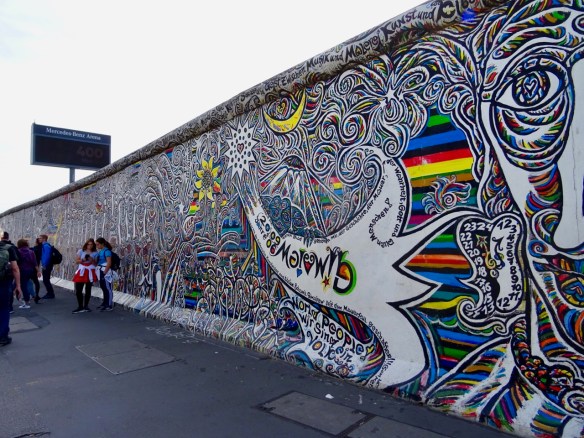 The graffiti n the back-side of the East Side Gallery is interesting too.
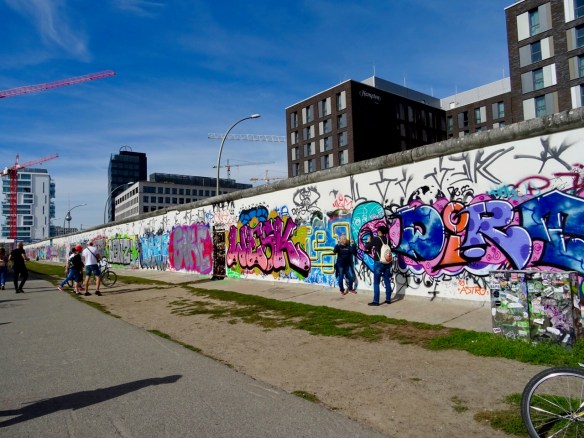 We stop for a snack and listen to some music along the banks of the Spree River before continuing our walk along the open air gallery.
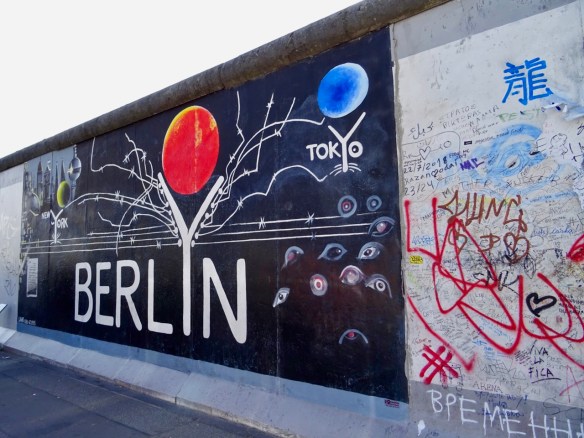
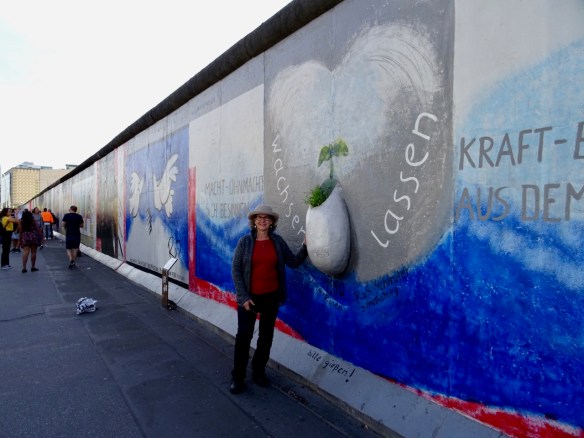
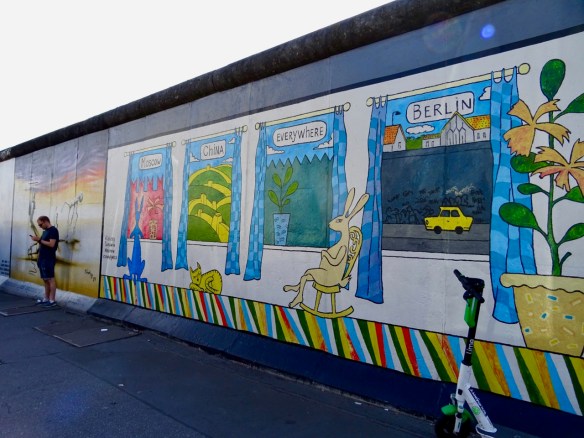
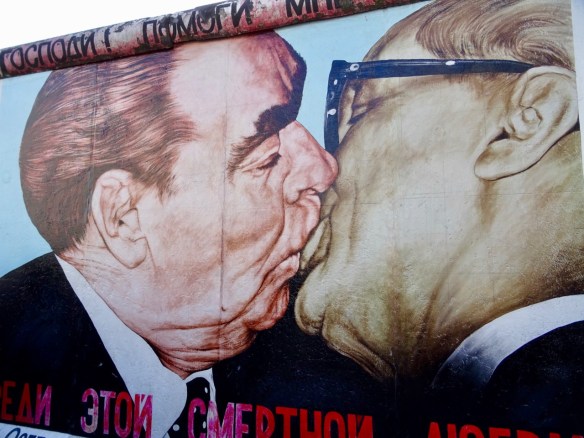
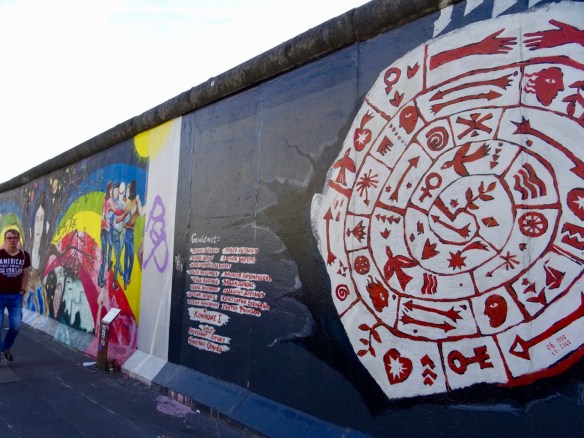

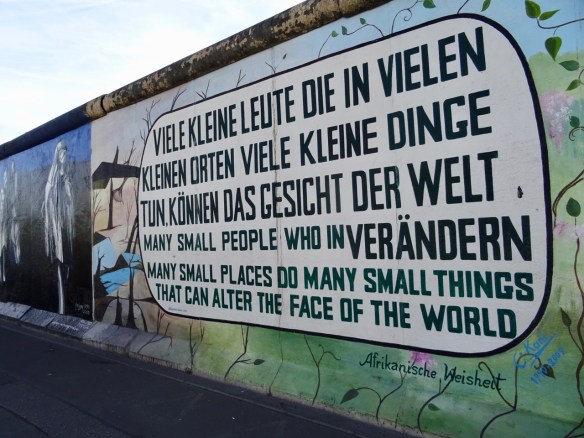
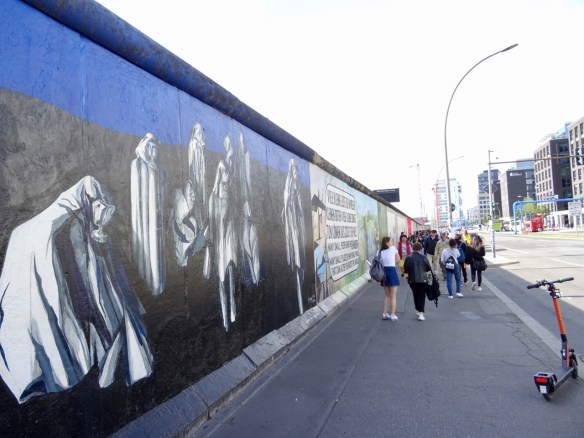

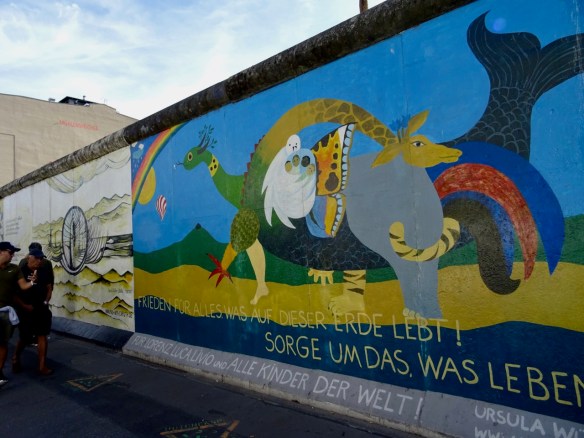
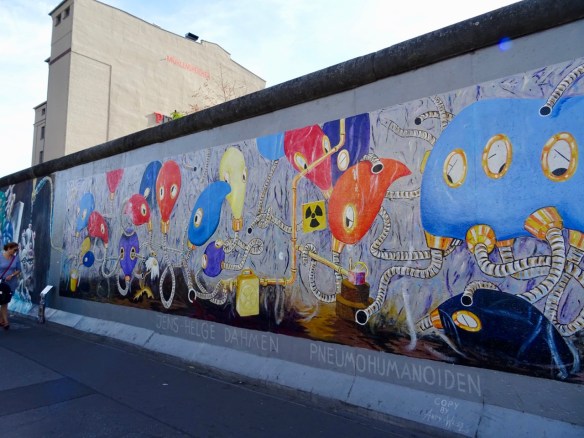
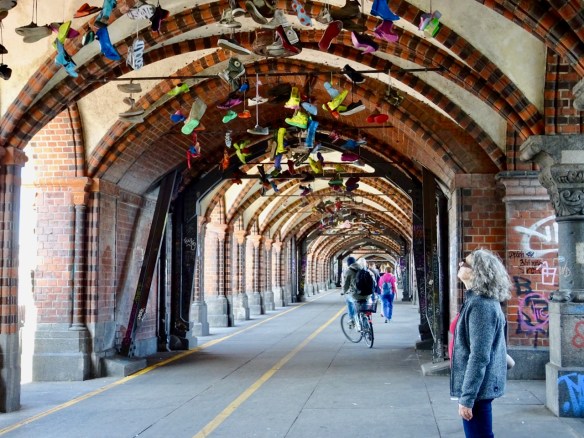
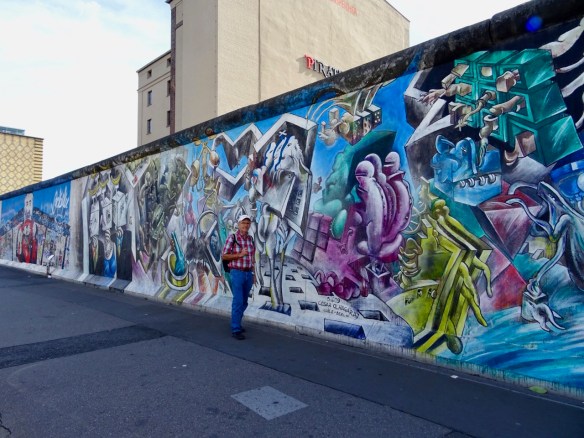 At the end of the wall we walk across the historic Oberbaum Bridge.
 Apparently all the hanging shoes are street art.
 Next we take one of the old trams to Mauer Park which is the site of a huge flea market and a gathering place for Berliners and tourists alike.
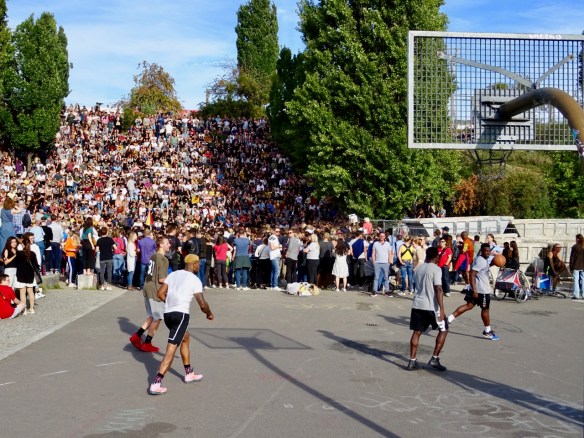
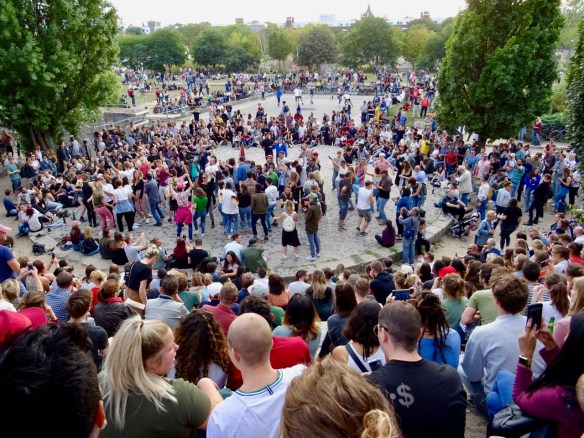
 There are people everywhere!
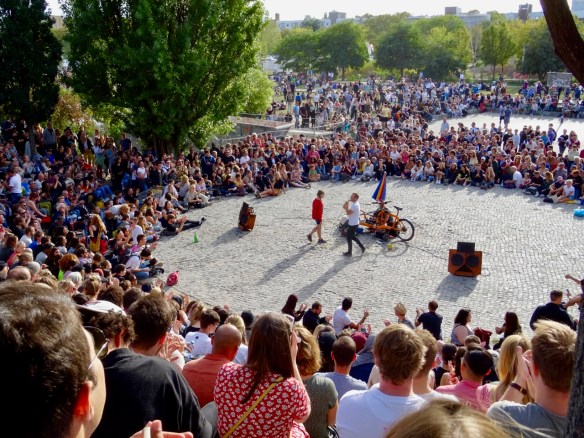
 The people on the hillside are watching karaoke performances, which happen here every Sunday. There is also an ongoing 3 on 3 Basketball game in the foreground. Did I mention that there are people everywhere? Bob figures probably over 20,000 people in the park today and I think we are older than 99% of them!
 After sampling some of the food trucks wares, we make our way up to the karaoke viewing on the hillside and have fun watching the performers. Some were not the best, but the audience was very supportive and everyone gets a big round of applause. Here is
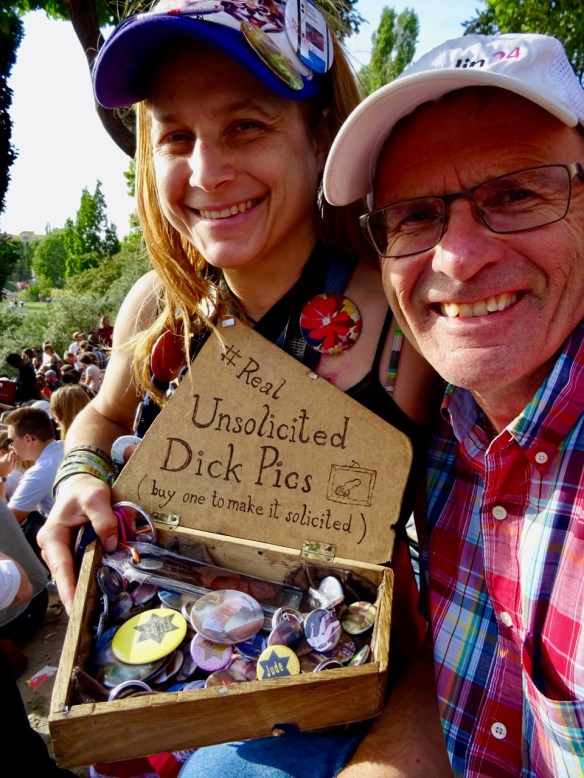
  This lady was selling some rather interesting pins, and offered to let me take her photo for a small donation, and yes, they were those kind of dicks!
 This guy from the Dominican Republic got a great round of applause, but more for his dancing than his singing.
 Some of our fellow audience members.
 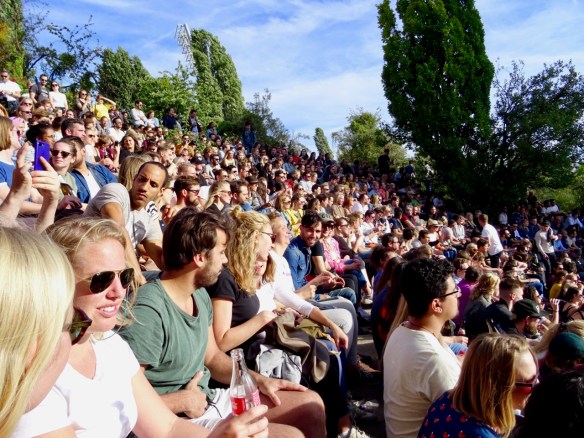 One of the performers from Afganistan got lots of people up dancing.
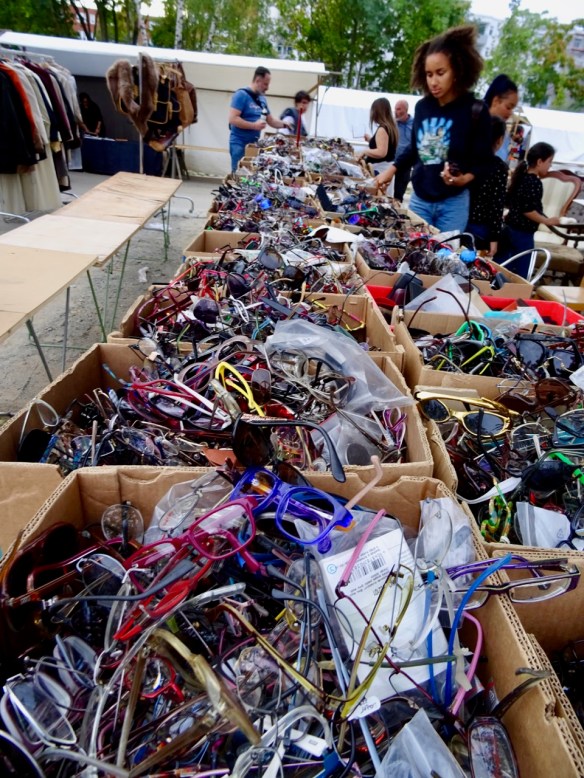
 The flea market was closing by the time we got around to visiting it. As we passed by this booth I overheard a guy say to his girlfriend “All these glasses and you still can’t see my point of view!”
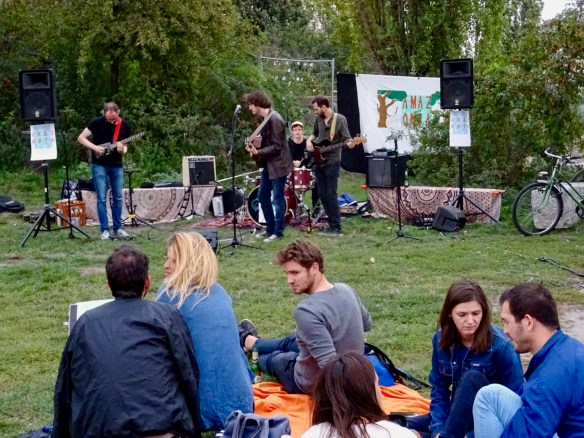
 There were lots of groups of performers. Here is one
 This sign on an artist’s booth makes me laugh. Today was a nice change from the sight seeing we have been doing. It was really relaxing, a lot of fun, and great people watching!.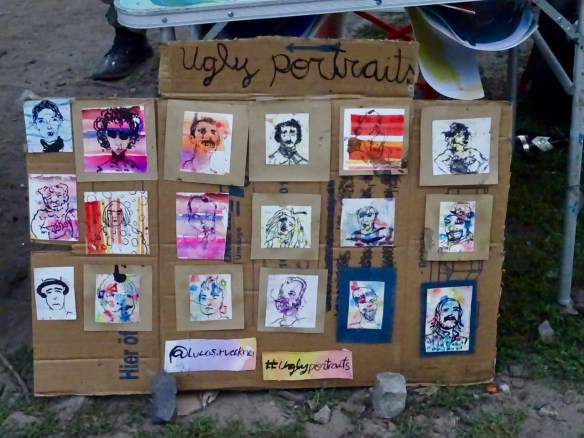
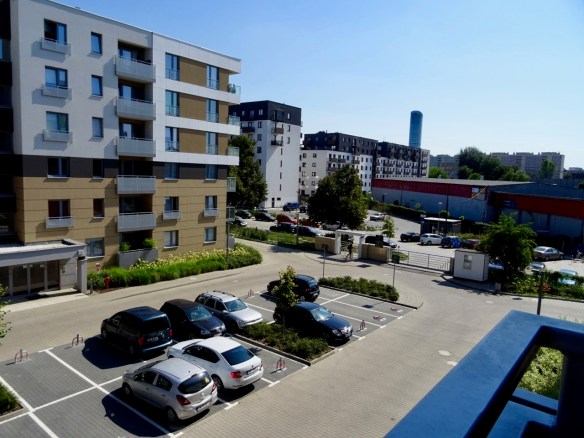
 Here’s how big items get delivered!
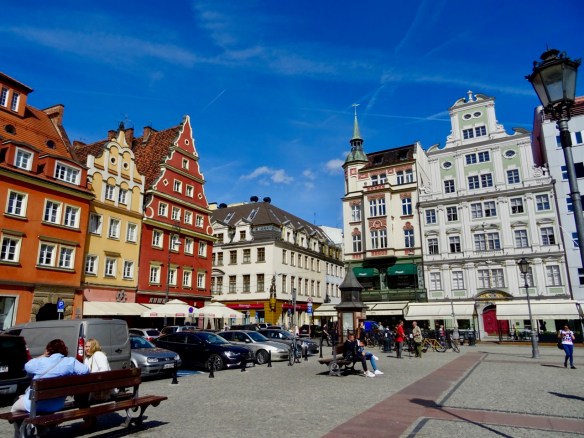
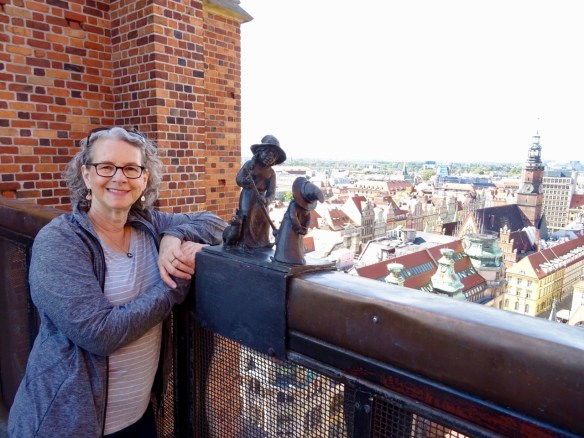
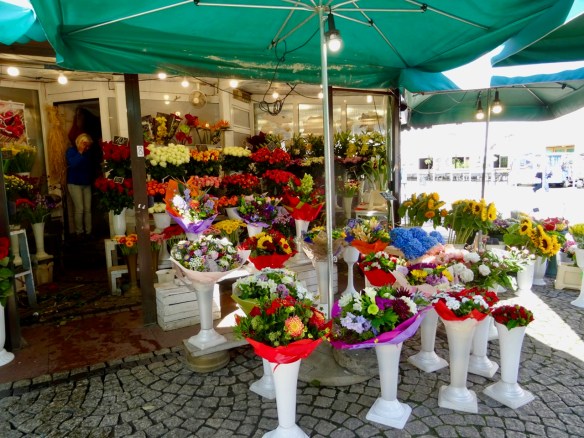 Wroclaw has an ever growing populations of gnomes. In fact, our guidebook states “the little buggers are currently rumoured to be running rampant to the score of over 300 making it literally impossible for us to try to keep track of them!” I think they are delightful and I am happy to make their acquaintance .
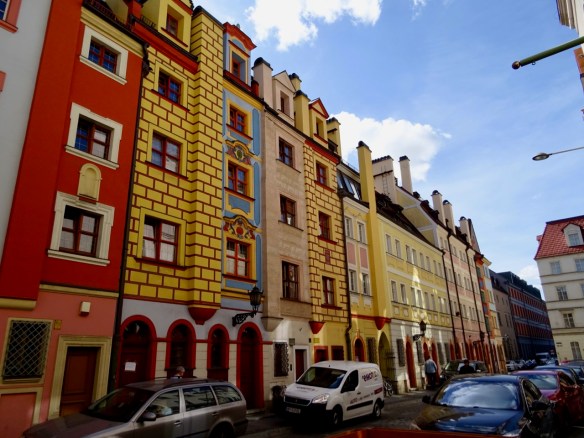
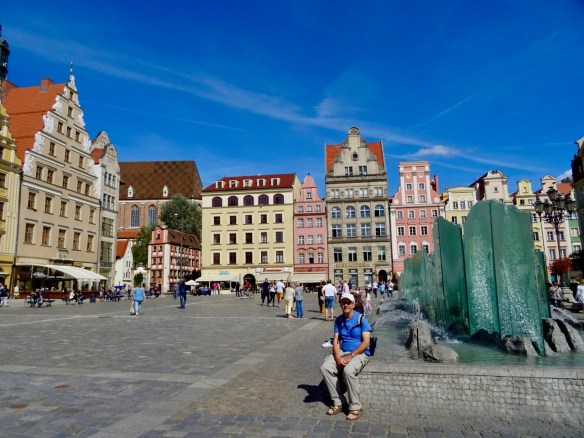 and more tenement houses in the town square.
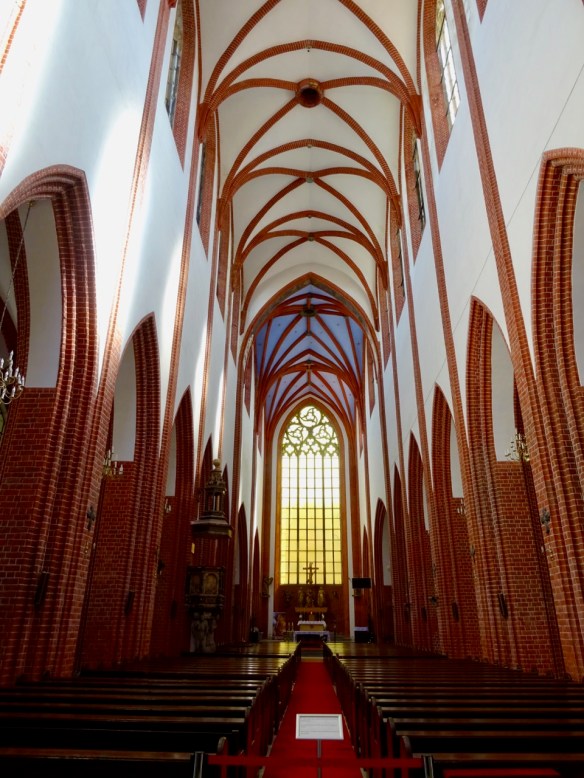
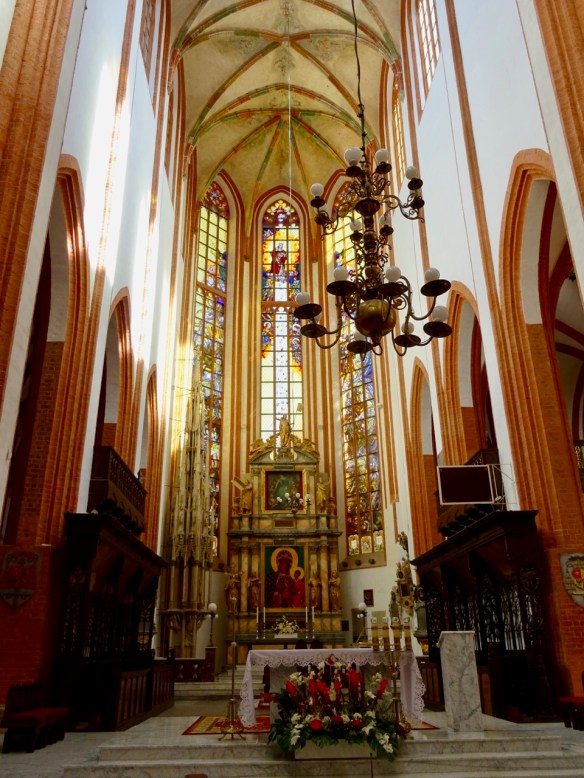
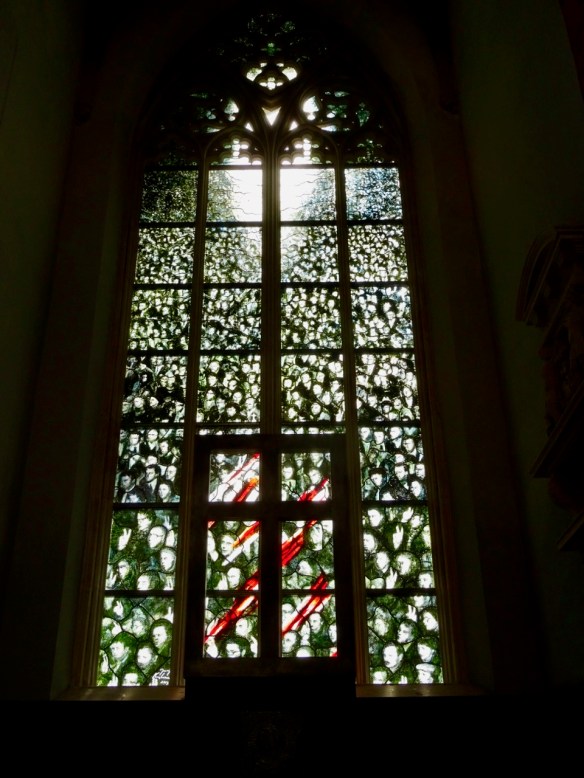
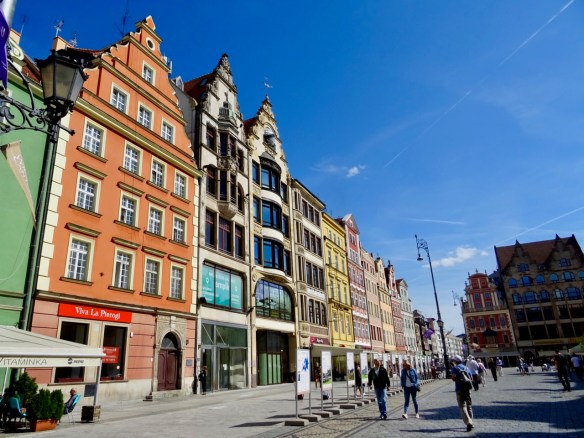 The interior of St. Mary Magdalene’s Church which dates from 1330.
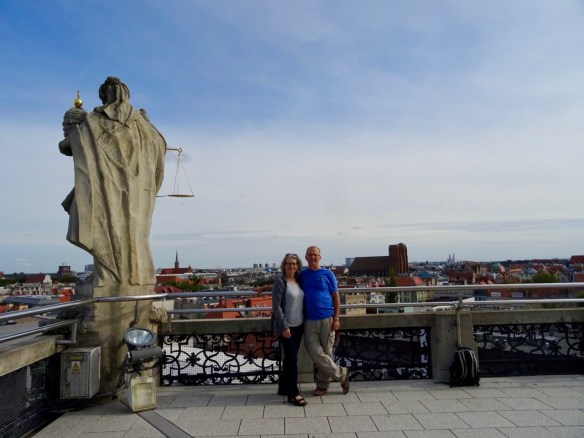
 We climb 147 steps up to the walkway between the two towers. In times past women suspected of being witches were forced to cross this walkway (there were no railings then) and if they made it across safely they were branded as a witch. If they fell to their death, then they were innocent of the crime of being a witch! You certainly didn’t want to be accused of witchcraft! I am very glad there are railings now and I meet another couple of gnomes.
 We have great views of the city from up here.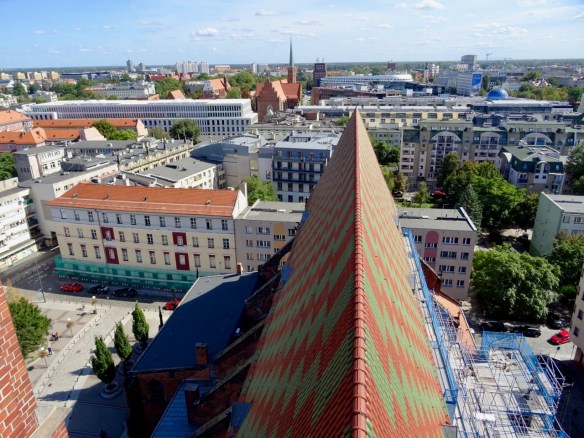
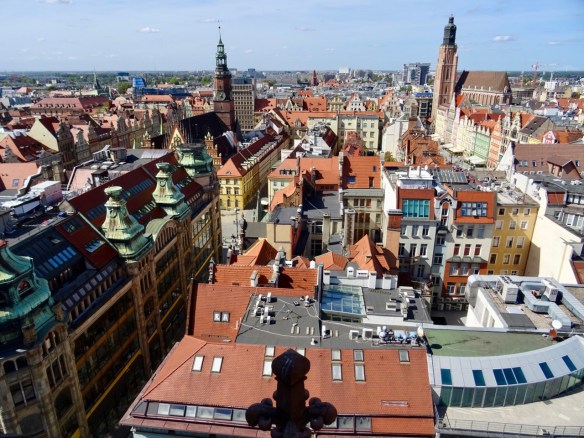 Here is a view of the walkway, way up there between the two towers.There were steeples on these at one time, not sure if they were destroyed during the war?
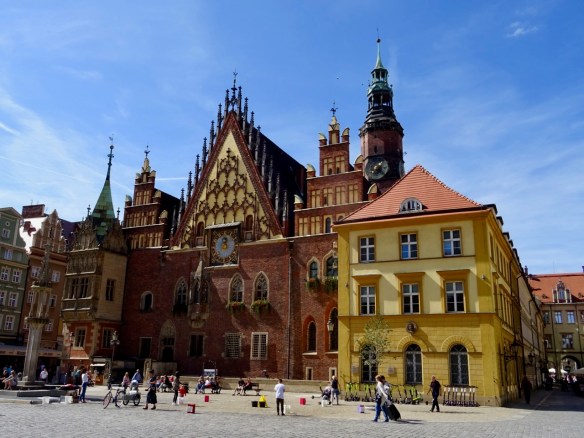
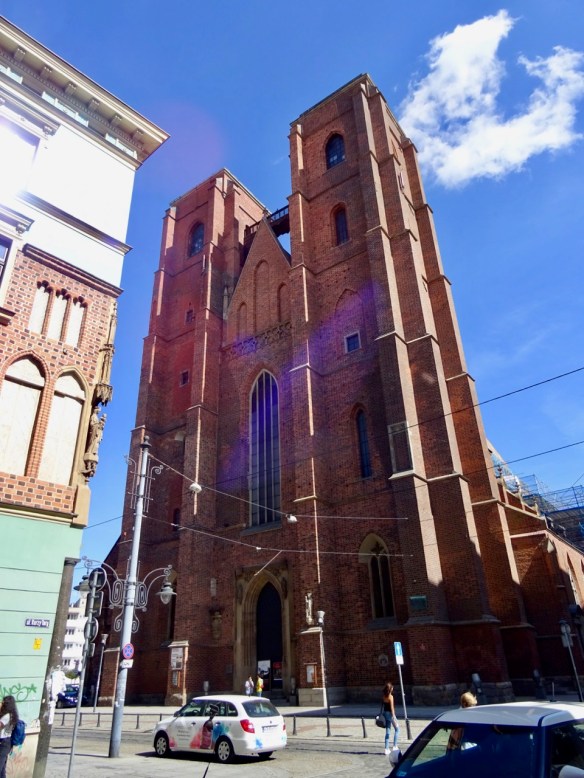 More ornate colourful buildings.
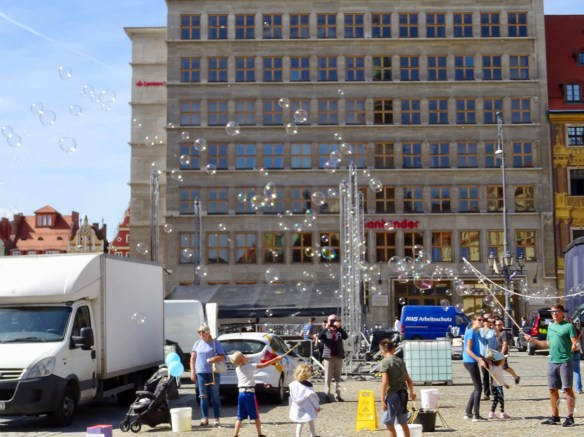
 I wish I knew the recipe for the bubble mixture this guy was using! He made hundreds of bubbles at a time with his string between two sticks. Kids had such fun chasing all the bubbles.
 We found quite a few more of these little fellows, on doorsteps, or tucked into corners.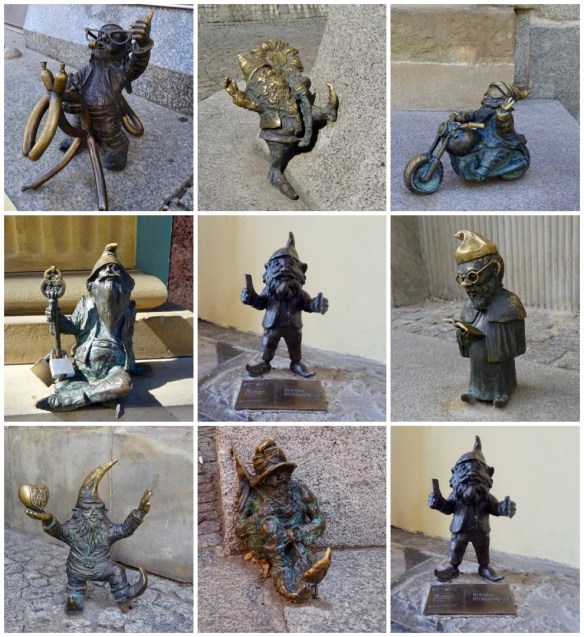
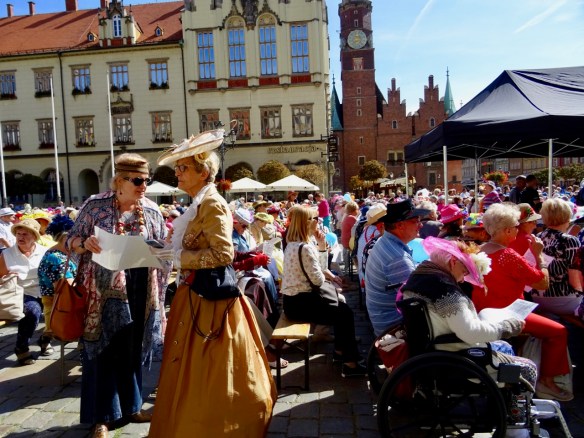
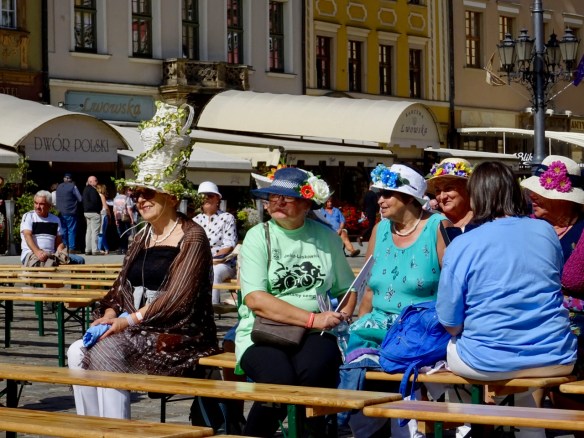 The two little houses in the corner called Hansel and Gretel are the only two houses left of streets that used to surround a cemetery. The cemetery closed in 1773. I wonder where the graves went?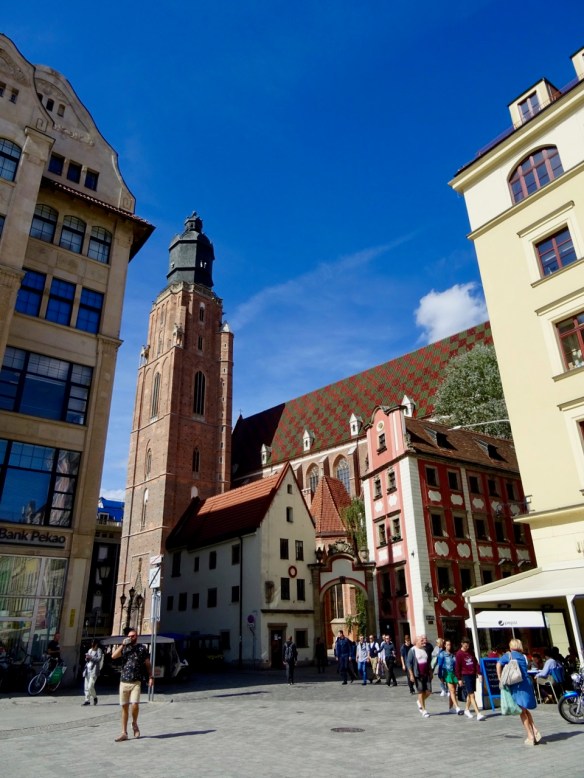
 and more busy gnomes.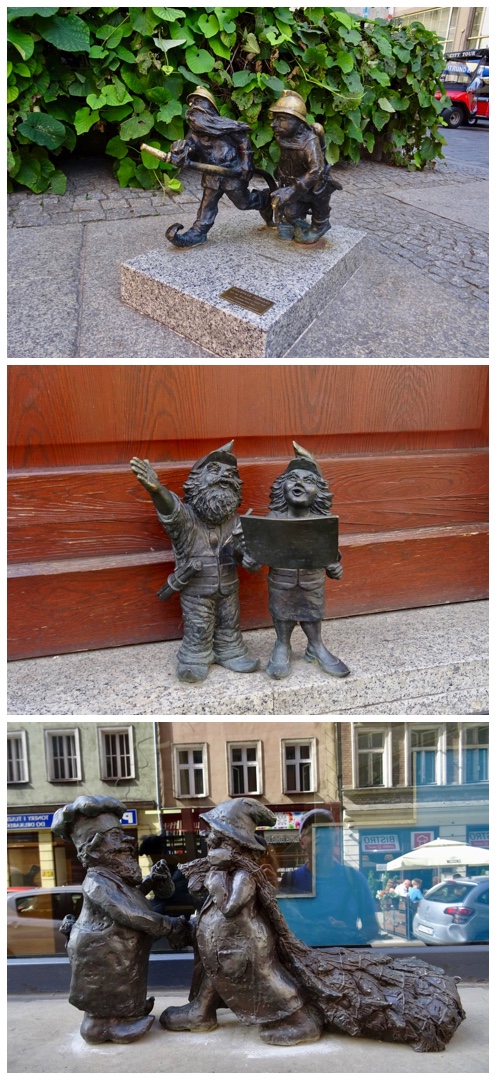
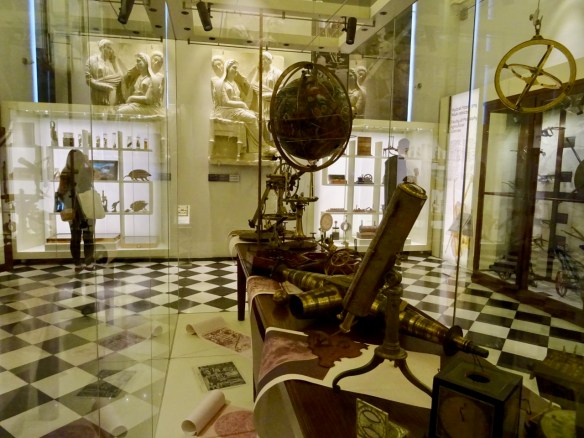
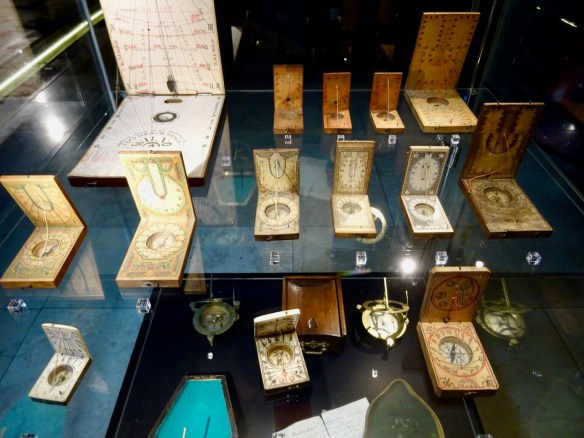
 and an interesting collection of artifacts. This is a chart for determining eye colour.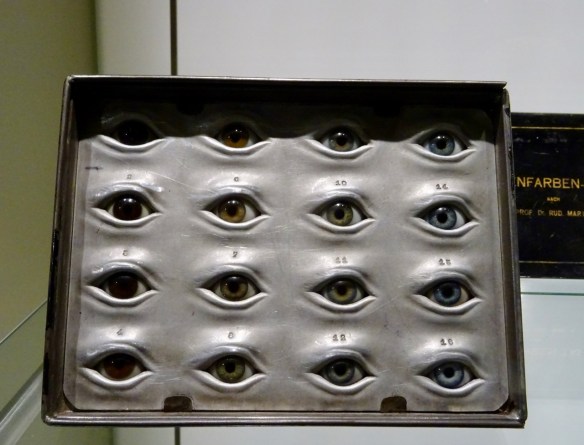
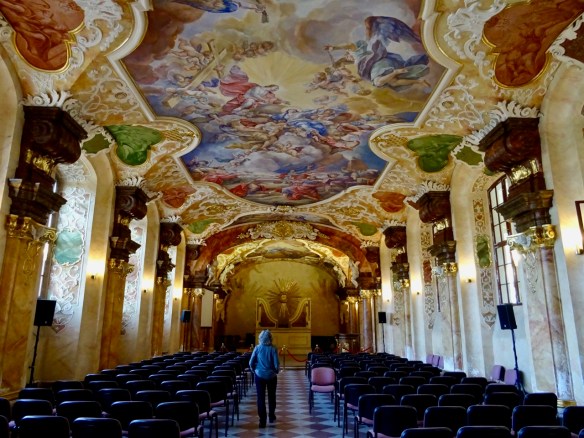
 The Music Hall is under restoration but we are allowed a peak inside.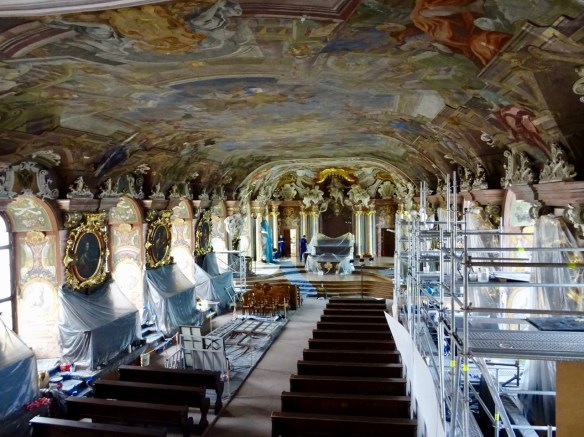
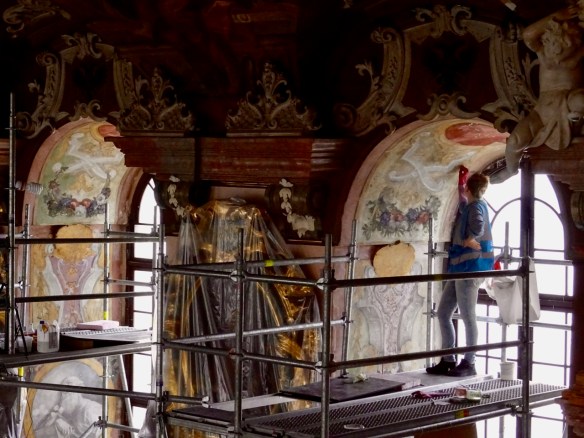 We. climb another 203 steps up the Math tower, which has displays along the way.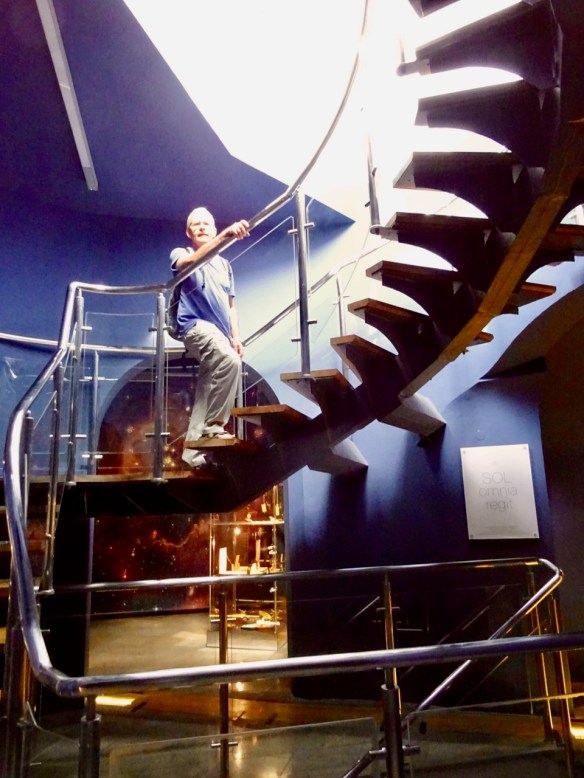
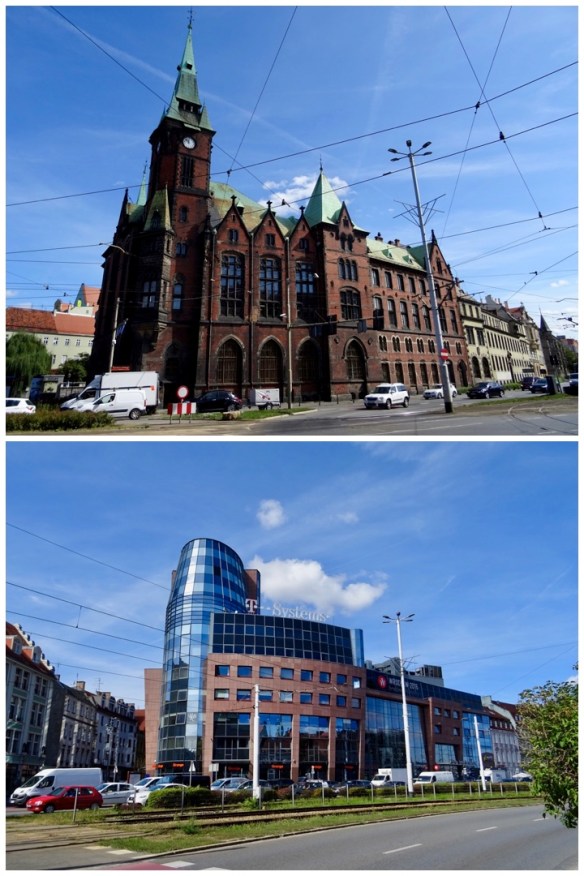
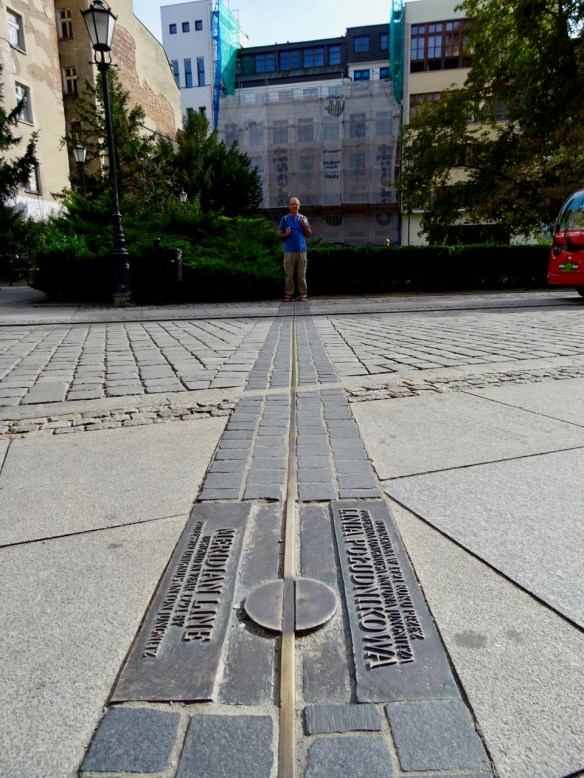
 and the views. Notice the very modern looking tower among the old.
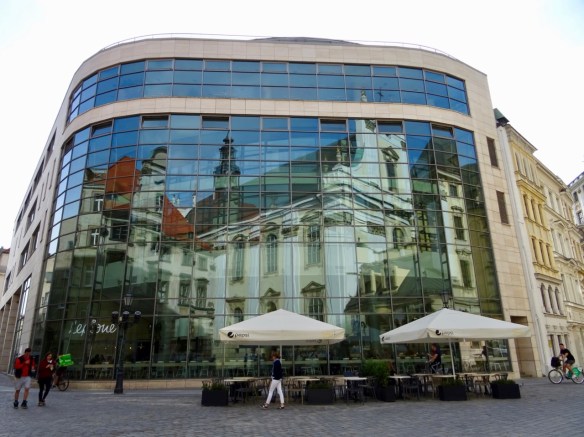
 I just love all the reflections of the old buildings in the glass walls of the modern new buildings!
 Churches here are either very ornate…
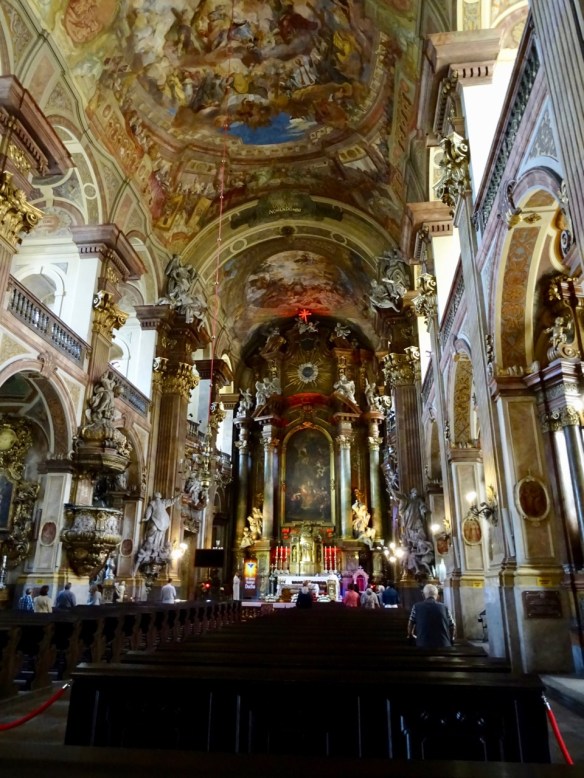 or look like this. The late afternoon sun was shining through the windows casting everything in a lovely olden glow.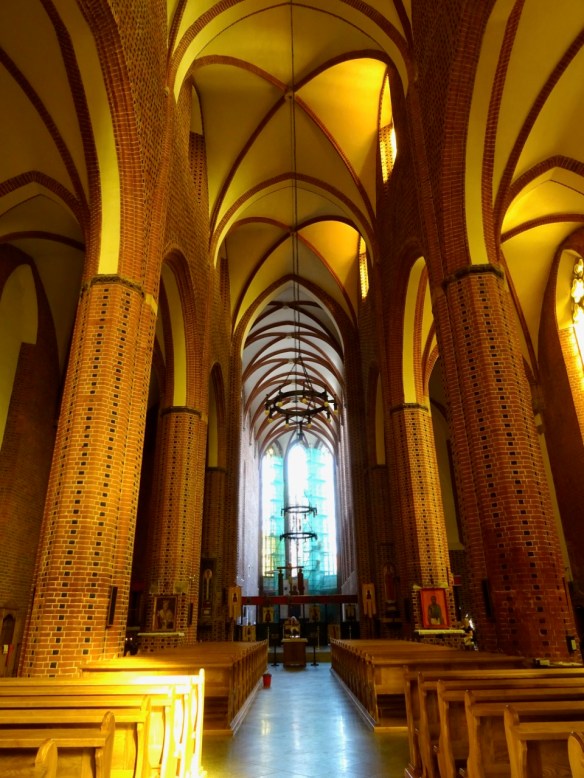
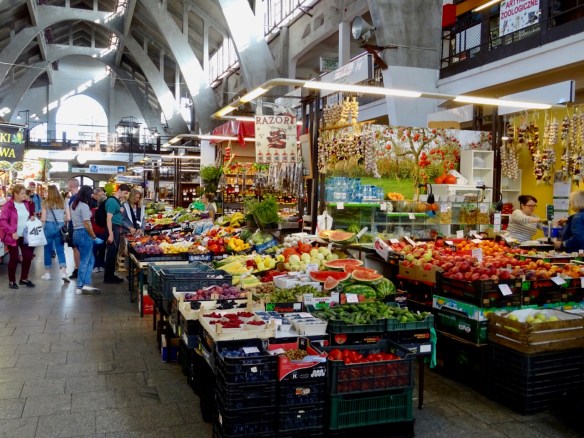
 Then we visit the market and buy some fruit. Food prices are very reasonable here.
 More reflections.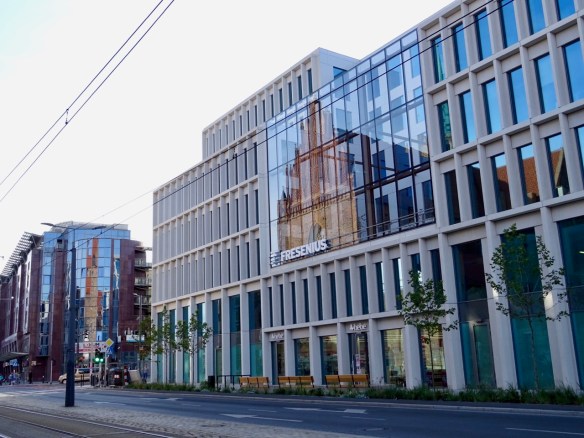
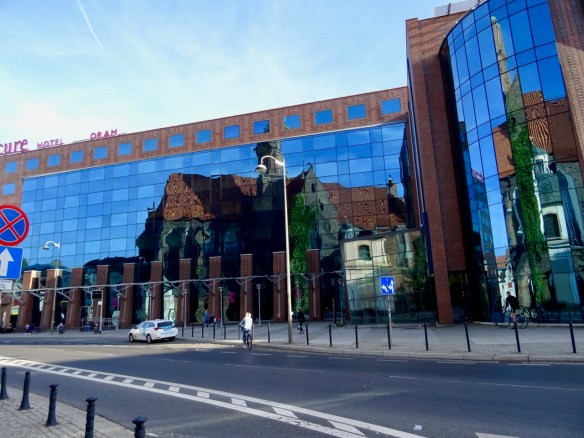 We catch a trolley bus home. We haven’t seem many paved streets or sidewalks here. Most of the streets and sidewalks here are cobbled in one fashion or another. All the uneven footing is hard on the feet and ankles. We walked 16,700 steps today and climbed the equivalent of 31 floors!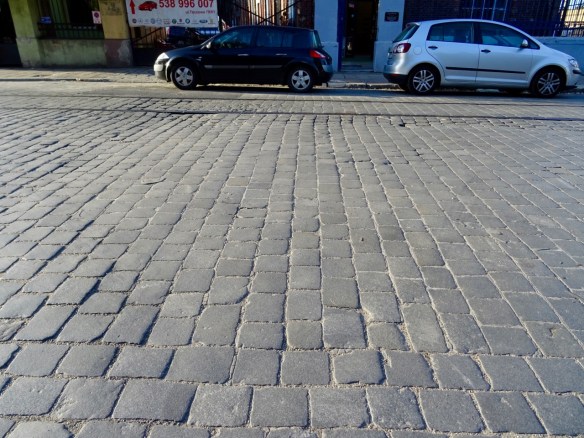
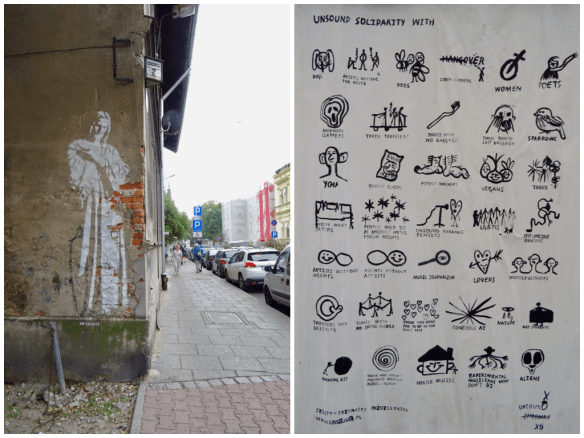
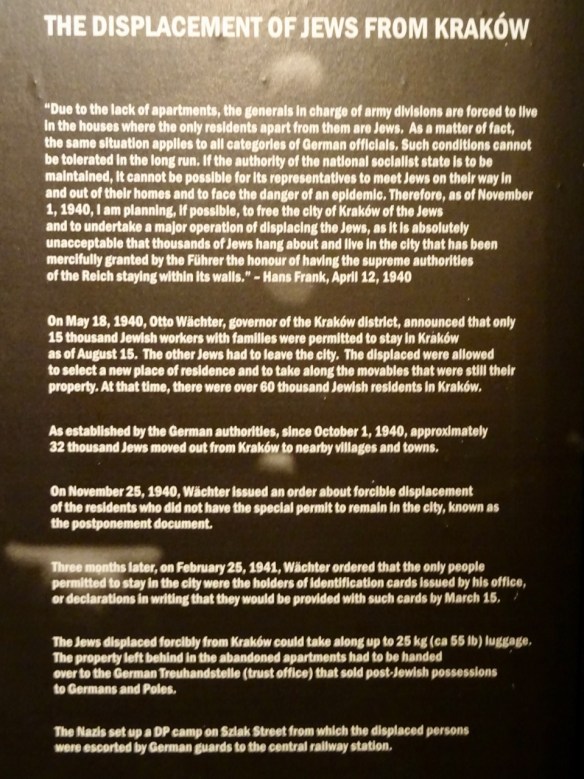 Jewish people were hung along the train tracks for all to see.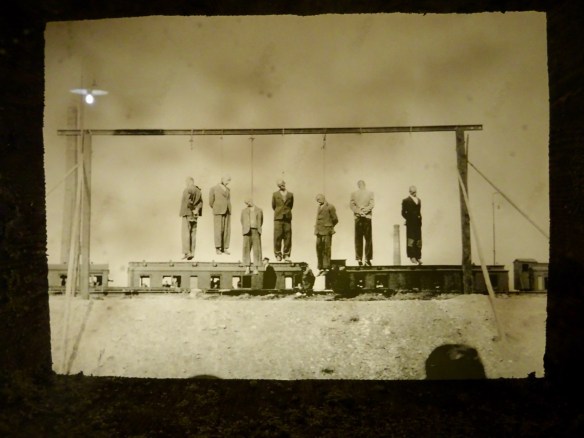
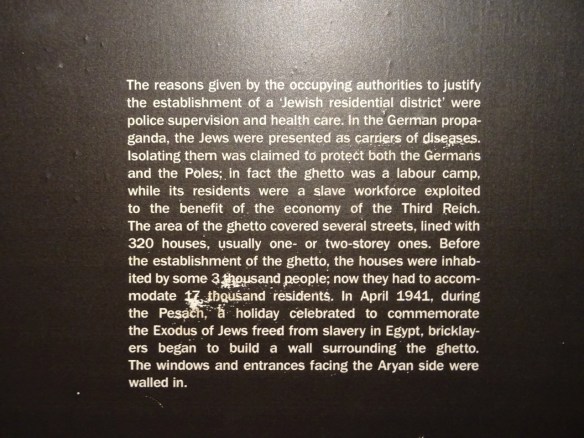 Walking through this dark exhibit about the wall around the ghetto.
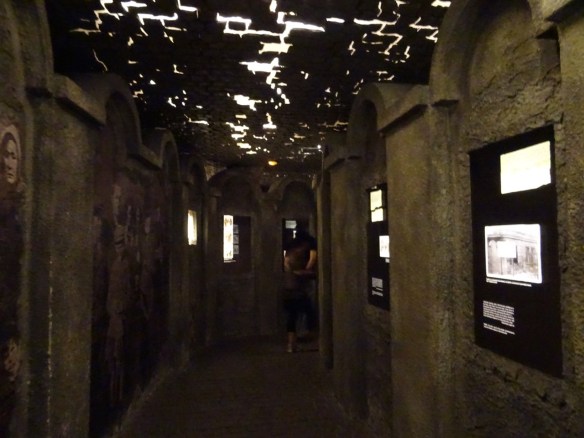 It was thought that starving the Jewish people was an effective way to weaken and destroy the morale of the Jewish population, especially the young people.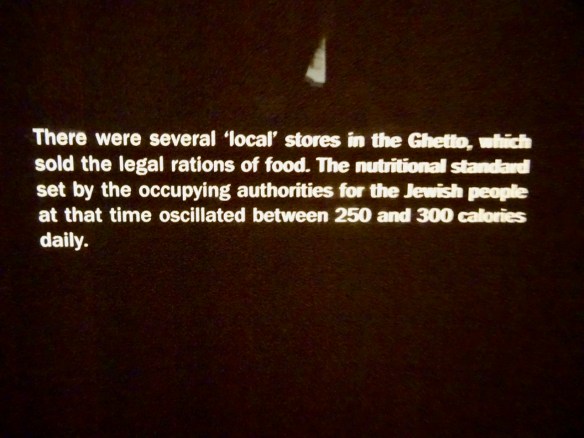
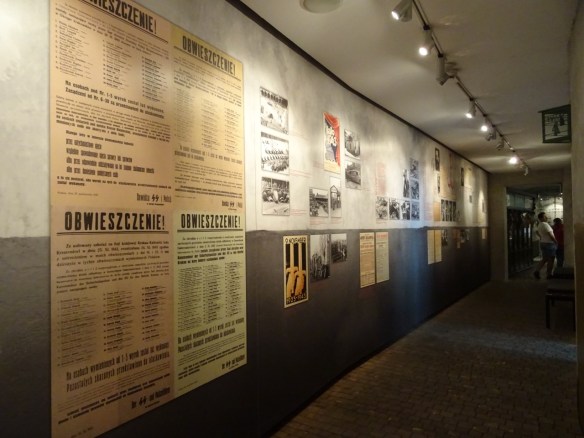
 The corridors are covered in articles and photographs. There is so much to see and read.
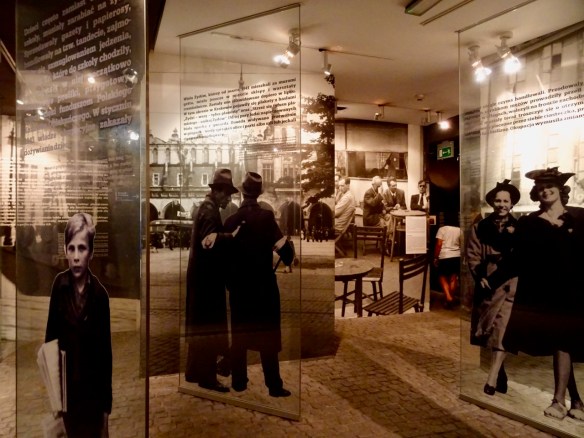
 More exhibits, this one of everyday life in Nazi occupied Krakow. …notice the armband that Jewish people had to wear so they could be identified as Jews.
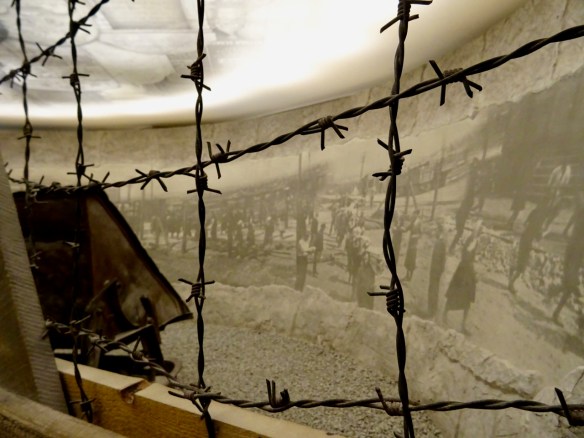
 One of the camps.
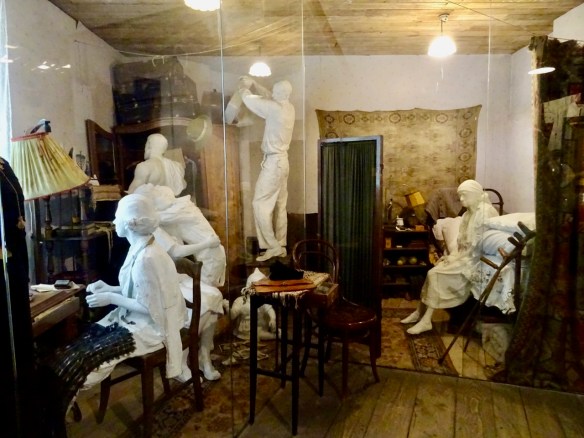
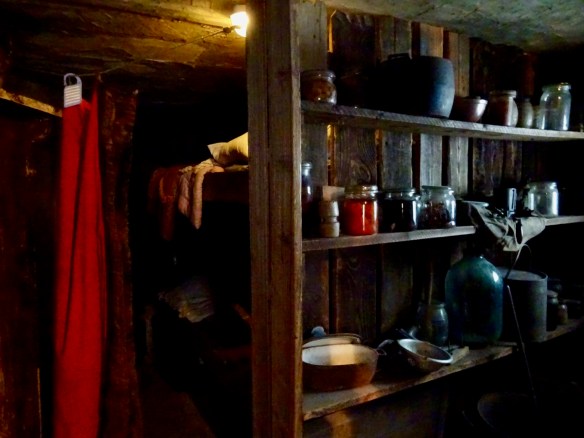
 A hiding place in the cellar of a house in Krakow. Even though it meant death for anyone found helping a Jew, by hiding them or even offering food or assistance of any kind. many of the Polish people did exactly that.
  Oskar Schindler was one of these people. He really wasn’t a man of great character, he lied, cheated and stole what he could, but he was instrumental in saving the lives of 1200 Jews. He also treated the Jews working at his factory better than in any other factory or work camp. There are videos of survivors talking about their experiences during this time.
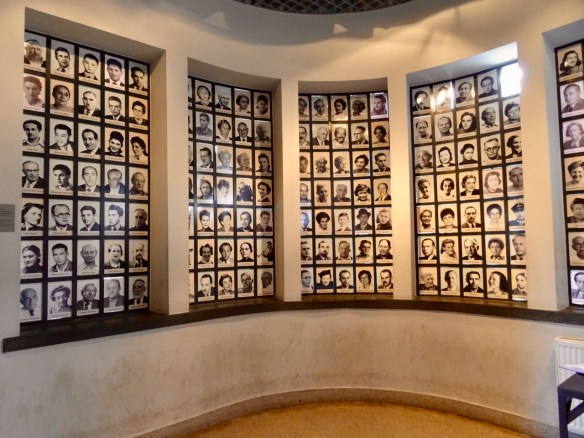
  Some of the people that were saved by Oskar Schindler. Two of the survivors became doctors and one became a Supreme Court judge. Everything in this museum is difficult to watch and listen to, but we need to know and remember what happened. I have heard it said that we need to do this so history will never be repeated, but I wonder. There is so much hatred and racism in the world today that I can no longer believe that something like this will never happen again. It is frightening wondering what the future will bring.
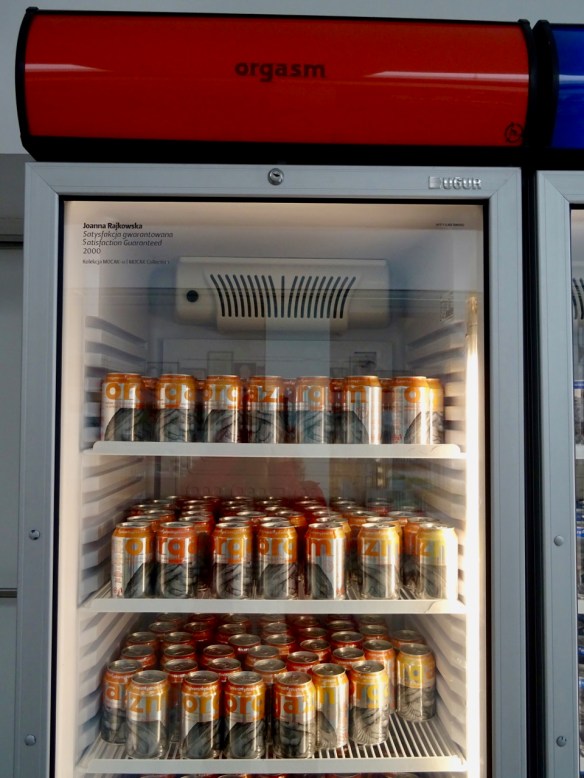
 We stop for tea at the Modern Art Museum cafe. It gives us a chance to recover form the heavy content of the Schindler Museum. On the way out I notice this vending machine. Notice the name of the drink it dispenses.
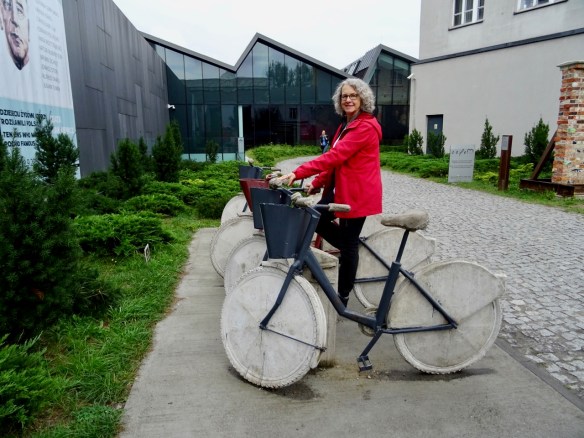
  I try out the cement bicycles…
 and Bob checks out an installation in a town square.
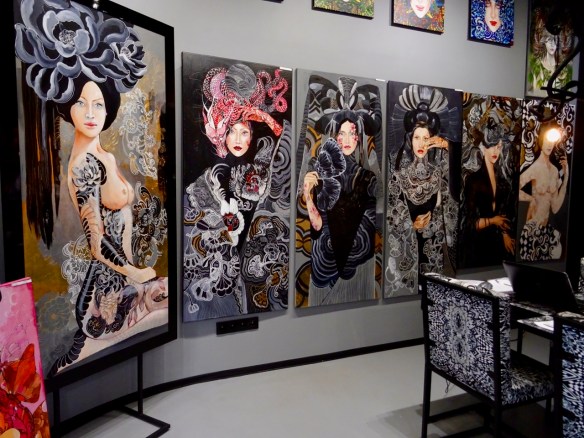
  Interesting artwork in one of the shops we pass.
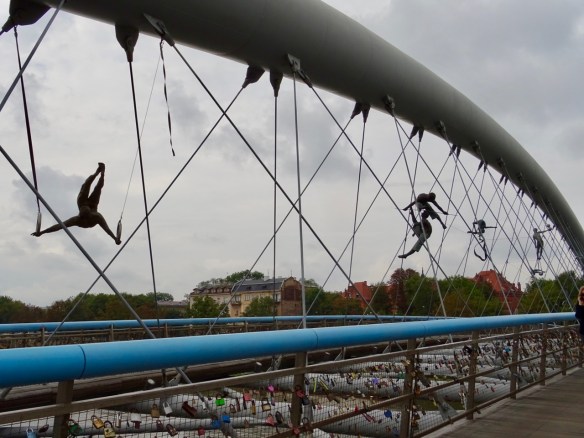
 We cross this pedestrian bridge over the river and we cannot decide how these sculpture stay right upright. They appear to be balancing on cables with no support wires yet somehow manage to stay right side up. We just can’t figure it out.
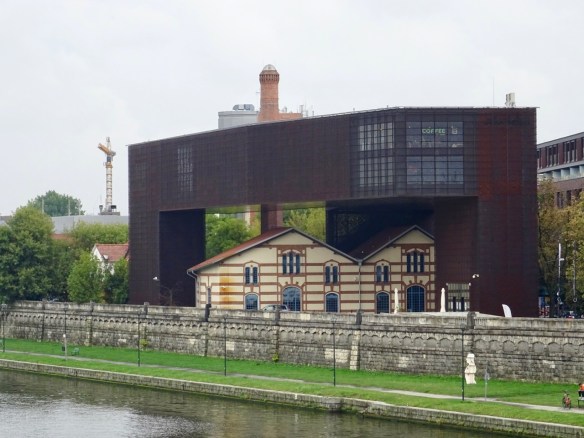
 Here is an interesting way to keep an old building while erecting a new modern one!
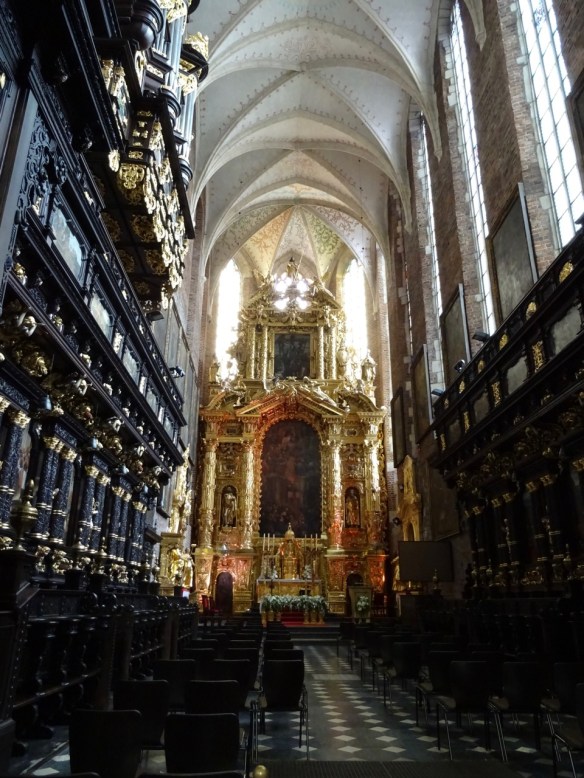
  We stop in at a basilica near the old town which has a very impressive altar. I wonder if it is real gold on all these altars? OK, just did a bit of research and it appears that real gold foil is used.
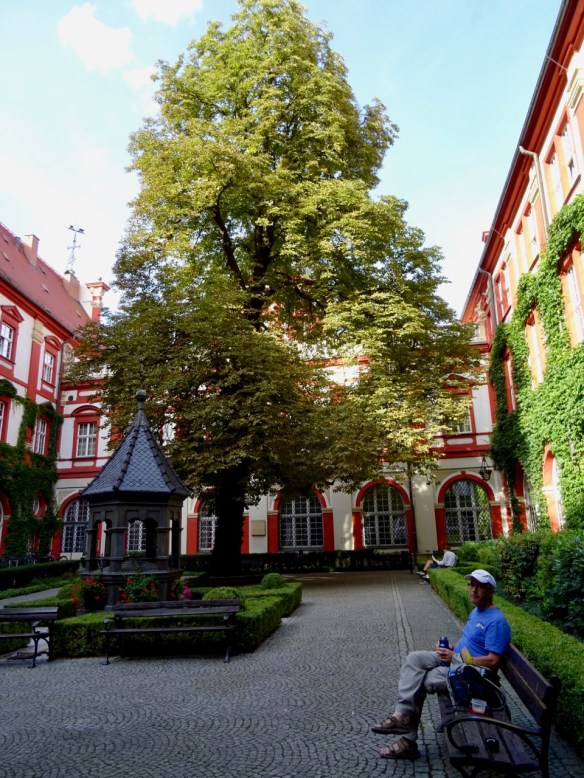
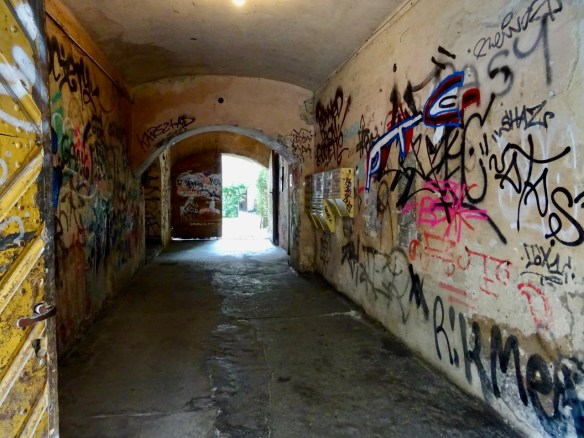
 I always peak into open doorways. They are often not very attractive doors but they sometimes open on beautiful interior courtyards and gardens.
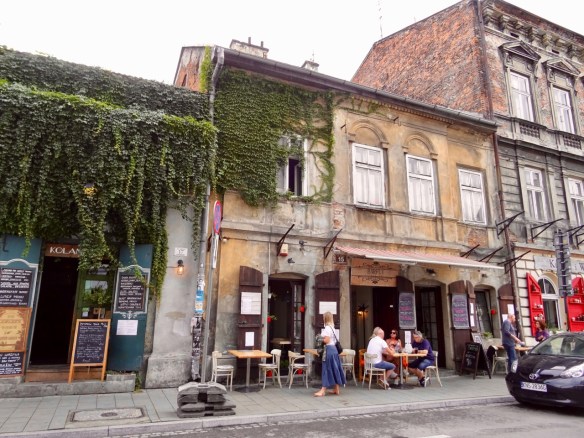
 A typical street side restaurant on our walk back to our apartment.
 More street art on the way home.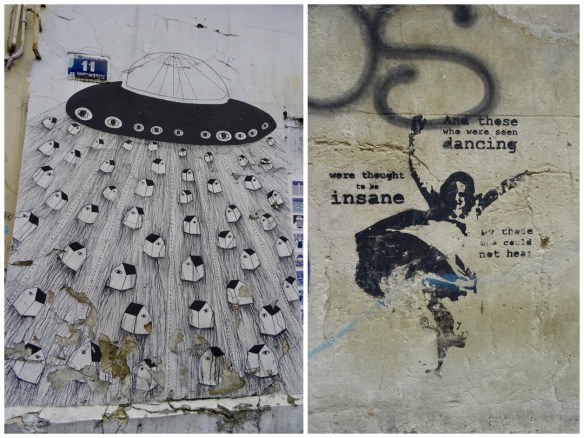
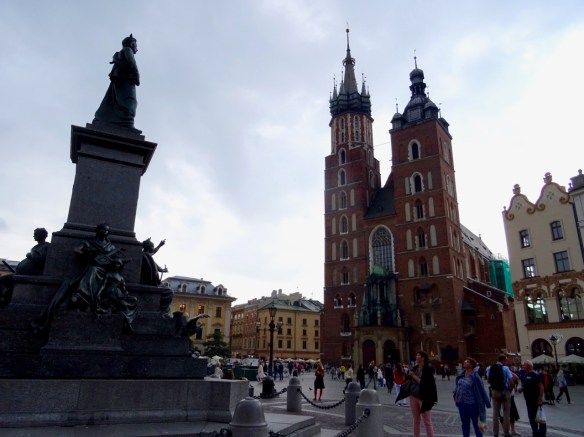
 This church has one of the most impressive altars in all of Poland but there is a service happening so we are not allowed in.
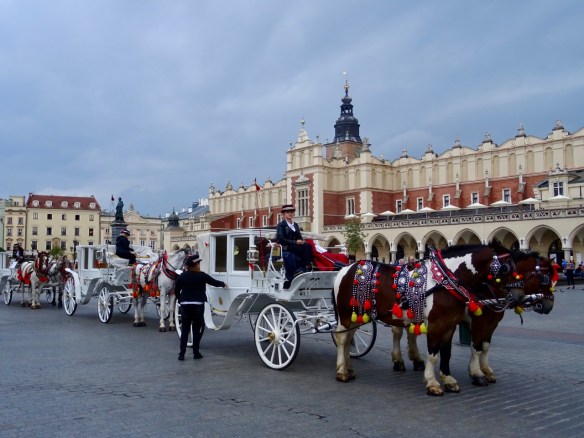
 There are lots of horse drawn carriages for hire. I was tempted but it really felt like the rain was coming.
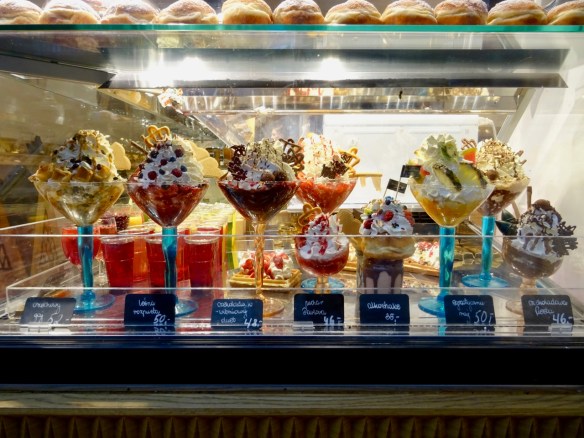
 These are enormous, about a foot high and cost between $14 and $20 each!
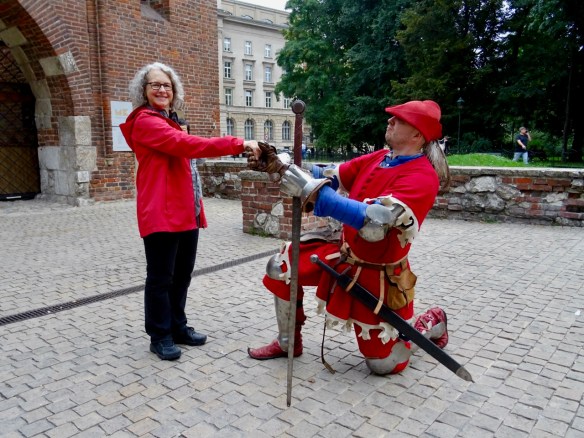
 This guy tried to challenge Bob to a fight, but no luck, so…
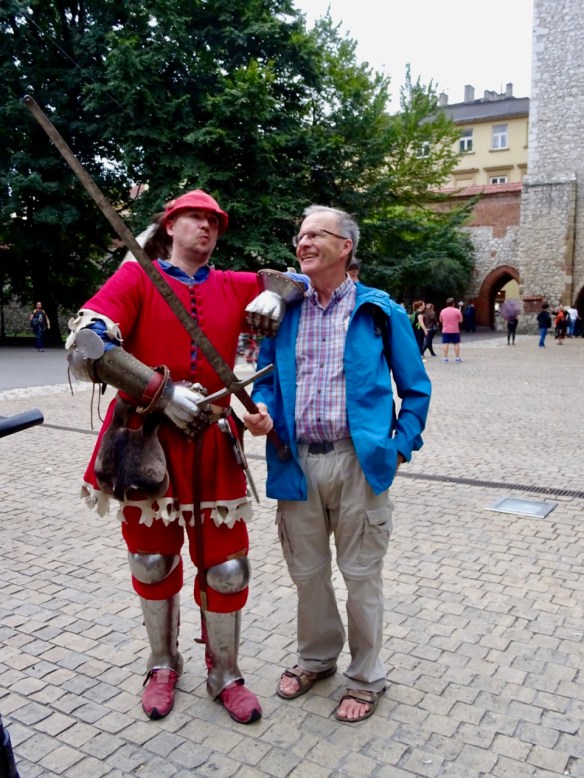 He tried to win me over!
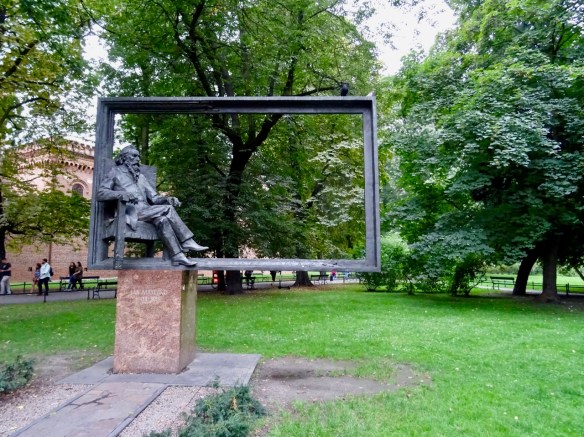
  An interesting sculpture of Jan Matejko who was a 19th-century painter native to Kraków. He is renowned for his large oil-on-canvas paintings of historical events in Poland.
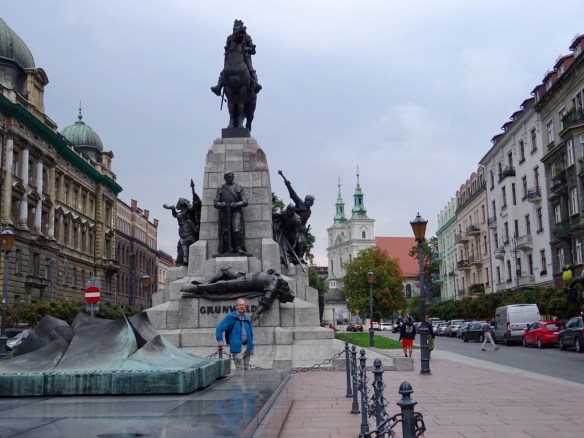
  This street leads towards the train station with its huge attached shopping mall.
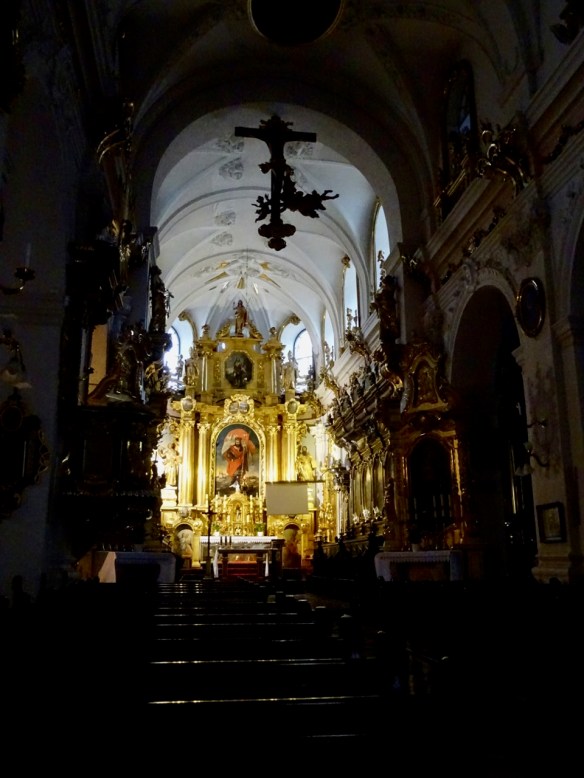
 One more church on the street just before the train station. It was dark inside except for the light shining on the altar.
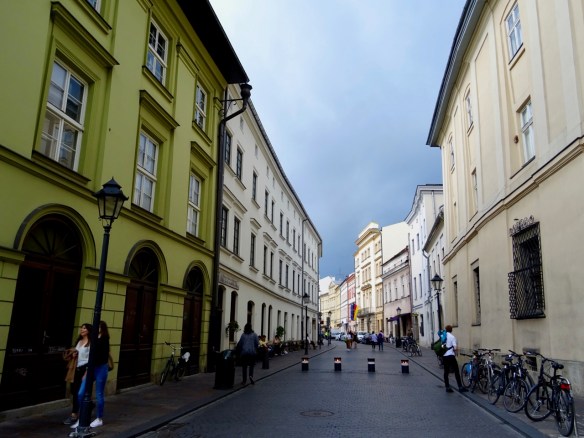
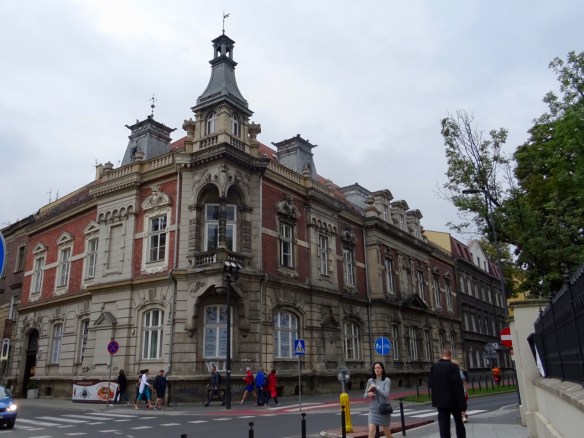
 A typical building in Krakow old town…
 Juxtaposed with the interior of the train station shopping areas. It is huge, three floors with hundreds of very modern shops.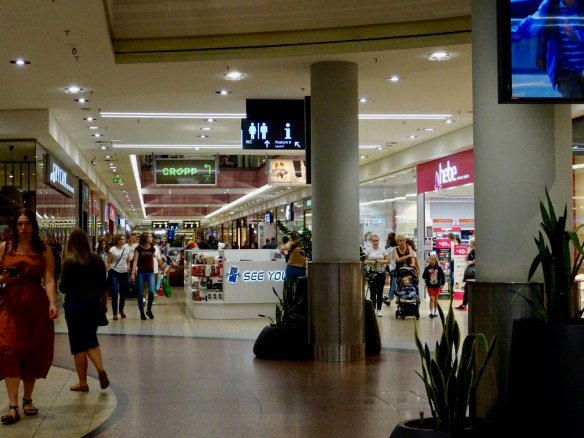












 trudymason.com