Day 30, Tuesday, September 24, 2019
We leave our bnb early this morning so that we will be in time for a tour of the Škoda Car Factory about an hour outside Prague. We have our own personal guide for a three hour tour of the factory and museum, and it only costs us $6 CAD each! Our guide was amazing, She was a school teacher but has been a guide for the factory for six years as it pays much better than teaching. She was incredibly knowledgeable and was able to answer our many questions. This huge mural was on a building just outside the factory.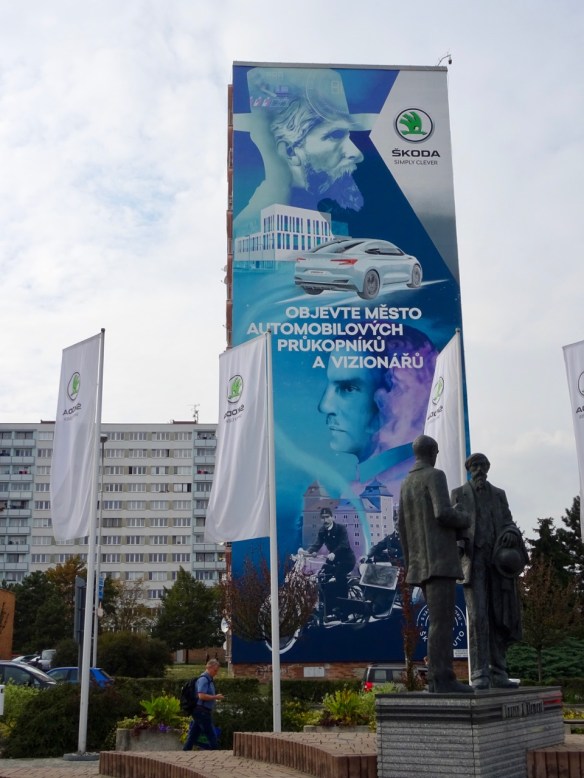 No photos are allowed inside the factory but it is OK if I sketch. It was tough to draw on the tour as we never stayed in one area very long. Our guide Gabriela gave us directions, as we drove our car from one enormous factory building to another.
I wasn’t sure how interesting a car factory would be but it was fascinating. I particularly loved the robots that assembled the car parts. They were like dinosaurs the way they moved, twisting and turning as they manipulated the car parts, as they soldered and assembled them. I ended up taking notes more than drawing.
The factory workers only get two five minute and one thirty minute break during a twelve hour shift! It is also very noisy but no one wears ear protection. We ask Gabriela about that and she says it is recommended but not enforced. She said that in Germany ear protection would be mandatory.
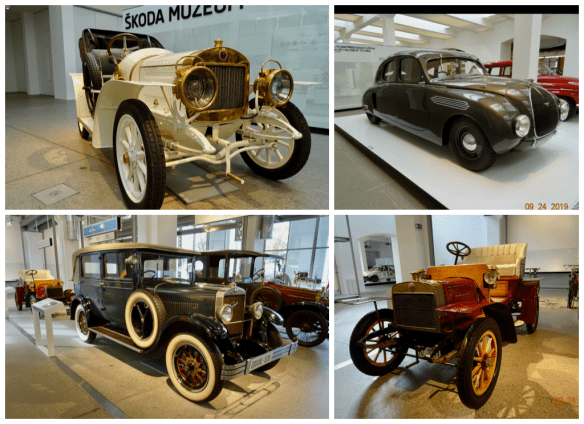
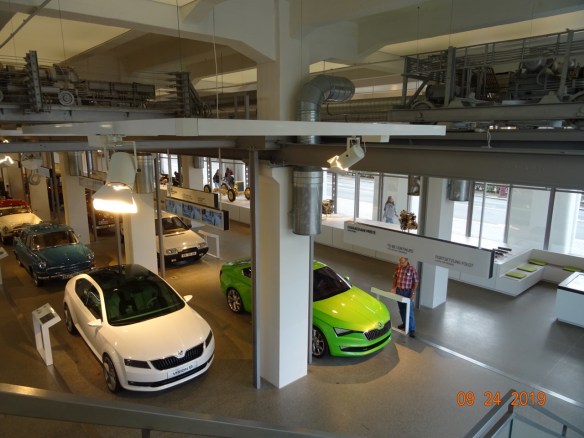
The sketch on the second page is of self directed ‘travelling’ robots that move parts from one section of a building to another. These robots follow magnetized lines painted on the floor. We had to be careful to keep out of the way of these robots as well as the vehicles with human drivers. I am actually surprised that there are not more stringent rules about where we can and can not walk.  After our two hour tour of the factory we have another hour tour of the museum where Gabriela talks about all the cars. I am not a car enthusiast but I found it all quite interesting. Here are a few of the Škoda cars from the museum.
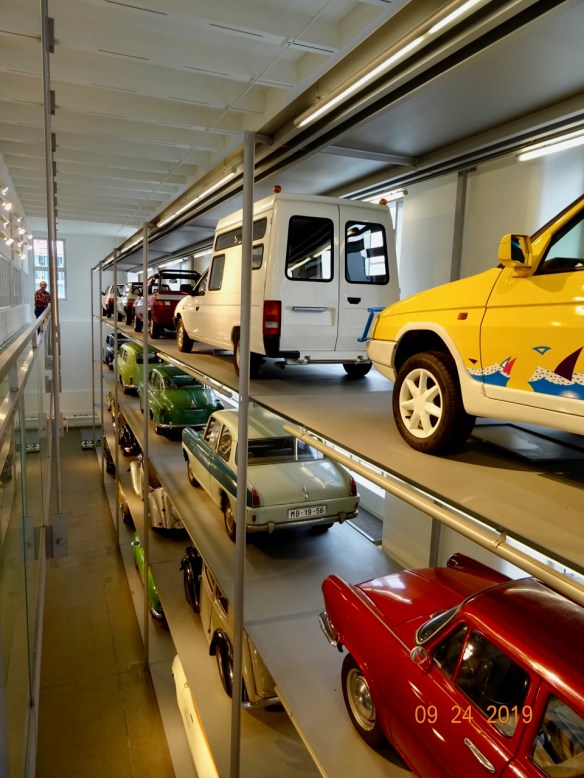
  One area has cars four levels deep. We also went into a special area with Škoda race cars, but we didn’t have the camera with us then.
 The museum used to be an old factory building. You can still see some of the cranes and other machinery high above us.
 This was fun! We put on virtual reality goggles and earphones and got to ‘drive’ one of the vehicles through early 19th century Prague. Soon it was time to drive our rental Škoda to Prague and find our next Airbnb.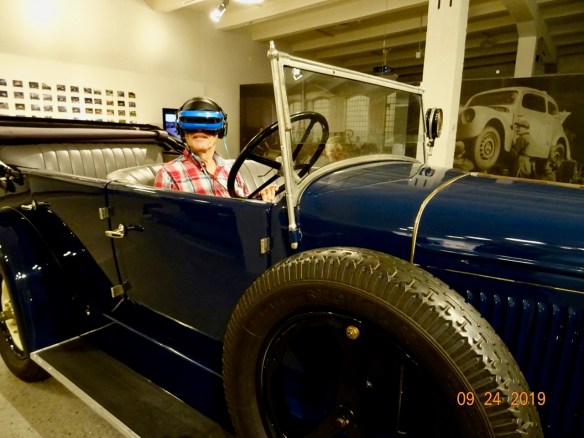
We were very lucky and found a parking spot right in front of our apartment to unload our stuff, but it was a resident’s only space. After we unload, we drove around trying to find a spot where we could park our car for the night. It was impossible! We drove around for close to an hour and we weren’t able to find a parking space anywhere.
Bob finally decided that we should drive to the train station and park there, as that is where we will return the car tomorrow. Then we need to walk home. It is about a half hour walk, in the dark, uphill most of the way! We are both tired and hungry by the time we get home, but happy that we found somewhere to leave the car. You really do not want to have a car in the central part of European cities unless you have a designated parking space!
 We walk through the Zwinger Palace grounds.
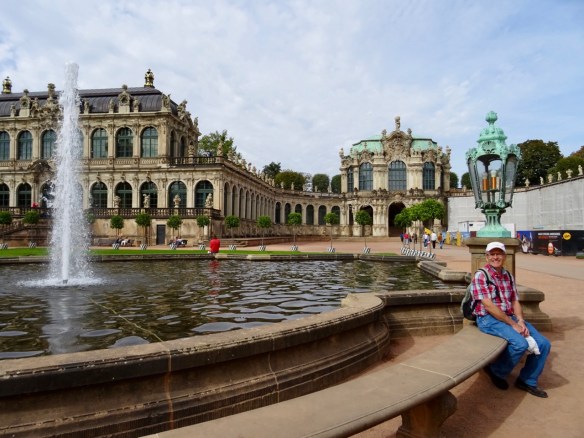 There are a lot of beautiful buildings here, which is surprising because Dresden was heavily bombed during the Second World War.
 I don’t know what these buildings are but we enjoyed walking about and looking at their exteriors.
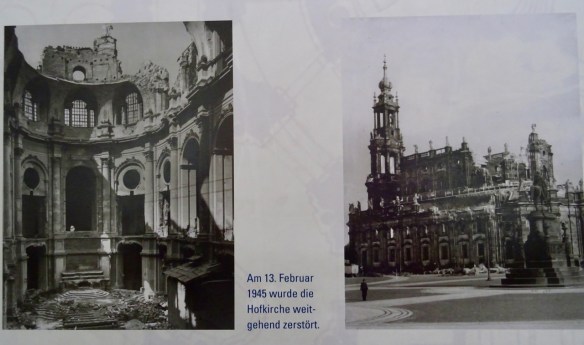
 We go inside the Dresden Cathedral, which was heavily damaged during war but was restored by 1962.
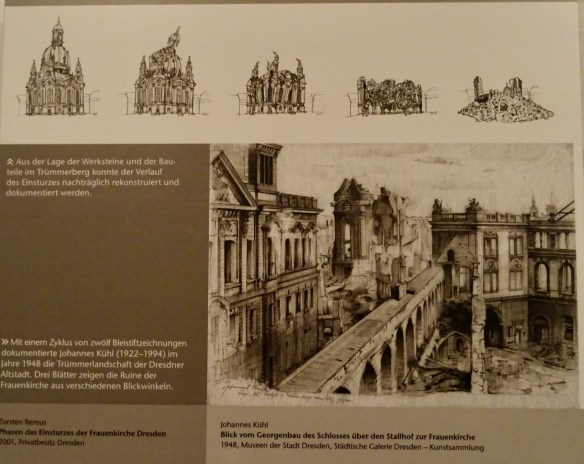
 Here are photos showing the damage caused by the bombing.
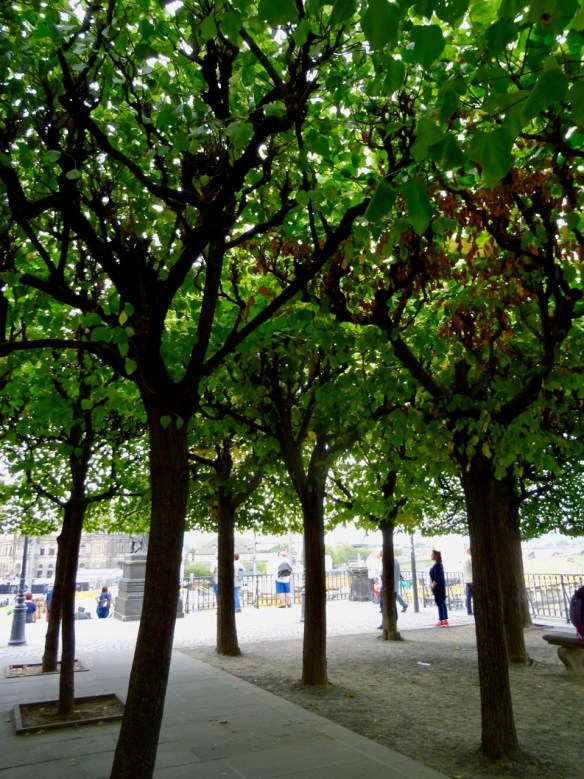
 We walk along the Elbe River, looking for a bathroom, or WC as they are called here. They are few and far between! We do find this lovely terrace where the trees form a canopy over the whole area.
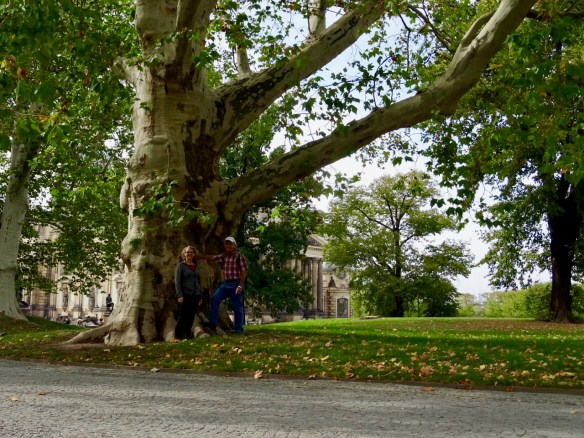
 While we were still looking for the elusive WC’s, that were marked on our map but didn’t seem to be anywhere to be found, we discover this beautiful big tree that begged us to take its photo.
 The Frauenkirche Dresden, or Church of Our Lady is a Luthern Church that was almost completely destroyed during the war. Only parts of its crypts remained intact. The interior is very beautiful with luminous pastel colours and lots of light.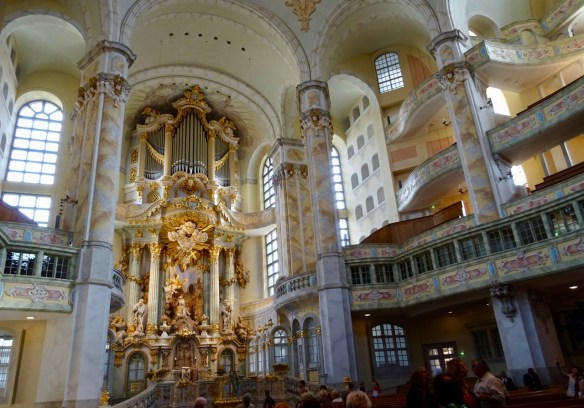
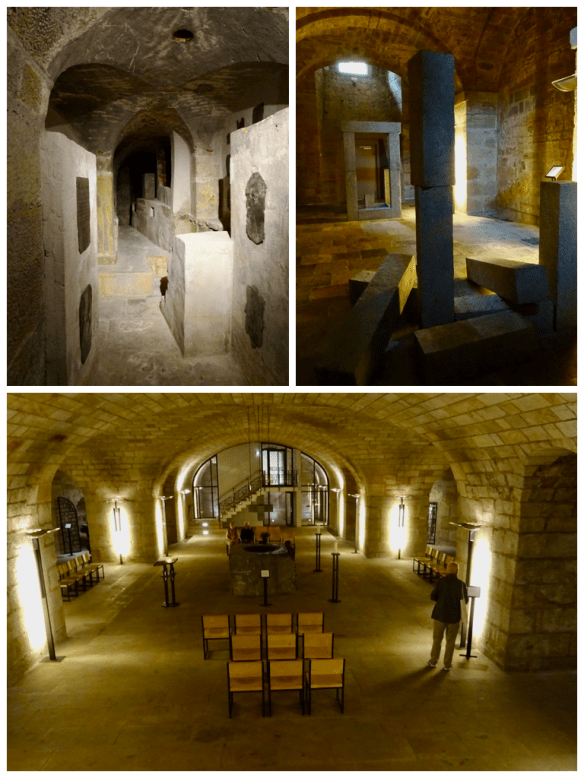
 The crypt was huge, not what we were expecting at all. There were modern sculptures displayed here. This one shows ‘Construction’ and ‘Destruction’ opposite each other.
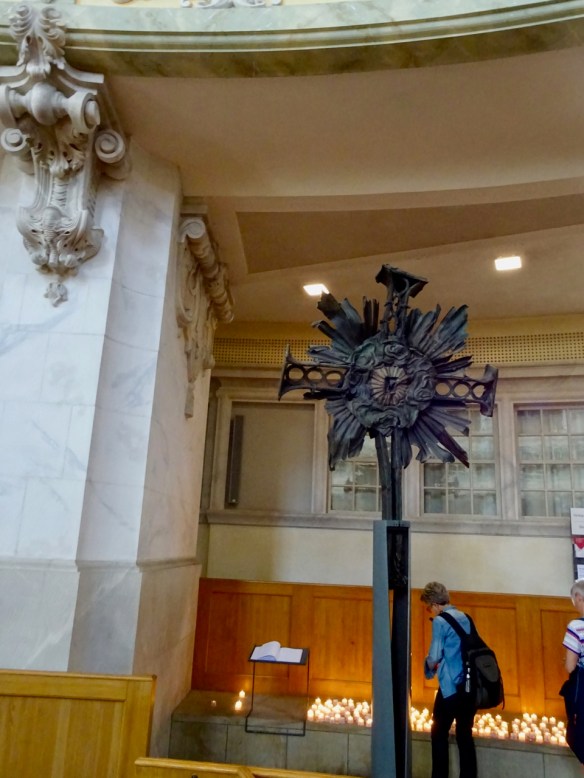
 This burned and twisted cross is from the original church.
 Here is the church from our vantage point in the square outside. The dark stones are the ones that were from the original church.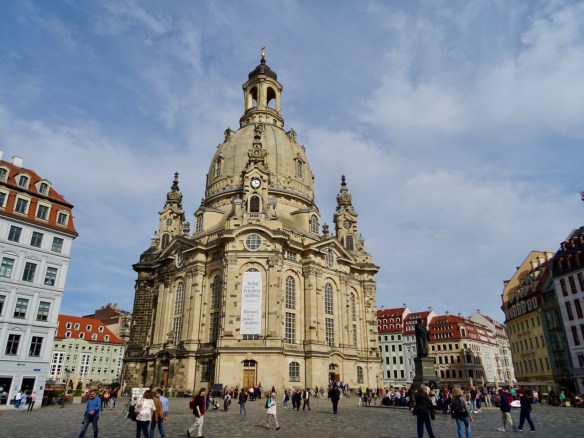
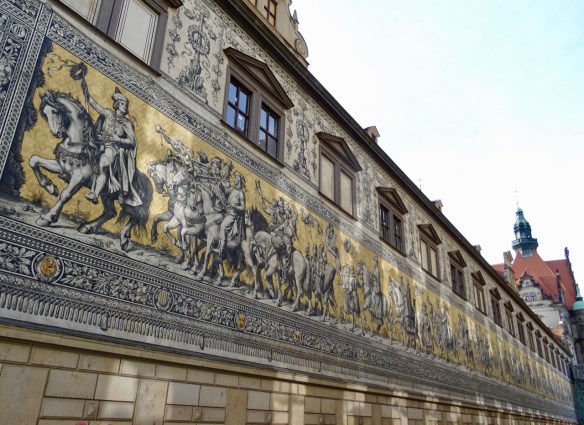
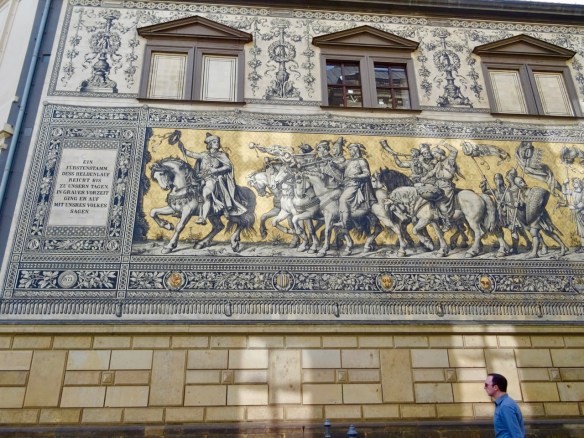 This is an impressive sight, and the detail is amazing. It is also amazing that this mural survived the bombing of Dresden with minimal damage.
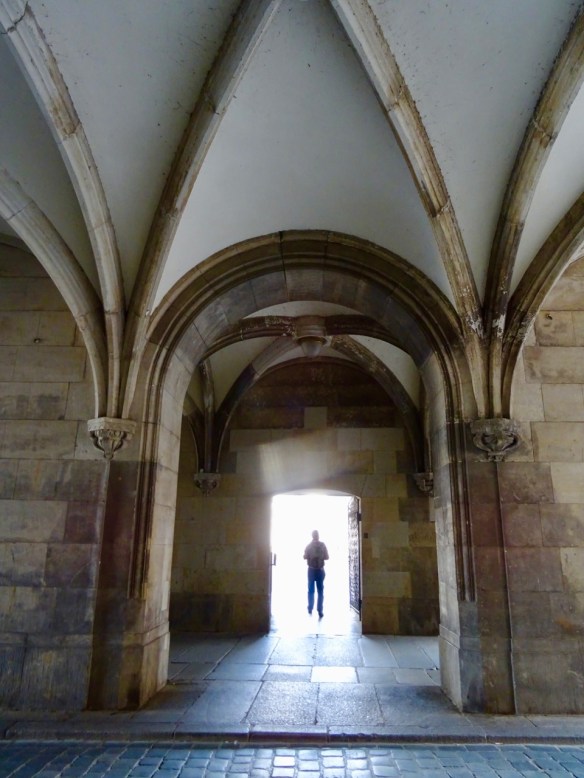
 We notice a doorway…looks like Bob is ‘walking towards the light’!
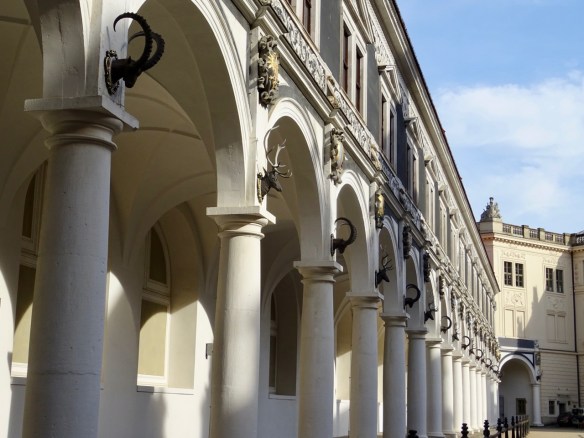
 The doorway opens on this courtyard with a different horned animal on each pillar. I think someone liked hunting?
 Back to the Zwinger Palace and Bob discovers that we can walk up to the elevated walkway for some great views of the palace and its grounds.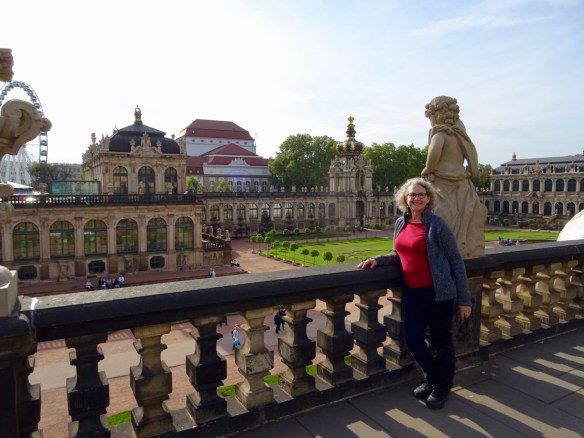
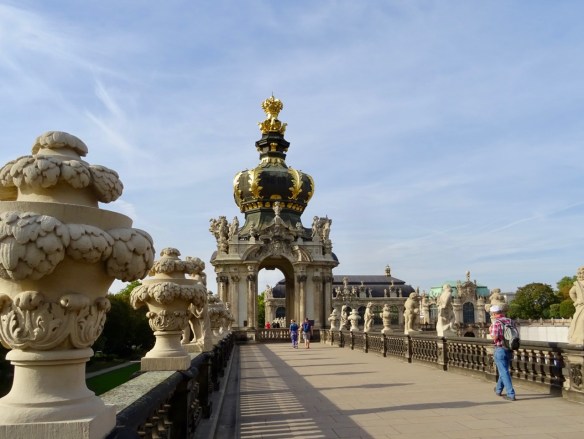
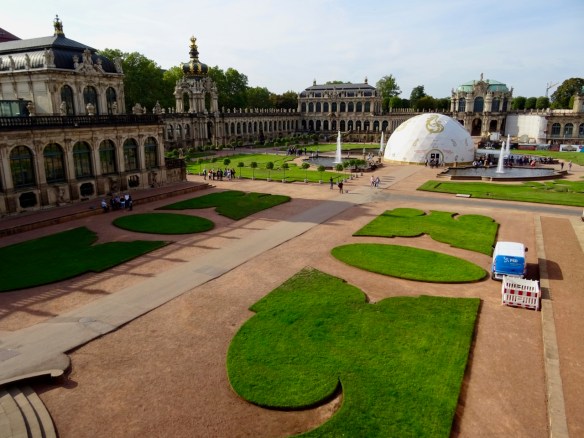 Statues line the walkway and this dome is over the entrance to the grounds.
 There are some interesting sculptures on the interior walls of the palace and one of the walls has fountains all along its length.
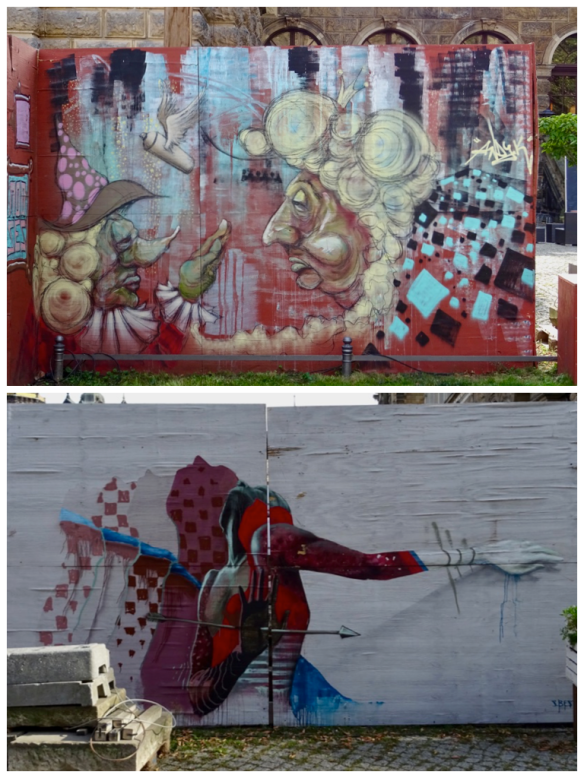
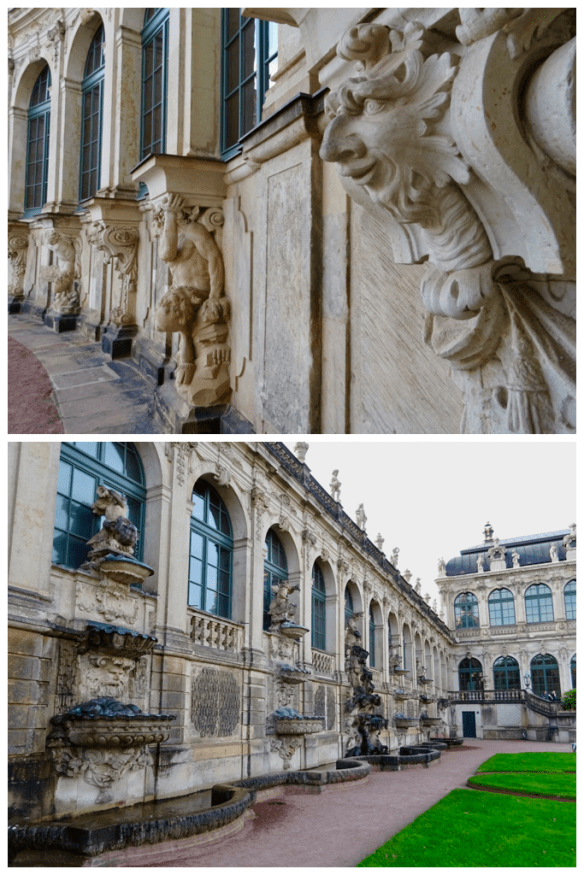 There is some work taking place on the outside wall of the palace and I really liked the graffiti on the construction barricades.
 We end our day with a ride on the ferris wheel. It has been many years since we were last on a ferris wheel.
 Here are some views from the top of the ferris wheel. The people and cars below are very tiny!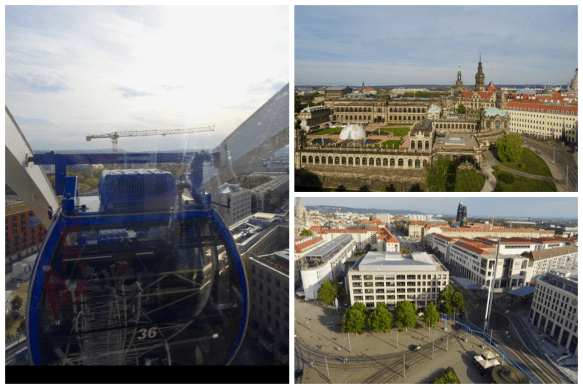
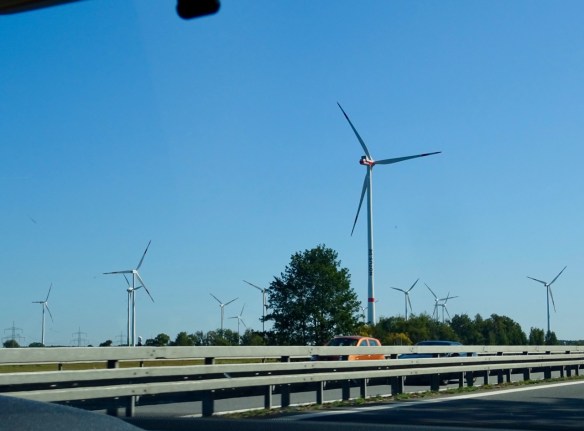
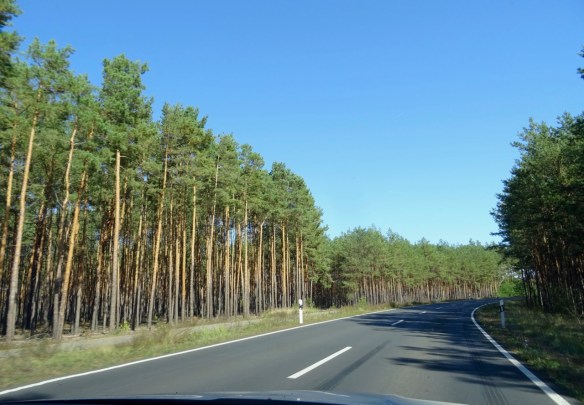 and lots of windmill farms.
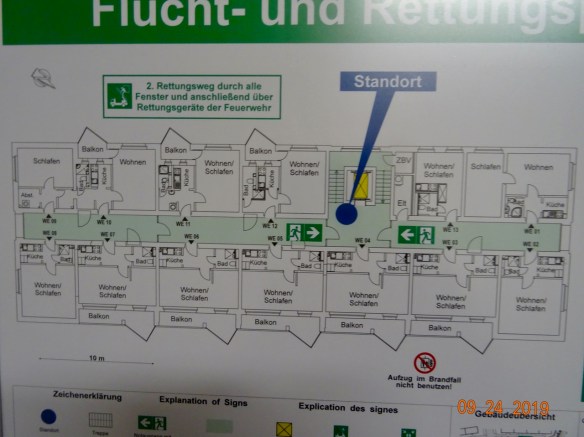
 Our new apartment in Dresden is tiny!
 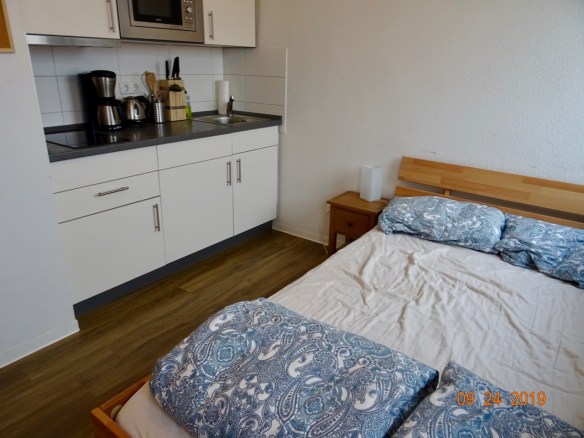 This is it, other than an equally tiny bathroom.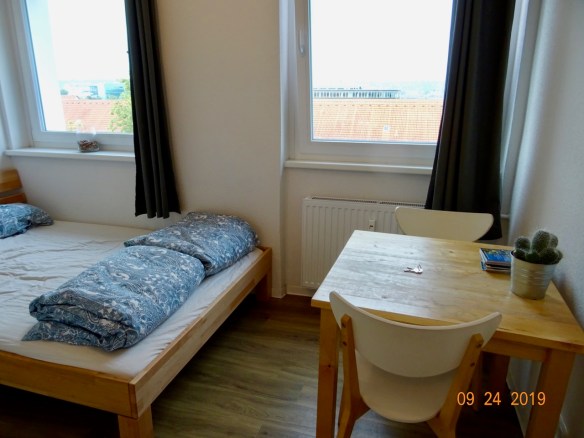
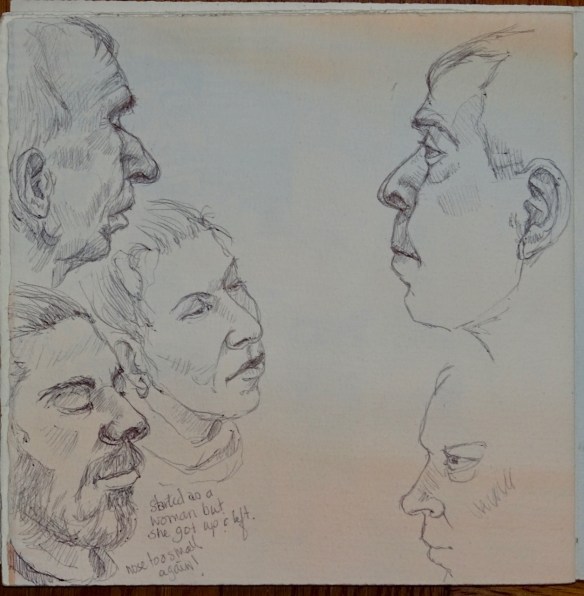
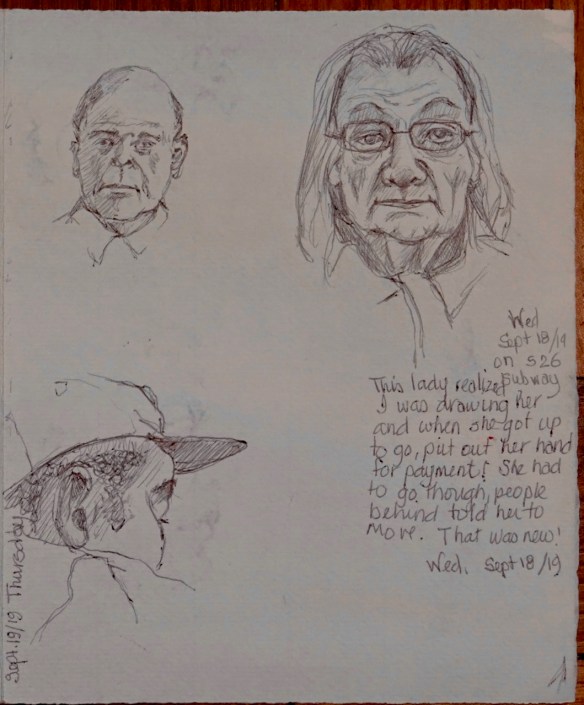
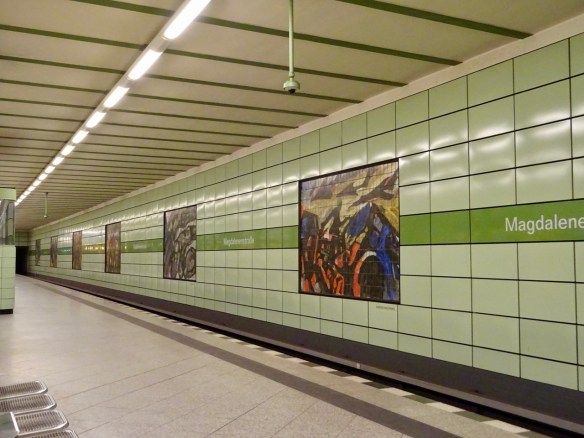
 Here are some metro sketches from Berlin that I forgot to post.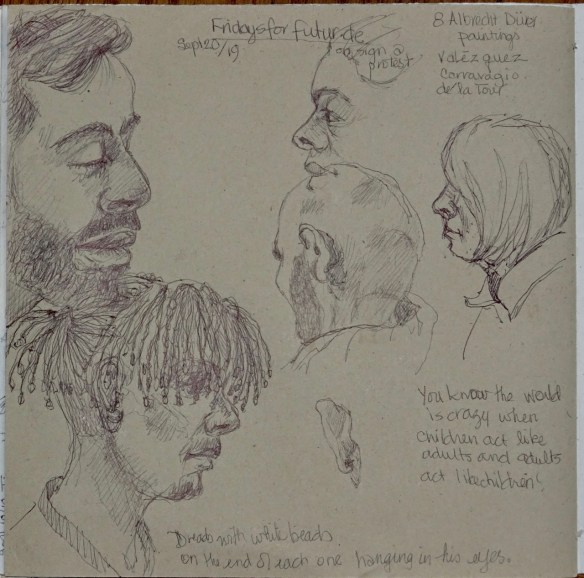
 The grounds in front of the palace. We have our picnic lunch and then visit the Bildergalerie.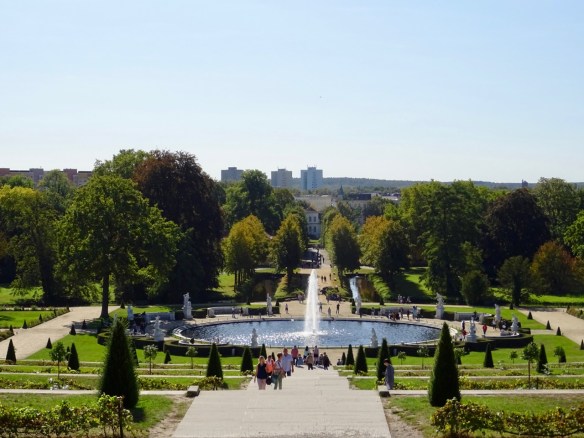
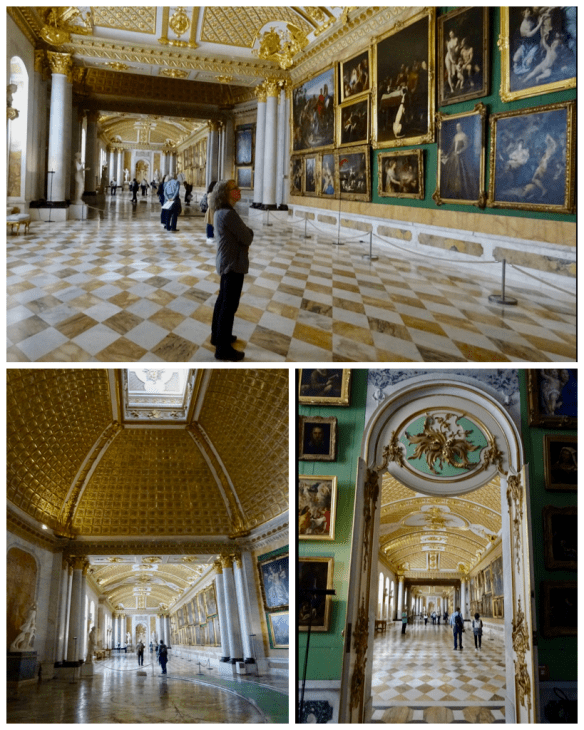
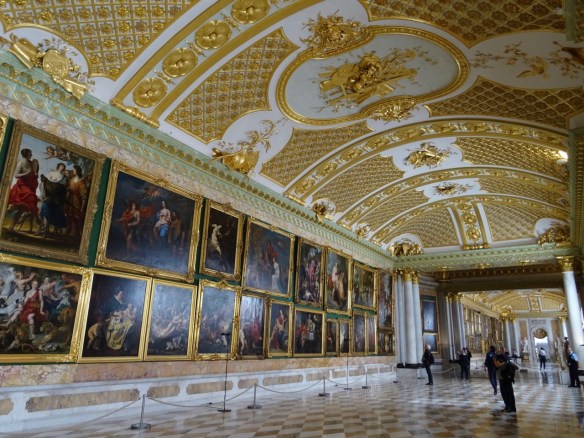 connected by a round room with a vaulted gold ceiling. At the far end there is a room for small paintings. The last photo is taken looking out from this room. There are a lot of beautiful paintings but they were a bit hard to see because of the glare from the windows on the opposite wall. I am surprised that they allow the much sunlight to enter the gallery, but it did make the space bright and very attractive.
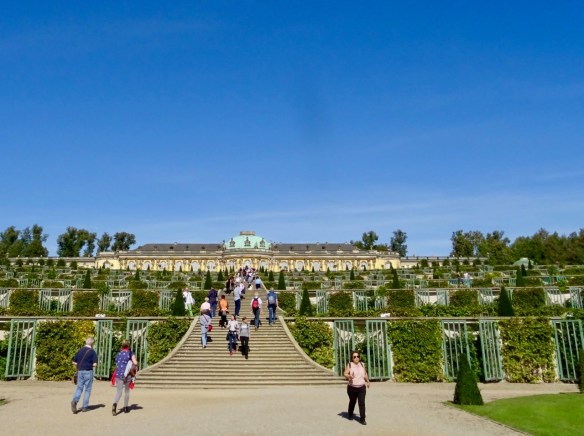
 We still had a bit of time before our palace visit so we walked down to the gardens. The layout here is reminiscent of Versailles in France, only on a smaller scale.
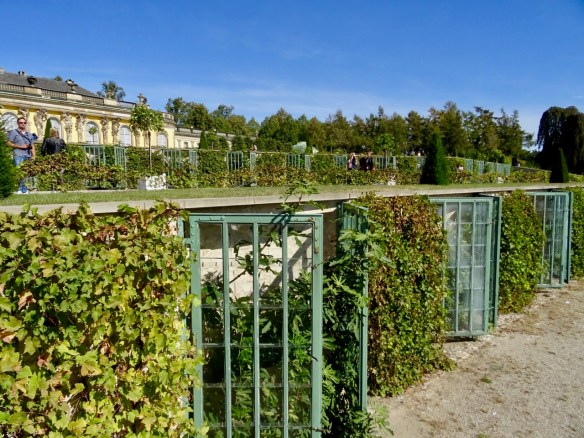
  All the terraces have these nooks with glass doors that can close when cold to protect the plants. Frederich loved to garden and grow fruit trees and grapes.
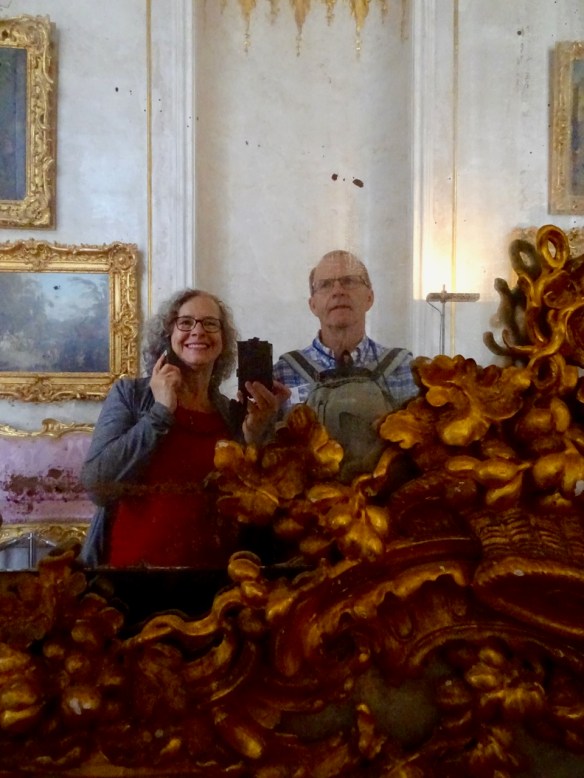
 We enter the palace and take this selfie in the first room. It contains artwork and is an entrance hallway, not very wide at all.
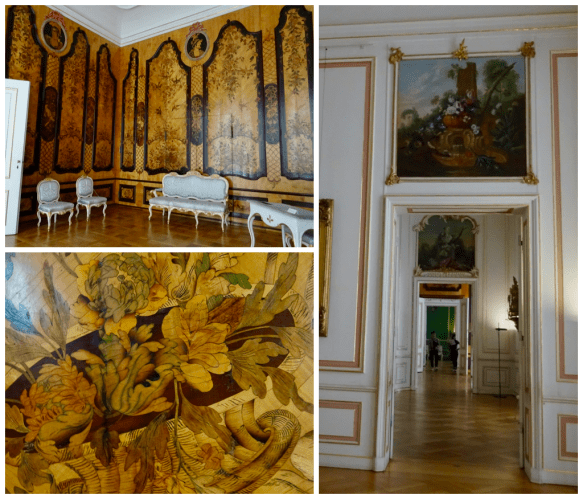
 The palace only contains twelve rooms. They are all connected by doors in a straight line that lead from one room to another. The room below is panelled in wood with inlaid botanical designs. They are very intricate.
 We walk through the rooms, each seeming to be a bit more elaborate than the next.
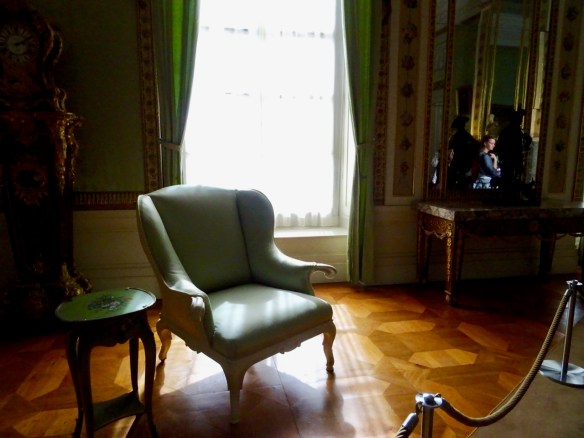
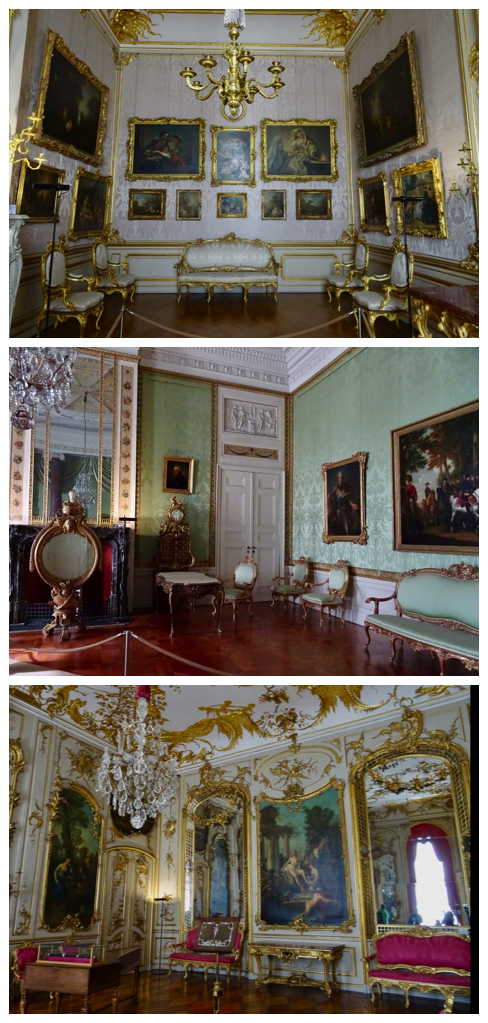 The green room above was Frederick’s study. He suffered from asthma, gout and other ailments and he often slept in the green chair below as it was too difficult to lie in a bed. He died in this chair when he was 74.
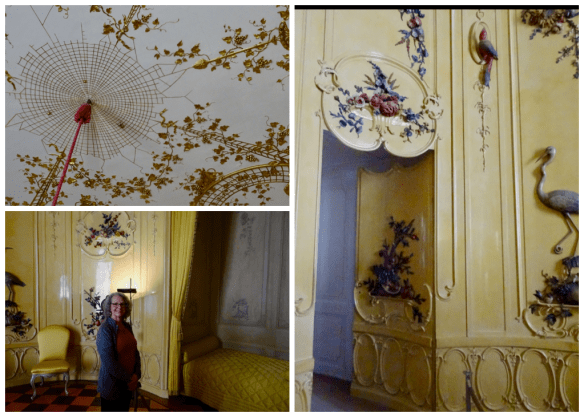
 Frederick loved nature and the palace was decorated with botanical themes. The palace was his refuge and he lived there from April to October. Sanssouci is from the French “sans soucci”, which means “without worry”. Frederick was married but lived separately from his wife. He only married because his father threatened him with imprisonment if he did not comply. His father was very strict and made his Frederick’s life miserable. He had a miserable childhood as his father thought him effeminate and tried to change him. Frederick was gay and surrounded himself with male friends and companions at Sanssouci. Women were not welcome there. The yellow room below has raised carved decorations, and a sleeping nook for the bed, as did all the bedrooms. Notice the spiders on the ceiling decoration.
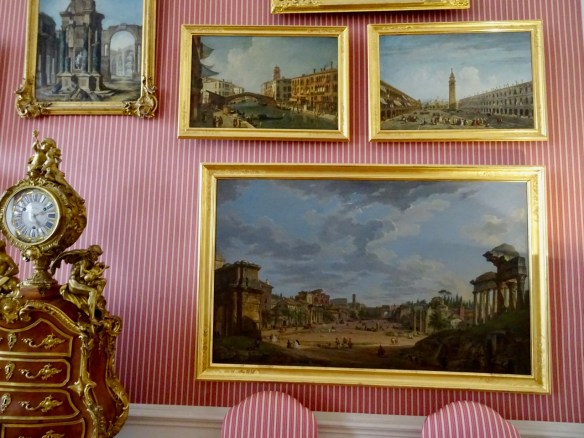
 Frederick was unable to travel to Rome and Venice but his palace had many paintings of these cities, which he greatly admired. I think how lucky we have been to visit these cities.
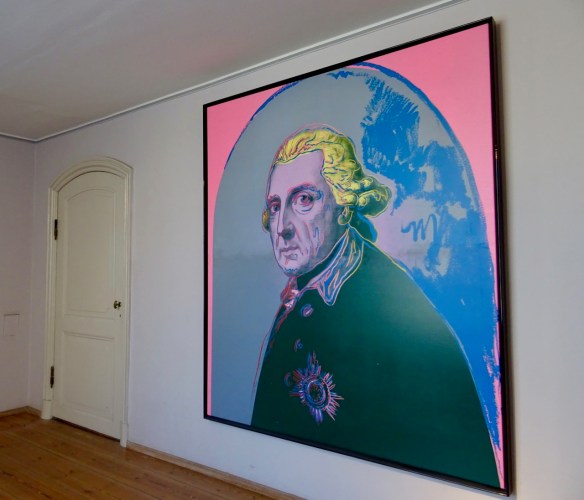
 As we exit the palace there is a huge painting of Frederick the Great by Andy Warhol. It is quite a dramatic change from the other artwork we have seen here.
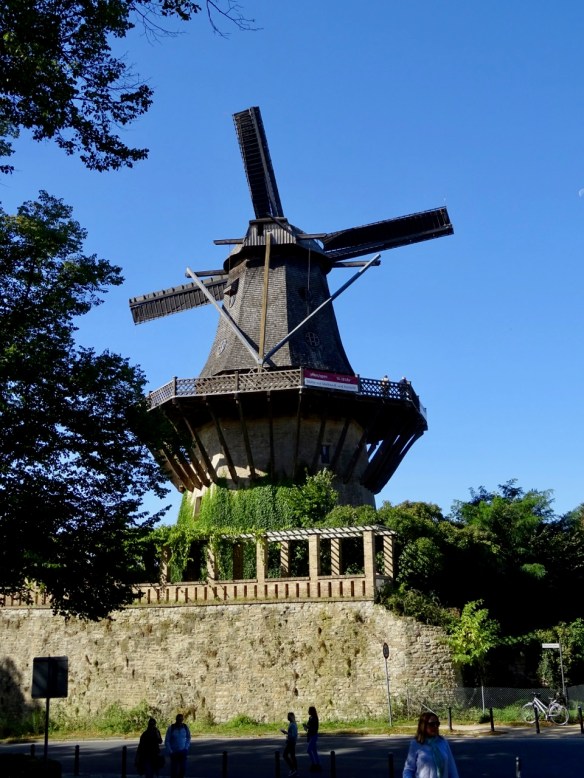
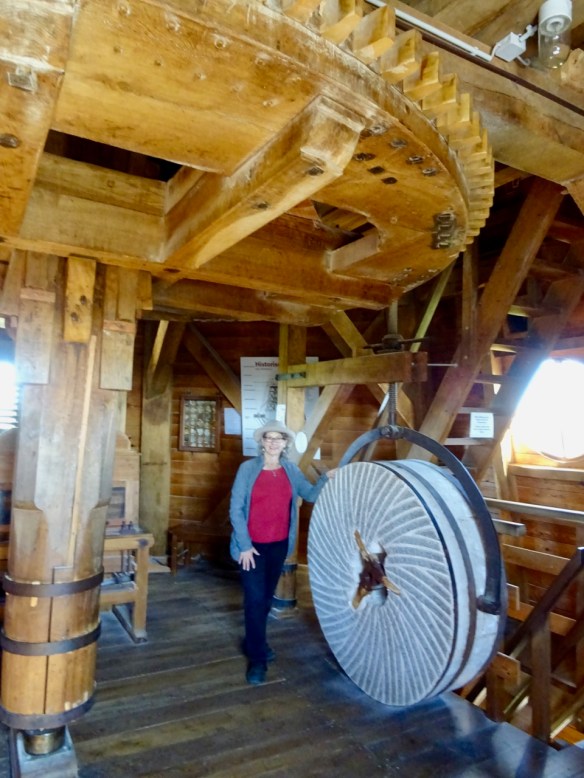
 We climb the interior of the windmill and step outside to check out the huge blades.
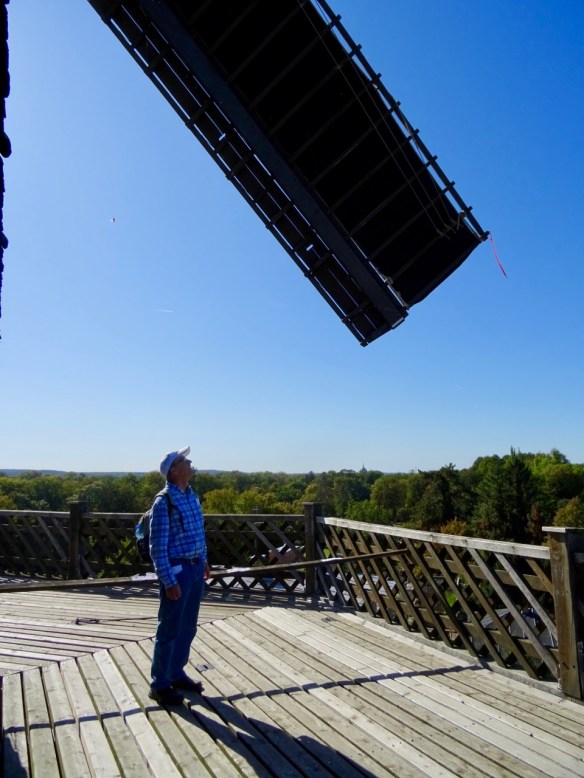 This is still a working windmill. We are amazed at the size of the wooden wheels and cogs.
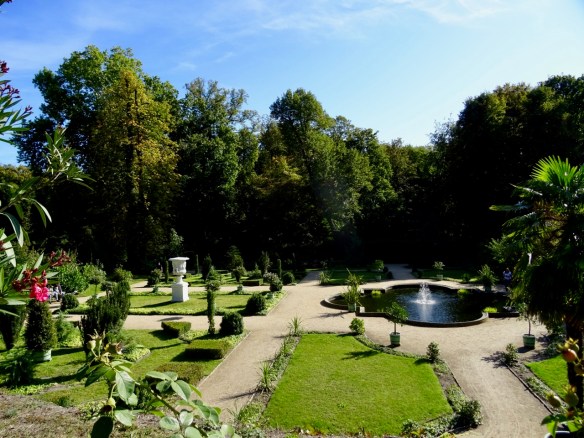
 We walk through the park with its gardens and fountains towards the Orangerie.
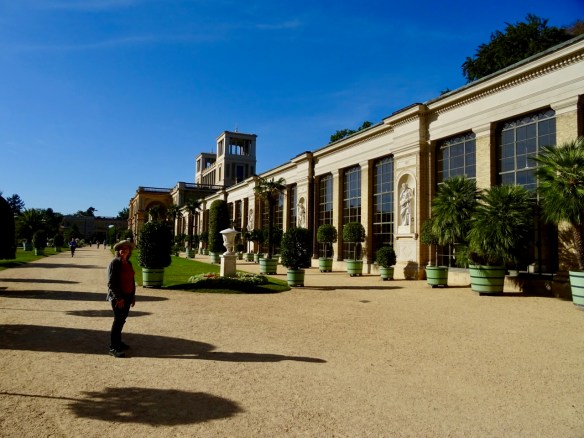
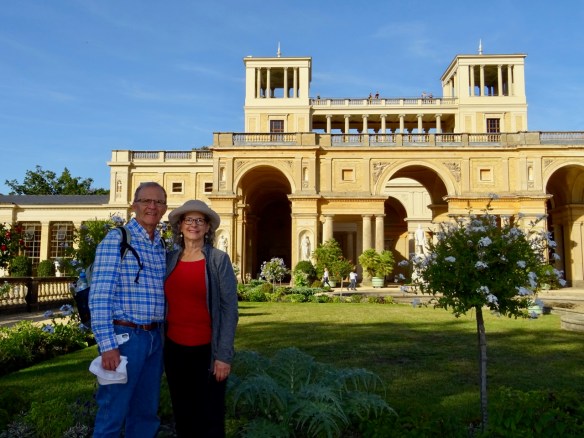
 Wow! We have never seen an orangerie this large. It is enormous! This photo shows one wing and the entrance behind me. There is another wing just as long on the other side of that entrance. This Orangerie was built by Frederich William IV in 1851-1864. It is 300 meters long.
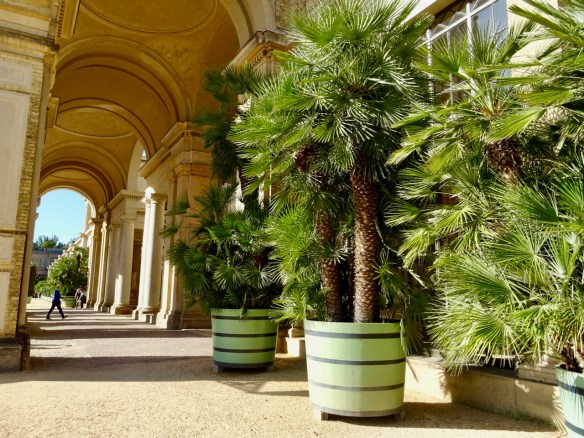
 Looking inside one of the wings of this huge orangerie. This is where all the potted plants that would not survive winter temperatures are kept. Like the potted plants in the photo above,
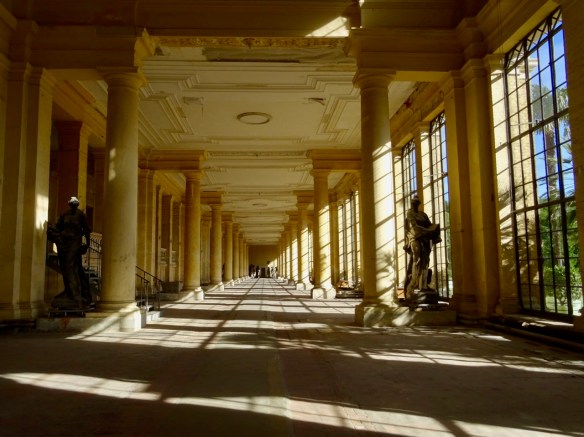 Some of the plants are huge. These large potted palms definitely need a fork lift to be moved. No idea how they ever transplant them when needed? The pots are almost as tall as I am!
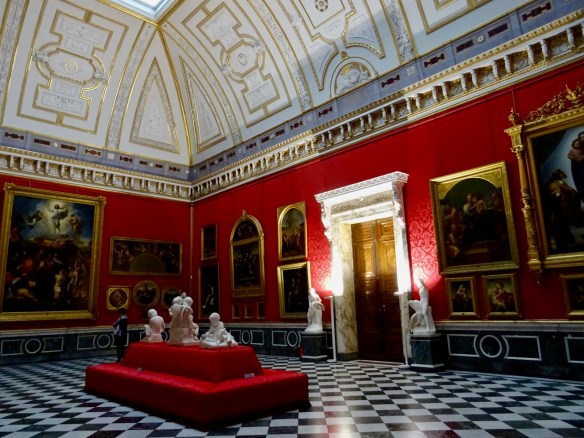
 We are surprised to find more furnished rooms and another art gallery in the Orangerie. The Raphael Hall has over 50 copies of Renaissance paintings.
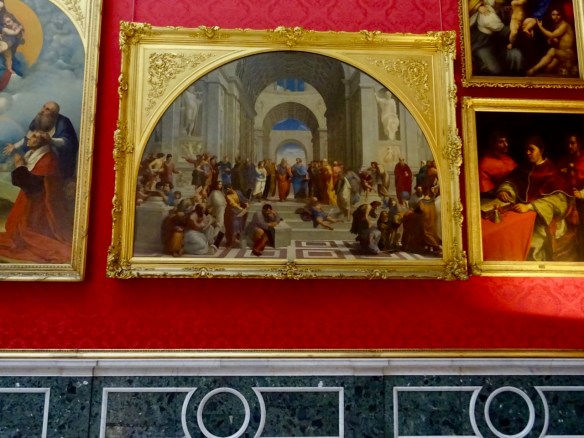
 We saw the original of this painting in Italy at the Vatican.
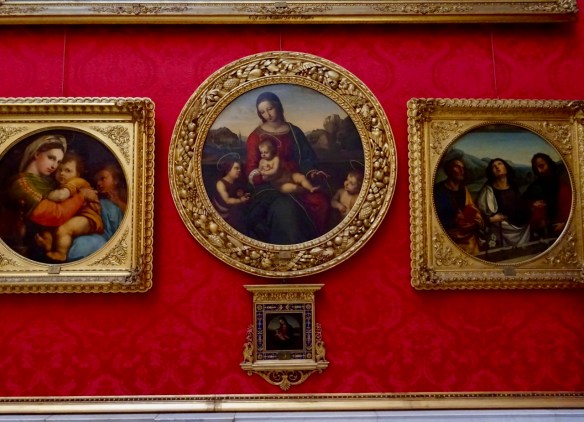
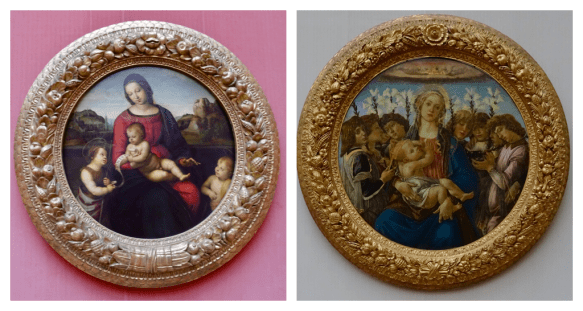
 Do you recognize the tondo by Raphael that we saw at the Gemäldegalerie earlier this week? Interesting how copying famous artworks was such a common accepted practice. Today I think it would be called forgery.
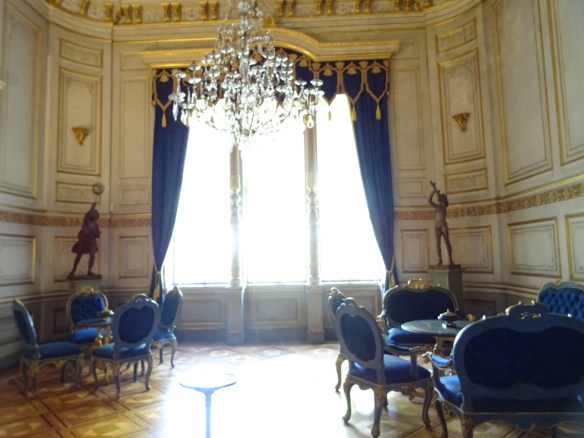
 Another room in the Orangerie Palace.
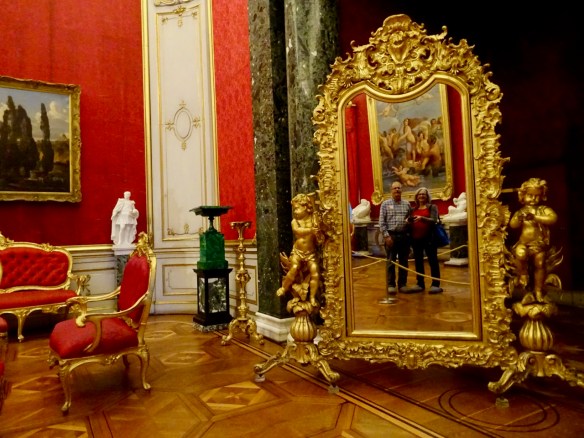
 And another selfie reflection in a very ornate mirror. Notice our big slippers!
 These are some of the stairs we climb to the top of the Orangerie.
  And more stairs…
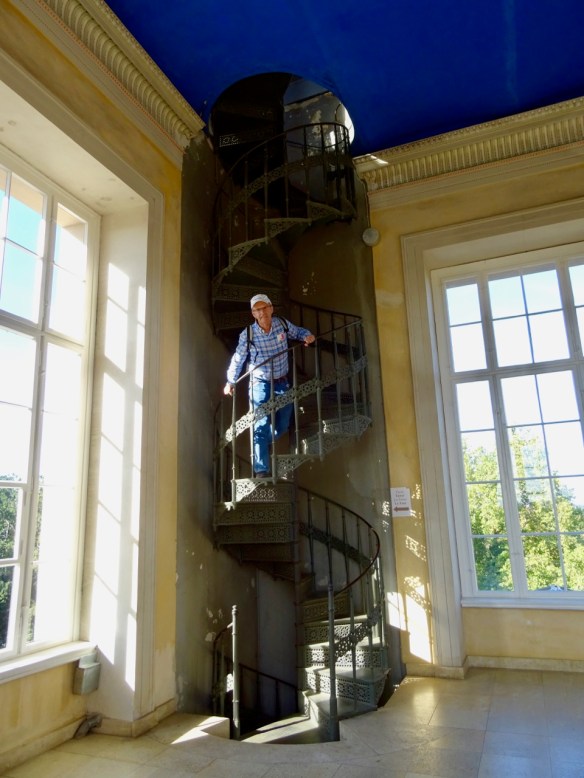 to get this view.
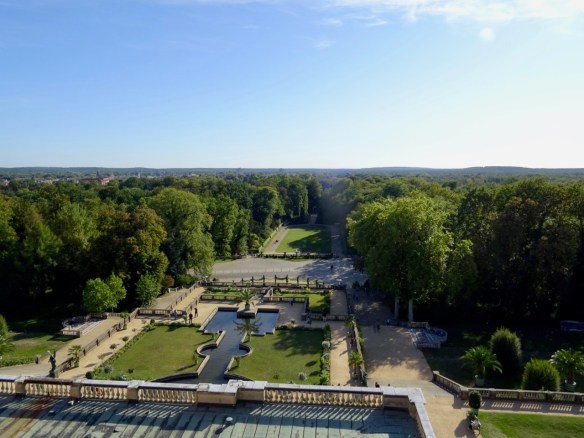 There is the East wing of this enormous building.
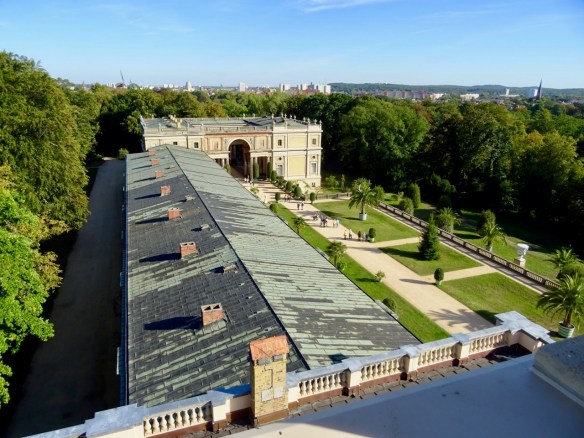 That dome way in the distance is another palace. The New Palace, built by King Frederick, is the largest and most impressive complex at Sansoucci, but it is way too far of a walk for us today and the park is closing soon.
 In front of the Orangerie.
 Every path here has a view at the end of it…something to entice you to walk and explore.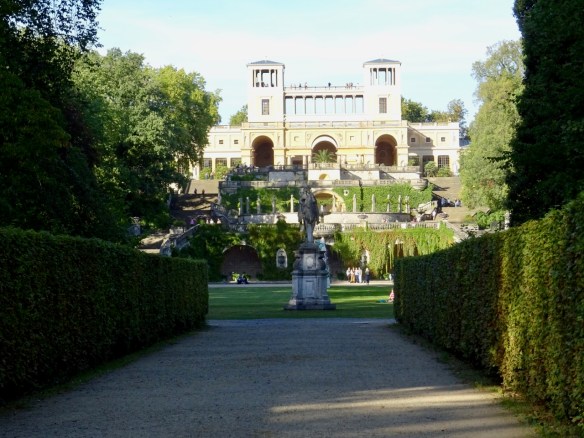
 We find the Chinese House which Frederick had built to enhance his flower and vegetable gardens and we can imagine elaborate picnics here in the summer. We make our way to the main gate just as Sanssouci is closing and catch the metro home. We had a beautiful warm day for our time here. A perfect day really.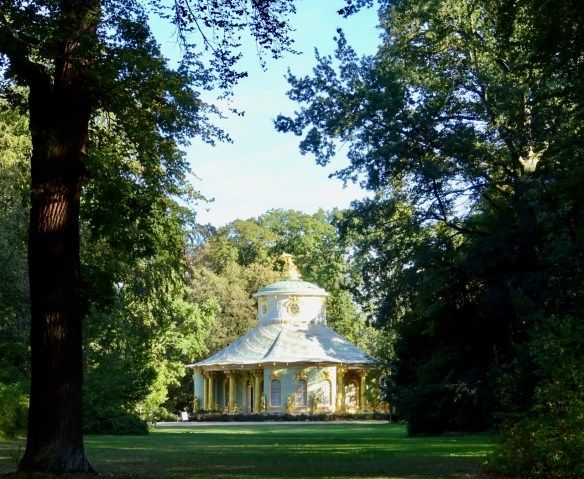
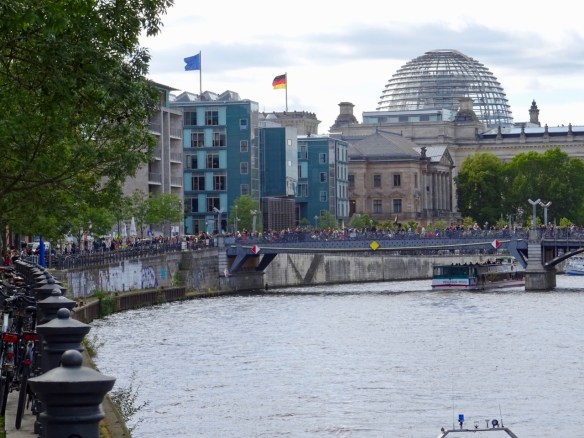 We stand and watch for a while…
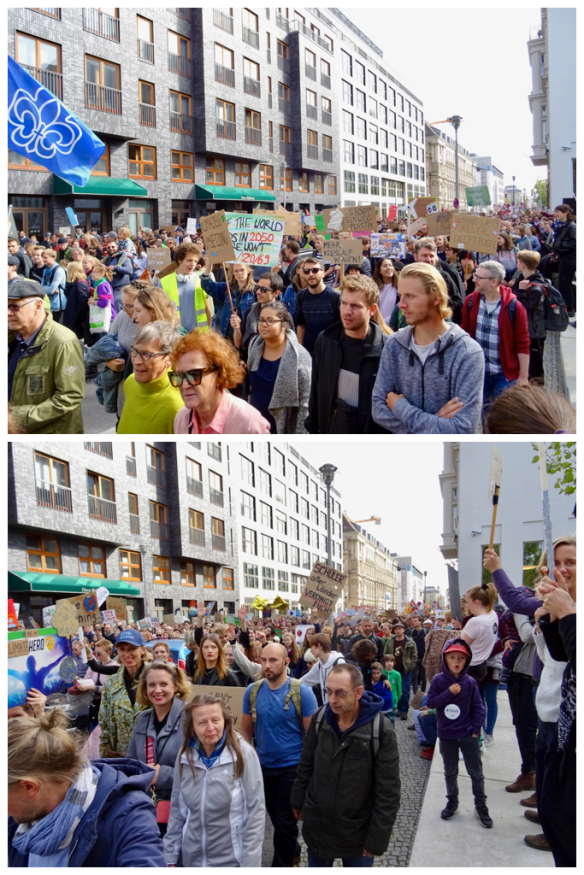 and then decide that we need to take part so we joined the protestors. Here is
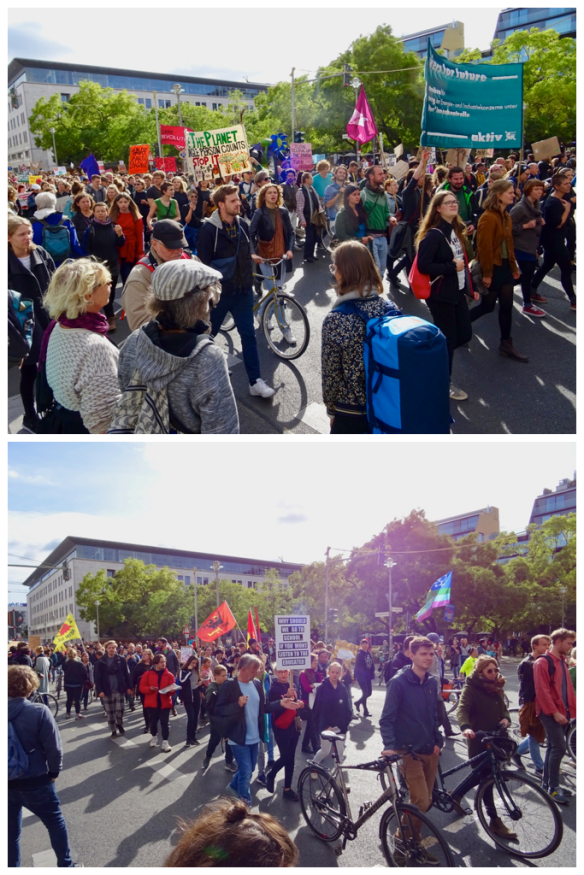
 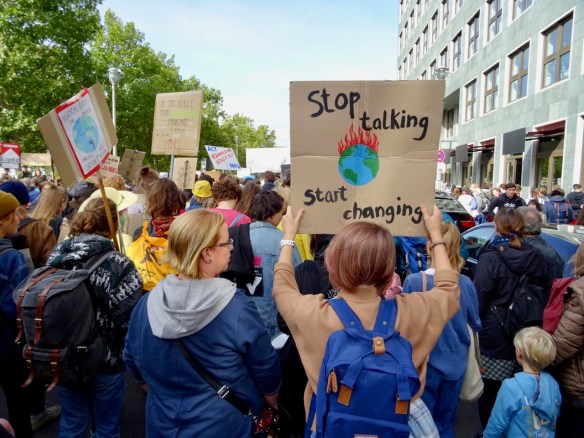 The march is going in the opposite direction, away from the Berlin Dom, so we step to the sidewalk and spend the next hour watching the people march by. Imagine crowds like in the pictures below walking by steadily for more than an hour, and there was still no end in sight.
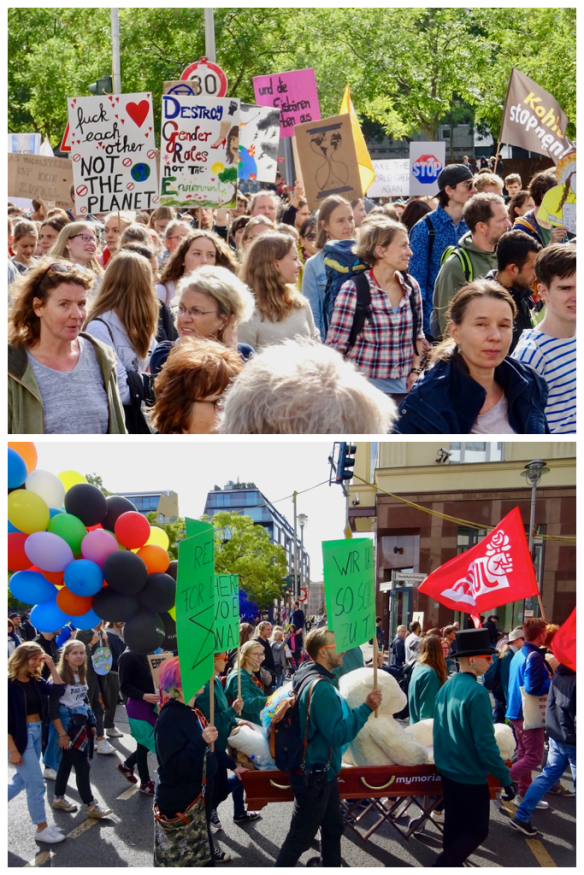 We think that there has to be more than 100,000 people protesting here, people of all ages, and ethnicities. Here is
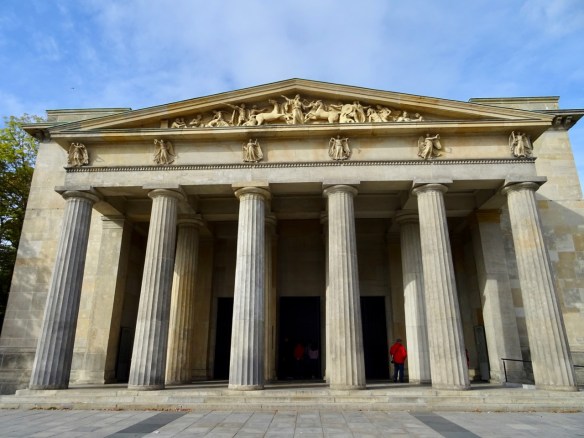
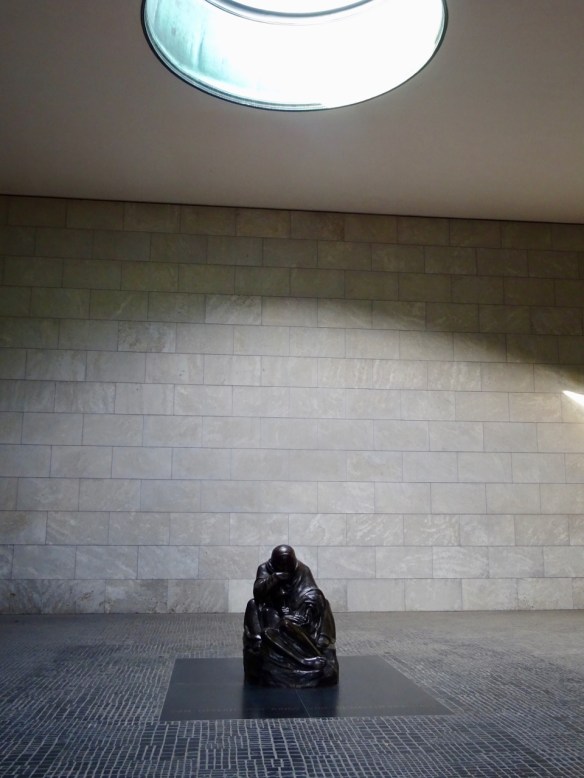
  The protest march continued but we thought we better go do the last bit of our sightseeing in Berlin. The Central Memorial of the Federal Republic of Germany for the Victims of War and Dictatorship below held just one piece of sculpture, Käthe Kollwitz’s famous ‘Mother with Dead Son’, created in 1938.
 It has quite an impact, all alone in this big stark space. I discover there is a Käthe Kollwitz museum, but it is not nearby and we have run out of time in Berlin. Too bad, I love her drawings and would have liked to have seen them.
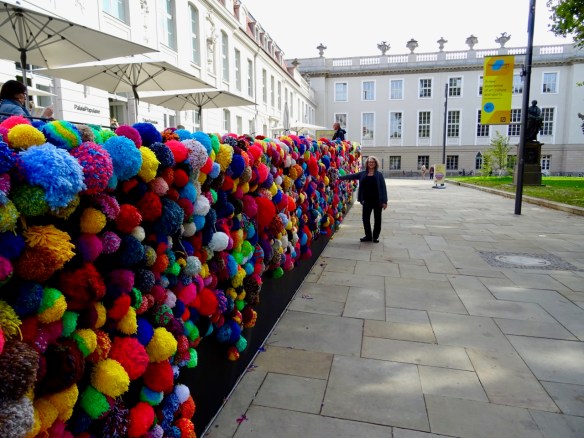
 Just across the street we see a very colourful exhibit and head over to find out what it is…7,000 pompoms that form a ‘Wall of Love” installation.
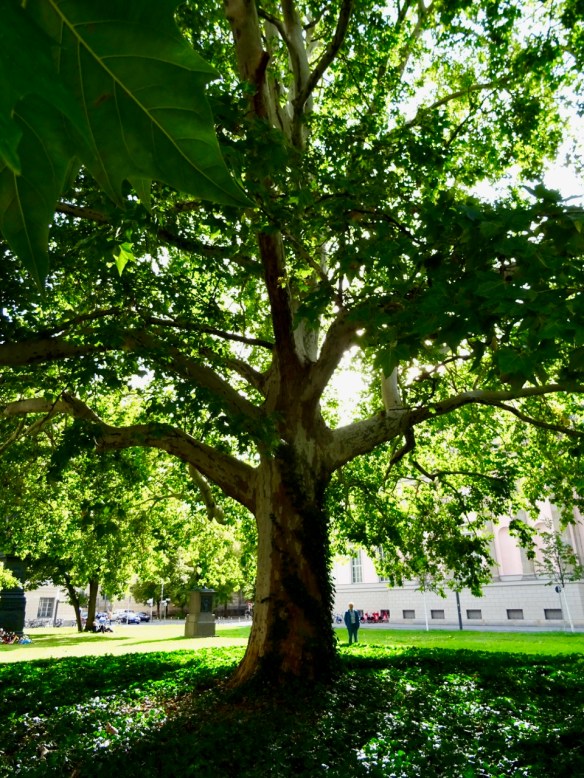
 Right across from the pompoms is this absolutely enormous Platane tree. I think this is the same kind of tree that is on the boulevards by our apartment. It has a 30 metres spread!
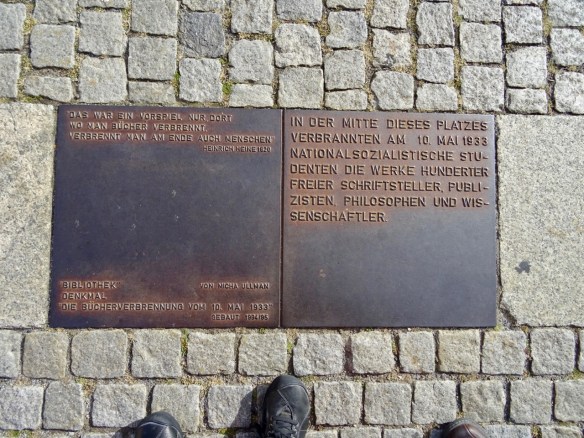
 Bob wanted to find the plaque in a nearby square where the Nazis burned 25,000 books in 1933. There is also a clear glass panel that looks down below the square onto a room filled with empty bookcases. The glass was too cloudy to get a photo.
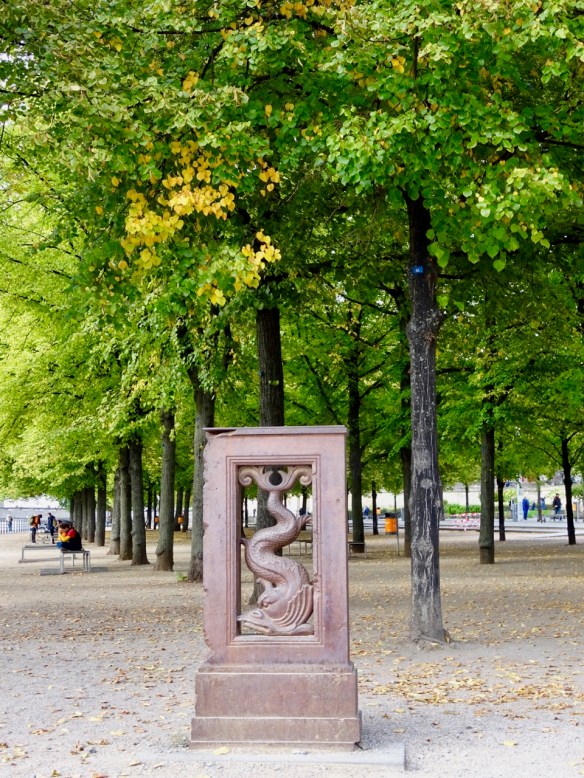
 Walking toward the Berlin Dom we pass the park we had our picnic lunch a few days ago. There is no grass, only a packed gravel surface. The parks in European cities are used by so many people that grass would not survive.
 Finally we arrive at the Berlin Dom, much later than we had planned.
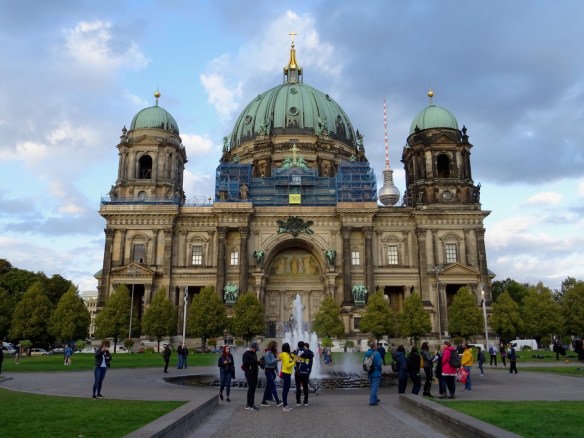 This is a Protestant church that is every bit as ornate as the Catholic Churches we have visited in Europe.
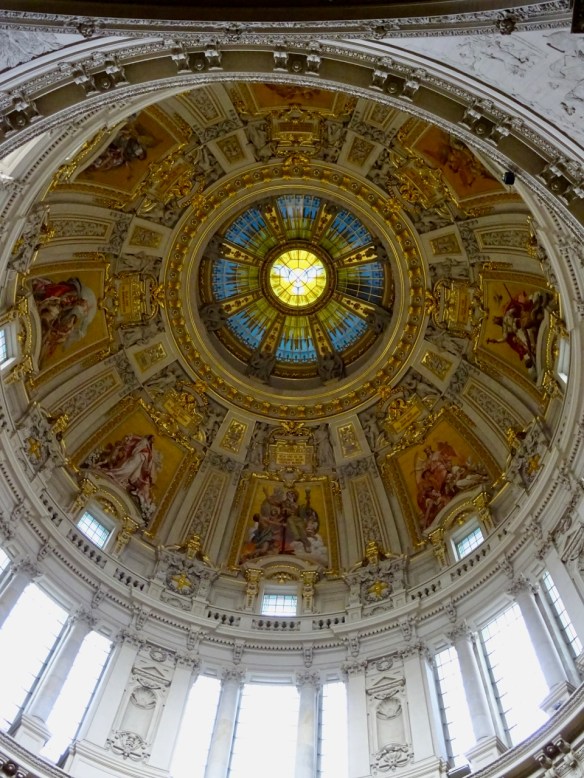
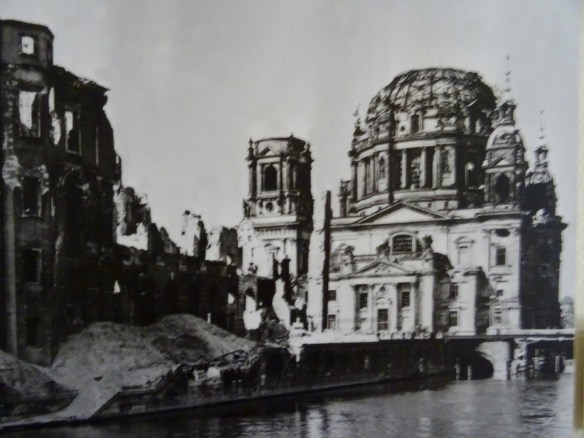
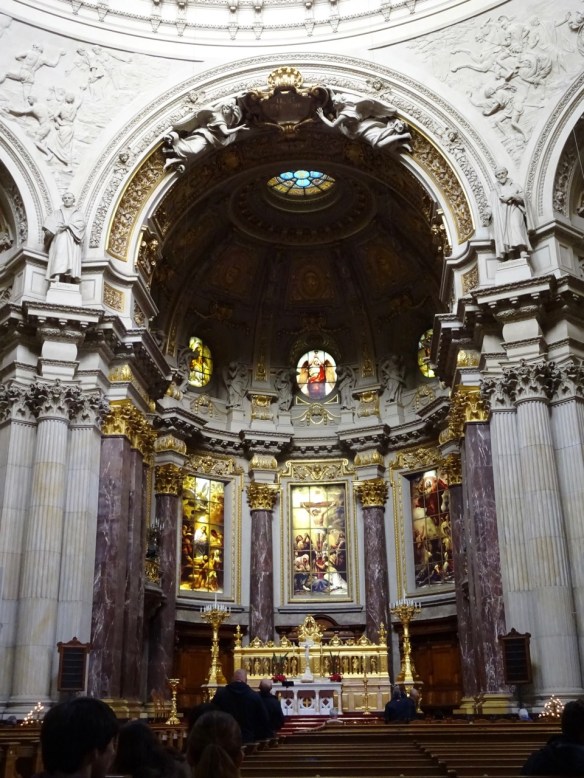 The dome above the altar is magnificent. The Church was hit by a napalm bomb in the Second World War and the dome collapsed into the church. It was open to the elements for many years before it was finally restored to its former glory.
 This photo shows the bombed Berlin Dom. I had no idea how badly bombed Berlin was before we visited here.
  This is where we are climbing to.
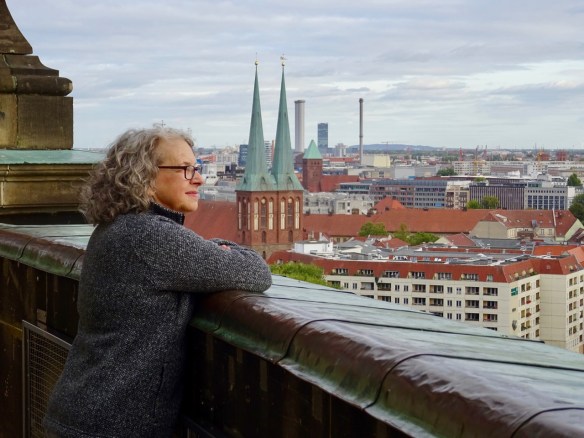
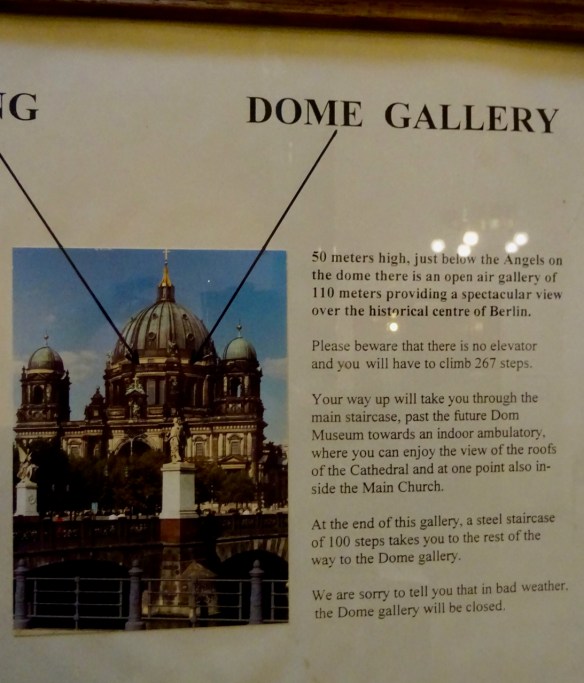 The 367 steps were worth it! Here are some of the views from the dome.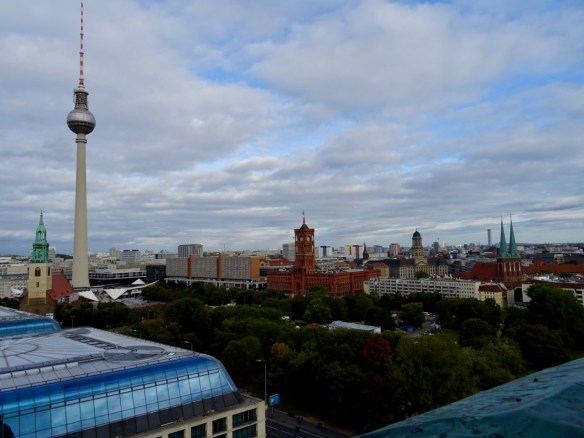
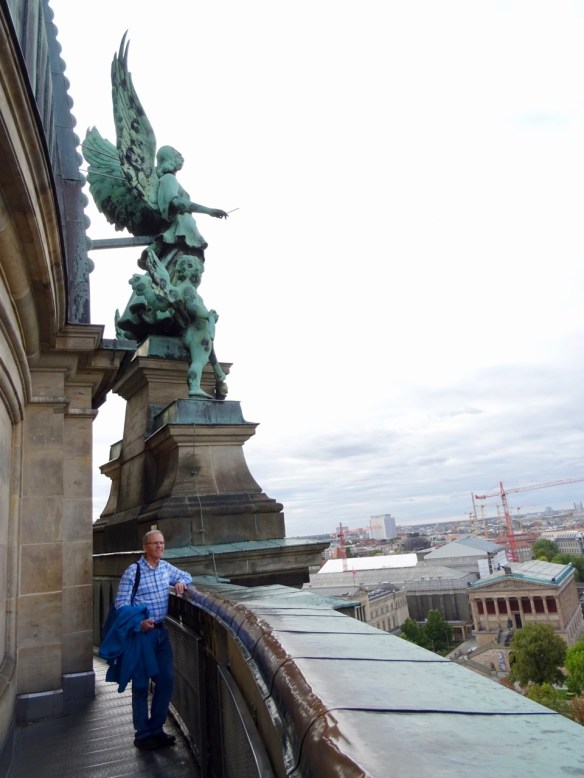 We can hear music from way up here. Turns out it is this fellow far below.
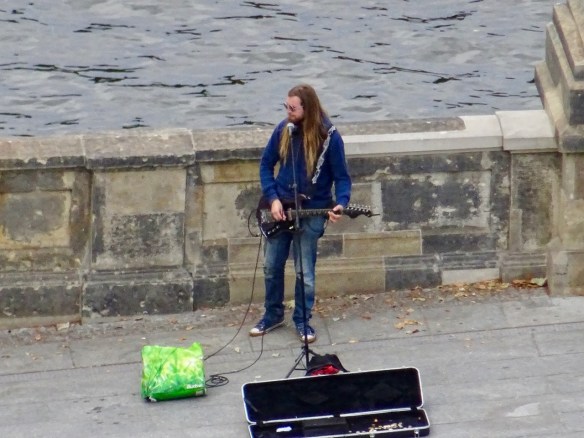 He is the person on the left side of this bridge with a guitar case on the ground in front of him. I even zoomed in a bit to take this photo. It was surprising how clearly we could hear all the words of his song.
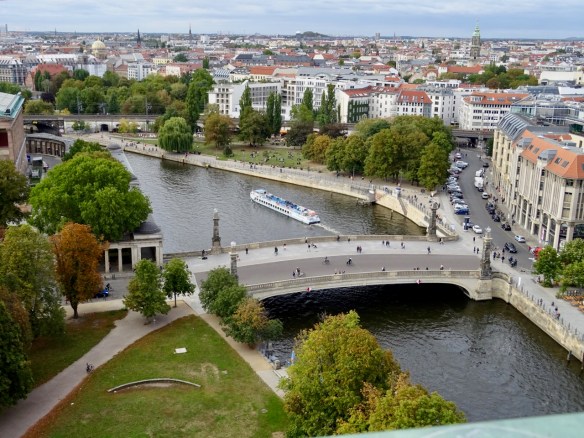 The park area in front of the Berlin Dom and the Altes Museum.
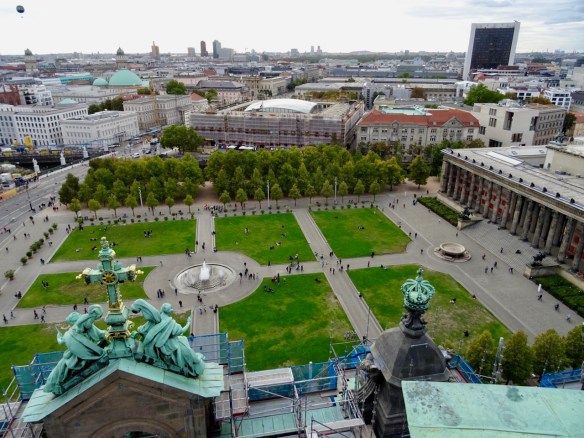 Bob is getting to be quite the photographer.
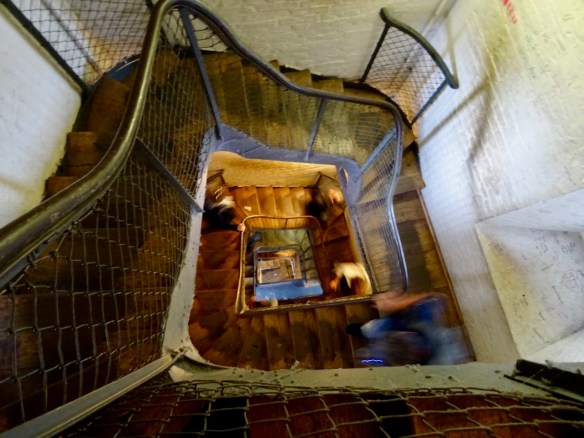
 Looking down some of the stairs we climbed. At least they were good sturdy stairs, unlike some of the rickety belltower ones we have climbed in the past.
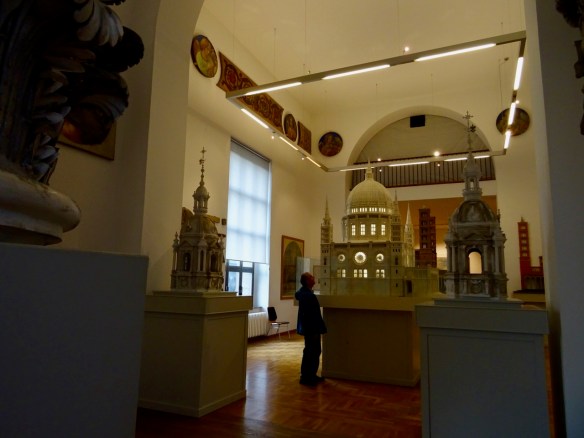
 Part way down there is a small museum with models of the church. The plaster and wooden models used to build the original church were used in the reconstruction of the church after it was bombed.
 We were way up there walking along the outside of the rectangular windows.
  We weren’t sure if the buses were running after the protest march, so we walked back along the river towards the metro station On the way we see this parade of boats.
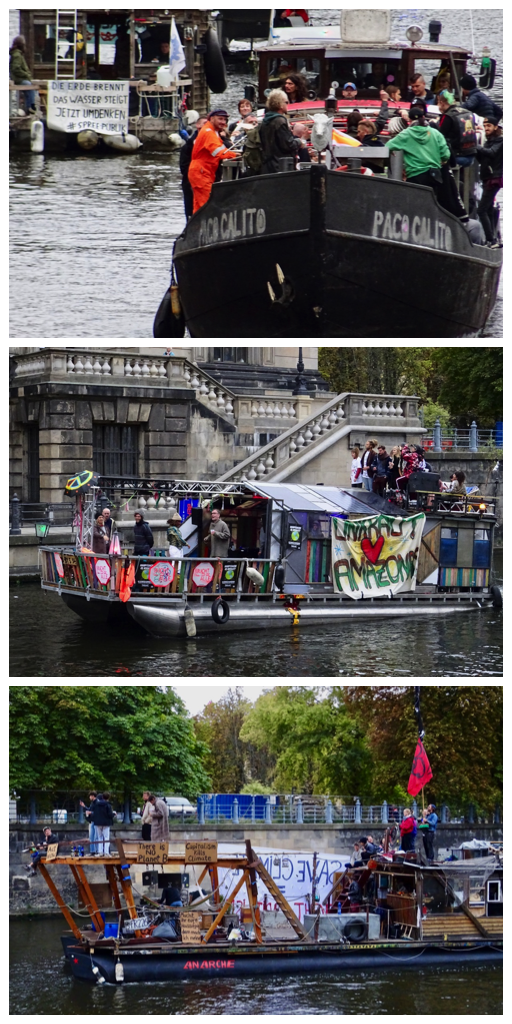
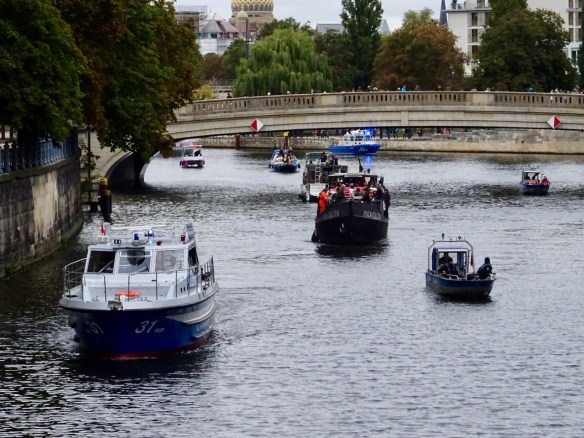 Turns out is is another protest “march” with lots of music and dancing. Take a look at the back of the boat in the second photo. We wondered if it was about to sink, it was so low in the water.
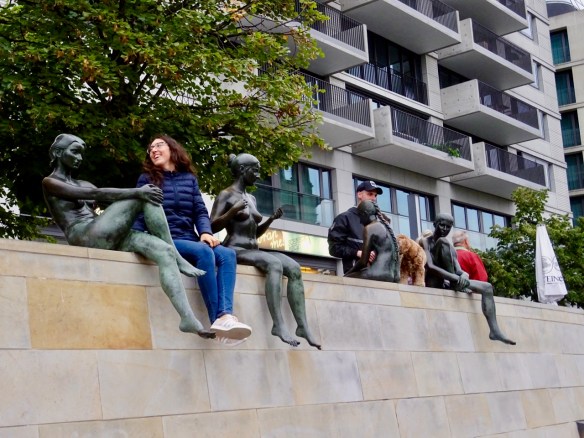
 There were all sorts of spectators watching the boats.
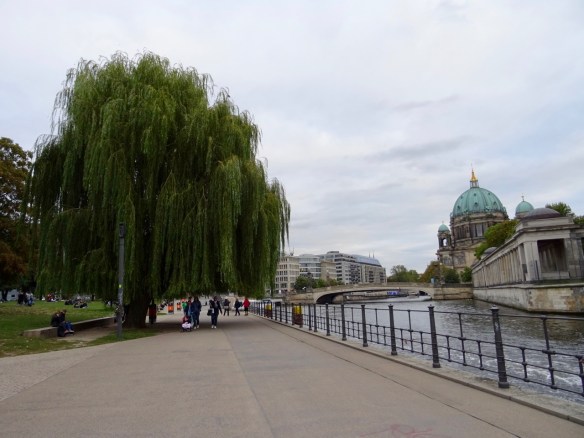
 There are lots of beautiful big trees in Berlin.
 Just before we get to the metro we pass a store with hundreds of old sewing machines lining its windows. Kind of neat reflections too. It was a much longer day than we expected but I was so glad we got to see and take part, even for a bit, in the Climate March. When we get home we discover that there were marches like this all around the world! YAY!! Finally people are realizing that we need to change the way we live.
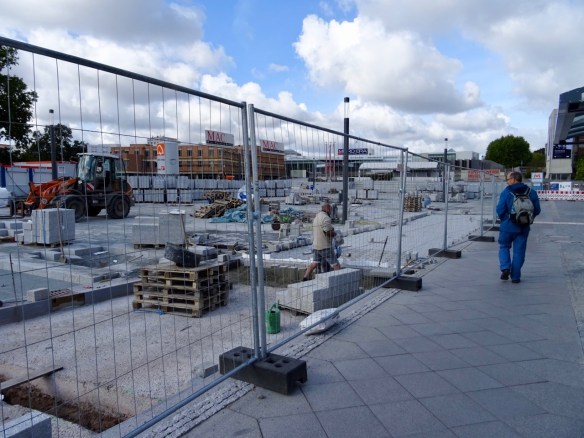
 These workers are laying paving bricks for a huge plaza. We have not seen poured cement sidewalks or plazas here, they are all made with paving stones. It seems very labour intensive.
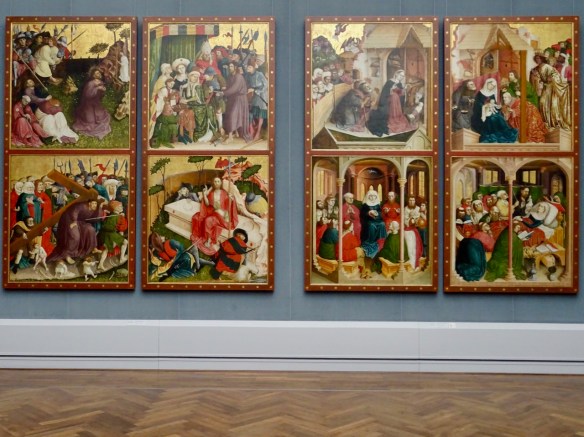
 The Gemäldegalerie is our first stop today. This museum is near the Berlin Zoo and has one of the world’s leading collections of European paintings from the 13th to the 18th century. The quality of the artwork here is amazing. This is the first painting we see, part of an altar from 1437 telling the story of Jesus on the left, and Mary on the right. The white ‘baseboard’ in the photo comes almost mid-thigh on me, to give you an idea of the scale of the works.
 The corner of one painting from 1444 shows two pregnant women, notice the babies depicted on their stomachs. I had never seen this symbolism before.
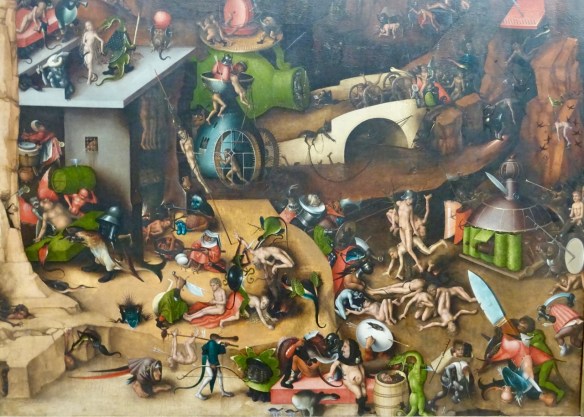
 We both liked the Fountain of Youth by Lucas Cranach, 1546. This is not the style of his work that I am familiar with…
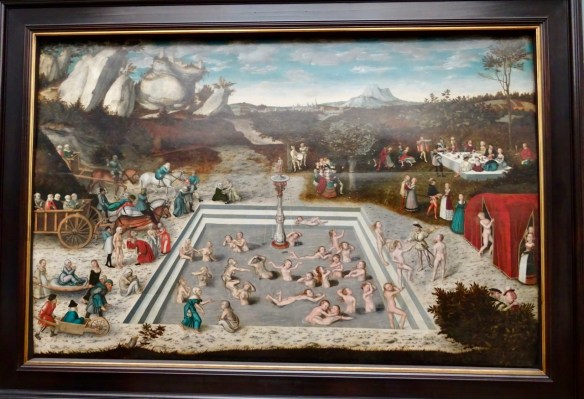 this is! I have always wondered at this artist’s creativity.
 Wow!! This painting by Rogier van Der Weyen from 1440 is my absolute favourite of everything we have seen so far this trip. I absolutely love it and wish that the photo was able to convey the impact it has in person. I would have bought a print but it was almost $100 and I worried about getting it home safely. This is a painting I could live with forever.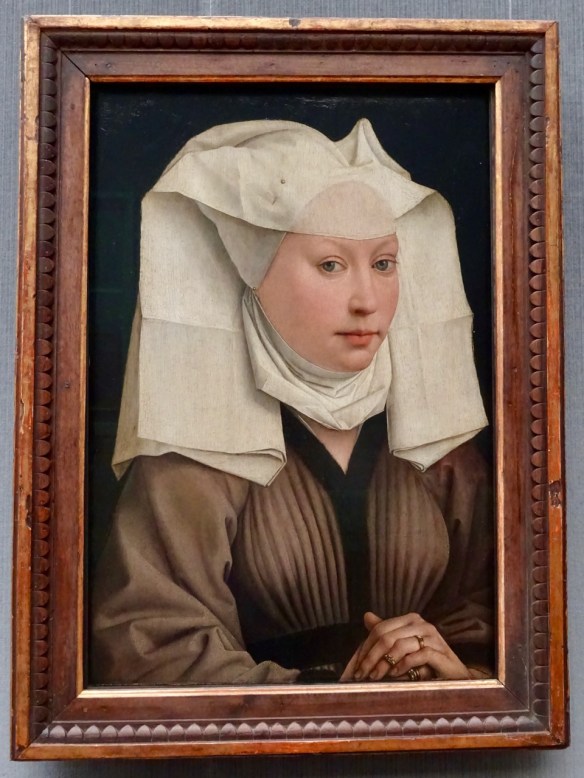

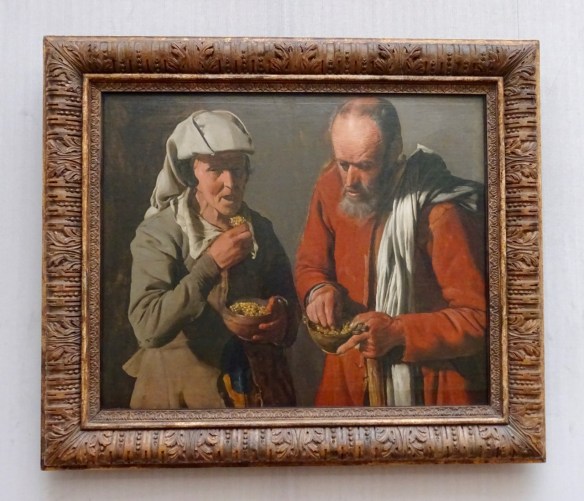
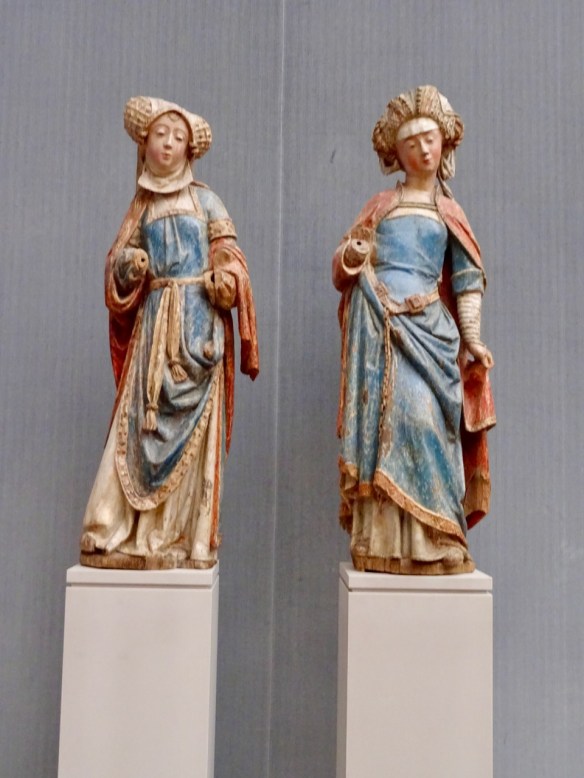 I am fond of Frans Hals portraits and there was a whole room of them.
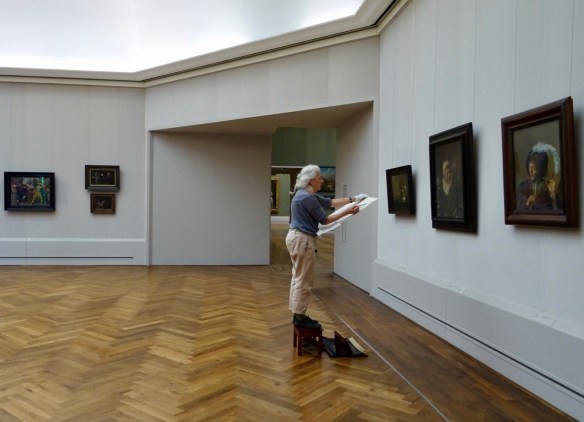
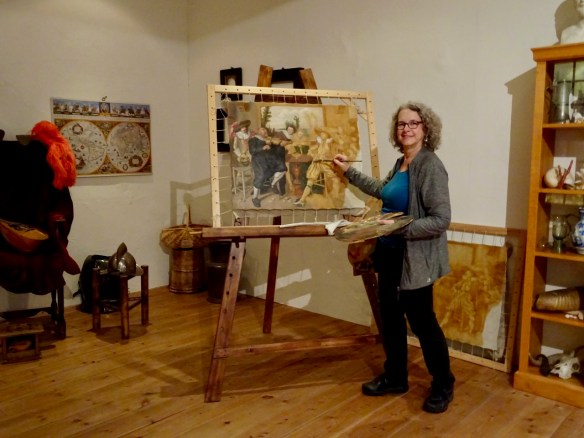
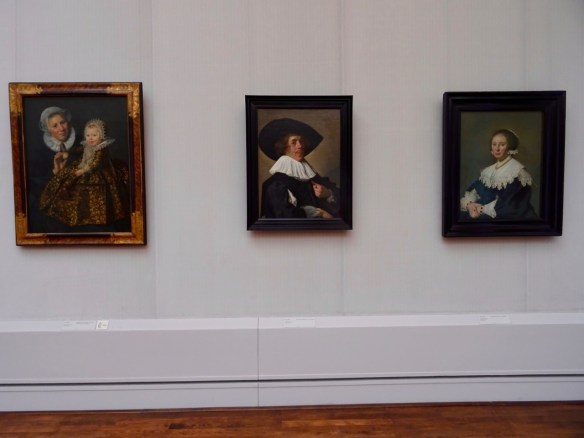 This artist must like them too. What a tough way to work though, on a little stool, holding such a large drawing board. I assume the museum does not allow easels.
 I am excited to see this Vermeer from across the room, but then..
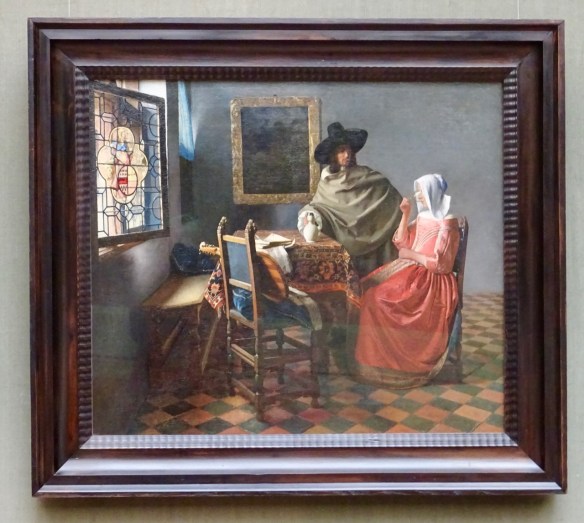 I notice The Girl with the Pearl Earring. I had no idea the this painting was in this museum. What a lovely surprise.
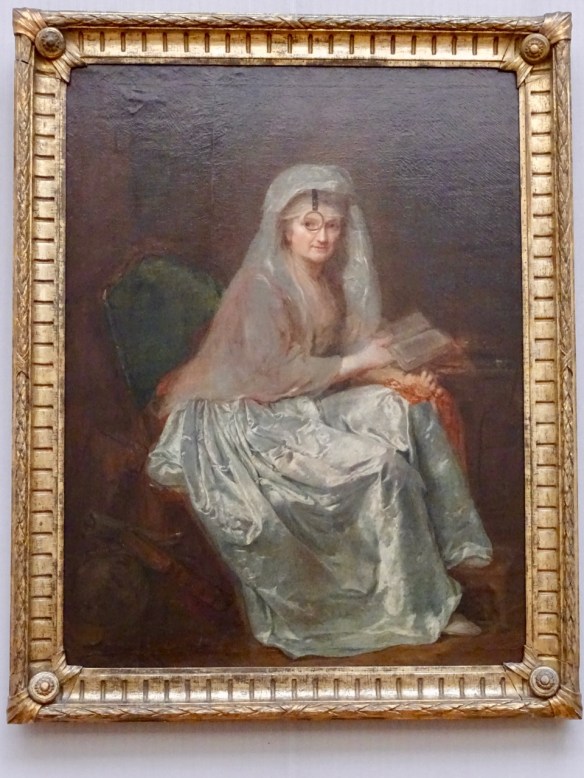
 Anna Dorothea Therbusch, 1721-1782, is one of the few women artists who actually made a living as an artist. This is a self portrait.
 There are Caravaggio’s here…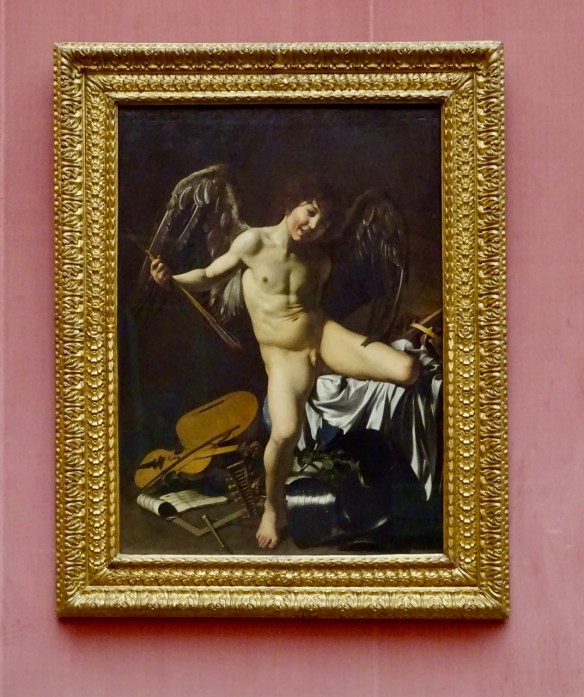
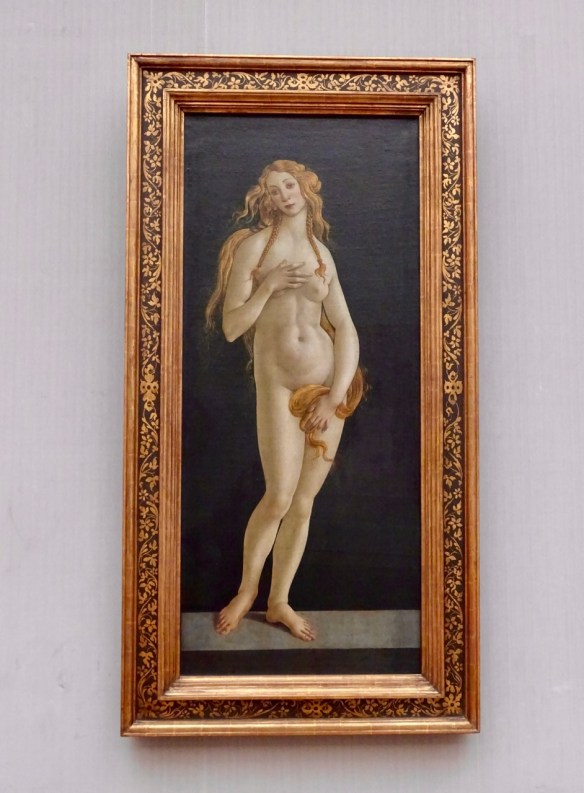
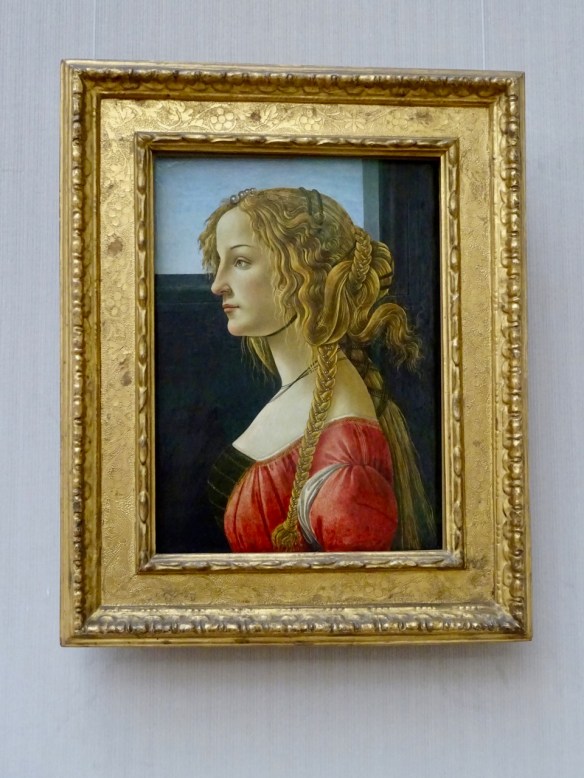 including this Botticellis Venus.
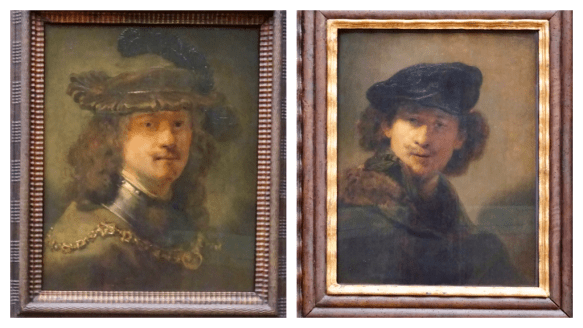
 And there are Rembrandts, including these two famous self portraits.
 I finally get to see these two tondos in person, the one on the left by Raffael (34″ diameter) and the one on the right by Botticelli (54″ diameter). I particularly like the Botticelli, his Madonnas are always so beautiful.
 This was fun! I am so glad we visited the Gemäldegalerie, it was quite amazing.
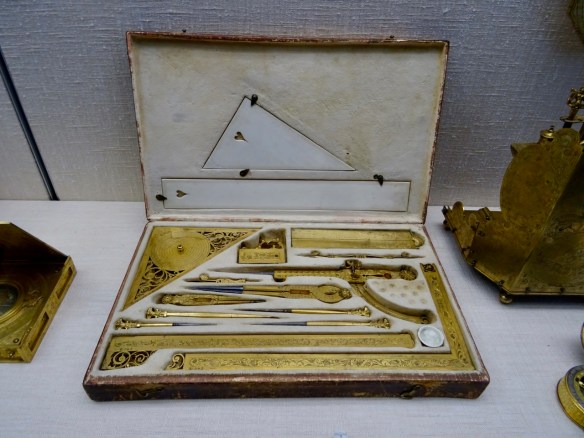
 After a picnic lunch we check out the Kunstgwerbe Museum nearby. I would love to have this beautiful geometry set from the 16th century.
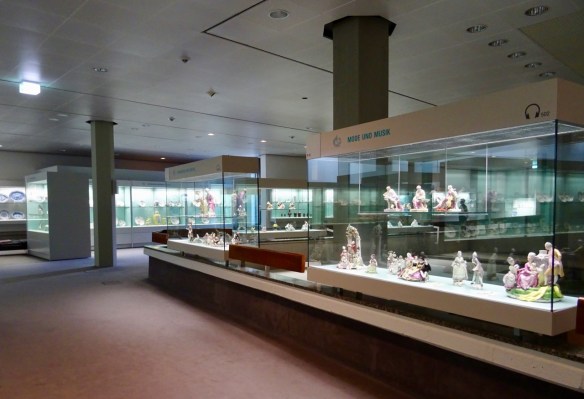
 This museum has lots of porcelain, furniture and church treasures, but we walk by all these. It is just too much to absorb.
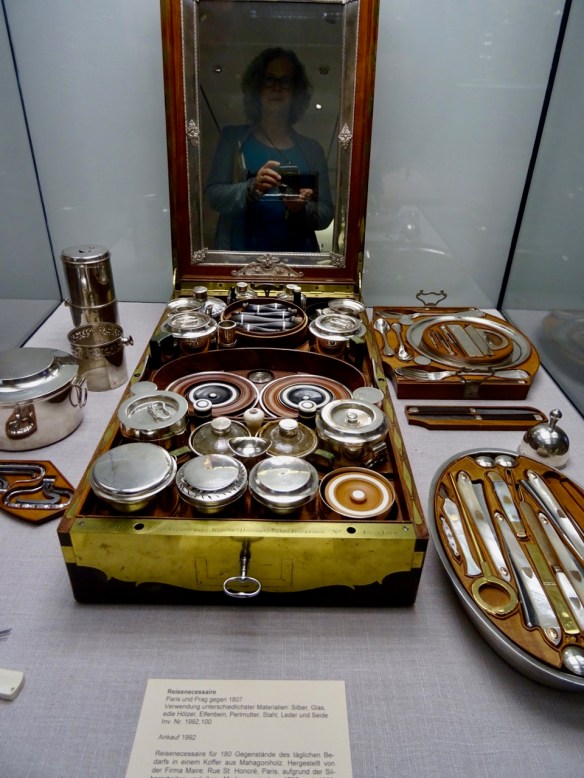
 A few items did catch our eye though. This is an elaborate portable kitchen from 1807, maybe used for camping? All the info is in German, so not sure.
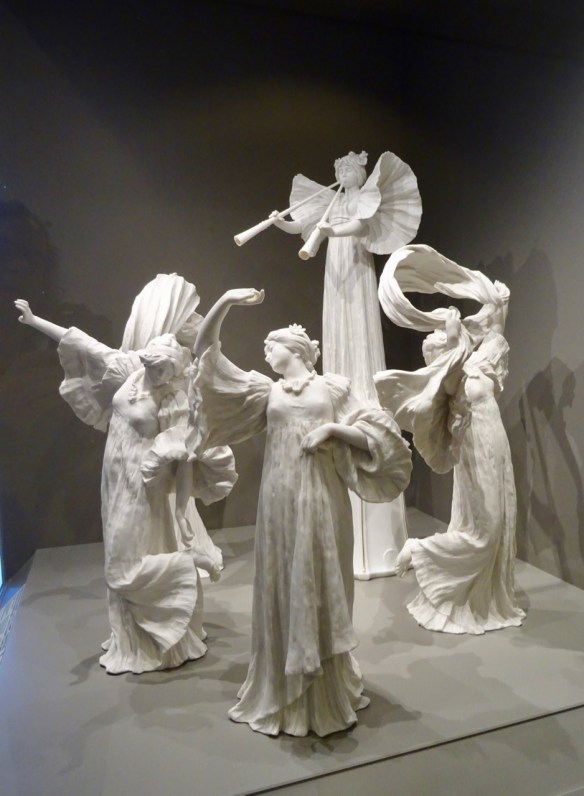
 These glazed porcelain figurines were part of a group of 15 that were awarded a gold medal at the 1900 International Exhibition in Paris.
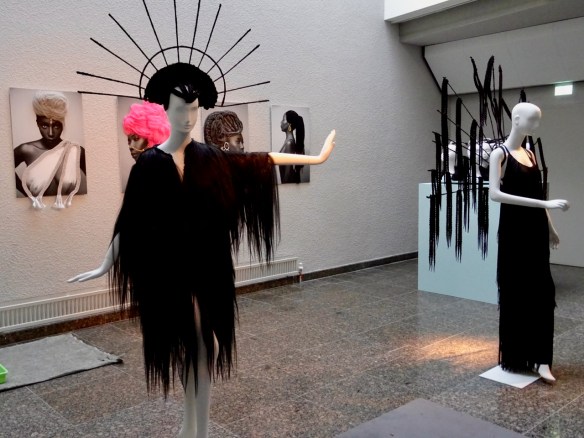
  There was also an exhibit on Afro Hair, with some very different displays.
 And finally, an interesting walk through women fashions through the ages.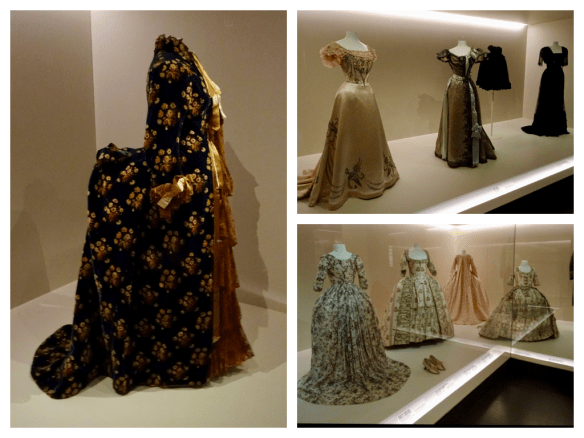
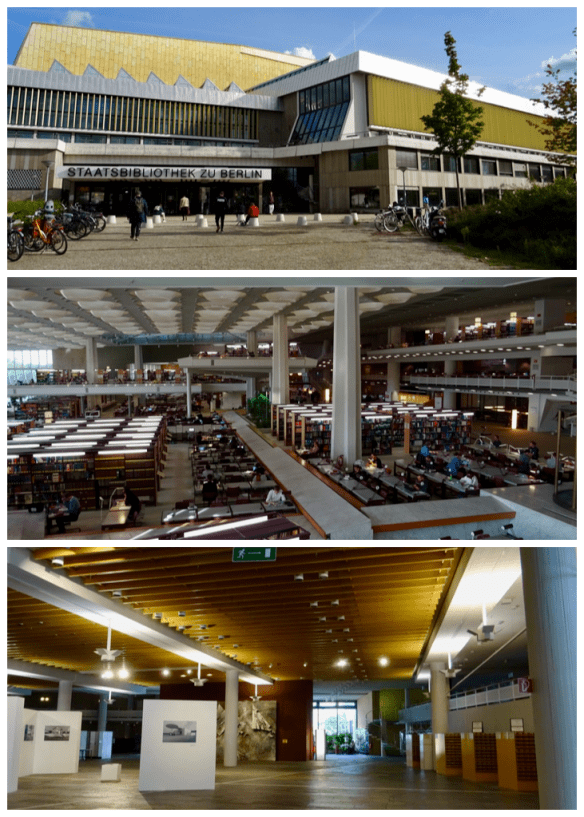 Whew! and we aren’t finished yet. We catch a bus back across town to visit the oldest church in Berlin but the interior has been updated so much. It wasn’t what we were expecting, but still interesting. For some reason there was a rooster crowing inside the church? No idea what that was about.
 We split up, Bob heads to the Bode Museum and I catch the metro to go life drawing. I pass this post with just a few posters wrapped around it on my way to drawing.
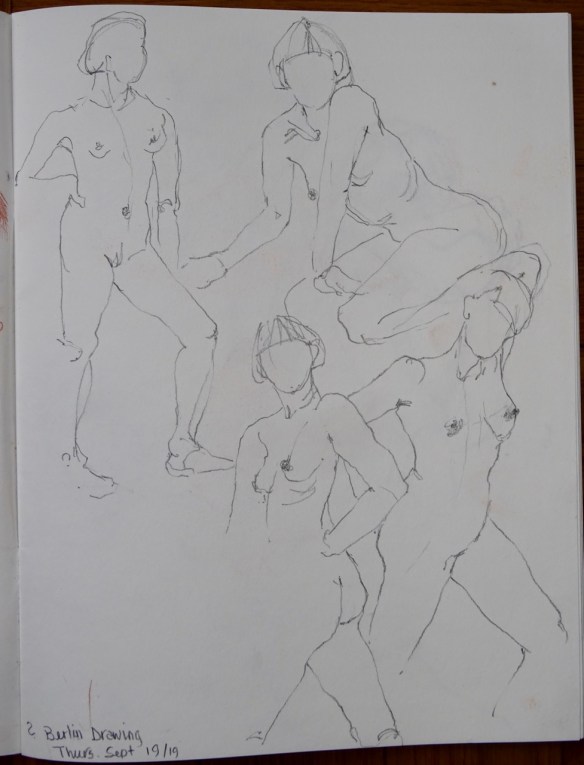
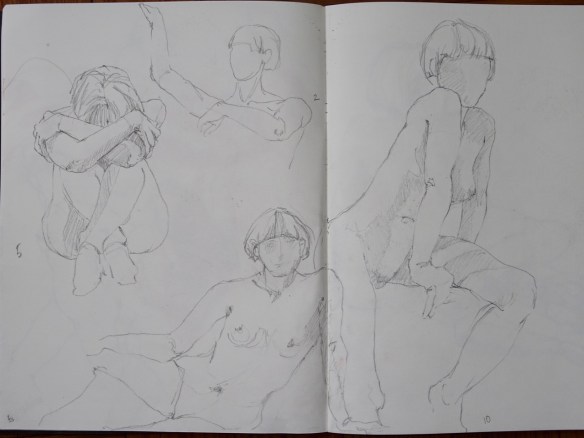
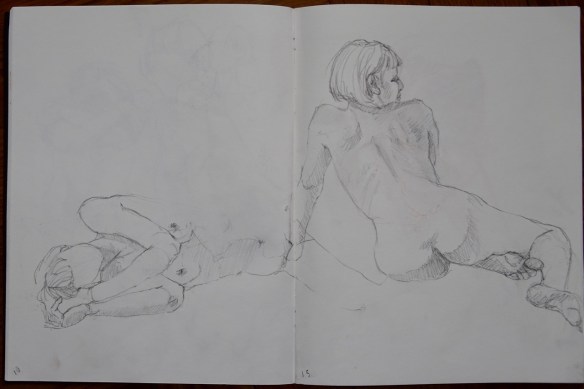
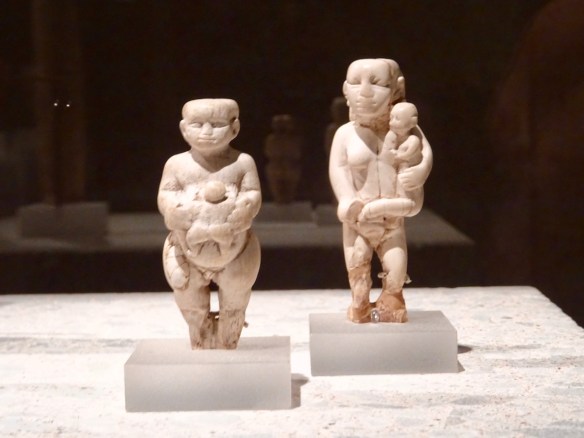
 I am often most drawn to small items in these exhibits, like these tiny ivory figures of mothers and their children, only about 3-4″ tall from 3000 BC. I think they are incredibly detailed and beautiful.
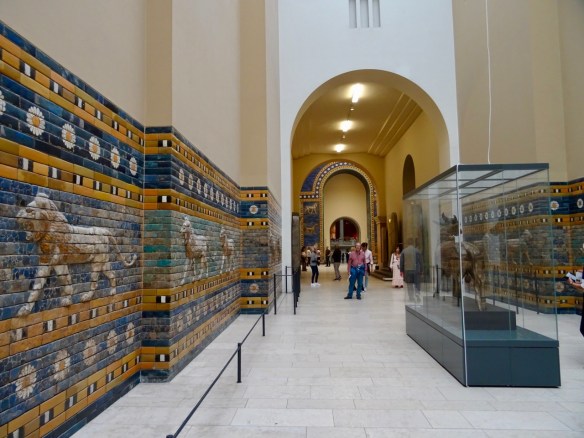
 This is the processional way which led towards the 6th Century BC Ishtar Gate of Babylon. It is very impressive.
 I loved this wooden sculpture.
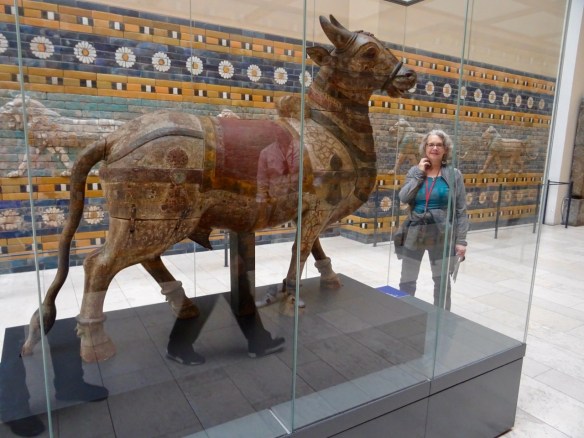 Here is another view of this approach that gives a better idea of the size..
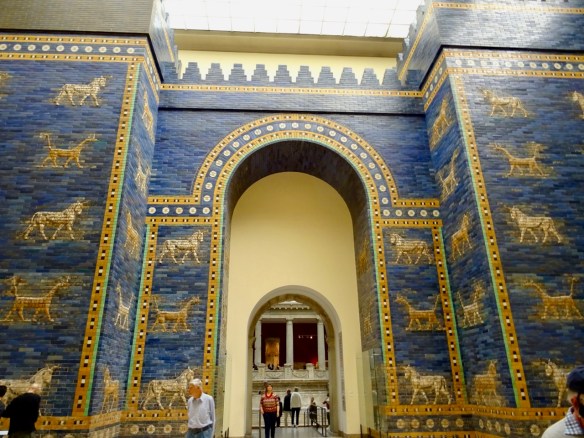
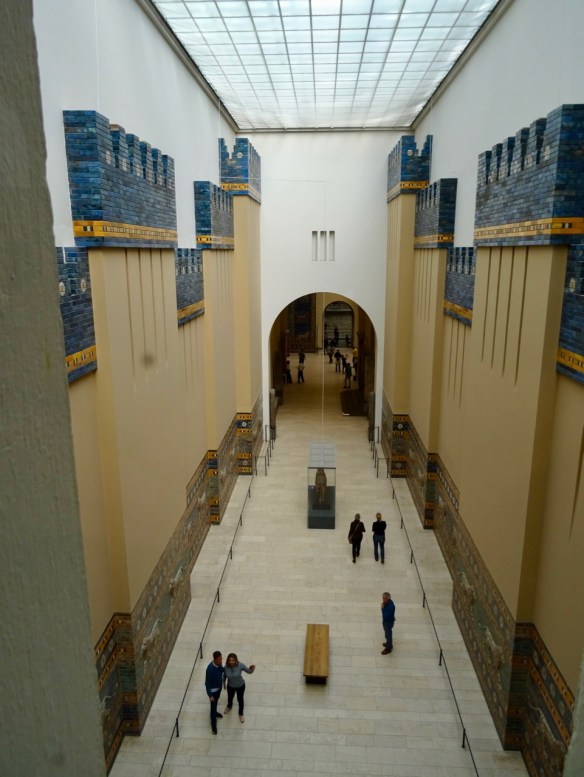 The reconstruction of the gate has original tiles around the animals. This is only a part of the gate, as the museum ceiling would have to be more than twice as high for the whole gate to fit.
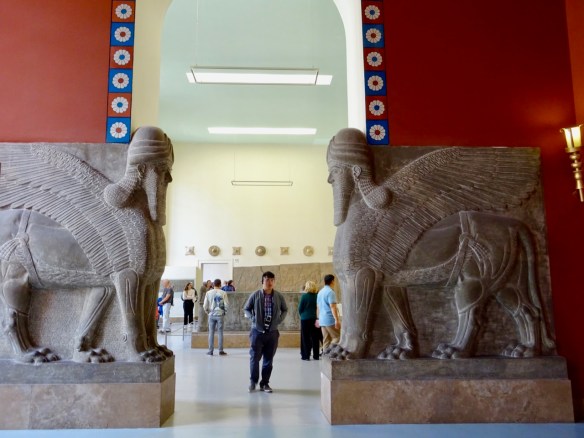
 These two creatures guarded the Assyrian King in 883 BC. These are casts from the originals in the British Museum, which were each carved from a single piece of alabaster. No idea who the guy is…it was impossible to get a photo without some stranger in the middle of it!
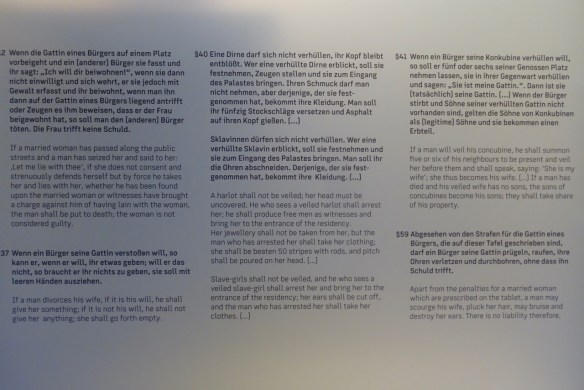
 Times were tough for women. Take a peek at these laws from 3000 years ago.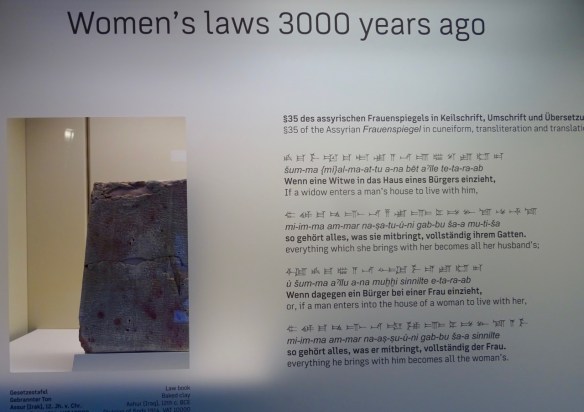
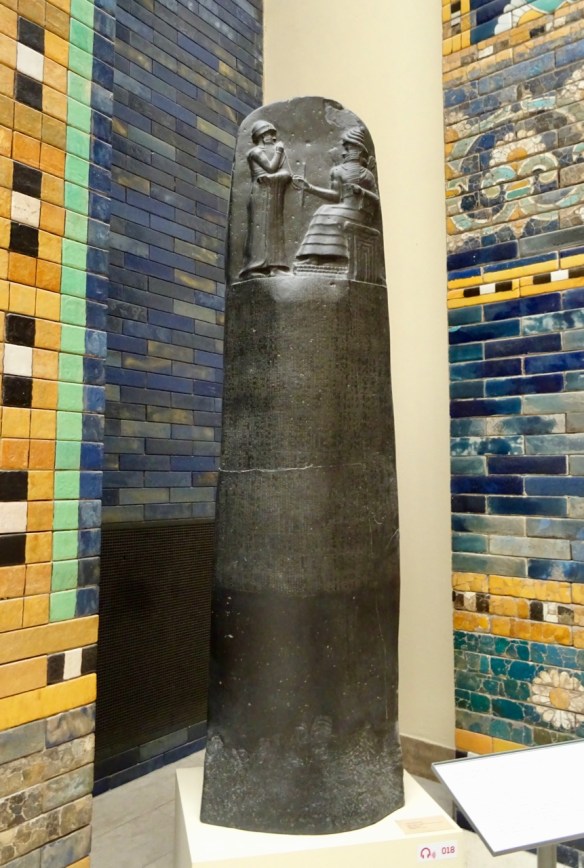 This close up of one of the lions from the Ishtar Gate shows how the original pieces of tile were reassembled.
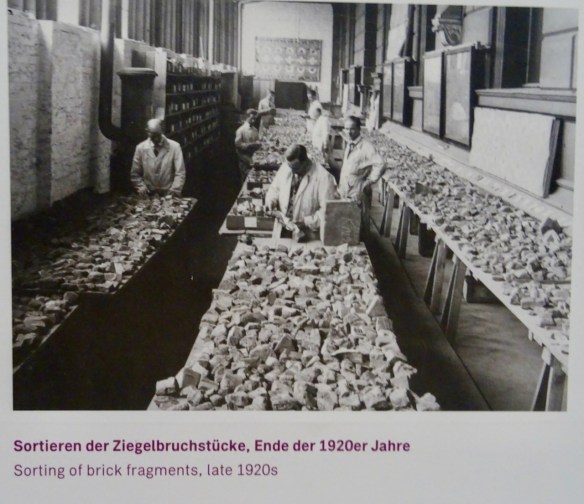
 This is the condition of the tiles when they were unearthed. Can you imagine trying to piece these thousands of bits together?
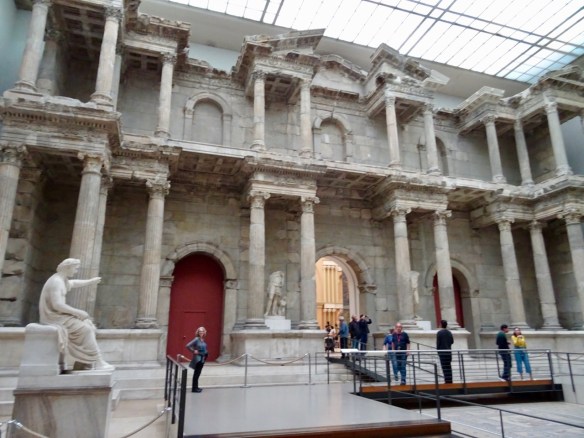
 Another huge structure in the museum is the 2nd Century AD Market Gate from Miletus. This is the largest historical monument that has been reconstructed indoors. It is about 30 meters wide and 16 meters tall. This grand structure was only the entrance to a marketplace, although it looks more like a palace.
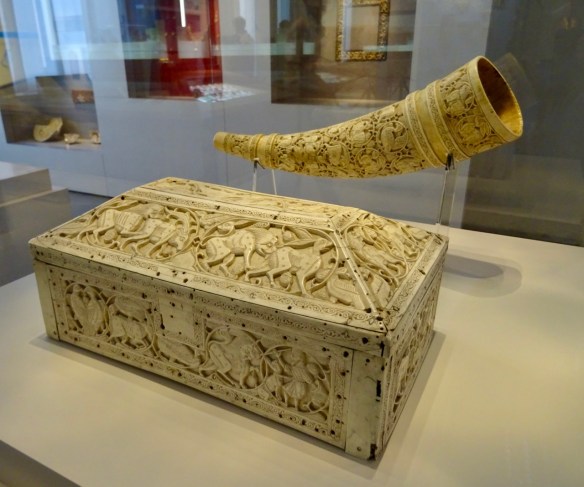
 This ivory box and horn were covered with intricate carvings. There were so many things to see and marvel over.
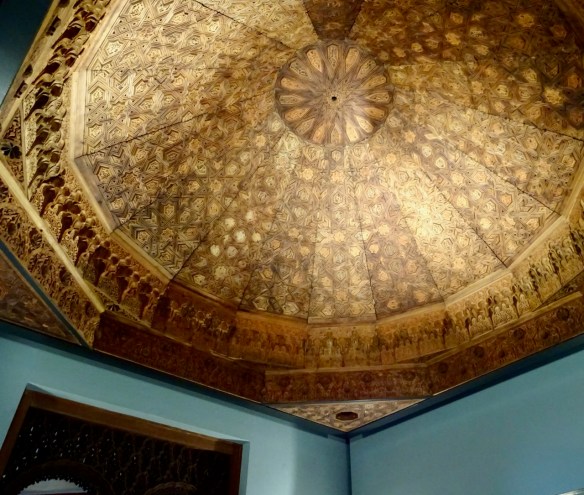
 This intricately carved ceiling is from the Alhambra in Spain. We saw other ceilings like this when we visited there a few years ago.
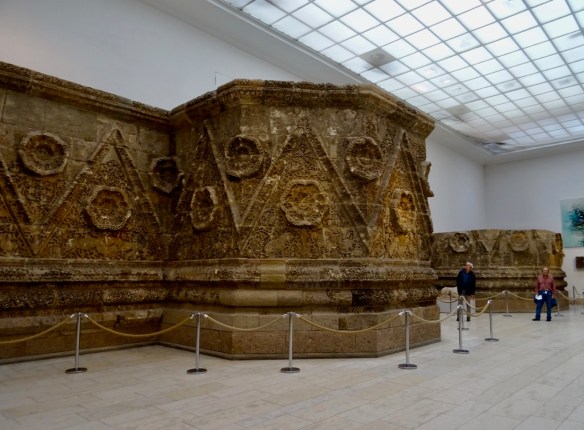
 The 8th Century Mshatta Facade is 33 metres long and 5 metres high with two towers and part of a central gateway. This
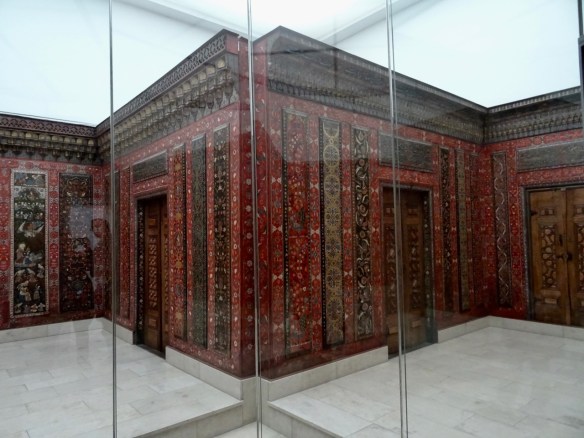
  The Aleppo room was built as a reception room by a wealthy Christian merchant in Aleppo. The paintings Illustrate Islamic floral and geometric designs, scenes from the Old and New Testament, and Persian book illustrations.
 A view of the Alte National Gallery we visited yesterday.
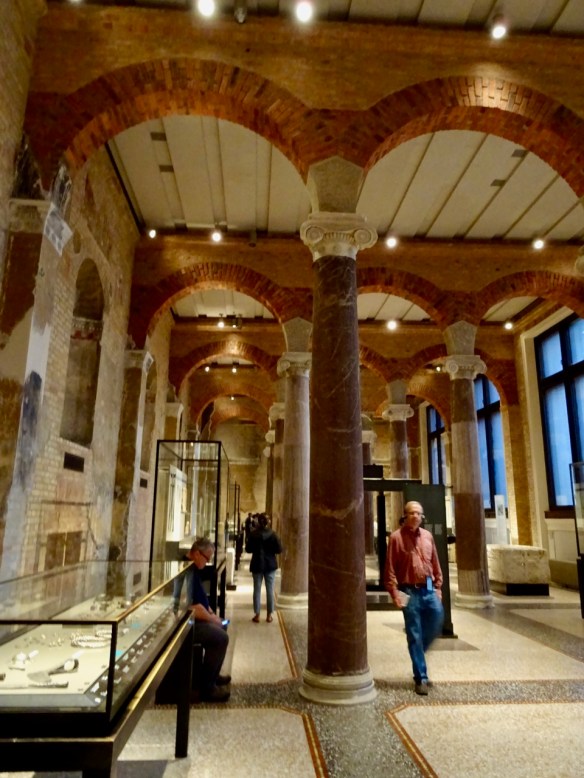
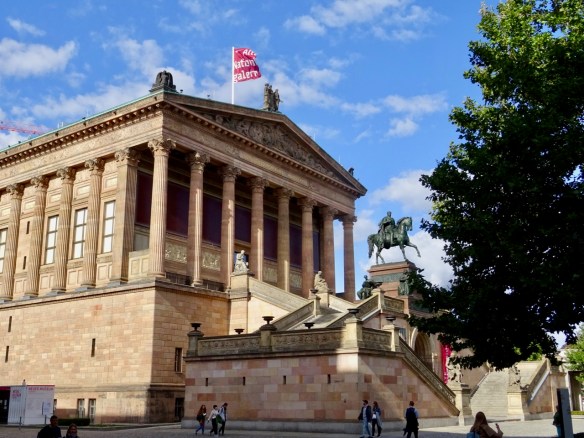 Next we visit the Neues Museum. This building suffered severe damage during the Second World War. In 2003 work began to restore the building without erasing the traces of past damage. We see evidence of this damage throughout the museum. Note the bullet and shrapnel holes in the pillars…
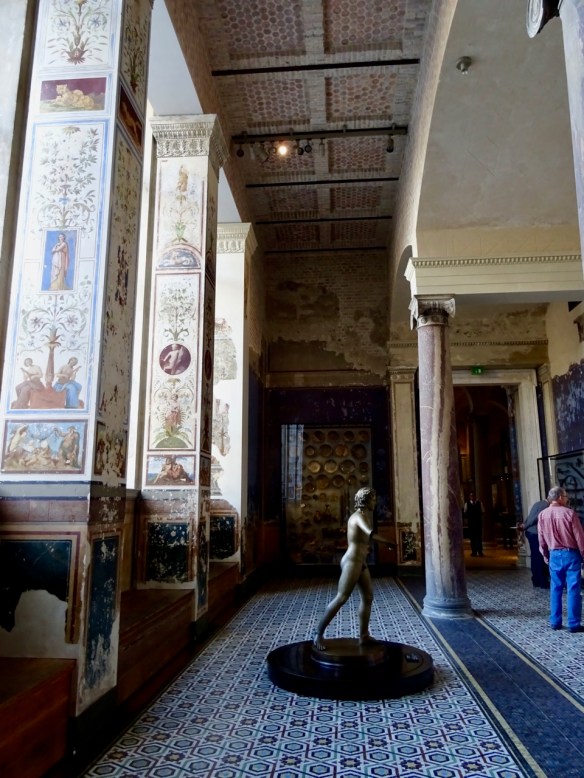
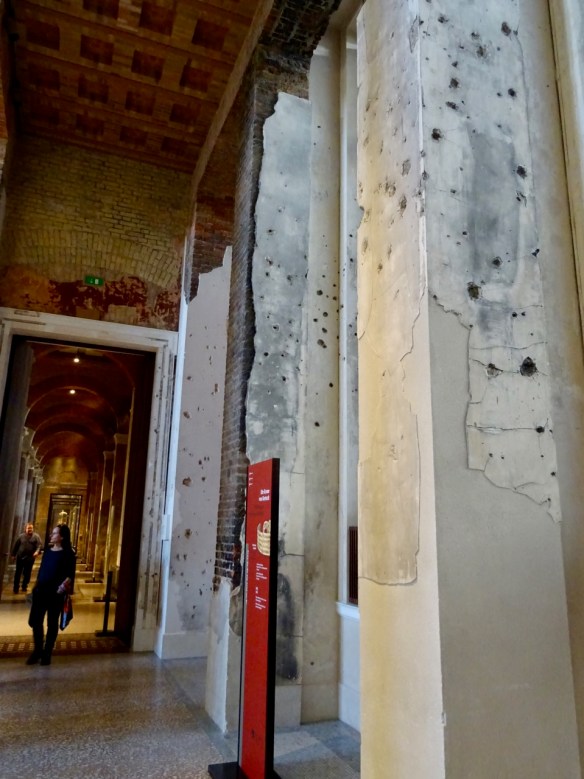 and damaged areas in this room.
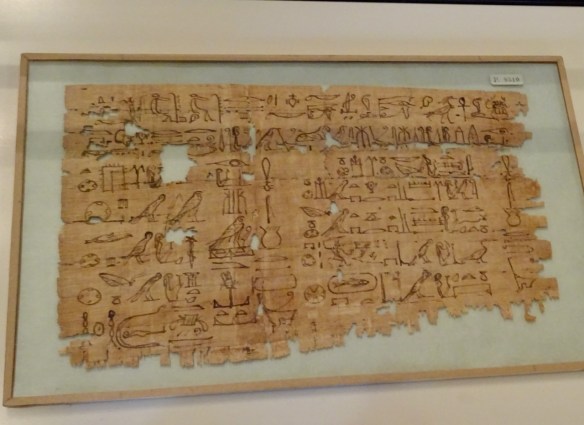
 There were many pieces of ancient papyrus from the 4th Century BC. I find it astounding that these fragile documents have survived.
 Original paint remains on some of the Egyptian sculptures from 1290 BC!
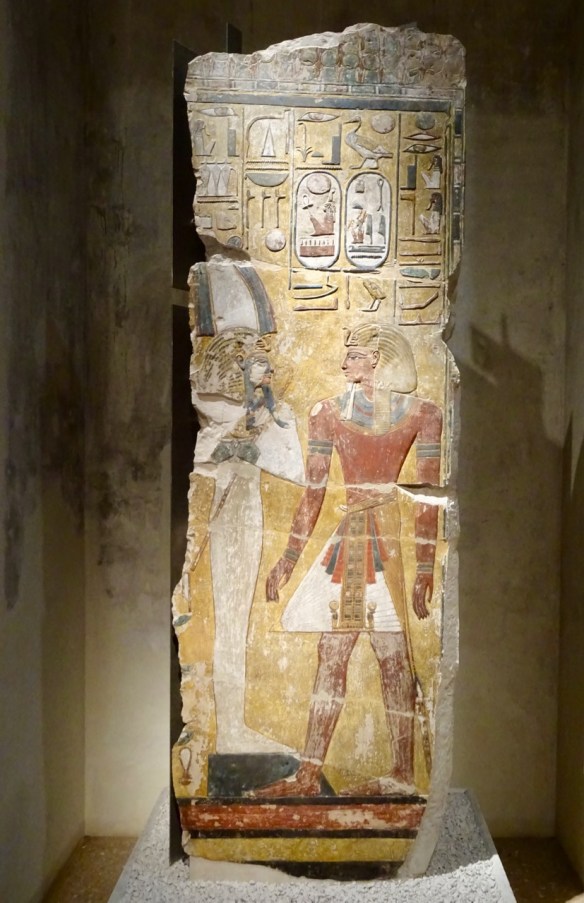 This is a room that was heavily damaged during the war. These three panels are all that is left of twelve panels that were on the walls of this courtyard. We actually visited the three Egyptian temples depicted on these walls during our trip there in 2011.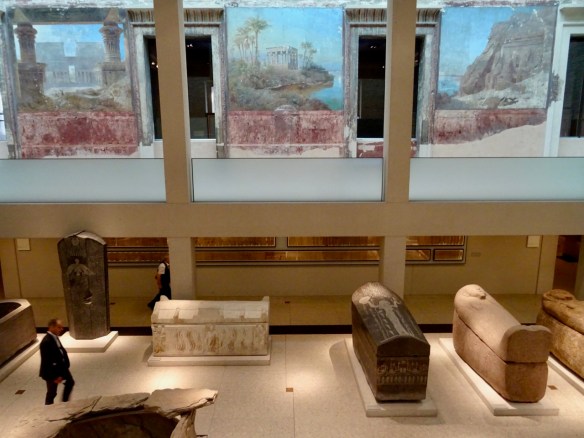
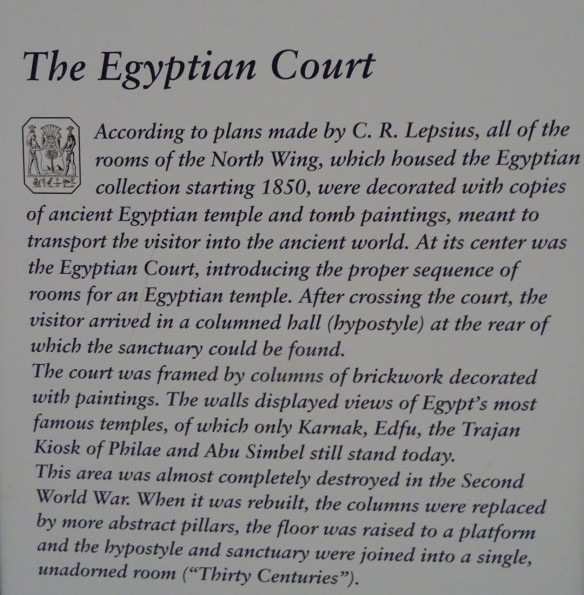
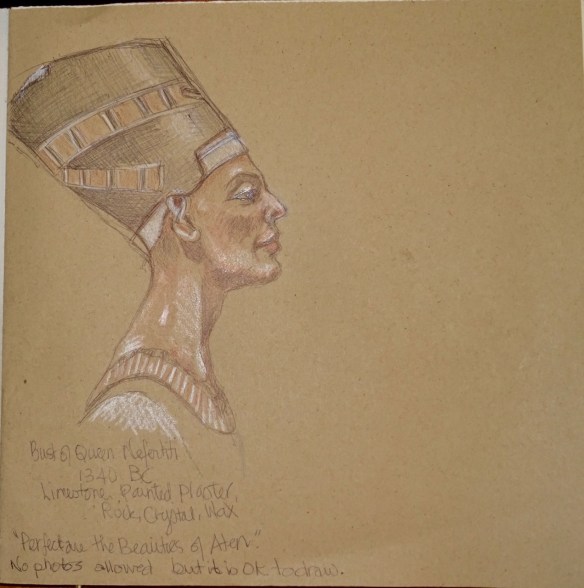 There are so many rooms filled with so many treasures. It can be a bit overwhelming.
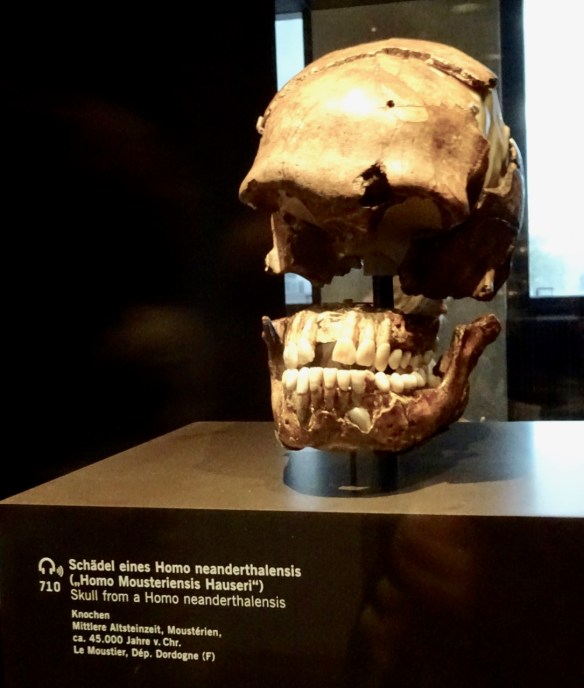
 I thought the teeth on this Homo Neanderthalensis were astonishingly white and cavity free!
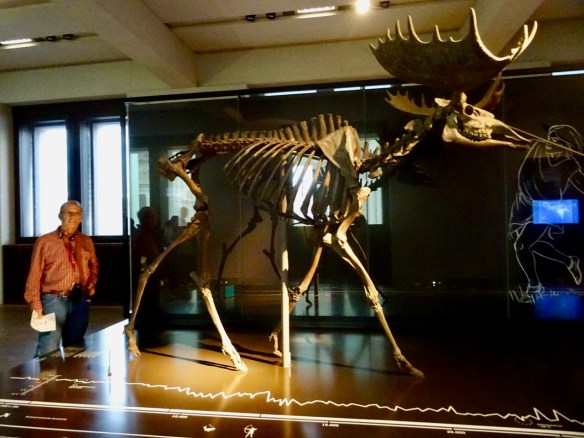
 This elk from 10,700 BC was discovered during construction of one of the Berlin underground subways in 1956.
 I forgot to post these sketches form the Altes Museum yesterday.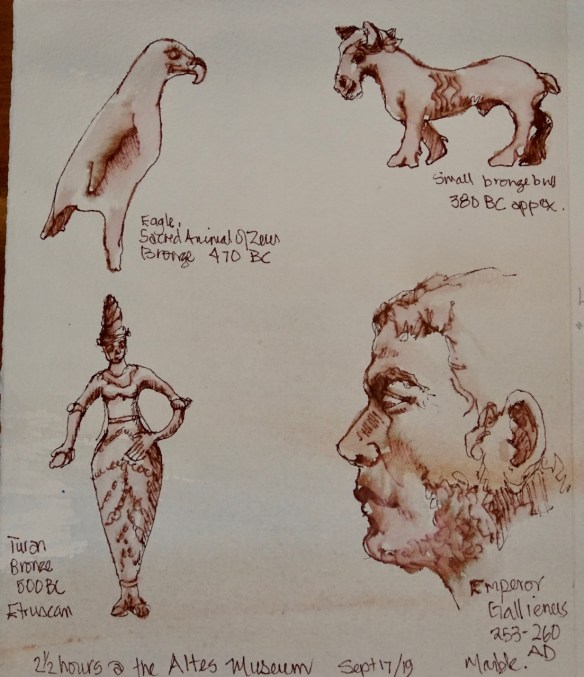

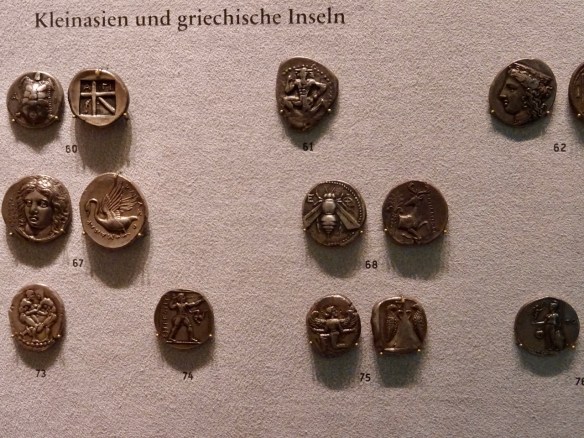
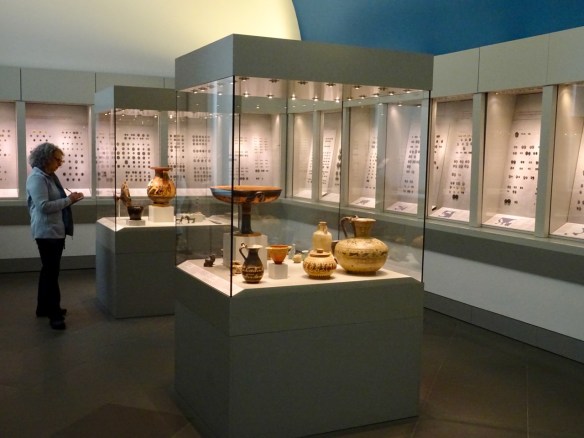
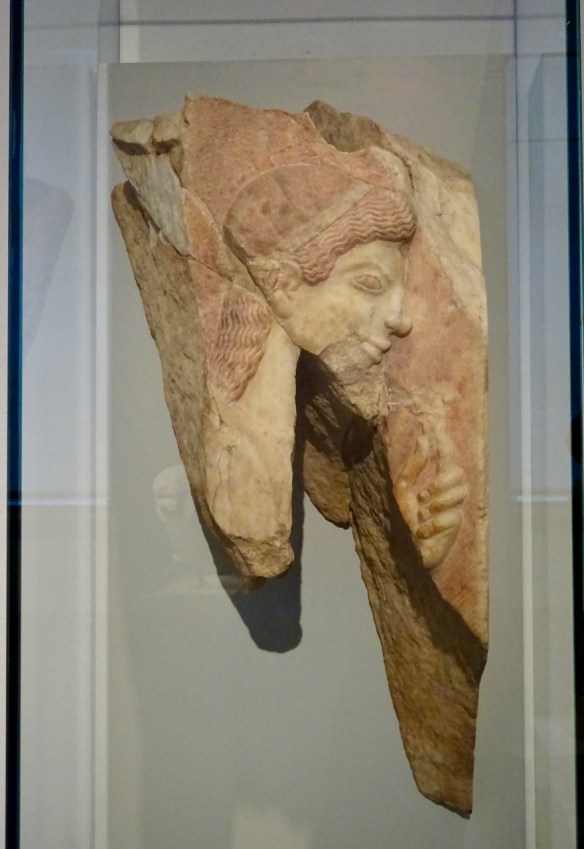 We were surprised at the detail of some of the1,300 ancient coins on display. The museum has more than 150,000 coins in its collection!
 Bob snaps a photo of me sketching…
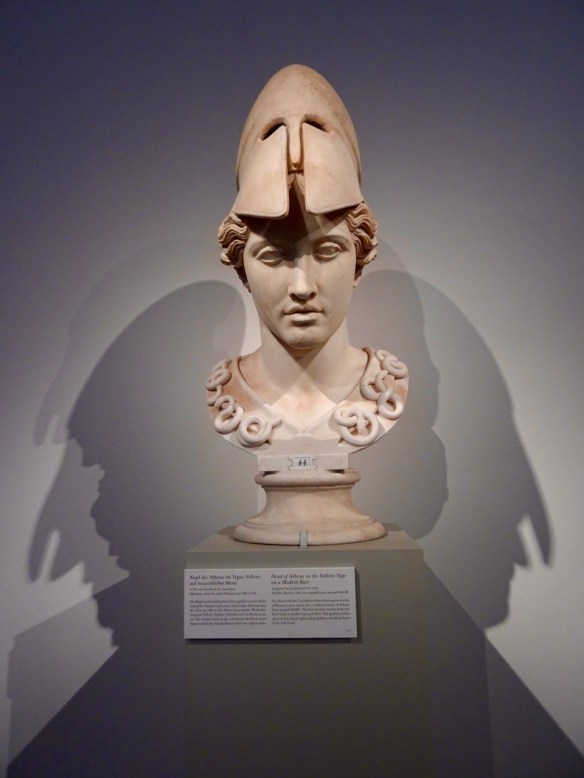
 and then notices the shadows behind this bust. He is getting very ‘artsy’!
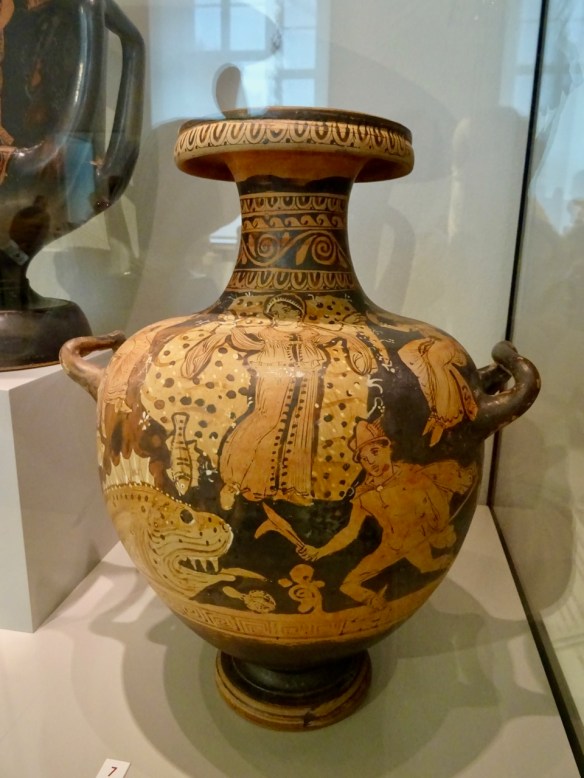
 This Greek vase from 350 BC showing Perseus slaying a sea monster with a sickle is quite different in design than most of the vases we have seen.
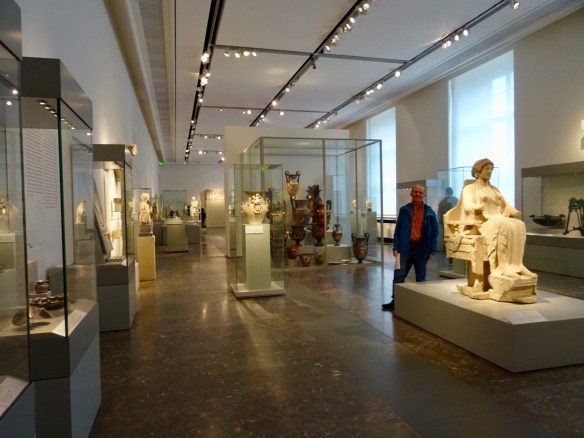
 The rotunda has a huge dome with a round skylight and has an incredible collection of sculptures on both levels.
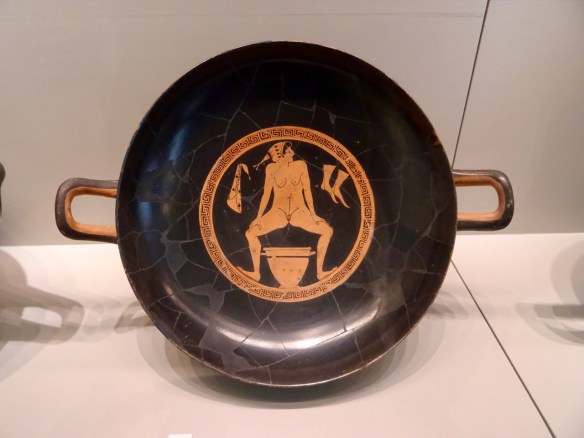
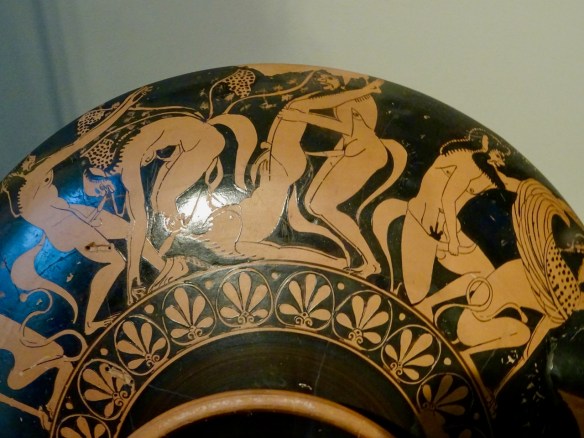
 In the next room this rather unusual drinking cup, is titled Hetaera Above the Chamber Pot!
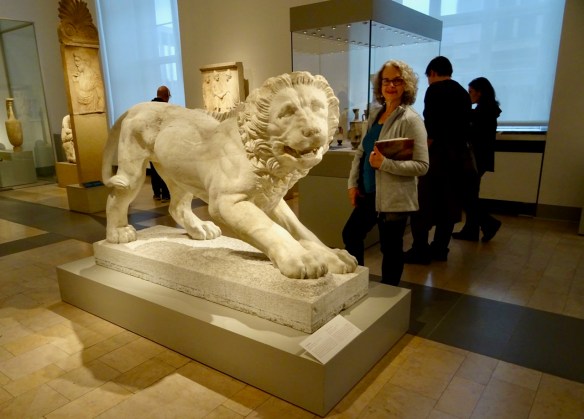
 This Funerary Lion just makes me smile…
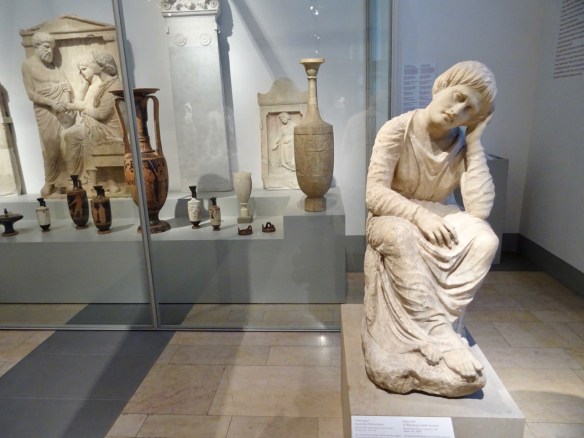
 and I love this statue of a mourning female servant from 330 B.C.
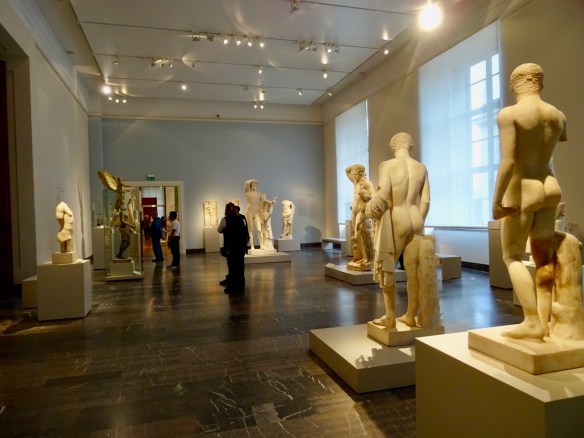
 There is so much to see here, room after room filled with beautiful art.
 The Torso of an Old Fisherman, from 200 B.C. is an example of Hellenistic sculpture representing ordinary people.
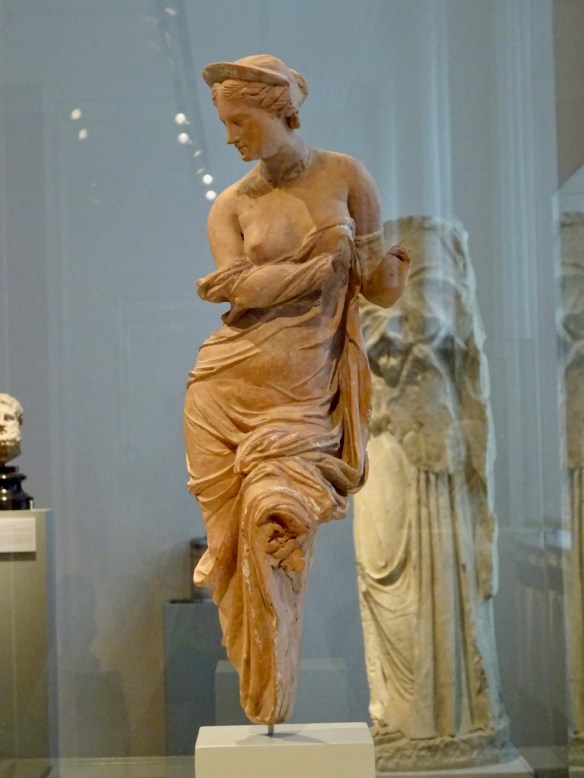
 This statue of Aphrodite, 2nd Century B.C., is thought to be one of the most beautiful ancient terracottas in existence.
 I think this collection of Middle Class Women from 325-150 B.C. is amazing. They were about 8 ” tall and are so detailed.
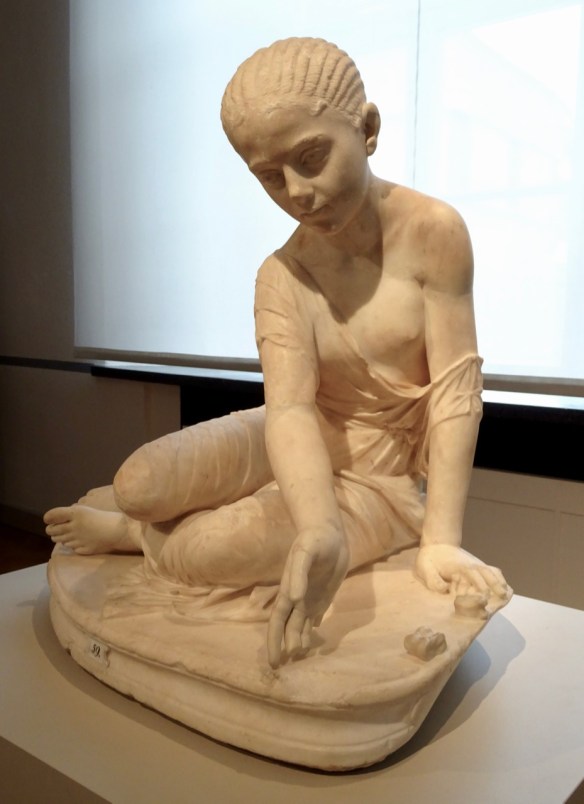
 The Girl Playing Astragal, or knucklebone, is likely a funerary sculpture.
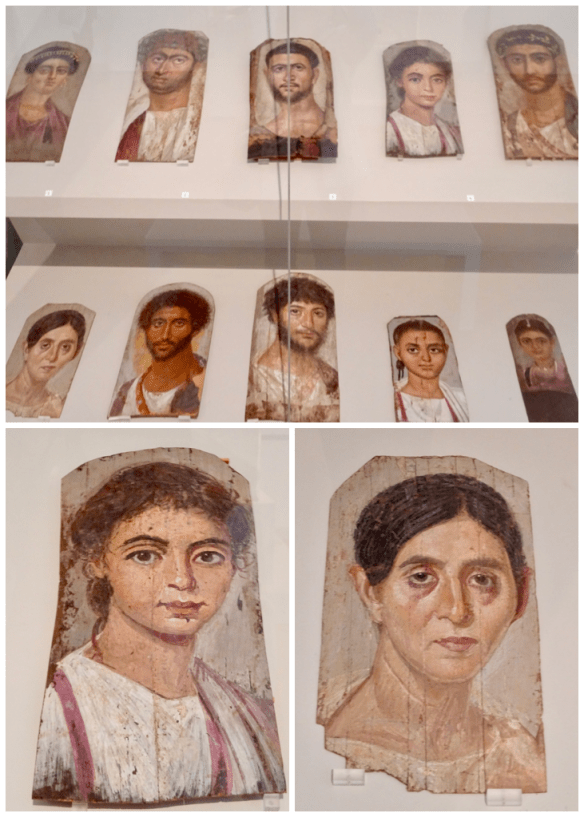
 These 3rd Century A.D.mummy portraits from Roman tombs in Egypt were a surprise. We had never seen anything like them. They were painted with wax and tempera.
 Another sculpture filled room.
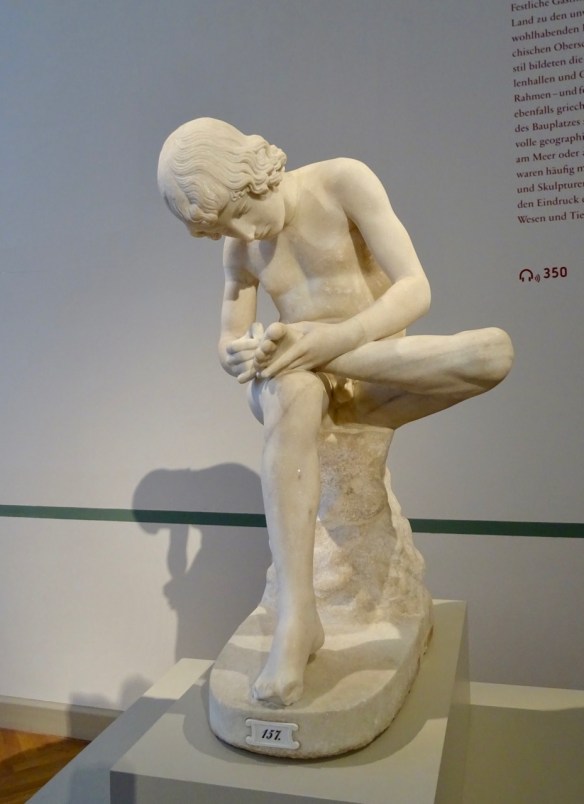
 We have seen Boy with a Thorn, or Spinario, several times in our travels…at the Uffizi Gallery in Florence, in Rome and in Paris. In Rome we saw the original bronze sculpture that inspired the marble copies, It is a favourite of mine.
 This looks like a painting,
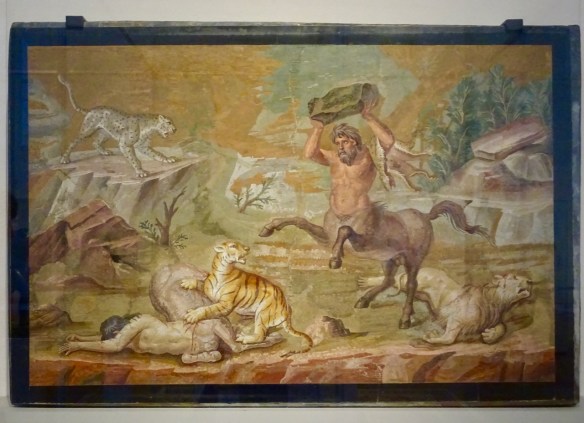 but it is actually a mosaic! I held up a pen in the corner for scale so you can see how tiny the mosaics pieces are.
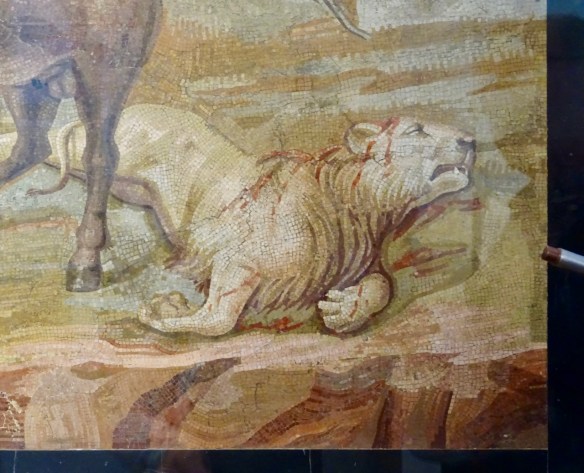 This sad little boy was likely on a tomb for a child.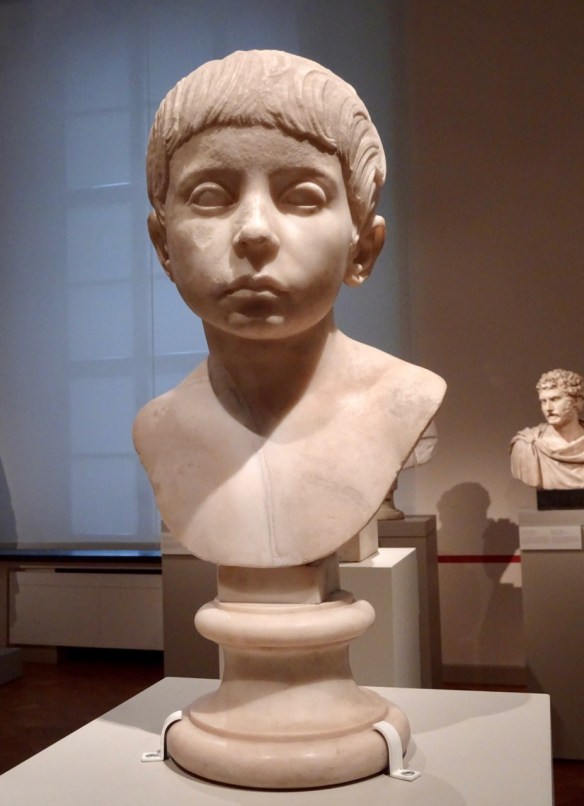
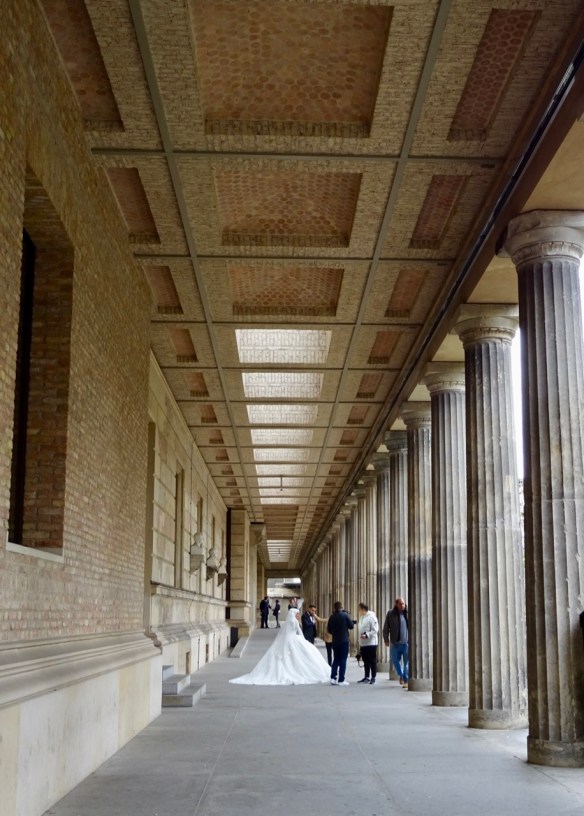
 On a long covered walkway to the next museum we see a wedding photo shoot.
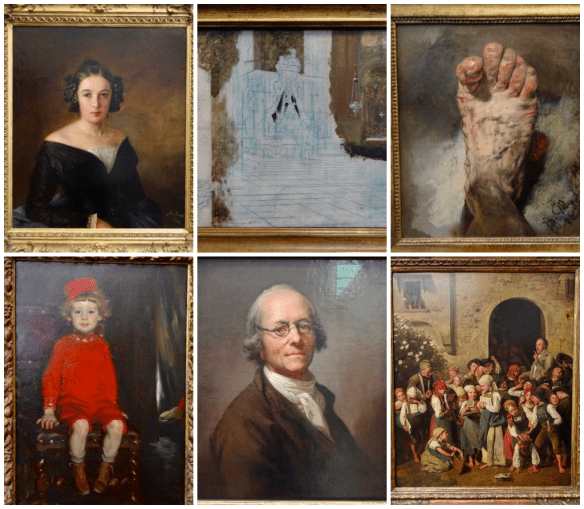
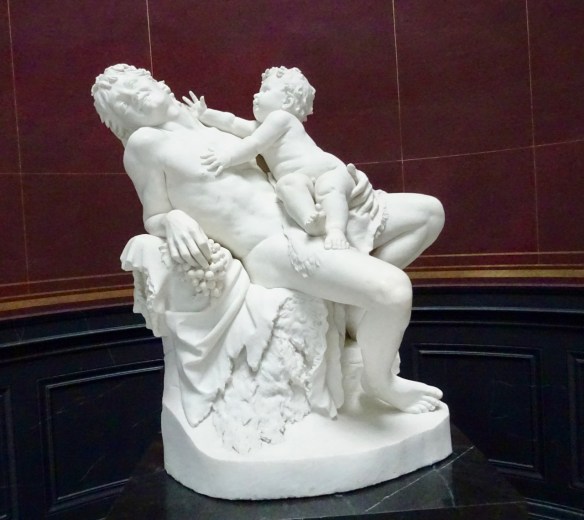
  The Alte National Museum in Berlin features Nineteenth Century art with works by famous painters and sculptors. These are a few paintings that caught my eye, all by German painters that I am not familiar with. There were several paintings that are only partly finished. I found these very interesting, as it is possible to see how the artists approach the painting process.
 There were some Renoirs, Pissaro’s and Carravagios, as well as Rodin’s The Thinker.
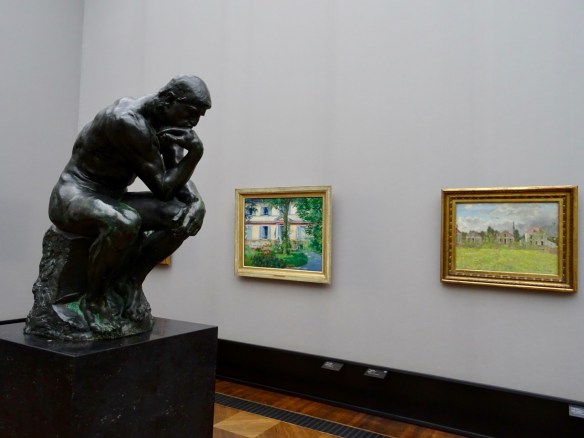 This sculpture was so lifelike and the pose was so natural. There is so much to see, and we have been at these two museums for over five hours!
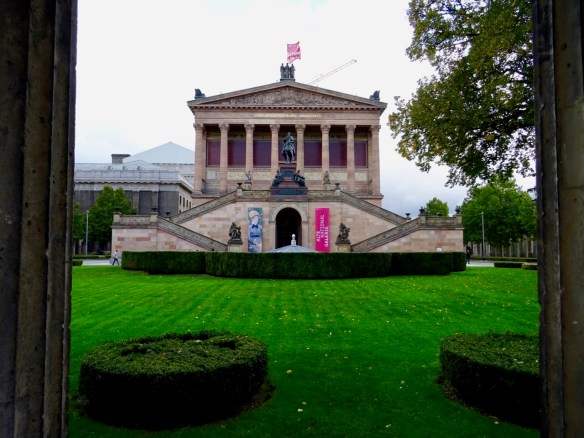
 This is the Alte National Museum, seen from the covered walkway.
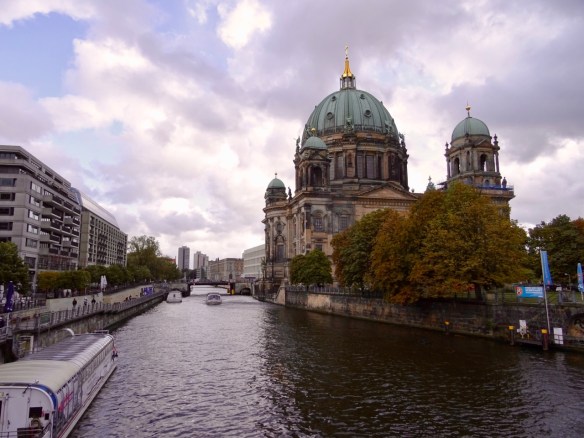
 As we walk to the bus we pass the Berliner Dom, the largest church in Berlin. This photo somehow makes me think of Notre Dame in Paris.
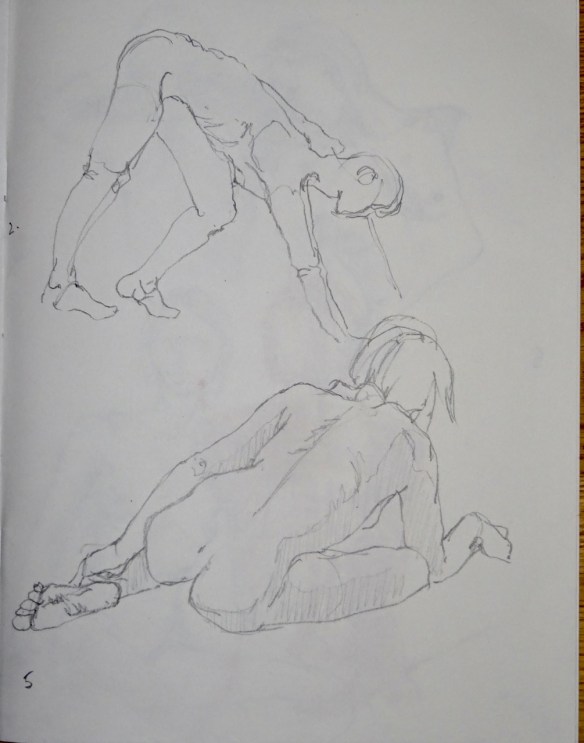
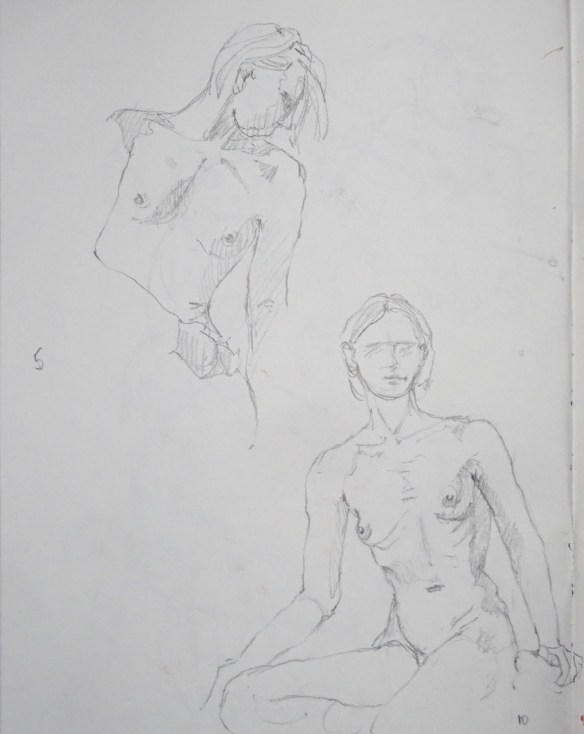
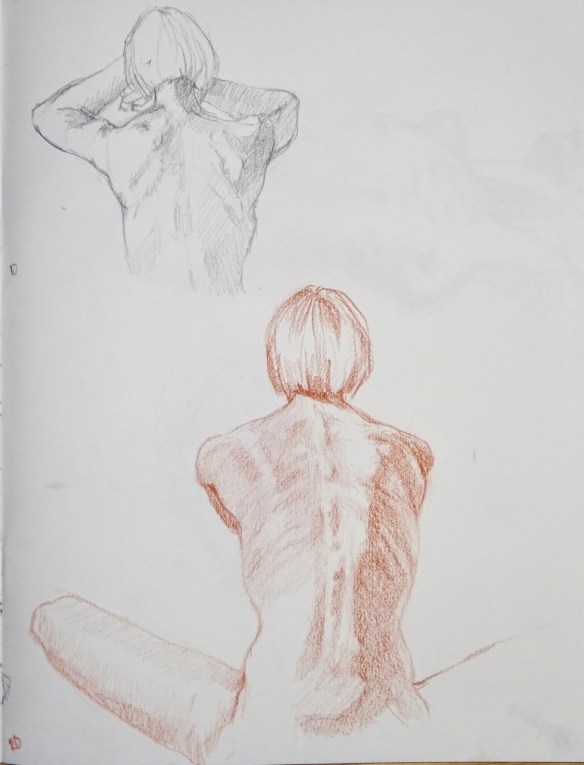
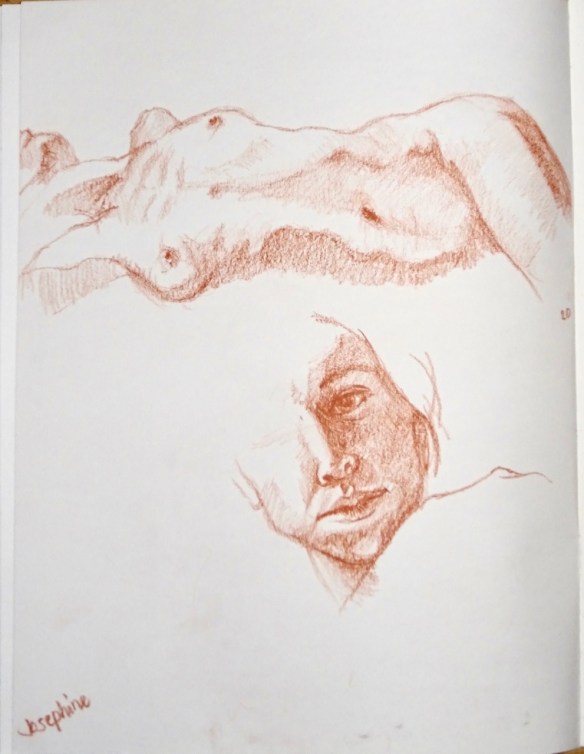
  I am went drawing tonight at a Meet Up Life Drawing session. Our model, Josephine, was very tall and thin which was challenging to draw. These are two minute poses.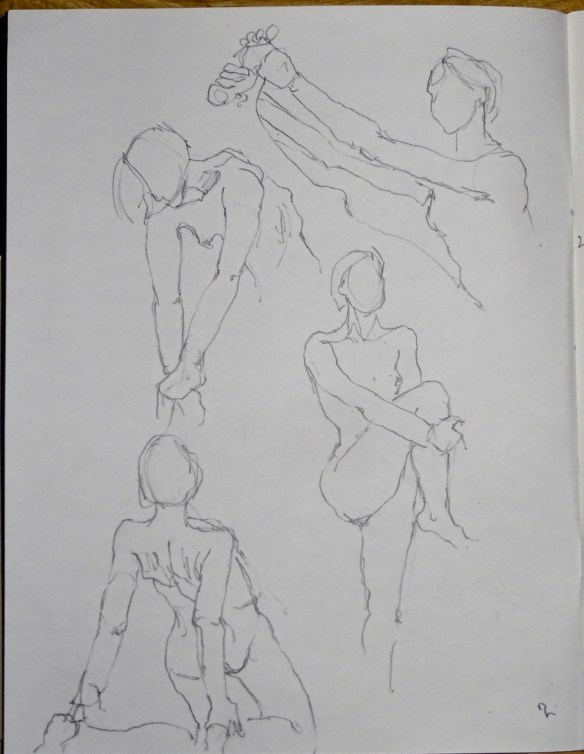
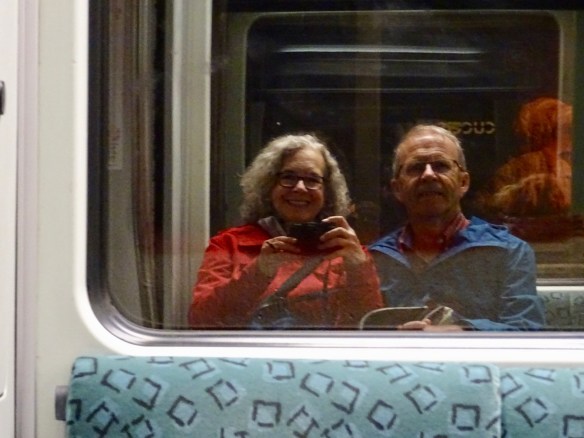 This is something we don’t see at home…taking your IKEA purchase on public transportation! It has been a long busy day and we are both a bit tired.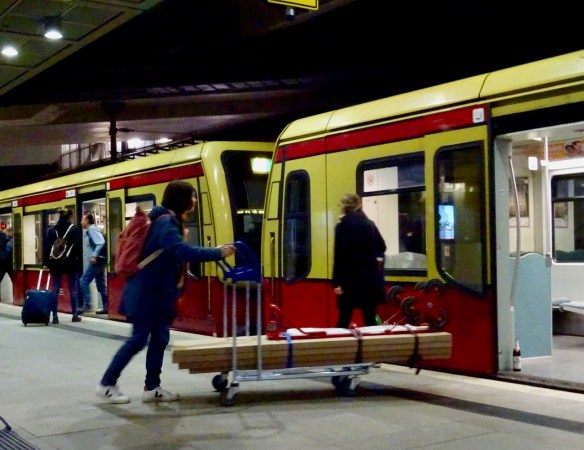
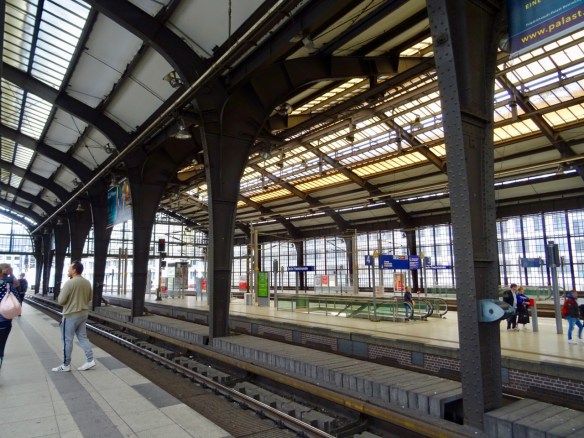
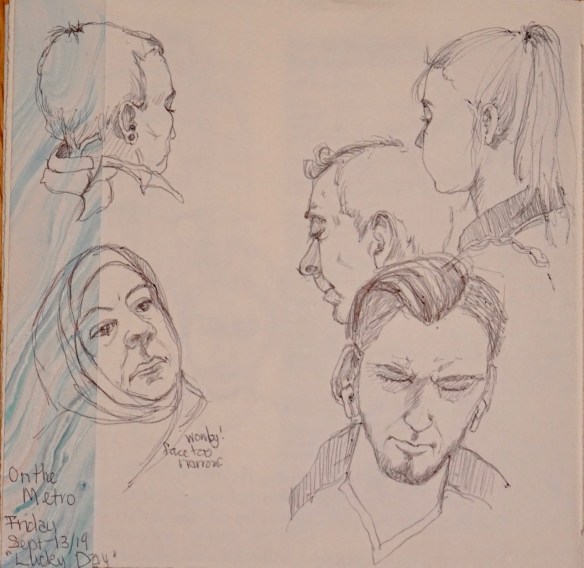 I like to use a Bic Fine Ballpoint pen for these subway drawings. A pen forces me to commit to what I put down, no erasing makes it challenging.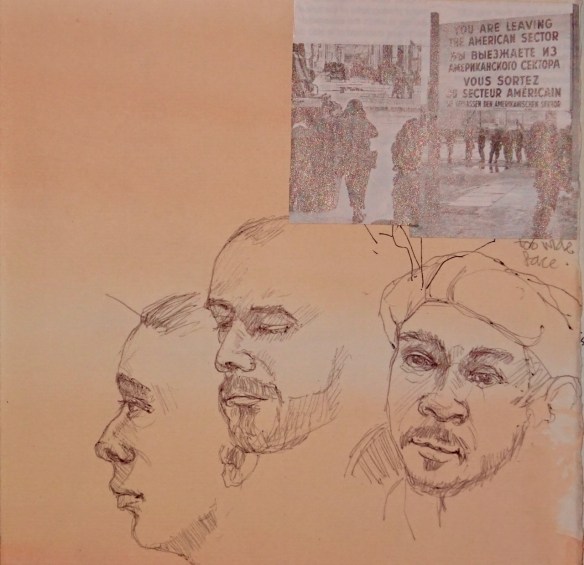
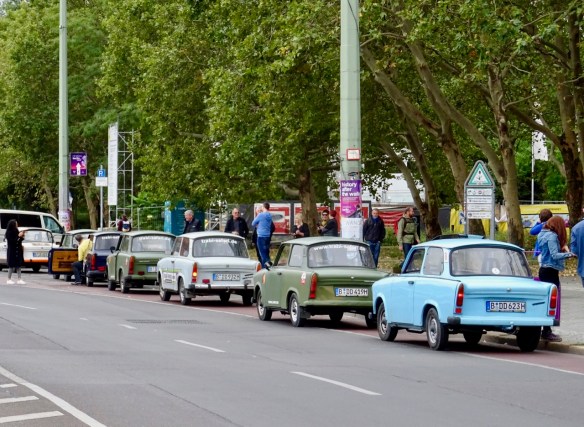
 We saw these Trabants on the way to the DDR museum. While there Bob discovered that the cars’ bodies were made from a material called Duroplast. This was a composite material made from cotton fleece and granulated phenol, which was heated under pressure and formed into a rigid component for use on the exteriors of the cars.
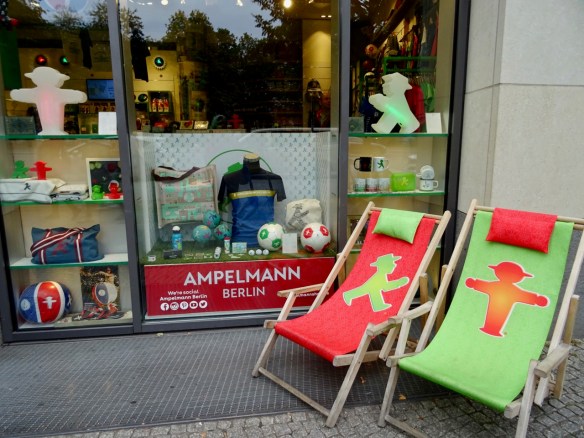
 While walking to a nearby park to draw I passed this store dedicated to the Ampelmann, the little character that lets pedestrians know when it is safe to walk.
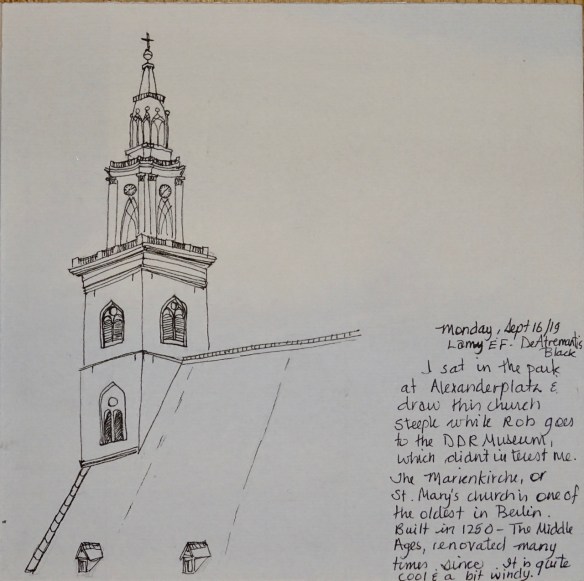
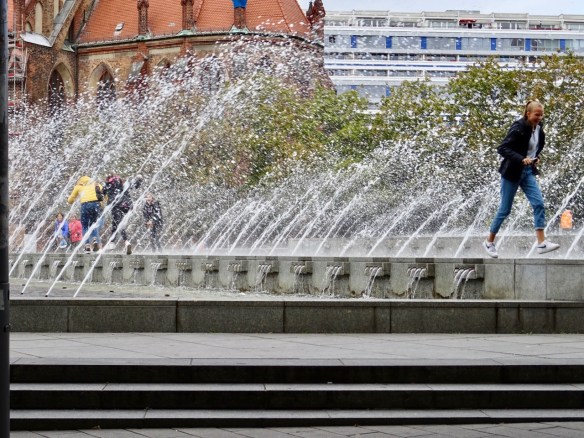
 While I sat drawing the church I watched these young ladies walk out onto the nearby fountain for some photos. I quickly got my camera out because I knew what was going to happen next.
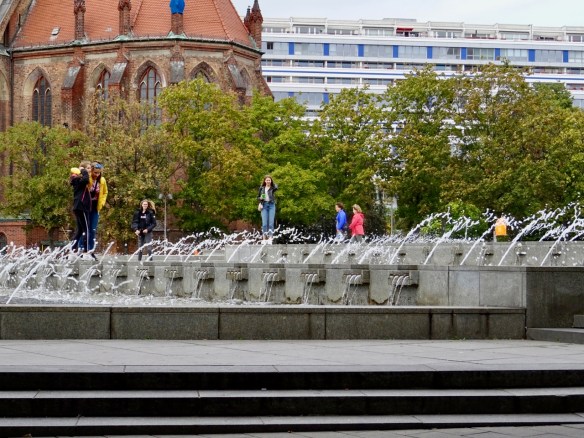 Surprise!! I laughed so hard, as did all their friends!
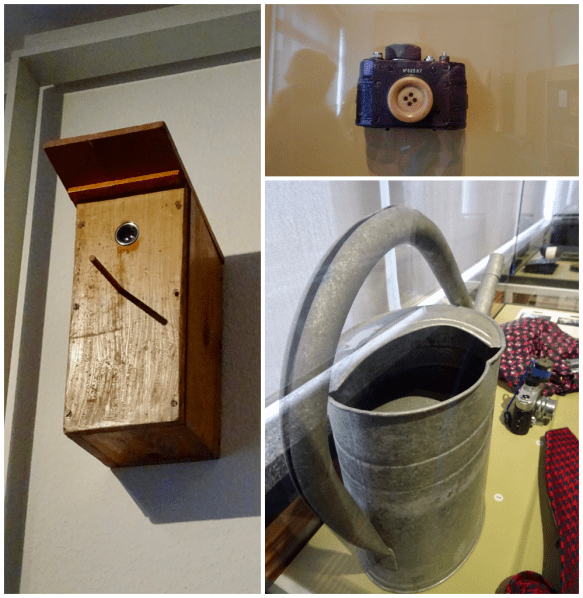
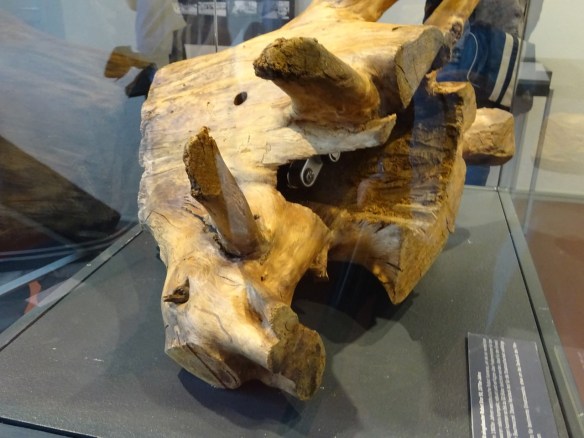
 We had a picnic lunch and then headed to the Stasi Museum. This museum is located on the former grounds of the headquarters of the GDR State Security. We had a two hour tour that talked about how the lives of the East Germans were controlled, manipulated and repressed by the political police system of the former East Germany. Seems like everyone was spying and informing on everyone else, and almost every aspect of people’s lives was controlled by the state. It must have been impossible to trust anyone. Most of the exhibits were like this office room below, not very interesting I thought, but our guide’s talk was very interesting. He told us anecdotes about his life as well as his parents and grandparents lives during this time.
 I hung out at the back of our tour group and did some sketching of people in the tour while I listened.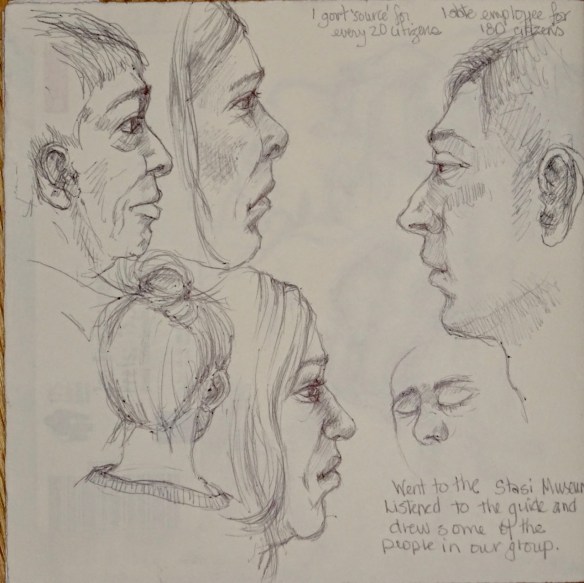
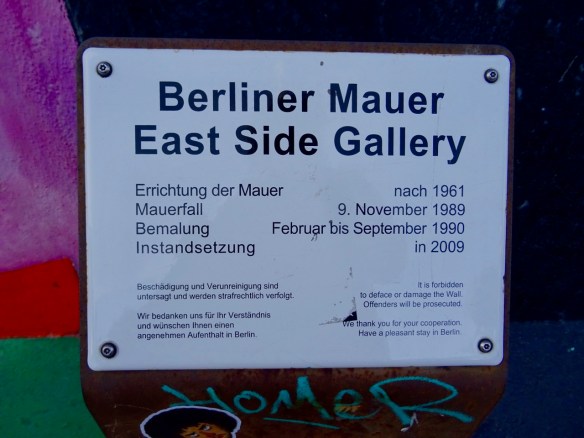


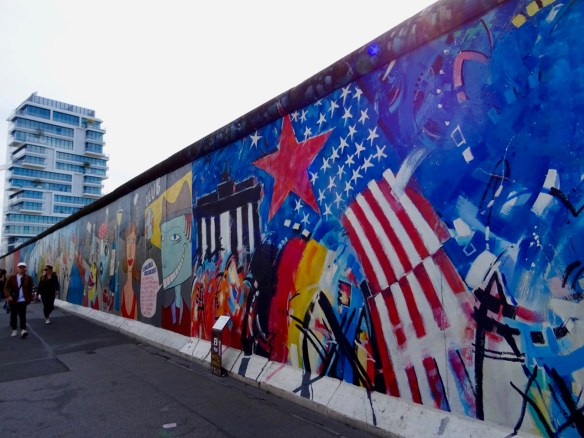
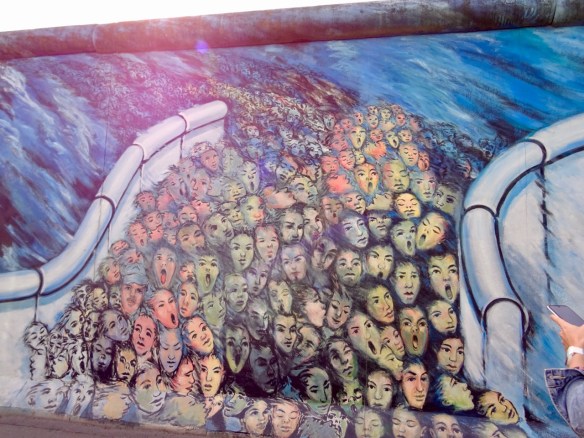
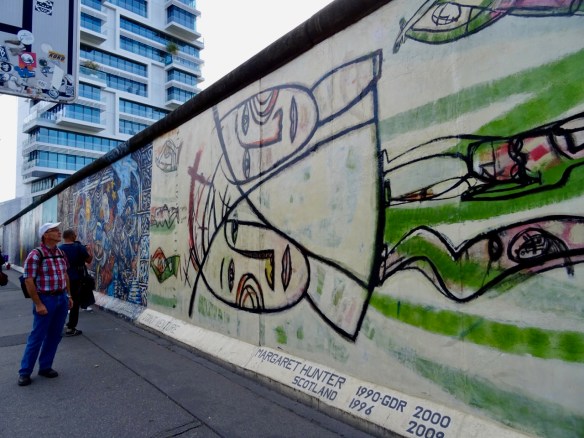
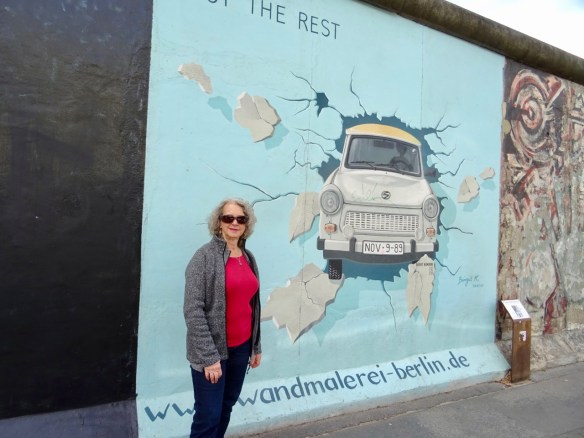 We see a white Trabant soon after seeing this.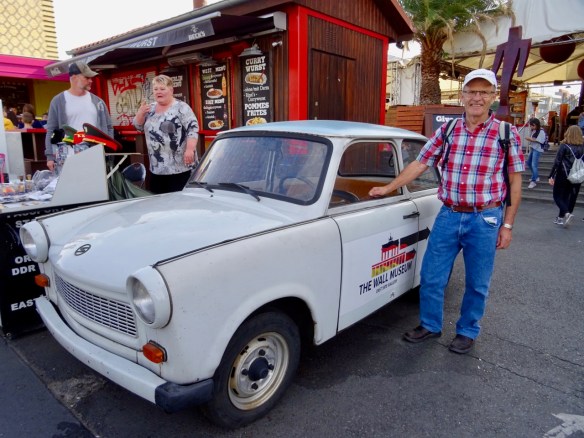
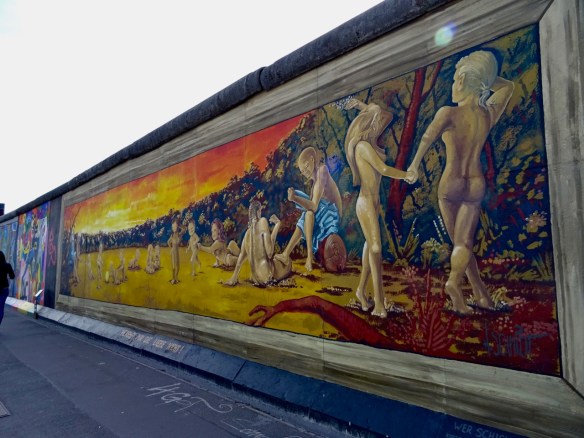
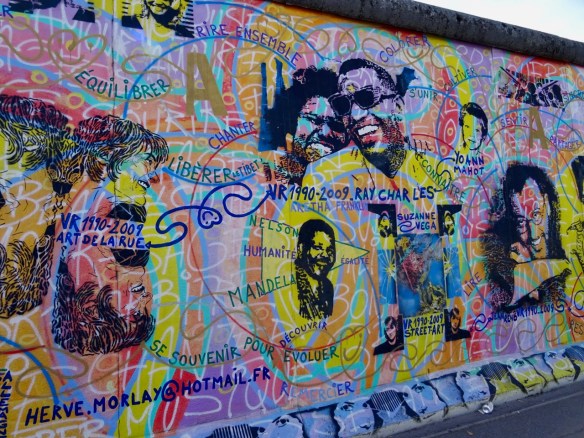
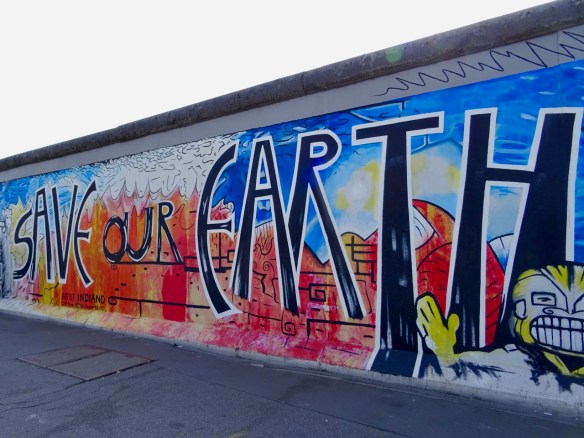
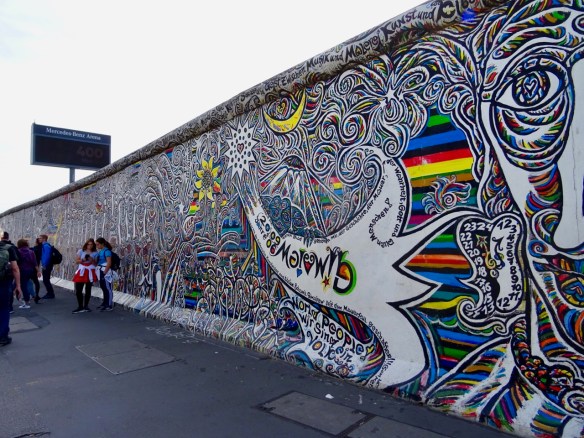 The graffiti n the back-side of the East Side Gallery is interesting too.
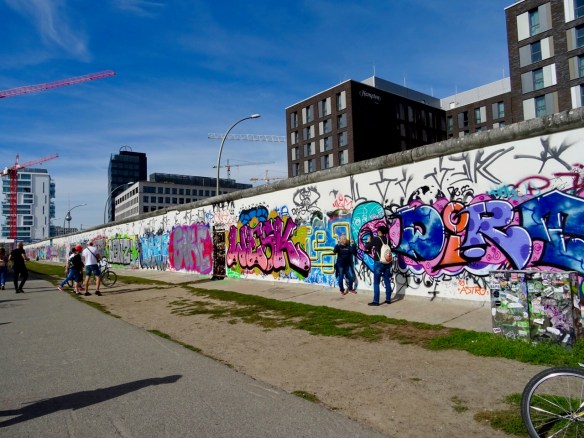 We stop for a snack and listen to some music along the banks of the Spree River before continuing our walk along the open air gallery.
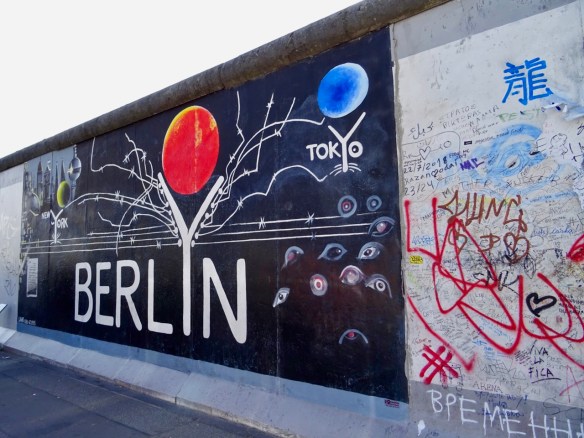
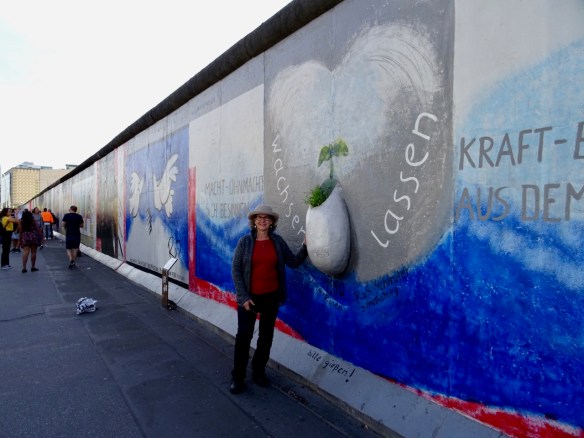
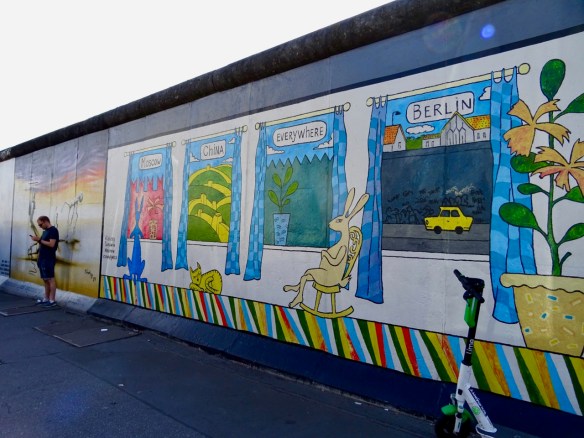
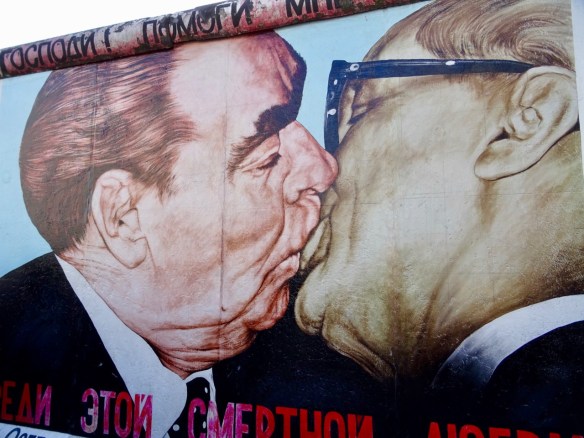
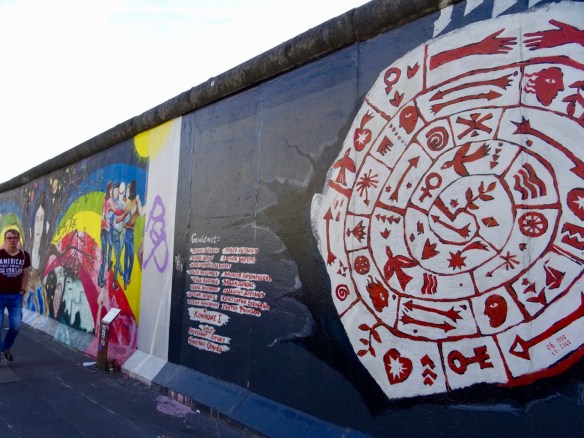

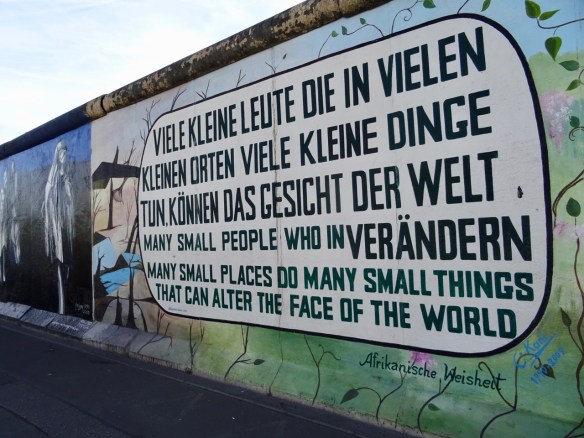
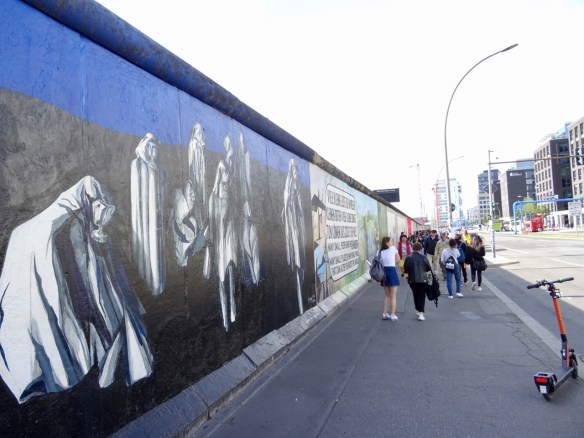

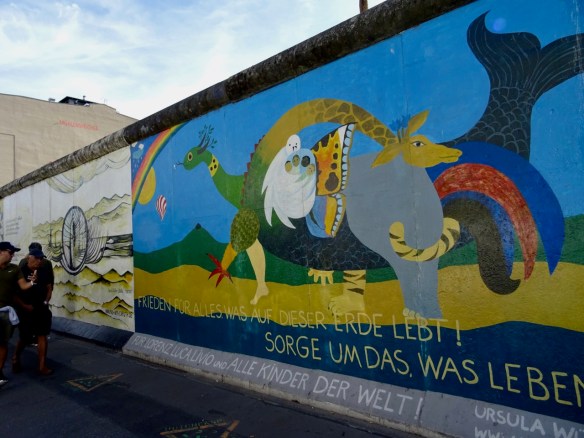
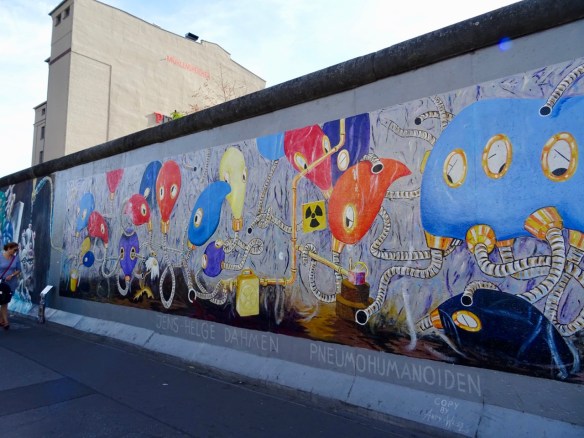
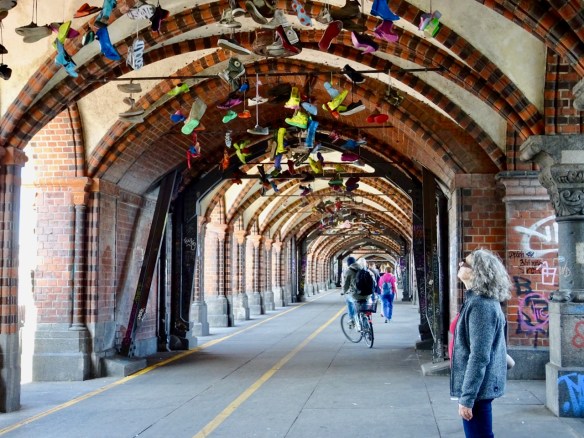
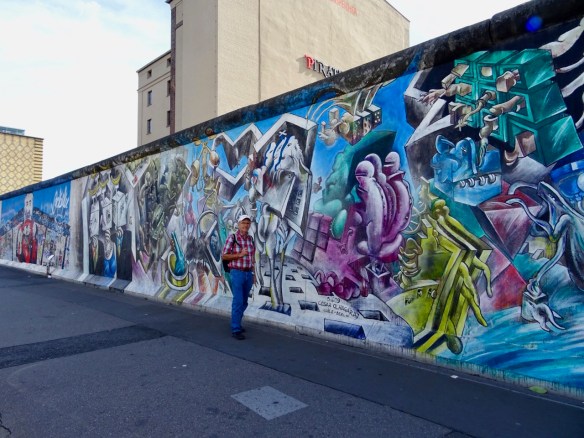 At the end of the wall we walk across the historic Oberbaum Bridge.
 Apparently all the hanging shoes are street art.
 Next we take one of the old trams to Mauer Park which is the site of a huge flea market and a gathering place for Berliners and tourists alike.
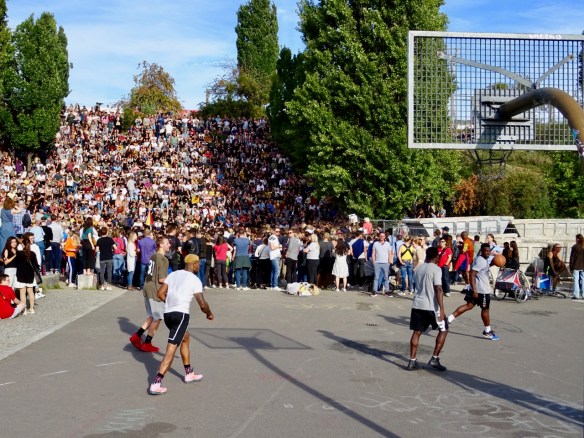
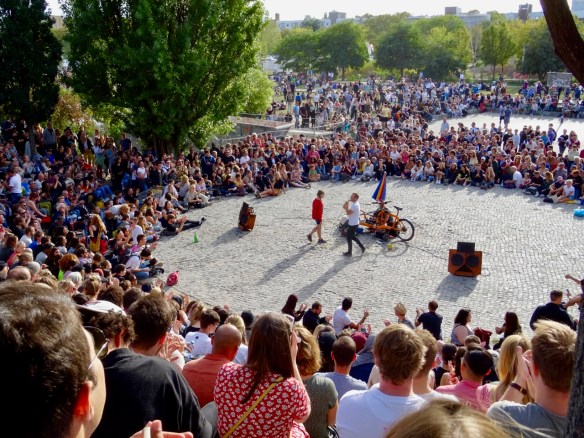
 There are people everywhere!
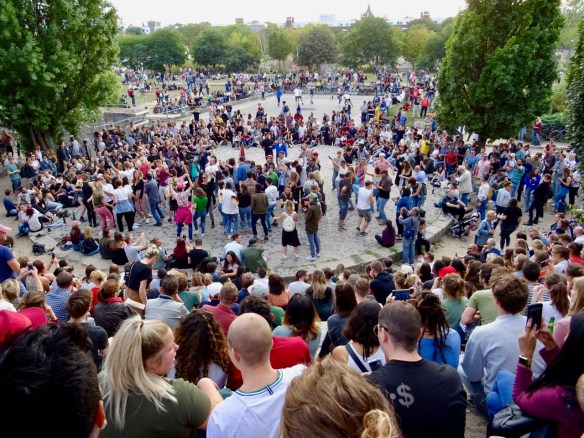
 The people on the hillside are watching karaoke performances, which happen here every Sunday. There is also an ongoing 3 on 3 Basketball game in the foreground. Did I mention that there are people everywhere? Bob figures probably over 20,000 people in the park today and I think we are older than 99% of them!
 After sampling some of the food trucks wares, we make our way up to the karaoke viewing on the hillside and have fun watching the performers. Some were not the best, but the audience was very supportive and everyone gets a big round of applause. Here is
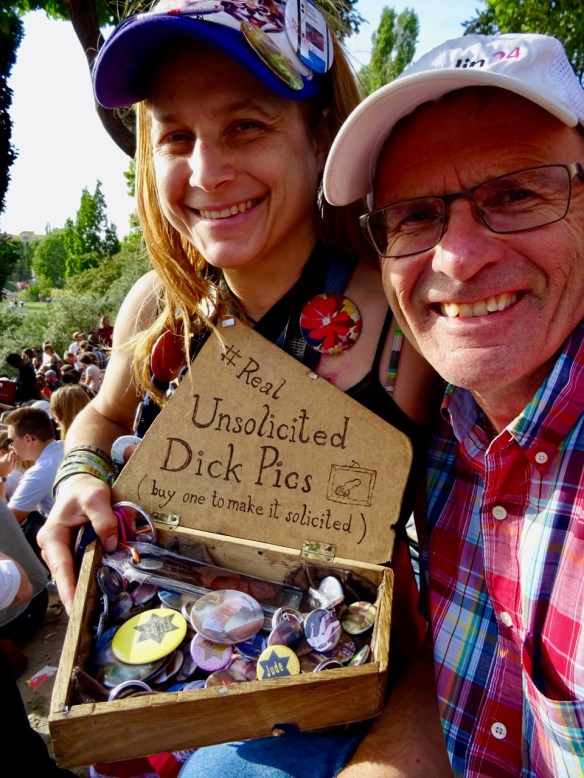
  This lady was selling some rather interesting pins, and offered to let me take her photo for a small donation, and yes, they were those kind of dicks!
 This guy from the Dominican Republic got a great round of applause, but more for his dancing than his singing.
 Some of our fellow audience members.
 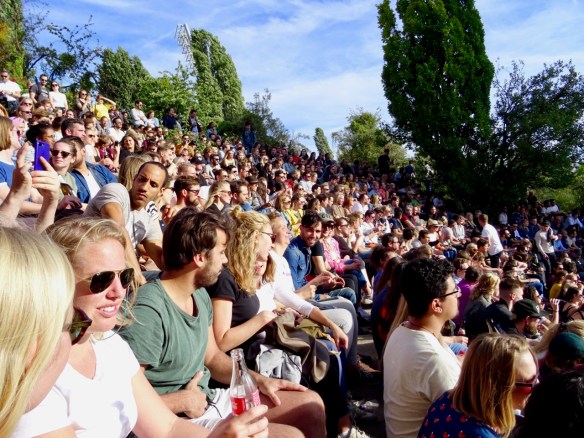 One of the performers from Afganistan got lots of people up dancing.
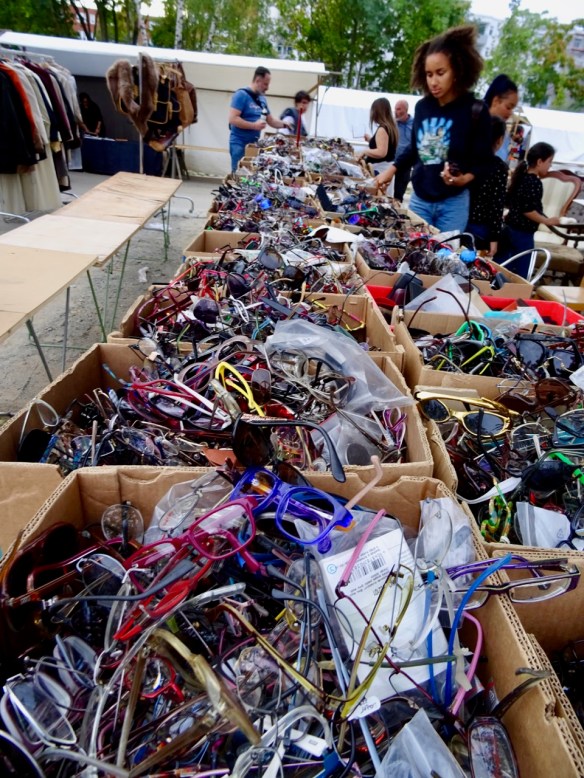
 The flea market was closing by the time we got around to visiting it. As we passed by this booth I overheard a guy say to his girlfriend “All these glasses and you still can’t see my point of view!”
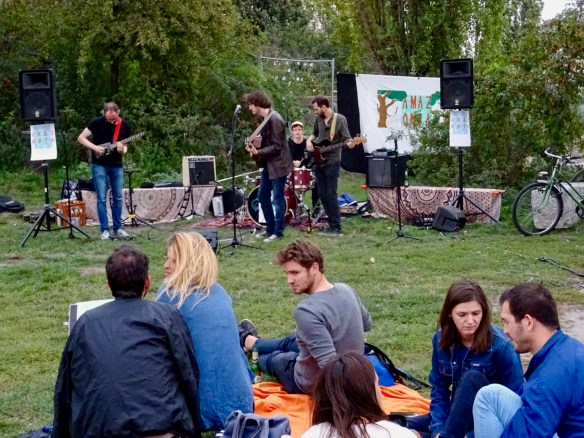
 There were lots of groups of performers. Here is one
 This sign on an artist’s booth makes me laugh. Today was a nice change from the sight seeing we have been doing. It was really relaxing, a lot of fun, and great people watching!.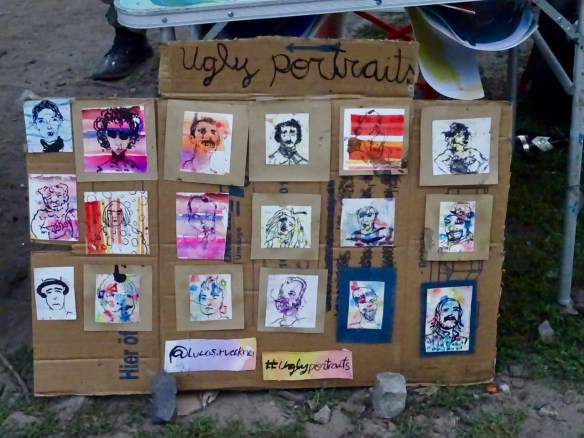
 trudymason.com