Valencia

Friday, November 27, 2015

Our apartment in Valencia is a short metro ride from the old part of town.  We bought four tickets to get us into town and home again.  However when it came time to go home our tickets weren’t working. Turns out we purchased four tickets that had to be used all at the same time so the other two were no longer valid.  It cost us over € 9 for two one way tickets because we had also chosen too many zones.  We bought two tickets to get home for only €3, however we later discovered that we could purchase ten tickets for €7.20, only €.72 a ride!

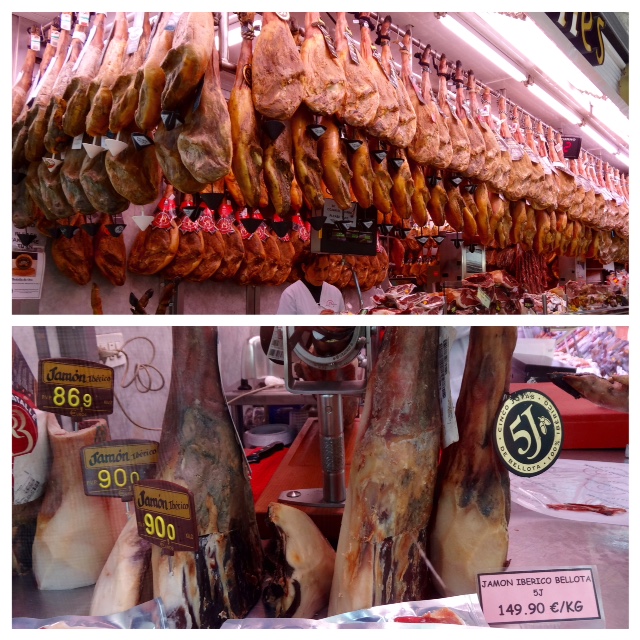
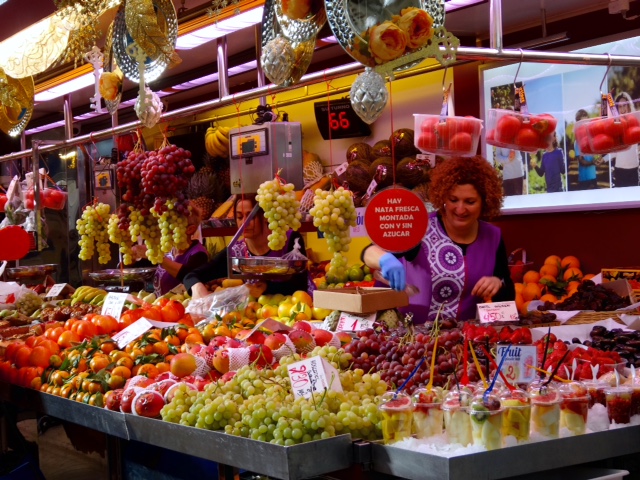
First stop today is the Mercado Central, a market held in a huge iron, glass, and tile Art Nouveau building. The meat and fish aisles are always interesting, so different from our stores back home.Image-1

Hams are a big seller in Spain and I still find it strange to see them hanging in shops.  No refrigeration seems to be needed, and take a look at the prices, up to €149 a kilogram!Image-1
We bought some fruit for a snack and then headed towards the Valencia Cathedral.  Yes, another cathedral!FullSizeRender
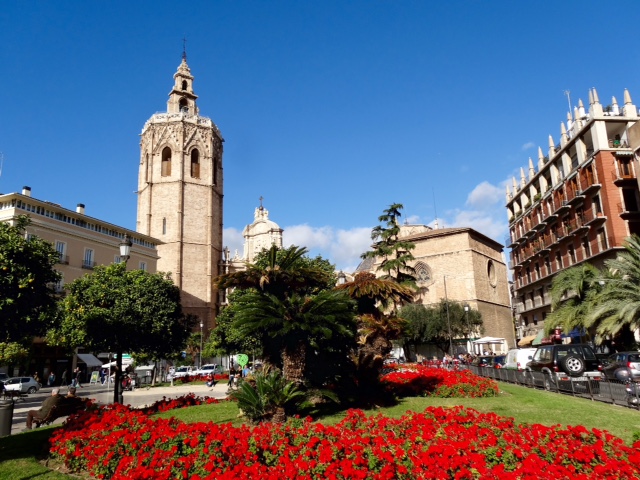
Some refreshments and a rest in this lovely plaza and we are ready to check out the cathedral. FullSizeRender_2
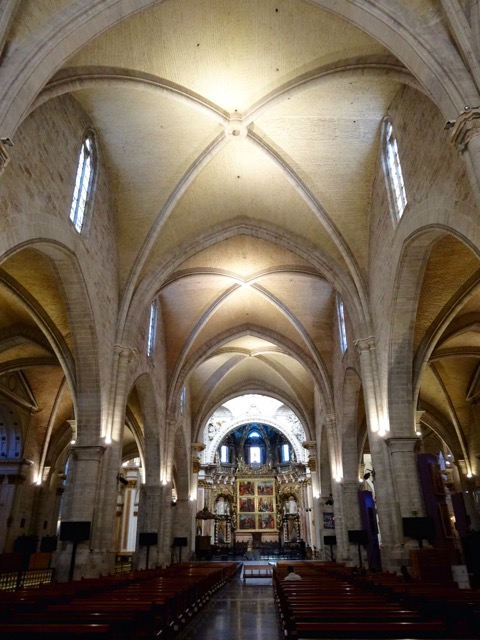
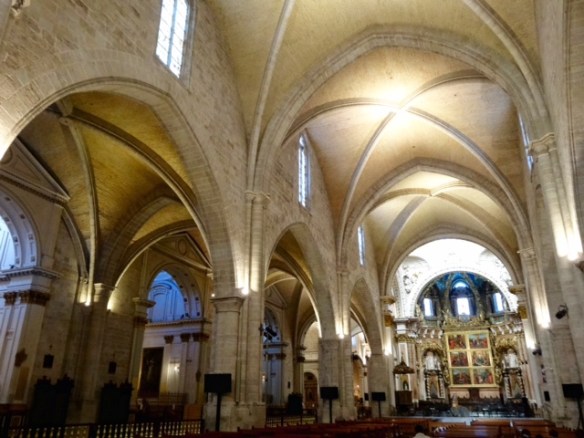
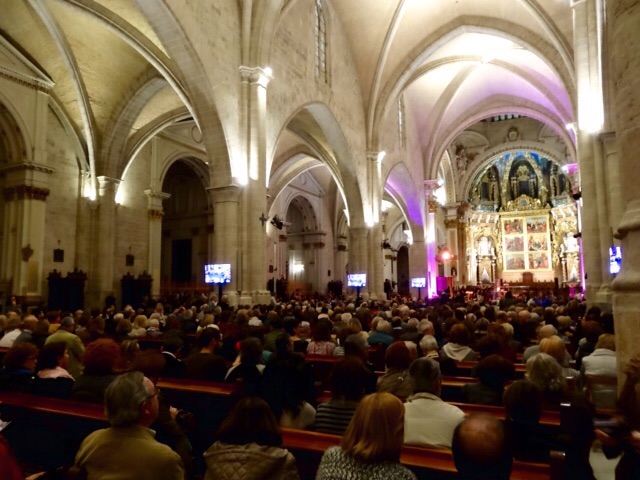
After skirting past the gypsy women begging on the streets and the church steps we enter yet another magnificent cathedral. Originally built in 1262, it has been added to throughout the centuries and it now has three entrances. The one we chose gave us this view of the cathedral as we walked through the doors.FullSizeRender
The day light just before the altar comes from this beautiful octagonal dome.FullSizeRender_3
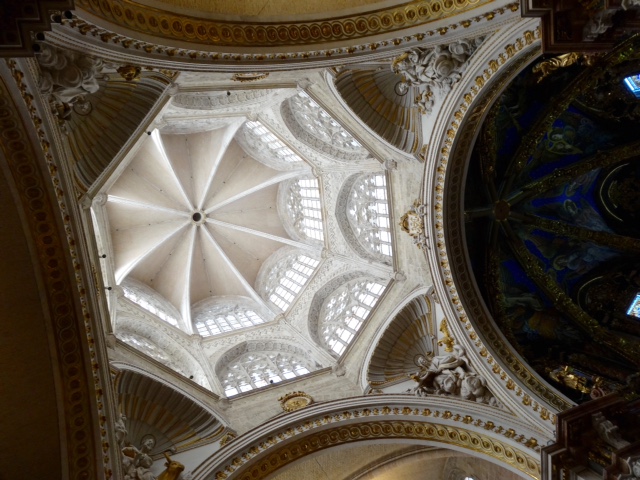
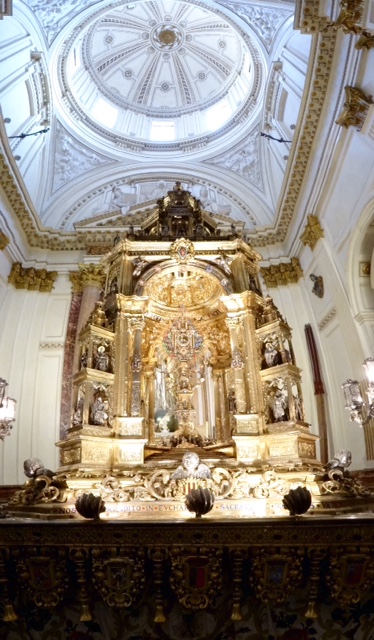
There is another gorgeous dome over the Chapel of St. Joseph, which is one of twenty eight smaller chapels located in this cathedral. Most of them are incredibly ornate with lots of gold and jewels and carvings. Although these magnificent cathedrals are truly awe inspiring, we wonder about all the money that has been spent building them and we are also quite aware of the church’s role through out history.  So many horrors have been perpetrated in the name of religion. It is a strange sort of paradox.FullSizeRenderThe high altarpiece and the frescoes are amazing.  We sit for quite some time just in contemplation.  This is Bob’s favourite altar of all that we have seen so far. The frescoes of musical angels on the dome above the altar were only discovered in 2004 during some restoration work.  They had been covered by a wooden ceiling and no one knew they were even there.   Click here if you want to read more.
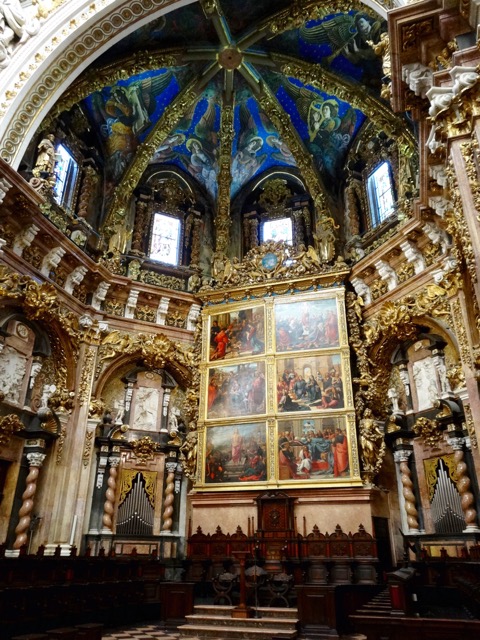
FullSizeRender_2

Here is another view of the main aisle and one of the side aisles with the smaller chapels.FullSizeRender
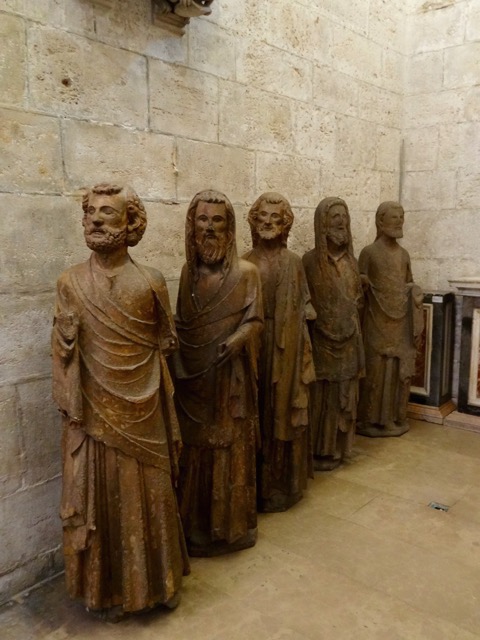
These life size statues of the Apostles are from one of the entrances to the cathedral.  They have been replaced by copies and the originals are now kept inside the cathedral museum for safe keeping, but it was closed for renovations so they were displayed in an alcove.FullSizeRender_5An intricately carved altarpiece, built in the 16th Century holds the Holy Chalice, which is said to be the chalice Christ drank from at the Last Supper.FullSizeRender_3
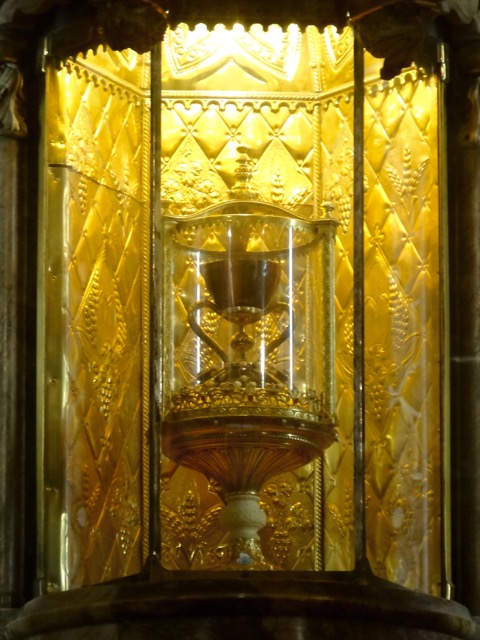
And here is the Holy Chalice, aka the Holy Grail.  There is more information about the history of the cup here.  We were told that there is more scientific investigation currently taking place to prove that this is indeed the cup that Christ used at the Last Supper.FullSizeRender_4

We climb 207 steps to get to the top of the Torre Del Micalet. Construction of this bell tower started in 1381 and it is one of the most important landmarks in Valencia.image
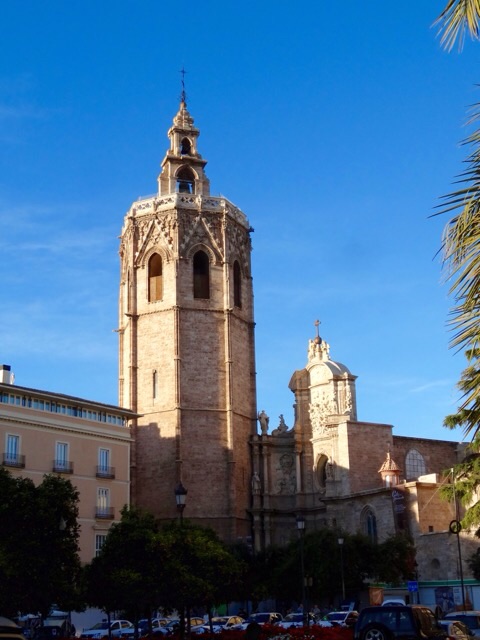
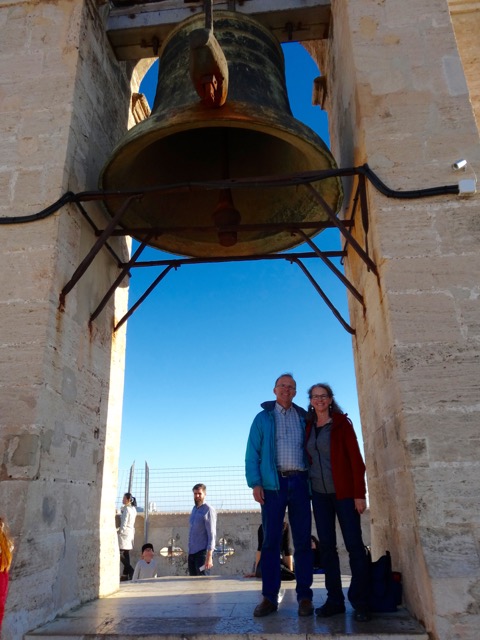
Here is El Micalet, cast in 1539, and weighing 11,000 kilograms.  Shortly after this photo the bell chimed the hour.  It was very loud!  All cathedral bells have names, and this cathedral has 14 bells ranging in size from 11,000 kg to 260 kg.FullSizeRender
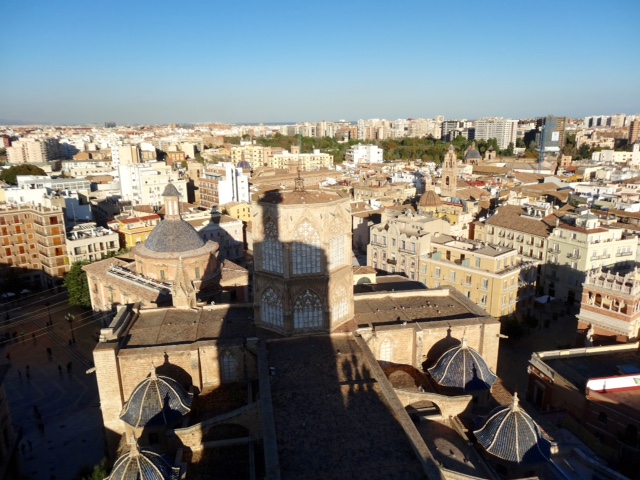
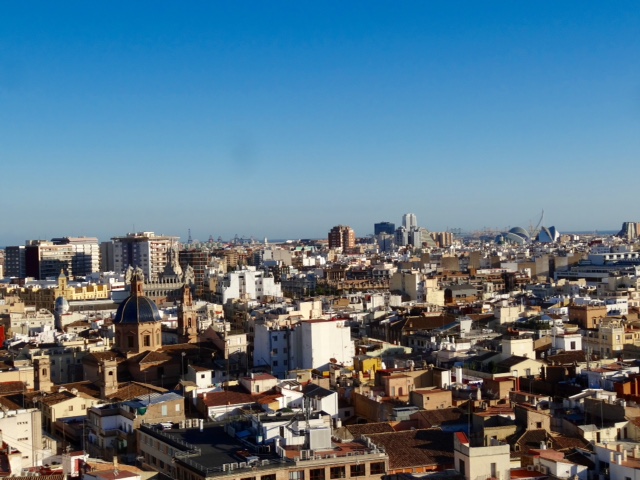
We spend quite some time up here, admiring the view, and enjoying the sunshine. The octagonal tower on the roof in the center of the picture is the outside of the white dome above the altar and the dark domes are above the side chapels.FullSizeRender_5The two curved buildings just visible on the skyline on the far right hand side of the picture are part of the City of Arts and Sciences Complex. We are going there tomorrow.FullSizeRender_2
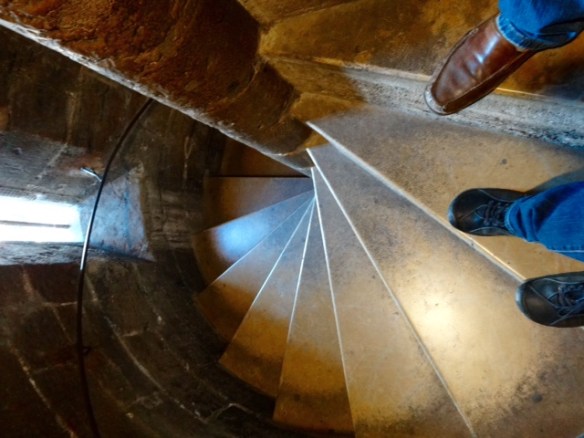
Now we need to descend the 207 spiral stairs that we climbed to get to the top of the tower. We have certainly done our share of stair climbing this trip.FullSizeRender_3
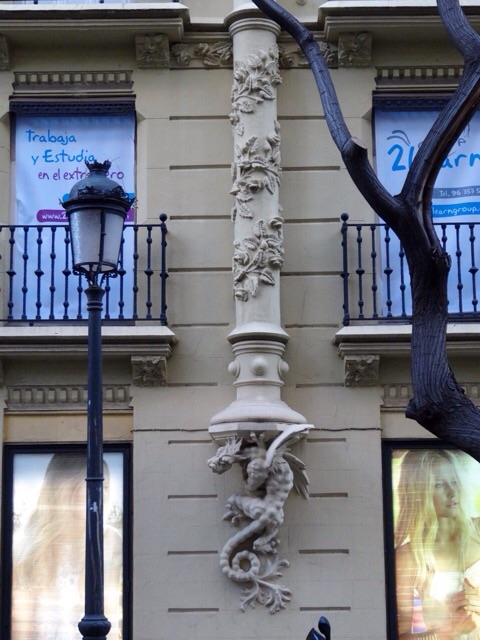
Valencia has a ‘dragon house’ so of course we have to find it.  I’m not sure what I was expecting but I was a bit disappointed to only find one small dragon sculpture over the doorway and two pillars with a little dragon on the bottom of each of them. In case you didn’t know, I love dragons.image
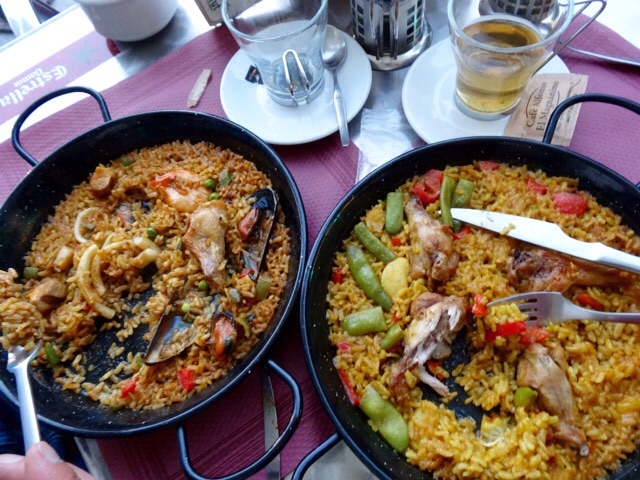
Bob finally gets to try the seafood paella he wasn’t able to have on his birthday.  image
We make our way back to the Cathedral for a concert. Bob thought we would be way too early but when we arrived about forty five minutes before the concert it was already packed. We managed to find seats in the side aisle near the altar, which was actually behind the stage, but there were TV screens so we got to see most of it.  We both enjoyed the performance even though we weren’t exactly sure what it was all about. A young boy sang several songs and it seemed to have something to do with Christmas.image
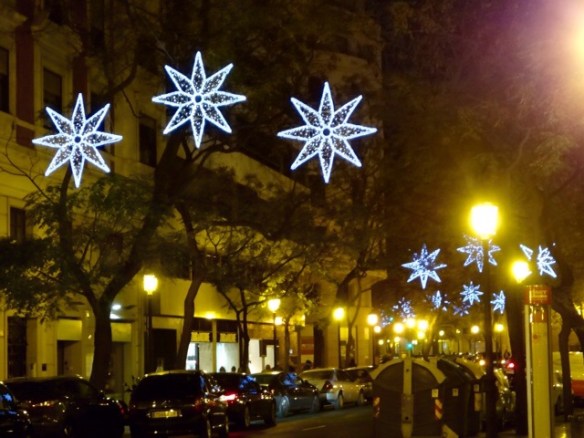
The Christmas lights were on after the concert.  It still seems strange to see Christmas decorations without any snow.image
On the Road to Valencia

Thursday November 26, 2015

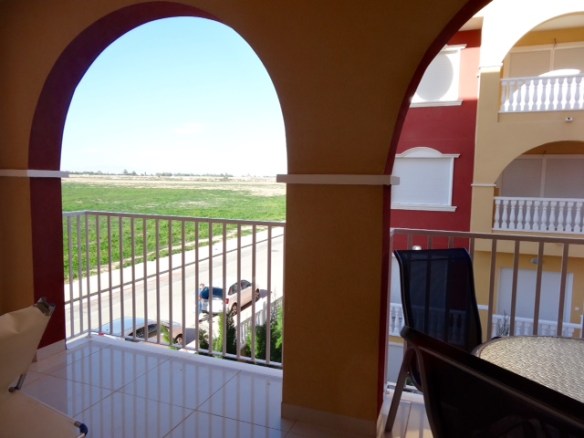
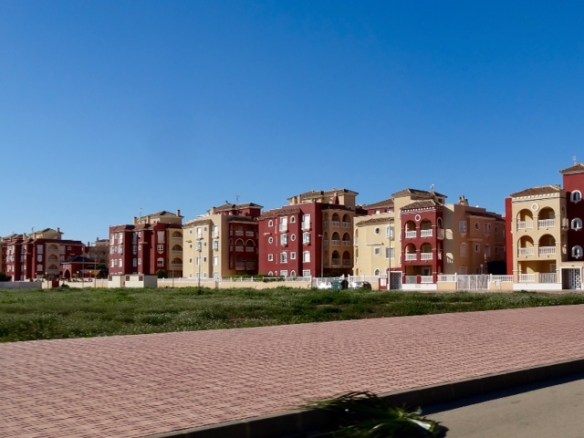
Bob is loading the car and we will soon be on our way to Valencia.  This is the view from our balcony.  As you can see, we were right on the edge of Los Alcázeres, just fields beside us, so it was a nice quiet location.FullSizeRender_3FullSizeRender_5

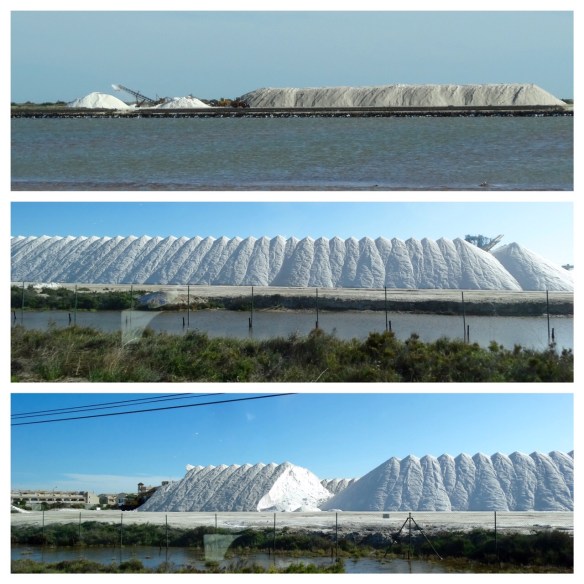
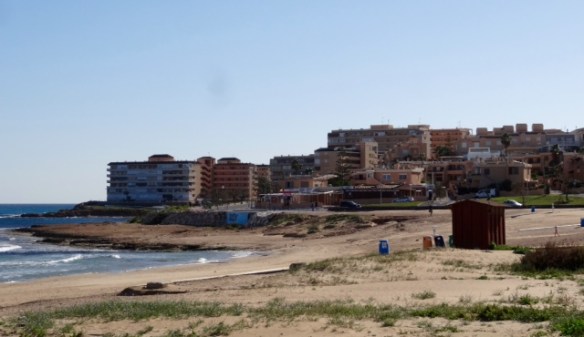
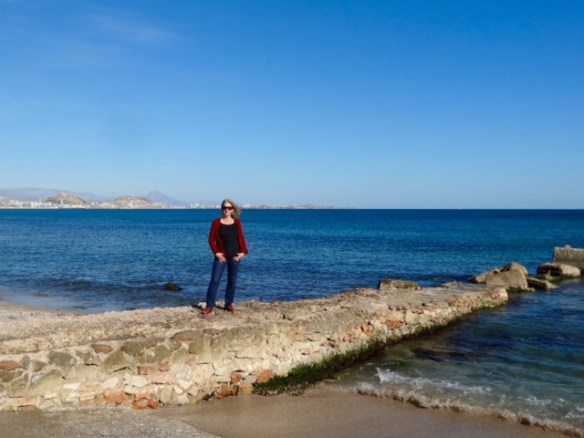
Before long we are passing lots of salt pans, which are large shallow ponds of sea water. The water evaporates and leaves behind the sea salt, which is then harvested and piled into these enormous piles of sea salt.  Seems strange to think that the salt we eat is produced in this fashion. I had visions of workers out raking up sea salt from the salt pans, not bulldozers and big machinery.  A bit naive on my part I think.Image-1We stop to stretch our legs and have lunch near this beach.  It is certainly not as pretty as other beaches we have visited.FullSizeRender_2The view in the opposite direction.  This is an area full of condos and apartments and partially constructed buildings. FullSizeRender

We stopped for another break a bit further on… FullSizeRender

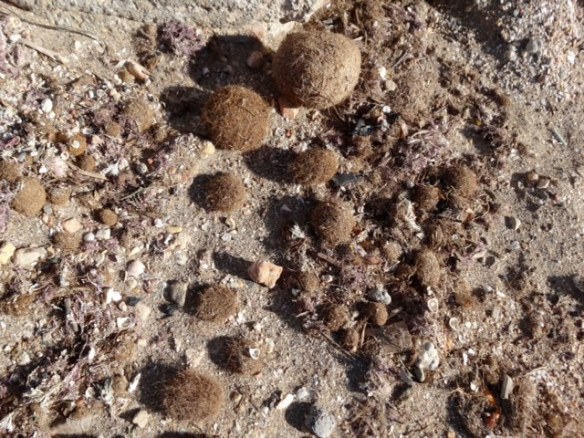
and found these strange hairy balls, hundreds of them all over the beach!  Some of them were several inches in diameter.  Does anyone know what they are? FullSizeRender_4

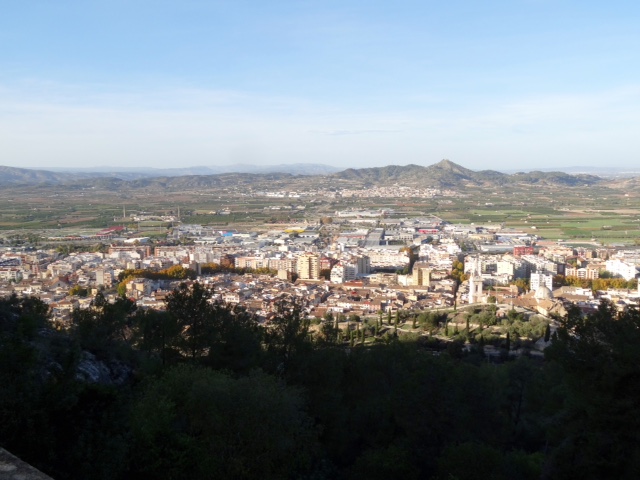
We detoured into what we thought was a little town called Alcoi, thinking we could go for a walk in a park area near the town, but we got a bit lost in what turned out to be a rather large city. We also discovered that the park didn’t have any easily accessible areas for walking, so we were soon back on the road. Next stop was the town of Xativa where we visited the ruins of a once grand castle with 30 towers.  FullSizeRender_3FullSizeRender_2

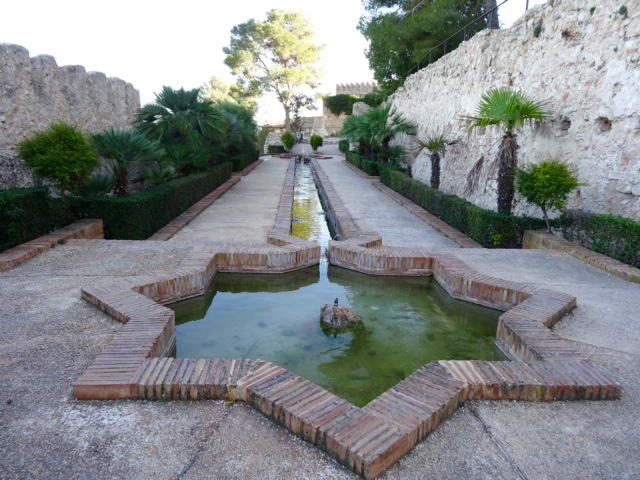
It was getting late in the day and we only had just over a half hour before closing so we saw as much of the castle as we could before the sun set and the castle closed. This was one of the water features in the garden area of the castle. FullSizeRenderThe view from the castle was quite spectacular.FullSizeRender_5

There are lots of market gardens visible in this photo.FullSizeRender_3

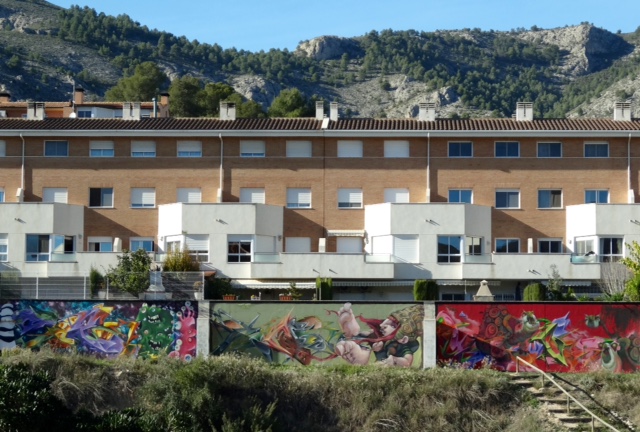
We still see lots of graffiti along the highways but we also see these murals. Too bad I can only glimpse them flying by in the car.FullSizeRender_2

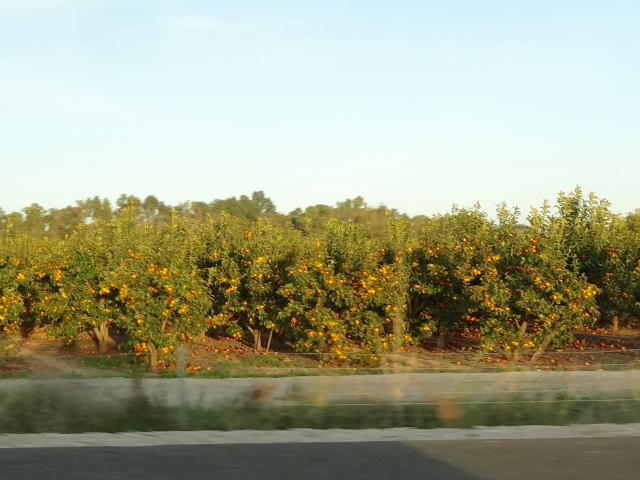
There are numerous orange orchards and the trees are absolutely loaded with oranges, so many that they are falling on the ground. Sorry for the blurry image, this is another photo taken from the car.  I never did find a place to pull over and get a good picture of an orange orchard.  Too bad…FullSizeRender_4

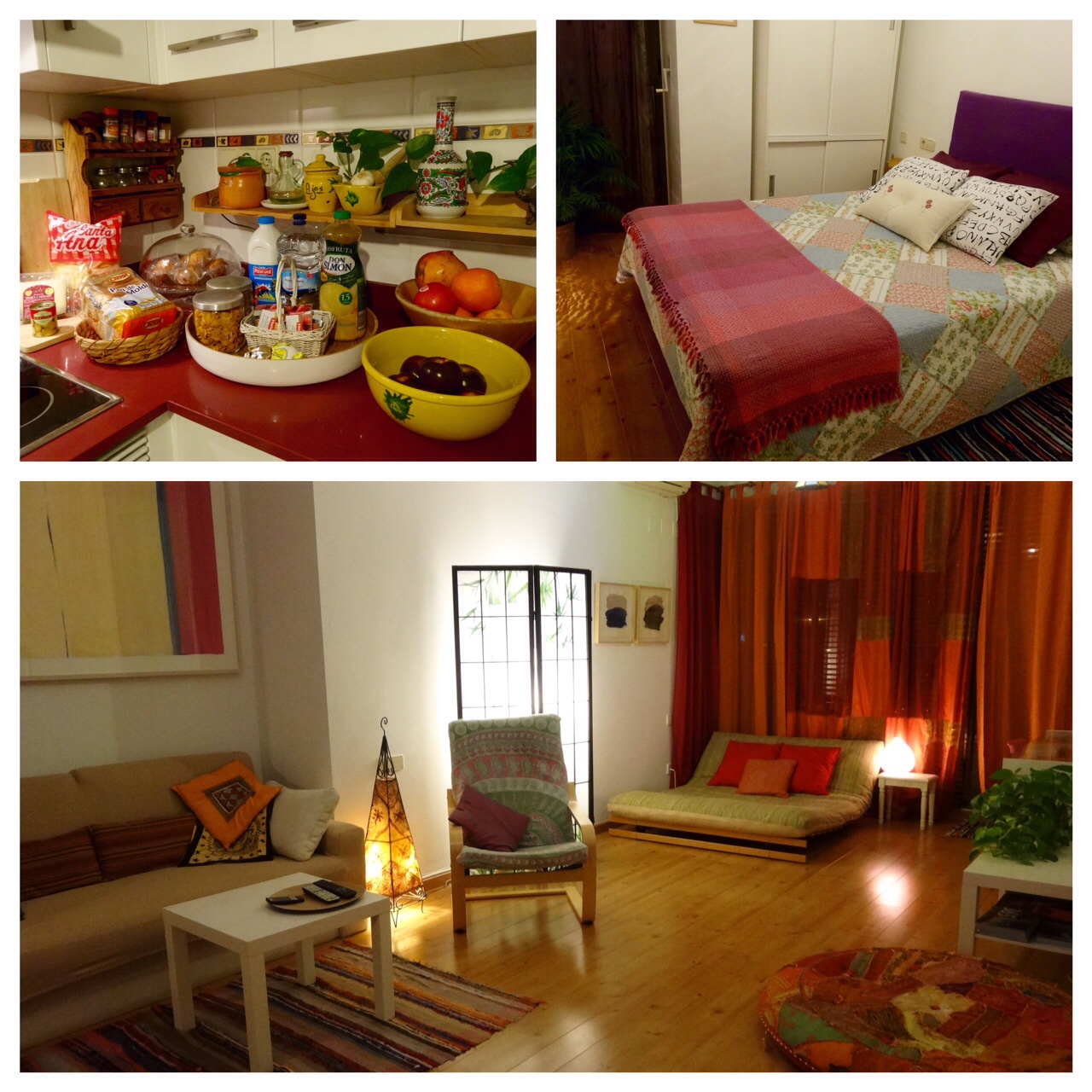
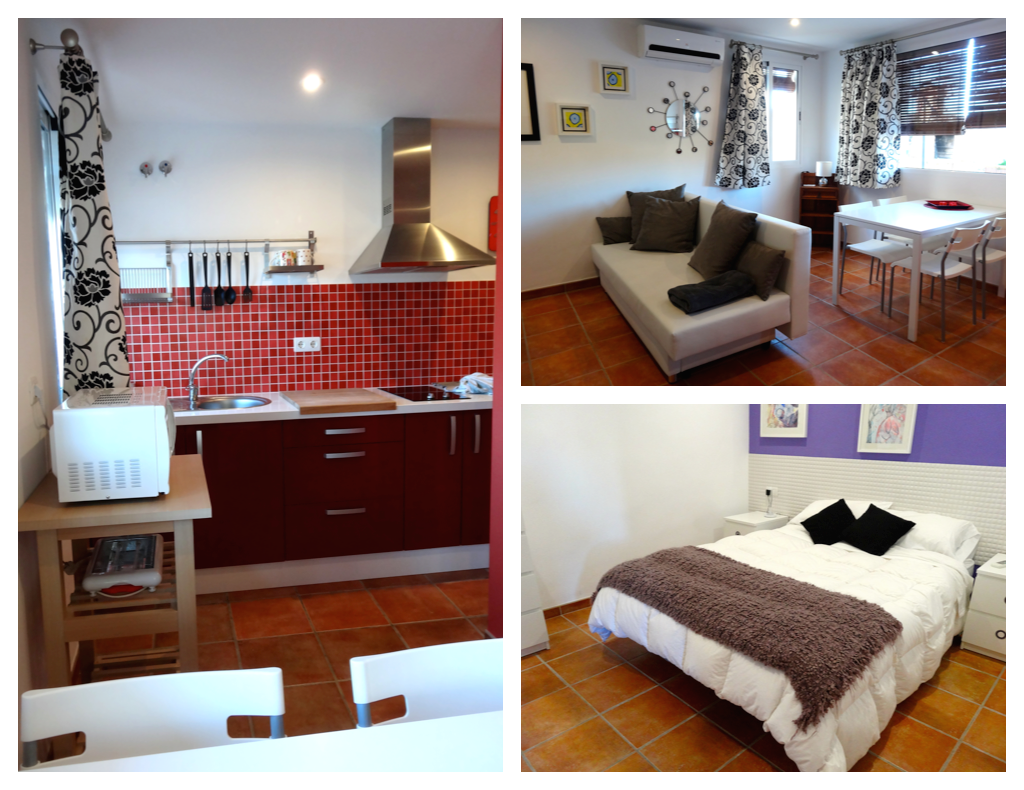
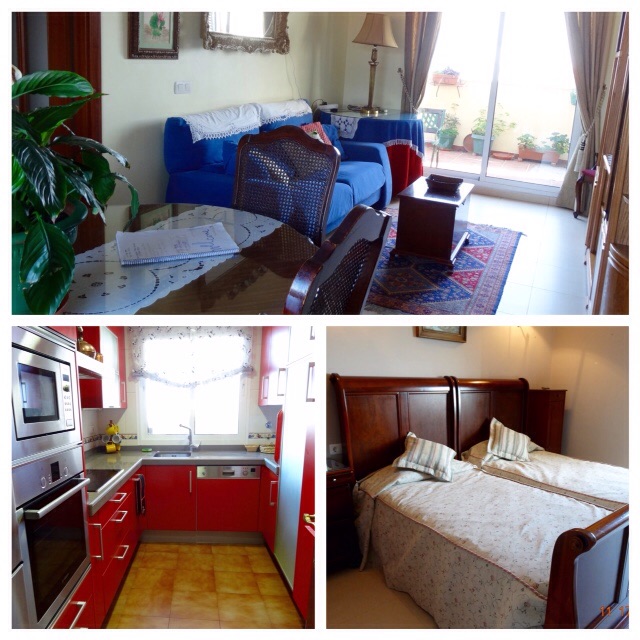
Thanks to our trusty iPad and its GPS we find our next Airbnb apartment in Valencia and we were pleasantly surprised to find that our host had very kindly stocked it with all sorts of groceries! It also has lots of artwork as our host’s husband is Nico Munuera, a Spanish artist.Image-1

Cartagena, Spain

Wednesday, November 24, 2015

Cartagena was founded in 223 B.C. and was conquered by the Romans in 209 B.C.  It is just a half hour south of where we are staying.

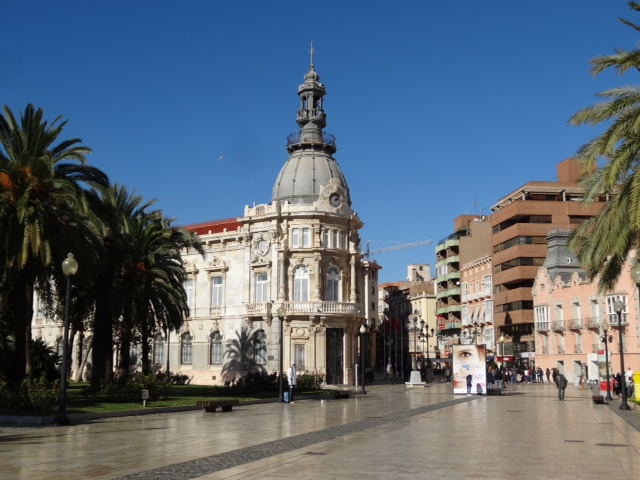
The Ayuntamiento, or Town Hall of Cartagena is a beautiful marble building on the main street.DSC01301

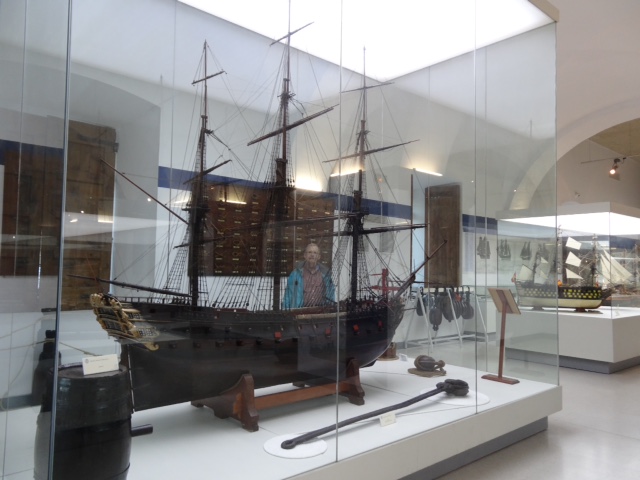
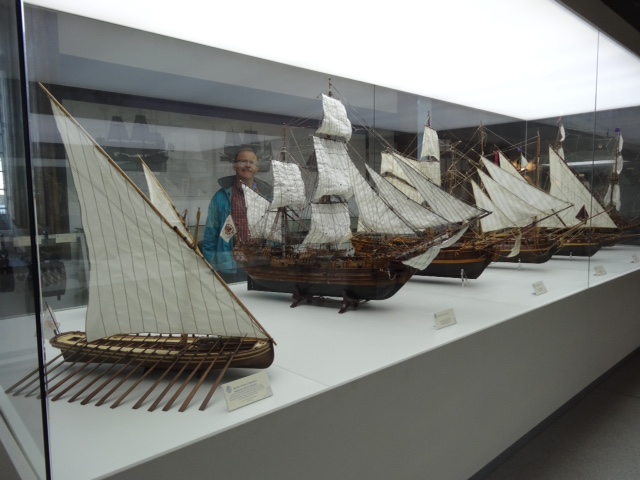
The Naval Museum nearby was free and an interesting place to visit.  Both of us were impressed with the scale model ships, especially this huge one of an 18th century ship from the Royal Armada.
DSC01401 DSC01398

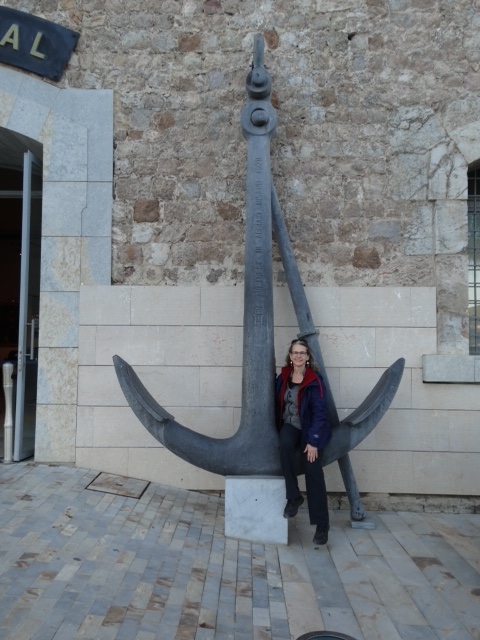
This huge anchor was just begging to have its picture taken.DSC01395

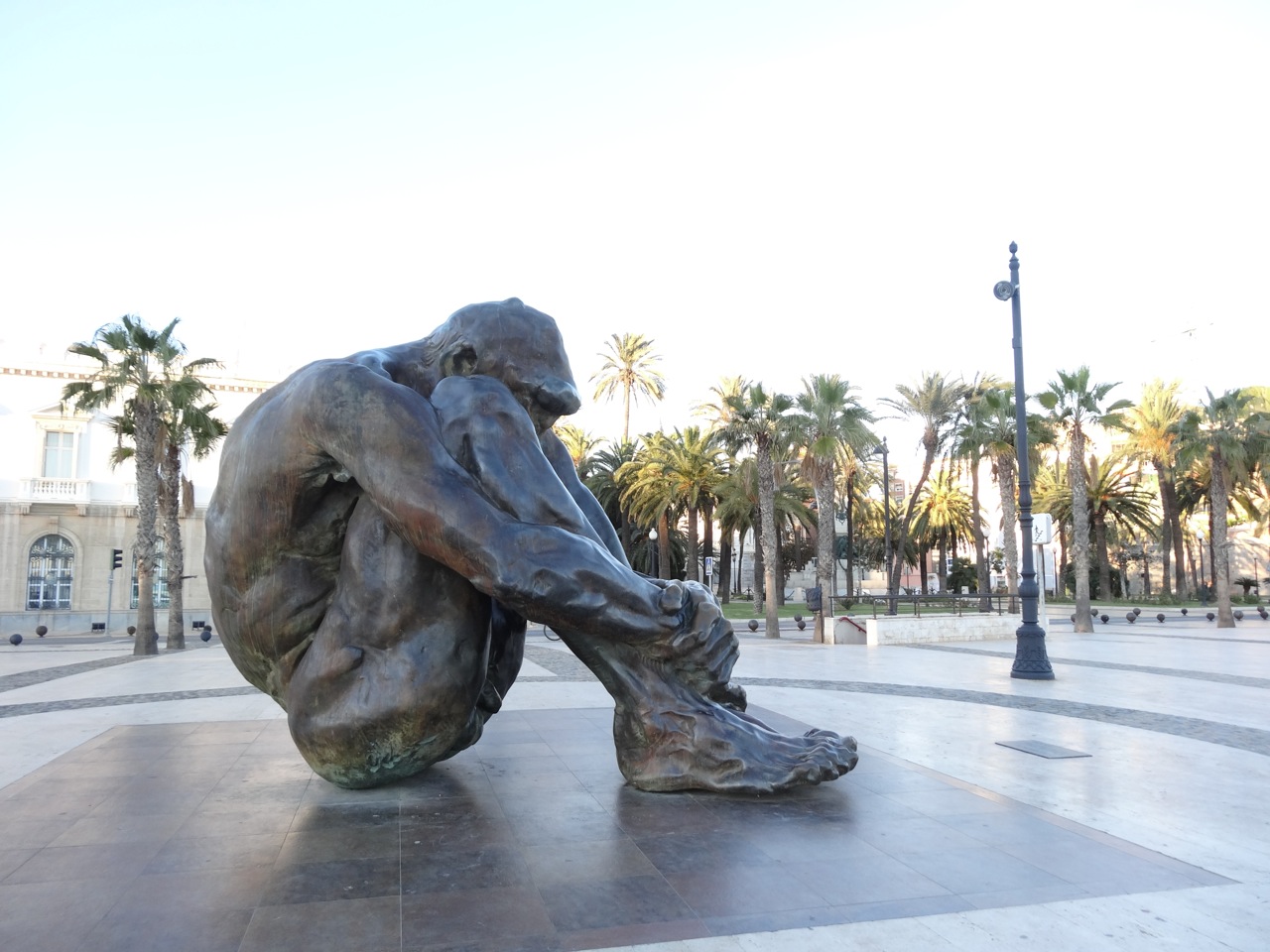
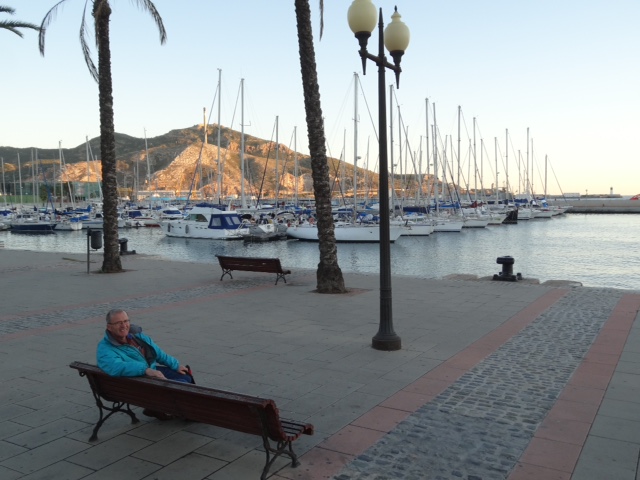
The Zulo Sculpture by Victor Ochao is a very powerful memorial to victims of terrorism.  It is over 16 feet tall and weighs over two tons.  Very impressive.DSC01393We sat and had lunch on this bench overlooking the harbour before we continued exploring the city…DSC01411

but not before I took a moment for this photo. FullSizeRender

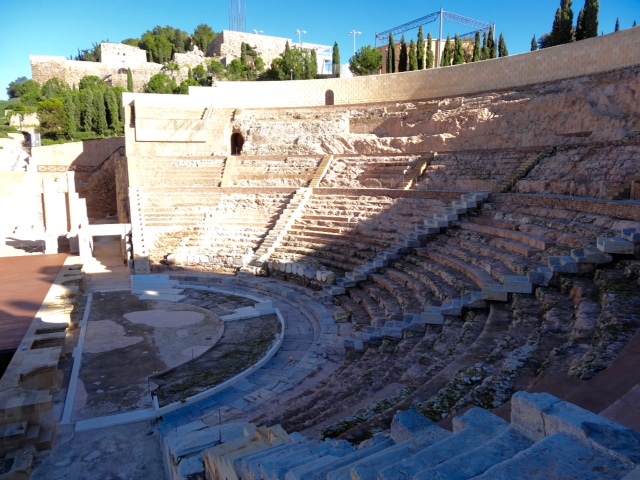
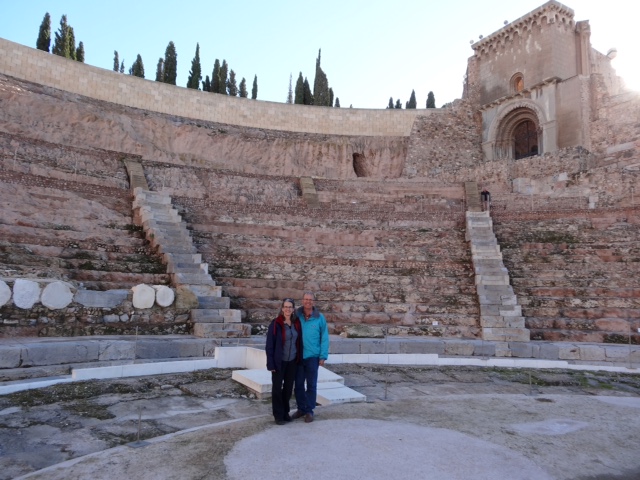
Part of the afternoon was spent exploring the Museum of the Roman Theatre of Cartagena.  The museum’s entrance is in a building near the Town Hall and is connected by a tunnel to this Roman theatre built in the 1st Century by Emperor Augustus.

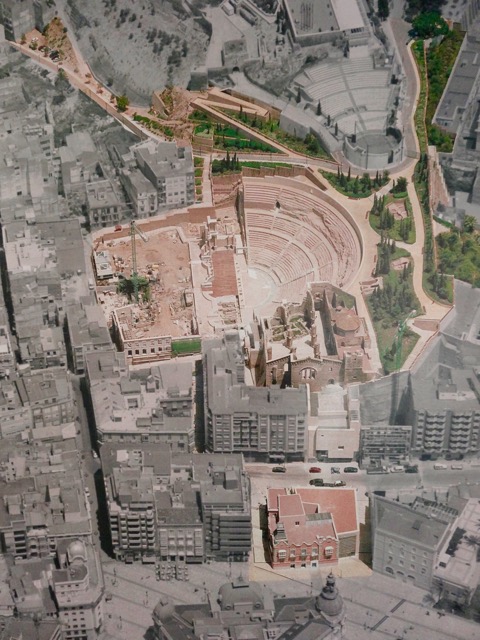
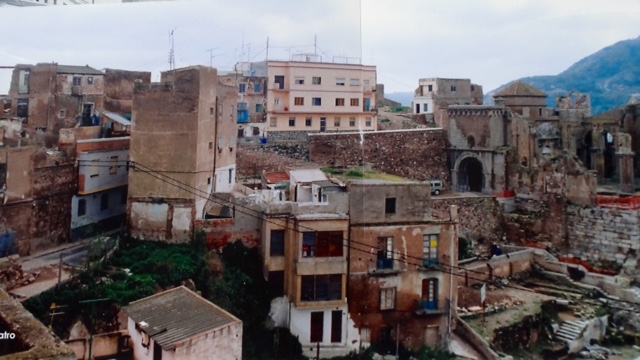
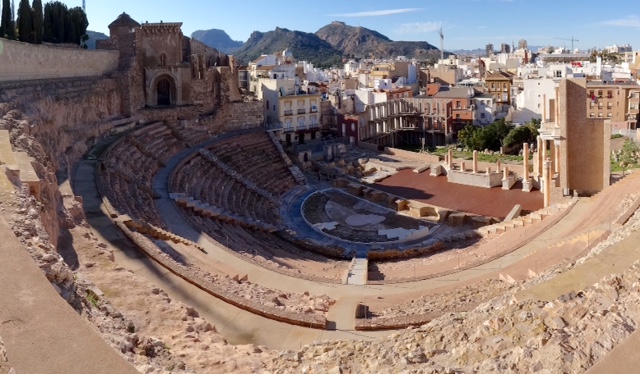
Click here to see a video and virtual reality tour of the Theatre and Museum, as well as more information about the archaeological excavation of the theatre.FullSizeRender_2An aerial view shows where the theatre is located in relation to the theatre and gives a good indication of just how large it is.  The tunnel went from the building at the bottom of the picture, under the ruins of the Old Cathedral of Santa María la Vieja  into the theatre.FullSizeRender_4This photo showed what the theatre looked like before excavations were started in 1988.  The arched doorway of the Old Cathedral is visible in the before and after excavation photos. A lot of buildings were built over the seating area of the theatre and all of these were removed as excavations continued.FullSizeRender

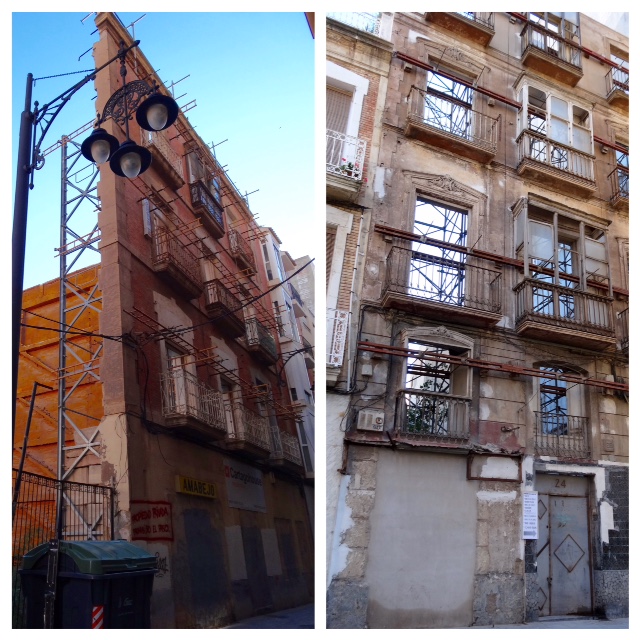
FullSizeRender_4FullSizeRender_2There are a lot of buildings near the theatre that are under re-construction. It seems that the old façades are being kept but we aren’t sure what will be built behind them.Image-1

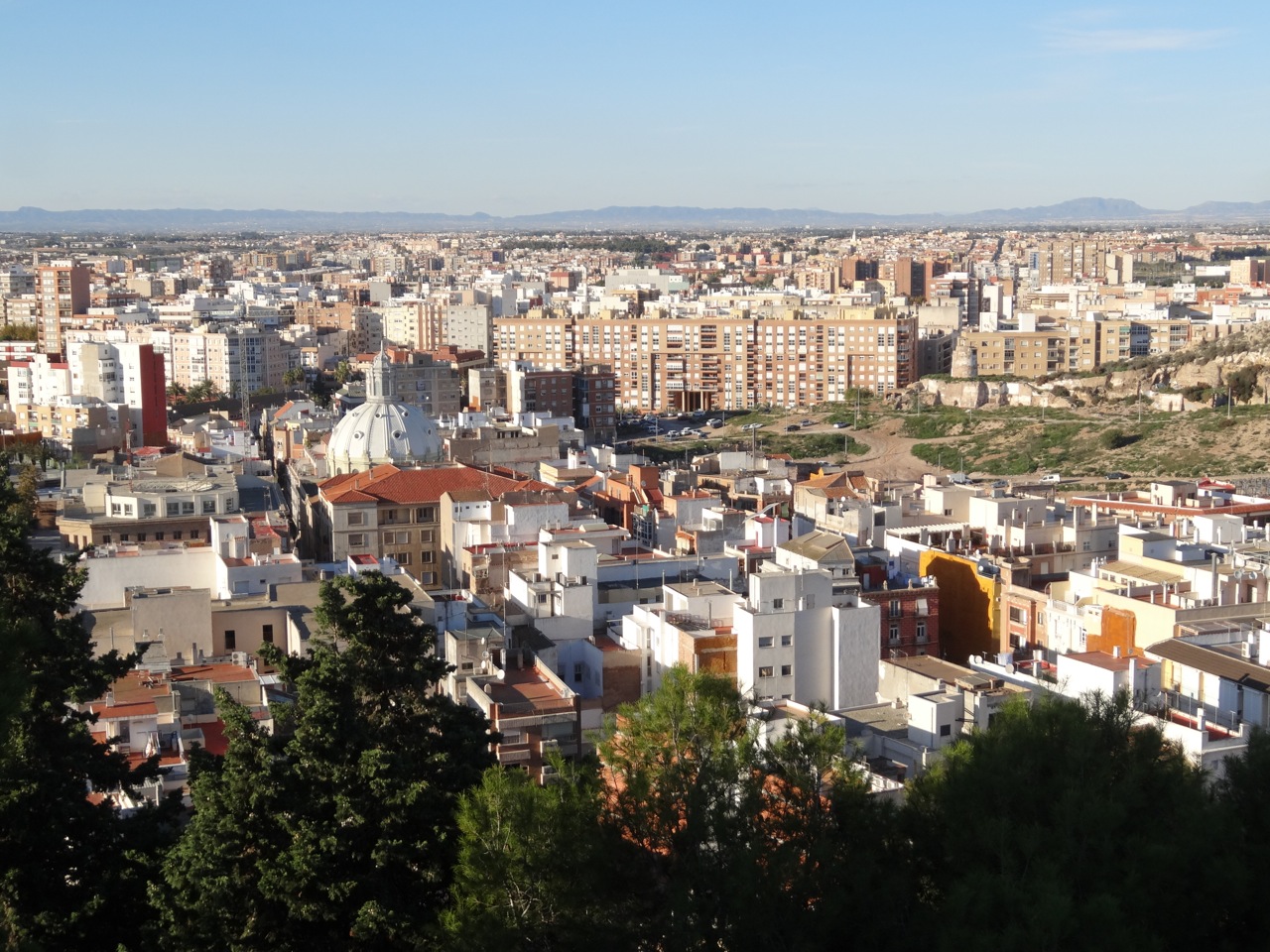
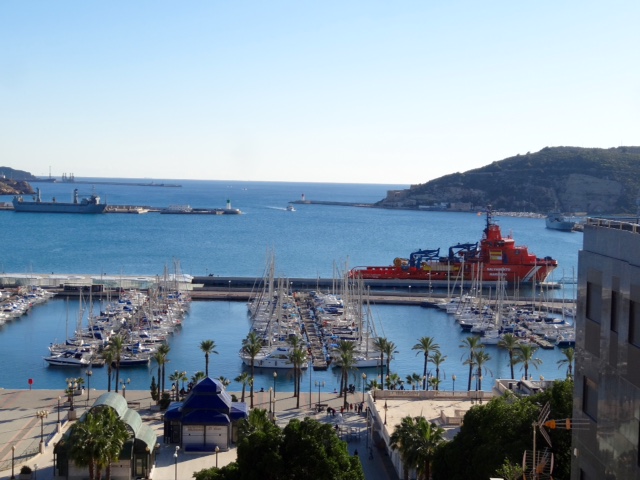
Conception Castle is a 12th Century fortress on top of the highest of the five hills in Cartagena. This fortress has been a Roman Temple, a Muslim Citadel , a medieval castle and during the Civil War it held the sirens that warned the city’s population of bombings. We climbed the hill to the Castle and were rewarded with amazing panoramic views of Cartagena,DSC01376 the port…FullSizeRender_3

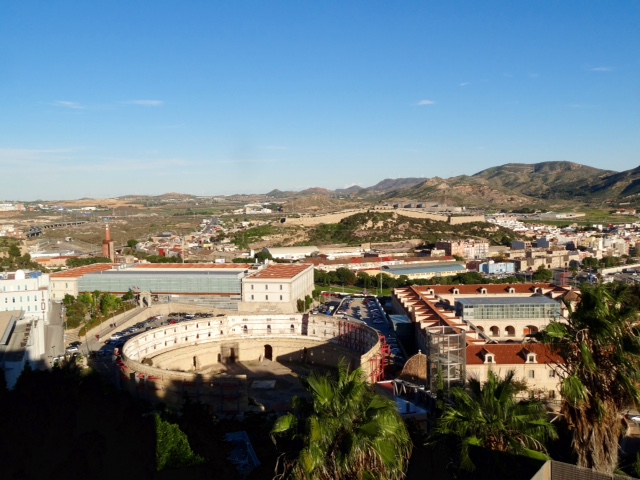
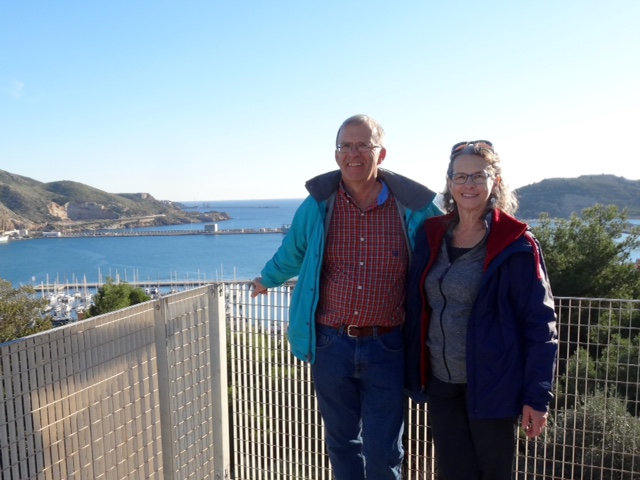
and the old bull fighting arena. We had parked our car way down there!FullSizeRender_3A young man from the Philippines asked us to take his photo and then he took this one for us, as well as several more of us for himself as a ‘souvenir’. I thought I took lots of pictures but he sure had me beat!  FullSizeRender_5

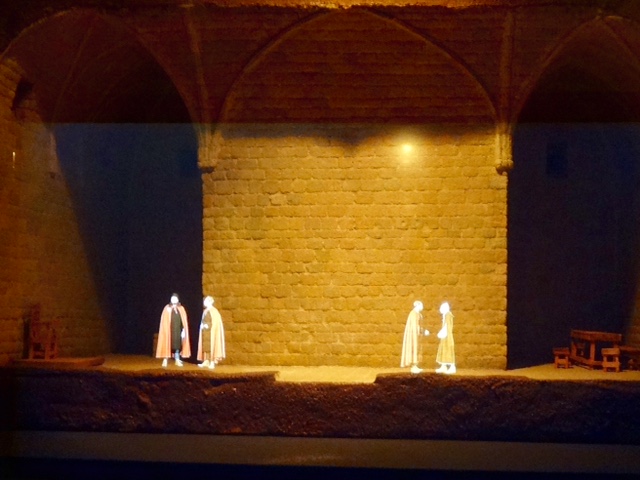
One of the exhibits inside the fortress were several dioramas with these little animated computer generated figures that walked and interacted with each other.  I found them quite fascinating.FullSizeRender_2

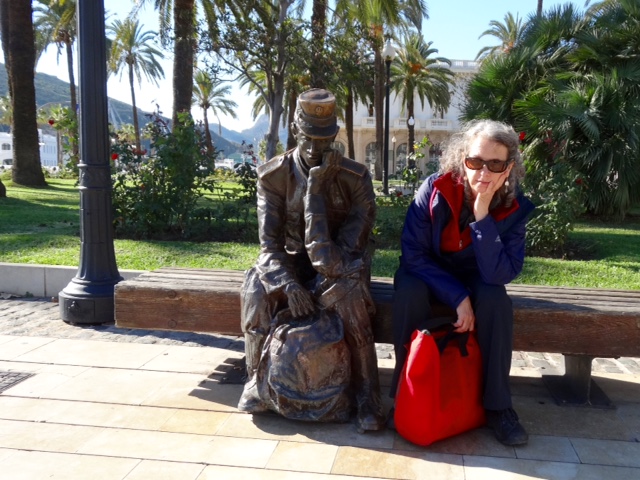
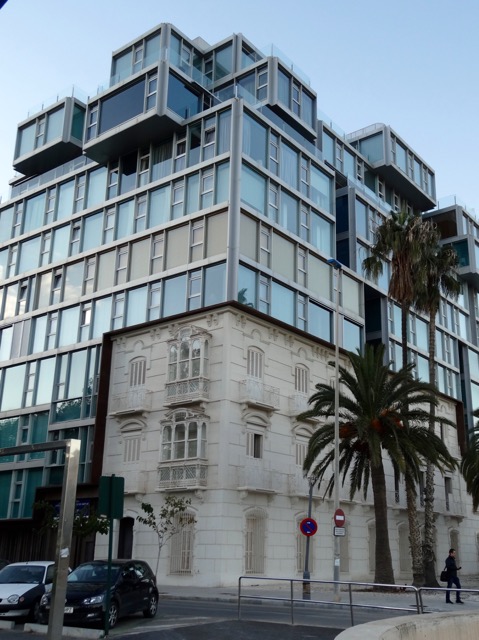
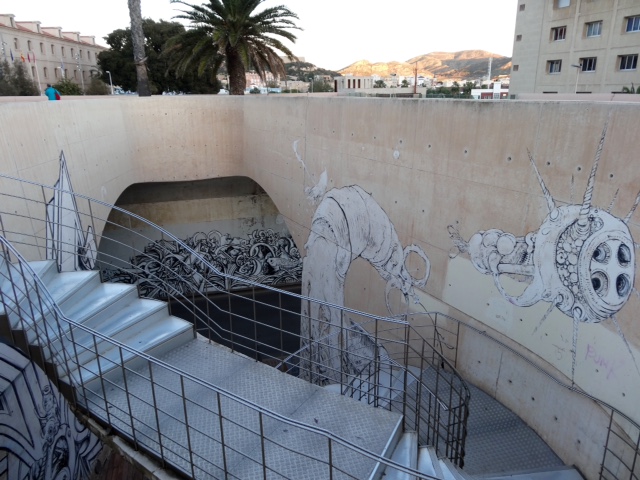
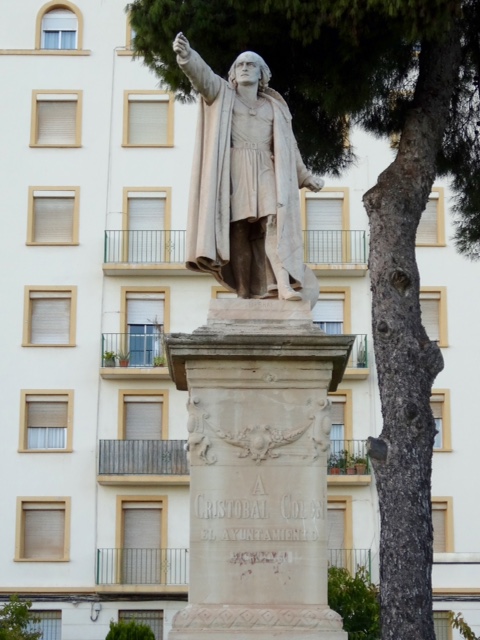
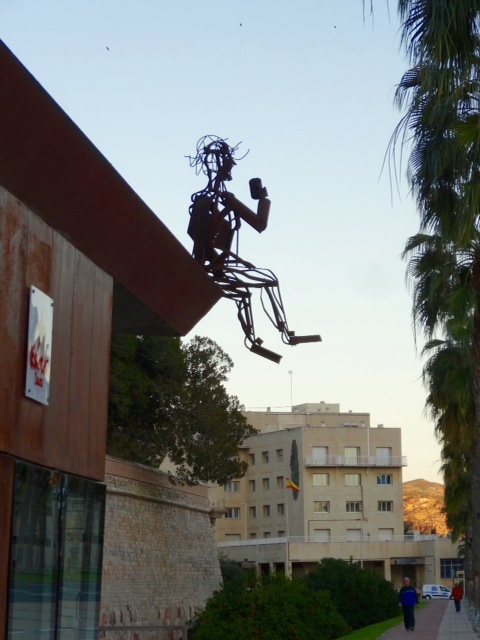
On our way back to the car we pass this building which incorporated a very old building and a very new building.FullSizeRender_2  We saw some interesting graffiti, FullSizeRenderthis statue of of Cristóbal Colón, which is Spanish for Christopher Columbus,FullSizeRender_4and a rather clever sign for a coffee shop.FullSizeRender_3

Los Alcázares, Spain

Tuesday, November 23, 2015

We are in Los Alcázares, a small coastal spa town on the south west corner of Spain.  It is on the Mar Menor, or little sea, which is Europe’s largest salt water lagoon. This ‘little sea’ is 20 square kilometres and is separated from the Mediterranean sea by an 18 km long spit of land called the La Manga Strip which keeps it 2 to 4 degrees warmer than the Mediterranean Sea.  Not that it matters to us as we are not going swimming this time of the year!

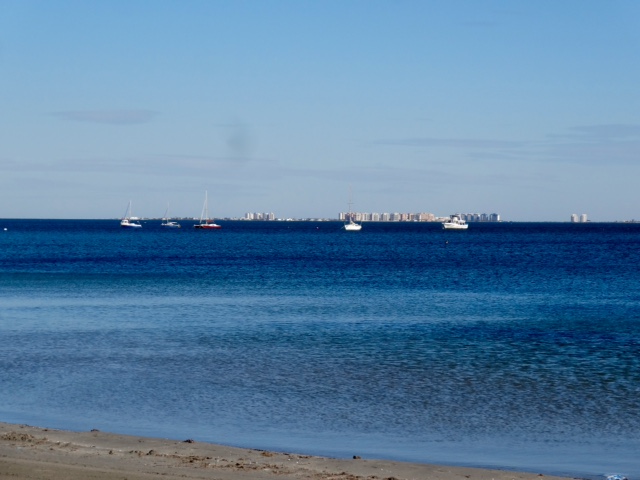
You can see the La Manga Strip in the distance.  It looks as though the high rise apartments are floating on the water.  I am convinced that a big wave would wash right over this spit of land and have no urge to go visit.
FullSizeRender

Today is a quiet day.  I rest and Bob goes for a walk to explore the town and the beach. This seems to be the routine we have settled into after a travel day.

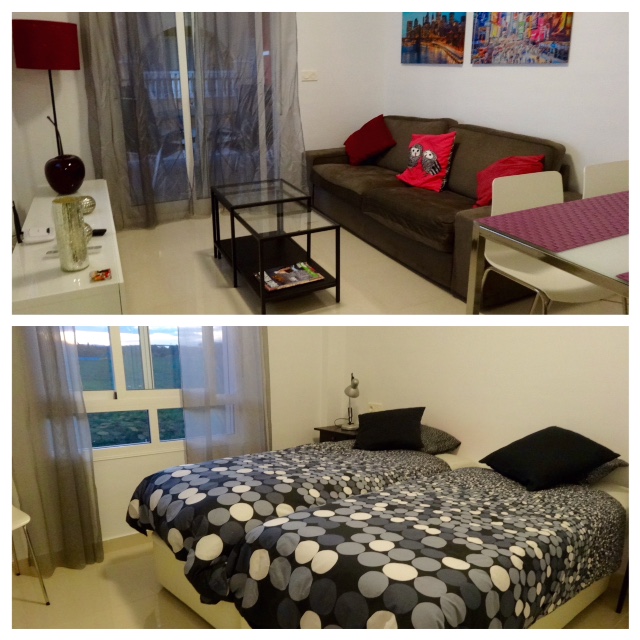
Our Airbnb apartment is very nice and we decide to extend our stay by one day so we do not have to travel on Bob’s 65th birthday.

Image-1

Troglodytes!

Sunday, November 22

This was our Airbnb apartment near the village of Alhendin, about 20 minutes outside of Granada. It was very nice and quiet but it is time to hit the road again. We need to be in Los Alcázeres, a small coastal town in southeastern Spain by evening.Image 2015-12-12 at 11.18 PM

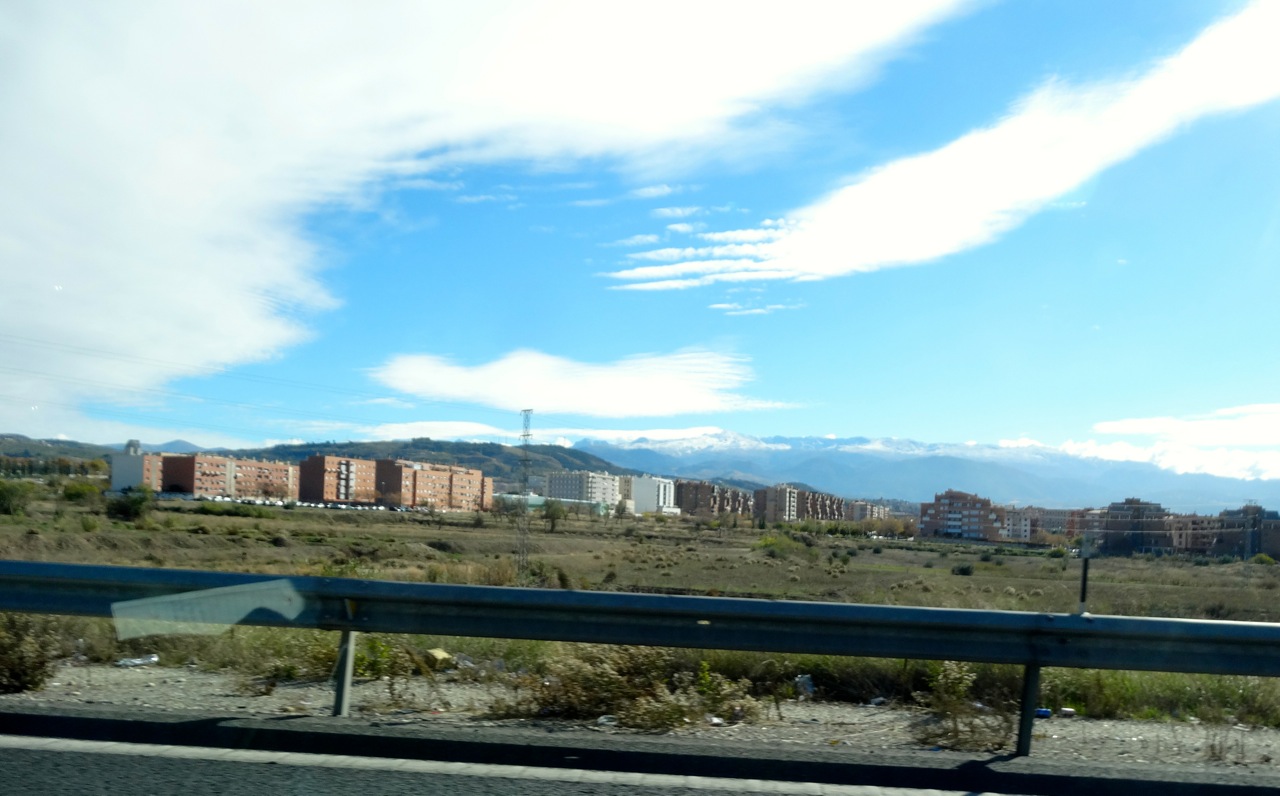
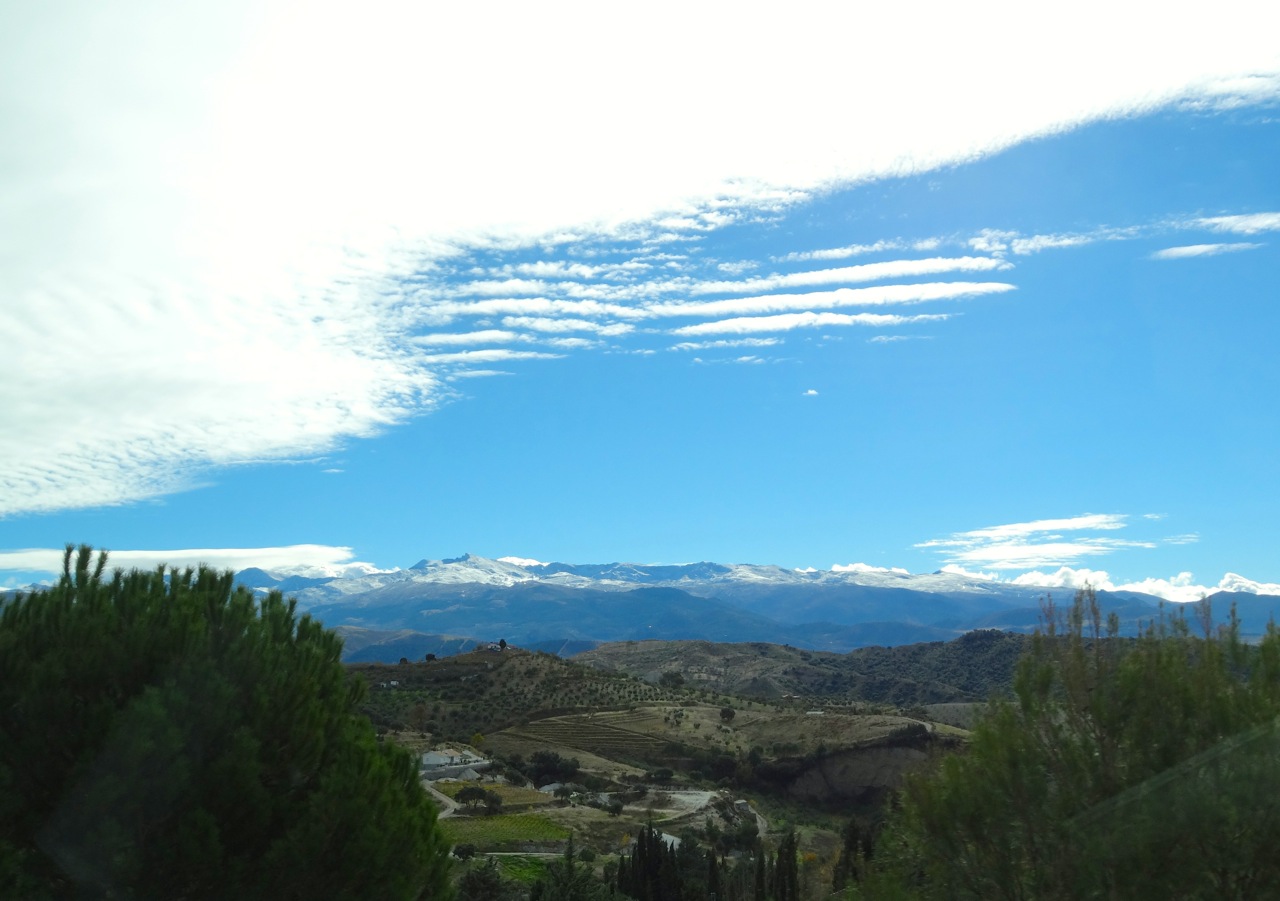
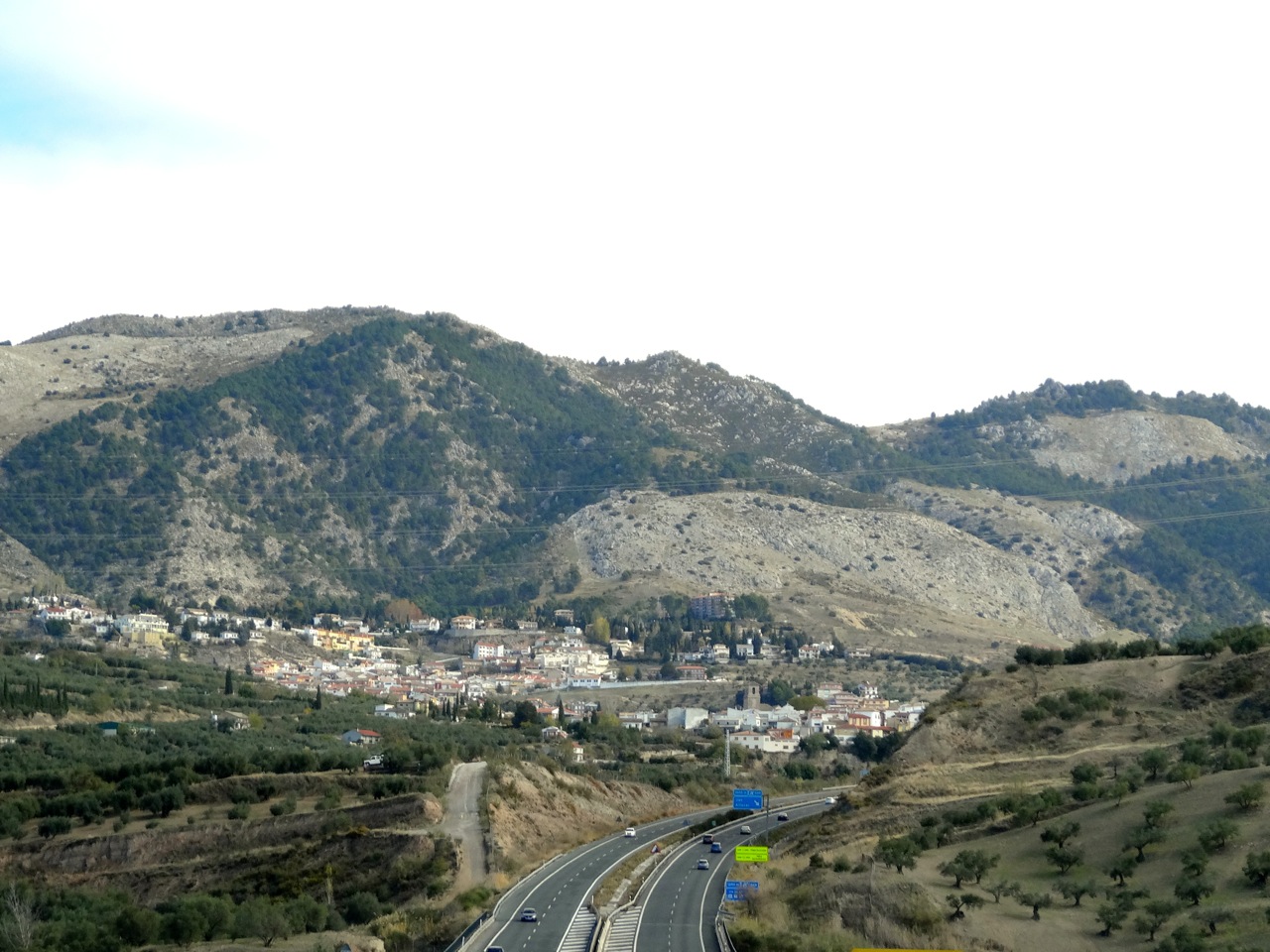
The drive is interesting as the scenery changes often.  These are photos shot through the car window so they aren’t the best, but they give a pretty good idea of the countryside. This is on the outskirts of Granada.  I find it so strange to see apartment buildings and then countryside right beside them.  There are no suburbs around here, it is city and then it is country, nothing in-between.DSC01195We are surprised to see snow on the mountaintops.DSC01200

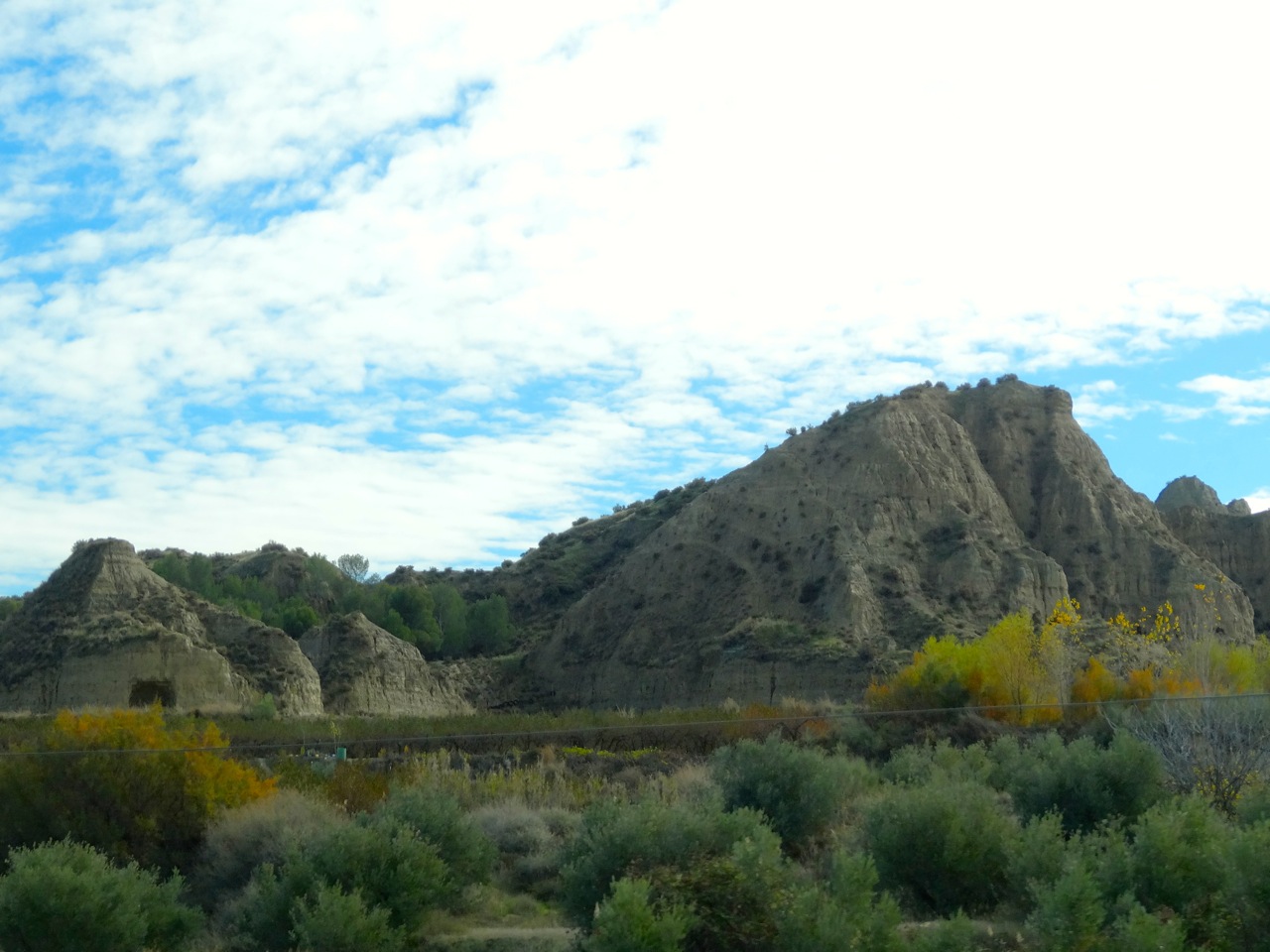
Before long there are fewer trees and the land is much more arid looking.DSC01199It is hard to tell from the photo, but this area is much like Drumheller, Alberta, with fields suddenly giving way to steep, dry ravines. DSC01206

Soon we are seeing weathered and eroded hills that have what look like caves or tunnel openings.DSC01207

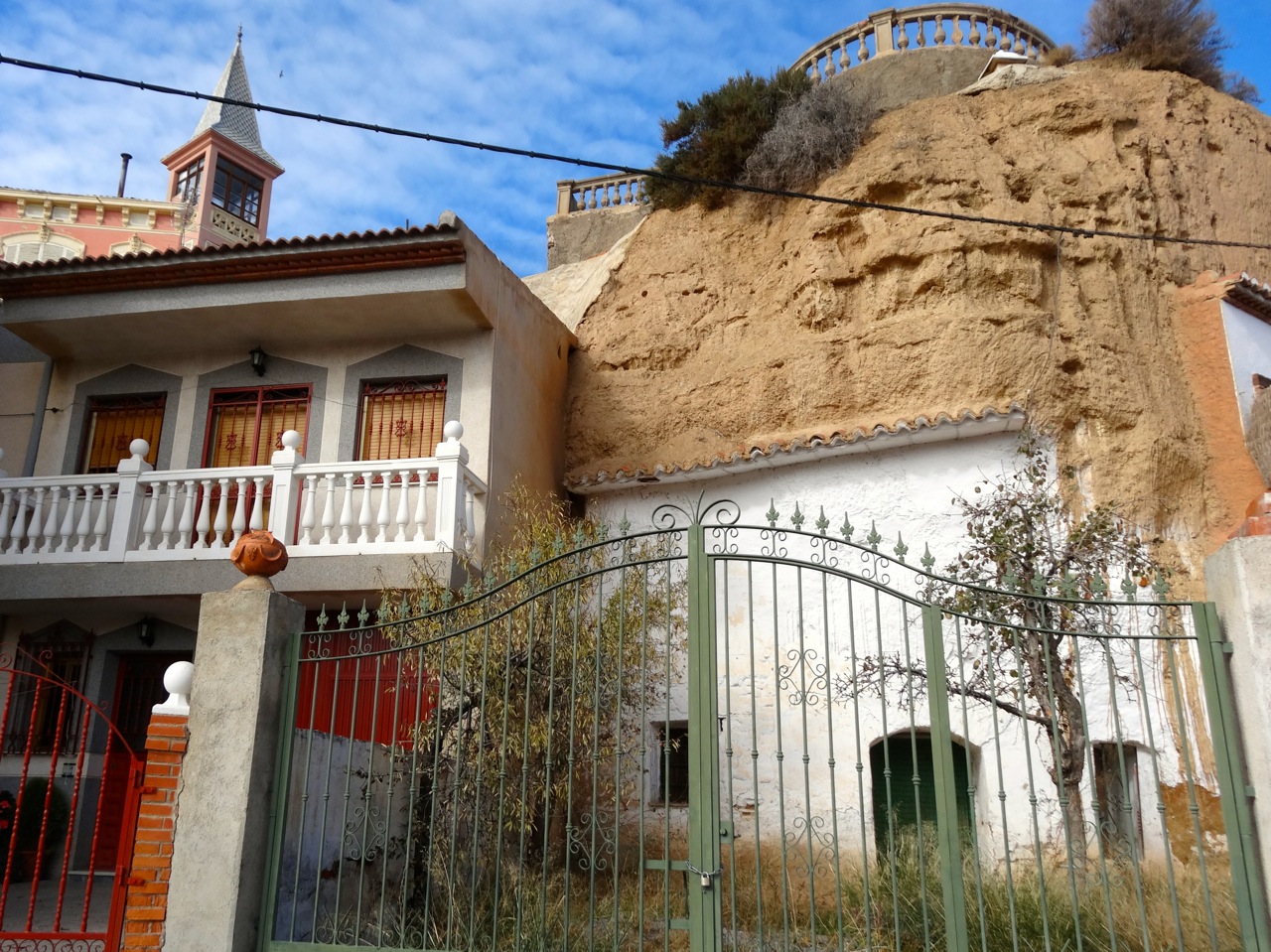
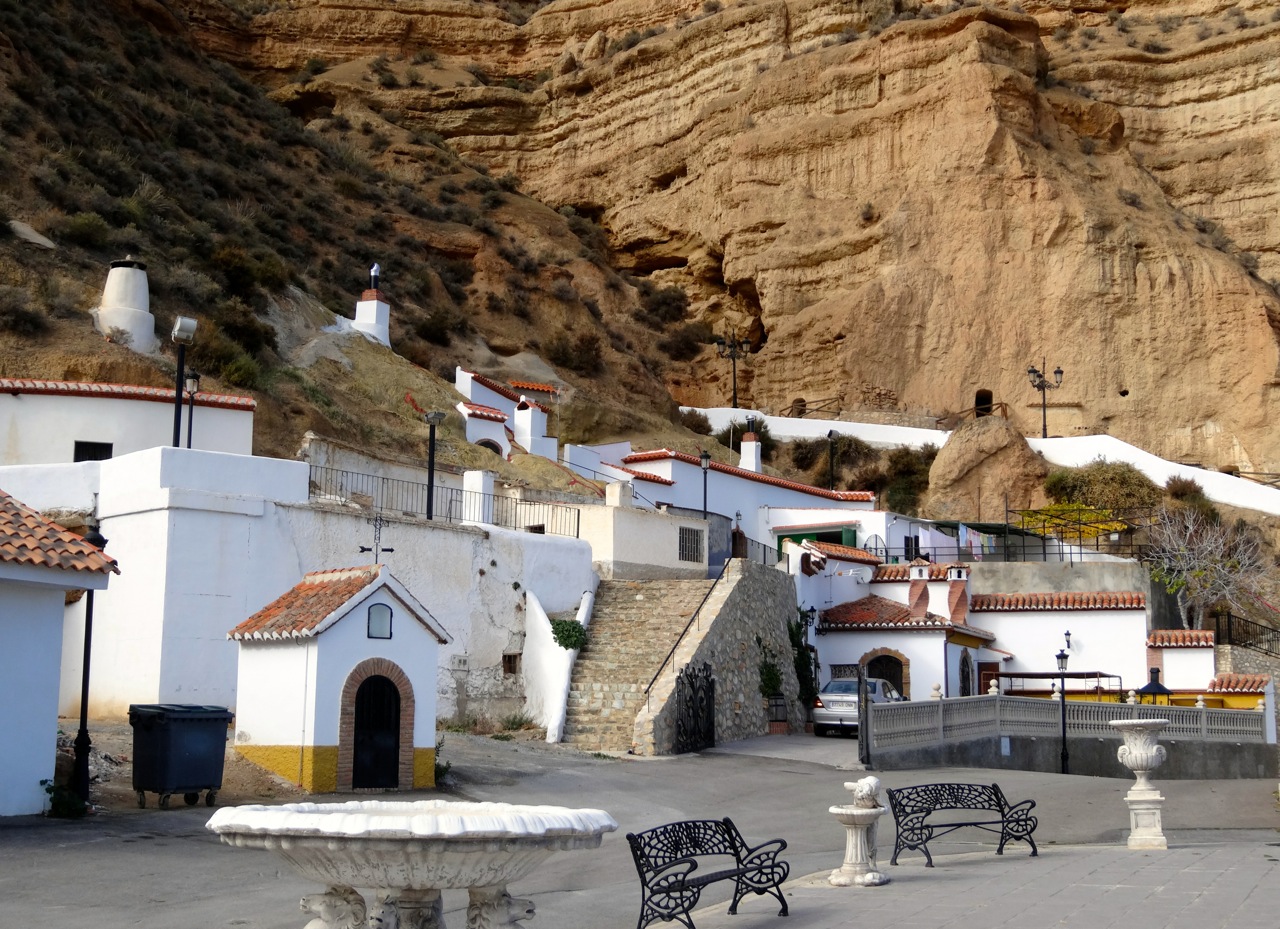
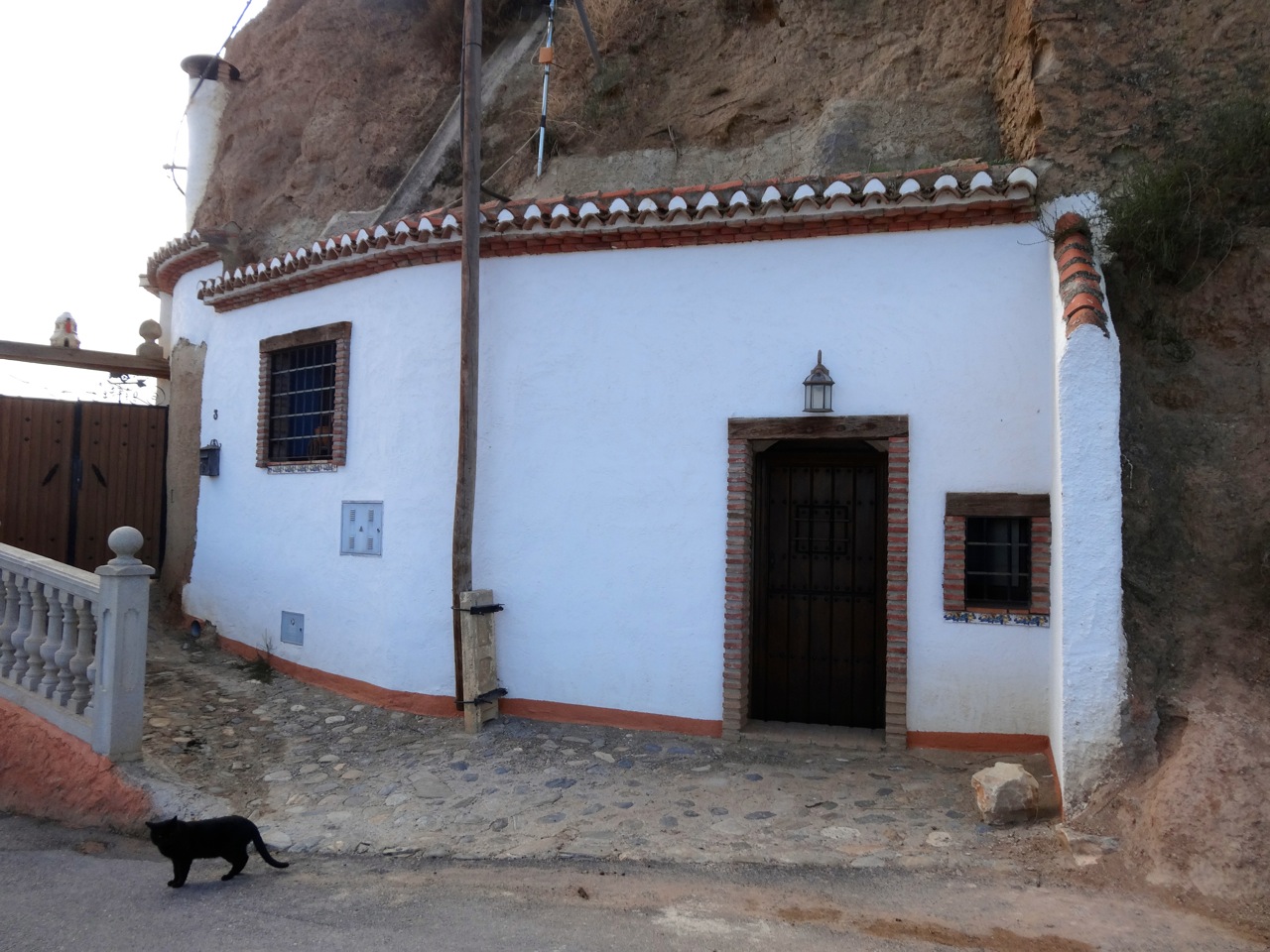
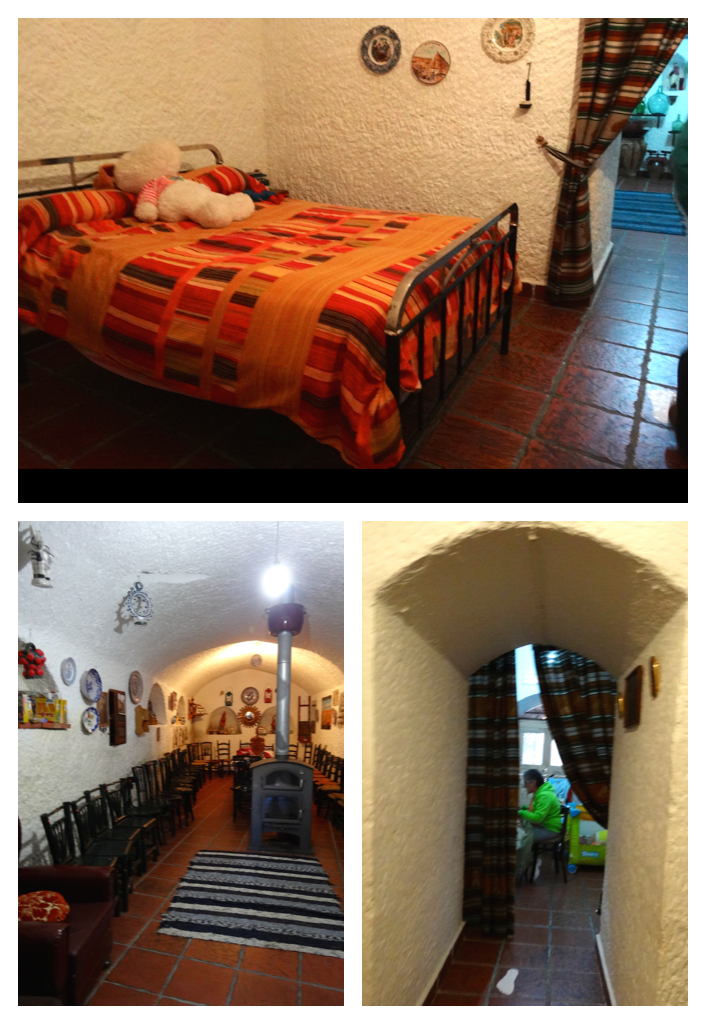
A quick bit of internet research revealed that many people in this area live in caves.  We stop in a little town named Purullena, and visit the Museo Cueva Immaculada.  This was quite the experience.  As we entered the museum we realized that we were walking through a family home.  There were footsteps painted on the floor and we were told  to follow the footsteps and then we were left to explore their house! We passed what looked like the grandparents having something to eat with their grandchildren in the dining room.  It was rather bizarre.Image 2015-12-12 at 11.48 PM

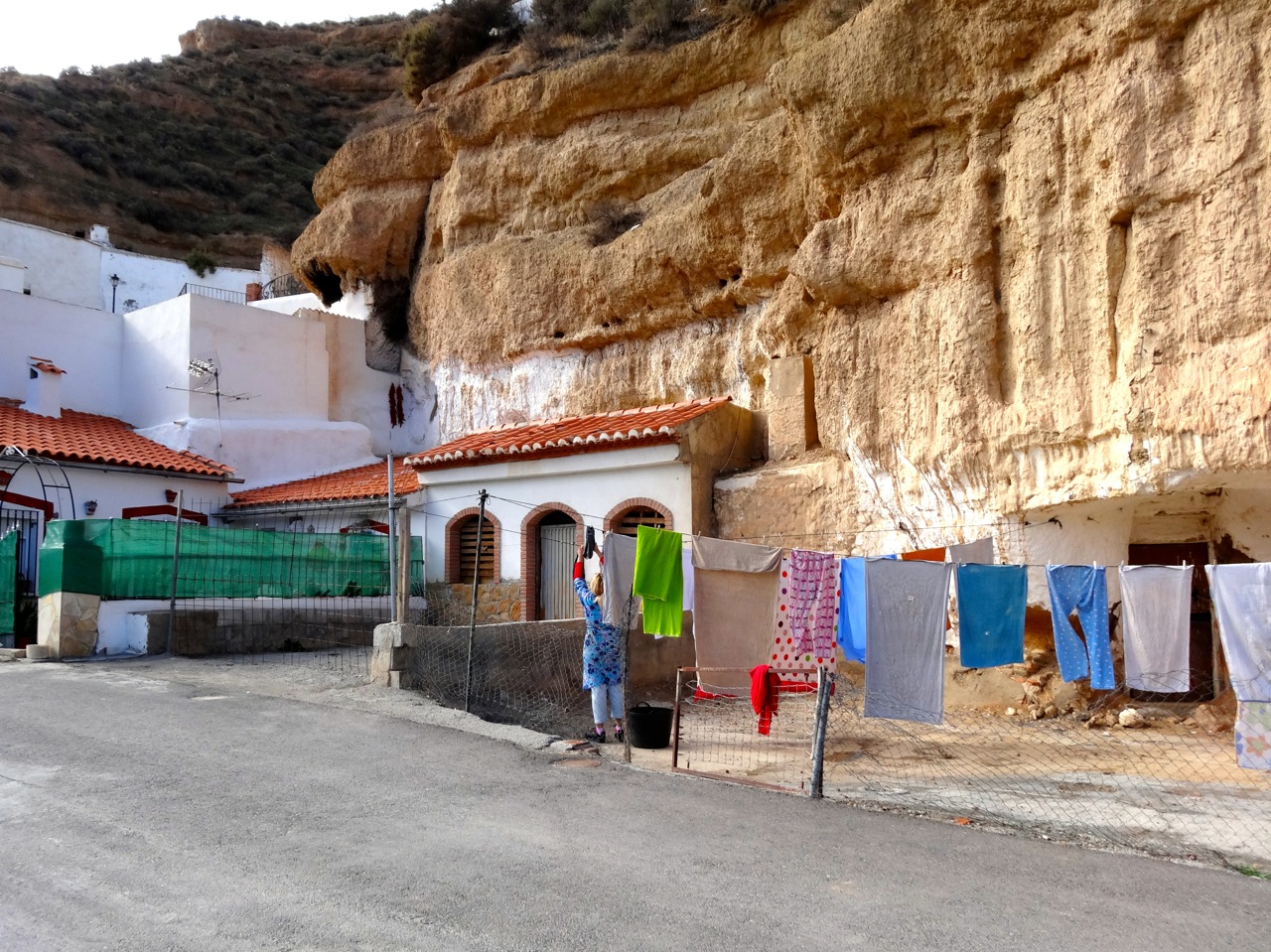
Curtains separate the rooms so that air can circulate, and there are also chimneys for air circulation. We climbed a flight of stairs to an area of their home that was set up as a museum, with old farm implements, photographs, kitchen utensils, and a whole lot of other assorted items.  Here are some pictures of the cave houses in Purullena, and another little village we drove to nearby.DSC01242The temperature in these homes stays between 17º and 21º C year round. The ceilings are dome-shaped so that the caves will not collapse and to distribute the weight of the hills above to the thick outer side of the walls. DSC01233Thirty years ago everyone in the town lived in caves, and today about 1,100 of the towns population of 2,700 still live in caves.  The soil here is called arcilla, which is a special type of clay that is compact but still very soft so it is easy to dig.  It is also an impermeable soil which stops the rain from entering the cave.DSC01221The cave homes are dug out of the mountains and there are no other construction materials used. The homes are painted with white chalk which breathes so the air can circulate, and this prevents humidity from building up in the caves.DSC01230We saw this ‘troglodyte’ busily hanging up her laundry before she went back into her cave home. These cave dwellers call themselves Troglodytes, which is from two Greek words meaning hole, and dying to get into  If you want to read a bit more about these unique houses check out http://www.spain-holiday.com/blog/cave-settlements-in-andalucia.php DSC01240

We were quite surprised to discover that the public washrooms were also the family bathrooms, complete with the family laundry, showers, kids toys and other personal items! These were located just outside the cave home, sort of like modern outhouses.  We thought it must be difficult to put plumbing inside the caves.

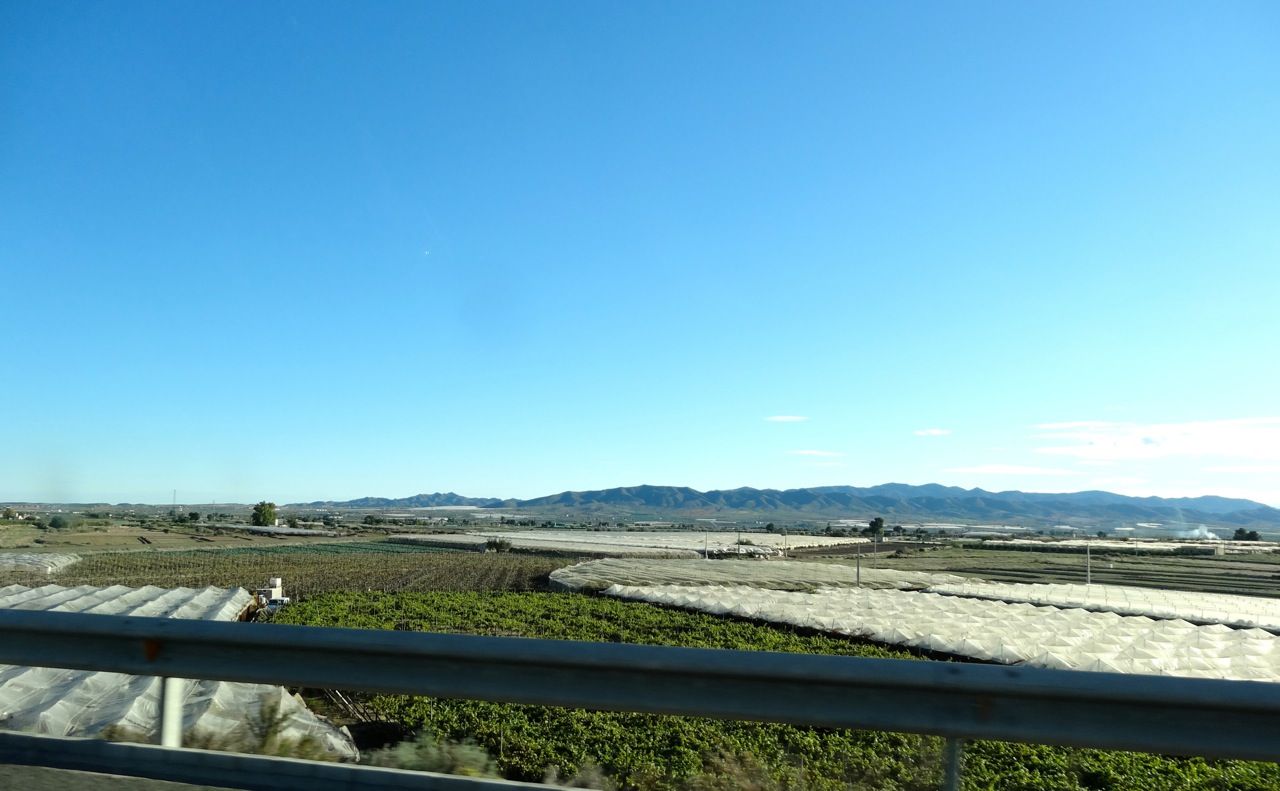
As we continued on our way to Los Alcázeres we passed lots of huge market gardens, many of which had these tunnel hothouses, field after field of them. It was quite the sight.  DSC01254

Granada Cathedral and Alcaiceria Market

We are back home and although we had a good flight home it was still 24 hours from the time we got up until we arrived home. It is going to take a while to get back on Alberta time. I have fallen behind on my blogging but I am going to continue posting until I have it completed. Thank you for following along with us so far and I hope you will enjoy the rest of our trip.

Saturday, November 21

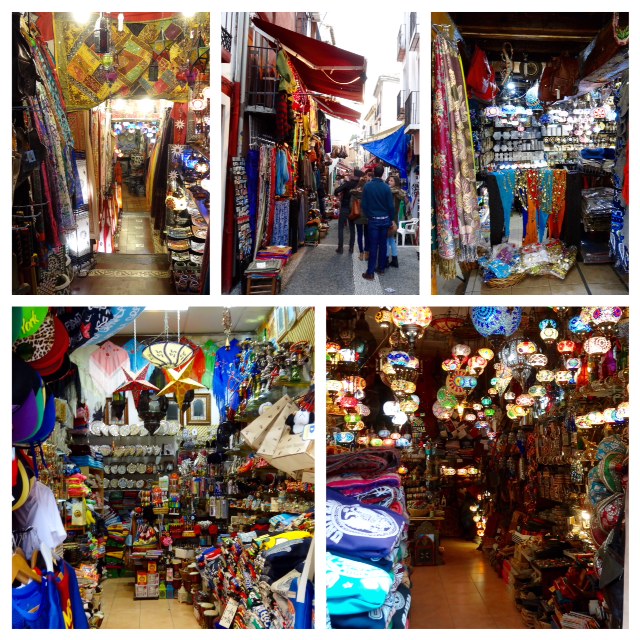
We spend another day in Granada, as we want to visit the Cathedral and the Alcaiceria, which is a reconstruction of the Moorish Market that burned down in 1843. This market is a maze of narrow streets and colourful shops that are absolutely crammed full of merchandise. We purchase a few souvenirs and Bob has a few laughs at my rather pathetic attempts at bargaining.

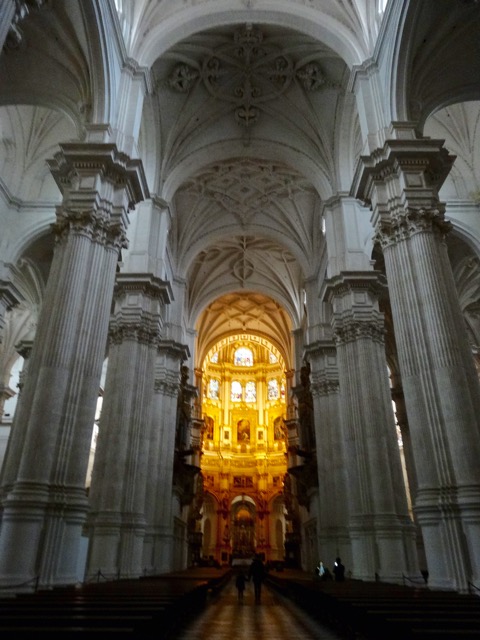
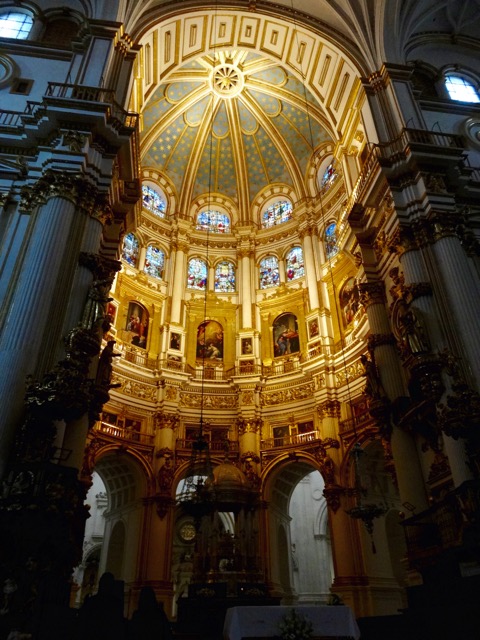
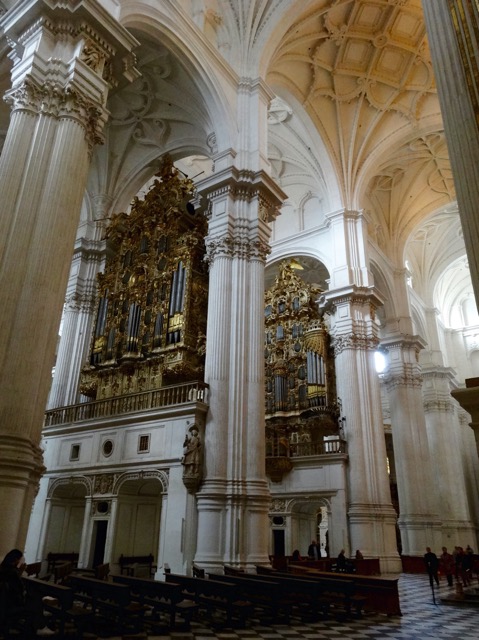
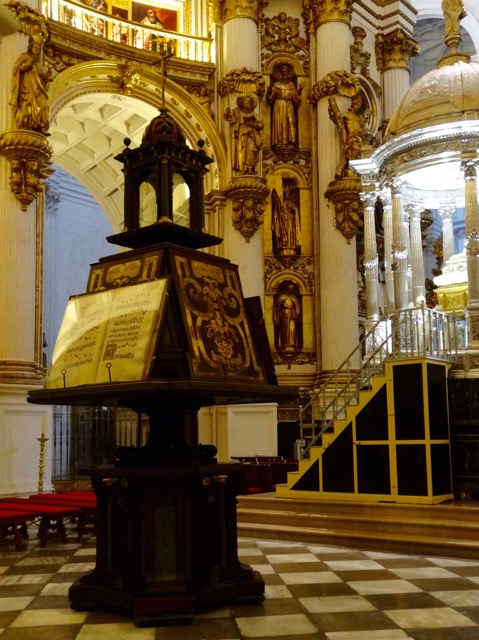
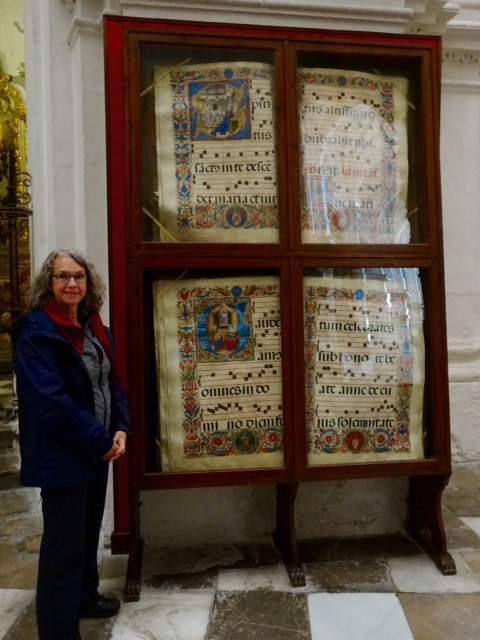
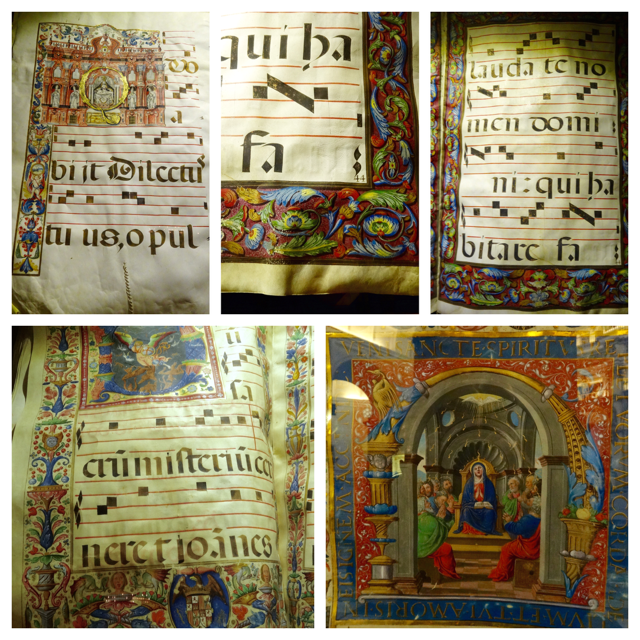
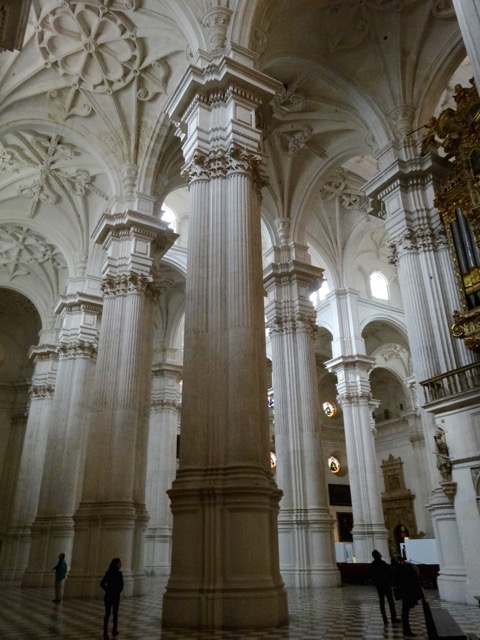
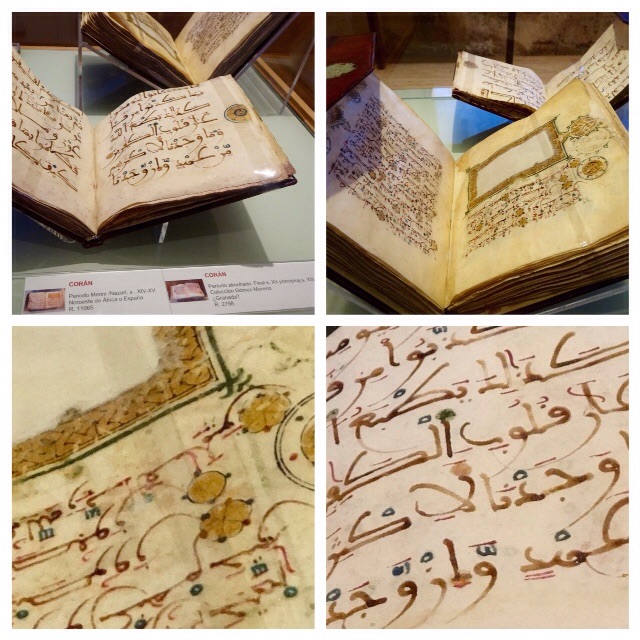
IMG_2488The Cathedral is right beside the market so that is our next stop.  Upon entering the front door this is the what we see.FullSizeRender  Here is a closer view of the magnificent dome over the altar.  FullSizeRender_3This cathedral has a very ornate very large organ. FullSizeRender_4I spotted this stand with several huge medieval books but it was in a roped off area so I couldn’t get any closer to get a good look.FullSizeRenderA bit further on down one of the side aisles I was thrilled to find a display of these ancient books. They were behind glass but I was able to get a much better look at them.FullSizeRender_4The lighting wasn’t the best, but there were several cabinets with books inside. While I was absorbed in studying the calligraphy and painted images, the lights in the cabinets shut off and it was too dark to see them anymore.  I had no idea why the lights shut off and although we returned a couple of times to check if the lights had been turned back on I was out of luck. I am glad that I at least had the opportunity to see what I had.
IMG_2490

We have seen similar skull and crossbones in almost every cathedral we have visited. They are on tombstones embedded in the cathedral floors.FullSizeRender_2The pillars and ceiling are quite ornate and the space they enclose is immense.  Notice how small the people are.
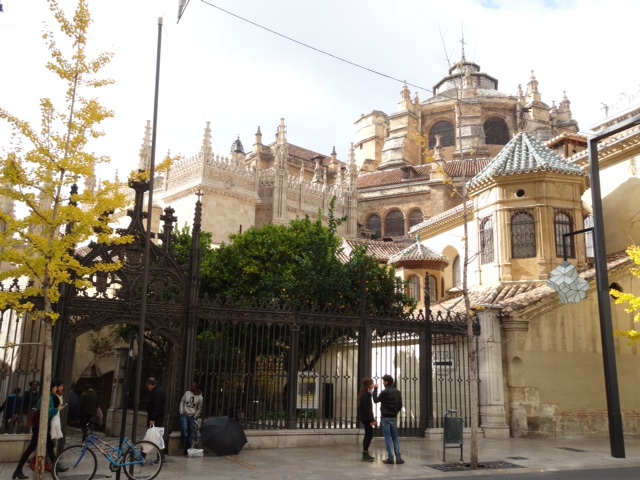
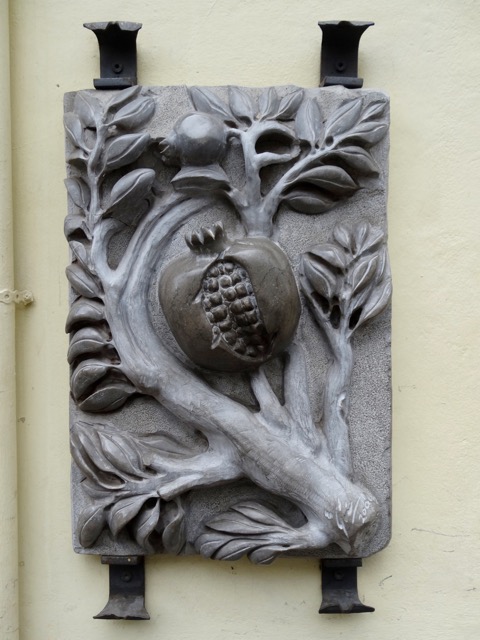
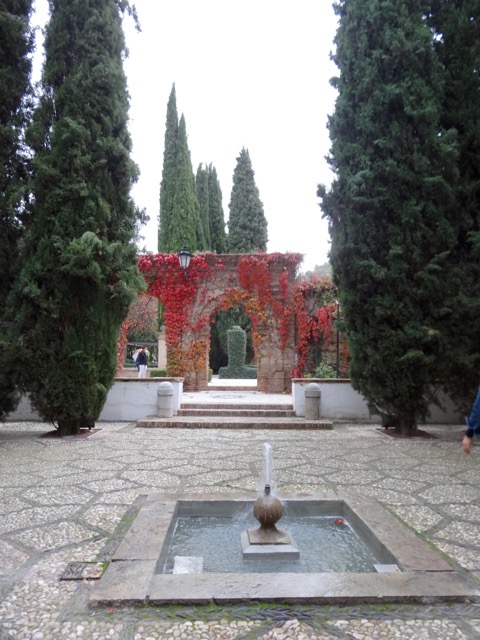
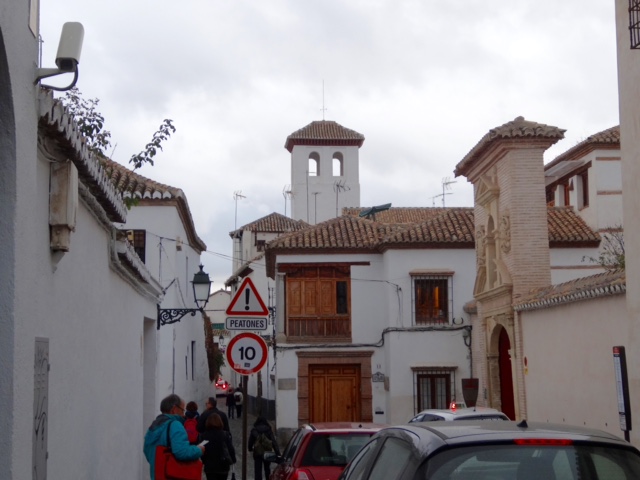
FullSizeRender_3This is a view of the back side of the Cathedral, seems I didn’t take one of the front. If you want to know a bit more about the Cathedral check out this link.  http://www.thousandwonders.net/Granada+Cathedral  It also has some nice pictures.DSC01159There is a suggested walk through the Albaicin, on the hillside opposite the Alhambra so we head out to explore it.  The beginning of the walk was quite nice.FullSizeRender_3I quite liked this ‘Granada’, or pomegranate, on the front of one of the buildings we passed on our walk.FullSizeRender_2We do find this lovely little garden and one other garden attached to a little museum along the way.  In the museum garden there are several orange trees loaded with ripe oranges, and we ‘borrow’ one to eat later.FullSizeRender

We spent a fair amount of time checking our map and trying to figure out which way to go. The route was not well-marked and we had to backtrack more than once. It was a long walk up lots of steep roads and really for what we saw we weren’t sure it was worth the effort and time, but at least we got some exercise.FullSizeRender_2

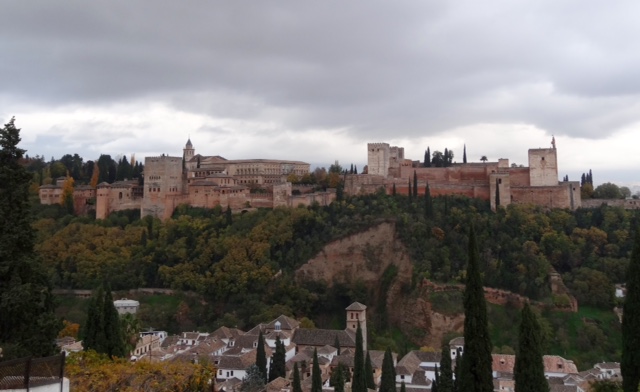
This is a view of the Alhambra from a viewpoint on a terrace by some restaurants near the end of our walk.FullSizeRender_4

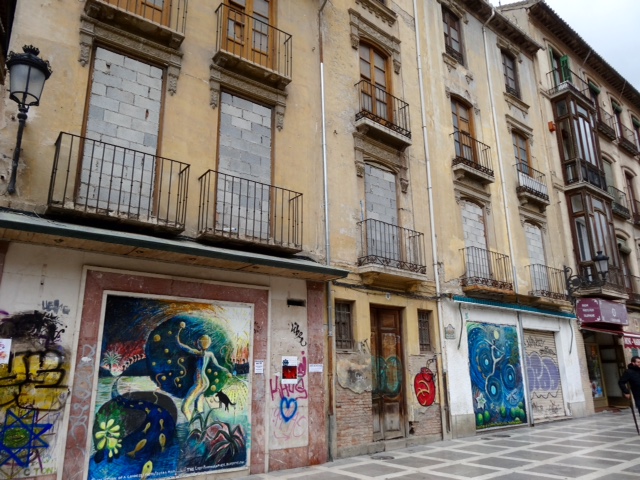
On the way back to the bus we pass this building with its ‘street art’ and bricked up windows.  We saw so many apartments and buildings like this, empty and/or abandoned, right beside occupied buildings and shops. I sure wouldn’t want to be living in an apartment next to an abandoned empty building.  FullSizeRender

The Alhambra, Granada

Friday, November 20

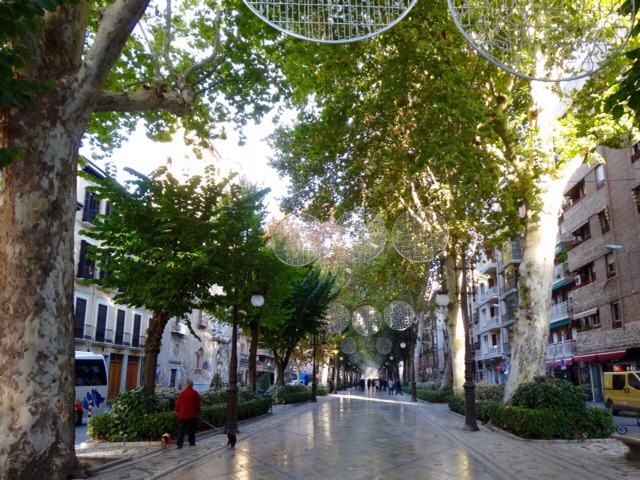
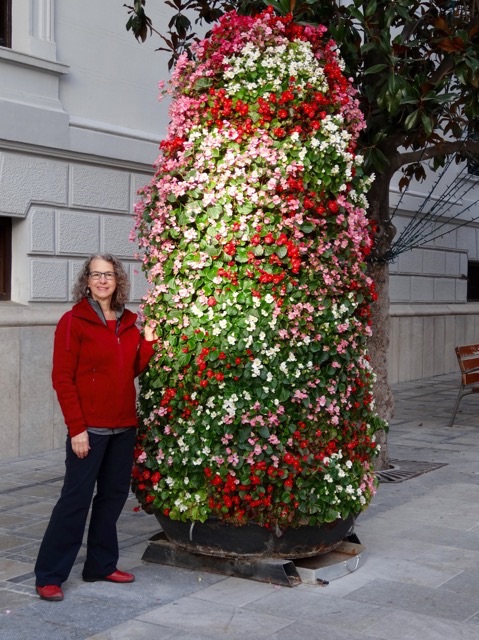
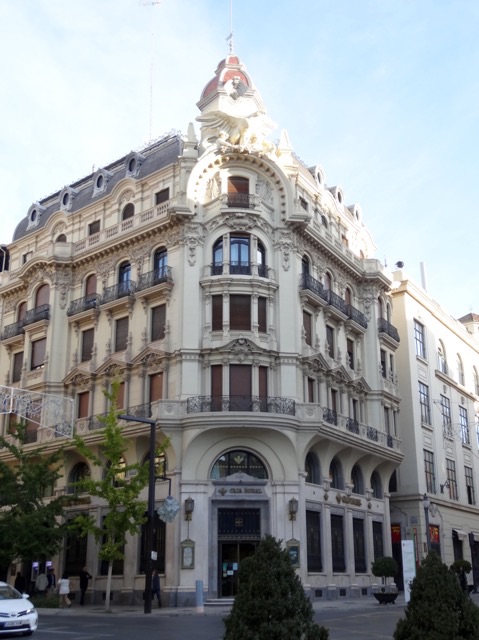
We caught the local bus into Granada and walked down this wide pedestrian street on our way to the tourist information office. This pedestrian walkway is made with marble paving stones, certainly something we don’t see back home.image Outside the tourist office is a unique Christmas tree made with begonias.image

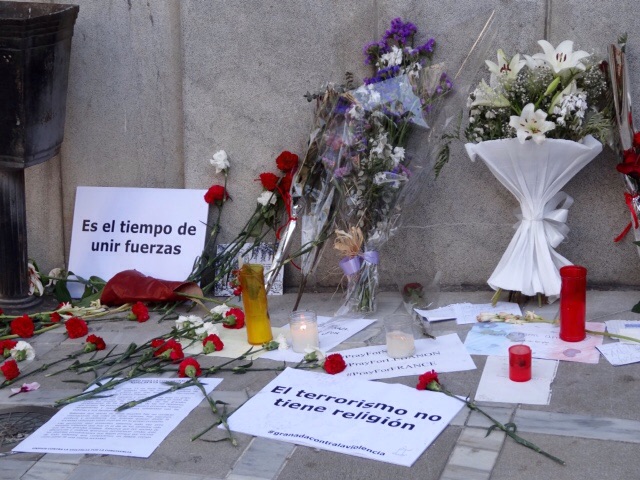
There is also a shrine for the victims of the terrorist attacks in Paris.  imageThe buildings in Granada are very beautiful, imagine living in an apartment in this magnificent building.image

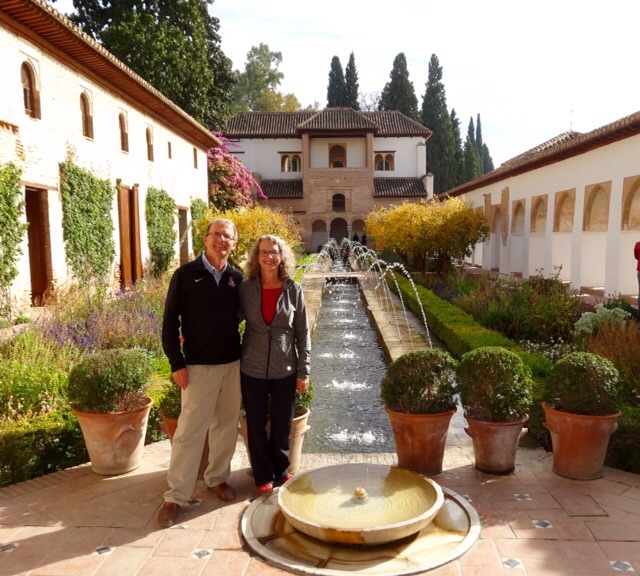
Soon we are on the way to the Alhambra. This was a palace, fortress and medina all rolled into one. We decide to take a bus rather than walk up the hill to its location.  This turned out to be a very good decision, as it is a long winding road up to the entrance.

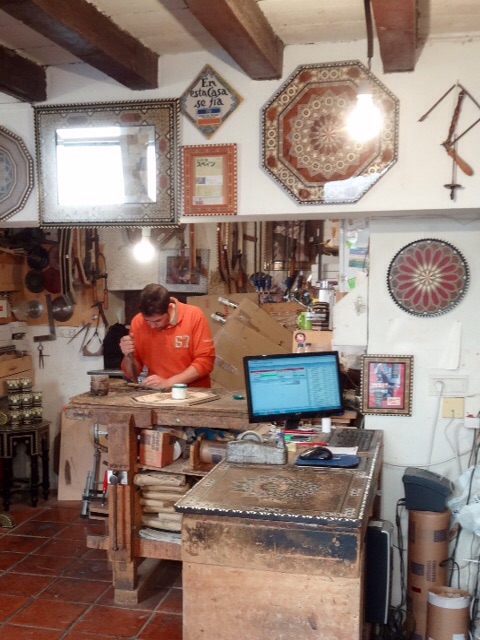
We have a timed entrance ticket into the Nazaries Palaces so we make our way there first. We pass through the modern day medina (shops) and peek into a few on our way.  This fellow is making the inlaid wood boxes, table tops and other items that are for sale in his shop. It is very exacting work.image

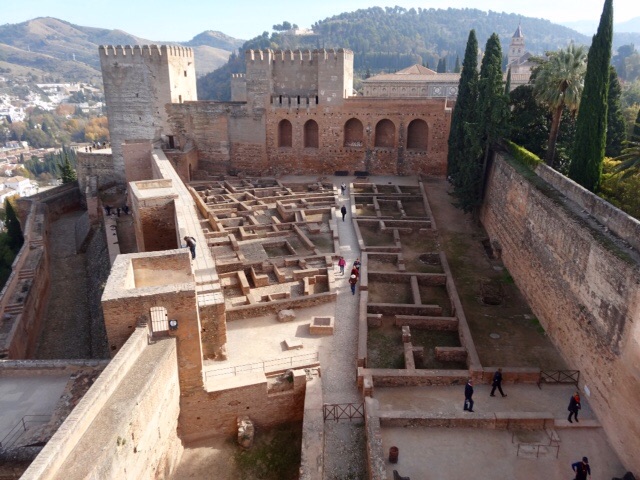
We just have time to visit one of the towers before our visit.  This area below the tower has the remains of houses and shops.image

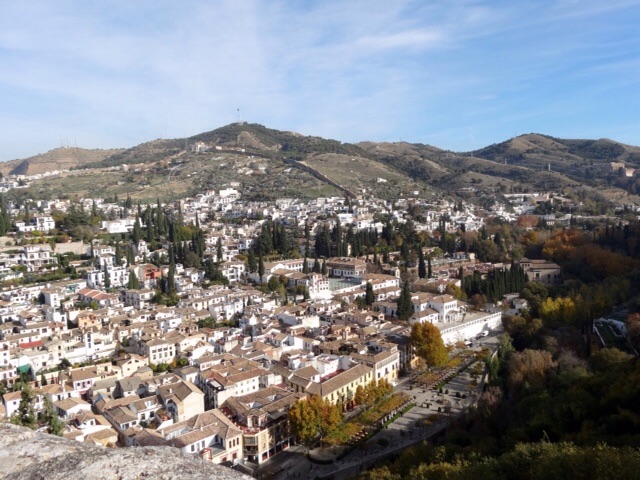
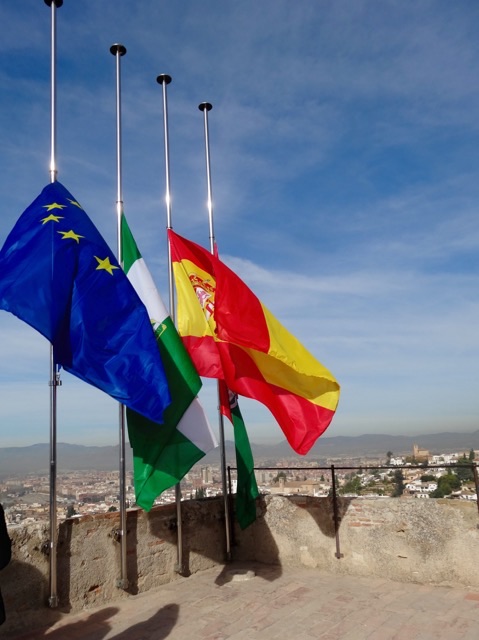
The view is spectacular from the top of the tower, but we are surprised at all the smog.image image  We are once more reminded of Paris as the flags here are at half mast.imageThe Alhambra has a lengthy history and it was first built as a fortress in 889. There is more information here if you are interested.          https://en.m.wikipedia.org/wiki/Alhambra
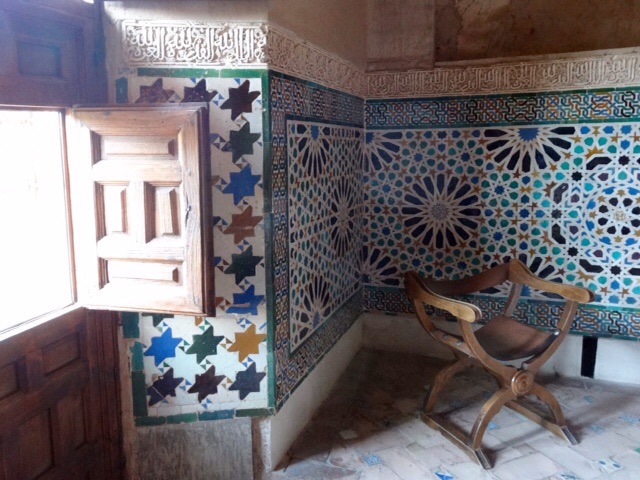
The entrance to the palace begins in this room with beautiful coloured tile walls.

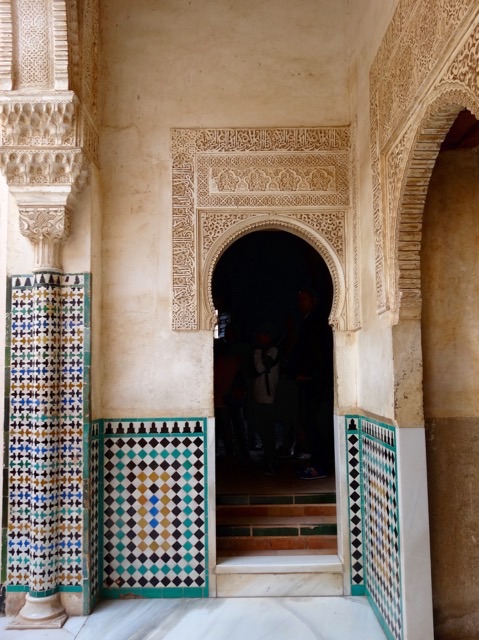
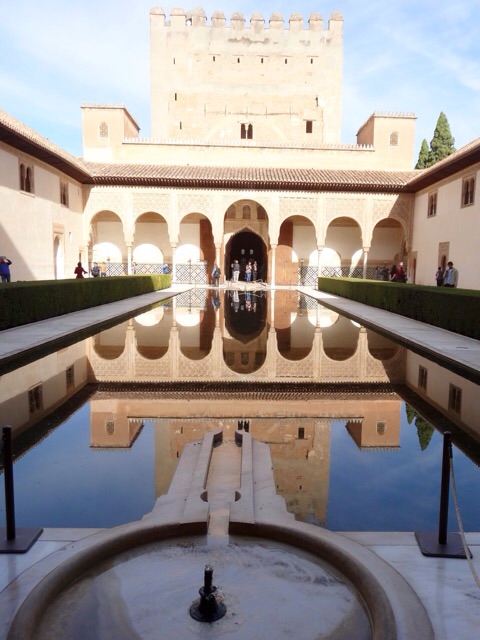
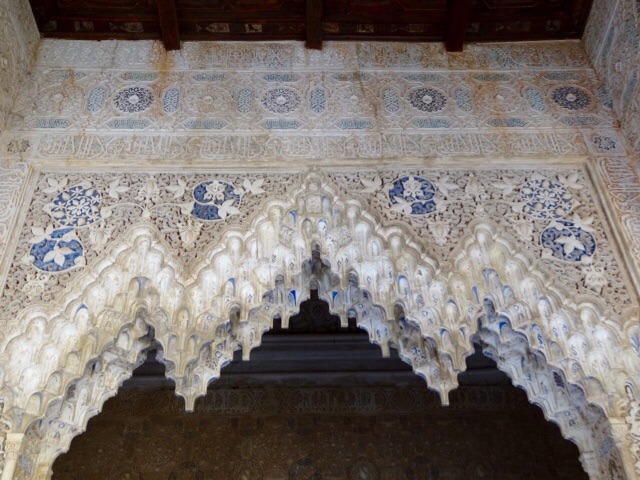
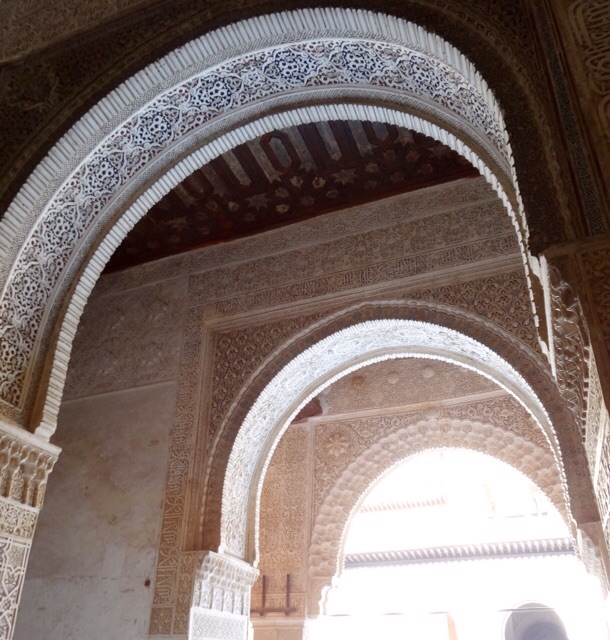
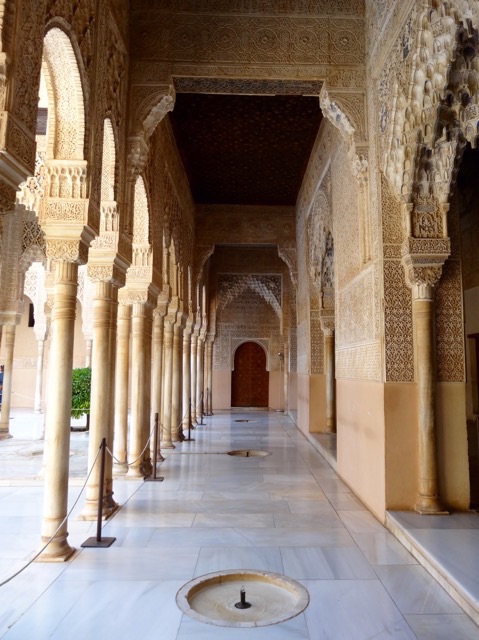
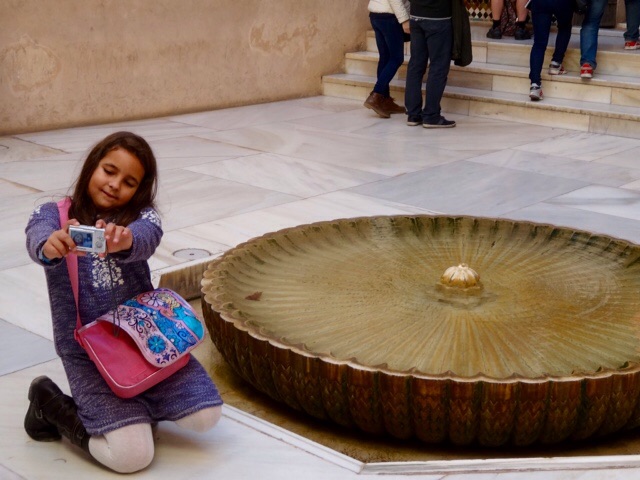
image  And then we walk through this little keyhole shaped door, image  and we are in the incredible courtyard.     image  From here we see one amazing sight after another.image image image I have seen lots of people taking selfies, but this one is definitely the cutest.image

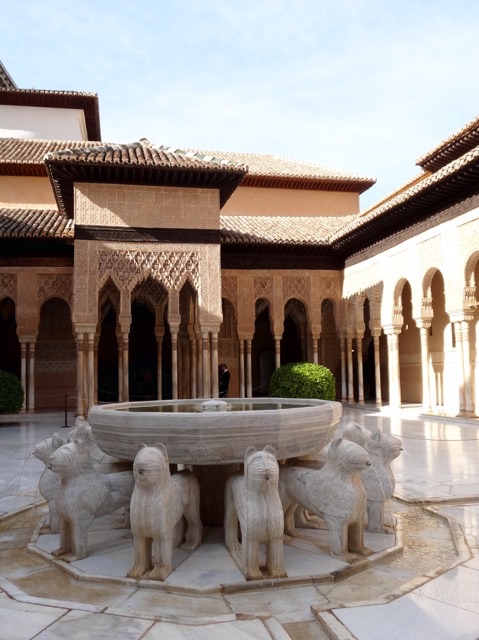
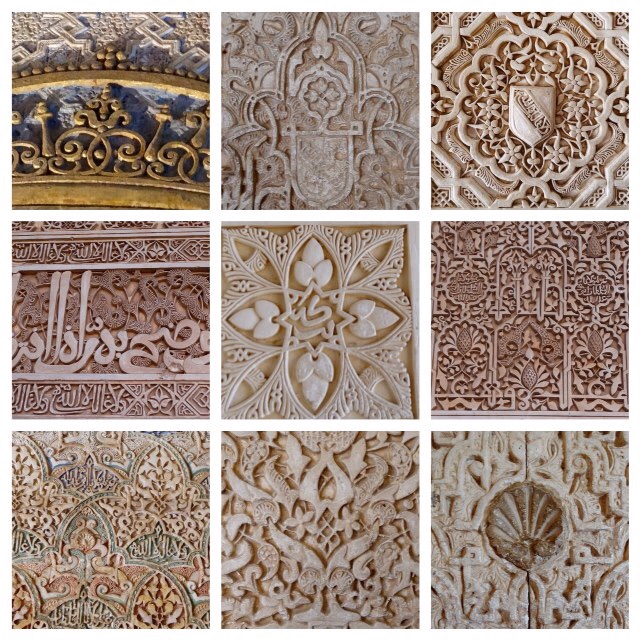
The Court of the Lions has the magnificent Fountain of Lions in its center. This is an alabaster basin supported by twelve lions in white marble, which symbolize power, strength and sovereignty.imageAll the buildings are decorated with intricate carvings that were once painted.  In some places the paint is still visible.
image

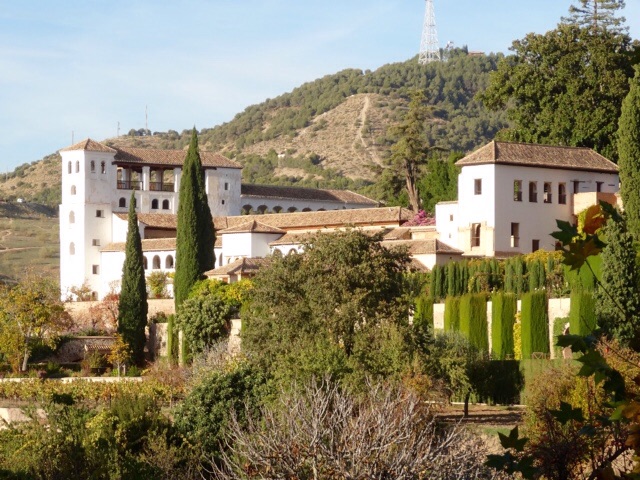
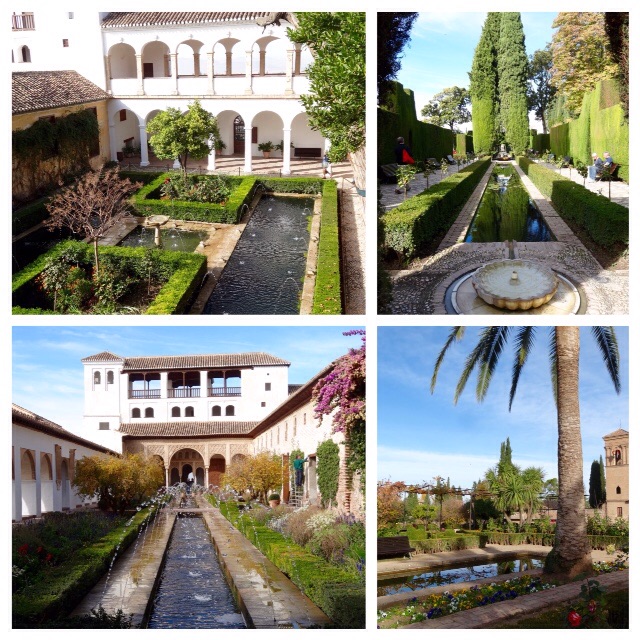
Water fountains and pools abound in the Alhambra.image We also visit the Generalife which is a villa with beautiful gardens that was a retreat away from the rest of the palace.imageimage

image

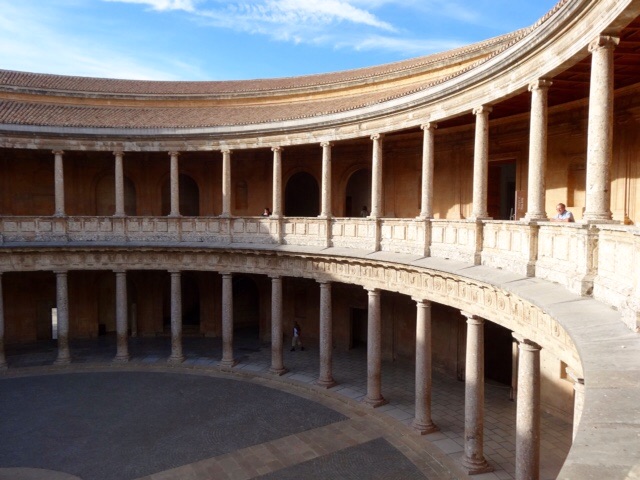
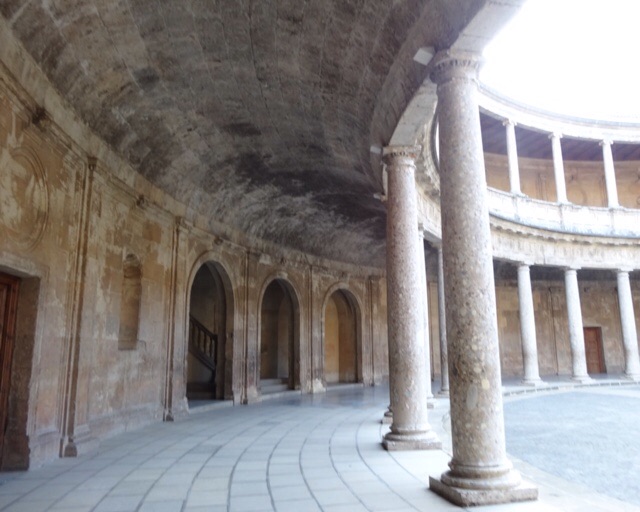
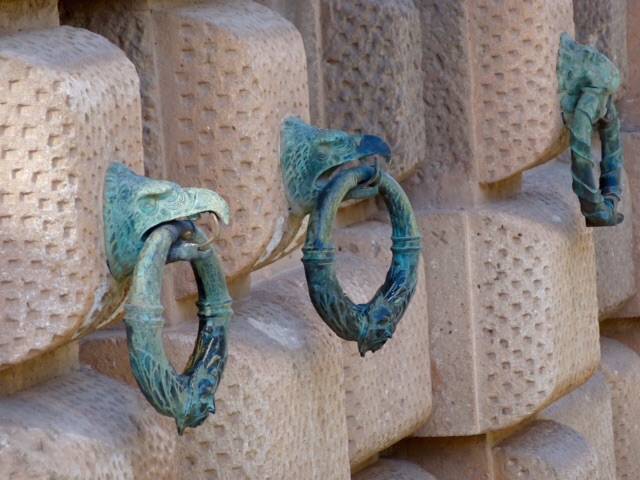
Next stop is the Palace of Charles V. The palace was built around this round center court and there is an art gallery in part of the building.  There is a small charge fee to go in and we are impressed by the quality of the exhibits and how well organized the gallery is.image image

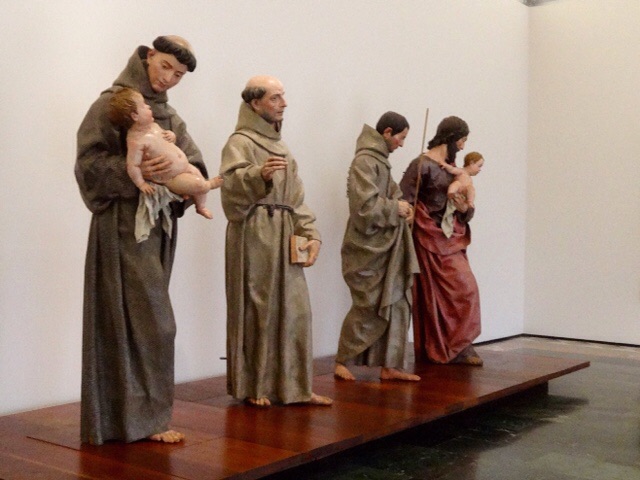
These sculptures were from the 14th century I think.  They were larger than life sized and stunningly beautiful.  image

There were also some very old books on display.imageNot sure why they were on the walls on the outside of the Palace of Charles V, but I sure liked these.image

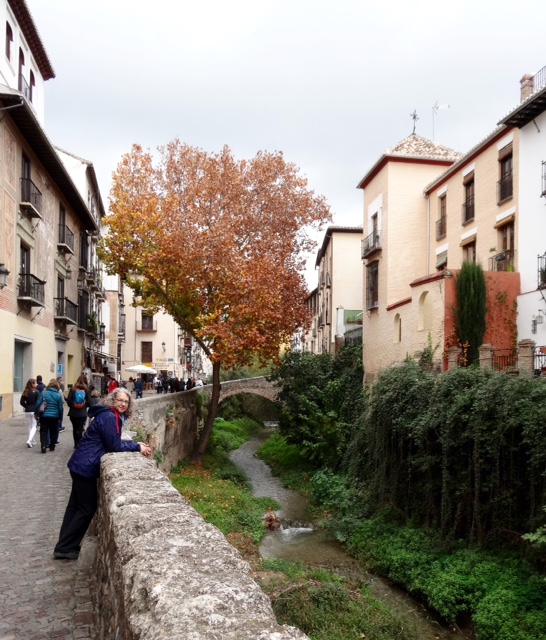
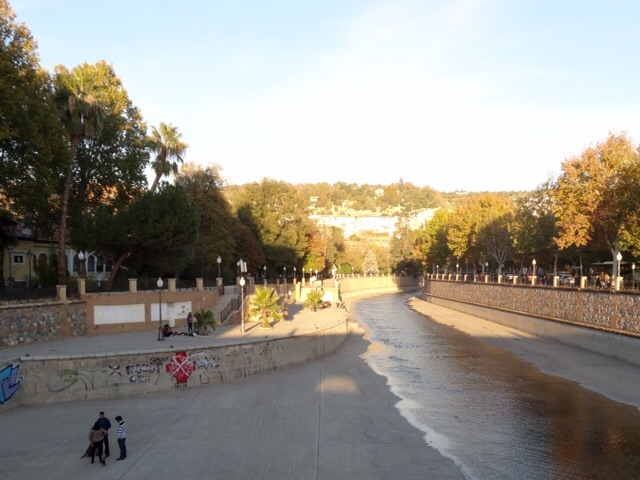
We spent the whole day at Alhambra and catch the bus back down into town, walking along the ‘river’ as the sun starts to set. Bob is happy we will be taking another bus back to our apartment so he doesn’t have to drive and I don’t have to navigate!image

Granada

Wednesday November 18

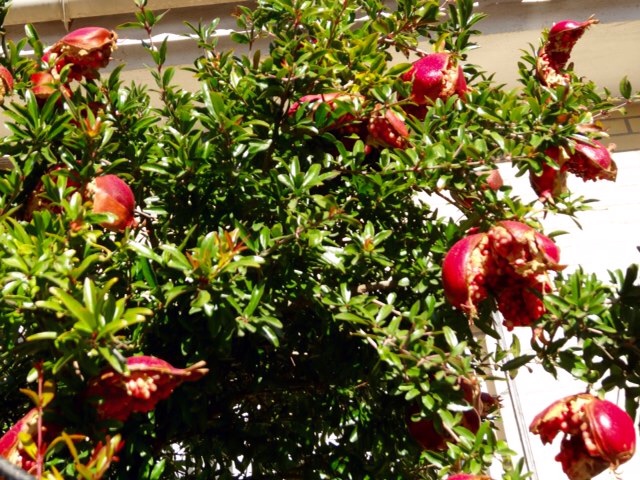
Our apartment is near the small village of Alhendin about a half hour from Granada. It is a bit more remote than we had anticipated but it is a very nice, quiet apartment in the walk out basement of a new house. We spend a quiet day, only going into town to get groceries in the afternoon and to book our tickets for the Alhambra in Granada.  We got these at a bank machine but it did take us a while to figure it all out. Things are not always as easy or simple as we think they are going to be.  On our walk to the bank we see these granadas (pomegranates) growing on a tree.  I didn’t know that when they get very ripe they just split open.

image

Thursday November 19

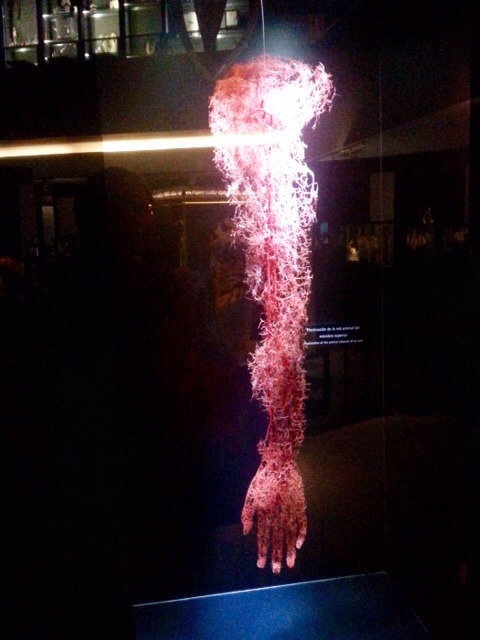
I had a quiet day and Bob took the bus into Granada and went to the Science Center.  He spent 4 hours exploring the various exhibits on anthropology, medicine, transportation and inventions.  Below is a model of the blood vessels in a human arm.

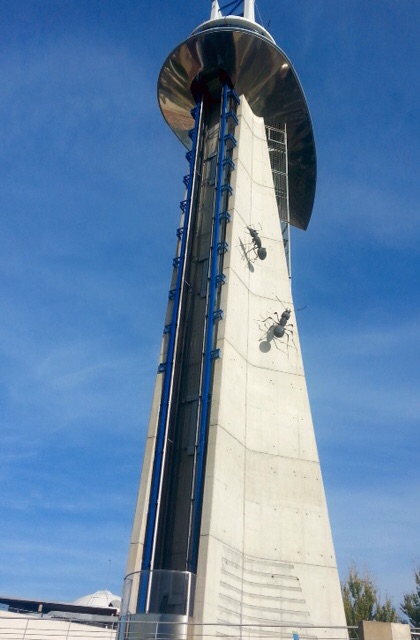
image  The tower has a great view of Granada, but watch out for the giant bugs!image

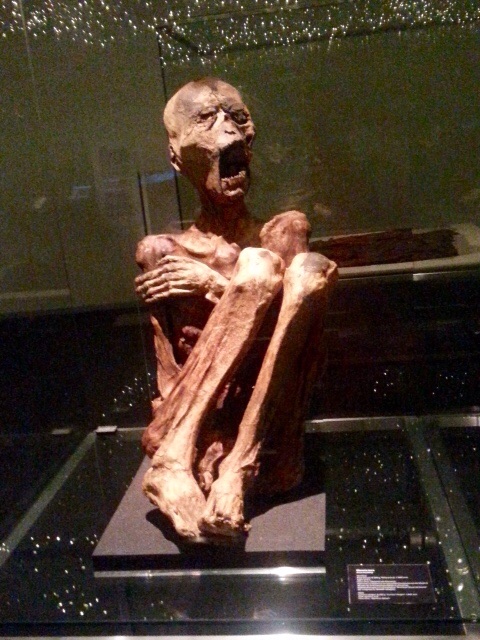
This is a mummy from the Sixth Century found in Peru.  The cold, arid climate in the Andies helped preserve the remains.  Legend says that he was travelling with his wife for three months and she was the navigator.  His last screams are captured just as he froze to death after getting lost again.  (Can you tell who wrote this part?)image

Mijas and Granada

Tuesday, November 17

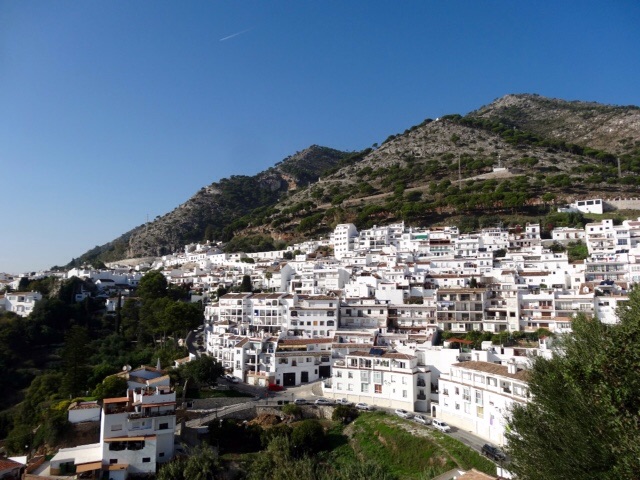
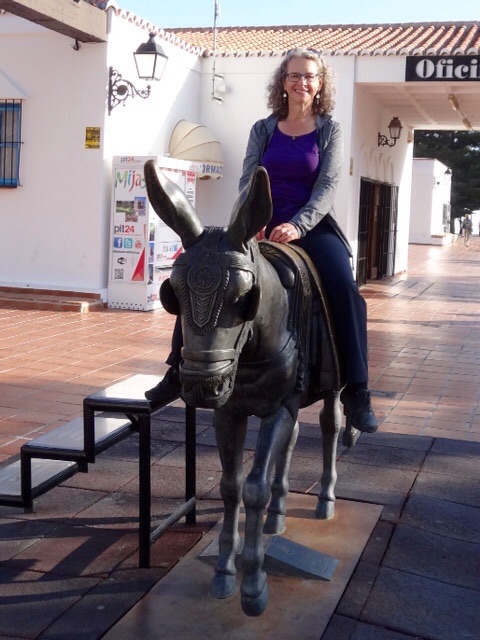
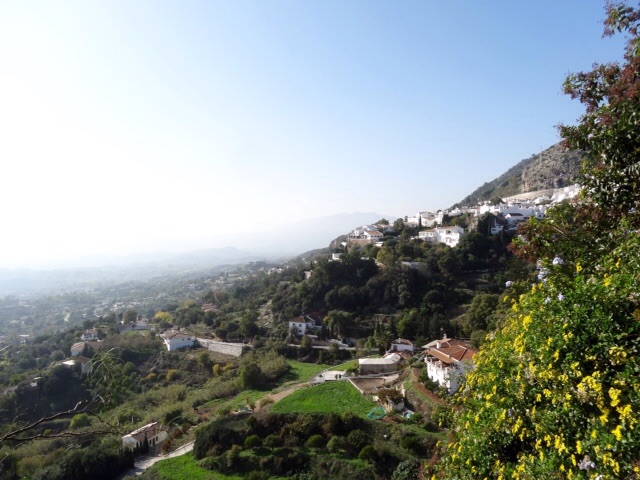
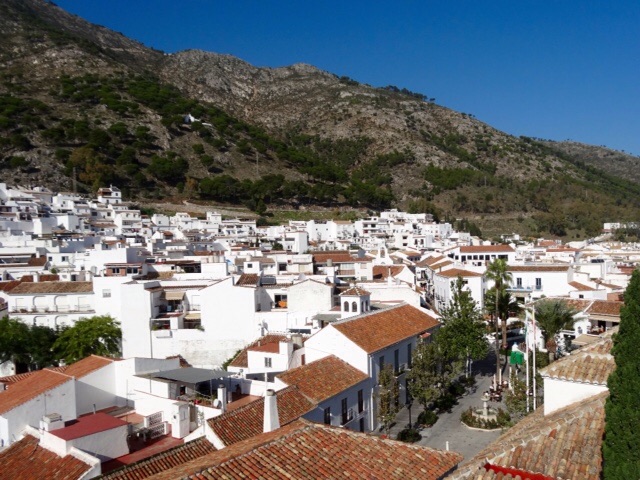
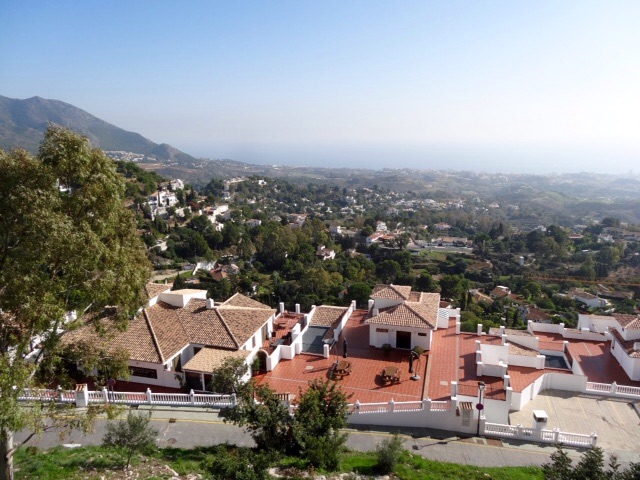
We leave for Granada today which is a good thing as our balcony is positively swarming with workmen this morning. Too bad all this painting is going on as it made it difficult to fully enjoy our apartment, which was really quite nice otherwise. We met some people in Seville who told us about a pretty white village named Mijas so we stop for a visit on our way to Granada.imageOne of the first things we see as we set out to explore Mijas are a lot of donkeys tied up along the main street. These are the donkey taxis that were first started in the 1960s by a local resident who used the donkeys to transport goods.  Early tourists wanted to take pictures with the donkeys and asked to have rides and the tips they offered were more than his day’s wages…and so began the donkey taxis.  I thought that they didn’t look very well cared for and that they were not very healthy and wasn’t interested in making them give me a ride.image image  So, here is the donkey ride I chose.imageWe found a lovely stone bench overlooking the valley and had our picnic lunch here.  imageThere is a very old tiny church which we visit and we want to buy a few things at their little shop but the store didn’t have change for 20€ so we said we would come back later, but when we return they are closed, so we are out of  luck.

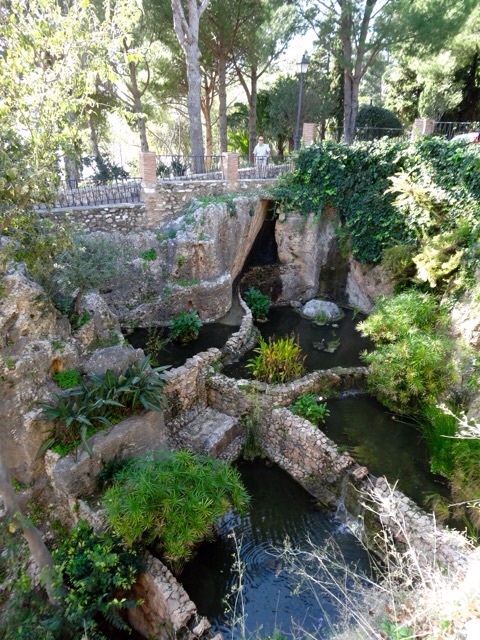
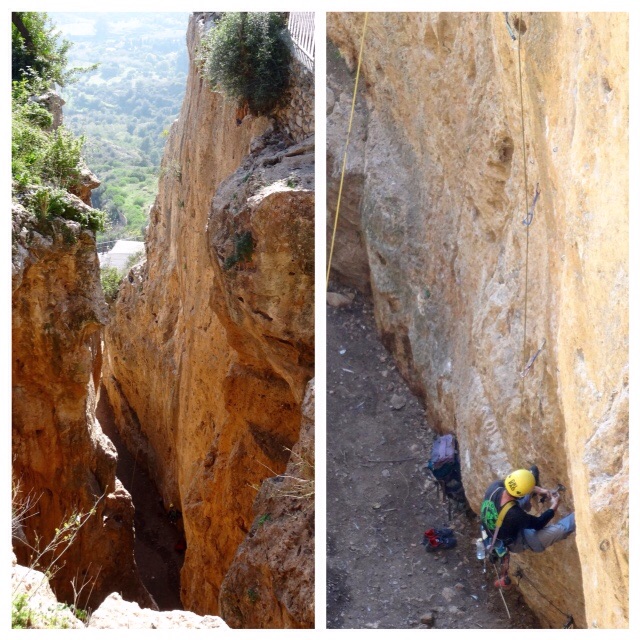
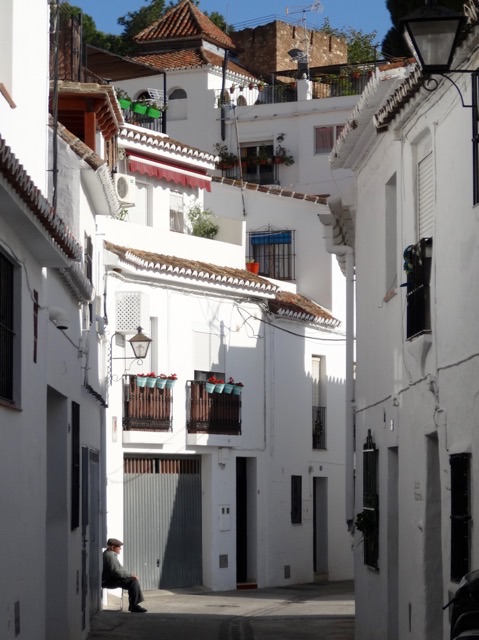
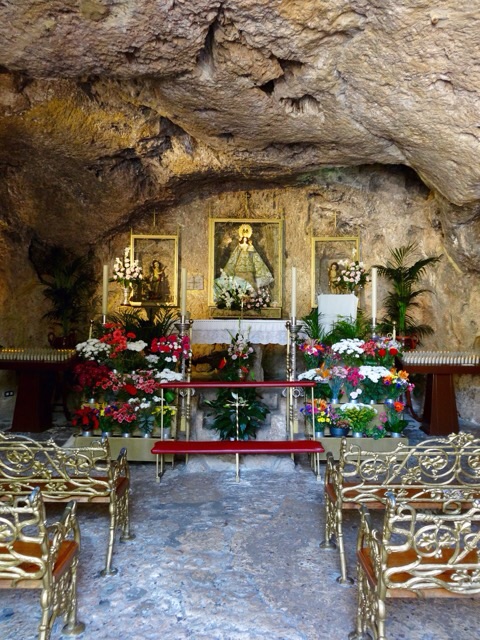
mijas-villas.com has this description of the church:”Hidden away in a corner of the village, overlooking the wonderful valley leading to the coast, is the hermitage of the ‘Virgen de la Peña’. Built into a rocky outcrop by Mercedarian monks in 1520. Inside is the image of the ‘Virgen de la Peña’, the patron Saint of the village. According to the legend, she appeared on this spot on the 2nd of June 1586 to two young shepherds that had been led there by a pigeon. Subsequently an image of the Virgin was found concealed in a recess in the tower where it had been hidden for 500 years. In 1656 work started on the sanctuary cave, which is nowadays always decorated with flowers and pictures as offerings.”imageWe then walked around the edge of the town along some of the old original stone walls which offered more great views of the valley below.imageWe enjoyed the gardens along the way which were very well maintained and had more flowering plants than we have seen elsewhere as well as many water features.  It was very pleasant and relaxing.imageWe stopped to watch these rock climbers but they take a long time getting ready to climb so we have to move on. imageWe climbed a little tower on our walk through the town and it gave a nice opportunity to see the roof tops and how tightly packed together the houses are.imageI often see older people sitting on doorsteps or walking along the streets and wish I could take their pictures but I don’t want to be rude or intrusive.  I was able to take this fellow’s photo after we walked by. image

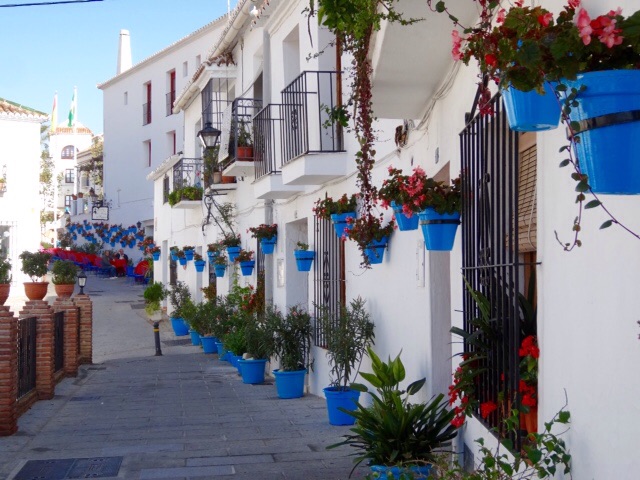
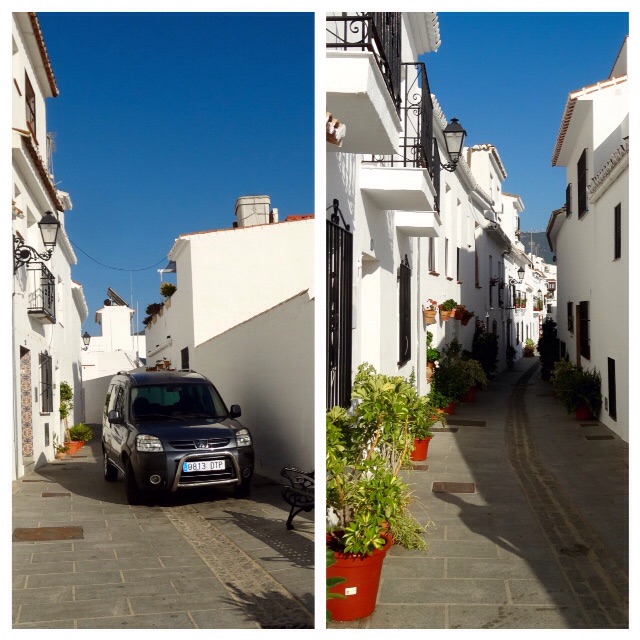
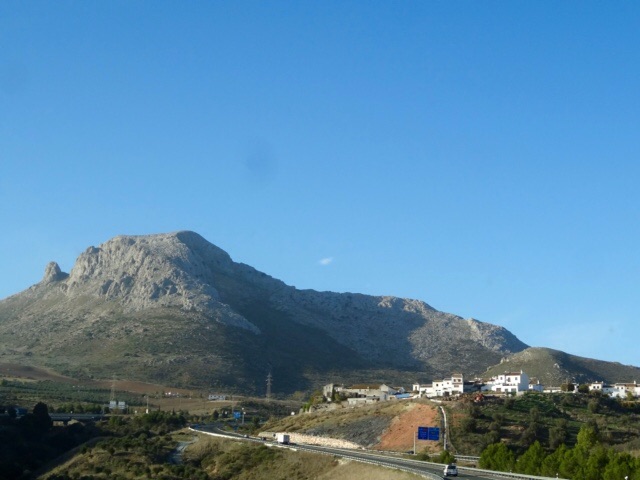
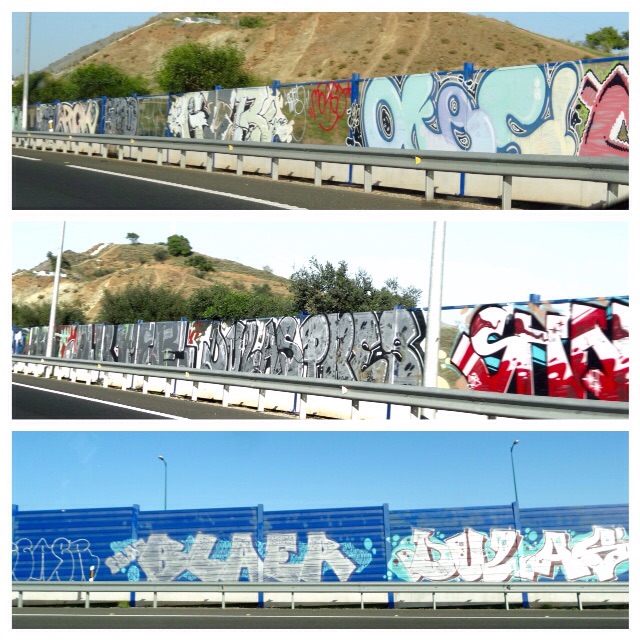
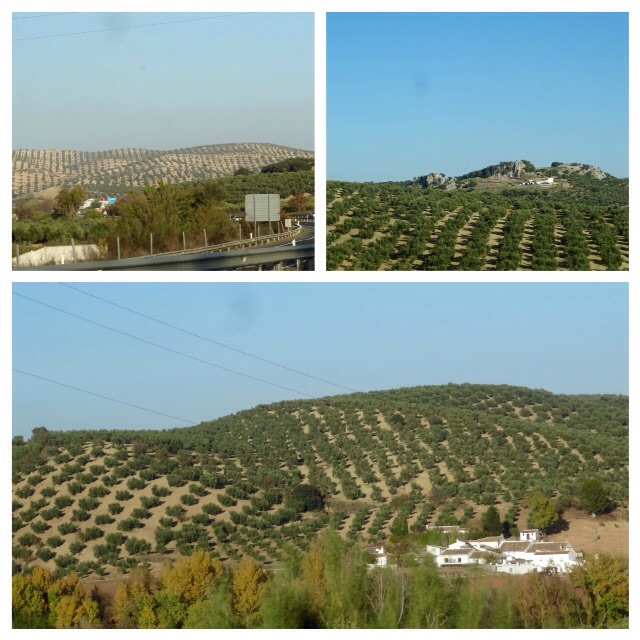
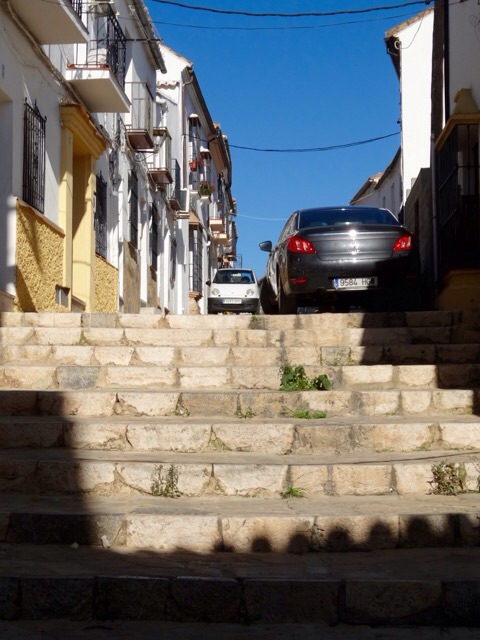
What is not to love about a street as pretty as this?imageCars manage to drive along the narrowest streets and we find them parked in some of the strangest places.  This car had travelled up the street in the second picture.  You may be able to see that the street became much narrower further on. We have no idea how it managed to navigate past the flower pots on this very narrow road or how it is going to turn around to get out of there.  We climbed steps to get to this road!imageAll to soon it is time for us to hit the road.  We need to be in Granada by 6:00 to meet our host for our next apartment.  The scenery changes soon after we leave Mijas, it is drier and we start to see olive trees.imageWe have seen graffiti everywhere we have been in Spain and Portugal.  These tags are all along the highway walls.imageSoon we are driving through mile after mile of olive groves.  We can’t believe how many fields of olive trees there are, stretching as far as the eye can see in all directions. I snap these photos as we drive by so they aren’t wonderful but they do give at leat some idea of all the trees we see on the way to Granada.image
I want to thank everyone who has taken the time to write a comment or ‘like’ a post on this blog. WordPress just sent me a notice that my blog has more than 100 likes and that “my stats are booming and I am getting lots of traffic”  I’m not sure exactly how important that is but I think when people like a post or comment it makes it easier for others to find the blog on search engines.  I am still relatively new to blogging and need to do a bit more research into all this.

I started the blog so friends and family could follow my travels and as a place to show some of my art and I have been rather astounded to find that my blog has had 7,223 views by people in 50 countries since I started it for my trip to Paris in 2014.  So, if you do enjoy a post please feel free to offer a comment or press that like button.  I am behind on responding to comments but I do read them all and I am always thrilled that someone takes the time to comment on what they have read.
The Pueblo Blanco of Ronda

Friday, November 13

It is our grandson’s seventh birthday today!  I do miss not being home to celebrate it with him.
I forgot to mention the surprise we had yesterday morning.  We were still in bed, with our balcony door open to enjoy the ocean breezes and the view, when we were shocked to see workmen standing on our balcony!  Remember, we are in a penthouse apartment on the seventh floor!  Turns out they are painting the building.  There was a bit of paint smell yesterday but we thought they would be finished and we could put up with it for one day. Well, today we discover they are putting up more scaffolding, for more painting….

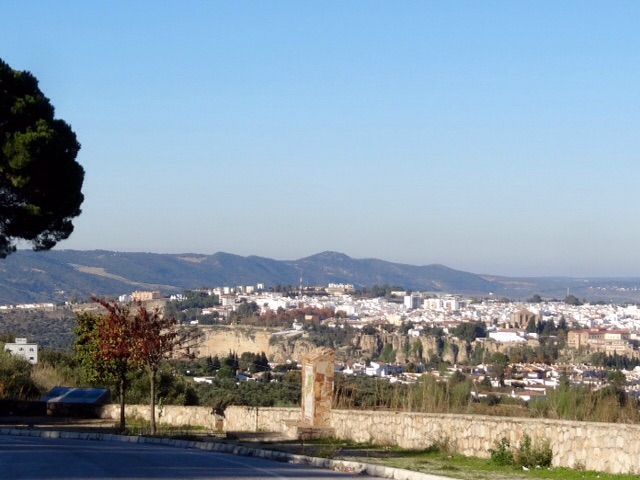
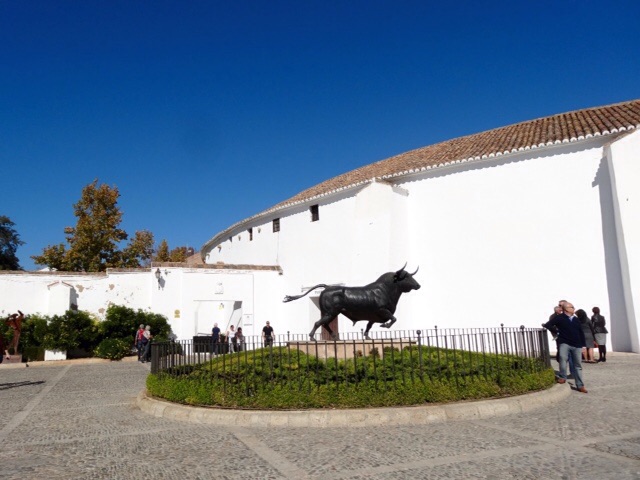
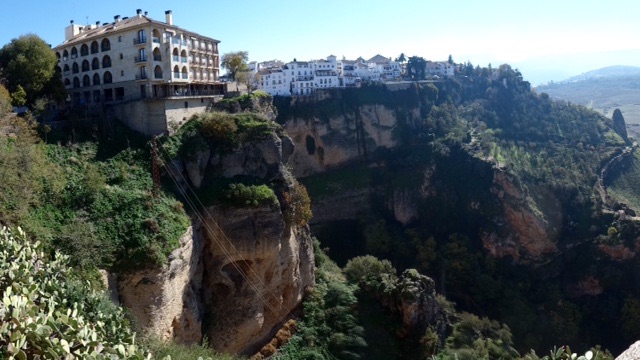
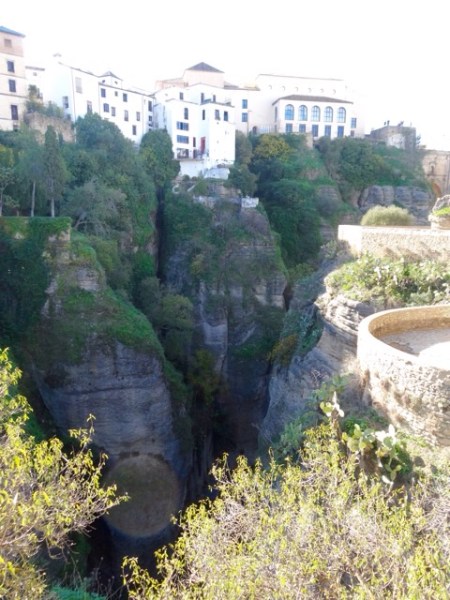
imageWe contact the owner to see what is going on and plan a day trip to Ronda.  The apartment is very nice otherwise.imageRonda is one of the Pueblos Blanco, or White Villages that is located about an hour from our Airbnb apartment in Algeciras.   The white villages are fortified hilltop towns and villages that are whitewashed in the Moorish tradition. Ronda sits on a massive rocky cliff and it straddles a deep limestone gorge.  Because it was so heavily fortified and difficult to attack it was one of the last Moorish towns to fall to the Christians in 1485. It is still hard to realize that all this was happening before Columbus even set sail to discover the Americas! There is just so much history here.imageRonda’s bullring is one of the oldest and most important bullrings in Spain, built in 1785.  The dream of every matador is to fight here at Ronda.image

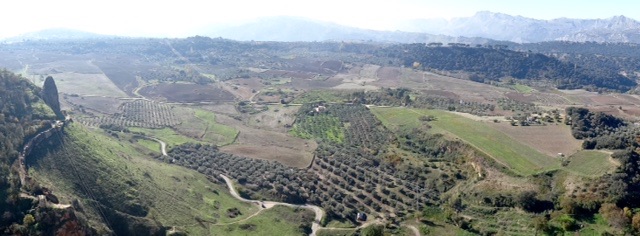
We sit and have our lunch near the bullring, overlooking this valley below the town.image

Then we wander along the cliff top and stop at a view point to take a few photos.
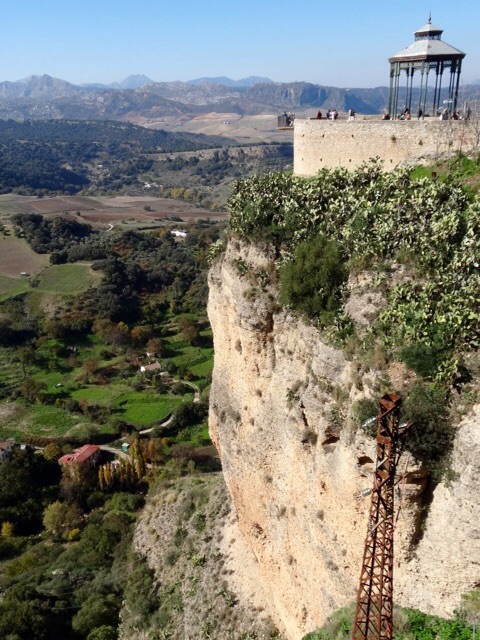
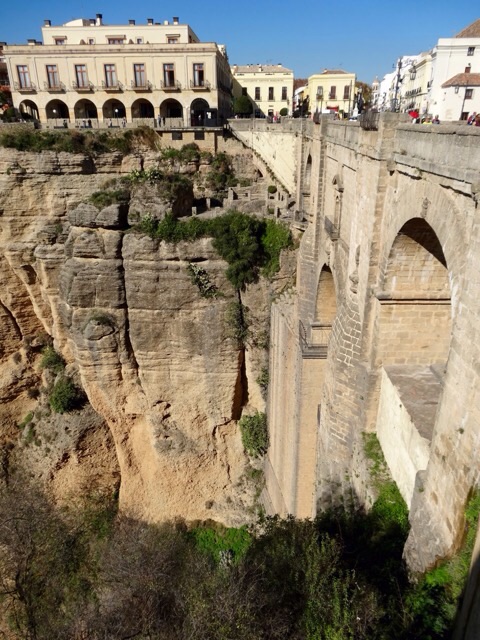
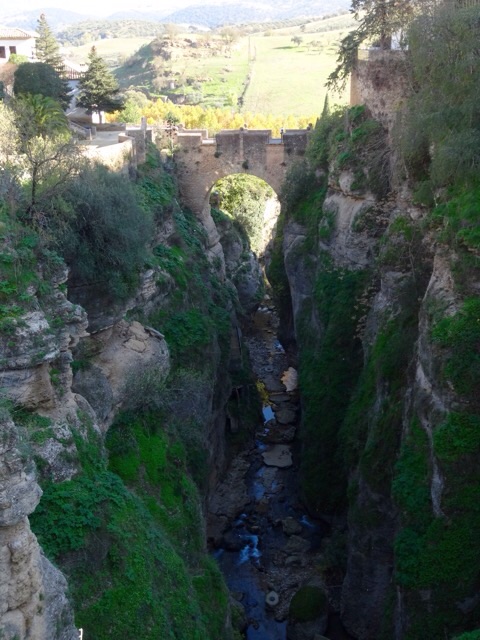
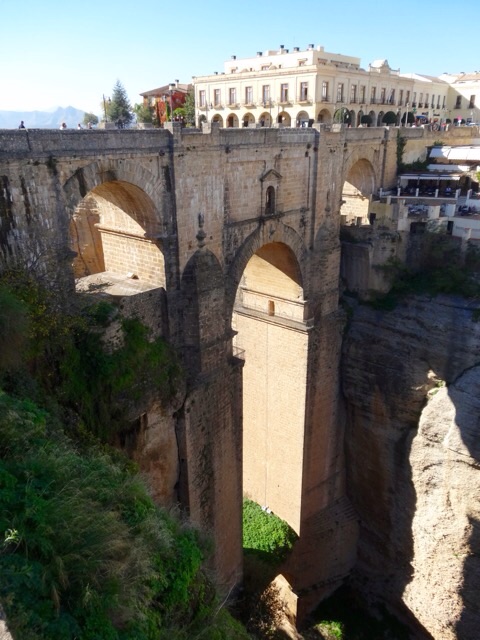
imageA bit further along at another viewpoint I am a bit horrified to realize we were standing on a balcony like affair hanging out over the gorge.  Look closely and you will see this liitle balcony. It doesn’t look very sturdy to me!imageThe Puente Neuvo, or the New Bridge, was built in the 18th Century, and connects the newer part of town to the oldest area of town.  We walk across it, and of course stop for even more photos. It is an amazing bridge, 120 meters above the river below.

image

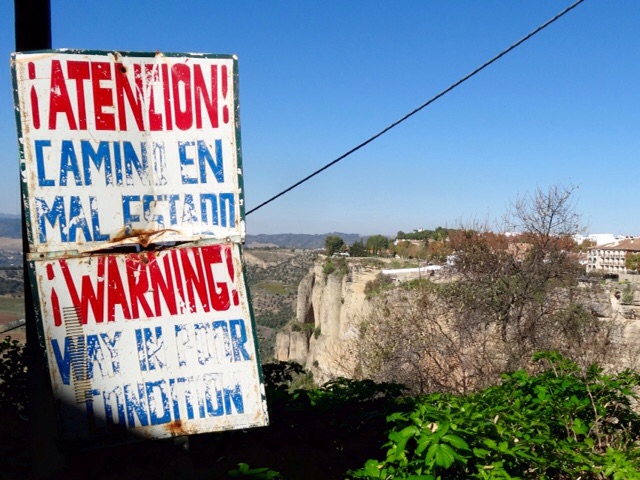
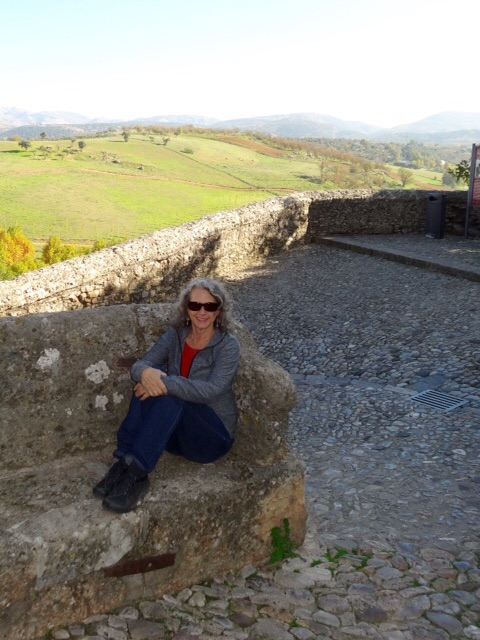
There is a stone staircase of 231 steps down to the river in the Gorge.  I was trying to convince Bob that we should walk down but once we saw this sign we changed our minds.imageInstead we walk through the old town, popping in and out of the shops to see what we might discover and then head out to find the Puente Viego, or the Old Bridge which was built in 1616.  Today it is a pedestrian bridge and I stop to sit on “The Moor’s Armchair” right in the crook of the hairpin turn on the road to the bridge.

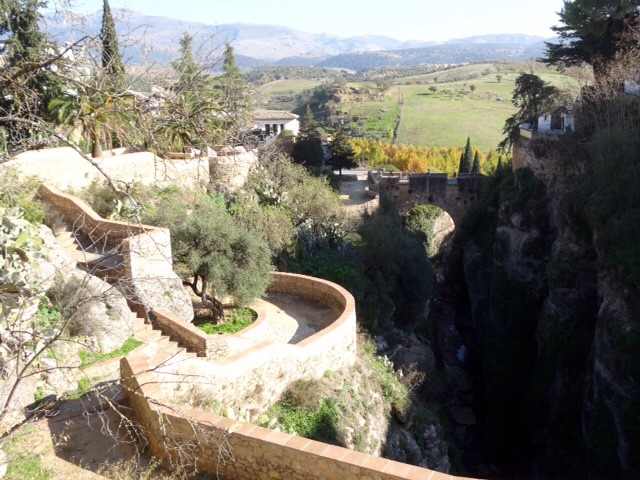
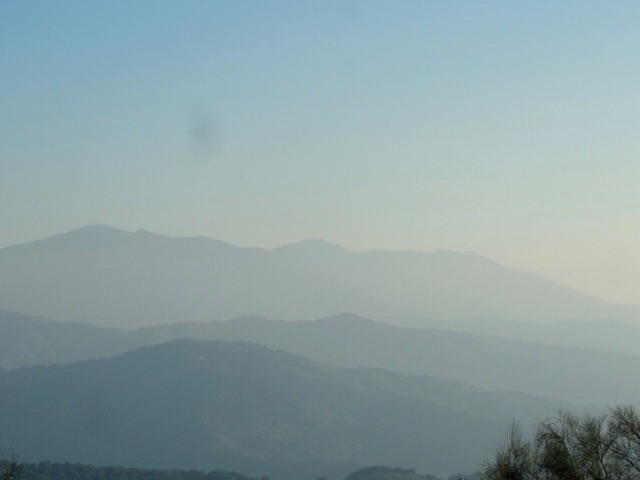
imageThis Old Bridge spans the same gorge as the New Bridge, just in a different place. imageAfter crossing the bridge we head up a path towards some terraced viewing platforms and garden areas.imageAnother view of the Old Bridge and the country side beyond the town, and the terraced gardens.imageThis is the New Bridge from the terraced gardens below. Notice the white houses tucked into the cliffs in the shadow of the bridge.imageWe wander through more of the Old Town, and I marvel at some of the places we find cars parked.imageOn the drive home the air is very misty and there is this great example of arial perspective. Check out this link if you aren’t sure what arial perspective is all about. https://en.m.wikipedia.org/wiki/Aerial_perspective
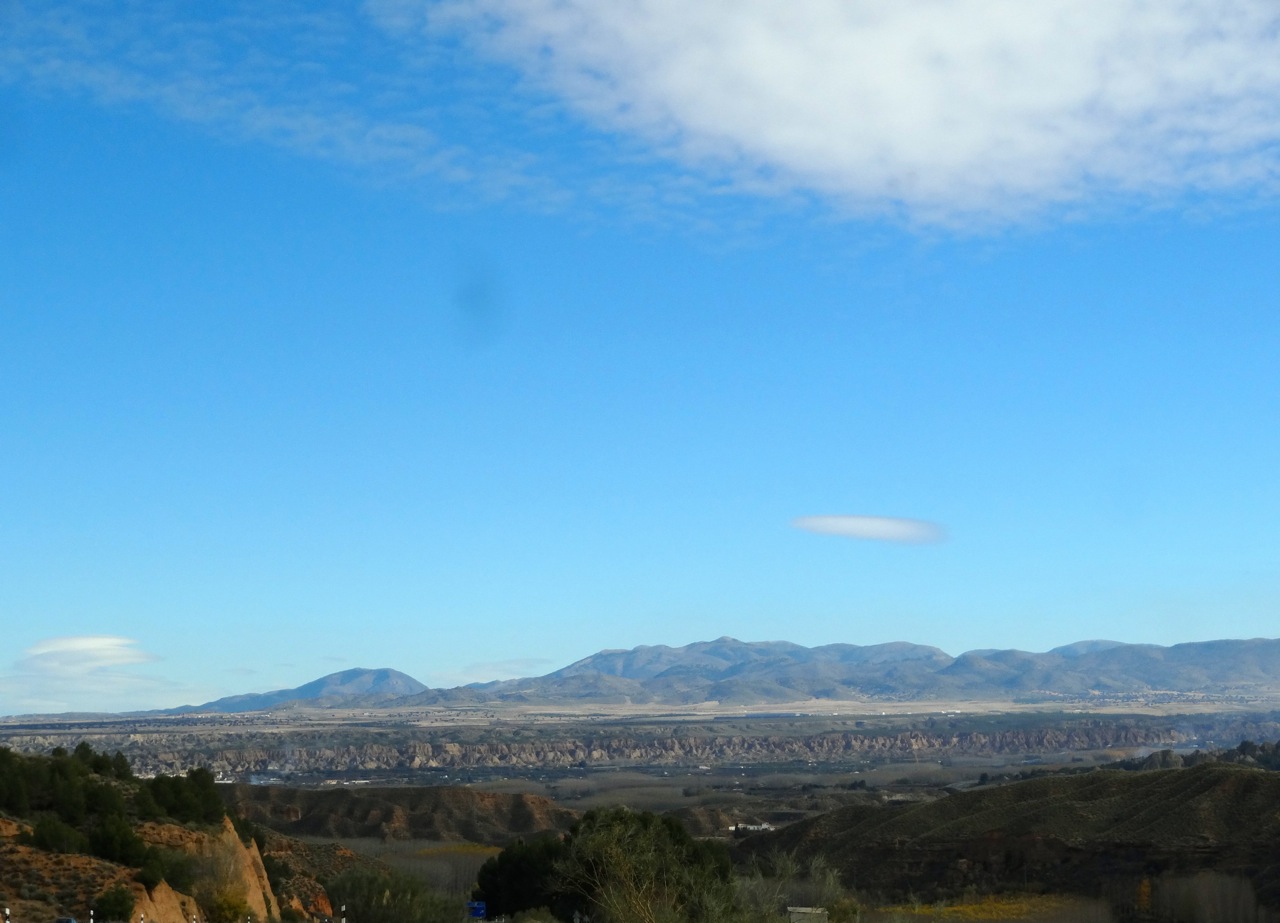
imageMy camera has been giving me problems this entire trip.  There is dust inside it that causes the spot visible in the sky in this picture and sometimes the settings just start jumping around and changing all on their own! One time it started taking every picture in triplicate! I am hoping it will keep working until the end of this trip.  Any suggestions for a good camera?  I think I will need to buy myself one for Christmas when I get home.