Day 34, Saturday, September 28, 2019
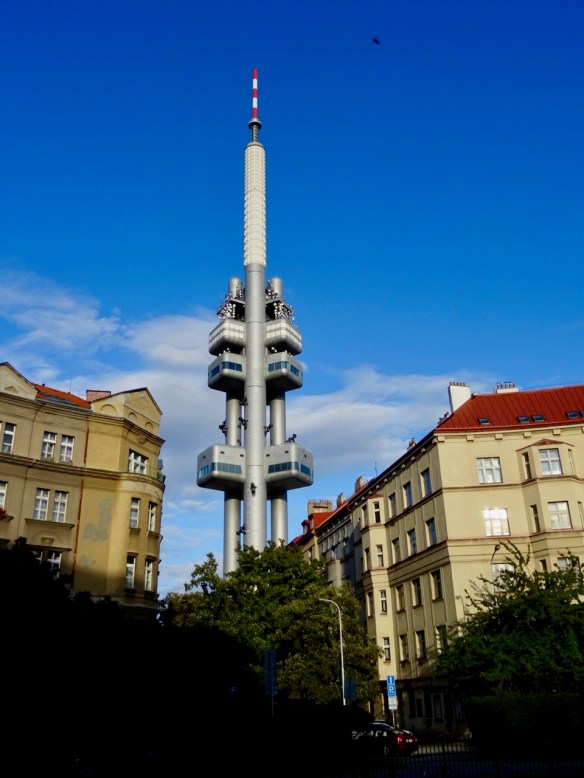
The Prague TV tower against a beautiful blue sky. It is 18 above today, and the sun is shining.
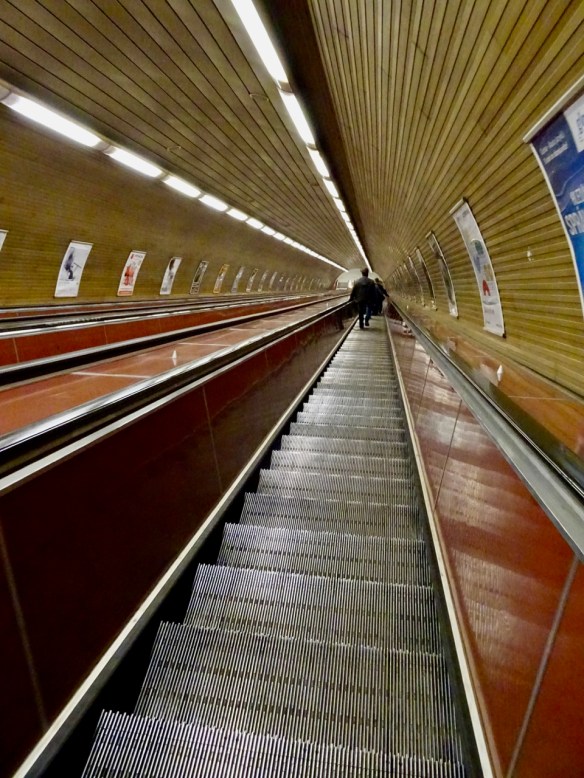
 This is another of those very long, very fast moving escalators. We wonder why the metro is so far underground? A little research reveals that “In the event of an attack on the city, they should close to turn the designated stations into hermetically sealed bunkers. The doors can allegedly withstand a nuclear blast on the surface as well as a “torrential” wave of water. Up to 300,000 people can allegedly take refuge in the system for three days.” Who knew? Although I can’t imagine being underground with another 299,999 people!
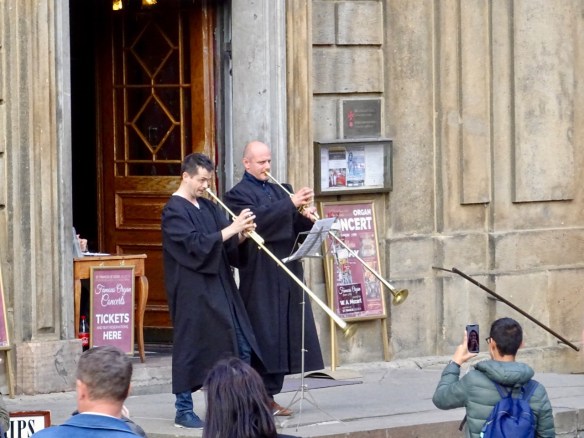
  These fellows gave a little preview of an evening performance in one of the many churches in Prague.
 St. Charles Bridge is probably on every Prague visitor’s must-see list. It is a UNESCO World Heritage site that is also home to many Czech artists, musicians and souvenir vendors whose stands line both sides of the bridge. This Medieval bridge, completed in 1402 is now a very crowded pedestrian zone.
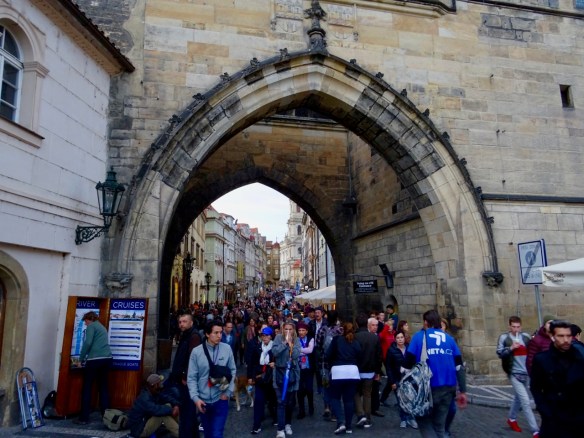
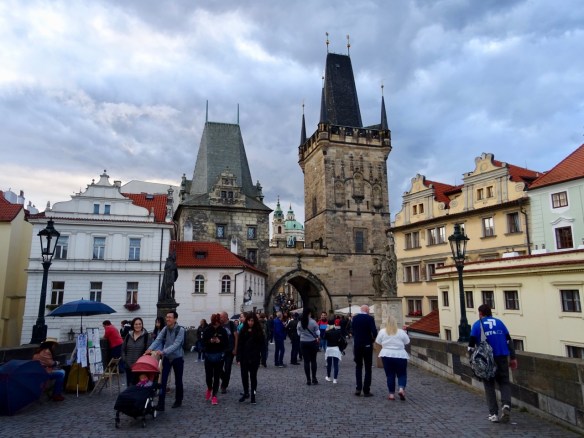 Here is a close up of the entrance to the bridge in the photo above. Just a few people! Very crowded but such great people watching, which is one of my favourite pass-times.
  The bridge offers a great view of the Prague Castle on the hill.
 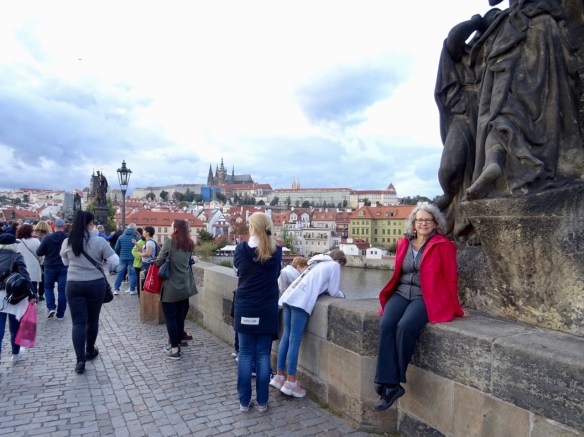 As well as views of some of the other bridges along the Vltava River.
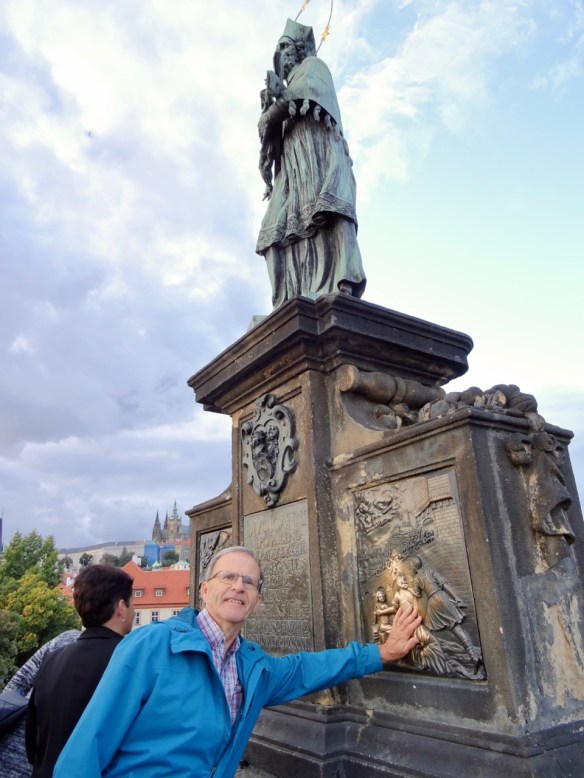
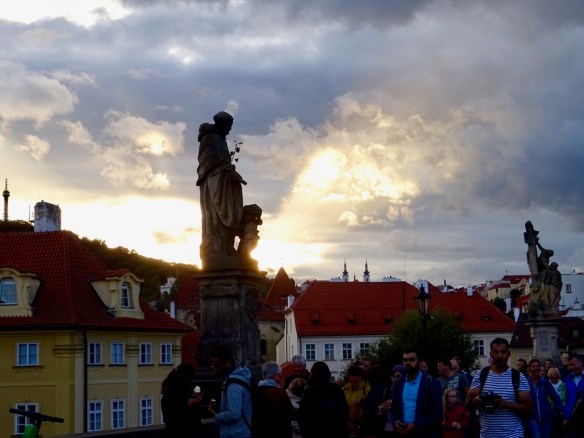
  Touching this statue is said to bring good luck and ensure a return visit to Prague. There are 30 statues on this 516 metres long and almost 10 metres wide Gothic bridge.
 The sun was setting as we leave the bridge.
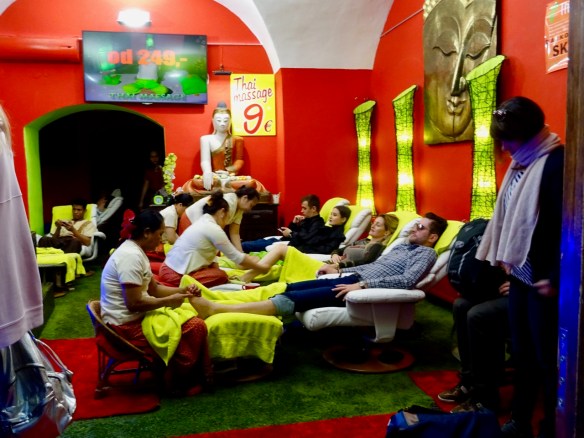
 On the way home we peek into a Thai massage studio. I wanted to give this a try but we somehow ran out of time.
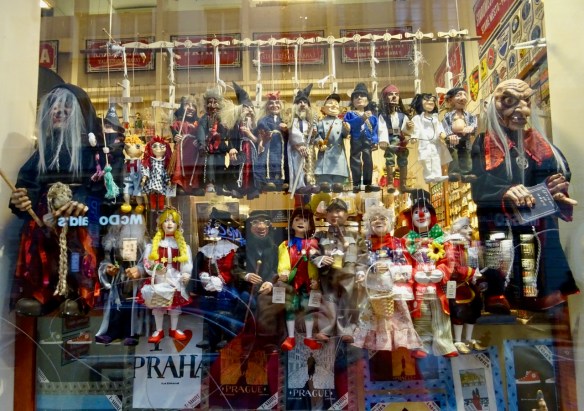
 Prague is famous for its marionettes. Most of the ones we see are obviously made for tourists and not that great but I find this window display of really beautiful marionettes. They had really ‘beautiful’ price tags too!
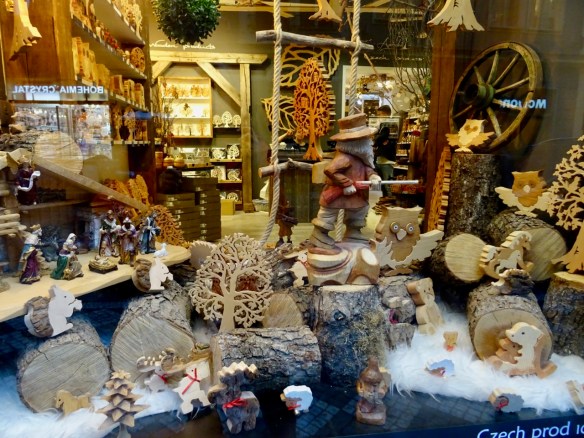
 There are lots of shops selling wooden products.
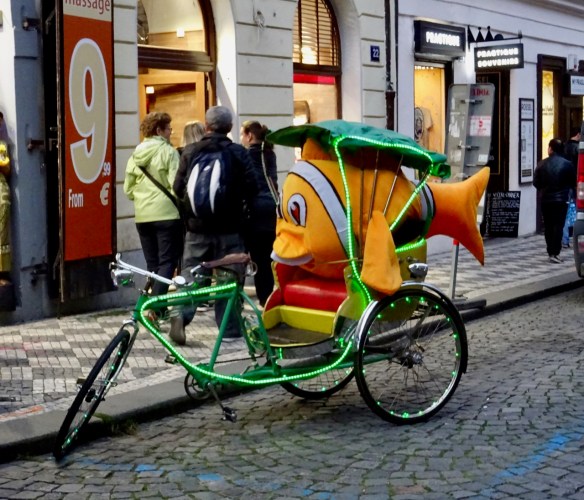
 We see Nemo every time we walk along Wenceslas Square.
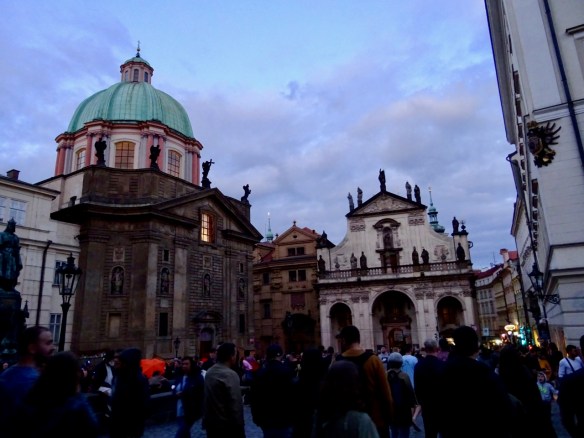
 The streets are jam-packed with people tonight. It is St. Wenceslas Day today which is also called Statehood Day and is a holiday.
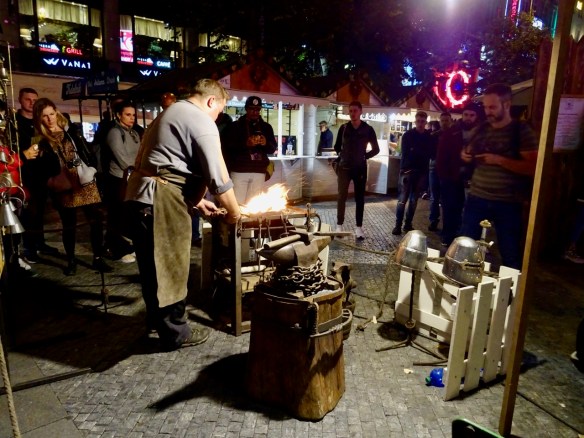
 Interesting to see a blacksmith working in the square.
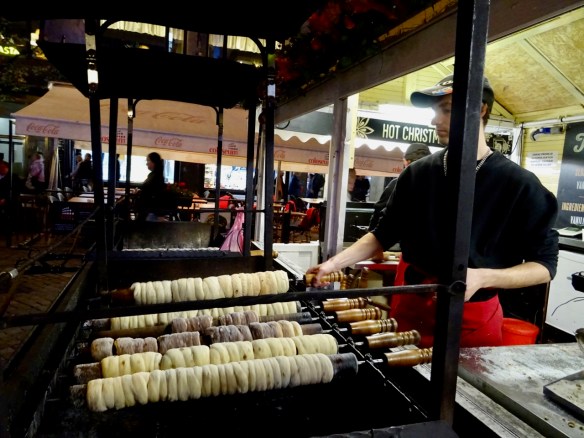
 These pastries are sold everywhere in Prague. They are call Trdelník (which means a hollowed out log) and they are made by wrapping layers and layers of dough on a cylindrical spit. It is then baked on an open fire and dusted with cinnamon sugar and crushed nuts. They look yummy just like that but many shops fill them with ice cream and all sorts of fancy toppings. Unfortunately they are not gluten free…so none for me.
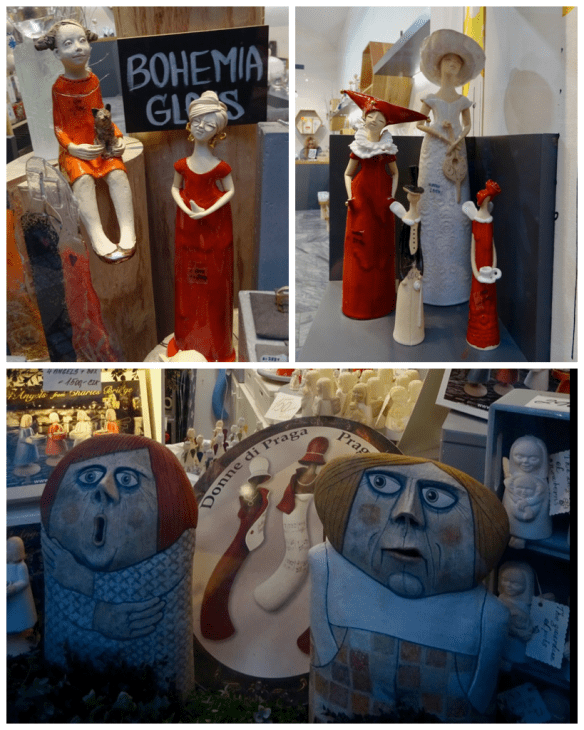
 These little sculptures in the store window appealed, but they are too big and heavy to buy so I settle for a picture.
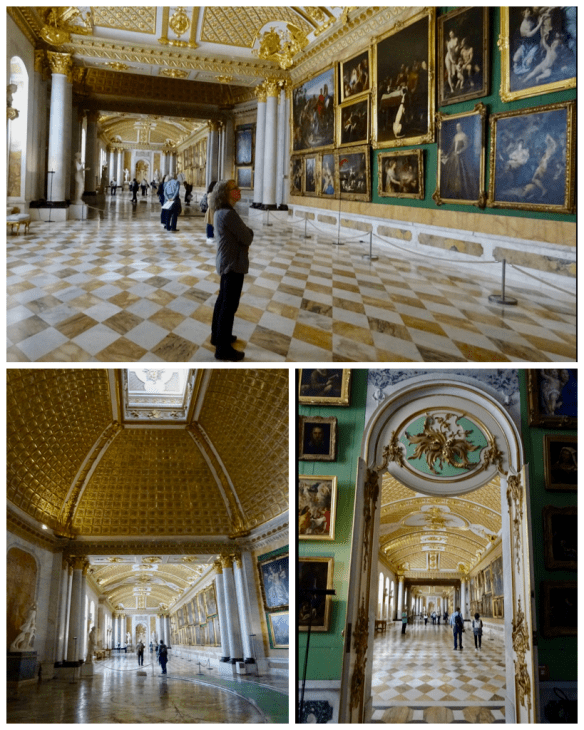
 The grounds in front of the palace. We have our picnic lunch and then visit the Bildergalerie.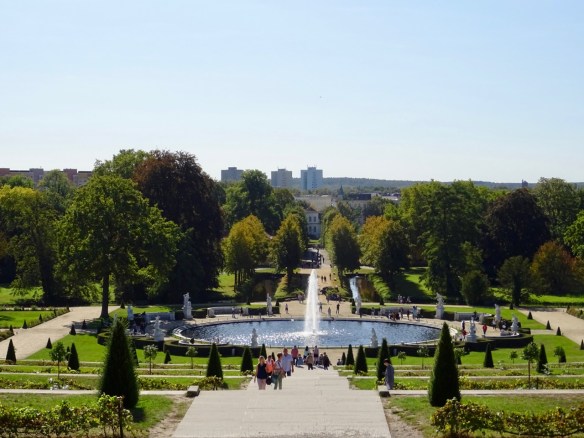
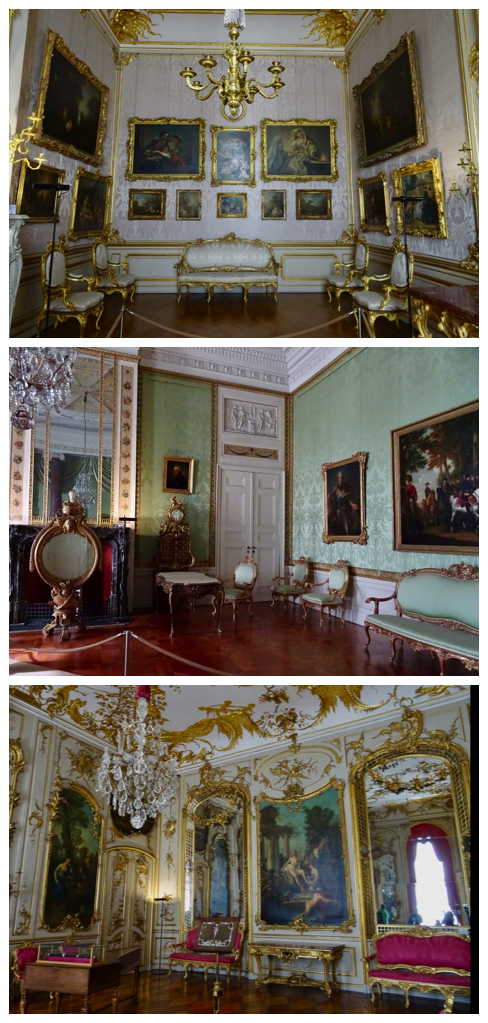
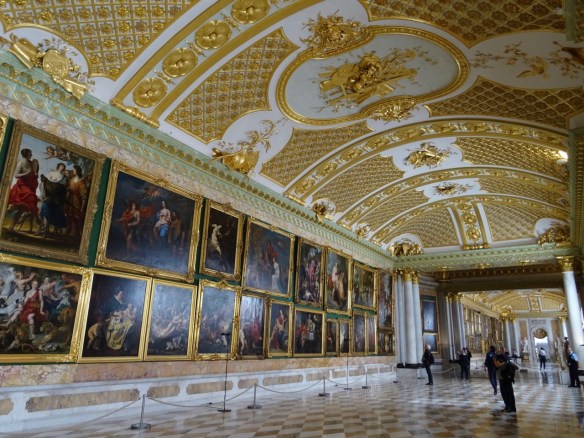 connected by a round room with a vaulted gold ceiling. At the far end there is a room for small paintings. The last photo is taken looking out from this room. There are a lot of beautiful paintings but they were a bit hard to see because of the glare from the windows on the opposite wall. I am surprised that they allow the much sunlight to enter the gallery, but it did make the space bright and very attractive.
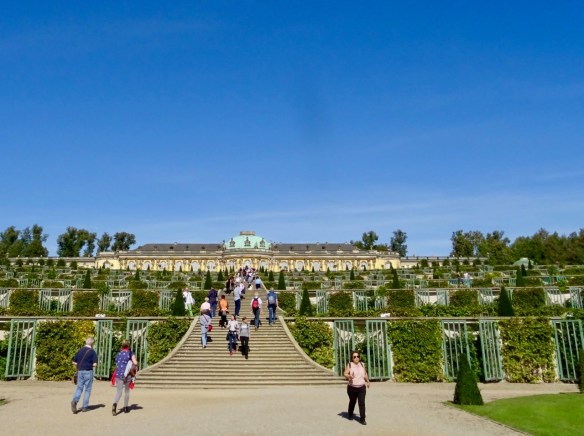
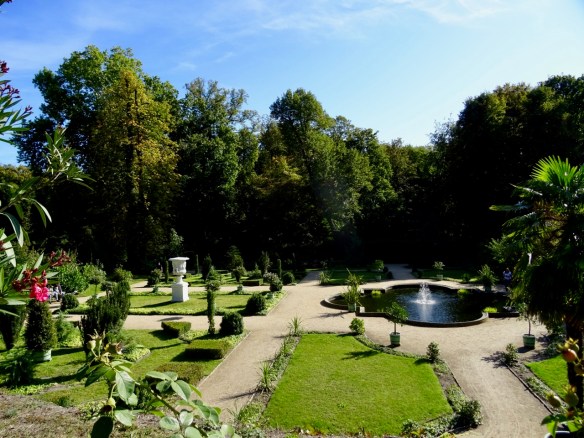
 We still had a bit of time before our palace visit so we walked down to the gardens. The layout here is reminiscent of Versailles in France, only on a smaller scale.
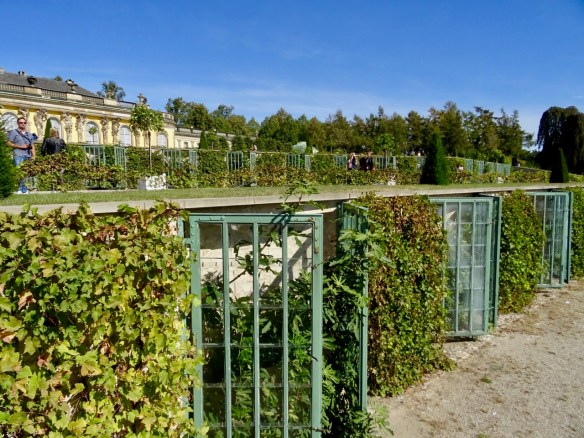
  All the terraces have these nooks with glass doors that can close when cold to protect the plants. Frederich loved to garden and grow fruit trees and grapes.
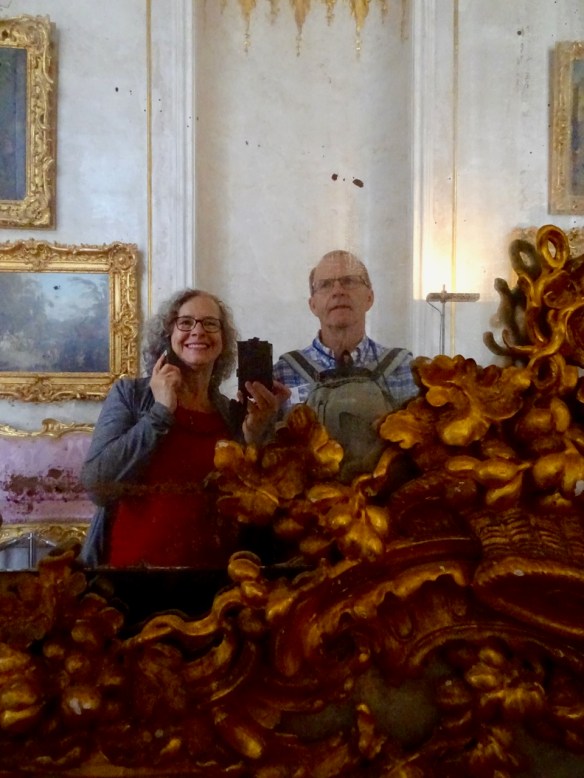
 We enter the palace and take this selfie in the first room. It contains artwork and is an entrance hallway, not very wide at all.
 The palace only contains twelve rooms. They are all connected by doors in a straight line that lead from one room to another. The room below is panelled in wood with inlaid botanical designs. They are very intricate.
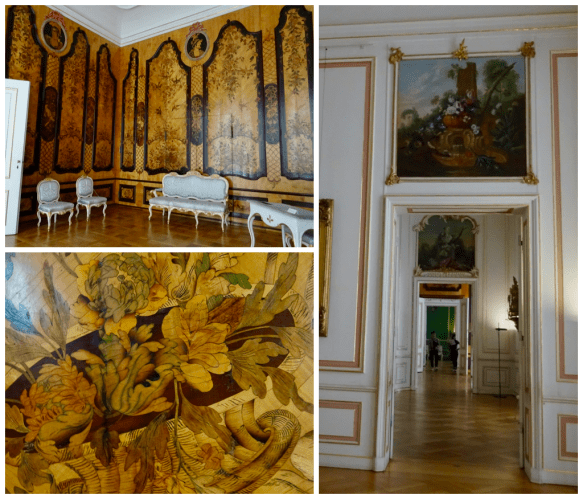 We walk through the rooms, each seeming to be a bit more elaborate than the next.
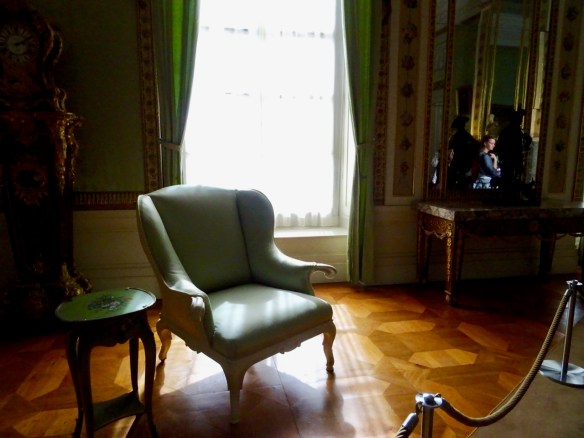
 The green room above was Frederick’s study. He suffered from asthma, gout and other ailments and he often slept in the green chair below as it was too difficult to lie in a bed. He died in this chair when he was 74.
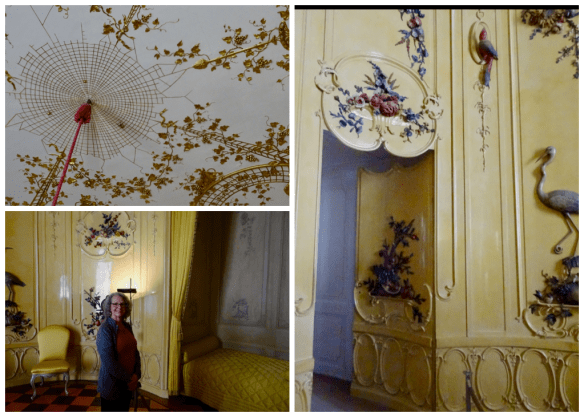
 Frederick loved nature and the palace was decorated with botanical themes. The palace was his refuge and he lived there from April to October. Sanssouci is from the French “sans soucci”, which means “without worry”. Frederick was married but lived separately from his wife. He only married because his father threatened him with imprisonment if he did not comply. His father was very strict and made his Frederick’s life miserable. He had a miserable childhood as his father thought him effeminate and tried to change him. Frederick was gay and surrounded himself with male friends and companions at Sanssouci. Women were not welcome there. The yellow room below has raised carved decorations, and a sleeping nook for the bed, as did all the bedrooms. Notice the spiders on the ceiling decoration.
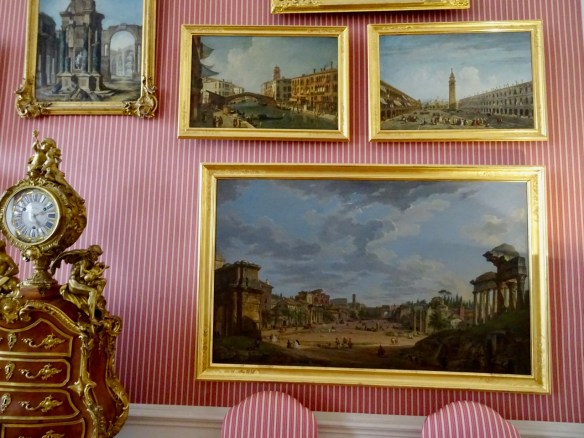
 Frederick was unable to travel to Rome and Venice but his palace had many paintings of these cities, which he greatly admired. I think how lucky we have been to visit these cities.
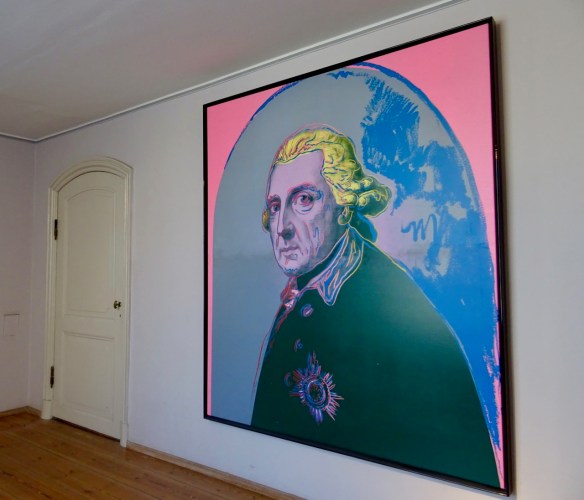
 As we exit the palace there is a huge painting of Frederick the Great by Andy Warhol. It is quite a dramatic change from the other artwork we have seen here.
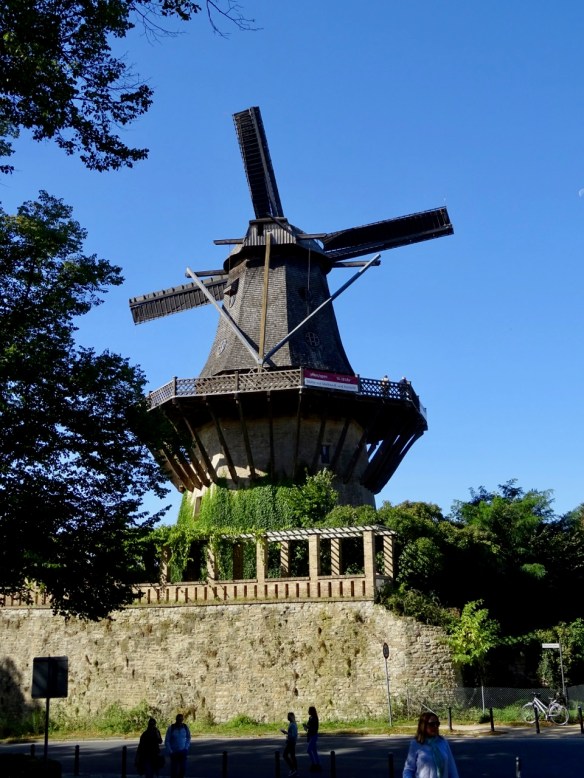
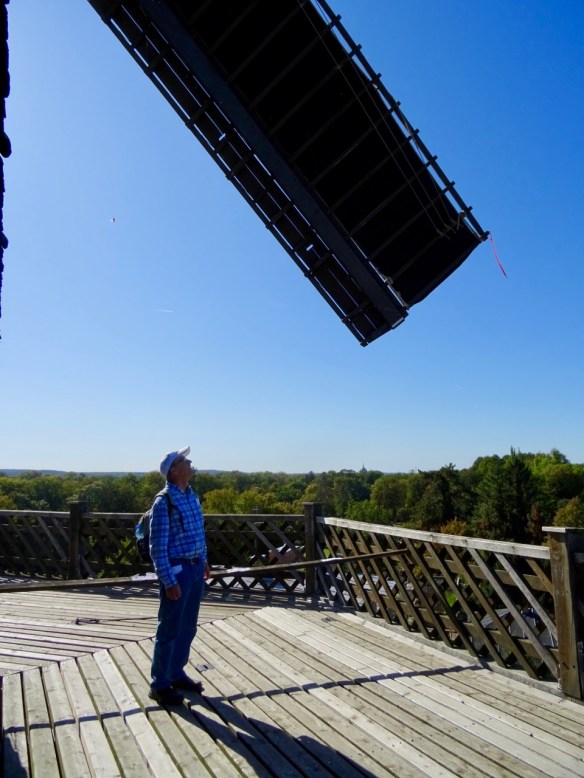
 We climb the interior of the windmill and step outside to check out the huge blades.
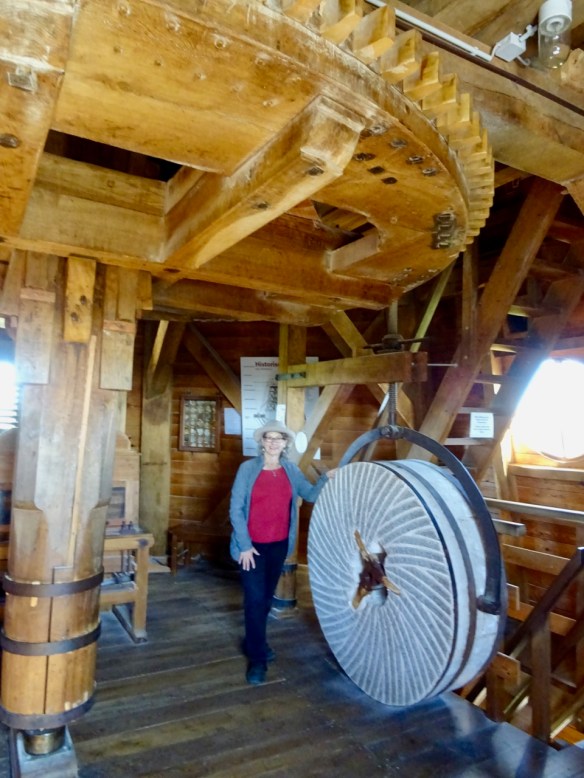
 This is still a working windmill. We are amazed at the size of the wooden wheels and cogs.
 We walk through the park with its gardens and fountains towards the Orangerie.
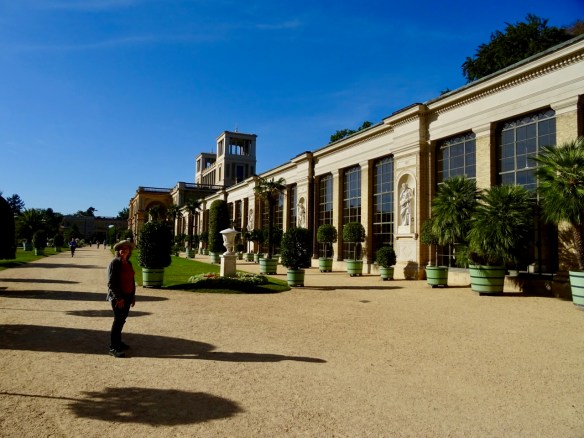
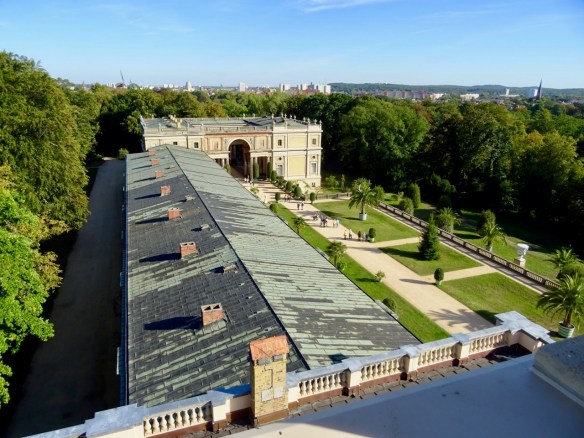
 Wow! We have never seen an orangerie this large. It is enormous! This photo shows one wing and the entrance behind me. There is another wing just as long on the other side of that entrance. This Orangerie was built by Frederich William IV in 1851-1864. It is 300 meters long.
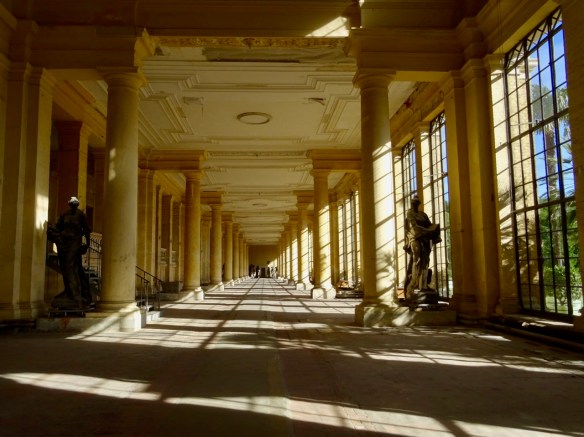
 Looking inside one of the wings of this huge orangerie. This is where all the potted plants that would not survive winter temperatures are kept. Like the potted plants in the photo above,
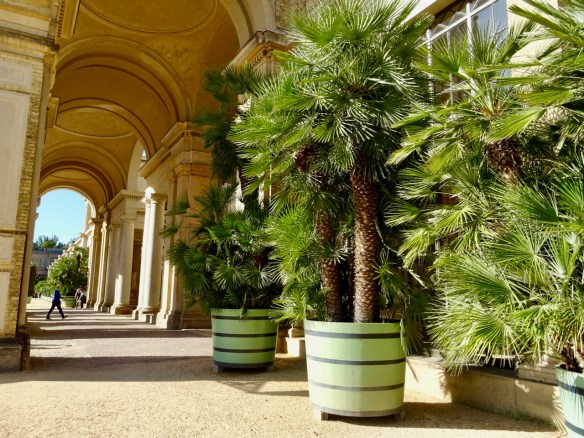
 Some of the plants are huge. These large potted palms definitely need a fork lift to be moved. No idea how they ever transplant them when needed? The pots are almost as tall as I am!
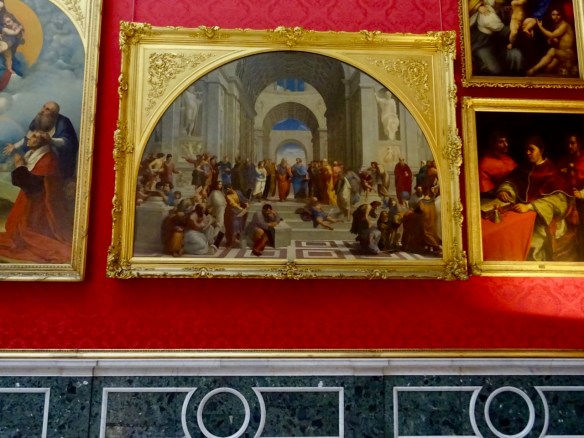
 We are surprised to find more furnished rooms and another art gallery in the Orangerie. The Raphael Hall has over 50 copies of Renaissance paintings.
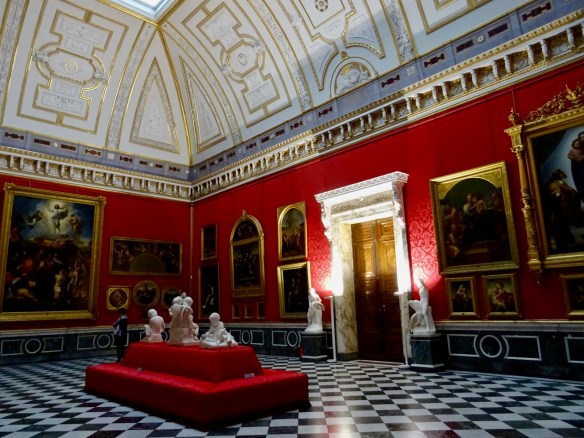 We saw the original of this painting in Italy at the Vatican.
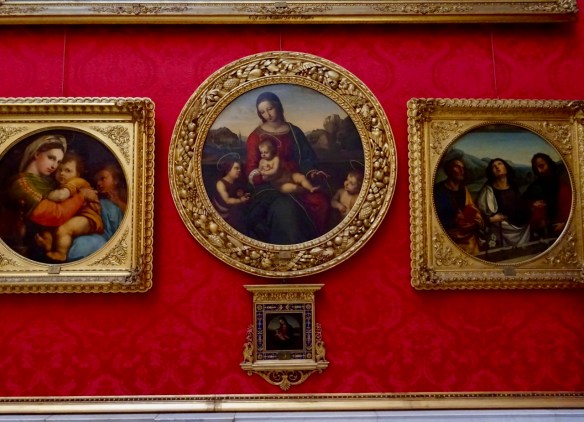
 Do you recognize the tondo by Raphael that we saw at the Gemäldegalerie earlier this week? Interesting how copying famous artworks was such a common accepted practice. Today I think it would be called forgery.
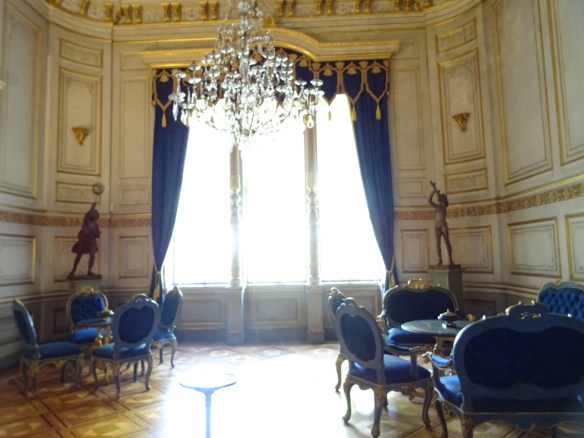
 Another room in the Orangerie Palace.
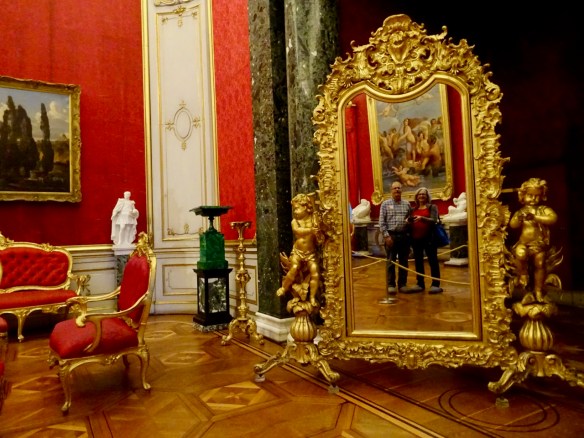
 And another selfie reflection in a very ornate mirror. Notice our big slippers!
 These are some of the stairs we climb to the top of the Orangerie.
  And more stairs…
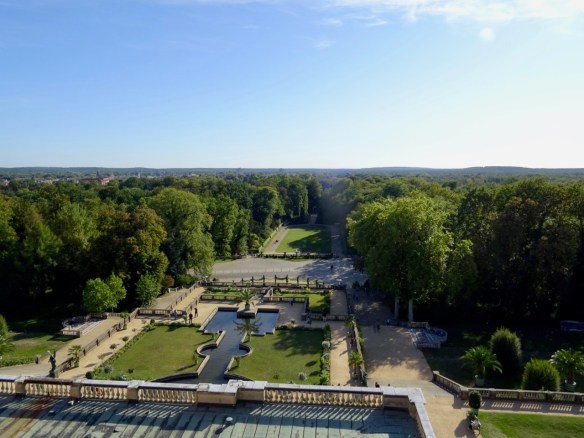
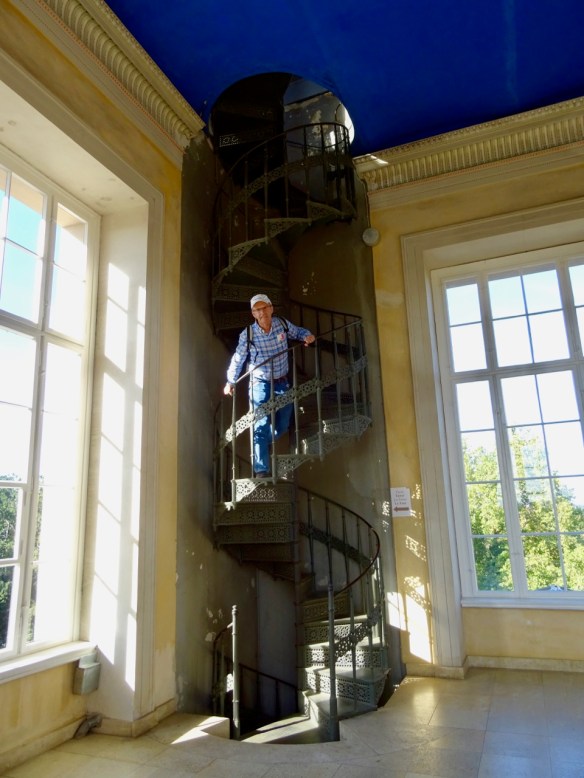 to get this view.
 There is the East wing of this enormous building.
 That dome way in the distance is another palace. The New Palace, built by King Frederick, is the largest and most impressive complex at Sansoucci, but it is way too far of a walk for us today and the park is closing soon.
 In front of the Orangerie.
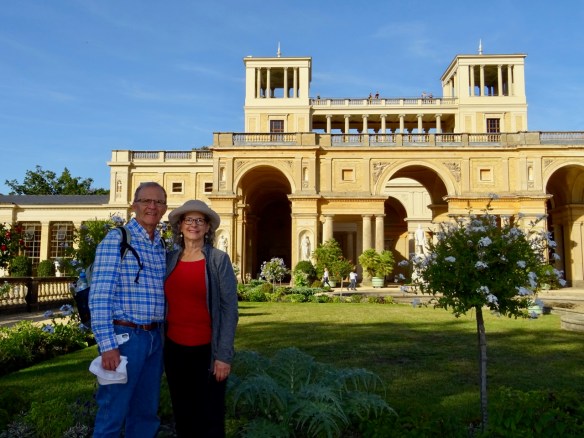 Every path here has a view at the end of it…something to entice you to walk and explore.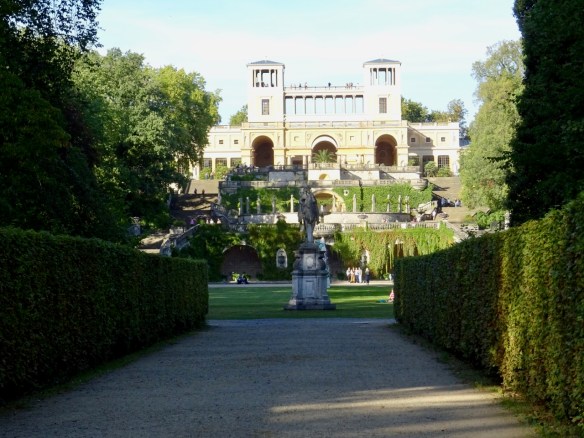
 We find the Chinese House which Frederick had built to enhance his flower and vegetable gardens and we can imagine elaborate picnics here in the summer. We make our way to the main gate just as Sanssouci is closing and catch the metro home. We had a beautiful warm day for our time here. A perfect day really.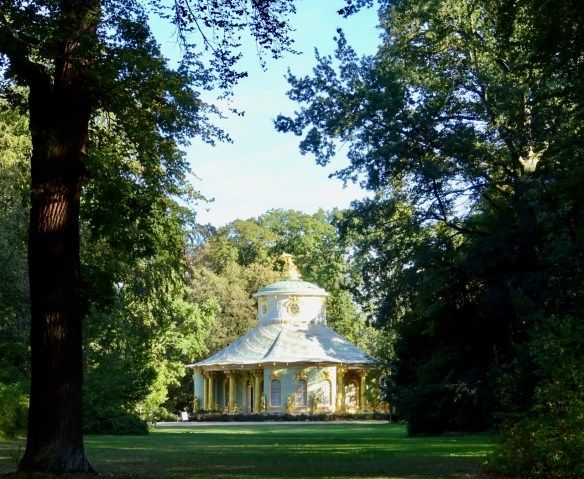
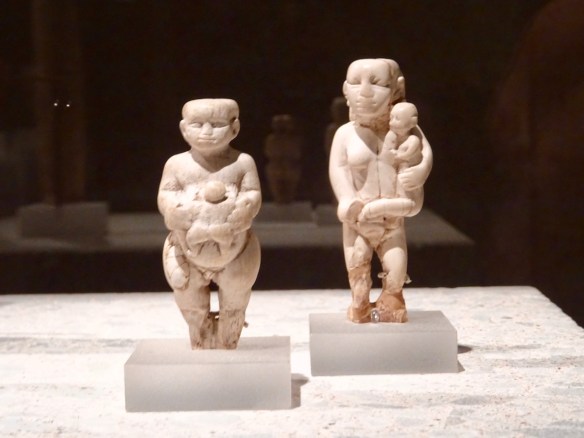
 I am often most drawn to small items in these exhibits, like these tiny ivory figures of mothers and their children, only about 3-4″ tall from 3000 BC. I think they are incredibly detailed and beautiful.
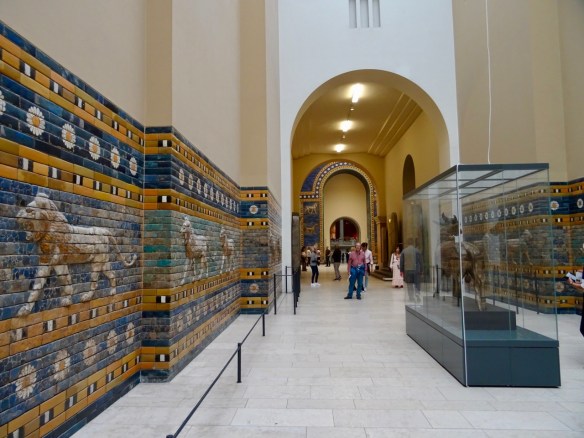
 This is the processional way which led towards the 6th Century BC Ishtar Gate of Babylon. It is very impressive.
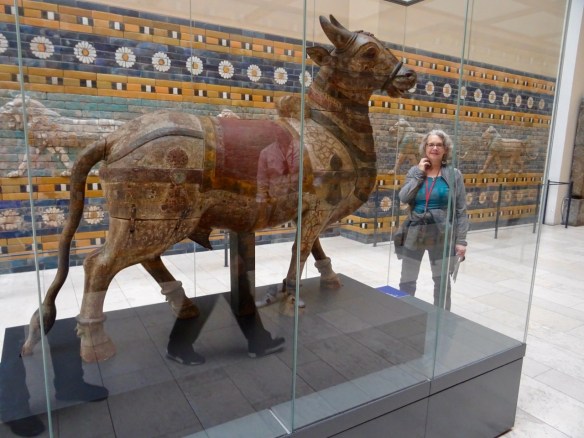
 I loved this wooden sculpture.
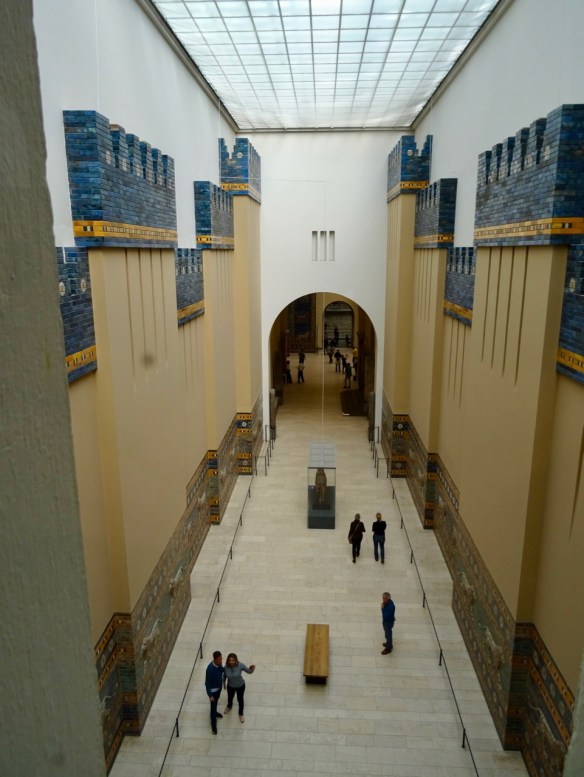
 Here is another view of this approach that gives a better idea of the size..
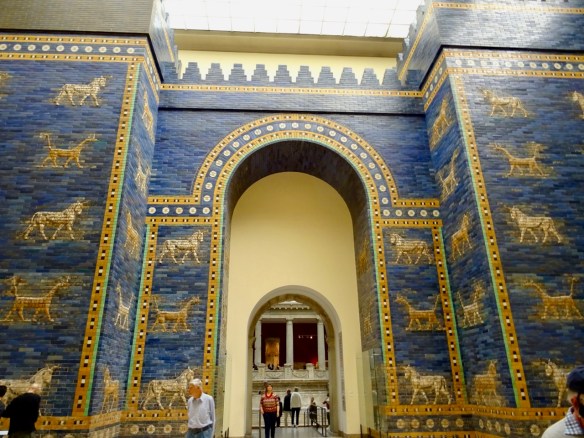
 The reconstruction of the gate has original tiles around the animals. This is only a part of the gate, as the museum ceiling would have to be more than twice as high for the whole gate to fit.
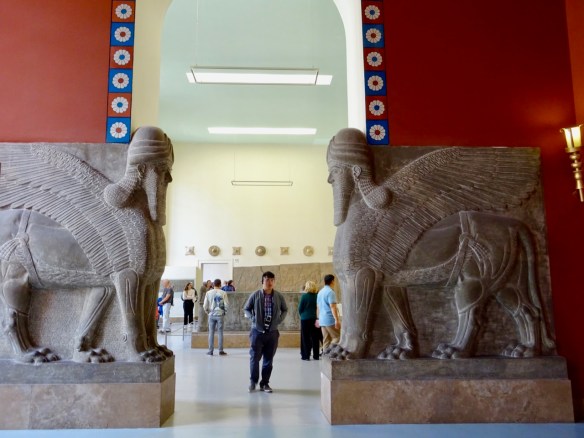
 These two creatures guarded the Assyrian King in 883 BC. These are casts from the originals in the British Museum, which were each carved from a single piece of alabaster. No idea who the guy is…it was impossible to get a photo without some stranger in the middle of it!
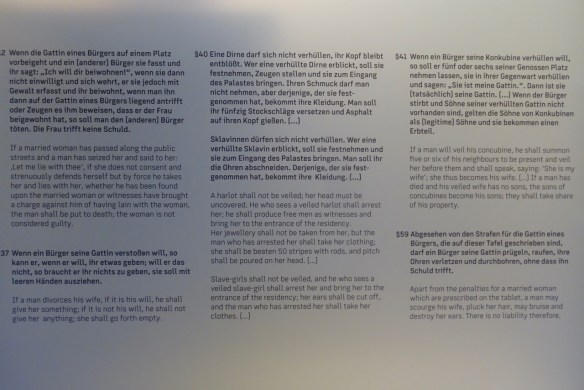
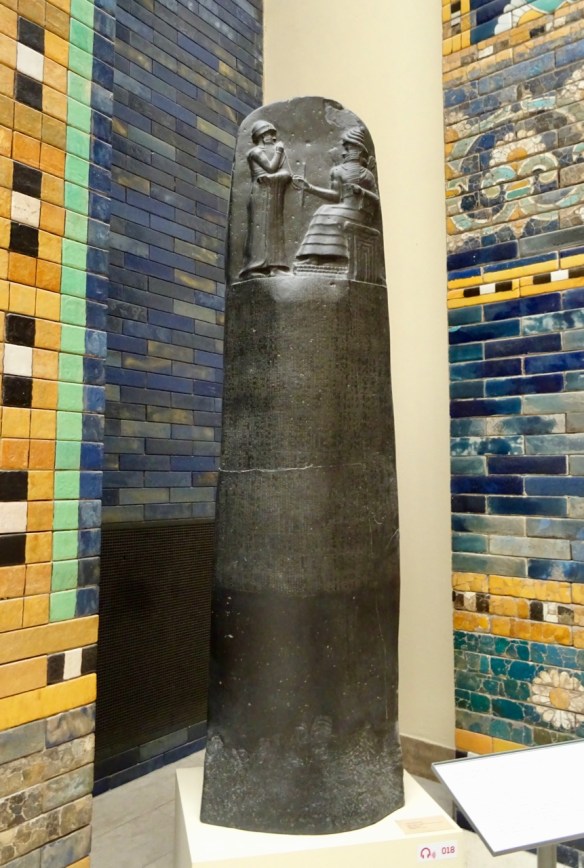
 Times were tough for women. Take a peek at these laws from 3000 years ago.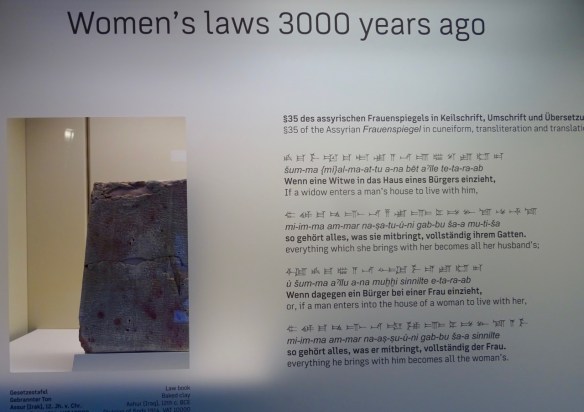
 This close up of one of the lions from the Ishtar Gate shows how the original pieces of tile were reassembled.
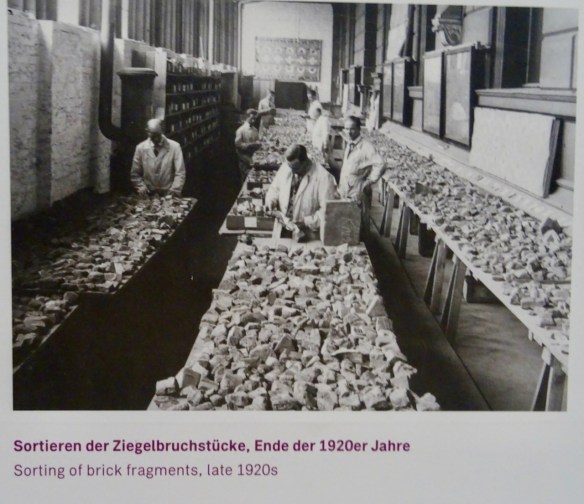
 This is the condition of the tiles when they were unearthed. Can you imagine trying to piece these thousands of bits together?
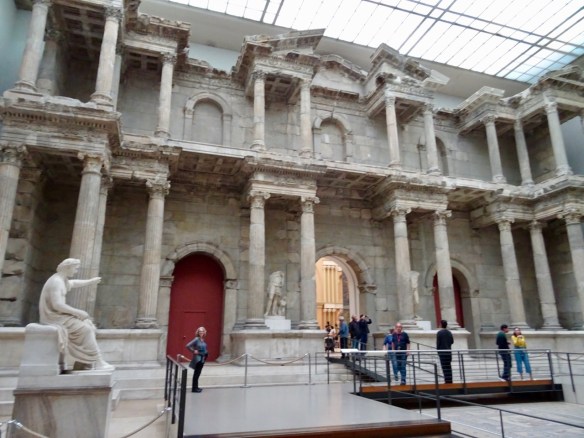
 Another huge structure in the museum is the 2nd Century AD Market Gate from Miletus. This is the largest historical monument that has been reconstructed indoors. It is about 30 meters wide and 16 meters tall. This grand structure was only the entrance to a marketplace, although it looks more like a palace.
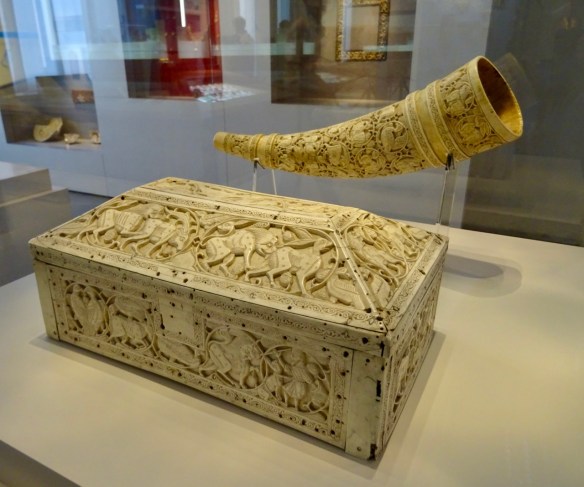
 This ivory box and horn were covered with intricate carvings. There were so many things to see and marvel over.
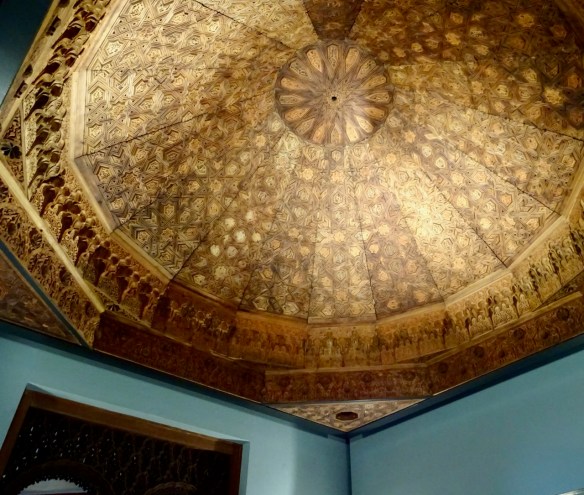
 This intricately carved ceiling is from the Alhambra in Spain. We saw other ceilings like this when we visited there a few years ago.
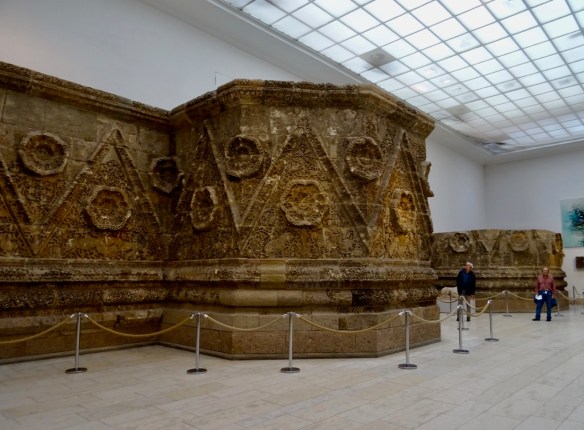
 The 8th Century Mshatta Facade is 33 metres long and 5 metres high with two towers and part of a central gateway. This
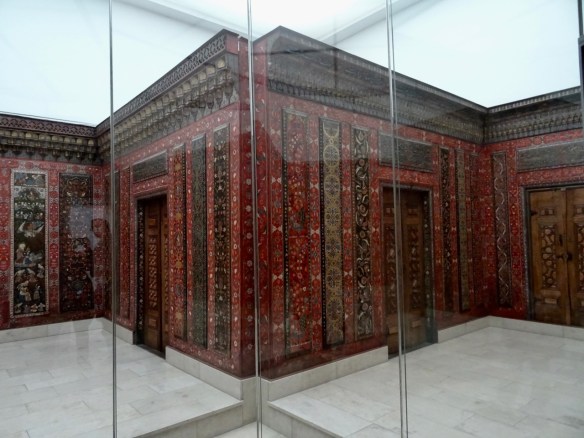
  The Aleppo room was built as a reception room by a wealthy Christian merchant in Aleppo. The paintings Illustrate Islamic floral and geometric designs, scenes from the Old and New Testament, and Persian book illustrations.
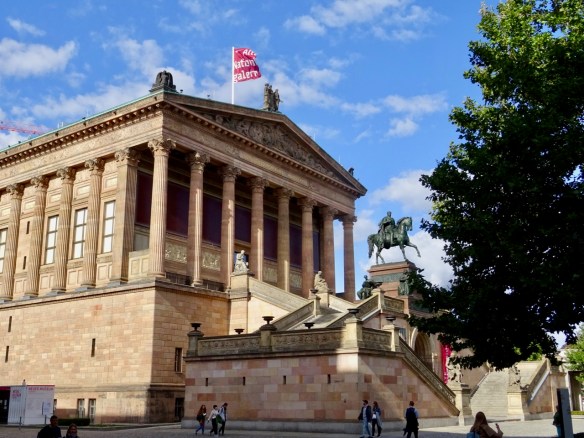
 A view of the Alte National Gallery we visited yesterday.
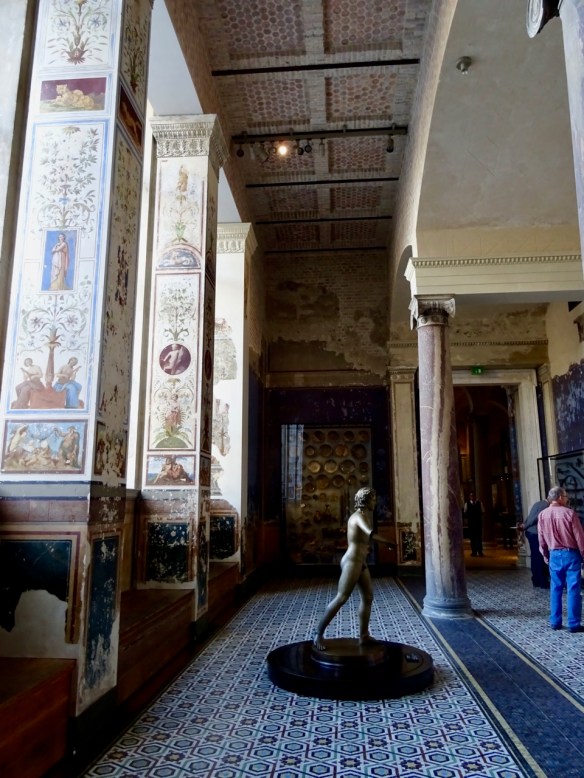
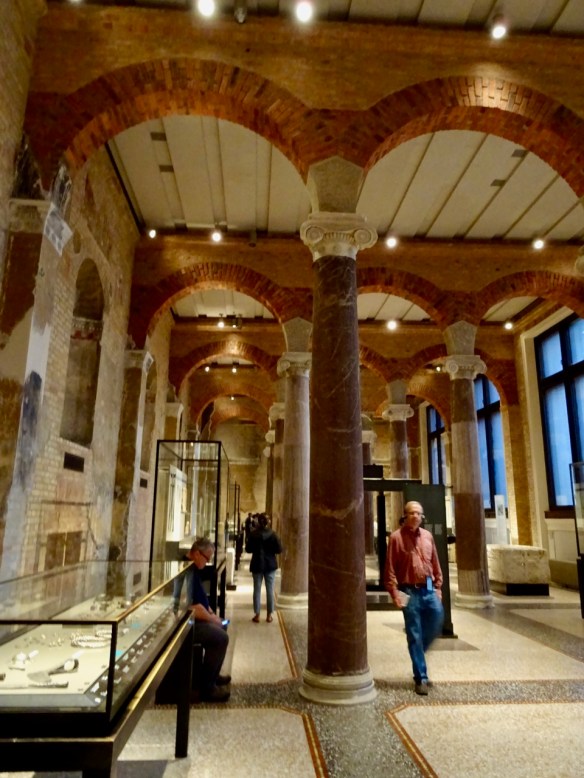
 Next we visit the Neues Museum. This building suffered severe damage during the Second World War. In 2003 work began to restore the building without erasing the traces of past damage. We see evidence of this damage throughout the museum. Note the bullet and shrapnel holes in the pillars…
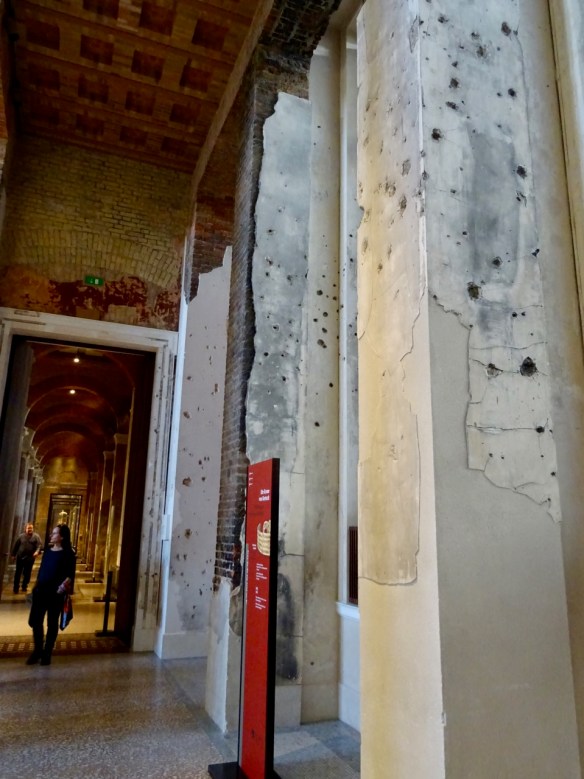 and damaged areas in this room.
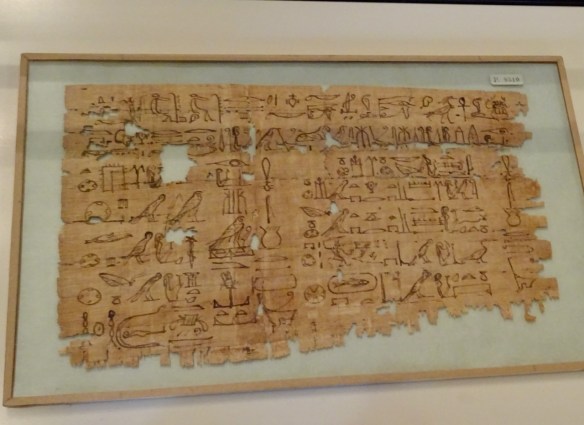
 There were many pieces of ancient papyrus from the 4th Century BC. I find it astounding that these fragile documents have survived.
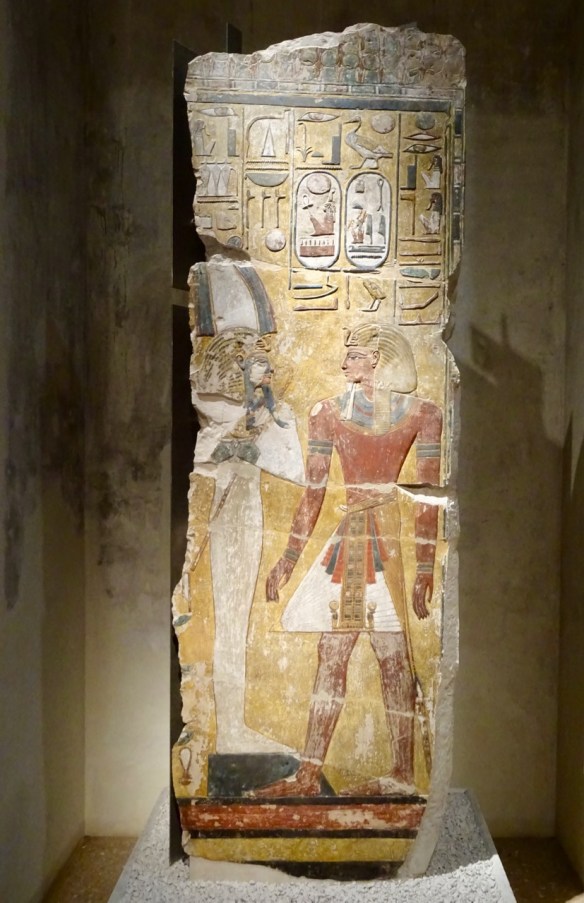
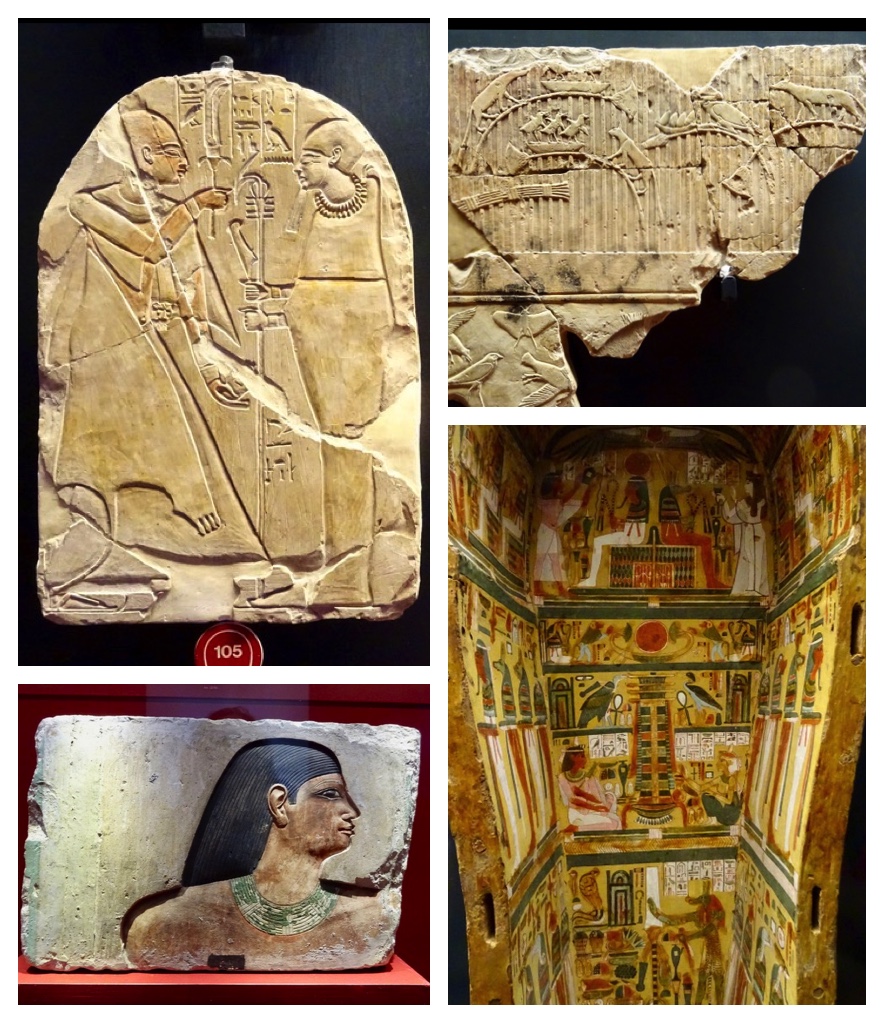
 Original paint remains on some of the Egyptian sculptures from 1290 BC!
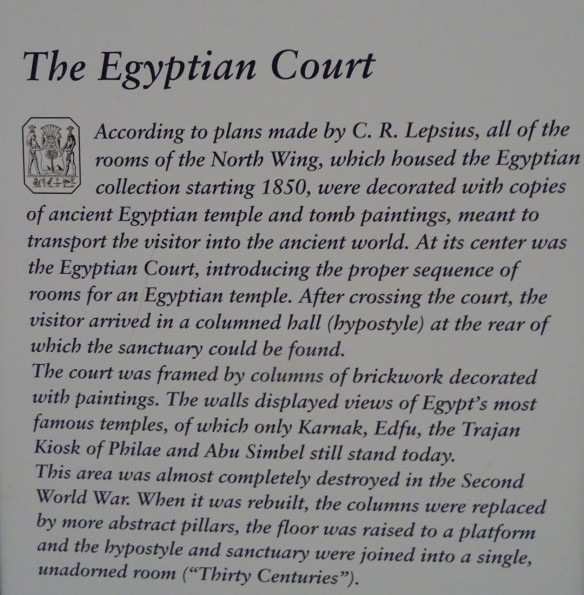
 This is a room that was heavily damaged during the war. These three panels are all that is left of twelve panels that were on the walls of this courtyard. We actually visited the three Egyptian temples depicted on these walls during our trip there in 2011.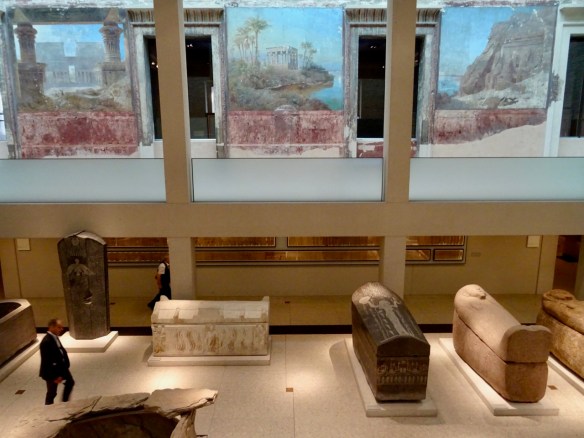
 There are so many rooms filled with so many treasures. It can be a bit overwhelming.
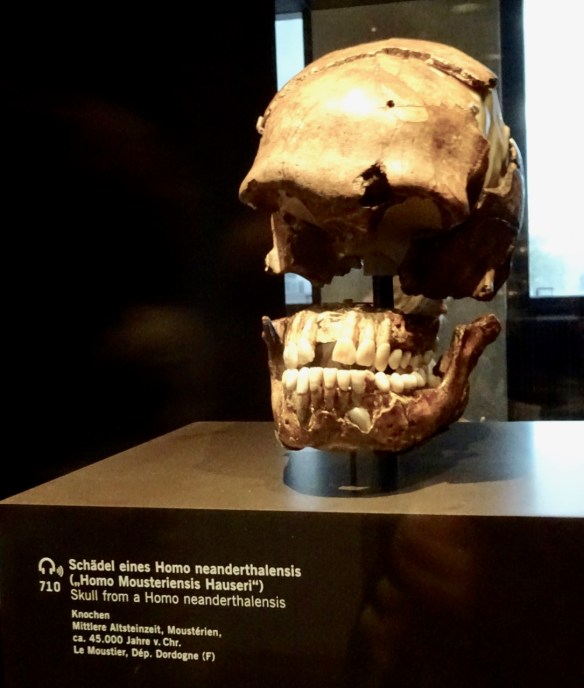
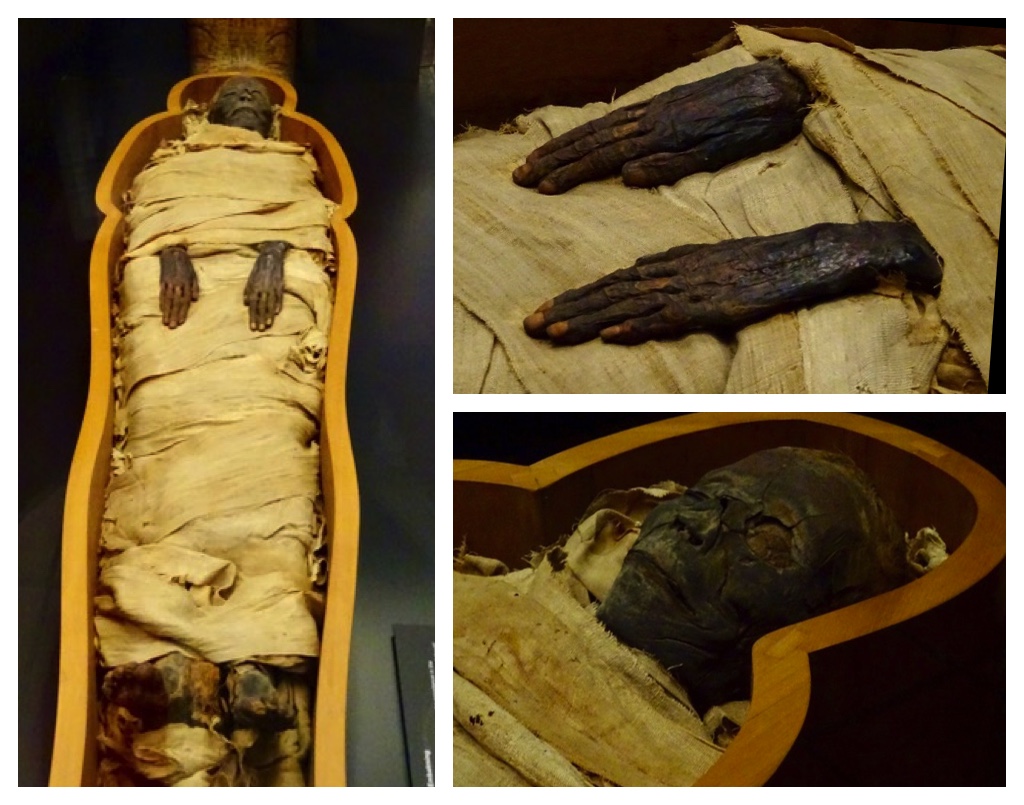
 I thought the teeth on this Homo Neanderthalensis were astonishingly white and cavity free!
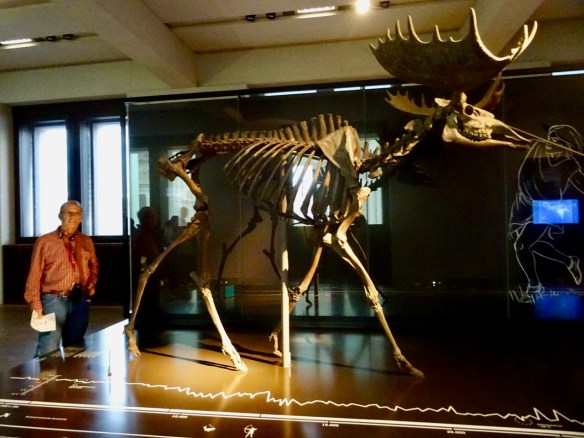
 This elk from 10,700 BC was discovered during construction of one of the Berlin underground subways in 1956.
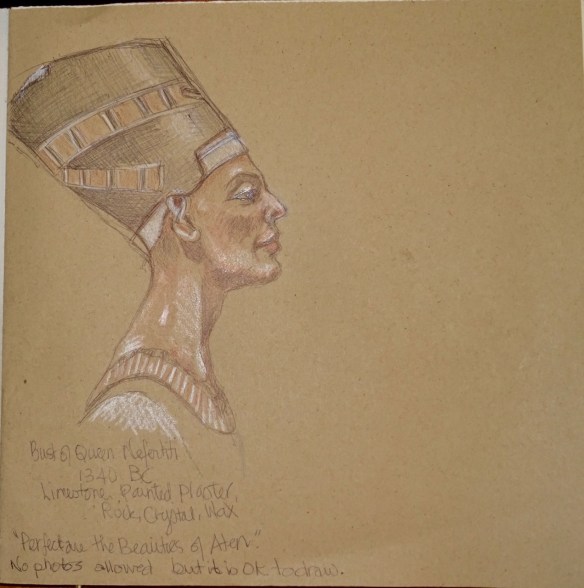
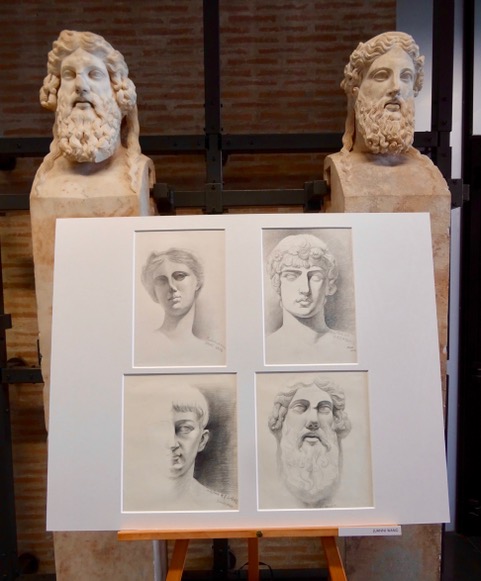
 I forgot to post these sketches form the Altes Museum yesterday.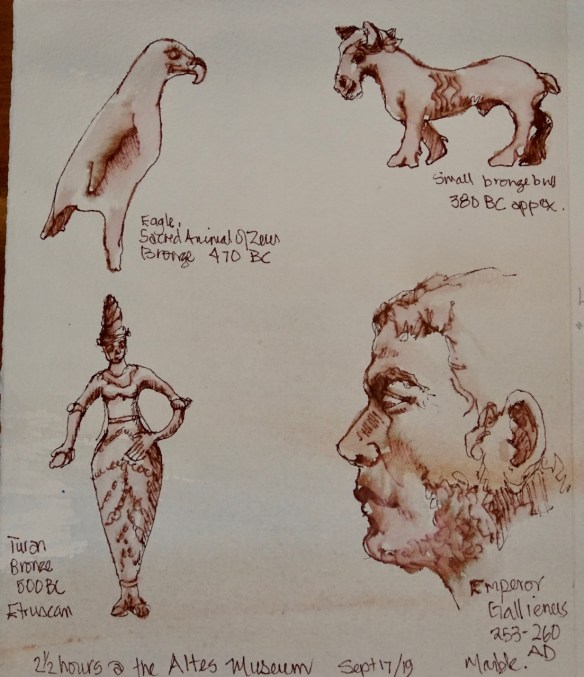
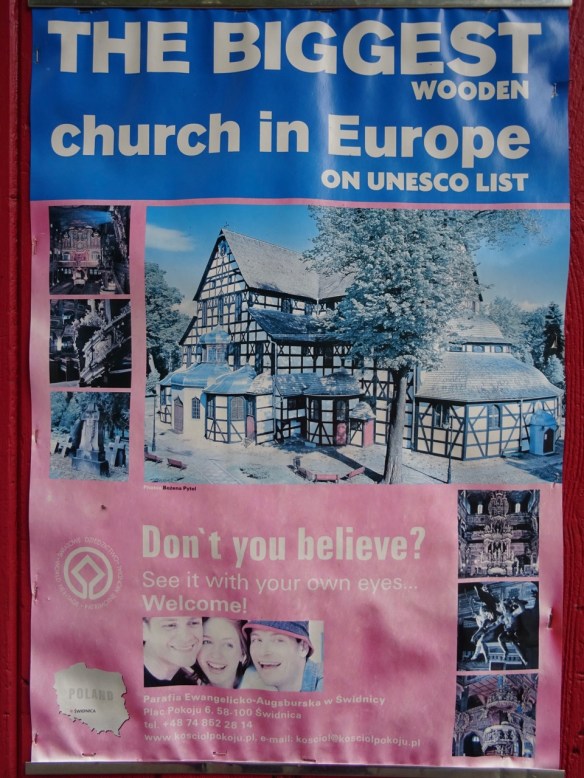
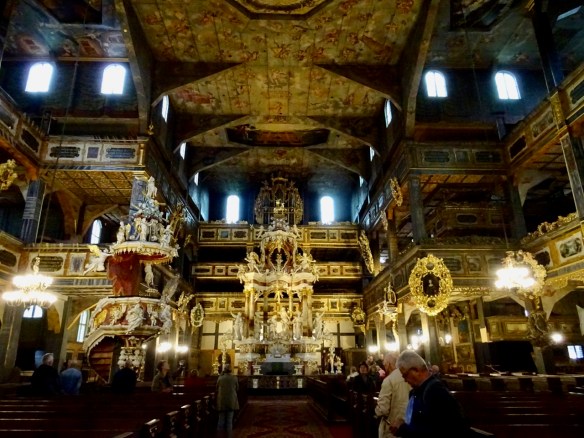
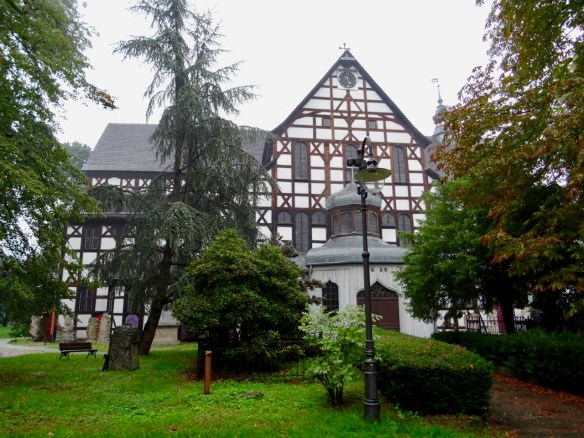 We walked into this church and we were amazed at the size and ornateness of the interior. This photo is looking towards the altar. The walls and ceilings are decorated with painted panels added after the construction of the church was completed in 1657.
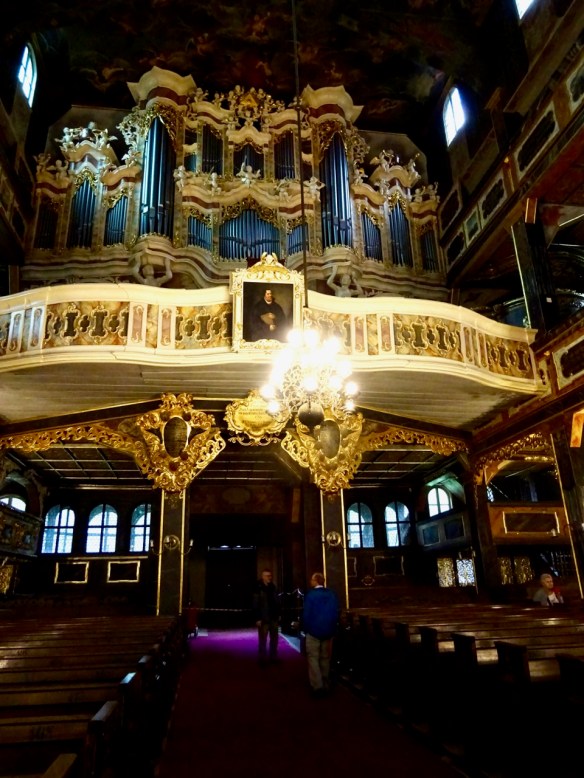
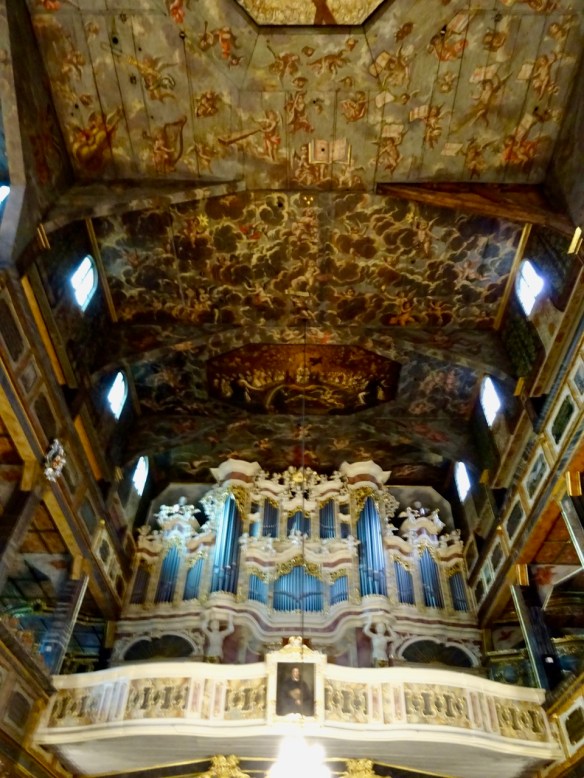
 The back wall with the organ.
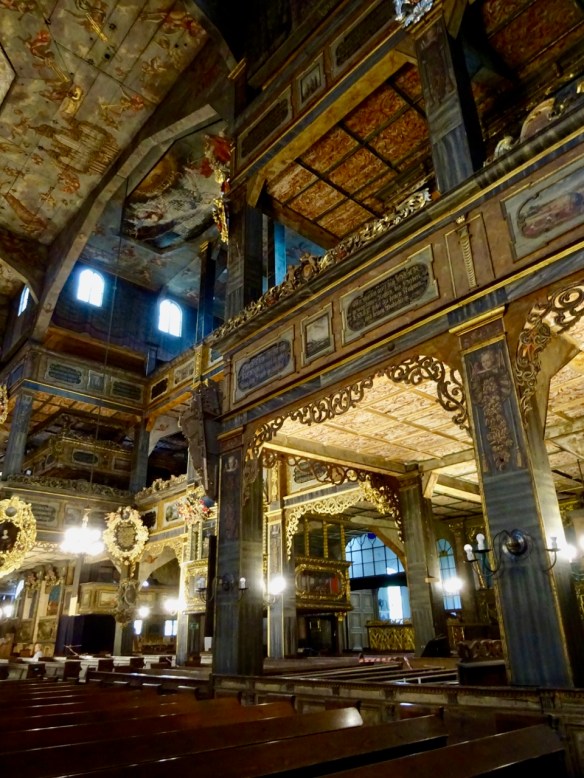
 A view of one of the sides of the church with it’s two tiers of balconies. The spaces between the wall timbers were filled with clay and wattle.
 The pulpit is extremely ornate.
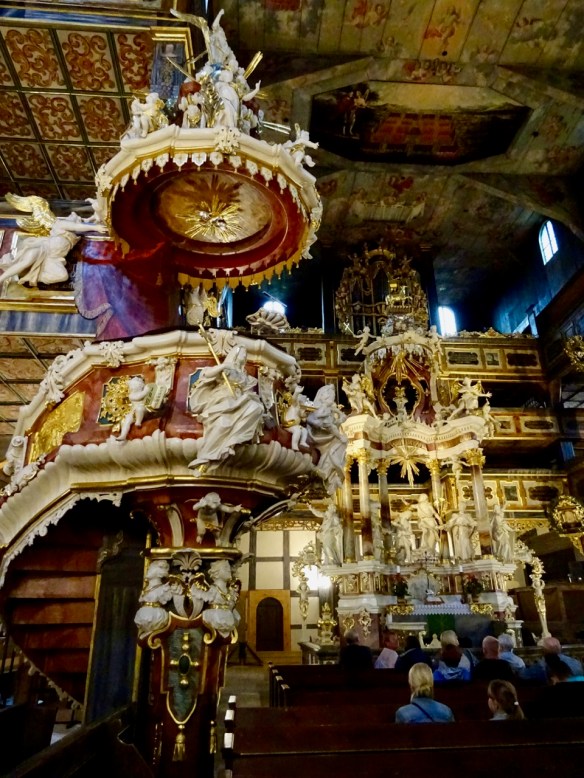 A view of part of the painted ceiling.
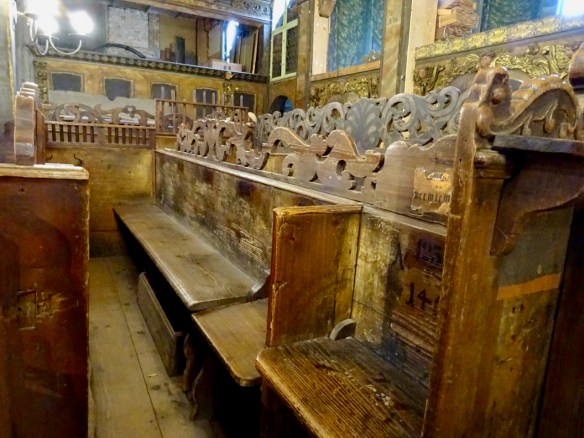
 I loved the old pews with their carved backs and worn seats.
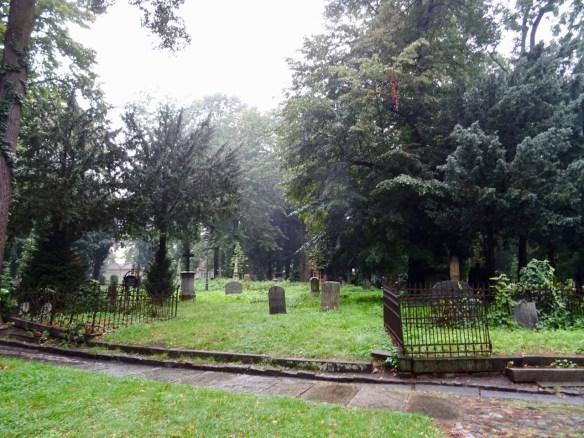
 There is a cemetery surrounding the church.
 As we walked back to our car we passed this interesting door. Makes me curious about who lives here.
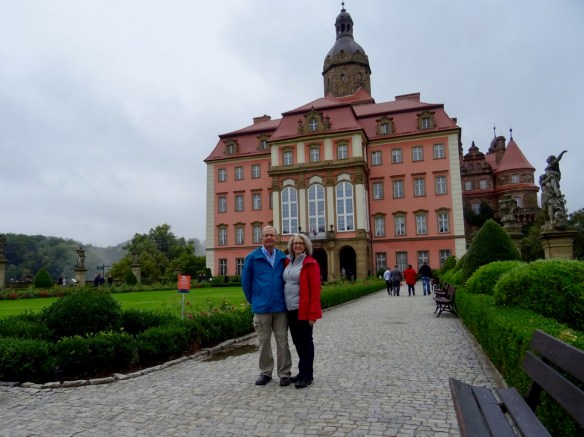
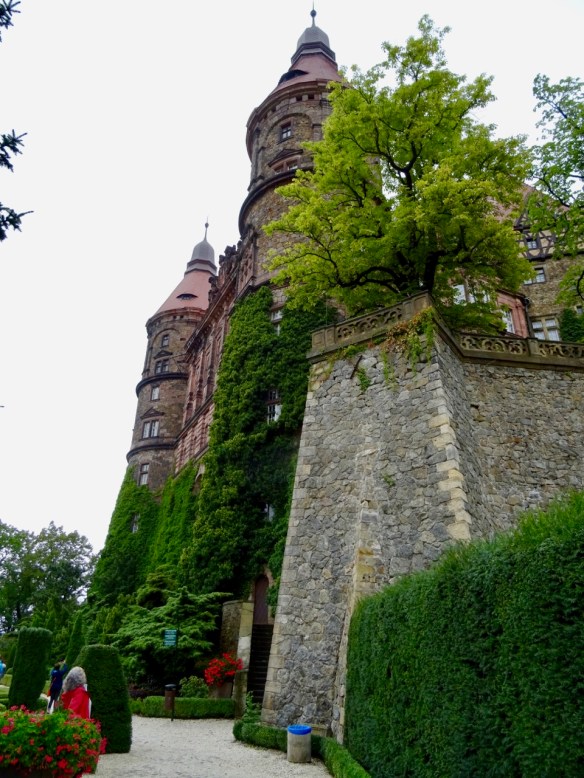
 Next stop on our day trip is the Książ Castle, the third largest castle in Poland which dates from the 13th century.
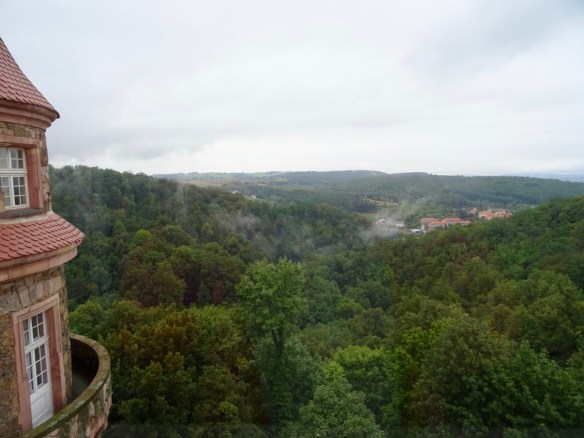
  One of the the views from inside the castle.
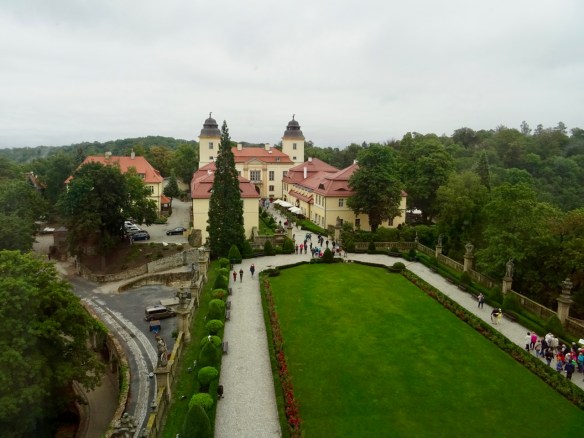
  The entrance buildings and front grounds of the castle.
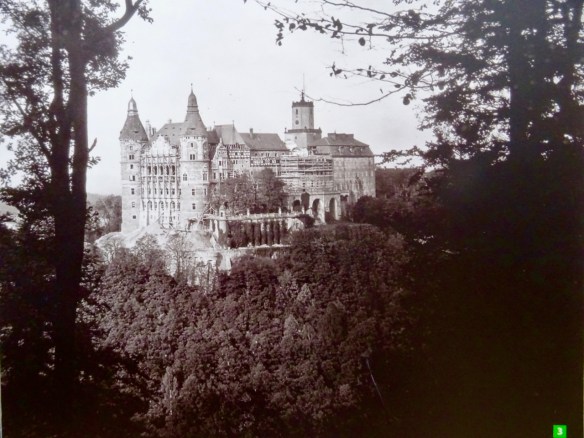
 An old photo showing the castle atop an impressive rock cliff. It has been destroyed and rebuilt and expanded various times and in different styles (from Gothic to Baroque and neo-Classical). The latest family to reside there, was the Hochberg family, one of the richest and most influential families in Prussia. In the 14th century they transformed the original defensive castle into one of the most beautiful residences in this part of Europe. The Hochbergs lived there for many generations, until 1941, when it was confiscated by the Nazis.
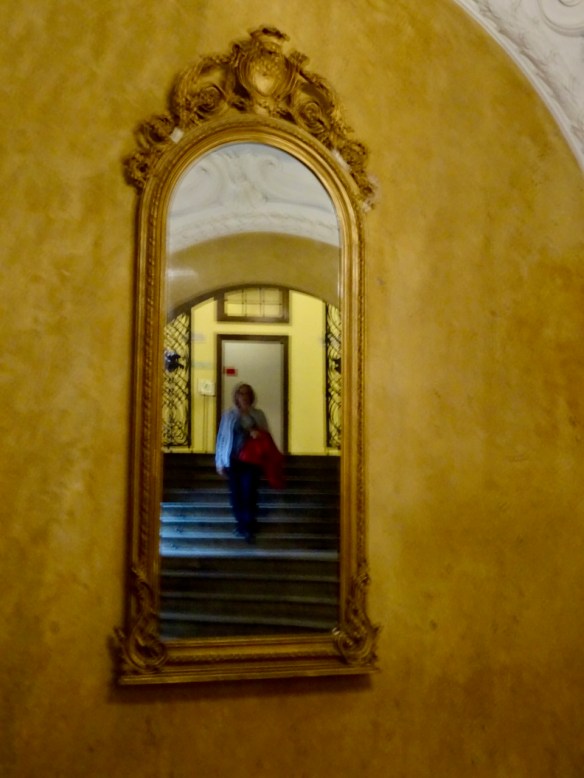
 Bob caught my reflection in this old mirror.
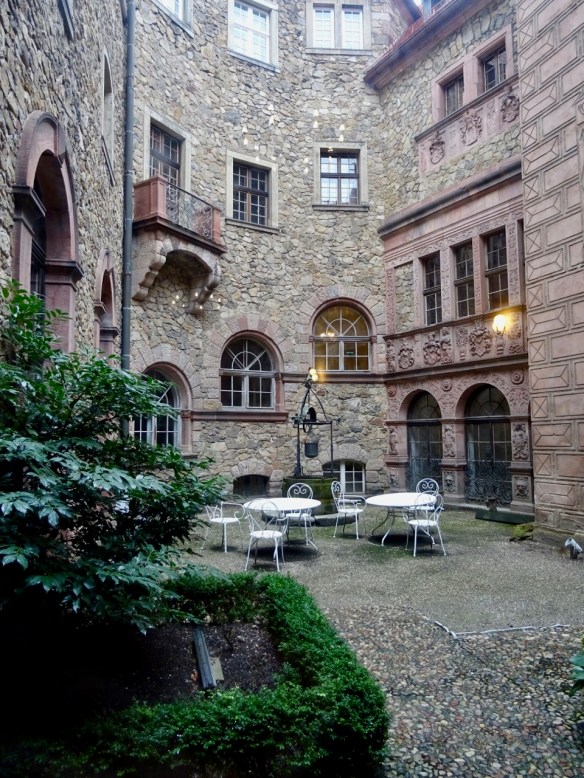
 The Black Courtyard is decorated with the coats of arms of the castles many owners.
 We walked through many halls, some simple…
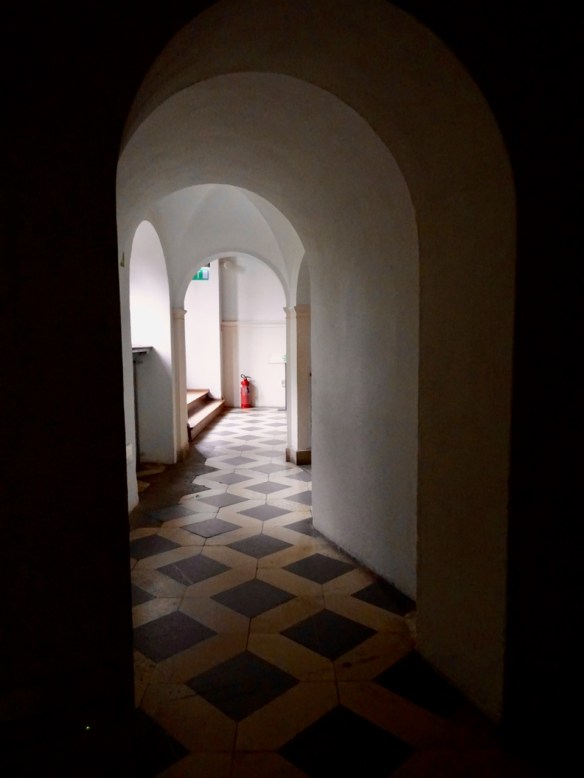 and some very ornate. I suppose a castle with over 400 rooms needs lots of hallways and stairs, and we did climb lots of stairs.
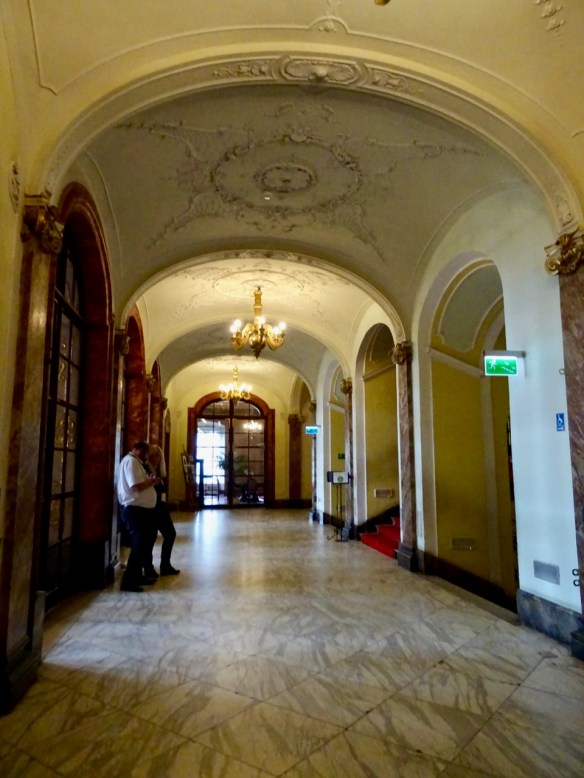 Another view out one of the castle windows of the Chestnut Terrace with four large chestnut trees.
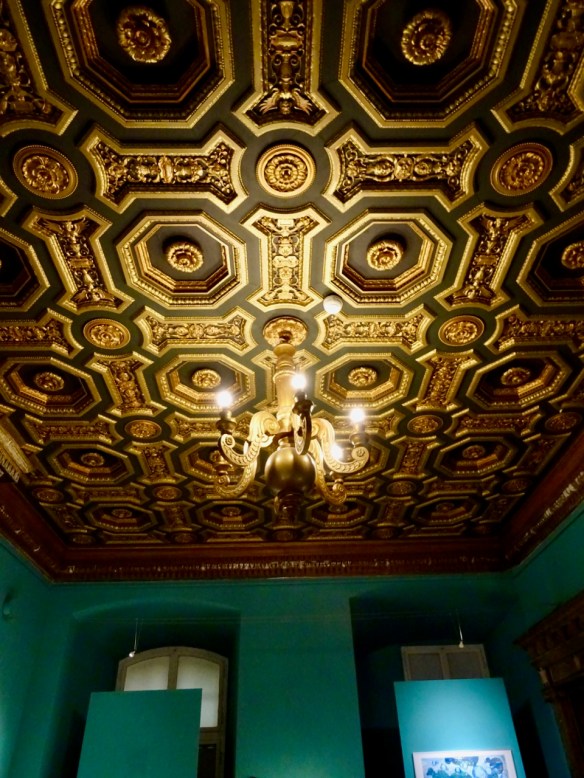
 As always, we must remember to look up. So many of the ceilings are ornately decorated.
 There was an exhibit of blown glass in some of the rooms and another view down one of the many hallways.
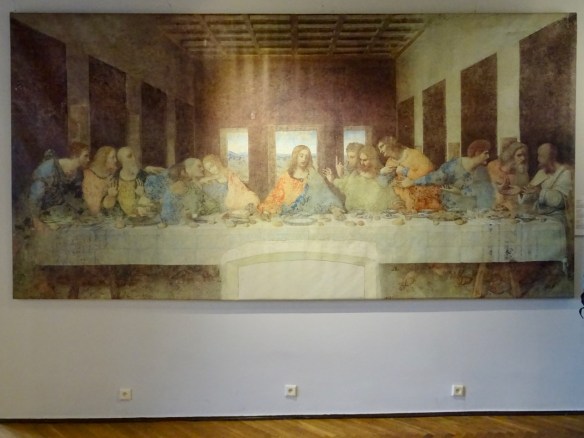
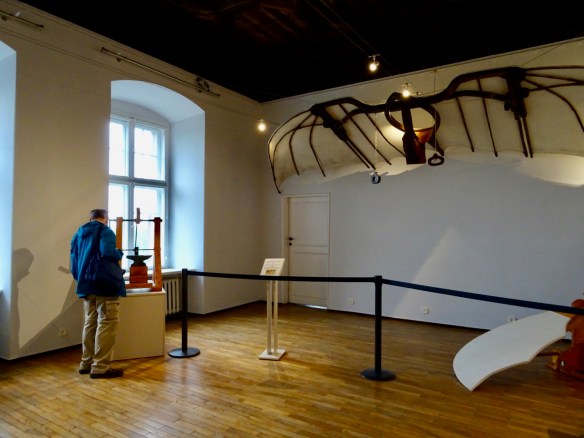
 We weren’t able to see the Last Supper when we were in Italy two years ago (we didn’t know you had to buy tickets far in advance) but there is a Da Vinci exhibit here in the castle with a replica. Not as good as the real thing but interesting none the less.
 There were replicas of many of Da Vinci’s paintings, including the Mona Lisa, and models of some of his inventions.
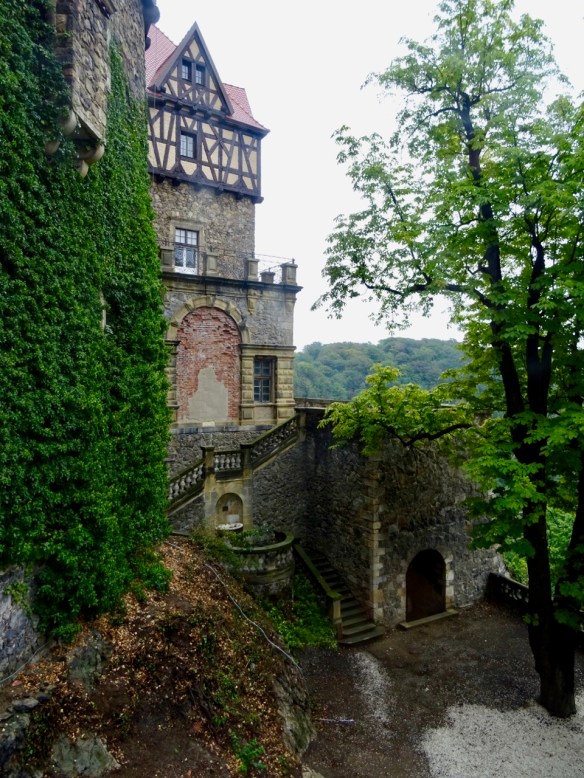
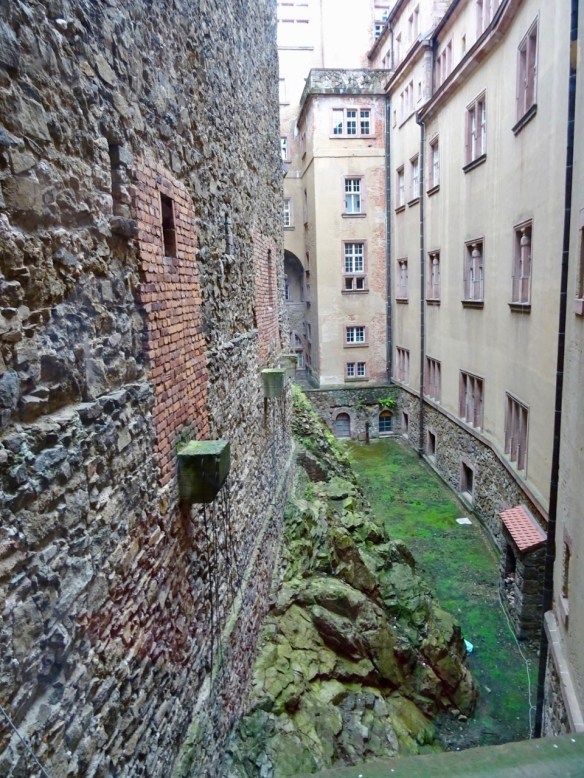
 Looking out one of the windows we get an idea of some of the renovations and reconstruction that has taken place over the centuries. It is quite a convoluted building.
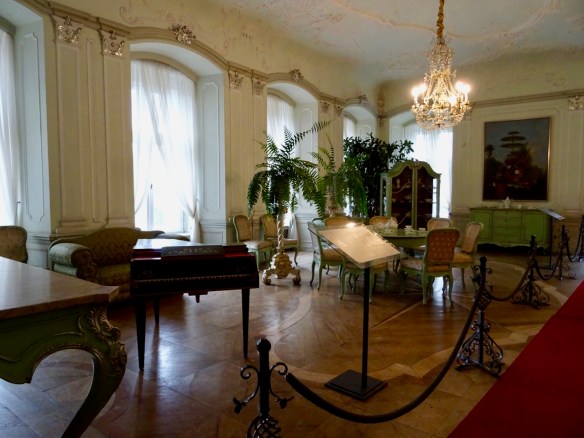
 One of the restored and decorated rooms. The Nazis stripped the castle of its furnishings and paintings and it is just now being restored.
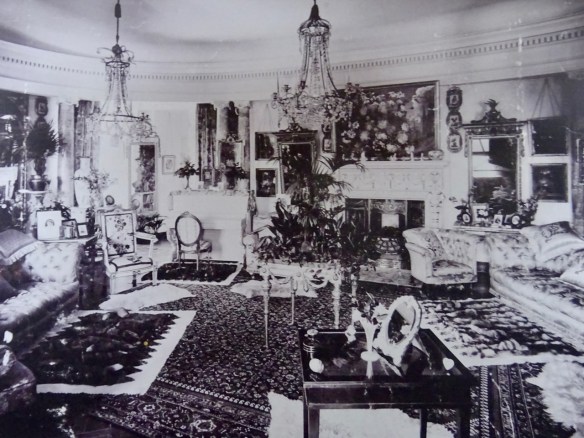
 A photo showing a much more elaborately decorated room than we see today.
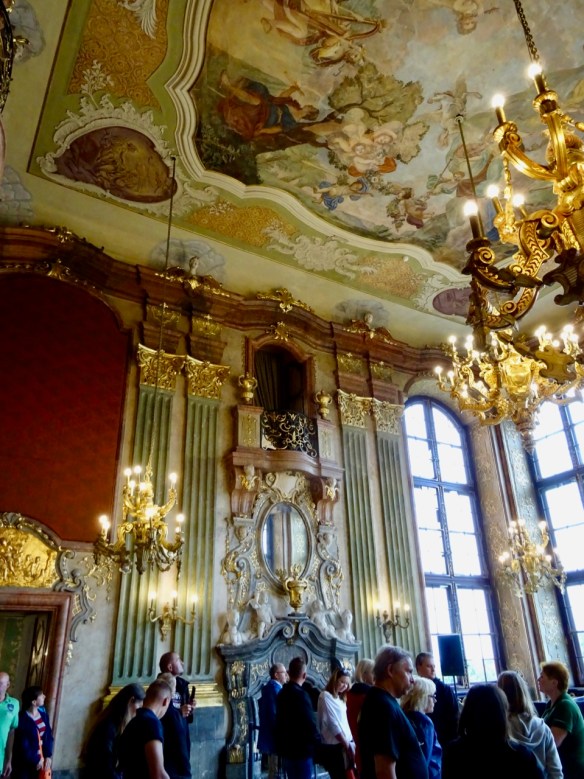
 The Maximilian Room has been restored to its former glory. There is a balcony on either side, one for the prince’s apartments and one for the princess’s apartments, that overlook this elegant room.
 And what castle would be complete without a Japanese influenced room. They were very popular.
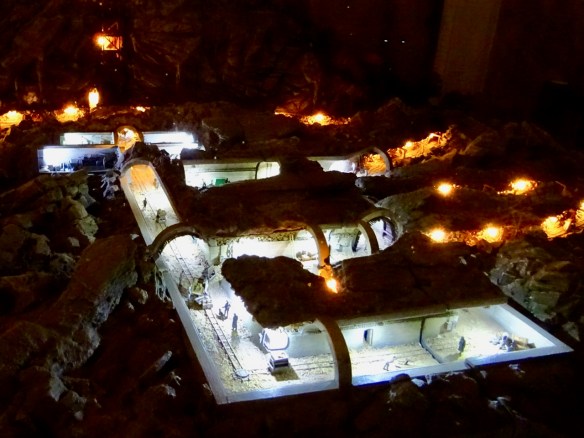
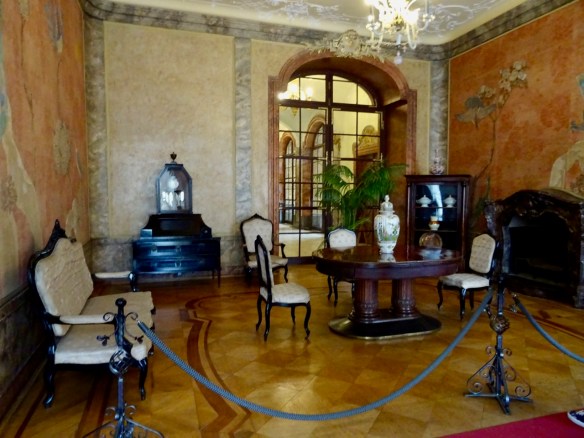 “The castle became an important part of the
  As we finish the tour of the castle, we are led out to the gardens and terraces surrounding the castle.
 The grounds are beautifully maintained.
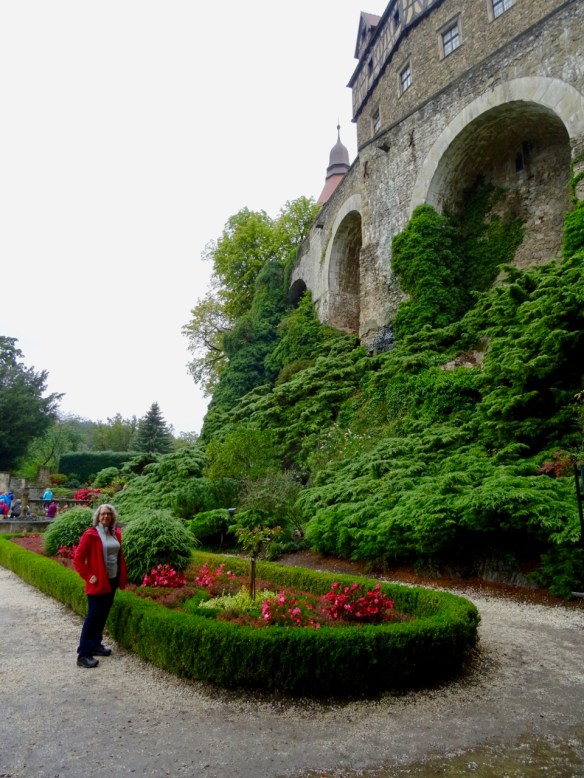 An interesting view of the castle.
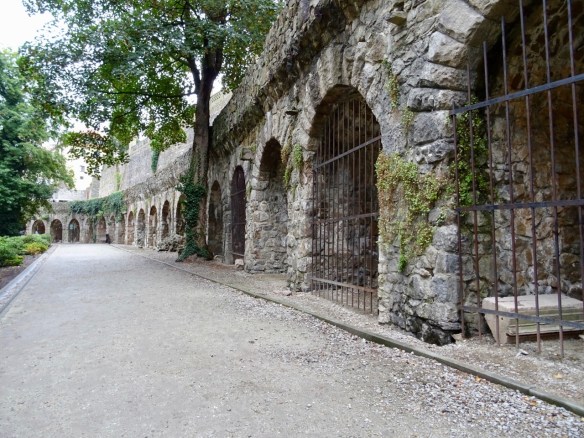
 We have no idea what all these small arched nooks with their iron grates are.
 As we walk back to our car we pass a pond with blooming water lilies.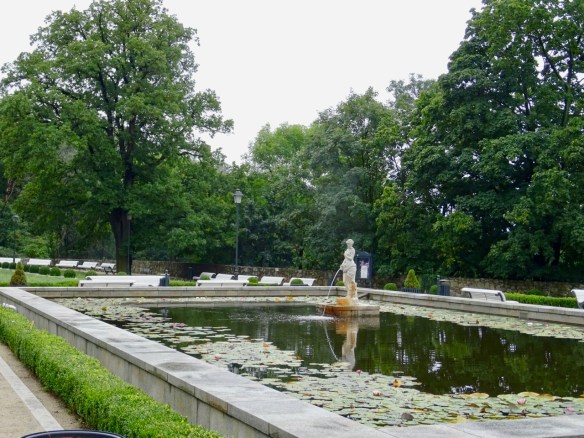
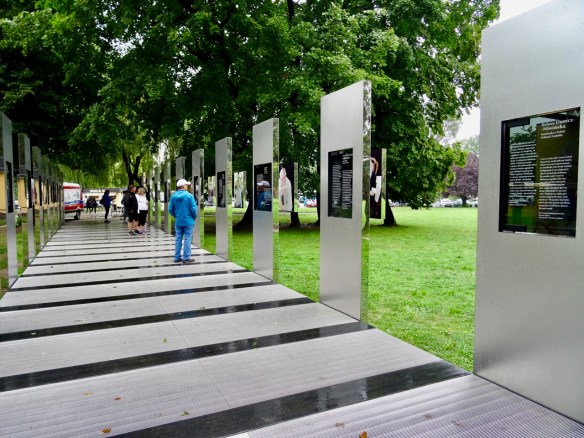
 We walk towards the entry gate down this aisle of photos and quotes from people who survived these camps. I was soon in tears, and we haven’t even entered the gates.
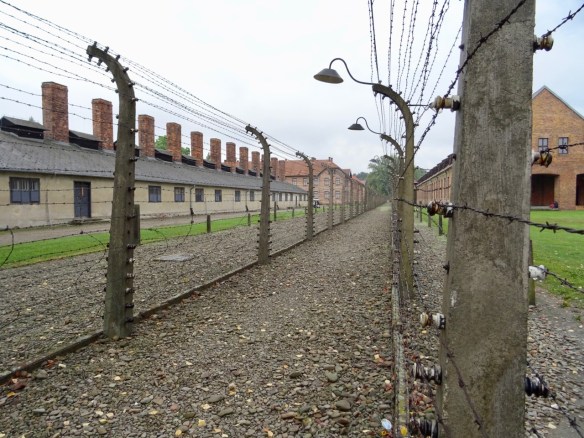
 A double row of electrified barbed wire surrounded the camp.
 The sign above the gate which translates to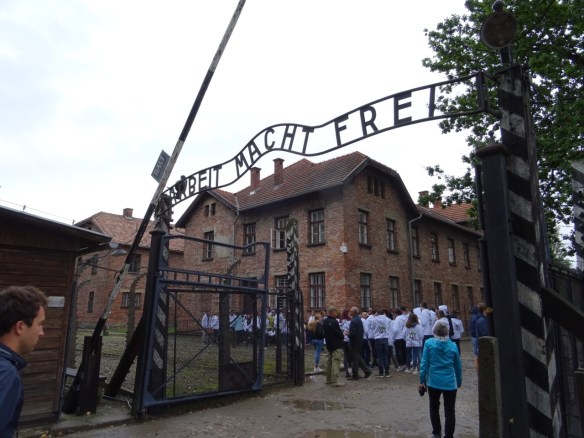
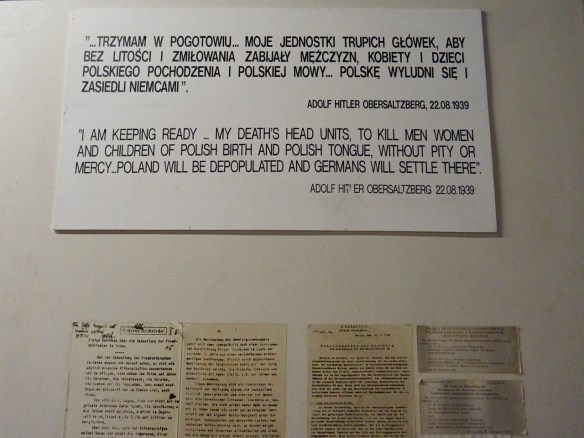
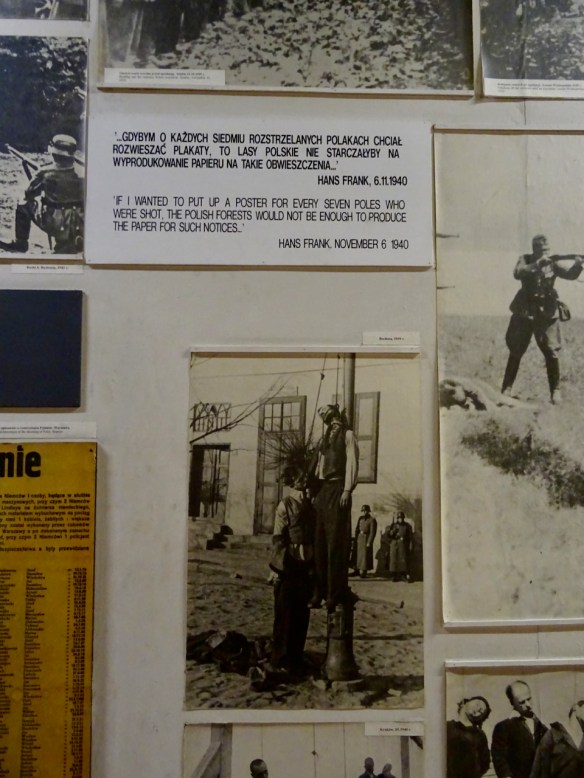
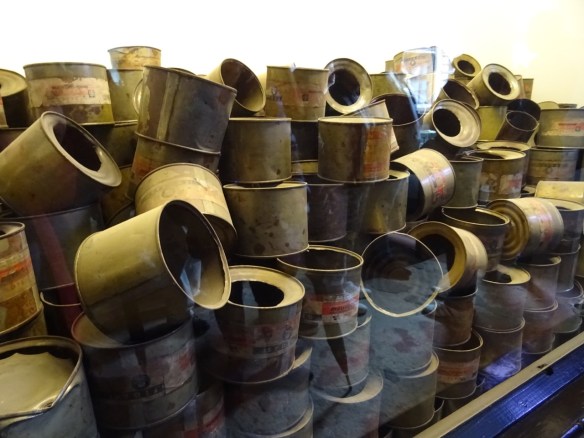
 The gas canisters used to administer the poisonous gas in the showers.
 Sorting the belongings of those who were sent to their deaths.
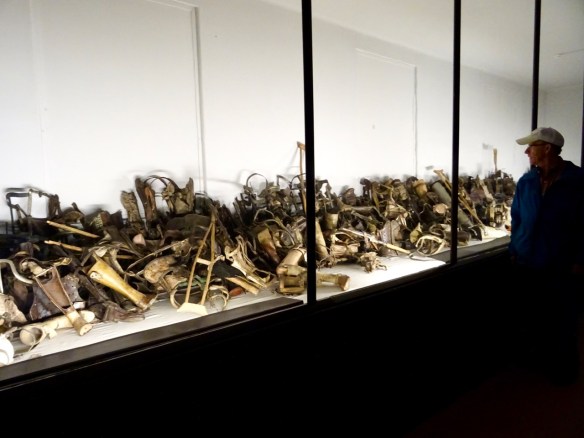
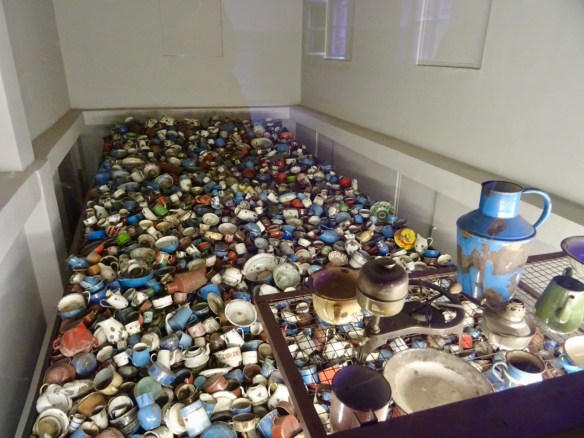
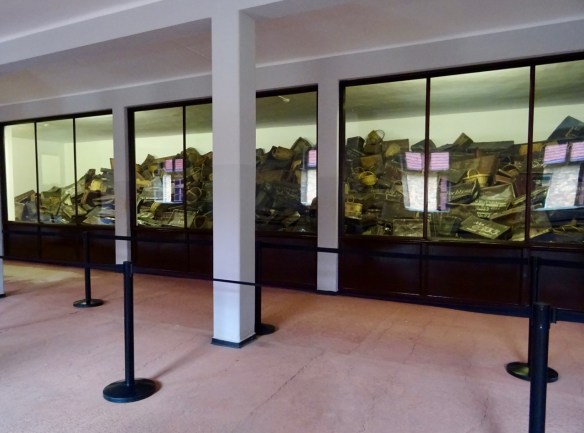
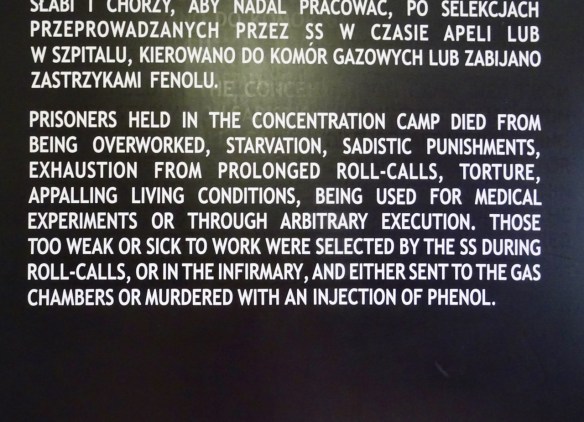
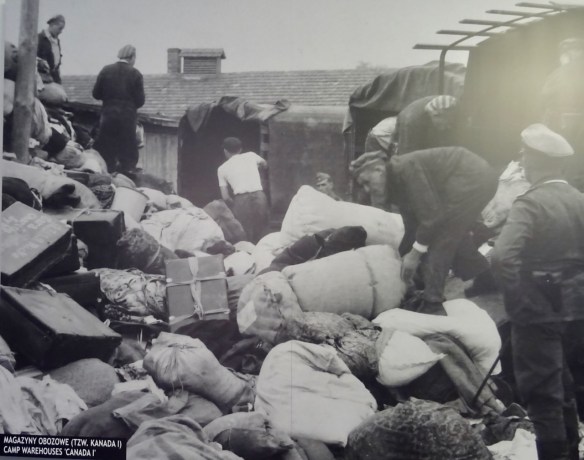 The Germans kept the belongings and valuables of all who arrived in the camps. They were stored in warehouses and shipped out for the use of the German population. When the camps were going to be liberated, the Germans destroyed as much of the stored belongings as they could. This were just a bit of what they collected as most of it was destroyed.
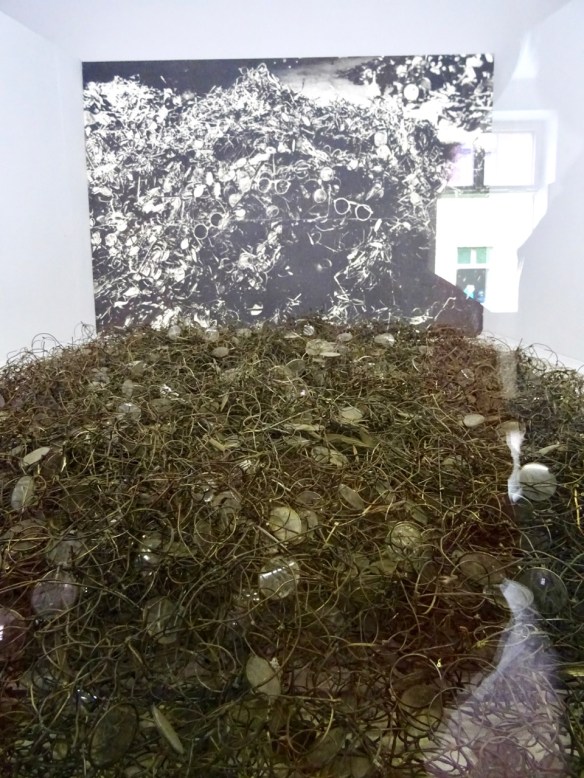 Prosthetic devices. All people with disabilities were sent to their death immediately.
 Pots and dishes, piled 8 feet deep.
 A whole wall of suitcases.
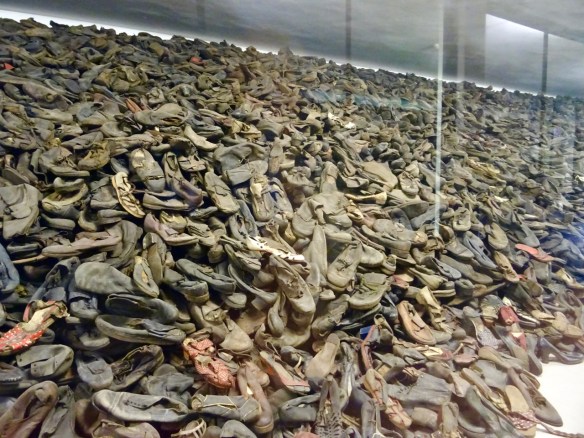
 Both sides of this long room were filled with shoes.
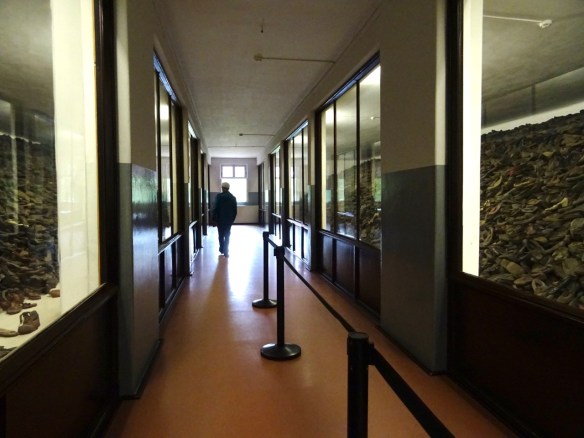 Shoes of all sizes… men’s women’s, and children’s shoes.
 We were not allowed to take photos in hall #5. This was the most difficult collection to view. A long room with two tonnes of women’s hair piled high all along one wall. It was so completely overwhelming and horrific. I was not the only one in tears with the horror of what this represented. It is so impossible to believe that people could do this to each other. The Germans sold bales of women’s hair to manufacturers of cloth and felt. This is only a small part of what was collected.The enormity of this is staggering
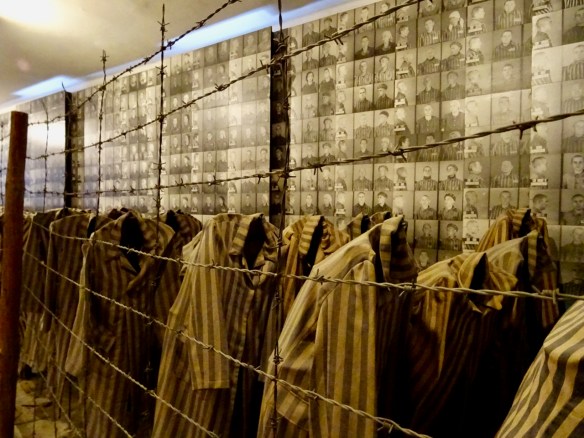
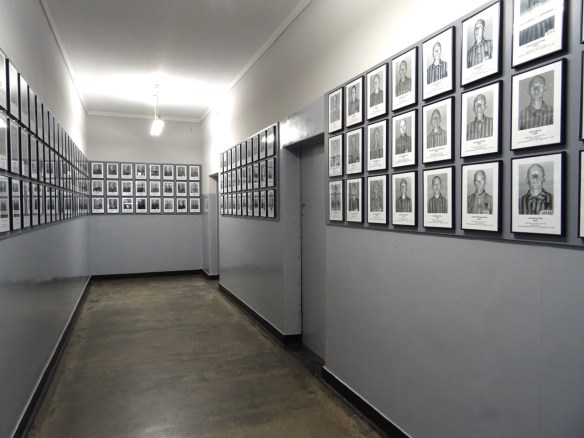
 The halls of one of the barracks were lined with photos of the prisoners, none of whom survived. After a while the Germans stopped taking photos of the prisoners. I think they just couldn’t keep up with it, there were so many.
 Some photos of prisoners when the camp was liberated by the Russians.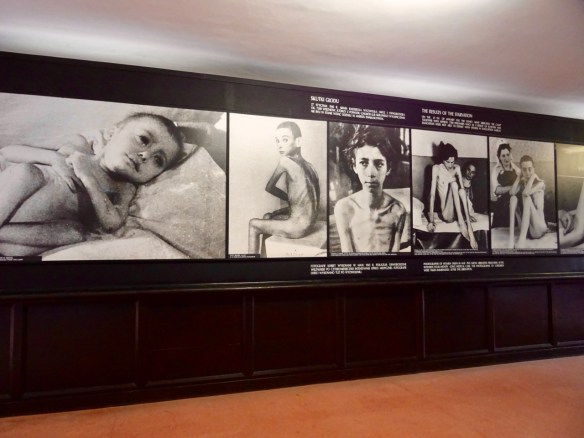
 There were three people to a bed in these barracks.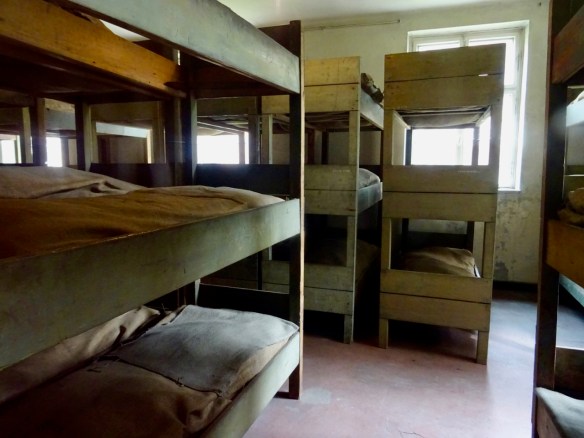
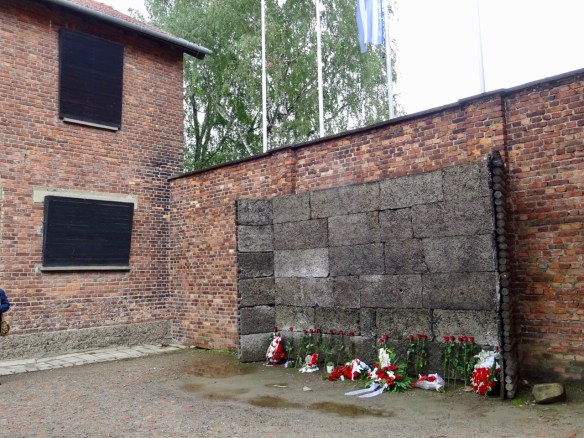
 The Death Wall between barrack 10 and 11. Thousands of prisoners were executed against this wall. The windows on either side were covered so the other prisoners could not see what was happening.
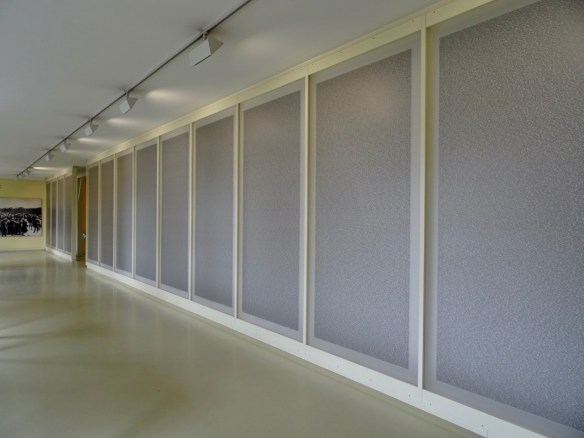
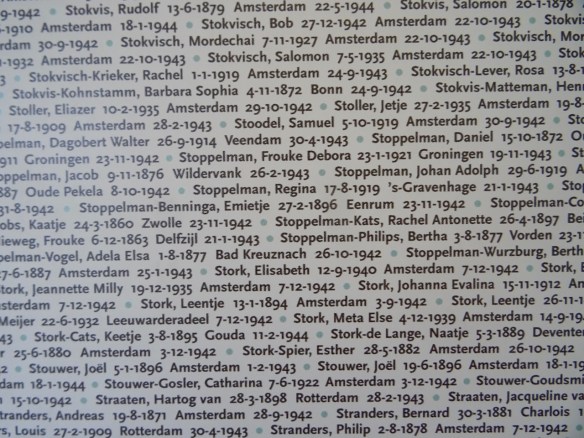
 These panels are covered with names of the people from the Netherlands who died in this camp.
  Here is a close up.
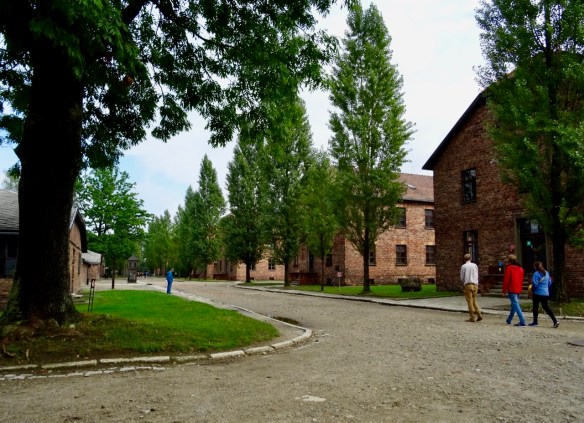
 The barracks.
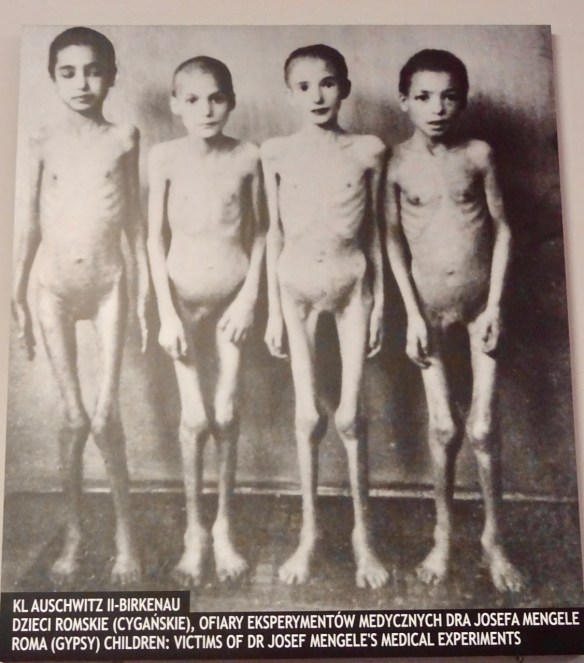
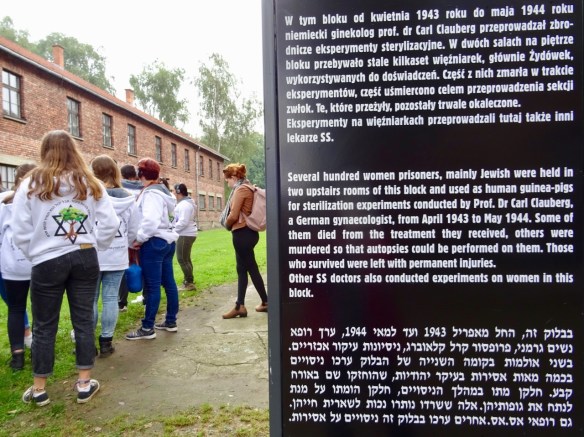
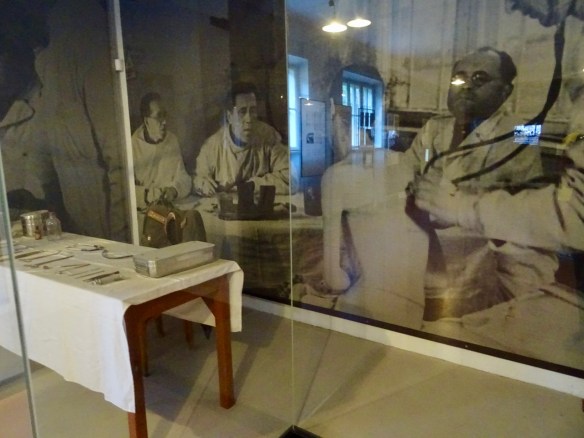
 The doctors and their medical experiments, which were often done on twins.
 The crematorium.
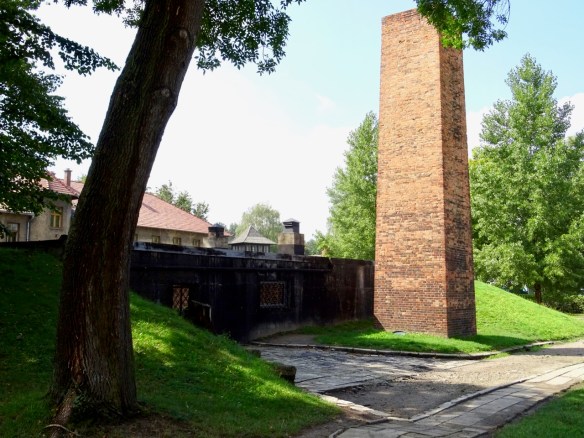 The gas chamber.
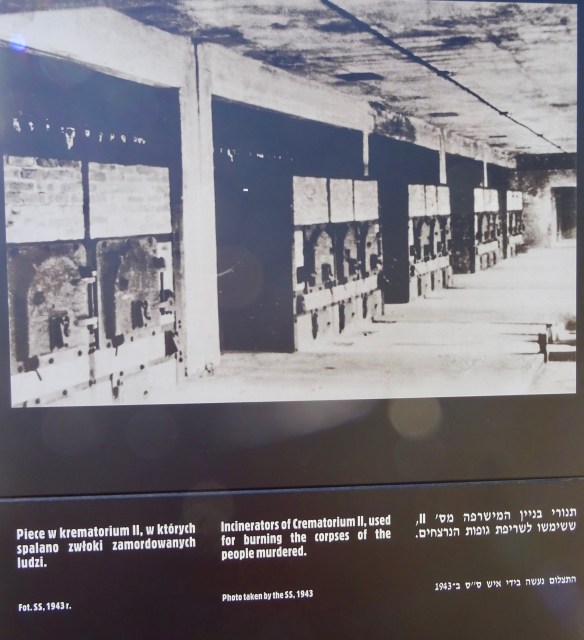
 And the furnaces where they burned 340 bodies every day. They couldn’t keep up so built bigger crematoriums at Auschwitz II-Birkenau.
 We leave Auschwitz I and after a lunch break catch a shuttle to Auschwitz II-Birkenau.
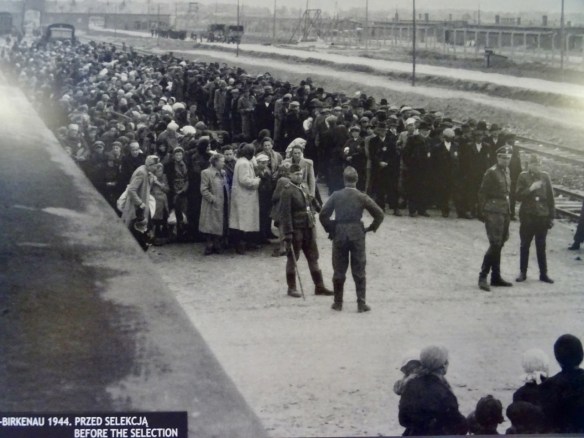
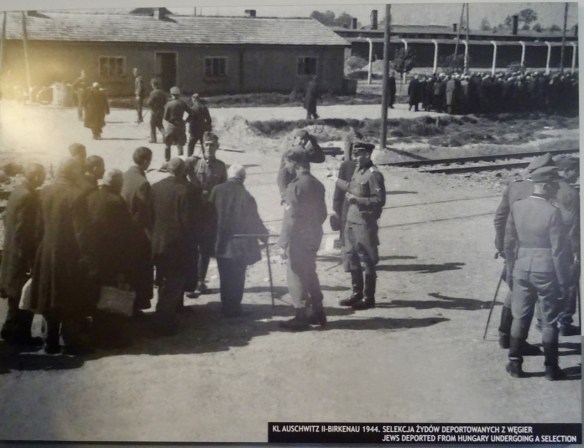
 The entrance to this camp with the railroad that carried so many thousands to their deaths.
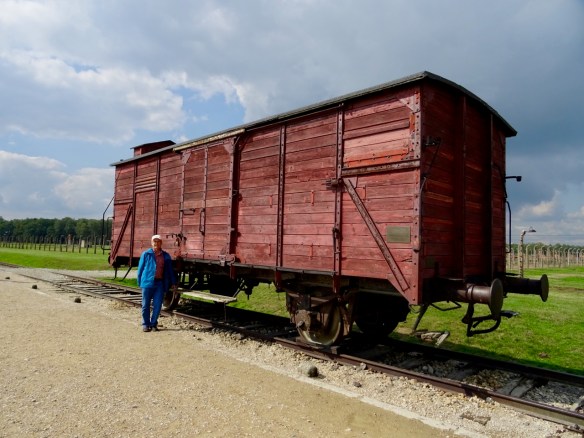
 The railcars used to transport people to the concentration camps had no windows and no ventilation. Many died before they even reached the camp.
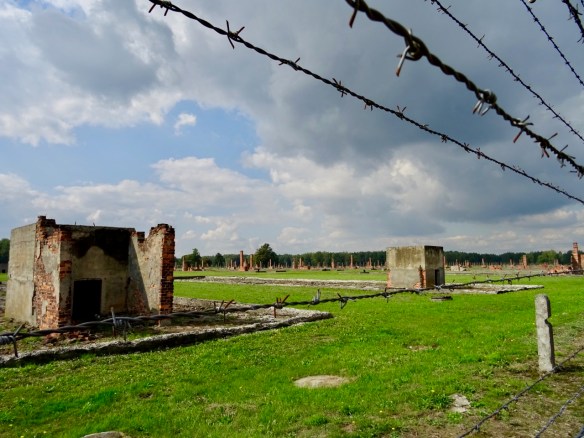
 Each of the chimneys you can see in the distance was part of a barrack. I counted close to two hundred barracks on one of the Birkenau signs. The Germans tried to destroy the camp once they knew they had lost the war.
  The view from the end of the rail line, looking back back towards the entrance gives an idea of how huge this camp was.
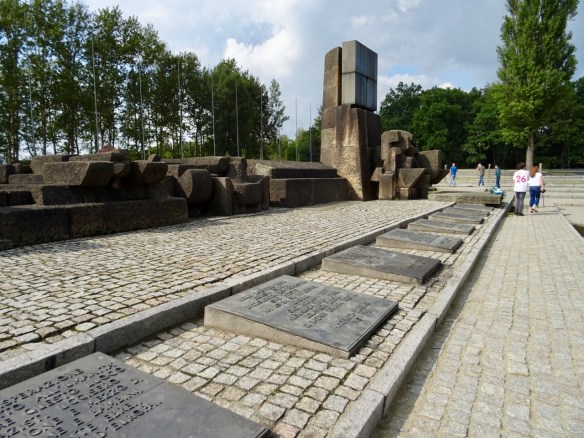
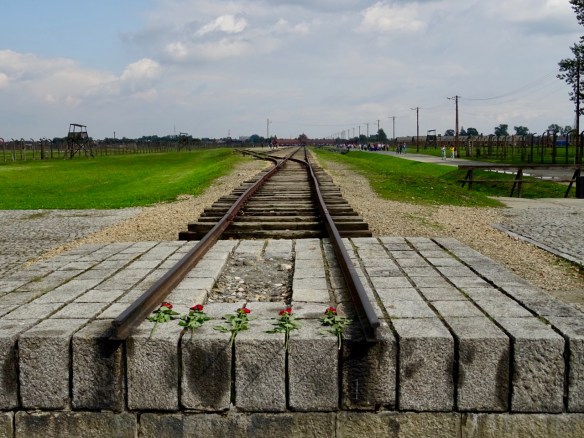 The memorial to the victims of the Holocaust at the end of the rail line.
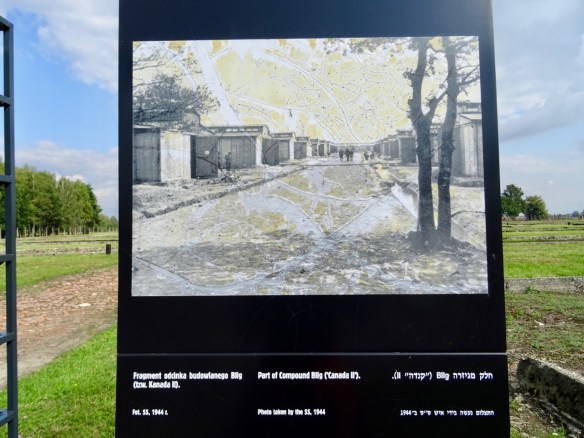
 These were the warehouses where the belongings of the prisoners were sorted and kept before being shipped out for use by the Germans. All that is left are the footings.
 A display of photos taken from the prisoners fills a large room.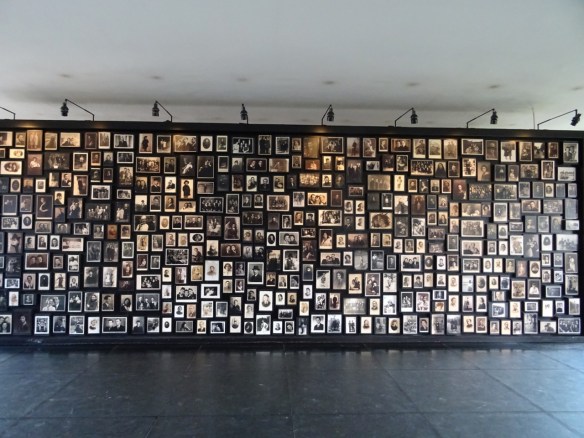
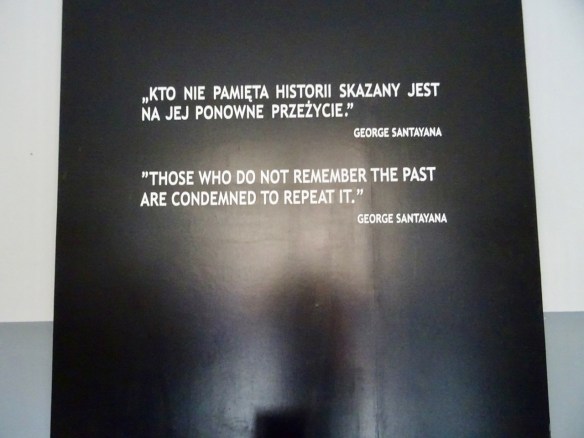
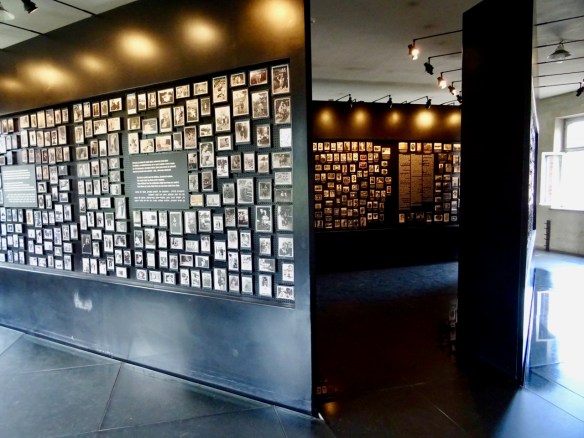 I didn’t understand this quote until I walked into the next room and read that the ashes of the people who were murdered in this camp were dumped in ponds and spread on the fields as fertilizer. Human ashes can still be found in these fields and ponds today.
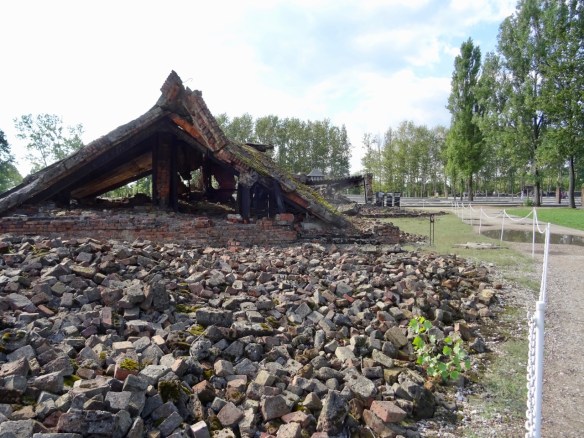
 One of the four bigger crematoriums that was built to handle 4,400 corpses a day.
 The Germans blew up the crematoriums when they retreated to try to hide what they had been doing.
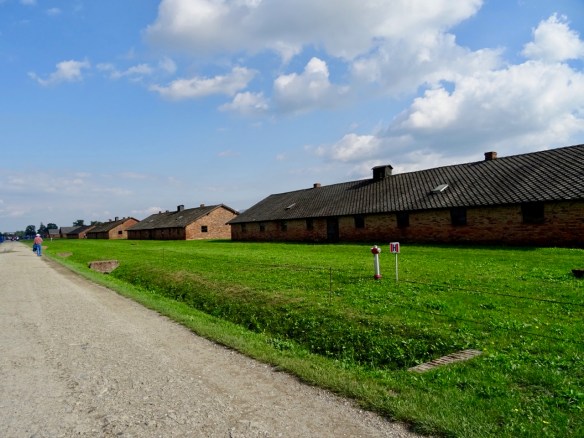
 There are only a few barracks remaining in Auschwitz II- Birkenau.
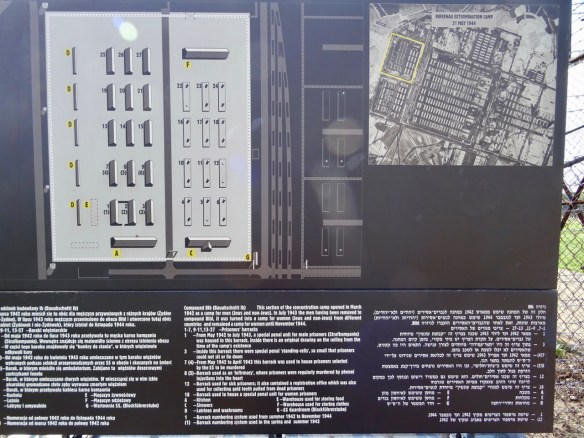
 Here is a plan of Birkenau. the area within the yellow square of the plan houses the remaining barracks.
 These three tiered bunks held 6 to 8 prisoners each. There were 500 prisoners in each barrack, with no insulation or sanitary facilities.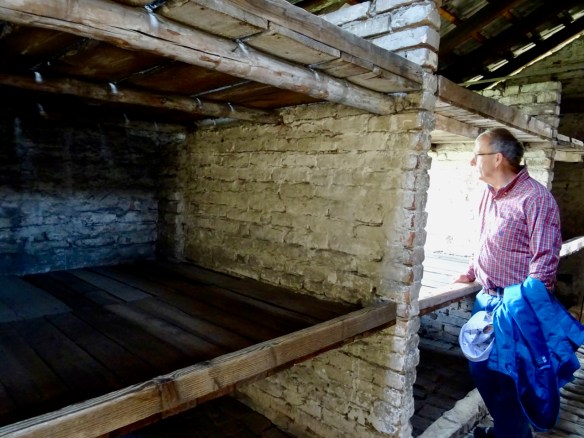
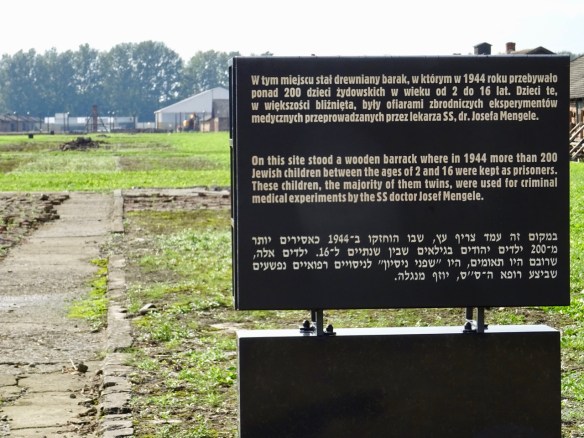
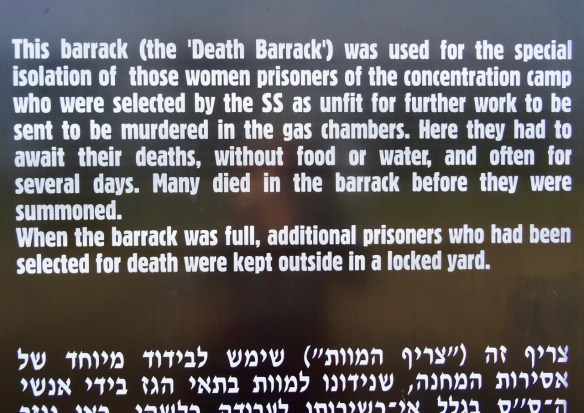 The interior of the Death Barrack.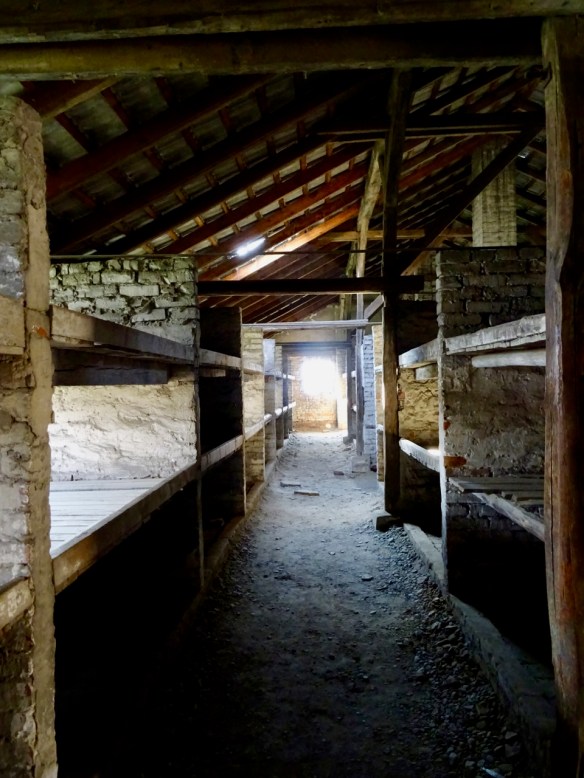
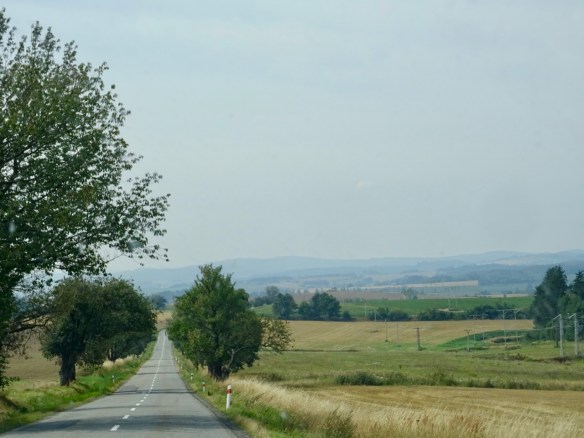
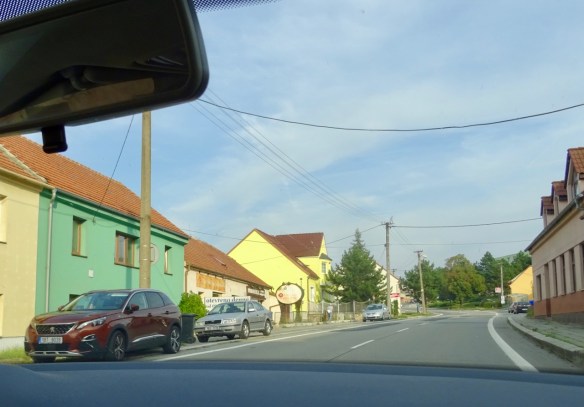
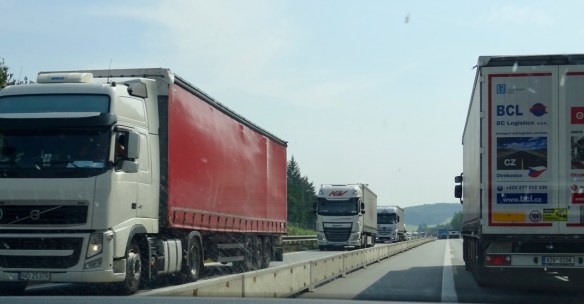 One of the many small towns we pass on the road to Telč.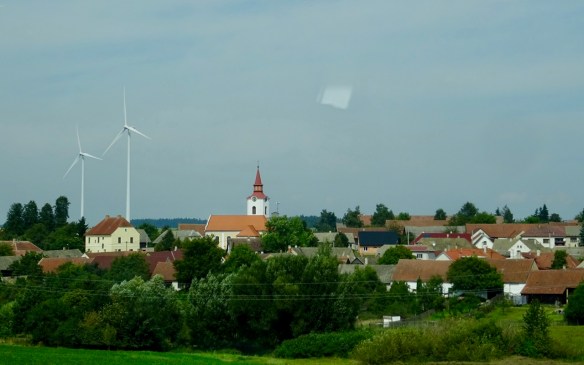
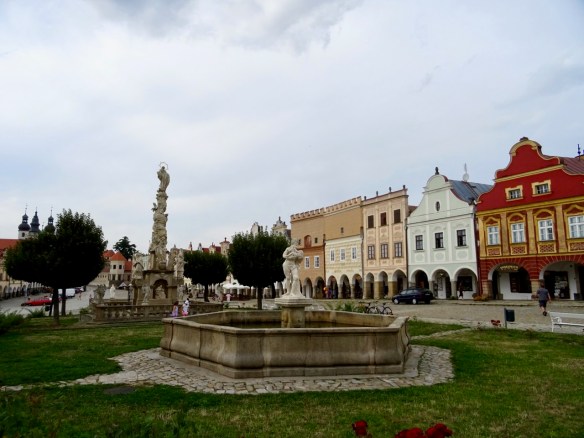
 The town square at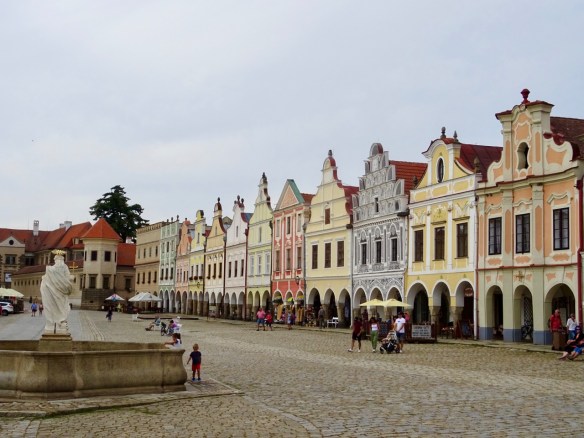
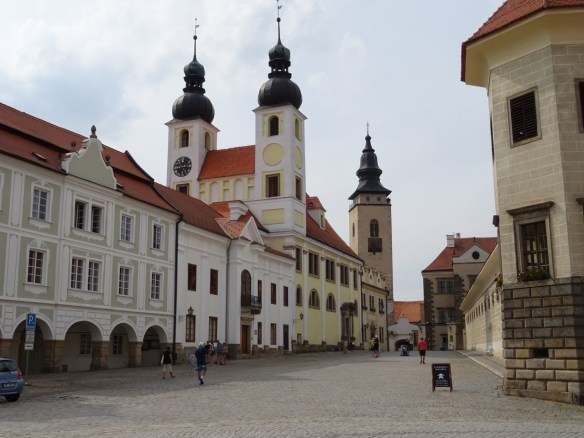
 At the far end of the square we see the bell tower so of course we go see if is possible to climb to the top for a view of the town.
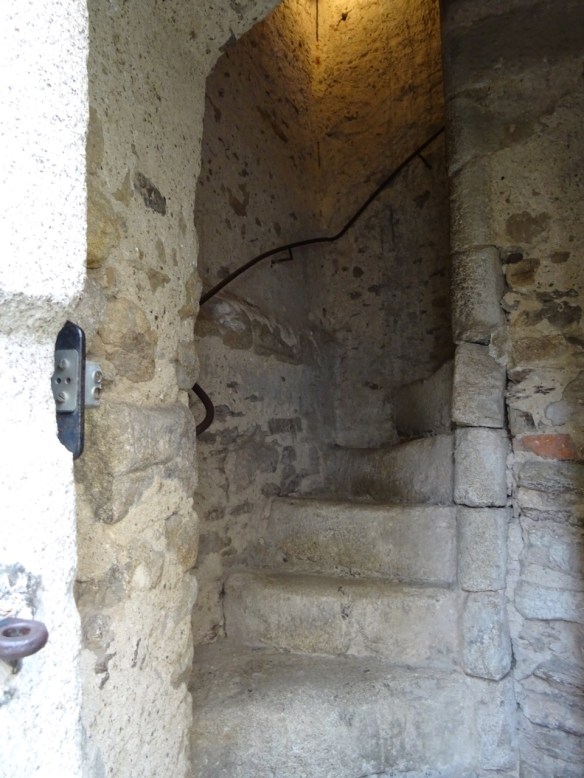
 The first 50 stone stairs are very narrow…
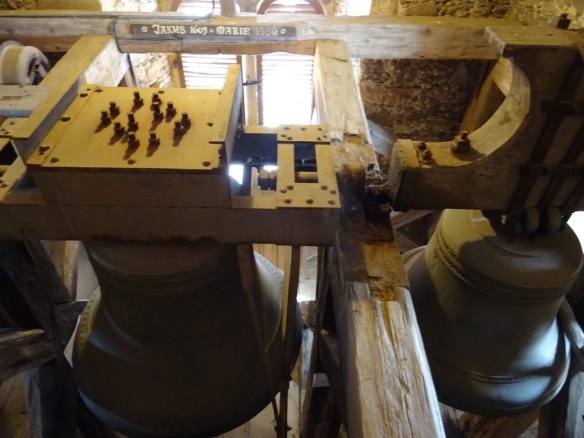
 but soon we are climbing another 100 steps on old wooden timber steps up to the bells. This bell is named Marie and she was cast in 1550 and weighs 950 kg!
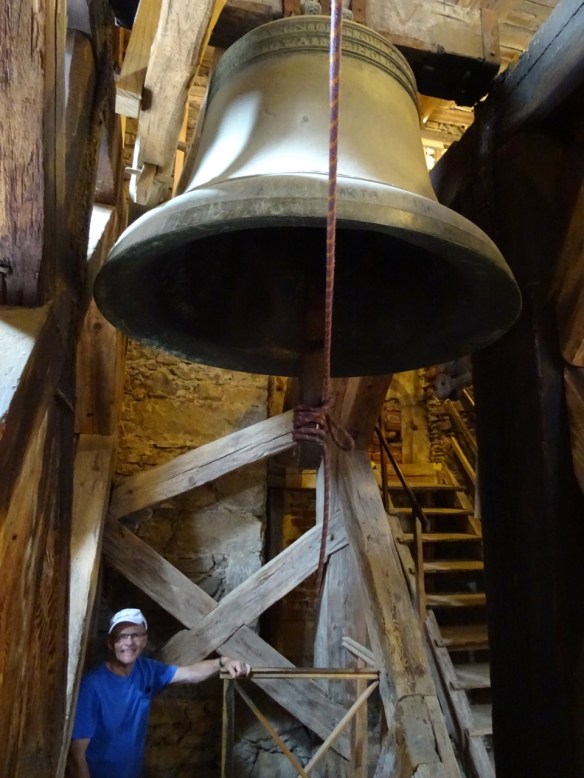 A bit more climbing and we are looking down on the two bells, Jacub and Marie, before climbing to the viewing platform at the top.
 The view from the top was wonderful. Telč is a very pretty town.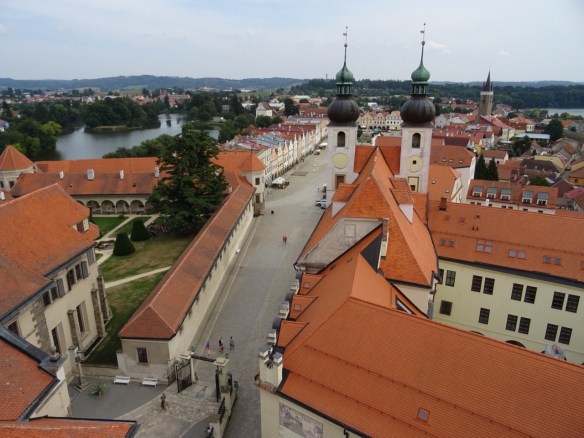
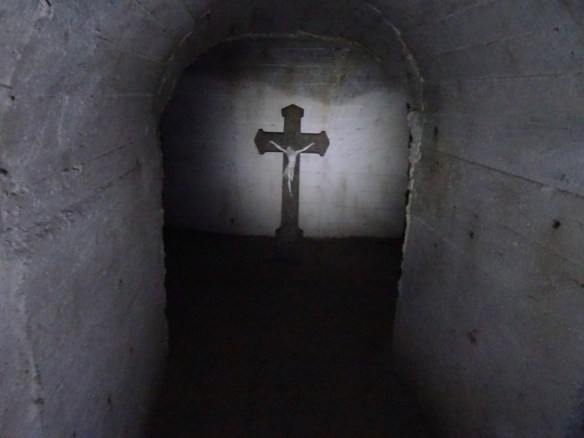
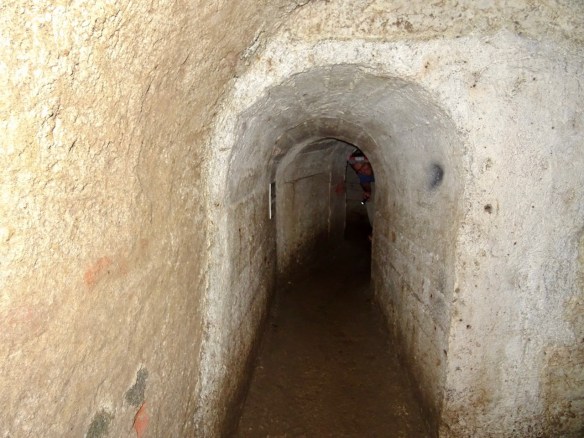 This crucifix was at the end of one dark tunnel . We were the only people on the tour who actually went and explored all the tunnels. Everyone else stayed in the larger rooms that were used for some displays and a short video about Telč.
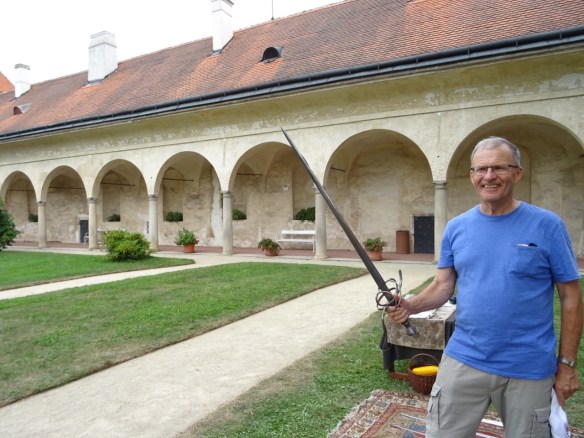
 Back above ground we walked through the grounds of the palace. We didn’t have time to take a tour of the inside, but Bob got a chance to try wielding a sword. They are very heavy!
 We also met some interesting creatures. This ten year old python and…
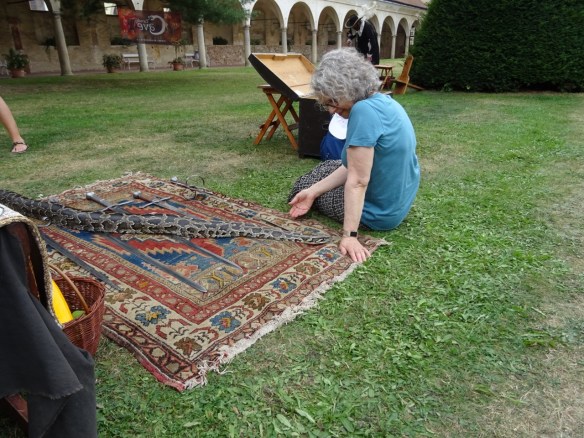 his 4 year old albino friend.
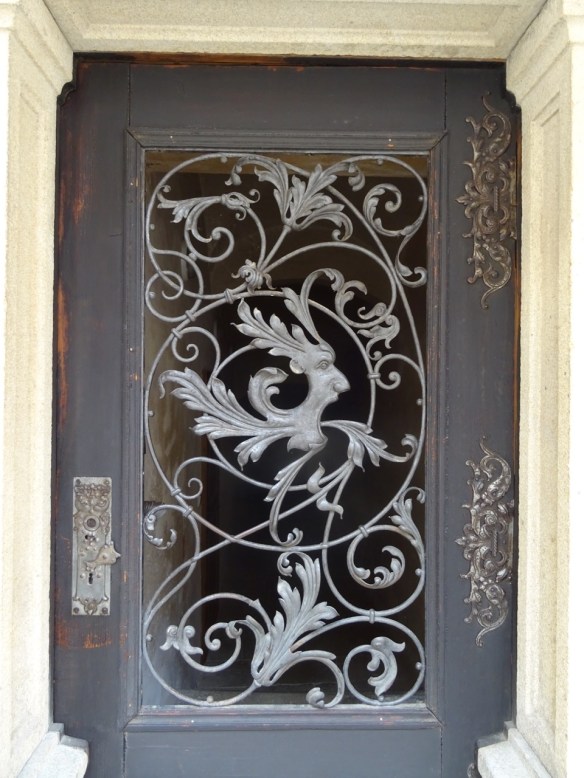
 This beautiful ironwork was on one of the doors of the palace.
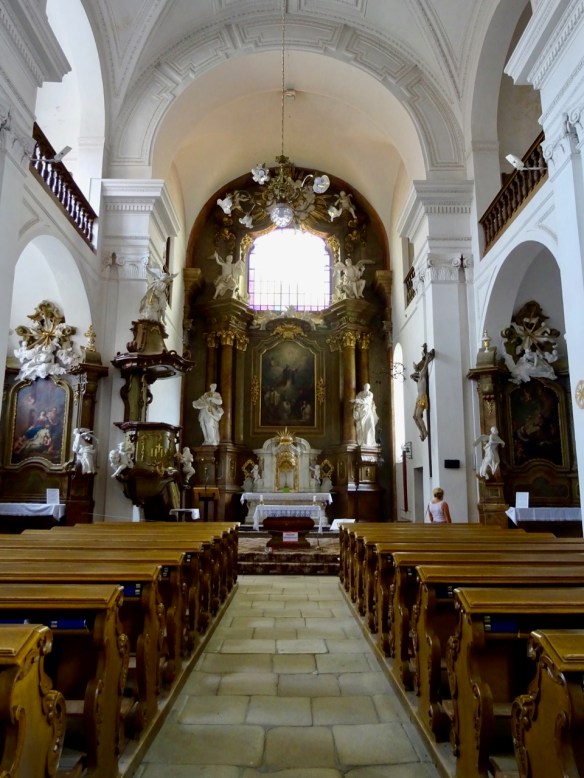
 We visited our first (and certainly not our last) church, the Church of St. James the Greater which dates from 1273, but has been rebuilt many times since then.
 This panorama gives an idea of just how many houses line just one side of the square. They are all in a row, not in a curve as they appear in the photo.
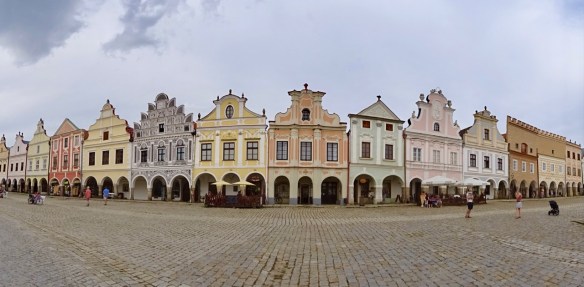 These houses continue on from the right side of the photo above. It is hot, 28° and we finally feel like it is summer. It was a cool wet summer at home so this is a nice change.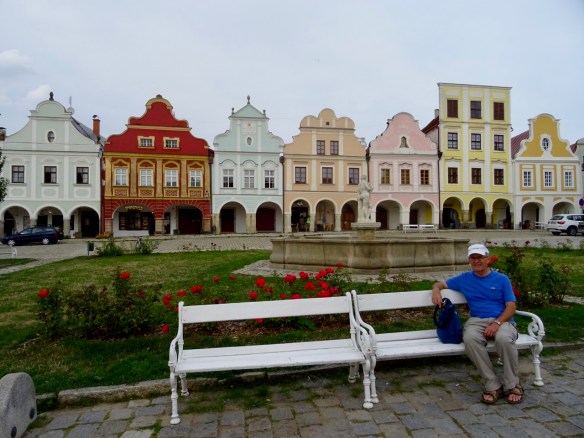
 I have no idea what this is supposed to be but it is certainly unusual. I wonder if someone lives here?
  We finally arrive in Brno, find our apartment but can’t figure out how to get into the building! Finally we message our host who comes down to meet us. It is a beautiful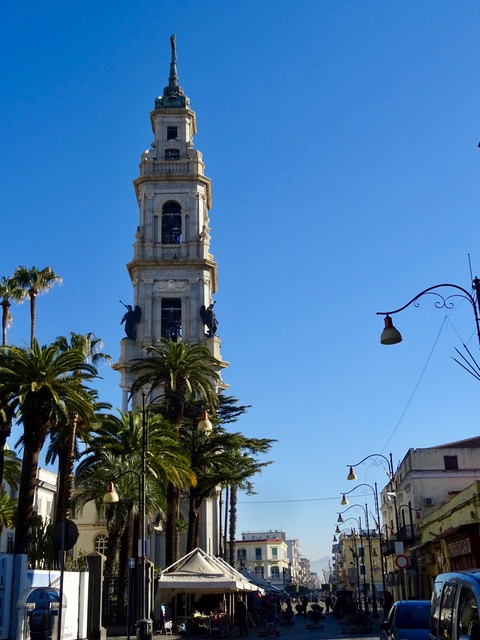








 .
.




 trudymason.com