Day44, Tuesday October 8, 2019
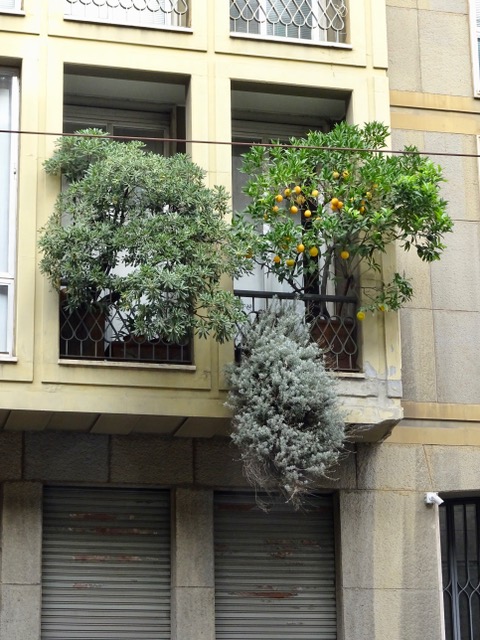
Our little apartment has a masonry stove that keeps us toasty warm. One box of wood keeps us warm for 24 hours.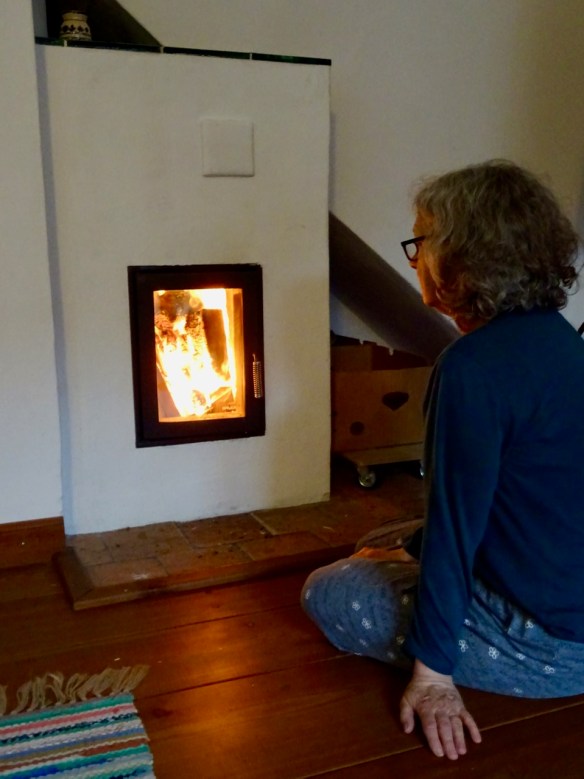 On our way in to Linz we see this ‘green’ apartment. Lots of gardeners must live here.
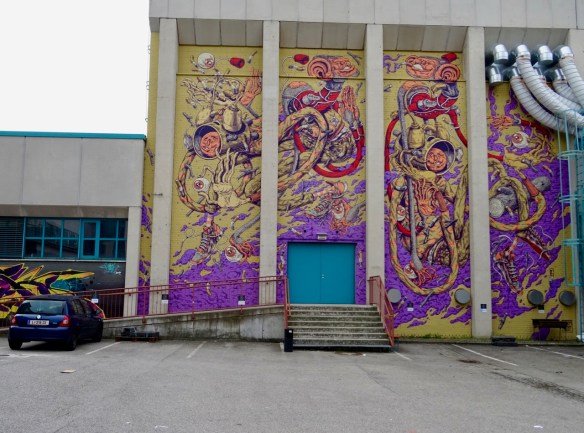
 It took some time to find the bike rental company. They weren’t easy to locate. We pass this big mural during our search.
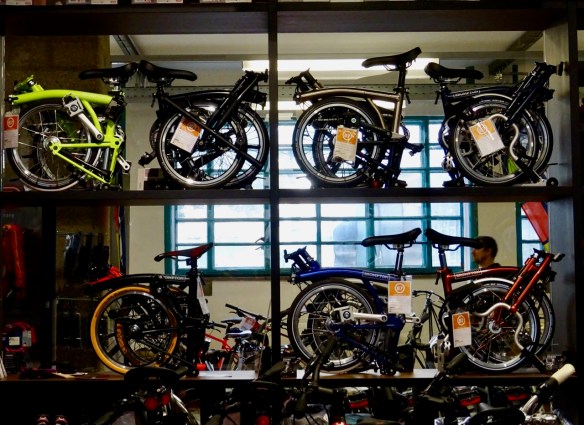
 I thought these bikes were quite interesting. They fold up compactly.
 We start out on our bike trip along the Danube. Bob wants dot take my photo while I was still in one piece!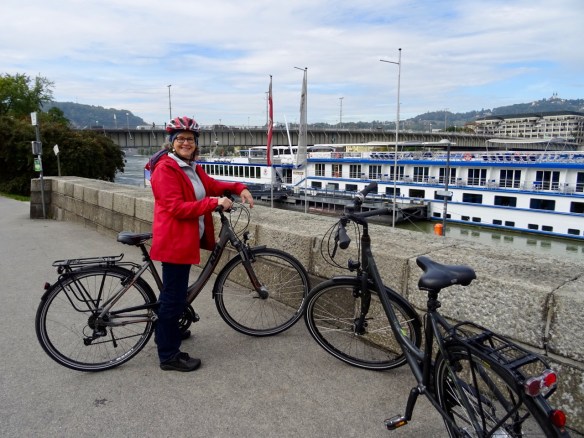
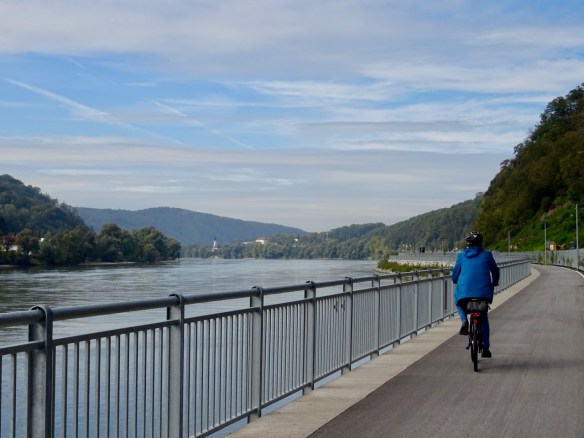 There are some great views along the way…
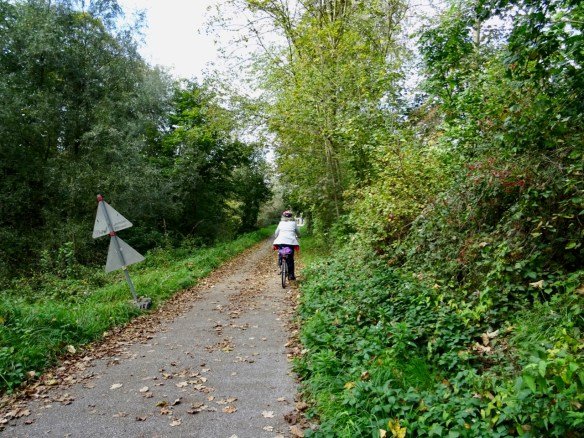
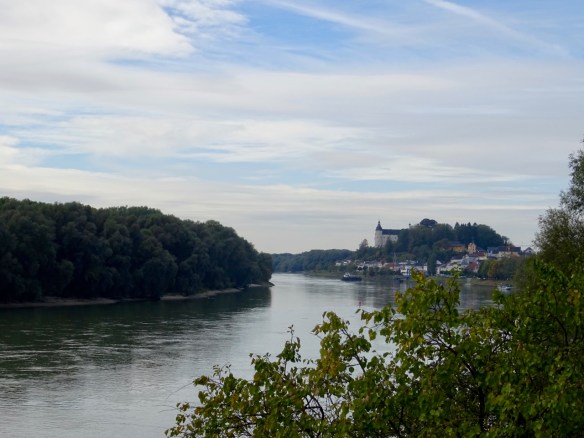 and some wooded trails. I did quite well until the killer hedge tried to get me…and then there was the vortex railing! If I got too close it tried to suck me in!
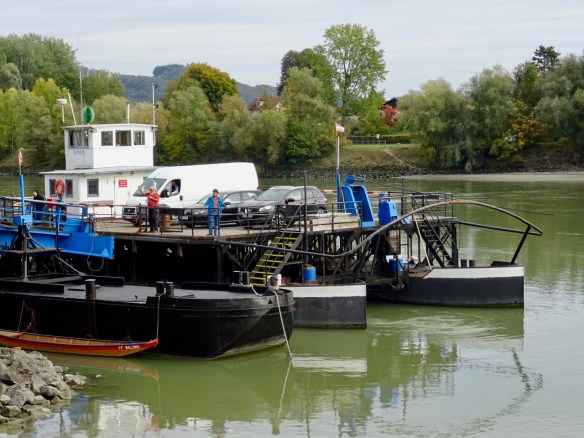
 Bob left me at a coffee shop to rest and sketch and he went a bit further down the river, crossed a bridge, and then returned on this strange looking ferry.
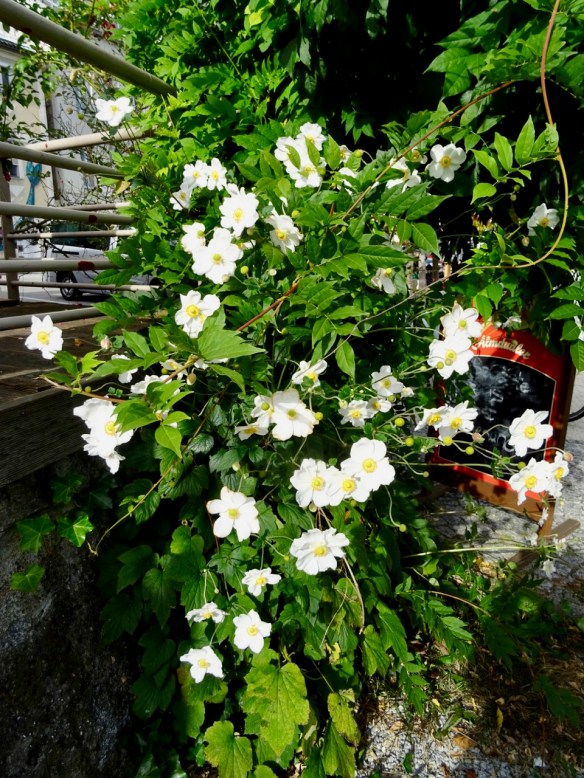
  These flowers are much like the anenomes we grow at home only much larger.
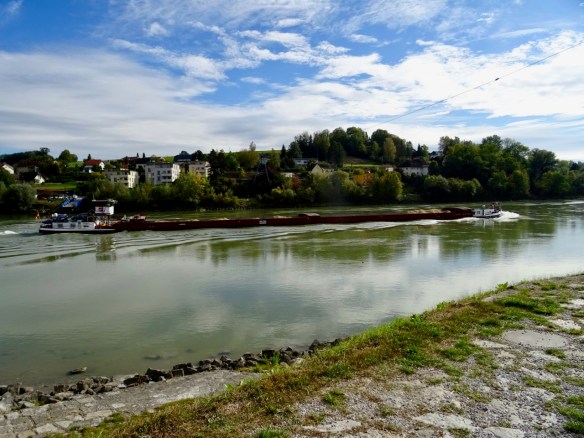
 We see the long barge steaming down the river.
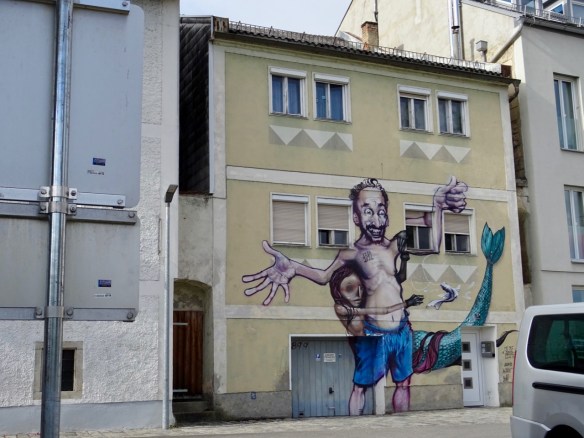
 This curious mural is on a building near the café where I waited for Bob.
 The trees here are so big. I found out that the average temperature here in January and February is -3 Celcius and -4 Celcius. So much warmer than our winters, no wonder the trees grow so large.
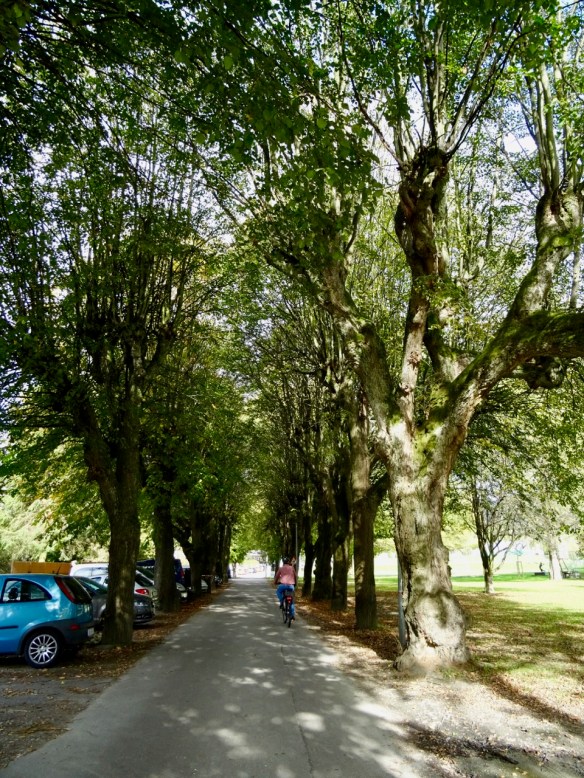 Our selfie along the Danube.
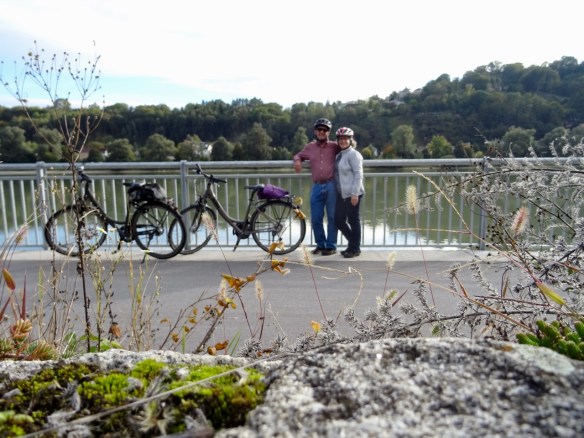 I need a few breaks on the ride home, so a photo is a good excuse for little rest 😉
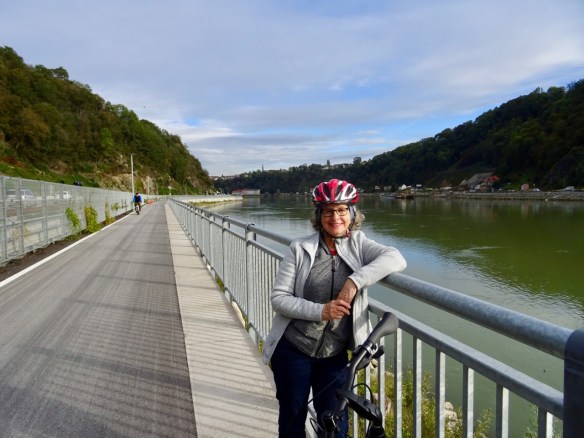 These river cruise boats remind us of our cruise on the Nile, where the cruise ships were lined up 6 or 7 deep along the shore. Passengers had to walk through all the ships, sometimes walking across the water on a narrow board between the ships, to get to shore.
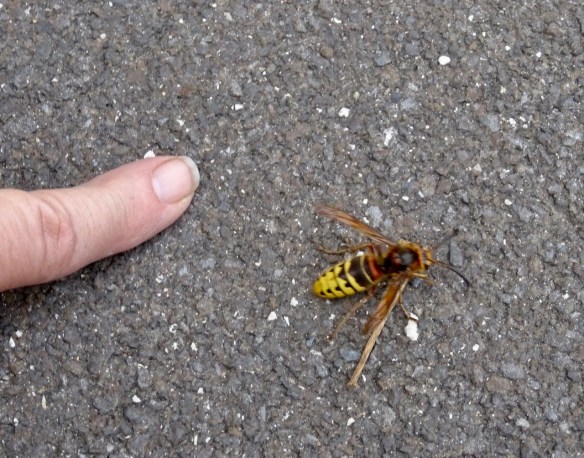
 This wasp was really big!
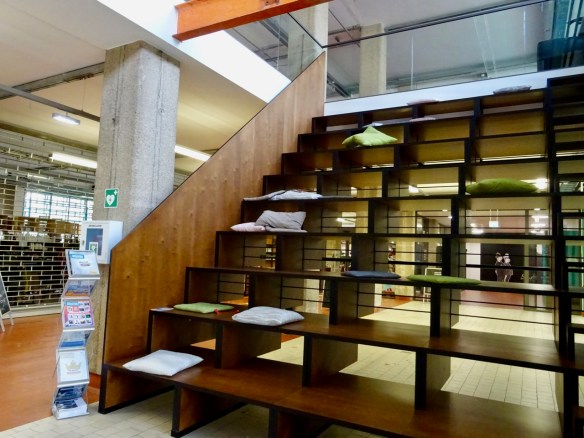
 We take our bikes back. They are in a building which is an incubation centre for start-ups. Looks like these steps are a place to relax, or even snooze.
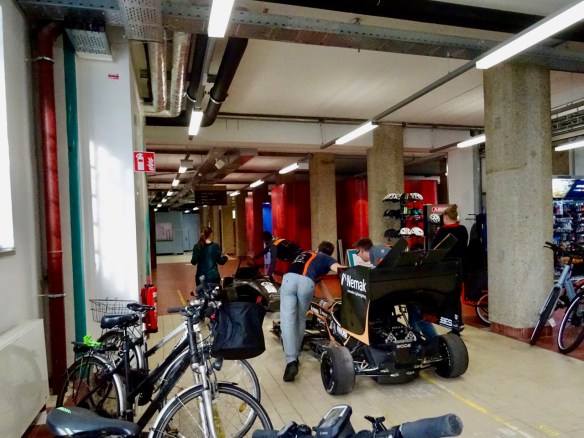
  We see two souped up go-carts being wheeled into the building.
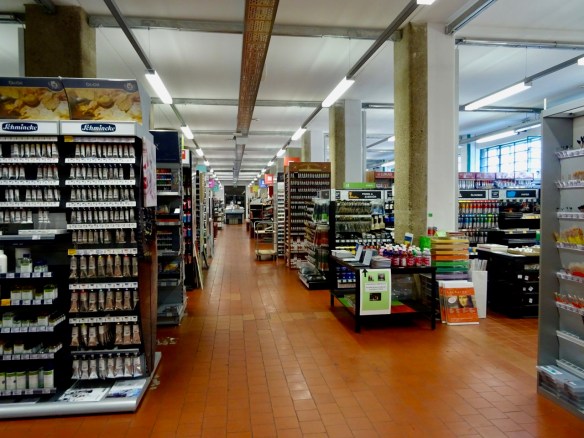
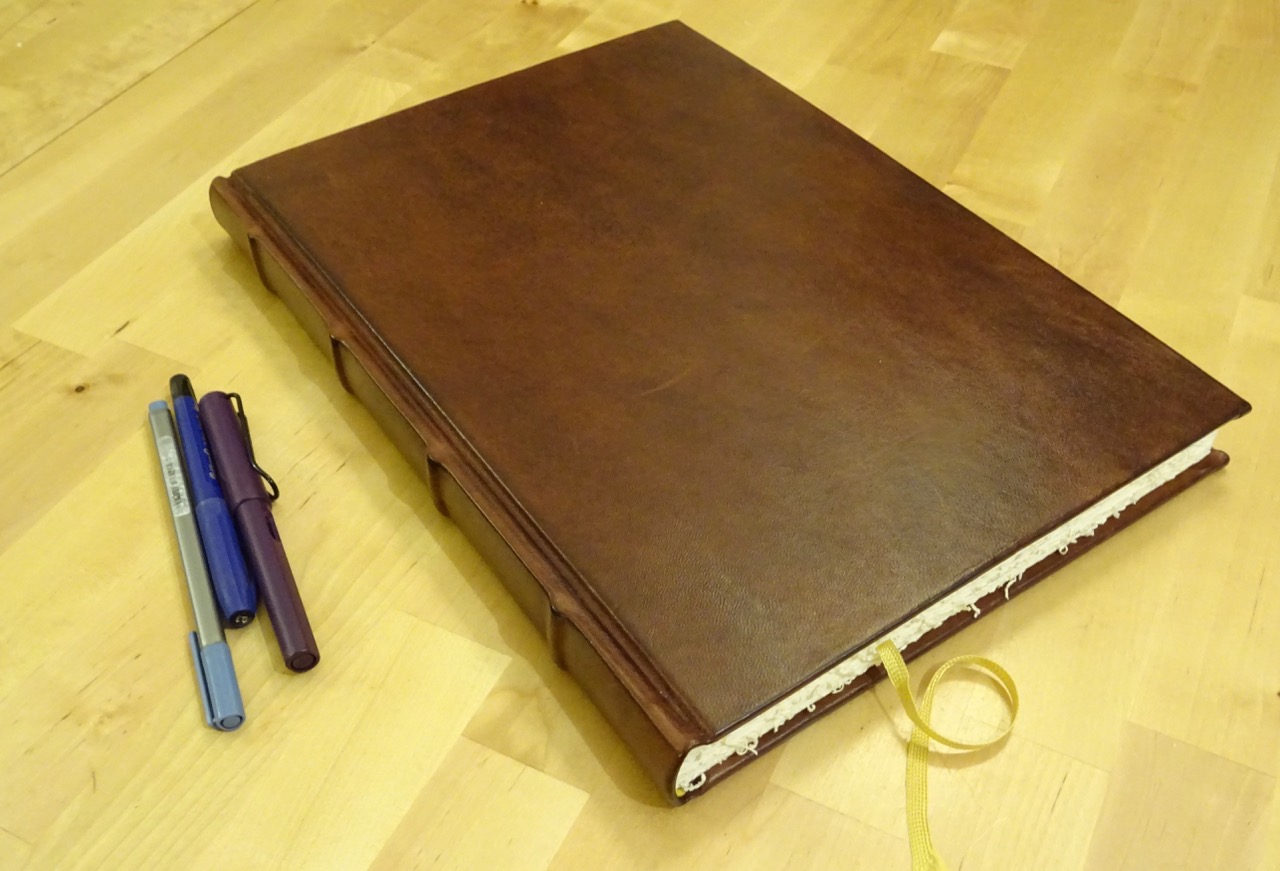
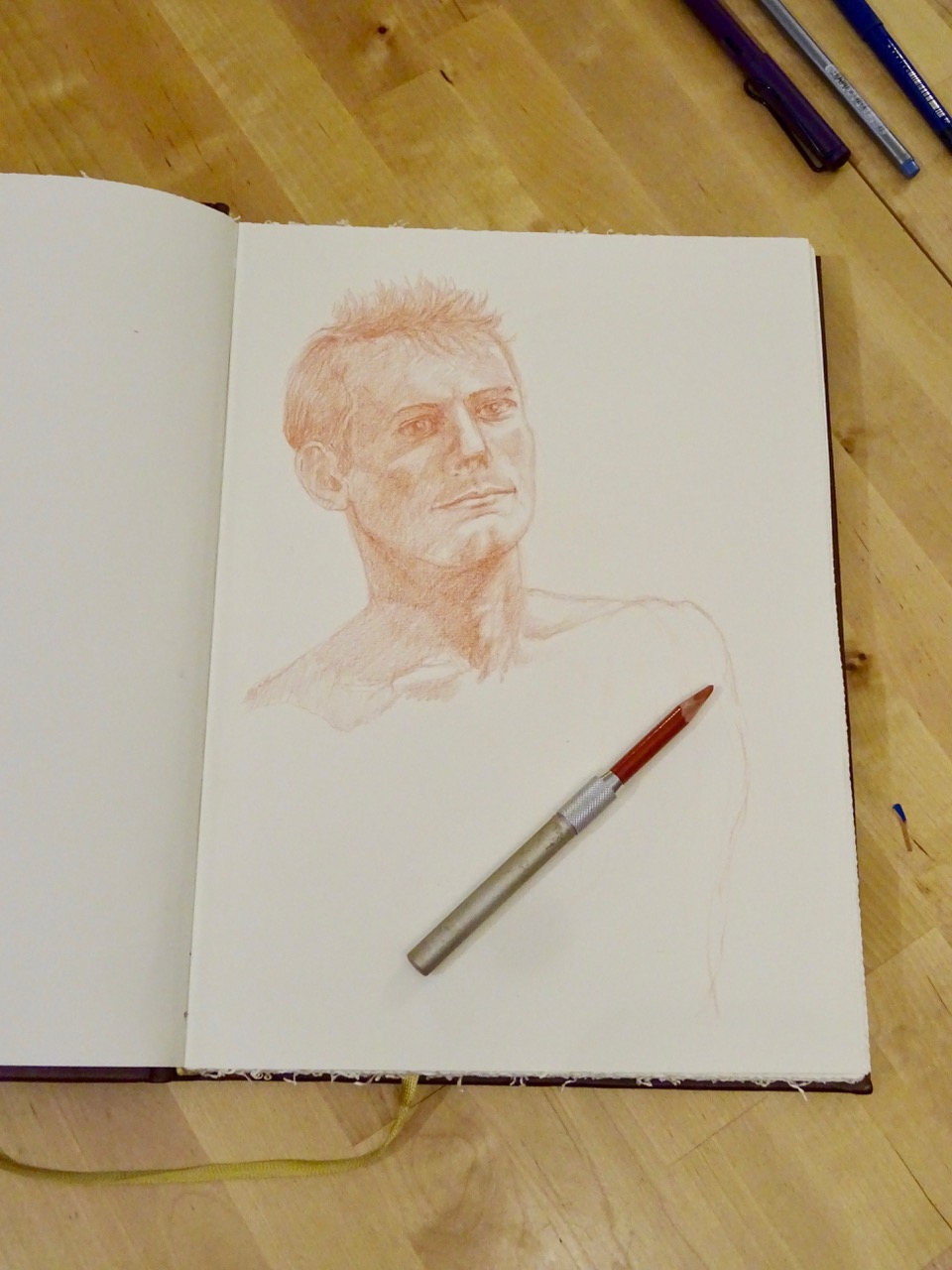
 I am happily surprised to discover Gerstäcker, a huge art store, in this building. After our ride I spend at least an hour exploring and find some new drawing pencils, and two really nice hardcover Hahnemühle Sketchbooks, a 10″ square and a 8.5″ x 12″ rectangular one. They were really reasonably priced too! I couldn’t resist even though my suitcase will be a lot heavier.
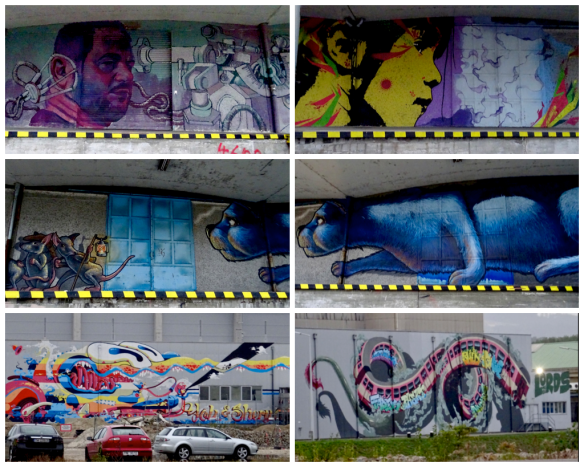
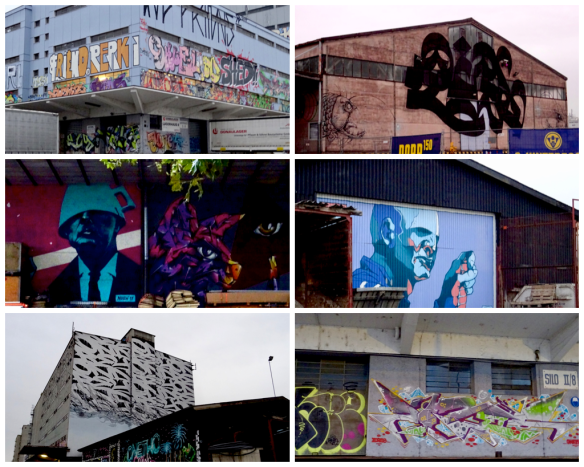
 Nearby is an industrial area called Mural Harbor. Artists from over 25 nations created more than 100 works of art on warehouse buildings.
It is getting dark and it is raining so we drive around and see what we can from the car before heading home. There are some pretty impressive works here. These are all at least 10-12′ tall or larger. I particularly liked the cat and mice.
When we get home Bob tells me that I rode 24 km. and he rode 38 km. No wonder I am tired! Good thing he didn’t tell me how far we were going to ride before we started.
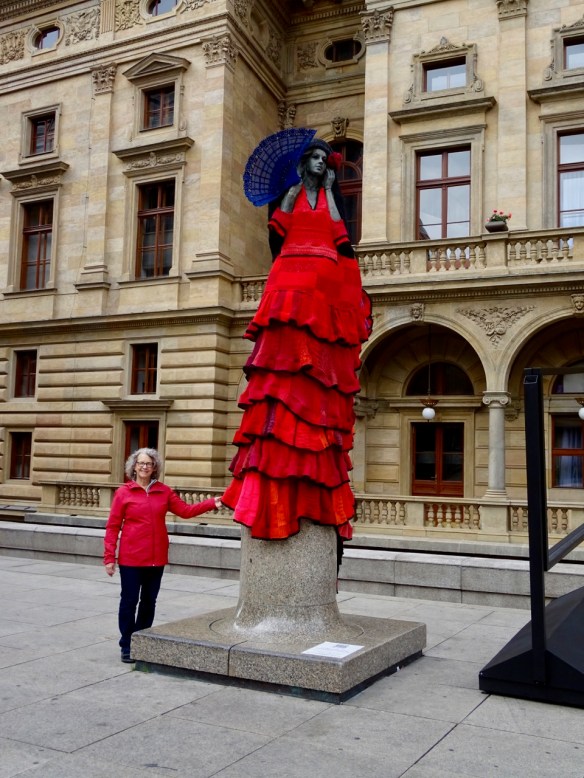
 This knitted sculpture ‘Carmen’ is the creation of Eva Blahová, an artist and scenic designer living in Prague. 33 knitters from all over the Czech Republic were involved in this project and they knit over 50 meters of red ruffles to dress an existing sculpture. It is pretty impressive.
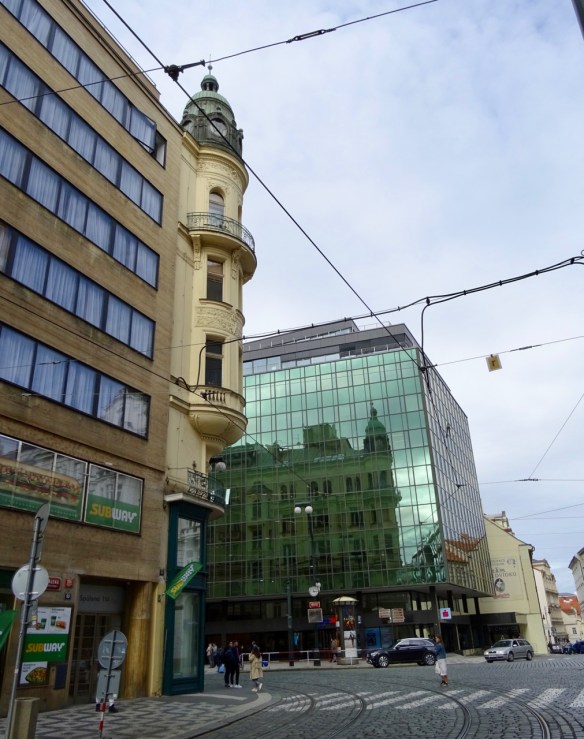
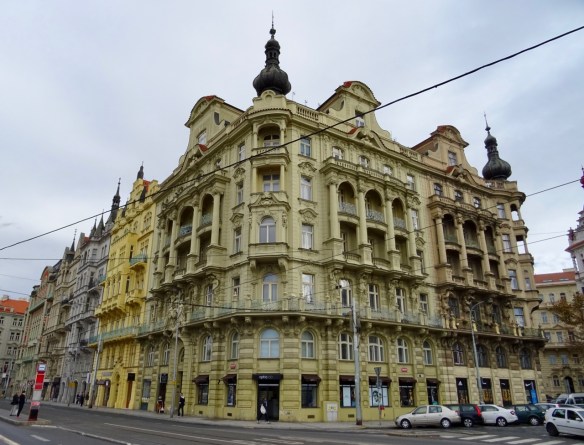
 Walking towards the “Dancing House’ we pass beautiful Art Nouveau buildings with very grand entrances.
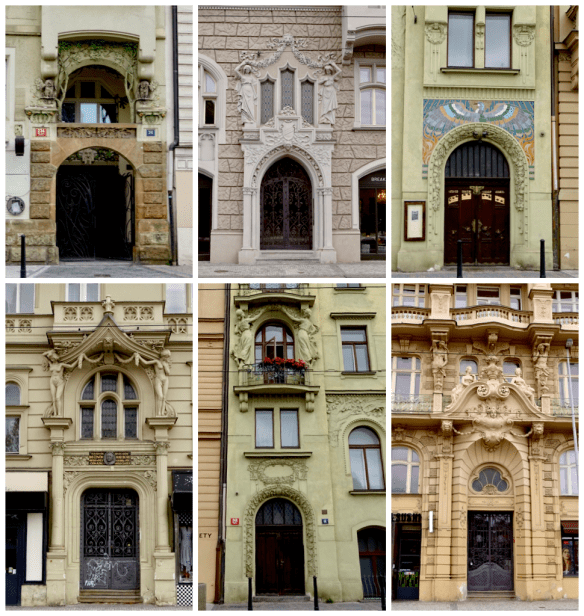 These entrances are on this block of buildings. Although Prague was bombed in World War II it did not suffer the catastrophic damages of Berlin and Dresden. There are so many beautiful buildings with lots of carved decorations here.
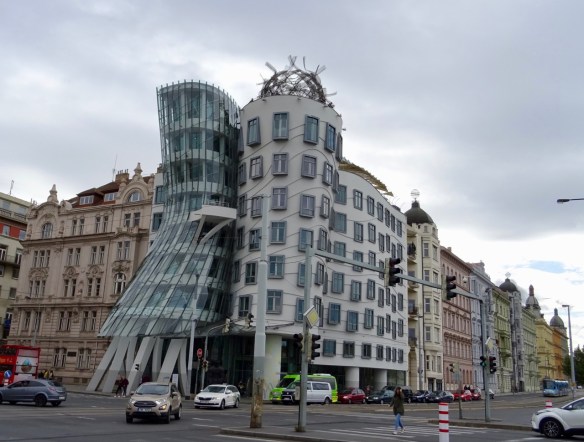
 The Dancing House, or Fred and Ginger, as it is nicknamed, was built in place of a building that was destroyed during the war. We think we know which is Fred and which is Ginger. What do you think?
 We crossed this bridge and had our picnic lunch in a little park with this view. Prague has lots of trees and parks.
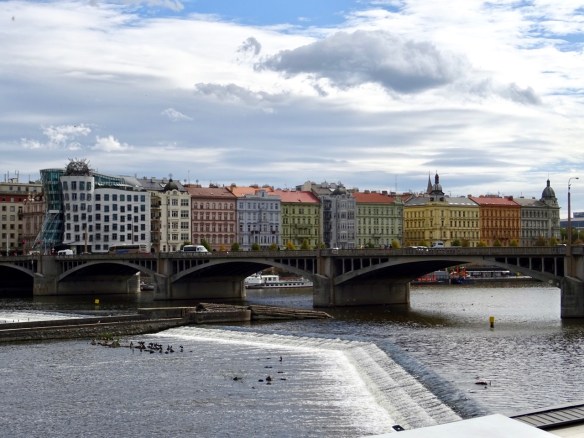 Here ae some more pastel coloured buildings we see on our walk along the river.
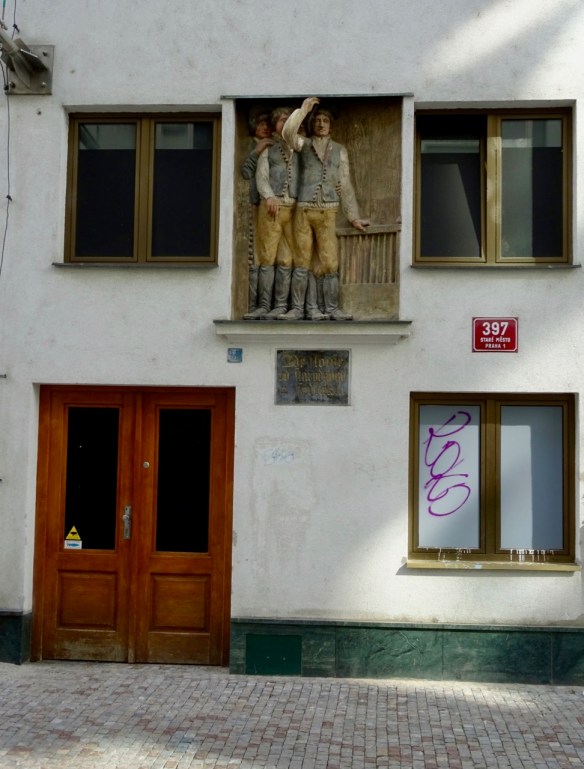
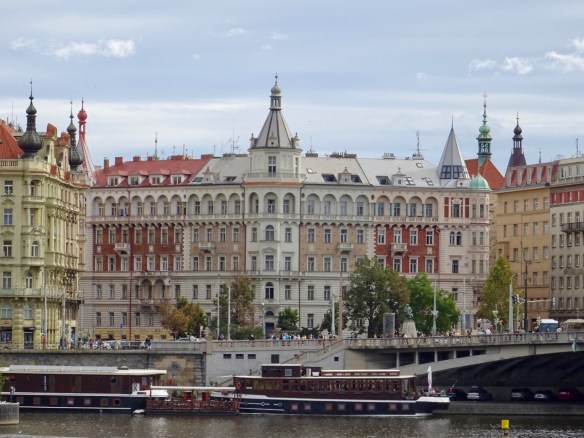 These statues holding up a balcony are quite wonderful.
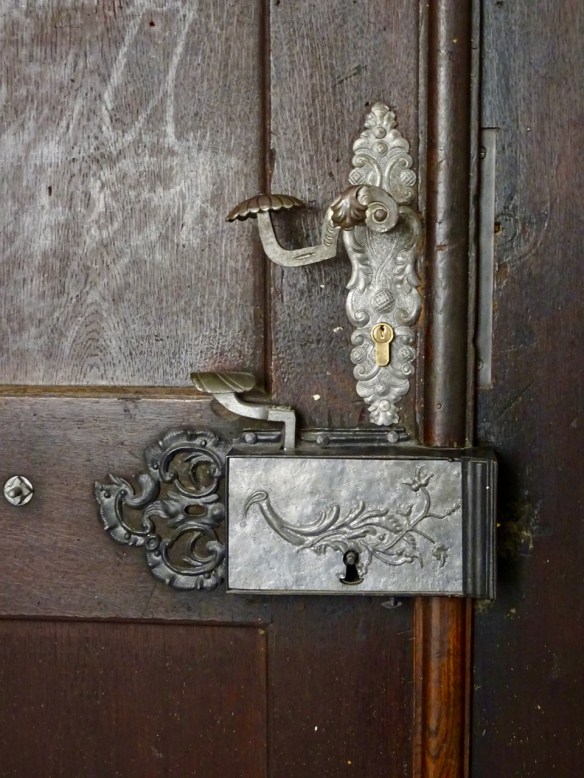
  I think Bob might have been a locksmith in another life. He is always noticing interesting locks.
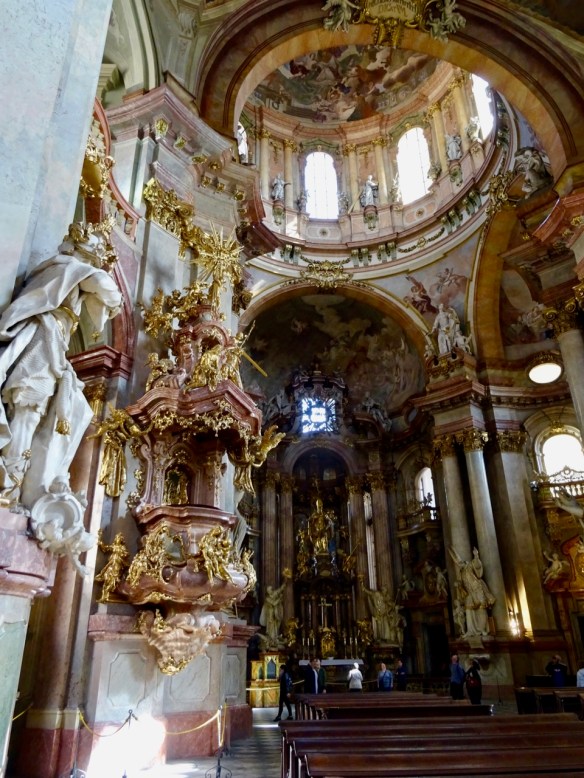
 We arrive at the most famous Baroque church in Prague, St. Nicholas Church, at Old Town Square. The dome has a diameter of 20 m, with a height of over 49 m, making it the highest interior in Prague. The church was completed in 1735, replacing a parish church dating back to 1273. There is so much history everywhere we visit. Canada is such a young country in comparison.
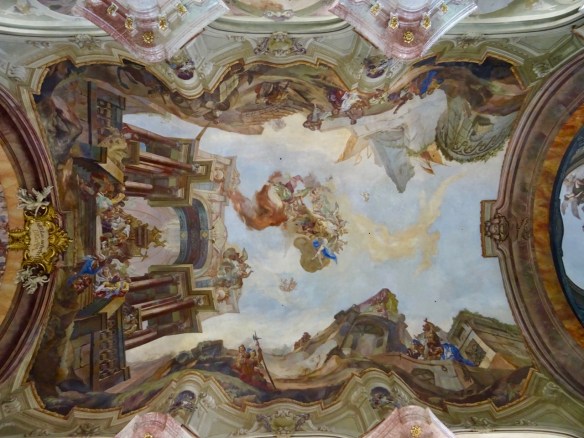
 The ceiling fresco is over 1500 square metres in size and is one of the largest in Europe.
  We climb to the second floor balcony for some great views of the church.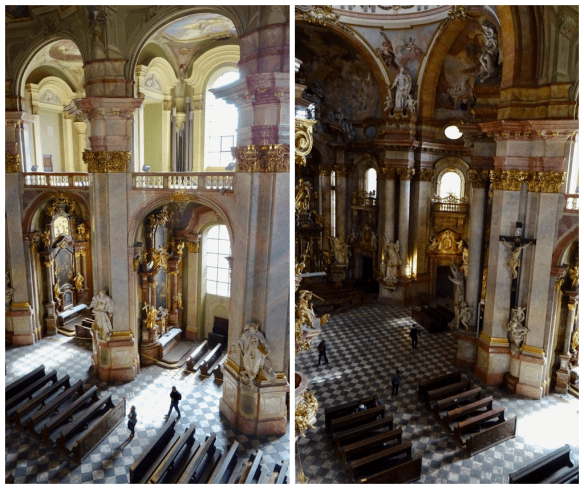
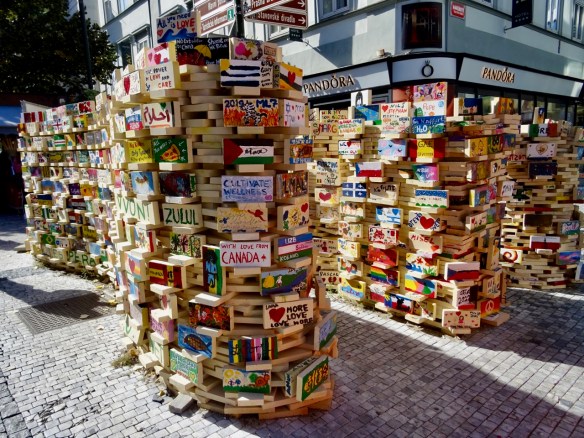
 These painted blocks are a fundraising project for disabled people. You pay for a brick and then get to paint it. We didn’t have time today but I see that someone from Canada contributed a brick.
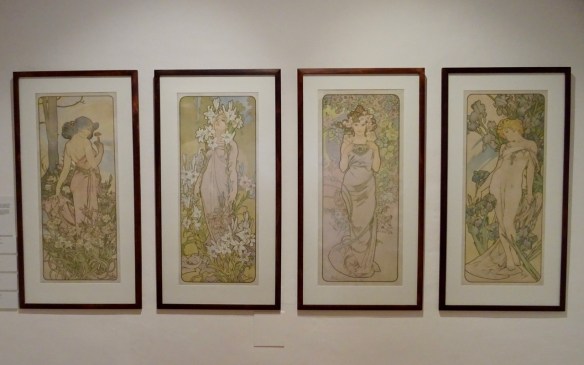
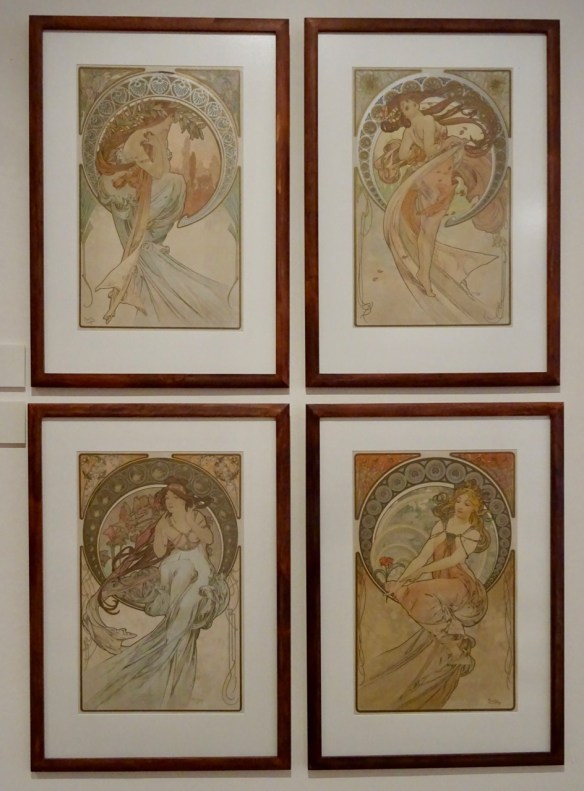
 At the Mucha Museum I learn the Alphonse Mucha’s name is pronounced mooka, not moosha as I thought. We see many of his lithograph works that I am familiar with. The Four Flowers..
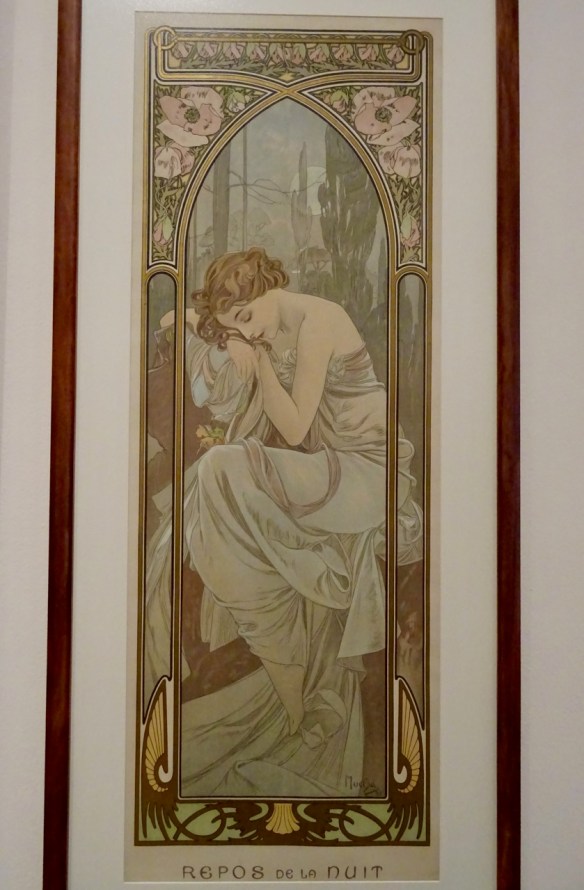
 Evening Reverie…
 and the Four Arts, which celebrate Dance, Painting, Poetry and Music.
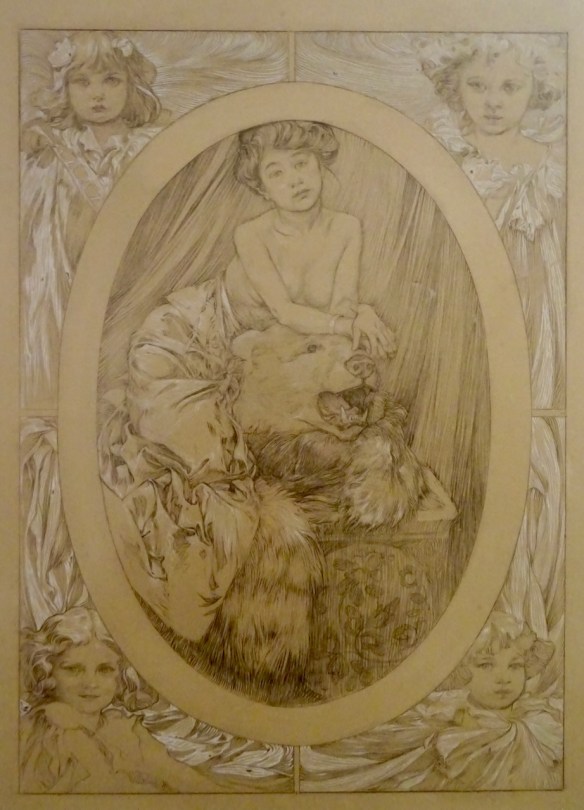
 I particularly loved being able to get close up to some of Mucha’s drawings. Woman on a Bear Skin is drawn with a pencil and a white crayon on a brown ground. It is amazing. A photo does not even begin to do it justice. It was also behind non-glare glass which does not photograph the best.
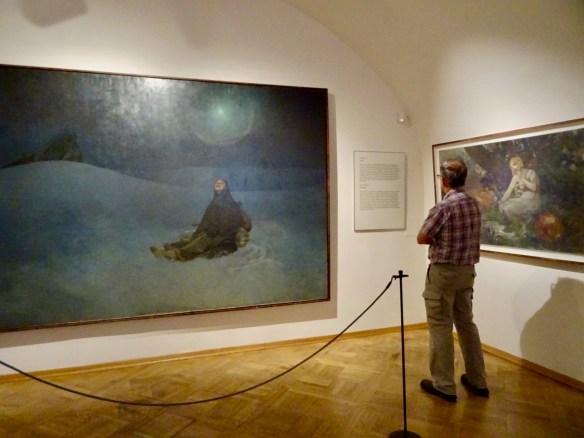
 Winter Night, or Siberia, may have been Mucha’s response to the terrible suffering of the Russian people after the Bolshevik Revolution. There was a famine that killed millions of people. It is difficult to see, but in the upper left of the painting there is a pack of wolves. The peasant woman seems to have resigned herself to her fate. I was not aware of Mucha’s large oil paintings. He completed a series of very large canvases called the Slav Epic, a series of 20 enormous canvases that show the ethnic roots of the Czech people. Unfortunately we weren’t able to visit the Czech National Gallery of Modern Art to see these paintings as it was under renovation.
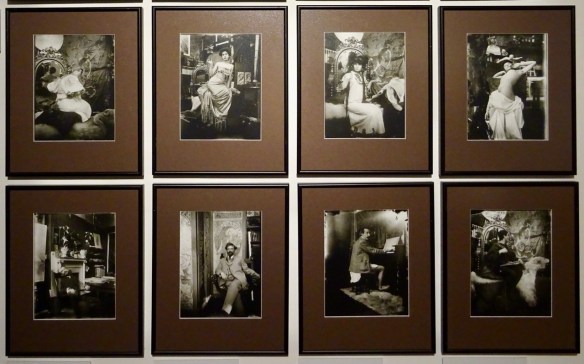
  This collection of photographs was interesting. It showed some of Mucha’s models, and the bottom two middle photos are Mucha in his studio and Gaugin playing the piano…without any trousers!
 Pages of his sketchbooks are on display. I love seeing artist’s sketchbooks. It is a way of understanding how they think about their art.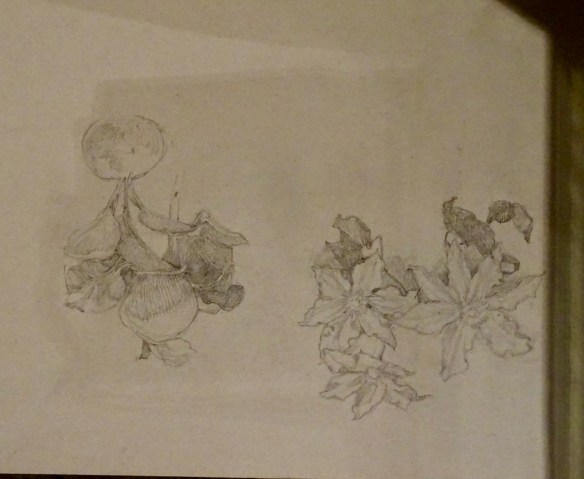
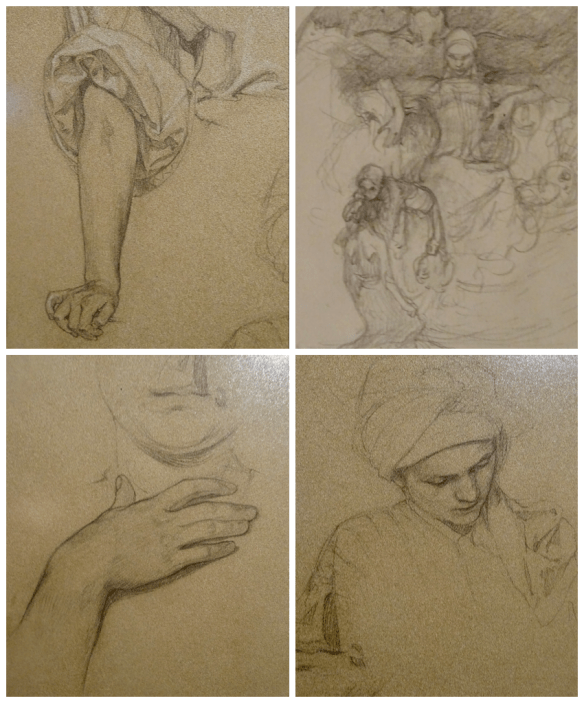 Not all the sketches are detailed drawings. There are some quick gestural studies as well.
 Another study using pencil and white crayon on brown paper. Just gorgeous!
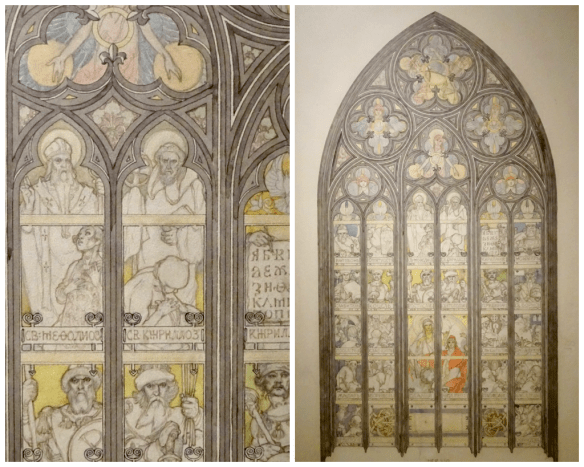
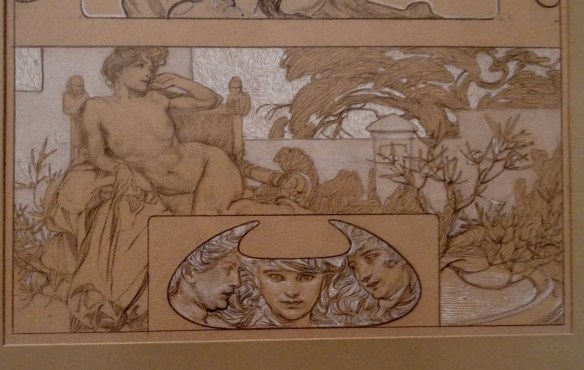 This is a study for the stained glass window in St. Vitus Cathedral. Mucha was skilled in many areas of artistic expression.
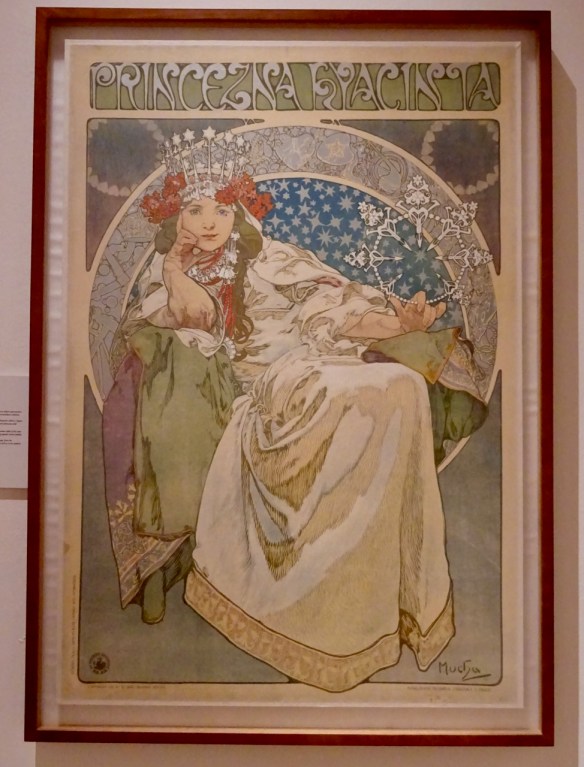
 Mucha created this famous poster for the ballet named Princess Hyacinth. I was happily snapping photos when near the end of our visit a docent told me that photos were not allowed. I was surprised as we have been able to take photos, without a flash, every where else we have been. I am very happy she didn’t see me until near the end of our visit!
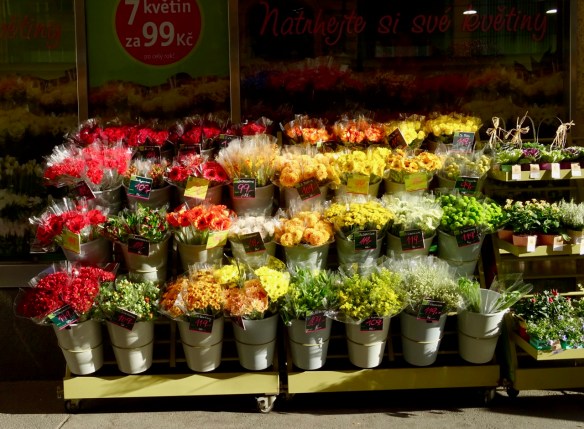
 One of many flower stands in the city. I often see both men and women carrying bouquets of flowers.
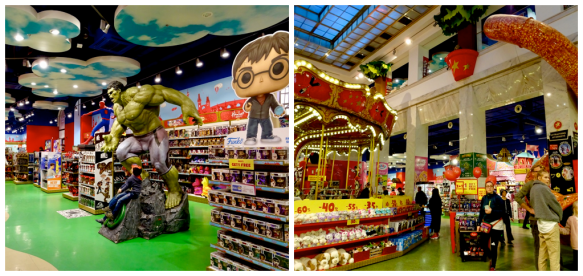
 We saw a toy store so took a peek inside. OMG! it was huge, very noisy and had a full size carousel!
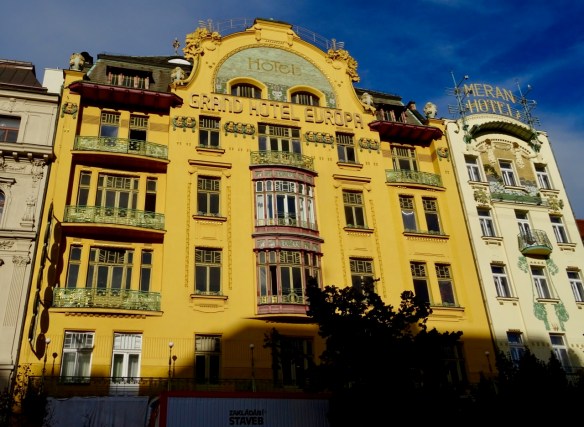
  This made us think of the Hotel Europa we stayed at in Egypt a few years ago. It certainly was not grand and it wasn’t a pleasant experience at all!
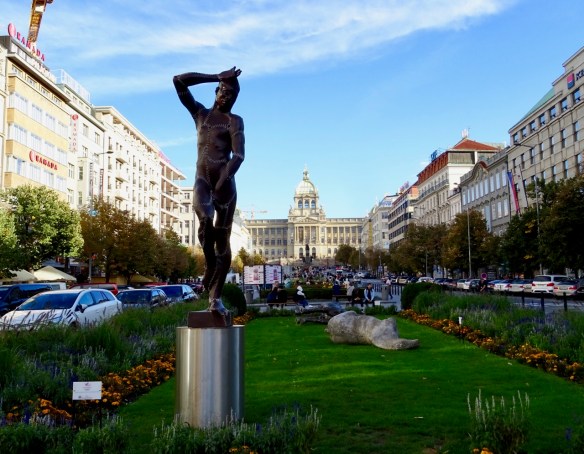
 Walking back along Wenceslas Square I notice that someone has knocked over the horse sculptures we saw earlier. I like this statue, all covered in sewn leather, with his hands sewn to his head and groin. Not sure what it is supposed to represent but it does make viewers pause and contemplate.
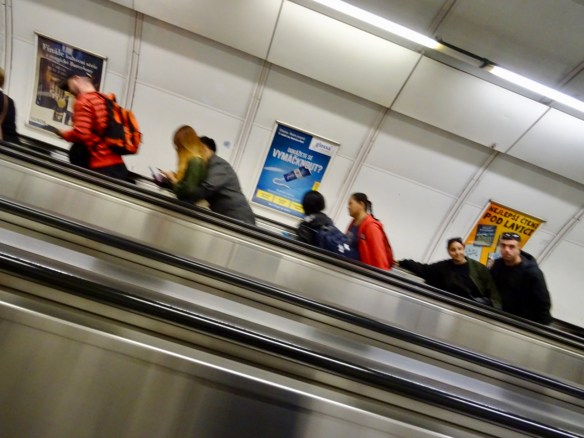
 I keep trying to get a photo that shows how strange people look on these long metro escalators. There is an optical illusion that happens and everyone appears to be either leaning forward or backwards, depending they are going up or down the escalators. Somehow it just doesn’t show that well in a photo. The camera doesn’t see things the same way as our brain does. It is very curious and I comment every time we ride these crazy, long, steep fast escalators.
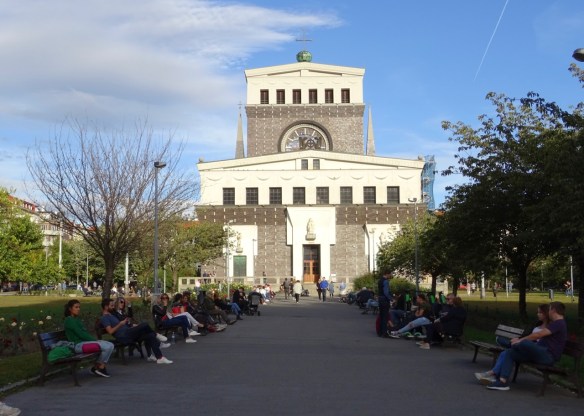
 This church is in the park right beside the metro stop near our apartment. We were curious to see inside but it is under renovation and the doors are locked. We sat and had tea in this park the day after our flight into Prague over a month ago.
 I wanted to get a photo or two showing how people drink alcohol walking down the street, in the parks, and even on the metro (although they aren’t really supposed to drink on public transit). We see that in Prague and it was especially prevalent in Berlin. People walked around with their bottle of beer everywhere. Not what we are used to seeing at home.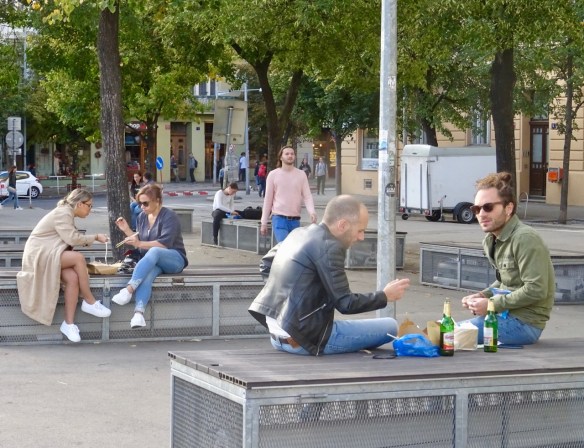
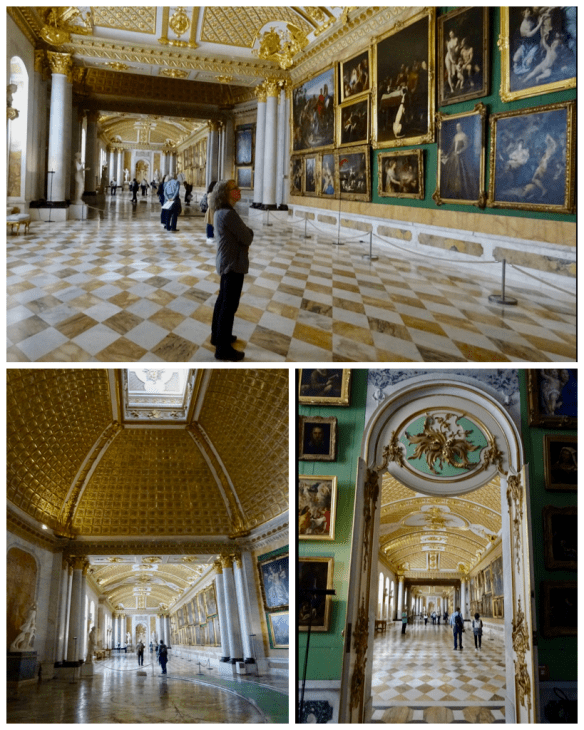
 The grounds in front of the palace. We have our picnic lunch and then visit the Bildergalerie.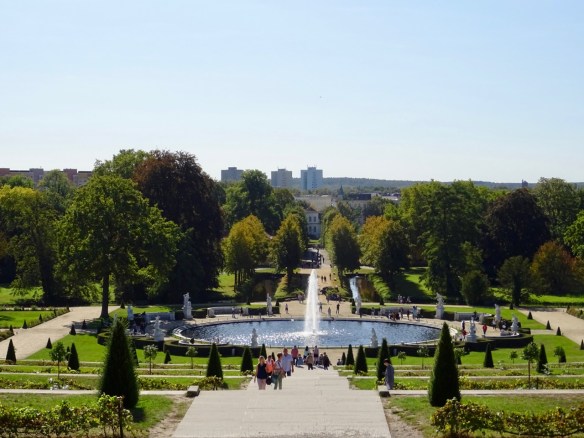
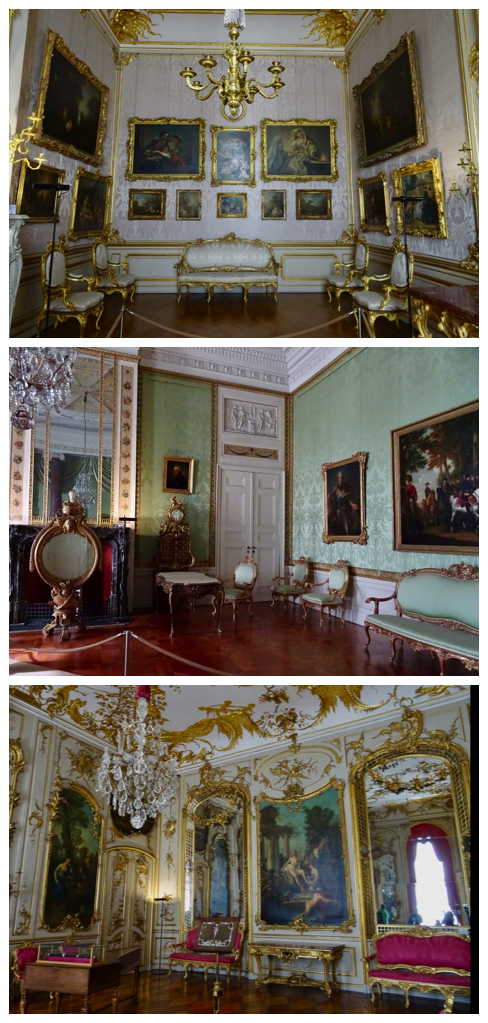
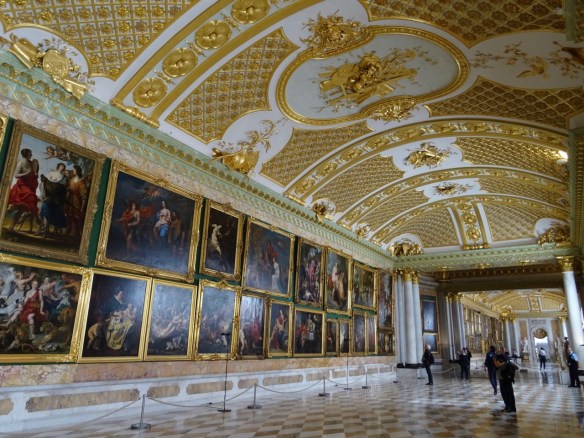 connected by a round room with a vaulted gold ceiling. At the far end there is a room for small paintings. The last photo is taken looking out from this room. There are a lot of beautiful paintings but they were a bit hard to see because of the glare from the windows on the opposite wall. I am surprised that they allow the much sunlight to enter the gallery, but it did make the space bright and very attractive.
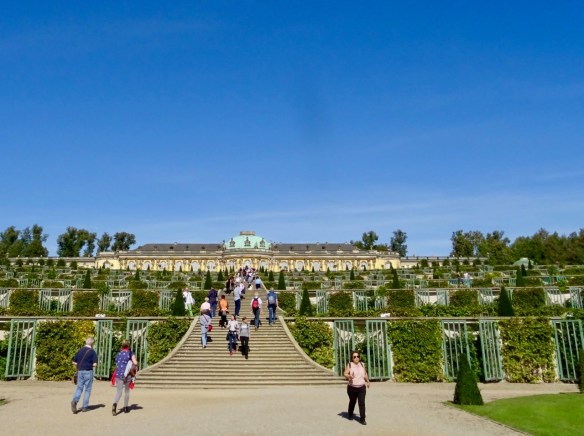
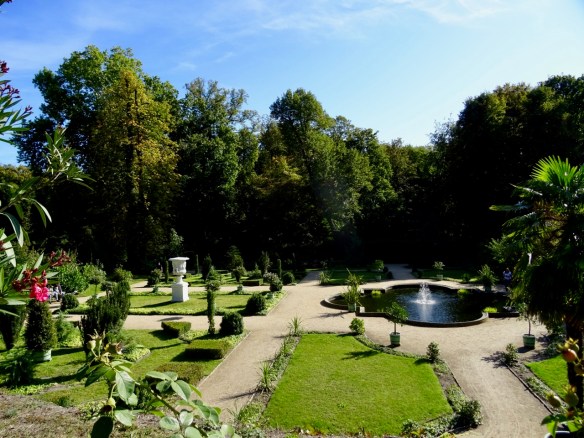
 We still had a bit of time before our palace visit so we walked down to the gardens. The layout here is reminiscent of Versailles in France, only on a smaller scale.
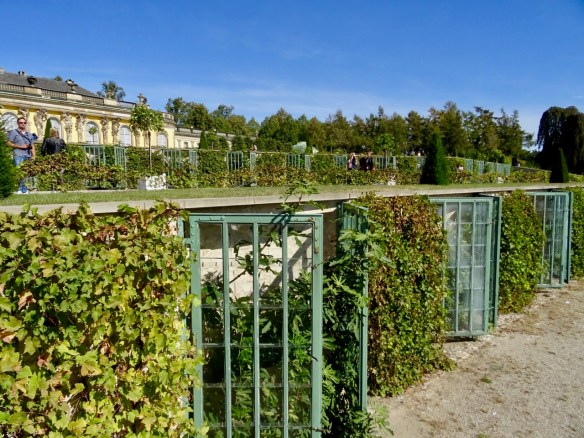
  All the terraces have these nooks with glass doors that can close when cold to protect the plants. Frederich loved to garden and grow fruit trees and grapes.
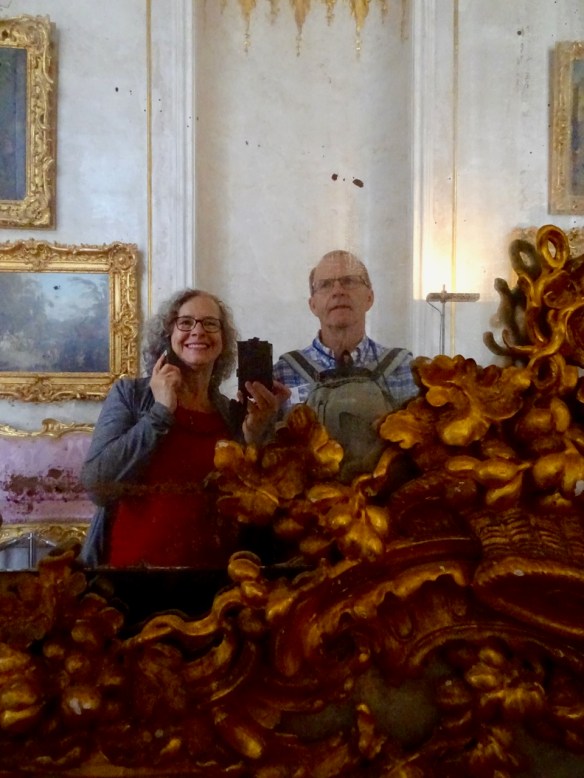
 We enter the palace and take this selfie in the first room. It contains artwork and is an entrance hallway, not very wide at all.
 The palace only contains twelve rooms. They are all connected by doors in a straight line that lead from one room to another. The room below is panelled in wood with inlaid botanical designs. They are very intricate.
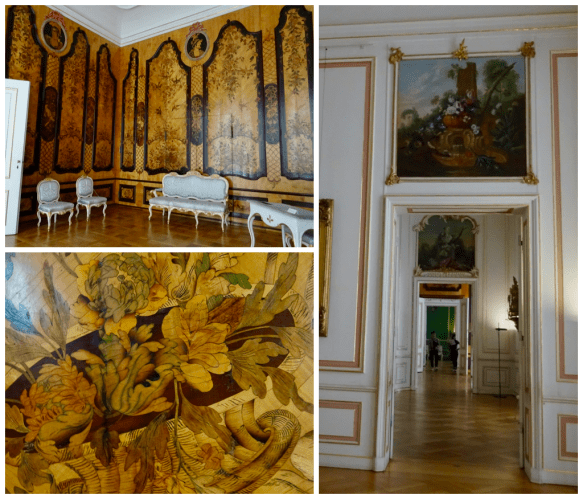 We walk through the rooms, each seeming to be a bit more elaborate than the next.
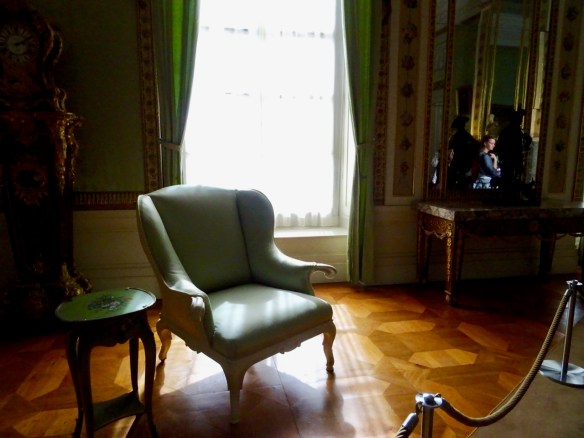
 The green room above was Frederick’s study. He suffered from asthma, gout and other ailments and he often slept in the green chair below as it was too difficult to lie in a bed. He died in this chair when he was 74.
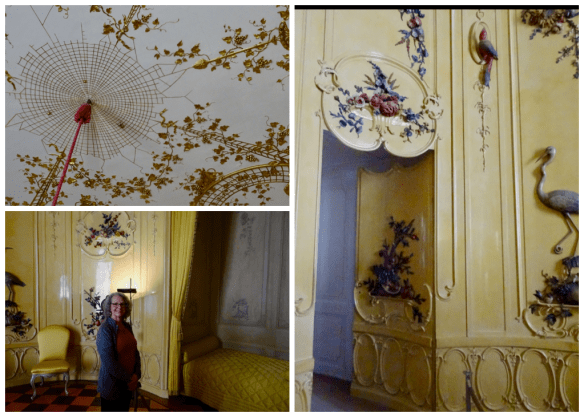
 Frederick loved nature and the palace was decorated with botanical themes. The palace was his refuge and he lived there from April to October. Sanssouci is from the French “sans soucci”, which means “without worry”. Frederick was married but lived separately from his wife. He only married because his father threatened him with imprisonment if he did not comply. His father was very strict and made his Frederick’s life miserable. He had a miserable childhood as his father thought him effeminate and tried to change him. Frederick was gay and surrounded himself with male friends and companions at Sanssouci. Women were not welcome there. The yellow room below has raised carved decorations, and a sleeping nook for the bed, as did all the bedrooms. Notice the spiders on the ceiling decoration.
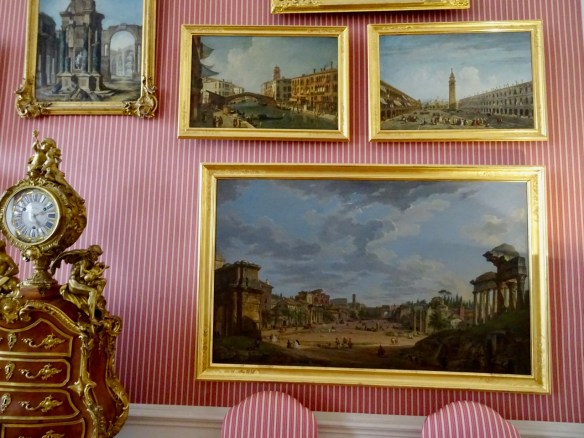
 Frederick was unable to travel to Rome and Venice but his palace had many paintings of these cities, which he greatly admired. I think how lucky we have been to visit these cities.
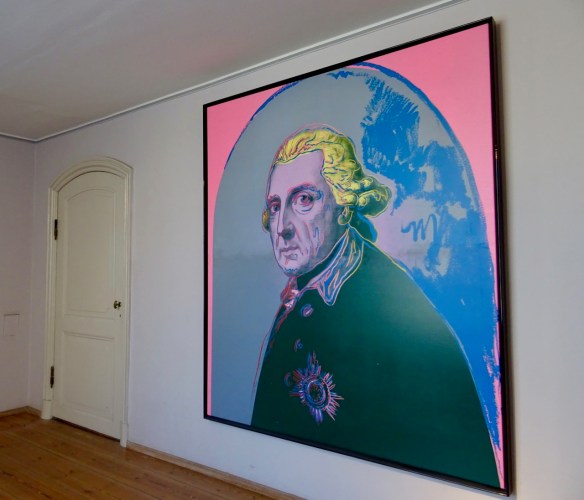
 As we exit the palace there is a huge painting of Frederick the Great by Andy Warhol. It is quite a dramatic change from the other artwork we have seen here.
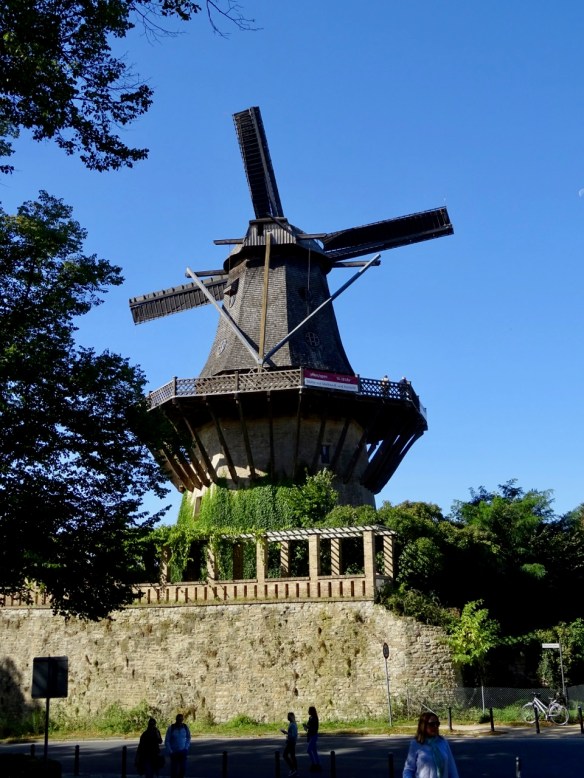
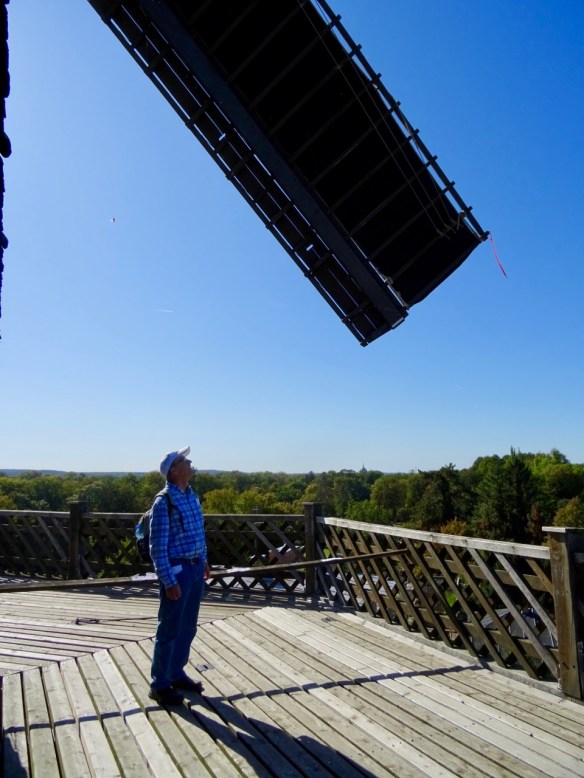
 We climb the interior of the windmill and step outside to check out the huge blades.
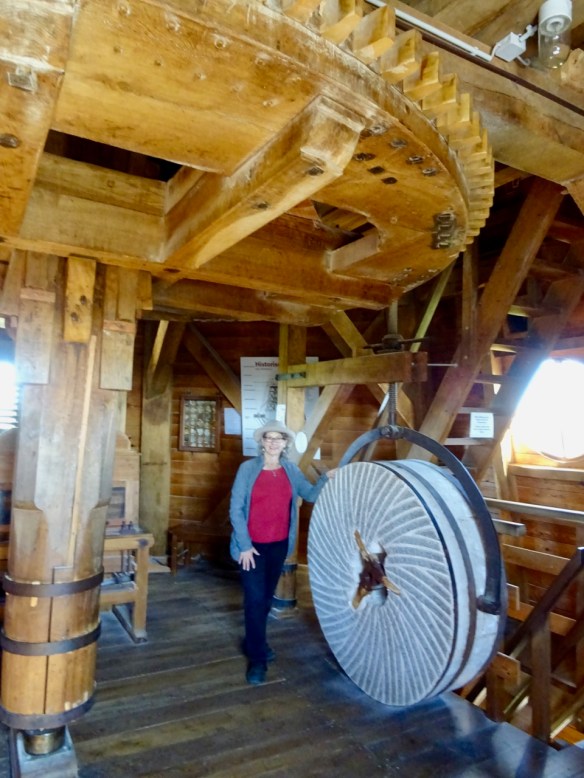
 This is still a working windmill. We are amazed at the size of the wooden wheels and cogs.
 We walk through the park with its gardens and fountains towards the Orangerie.
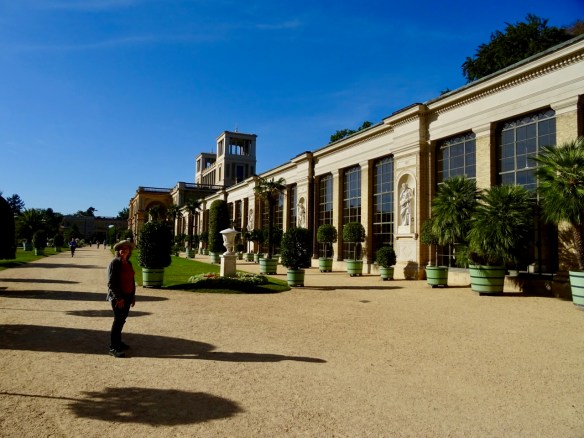
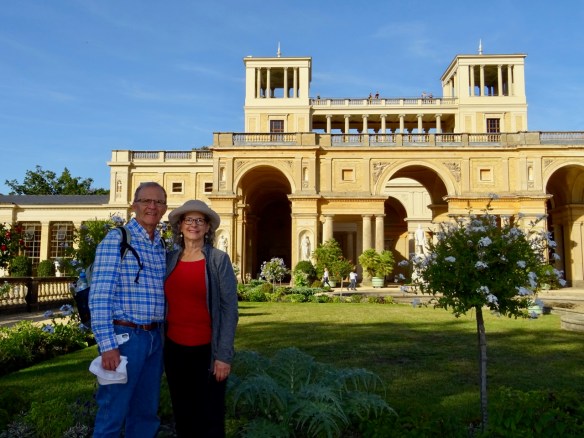
 Wow! We have never seen an orangerie this large. It is enormous! This photo shows one wing and the entrance behind me. There is another wing just as long on the other side of that entrance. This Orangerie was built by Frederich William IV in 1851-1864. It is 300 meters long.
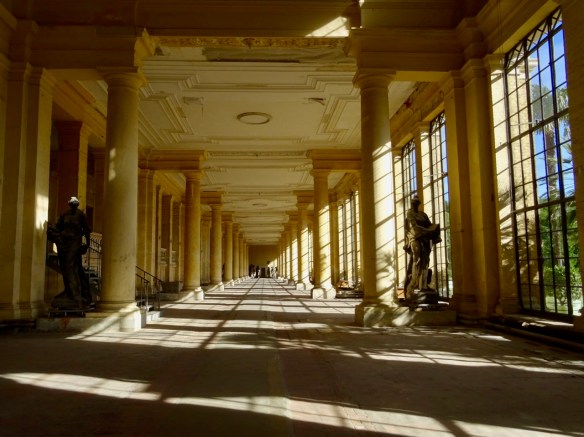
 Looking inside one of the wings of this huge orangerie. This is where all the potted plants that would not survive winter temperatures are kept. Like the potted plants in the photo above,
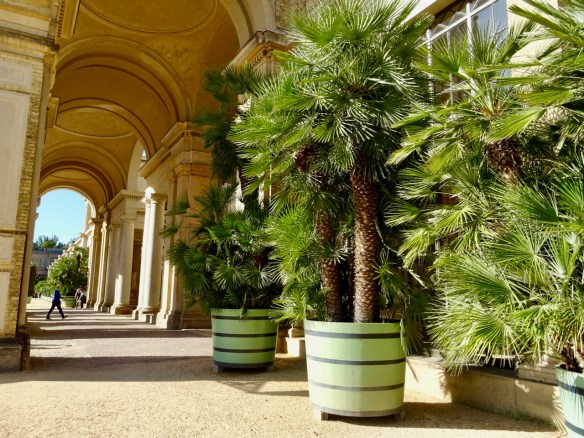
 Some of the plants are huge. These large potted palms definitely need a fork lift to be moved. No idea how they ever transplant them when needed? The pots are almost as tall as I am!
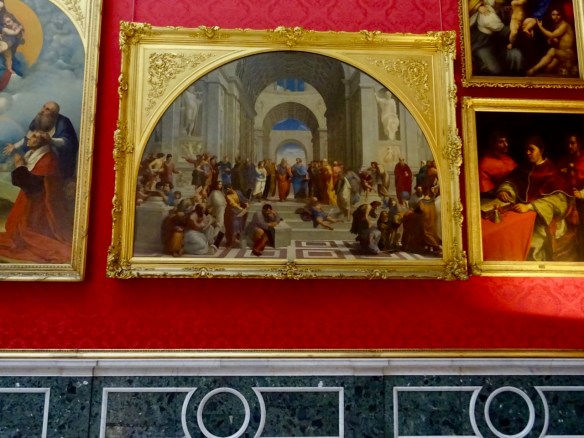
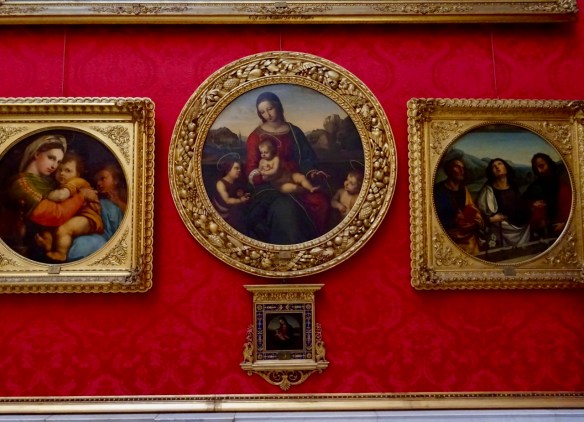
 We are surprised to find more furnished rooms and another art gallery in the Orangerie. The Raphael Hall has over 50 copies of Renaissance paintings.
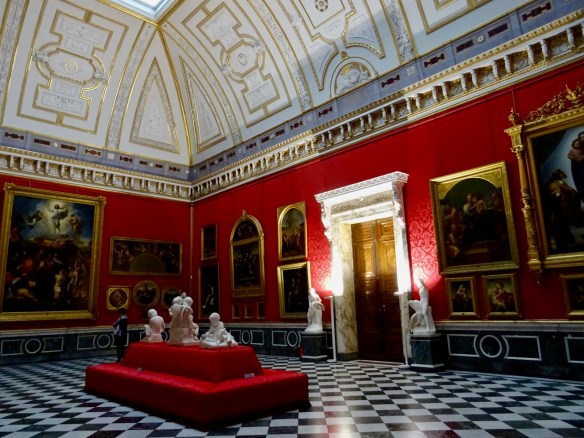 We saw the original of this painting in Italy at the Vatican.
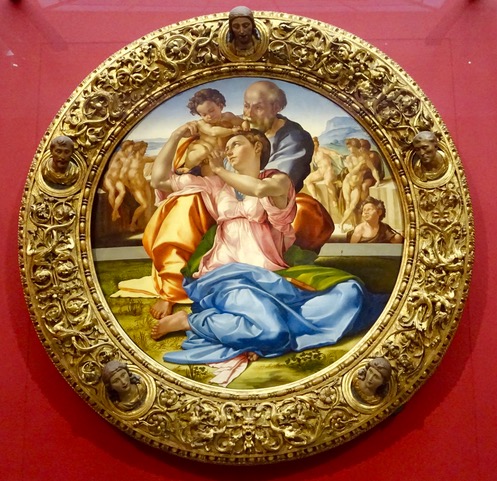
 Do you recognize the tondo by Raphael that we saw at the Gemäldegalerie earlier this week? Interesting how copying famous artworks was such a common accepted practice. Today I think it would be called forgery.
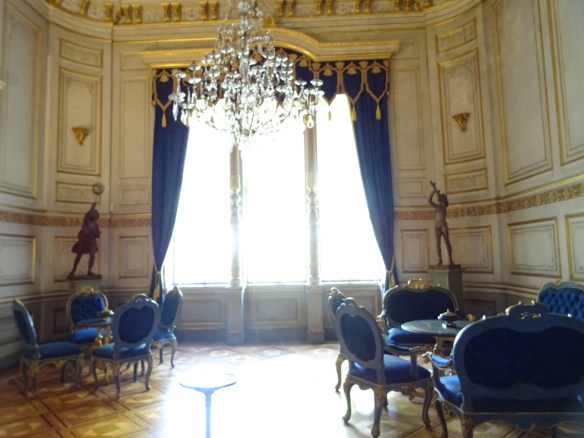
 Another room in the Orangerie Palace.
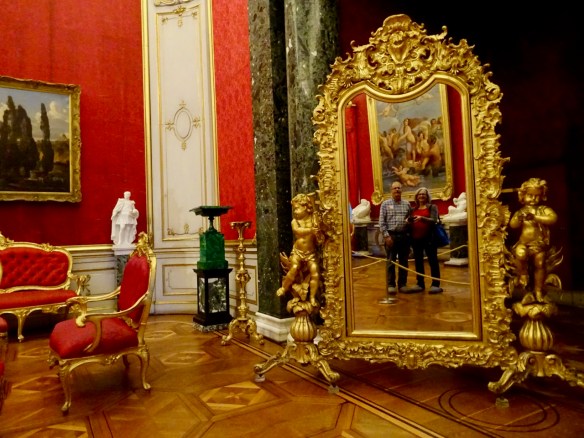
 And another selfie reflection in a very ornate mirror. Notice our big slippers!
 These are some of the stairs we climb to the top of the Orangerie.
  And more stairs…
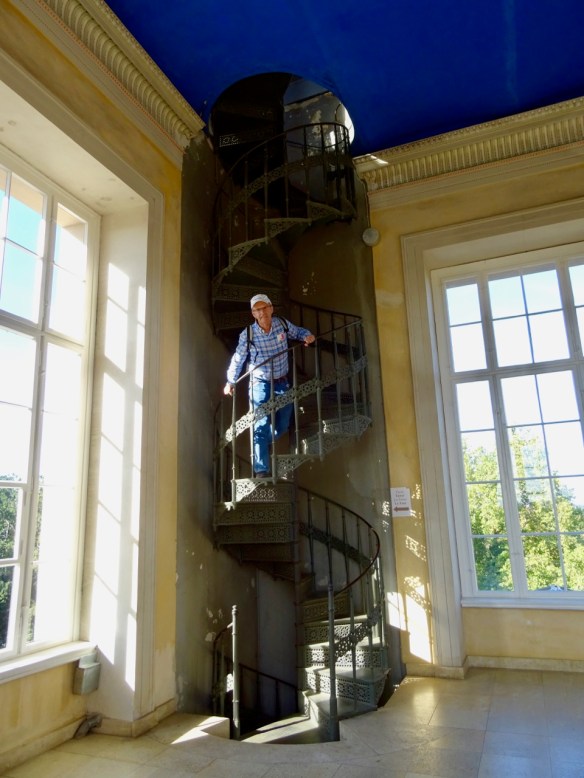 to get this view.
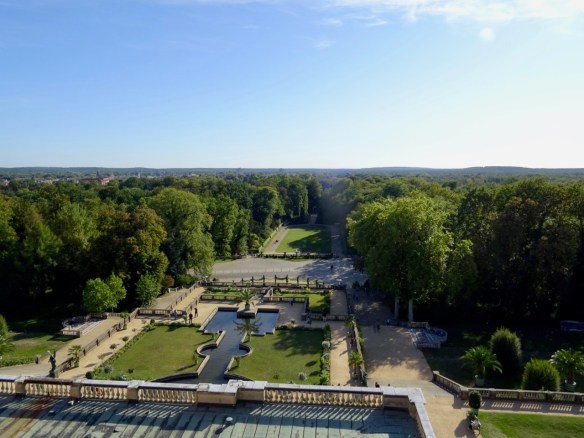 There is the East wing of this enormous building.
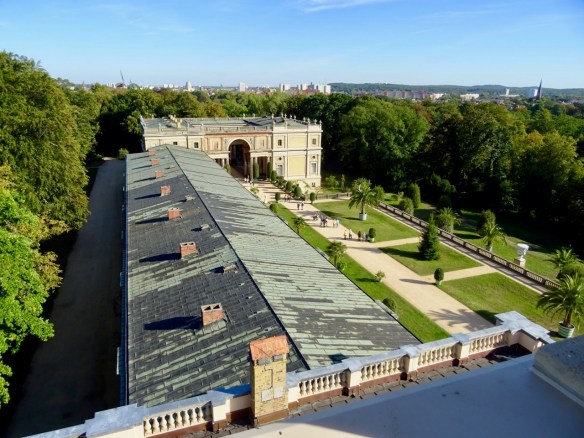 That dome way in the distance is another palace. The New Palace, built by King Frederick, is the largest and most impressive complex at Sansoucci, but it is way too far of a walk for us today and the park is closing soon.
 In front of the Orangerie.
 Every path here has a view at the end of it…something to entice you to walk and explore.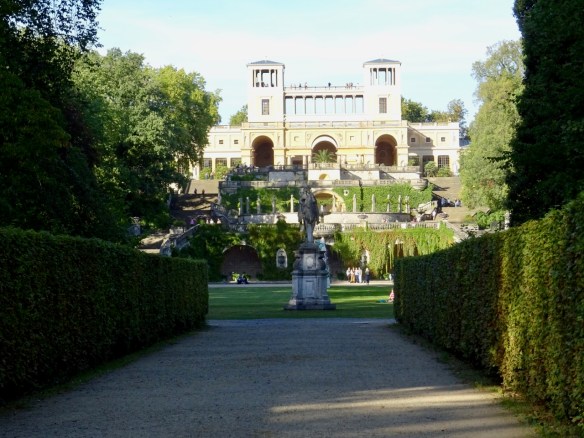
 We find the Chinese House which Frederick had built to enhance his flower and vegetable gardens and we can imagine elaborate picnics here in the summer. We make our way to the main gate just as Sanssouci is closing and catch the metro home. We had a beautiful warm day for our time here. A perfect day really.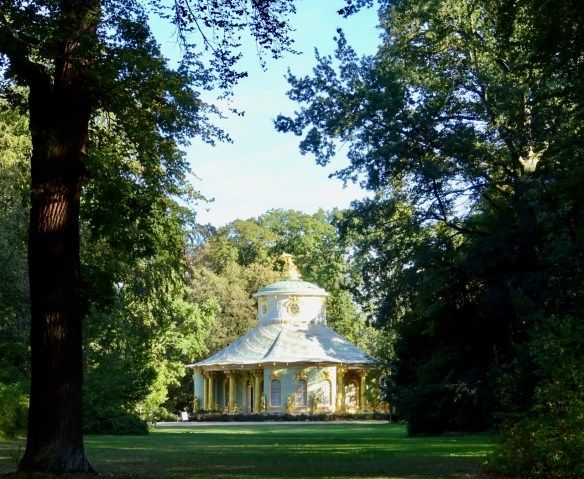

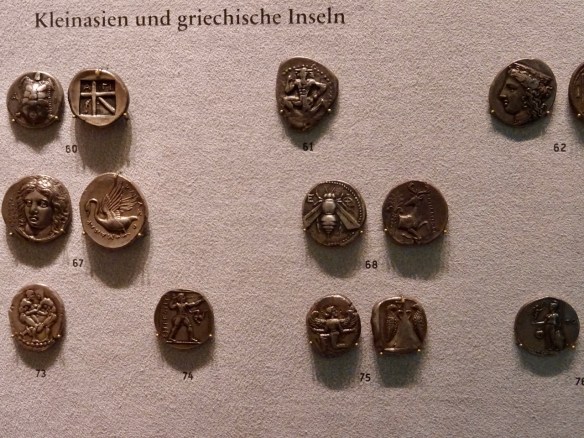
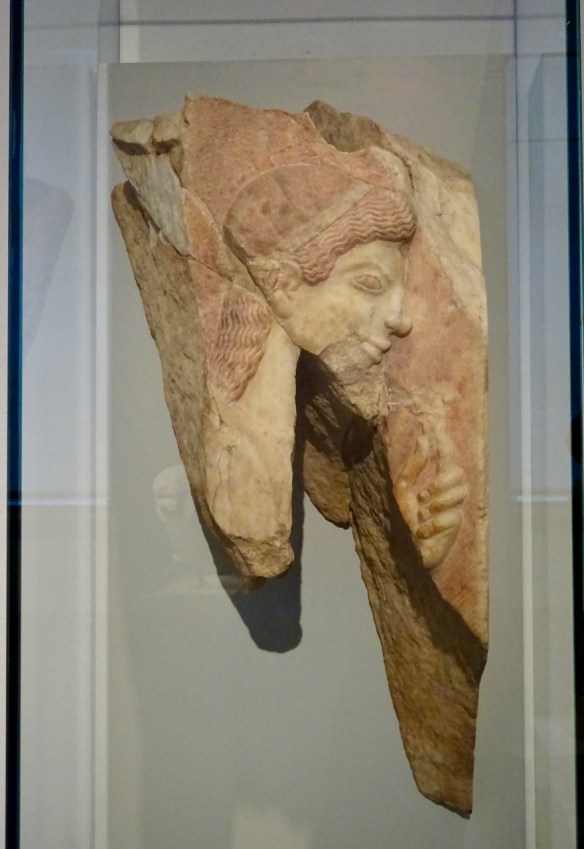 We were surprised at the detail of some of the1,300 ancient coins on display. The museum has more than 150,000 coins in its collection!
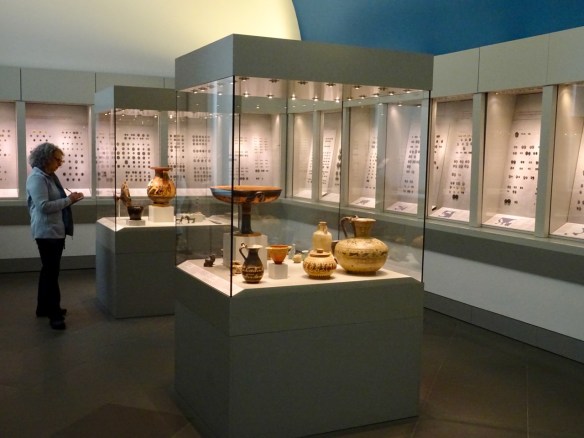
 Bob snaps a photo of me sketching…
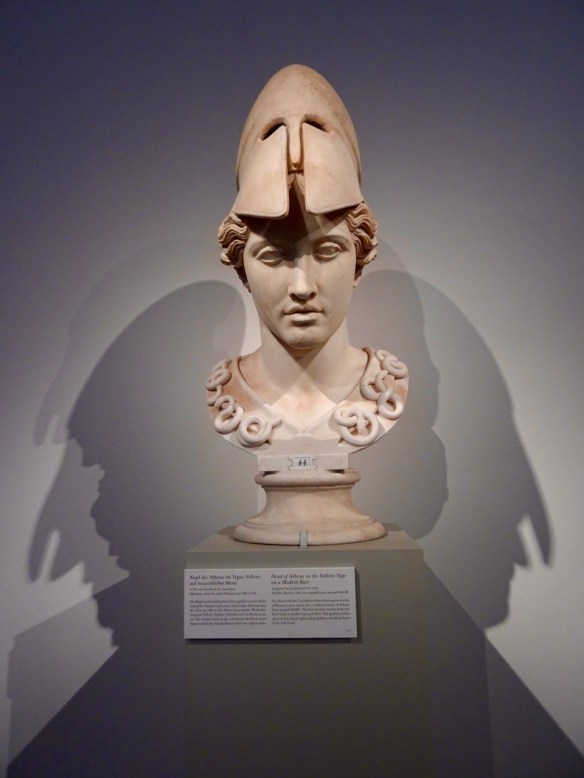
 and then notices the shadows behind this bust. He is getting very ‘artsy’!
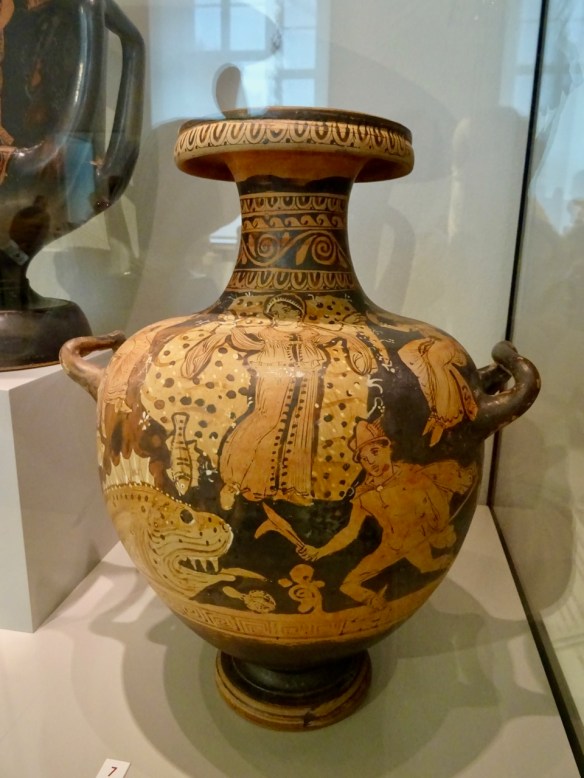
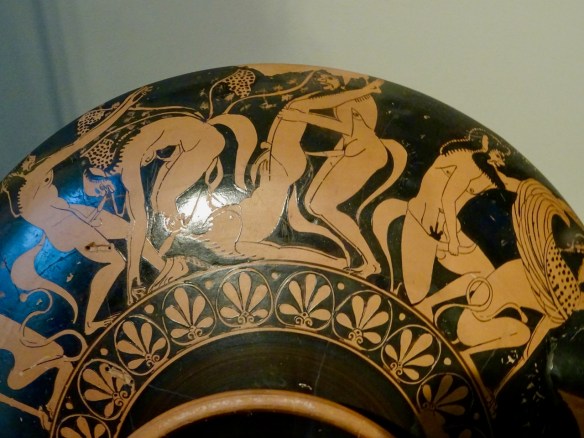
 This Greek vase from 350 BC showing Perseus slaying a sea monster with a sickle is quite different in design than most of the vases we have seen.
 The rotunda has a huge dome with a round skylight and has an incredible collection of sculptures on both levels.
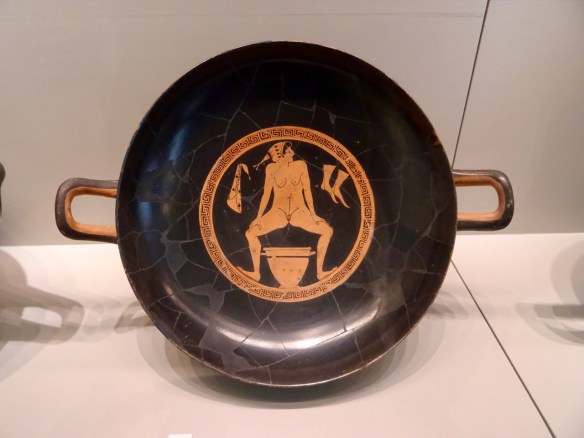
 In the next room this rather unusual drinking cup, is titled Hetaera Above the Chamber Pot!
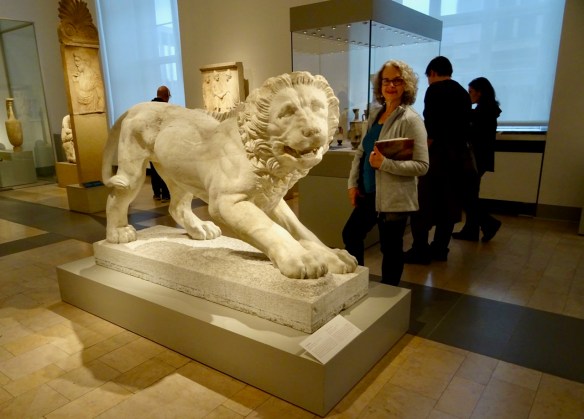
 This Funerary Lion just makes me smile…
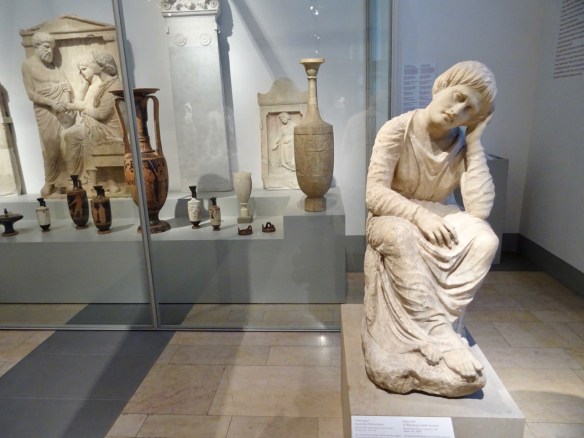
 and I love this statue of a mourning female servant from 330 B.C.
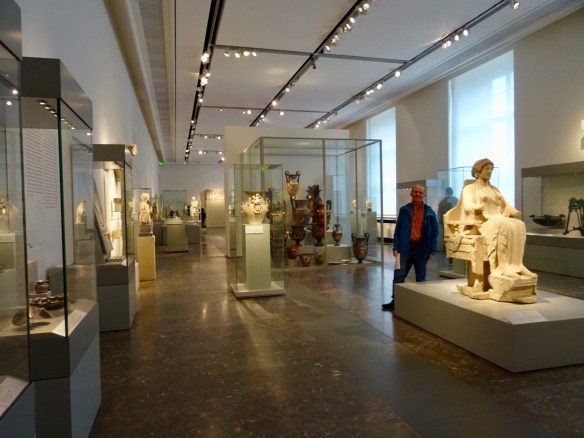
 There is so much to see here, room after room filled with beautiful art.
 The Torso of an Old Fisherman, from 200 B.C. is an example of Hellenistic sculpture representing ordinary people.
 This statue of Aphrodite, 2nd Century B.C., is thought to be one of the most beautiful ancient terracottas in existence.
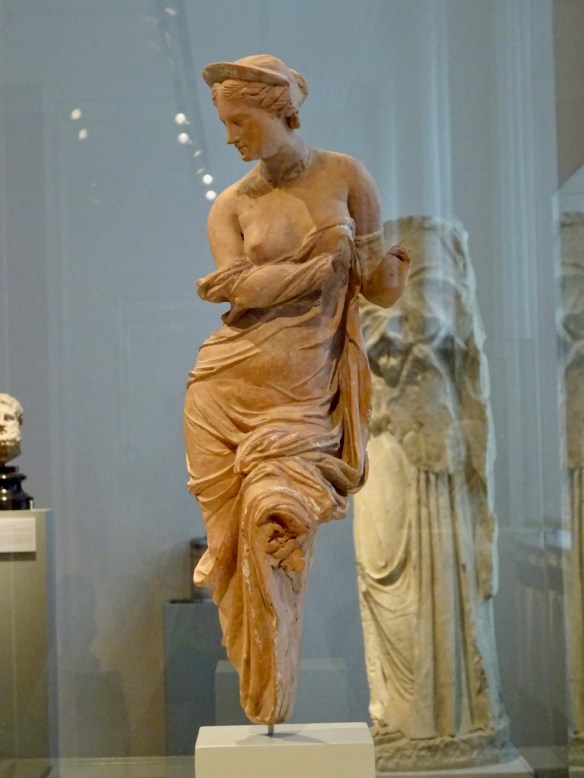 I think this collection of Middle Class Women from 325-150 B.C. is amazing. They were about 8 ” tall and are so detailed.
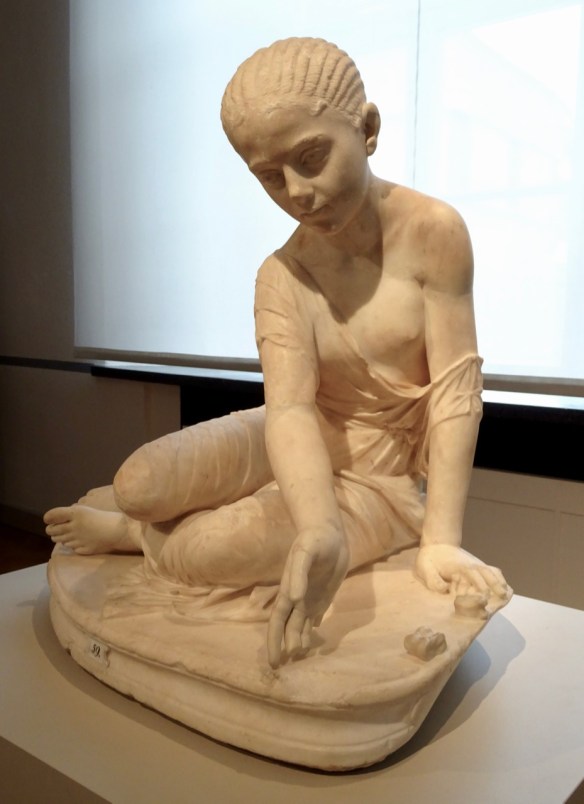
 The Girl Playing Astragal, or knucklebone, is likely a funerary sculpture.
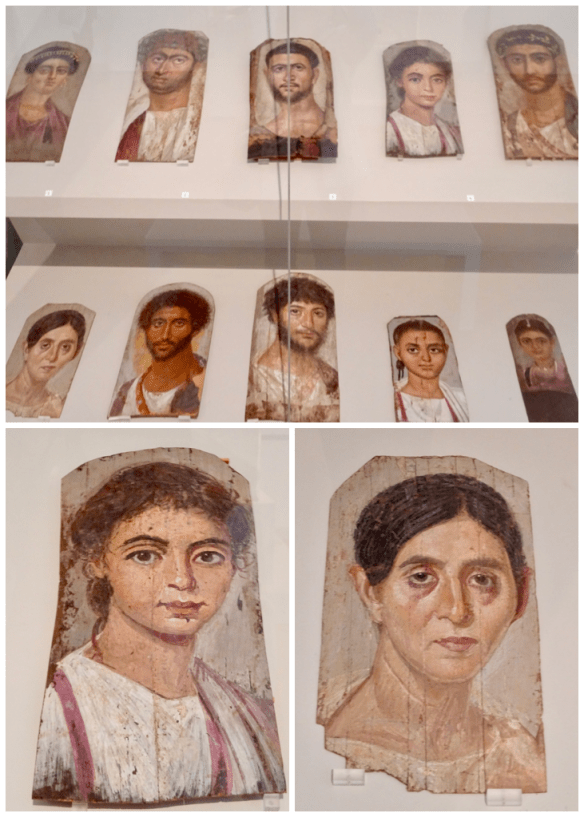
 These 3rd Century A.D.mummy portraits from Roman tombs in Egypt were a surprise. We had never seen anything like them. They were painted with wax and tempera.
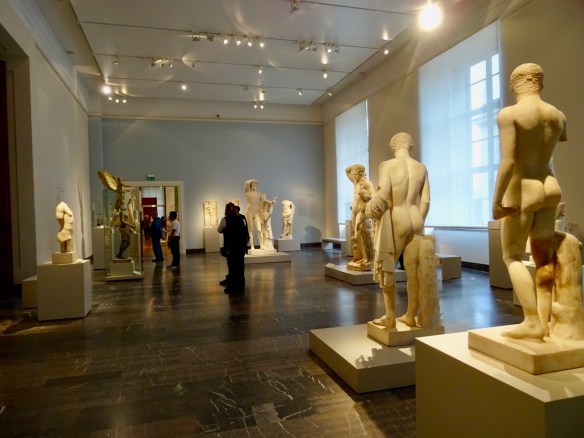
 Another sculpture filled room.
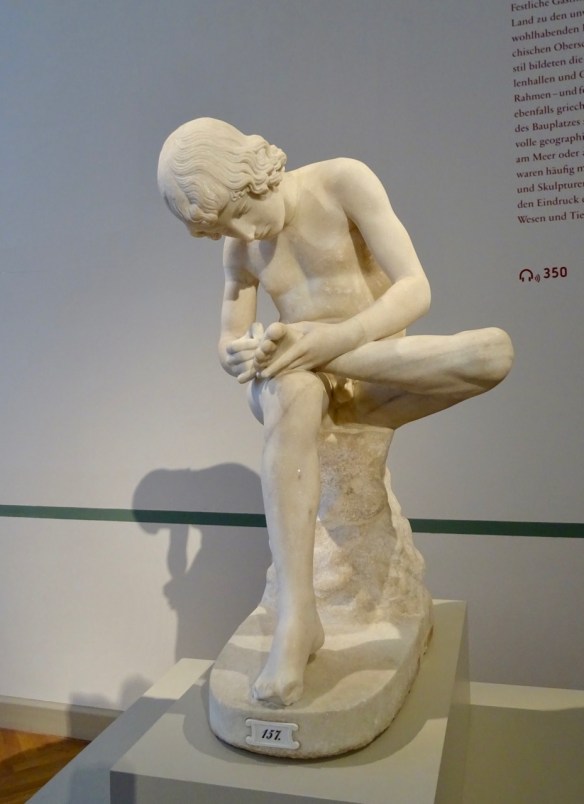
 We have seen Boy with a Thorn, or Spinario, several times in our travels…at the Uffizi Gallery in Florence, in Rome and in Paris. In Rome we saw the original bronze sculpture that inspired the marble copies, It is a favourite of mine.
 This looks like a painting,
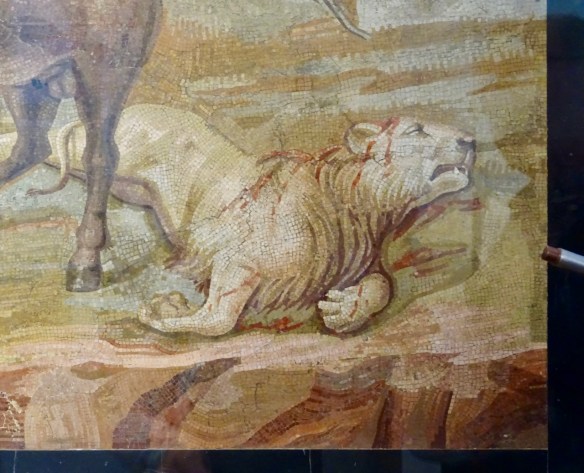
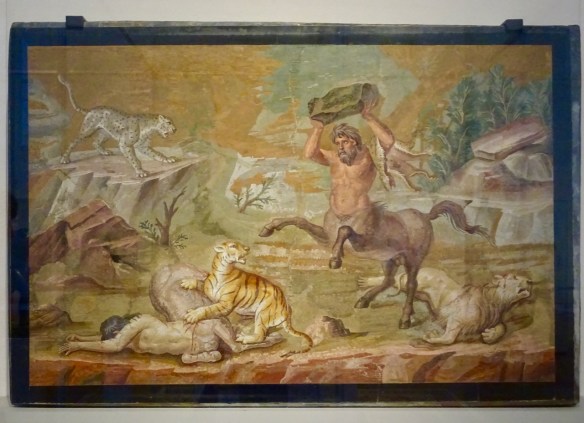 but it is actually a mosaic! I held up a pen in the corner for scale so you can see how tiny the mosaics pieces are.
 This sad little boy was likely on a tomb for a child.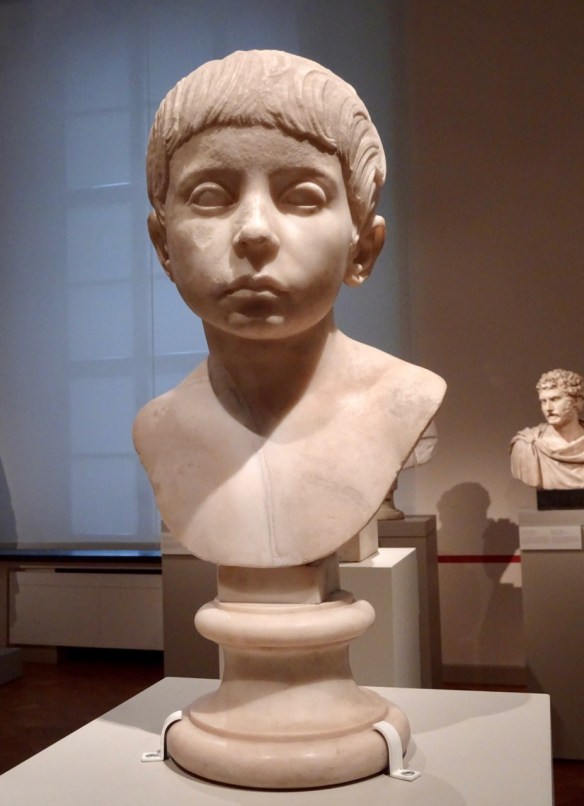
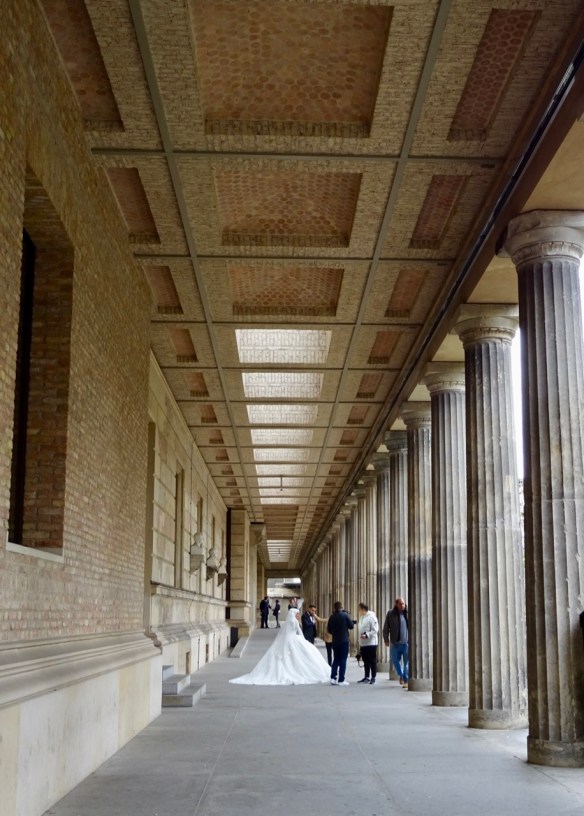
 On a long covered walkway to the next museum we see a wedding photo shoot.
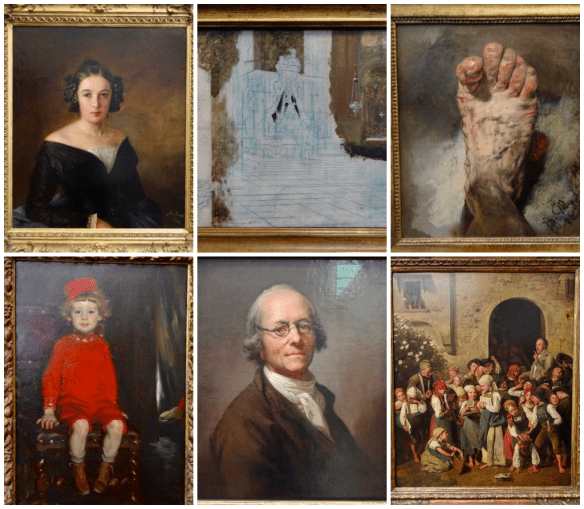
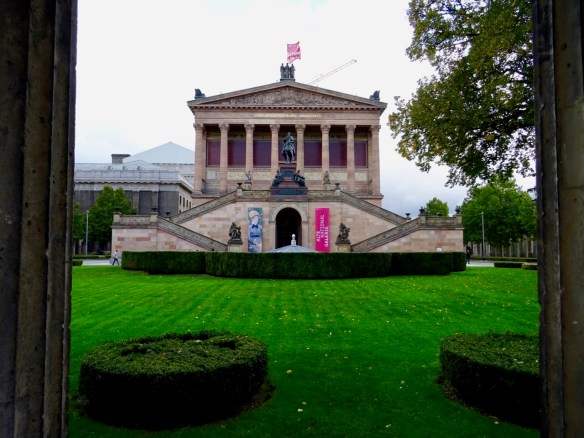
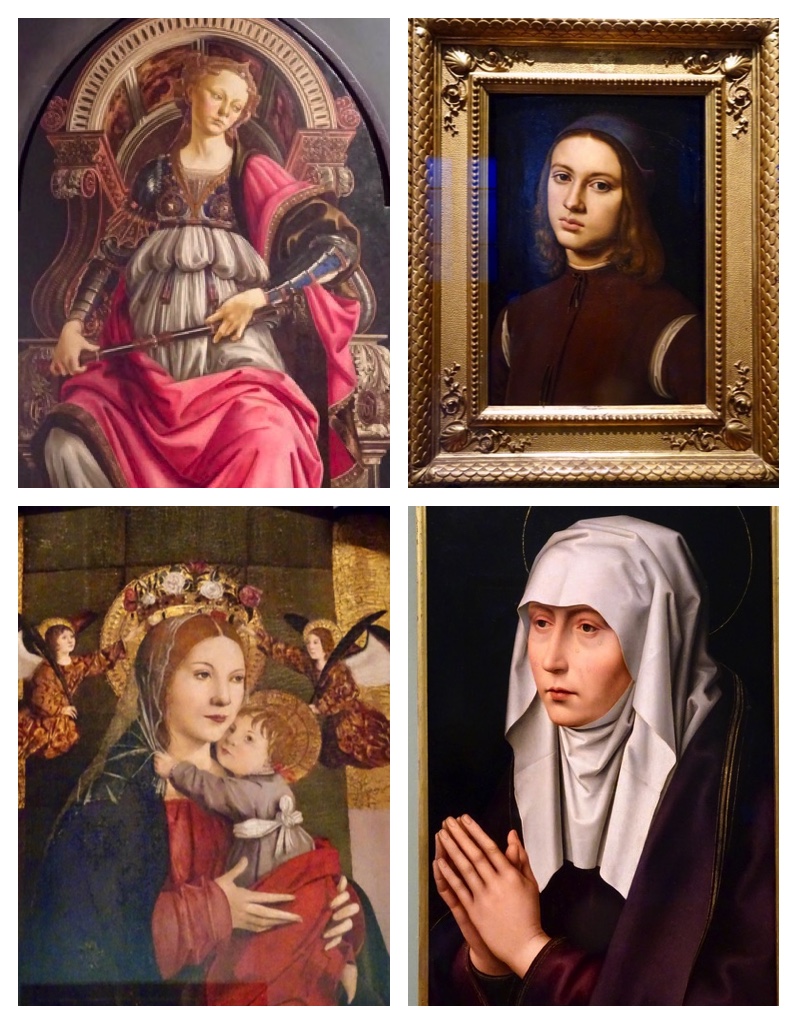
  The Alte National Museum in Berlin features Nineteenth Century art with works by famous painters and sculptors. These are a few paintings that caught my eye, all by German painters that I am not familiar with. There were several paintings that are only partly finished. I found these very interesting, as it is possible to see how the artists approach the painting process.
 There were some Renoirs, Pissaro’s and Carravagios, as well as Rodin’s The Thinker.
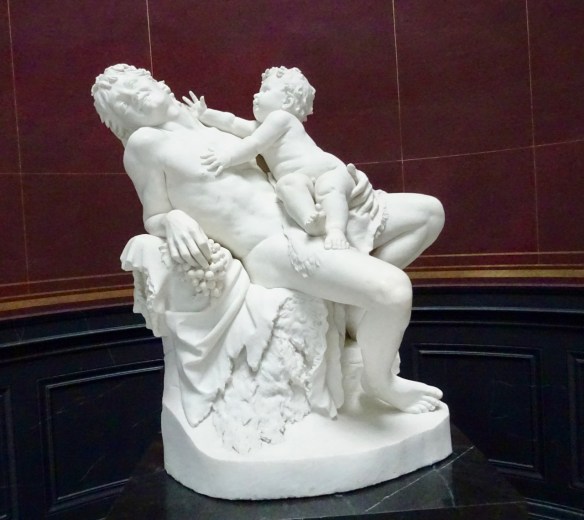
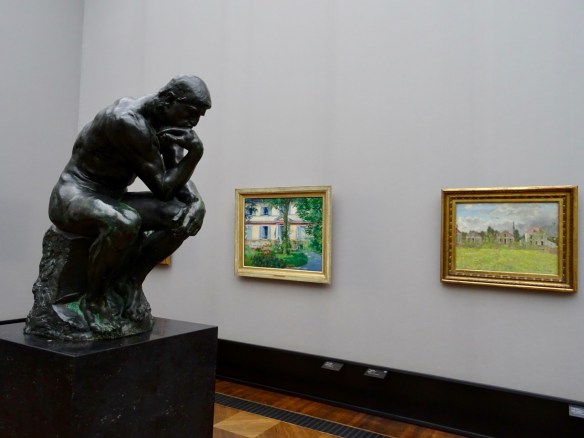 This sculpture was so lifelike and the pose was so natural. There is so much to see, and we have been at these two museums for over five hours!
 This is the Alte National Museum, seen from the covered walkway.
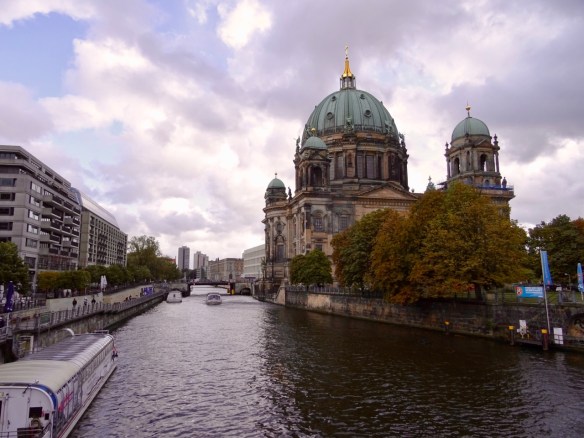
 As we walk to the bus we pass the Berliner Dom, the largest church in Berlin. This photo somehow makes me think of Notre Dame in Paris.
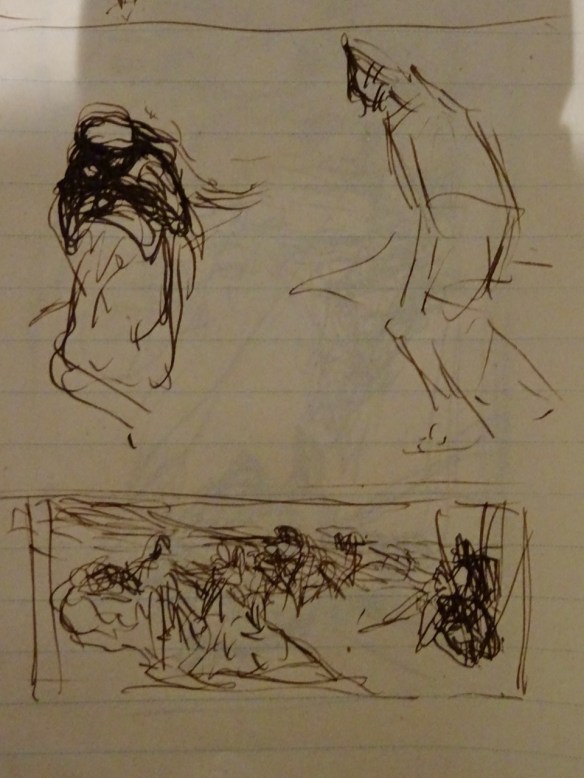
  I am went drawing tonight at a Meet Up Life Drawing session. Our model, Josephine, was very tall and thin which was challenging to draw. These are two minute poses.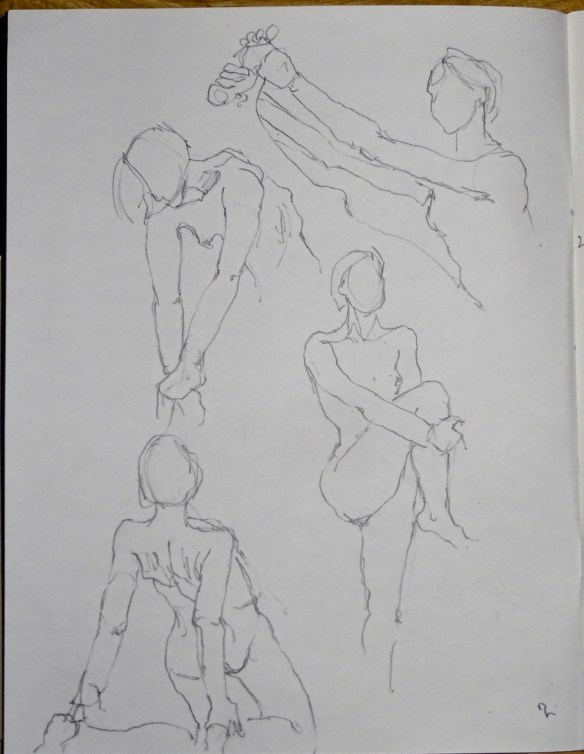
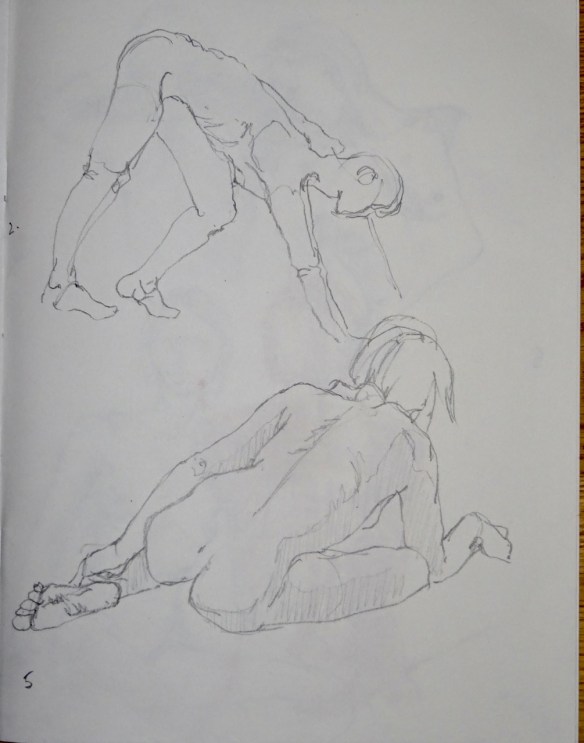
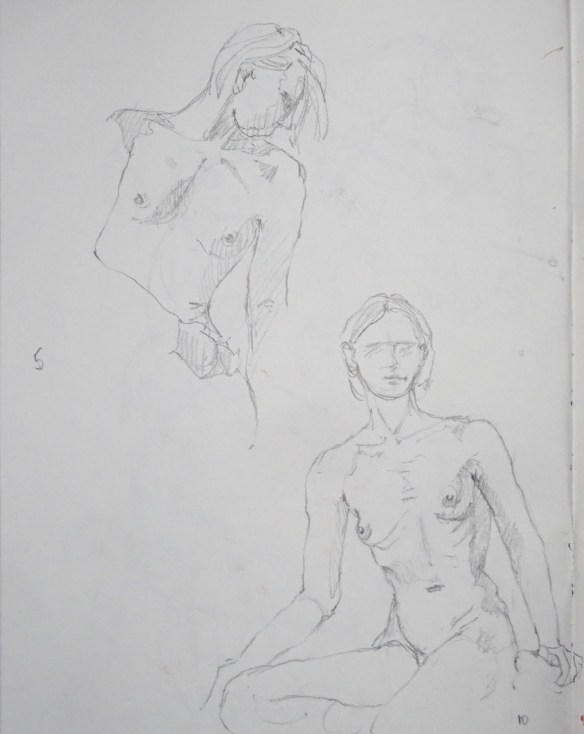
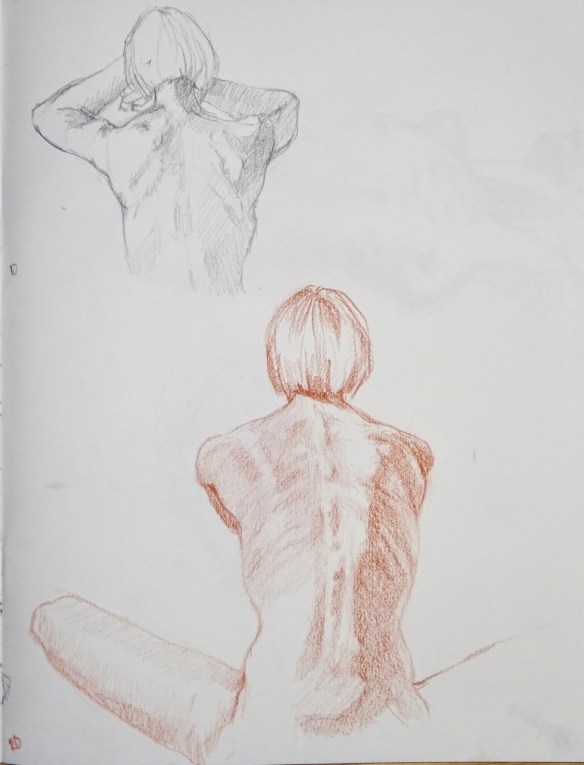
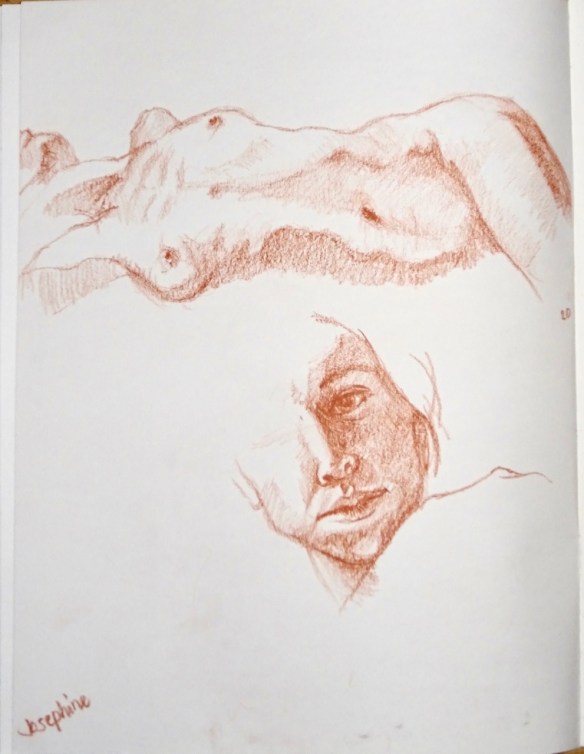
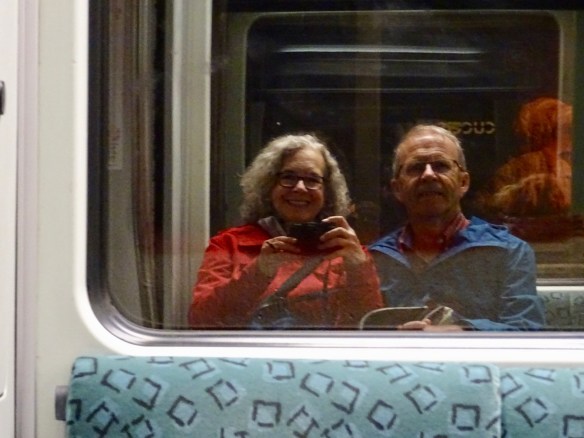 This is something we don’t see at home…taking your IKEA purchase on public transportation! It has been a long busy day and we are both a bit tired.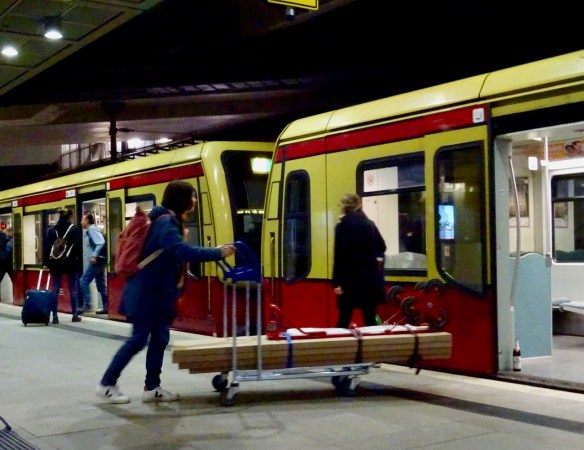
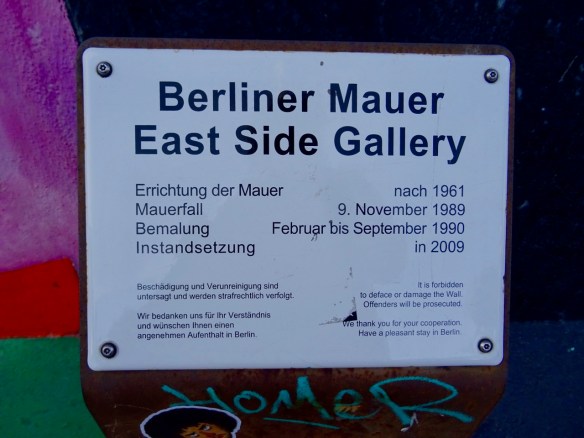


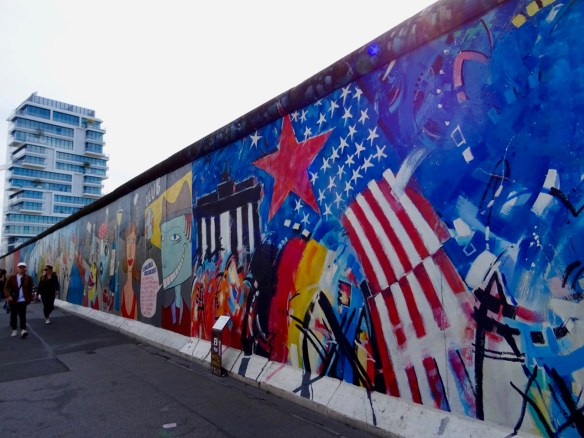
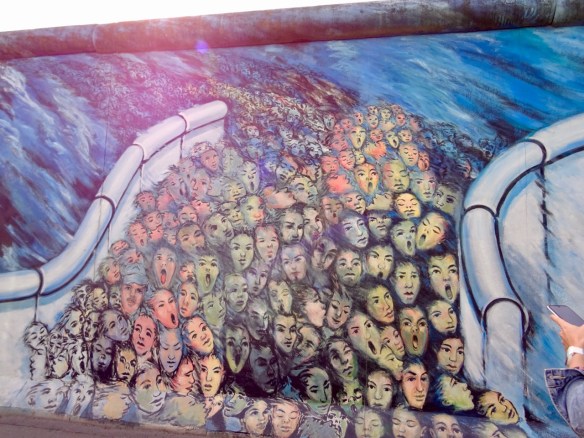
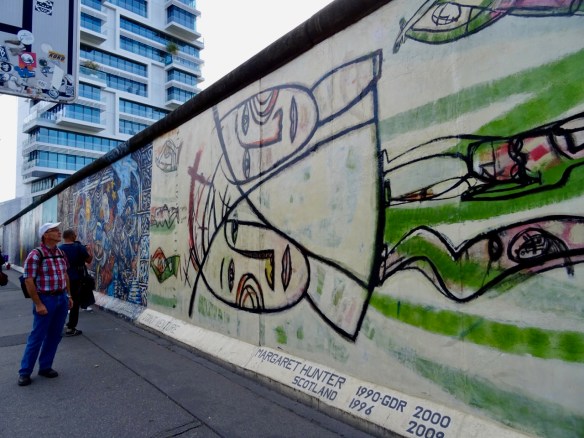
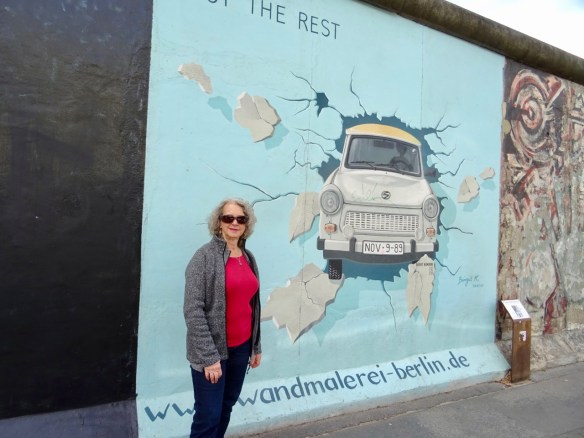 We see a white Trabant soon after seeing this.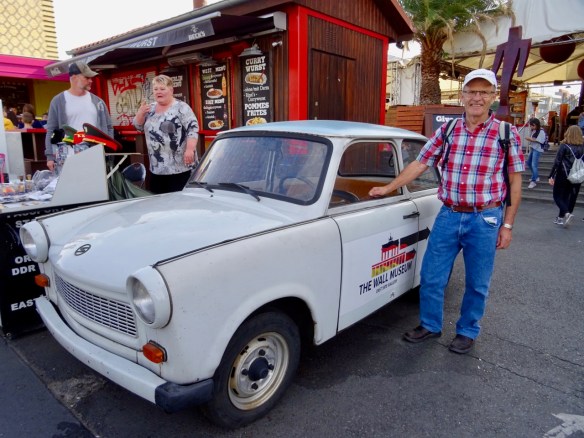
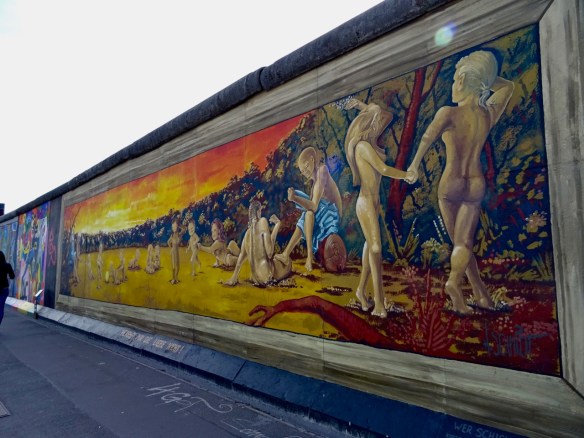
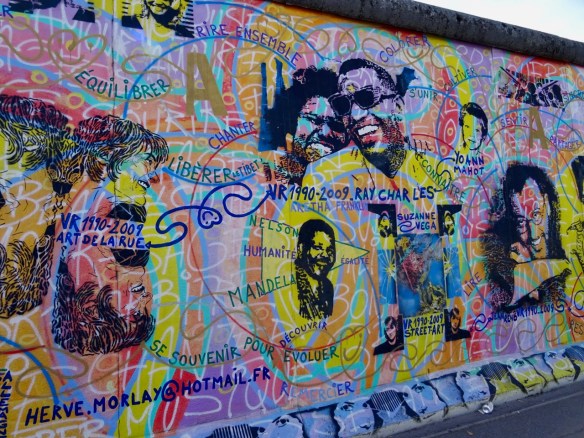
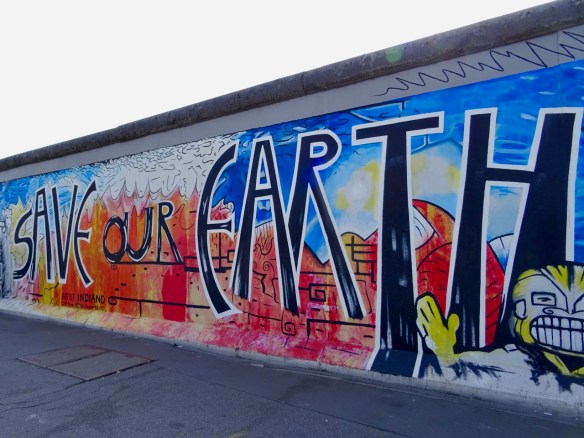
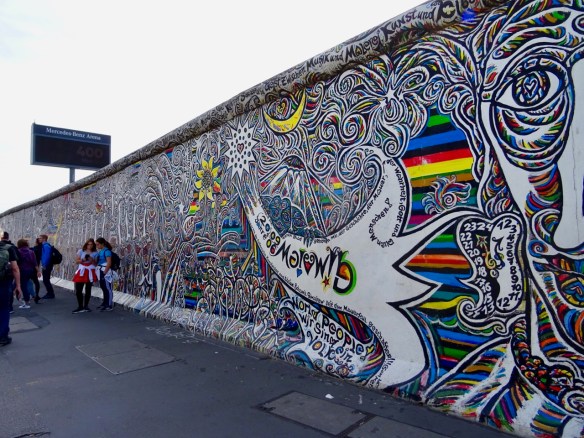 The graffiti n the back-side of the East Side Gallery is interesting too.
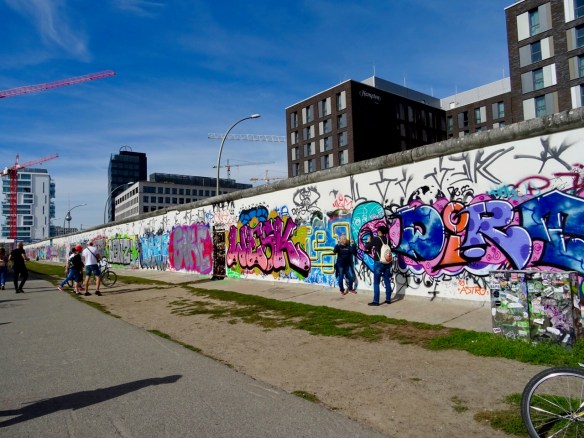 We stop for a snack and listen to some music along the banks of the Spree River before continuing our walk along the open air gallery.
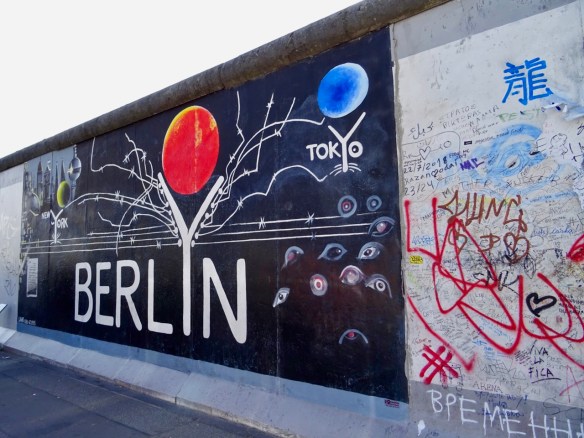
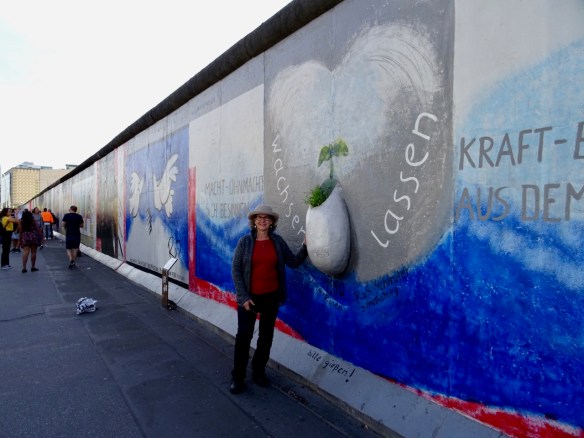
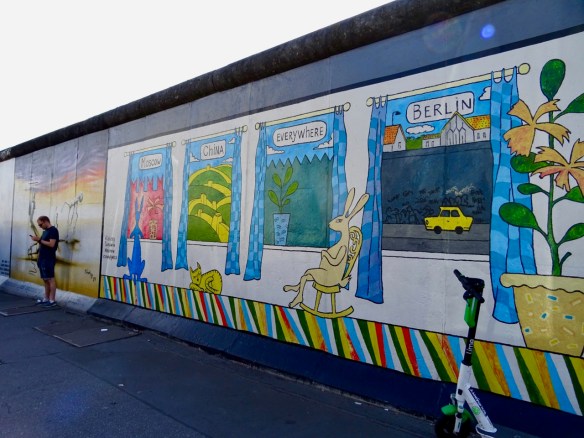
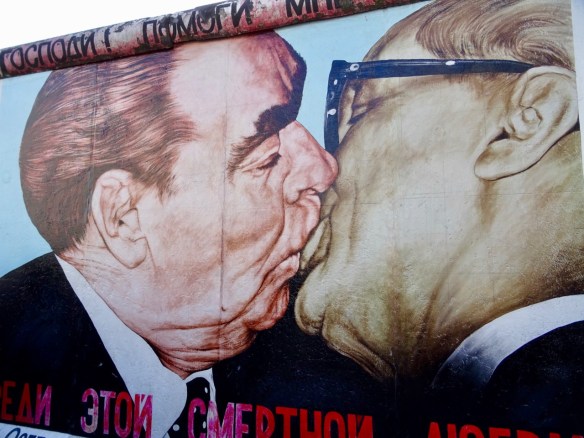
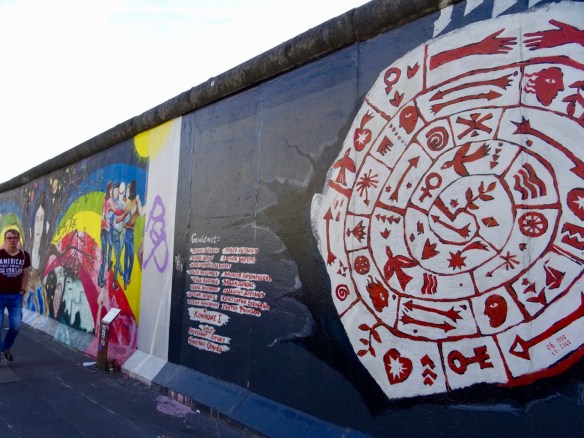

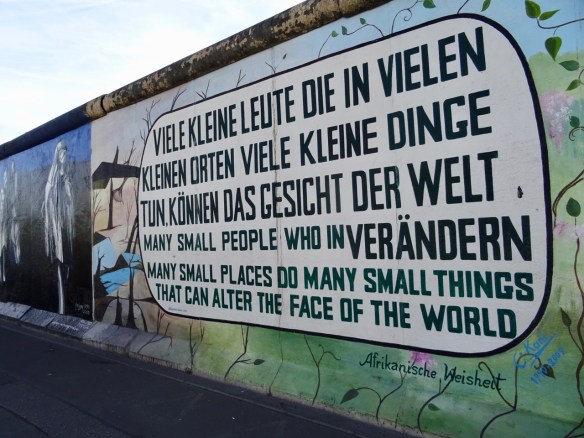
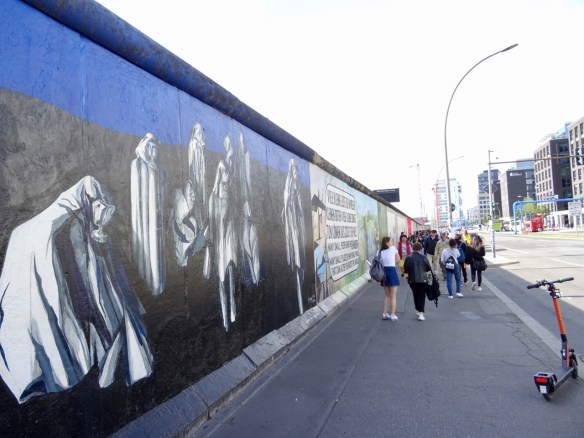

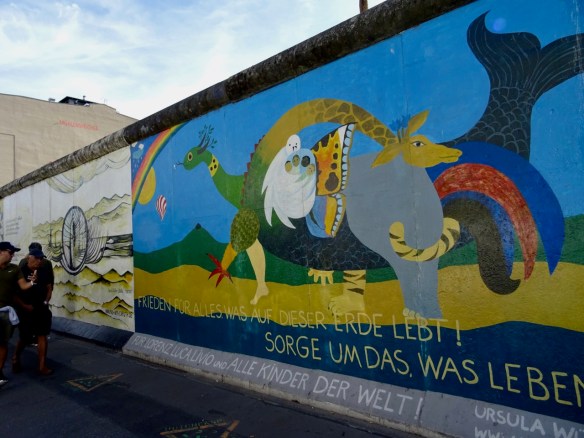
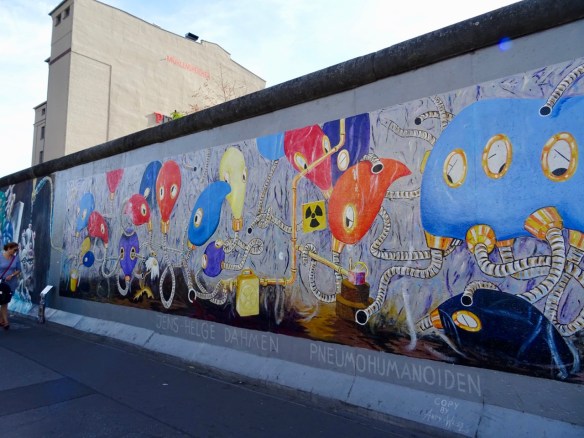
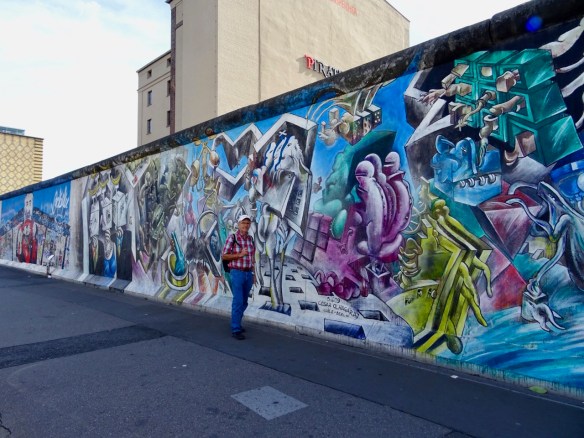 At the end of the wall we walk across the historic Oberbaum Bridge.
 Apparently all the hanging shoes are street art.
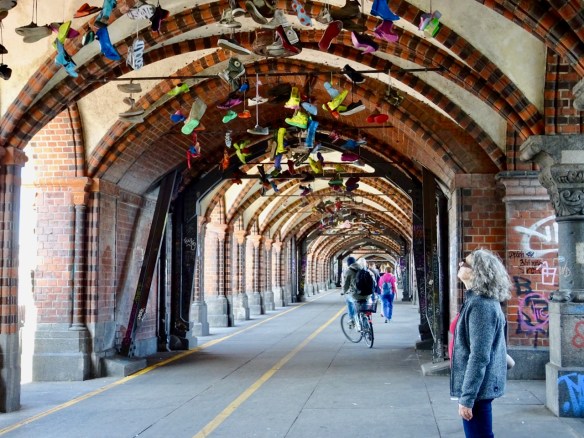 Next we take one of the old trams to Mauer Park which is the site of a huge flea market and a gathering place for Berliners and tourists alike.
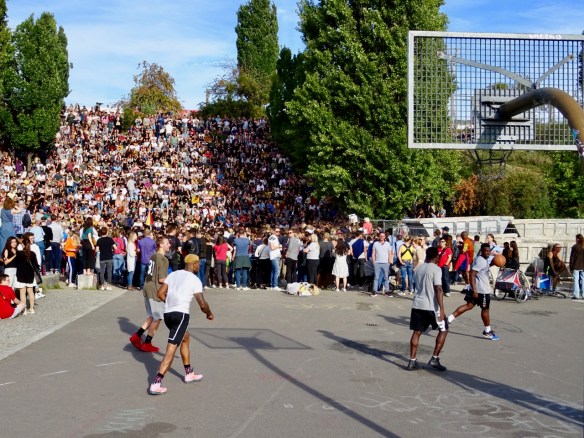
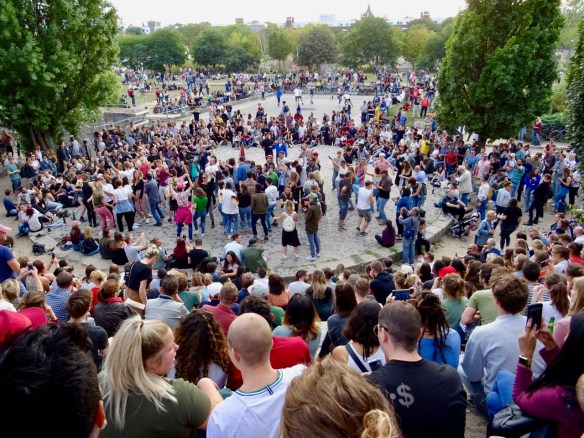
 There are people everywhere!
 The people on the hillside are watching karaoke performances, which happen here every Sunday. There is also an ongoing 3 on 3 Basketball game in the foreground. Did I mention that there are people everywhere? Bob figures probably over 20,000 people in the park today and I think we are older than 99% of them!
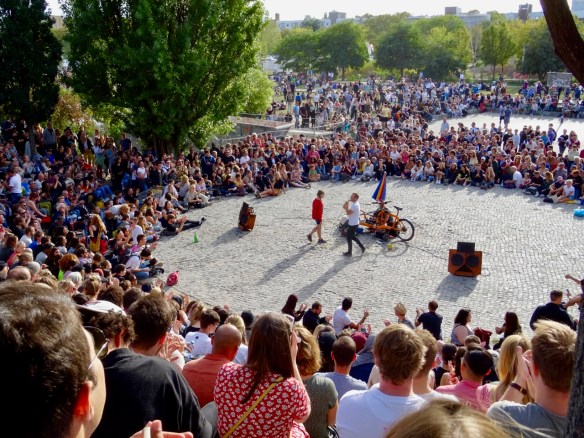
 After sampling some of the food trucks wares, we make our way up to the karaoke viewing on the hillside and have fun watching the performers. Some were not the best, but the audience was very supportive and everyone gets a big round of applause. Here is
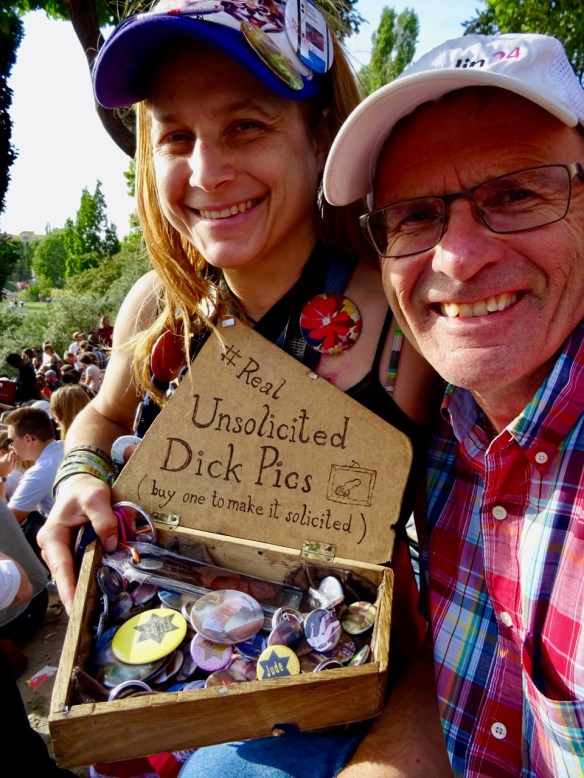
  This lady was selling some rather interesting pins, and offered to let me take her photo for a small donation, and yes, they were those kind of dicks!
 This guy from the Dominican Republic got a great round of applause, but more for his dancing than his singing.
 Some of our fellow audience members.
 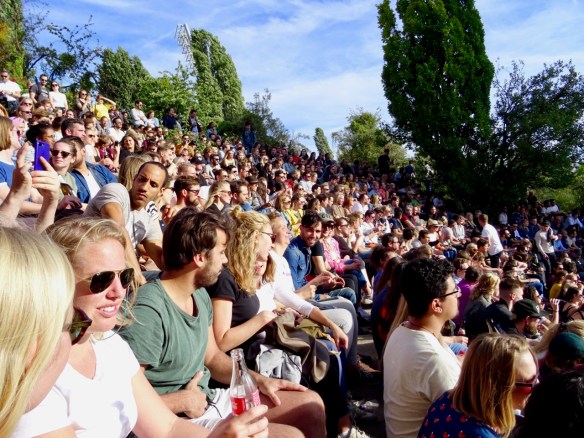 One of the performers from Afganistan got lots of people up dancing.
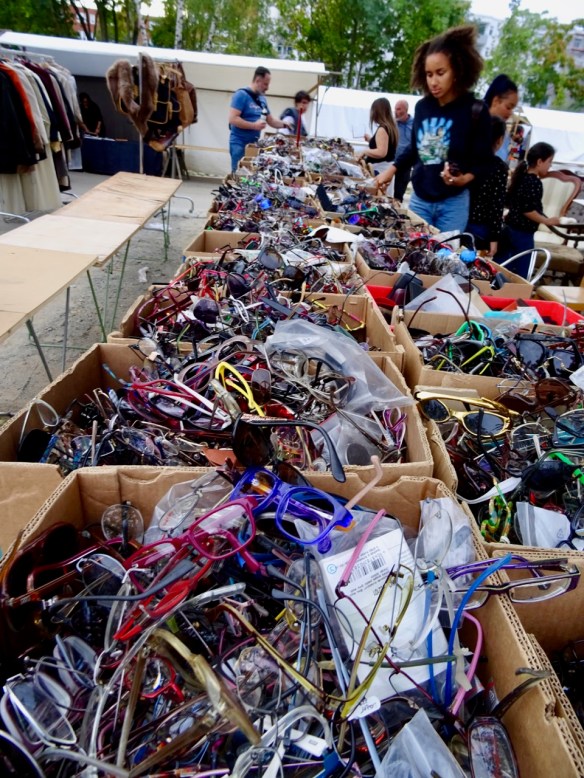
 The flea market was closing by the time we got around to visiting it. As we passed by this booth I overheard a guy say to his girlfriend “All these glasses and you still can’t see my point of view!”
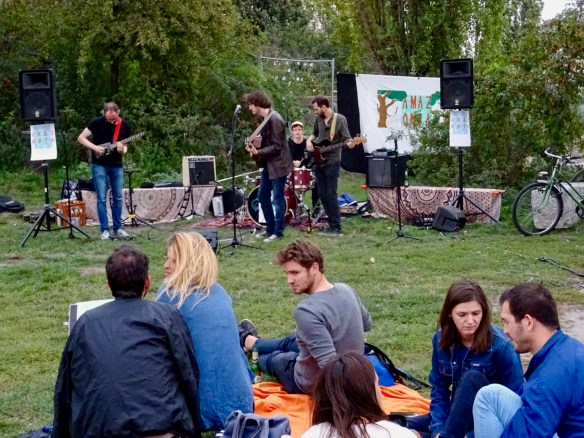
 There were lots of groups of performers. Here is one
 This sign on an artist’s booth makes me laugh. Today was a nice change from the sight seeing we have been doing. It was really relaxing, a lot of fun, and great people watching!.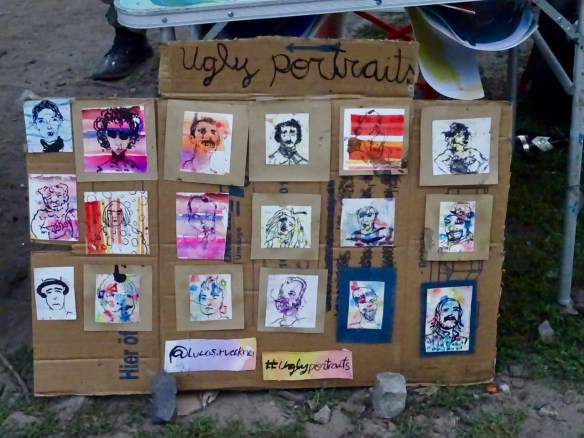













 trudymason.com
